Italian tripod and accessory manufacturer Manfrotto has announced it is introducing a new heavy-weight head to its XPRO range. The XPRO Geared Head is designed for photographers who use weighty equipment and who like to be able to make precise adjustments to their composition. Read more
Month: March 2015
-
CP+ 2015 Sigma Interview – “small office, big factory”
At this year’s CP+ show in Yokohama Japan we made time to sit down with several senior executives from major manufacturers, including Sigma. In this interview with Kazuto Yamaki, CEO of Sigma, we spoke about the challenges of making lenses for ever-increasing pixel counts, the company’s ‘small office, big factory’ philosophy and why the company is continuing to make cameras. Read more
-
4. März 2015
Das Bild des Tages von: Caamila L.

Im Ausblick: Ein gutes Interview, Doppelbelichtungen und Fashion.
kwerfeldein – Fotografie Magazin | Fotocommunity -
Aerodynamic Avian Architecture: 12 Bird-Inspired Buildings
[ By Steph in Architecture & Public & Institutional. ]

From a massive kinetic museum structure that flaps its wings to indicate a new exhibit to an internet-famous church in Florida accidentally resembling an Angry Bird, these avian-inspired buildings seem like they’re ready to take off.
Zoomlion Headquarters Exhibition Center, China


The giant wings on the facade of this ‘transformer building’ in China actually flap, changing the look of the exterior. The hinged steel and glass panels are mounted on hydraulic arms, opening up the interior spaces to the outdoors during appropriate weather. Designed by Californian architects amphibianArc, the structure will serve as an exhibition and display center for Chinese machinery company Zoomlion.
Bird-Shaped House, Czech Republic

This house in the Beskydy Mountains of the Czech Republic looks like it’s ready to take off, with a titanium-plated room in the shape of a bird’s head and wings. Atelier Simona Group applied their “organic architecture” philosophy to the project, looking to the natural surroundings of the site to guide them in creating a shape that would satisfy the client’s desire for something truly unique.
Mashhad City Entrance, Iran


Visitors entering the city of Mashhad in Iran could be greeted by this massive bird-like structure, a gateway that “has been designed so that entry and exit of any vehicle will cause changes in the structure.” The weight of vehicles passing over a speed bump causes a movement in the structure’s wings, making it appear to fly. The busier the entrance, the more active the flying movements become.
Santiago Calatrava’s Quadracci Pavilion, Milwaukee


Architect Santiago Calatrava’s contribution fo the Milwaukee Art Museum looms over a ship-shaped building, its louvers opening and closing like the wings of a monstrously oversized bird. The kinetic structure also incorporates a cabled pedestrian bridge with a mast inspired by sailboats, and a wave-like galleria. When the louvres are open, they act as a signal indicating that a new exhibition has arrived.
Next Page – Click Below to Read More:
Aerodynamic Avian Architecture 12 Bird Inspired Buildings
Want More? Click for Great Related Content on WebUrbanist:
Architecture as Landscape: 15 Terrain-Inspired Buildings
These skyscrapers, homes and city concepts eschew typical architectural silhouettes, taking inspiration from cliffs, mountains and hills to create artificial …
Click Here to Read More »»
Origami-Inspired Architecture: 14 Geometric Structures
For all the effort, skill and time it takes to produce a typical work of origami, the result can be ephemeral, limited by the delicate nature of paper. But …
Click Here to Read More »»
Gold Metal Architecture: Olympic Stadiums, 1896 – 2012
From 1896 to 2012, here are some attentio-grabbing standout structures of the Olympic Games including stadiums, velodromes, aquatics centers, towers and more.
Click Here to Read More »»


[ By Steph in Architecture & Public & Institutional. ]
[ WebUrbanist | Archives | Galleries | Privacy | TOS ]
-
How to Get More Natural Smiles in Child Photography
A natural smile – the holy grail of child photography.

A genuine, heartfelt smile is more than just turning up the corners of the mouth. A real smile radiates from your whole face, and particularly for children, is often felt with the whole body. Not only is a forced and fake smile easy to spot in photographs – we know that wearing a fake smile and having it photographed doesn’t feel too good at the time, and it doesn’t feel great for children either.
So while we want to photograph a child’s beautiful smile, we also want them to enjoy the process of being photographed. And as the photographers, we want to have a good time photographing them too.
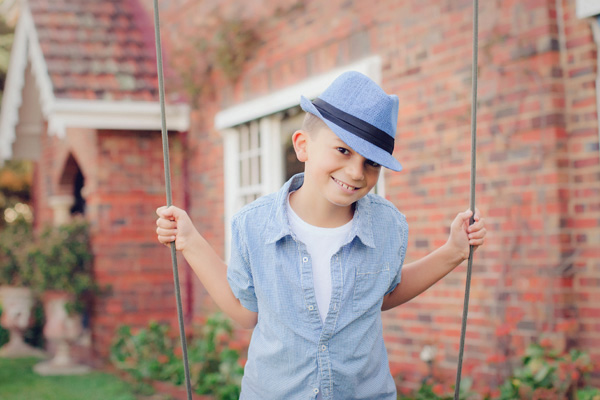
There is so much to discover with children – all their favourites, their take on issues big and small, how they feel about themselves, their family and this funny old world. Children are cheeky, fun, creative, enthusiastic and curious – they are also clever and can tell when someone is not genuinely interested. So make sure your heart and intention is in the right place.
If your small subject is feeling uncomfortable it will be impossible to garner a sincere smile. Placing emphasis on creating an honest connection with children so they feel at ease will lead to them sharing their best selves – most of the time.
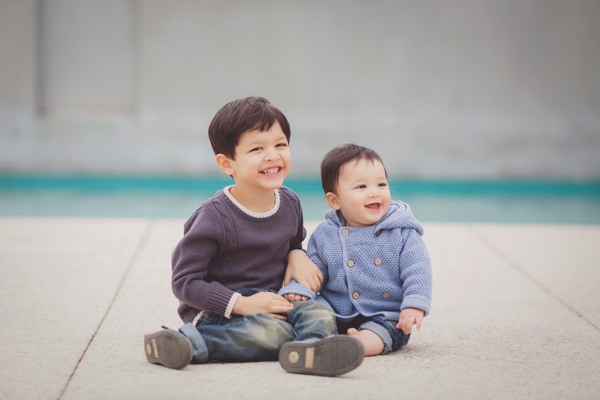
Following are four conversations that I love to have with kids that always result in joyous laughter and real smiles.
#1 Discovering their favourite toy or character
Favourite toys and security items are often important for small children. If your subject has a special toy (i.e. “Bunny”), I will use that as part of our conversation.
- Does Bunny have a mouth?
- Does Bunny have a belly button?
- I wonder where Bunny sleeps. Does she sleep in this shoe? (holding up their shoe)
- Hmm, does she sleep in the fridge?
- I know, she must sleep in bed with Mummy and Daddy?
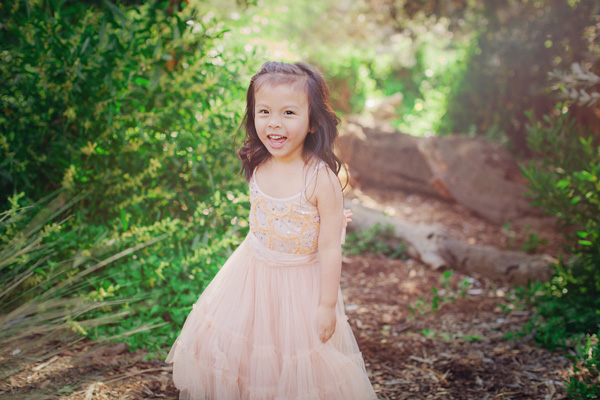
or alternatively, Buzz Lightyear may be their favourite character.
- Does Buzz Lightyear have Weetabix for breakfast?
- Does Buzz go to school?
- Does Daddy have Buzz Lightyear underpants?
Closed-ended questions are great for this age group so they don’t have to think too hard and can just nod or shake their head, and smile and giggle along.
#2 Animals

Animals are something kids can easily relate to. I like to make the questions silly and fun.
- If you could have any animal as a pet, what would it be?
- What are all the things you know about this animal?
- What would be a good name for this pet?
- If you had a pet donkey, what would you name him?
I play around with lots of animals for that last question – if you had a pet giraffe, or caterpillar, or hippopotamus. Choosing animals that are not usual pets.
#3 When you grow up
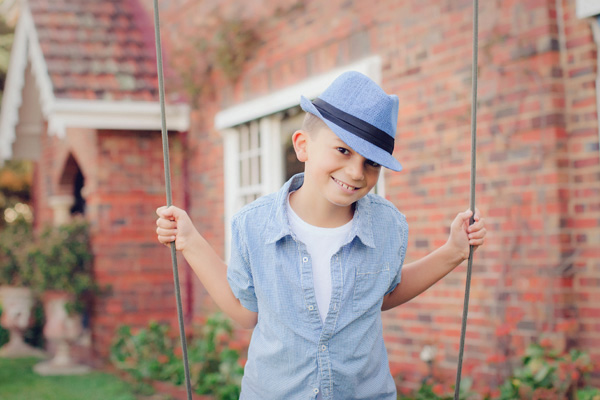
Conversations about jobs, growing up, and the work their parents do always get good reactions. Your questions can be light-hearted or more serious, depending on the child’s age and personality.
For the more carefree child, I might start with:
- When you grow up would you rather be a ballerina or a princess? (for boys)
- When you grow up would you rather be a mum or a dad? (for girls)
- When you grow up would rather be a frog or a snake?

For an older, more serious child you can ask things like:
- Who has the best job in the world?
- What job would be the most boring job?
- What does Dad do when he gets to work?
- When you grow up, would you rather be a chef or a dancer? Or, a builder or a truck driver?
It can be easier for kids if you give them an either/or question rather than just saying, “What do you want to be when you grow up?” Asking kids to think of a detailed answer on the spot can be a bit difficult for them.
#4 Family rules
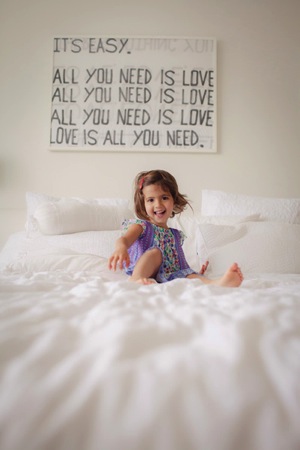

This is also a really fun conversation topic – particularly for the parents who are listening in.
- If you were in charge of your family, where would you eat dinner every night?
- If you had to set the bedtime, what time would you go to bed?
- If you had to choose the family breakfast, what would you have?
- Who is the boss of your family?”
When photographing children, take your time and enjoy being with them. The time spent before you even pick up your camera is invaluable to gauge their personality – are they outgoing, reserved, tired, hyperactive, shy, giggly? Make intuitive decisions as to which conversation style will work best for each child. This gets easier with experience, so spend as much time with children as you can ,and fun conversations with them will soon become effortless.
googletag.cmd.push(function() {
tablet_slots.push( googletag.defineSlot( “/1005424/_dPSv4_tab-all-article-bottom_(300×250)”, [300, 250], “pb-ad-78623” ).addService( googletag.pubads() ) ); } );googletag.cmd.push(function() {
mobile_slots.push( googletag.defineSlot( “/1005424/_dPSv4_mob-all-article-bottom_(300×250)”, [300, 250], “pb-ad-78158” ).addService( googletag.pubads() ) ); } );The post How to Get More Natural Smiles in Child Photography by Angie Baxter appeared first on Digital Photography School.
-
Firmware updates to reduce Sony FE lens startup times on the way
Sony is releasing a pair of firmware updates this month that will reduce startup times when FE lenses are attached to both full-frame and APS-C bodies. The first update, available now, will make your E-mount camera get ready to shoot in less time when using five currently available FE lenses. The second update, due later this month, will do the same for Sony’s a7 series, this time for the four new lenses announced today. Read more
-
Don’t Be Afraid of Manual Focus
If you’re a beginner in the wonderful world of photography, if you’ve never used an older film camera, or a combination of both, you might be unfamiliar with the workings of manual focus. Even if you are, you may not have thought about how you would use it in real-world situations.
Fortunately as DSLR owners, we have the best of both worlds between manual and automatic focusing; we have a choice as to how we decide the subject of our photo, and other points that aren’t as important. This is an advantage for you, and having a better understanding of the “other” focusing method will allow you more flexibility and leave you better prepared for a wider array of situations while in the field.

But keep in mind, you’re not learning manual focus as a replacement for automatic focus, you’re learning it as a compliment.
While modern DSLR’s and their lenses have varying degrees of complexity for automatically focusing on a specific point within a scene, film cameras before them relied on a manual system to focus. The photographer would turn the focusing ring on the lens until the subject was sharp, then snap the photo. When the modern AF (autofocus) systems came around, the camera became smart enough to identify the subject(s) or the more important part of the photo, and focus on that without much interaction from the user.
You might think, why would I want to do it any other way? I can have the camera choose the most important thing to put into focus, or I can even manually select a focus point, and have it always focus there. What reason would I have to turn this system off completely and rely on myself?
There are a few reasons, in fact, but first, let’s cover how to use manual focus in the first place.
How to manually focus your camera
To manually focus an AF-capable lens on a DSLR, first locate the mode switch on the lens. It is usually labelled “AF – MF”. Switch it to MF. After you’ve done that, the lens will be in manual mode, and pressing down the shutter release halfway will no longer engage the autofocus system.
Find the focusing ring near the end of the lens. Twisting this ring will adjust focus, and you will immediately see the effects of this through the viewfinder, with different areas of the frame coming into, and going out of focus. Because your viewfinder isn’t a perfect representation of what your image will look like, you may need to use a couple of other tools to verify focus.

The AF-MF switch is located on the lens itself if compatible.
Firstly, you can use the depth of field preview button. Almost all modern DSLR’s have this feature, and it allows you to get an idea of how your current aperture and focus will appear in the final image. If equipped, the button is usually next to the lens mount, although the exact placement might vary depending on your camera model; be sure to check your camera’s manual if you’re unsure of its location.
When you press the button, the aperture will close down to its actual setting, so the preview image could darken a bit. This darkening will not be recorded on the actual image.
An even better way to monitor your focus is by using the Live View feature of your camera, which gives you an accurate representation of what your camera sees on the LCD screen. After focusing, switch to Live View and zoom in to the area you’re focusing on (zoom the view, not the lens). You’ll be able to clearly see what is actually in focus, and what is not.
So what shooting situations might benefit from the wonders of focusing like our forefathers?
Macro photography
When you’re shooting macro or close-up photography, you’re usually dealing with an extremely thin depth of field. At larger apertures, focusing is extremely important. Manual focus allows you to ensure that the most important part of your subject is crisp.

When shooting subjects up close, focusing manually will give you tighter control.
Low-light situations
As wonderful as autofocus is, it tends to falter a bit in low-light situations, the amount of which usually depends on the lens being used. You’ve undoubtably experienced times where the autofocus struggles to find a focal point, and leaves you with nothing more than a blurry preview through the viewfinder.

Subjects captured in low-light are notorious for muddling up autofocus systems; manual focus is the best way to solve the problem.
Focusing manually allows you to take the guesswork out of these situations (remember to use Live View to check it)
Selective focus
There are also times where you may prefer to control your focus for creative reasons. Shooting a model through a frame of trees, for example, or requiring the background of the photo to be in focus while the foreground is not.
While modern autofocus system can usually get this right, manual focus allows you a level of control that’s hard to automate.

A photo like this gives the autofocus system too many options to get the depth of field exactly right.
Wide-angle shots
When shooting with a wide-angle lens, particularly in landscape photography, your subjects can tend to be a larger objects shown on a smaller scale, such as trees, buildings, and other inanimate objects. In this situation, since they occupy a smaller area of the frame, controlling the focus of the shot on your own will usually yield better results.

Smaller subjects in a wide-angle picture means more work for the autofocus system.
Panoramas
When we take panoramic photos, or a set of photos stitched together in post-production, consistency throughout the shots is key in several areas, one of which is focus. Not ensuring your focus is consistent throughout the shots, along with other things such as lighting and white balance, can produce a disjointed result, failing to convince the viewer’s mind that they’re looking at one continuous photograph.

When your camera is set to focus manually, you can be sure that the proper subjects are always sharp in a panoramic shot.
Low contrast situations
Autofocus on modern cameras work best when there is a higher level of contrast between the dark and light tones within an image. These systems tend to struggle when contrast in the frame is reduced, such as shooting a light-colored subject against a bright background.

Low contrast is another situation that tends to confuse autofocus systems; your eyes can better differentiate between the subject and the background.
Since the human eye has a much higher dynamic range than the cameras you’re shooting with, you can manually choose the best focus in these situations.
Give it a try!
Although it may seem counterintuitive to disable systems on our cameras that are intended to make things easier, it may be just the thing to spark our creativity.
A habit I always try to maintain is to visualize what settings I’ll need to use before I go out to shoot, and this is a good time to determine if the scenario I’m going to be presented with lends itself to turning my autofocus system off.
At the end of the day, just keep in mind that there is no right way or wrong way. The “right way” is different for all of us. However, knowledge is power, and you can only benefit from knowing the ins and outs of how your camera works and what options are available to you.
“There is only you and your camera. The limitations in your photography are in yourself, for what we see is what we are.” – Ernst Haas
googletag.cmd.push(function() {
tablet_slots.push( googletag.defineSlot( “/1005424/_dPSv4_tab-all-article-bottom_(300×250)”, [300, 250], “pb-ad-78623” ).addService( googletag.pubads() ) ); } );googletag.cmd.push(function() {
mobile_slots.push( googletag.defineSlot( “/1005424/_dPSv4_mob-all-article-bottom_(300×250)”, [300, 250], “pb-ad-78158” ).addService( googletag.pubads() ) ); } );The post Don’t Be Afraid of Manual Focus by Tim Gilbreath appeared first on Digital Photography School.
-
Kowa announces pricing for three Micro Four Thirds lens
Japanese optical manufacturer Kowa has released pricing for the three Micro Four Thirds lenses it first announced a year ago. The trio, Kowa Prominar MFT 12mm f/1.8, Prominar MFT 8.5mm f/2.8 and Prominar MFT 25mm f/1.8 are available now and will come in a choice of black, silver or green finishes. The lenses are all manual focus, and do not feature electrical contacts for communicating aperture or focus distance data to the camera. The company had them on show at the Broadcast Video Expo in London. Read more
-
Sony adds wide-angle and fisheye adapters for full-frame and APS-C lenses
Sony has officially announced four new conversion lenses – two for full-frame and two for APS-C – that can be screwed onto a select group of lenses. On the full-frame side there are ultra-wide and fisheye adapters for the new FE 28mm F2, which drop the focal range to 21mm and 16mm, respectfully. The adapters for APS-C lenses – the 20mm F2.8 and 16mm F2.8 specifically – and reduce the focal lengths by 0.75X for the ultra-wide adapter and 0.6X for the fisheye. More details.
-
10 Inspiring Photo Documentaries Worth Your Time
As we try to find inspiration in our environment that fuels our desire and imagination as artists, we each develop our own style. Sometimes, you may find yourself feeling stuck creatively. Or you might be enthusiastic about taking photos but be unsure where to focus your energy and enthusiasm. If that’s the case, you might profit from a little history Continue Reading
The post 10 Inspiring Photo Documentaries Worth Your Time appeared first on Photodoto.