RSS
 

Archive for February, 2015

Sony Xperia Z3 camera review

25 Feb

The Sony Xperia Z3 is the successor to the Xperia Z2, and in terms of both camera specification and design it’s more of an evolutionary update than a major overhaul. In terms of camera specs the new model comes with the same 20.7 MP resolution on a 1/2.3 sensor as its predecessor but the new G-lens offers a wider equivalent focal length of 25mm. Click through to read our full review on connect.dpreview.com

Articles: Digital Photography Review (dpreview.com)

 
Comments Off on Sony Xperia Z3 camera review

Posted in Uncategorized


How to Take Better Action Photos

25 Feb

141005 Semper Paratus 4022There are many sports photographers. We generally hear about those who specialize in a specific genre of sports photography like motorsport, tennis, golf, or surfing.

If you are just starting out and want to gain some experience and build a portfolio, what can you do to take better action shots?

What separates a true sports photographer from an amateur?

A sports photographer will get the shot they want as they see it, of the action they need to report on, every time. Their ability to pick the correct exposure, composition, focus, and amount of blur in the background comes down to their knowledge and understanding of the elements covered below.

Know your equipment

Your camera, whether it is an entry level or top of the line DLSR, has the ability to take amazing action shots.

You need to take control of your camera so that you get the results that you want from it when you push the button. You will need to adjust the way your camera focuses, allow continuous focus tracking, set the focus point on your camera to be focusing on the right spot, and set your camera to take multiple frames per second. Controlling the shutter speed and aperture so that you can blur the background or freeze action, allowing you to get the shot you envisage.

Understand your sport

Before you even pick up your camera, you really need to understand the sport that you want to capture. You need to know where the action is happening, and when it’s likely to happen. You will also need to know what will make your pictures amazing in the eye of the competitor, or their sponsor, (your customers).

130224 Nostalgia Drags 1454

With motorsports, for example, it may be a spot on the track where accidents happen or a corner that will show the skill level of the driver. You need to know which part of the racetrack the drivers use, and which angle would suit that section of track.
shooting-fast-action-05

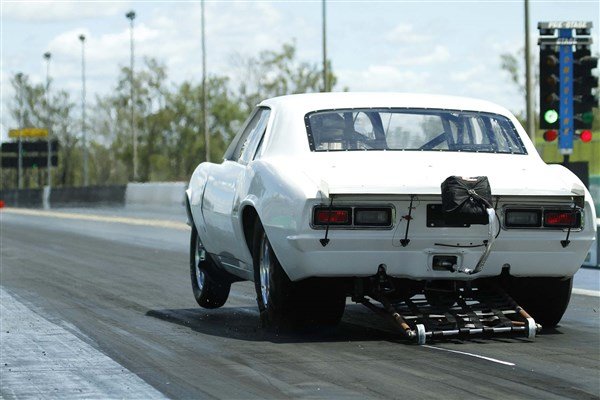
In understanding drag racing, I know that the moment the driver puts his foot down on the green light, the car will lurch forward and the front wheels will lift like this by using a fast shutter speed I have been able to freeze this action.

With surfing, it may be which wave in a set will deliver the best surfing and allow the rider to get the most out of the wave. You must be able to pick out which are the good surfers and which are the amazing surfers, just by seeing how they interact with the waves, how long they will stay up, and if they are doing tricks.

In short, you need to be aware of what is going on where the action is. This allows you to plan your photo so that you can adjust the composition to suit.

Compelling composition

I personally prefer an action shot where the athlete has space to travel into, making sure that he/she is the main focus of the image. With this in mind, picking the correct focus point so that objective is achieved may mean not using the centre focus point. By using a different length lens you can change your composition without having to move to another location. Longer lenses can get you too close to the action, which sometimes means you may miss what is happening around the athlete – so experiment with a few different focal lengths.

Shooting fast action 04

In this image I have used the right most focus point and given the rider room to “ride into” by panning and blurring the background. Thus, I have been able to make the rider stand apart from the crowd.

Make what’s important stand out

By setting your composition, you can then decide if you need to blur the background or make it part of the drama in the shot. You can do this by controlling the shutter speed; slowing it down to blur, speeding it up to freeze, panning with your subject, or by using a large aperture lens and shallow depth of field to blur the background.

Why blur the background at all?

Generally, you need to blur the background to separate the athlete or the subject from the background; ideally, they are the main focus of the shot. With spectator sports, the spectators in the photo may distract the viewer of the photo. By making them out of focus or blurring them with a panning motion, you make the athlete stand out.
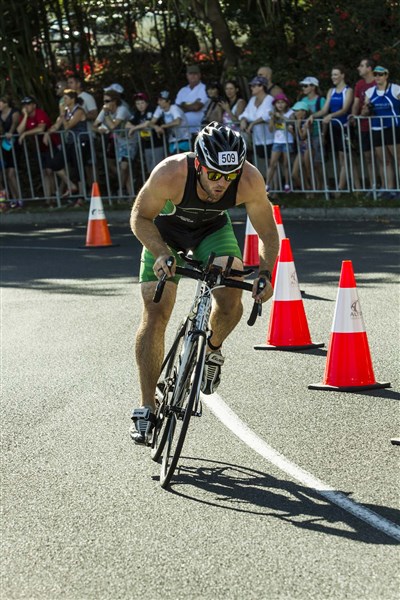
Shooting fast action 03

By using a small number aperture I have been able to separate the rider from the crowd.

If you are going to use panning to blur the background, make sure that you have a focal point in the shot that is sharp. That spot needs to be the pivotal place in the photo. If it is an athlete for example, you usually need to make sure their face is sharp. With motorsports it could be one of the sponsor’s logos or the racing number, but could easily be the driver’s helmet. This is important as without one thing in sharp focis, it tends to be more of an abstract art piece than an action shot. As artistic as these blurry pans are, if the sponsors can’t see their logos or the competitors can’t see their faces, you may have a tough time selling the pictures.

Aperture priority versus shutter priority mode

With this in mind, you need to make a decision to either use aperture priority and a large aperture to blur the background, or shutter priority mode and slow down the shutter speed and pan to blur the background. If you are looking to do slow shutter speed panning, make sure you have taken enough sharp frozen images of the event before you practice this. At least that way you will have some images for your portfolio.

Now that you have your camera settings sorted, you need to anticipate when the action is going to happen. This would also include following the path of the athletes as they pass you. If you have set the shutter speed and picked your composition, you lastly need to use tracking focus.

Using continuous focus

Start focusing on your subject BEFORE they are in the right spot for the composition, and continue to keep tracking them after the shot. More unexpected action may happen after, so it’s best to be prepared to photograph it. Knowing how your camera will act, and react, when you push the button with shutter lag (the time between pushing the button and the picture being taken) and multiple frames per second, you can start to follow your subject well before you intend to take the picture. But be ready to shoot at any moment’s notice as the action happens.

130224 Nostalgia Drags 1449

130224 Nostalgia Drags 1454

130224 Nostalgia Drags 1455

130224 Nostalgia Drags 1456

By continuing to shoot after “the shot” I caught the car hitting the ground and the sparks flying even though this was happening quite fast I didn’t use burst mode, instead I took every frame.

Burst mode

If you have the luxury of multiple frames per second, and lots of memory cards to fill, you could follow and just continuously shoot, then cull the images you don’t like. Memory cards are cheap, but is it the best use of your time? Both while at the event and after the event?

Photograph the whole event, not just one aspect

When you are going to an event to take pictures, plan it. Make sure you are aware of where you can stand and how that will affect your pictures. Change your locations to get a mixture of angles. Change your focal length to get a mixture of wide and long shots. Change your shutter speeds to get a mixture of freezing action and blurring the background.

141102 CrossFit SPEED Hells Playground Team 0081

141102 CrossFit SPEED Hells Playground Team 1090_1

141102 CrossFit SPEED Hells Playground Team 0682_1

141102 CrossFit SPEED Hells Playground Team 0275 141102 CrossFit SPEED Hells Playground Team 2822

By using a mixture of vantage spots, you can get some very different angles of the same event.

Step by step checklist:

  • Make sure the camera is set to: Multiple frames per second (as high as it can be), continuous focus, the correct shutter speed or aperture setting
  • Set up your shot compositionally by using different focus points
  • Track your target for as long as you can before you take the picture
  • Keep tracking your subject after you have taken the shot, as there may be more action
  • Use the multiple burst modes sparingly – be decisive about what you want and take one or two shots either side

So what are you waiting for? Get out your manual, make the changes to your settings and take a few risks (with the settings of course) and push yourself to take better action photos.

‘s photography journey started in the late 1990’s when he bought a film camera and started motor sport in the mid 2000’s, published in various car magazines. He enjoyed capturing a mixture of the cars, and people. Contracting to an event company doing school formals, he worked on posing and getting people on side quickly. Building on the above he started No Green Square, teaching you how to get the best out of your camera.

googletag.cmd.push(function() {
tablet_slots.push( googletag.defineSlot( “/1005424/_dPSv4_tab-all-article-bottom_(300×250)”, [300, 250], “pb-ad-78623” ).addService( googletag.pubads() ) ); } );

googletag.cmd.push(function() {
mobile_slots.push( googletag.defineSlot( “/1005424/_dPSv4_mob-all-article-bottom_(300×250)”, [300, 250], “pb-ad-78158” ).addService( googletag.pubads() ) ); } );

The post How to Take Better Action Photos by Michael Coppola appeared first on Digital Photography School.


Digital Photography School

 
Comments Off on How to Take Better Action Photos

Posted in Photography


Konost full-frame digital rangefinder in the pipeline for 2016

25 Feb

An American start-up company is promising to bring a full frame digital rangefinder camera to market for early 2016. The Konost FF will be a 20-million-pixel metal bodied M-mount camera equipped with a 4″ LCD. The company has said that the rangefinder system will operate not with mirrors and prisms, as most rangefinders do, but with twin imaging sensors that overlay their images to produce the same dual image effect in the viewfinder. Read more

Articles: Digital Photography Review (dpreview.com)

 
Comments Off on Konost full-frame digital rangefinder in the pipeline for 2016

Posted in Uncategorized


24. Februar 2015

25 Feb

Das Bild des Tages von: Franciele Teix

Untitled © Franciele Teix

Heute im Ausblick: Die Farbe Pink, Armut anders fotografieren und Prostituierte in den 1930ern.
kwerfeldein – Fotografie Magazin | Fotocommunity

 
Comments Off on 24. Februar 2015

Posted in Equipment


Historic prints from the beginning of photography to go on auction in London

24 Feb

William Henry Fox Talbot prints from as early as 1844 are part of a collection of over 200 photographs that are due to go to auction in London next month. All of the pictures in the sale come from a single private collection which includes a many well-known and important works, and many of the prints were made at the time the original pictures were taken. See gallery

Articles: Digital Photography Review (dpreview.com)

 
Comments Off on Historic prints from the beginning of photography to go on auction in London

Posted in Uncategorized


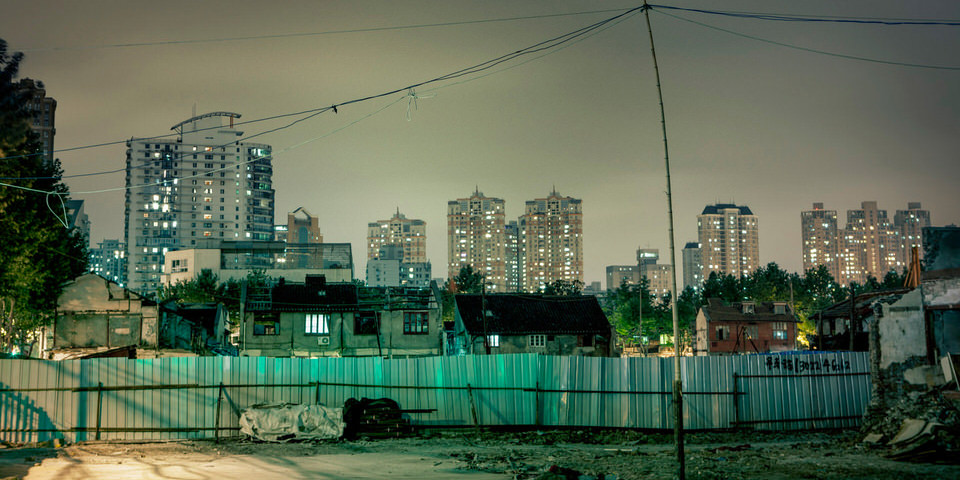
Shanghai bei Nacht

24 Feb

© Nicolas Jandrain

In der Nacht verwandelt sich jede Stadt zu etwas Neuem. Lichter und Schatten verändern sie, andere Menschen laufen mit anderen Zielen durch die Straßen. Nachts verändert sich nicht nur die Stimmung einer Stadt, man kann in der Dunkelheit den sonst so bekannten Ort auch völlig neu entdecken.
kwerfeldein – Fotografie Magazin | Fotocommunity

 
Comments Off on Shanghai bei Nacht

Posted in Equipment


ARRI announces the ALEXA Mini 4K UHD, a lightweight carbon fiber cinema camera

24 Feb

We don’t normally write about thirty-thousand-dollar cinema camera, but the ARRI ALEXA Mini caught our eye. This digital motion picture camera packs a whole lot of firepower into a super compact, carbon-fiber body. The specs also foreshadow what me might expect in future consumer-level cameras, in terms of video capabilities. Read more

Articles: Digital Photography Review (dpreview.com)

 
Comments Off on ARRI announces the ALEXA Mini 4K UHD, a lightweight carbon fiber cinema camera

Posted in Uncategorized


How to Make an Architecture Space Look and Feel Natural in a Photo

24 Feb

The New Age of Architectural Photography

Gone are days of interior photos looking like furniture showrooms. So, too, are the days of exterior photos being full of uplighting accents and HDR effects.

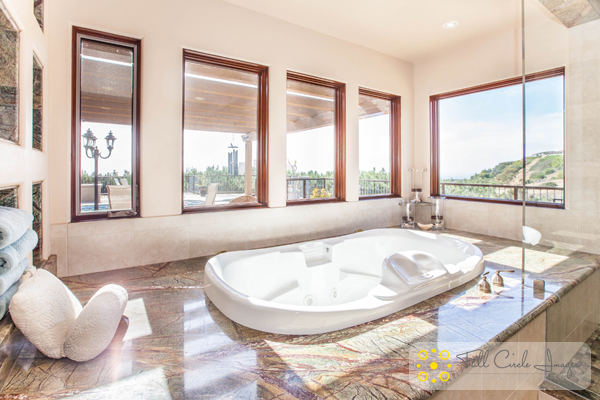
NewAge2

Today, architectural photography is all about lifestyle. The appeal of luxury has shifted away from the material luxury and flashy spaces of high society to an intangible luxury that transpires during quiet moments with loved ones. It’s more about quality of life than quality of goods.

When shooting interiors, your goal as photographer is to create a space that makes the viewer want to be there. You want them to imagine themselves in that space, and most importantly, to escape to it.

As a photographer, you not only have to read a space for its light, material, and flow, but you also need to feel the space. Consider a sleek urban condo in a downtown high-rise versus a historic Victorian house in family neighborhood versus a new construction in a suburban development. Each architectural development stirs up different feelings, and these are what you want to capture in your photography.

So how do you transfer these feelings into your images? Here are four steps to get you started.

1. Set the Stage

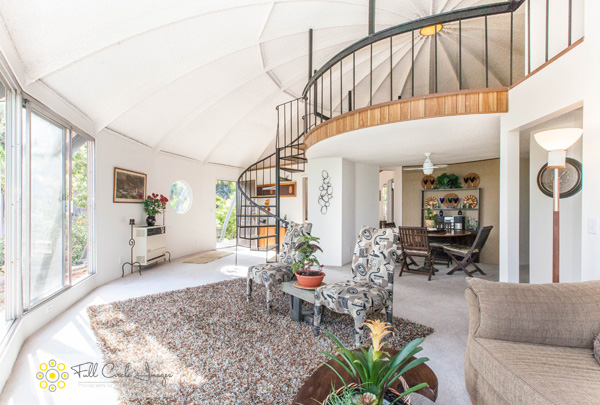
Focus on the personality and live-ability of the space. Luxurious bouquets of roses set in an empty room at sunset won’t do the trick. Instead, emphasize the day-to-day moments — an open book and some cushions on the seat of a bay window, a comfy throw blanket draped over the couch, or jewelry laid out on the dresser of a walk-in closet.

NewAge1

2. Mixing Cleanliness with Reality

Yes, the space should be clean. Yes, it should be cleaner than usual. However, it shouldn’t feel sterile. You want it to feel lived in, but not dirty.

All flat surfaces should be wiped down and cleared, except for staging items. Every light fixture should be in working order since they’ll be turned on to ensure the space has adequate lighting. Floors should be mopped or vacuumed. Any areas where the carpet or hardwood floors look old and worn, such as in high traffic areas, should be covered up with inexpensive area rugs. Be aware of any clutter that we get used to in our day-to-day life. A small pile of clutter goes a very long way in photos, and so all those stacks of mail, magazines, and books should be tucked away out of sight.

NewAge3 2

3. Use Optimal Lighting

A well-lit space is crucial! You want to create a look that feels natural, happy, and real, so use all of the light resources available to you. Photos should be shot during the day so you can take advantage of any soft sunlight that pours in.

As a secondary light source, be sure to turn on all of the lights. Yes, all of them. They’ll be turned on to give the space a warm and inviting feel. Long exposures shot on a tripod help brighten up shadows a bit, but you can also use a flash to bounce light off walls and ceilings to fill in shadows.

NewAge4

4. Vary the Photo Set

Wide shots are vital and dramatic and show the overall space well. However, details can be just as compelling.

Materials and traditional luxuries themselves are not important to show in detail. Rather, you must show the personality in the details. Staged items are perfect for shooting close-ups and setting the tone.

That pen and paper on the desk. The pastry and coffee cup on the side table next to an arm chair. The puzzle in progress by the bay window with a view. The tea kettle steaming with boiling water on the stove. These touches take your shots from a simple set of interior photos to the story of a lifestyle.

What are your tips for giving architectural photography a natural look and feel? Share your thoughts and photos in the comments section below.

googletag.cmd.push(function() {
tablet_slots.push( googletag.defineSlot( “/1005424/_dPSv4_tab-all-article-bottom_(300×250)”, [300, 250], “pb-ad-78623” ).addService( googletag.pubads() ) ); } );

googletag.cmd.push(function() {
mobile_slots.push( googletag.defineSlot( “/1005424/_dPSv4_mob-all-article-bottom_(300×250)”, [300, 250], “pb-ad-78158” ).addService( googletag.pubads() ) ); } );

The post How to Make an Architecture Space Look and Feel Natural in a Photo by Natalia Robert appeared first on Digital Photography School.


Digital Photography School

 
Comments Off on How to Make an Architecture Space Look and Feel Natural in a Photo

Posted in Photography


Road A-Peel: Upside-Down Car Clings to Curling Street

24 Feb

[ By Steph in Art & Installation & Sound. ]

hanging car 6

An upside-down, cherry-red car clings improbably to a slice of a concrete parking lot as it curls up over itself in this gravity-defying installation by British artist Alex Chinneck. Hanging in mid-air with no visible supports, ‘Pick yourself up and pull yourself together’ is a collaboration with Vauxhall Motors located just outside London’s Southbank Centre.

hanging car 1

About 50 feet of the parking lot surface appears to have been peeled right up, with the vehicle hanging from its uppermost curve within sight of one of the city’s most iconic landmarks, the London Eye. Hidden sections of steel designed by structural engineers hold the car in place.

hanging car 2

hanging car 3

“I see sculpture as the physical reinterpretation of the material world around us and so by introducing fictional narratives into familiar scenarios, I try to make everyday situations as extraordinary as they can be,” says Chinneck. “I choose to do this through illusions because I think there is something both optimistic and captivating about defying the realms of possibility.”

hanging car 5

“With an effortlessly curling road I hoped to transcend the material nature of tarmac and stone, giving these typically inflexible materials an apparent fluidity. Vauxhall Motors allowed me a great amount of creative freedom and this collaboration offered my studio an exciting platform to explore new areas of engineering and fabrication.”

Top image by Richard Simms

Share on Facebook


[ By Steph in Art & Installation & Sound. ]

[ WebUrbanist | Archives | Galleries | Privacy | TOS ]


WebUrbanist

 
Comments Off on Road A-Peel: Upside-Down Car Clings to Curling Street

Posted in Creativity


Rooftop Recreation: 12 Vertigo-Inducing Sky-High Hangouts

24 Feb

[ By Steph in Destinations & Sights & Travel. ]

sky high tennis

Test your tolerance for stomach-churning heights by dangling over the edge of the western hemisphere’s tallest freestanding tower, zip lining high above the Las Vegas strip, swimming up to the invisible edge of a skyscraper rooftop swimming pool or taking a tour of Stockholm from atop its architecture.

Dubai Rooftop Tennis Court

rooftop tennis court dubai 2

burj dubai tennis

There’s definitely something nerve-wracking about watching a pair of tennis players back up almost all the way to the edge of this sky-high helipad tennis court in Dubai – it’s far too easy to imagine them just sailing right over the safety net. The world’s highest tennis court was a temporary installation atop the Burj al Arab luxury hotel, built in the lead-up to the Dubai Duty Free Men’s Open in 2005. Andre Agassi and Roger Federer were invited to play a game for fun before the real competition began, over 1,000 feet above the ground.

Edgewalk at the CN Tower

rooftop cn tower

edgewalk

Feeling especially adventurous? See just how much height you can handle at Toronto’s CN Tower, the tallest freestanding structure in the Western Hemisphere, where the ‘EdgeWalk’ attraction allows you to dangle over the edge of a five-foot ledge that circles around the tower’s roof. Attached to a metal frame with harnesses, thrill-seekers lean out from a five-foot-wide ledge to gaze at the ground 1,168 feet below.

Rooftop Racetrack at Former Fiat Factory, Italy

Event participants - Action

rooftop racetrack 2

rooftop racetrack 1

Built on the roof of a Fiat factory that opened in Turin, Italy in 1923, this race track formerly functioned as a place to take freshly-assembled cars on a test run. After it closed in 1982, architect Renzo Piano helped transform it into a public space complete with a shopping center, theater, hotel and art gallery as well as a helipad and glassed-in spherical rooftop meeting room. Unfortunately, aside from being featured in a few films, it’s no longer in active use as a race track.

Boating and Golfing at Selfridges’ Pleasure Garden, London
rooftops  selfridges

rooftop selfridges

You can relax in a traditional English garden, play some mini-golf or even row around in a boat on the rooftop of the Selfridge’s department store in London. In 2012, the space opened for the first time since its bombing in World War II, prior to which it was a ‘pleasure garden‘ popular for strolling after shopping. The historic rooftop recreation area now holds special events like the ‘Truvia Voyage of Discovery’ art installation, in which shoppers floated on the surface of a fluorescent green rooftop lake.

Next Page – Click Below to Read More:
Rooftop Recreation 12 Vertigo Inducing Sky High Hangouts

Share on Facebook


[ By Steph in Destinations & Sights & Travel. ]

[ WebUrbanist | Archives | Galleries | Privacy | TOS ]


WebUrbanist

 
Comments Off on Rooftop Recreation: 12 Vertigo-Inducing Sky-High Hangouts

Posted in Creativity