RSS
 

Archive for February, 2015

Why I Switched From LEE Filters to Formatt-Hitech for Landscape Photography

03 Feb
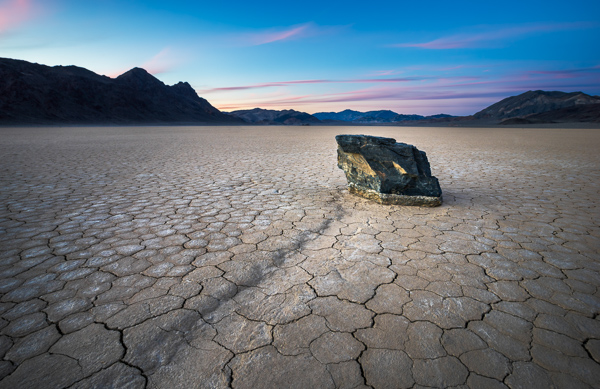
A hard graduated neutral density filter worked great here to darken the sky.

A hard graduated neutral density filter worked great here to darken the sky.

There are three types of photographers in the world; those that try to get it right in camera, those that simply rely on post-processing, and those who believe that both mindsets together lead to the best possible outcome. I try to always keep the mindset of that third type. If I can get everything right in camera (and save minutes or even hours in post) I will. I also have always loved post-processing and the art of making an image come to life. When shooting landscapes, you are more often than not at the mercy of mother nature. You can certainly schedule your time wisely and shoot at the best times of day but that doesn’t always mean that you’ll be able to capture everything in camera, as it is.

I’ve been using filters in one way or another for the better part of four years now. I started off with those bloody screw in filters (my gosh were those a pain in the rear). I remember very vividly just how frustrating it was to need a separate filter for each and every lens. I also remember how long it took to get to a scene, set up my tripod, look at the scene, decide I needed a filter, realize the filter I needed doesn’t fit the lens I had on, switch lenses, get the filter out of its case, screw it on, refocus and then finally take a shot.

I used a my Formatt-Hitech 105mm circular polarizer here to remove glare from the rocks and water. The images without the filter were virtually unusable.

I used a my Formatt-Hitech 105mm circular polarizer here to remove glare from the rocks and water. The images without the filter were virtually unusable.

My brief stint with LEE Filters

After giving up on the screw-in filters, I eventually discovered the LEE Filter system. Those LEE filters are dang near impossible to get your hands on. I had to put my name on a waiting list at a camera store just to get the foundation system to attach the filters to my lenses. I then had to buy my filters on eBay and pay over retail to get them. My absolute favorite filter from LEE was (and still is) the Big Stopper. The Big Stopper is a 10 stop neutral density filter that will slow your shutter speeds down by…well…10 stops. This is a long exposure filter that is meant to slow time down drastically. You can easily get one to two minute exposures in broad daylight. The problem with the Big Stopper is that it’s a glass filter. This means that you have to be very careful with it and any time it’s on your person, you have to be extra cautious.

This 2 minute exposure caused the hundreds of tourists in the scene to disappear completely! © James Brandon

This two minute exposure caused the hundreds of tourists in the scene to disappear completely! © James Brandon

So what went wrong with LEE? Well, I’ll tell you…

Back in 2013, I was in California and was traveling up the coast from San Luis Obispo to San Francisco with my buddy Brian Matiash. We made it up to Big Sur and were trying to get down to Pfeiffer Beach for sunset. As we made our way up Highway 1, we pulled over to photograph Big Creek Bridge. I decided to put my Big Stopper to good use and started grabbing some long exposures of the bridge with the waves crashing against the shore below. I got a few shots where I was standing but soon decided to switch lenses and try something else. When I’m out in the field and need to switch lenses, I always point my camera down to the ground so that minimal dust will get into the censor during the swap. I pointed the camera down toward the ground (while still on the tripod) and then reached for my filter pouch to take off my Big Stopper before changing lenses. That’s when it happened. I felt a big thud against my shoe and then heard the terrible sound of glass hitting the gravel beneath my feet. Ugh…

It turns out the LEE filter holder can’t support the weight of a heavy Big Stopper. I’m not sure if this is a design flaw or what, but it certainly seems like oversight to me. With LEE filters (just like Formatt-Hitech) you have to screw an adaptor onto the lens you’re using (I just leave these adaptors screwed on most of the time). The filter holder then clips onto the adaptor via a pull pin on one side. This pull pin is angled away from the lens to match the shape of the ring adaptor. Because of the angle of this pull pin, you can actually just pull the filter holder off of the adaptor with surprisingly little force. Of course this will never happen if your camera is pointed out toward the horizon, but who among us never points their camera down? I got lucky that day because the filter hit my shoe first before hitting the ground. It didn’t bust the entire filter but one of the corners did however get a big chunk taken out of it.

My introduction to Formatt-Hitech

Colby Brown has been a friend of mine for a couple years now. I met him during the very, very early days of Google+ when a group of five or six of us would do hangouts almost daily. I have had the pleasure of watching his career virtually explode over this time and was really excited to see him land a signature edition filter kit with Formatt-Hitech. I’ll be the first to admit, I was pretty skeptical about trying any other type of filter besides LEE. Still to this day, I love my Big Stopper. However, that “event” in Big Sur really left me uneasy and nervous about using the LEE holder. So when Colby offered to send me his kit to review, I said what the heck, let’s see how it stacks up (see what I did there?) against LEE.

Unboxing

Don’t worry, I’m not posting one of those monotonous unboxing videos where I show you how the filters were packaged or how much paperwork is included. I’m including this section because of one thing; when I pulled the Formatt-Hitech filter holder out of the box, I knew instantly that it was better than LEE. It just feels better. It’s aluminum instead of plastic for one, but on top of that – the filter holder has a fastening screw to attach to the adapter ring instead of the little notched pull tab that’s on the LEE system. At first I wasn’t really sure this would be any better because, after all, you’re essentially just tightening the filter holder onto the adapter ring with a single screw. As it turns out though, the filter holder fits very snuggly onto the adapter ring, so when you tighten the screw the filters aren’t going anywhere. It takes a very strong push to cause it to budge at all, and no amount of filters will ever weigh that much. The LEE, on the other hand, requires surprisingly little force (see the video above).

Quality between LEE and Formatt-Hitech

The Colby Brown Signature Edition Landscape Filter Kit comes with basically everything you need to get started and stay satisfied using filters in the field for a very long time. I went all out and got the 100mm Premier Kit which comes with two graduated ND filters, a 6 Stop ND filter, the aluminum filter holder and to top it all off, a 105mm circular polarizer. Everything in the kit is extremely high quality and I use the filters on virtually every photo trip I take.

In all honesty, there isn’t a massive difference in the quality of images that come from either filter. Some will disagree with me on this of course. The LEE Big Stopper puts out a very obvious blue color cast in your images while Formatt-Hitechs new Firecrest filters put out virtually zero color cast. I’m actually quite fond of that blue/cool color cast though and have left it in several of my images to some extent. It’s also very easy to correct with a simple white balance adjustment so I’ve never considered it a huge deal.
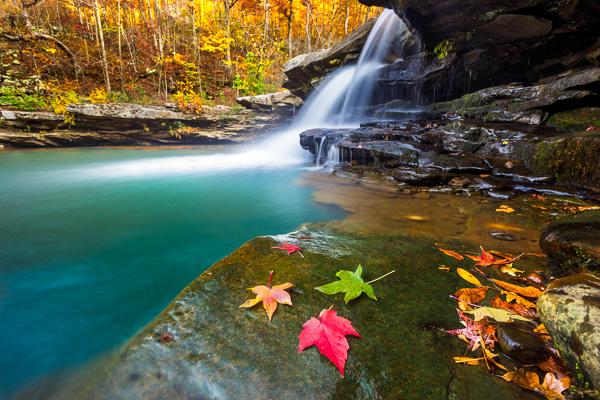
I used my Formatt-Hitech 105mm Circular Polarizer for this shot as well to remove the glare from the rocks in the foreground.

I used my Formatt-Hitech 105mm Circular Polarizer for this shot to remove the glare from the rocks in the foreground.

Where Formatt-Hitech wins

There are three main areas where Formatt-Hitech Filters excel and where LEE falls short.

  1. The first of those areas is the one I already covered; a superior filter holding system constructed of durable aluminum and a tightening mechanism that won’t fail in the field when pointed at a downward angle.
  2. The second area where Formatt-Hitech wins is availability. The simply produce and ship enough filters so photographers like you and me don’t have to be put on waiting lists, or pay over retail to acquire their products.
  3. The third reason Formatt-Hitech takes the cake is that they continue to push to boundaries of what filters can do. They continue to innovate and advance. Their new line of Firecrest filters can stop down a scene by up to 16 stops! That means you could shoot in broad daylight at f/8, ISO 100 and a shutter speed of 1/1000th of a second and as soon as you slide that filter on, you’re shutter speed will drop all the way down to 1 minute. That’s insane!
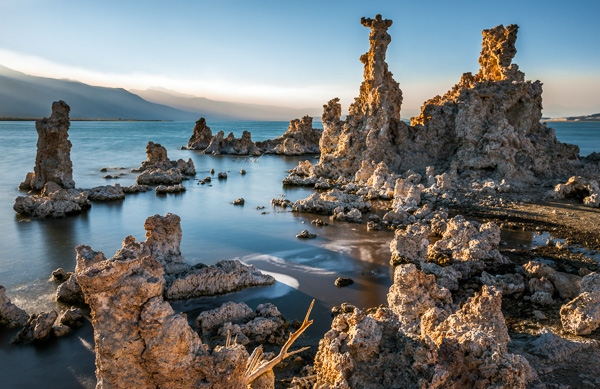
Here I used my 10 stop neutral density filter to slow the shutter speed way down. This was a 25 second exposure taken before sunset. The clouds coming over the Sierras in the background is actually smoke from the rim fire that occurred back in 2013.

Here I used my 10 stop neutral density filter to slow the shutter speed way down. This was a 25 second exposure taken before sunset. The clouds coming over the Sierras in the background is actually smoke from the rim fire that occurred back in 2013.

Conclusion

Both LEE and Formatt-Hitech make great filters (although Formatt-Hitech has a slight edge in my opinion). However, the fact that I simply can’t trust the filter holder from LEE was enough to make me look at other options. Sure, I could have just stuck with LEE filters and got a new filter holder system, but I like to be all in with the brands I associate with in the industry. The failure of the LEE system caused me to look into Formatt-Hitechs options and when I did, I was pleasantly surprised to find a superior company making superior products. I’m not sponsored by Formatt-Hitech, I just honestly believe their products are top notch. Let me know if you have any questions below.

googletag.cmd.push(function() {
tablet_slots.push( googletag.defineSlot( “/1005424/_dPSv4_tab-all-article-bottom_(300×250)”, [300, 250], “pb-ad-78623” ).addService( googletag.pubads() ) ); } );

googletag.cmd.push(function() {
mobile_slots.push( googletag.defineSlot( “/1005424/_dPSv4_mob-all-article-bottom_(300×250)”, [300, 250], “pb-ad-78158” ).addService( googletag.pubads() ) ); } );

The post Why I Switched From LEE Filters to Formatt-Hitech for Landscape Photography by James Brandon appeared first on Digital Photography School.

Digital Photography School

 
Comments Off on Why I Switched From LEE Filters to Formatt-Hitech for Landscape Photography

Posted in Photography


See Through Stone: 13 Aging Structures with Glass Extensions

03 Feb

[ By Steph in Architecture & Houses & Residential. ]

modern ruins sant francesc 1

The crumbling stone ruins of churches, farmhouses and barns are integrated into new structures that preserve and display their historic character while adding playful modern elements, like glass additions that adjoin disparate buildings or fill in damaged areas. These 13 renovations to historic architecture include examples of when the process is done right – honoring the original structure’s heritage – as well as cases where the changes are less than welcome.

Convent de Sant Francesc by David Closes

sant francesc

modern ruins sant francesc 2

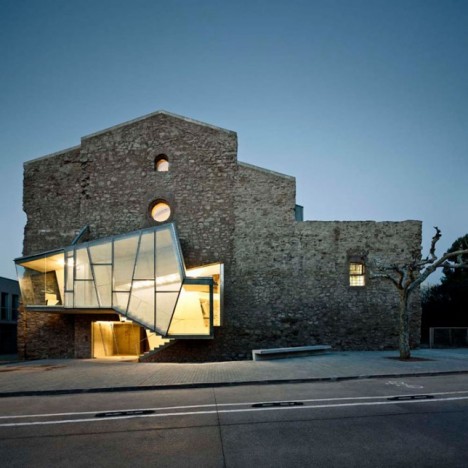
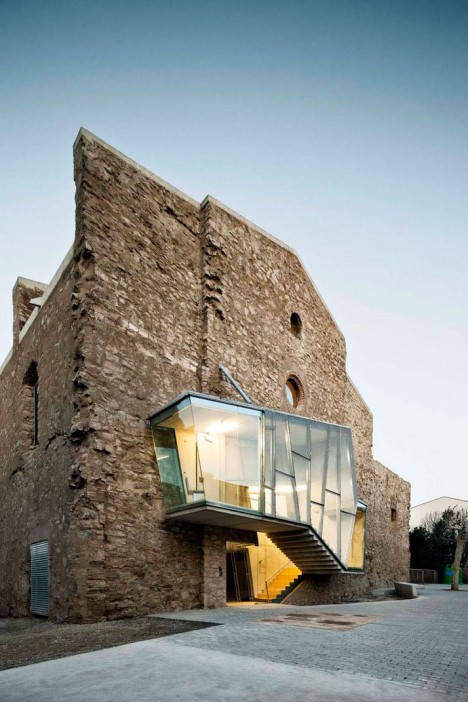
A gaping hole created during the demolition of an adjacent convent was filled in with a geometric modern glass addition at the Sant Francesc church in Santpedor, Spain, a stone building dating back to 1721. The renovation added contemporary elements to both the interior and exterior while leaving the evidence of the building’s decay over time in place, creating skylights where the ceilings had caved in.

Contemporary Studio Extension to Historic Church

modern ruins studio 1

modern ruins studio 2

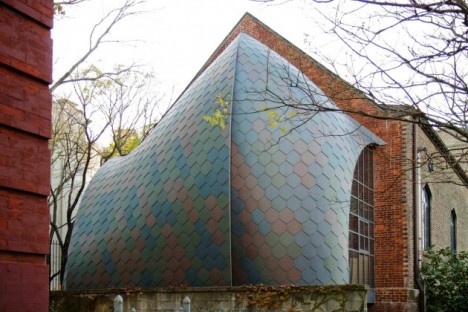
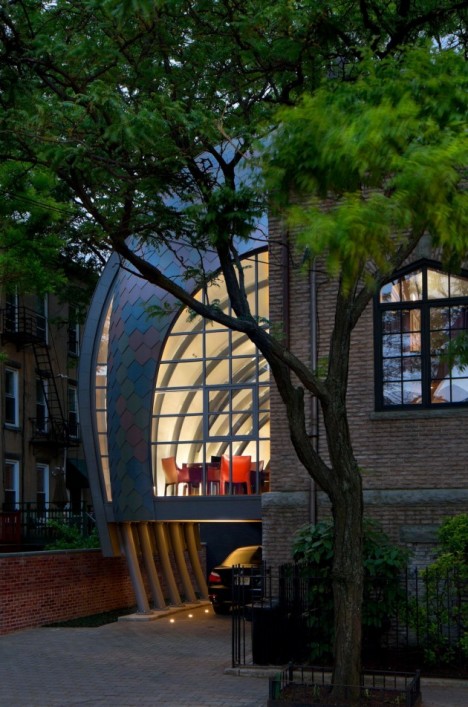
A historic brick church in Hoboken, New Jersey in use as a studio for Marchetto Higgins Stieve Architects is extended with an unusual glass canopy, curving down from the upper portion of the existing structure to the ground.

Two Stone Cottages Connected by a Glass Staircase

dublin stone 1

dublin stone 2

dublin stone 3

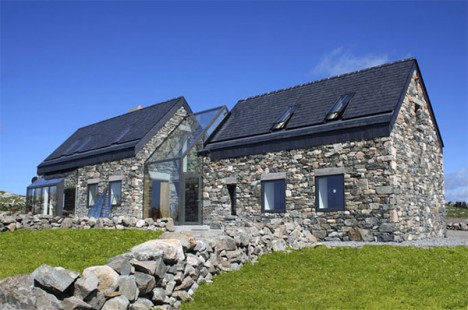
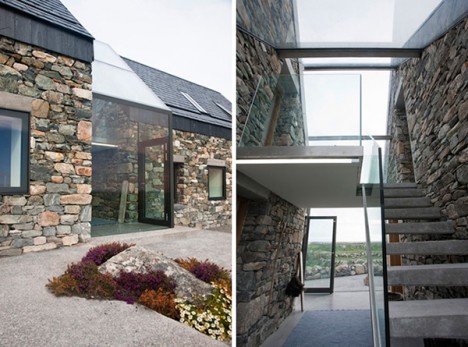
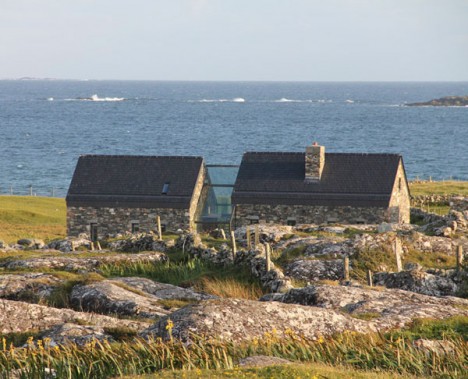
A pair of dilapidated stone farmhouses in Ireland are now connected via a transparent, glass-enclosed staircase. Architect Peter Legge maintained the rustic character of the rural buildings but added the glass atrium to unite them, as well as a transparent dining area with folding doors.

Modern Addition to a Historic Farmhouse

ballymahon 2

ballymahon 1

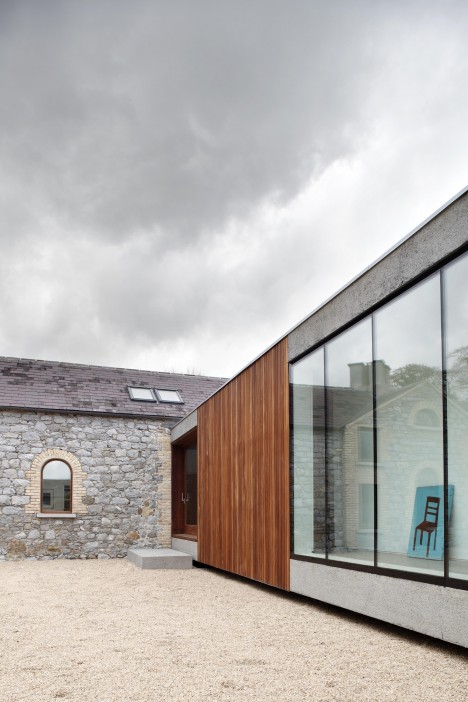
ODOS Architects transformed a collection of 18th century stone farm buildings in Ireland with a new single-story wing made of glass and timber. The new wing unites the trio of existing buildings to create a courtyard and enables views to the adjacent woodlands with large expanses of frameless glazing.

Glass Extension to a Private Farmhouse in Gloucester

gloucester

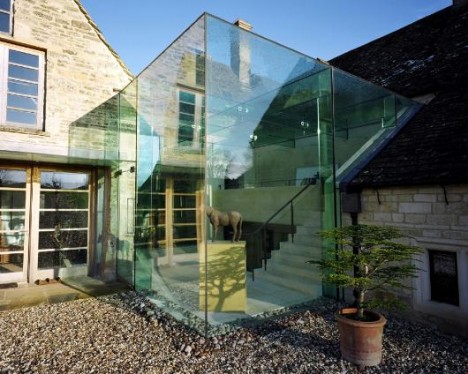
Having absorbed “changes and layers of occupation from the 17th century onwards,” this farmhouse in Gloucester has now evolved into a contemporary home with the removal of incongruous additions from previous eras and the addition of a modern glass structure. The award-winning renovation encloses and extends a portion of the living area, bridging a gap between the two original buildings.

Next Page – Click Below to Read More:
See Through Stone 13 Aging Structures With Glass Extensions

Share on Facebook


[ By Steph in Architecture & Houses & Residential. ]

[ WebUrbanist | Archives | Galleries | Privacy | TOS ]


WebUrbanist

 
Comments Off on See Through Stone: 13 Aging Structures with Glass Extensions

Posted in Creativity


2. Februar 2015

03 Feb

Das Bild des Tages von: Pantha Mahamati Heike Zanini

Ein Spaziergang über der rauchenden Stadt.

Fotolinks des Tages

1. Kinofilm mit iPhone aufgenommen

Der Film „Tangerine“ über Transgender-Prostituierte, die in einem schäbigen Teil von Hollywood arbeiten, ist der Renner auf dem Sundance-Filmfestival, dabei wurde er komplett mit dem iPhone 5s aufgenommen. Wieso Regisseur Sean Baker diesen Weg nutzte und welche Techniken er dabei sonst verwendete, verrät dieser Artikel auf Wired. → ansehen

2. Collagen in Lightroom

Ihr arbeitet mit Lightroom? Jennifer Wettig erklärt im Blog „Lens Light Love“ wie man mit diesem Programm Fotocollagen erstellen kann und gibt zudem gleich noch einige Vorlagen als Download dazu. Dank der guten Erklärungen sollten auch Anfänger schnell schöne Collagen mit dieser Hilfe anfertigen können. → ansehen

3. Fragen an Julian Essink

Ben Hammer stellt in seiner Rubrik „15,5 bescheuerte Fragen an“ den deutschen Fotografen Julian Essink vor. Und so bescheuert sind die Fragen gar nicht. Ganz im Gegenteil ist es ein hübsch kurzweiliges Interview. → ansehen

+ Diese 15,5 Fragen stellt Ben Hammer jedem Fotografen. Die anderen Interviews aus der Reihe findet Ihr hier.


kwerfeldein – Fotografie Magazin | Fotocommunity

 
Comments Off on 2. Februar 2015

Posted in Equipment


20+ Free Lightroom Presets to Make Your Images Pop

02 Feb

Speeding up your post processing workflow will help you to increase productivity and spend more time on shooting. For Lightroom users, making use of developed presets can be a great way to reduce the amount of time you spend in Lightroom. When it comes to Lightroom presets, you can create your own or use the ones created by others. There Continue Reading

The post 20+ Free Lightroom Presets to Make Your Images Pop appeared first on Photodoto.


Photodoto

 
Comments Off on 20+ Free Lightroom Presets to Make Your Images Pop

Posted in Photography


LC-A 120: Mittelformat zum Immerdabeihaben

02 Feb

Bunte Mehrfachbelichtung einer Fassade mit sichtbarer Perforation eines Kleinbildfilms.

Ein Beitrag von: Tamara Skudies

Für die meisten Lomografen ist es eine irre Vorstellung, eine LC-A für Mittelformat zu besitzen. Die LC-A ist die Urkamera der Lomografie, eine Kamera für die Hosentasche, egal bei welchen Lichtverhältnissen und Tageszeiten. Zudem kann man sie auch bei schlechtem Wetter gut mit wenig empfindlichen Diafilmen nutzen. Somit war ich natürlich aufgeregt, als die neue LC-A 120 auf dem Weg zu mir war.

Die wohl kompakteste Mittelformat-Kamera mit Belichtungsautomatik, einer Minigon-Linse mit 38 mm, f/4.5 aus handgefertigten Premium-Glas (äquivalent zu einer 21-mm-Linse) und dem 4-Zonen-Fokus ab einer Distanz von 60 cm wurde im Spätherbst von Lomopgraphy präsentiert. Der ISO-Bereich geht von 100 bis 1600, womit man wirklich eine gute Filmauswahl hat, auch für Innenaufnahmen ohne Blitz. Ein MX-Schalter macht zudem Mehrfachbelichtungen möglich. Mit Kabelauslöser und Stativ sind Langzeitbelichtungen kein Problem.

Portrait einer Frau zwischen einigen Bäumen.

Portrait einer Frau vor einem Graffiti.

Die LC-A 120 ist zwar nichts für die Hosentasche, jedoch eine Kamera zum Immer-dabei-Haben, wegen ihres kompakten Designs und geringen Gewichts! Durch die großzügige ISO-Auswahl ist sie auch für viele Filme und zu jeder Tagszeit immer einsatzbereit. Das einzige, was mich etwas stört, ist, dass die kleinstmögliche ISO 100 ist. Da ich viele alte Filme habe, ist das natürlich etwas zu hoch. Jedoch kann man sich mit etwas Tesafilm und einem Stück grauer oder farbiger Folie behelfen, die man über den Belichtungsmesser klebt.

Meine ersten zwei Filme waren ein Redscale und ein Schwarzweiß-Film, da ich typisch schlechtes Herbstwetter hatte. Somit aber genau richtig zum Testen der Kamera, denn bei Sonnenschein kann (fast) jede Kamera gute Bilder machen. Das Filmeinlegen sollte man sich in der Bedienungsanleitung durchlesen, dann geht das auch ganz gut, wenn man es richtig macht. Das Kameragehäuse ist aus Kunststoff, das sich aber angenehm anfühlt und die Kamera sehr leicht macht!

Blick durch die Stahlkonstruktion unter einer Brücke.

Nächtliche Langzeitbelichtung mit Bäumen und Lichtspuren.

Die Handhabung ist relativ einfach, genau wie bei der LC-A, man schätzt die Entfernung und stellt die passende Zone ein. Zuerst dachte ich: „Wow, ich komme bis auf 60 cm nah an die Objekte meiner Begierde ran!“, merkte jedoch schnell, dass bei den 38 mm bei der Entfernung doch einiges auf das Bild passt. Der Sucher ist natürlich auch nicht ganz korrekt, da man mehr aufnimmt als man sieht, was jedoch bei Sucherkameras mit Weitwinkellinsen bei mir bis jetzt immer der Fall war und woran man sich gewöhnt.

Die automatische Belichtung funktioniert sehr gut auch bei schwierigen Lichtverhältnissen und Nachtaufnahmen. Man kann mit der ISO-Einstellung die Belichtung leicht beeinflussen, da das Einstellrad groß und gut zu verstellen ist. Bei Mehrfachbelichtungen sollte man die ISO auch anpassen, um überbelichtete Bilder zu vermeiden. Bei Innenaufnahmen würde ich nach meinen Erfahrungen lieber eine Stufe überbelichten, bei Langzeitbelichtungen sogar bis zu zwei Stufen.

Blick durch einen langen Gang mit Rundbögen.

Symmetrische Doppelbelichtung mit Gebäuden.

Im Großen und Ganzen weckte die Kamera bei mir mal wieder das „Ich will sie haben!“-Gefühl. Natürlich kann sie keine große Mittelformatkamera ersetzen, aber das soll sie ja auch nicht. Ich finde, sie ist die perfekte Begleitung für Urlaub und Städte. Mir haben auch die extremen Portraits mit ihr Spaß gemacht – passt natürlich nicht immer, aber es bringt durch die Weitwinkel-Perspektive eine schöne Abwechslung rein.

Rot-blaue Doppelbelichtung eines Cafés und einer Straße.

Doppelbelichtung mit Gebäuden an einem See und Himmel.

Das einzige wirkliche Manko, das ich bisher festgestellt habe, ist: Die LC-A 120 hat einen Filmtransportmechanismus, der wohl auf die Durchschnittsstärke von Papier und Film eingestellt ist. Nur hat jeder Film mit seinem Papier eine unterschiedliche Stärke, was zur Folge hat, dass die Abstände zwischen den Bildern unterschiedlich sind und auch mal zu groß werden können.

Daher ist es mir zuerst oft passiert, dass das letzte Bild nur halb belichtet war, wenn ich den Film nach der Anleitung so eingelegt hatte, dass der Startpfeil in der Mitte der Kamera auf den Punkt zeigt. Ich lege meine Filme nun immer so ein, dass der Startpfeil etwa 3 cm links von der Markierung ist, wenn ich die Kamera schließe und bekomme so meine zwölf Bilder auf einen Film.

Ein knorriger Baum und ein Hausgiebel.

Verschneite Landschaft in Grüntönen.

Jetzt habe ich seit Kurzem meine eigene LC-A 120 und habe sie wirklich fast immer dabei. Für mich ist sie die Neuerscheinung des vergangenen Jahres! Noch nie war es für mich so einfach, auf Mittelformat bei jeder Gelegenheit Fotos zu machen.

Ich habe schon einige Fotos damit geschossen, die ich mit keiner anderen Mittelformatkamera gemacht hätte. Allein schon durch die Möglichkeiten bei der Belichtung und natürlich habe ich für meine Kiev oder Big Six nicht so ein tolles Weitwinkel-Objektiv. Für meine Holga oder Diana hätte ich es, jedoch haben diese ihre Einschränkungen, wenn nicht genügend Licht vorhanden ist.

Blick hinauf durch ein Treppenhaus.

Blick hinunter in ein Treppenhaus.

Ja, der Preis von 399 € ist nicht wenig, jedoch eröffnet die LC-A 120 neue Möglichkeiten und bringt viel Spaß und tolle Ergebnisse. Man sollte natürlich Weitwinkelfotos mögen, sonst wird man daran selbstverständlich keine große Freude haben.

Ich freue mich jedenfalls schon sehr auf meine Urlaube in diesem Jahr, auf denen mich diese Kamera begleiten wird und befürchte Schlimmes für meinen Geldbeutel, da bei zwölf Bildern ein Film sehr schnell voll ist. Wobei ich bei Mittelformat etwas wählerischer bin, was die Motive angeht und so habe ich am Ende hoffentlich weniger Fotos, aber dafür bessere.


kwerfeldein – Fotografie Magazin | Fotocommunity

 
Comments Off on LC-A 120: Mittelformat zum Immerdabeihaben

Posted in Equipment


Groundscrapers: Survivalist Condos in Converted Missile Silos

02 Feb

[ By WebUrbanist in Architecture & Houses & Residential. ]

luxury condo exterior entry

Located in a converted subterranean silo near Concordia, Kansas, the first complex of these high-end survival accommodations is already sold out and their creators are working on a second nuke-proof silo transformation project for eager buyers. Many silo homes exist already, but few are designed for multi-family living and many remain semi-theoretical as yet – this one is luxurious and fully realized.

luxury condo floor plan

luxury underground living complex

Luxury Survival Condos boasts both the nuts and bolts, “physical protection, redundant infrastructure for power, water, air, and food,” as well as a surprising array of amenities: facilities for “cross training, aquaponic farming, medical support” including a “community swimming pool, dog walking park, rock climbing wall, theater and general store” as well as a jail for anyone who misbehaves.

luxury subterranean underground condoes

The eye-popping prices are compared by founder Larry Hall to Manhattan residences, but seem steep even by New York City metrics: $ 1.5 million for a half-floor unit just under 1,000 square feet, $ 3 million for a full floor and $ 4.5 million for a “penthouse” (two floors). For those who can afford it, the company also offers their services for transforming whole silos into single-family survival retreats.

missile silo montage

The first space was purchased in 2008 and features seven floors of living spaces, able to accommodate up to 75 occupants. The various areas are connected by elevators (to be powered by green off-grid sources in an emergency) as well as stairs for redundancy. Each resident is allocated a 5-year supply of freeze-dried food in addition to the vegetables and fish grown and bred underground. Water and air treatment are addressed as well, with a 750,000-gallon reserve of drinking water as well as filtering systems. Generators and wind turbines feed into a battery bank to store up at least some level of power reserves as needed.

luxury silo climbing wall

luxury silo facilities power

luxury silo split level

Given how much people pay to buy these units one has to wonder if they ever bother to use them under normal conditions, perhaps to get a sense of what life would really be like should they end up living there in a real end-of-world scenario. Of course, the standard problems apply: if others know where this is, what is to keep the hordes from attempting to overwhelm it were a global disaster ever to unfold?

Share on Facebook


[ By WebUrbanist in Architecture & Houses & Residential. ]

[ WebUrbanist | Archives | Galleries | Privacy | TOS ]


WebUrbanist

 
Comments Off on Groundscrapers: Survivalist Condos in Converted Missile Silos

Posted in Creativity


Are Mirrorless Cameras Here to Stay?

02 Feb

In the late 2000s a new segment formed in the photography industry. This segment goes by many names, but the most common nowadays is “Mirrorless”. These cameras fall between the generic point and shoot cameras and the professional full frame DSLR systems.

Zhao !

By Zhao !

So what is Mirrorless all about?

The first mirrorless cameras came out with a traditional rangefinder design. They were small, had many manual settings, and were geared more towards street photographers who wanted great image quality in a small body. From these first cameras it became evident that a smaller camera with great image quality, professional grade, could be very useful. Soon there were several manufacturers developing mini-DSLR looking cameras, more rangefinder designs, and adding more and more features that are found in very high-end cameras. Along with these smaller bodies and variety of sensor sizes new lenses were engineered to take full advantage of the mirrorless design. Some of these manufacturers include Leica, Sony, Panasonic, Olympus, Fuji, Canon, Nikon.

First impressions

When these cameras hit the market they were sought after by photojournalists, and street photographers as well as the techie part of the industry. Some thought it was just a trendy segment while others laughed at their size and functionality, forever comparing with full frame DSLRs (this is due to the fact that many mirrorless cameras don’t use a full frame sensor). Even after many articles had come out talking about the benefits of these cameras, many looked passed them and considered them amateur gear. But, manufacturers continued to produce new cameras with more features and better performance.

What really sets Mirrorless apart?

2936145 orig

As the segment continues to gain traction several key features are really starting to turn heads.

EVF: Electronic Viewfinder

Unlike traditional viewfinders which show you what is reflected via the mirror you actually see a small built-in display in the viewfinder showing you what the sensor sees. Try to picture a mini-tv monitor inside the viewfinder showing you what the camera sees.

This might seem strange, but there are tons of benefits to having it set up this way. You see what the sensor sees. So, you can point the camera into the sun and not get blinded. Or you can set the camera to black and white mode and you’ll see everything in black and white. On some cameras you can access your full camera menu through the viewfinder without having to look at the screen on the back. Also, you can fully customize the information you see in the viewfinder. What you see is what you get.

Ergonomics

9977912 origMirrorless cameras are small, compact, and very well built. They are made with high grade materials, and just by holding them you know you’re not using a generic point and shoot. To some photographers this is a huge selling point as they look to get away from their heavy camera gear. It also makes it easier to blend into the background without a big DSLR pointed at someone. Some of these cameras are even fully weather sealed, or have a flip out display, and just about all of them have a hot shoe for an external flash.

But, it goes further. The button layouts and menu systems are designed to be easy to use for even the most demanding of photographers. Unlike point and shoot cameras all the main controls are easily accessible. Some of these design cues come from professional full frame cameras while others look towards old film cameras for inspiration. With all this variety there is system for everyone.

Image quality

As each new generation comes out there has been an improvement in sensors, autofocus, and even better lenses. All of these things have caught the eye of the whole industry. The mirrorless segment is maturing at a rapid pace and it shows! Unlike the large DSLR companies who are fighting the megapixel race, the mirrorless segment is working on improving image quality in low light situations, fast moving subjects and lens quality. They have found ways to make it easier to take photos with manual focusing lenses as well. Image quality is a very important part of the development of the mirrorless segment.

The future of mirrorless – predictions

The mirrorless segment of the industry has really caught fire in the last few years. All major manufacturers have jumped on board, which means there are lots of options for anyone interested in giving them a try. New adapters have come out so you can use your existing lenses on your new mirrorless camera. Improvement on sensors, auto focus, weather sealing, range of lenses, and options, are attracting more and more people to mirrorless. Fujifilm as well as others are already developing a huge loyal customer base. Firmware updates seem to be the big game changer regarding loyalty. The constant updates and improvements are much more useful than what we’ve seen from most DSLR manufacturers.

9144849 orig

This segment will continue to grow and get better at a much faster rate than other segments. Although still young, mirrorless is here to stay. There is something for everyone. Even the most traditional photographers are getting excited about the possibilities of the Electronic Viewfinder as it keeps getting better and better. At the lower price point, much smaller form factor and close to equal image quality to the very large and expensive DSLRs means that it makes sense that more and more photographers will look to add, or replace, their gear with a shiny new mirrorless system.

Zhao !

By Zhao !

What are your thoughts? Where do you stand?

googletag.cmd.push(function() {
tablet_slots.push( googletag.defineSlot( “/1005424/_dPSv4_tab-all-article-bottom_(300×250)”, [300, 250], “pb-ad-78623” ).addService( googletag.pubads() ) ); } );

googletag.cmd.push(function() {
mobile_slots.push( googletag.defineSlot( “/1005424/_dPSv4_mob-all-article-bottom_(300×250)”, [300, 250], “pb-ad-78158” ).addService( googletag.pubads() ) ); } );

The post Are Mirrorless Cameras Here to Stay? by Tomas Haran appeared first on Digital Photography School.

Digital Photography School

 
Comments Off on Are Mirrorless Cameras Here to Stay?

Posted in Photography


Chapter 11: Eleven Eerie Closed & Abandoned Libraries

02 Feb

[ By Steve in Abandoned Places & Architecture. ]

OLYMPUS DIGITAL CAMERA

Better dead than read? Though the librarians’ shushing days are long past, you still won’t find many places quieter than these 11 abandoned libraries.

abandoned library 33b

OLYMPUS DIGITAL CAMERA

abandoned library 33d

abandoned library 33e

When the Soviet Union finally fell, it fell hard… just like the uncountable number of books, pamphlets and manuals at this abandoned scientific and technical library somewhere in Russia. While a case may be made for tech manuals being out of date and thus superfluous, there’s still something to be said about the terrible waste of knowledge almost completely covering the former library’s floors. The above images were taken in March of 2008 by jst-ru.

Stitched Panorama

Our valiant photo-documentarian returned to the abandoned library in February of 2011 only to witness an unbelievable sight: every last trashed book had been removed and the floors swept so clean they could practically be eaten off of! Who could have done this and what happened to all of those books? Somehow one doubts the literature was salvaged and donated to other libraries; instead we’re guessing someone in the neighborhood enjoyed a warmer winter than usual.

Outta Cass

abandoned library 1c

abandoned library 1a

Cass Technical High School in Detroit, Michigan opened in 1917, and twenty-five years later the eight-story brick & limestone edifice was the largest high school in the state with 4,200 students attending. Among the school’s more noteworthy alumni are singer Diana Ross and musician Jack White, both of whom no doubt visited the school’s well-stocked library to research their projects.

abandoned library 1d

abandoned library 1b

In 2005, however, Cass Tech moved to a new building leaving quite a lot behind in the old one. Are those metal detectors just inside the library’s doors? These incredible “Now and Then” images from Detroiturbex superimpose the Cass’s vibrant past onto its sorry present.

It’s Miller Time!

abandoned library 4a

abandoned library 4b

abandoned library 4c

“The Miller Avenue Library in Oakland has been abandoned for a few years, it seems”, according to Flickr user aaron.michels, who captured the above images on May 22nd of 2008. One clue alluding to the time of its abandonment is the discarded library card of a presumed twenty-something born in 1955. Pornstache FTW!

Next Page – Click Below to Read More:
Chapter 11 Eleven Eerie Closed Abandoned Libraries

Share on Facebook


[ By Steve in Abandoned Places & Architecture. ]

[ WebUrbanist | Archives | Galleries | Privacy | TOS ]


WebUrbanist

 
Comments Off on Chapter 11: Eleven Eerie Closed & Abandoned Libraries

Posted in Creativity


1. Februar 2015

02 Feb

Das Bild des Tages von: Martin W.

Licht fällt durch ein Fenster in einen teilweise rot gestrichenen Flur und sorgt dort für Lichtspiele.


kwerfeldein – Fotografie Magazin | Fotocommunity

 
Comments Off on 1. Februar 2015

Posted in Equipment


What Defines an Amateur versus a Professional Photographer?

02 Feb

If you’ve been taking photos for a while, this question will undoubtedly cross your mind at some point: “Am I a professional photographer or an amateur?” The idea of what separates an amateur from a professional sparks many debates, and there are many ways of looking at it.

Bob Prosser

By Bob Prosser

What the Dictionary says

Perhaps the most straightforward way of separating amateurs from professionals is looking in the dictionary. By definition, an amateur is “a person who engages in a pursuit or activity for pleasure rather than for financial benefit.” On the other hand, the definition of a professional is a little less straightforward. Sources define a professional as simply as “one who earns a living for their occupation,” or as vague as “a person who is expert at his or her work.” Clearly, it’s this vagueness of what a professional is that is at the root of many debates. Still, by using dictionary definitions, we are left with the notion that if you are not pursuing photography for profit, then you are considered an amateur, and the reverse is true for professionals.

Tax Credits

By Tax Credits

What the Government says

Regardless of how you personally classify yourself as a photographer, it’s more important to understand if the government sees you as a professional or an amateur. Depending on where you live and conduct your photo shoots, there may be certain rules and regulations you need to abide by if you are a professional photographer. For example, American citizens who make money through photography are subject to paying federal and state income taxes on either an annual or quarterly basis, depending on the amount of income earned. There are also state and federal business licenses that must be obtained, and depending on the type of photography you do, you may even need to collect sales tax from your clients.

However, one bright side to being a professional photographer in the government’s eyes is the ability to write-off certain photography expenses to lower your overall tax obligations. These licenses, fees, and taxes will vary according to where you live, but it’s important to do your research and make sure you are operating within the laws to avoid future penalties. I recommend consulting with a local tax professional to make sure you are squared away. Bottom line: most governments say that if you are collecting a paycheck for your photography work, then you are considered a professional, and with this designation comes responsibilities.

EpSos .de

By epSos .de

As a Professional, Think of Yourself as a Business

Dictionary and government definitions aside, another way to distinguish yourself as a professional is to confidently present yourself as a business, not just a photographer. Think of any small businesses you patronize regularly, and all of the aspects that make them a respectable commercial entity. Everything from customer service and marketing, to accounting and operations are vital pieces that should be part of your own photography business.

One aspect that is particularly important for separating yourself as a professional photographer is the way you handle new client inquiries. Have a comprehensive process in place, such as a form or worksheet, that helps your client thoroughly and efficiently present the scope of work they have in mind. Also have your own rate sheets, contracts and invoices set up and ready to be filled out.

Photography inquiry form

Example work flow:

  1. Incorporate inquiry forms on your website’s contact page that allows clients to submit photo project details ahead of time to help prequalify them. Also, have a predetermined rate sheet that you can easily refer to if you need to come up with a price on the spot. Remember that confidence is key, especially when asserting your rates.
  2. Have a quote and contract for every job. Based on project scope, send the client a proposed photography evaluation form and a contract that outlines the services you can offer and includes details such as usage rights, delivery options, and proposed timelines. Get the contract signed by the client to confirm agreement.
  3. After the job is complete, send client an invoice using your accounting software or an invoice template you keep on hand. Also be prepared to send over any tax-related documents such as w-9 if the client requests it.

By making the initial inquiry process easy for your client, you are not only gaining their trust in you, but also making your own work flow easier.

So what do you think? How do you define the difference between a professional photographer and an amateur?

googletag.cmd.push(function() {
tablet_slots.push( googletag.defineSlot( “/1005424/_dPSv4_tab-all-article-bottom_(300×250)”, [300, 250], “pb-ad-78623” ).addService( googletag.pubads() ) ); } );

googletag.cmd.push(function() {
mobile_slots.push( googletag.defineSlot( “/1005424/_dPSv4_mob-all-article-bottom_(300×250)”, [300, 250], “pb-ad-78158” ).addService( googletag.pubads() ) ); } );

The post What Defines an Amateur versus a Professional Photographer? by Suzi Pratt appeared first on Digital Photography School.

Digital Photography School

 
Comments Off on What Defines an Amateur versus a Professional Photographer?

Posted in Photography