RSS
 

Archive for February, 2015

Get Power and Organization with This Bag Divider

10 Feb

Extra photos for bloggers: 1, 2, 3

Your camera bag is a grab bag of lenses, batteries, candy… and sometimes even a camera or two.

Then take charge (literally) of that bundle of goodies with the Super Charged Bag Divider.

The Super Charged Bag Divider attaches to the inside of any camera bag to create an organized space for all that gear with a bonus hidden backup battery.

Keep your cameras, phone, accessories, and more charged up while also keeping them snugly packed in your bag… and away from that sticky candy!

Divide and conquer with the Super Charged Bag Divider
$ 35 at the Photojojo Shop


© Britta for Photojojo, 2015. |
Permalink |
No comment |
Add to
del.icio.us

Post tags:


Photojojo

 
Comments Off on Get Power and Organization with This Bag Divider

Posted in Equipment


Ricoh announces Pentax K-S2 with Wi-Fi, no blinking lights

10 Feb

Ricoh has announced the Pentax K-S2 DSLR, offering a 20MP APS-C sensor, fully articulated LCD, weather-resistant construction and Wi-Fi with NFC. Where the K-S1 took an unconventional approach, the K-S2 is more traditional with a mode dial on the top panel, dual control dials and a standard grip without the preceding model’s flashing LED lights. Read more

Articles: Digital Photography Review (dpreview.com)

 
Comments Off on Ricoh announces Pentax K-S2 with Wi-Fi, no blinking lights

Posted in Uncategorized


Getting Started with Off-Camera Flash

10 Feb

Does the thought of attempting off-camera flash sound intimidating? If so, you’re not alone! Many photographers gravitate toward natural light or simple flash setups when tackling photo projects, but the truth is that mastering off-camera flash is one way to really make your work stand out from the rest. Best of all, it isn’t as complicated as it might seem. For this demonstration, forget about strobes, soft boxes, beauty dishes, umbrellas, and all of those gadgets. We’re going very basic with a simple speedlight – no light modifiers needed!

Basic off camera flash product photography

Basic Off-Camera Flash Equipment

To get started with off-camera flash, you need a lighting source. Arguably the most portable and convenient flash is a speedlight. When choosing a speedlight, be sure to consider features such as an articulating head that allows you to angle the direction of your flash, and connection ports for external battery packs and pc sync cables. Most flashes require four AA batteries to function and the power of the flash can suck up batteries really quickly; ports to external battery packs offer options to keep the flash powered longer and reduce recycling times. The pc sync port is also important as many trigger options will require this to connect your camera to the flash. Be sure that your flash includes these aforementioned ports. My Canon 430 EXII backup flash, while cheaper and smaller than the 580 EXII, fails in this sense since it lacks the battery port AND pc sync port.

Next, you need a way to sync the flash with the camera. The easiest way to do this is by using an inexpensive sync cord, although depending on your flash and camera models, you may need to purchase adapters such as the universal translator. Another more expensive, yet arguably more convenient option, is to use wireless flash transceivers. PocketWizard is probably the most well known in this department. One transceiver connects to your camera via the hot shoe mount and another connects to your speedlights via the pc sync port. These triggers are very dependable and durable, but they are pricey, costing as much as $ 149 each for the newest PocketWizard Plus III models.

For those on a budget, there are many cheaper, and just as high quality, transceivers out there. While I’ve been using PocketWizards for a couple of years, I recently invested in four Yongnuo RF-603 II wireless transceivers. Costing just $ 31 for two triggers, they connect to both the camera AND the speedlight via the hot shoe mount; this makes it much easier to sync flashes without the pc sync port, such as the cheaper 430 EXII. As an added bonus, the Yongnuo transceivers can also double as remote triggers by activating the shutter on your camera. If you’re on a budget or just getting started with flash, the Yongnuo transceivers are a great low-cost investment.

The final piece of gear that you should have is a light stand to support your speedlight. Light stands are lightweight and pretty cheap, but you’ll want to make sure that they include an adapter to hold your flash.

Off-Camera Flash in Action

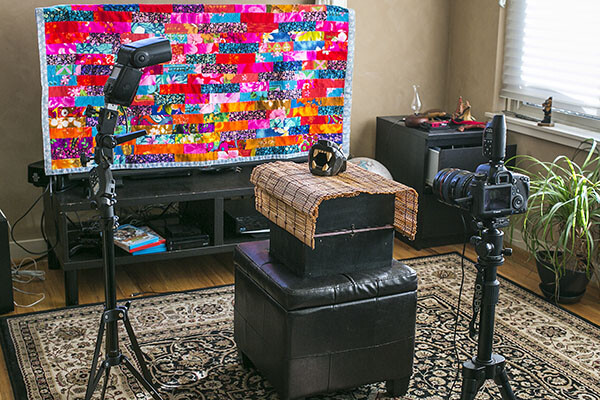
The following demonstration uses the basic tools mentioned above – a Canon 6D, 580 EXII flash, two PocketWizard Plus III transceivers, and a light stand with a swivel umbrella adapter. The photography subject is a wooden sculpture procured during a vacation in Mexico, sitting on a bamboo mat, with a colorful quilt as a background. The bare flash with no modifier is situated camera left, and there is some natural window light coming from camera right.

Off Camera Flash setup

With the camera set at 1/160 for shutter speed, f/2.8 aperture and ISO 250, the natural light shot as seen below isn’t half bad, but the left side of the product is a bit shadowed.

Basic off camera flash product photography

Enter the speedlight! If you aren’t familiar with a speedlight, all of the buttons and controls on the back can look intimidating, but the first button to be familiar with (besides the “on” switch) is the “Mode” button. This is what you hit to get from ETTL (automatic) to M (Manual) to Multi (for firing repeated flashes during a single long exposure). Leaving the flash on ETTL is fine when the flash is connected to your camera’s hot shoe mount, but it can produce disastrous, blown-out photos when the flash is moved off-camera. I won’t waste a photo showing you the result, but the resulting image is completely blown out and unsalvageable.

In order to adjust the off-camera flash’s output to better sync with your camera settings, it’s time to switch the flash onto Manual mode. Simply press the Mode button until M shows up on the flash LCD. Then, start playing around with the flash’s output. On the bottom portion of the flash, press the middle button that reads SEL/SET that is surrounded by the Select Dial. Numbered fractions will appear blinking in the LCD. Turn the Select Dial clockwise to change the numbers, going from 1/1 down as far as 1/128. The result below is shot at the same camera settings, but the off-camera flash firing at camera left at 1/16 power. The resulting image below is still blown out, but not nearly as bad as when the flash fires on ETTL mode.

Basic off camera flash product photography

Flash power set at 1/16


To continue balancing out the overpowering flash, dial the power down to 1/64. The result is much more balanced.

Basic off camera flash product photography

Flash power set at 1/64


Take the flash power down even lower to 1/128, and the photo subject is a bit more shadowy, adding more edge to it and really separating it from the background.

Basic off camera flash product photography

Flash power set to 1/128


This is just the start to experimenting with off-camera flash; many other variables such as camera settings, modifiers, and multiple light sources can produce similar and superior effects. However, the first thing to realize is how dramatic effects can be by just playing around with a single speedlight flash and its the manual settings.

googletag.cmd.push(function() {
tablet_slots.push( googletag.defineSlot( “/1005424/_dPSv4_tab-all-article-bottom_(300×250)”, [300, 250], “pb-ad-78623” ).addService( googletag.pubads() ) ); } );

googletag.cmd.push(function() {
mobile_slots.push( googletag.defineSlot( “/1005424/_dPSv4_mob-all-article-bottom_(300×250)”, [300, 250], “pb-ad-78158” ).addService( googletag.pubads() ) ); } );

The post Getting Started with Off-Camera Flash by Suzi Pratt appeared first on Digital Photography School.


Digital Photography School

 
Comments Off on Getting Started with Off-Camera Flash

Posted in Photography


9. Februar 2015

09 Feb

Das Bild des Tages von: Michel Nguie

Eine Katze mit unterschiedlicher Augenfarbe schaut dich an.

Fotolinks des Tages

1. Viele gute Interviews

Ken Weingart ist selbst ein sehr erfolgreicher amerikanischer Fotograf, zeigt jedoch auf seinem Blog nicht einfach nur seine eigenen Bilder, sondern präsentiert dort gute Interviews, die er mit anderen bekannten Fotografen, wie Martin Schoeller, Alain Laboile und Joel-Peter Witkin geführt hat. → ansehen

2. Ein Fotobuch von 1887

PetaPixel stellt das Fotobuch „Photography in the Studio and in the Field“ von Edward M. Estabrooke vor. Das Besondere daran: Das Buch ist über 120 Jahre alt und beschreibt die zur damaligen Zeit gängigen Techniken und Fortschritte. Es kann dank des Projektes Gutenberg kostenlos angesehen und heruntergeladen werden. → ansehen

3. Abgelaufen

In einem Gastbeitrag auf Japan Camera Hunter beschreibt Stephen Dowling, wieso das Fotografieren mit abgelaufenem Film reizvoll und interessant sein kann. Außerdem hat er jede Menge Anmerkungen parat, was man beachten muss, wenn man mit abgelaufenem Film arbeitet. → ansehen


kwerfeldein – Fotografie Magazin | Fotocommunity

 
Comments Off on 9. Februar 2015

Posted in Equipment


How to Control Aperture and Create Images You Love

09 Feb

This article is sponsored by the New York Institute of Photography. NYIP offers high-quality online photography courses that are affordable, convenient, and accredited.

1 aperture

Controlling the aperture is one of the most powerful ways to improve your images. It’s also the topic that continues to perplex photography students everywhere. Rather than unnecessarily complicating matters, I prefer to demystify the subject. In this tutorial, I’ll reveal how both a wide and small aperture can be used to create consistent and beautiful results.

Consider the Background

2 butterfly

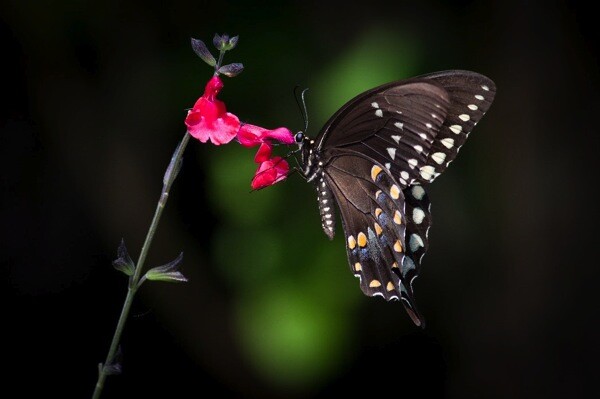
When I’m about to take a photo, the first question I ask myself is, “What kind of background would be best?” With wildlife, sports, portraits, and still-life objects, I often want the subject sharp, and the background to be a soft blur. As you’ll see in the example above, the blurred background allows the viewer to focus on the beautiful details of the butterfly, not on the leaves behind it. To do this, I chose a wide aperture by adjusting to a smaller f-number. At f/5.6 the opening in your lens is physically wide open, creating what’s known as shallow depth of field.

3 puffin

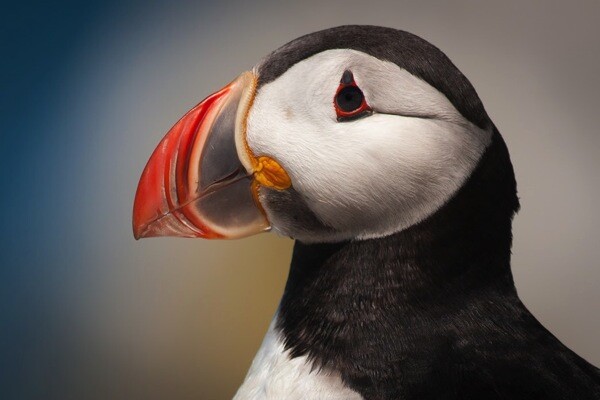
In the example above, I photographed an Atlantic Puffin at f/5.6. The bird is tack sharp while the foliage in the distance is very soft. The theme of the photo is clearly about its colorful beak, and there is little else in the photo to detract from it. For this reason, wildlife photographers typically use wide apertures for the majority of their work. To further emphasize the effect, try positioning yourself so there is distance between the subject and the background.

Freezing action

4 soccer

If you flip through the pages of Sports Illustrated, you’ll notice how most of the players are sharp while the fans are out of focus. The wide aperture chosen by the photographer not only creates that shallow depth of field, but it also lets a great deal of light into the camera. As such, it’s possible to use a fast shutter speed to freeze the action. If you are serious about sports photography, a lens that opens all the way to f/2.8 is worth the investment. You may even hear people refer to them as “fast lenses” which describes the speed in which the wide aperture lets light into the camera.

Focus on what’s important

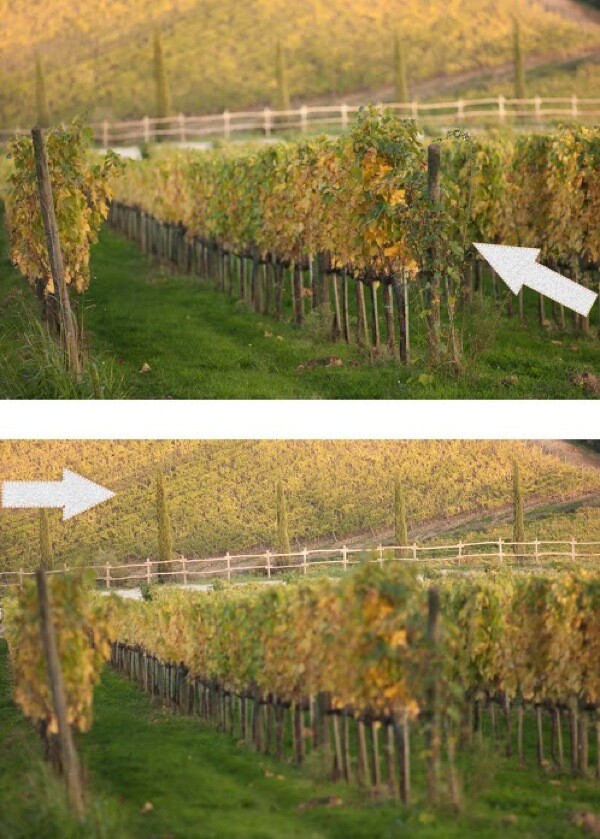
Before going any further, allow me to spend a moment on focus. When using a wide aperture, be sure to place your active focus points on the subject you want sharpest. These two vineyard photographs were both taken with the same wide aperture of f/1.8, but they look very different. This is due to my placement of the focus point indicated here by the arrows. For the image on top, I focused on the vines closest to me. As a result, everything behind it is soft. For the image on the bottom, I focused on the distant vines. The shallow depth of field then works to blur everything in front of the focus point.

5 focus example

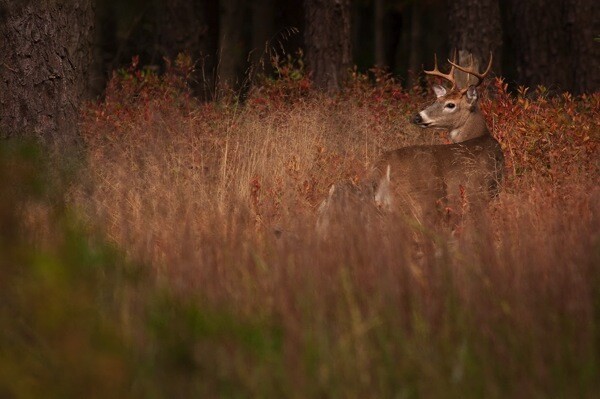
We can see how all of this comes together in the image of the male buck. I saw the large deer in October just after sunrise. With my active focus point on his face, I knew the deer would be sharp. A wide aperture of f/5.6 created a shallow depth of field. Not only was the background blurred, but the tall reeds in the foreground as well. The perspective makes it seem as if we’re spying on the creature through the tall grasses.

6 buck

As you can see, a wide aperture can help you create images that surpass routine snapshots. With this new knowledge, you’ll start to recognize the techniques other photographers have used in their photographs. Begin practicing with wide apertures and you’ll soon be changing settings like a pro. Now, let’s turn our attention to small apertures.

Small apertures

7 castle

There’s a common misconception amongst photography students who believe sharp photos are solely result of fast shutter speeds. While that is part of the equation, the other equally important consideration is the aperture. By achieving greater depth of field, it’s possible to keep the entire subject in focus. In this second portion of our aperture tutorial, I’m going to share the specific f-stops and techniques used to create tack sharp images.

8 aperture opening

Don’t let the terminology trick you. The term “small aperture” refers to the physical size of the lens opening. This may seem counterintuitive since the actual f-number is larger. Yet, f/22 is a smaller aperture than f/16 because the aperture blades inside the lens don’t open as wide. See the example above.

9 empire state

When you hear photographers say they are “stopping down”, it means they are using a narrower aperture opening, for example going from f/8 to f/11, or from f/11 to f/16. This renders everything sharp from near-to-far, hence the phrase “great depth of field”. I’ve created a phrase to help you remember this. “The greater the f-stop number, the greater the depth of field.”

10 brooklyn bridge

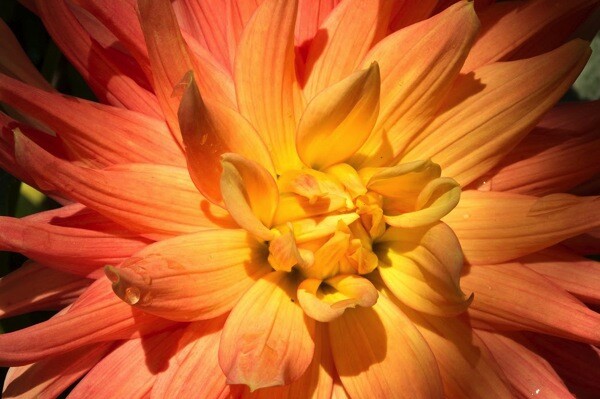
Great depth of field is also useful when you’re photographing flowers or close-up objects. If the aperture is too wide like f/2.8, only a handful of the petals will be sharp. The solution doesn’t necessarily have to be f/22 which is more suitable for a vast landscape; a better compromise would be f/8 which provides enough depth of field for most macro opportunities. Then, by simply focusing on the center of the flower, the entire subject remains reasonably sharp.

11 dahlia

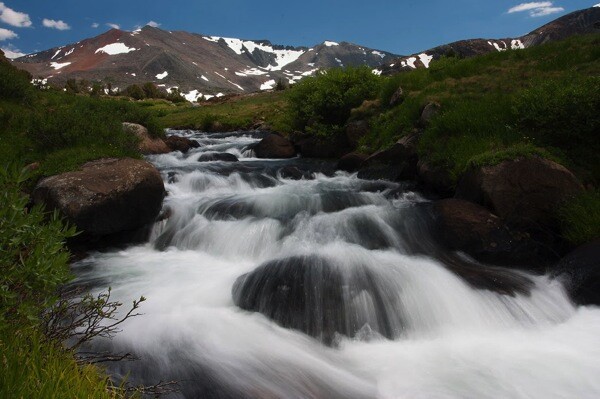
In a big sweeping landscape, it can be tricky to determine where to focus. For me, apps that calculate precisely where to focus are just not practical (or fun). To further emphasize the effect of the small aperture, I have found a simple solution that really works. Place your focus point on an object that’s 1/3rd of the way up from the bottom of the frame and use a small aperture like f/22. Not only will the object in the bottom third be sharp, but so will everything in front of, and behind it. As an example, I focused on the large boulder towards the bottom of the frame in this photo from Yosemite National Park.

12 yosemite

Where the tripod comes in

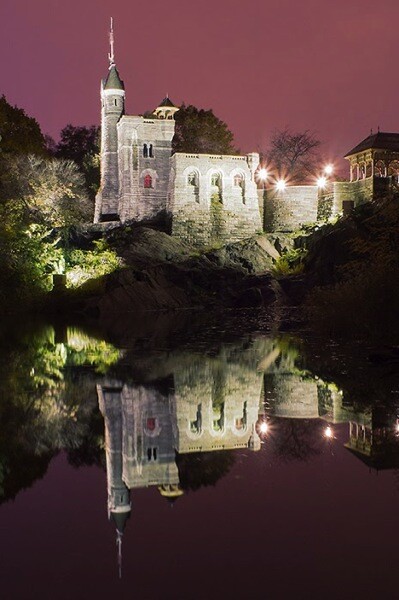
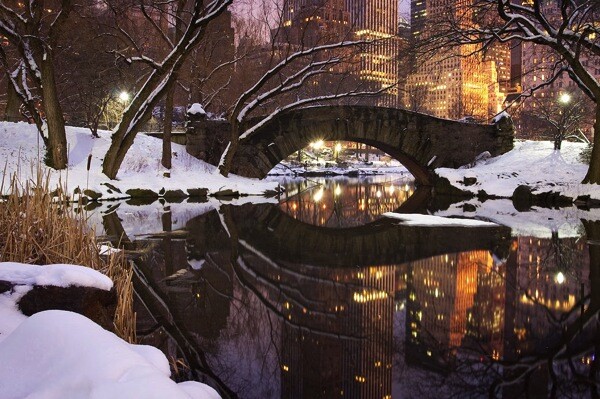
While f/22 may be an ideal setting for a landscape, it does present photographers with a challenge especially in low light situations. Since a small aperture doesn’t let much light into the narrow opening of the lens, a slower shutter speed and/or higher ISO become necessary to achieve a good exposure. These longer exposure times are the primary reason most landscape photographers use tripods.

13 central park

Bonus tip

If carrying a tripod is not possible, you can create a makeshift camera support by placing the camera on a bag, a wall, even the ground. Then, to avoid jostling the camera during the exposure, set the two second timer to automatically trip the shutter.

14 jefferson

This article is sponsored by the New York Institute of Photography. NYIP offers high-quality online photography courses that are affordable, convenient, and accredited.

googletag.cmd.push(function() {
tablet_slots.push( googletag.defineSlot( “/1005424/_dPSv4_tab-all-article-bottom_(300×250)”, [300, 250], “pb-ad-78623” ).addService( googletag.pubads() ) ); } );

googletag.cmd.push(function() {
mobile_slots.push( googletag.defineSlot( “/1005424/_dPSv4_mob-all-article-bottom_(300×250)”, [300, 250], “pb-ad-78158” ).addService( googletag.pubads() ) ); } );

The post How to Control Aperture and Create Images You Love by Chris Corradino appeared first on Digital Photography School.


Digital Photography School

 
Comments Off on How to Control Aperture and Create Images You Love

Posted in Photography


*Almost* Spring Clean Up: Get Power and Organization with This Bag Divider

09 Feb

Extra photos for bloggers: 1, 2, 3

Your camera bag is a grab bag of lenses, batteries, candy… and sometimes even a camera or two.

Then take charge (literally) of that bundle of goodies with the Super Charged Bag Divider.

The Super Charged Bag Divider attaches to the inside of any camera bag to create an organized space for all that gear with a bonus hidden backup battery.

Keep your cameras, phone, accessories, and more charged up while also keeping them snugly packed in your bag… and away from that sticky candy!

Divide and conquer with the Super Charged Bag Divider
$ 35 at the Photojojo Shop


© Britta for Photojojo, 2015. |
Permalink |
No comment |
Add to
del.icio.us

Post tags:


Photojojo

 
Comments Off on *Almost* Spring Clean Up: Get Power and Organization with This Bag Divider

Posted in Equipment


Valentine’s Day Photography Tips for Your Inspiration

09 Feb

Ahhh, Love. It can be giddy, maddening, complacent, jealous, warm and gooey, and downright crazy, usually all in the same day. And the weirdest day for love? Valentine’s Day, The Amateur Night red headed step child of New Years Eve, but instead of drinking too much and waking up pantsless while in a pool of your own vomit, you’re forced Continue Reading

The post Valentine’s Day Photography Tips for Your Inspiration appeared first on Photodoto.


Photodoto

 
Comments Off on Valentine’s Day Photography Tips for Your Inspiration

Posted in Photography


New Frank Gehry Building So Ugly it Has to Wear a Paper Bag

09 Feb

[ By WebUrbanist in Architecture & Public & Institutional. ]

frank gehry building exterior

Featuring over 300,000 custom-designed bricks, the latest work of one of the world’s most famous architects is an impressive feat of engineering, but hard not to compare to a crumpled grocery bag. Even Australia’s governor general Peter Cosgrove introduced it as “the most beautiful squashed brown paper bag I’ve ever seen” at its opening ceremony. Gehry himself reportedly does not mind the comparison, but there is not much he could do or say about it even if he did.

frank gehry bag building

paper bag building gehry

Gehry’s first work in Australia, the structure’s inspiration supposedly came from a combination of local sources (Sydney architecture) and a treehouse, with branching supports holdings organic shapes. Its fenestration is designed to reflect views of the surrounding neighborhood – this, at least, is an intriguing idea that has a demonstrable and interactive effect.


frank gehry glass walls

dancing house image gehry

While Gehry states that this building will not be replicated elsewhere, it is quite recognizable as his work, and thus raises the question: is it sufficiently different from his other amorphous and sculptural buildings to be deemed truly unique in the first place? The resemblance to one half of The Dancing House (aka Fred and Ginger), a nickname given to the Nationale-Nederlanden building in Prague (shown above), is hard to miss.

frank gehry classroom space

frank gehry abstract room

The complex and chaotic-seeming shapes percolate into the interior as well, showing via details and spatial configurations in the main atrium space, multiple lecture halls and multimedia rooms and a student center above. Ugly or lovely, a grand metallic entry staircase is also reminiscent of other Gehry projects.

frank gehry reflective forms

frank gehry main staircase

frank gehry paper bag

Ultimately, only time seems to tell whether an unusual building can become an icon, but one has to wonder whether something can become iconic if it is not sufficiently different from other work by the same creator. Perhaps one of his few works to still stand out (and stand the test of time) remains his original Santa Monica house remodel – a reconfiguration that shows a learning process that has arguably since stagnated. There is no doubting his influential roll in contemporary deconstructivist architecture, but he has had failures and rejections as well and his projects increasingly look like muddled remixes of one another.

Share on Facebook


[ By WebUrbanist in Architecture & Public & Institutional. ]

[ WebUrbanist | Archives | Galleries | Privacy | TOS ]


WebUrbanist

 
Comments Off on New Frank Gehry Building So Ugly it Has to Wear a Paper Bag

Posted in Creativity


Liebe, Leib und Lust

09 Feb

Ein Mensch mit Schweinemaske.

Corinna Sauer beschäftigte sich in ihrer Serie „Consensual“ mit Sadomasochismus. Die Arbeit der Fotografin visualisiert die Gradwanderung zwischen Schmerz und Lust und diskutiert damit die Grenzen des Normativen. Ein Beitrag über eine Serie, die einen künstlerischen Blick auf die Szene wirft, ohne wertend zu sein.

Als ich ungefähr zwölf Jahre alt war, hatte ich das erste Mal Fantasien, in denen ich entführt, in einem Keller gefoltert und erniedrigt werde. Diese Fantasien waren einerseits lustvoll, andererseits habe ich mich dafür geschämt. Die Tatsache, dass meine Fantasien nicht typisch männlich sind, hat mir mein Outing erschwert. Erst im Alter von 45 Jahren lebe ich so frei, wie ich es mir immer erträumt habe.

Diese Aussage stammt von einem Mann, den die Fotografin Corinna Sauer im Rahmen ihrer Serie „Consensual“ portraitiert hat. Für ihre Serie hat sie sich in SM-Studios begeben und Personen während des SM-Spiels fotografiert.

Durch ihre feine Beobachtungsgabe hat Corinna eine eigene Bildsprache entwickelt, die ausdrucksstark und ästhetisch über Menschen mit besonderen sexuellen Vorlieben spricht. Die Fotografin wollte mit ihrer Serie Spielformen der Sexualität aufzeigen, die sich außerhalb des Normbereichs bewegen.

Bondage im SM Studio

Corinna war am Anfang vor allem über den Einfallsreichtum bei sadomasochistischen Praktiken überrascht. Individuelle Fantasien werden in den Studios nach Maß zugeschnitten. Schlachtungsfantasien als Schwein, Entführungszenen oder die Vorstellung, für wenige Stunden als Kleinkind behandelt zu werden, gehörten neben den bekannteren masochistischen Praktiken zum Programm.

Bei einigen wenigen Szenen habe sie kurz das Studio verlassen müssen, berichtet die Fotografin. Die mehrstündigen Fotosessions gingen ihr vor allem am Anfang an die Substanz.

Unter sexuellem Sadomasochismus versteht man im Eigentlichen zwei Arten der Sexualpraktik: Die des Sadismus (dominant) und die des Masochismus (unterwürfig). Bei den meisten Anhängern kristallisiert sich über die Zeit hinweg die Präferenz für den aktiven oder den passiven Teil heraus.

Masochismus tritt jedoch oft zuerst in Erscheinung und ist vierfach so häufig wie Sadismus. Der höhere Bedarf an masochistischen Sexualfantasien wird durch Angebote in Bordellen abgedeckt.

Eine Frau trägt eine Maske.Frau mit Wachs.

Obwohl „sexueller Sadomasochismus“ im ICD-10 als psychische Störung definiert ist, sehen die meisten Psychiater und psychologischen Psychotherapeuten sadomasochistische Praktiken eher als Variante einer gesunden Sexualität an.

Klinisch relevant wird es jedoch dann, wenn sexuelle Fantasien mit einem Leidensdruck einhergehen oder Praktiken nicht einvernehmlich ausgeübt werden. In der Regel werden die sexuellen Praktiken jedoch mit Vorsicht und nach Absprache ausgeübt. Nicht immer, aber häufig gibt es ein Codewort, das die sexuellen Rituale unterbricht, so erzählt Corinna.

Sadomasochismus ist nicht für alle Menschen lustvoll, dennoch machen fünf bis zehn Prozent der Bevölkerung einmal im Leben eine Erfahrung in diesem Bereich. „Die mangelnde Akzeptanz ist jedoch für viele SMler eine große Belastung“, sagt die Fotografin.

Noch immer herrscht ein allgemeiner gesellschaftlicher Konsens, dass sadomasochistische Neigungen Zeichen einer gestörten Psyche sind. Corinna berichtet, dass einige Menschen, mit denen sie sprach, lange Zeit ohne Beziehungspartner lebten. Tatsächlich sind in den meisten SM-Salons mehr Männer als Frauen anzutreffen.

Eine Frau liegt unter Plastik.Ein Mensch wird gefesselt.

Dass sadomasochistische Praktiken hauptsächlich von homosexuellen Menschen ausgeübt würden, sei jedoch ein Vorurteil, sagt Corinna. Trotzdem drängten sich auch bei der Fotografin zu Anfang ihrer Arbeit vorurteilsbehaftete Gedanken auf. Sie wollte mehr über die Motivation der Leute erfahren, die sich zum Erlangen sexueller Lust erniedrigen lassen oder andere demütigen.

Über die Ursprünge sadomasochistischer Neigungen wurde auch innerhalb der psychologischen Forschung lange Zeit gerätselt. Psychoanalytische Theorien postulieren, dass Masochisten sich in frühkindliche Phasen zurücksehnen und dies in Form von Sexualpraktiken ausleben können.

Auch wird vermutet, dass Masochisten im realen Leben überlegen sein wollen. Wenn dieser Wunsch in der Realität nicht umsetzbar ist, verkehrt er sich ins Gegenteil.

Neuere kognitiv-behaviorale Theorien postulierten dagegen, dass das Aushalten von Schmerz selbstwertstabilisierend wirkt. Manche Menschen könnten beispielsweise Stolz empfinden, wenn sie mehr Schmerz aushielten als andere.

Ein Mann atmet durch eine Schweinemaske.

Aus der Forschung zur Schmerzverarbeitung ist bekannt, dass einige Menschen schmerzinduzierende Techniken ausführen, um negative Gefühle zu regulieren oder starke Anspannung zu reduzieren. In diesem Zusammenhang wird häufig die Vermutung geäußert, dass masochistische Praktiken eine Erleichterung für Menschen darstellen, die unter enormem beruflichen Druck stehen und sich somit für kurze Zeit Entlastung durch Verantwortungsabgabe verschaffen.

„Meine Erfahrung ist jedoch“, so Corinna, „dass Sadomasochisten in allen Berufs- und Gesellschaftssparten auftauchen.“ Nur einmal sei ein Manager einer großen Firma in Lederkutte auf sie zugetreten und habe gebeten, die Bilder sichten zu können, um eine Erkennbarkeit seiner Person auszuschließen.

Während des Gesprächs trug er einen roten Ball im Mund, der Schreie dämpfen soll. Ein bisschen seltsam sei ihr dieses Gespräch zunächst schon vorgekommen, die Scheu vor dem Unbekannten habe sich aber schnell gelegt.

Man merkt der Fotografin an, dass sie sich nicht nur unter ästhetischen, sondern auch wissenschaftlich relevanten Gesichtspunkten mit Sadomasochismus beschäftigt hat.

Eine Domina steht auf dem Boden.

Entstanden ist eine Serie, die nicht nur Mut erfordert, sondern auch das Prädikat künstlerisch wertvoll tragen darf. Ihre Serie ist ein gutes Beispiel dafür, wie Fotografie ein Spiegel gesellschaftlich relevanter Phänomene sein kann.

Erwähnenswert ist an dieser Stelle, dass Corinna nicht die einzige Fotografin ist, die Menschen mit der Vorliebe für sadomasochistische Praktiken portraitiert hat. Auch Fotografen wie Katrin Ingwersen und Florian Müller haben sich diesem herausfordernden Thema gestellt.

Corinna Sauer ist jedoch die einzige (mir bekannte) Fotografin, die sadomasochistische Praktiken außerhalb einer Sicherheitszone dokumentiert hat. Sie nutzte weder Studiolicht noch weniger bedrohlich wirkende Studiosettings. Stattdessen fotografierte sie mit Zustimmung der Beteiligten die sadomasochistischen Praktiken bei deren Durchführung.

Sich in dunklen Kellern aufzuhalten und schmerzverzehrte Gesichter während des Aktes über mehrere Stunden zu portraitieren, erfordert Mut und eine starke Psyche. Der Verzicht auf Farbe und das Setzen starker Schwarz-Weiß-Kontraste trägt zur Ausformung einer persönlichen und charakterstarken Perspektive bei.

Mann mit Gummimaske liegt auf LinoleumbodenAuf dem Boden sind Schatten geworfen.

Corinna Sauer ist derzeit als freie Fotografin in Berlin und bei Prospektphoto tätig. Neben der Umsetzung eigener künstlerischer Projekte ist sie Teil des Musikmagazins Musikmussmit und verbindet dort ihre Leidenschaft für Livemusik mit der Fotografie.


kwerfeldein – Fotografie Magazin | Fotocommunity

 
Comments Off on Liebe, Leib und Lust

Posted in Equipment


9 February, 2015 – Life as a Photographer

09 Feb


Mark Schacter ponders the question, "What is life like as a photographer?"

The first thing he ponders  is, “How does life as a photographer differ from life as anything else: a plumber, a bus driver, a nuclear physicist…?”


The Luminous Landscape – What’s New

 
Comments Off on 9 February, 2015 – Life as a Photographer

Posted in News