RSS
 

Archive for February, 2015

Civic Camouflage: Hiding a Huge Urban Stadium in Plain Sight

13 Feb

[ By WebUrbanist in Architecture & Public & Institutional. ]

secret stadium hides urban

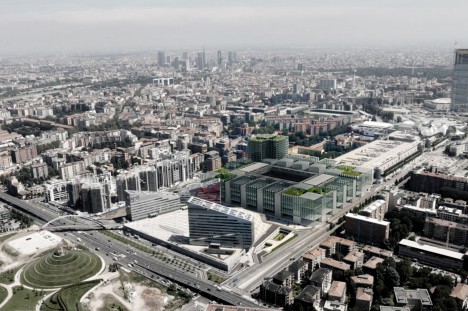
Sports stadiums can be contentious, particularly when located in the heart of a city, but this design works in various ways to reduce disruptions to urban fabric, slotting seamlessly into its surrounding context.

urban fabric stadium design

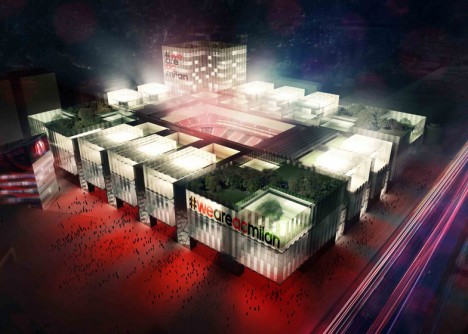
Designed by international architecture and engineering firm Arup, the AC Milan 48,000-seat soccer club stadium in Italy is wrapped in commercial (shops, bars, hotels and restaurants) programmatic elements that work with but also independently of sporting events. Additional public-purpose elements include rooftop decks, micro-parks and playground for children.

Reinforced with soundproofing and a plan to sink its base into the ground, adding these architectural buffers on all sides helps reduce noise pollution for blocks on all sides as well as providing street-level continuity for those walking and driving through the city. Mark Wilson compares it to a combination of historical fortifications and suburban shopping centers: “around the stadium’s heart, architects will build a castle-like perimeter of restaurants, a hotel, and a sports college. From the street, the stadium just looks like a block-wide mall.”

stadium interior space design

The stadium itself features a spectator-optimized design intended to provide the best view possible for all visitors as well as a removable roof to allow for play in various conditions.

stadium side view

There are many structures that arguably should stand out from their surroundings – civic buildings like city halls, for instance – but sports stadiums rarely look good in and of themselves, and far too frequently interrupt what is going on in the cities around them. Typically, “even the most beautifully designed stadiums are an eyesore. They’re sprawling moles protruding from the skin of an urban environment, distended to accommodate a wide footprint of seats low to the ground.”

Share on Facebook


[ By WebUrbanist in Architecture & Public & Institutional. ]

[ WebUrbanist | Archives | Galleries | Privacy | TOS ]


WebUrbanist

 
Comments Off on Civic Camouflage: Hiding a Huge Urban Stadium in Plain Sight

Posted in Creativity


How to Take Photos of Super Cute Couples

13 Feb

Store shelves are lined with teddy bears, hearts, and a lot of pink stuff. Valentine’s Day is right around the corner!

And with V-Day comes many happy couples whose adorableness is just begging to be captured on camera for all to see and “squee!” over.

Photographing all those pretty pairs of people can be a tad awkward though, so we’ve put together our very best tips to help make the process fun and pain free!

Read on and you’ll be capturing memories sweeter than a heart-shaped box of chocolate.

4 Tips for Photographing Couples

(…)
Read the rest of How to Take Photos of Super Cute Couples (547 words)


© Taylor for Photojojo, 2015. |
Permalink |
No comment |
Add to
del.icio.us

Post tags:


Photojojo

 
Comments Off on How to Take Photos of Super Cute Couples

Posted in Equipment


Networks of New York: Field Guide to Internet Infrastructure

13 Feb

[ By WebUrbanist in Travel & Urban Exploration. ]

network guide

We tend to think of the internet as something akin to aether, present all around us in the void – or perhaps something traveling down a series of tubes – the reality is much more complex, rich and intriguing.

networks of new york

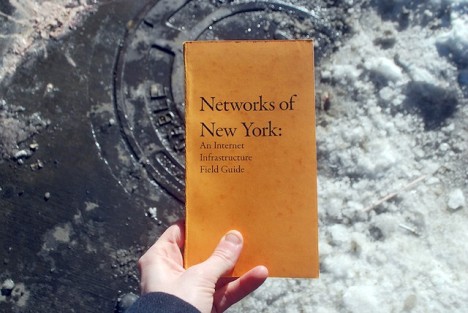
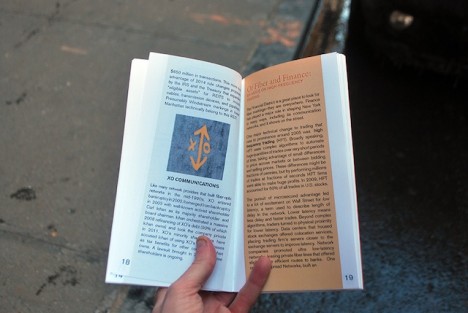
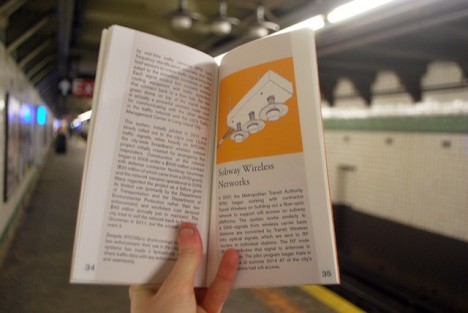
In an upcoming book titled Networks of New York: An Internet Infrastructure Field Guide, Ingrid Burrington presents an urban variation on a naturalist’s handbook, giving you the tools to tour the real-life objects that are often obscured or simply hidden in plain sight all around cities.

network internet infrastructure handbook

From the author, “New York’s network infrastructure is a lot like the city itself: messy, sprawling, and at times near-incomprehensible. However, the city’s tendency toward flux is a strange blessing for the infrastructure sightseer: markings and remnants of the network are almost everywhere, once you know how to look for them.”

network field guide notes

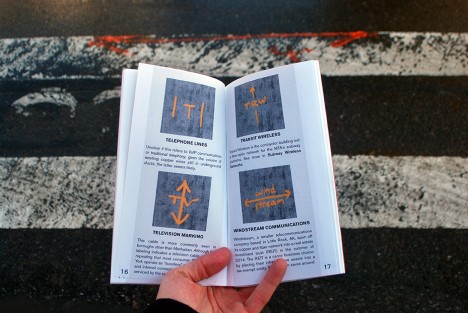
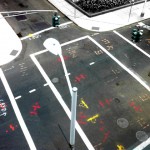
The story starts with manhole covers and progresses through street markings, which follow a federal color-coding standard: “Orange refers to the broad catch-all of ‘Communications, alarm, signal lines, cables and conduit.’ This means that orange lines can be internet cables, television cables, telephone lines, or other kinds of conduits.”

network deciphering symbols systems

“The markings are sometimes really sloppy, and often in fragments. Sometimes you’ll see several different labels in the same place. A lot of these cables are bundled up together running through ducts under the city.” Suddenly all of the strange acronyms are comprehensible, including but not limited to: CATV, NXTG, T, ECS, RCN, MCI, L3, XO and FO.

field guide example

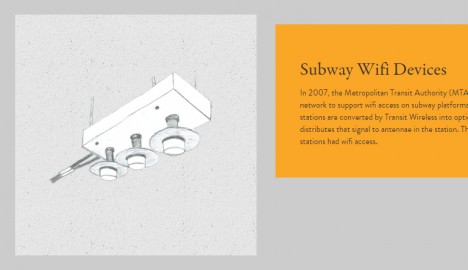
The book also branches out to cover different kinds of antennas security cameras we are so used to seeing but many of which we do not understand the purpose of at a glance, from subway wifi devices and distributed antenna systems to CrimeEye, MTA and NYPD surveillance camers.

field guide examples

Finally, the authors builds up to the biggest elements of the built environment: architectural structures housing various large-scale elements of internet infrastructure along the city. Some of these are well-known, but the book brings to light a series of buildings less frequently visited, and provides tips on how to identify others.

field guide illustrations

Recognizing “these buildings when looking on the street is not always easy, but one telltale sign is to look for signs of ventilation and cooling systems. Alternatively, look for windows, or more accurately, the absence of them. (Note: on much larger buildings, in particular skyscrapers, vents also could just be a sign of a mechanical floor, the centralized space dedicated to maintaining utility needs for the entire building).”

Share on Facebook


[ By WebUrbanist in Travel & Urban Exploration. ]

[ WebUrbanist | Archives | Galleries | Privacy | TOS ]


WebUrbanist

 
Comments Off on Networks of New York: Field Guide to Internet Infrastructure

Posted in Creativity


Why to Consider Doing Photography Related Volunteering in Your Community

13 Feb

There is so much power in photography, as the old adage goes: A picture is worth a thousand words. Imagine if you did more than just create a photograph? Imagine if you taught a generation of people how to tell a story with a camera? Would you?

I have, and find it terribly rewarding! Well perhaps not an entire generation, but I have worked with some awesome teenagers in the Seattle area. Let me just say, it’s truly wonderful to see what can happen when you work with young curious minds.

I have mentored with a Seattle area non-profit, Youth In Focus whose mission is to empower urban youth, through photography, to experience their world in new ways and to make positive choices for their lives.

OLYMPUS DIGITAL CAMERA

Youth In Focus offers film and digital photography classes at different levels; this includes a full darkroom and a digital lab. It’s a kind of after-school program, providing a lot of these kids an opportunity to have a creative outlet that may not be available to them through their schools. Students are issued a camera, film/media and receive assignments weekly. There are also field trips to local museums and even photowalks.

One of our outings was at Pike Place Market in Seattle. Some of the kids in the group hadn’t been to the market before, this made for a great opportunity to see the market as well for them to have access to us while taking photographs, real time. The bonus was that we teachers and mentors take photos too.

OLYMPUS DIGITAL CAMERA

OLYMPUS DIGITAL CAMERA

During my time with Youth in Focus, I worked with three different groups of students. Each group was amazing and entertaining too! The best moments are a round table discussion of each student’s images. Every week they select, edit, and print their favourite image from the previous week’s assignment. They may ask for guidance in selecting that image, especially in the beginning of the classes, as they’re just learning. You’ll find the best way to help them is to ask questions about the story they’re trying to tell or how they believe the composition could be better, etc. The goal is to get them talking about it, get them involved.

Connecting with the students via the art they’re creating is so powerful; seeing their improvement each week makes you proud. You’re excited for what’s to come and where they’re going to take it. It’s an experience not yet matched by any work I’ve done in my professional life. Perhaps if I were a full-time teacher I’d feel that, every day. I imagine you’ll get as much, if not more out of the experience if you try it.

At the end of each quarter the kids select their best one or two images to display as a part of an open house show. There’s a potluck dinner, and a gallery of images to view from each class. It’s so impressive to see what these kids create.

OLYMPUS DIGITAL CAMERA

Now you’re thinking, “Wow! I want to do that, I want to help kids and teach photography!” but then you think, “I don’t have the time” or perhaps, “I’m not a teacher”. That’s okay, you don’t have to be a teacher, you just need to have a desire to share the knowledge you already possess. As for time, if you really want to do it, you can you can make it happen. I did, and will again.

OLYMPUS DIGITAL CAMERA

Other challenges may be that there’s not a program like this in your city. Do a little research to see if you can find one, or reach out to a local high school and see if you could collaborate with them to put one together. I’d be willing to bet you can find other photographers in your area that would help you make it happen. If you’re in New York City, check out NYC Salt, which offers a similar mission for youth there.

If for some reason you can’t find the time to invest in such an opportunity, but you still want to be involved, you might consider making some sort of donation; old cameras, photo equipment, or of course good old hard cash. These kinds of groups are always in need of cameras, film, memory cards, rechargeable batteries and the like. Youth In Focus uses eBay to sell equipment that is donated but can’t be used in the classroom, then puts that money back into the classrooms.

Working with a non-profit like Youth In Focus or NYC Salt are not the only options. There are projects like Help Portrait, founded by Jeremy Cowart and Kyle Chowning, or The Giving Lens founded by Colby Brown. Those are just a couple, there are so many opportunities available, you just have to seek them out.

OLYMPUS DIGITAL CAMERA

There is great joy in giving back to your community, it’s challenging, educational, and it fills up your heart.

Are you ready?! Get out there and make it happen!

googletag.cmd.push(function() {
tablet_slots.push( googletag.defineSlot( “/1005424/_dPSv4_tab-all-article-bottom_(300×250)”, [300, 250], “pb-ad-78623” ).addService( googletag.pubads() ) ); } );

googletag.cmd.push(function() {
mobile_slots.push( googletag.defineSlot( “/1005424/_dPSv4_mob-all-article-bottom_(300×250)”, [300, 250], “pb-ad-78158” ).addService( googletag.pubads() ) ); } );

The post Why to Consider Doing Photography Related Volunteering in Your Community by Kate Hailey appeared first on Digital Photography School.


Digital Photography School

 
Comments Off on Why to Consider Doing Photography Related Volunteering in Your Community

Posted in Photography


CP+ 2015: Up close and personal with Ricoh’s full-frame Pentax mockup

12 Feb

After announcing the development of a full-frame DSLR recently, Ricoh is showing a very early mockup at the CP+ show in Yokohama Japan. Although details are extremely limited (limited, in fact, to the words ‘Full-frame’ in the press release and ‘Pentax’ written on the front) Ricoh’s mockup does give some clues as to the camera’s specification. Kind of. Click through for images and some – frankly – rampant speculation. 

Articles: Digital Photography Review (dpreview.com)

 
Comments Off on CP+ 2015: Up close and personal with Ricoh’s full-frame Pentax mockup

Posted in Uncategorized


CP+ 2015: Hands-on with new Pentax K-S2

12 Feb

The Pentax K-S2 doesn’t replace the K-S1, but sits above it in Ricoh’s Pentax lineup. And quite right too – it’s a considerably more serious camera, even if we do miss the shiny disco lights on the handgrip. We’re at the CP+ show in Yokohama Japan, where Ricoh is showing off its new 20MP APS-C DLSR, in all manner of color combinations. Click through for some hands-on images

Articles: Digital Photography Review (dpreview.com)

 
Comments Off on CP+ 2015: Hands-on with new Pentax K-S2

Posted in Uncategorized


7 Things I’ve Learned from Photographing Storms

12 Feb
henrietta-supercell-1-Panorama

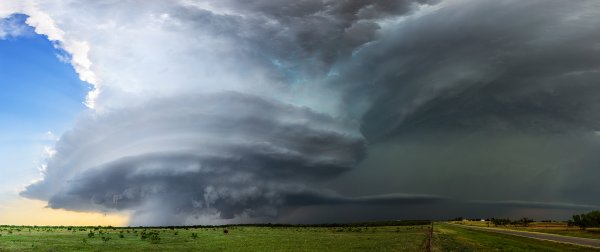
A massive supercell near Henrietta Texas in May, 2014. © James Brandon

I’ve been a professional photographer for around five years now. I’ve photographed a lot of different subjects throughout the years, but nothing in the world could have prepared me for photographing storms. When I stood in front of my first supercell on May 8th of 2013, I was hooked. A low hanging wall of cloud hovered over the field in front of me as its rotation increased by the second. The 40mph winds at my back were feeding moisture and warm air into the storm. The grass in the field was all bent down towards the monster looming in front of me. Yeah, that’s all I needed to become totally obsessed.

That was back in the spring of 2013. Since then I’ve become good friends with a few very seasoned storm chasers and have gotten a chance to ride along with them on several storms, both last season, and now this season. Mike Mezeul, for example, has become a great friend over the past couple of years and we even lead workshops together now. He’s an absolute wealth of knowledge when it comes to weather and I highly suggest you check out his work.
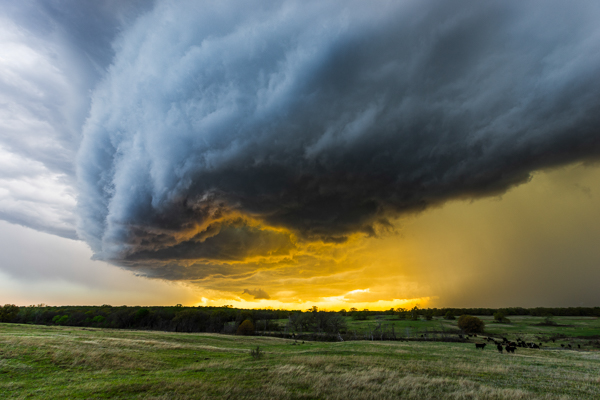
Shelf Cloud Over Ardmore, Oklahoma


In these brief two seasons of chasing, I have already racked up countless hours chasing, God knows how many miles, and my bank account certainly knows how many tanks of gas. In spite of all that, I’m still very new to this world of storm chasing and storm photography, and to be honest, at this point, I’m more of a storm photographer than a storm chaser. I’ve already started getting a lot of questions about storm chasing so I thought I’d put together an article here on dPS going over some of the things I’ve learned thus far, with the preface that I am not an expert at this point. Whether you’re interested in dipping your toes into this genre of photography or just want to know more about it; read on.

1) Storm chasing and storm photography are two very different things

This is something that has become more apparent the more I go out. It’s tough to separate the two because when I go out in search of storms, even I say that I’m going storm chasing (but I’m really not at this point). The people up front in the car are the chasers. The driver is actually doing the chasing and the person riding shotgun is navigating and forecasting. Me? Well most of the time, at this point, I’m in the back; along for the ride. So you might say that I’m chasing with them and you might not. Who cares. I have been in the passenger seat a few times now (in charge of forecasting and navigating) and it is not easy. You can’t be focused on getting pictures in that seat. You’re responsible for navigating the road networks out on the chase — staying one step ahead at all times — while also keeping an eye on the storms using radar.
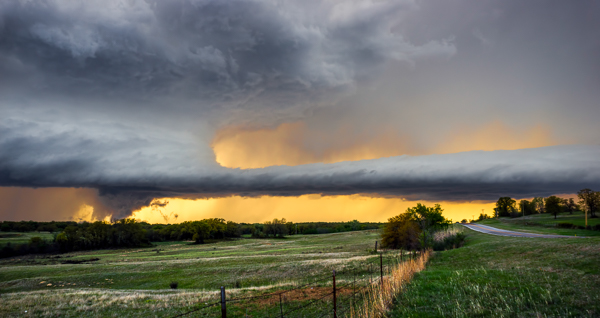
I haven't photographed a tornado yet, but this is about as close as I've come. This wall cloud (the section of a storm where tornadoes DO come from) began lowering behind the tree line while rotating quite rapidly. © James Brandon

I haven’t photographed a tornado yet, but this is about as close as I’ve come. This wall cloud (the section of a storm where tornadoes DO come from) began lowering behind the tree line while rotating quite rapidly. © James Brandon

2) Becoming a good chaser takes time, dedication, mentoring and experience

Learning about weather has become a huge passion of mine ever since starting the process of getting my private pilot’s certificate (which I finally got back in late 2012). Weather has to be a passion to get into chasing. It just has to. You’ve got to have an intimate knowledge of weather patterns, frontal systems, pressure systems, lifting mechanisms, dry lines, triple points, dew points, troughs and so much more. You have to know when a scary looking cloud is just that; a scary looking cloud. Many rookie chasers (yes, I’ve done this) will see a scary, ominous looking cloud that is low to the ground and think it’s a tornado forming. They are looking in one direction — at the wrong part of the storm — while the actual danger is somewhere else. Lucky for me, I’ve always had experts with me to point out what I should be concerned with, and what I shouldn’t be.
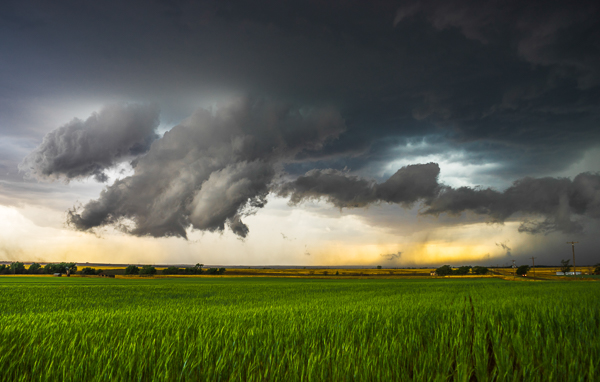
This image shows an area of outflow from the storm that was moving off to the right. At one point the cloud began to resemble a funnel that was almost touching the ground. However, it wasn't rotating and it was on the wrong part of the storm. A few minutes later, tornado sirens began going off in the small town nearby, even though the storm wasn't tornado warned yet. Someone had called in and said a tornado was on the ground.

This image shows an area of outflow from the storm that was moving off to the right. At one point the cloud began to resemble a funnel that was almost touching the ground. However, it wasn’t rotating and it was on the wrong part of the storm. A few minutes later, tornado sirens began going off in the small town nearby, even though the storm wasn’t tornado warned yet. Someone had called in and said a tornado was on the ground.

3) Until you become a seasoned chaser, NEVER go alone

The best chasers out there have dedicated their lives to this stuff. It’s not a weekend hobby. Seriously: Don’t go out alone if you’re a rookie. Just don’t do it. You’ll be putting both your life and the lives of others at risk. Going out on your own means becoming driver, navigator, forecaster, and photographer all at the same time. Just earning a permanent spot up front in a chase vehicle is a coveted thing that takes years (and should) of experience to accomplish. It’s referred to as the “hot seat” for good reason. When you’re on your own, it’s impossible to be totally safe. You have to concentrate on driving, but you also have to pay attention to the storm. That means that you’ll likely be using some sort of radar app on your phone or laptop and will be checking that instead of paying attention to driving. This is a recipe for disaster that will catch up to you eventually.

4) Like any hobby/interest, there are a lot of egos and hot heads

I’m sure this one is going to piss some people off but it’s just the truth. It’s true with anything though. Go buy a Remote Control car and get into RC car racing. Go join your local camera club. Buy an RV and start spending time with fellow RV owners. Every group has them. In storm chasing you will see them driving on the wrong side of the road, passing people with their amber lights flashing while driving 90 in a 55 to get to a storm that’s still 20 miles away (risking lives just to get on a storm), parking their cars just off the side of the road and then leaving their doors open so that traffic has to swerve around them…the list goes on.
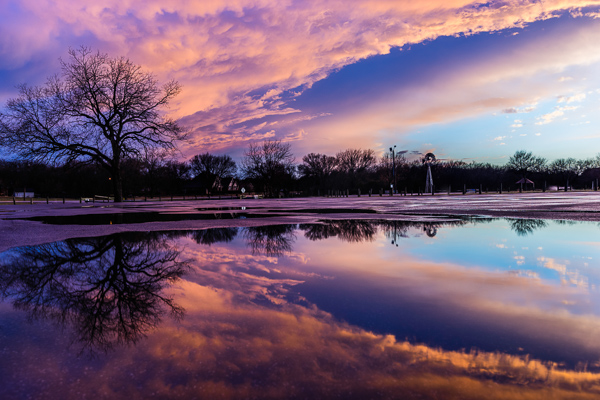
Stormy Skies After A Storm | Keller, TX


Most of them also cover their entire car in storm chasing decals, weather instruments, antennas, and amber lights. The point is: Pay attention to the stuff that these people do and don’t do it. Having amber lights on your car doesn’t make you any more important than the guy in front of, or behind you. Storm chasers are not law enforcement or emergency services. Being a chaser doesn’t give you any special powers or authority.

5) There are also a lot of amazing people

While there are a lot of egos out there, there are just as many incredible people who have more knowledge about weather than I could ever even dream of. These are the people who make storm chasing a noble pursuit. Some of them are self taught, some have masters and doctorates in meteorology or climatology. I’ve had the fortune of meeting some amazing people already just in two seasons. If you can befriend these people, and honor their knowledge and authority, you will have a good chance at advancing your own knowledge at an accelerated pace.
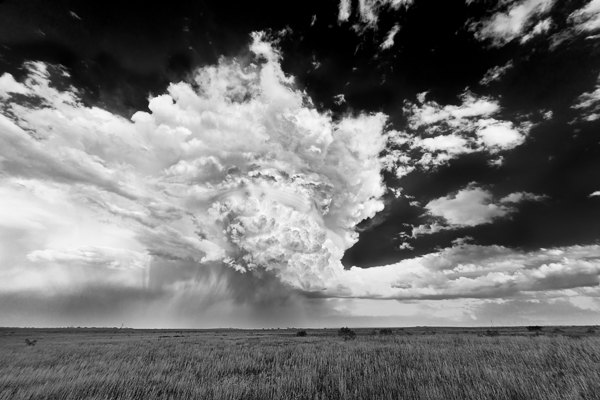
A beast of a supercell in Throckmorton, TX back in May of 2013. Around 10 minutes after I took this photo the storm fell apart and disappeared.

A beast of a supercell in Throckmorton, TX back in May of 2013. Around 10 minutes after I took this photo the storm fell apart and disappeared.

6) It’s not about tornadoes

Sure, easy to say for the guy who hasn’t photographed a tornado yet. In all seriousness though, tornadoes occur in somewhere around 1-2% of supercells. I don’t do this for a living and it’s still a very new passion, so I’m not going to drive 10,000-15,000 miles across the country ever year in search of tornadoes. Even if I did, I’d still see tornadoes so seldom that if that were my goal, I’d feel like a failure. On top of that, tornadoes are incredibly dangerous and destructive, and take lives every year. If I can one day photograph a beautiful tornado in the middle of nowhere, miles away from a town or residence, I’ll be happy. But if there’s a town nearby, or a neighbourhood, or even just a house, I’ll be praying against a tornado each and every time. I’m not after tornadoes. I’m after structure.

Standing in front of a supercell with 30-50mph winds at your back, watching as it rotates and grows, is one of the most awe-inspiring things you’ll ever witness. Seeing the raw power and fury of mother nature is just incredible. I’ve stood in a field with warm, moist 40mph winds at my back feeding the storm in front of me. Then, in an instant, the air turned dry and super cold. The storm had began ingesting the cold air from the evaporating rain it was dropping, and in essence it killed itself by doing so. Within 10 minutes, the entire storm was gone.
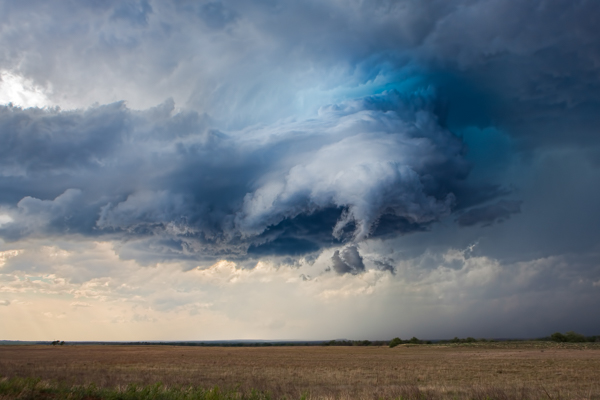
An image of a rotating wall cloud from the storm I described in the paragraph above. This was actually my first storm to ever photograph.

An image of a rotating wall cloud from the storm I described in the paragraph above. This was actually my first storm to ever photograph.

7) Chasing has become a circus in recent years – tread lightly

It’s something you can’t fully understand unless you see it. With shows like Storm Chasers, the constant media attention that chasers get during storm season, social media, etc., an innumerable number of people have come out of the woodworks to chase storms in the U.S. When the Storm Prediction Center posts a moderate or severe risk day, you can rest assured that the roads will be packed with chasers (especially if it’s during a weekend).  This can, and does, present an added element of danger to chasing storms. I’ve heard stores of road networks being completely clogged up from just chasers while a tornado is on the ground nearby. Because of this, the people I chase with usually don’t go out chasing on days like this. Some of the best storms I’ve seen to this day were on slight risk days when most chasers stayed home.
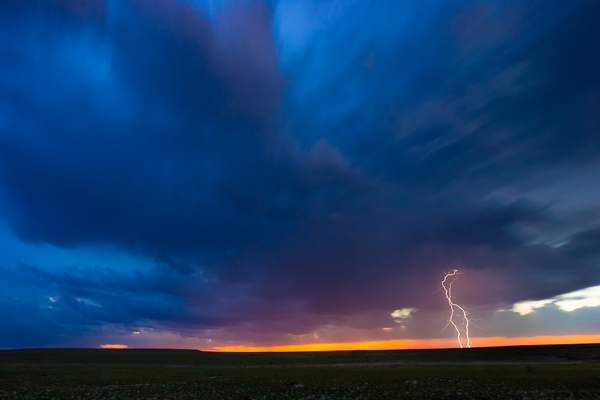
A CG (cloud to ground) lightning bolt strikes in a field somewhere in east Texas as a storm moves off in the distance.

A CG (cloud to ground) lightning bolt strikes in a field somewhere in east Texas as a storm moves off into the distance.

In closing

Storm photography, storm chasing, whatever you want to call it, has become something I look forward to all year long now. The main months for chasing in Texas, and the surrounding area, is March through May – which means I have to dream about it from June through February. Sure, supercells can pop up in the surrounding months but not nearly as often. If you want to see what chasing is all about, please follow the advice that I set out above. These storms kill people every single year and should not be taken lightly. Don’t go unless you can secure a seat in the car of an experienced and knowledgeable chaser. For the record, someone who chases storms doesn’t necessarily qualify as an “experienced and knowledgeable chaser.” There are many people who chase solo year after year who shouldn’t be out there. Use caution and choose wisely.

If you have any questions, let me know in the comments below! To follow along with me during the upcoming storm season, be sure to follow me on Instagram. Thanks!

googletag.cmd.push(function() {
tablet_slots.push( googletag.defineSlot( “/1005424/_dPSv4_tab-all-article-bottom_(300×250)”, [300, 250], “pb-ad-78623” ).addService( googletag.pubads() ) ); } );

googletag.cmd.push(function() {
mobile_slots.push( googletag.defineSlot( “/1005424/_dPSv4_mob-all-article-bottom_(300×250)”, [300, 250], “pb-ad-78158” ).addService( googletag.pubads() ) ); } );

The post 7 Things I’ve Learned from Photographing Storms by James Brandon appeared first on Digital Photography School.


Digital Photography School
 
Comments Off on 7 Things I’ve Learned from Photographing Storms

Posted in Photography


Rocky Ruins Reclaimed: 12 Mining Facilities Transformed

12 Feb

[ By Steph in Architecture & Public & Institutional. ]

reclaimed mines main

Abandoned subterranean pits once used to mine everything from gold to salt have been reclaimed as theme parks, restorative spas for asthmatics, data centers, cathedrals and even the world’s largest underground bike park. These 12 projects reclaim disused mines both above and below the surface of the earth, restoring communities devastated by strip mining and making smart use of the secure, insulating properties of subterranean spaces.

Mega-Cavern Bike Park, Kentucky

reclaimed mine bike park

reclaimed mine bike park 2

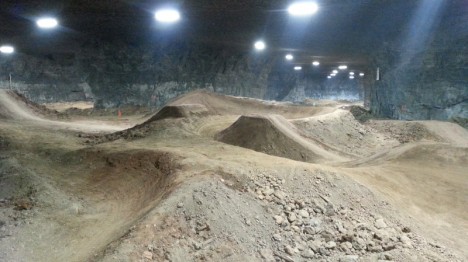
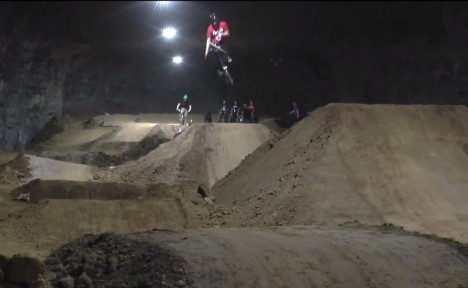
A former limestone mine 100 feet below the surface of Louisville, Kentucky is now the world’s largest underground bike park at 320,000 square feet. The Mega Underground Bike Park maintains a steady temperature around 60 degrees year-round and features over 45 trails marked for different skills and styles.

Salt Mines to Subterranean Theme Park, Romania

reclaimed salt mines 1

reclaimed salt mines 2

reclaimed salt mines 3

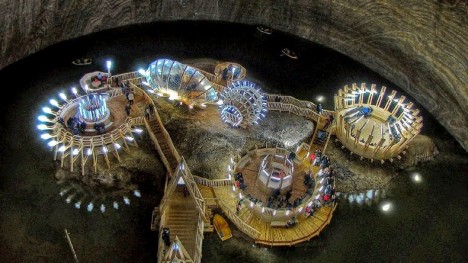
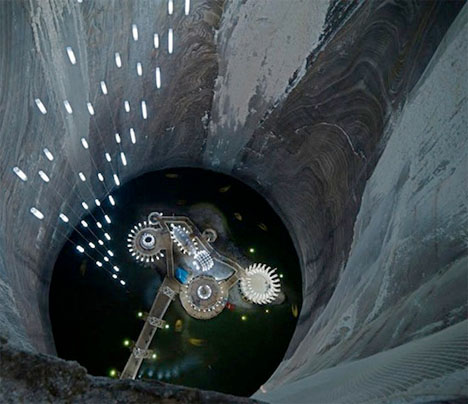
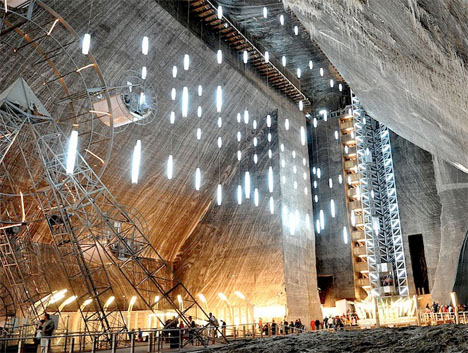
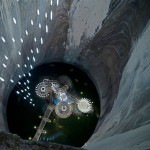
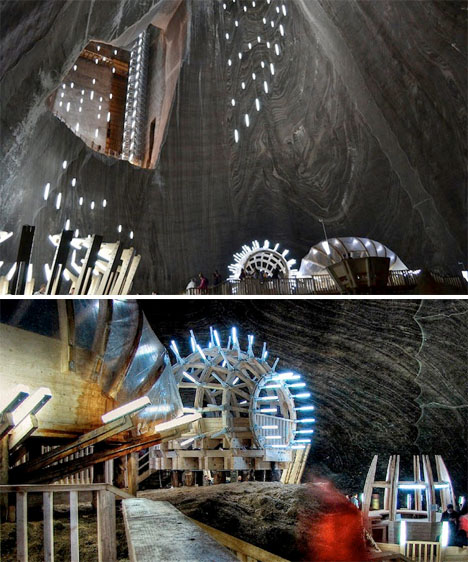
You’ll feel like you’re accessing another world altogether when you ride an elevator nearly 400 feet to the bottom of an old salt mine in Romania, exiting to take in strange architectural shapes set on black bodies of water, dotted with surreal LED lighting and surrounded by soaring cave walls. First excavated in the 17th century, the Turda Salt Mines feature a playground, ferris wheel, mini golf course, sports arena, amphitheater and bowling lanes in addition to views of the restored mining equipment and the cavern itself.

World’s Largest Underground Trampoline in a Slate Mine, Wales

reclaimed mines trampoline 1

reclaimed mines trampoline 2

reclaimed mines trampoline 3

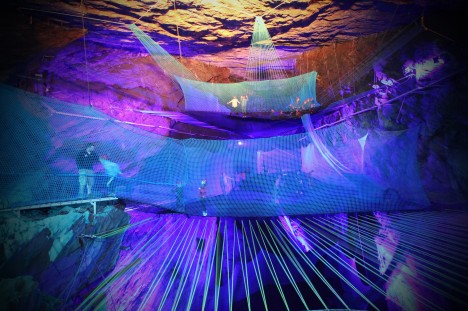
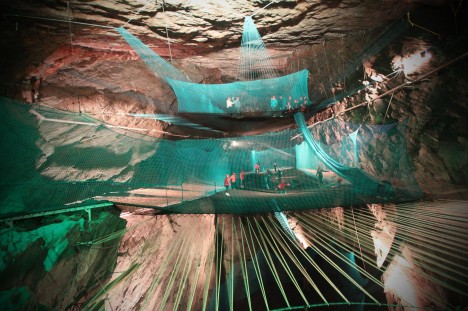
Children and adults alike bounce gleefully upon trampolines suspended from a Welsh slate quarry mining cavern twice the size of St. Paul’s Cathedral. ‘Bounce Below’ is the world’s largest underground trampoline, with a system of bouncy surfaces strung from the walls ascending between 20 and 180 feet from the cavern floor. Ten-foot net walls keep everyone from bouncing right out.

Limestone Mine to Data Center, Kansas City, Missouri

reclaimed mine data center 1

reclaimed mine data center 2

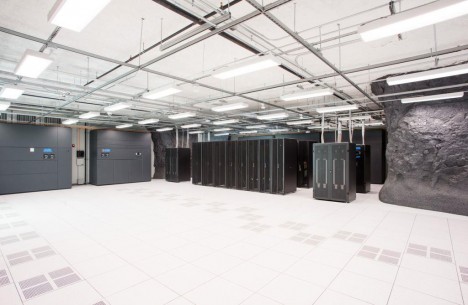
The SubTropolis Technology Center in Kansas City, Missouri is a limestone mine converted to an underground data center, where the limestone walls act as insulation, absorb heat from the equipment and provide natural security. Making use of this existing space saved 3-6 months of construction work; the walls were left raw and very little above-ground architecture was required.

Next Page – Click Below to Read More:
Rocky Ruins Reclaimed Mining Facilities Transformed

Share on Facebook


[ By Steph in Architecture & Public & Institutional. ]

[ WebUrbanist | Archives | Galleries | Privacy | TOS ]


WebUrbanist

 
Comments Off on Rocky Ruins Reclaimed: 12 Mining Facilities Transformed

Posted in Creativity


Von der Idee zum Bild mit Sean Mundy

12 Feb

© Sean Mundy

Ein Beitrag von: Sean Mundy

Ich hatte die Idee für dieses Foto bereits vor zwei Jahren, zu einer Zeit, in der ich sehr daran interessiert war (und ich bin es immer noch) schwarze Flüssigkeit in Bildern mit minimalistischem Stil zu nutzen, um Ängste und Zweifel oder negative Gefühle im Allgemeinen darzustellen. Diese Idee findet sich also auch in anderen meiner Bilder im selben Stil. Der mit Flüssigkeit gefüllte Raum ist die physische Darstellung von eigenen Unsicherheiten, Ängsten und Zweifeln, die einen verschlingen.

Die meisten anderen Bilder mit schwarzen Flüssigkeiten waren relativ leicht zu fotografieren, aber diese Idee stellte mich vor ein neues Problem: Wie lasse ich ein Zimmer so aussehen, als sei es mit schwarzer Flüssigkeit gefüllt? So blieb die Idee gezeichnet eine lange Zeit in meinem Ideenbuch, in der Hoffnung, ich finde irgendwann eine Lösung dafür.

Diptychon eines Mannes in schwarzer Flüssigkeit stehend.

Ich reiste letzten Sommer entlang der Westküste Kanadas und der USA und war einige Tage bei Freunden in Oregon zu Besuch, die auch als Fotografen arbeiten. Einer von ihnen plante eine Serie, die überflutete Sets beinhaltete. Ich hatte meine Idee nun schon zwei Jahre mit mir herumgetragen und wusste, dass dies die perfekte Möglichkeit war, mein Bild endlich in die Tat umzusetzen.

Der Fotograf, der die Serie umsetzen wollte, war Kyle Thompson (unbedingt ansehen, seine Arbeiten sind fantastisch). Er baute dafür ein Set im Hinterhof auf, das für unsere beiden Zwecke passte. Die Wand, die als Hintergrund diente, malten wir grau an. Um das Wasser schwarz zu färben, nutzte ich Lebensmittelfarbe. Für die schwarze Farbe, die aus dem Mund kommen sollte, kaufte ich Schokoladensoße (für Eiscreme) und passte die Farbe nachträglich mit Hilfe von Photoshop an.

SkizzeMann steht in schwarzem Wasser mit schwarzer Flüssigkeit, die aus seinem Mund läuft.

Damit der Raum aussah, als würde er mehr und mehr mit der Flüssigkeit gefüllt werden, ließ ich mein Modell Brendon Burton (ebenfalls ein toller Fotograf) zunächst auf den Knien und für das zweite Bild normal sitzen. Damit sein Kopf und die Schultern auf beiden Bildern dennoch auf selber Höhe sind, stellte ich die Kamera beim zweiten Bild auch niedriger. So entstand der Eindruck, dass der Raum gefüllt wird, obwohl Brendon eigentlich nur tiefer sitzt.

Das Bild umzusetzen, war recht einfach, nachdem alles vorbereitet und gut durchdacht war. So läuft es bei den meisten meiner Bilder: Ich versuche, so viel wie möglich vorzubereiten, damit ich dann bequem und ohne in Stress geraten zu müssen, arbeiten kann.

Unbearbeitetes Bild von Mann im schwarzen WasserUnbearbeitetes Foto von Mann im schwarzen Wasser.

Unbearbeitete Aufnahmen

Ich habe Brendon die Soße ein paar Mal aus seinem Mund laufen lassen; wir nutzten einen ganzen Behälter und mussten anschließend alles aus dem Pool filtern. Und wir nahmen mehrere Fotos aus verschiedenen Sitzpositionen auf, damit ich später aus einigen Höhen wählen könnte.
Ursprünglich hatte ich drei Fotos geplant. Das dritte Bild sollte völlig schwarz sein, als sei der Raum komplett geflutet, aber als ich ein wenig darüber nachgedacht hatte, realisierte ich, dass es als Diptychon anstatt eines Triptychons stärker wäre. Es fühlte sich sehr gut an, das Foto nach all der Zeit endlich umsetzen zu können.

Die Nachbearbeitung des Fotos dauerte eine Weile. Die Lebensmittelfarbe, die ich für das Wasser genutzt hatte, funktionierte, aber sie machte es nicht ganz so dunkel, wie ich es wollte. Deshalb musste ich das Wasser etwas abdunkeln, ebenso wie die Schokoladensoße aus dem Mund, die ich zusätzlich noch entsättigte, was beides ziemlich genaue Maskierungen, weit ins Bild gezoomt, nötig machte. Besonders schwierig war das Maskieren in den Teilen der Wasserreflexion. Ansonsten war es eine recht einfache Bearbeitung im Bezug auf Farben und Kontraste.

Bildausschnitt.

Bildausschnitt vor der Maskierung.

Bildausschnitt

Bildausschnitt nach der Maskierung.

Ich bin sehr zufrieden mit dem Ergebnis und würde nachträglich heute nichts anders machen. Es wäre vielleicht toll, ein Set zu bauen, bei dem das Wasser bis zum Hals geht, aber das würde noch schwieriger zu arrangieren sein, als das, was wir bei diesem Bild gemacht haben.

Redakteurin Katja Kemnitz hat Seans Text für Euch aus dem Englischen ins Deutsche übersetzt.


kwerfeldein – Fotografie Magazin | Fotocommunity

 
Comments Off on Von der Idee zum Bild mit Sean Mundy

Posted in Equipment


CP+ 2015: Nikon shows off new D810a

12 Feb

We’re at the CP+ show in Yokohama Japan, where Nikon is showing off its new D810a – a specialist version of the D810 which has been modified specifically for astrophotography. The world’s first full-frame camera of its type, the D810a is essentially a Nikon D810 with a modified IR-cut filter to ensure the camera can capture light emitted by nebulae and additional features to support long exposure photography. The new camera is being shown under glass at the show, but we managed to get a few shots. Click through to take a look


Articles: Digital Photography Review (dpreview.com)

 
Comments Off on CP+ 2015: Nikon shows off new D810a

Posted in Uncategorized