RSS
 

Archive for January, 2015

Pixel Performers: Digital Projection Mapping on Live Dancers

25 Jan

[ By WebUrbanist in Art & Installation & Sound. ]

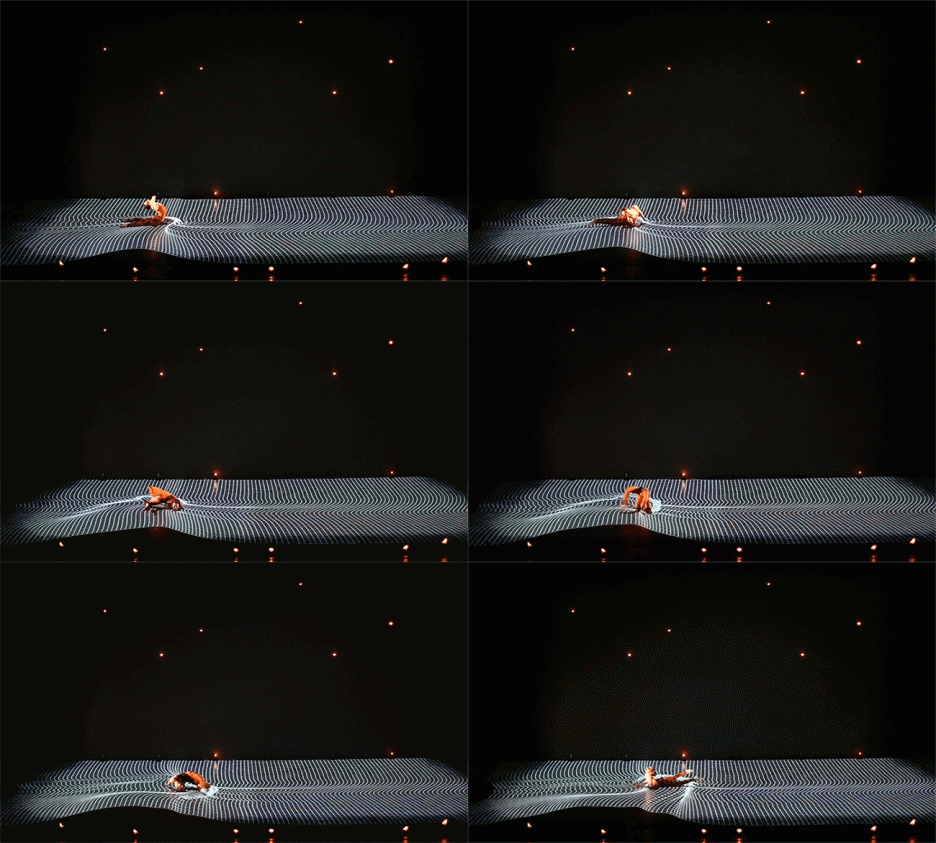
pixel stage dangers performers

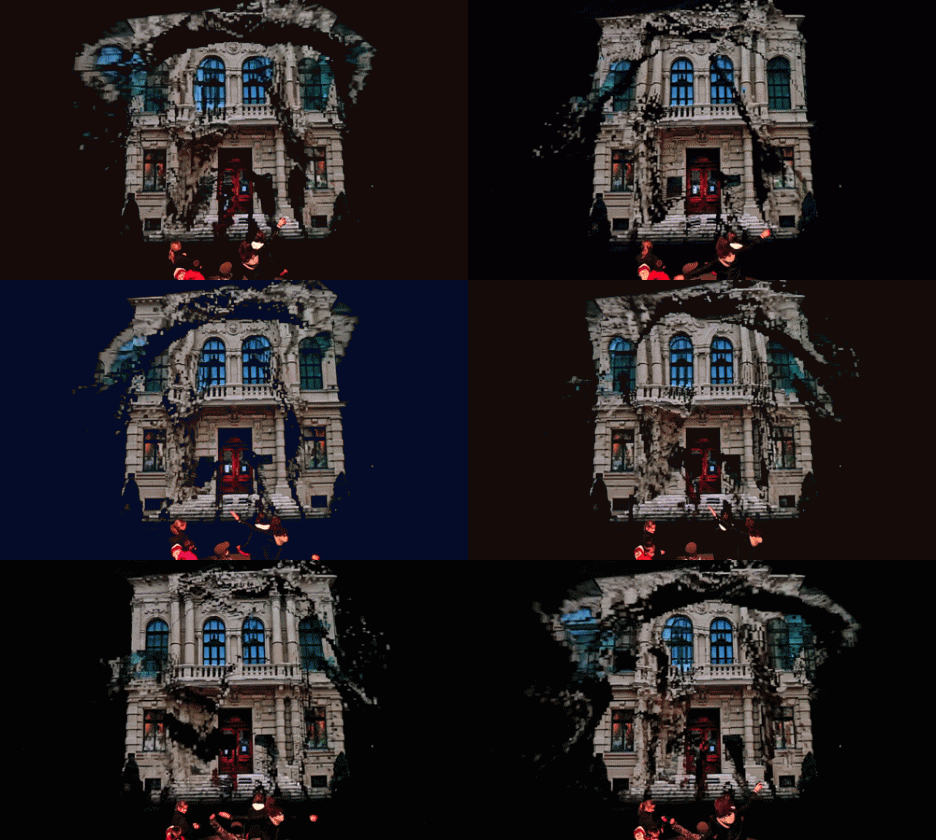
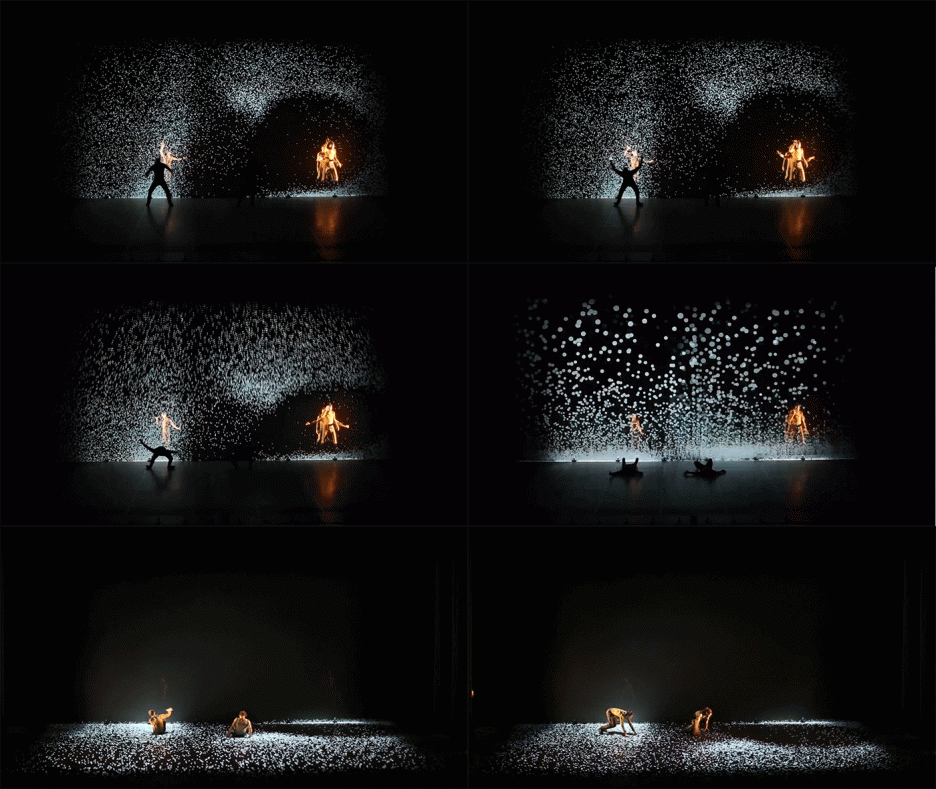
Combining choreographed movement and projected abstractions, these works of performed art are visually stunning, creating effects and illusions far beyond the sum of their parts.

pixelated performance art

From its creators, Pixel, shown above, “is a dance show for 11 dancers in a virtual and living visual environement. A work on illusion combining energy and poetry, fiction and technical achievement, hip hop and circus. A show at the crossroads of arts and at the crossroads of Adrien M / Claire B’s and Mourad Merzouki’s universes.”

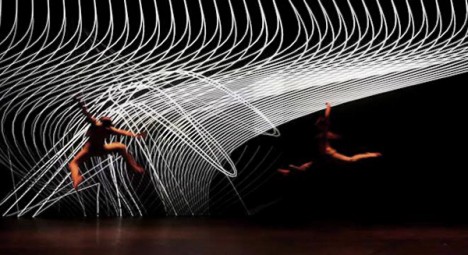
klaus obermaeier performance art

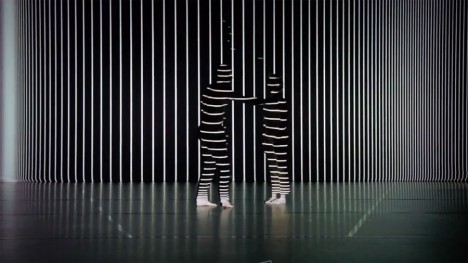
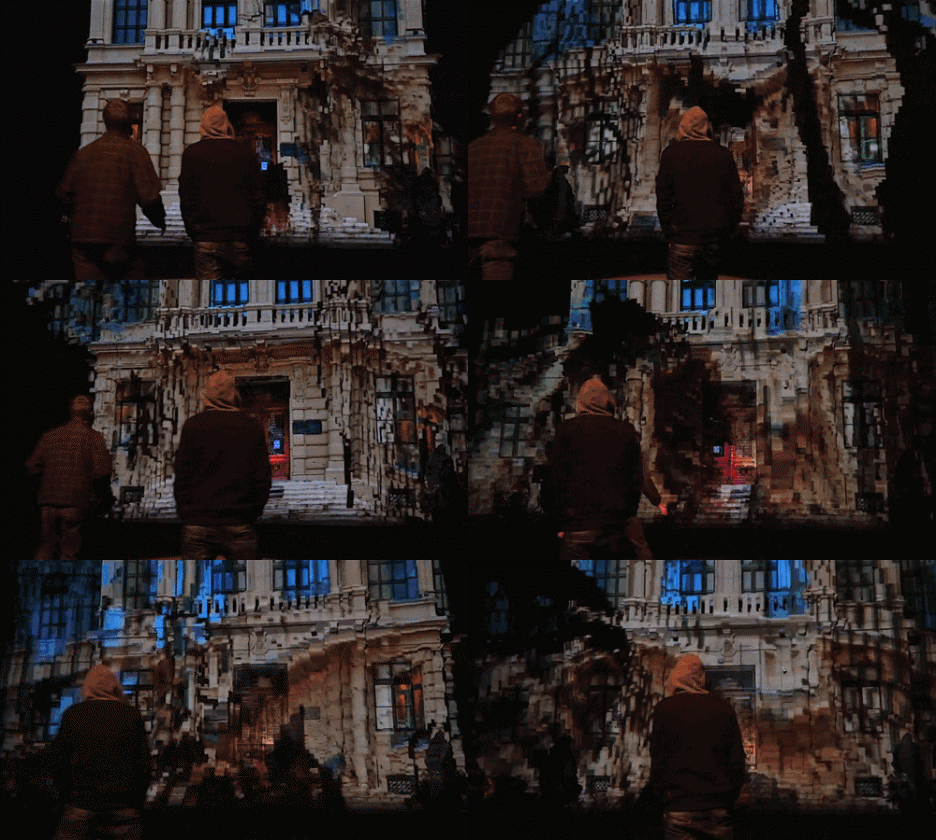
The idea of projecting onto moving performers is, however, not new – indeed, Klaus Obermaier has been using low-tech projectors and equipment to create equally amazing work for decades. Indeed, while speaking at INST-INT recently in Minneapolis, he joked that he would carry on using his decade-old laptop until it broke down.

klaus horizontal vertical dangers

Indeed, the lower-tech approach he takes relies heavily on the ability of each dancer to have complete control of their own movements, making their skill a critical part of each and every exhausting performance.

projection interactive art

projection map art

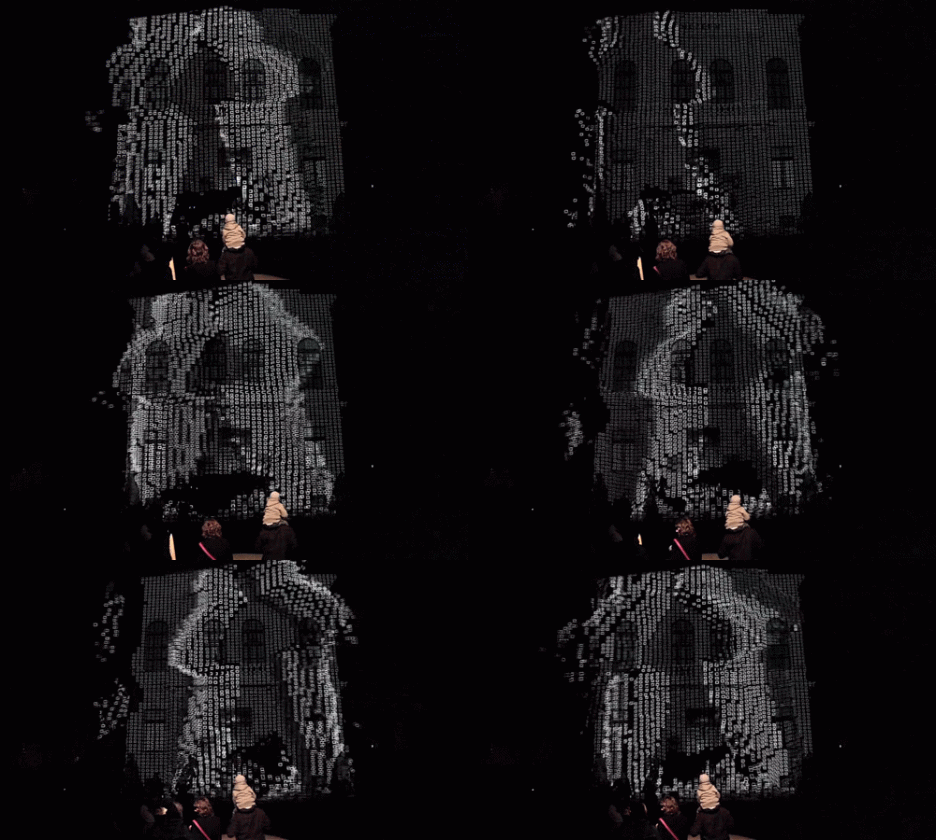
projection building pixels

Obermaier has also engaged in other forms of public interactive projection art over the years, taking his productions off the stage and allowing passers by to interact with his work.

Share on Facebook


[ By WebUrbanist in Art & Installation & Sound. ]

[ WebUrbanist | Archives | Galleries | Privacy | TOS ]


WebUrbanist

 
Comments Off on Pixel Performers: Digital Projection Mapping on Live Dancers

Posted in Creativity


Basic Portrait Processing in Lightroom

24 Jan

Over the past few years I have learned a great deal about doing portraits, especially of young kids. I think it’s because I get so much enjoyment out of these types of shoots that I end up doing them more, though at some point it hardly seems fair because I wonder if I’m having more fun than the children whose pictures I am taking.

While each session is unique, I have developed my own style (which, in many ways, will always be a work in progress as I continue to learn new things) when it comes to both the shooting and editing process, and I thought it might help those who are new to this type of photo session to see a few examples along with an explanation of the creative choices I made along the way. I do all my edits in Lightroom, and while I sometimes need to do some more in-depth adjustments in Photoshop, 98% of all the pictures I give to clients don’t need anything more than what Lightroom can do. If you don’t have this software, I highly recommend it!

DSC_8127

Get it in camera first

Before I get to the editing portion of this piece, I need to clarify one thing: no amount of editing can make up for initial on-location mistakes, which is why it’s so critical to get the initial picture as good as you can right from the beginning. This involves things like choosing a good place to take the photos, finding the right time of day, and communicating with your subjects (and their parents, if you are working with kids). Along with that are your own creative choices such as your aperture and focal length, the composition of your shot, the angle from which you choose to shoot, the lighting manipulation you use, and a host of other elements that have an enormous impact on the final outcome of any given photo session.

Of course if you work in a studio you have much greater control over some of these items, but at the end of the day a poorly-shot initial photo will remain exactly that, no matter how much you try to edit it in Lightroom or Photoshop. I say all this to make sure you understand that editing tools are not a magical cure-all to make all your pictures shine. And the best way to make sure your photos are as good as they can be from the beginning is to focus not on the editing, but on basics like exposure, lighting, framing, and composition. It also helps to shoot in RAW, not JPEG, in order to maximize the amount of data you can work with on each individual photograph.

DSC_6792-original

Basic portrait processing in Lightroom

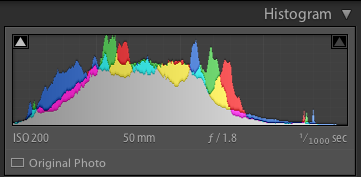
I shot this picture with my Nikon D7100 at 50mm, f/1.8, ISO 200. Since the sun was setting and I was not working with off-camera strobes, my lighting options were a bit limited. I had his father stand behind me with my Neewer 43-inch reflector to capture a bit more of the available light. (If you don’t have one of these, I recommend getting one. They are quite cheap and a fantastic addition to any camera setup.)
histogram

The initial photo was a bit underexposed, as shown in the histogram as well.

I also chose to frame the child with the green bush in the background, and of the half-dozen images I got of this particular pose I liked this one in which he was not quite looking at the camera. Often when working with kids I have found that the best images are a bit more candid as opposed to posed, but again, this is a creative choice you will have to make for yourself. Finally, I made sure to shoot this in RAW to take advantage of as much data as possible in order to correct some things back at my computer. Right away you probably noticed that the image is a bit too dark, which was the first thing I fixed in Lightroom.

A quick look at the histogram showed me that overall I got things pretty good in camera, but to make it look a bit better I increased the exposure by 1.2 stops, as well as cropped it a bit to focus the viewer’s attention on the boy’s face without the distracting red building in the background.

DSC_6792-2

First edits: Cropped and increased the exposure by 1.2 stops.

So far so good, but there’s still a lot of work that needs to be done. While the overall brightness was better, the colorization was still a bit off. The initial white balance settings determined by my camera were 4900K and -9 tint, but I wanted something a bit warmer so I increased the temperature to 5700K and changed the tint to -7.

DSC_6792-3

Second edits: adjust white balance and tint.

I liked this much better, but there were still some things that needed fixing. Now that the overall photo was properly exposed, there were some parts that were a bit too bright which was handled by lowering the highlights slider by -19. After that I increased the saturation to +6 and added +4 contrast as well.

DSC_6792-4

Third edits: lower highlights, increase saturation and contrast.

I was much happier with this, but it’s important to remember that all of the changes you make to a photo in post-production are based on your own creative ideas and there is no right or wrong way to do things. Some people like images that are desaturated, some prefer selective coloring (i.e. one part is colorized or over-saturated while the rest of the image is more black-and-white), others use cropping to achieve different effects. The sky really is the limit. One thing I like to do from time to time is add a subtle vignette effect (using Post Crop Vignette at -26, Highlight Priority), which I did here to result in the final image I gave to the client.

DSC_6792-5

Final edits: add a bit of an edge vignette, other minor color adjustments.

You might look at this and think the colorization is a bit off, or the vignette should be stronger, or the entire framing should be different, but the beautiful part of photography is that we all have our own opinions on how to do things. I was happy and so were my clients, which is all that matters to me.

DSC_1776

In this photo I used the Brush tool to selectively desaturate the orange strip on the boy’s shirt, and the Radial Filter to add a more precise vignette.

I do think it’s important to maintain a sense of reality in photos, though, and not let the editing get out of hand. It’s easy to feel like an all-powerful genie when you start playing around with the tools in Lightroom, Photoshop, or other editing software, but my rule of thumb when editing is to try to make the final image represent what I saw, when I initially took the photo. In the above image, for example, the orange strip on the boy’s shirt was a bit distracting, so I was able to selectively desaturate it quite a bit with Lightroom’s Adjustment Brush tool. This, along with other edits similar to the ones described above, resulted in a photo that my client was quite pleased with.

My point is that it’s great to have these editing tools available but If I start to lean too heavily on the saturation, bump up the clarity to absurd levels, or making dozens of small changes with the brush tool, I usually end up with photos that bear little resemblance to the original and come across as emotionless and empty.

What about you? What style have you developed over the years, and what approach do you use when you sit down to edit? Post your thoughts in the comments section below.

googletag.cmd.push(function() {
tablet_slots.push( googletag.defineSlot( “/1005424/_dPSv4_tab-all-article-bottom_(300×250)”, [300, 250], “pb-ad-78623” ).addService( googletag.pubads() ) ); } );

googletag.cmd.push(function() {
mobile_slots.push( googletag.defineSlot( “/1005424/_dPSv4_mob-all-article-bottom_(300×250)”, [300, 250], “pb-ad-78158” ).addService( googletag.pubads() ) ); } );

The post Basic Portrait Processing in Lightroom by Simon Ringsmuth appeared first on Digital Photography School.


Digital Photography School
 
Comments Off on Basic Portrait Processing in Lightroom

Posted in Photography


Project from war-torn Ukraine wins Terry O’Neil Award for Italian photographer

24 Jan

The winners of the 2014 Terry O’Neil Award have been announced, with Italian photographer Giorgio Bianchi collecting the first prize with a documentary series covering the crisis in Ukraine. Behind Kiev’s Barricades won Giorgio £3000 and a commission for the UK’s Guardian newspaper. Take a look at some of the winning images. See gallery

Articles: Digital Photography Review (dpreview.com)

 
Comments Off on Project from war-torn Ukraine wins Terry O’Neil Award for Italian photographer

Posted in Uncategorized


Sigma promises firmware fix for Pentax mount 17-70mm f/2.8-4 lens

24 Jan

Sigma has acknowledged a problem that Pentax users are suffering from when the company’s 17-70mm f/2.8-4 DC Macro HSM Contemporary lens is used on Pentax DSLR bodies with in-camera image stabilization activated. To rectify the issue the lens manufacturer has promised a firmware update for the lens, but hasn’t yet specified a release date. Read more

Articles: Digital Photography Review (dpreview.com)

 
Comments Off on Sigma promises firmware fix for Pentax mount 17-70mm f/2.8-4 lens

Posted in Uncategorized


Im Gespräch mit Hana Haley

24 Jan

©  Hana Haley

Ein Beitrag von: Hana Haley

In der Fashionfotografie geht es viel um Perfektion. Nach aufwändigen Shootings mit Visagisten und Stylisten geht es weiter mit stundenlanger Nachbearbeitung in Photoshop und heraus kommt ein perfektes Bild ohne Seele. Das nimmt man zumindest an, hat man die gängigen Mode-Magazine vor Augen. Die Bilder von Hana Haley sind anders. Mit analogem Charme entführt sie in ihren Bildern zurück in die 60er und 70er Jahre.

Die amerikanische Fotografin fotografiert Fashion mit alten analogen Kameras. Ich freue mich sehr, dass sie mir einige Fragen zu ihrer Arbeit beantwortet hat.

Mädchen mit rosa Haaren und Sonnenbrille in der Sonne.

Frauenbeine in einem Diner.

Deine Fotos könnten Original aus den 60ern stammen. Hast Du eine bestimmte Verbindung zu dieser Zeit?

Ich bin bei meinem Großvater in einem etwa 100 Jahre alten Haus aufgewachsen. All unsere Möbel und Einrichtungsgegenstände waren aus den 60ern und 70ern und ich bin daher stark Vintage-Sachen zugewandt. Nach der Schule habe ich gemeinsam mit meinem Großvater seine Lieblingsfilme gesehen, meist Mysterie aus den 60ern wie Alfred Hitchcock.

Ich war immer sehr inspiriert von den weiblichen Charakteren, den Farben und den Details dieser „wahren Kinofilme“. Später entdeckte ich meine Liebe für New Wave Cinema und the Regiekunst dieser Ära. Es macht Sinn für mich, dass sich diese Einflüsse jetzt in meinen Fotografien wiederfinden.

Eine Frau mit Pony und 60er Make-up.

Schwarzweißaufnahme einer Frau, die mit gekreuzten Beinen auf einer Wiese liegt.

Hast Du ein paar Filmtipps? Deine Filmerfahrung klingt großartig.

„Vertigo“, „Heavenly Creatures“, „Persona“, „Me And You And Everyone We Know“, „Dogtooth“ und „Mumsy Nanny Sonny and Girly“ sind einige meiner Favoriten.

In einer Zeit, in der Rauschreduzierung und unglaubliche Schärfe neuer Kameras beworben werden, nutzt Du Unschärfe und Fusseln auf den Negativen. Warum?

Ich bin einfach kein Fan von digitalen Bildern – da fehlt mir die Geschichte, das Geheimnis. Und ich denke, es ist traurig, dass die Bilder als digitale Datei existieren und nicht als konkreter Filmstreifen. Ich ziehe es vor, meine Negative mit den Händen berühren und erlaube mir, mit meinen Fingerabdrücken über die Oberfläche zu schmieren. Es für mich menschlicher, persönlicher.

Du arbeitest also nur mit analogen Medien?

All meine persönlichen Arbeiten, also alle Bilder auf meiner Webseite sind mit analogen Kameras aufgenommen. Ich arbeite digital nur für kommerzielle Projekte, die dies benötigen. In der Regel sind diese Fotos für mich nicht interessant und ich sehe sie nicht als Teil meiner Kunst. Allerdings habe ich eine Menge Fotos auf meinem iPhone! Aber ich glaube nicht, dass diese jemanden interessieren, denn sie zeigen vor allem niedliche fette Hunde und Sonnenuntergänge in der Stadt.

Eine Frau mit Blümchenkleid liegt inmitten von rosa Blumen.

Eine Frau im Lichtschein.Eine Frau in weißem Kleid springt vor einer 60er Tapete.

Wie hast Du überhaupt zur Fotografie gefunden?

Als ich 13 oder 14 war, entdeckte ich Modemagazine wie W und Nylon und war inspiriert von deren Editorials. Sie erzählten schöne Geschichten. Nicht diese billigen, digitalen Geschichten, die sie heute bringen. Ich begann, Bilder von meinem Highschhool-Leben zu machen und zeigte meine halb-langweiligen Fotos im Internet, immer inspiriert von Magazinen und in der Hoffnung, Fashion-Aufnahmen zu machen.

2008 lernte ich einen Fotografen kennen, der vorschlug, ich sollte auf Film fotografieren. Ich war ein bisschen verliebt und wollte ihn vielleicht auch beeindrucken. Ich fand eine Kamera aus den 70ern und begann, Frauen und Dinge um mich herum zu fotografieren. Sechs Jahre sind seitdem vergangen und ich fotografiere immer noch Frauen, aber heute ist es mein Job.

Wie reagieren denn Kunden auf Deine analogen Fashion-Fotos?

In San Francisco zu arbeiten, war schwierig, denn die Nachfrage nach analogen Aufnahmen ist hier sehr gering und mein Stil nicht sehr erfolgreich. Meine Jobs bekomme ich durch internationale Marken und Designer aus Los Angeles. Die wissen natürlich, dass ich auf Film fotografiere und engagieren mich genau für diesen analogen Stil und lieben ihn (sagen sie zumindest).

Eine Frau mit rotem Lippenstift.

Eine Frau mir herzförmiger Sonnenbrille in einer Hängematte.

Was sind Deine fotografischen Ziele?

Ich ziehe in drei Monaten nach New York City, um einen anderen Weg in meiner Fotografie einzuschlagen: Weniger Fashion, mehr Konzeptionelles. Ich dränge mich gerade sehr dazu, an Ideen zu arbeiten und Geschichten zu entwickeln, wie ich es bisher noch nie gemacht habe. Meine Arbeiten irgendwann gesammelt in einem Buch oder einer Ausstellung zu sehen, würde mich natürlich auch glücklich machen.

Hast Du einen Tipp für junge Fotografen, die ebenfalls in Richtung Fashion gehen möchten?

Studiere die Meister der Fashion-Fotografie, finde heraus, was typisch oder langweilig ist und mache diese Dinge niemals. Stürze Dich in Inspiration, übe jeden Tag und sei geduldig!

Vielen Dank, Hana, und viel Erfolg in New York!

Katja hat das Interview mit Hana auf Englisch geführt und anschließend für Euch ins Deutsche übersetzt.


kwerfeldein – Fotografie Magazin | Fotocommunity

 
Comments Off on Im Gespräch mit Hana Haley

Posted in Equipment


What TechCrunch Gets Wrong About Ello…

24 Jan

Pardon My Whiskers Mr. Mingus
Photograph of the hippest hipster cat around, Mr. Mingus, by hipster Daniel Krieger

Writing for TechCrunch, Josh Constine penned a hit piece yesterday announcing the end of Ello. I was disappointed to see TechCrunch, a publication that I long viewed as being supportive of the start up community, using their pulpit to tear one down. Not only do I think Josh got a lot of the story on Ello wrong, but the dramatic tone of his article was unnecessarily disparaging and that is disappointing.

I’m not sure how much Josh uses Ello, but I use it every day and it’s currently my favorite social network.

I thought I’d take a few minutes to address some of the things that Josh said about Ello and add my own commentary.

1. Josh says: “Here in September gone in September, Ello hoped to dethrone Facebook by … not having ads.”

I’m curious about Josh’s comments saying Ello hoped to “dethrone” Facebook. Nowhere have I ever seen the founders of Ello saying that they hope to “dethrone” Facebook. In fact, the founders have gone out of their way to say that Ello and Facebook are two entirely different things. Ello is a social network and Facebook is an advertising network.

If you pull up Ello’s mission statement, does it say that their goal in life is to “dethrone” Facebook?

On the “What is Ello” page, Ello states:

“Ello is a simple, beautiful, and ad-free social network created by a small group of artists and designers. We originally built Ello as a private social network. Over time, so many people wanted to join Ello that we built a public version of Ello for everyone to use.”

Huh? So why the wild hyperbole from TechCrunch stating that Ello hoped to dethrone Facebook? If Ello got even 1/10th of 1% of the users that Facebook has it would be an absolute home run. Facebook is a multi billion dollar advertising network. Ello is a fun place to hang out and share things in an ad free environment with interesting people.

2. Josh says: “But while hipsters had fun hating on Zuck’s creation for a few days, they all went back to it and promptly ditched Ello.”

What’s with the dig about “hipsters?”

Maybe I’m a hipster, maybe I’m not a hipster?

I’m just a photographer looking to share my photos on a cool platform and I’m still using Ello everyday, just like I did when I joined it.

Is Brian Nelson a “hipster” (they won’t let him share his fine art nude photographs on Facebook by the way, warning NSFW)? Is my photographer friend David Seibold a hipster? Is JC Little a hipster? Is foalsi a hipster? Is Greg Poulos a hipster? Is Japanese photographer ruylopez a hipster? Is Jessica Greene a hipster? Is Toby Harriman a hipster? Is dutch a hipster? Is my Italian friend Nicola Cocco a hipster? Is writer, journalist and photographer Marcus Hammerschmitt a hipster? Is Ugo Cei a hipster? Is Brad Sloan a hipster? Is Portuguese street photographer Ricardo Porto a hipster?

I know my friend Daniel Krieger is *definitely* a hipster — he shoots for the NY Times, lives in Brooklyn, used to have a moustache, drinks fine bourbon and has the coolest cat named Mr. Mingus. The thing is though, all of these people are still on Ello and still posting every day. Josh on the other hand made two posts on the site and then bolted. One of his two posts is of this hipster looking avatar with a moustache, beard and long hair that I guess is supposed to be him?

Is the hipster criticism just because a few of the Ello founders have beards? Whatever case, the “hipsters” haven’t “promptly ditched Ello.” I could easily come up with a few hundred more interesting talented people I follow on Ello that pretty much post every day.

3. Josh says: “Beating Facebook at its own game is like punching a wall 1.35 billion bricks thick. ”

Huh, who said anything about “beating Facebook at its own game?” Lots of people who use Ello also use Facebook. I know I do. Why does everything have to be about “beating” Facebook. Is that just for the clicks? Ello isn’t even playing Facebook’s game. How can they “beat” them in an advertising game that they are not even playing in?

4. Josh says: “So as soon as people realized they could either post to their few smug friends who joined Ello, or everyone they know on Facebook, they dropped Ello on its face.”

Why would Josh think that people who use Ello are “smug?” I’ve met some really cool and interesting people on Ello. I’ve made some great new friends and reconnected with some old ones. The mixture of people is like a really nice bar where people generally speaking are nice and thoughtful and creative and intelligent and interesting. Maybe Josh needs to spend more time actually researching Ello before labeling the community there as “smug” and saying that they “dropped Ello on it’s Face.”

I mean, I hate to say it, but I think Josh’s hipster TechCrunch article on Ello is actually way, way, way, way more “smug” than the people who are actually using Ello as a fun community every single day.

5. Josh says: “No one I follow has posted in three months, so I doubt they’re checking the site either. ”

So wait, because Josh’s 22 hipster friends on Ello aren’t using it nobody else could possibly be? Maybe he should do a little more research because many of the 778 friends I’m following on there are using it every single day.

I thought Josh’s take on Ello was pretty myopic and one sided.

Look, here’s the thing about Ello. Ello is not trying to be Facebook. Ello is not trying to beat Facebook. Ello is not trying to play a game of horse basketball with Facebook on the Facebook basketball courts. Ello is Ello. Ello doesn’t need billions of users. Ello doesn’t need creepy ads that follow you around the internet. Ello doesn’t need you to pay them to have your “sponsored” posts shown to your friends.

Ello just is a cool place where interesting, intelligent, creative people are hanging out and being all friendly like. Photography there looks better than on any other network on the web. The interface is easy and clean. The folks running the show actually give a damn and care about the place and participate and are transparent about where they are headed with the network. If you haven’t tried Ello yet, check it out. You might find it the friendly sort of place you might like to hang out. You can find me on Ello here.

Some good comments about this article here.


Thomas Hawk Digital Connection

 
Comments Off on What TechCrunch Gets Wrong About Ello…

Posted in Photography


23 January, 2015 – Antarctica and Svalbard

24 Jan


We are very busy prepping for our two back to back Antarctica workshops.  Michael and I are flying to Santiago on Saturday the 23rd and we will not be returning until the 12th of February.  This will be an exciting two trips.  We have two fantastic groups and I am sure as we have found on every trip we have made to Antarctica it will be special.  This will especially be true for myself as I will be getting married on the first trip. We’ll have full details and pictures when we return.

Today we announce the northern polar region workshop we will be doing this summer.  Svalbard 2015 – Land Of The Polar Bear.  Taking place August 30th – September 8th. This workshop will have Michael and me as leaders and instructors.  This is a small intimate 11 person workshop and it will be quite special.  This past year we did two back to back workshops in Svalbard and both trips were amazing.  You can read about this past years trip HERE.   Check it out and book your spot today.

We will post an article if the internet holds up from Santiago at the beginning of next week.  Chris who will be manning the shop while we are gone will also post a few articles in our absence.  And, when we return we will dive right into the launch of the new LuLa website on February 14th.


The Luminous Landscape – What’s New

 
Comments Off on 23 January, 2015 – Antarctica and Svalbard

Posted in News


Your Neighbor Darth Vader: Doorbells for Fictional Characters

24 Jan

[ By Steph in Art & Street Art & Graffiti. ]

the ringer 1

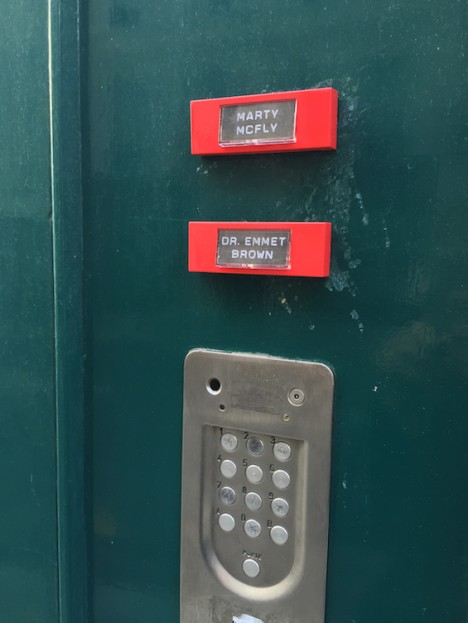
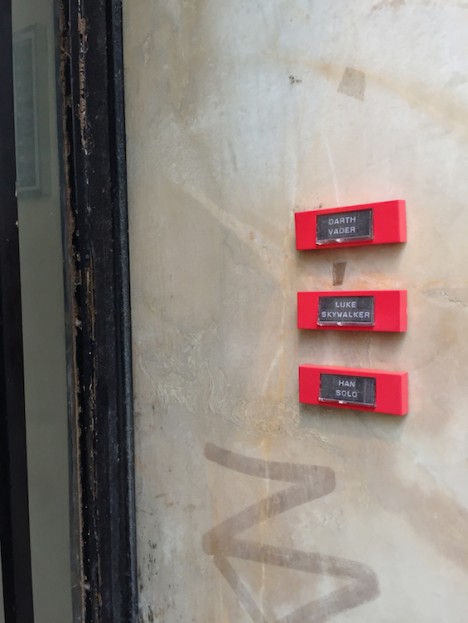
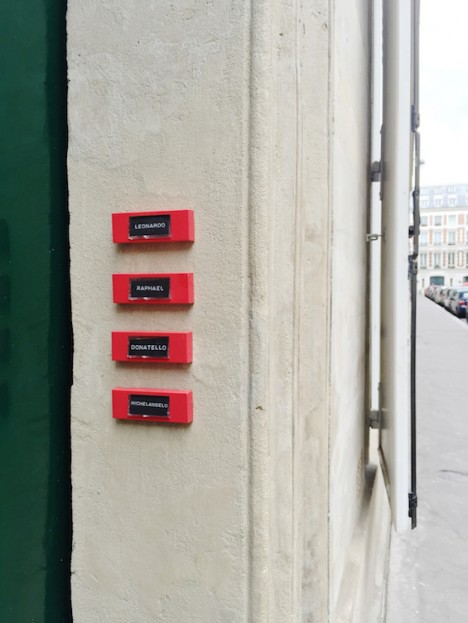
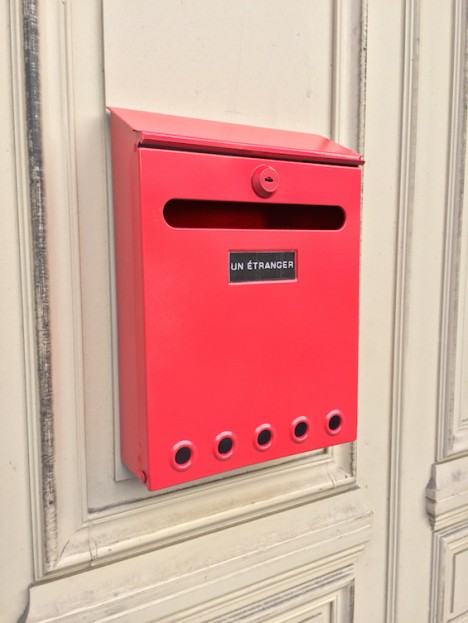
Only particularly perceptive passersby would even notice that they’re standing outside the residences of Marty McFly, Luke Skywalker and the Teenage Ninja Turtles, as labeled on doorbells and mailboxes on the streets of Paris. These subtle guerrilla installations by street artist Le Sonneur will make you wonder what could happen if you actually rang the bell.

the ringer 2

‘The Ringer’ is presented in four sets. The first, Everyday Heroes, makes icons like Superman, Batman, Doc Brown, Darth Vader and Han Solo seem more accessible, as if they might actually appear at any moment if you press the button.

the ringer 3

the ringer 4

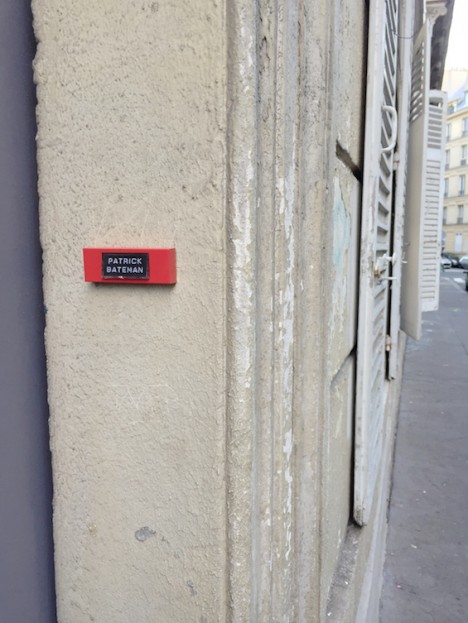
But you might not want to come face-to-face with most of the names featured in the Neighbors Charming series, which include Patrick Bateman from American Psycho, Alex Delarge from A Clockwork Orange and Hannibal Lecter.

the ringer 5

the ringer 6

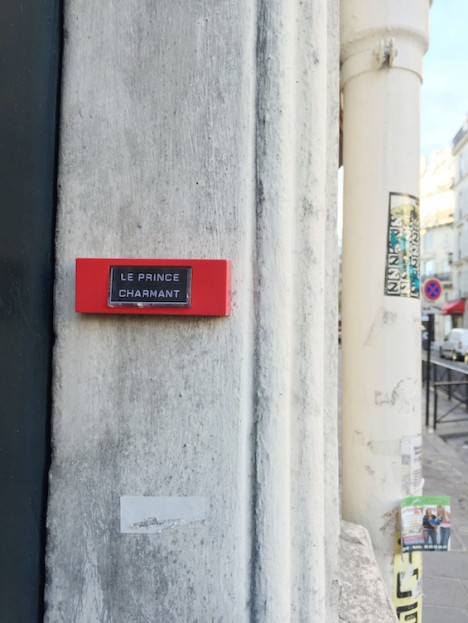
The Lovers series makes these fictional residents overly familiar with labels like ‘My love,’ ‘Prince Charming’ and ‘A pretty girl’ while the Boxes series takes the opposite tact with complete anonymity, telling you only that ‘A man’ or ‘A stranger’ live inside.

Share on Facebook


[ By Steph in Art & Street Art & Graffiti. ]

[ WebUrbanist | Archives | Galleries | Privacy | TOS ]


WebUrbanist

 
Comments Off on Your Neighbor Darth Vader: Doorbells for Fictional Characters

Posted in Creativity


Tamron announces SP 15-30mm F/2.8 release date and $1200 price point

24 Jan

Tamron has announced availability and pricing for its much-anticipated 15-30mm F/2.8 stabilized wide angle zoom. Set for availability on January 30th in Canon and Nikon mounts with Sony to follow later, the lens will retail for $ 1199. Read more

Articles: Digital Photography Review (dpreview.com)

 
Comments Off on Tamron announces SP 15-30mm F/2.8 release date and $1200 price point

Posted in Uncategorized


Sports Illustrated lays off last remaining staff photographers

24 Jan

On the eve of the Super Bowl, Legendary US-based sports publication ‘Sports Illustrated’ has laid off its remaining six full-time staff photographers. According to Sports Illustrated director of photography Brad Smith, speaking to News Photographer Magazine, the decision was made due to ‘economic circumstances’. Click through to read more, including an interview with Jordan Stead, staff photographer for the Seattle Post Intelligencer.

Articles: Digital Photography Review (dpreview.com)

 
Comments Off on Sports Illustrated lays off last remaining staff photographers

Posted in Uncategorized