RSS
 

Archive for November, 2014

20 Thanksgiving Photography Examples to Get You in the Festive Mood

28 Nov

Thanksgiving is the time for warm get-togethers and celebration of the autumn harvest. It marks the start of the holiday season which is naturally a busy time for photographers. Festive mood, holiday decorations, and family gatherings – this is the perfect time to create memorable emotional shots that will be enjoyed long after. This Thanksgiving don’t miss an opportunity to Continue Reading

The post 20 Thanksgiving Photography Examples to Get You in the Festive Mood appeared first on Photodoto.


Photodoto

 
Comments Off on 20 Thanksgiving Photography Examples to Get You in the Festive Mood

Posted in Photography


27 November, 2014 – 25% Off entire Video Catalog

28 Nov

 Lu-La’s Black Friday Sale is now on!

Get 25% Off our entire Video Catalog until midnight Sunday, November 30.

Use this coupon code at checkout:

25pcOFF_LL-BF


The Luminous Landscape – What’s New

 
Comments Off on 27 November, 2014 – 25% Off entire Video Catalog

Posted in News


2014 Mid-range Mirrorless Roundup

27 Nov

2014 saw the addition of numerous consumer-oriented mirrorless cameras, many borrowing high-end features from their enthusiast-level counterparts. These cameras make for excellent second cameras to a DSLR and great standalone cameras for anyone craving controls, good image quality and a compact size. Find out which we recommend in our 2014 Mid-level mirrorless roundup

Articles: Digital Photography Review (dpreview.com)

 
Comments Off on 2014 Mid-range Mirrorless Roundup

Posted in Uncategorized


A Practical Review of the Nikon 24-70mm f/2.8 lens

27 Nov
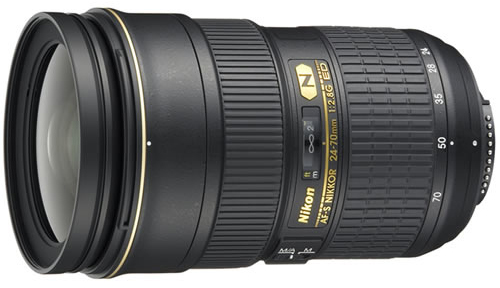
The Nikon 24-70mm F2.8 Lens

The Nikon 24-70mm F2.8 Lens

You will hear this from many photographers – “invest in your lenses”. Camera bodies will come and go, but a good lens can last a very long time. This was the advice that I first received when I started taking my photography seriously. Initially, I thought it was a bit hyped. I bought a cheap 70-300mm lens and used it at the first wedding I shot. I thought the images were fantastic until I bought a better lens a year later. I then realized how much difference a good lens can make.

This review is not going to be a technical review of the lens. You want to know how this lens performs, what the strong points are and what the weak points are – I will cover that. You will see images taken with the lens, many will be edited in Photoshop, some will be straight out of the camera, I will point out to you which are which.

About this lens

This lens is regularly praised as the best midrange zoom lens that Nikon has ever made. That sounds like a crazy statement, but when you look at the image results from this lens you can understand why. The lens is a high spec lens with a maximum aperture of f/2.8 and a minimum of f/22. Here is a quick look at the technical specs:

Focal Length: 24-70mm
Format: Full Frame – 35mm, can be used on a DX body, but will be cropped
Maximum aperture: f/2.8
Minimum aperture: f/22
Dimensions: 83mm (diameter) x 133mm (length)
Weight: 900g
Zoom ratio: 2.9X
Minimum focusing distance: 38cm

This lens is a perfect “all rounder” lens. You may find that you keep the lens on your camera most of the time. It has a really good focal range for everyday photography. It is a good travel lens too. Many photographers have said that this lens was the only lens they went on vacation with and it worked really well.

Photographic Genres that it can be used for:

1. Landscape Photography

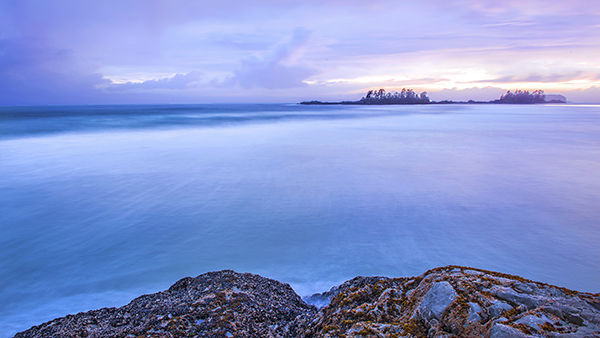
This is not considered a super wide angle lens, but at 24mm on a full frame sensor, you will get a viewing angle of of 84 degrees which gives a pretty wide angle of view. This lens can be used for landscape photography for a few reasons. Firstly, it has really good glass elements that handle light beautifully. There is some distortion at 24mm, but this is easily corrected in Photoshop. Secondly the lens is really sharp, it makes an image seem almost too sharp. You may find that you won’t need to sharpen your image as much if you use a tripod and are properly focused. The colour rendition on this lens is really good too, colours are true and vibrant. This lens is good for landscapes, not necessarily as a dedicated landscape photography lens (you may want to look at some wide angle lenses) but it can certainly perform well for this type of photography.

This seascape image was shot at 24mm. The clarity and colour was amazing, this has been edited in Photoshop

This seascape image was shot at 24mm. The clarity and colour was amazing, this has been edited in Photoshop

2. People Photography

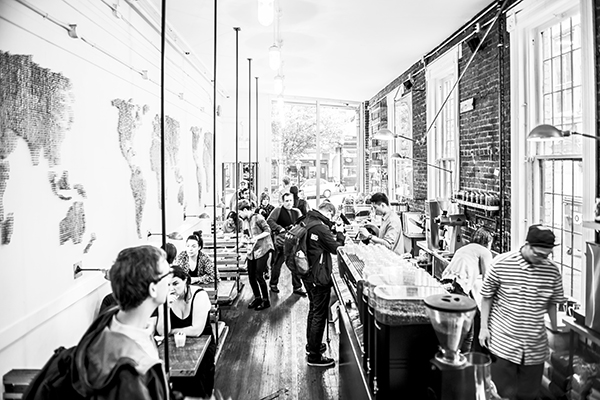
This lens can work well for people photography as well which can encompass portraiture, weddings, and even street photography. This lens will do a really good job in any of these genres. In people photography, you will want to have a lens with minimal distortion. If you are using the 24-70mm for people photography, you will want to be shooting at 50mm and upwards. With a wide open aperture at f/2.8 you will be able to isolate your subject easily and have a soft out of focus background. The bokeh on this lens is good, but more on this later.

A scene in a coffee shop, taken at 24mm. Converted to B&W and edited in Photoshop

A scene in a coffee shop, taken at 24mm. Converted to B&W and edited in Photoshop

3. Close-up and Macro Photography

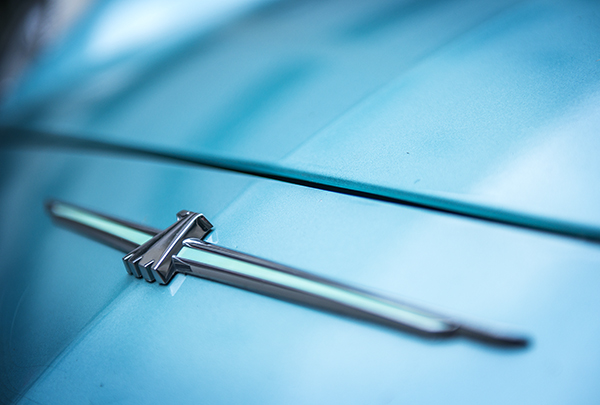
While the 24-70mm is not a macro lens, it has a 37 cm (14.5″) minimum focusing distance. That sounds like a long way, but at 70mm you can get pretty close to your subject. If you are shooting on a high resolution sensor (16 megapixels and above) you will be able to crop in quite a bit and so you will be able to get some good close up images. Bear in mind, this is not a macro lens, but if you want to get in close to a subject, really nice and close, this lens can do that. The sharpness and clarity is amazing, and it is good to have this ability on this lens.

This badge on the hood of a car was taken at 70mm and handheld. The clarity and sharpness is good and the close up shot isolates the badge

This badge on the hood of a car was taken at 70mm and handheld. The clarity and sharpness is good and the close-up shot isolates the badge

4. Street Photography

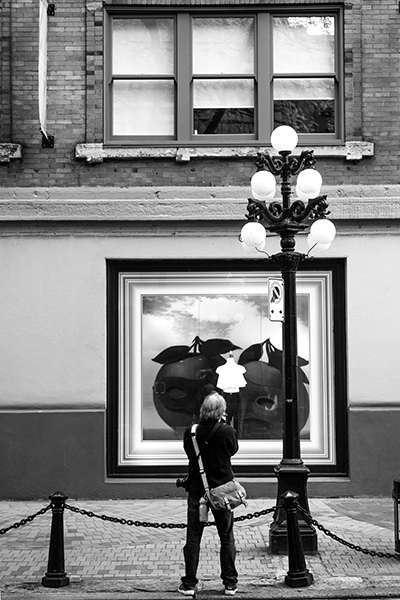
Most street photographers will traditionally use a prime lens for their work. You will often find a 50mm f/1.8 or and 85mm f/2.8 on their cameras. Sometimes though, it is good to have a little more flexibility and the 24-70mm is perfect for this. You can shoot at 35mm, 50mm, or 70mm and you will get great results. Based on your creative desire, you can shoot at f/2.8 or up to f/8 depending on your scene. The beauty of the lens is that it can focus really quickly and easily. It has a SWM (Silent Wave Motor) which means the autofocus is quick and quiet, really useful in street photography. There is some vignetting when the lens is wide open at f/2.8, but this adds some depth and contrast to street photography images.

This lens gives you flexibility when shooting street photography.

This lens gives you flexibility when shooting street photography.

5. Travel Photography

When you are planning to travel, there is always the consideration of what lenses to pack. Weight is always a challenge and of course, space. Many photographers have found that the 24-70mm is a prefect travel lens. At the low end, you can capture some great images of wide open spaces and the interiors of  churches and cathedrals easily. Zoom in and you can get pretty close to your subject, step in closer and you can do some wonderful cameo and detail shots. The 24-70mm is almost designed for travel photography. Yes, it lacks a little in the zoom category, 70mm is not a huge zoom, but you will come home with bright, sharp, colour-filled images.

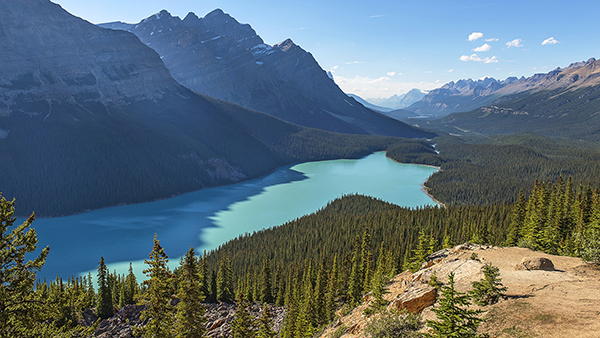
The magnificent Peyto Lake in the Canadian Rockies, made with the 24-70mm lens

The magnificent Peyto Lake in the Canadian Rockies, made with the 24-70mm lens

Performance

The Nikon 24-70mm has amazing optics. It is sharp throughout the zoom range and has a fixed aperture of f/2.8 which means you can get a very shallow depth of field throughout the entire range.

1. Autofocus

This lens focuses quickly and accurately. I use it on a Nikon D800 and it works really well on that camera. You can of course manually focus, but I would only suggest doing that when you are shooting landscapes or close-up photography. If you have a subject that is moving, autofocus is necessary.

2. Colour rendition

The lens produces good colour, which is vibrant and rich.

3. Distortion

If the lens is zoomed out to 24mm you will see some barrel distortion. Once you zoom in though, the distortion goes away, so be aware of the distortion when shooting at 24mm. It is easily fixed in Photoshop or Lightrooom, so don’t be too overly concerned about that.

4. Handling

The lens is quite large and heavy, mostly because the lens has all glass elements and the body of the lens is metal. It is a hardy lens and can take some rough handling, but be careful with it as it is an expensive lens and you wouldn’t want to repair it unnecessarily. When mounted on a Nikon D800 without a battery back, the combined weight of the lens and camera body will be at least 2 kilograms (4.4 pounds). Thats a fair amount of weight to carry around at the end of your hand, so be aware if you plan to buy this lens.

5. Bokeh

Many lenses are judged not only on how sharp they are, but how smooth and creamy are the out of focus areas (bokeh) of the image. In this area, the 24-70mm does okay. The bokeh on this lens is not a wow, but it is smooth and soft. On a lens that offers so much, the bokeh is not perfect, but it is acceptable.

Overall Conclusion

This lens has been praised as one of the best lenses Nikon has ever made. It is a great addition to any photography bag. You will find that you may keep it on your camera most of the time. It really is a sharp lens and is a perfect “all-round” everyday lens. Its specifications make it a “pro-spec” lens which means it’s not cheap (just under $ 2000). Remember though, it is recommended to invest in your lenses. Generally they will outlast your camera bodies and you will have them for many years if you look after them. This is one of those types of lenses, it will last well and produce great images for many years.

The post A Practical Review of the Nikon 24-70mm f/2.8 lens by Barry J Brady appeared first on Digital Photography School.


Digital Photography School

 
Comments Off on A Practical Review of the Nikon 24-70mm f/2.8 lens

Posted in Photography


Enthusiast mirrorless camera roundup (2014)

27 Nov

As a keen enthusiast photographer, which mirrorless camera should I buy?

Articles: Digital Photography Review (dpreview.com)

 
Comments Off on Enthusiast mirrorless camera roundup (2014)

Posted in Uncategorized


2014 High-end Pocketable Compact Roundup

27 Nov

Optical zooms with fast glass, the ability to capture in Raw, large sensors (compared to those in smartphones), and even EVFs are finding their way into this class of camera. And while they may lack the controls of bulkier enthusiast compacts, many of them offer comparable image quality in a sleeker package 2014 Enthusiast Pocketable Compact Roundup

Articles: Digital Photography Review (dpreview.com)

 
Comments Off on 2014 High-end Pocketable Compact Roundup

Posted in Uncategorized


27. November 2014

27 Nov

Ein Beitrag von: Jürgen Modis

Hassi Hund © Jürgen Modis


kwerfeldein – Fotografie Magazin | Fotocommunity

 
Comments Off on 27. November 2014

Posted in Equipment


2014 Enthusiast Mirrorless Camera Roundup

27 Nov

The enthusiast camera category is small, but mighty. These cameras offer more high-end features and controls than their consumer-level counterparts, many doubling as excellent video and still cameras. Expect fast burst rates, strong image quality, solid AF performance and in several cases, 4k video capture. Read our 2014 enthusiast mirrorless roundup and see how the cameras in this category compare

Articles: Digital Photography Review (dpreview.com)

 
Comments Off on 2014 Enthusiast Mirrorless Camera Roundup

Posted in Uncategorized


100 Wet Plates – 100 Worte

27 Nov

Ein Beitrag von: Christian Klant

Es war dieses Portrait, das Portrait eines Mannes, das ich da auf dem Titelbild des Online-Magazins BLUR sah, das mich nachdenklich machte.

Ich war gerade aus einer Galerie zurückgekehrt – ein tolles Gebäude, das äußerst geschmackvoll und exquisit umgebaut worden war und Werke des bekannten Fotografen Mario Trestino zeigte. Aus großformatigen Drucken in edler Rahmung schauten die Gesichter der bekannten Supermodells von den Wänden der klimatisierten Räume. Inhaltlich ließen mich die Bilder jedoch kalt. Sie wirkten auf mich oberflächlich. Die Emotionen nur gespielt.

So wie das Bild dieses Mannes auf dem Bildschirm vor mir musste ein Portrait doch aussehen! Es hatte viele Artefakte, kleine Fehler, eine Tiefenschärfe von nur wenigen Millimetern und war schwarzweiß. Kein steriles porentief retuschiertes und etwas zu perfektes „Kunstwerk“, sondern ein ganz einfaches, ehrliches und dadurch unglaublich intensives Abbild. Es hatte die Kraft, mich zu berühren.

Dieses Portrait war mit dem Kollodium-Nassplatten-Verfahren aufgenommen worden. Schon häufiger war ich diesen Bildern mit ihrem ganz eigenen Look begegnet. Aber nun, durch den Kontrast zwischen den perfekt inszenierten Welten in der Galerie und diesem so ganz anderen Portrait, war eine Verbindung entstanden.

Zwei Portraits eines Mannes und einer Frau im Kollodium-Nassplatten-Verfahren.

Wieder zurück in Deutschland entschloss ich mich, auch mit solchen „Wet Plates“ zu fotografieren. Von diesem Moment an dauerte es fast ein halbes Jahr bis ich die dafür notwendige Ausrüstung beisammen hatte.

Vieles musste ich erst selbst bauen, anderes im Ausland bestellen. Hätte ich vorher gewusst, dass es so lange dauern würde und wie viele kleine Details nötig sind, dann hätte ich das Nassplatten-Abenteuer vielleicht nie gewagt. Doch zum Glück wusste ich es nicht.

Als ich die erste Platte mit zittrigen Händen aus der Entwicklerschale fischte, war das für mich wie ein Nachhausekommen von einer langen Reise. Erst jetzt verstand ich, dass ich schon lange auf der Suche gewesen war, auf der Suche nach meinem Medium.

Ich hatte mit Polaroids experimentiert, Rollfime belichtet und für zwei Wochen sogar eine Leica Monochrom zum Testen bekommen – ein Faible für schwarzweiß hatte ich schon immer. Alles in Allem blieb es jedoch bei kurzen Liebschaften. Doch jetzt war alles anders. Ich war Feuer und Flamme für die Nassplatten-Fotografie – mein neues altes Medium.

Zwei Portraits einer Frau und eines Mannes im Kollodium-Nassplatten-Verfahren.

Wenn ich als Fotograf gefragt werde, was ich fotografiere, antworte ich meist mit „Menschen und Geschichten“. Und so waren es auch Menschen, die ich vor meiner Großformatkamera solange hin und her manövrierte, bis das Abbild auf der Mattscheibe zwar immer noch auf dem Kopf und spiegelverkehrt ankam, aber als Portrait durchgehen konnte.

Schon mit den ersten Aufnahmen war ich durchaus zufrieden und ganz automatisch begannen die Überlegungen zu einer Serie, in der ich meine Arbeit zusammenführen könnte. Kurz vor Weihnachten 2013 war es dann so weit. Auf einmal waren alle Bausteine da und der Name „100 Wet Plates – 100 Words“ stand in großen Buchstaben in meinem Notizbuch.

Zwei Portraits einer Frau und eines Mannes im Kollodium-Nassplatten-Verfahren.

Ich hatte mir vorgenommen, 100 Menschen zu portraitieren und pro Person nur ein einziges Bild zu machen. Ein sportliches Vorhaben – nicht nur wegen der Anzahl der Personen. Wer sich schon einmal eingehender mit dem Nassplatten-Verfahren beschäftigt hat, wird wissen wie viele Faktoren auf das fertige Bild ihren Einfluss nehmen. Und damit meine ich erst einmal nur die, die man braucht, um ein sauberes Bild zu bekommen.

Ganz bewusst wollte ich das Analoge auf den Punkt bringen. Nicht aus einer Serie von Bildern das beste heraus suchen, sondern einen Raum und eine Atmosphäre schaffen, in der das Bild entstehen kann.

Dazu wollte ich den magischen Moment, in dem sich im Fixierbad der milchige Schleier von der entwickelten Platte lichtet, zu einem Teil der Serie werden lassen. Ich wollte die Menschen bitten, den Moment in dem sie ihr eigenes Bild in der Dunkelkammer entstehen sehen mit nur einem Wort zu beschreiben. Kein Satz, kein Ausschweifen – nur ein Wort.

Zwei Portraits einer Frau und eines Mannes im Kollodium-Nassplatten-Verfahren.

Das war die Idee und diese verbreitete ich über meinen Blog, meinen Newsletter und über Facebook. Dann ging es los und ich wurde von den Anfragen, die in kürzester Zeit auf mich einprasselten, fast überrollt.

Mitte Januar begann ich mit den ersten Aufnahmen und Mitte April war ich fertig. Abgesehen von einer mir selbst verordneten Kreativpause fotografierte ich im Schnitt ein Portrait pro Tag. Puh! Das war eine intensive Zeit.

Es gab Höhenflüge nach dem ein oder anderen tollen Bild, aber auch Tiefpunkte. Wie sollte ich es nur schaffen 100 unterschiedliche Portraits zu machen, wo doch Licht und Hintergrund immer gleich waren? Doch letztlich durfte ich lernen, dass jeder Mensch anders ist. Manchmal auch anders, als ich es vorher erwartet habe.

Zwei Portraits einer Frau und eines Mannes im Kollodium-Nassplatten-Verfahren.

Hinter jedem Portrait mit seinem Wort verbirgt sich eine eigene Geschichte. Die Reaktionen der Teilnehmer, die ich nach den Shootings bekam, waren zum Teil sehr bewegend. Ich glaube die Portraits zeigen viel von dem, was im Alltag unter der Oberfläche schlummert. Manchmal sogar Dinge, die schon vergessen geglaubt waren.

Jetzt, nach Abschluss der Serie, geht es für mich weiter. Zum einen bin ich auf der Suche nach einer Galerie, die mit mir gemeinsam das Projekt ausstellen möchte und zum anderen habe ich ein Buch zur Serie gemacht.

Zwei Portraits einer Frau und eines Mannes im Kollodium-Nassplatten-Verfahren.

Natürlich fotografiere ich noch immer mit dem Kollodium-Nassplattenverfahren. Mittlerweile sogar fast mehr, als in meinem digitalen Alltag als Berufsfotograf. Neben meiner Leidenschaft für Portraits zieht es mich mit einer restaurierten Holzkamera und meiner mobilen Dunkelkammer nach draußen.

Es gibt Orte in der Natur, die für mich etwas Magisches haben. Diese möchte ich portraitieren. Für einen Menschenfotografen durchaus eine Herausforderung, aber ich nehme diese gerne an.

In den folgenden Galerien hast Du die Möglichkeit, Dir eine Auswahl der Wet-Plate-Portraits persönlich anzuschauen.

Galerie Lukasczyk: Vernissage 5. Dezember 2014 – Finissage 21. Februar 2015

Continuum Gallery: Vernissage 6. Dezember 2014 – Finissage 2. März 2015

Das gleinamige Buch zur Serie kannst Du hier bestellen.


kwerfeldein – Fotografie Magazin | Fotocommunity
 
Comments Off on 100 Wet Plates – 100 Worte

Posted in Equipment


2014 Enthusiast DSLR Roundup

27 Nov

There’s a lot of action in the enthusiast DSLR segment at the moment, and this category in our seasonal roundup includes the top-performing APS-C DSLRs from each manufacturers. These cameras may not have full frame sensors, but what they do have is pro-level controls and features, borrowed from their high-end cousins. Read more in our 2014 enthusiast DSLR roundup

Articles: Digital Photography Review (dpreview.com)

 
Comments Off on 2014 Enthusiast DSLR Roundup

Posted in Uncategorized