RSS
 

Archive for September, 2014

Gründe für die Straßenfotografie

02 Sep

Ein Beitrag von: Larry Hallegua

Ich habe versucht, zu ergründen, warum ich Fotos von Fremden mache, anstatt von meiner Familie oder Freunden. Von Menschen, zu denen ich keinerlei persönliche Beziehung habe, die die Bilder wahrscheinlich nie sehen werden und möglicherweise noch nicht einmal gutheißen würden, wenn sie sie zu Gesicht bekämen.

Ich erinnere mich an das erste Mal, ich war noch ein Teenager, meine Mutter war irritiert und fragte mich: „Warum verschwendest Du Dein Geld für Filmentwicklungen, wenn auf den Bildern niemand zu sehen ist, den Du kennst?“

Darauf hatte ich keine befriedigende Antwort, ich hatte mir darüber nicht mal Gedanken gemacht. Eigentlich ging es nur darum, Bilder von Leuten zu machen, ohne dass sie das merkten, um mehr ging es mir nicht. Am Ende war das aber auch nur eine Phase, die schnell verging, für lange Jahre schlummernd.

Ein Mann steht vor einem Geschäft, die Kabel seiner Kopfhörer laufen aus seinem Mund.

Eine Frau sitzt in einem Fotoautomaten, im nächsten Automat hinter ihr steht ein Mann, der auf sie zu schauen scheint.

Die Mützen zweier Piloten hängen auf den Ausziehgriffen zweier Koffer, hinter denen die zwei Männer sitzen.

2012 fühlte ich mich gelangweilt von den immer gleichen Bildern von Familie und Freunden und den üblichen Urlaubsschnappschüssen und ich erinnerte mich an den Bildband von Henry Cartier-Bresson, den ich von meinen Kollegen zum Abschied geschenkt bekommen hatte, als ich den Job wechselte.

Das Buch weckte diese schlafende Leidenschaft und ich war Feuer und Flamme. Das dringende Bedürfnis, wieder auszugraben, was an künstlerischem Ehrgeiz vielleicht noch in mir verborgen war, brachte mich wieder zu dieser speziellen Obsession, der „heimlichen Fotografie“.

larry-hallegua-street-4

Eine Frau mit langen rosa Haaren in Rückansicht.

Ein Mann in Rückansicht liegt auf dem Brautkleid einer Frau.

Jetzt, nachdem ich über Jahre hinweg in vier verschiedenen Ländern fotografiert habe, finde ich mich wieder auf einer harten, ziemlich dünnen Matratze in einem kleinen Hochhaus-Appartement in Chengdu und ich frage mich: Hat sich irgendetwas geändert? Warum Bilder von fremden Menschen?

Wenn ich ehrlich bin, muss ich zugeben, dass es zur Sucht geworden ist. Oft ist das Befriedigen des Dranges wichtiger, als die Ergebnisse zu sehen, die sehr enttäuschend sein können, speziell, wenn ich mich mit den herausragenden Werken anderer Fotografen in dieser Disziplin vergleiche.

Aber Droge ist Droge, egal wie gut oder schlecht ich mich am Ende fühle. Ich wache mit der Sucht auf, gehe mit ihr zu Bett und ich bin dankbar dafür! Du kommst in diesen Rhythmus: Gehst raus, um das Bild zu machen, kommst heim, ziehst Dir das Ergebnis rein und wenn die Droge wirkt, dann wirkt sie richtig, das Ergebnis macht Dich sehr zufrieden, zumindest für eine Weile, dann lässt die Euphorie langsam nach und dann musst Du wieder raus, versuchst, es besser zu machen, versuchst aus der Vergangenheit zu lernen, etwas Neues zu schaffen, aufregend, andersartig, etwas, das wirklich aus Dir kommt.

Eine Frau hält ein Kleinkind auf dem Arm und spiegelt sich im Lack eines Autos.

Personen greifen um eine Ecke und ein buntes Plakat mit weiteren Menschen ragt ins Bild.

larry-hallegua-street-6

Warum also Fremde? Die einleuchtendste Antwort ist, dass ich fasziniert bin von Menschen und ihren Lebensumständen. Also, warum sollte man sich nicht auf die konzentrieren, die man nicht kennt, schließlich können sie genauso interessant, lustig, verrückt, schön, vorhersehbar (oder auch nicht) sein, wie all meine Freunde oder meine Familie, wenn nicht sogar mehr!

Mich interessieren auch Verhaltensmuster, speziell über verschiedene Kulturen hinweg, genauso wie die Unterschiede, die man finden kann. Humor, Ironie, das Absurde, Tragödien und alles, was man für skurril halten könnte, berührt mich stark. Ich mag dieses Wort: skurril, das bringt es auf den Punkt.

Ein Mann unter einer Folie.

Ein Mann hängt hinter einer Fensterscheibe ein Poster auf.

Aus einem Führerhäuschen lugt eine Hand mit Zigarette.

Farbe ist wichtig, schwarzweiß habe ich begonnen, aber ich habe die Farbe lieben gelernt, die Möglichkeiten, die sie mir bietet, eine ansprechende Ästhetik in meinem Werk zu entwickeln.

Eine wirklich schlüssige Antwort, warum ich all das mache, kann ich nicht bieten. Der Gedanke, die Kamera nicht zur Hand zu nehmen und zu fotografieren, ist mir unbequem, das würde eine große Leere in mir hinterlassen. Vielleicht ist das der wahre Grund für diese, für meine Obsession.

Dieser Artikel wurde von Tilman Haerdle für Euch aus dem Englischen ins Deutsche übersetzt.


kwerfeldein – Fotografie Magazin | Fotocommunity

 
Comments Off on Gründe für die Straßenfotografie

Posted in Equipment


Choosing Cases and Carts

02 Sep
You can’t exactly put this stuff in your pocket. And what you get to carry it around will be largely driven by, well, what you care carrying around.

Most of you will end up using two small lights with stands and mods and a modest bag of camera gear. Not that there’s anything wrong with that. You can do a ton of cool stuff with two speedlights. I have gone far past that level of gear in the past, and often to my regret.

If that’s you, grab the shoulder-slung camera bag of your choice. Then augment it with this:

The LumoPro Padded Lighting Case is cheap ($ 30), lightweight, protective and perfect for a two-speedlight lighting kit. It’ll carry two compact stands, speedlights, mods and various doo-dads perfectly.
__________

If you need to go beyond that, I’d take a serious look at ThinkTank bags for your fragile gear and whatever size sling bag you need for the stands/long mods.

ThinkTanks are fantastic: well-built and well-designed (and frequently updated by the thinking photographers who design them.) I absolutely love mine and I recommend them without reservation.

For a camera/laptop backpack (not a roller) I’d say go with the Airport Essentials case. It holds a good amount of stuff, very securely. It’s also the perfect size to curl up with on a plane in coach. Just put it on your lap, wrap your arms around it and rest your head atop it on that Toys-R-Us pillow they give you. That’s the best way I know to sleep on a plane.

If you need more capacity (or wheels) step up to any of ThinkTank’s bigger rollers without hesitation. They are all solid choices. Capacity-wise, they go pretty much from “mirrorless cameras” to “I need to move a body.”
__________

I hesitate to even bring this up. But one day you may find yourself looking at a pile of bags and light stand slings and rollers and you may start thinking, “I need a cart to do all of this in one trip.”

Let me first say that I do not envy you. And second, also say that I have been there myself. Not full-blown McNally-ladened, but too much to carry in one trip. By a long shot.

When that day comes, you’ll start thinking about a folding cart. And rather than endure all of the mistakes (and wasted money) that I did, I am going to suggest you go straight to a Rock-n-Roller MultiCart.

Why? Solid build, folding, expand to a big size if needed, can be a dolly, can hold a board to double as a digital tech’s desk on set—you name it. They rock. And roll.

They make several sizes, but I recommend either the R-8 (smaller) or the R-12 (bigger).

Designed for the music industry, they have been adopted by backache-plagued photographers everywhere. Either of these will likely be the last cart you ever buy.

As a bonus, you will likely (and hopefully) use them more around the house than you even do for work. At least I hope so. Because it kinda sucks to travel with that much gear in tow every day.

But if you are gonna, this is the cart.

NEXT: Books and More


Strobist

 
Comments Off on Choosing Cases and Carts

Posted in Photography


1 September, 2014 – Sigma DP2 Quattro – Not Ready For Prime Time

02 Sep


As the digital photography age matures we are all waiting for the newest big thing. So far this year there hasn’t been anything really big. Many camera makers are upgrading their present camera models without showing any real new innovation. However, there is one company that is bold to say the least and not only introduced a radically different looking camera but also put a Foveon chip inside it.  Sigma, recently introduced the Sigma DP2 Quattro. We had the chance to try this camera out. Our review Not Ready For Prime Time will show where we think Sigma and Foveon missed the mark. Some may not agree, read on and see what you think.

You have to love a Photokina year. The next few weeks are going to be crazy with a large number of anticipated announcements as well as hopefully some big surprises. Both Michael and Kevin will be at Photokina this year and you can expect daily updates on the latest from the show floor. More on this over the next two weeks.


The Luminous Landscape – What’s New

 
Comments Off on 1 September, 2014 – Sigma DP2 Quattro – Not Ready For Prime Time

Posted in News


Education: Gear for Your Brain

02 Sep
Your brain is gear. Keep it in tune by providing it regular doses of education. A well-written and info-packed photo technique book is a screaming bargain in the long run. You’re essentially renting someone’s brain.

I have dedicated an entire bookshelf page to my very favorite lighting (and other photo) books for your consideration. All are well-considered and are, I believe, the very best examples in their genre.
__________

But beyond that I would suggest you consider the occasional workshop. Nothing beats a hands-on, small class with a solid pro who knows things you would like to know. It is a super growth experience, and something you really owe yourself if you are passionate about learning to be a better photographer.

At this point severe time constraints limit my ability to teach. But in the past I have taught many workshops and worked with many organizations. Having worked as an instructor for Gulf Photo Plus (held late winter in Dubai) and Santa Fe Workshops (held year-round in New Mexico and elsewhere). I can strongly vouch for both of these organizations. I have seen first-hand how students grow in leaps and bounds in the span of a week, all while making great new friends and having the experience of a lifetime.

If you have ever toyed with the idea, you should definitely ask around, do your research and then take the plunge.
__________

That’s it, For Now

That’s my two cents worth on gear. You may have other choices or priorities, but that is the best I can offer you with 25+ years’ experience behind it.

If you want to chime in on your own, feel free to do so on Twitter via the hashtag #StrobistGear. If is it important that I see it, include an @Strobist in there somewhere and I will.


Strobist

 
Comments Off on Education: Gear for Your Brain

Posted in Photography


How to Secure Your First Music Gig Photo Pass

02 Sep

The hardest part about gaining a photo pass for a large gig is in needing a strong portfolio of concert photos – getting a portfolio of works together when you can’t get access to shows makes things quite tricky. This article will explore how to build your first portfolio and in turn how to secure your first photo pass.

While she sleeps will barnes

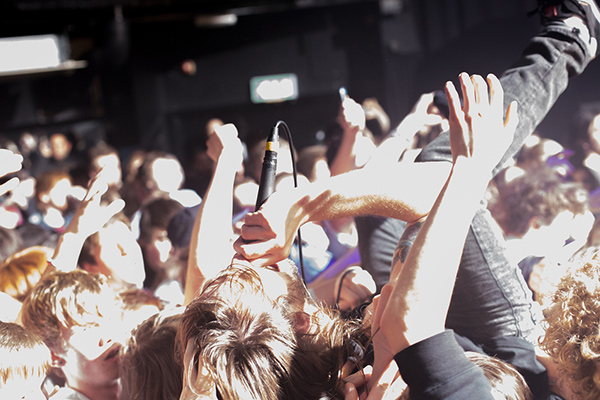
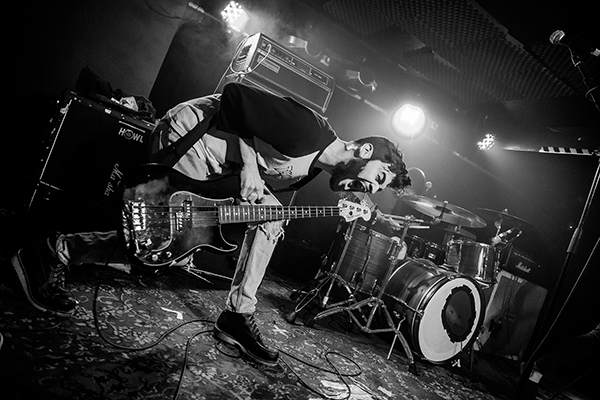
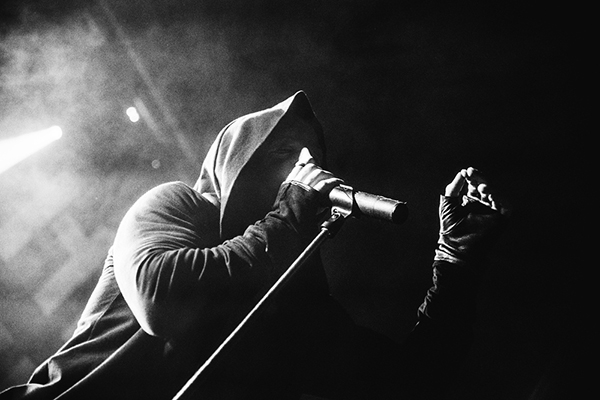
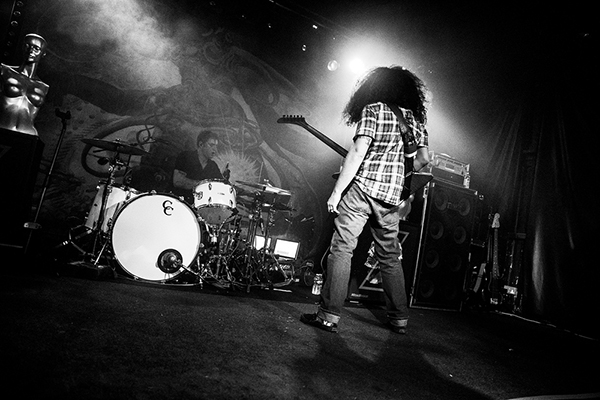
While She Sleeps, shot for Brighton Noise

Get the gear

A lot of photographers will say it doesn’t matter which gear you have, and that it’s all about how you use what you’ve got. I completely disagree with this for music photography, you will need a fast lens – gigs are one of the darkest and dingiest places you will ever shoot, you will need something with at least an f/2.8 aperture. I highly recommend, for those on a budget, a 50mm f/1.8 – these can be picked up for around $ 100, and when shot with the aperture wide open will immediately put your work above those shooting with an f/3.5-5.6 kit lens.

As you shoot more shows, you’ll find the style you want, and as such will slowly upgrade your kit. I find my current set-up a dream, the Canon 6D mounted with the Tamron 24-70 f/2.8, a coupling that is perfect for low-light gig photography.

Howls will barnes

Howls, shot for Make a Scene Promotions

Know the rules

Before shooting any shows, it is important to know the rules. Unless you have explicit permission from the bands, managers or promoters, only shoot for the first three songs and don’t use a flash. These are rules you will have to stick to when shooting big shows so get used to them early. Learning to shoot in low light without a flash will push you as a photographer; while only having 10-15 minutes to cover a performance will make you think on your toes and focus on every opportunity.

Start local

Once you know the rules and have the right gear it’s time to start networking. A lot of photographers will just turn up to a gig and start shooting without knowing the bands, promoters or managers, or without asking. This can cause issues and I would not recommend it. Sometimes bands can be very protective about their image and might not actually want their photos taken, so always secure some sort of permission.

The dillinger escape plan will barnes

The Dillinger Escape Plan, shot for Brighton Source

The best way get in with the right people is to find a local venue and become a regular. Get to know the staff, the punters, the bands, and start networking. This isn’t to say push it in everyone’s face, but after you’ve watched a good band let them know you enjoyed it and mention that you’d love to shoot them live sometime, swap details, shake hands and continue drinking your beer while watching the next band.

Starting locally will offer you a chance to network with bands that are eager for good photos of themselves. They are all after strong imagery to promote themselves and will often be keen to have a photographer cover their shows. They will also be pretty poor, so don’t expect to get paid for anything when you first start. Shooting locally, in this way, will spread your name and will help you to start building a strong portfolio – thus give you the starting blocks for talking to the larger bands, promoters, venues and even magazines.

Once you’ve covered a good number of local gigs and have a variety of photos from different shows, it’s time to start looking for larger opportunities and looking at the bigger bands and venues.

Aim big

So now that you’ve got a portfolio of great photos from all the local shows you’ve covered, it’s time to market yourself. Chances are most of the people who have control of the photo passes have no idea who you are, so ensure you have an online presence. When talking shop you’ll need a simple way to show your work, so a website is best. You won’t need any big bands in the portfolio but simply proof that you’re an awesome band photographer. I’d also recommend getting a Facebook page, and a Flickr or 500px page that only shows your best work. You will be judged on the worst photo in your portfolio.

Coheed and cambria will barnes

Coheed & Cambria, shot for Brighton Source

So the tricky part is now in finding a publication to work with, to get you your first major photo pass. I started by checking out all the gigs at the local major venues and Googling them a few days after the show to find out who covered it. Try something as simple as “Coheed and Cambria Brighton”. This will give you a list of publications to contact, and then simply drop them an email saying that you are looking to cover a few upcoming shows for them, and that they can see your work at your website. Chances are they will say that they already have it covered. However, it’s putting yourself in front of them so that when a photographer drops out of a show they will have someone to call, you.

What if there aren’t any local publications covering shows in your area? Then it gets a bit trickier, but the methodology is the same, find shows you want to cover and find out who is running them. Email the promoters and the band managers, show them your work, and offer them high resolution copies of all the best photos for them to use to promote themselves. The promoters will likely want these to show how good their shows are – although it’s important to remember that these bigger bands probably already have an awesome collection of photos, so you have to really shine both in your conversation and your portfolio.

Andrew wk will barnes

Andrew WK, shot for RMP Magazine

Success

So it’s finally happened, the local publication got back to you saying they love your work and they want some coverage of the next big show in town, now it’s time to do your thing. Remember to prepare everything way before hand; charge your batteries, empty your memory cards, clean your lenses, prepare your photo pass (if this is simply an email print it out), arrive on time, be polite to everyone and abide by the first three songs, no flash rules.

Once the show is over it’s important to ensure you get the photos to the relevant contact as fast as possible. I will normally edit all the photos as soon as I get home and submit them straight away. This is important because shows are time sensitive, people will be looking for the reviews and the photos the next day, so you need the photos with the promoters, bands or publications literally ASAP.

At this point you will now have an even bigger and stronger portfolio, so now you can start to outreach with even bigger publications, bands and promoters. Before you know it you’ll be the centre-fold of your favourite magazine.

Bleed from within will barnes

Bleed from Within, shot for ALT.promotions

A few tips

You will likely get offered drinks at some point. Remember, don’t drink too much, you are representing either a promoter, a band or a publication, being a drunk photographer will not reflect well and will likely lose you access to the next show – drink Red Bull instead.

Also don’t forget how you managed to get to cover that Dillinger Escape Plan or Andrew WK show, it all started locally with small bands – always remember those guys and continue working locally where you have time. It will improve your techniques, give you an even bigger portfolio and will make you feel good for creating great photographs for local talent.

Are you ready to give it a go and get your first gig photo pass?

The post How to Secure Your First Music Gig Photo Pass by Will Barnes appeared first on Digital Photography School.


Digital Photography School

 
Comments Off on How to Secure Your First Music Gig Photo Pass

Posted in Photography


Over Board: Sink or Skate on This Amazing Floating Ramp

02 Sep

[ By Steph in Architecture & Cities & Urbanism. ]

Floating Skate Ramp 1

It’s hard to imagine a more idyllic place to practice skate tricks than a sculptural wooden ramp floating on the crystalline waters of Lake Tahoe. In some of the photos, it almost doesn’t look real, the skaters captured in mid-air seeming jarringly out of place agains the surface of the water.

Floating Skateboard Ramp 4

Skateboarding pro Bob Burnquist got the opportunity to build the ramp in 2013 when Visit California asked him to think big, coming up with an idea that might seem a little nuts at first but was actually achievable. Working with Miami art director Jerry Blohm, Burnquist created a wooden structure on a floating base, featuring a half pipe, a quarter pipe and a 45-degree ramp.

Floating Skate Ramp 2

Floating Skate Ramp 4

The fact that it sits entirely upon the surface of the water is part of what makes it seem so unreal. It’s built on a steel frame with weighted riggers that keep it from moving around too much in the water. It took 30 man hours and 1,250 screws to finish the 7,300-pound structure.

Floating Skate Ramp 3

FLoating Skateboard Ramp 5

You might be thinking, “Isn’t there a danger of skating right off the edge?” Yes, there definitely is, even for professionals – and that’s why Bob had a wet-suited snorkeler waiting to retrieve his skateboard anytime it went into the water during this shoot.

Share on Facebook


[ By Steph in Architecture & Cities & Urbanism. ]

[ WebUrbanist | Archives | Galleries | Privacy | TOS ]


WebUrbanist

 
Comments Off on Over Board: Sink or Skate on This Amazing Floating Ramp

Posted in Creativity


Top of the World: 9 Incredible POV Climbs & Dizzying Selfies

02 Sep

[ By Steph in Travel & Urban Exploration. ]

Skyscraper Selfies Shanghai 3

Your stomach will drop just looking at the stunning photos captured by some of the world’s most daring urban explorers, who scale insanely high towers all the way to the top and take casual selfies like it’s no big deal. Whether illegally base-jumping off One World Trade Center in New York or climbing to the apex of a 2300-foot-tall skyscraper in Shanghai, these daredevils clearly have no fear of heights.

Hong Kong Trio Scale Skyscraper, Snack on Bananas

Skyscraper Selfies Hong Kong 1

If this picture alone gives you a little bit of vertigo, wait until you watch the video. A trio of teenage photographers – Danuel Lau, Andrew Tso and A.S. – climbed a 1,135-foot-tall skyscraper in Hong Kong. Casually snacking on bananas, they make the whole task of getting to the top and photographing themselves with a wide-angle camera on a stick seem like it’s no big deal at all.

Dubai Daredevils Climb City’s Towering Buildings

Skyscraper Selfies Dubai 1

Skyscraper Selfies Dubai 2

Skyscraper Selfies Dubai 3

Skyscraper Selfies Dubai 4

19-year-old Alexander Remnev of Russia went on a trip to Dubai with a bunch of friends, and rather than just stick to the typical tourist activities, he decided to go on a little adventure. The daring photographer and his crew climbed many of the city’s tallest and most intimidating buildings and photographed themselves at the top, including the world’s tallest residential building, the 1,350-foot-tall Princess Tower.

Safety-Gear-Free Stunts in Shanghai

Skyscraper Selfies Shanghai 1

Skyscraper Selfies Shanghai 3

Skyscraper Selfies Shanghai 4

Skyscraper Selfies Shanghai 5

Vitaliy Raskalov and Vadim Makhorov got so high into Shanghai’s sky, they were literally above the clouds. The Russian duo sneakily and meticulously planned their stunt to avoid getting busted by China’s notoriously tough law enforcement, waiting until the Chinese New Year day when there would likely be few people around. They spent nearly 18 hours at the top of China’s Shanghai Tower, which reaches an incredible 2,130 feet into the air when you count the extra length of the crane at the top.

Watch Workers Climb to the Top of a 1768-Foot-Tower

Skyscraper Selfies Tower Workers

Have you ever noticed the stairways that are often attached to dizzyingly tall towers, enabling workers to get to the top to perform maintenance? This video gives you somewhat of a perspective on what it’s like to actually climb them to the top.

Rooftopping Photography by Tom Ryaboi

Skyscraper Selfies Ryaboi 1

Skyscraper Selfies Ryaboi 2

Skyscraper Selfies Ryaboi 3

Skyscraper Selfies Ryaboi 4

Skyscraper Selfies Ryaboi 5

Few people get quite the same dramatic city views that Tom Ryaboi is able to take in, daring to climb onto the rooftops of the tallest buildings in any given city to take photos while dangling over the edge. The pioneering Vancouver-based ‘rooftopper’ and photographer told Resource Mag, “Rooftopping is something I do whether I have a camera or not. Being in high places is just something I need to do to keep a balanced head.”

Next Page – Click Below to Read More:
Top Of The World 9 Incredible Pov Climbs Dizzying Selfies

Share on Facebook


[ By Steph in Travel & Urban Exploration. ]

[ WebUrbanist | Archives | Galleries | Privacy | TOS ]


WebUrbanist

 
Comments Off on Top of the World: 9 Incredible POV Climbs & Dizzying Selfies

Posted in Creativity


Choosing Triggers

02 Sep
This is pretty simple and straightforward advice. First, start with a wire. Yep, a simple sync cable.

It is cheap and reliable, and a great backup to have for when your wireless triggers decide to go all hinky on you. Which they sometimes will. Because, radio.

If you chose your flash wisely, you’ll not be locked into expensive, proprietary PC-based cords. I live in a one-eighth-inch sync ecosystem and could not be happier with it. As such, my current favorite universal camera-to-flash cord is this little 16-foot baby from FlashZebra.com. I wish everything in my life was this simple.

Next, promise me this: that you will never again buy a flash without a good built-in slave. Every flash I have recommended to you has one. Don’t be without it. That makes triggering multiple units much easier, whether you have wires or radios or whatever. Just makes too much sense. Friends don’t let friends buy flashes without built-in slaves.
__________

For wireless triggers, you can date or you can marry. If you just want to date, there is a new flavor-of-the-week appearing near constantly. They’ll be cheap, but they’ll likely not be long-term compatible with other triggers of the same brand.

I tend to look at remotes as a long-term investment that I can safely add to over time as needed. Seriously, I have been using the same brand of triggers since the early 1990s. And by choosing wisely then, all of my triggers can work well together even though they were purchased over a span of 20 years.

For those reasons I use PocketWizard. And because I am a manual shooter and am not chained to TTL, I can go with the simplest (but still rock-solid) PocketWizard triggers. So I recommend without reservation the ~$ 100 PocketWizard PlusX transceivers.

Why: They are super reliable, simple to operate, run on AAs (huge thing if you have ever been left scrounging for batts in the wild) have ten channels, are auto-sensing receiver/transmitters, have a hard-shell-enclosed antenna, and have wonderful range. (More detail, here.)

PocketWizard make a wide variety of increasingly complex and capable triggers. But if my son or daughter were starting out as a young pro photographer, the PlusX is what I’d buy them. I have owned nearly every model of PW trigger, and these are by far my favorite. For 90% of PW shooters, these will be the best choice.

NEXT: Light Stands


Strobist

 
Comments Off on Choosing Triggers

Posted in Photography


Go Ahead And Call Yourself A Photographer, It’s All Right

01 Sep

In the short time since I went pro (read: started making money) with my creative work, I’ve experienced a truly disheartening amount of judgment — snobbish judgment, most of it full of contradictions designed to place some creatives above others based on entirely arbitrary criteria that benefit the speaker and put up a wall of mystery and privilege between people Continue Reading

The post Go Ahead And Call Yourself A Photographer, It’s All Right appeared first on Photodoto.


Photodoto

 
Comments Off on Go Ahead And Call Yourself A Photographer, It’s All Right

Posted in Photography


Cold War camera: 1950s Berlin in color (part 1)

01 Sep

Ten years after the end of WWII, Germany was rebuilding. Cities like Berlin, which had been severely damaged during the war were emerging from the rubble as the ‘Wirtschaftswunder’ or ‘economic miracle’ transformed West Germany. In the immediate post-war period hundreds of thousands of allied troops were stationed in the divided country, many of them with cameras. Found recently at a flea market, the images in this article date from 1956-7 and were taken by a US Serviceman in Berlin. Click through to take a look. 

Articles: Digital Photography Review (dpreview.com)

 
Comments Off on Cold War camera: 1950s Berlin in color (part 1)

Posted in Uncategorized