RSS
 

Archive for August, 2014

Portfolio: Martin Kimbell’s ‘Light Paintings’

25 Aug

UK-based photographer Martin Kimbell doesn’t put his camera down when the sun goes in. His series of ‘light paintings’ add a surreal twist to long-exposure night pictures. In his images, tunnels, spirals and discs of light create sculptural forms in the landscape. We spoke to him about his work, and how he creates it. Click through to view his images and read our Q&A. 

Articles: Digital Photography Review (dpreview.com)

 
Comments Off on Portfolio: Martin Kimbell’s ‘Light Paintings’

Posted in Uncategorized


10 Tips to Improve Your Food Photography

25 Aug

Have you ever tried shooting food? If you have, then you know how hard this can be. There are so many things you have to think about while making sure your food looks as fresh as it can be at the same time. Here is a beginner’s guide to help you get the food shots you’ve always wanted.
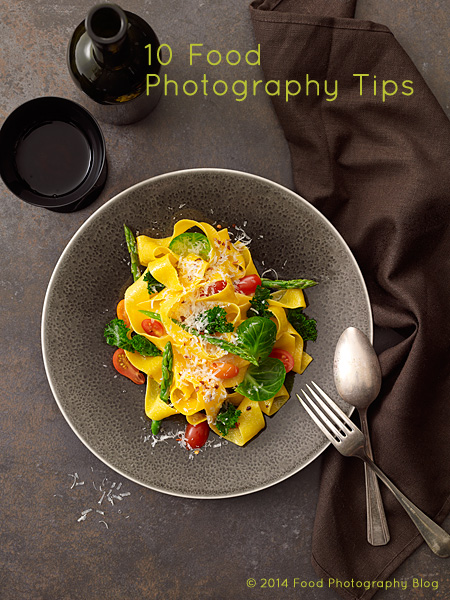
01 Food Photography Tips

#1. Do NOT use your on-camera flash

You probably know this already, but I just have to mention this here to make sure. After all, this is Digital Photography School. Your on-camera flash looks horrible on food. You will get loads of specular highlights on any area that has moisture, and these specular highlights are not only distracting, but will make your food look greasy instead of moist. You will also get strange and unattractive shadows either on your food, on the plate, or both. On-camera flash is so harsh. Food usually looks its best with soft light. The shot below on the right has soft backlight coming from a window in a restaurant.

02 No On Camera Flash

#2. Shoot on a tripod

Ok, I just heard all the booing and hissing from this tip but, since I just told you not to use your on-camera flash, you are going to have to shoot using a tripod instead. I actually love shooting on a tripod and I use one anytime I can. Try it! It will completely free up your hands to style your dish, in order to work on your shot. I am a commercial food photographer, so I am either shooting in my studio or some other controlled environment where I can use tripods, so this tip is for those situations.

03 Use a Tripod

Notice in the image above right, there is a a nifty tripod arm extension enabling me to get the camera out over the set. If you are trying to hand hold a camera AND shoot overhead, just schedule an appointment with your chiropractor right now! Not only is it back-breaking to shoot overhead like that, but it’s impossible to line up your shot exactly the same way each time you take a shot. Lock it down on a tripod, focus your set once, then start styling your food.

#3. Or use a high ISO instead of a tripod (last resort)

Now, if you can’t shoot on a tripod for some reason, for example maybe you are shooting an event and have to gets shots of the food, then you have the option of raising your ISO setting on your camera to accommodate for the lack of light. I use this as a last resort. You must keep in mind that raising your ISO will increase the digital noise in your file. Depending on your camera, the digital noise could be very severe if you are in a very low light situation. See in the image below the difference between shooting at ISO 100 and ISO 1600 on a Canon 5D Mark II.

04 High ISO Grain2

For the most part, you can get away with digital noise when using images for the web because of the lower resolution. However, if you need to have the image printed, then this is where you might run into problems with the digital noise. It can be very hard to correct out of the image AND keep the image in sharp focus at the same time. Applications that can correct digital noise in software do so by softening the edges of the pixels creating the noise. This gives the appearance of the image being a little soft with the focus afterwards.

#4. Please use props – but not too many

I see so many food blogs with shots of food in a plate, or a bowl, with nothing else in the shot. This to me is just a documentation of a food dish. There’s no story behind the image when you have no props. I get it – it takes more time. But, if you start real simple, props can dramatically improve your photos. Notice in the shots below that all the props are secondary – meaning the first thing your eye goes to is the pasta in both shots. All the props are low key and not distracting. It’s still all about the food, but it gives the food some visual support to get your viewer to look at your photos. There is a fine balance between just the right amount and too many props that take your eye away from the food.

05 Props Pasta Dishes

You are telling a story with your props. The story of the two images above is that these are nice pasta dinners. That’s it, real simple. You need to use the placement of your props to get the viewer’s eye where you want them to look. The first thing we see in an image is text, if there is any. Second will be a blaring highlight or a very bright color. Third, we look at what’s in focus. Your props should guide your viewer’s eye to look exactly where you want, and eliminate any distractions along the way. If you have a blaring highlight on something that is catching your eye, then guess what, your viewer is going be looking at that same highlight too, so get rid of it, or put a prop in front of it. Get your viewer to look at your food.

#5. Stay away from bold patterns on plates and fabrics

Food photography is all about creating an image that naturally has the viewer’s eye looking right at your beautiful food. As I mentioned above, all the fabulous props in the shot are just the supporting actors in your story. If you have a crazy pattern on a plate, your reader is going to look at the crazy pattern first, then your food (hopefully) second. Your story is not about the plate. Your story is about your food. You might be in love with that pattern on the plate but that’s probably not what your image is about. Beloow is a shot before props have placed, to give you a sense of how the food looks on different plates.

Biscotti Plates

I will test plates with food just like this to find the right one for the photo I’m doing. The problem with patterns is there will be areas of the pattern that will be in focus and competing with the food. A colored plate can be great as long as the color is complementary or a nice contrasting color. Then, white or cream will always make your food stand out.

The same rules generally applies to table clothes and fabrics as well. We never use bold patterns on the surfaces we shoot on. I’m saying “we” here because when I am shooting a job I have a food stylist AND a prop stylist. We all work together in making a shot for our client that is all about their food. When you are shooting on fabric with a bold pattern, that bold pattern will absolutely compete with your food. It’s just human nature. Our eyes are so easily distracted and you only have a few seconds to get your point across to your viewer, don’t blow it on some crazy pattern on the table.

# 6. Get vertical!

07 Get Vertical

Many people take all their photos in a horizontal format. I understand why, it’s a lot more comfortable to work that way. When shooting vertically, all your settings are now on the side and if you’re on a tripod you have to keep cranking your head over to see them. Well, you just have to suffer through it! Shooting vertically can give you nice depth in a photo from foreground to background. This also enables you to have large photos on your blog, if you have one. Shooting vertically can give you room for text like a title. Many sharing sites like Pinterest are better with vertical shots, so think about how this image will be shared and go from there. Mix up the images on your blog. Have some vertical photos and some horizontal ones as well. If you do everything the same way it can get very boring.

#7. Go ahead, crop that plate

The other habit I see a lot of new students doing is being afraid to crop into plates. Here are two shots. One full frame and one cropped in. Now, of course it depends on how the images will be used, and sometimes you might even need two formats of the image, but play around with cropping an image to see if you like it better. It’s okY to crop the plate. You are not selling the plate, remember, so show off that food a little more.

08 Crop 1

Now for the cropped version – a lot fewer distractions and it’s all about the food.

09 Crop 2

#8 – Back up and zoom in

Every student wants to know, what is the best lens for shooting food. For my 35mm DSLR (full frame), I’m always using my 100mm macro lens. I use this about 90% of the time. You really can get great depth of field with that lens. Here is shot I took with three lenses. Many people have a 50mm lens because that is what came with their camera. The only time I use that lens is when there are several dishes on the table that I have to get in one shot. That type of shot requires a wider angle lens, like the 50mm or the 35mm. When I am only focusing on one dish in the shot, I will always use my 100mm macro lens.

10 3 lenses

When using wider lenses, like the 50mm or the 35mm lens, you will need more background in your shot. Also, the wider the angle of your lens, the harder it will be to get very shallow depth of field, unless you get real close to your food, and open up that lens by opening your aperture. Depth of field is referring to how much is in focus versus out of focus in your shot. Which leads me to the next tip…

#9. Use a small f-stop number to get shallow depth of field

The f-stop, or aperture, controls the opening of your lens that lets light into the camera. The f-stop also controls how much of your image will be in focus, and how much will be out of focus.

Here is an f-stop grid showing the most common f-stops that many lenses have. Some lenses don’t open as wide as f/1.4. It seems to be that the more expensive the lens, the wider the f-stop. For instance, the higher end 50mm lenses will go to f/1.2, but you’ll pay for that in cost.

11 Apertures

When you are just starting out, f-stops, or apertures, are very confusing to learn about. You see, the smaller the f-stop number, the LARGER the opening. It’s very counter intuitive. What I always say in class is, the smaller the f-stop number, the smaller your depth of field and the larger the f-stop number, the larger your depth of field. This gives you such creative control with your images. I always suggest you shoot your food with a very “shallow depth of field”. This means less things in focus. See the two images below:

12 Apertures examples

The image on the left has shallow dept of field because I am shooting at f/5.6 on a 100mm macro lens. This shot is all about the olive oil, so that was the only thing I wanted in focus. The shot on the right was shot at f/16 and has a much larger depth of field (more things in focus). I find this distracting. There’s too much in focus and your eye bounces all over the place (see more in my article: Using Focus Creatively with Food Photography. You use your f-stop to control what you want to show in focus. As a very general guide, the f-stops for shallow depth of field are usually from about f/5.6 and below (this can also depend on how wide your lens is as well).

Now, if I was photographing a Thanksgiving table with loads of dishes on it that I wanted in focus, then I would definitely use an f-stop like f/16 or even f/22 with a wider lens, like a 50mm or even a 35mm lens.

#10. Keep your food looking fresh on set

Here I am painting a steak with butter to make it look nice and moist. I’m using butter because when they serve this steak at the restaurant they have melted butter all over it. You can also use vegetable oil, or water and glycerin, or just water on foods. If the food has an oily or fatty content, like meats and poultry do, then use vegetable oil. If you are keeping salad moist, you can just spray it with water.

When shooting burgers, I am always painting an TON of oil on the beef to keep it looking really juicy. There is nothing worse than a dry looking steak. Yuck. Who wants to eat that?

13 Food Fresh

To keep foods that can oxidize looking fresh, use Fruit Fresh or Accent on them. You can usually find these in the spice section of the super markets. I highly suggest you do not eat the foods that you treat with this stuff. It’s actually MSG. I use it two ways. I will soak things that turn brown, like artichokes and pears in a solution of 2 cups water with a few tablespoons of the MSG. The other way I use it is by taking the same solution and painting it onto the food once it’s on set to make sure it doesn’t turn brown.

When I tell people this trick they say, “oh, you can just use lemon”. Lemon works, just know that you will have to keep reapplying it.

14 Food Fresh

This image below would not be possible without using Accent or Fruit Fresh. Artichokes turn brown right away when you cut into them. I soaked both sides in a bath of a lot of Accent and water. I soaked them for 30 minutes too. This artichoke didn’t turn brown for hours!

15 Artichoke

All right! There’s so much more I can say here but hopefully some of these tips will inspire you to try to take your food photos to the next level.

For more food related articles check these out:

  • Food Photography Tips – Some Video Tutorials
  • 5 Tips to Seriously Improve Your Food Photography Techniques
  • 8 Steps to Create Mouth Watering Food Photography
  • 11 Quick Food Photography Tips to Make Mouth Watering Images
  • Snapn Food Guide a sister dPS ebook company

The post 10 Tips to Improve Your Food Photography by Christina Peters appeared first on Digital Photography School.


Digital Photography School

 
Comments Off on 10 Tips to Improve Your Food Photography

Posted in Photography


The Bucks Stop Here: 9 Closed & Abandoned Dollar Stores

25 Aug

[ By Steve in Abandoned Places & Architecture. ]

abandoned closed Big Lots dollar store
Dollar Stores may be the new face of retail in post-9/11 America but when they close or are abandoned, that’s change we don’t want to believe in.

Big Lots? More like Big Lost, know what I’m sayin’? A big lot of credit goes out to Flickr user Andrew T…has left the building for capturing the forlorn state of the above former Green Bay, WI, Big Lots store in August of 2011. Good thing he did – by December of the same year, the store had been demolished and all that was left was an open field.

General Retreat

abandoned closed Dollar General Columbia dollar store 1a

abandoned closed Dollar General Columbia dollar store 1b

abandoned closed Dollar General Columbia dollar store 1c

abandoned closed Dollar General Columbia dollar store Radio Shack

It’s getting to the point where not much remains open in Columbia, SC… Columbia Closings’ alphabetical list goes on and on and on. Very few failed local businesses are dollar stores, however, which may say something about the city’s economy. Here’s a Dollar General that just couldn’t cut the mustard in early 2012 but if the strip mall’s landlord thinks he’s getting the last laugh, they’d best think again: the store re-opened as a Radio Shack.

Detroit Buck City

abandoned closed Detroit dollar store 2

abandoned closed Detroit dollar store 1

You know the neighborhood’s going downhill fast when the local dollar store accepts food stamps… and then closes… and then gets tagged. Such is the sad case of Y OLLAR TORE (formerly MY DOLLAR STORE), not part of a chain though it’s doubtful that would have helped save them. If you haven’t already guessed, this post-apocalyptic ex-business is located on Detroit’s east side, which is definitely not its best side.

Next Page – Click Below to Read More:
The Bucks Stop Here 9 Closed Abandoned Dollar Stores

Share on Facebook


[ By Steve in Abandoned Places & Architecture. ]

[ WebUrbanist | Archives | Galleries | Privacy | TOS ]


WebUrbanist

 
Comments Off on The Bucks Stop Here: 9 Closed & Abandoned Dollar Stores

Posted in Creativity


Forget About Pixels – Awaken the Artist Within

24 Aug

I have a confession to make: I used to be a pixel peeper. There was a time when I’d spent hours zooming in and inspecting photos at 1:1 or even 300 percent. I was looking for a technically perfect photo. Back then, most of the work I was shooting was aimed at micro stock outlets. At most of them, the inspectors and image editors were not easy to get around. Noise, camera shake, out of focus, chromatic aberration, white balance, basically any issues would end up in an image rejection. That actually helped me. I learned the technical side of photography, but I also became obsessed. I became a pixel peeper.

Luckily I don’t care about it anymore, and you shouldn’t either, unless you are shooting commercially. I mean sometimes, depending on the type of work you are doing, a thoughtful examination could be needed. However, like every obsession, pixel peeping can be a detrimental habit.

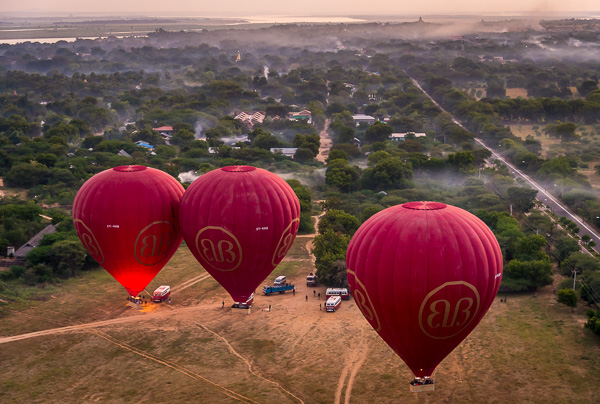
20131207 Bagan 744

If you find yourself analyzing 100 percent crops, debating about pixel counts, hitting the forums too often and compulsively reading gear reviews, please stop. Especially if the majority of your work is about documenting travel, street photography, and whatnot. This is not what photography is about.

Yes, I get it, photography is part technology and science, but overall it’s art. Counting pixels or buying the latest camera is not going to help you to find your vision. Those are mere tools meant to aid you in expressing your voice, your art, in a wonderful medium.

I encourage you to leave the verbal flux behind and go shooting. Photography it about communicating emotions, a moment in time, the essence of a place, the soul of people.

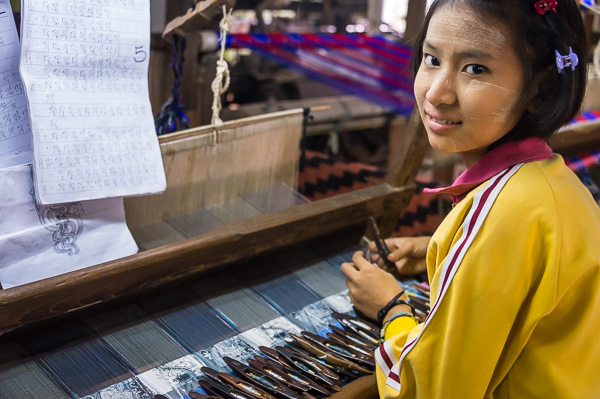
20131208 Mandalay 311

If you’re still unconvinced, think about this. Let me start by asking you how much of your work is being shared online? Have you ever realized that the average monitor can only display 2 megapixels? And many of our photos are being seen only on tablets and phones. None of those are even close to being even viewed at 100 percent. Let’s throw in print as well; let’s say you want to enlarge your photos to 8×10, or you want to decorate a room and print a 16×24. Grab a photo that you think is not sharp or noisy and make a test. I think you’ll be delighted by how awesome it looks.

In the end, as photographers and storytellers, what we pursue is capturing a moving picture, perhaps communicating an emotion. Of course you can go after excellence and be meticulous, but always keep in mind that what you are trying to express with the craft is way beyond just a technically perfect photo. A great subject, an inspiring place or a story will always generate a reaction, an emotion in your viewer. Such an image will never be judged as too noisy, a bit shaky, and so on. In exchange, there are gazillions of perfectly technical photos floating around without any kind of content. Photos that, even though technically perfect, nobody cares about.

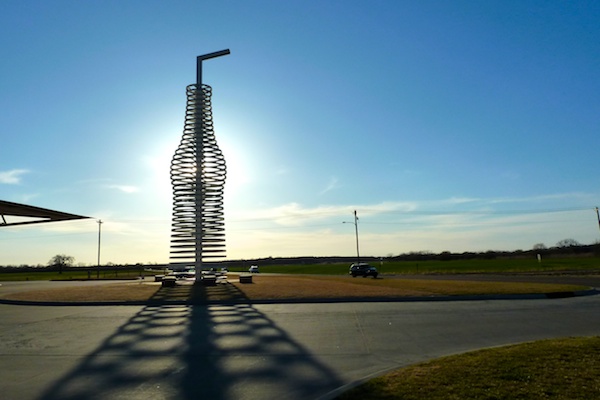
20131216 Doha 273

It is true that we have much better technology now than we had in the past. Sensors with low light capabilities, bodies and lenses with image stabilization, and software are all better than ever. But for some, it seems to never be enough; there will be always something new, something better, and we tend to get lost in the technical side instead of pressing the shutter. Many moons ago, I was always looking at these things, to the point where I didn’t even want to shoot beyond ISO 200. It was a big mistake. I lost a lot of moments and opportunities that I would’t get again. That will never happen now; I prefer to capture the instant, the character of a place, the spirit of humankind – without having to worry about pixel counts.

Forget about pixels, awaken the artist within. Go out and shoot something that moves you. You know you can.

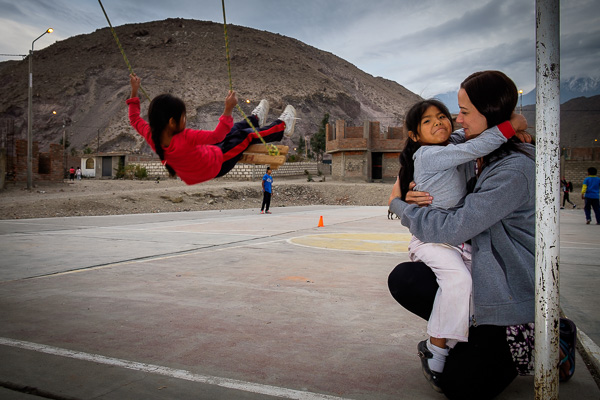
20140407 Hoop Peru 584

The post Forget About Pixels – Awaken the Artist Within by Daniel Korzeniewski appeared first on Digital Photography School.


Digital Photography School

 
Comments Off on Forget About Pixels – Awaken the Artist Within

Posted in Photography


Portfolio: Todd Bretl’s captivating underwater photography

24 Aug

Todd Bretl says he asks himself ‘Would I hang this on my wall?’ when he’s composing his photos of marine life. Challenging himself with this question has helped him produce some stunning works of art. Some of his images call to mind glass sculpture, while others capture the wildness that thrives below the water’s surface. He answered our questions about his process and gear – take a look at some of his work and find out more about how it’s created. See gallery

Articles: Digital Photography Review (dpreview.com)

 
Comments Off on Portfolio: Todd Bretl’s captivating underwater photography

Posted in Uncategorized


browserFruits August, Ausgabe 4

24 Aug

Wart Ihr schon im wohlverdienten Sommerurlaub oder wartet Ihr noch sehnsüchtig auf Pause? Wer von Euch von einer Reise ein paar schöne Fotos mitgebracht hat, kann sie gern bei uns einreichen. Vielleicht wird ja ein Artikel daraus. Wie es funktioniert, erfahrt Ihr hier. Und keine Angst: Wir geben Euch ehrliches Feedback, Hilfestellungen beim Schreiben und korrigiert wird am Ende auch noch einmal alles vom Lektorat.


Fotospecial: Kunstformen der Natur

flickr

500px


Deutschsprachig

• Neben der Photokina laufen unglaublich viele Foto-Ausstellungen in Köln. Die Kölner Photoszene präsentiert ganze 70 Ausstellungen. Welche besucht Ihr?

• „ ‚Siebenundneunzig ist ein Alter, zu dem man nicht mehr gratuliert. Man sollte nicht älter als 90 werden!‘ Das sagte Else kurz nach ihrem 97. Geburtstag, nicht lange, nachdem ich sie kennenlernte.“ Eine wunderbar rührende Serie über Else von Hanna Lenz.

• Anlässlich des offiziellen 175. Geburtstags der Fotografie sprach Deutschlandradio Kultur mit dem Historiker Gerhard Paul über die Geschichte der Fotografie. Das Interview ist hier nachzulesen.

• Und kürzlich hat ja in Köln auch noch das Fotobuchmuseum seine Pforten geöffnet. Der Deutschlandfunk hat sich auch darüber mit dem Kurator Markus Schaden unterhalten.

• Listen, die den Erfolg versprechen, gibt es viele, die Tipps in dieser sind aber wirklich nicht schlecht, auch wenn der Titel furchbar ist: „Neun Dinge, die erfolgreiche Menschen zuhause haben“.

• Wie ein einzelner Fotograf ein Chaos in Kassel auslöste.


International

• „Going against the grain“ (dt. Gegen den Strich), heißt die neue Serie des japanischen Fotografen Hideaki Hamada, die wir sehr originell und empfehlenswert finden.

• Ihr fotografiert Fashion und wollt gern in einem Magazin veröffentlicht werden? Fünf Tipps wie das gelingen könnte, findet Ihr hier.

• Rockmusiker vor und nach ihrem Auftritt.

• Pavel Kosenko, eigentlich ein Straßenfotograf, hat beeindruckend farbintensive Aufnahmen von der russischen Tundra gemacht – von einem Hubschrauber aus.

• Ihr bastelt gern? Dann sind diese Anleitungen zum Bau eines analogen Belichtungsmesserss vielleicht genau das Richtige für Euch.

• Die Lichttornados von Martin Kimbell sind eine neue Ebene der Lichtmalerei und dazu noch wunderschön anzusehen.

• Eine Liste mit 50 sehr schönen Schwarzweiß-Fotos verschiedenster Fotografen.


Neuerscheinungen und Tipps vom Foto-Büchermarkt

Buchtipps

• „Frida Kahlo und Diego Rivera“* – Zwei große Künstler gesehen von einer großen Fotografin. Im Jahre 1950 fuhr die damals schon bekannte Portraitfotografin und Bildreporterin Gisèle Freund für geplante zwei Wochen nach Mexiko, aus denen 2 Jahre wurden.

• In „North Korea: Anonymous Country“* zeigt die Fotojournalistin Julia Leeb verschiedenste Facetten des nordkoreanischen Lebens. Auf ihrer Reise konnte sie auch die Feierlichkeiten zum 100. Geburtstag des Staatsgründers Kim Il Sung verfolgen.


Zitat der Woche

Here are faces that I have found memorable. If they are not all as happy as kings, it is because in this imperfect world and these hazardous times, the camera’s eye, like the eye of a child, often sees true.

Toni Frissell –

Mehr Zitate


Videos

Ein Blick über den Tellerrand: Was mit Mapping und Echtzeit-Face-Tracking möglich ist.


* Das ist ein Affiliate-Link zu Amazon. Wenn Ihr darüber etwas bestellt, erhält kwerfeldein eine kleine Provision, Ihr bezahlt aber keinen Cent mehr.


kwerfeldein – Fotografie Magazin | Fotocommunity

 
Comments Off on browserFruits August, Ausgabe 4

Posted in Equipment


24. August 2014

24 Aug

Ein Beitrag von: Aliza Razell

Mädchen mit Libellenflügeln auf Stein im Wasser


kwerfeldein – Fotografie Magazin | Fotocommunity

 
Comments Off on 24. August 2014

Posted in Equipment


How to Get the Most out of your Pocket Camera

24 Aug

If you have a pocket camera, you might have spent hours pouring over reviews, spec sheets, and comparisons trying to find something better like a DSLR or Micro Four Thirds camera. Too often we dismiss our humble pocket cameras because they don’t have big lenses, flash mounts, custom exposure controls, or even enough buttons on the back to do what we really want. While there are certainly good reasons for shelling out hundreds of dollars for a fancier camera, chances are your pocket camera can do a lot more than you might think. Let’s explore a few tips that you can use to get the most out of it, and even take some professional-style shots without spending another dime on new gear.

Bird in flight

Use the Zoom, but not for zooming

Many pocket cameras have a significant advantage over DSLRs because they often come with a built-in optical zoom that covers a much greater focal range than a standard kit lens. And while this can be nice for, say, shooting closeups of trees or buildings that are far away, it actually has a much more practical feature that is often overlooked. Instead of using your camera to get nice and cozy with faraway objects, you can actually use it to get professional-style shots of things that are much closer to you.

Pocket headshot

In the shot above I used my old Panasonic ZS7 point-and-shoot to take a portrait by standing about 10 feet away from my subject and zooming in as far as the camera would go. Because the background buildings and foliage were so far away from her, it created a very shallow depth of field. Of course you can only do this if you have a great deal of available light, since pocket cameras are much less sensitive to light than their larger counterparts, but if you have never tried this technique you might be surprised at the results you can get. It also helps to have a tripod since it can be difficult to keep the camera steady on a single subject when zoomed in that far, or you can simply place your point and shoot on a hard surface like a bench, railing, or brick wall.

Turn on the flash during the day

When it comes to camera flashes, we usually think about how they can be used to brighten up a dark scene – particularly if you are using a pocket camera, most of which are already not very sensitive to light. But flash can also be used to enhance a perfectly well-lit scene, and produce some very good results that you might not expect. Shooting in the daylight can cause harsh shadows to appear on your subject, which is why many photographers like shooting during what’s called the golden hour – the time right after dawn and right before dusk.

Most pocket cameras allow you to force the flash to fire, even when there is plenty of light available. This is a technique known as “fill flash“, and it is a great way to eliminate some of the shadows from harsh lighting that can often happen during the bright afternoon sun. You can also use it to help get better photos when your subject is backlit, as often happens during the daytime. In these situations your camera takes a look at the overall scene and thinks there is enough light, so it won’t fire the flash. But since you know better than your camera just what type of picture you want to take, overriding the camera’s decision and forcing the flash to fire can help you get much better results.

Magnolia noflash

Magnolia flash

Using fill flash takes a bit of practice. But once you get the hang of it, you will find creative ways of using it to get a lot more mileage out of your pocket camera than you might have thought possible. Alternatively, you can instruct your camera to keep the flash off even when it thinks it must be turned on. Remember, you know better than your camera what kind of picture you want to take, and somehow all you need to do is give it a little nudge in the right direction.

Wwii memorial

When I took this photo of the World War II Memorial in Washington, D.C., I wanted to capture the arcs of water as they shot out from the fountainheads. To do that, I left my pocket camera in Auto and told it to keep the flash off. In order to compensate for the lack of light, my camera left the shutter open longer which gave me the exact image I was looking for.

Use the camera’s built-in scene modes

By far the most utilized shooting mode on pocket cameras is Auto; in which the camera does its best to evaluate things like the amount of light, as well as the movement of your subject, to pick the optimal exposure settings. The camera also decides whether it thinks a flash should be used, unless you have specifically told it to do otherwise. And for the most part, Auto can produce some good results. But a camera is only a tool, and it can only take its best guess as to what you really want to photograph. It doesn’t see a flower, a tree, a child, a car, a birthday candle, a waterfall, or anything else. It only sees bits of light hitting its sensor, and tries to capture the incoming light as best as it can given the information it has to work with. This is why Auto sometimes works, and sometimes produces a blurry mess.

Landscape

However, there is something you can do about this even if you aren’t familiar with exposure settings and how to adjust them. Almost every camera today, whether it’s a tiny compact model or a big DSLR, has built-in scene modes that are little icons on your camera that look like a face, a mountain, a tree, a child, and more. Camera manufacturers pour millions of dollars and years of researching user behaviours into developing scene modes, so the next time you pull out your pocket camera, try switching to one of the little icons based on what you are shooting. Utilizing these scene modes is a way for you to give your camera a bit of help in interpreting the incoming light, so it can try to take the picture you really want instead of the picture it thinks you want.

Flower

Let’s say you are photographing a youth soccer game, and using Auto because it generally gives you decent photos. The problem is, your camera doesn’t know you are at a soccer game! It only sees bits of light, not a green field of grass with individual players and a ball. But if you use the scene mode to tell your camera you are photographing a sports event, it will tweak its own internal exposure algorithms by increasing the shutter speed, widening the aperture, etc., to give you better results. The same principle applies when you are shooting a portrait, a flower, a beach, or the nighttime sky: by using the scene modes, you are essentially making your camera a little bit smarter, which can make a big difference.

Bottle

While pocket cameras have physical limitations, such as tiny image sensors and low ISO sensitivities, that will always put them in a class below DSLRs, Micro Four Thirds, and other more expensive cameras, this doesn’t mean they can’t produce amazing results. Hopefully using these tweaks will help you get even better pictures with the camera you already have, without spending a dime on new equipment.

Editor’s note: Do you have any other tips to share? Please do so in the comments below. Do you take your compact camera along on vacation too, for those times you just don’t want the big DSLR? I do!

The post How to Get the Most out of your Pocket Camera by Simon Ringsmuth appeared first on Digital Photography School.


Digital Photography School

 
Comments Off on How to Get the Most out of your Pocket Camera

Posted in Photography


Social Structure: Apartment Tower Fosters Community Creation

24 Aug

[ By WebUrbanist in Architecture & Houses & Residential. ]

social apartment complex balconies

Tall residential complexes often share very little common space, leading to a relatively solitary living experience despite the density of dwellings – this design aims to change that paradigm dramatically.

social interaction building

Indeed, helping people get to know their neighbors the driving concept behind this building in Antwerp, Belgium, where similar units are clustered around shared balconies and gardens.

social structure community interactions

Communal dining, rooftop deck, bike repair and indoor green spaces also encourage further interaction, increasing opportunities for chance encounters. As Black Swan author Nassim Nicholas Taleb writes, “This makes living in big cities invaluable because you increase the odds of serendipitous encounters — you gain exposure to the envelope of serendipity”

social housing site plan

Designed by C.F. Møller Architects and Brut Architecture and Urban Design, the idea is to increase interactions both within smaller sets of apartments and throughout the complex.

social building site section

All of this is meant to help residents form bonds more quickly, beyond the one-off greetings in elevators and periodic meetings in one-per-building community rooms.

social urban design strategy

The conceptual intent is also cleverly legible on the exterior of the building, with a facade that is broken down into different sections to create a series of scales showing small individual units and collections thereof within the framework of the larger structure.

Share on Facebook


[ By WebUrbanist in Architecture & Houses & Residential. ]

[ WebUrbanist | Archives | Galleries | Privacy | TOS ]


WebUrbanist

 
Comments Off on Social Structure: Apartment Tower Fosters Community Creation

Posted in Creativity


Readers’ Showcase: Macro photography

24 Aug

While it’s easy to get swept up in the stream of announcements over the next few weeks, it’s also a good idea to remember why we buy that gear – to make great photos. What better way to do it than to showcase the excellent work of our own community? This week we asked users of our Macro and Still Life Photography forum to submit their favorite macro shots for inclusion in our Readers’ Showcase. Unsurprisingly, we saw a lot of great work. See gallery

Articles: Digital Photography Review (dpreview.com)

 
Comments Off on Readers’ Showcase: Macro photography

Posted in Uncategorized