RSS
 

Archive for August, 2014

3 Essential Photoshop Tools for New Portrait Photographers

29 Aug

Opening Photoshop for the first time is kind of like going on your first date; your hands sweat, your eyes glaze over, you completely lose all sense of direction and time. At least that was the scenario for me.

Portrait

Photoshop is an incredibly complex program that can be used as an artistic tool for positive enhancement, or gross distortion when it comes to portraiture. It’s all too easy to over-edit, get carried away with the sheer number of the tools at your fingertips, or attempt elaborate cover-up schemes for poorly shot images when first starting out. There are certain tools I grasped at the beginning of my learning curve, however, that were essential for editing clean and simple portrait images. Three years after my initial dumb-struck encounter, and countless hours of reading and practicing later, there are three tools that I still use in almost every photo I push through Photoshop. I’ve since discovered that users at every stage continually apply these tools to their photography workflow, as well.

Everyone has to start somewhere, so if you know nothing else about it yet, start by familiarizing yourself with these three Photoshop tools and you’ll build a solid foundation for taking your portrait photography editing to the next level.

1. Curves

The “S-curve” is one of the most common techniques in editing that packs an instant punch. I guarantee that a large majority of photographers working on everything from landscapes, to boudoir images, use this tool at some step in their Photoshop workflow. There are many different effects that you can achieve using the Curves tool, so the trick is to just play around with it a little to see what works best per image; there’s no specific settings within the tool that will always achieve great results. Much of it is about preference. You can achieve bold, colorful, contrast or a soft matte finish, simply by just readjusting the points on the curve. Extreme curves will give some strange discolorations, though, so for clean portrait editing, stick to small adjustments.

Curves

before-after-curves

2. Clone (stamp) Tool

Clonetool

This is especially helpful for fixing blemishes or small imperfections on skin, but has countless other applications as well. To use, just hover your mouse over the area you want to copy, press the Option key for Mac (Alt for Windows) and click. This “clones” the area you want to replicate. Release the option/alt key, navigate your cursor over the area you wish to fix, then click again. This will replace the “bad” area with the “good” area.

Lesson learned: don’t try to do all your skin smoothing with the clone tool. It will look way over-done and it’s far too time-consuming to match up every pixel. This was clearly not my smartest idea, I admit. Save yourself the trouble—there are better ways!

As I got better with my precision of this tool, I was able to use it for things like removing stray hairs, filling in patches of sand or grass, and other little pesky details as well. It really is a crucial tool to master.

Before after clone

3. Dodge and Burn

Dodge and burn

Dodge and Burn are technically two different tools but are often used in conjunction with each other. They are a power duo with subtle but impressive impact. I use it most commonly on eyes to give them that extra sparkle. To understand the function of each, think of it this way: when you “dodge,” you’re dodging the shadows in order to brighten your highlights and when you “burn,” you’re burning in the shadows and making them darker.

Befor eafter dodge burn

When I use these tools for eyes, I decrease the opacity to about 30% and “dodge” the iris, then I “burn” the shadows in the ring around it as well as the eyelashes. Again, make sure you don’t go overboard and give your client ghostly bright eyes, but a little adjustment goes a long way in those close-up shots! You can also use these tools to add color and contrast to skies, or add interesting light to specific areas of your image.

As with all the Photoshop tools, the successful edit hinges on the user knowing what to use when, and how to use in moderation. If you are a beginner, I hope this helps give you some direction about where to begin and rid you of the deer-in-the-headlights look for good!

The post 3 Essential Photoshop Tools for New Portrait Photographers by Leah O’Connell appeared first on Digital Photography School.


Digital Photography School

 
Comments Off on 3 Essential Photoshop Tools for New Portrait Photographers

Posted in Photography


Sea Fort for Sale: Buy a Massive Maritime Mansion in Britain

29 Aug

[ By WebUrbanist in Architecture & Houses & Residential. ]

OLYMPUS DIGITAL CAMERA

Built in the 1860s and now on sale for half a million pounds (under $ 1,000,000) , it is hard to beat what this sea fort offers by way of views, a prestigious address (No 1 Thames) and amazing location (a short commute by speedboat from London).

sea for for sale

sea fort by land

sea fort bbc video

The massive fortified structure (featuring 15-foot-thick walls) can be accessed by boat or walked to when the tide is low, albeit a long and muddy way to go. A BBC interview (screenshots above and below) shows both the problems and potential of this amazing piece of real estate – there are precedents, too, for converting old British army and sea forts as well as harbor bases.

sea fort footage closeup

sea fort entry stone

sea fort ruin interior

The current owner purchased the property from the Crown Estate, which is to say he approach the “Lord High Admiral for Her Most Excellency Majesty Queen Elizabeth”, made an offer and had it accepted.

OLYMPUS DIGITAL CAMERA

However, the buyer-turned-seller, himself a London resident, never found the time or funds to refurbish the place, so it remains in a state of partial decay – a would-be purchaser should expect a significant outlay for renovating the building’s exterior and interior alike.

sea fort vision idea

sea fort design idea

Still, for someone with a fortune as well as a vision, it is hard to imagine a neater place to escape from city life. The firm WT Architecture has already taken a stab at conceptual designs for rehabilitating to structure (renderings shown above and below). As their drawings illustrate, there is a rich variety in terms of materials, shapes and spaces to work with, including a cavernous central stone circle with a tall wood-and-concrete watchtower and an adjacent rectangular brick structure (that could be used for guests).

sea fort section drawing copy

sea fort renovation rendering

As BldgBlog notes, “At first glance, it’s an amazing offshore castle, a fairy tale artificial island of 19th-century military Romanticism roughly an hour’s boat ride east of London. But don’t jump in too quickly, lest you overlook the ruinous state of the place: it needs almost literally everything, from plumbing to electricity, glass windows to the most thorough cleaning you could imagine, having been open to the oceanic elements for decades”

Share on Facebook


[ By WebUrbanist in Architecture & Houses & Residential. ]

[ WebUrbanist | Archives | Galleries | Privacy | TOS ]


WebUrbanist

 
Comments Off on Sea Fort for Sale: Buy a Massive Maritime Mansion in Britain

Posted in Creativity


How to Make Hyperlapse Videos that Totally Wow!

28 Aug

There’s nothing quite as sweet as new love.

After only 2 days it’s safe to say – the whole internet is in love with Hyperlapse.

The new app from Instagram, lets you make butter smooth timelapse videos at the push of very few buttons.

Admit it, you’re in love too.

If not now, you will be soon. You just need to get to know Hyperlapse a little better.

That’s why we’ve spent the last couple days, moving at 12x times our regular speed, learning the ins, the outs, the how to’s and how not’s of Hyperlapse. We’re here to share them with you!

Learn to shoot ‘em, pick up a few editing tips, see a ton of inspiring vids and get ready to start totally crushing.

The Ultimate Guide to Hyperlapse Mastery(…)
Read the rest of How to Make Hyperlapse Videos that Totally Wow! (899 words)


© laurel for Photojojo, 2014. |
Permalink |
No comment |
Add to
del.icio.us

Post tags:


Photojojo

 
Comments Off on How to Make Hyperlapse Videos that Totally Wow!

Posted in Equipment


Beyond the Postcard – 14 Tips for Creating Unique Photographs in Iconic Locations

28 Aug

Photography has been around since the early 1820’s. Of course, back then the technology of “picture taking” was not accessible to the common person. But have things ever changed! With the availability of digital cameras ever present, even in our cell phones, take a moment to consider these facts. Every two minutes today there are as many photos taken as were taken in the entire 19th century (1800s), and ten percent of all the photos ever taken were snapped within the last twelve months!

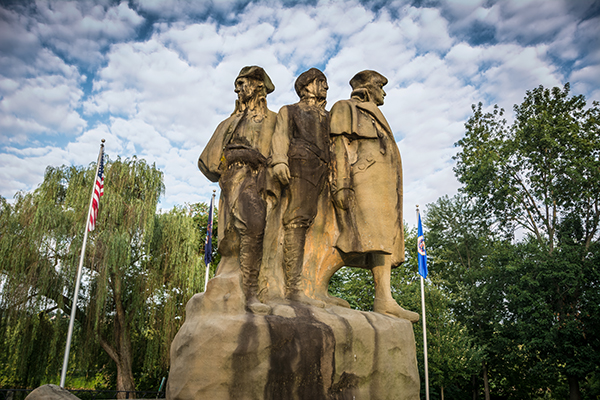
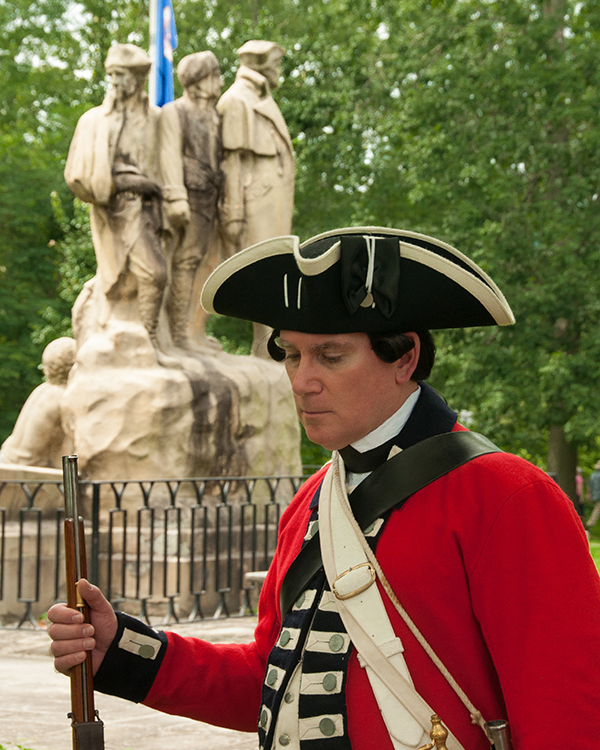
The Postcard: The Start Westward Monument in Marietta, Ohio.  (18mm 1/80th of a second at f/5, ISO 100)

The Postcard: The Start Westward Monument in Marietta, Ohio. (18mm 1/80th of a second at f/5, ISO 100)

So, with nearly 200 years worth of photographs in our collective albums and portfolios, it has become challenging to find an iconic view or subject that hasn’t been overdone by millions of photographers, especially when it comes to state and national outdoor landmarks. In order to look beyond the “postcard shot”, you need to research unique perspectives and techniques to capture that popular subject in a way that creates an original image. But first, go ahead and take that “postcard shot”. (You know you want to!) Then consider the following 14 different suggestions for creating unique photographs of the most popular spots.

#1 Check the internet

This is a resource past generations would have loved to have! By searching Google, Flickr, 500px and other photo sharing sites you can see how other photographers have captured most popular scenes. Besides seeing the images that have already been done, this will give you an idea of the layout of the location before you arrive. You may also find ideas that other photographers have tried and notice something that you might do differently to make the same image better.

#2 Get to know your location

Research the area by downloading maps and brochures from the internet. If your destination is only open certain days and hours, be sure you’ve garnered that information before you head out on your shoot. Stop at the visitor centers and ask questions.

#3 Talk to the locals

Talking to a “local” can often lead you to all kinds of special photo opportunities that may have never been visited before, such as discovering a special lighting effect that only happens at a certain time of the day or year, or maybe a waterfall that is hidden from view.

#4 Shoot at popular sites during the week

Avoid the weekends when the crowds can make it almost impossible to get an image, especially if you are looking for a shot free of human presence.

#5 Look for new angles

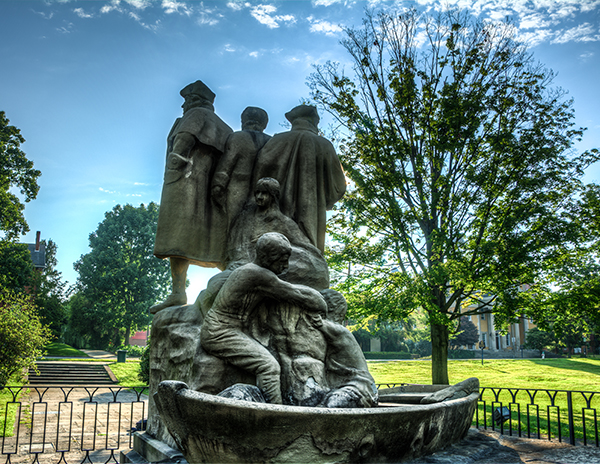
While looking for different angles, don't forget to explore all sides of your subject.

While looking for different angles, don’t forget to explore all sides of your subject.

Try to avoid the obvious straight-on shot that presents itself right in front of you,(the typical postcard shot), but look around for other angles instead – high, low or from the right or left. If you must shoot straight in front, try to include a foreground object.

Caution: If you are in a state or national park, be sure to abide by all park rules! Photographers sometimes tend to think that rules do not apply to them, but you will find that most park rangers will not agree with this point of view. These rules are put in place for your safety or to preserve the beauty of the area you are photographing.

#6 Photograph in different seasons

Photograph the scene or subject in all four seasons. Mother Nature provides amazing changes to scenery, from the different angles of the sun to the different colors of the leaves on the trees.

#7 Look for special events in nature

Some natural happenings can make your image unique, such as a full moon which may be included in the image if you are into nighttime photography. Special weather conditions can be conducive to producing a once-in-a-lifetime image. For example, some photographers may reject shooting on rainy days, but if you have the protective gear for your equipment, the rain can add special visual effects such as reflections or rainbows. Ice and snow coatings are often quite striking additions to outdoor objects both in nature or manmade.

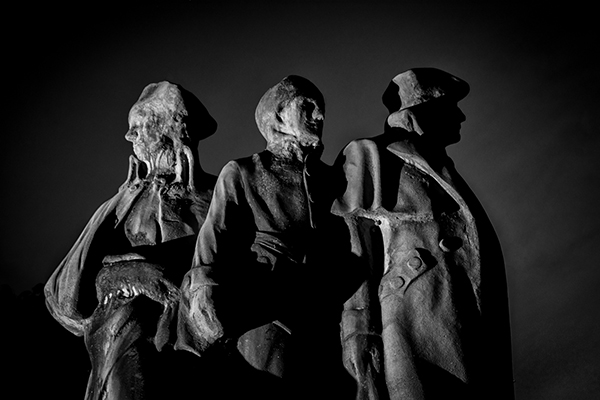
#8 Look for special lighting

Of course the best light of every day will come during the golden hours, following the early morning sunrise and just before evening sunset. If you must shoot in the harsher lighting of midday, consider black and white images which can often produce some visually appealing contrast. If you are out on a heavily overcast day, you may be able to shoot all day, but in most of these cases avoid including the sky in your image. If you have the option, research natural lighting sources by using computer software, such as The Photographer’s Ephemeris, that show the position of the sun and moon to help you determine when the lighting will be best, and what time to arrive to capture your shot. These kinds of software can allow you to anticipate exactly when and where the best lighting may fall, on just the right spot, to create that once in a lifetime image.

Black and white image shot after dark was lit with an off camera flash from the left side of the image.

Black and white image shot after dark was lit with an off camera flash from the left side of the image.

#9 Add the human element

Including a person in the scene not only will add a sense of scale, but can also add excitement and fun to your photo, which will make your image much more interesting to your viewer.

Special events present an opportunity to include a human element, which add extra excitement to your image.

Special events present opportunities to include human elements, which add extra excitement to your images.

#10 Focus on details

Narrowing your focus to capture details can be an especially effective way to create a unique photo. Whether zeroing in on the part of the vista that makes that site unique, or the feature of the statue that expresses its purpose, an original visual story may be captured in your image.

#11 Include a foreground element

Incorporating a foreground object to frame the subject can add depth to your scene and also enhance the image. A foreground object can also be used to lead the viewer’s eye to the subject of your photo.

#12 Use special effects

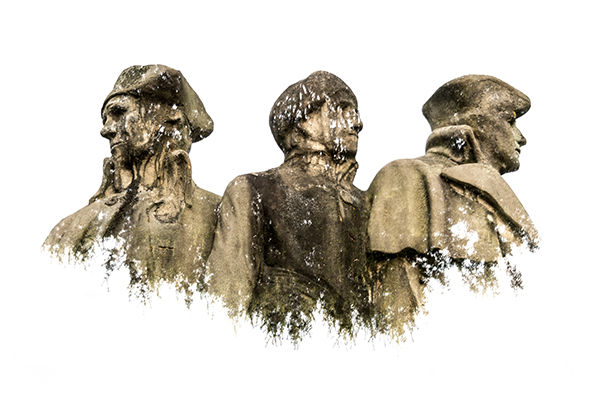
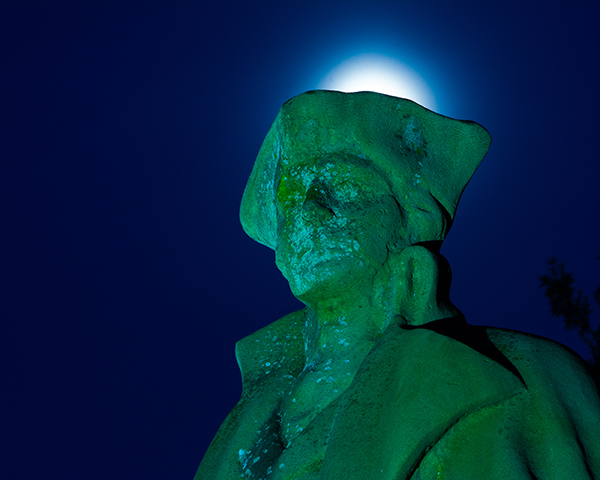
Two filters that could help make that standout image are the polarizing and neutral density filters. Use of a polarizing filter will enhance the blue of the sky and add color saturation. Use of a neutral density filter will cut down the light entering your camera, which allows you to slow down shutter speeds to capture interesting motion effects with the sky or water. Experimenting with your white balance can also create some interesting results.

This image was created by using multiple exposures. the first image was of the monument against the sky, in the second the camera was turned upside down and captured the top of some nearby tree tops. In each image the sky was overexposed creating the white background.

This image was created by using multiple exposures. The first exposure was of the monument against the sky.  In the second exposure, the camera was turned upside down, capturing the top of some nearby trees. The sky was overexposed in each image, creating the white background.

In this image shot at night the white balance was changed to Tungsten, which causes the monument to have a teal color. The glow above the head was created by the moon glow.

This image was shot at night the white balance was changed to Tungsten, which caused the monument to have a teal color. The glow above the head was created by the moon’s glow.

#13 Vary your focal length

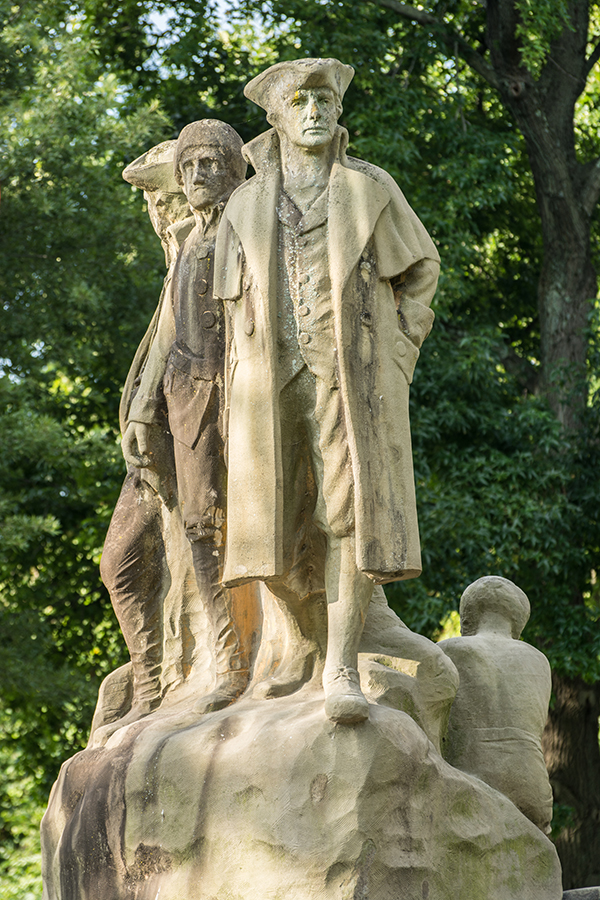
Try different lenses to get varied results, for instance a telephoto lens will not only bring the scene closer to you, but will also compress the scene. On the other hand, a wide-angle lens allow you get more of your subject in the view, make background objects appear farther away, which adds depth to the scene.

In this image the monument is captured just after sunrise giving the monument a nice glow. Also by using a telephoto lens at 150 mm @ f4.8 we compress the photo and the background is out of focus to make the monument stand out

In this image the monument is captured just after sunrise giving it a nice glow. Also by using a 150mm telephoto lens at f/4.8 we compress the photo and the background is out of focus to make the monument stand out.

#14 Experiment with DOF

To narrow your depth of field, open your aperture to a lower number, such as f/ 2.8, and make your subject stand out from the background. A distant landscape requires more depth of field to keep objects in focus, so you may want to close your aperture to something like f/16 to sharpen your image.

Researching your options and incorporating some of these tips will enhance the creative bent so many photographers already possess! Just don’t settle for the easiest, most common photographic result if you can take the time to shoot a more memorable image. Think and imagine your own photographic creations “beyond the postcard”. You’ll be glad you did!

Have any unique photographs from iconic locations or landmarks? Please share in the comments.

The post Beyond the Postcard – 14 Tips for Creating Unique Photographs in Iconic Locations by Bruce Wunderlich appeared first on Digital Photography School.


Digital Photography School

 
Comments Off on Beyond the Postcard – 14 Tips for Creating Unique Photographs in Iconic Locations

Posted in Photography


Very flashy: Ricoh unveils Pentax K-S1 DSLR

28 Aug

Ricoh and its Pentax brand have never been afraid of a little color, and the introduction of the K-S1 DSLR reaffirms that. The K-S1 offers a 20.1MP APS-C sensor, an AA filter simulator (as seen on the Pentax K-3) and burst shooting at 5.4 fps, but none of that is quite as attention-grabbing as its headline body specification – a set of green LEDs on the front of the camera’s grip and around the power switch. Read more

Articles: Digital Photography Review (dpreview.com)

 
Comments Off on Very flashy: Ricoh unveils Pentax K-S1 DSLR

Posted in Uncategorized


Watch Nature photographer Ian Shive, live, with CreativeLIVE

28 Aug

CreativeLIVE is hosting a three-day course on wildlife photography presented by Ian Shive. The course is free to watch live, and runs through August 29th. Shive will demonstrate techniques and give advice during three days of shooting, live from the Mt Rainier and Olympic National Parks in Washington State. Click through for a link to the course at creativeLIVE.

Articles: Digital Photography Review (dpreview.com)

 
Comments Off on Watch Nature photographer Ian Shive, live, with CreativeLIVE

Posted in Uncategorized


Lighting Tutorial: Types Of Light Sources

28 Aug

Image from Alana Tyler Slutsky's Surrealia series as featured on Fashion Photography Blog (FashionPhotographyBlog.com)

LIGHT SOURCES

Good morning FashionPhotographyBlog.com readers!

Today we’ll continue on with our introduction to lighting.  If you are just tuning in, you can find the first topics we covered here:

Part 1.1 – The Science of Light

Part 1.2 – The Inverse Square Law + Color Temperature Explained

Part 1.3 – Applying Lighting to Real World Situations

This time around, we’ll discuss types of lights and pick back up tomorrow with meters and light modifiers.  I promise it’s not as technical (or as boring) as Part I.  So let jump on in…

TYPES OF LIGHT SOURCES (The Most Common)

Continuous Lighting also referred to as “Hot Lights,” which is generic term when referring to several types of continuous lighting.  Often, continuous lighting is called by the name of its bulb.

Photofloods are incandescent/tungsten bulbs not much different from your standard household bulb (just A LOT more powerful!)

Photofloods as seen on Fashion Photography Blog (FashionPhotographyBlog.com)

HMI (Halide Metal Oxide) are very small, very expensive bulbs.  They’re daylight balanced in color.  HMI’s are the most commonly used light in the film industry, with many using Arri spotlight systems.

Halide Metal Oxide (HMI) Lights as seen on Fashion Photography Blog (FashionPhotographyBlog.com)

Quartz-Halogen lights are great for the average photographer!  They’re affordable, long lasting and reliable.  However, they get HOT, so be careful!  One of the most popular and dependable Quartz-Halogen lights used is the Lowel Omni.

Quartz Halogen Lights as seen on Fashion Photography Blog (FashionPhotographyBlog.com)

Strobe Lights also known as Flash come in many forms as well.  All are daylight balanced.

Speed Lights are the most commonly known type of flash (aside from built-in on-camera flash.  They can be adjusted for the amount of light they output and (for the most part) work seamlessly with DSLR’s.

Speed Lights as seen on Fashion Photography Blog (FashionPhotographyBlog.com)

Monoblocks/Monolights are strobe lights that are most often found in studio.  They are much more powerful than a speed light but not as convenient for location work.  Monopacks are self-contained flash units that combine power and light all in one casing.

Monolights are much less expensive than pack lights (we’ll get to those in a minute).  A great starter monolight kit I would recommend to amateur photographers would be Alienbees.  They’re affordable, reliable and Paul C. Buff is a fantastic company with outstanding customer service! (No, they didn’t pay me to write this.)

Calumet Travelite as seen on Fashion Photography Blog (FashionPhotographyBlog.com)

Calumet Travelite

Alienbee Light as seen on Fashion Photography Blog (FashionPhotographyBlog.com)

Alienbee

Pack Systems are the most common type of strobe light among professional photographers.  These can be extremely costly. Because of this, most pros rent their lights from an equipment rental house.  Pack and head lighting systems consist of a “pack” aka a generator (the power) and heads (the light).  The heads plug into the pack and the pack is used to adjust the lighting.  They can be daunting at first but they’re easy to understand once you’re properly taught!  (We’ll learn how to operate pack lighting in another post.)  Common manufacturers of pack lighting systems are Profoto (my personal favorite), Broncolor, Bowens, Elinchrom, Speedotron and Dynalite.  Despite manufacturer, they all pretty much work the same way.

Profoto Acute 2R System Power Pack as seen on Fashion Photography Blog (FashionPhotographyBlog.com)

Profoto Acute 2R Pack System (power pack and 2 heads)

Profoto D4 Power Pack as seen on Fashion Photography Blog (FashionPhotographyBlog.com)

Controls for a more advanced professional power pack (Profoto D4)

Catch us tomorrow when we discuss meters & light modifiers.

As always, if you have any questions, feel free to shoot over an email to alana@alanatylerslutsky.com!

– Alana


IMAGE SOURCE:

Feature image & image 1: photography by Alana Tyler Slutsky from her Surrealia series. To view the rest of the photos from this series visit her website.

Image 2-9: Alana Tyler Slutsky


Fashion Photography Blog

 
Comments Off on Lighting Tutorial: Types Of Light Sources

Posted in Uncategorized


Olympus PEN E-PL7 compact mirrorless camera announced

28 Aug

Olympus has announced the PEN E-PL7, refreshing its entry-level mirrorless line. It offers a 16MP CMOS sensor, 3-axis image stabilization system borrowed from the OM-D E-M10, 8 fps continuous shooting and built-in Wi-Fi. Not forgetting the self-portrait-obsessed masses, the E-PL7 provides an articulated 3″ touch LCD capable of flipping downward by 180°. Along with the E-PL7, Olympus has also announced an update to its OI.Share app as well as a black version of its 12mm F2.0 prime. Read more

Articles: Digital Photography Review (dpreview.com)

 
Comments Off on Olympus PEN E-PL7 compact mirrorless camera announced

Posted in Uncategorized


Inspiration oder Plagiat? Ein Drahtseilakt.

28 Aug

Das Internet beherbergt ein Sammelsurium an Bildern, die sich häufig wiederholen. Doch worin besteht der Kern von Kreativität? Was versteht man unter schöpferischer Leistung? Wodurch unterscheidet man Inspiration und Plagiat? Ein Beitrag über Gedankendiebstahl in der Fotografie und über den Wert von Kreativität.

Vor einiger Zeit beriet ich einen Freund bei der Erstellung einer Bewerbung für eine Kunsthochschule. Ihm fehlten die richtigen Ideen. Ich riet ihm, sich mal ein paar Bücher zu schnappen und sich davon inspirieren zu lassen. Unter anderem schickte ich ihm einen Link zu einem Künstler, der aktiv in die Natur eingriff und dies fotografisch dokumentierte.

Nach ein paar Wochen zeigte mir dieser Freund die Bewerbung, die er bereits eingereicht hatte. Mit großen Erstaunen sah ich, dass seine Arbeit eine fast detailgetreue Kopie des von mir empfohlenen Künstlers war. Noch verblüffter jedoch war ich, als er meinte, dass dies seine eigene Idee gewesen sei. Diese Erfahrung machte mich stutzig und ich begann, mich mit Plagiaten innerhalb der Kunst näher zu befassen.
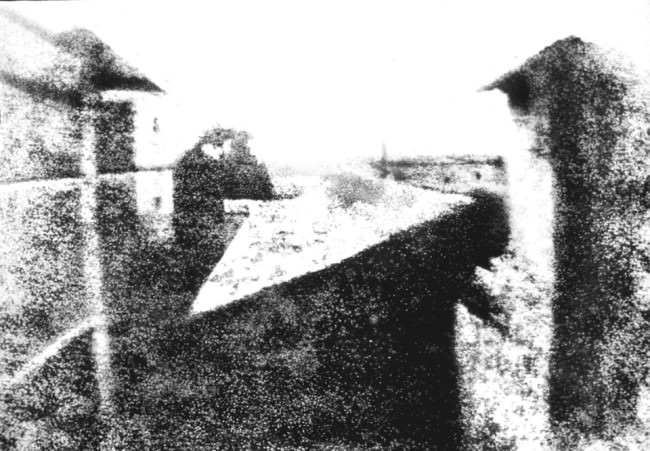
Kopie des Originals (Blick aus dem Arbeitszimmer von Le Gras, Joseph Nicéphore Niépce, 1926)

Kopie des Originals (Blick aus dem Arbeitszimmer von Le Gras, Joseph Nicéphore Niépce, 1926)

Plagiate in der Kunst sind keine Neuerscheinung. Viele Künstler haben Picasso nicht in ihr Atelier geladen, weil dieser bekannt für gutes Adaptieren von unveröffentlichten und unbekannten Kunstwerken war. „Schlechte Künstler kopieren, herausragende stehlen.“, soll Picasso einst gesagt haben.

Plagiate können aber auch legal, also Teil eines Konzepts, sein. Künstlerinnen wie Elaine Sturtevant und Sherrie Levine haben Werke von Roy Lichtenstein, Jasper Johns oder Andy Warhol bewusst 1:1 kopiert. Ihre Arbeiten zählen zur Appropriation Art, die dafür steht, dass bestehende Kunstwerke vervielfältigt werden. Der Akt des Kopierens ist demnach das Konzept. Fälschen ohne Quellenangabe ist hingegen strafbar, wie der relativ aktuelle Fall Wolfgang Beltracchi zeigte.

Auf diese Strömungen der Appropriation Art bezugnehmend, hat Cornelia Sollfranck Netzwerk-Generatoren entworfen. Über die Eingabe eines Suchbegriffs erstellt dieses Programm eine Collage aus verschiedenen Bildern zum gleichen Thema. Damit hinterfragt Sollfranck nicht nur die Wiederverwendung von Themen in der Kunst, sondern auch die Flut der Bilder.

Wir leben in einer Zeit, in der Bilder wie Eintagsfliegen auf dem Bildschirm erscheinen und wieder vergehen. Anders als Eintagsfliegen scheint jedoch die eine oder andere Idee in leicht veränderter Form wiederaufzuerstehen.
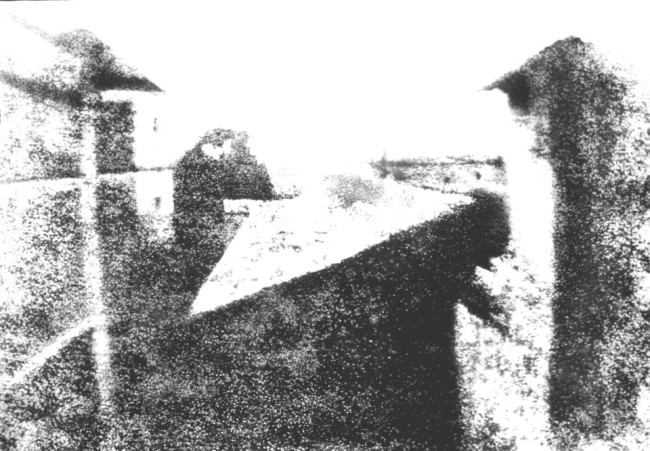
Kopie einer Kopie des Originals (Blick aus dem Arbeitszimmer von Le Gras, Joseph Nicéphore Niépce, 1926)

Kopie einer Kopie des Originals (Blick aus dem Arbeitszimmer von Le Gras, Joseph Nicéphore Niépce, 1926)

Doch worin liegt der Kern einer guten, eigenen Idee?

Grundlegend ist es schlau, wenn man sich Inspiration holt, denn tatsächlich ist das Bestandteil eines Entwicklungsprozesses. Menschen lernen von anderen, indem sie imitieren. Ohne Nachahmung gäbe es keinen Fortschritt. So beginnen Amateurfotografen meist damit, Motive, die ihnen gefallen, zu kopieren. In den wenigsten Fällen wird eine Referenz oder „Inspirationsquelle“ kenntlich gemacht. Dies führt dann dazu, dass wir im Internet die Kopie einer Kopie einer Kopie wiederfinden.

Neben dem Wunsch, sich zu verbessern, steckt darin auch ein Wunsch nach Anerkennung. Mein Fotografielehrer Oliver S. Scholten meinte dazu:

Wenn Euch etwas gefällt, probiert es aus, macht es nach, aber lasst es um Himmels Willen in der Schublade verschwinden und zeigt es bloß niemandem. Der Prozess des Fotografierens ist im Optimalfall Belohnung genug.

Dies zeigt auch das Beispiel von Vivian Maier, die jahrelang fotografiert hat, ohne ihre Bilder zu veröffentlichen. Ihre Arbeiten sind erst nach ihrem Tod durch einen Auktionsverkauf aufgetaucht. Lob hat nicht lange Bestand. Was jedoch überdauert und nicht käuflich ist, ist die Erfahrung einer stetigen Weiterentwicklung. Und eine gute Idee zu entwickeln, braucht Zeit.

Paradigmatisch sind verschiedene Fotografien, die bestimmten Trends zuordenbar sind. Zeitgleich mit Erscheinen der Dokumentation „Die Woodmans“ waren beispielsweise Bilder mit einer Francesca-Woodman-Ästhetik sehr beliebt. Dieses Kopieren ist jedoch keine Kunst, sondern ein Üben von Fotografietechniken. Im Zweifelsfall ist es sogar ratsam, den urhebenden Künstler um Zustimmung zu fragen. Im besten Fall resultiert daraus, worum es in der Kunst eigentlich gehen sollte: Um Austausch und Kooperation.
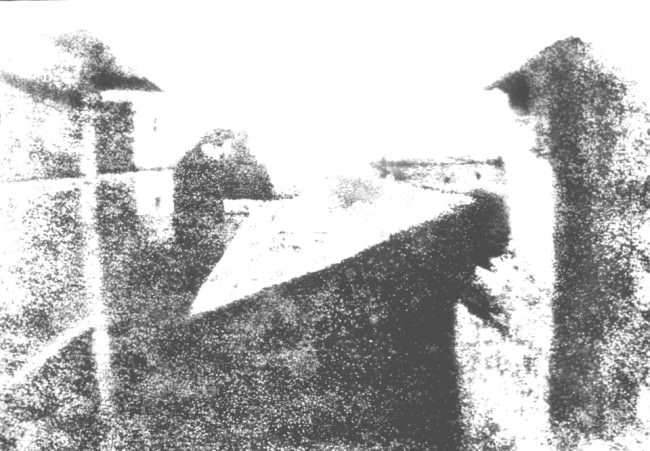
Kopie einer Kopie einer Kopie des Originals (Blick aus dem Arbeitszimmer von Le Gras, Joseph Nicéphore Niépce, 1926)

Kopie einer Kopie einer Kopie des Originals (Blick aus dem Arbeitszimmer von Le Gras, Joseph Nicéphore Niépce, 1926)

Worin liegt der Unterschied zwischen Inspiration und Plagiat?

Die Grenze zwischen Inspiration und Plagiat ist nicht klar, sondern die Übergänge zwischen beiden Polen sind fließend (siehe auch der Artikel von Laura Zalenga). Das sieht man in vielen Fotoportalen, die an vielen Stellen vor inspirierten Plagiaten blühen. Solche Fotoportale sind die Schublade des Fotografen, einerseits mit dem Vorteil, andere an der eigenen Entwicklung teilhaben zu lassen, andererseits verführt sie aber auch zum Adaptieren.

Worin der Unterschied zwischen Inspiration und Plagiat liegt, zeigen verschiedene Plagiatsfälle innerhalb der Kunst. So zum Beispiel der Fall Rehberger. Rehberger hatte ein Kunstwerk für die Berliner Staatsbibliothek geschaffen, das so stark an ein Op-Art-Gemälde von Bridget Riley erinnert, dass das Werk nach wenigen Tagen verhüllt wurde. In solchen Fällen greift das Urheberrechtsgesetz. Dazu Robert Walter, Gründer und Geschäftsführer der Panthermedia GmbH in der Profifoto:

Eine Fotografie ist dann ein Plagiat, wenn das fotografierte Objekt nachgestellt und erneut fotografiert wurde. Wird bei dem Nachstellen einer bereits vorhandenen Fotografie die in der Vorlage verkörperte schöpferische Leistung übernommen, handelt es sich um eine Vervielfältigung in Form der Bearbeitung, die der Einwilligung des Urhebers des bearbeiteten Werkes bedarf.

Ein ähnlicher Fall wie der von Rehberger wurde vor einiger Zeit in der Presse diskutiert. David Burdney wurde vorgeworfen, dass er das Konzept und die Art der Präsentation seiner Arbeiten von Sze Tsung Leong geklaut hat. Die Ähnlichkeit ist so deutlich, dass man hier nicht von einer eigenen schöpferischen Leistung ausgehen kann.
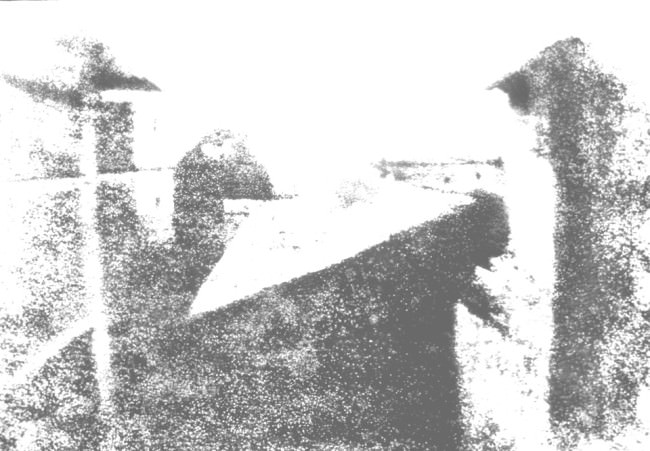
Kopie einer Kopie einer Kopie einer Kopie des Originals (Blick aus dem Arbeitszimmer von Le Gras, Joseph Nicéphore Niépce, 1926)

Kopie einer Kopie einer Kopie einer Kopie des Originals (Blick aus dem Arbeitszimmer von Le Gras, Joseph Nicéphore Niépce, 1926)

Aber was versteht man unter schöpferischer Leistung?

Laut Urheberrechtsgesetz muss ein Werk zum Ersten eine wahrnehmbare Formgestalt aufweisen. Zum Zweiten muss es sich um eine persönliche geistige Schöpfung handeln, das heißt, Werke von Tieren zählen nicht als Kunstwerk. Und zum Dritten muss ein Werk individuelle Züge tragen, das heißt, es darf keine Kopie eines anderen Werkes sein. In unklaren Fällen kommt häufig die Frage auf, wer von wem kopiert hat. Das Datum dient häufig als Beleg, wer das jeweilige Kunstwerk erschaffen hat. Ob und wieviel Eigenheit das Werk aufweist, entscheidet ein Gericht.

Welche Konsequenzen das haben kann, zeigt der Fall von Vanessa Beecroft. Sie hat Buchstaben aus nackten Frauenkörpern für Louis Vuitton entworfen. Diese Idee stammte ursprünglich von Anthon Beeke, von dem sie sich, wie die Künstlerin auch zugab, aus einer Zeitschrift aus den 70er Jahren „inspirieren“ ließ.

Vuitton musste nicht nur eine hohe Entschädigung zahlen, sondern das 2007 erschienene Buch der Künstlerin einstampfen lassen. Interessanterweise beschuldigte Vanessa Beecroft erst kürzlich ihren ehemaligen Partner, den italienischen Künstler Maurizio Cattelan, ihre Ideen gestohlen zu haben. Vor dem Hintergrund der Vuitton-Affaire regt dieser Protest zum Schmunzeln an, aber tatsächlich ist es nicht das erste Mal, dass Cattelan Plagiarismus vorgeworfen wird.
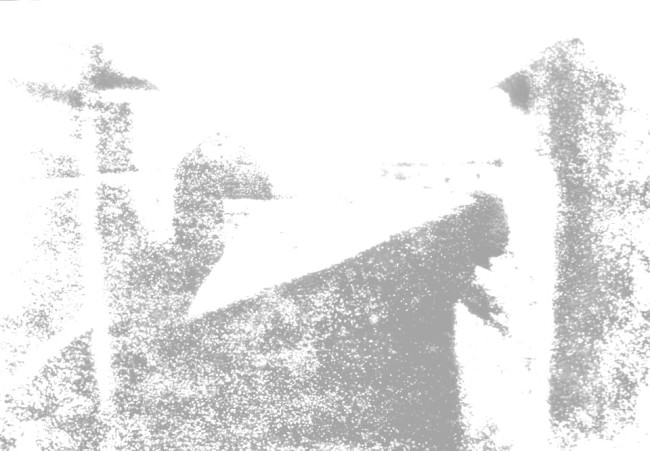
Kopie einer Kopie einer Kopie einer Kopie einer Kopie des Originals (Blick aus dem Arbeitszimmer von Le Gras, Joseph Nicéphore Niépce, 1926)

Kopie einer Kopie einer Kopie einer Kopie einer Kopie des Originals (Blick aus dem Arbeitszimmer von Le Gras, Joseph Nicéphore Niépce, 1926)

Gibt es überhaupt universelle Ideen? Können zwei Menschen nicht doch die gleiche Ideen zu unterschiedlichen Zeitpunkten haben?

Hierzu greift das bekannte Beispiel des Berliner Künstlers Michael Luther, der eine Fotografie aus einer Tageszeitung mit malerischen Mitteln umgesetzt hat. Auf seiner Ausstellung wurde er darauf hingewiesen, dass Damien Hirst an einem exakt gleichen Bild mit exakt der gleichen Idee arbeitet. Motive, Lichtführung, Kontraste und Farbsetzung waren fast identisch. Solche Fälle sind zwar unwahrscheinlich, aber nicht unmöglich.

In letzter Zeit wird daher verstärkt die Notwendigkeit geäußert, dass beim Umgang mit Plagiaten in der Kunst die gleichen Regeln gelten sollten wie in der Wissenschaft. Als guter Wissenschaftler muss man Notizen über das Gelesene machen und einen Überblick haben. Vergleichbar zeichnet sich ein guter Künstler dadurch aus, dass er oder sie über die historische Entwicklung der Fotografie und verschiedene Vor- oder Zeitgleichdenker informiert ist. Ob man sich eine Textpassage merkt oder eine visuelles Bild: Kopie bleibt Kopie. Plagiat bleibt Plagiat.

Als problematisch kann auch ein stetiges mangelndes Unrechtsbewusstsein unserer Generation „Copy-Paste“ gesehen werden. In der Episode „The Chicken Thief“ der Fernsehserie „Die Waltons“ kopiert Ben das „Sommergedicht“ von Jon Boy und gewinnt einen Poesiepreis beim Liberty Magazine. Der anfängliche Neid über die Kreativität von Jon Boy und der Wunsch nach Anerkennung kippt relativ schnell in Schuldgefühle, die dazu führen, dass er sich Jon Boy offenbart. Jon Boy verzeiht und weist darauf hin, dass bei Ben ein kreativer Prozess statt fand, denn er hat ein Wintergedicht („A Winter Mountain“) und kein Sommergedicht geschrieben.

Kopie einer Kopie einer Kopie einer Kopie einer Kopie einer Kopie des Originals (Blick aus dem Arbeitszimmer von Le Gras, Joseph Nicéphore Niépce, 1926)

Kopie einer Kopie einer Kopie einer Kopie einer Kopie einer Kopie des Originals (Blick aus dem Arbeitszimmer von Le Gras, Joseph Nicéphore Niépce, 1926)

Fazit

Es ist immer einfacher, eine vorhandene gute Idee zu verbessern.
Das ist jedoch keine Kunst. Vielleicht ist das gutes Handwerk.
Vor allem bringt es die Kunst bzw. die Fotografie nur kleinschrittig voran.

Dies belegt auch das Beispiel meines Freundes, den ich am Anfang erwähnte. Er erhielt eine Absage von der Kunsthochschule, mit dem Argument, dass man solche oder ähnliche Arbeiten bereits zu oft gesehen habe. Das sei wohl gerade „in“, sagte man ihm in einem persönlichen Gespräch. Exakt kopiert, wie hier, wird zwar selten, aber ein gutes Kunstwerk zeichnet sich durch ein Alleinstellungsmerkmal aus, das nicht nur aus guter Technik, sondern auch aus eigenem Inhalt besteht.

Am Ende steht immer die Frage im Raum, wozu man ein Bild macht. Wer primär Anerkennung sucht, sollte vielleicht kurz innehalten und den Finger leise vom Auslöser heben. Wenn man weiß, was man mit seinen Fotografien aussagen möchte, hat man hingegen schon einen großen Schritt in Richtung Kunst gemacht.


Bildnachweis

Das Titelbild stammt von Joseph Nicéphore Niépce aus dem Jahre 1926. Es ist vermutlich das erste dauerhafte Foto weltweit und stellt einen Blick aus dem Arbeitszimmer des Fotografen dar. (Linzenzfrei gekennzeichnet von Creative Commons)

Danksagung

Bei der Erstellung dieses Artikels haben einige Personen mitgewirkt. Dank geht an den Fotografen Jens Pepper und den Wissenschaftler Christian Kaufmann für Vorschläge für weiterführende Links und Literaturhinweise. Meinem Fotolehrer Oliver S. Scholten, sowie Marit Beer und Schall & Schnabel sei für die bereichernden abendfüllenden Diskussionen gedankt.


kwerfeldein – Fotografie Magazin | Fotocommunity

 
Comments Off on Inspiration oder Plagiat? Ein Drahtseilakt.

Posted in Equipment


Self portrait: Olympus PEN E-PL7 First Impressions Review

28 Aug

At first glance the Olympus PEN E-PL7 looks like yet another compact, selfie-friendly mirrorless camera — but looks can be deceiving. The innards of the camera come largely from the excellent OM-D E-M10, and Olympus touts the E-PL7’s autofocus system as its best yet. For all the details on the latest PEN, check out our First Impressions Review.

Articles: Digital Photography Review (dpreview.com)

 
Comments Off on Self portrait: Olympus PEN E-PL7 First Impressions Review

Posted in Uncategorized