RSS
 

Archive for August, 2014

Behind the Shot: Flames of the North

11 Aug

Nature photographer Erez Marom had cold feet – literally – when he created this image. Standing (with thermal boots on) in the freezing waters of a glacier lagoon in Iceland, he saw an opportunity to capture a unique ice formation in the foreground, distant snow-capped mountains and the Aurora Borealis above it all. In this article he explains how he used focus stacking to get the look he wanted for his final image, ‘Flames of the North’. Learn more

Articles: Digital Photography Review (dpreview.com)

 
Comments Off on Behind the Shot: Flames of the North

Posted in Uncategorized


Das Selbst und die Bilder

11 Aug

Ein Beitrag von: Georgia Ponirakou

Vor einigen Jahren habe ich damit angefangen, mit einer alten Zenit-Kamera zu fotografieren, die mir mein Vater gegeben hat. Ich entwickelte eine Leidenschaft dafür und kaufte mir etwas später eine SLR von Nikon. Schnell entdeckte ich, dass Filmentwicklung teuer ist – obwohl sie sicherlich ihren Wert hat.
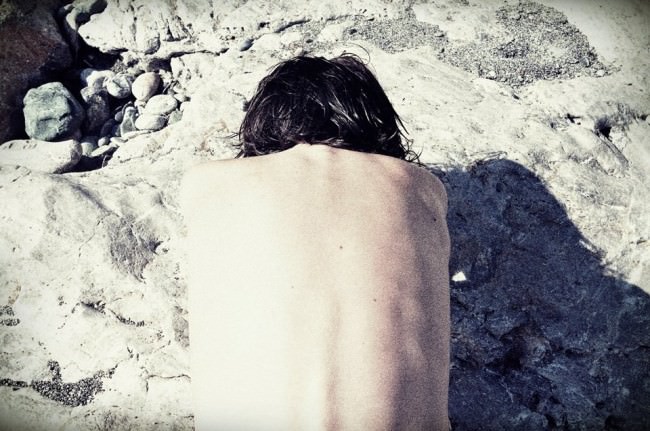
Ein Rücken auf Sand

In meinem Schreibtisch und meinem Kühlschrank liegen noch immer Filme, die auf ihre Zeit warten. Gleichzeitig wurde aber der Kauf einer digitalen Kamera für mich eine Notwendigkeit und so habe ich diese Investition getätigt.

Es ist schwierig, herauszufinden, was man im Leben sucht. Dasselbe gilt für die Fotografie. Ich rede, als wäre ich ein Experte oder Psychologe, was ich allerdings gar nicht bin. Ich rede über meine Fotografie:
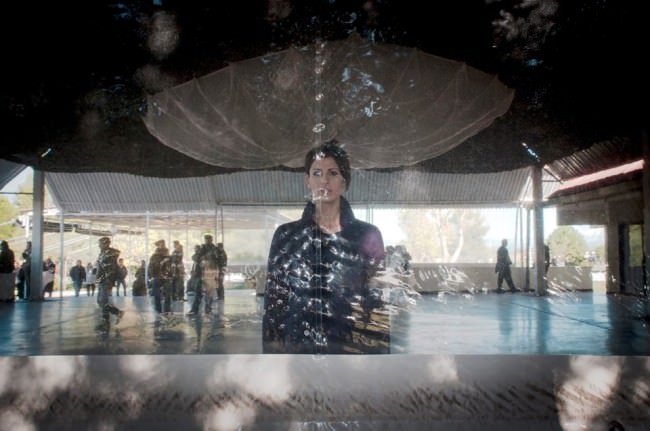
Ein Selbstportrait hinter einer Scheibe

Die meisten Menschen sind schüchtern, aber wenn ich sie kennenlerne, wenn ich mit ihnen rede, dann öffnen sie sich langsam und werden sie selbst. Ich möchte Bilder von Gefühlen von Menschen machen und von der Abwesenheit dieser Gefühle. Ich mache Fotos von Erinnerungen und von der Gegenwart. Es ist ein endloses Verstecken und Suchen. Fotografie ist für mich ein Mittel, Gefühle einzufangen und geheime, wundervolle Gedanken.
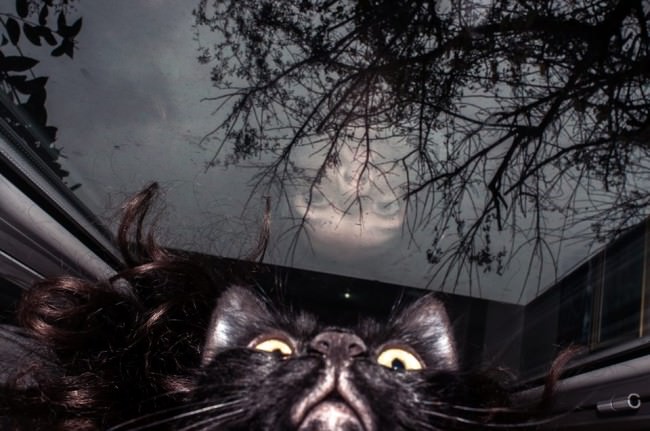
Ein Foto von einem Katzen- und einem Menschengesicht

Ich mache auch viele Selbstportraits. Tatsächlich ist das am schwierigsten. Nach einer Zeit von großem Stress und Sorge wollte ich herausfinden, was in mir ist, das mich immer so unentspannt sein lässt. Auch wenn ich noch nicht zu einer Antwort gelangt bin, sind mir Selbstportraits dabei eine große Hilfe. Sie haben mir geholfen (und tun es noch immer), wann immer ich mich ausdrücken oder einfach nur selbst beobachten wollte.

Meine Bilder haben keine bestimmten Symbole oder schwierig zu interpretierende Bedeutungen, sie sind lediglich ich. Mein Glück, meine Trauer, meine Hässlichkeit, meine Schönheit, meine Menschlichkeit, meine Grausamkeit, die Art wie ich ruhe oder schlafe, ein Schnitt in meinem Bein, ich als Gespenst. Das Selbst ist dort irgendwo verborgen.

Ein Foto eines nackten Mannes im Spiegel

Wenn ich ein Selbstportrait mache, denke ich mir vorher eine Geschichte aus und das ist nicht immer leicht. Ich muss mit mir arbeiten, mich davon überzeugen, dass ich eine andere Person bin. Ich muss alles vorbereiten und einrichten, zwei, drei oder vier Rollen zu selben Zeit übernehmen.

Es ist jedes Mal eine Herausforderung, mich selbst in Bezug zu den Dingen um mich herum zu setzen, zu der Stimmung um mich und der in mir. Es ist wie die richtige Farbe zu finden bei der Komposition eines Gemäldes oder die richtigen Worte beim Schreiben eines Gedichtes.

Ein weißer Hund auf weißem Teppich

Die meiste Zeit erfinde ich diese wundervollen Ideen, aber dann gibt es auch Momente, in denen ich unproduktiv bin und dann muss ich mich selbst zwingen: Das ist wohl das Geheimnis bei dem, was man tut, niemals Stillstand. Trägheit ist ein Zustand, den man als Fotograf vermeiden muss. Aber das ist natürlich nur meine Meinung.

Selbstportraits scheinen von außen ein bisschen narzisstisch, aber das sind sie nicht. Ich versuche, mich nicht immer als schön und ideal abzubilden, weil ich das nicht bin. Ich bin schmutzig, traurig, nachdenklich, unsicher, manchmal zerbrechlich, manchmal arrogant. Verschiedene Aspekte von mir, das will ich entdecken und ich weiß, dass das am Ende wohl wieder nicht gänzlich funktioniert.

Eine Sache vor der ich wirklich Angst habe, ist es, in einer Masse zu sein. Es gibt ein Foto, das die Einsamkeit um mich zeigt, wenn ich durch die Straßen von Athen gehe. Die Menschen sind so ernst, gehetzt. Fast wie wilde Tiere in einem modernen Dschungel. Deswegen bevorzuge ich es, meine Modelle selbst in Szene zu setzen. Ich kann nicht einfach auf der Straße fotografieren, weil der Lärm mich erschöpft, die Rhythmen zu intensiv sind, die Menschen sind wie Monster in einem Wettrennen.
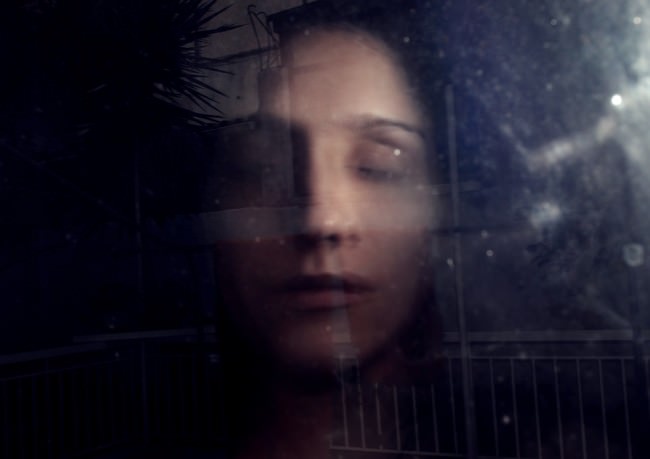
Ein Selbstportrait hinter einer Scheibe

Manchmal erreiche ich leicht, was ich will, indem ich meine Subjekte in Szene setze, manchmal ist es aber auch Spontanität. Insgesamt versuche ich wohl, mich selbst zu finden in den Leuten, die ich treffe und liebe, in den Gegenständen, einem Kleid, einem Spiegel, einem Fenster, einem Haustier.

Auch die Natur spielt dabei eine Rolle. Sie ist so vage und endlos, so rein und jenseits von uns, ich kann Märchen sehen, die vor mir stattfinden. Ich trauere um tote Tiere, die ich sehe und das ist ein weiteres Thema, das mich verletzbar macht: Tod.
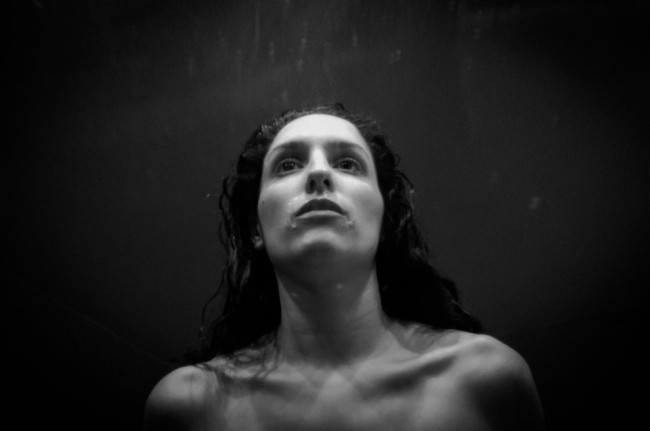
Ein Selbstportrait in Schwarzweiß

Als ich jünger war, habe ich mir oft gewünscht, dass ich ein Talent hätte wie Malen. Aber darin war ich nicht gut. Meine Lieblingsmaler sind Klimt, Chagall und Schiele. Auch habe ich versucht, ein Instrument zu spielen. Ich habe mich an klassischer Gitarre versucht, aber ich hatte nicht den Willen. So bin ich zur Fotografie gekommen.

Ich weiß nicht, ob ich Talent dafür habe. Was mir aber wichtiger ist, ist, dass ich meinen Horizont erweitere, ich versuche, meine Lieblingsmusik und meine Lieblingskünstler und alles mit Seele in meine Bilder zu legen. Was ich sehe, das ist unterschiedlich zu dem, was andere Menschen sehen und das lässt mich Bilder machen: Ich mache Geschichten, Puzzles und Märchen.
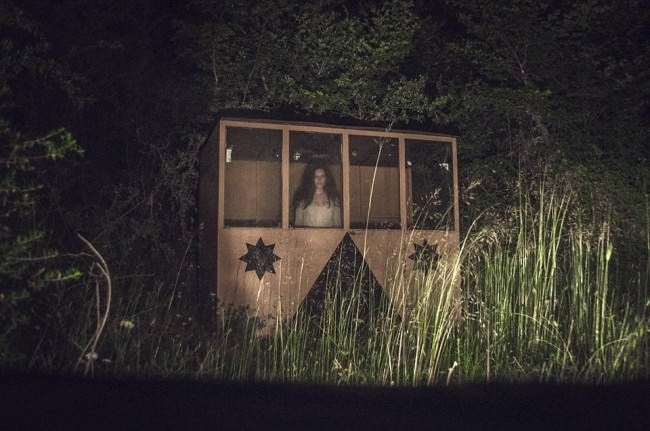
Selbstportrait in einer Holzkonstruktion

Ich versuche, meinen Kopf auf Trab zu halten, meine Fantasien abzubilden, wenn ich müde bin und nicht schreiben kann. Es ist wie ein Tagebuch schreiben. Jedes Bild ist ein Moment in meinem Leben und vielleicht meiner früheren Leben.

Ich bin ein Skeptiker, der nach Wissen sucht und Fotografie ist solches Wissen: Sie führt uns zu Wahrheit und Lügen. Es ist, als ob wir die Zahlen hätten und die Gleichung lösen müssten, eine Gleichung, die nicht immer einfach ist. Oder vielleicht doch? Wie faszinierend ist das?

Dieser Artikel wurde von Sebastian Baumer für Euch aus dem Englischen ins Deutsche übersetzt.


kwerfeldein – Fotografie Magazin | Fotocommunity
 
Comments Off on Das Selbst und die Bilder

Posted in Equipment


Inverted Zoo: Enclosure-Free Design Puts Animals in the Open

11 Aug

[ By WebUrbanist in Architecture & Public & Institutional. ]

open air zoo reversed

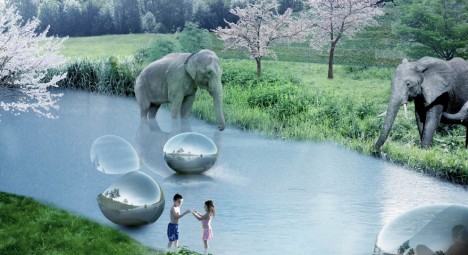
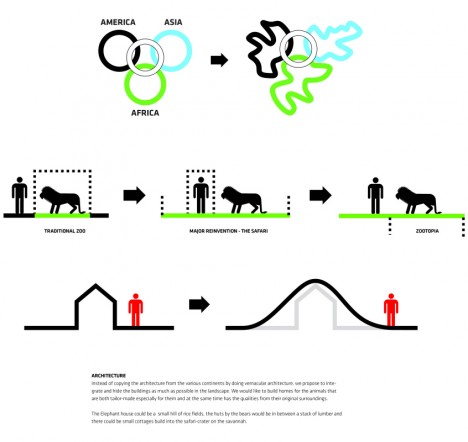
Aiming to change the nature of zoo experiences for species on both sides of the glass, Zootopia radically reverses traditional layouts and changes conventional expectations. It almost looks as if the humans were on the display while the animals are given the most space possible to roam.

open zoo path concept

Being created in conjunction with the Givskud Zoo and Safari Park in Denmark, this architectural design by Bjarke Ingels Group (BIG)  is in part a response to some long-standing criticisms of zoos, attacked for putting animals into barred, walled and windowed boxes.

big zoo sky bubbles

big zoo interactive concept

Instead, this architecture is meant to disappear, with barriers becoming effectively invisible and the experience more seamless for humans and animals alike. Rolling hills and strategic rocks replace over dividers, creating an environment that looks, feels and ultimately is more natural.

big zoo master plans

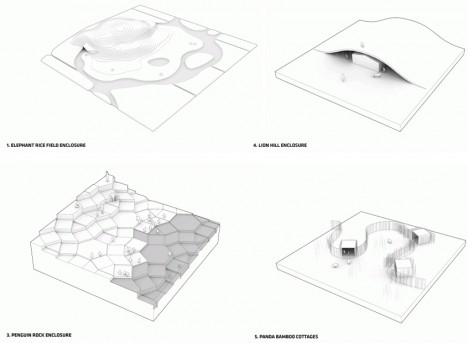
Additionally, habitats are being designed around the spatial needs and social desires of individual species, granting them the freedom as well as privacy required for each animal type to both survive and thrive.

big zoo habitat examples copy

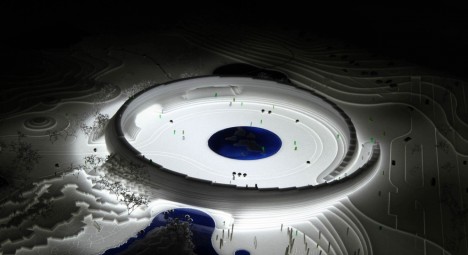
For visitors, a central entrance gives a wide view in all directions to section spinning out from the middle and representing various climates and regions. Travel through the zoo will happen on foot but also by bike, boat and sky car.

big zoo physical model

big zoo central circle

The idea itself is not entirely novel – there are many drive-through zoos and wildlife refuges that attempt to simulate more organic conditions and break down barriers between humans and the animals they are visiting. Still, for a large-scale zoo, this approach is rare is not unprecedented in its aims and scope.

Share on Facebook


[ By WebUrbanist in Architecture & Public & Institutional. ]

[ WebUrbanist | Archives | Galleries | Privacy | TOS ]


WebUrbanist

 
Comments Off on Inverted Zoo: Enclosure-Free Design Puts Animals in the Open

Posted in Creativity


Time-Lapse Photography – a Quick Guide to Building Your Movie

11 Aug

Time-lapse photography shows you events that occur over an extended period that are captured on camera and shown in a relatively short time.

Time-lapse imagery is the capture of individual images of a subject at preset intervals over a preset duration. These individual images are then combined using software, thereby compressing the event into a much shorter time span.  If you were to witness an ice cube melting it would take an hour or more. With time-lapse the process from solid to liquid could be seen in seconds.

What do you need to do time-lapse photography?

Cameras

Though point-and-shoot cameras will do the job, digital single lens reflex cameras (DSLR’s) and mirror-less cameras allow for the most flexibility. They not only capture images that are of a higher quality but have features most suitable for time-lapse. In particular, they are capable of manual exposure and focus control. They also have an array of lenses to choose from and all the accessories required for capturing time-lapse sequences.

Lenses

All focal lengths are suitable based on the subject you select. A lens that has a manual aperture ring is best as the aperture blades do not open and close for each shot captured.

Intervalometer

The key to achieving a great lime-lapse sequence is a good intervalometer. This is a device capable of triggering your camera with accurate intervals and precise shutter actuations. It can be an external or internal device.

Tripod

Image Stabilization and Vibration Reduction are good but they are no substitutes for a good tripod for time-lapse photography. Use a solid tripod.

Batteries and/or AC Couplers

Because of the long duration of time-lapse sequences, the batteries in your camera may drain out before the sequence is completed. Here are a few tips to help you increase your battery life:

  • The single battery in your camera powers a number of functions. Many of these can be switched off for time-lapse capture or you can decrease their “on-time”.
  • A major drain on the battery is the LCD display and Live View. Use these screens only if it is imperative and then make certain that you lower the brightness using one of the custom functions. Also, limit the preview duration, keeping it to a minimum.
  • Don’t use your camera’s LCD screen for viewing and deleting images. Leave that activity to be performed on your computer after you have downloaded your images.
  • If you are shooting a sequence indoors you can use an AC coupler to power your camera.  An AC coupler is used in lieu of the camera battery.

Formula for Time-Lapse Capture

The typical frame rate for movies is between 24 and 30 frames per second. As a guideline, the greater the frames per second the smoother the playback.

When using a DSLR, you have all the control to create good time-lapse sequences. Selection of shutter speed, depth of field and the interval between shots can be set as desired. Just remember, the faster the movement of the subject or subjects within your project, the shorter the interval between images captured. However, you may be limited in low light situations.

Here is a guide for intervals:

1 Second

1 – 5 Seconds

15 to 30 Seconds

3 – 15 minutes

Air and Road Travel

Sunrise Sunset

Moon going across the sky

Growing Plants

City Scenes with Traffic

Crowd Scenes

Stars and Milky Way

Home Building Projects

Bicycle Rides

Slow Moving Clouds

A good starting point for any subject matter is to create your time-lapse with a shorter interval than you may think is appropriate. You can always discard alternate or irrelevant images from your final sequence if you want to speed up the action.  For example, if you decide to use a 30 second interval for a moon sequence, but want to be sure that the final sequence will be smooth, shoot at 15 second intervals. You can get back to your original plan by removing every alternate image for the final sequence.

Prepare your images

Using any software editing program, crop or size your captured images to a width of 1920 pixels and a height of 1080 pixels for a 1080p HD video (use 1280 pixels by 720 pixels for 720p video). Make sure your crop registration is identical for all the images.  If you are not comfortable doing this, use the automatic resizing provided by most time-lapse assembly software.

Now that the images of the sequence are ready, you can use one of the many free applications for Windows and Mac operating systems to create your video. Some of these are VideoVelocity from CandyLabs, Photolapse from Stephan van der Palen and Time-Lapse Assembler created by Dan Bridges. For under $ 30 Apple Quicktime Pro 7 can be used to create some excellent time-lapse video.

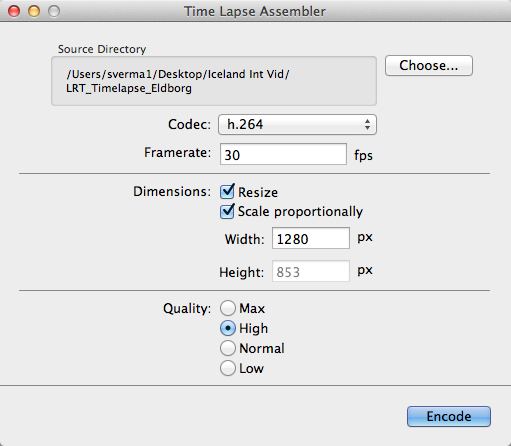
How to use Time Lapse Assembler for Mac

tla-1

  1. Open Time Lapse Assembler
  2. Select the directory that contains the image sequence
  3. Select the codec. Use h.264 or mp4v for making .mov files or mp4v for making .mp4 movies
  4. Leave the frame rate at 30fps
  5. Set the dimension to resize
  6. Scale proportionately
  7. For HD video you can adjust the width to 1920 or 1280 (1920 for 1080P video and 1280 for 720p video)
  8. Select Quality High (you can always use Max but the rendering will take longer
  9. Click on Encode
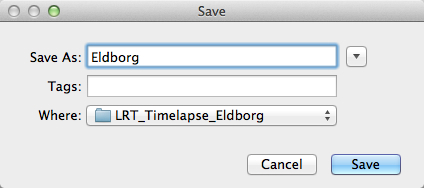
  10. You will be presented with a Save window. Name your sequence and click Save.

tla-2

The software will produce a Quicktime compatible movie file that can be viewed as is, or used for further editing in iMovie or any other video editing software.

See below an example of the video in very low resolution:

Here are the steps for Quicktime Pro 7

  1. Open Quicktime
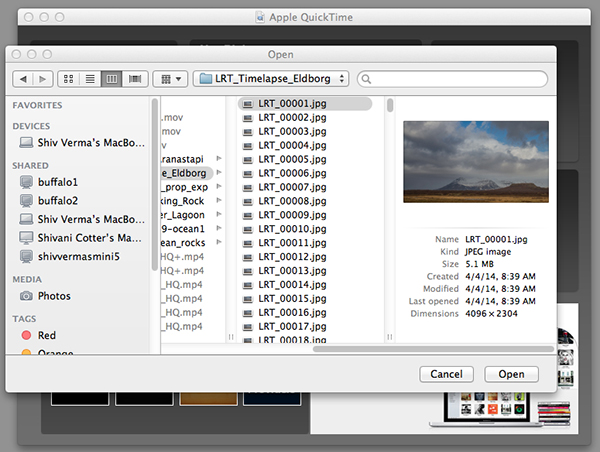
  2. Go to the menu and under File – click on Open Image Sequence. Go to the directory where you downloaded your images (make sure you have only the images that belong in the sequence in this folder)
  3. Click on the first image of the sequence and click Open

    Select the Sequence

    Select the Sequence

  4. You will be presented with a choice for picking your frame rate – use 30 frames per second for a smooth sequence. Now click OK
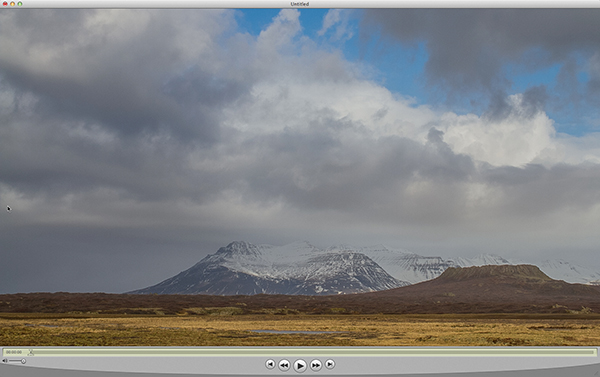
  5. Quicktime will import all the images in that folder and assemble them in their original sequence and at their original resolution. You probably will not be able to see the entire image as it is larger than the resolution of your screen but you can go to the Menu>View>Fit to Screen. You now have the first frame visible in its entirety.
    Assembled Sequence

    Assembled Sequence

    If you attempt to play this sequence you will not see the movie as you might like it to be. It will not be smooth and may pause for long periods. This is because the individual frames are very large and the video has not been rendered for playback.

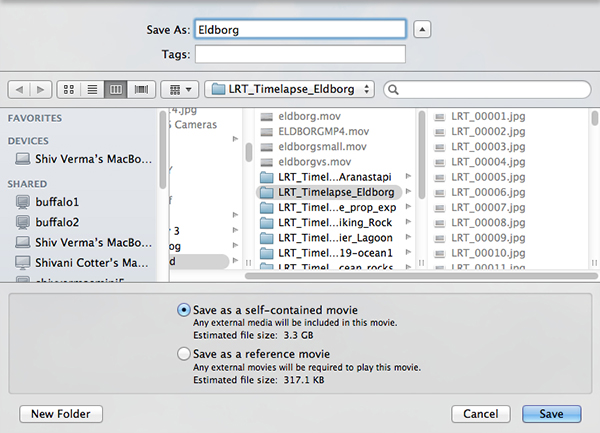
  6. Save this sequence File>Save
  7. You will be presented with options as to where you would like to save the Quicktime file.
  8. Save the file in the same directory as the original images and name the file

The next steps will render a viewable video

  1. You will export this sequence File>Export
  2. You will get the typical “Save As” option and the “Where” option. Save the export in the same folder as the original files giving it a pertinent name.
    QT-3
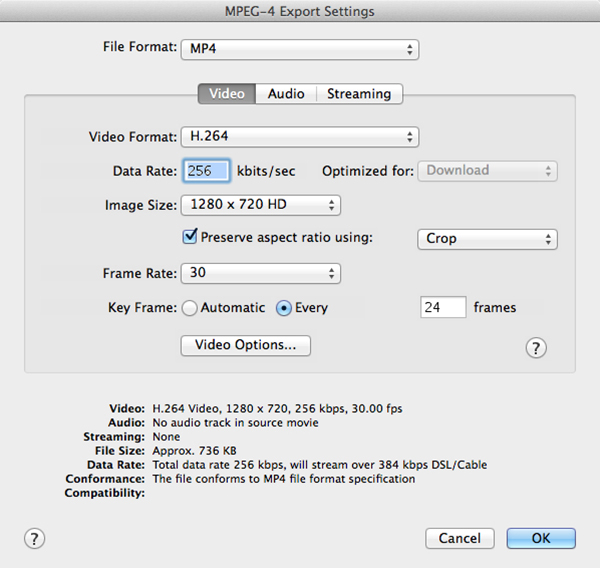
  3. There are two other sets of export criteria and an options button. For now, export the sequence as a QuickTime Movie and in the Options Section use H264.
    QT-4
  4. The export will take some time so be patient. Once the rendering and export is complete you will be able to watch the video. 

Have fun making your time-lapse – enjoy!

The post Time-Lapse Photography – a Quick Guide to Building Your Movie by Shiv Verma appeared first on Digital Photography School.


Digital Photography School

 
Comments Off on Time-Lapse Photography – a Quick Guide to Building Your Movie

Posted in Photography


6 Commonly Used and Confused Tools in Photoshop Explained

11 Aug

There are lots of tools in Photoshop that are sometimes a bit confusing due to the similar nature of their functionality. With subtle differences, these tools have been a topic of confusion between a lot of Photoshop enthusiasts. In this article I am going to share a distinction between Fill and Opacity, the Healing brush and Stamp tool, and “Merge Visible” and “Flatten image”. I hope it will help you one understand these tool a little better.

Distinction

Fill versus Opacity

Both Fill and Opacity control the transparency of a layer. They work exactly same except for the layer styles. When you reduce the percentage of opacity the layer starts to get transparent and at 0 % the layer is completely invisible, even if layer styles likes drop shadow, stroke, inner glow etc., are applied. Where as, if you reduce the fill, the layer starts to get transparent, but layer style stay the same. Keeping it simpler:

Opacity = Takes away both layer content + layer style

Fill= Takes away only layer content – but leaves the layer style as it is

Additionally there are eight blending modes that react differently with Fill and Opacity. These are called special eight groups. These 8 blending modes are Color Burn, Linear Burn, Color Dodge, Linear Dodge, Vivid Light, Linear Light, Hard Mix, and Difference. When these blending modes are applied, the 50% Fill will have different effect than 50% Opacity.

The below images should help you understand the concept better.

Opactiy 100 fill 100

I added text and then applied two layer effects, outer glow and a drop shadow. Opacity and Fill both are both at 100%

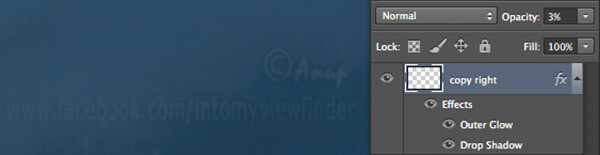
Opacity 3 fill 100

Now I have reduced the opacity to 3 percent, you can see the layer is almost invisible. If I reduce the percent to 0%, the layer would be completely invisible.

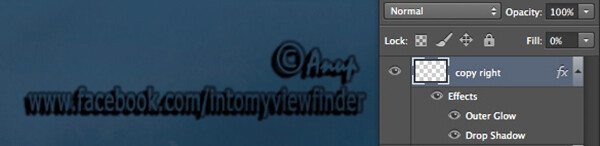
Fill 0 opacity 100

Now, I have changed the Opacity back to 100% and reduced the Fill to 0%. You will see, the layer content became transparent, but the layer style remains the same.

Healing Brush versus the Stamp Tool

Healing brush captures the texture of the area you sampled and blends with the color tone of the area you are painting. Another option: Spot-healing brush is more like content aware. It analyzes the texture around the brush and fills in the center, blending with the color tone.

Stamp tool is more like a copy and paste. It copies the area you sampled and pastes over the area you are healing.

So when is each tool will be most appropriate to use?

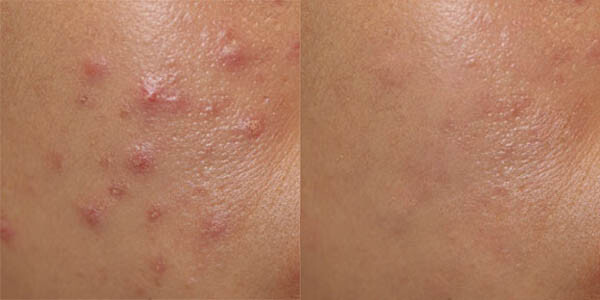
I mostly use the Healing Brush whenever I have to remove the blemishes of the skin, remove the mark or any texture (pimples, wrinkles) but like to have the same natural skin color tone. This helps my image remain evenly colored.

I use Stamp tool, when I want to remove something from image. For example, if I want to remove the hanging clock on the wall, light bulb or anything whose both texture and color both need to be removed.

Below is an immage of skin with blemishes. I used Healing Brush to remove the pimple by sampling a clean area and painting over the blemish.

Pimple2 copy

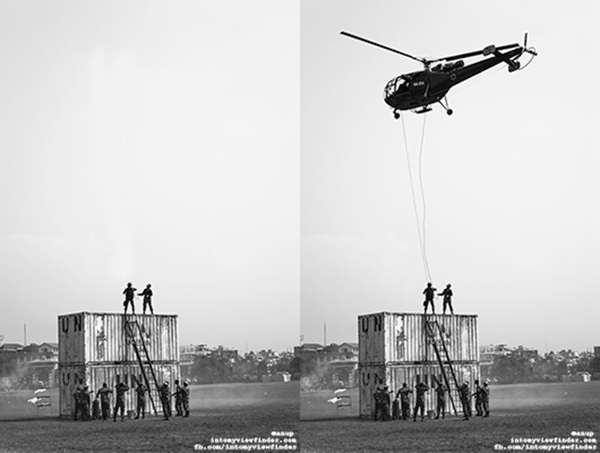
Here in the image below I have used the Stamp Tool to remove the helicopter. This is the after and before version of an image.

Compositional balance

Merge Visible versus Flatten Image

This is a very simple technique we regularly use whenever we work in layers, but a lot of photographers are still confused about the distinction between these two options. If you are working with multiples layers and apply Merge Visible, only layers will be merged which are visible or with eye icon turned onon. Where as Flatten Image merges all layers together, discarding the invisible layers.

The images below should help you understand better:

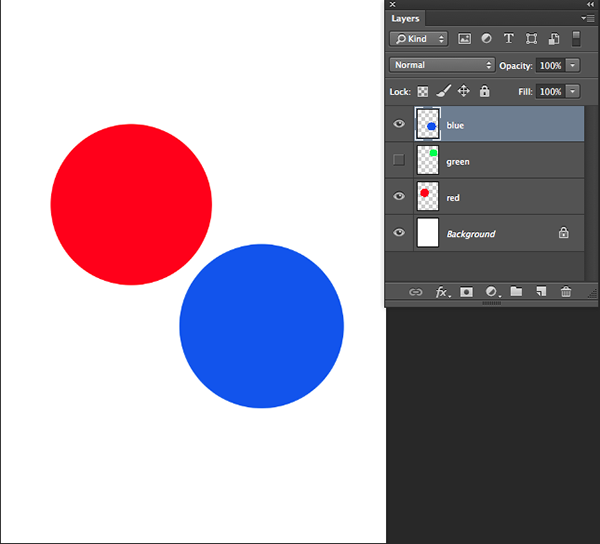
3 layer with one hidden

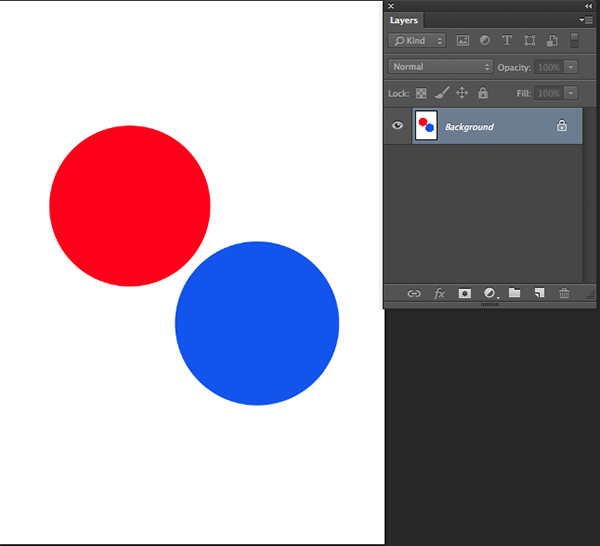
I created three layers with only two currently visible (blue and red)

Merge visible

Apply Merge Visible by going to: Layer> Merge Visible

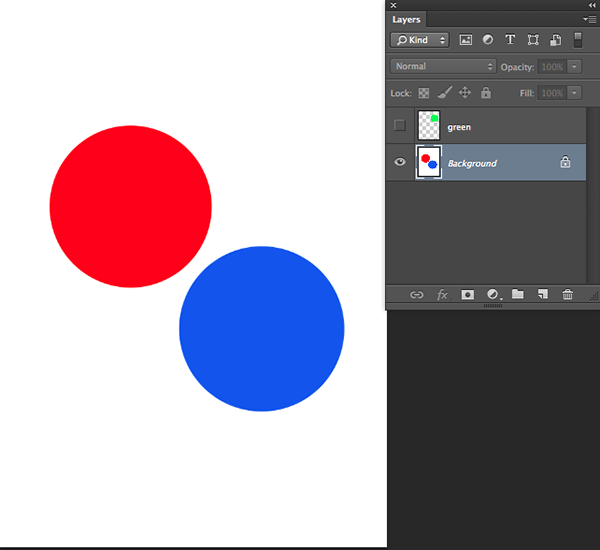
Merge visible applied

You can see that only the visible layers have been merged, leaving the hidden layer alone. Now we will apply Flatten Image.

Flatten image

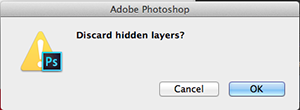
If there are any hidden layers when you apply Flatten Image, you will get this dialog box:

Discard hidden image

Now if I click OK in the dialog box, the hidden layer will be deleted and all visible layers will be merged like this:

Flattened image applied

Have you used these tools before? If you’ve had some confusion over the subtle differences I hope that has helped clear that up. Please share if have any questions or comments on these tools.

For more Photoshop tips and tutorials see here.

The post 6 Commonly Used and Confused Tools in Photoshop Explained by Anup Ghimire appeared first on Digital Photography School.


Digital Photography School

 
Comments Off on 6 Commonly Used and Confused Tools in Photoshop Explained

Posted in Photography


10, August, 2014 – Svalbard Double Header

11 Aug


It’s been ten days since returning from a fantastic back to back workshop in Svalbard, Land Of The Polar Bear.  As we do with many of our workshops we would like to share the adventure and journey.  We have now posted the Svalbard 2014 – The High Arctic and hope you will take the time to enjoy reliving the adventure with us.  Peter Cox also has included some amazing footage made from his drone that will give you a perspective that you couldn’t see otherwise.

Check back tomorrow when we make a special announcement about our upcoming 2015 Antarctica Back to Back Workshops.


The Luminous Landscape – What’s New

 
Comments Off on 10, August, 2014 – Svalbard Double Header

Posted in News


The Peeling Project: Thinking Outside The Big Box Store

10 Aug

[ By Steve in Architecture & Offices & Commercial. ]

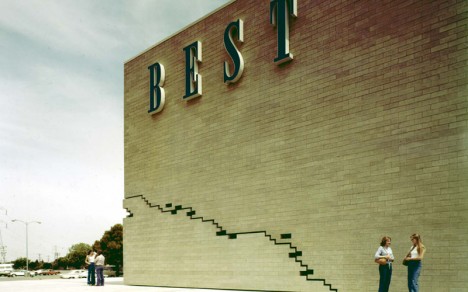
BEST Products The Peeling Project 1a
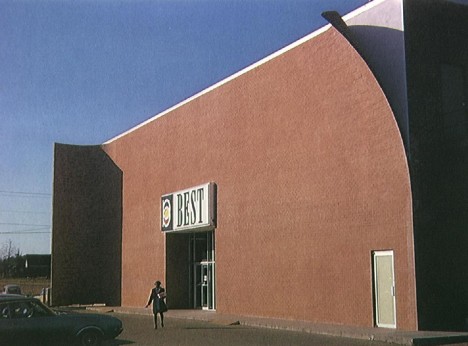
What happened when an edgy architecture firm met an open-minded chain of big box retail stores? The very appealing Peeling Project, that’s what.

BEST Products The Peeling Project 1

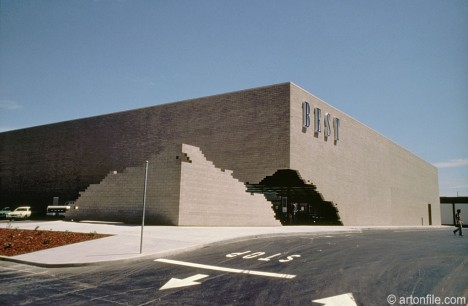
We’ll leave it for others to document the startling and unlikely history of The Peeling Project in detail; our task at hand here is to display, in chronological order, the unique and individual extreme makeovers given to nine Best Products catalog showroom stores between 1971 and 1984. We’ll also show, if possible, the fate of these bold experiments in retail architecture following Best Products’ demise in 1998. We’ll begin where it all began: the Best Products store at 5400 Midlothian Turnpike in Richmond, VA.

BEST Products The Peeling Project 1c

BEST Products The Peeling Project 1d

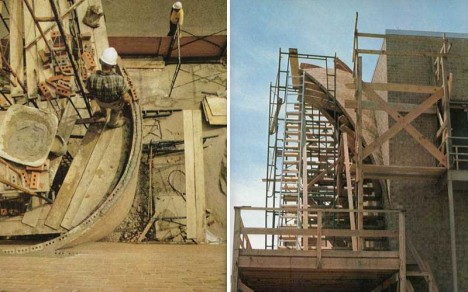
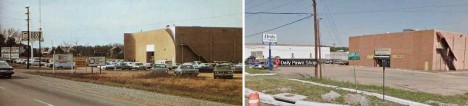
Designed (as were all of the Project’s, er, projects) by architecture firm SITE Inc. (“Sculpture In The Environment”), the initial installation featuring a front facade that appears to be peeling away from the building ended up giving its name to the entire series of nine works. Built with safety in mind, the surrealistically embellished front facade was constructed with care and at obvious expense. Even so, that didn’t prevent new owners the Daily Pawn Shop from reverting the building to its original boring boxy look shortly after acquiring it.

Indeterminate Façade

BEST Products Indeterminate Facade 2a

BEST Products Indeterminate Facade 2b

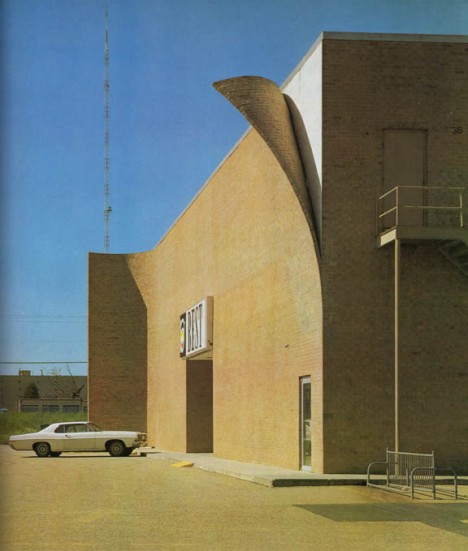
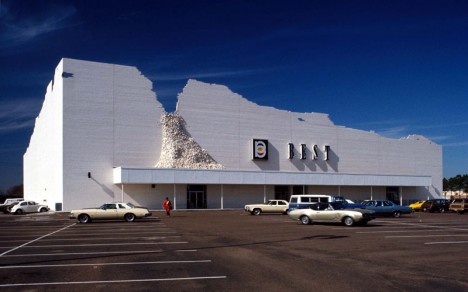
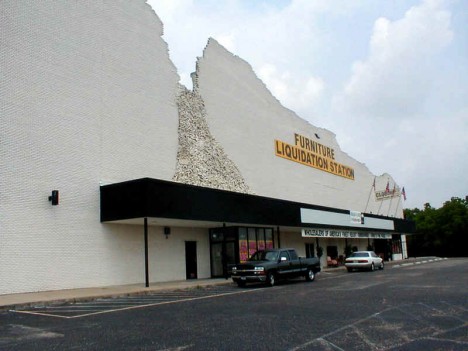
Built in 1974-75, Indeterminate Façade was the second of SITE’s collaborations with Best Products and over time has emerged as the most famous. Located at 10765 Kingspoint Road in Houston, TX, the store started out as a standard large building but SITE artists then extended the outside walls unevenly to evoke a “distressed” appearance – the highlight of which was a waterfall of brick and masonry spilling onto the front awning.

BEST Products Indeterminate Facade 2c

BEST Products Indeterminate Facade 2d

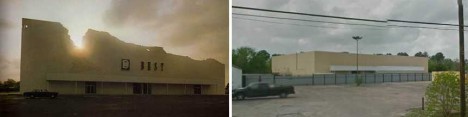
Perhaps due to its notoriety, Indeterminate Façade remained unchanged through at least one change of ownership after Best Products declared bankruptcy for the final time. Sometime in 2003, however, the artistic extensions suddenly and mysteriously vanished. Some say the building’s owner heard rumors the City of Houston was about to declare the structure to be of historical significance and feared losing the freedom to alter the building at will in the future.

The Notch Project

BEST Products Notch Project 1a

BEST Products Notch Project 1b

BEST Products Notch Project 1c

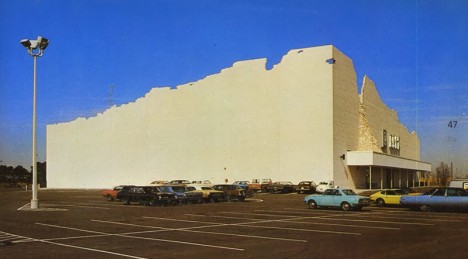
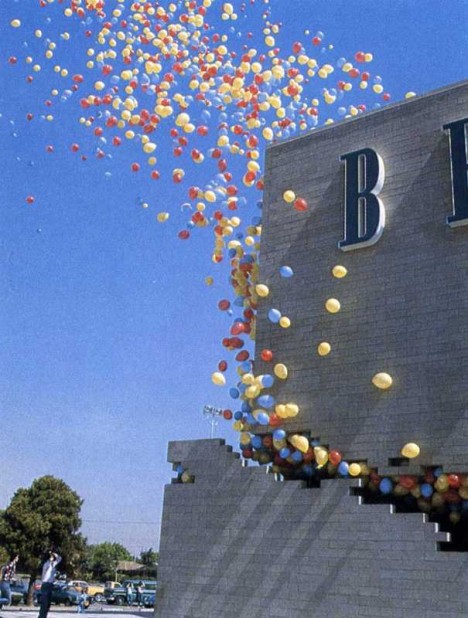
When a Best Products store at 1901 Arden Way in Sacramento, CA known as The Notch Project opened in 1977, balloons poured out of the gaping “notch” that appeared when the building’s 14ft high, 45-ton front corner wedge slid aside to reveal the main entrance. Each morning thereafter, the corner piece would slide aside and each day at closing time it would slide back into position – sans balloons, mind you.

BEST Products Notch Project 1d

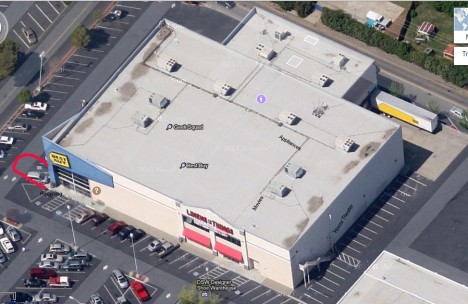
After Best Products sold off its bricks & mortar assets, the former Notch Project building was bought by Best Buy – an infamously non-innovative corporation who’s directors dictated all its stores must conform to the corporate look. We’re sure you’ll agree that when it came to imaginative branding, Best Products bested Best Buy by far.

Next Page – Click Below to Read More:
The Peeling Project Thinking Outside The Big Box Store

Share on Facebook


[ By Steve in Architecture & Offices & Commercial. ]

[ WebUrbanist | Archives | Galleries | Privacy | TOS ]


WebUrbanist

 
Comments Off on The Peeling Project: Thinking Outside The Big Box Store

Posted in Creativity


10. August 2014

10 Aug

Ein Beitrag von: Mark7 Image

Mädchen vor hoher, stark bewachsener Wand


kwerfeldein – Fotografie Magazin | Fotocommunity
 
Comments Off on 10. August 2014

Posted in Equipment


Exposing sharks in a positive light

10 Aug

George Probst has been fascinated with sharks his whole life, but it wasn’t until he found himself newly single with some extra money in savings that his dream of diving with and photographing sharks became a reality. He hopes his photos will inspire others to see sharks in a light unlike their typical portrayal in movies and pop culture. Find out about his process and see his work. See gallery

Articles: Digital Photography Review (dpreview.com)

 
Comments Off on Exposing sharks in a positive light

Posted in Uncategorized


browserFruits August, Ausgabe 2

10 Aug

Noch einmal zur Erinnerung: Einsendeschluss für unseren aktuellen Wettbewerb ist der 12. August 2014 um 7 Uhr morgens. Wenn Ihr bald mit dem Grafik-Tablett Wacom Cintiq Companion Eure Bilder bearbeiten wollt, bleibt nun kaum noch Zeit. Also schnell, schreibt die letzten Texte zu Ende, vervollständigt Eure Ergebnisse und überprüft noch einmal die Wettbewerbsregeln, damit es nicht zum Schluss an einer kleinen Schusseligkeit scheitert.


Fotospecial: Schlösser und Burgen

Flickr

500px


Deutschsprachig

• Das Museum Brandhorst in München zeigt Bilder von Richard Avedon von einer eher unbekannten Seite – nicht die Modefotografie, sondern Wandbilder, die Serie „American West“ und Portraits. Bilder der Udo-und-Anette-Brandhorst-Stiftung werden hier erstmals öffentlich gezeigt.

• Fototechnik: Pelican Imaging baut an einer Kamera, die ähnlich wie eine Lytro funktioniert – für Smartphones. Erste Ergebnisse können hier begutachtet werden und zeigen deutlich, dass diese Technologie eher Beta ist.

• Der Berliner Fotograf Michel Lamoller macht von einer Szene mehrere Aufnahmen zu unterschiedlichen Zeiten. Die Prints dieser Aufnahmen zerschneidet er mit dem Skalpell und fügt sie zu einer Collage aus mehreren Schichten zusammen, die so mehrere Möglichkeiten der gleichen Szene zeigen.

• Kann ein Affe das Urheberrecht an einem Foto haben?

• Paulina Metzscher zeigt auf Ignant einen Tag in ihrem Leben in Bildern.


International

• Aus lauter Verzweiflung fotografierte Matt Sweeney auf den Straßen Hollywoods. Vor über 30 Jahren. Nun hat er begonnen, seine Negative einzuscannen.

• Maud Chalard ist ein toller Tumblr mit Fotografien über Sex, Freundschaft und Ursprünglichkeit.

• Diese scheinbaren Vorher-Nachher-Fotos beschäftigen sich mit dem Thema Drogenabhängigkeit. Jedoch nur mit Make-Up, ganz ohne Fotos zusammenzuschneiden.

• Eine sehr lesenswerte Geschichte: Wie der Erfinder und Abenteurer Hercule Florence im Amazonas in den 1830er Jahren eine frühe Form der Fotografie erfand.

• In diesem Ego-Shooter wird nicht mit dem Gewehr geschossen, sondern…? Genau. Mit der Kamera. Das Spiel ist noch in der Entwicklung, könnte aber so manchen Nerds gefallen – und dabei noch ein paar Grundlagen der Fotografie vermitteln.

• Matthew Wylie lebt in Toronto und lehrt dort Englisch und Philosophie. Er fotografiert primär mit dem Smartphone und die Bilder im Artikel zeigen seine sehr sehenswerte, sehr grafische Interpretation von Straßenfotografie.

• Big Picture zeigt 26 großartige Einblicke aus dem Alltag rund um die Welt.


Neuerscheinungen und Tipps vom Foto-Büchermarkt

Buchtipps

• Aktuell erscheinen immer wieder Retrospektiven über den Alltag der DDR in Form von Bildbänden. „Stadt, Land, Leben“* ist eines davon und muss sich ob seiner fotografischen Leistung des Bildjournalisten Jürgen Graetz nicht vor anderen verstecken. Einige seiner Schwarzweiß-Aufnahmen dieser Zeit wurden auf Spiegel Online vorgestellt und bringen dem Betrachter das Leben in der DDR auf ungekünstelte Weise (und auch mit kritischem Blick) näher.

• Das Paper Journal stellt Martin Kollars famose und durchaus belustigende Serie „Nothing Special” vor. Diese ist in Form eines Bildbandes für Neugierig-gewordene über Amazon* zu beziehen.


Wettbewerbe

• Der Fotografiepreis „Baukultur im Bild. Räume + Menschen“ zeichnet herausragende Aufnahmen von wirkungsvollen und auch alltäglichen Räumen in Nutzung aus. Einsendeschluss ist der 5. September 2014, die Gewinner können sich über Geldpreise freuen.


Zitat der Woche

The best way to have a good idea is to have lots of ideas.

Linus Pauling –

Mehr Zitate


Videos

Negative mit der DSRL abfotografieren? Hier wird diese Möglichkeit sehr lustig veranschaulicht.


* Das ist ein Affiliate-Link zu Amazon. Wenn Ihr darüber etwas bestellt, erhält kwerfeldein eine kleine Provision, Ihr bezahlt aber keinen Cent mehr.


kwerfeldein – Fotografie Magazin | Fotocommunity
 
Comments Off on browserFruits August, Ausgabe 2

Posted in Equipment