Ein Beitrag von: Renee Q.

Lomography isn’t a company we’ve historically talked about much on DPReview; with its emphasis on low-fi, ‘shoot from the hip’ photography using plastic film cameras, it’s a long way from the typical interests of our readers. But last year the company came up with an interesting idea: to recreate a classic 19th century portrait lens for modern SLRs. The result is the Petzval 85mm F2.2, which is available now to fit Canon or Nikon SLRs. So what’s it like?
[ By WebUrbanist in Art & Street Art & Graffiti. ]

Known for his geometric art installations, Aakash Nihalani is back with a mind-bending sequence of shots that show humans interacting with his reality-warping work.


In Landline, individual and paired persons become part of the project, standing in front of urban surfaces and seemingly skewered by abstract shapes.


White shirts become backdrops for black squares sliced from each set of outfits, shot through in turn by bright neon pink, green, orange and blue rectangles.


For more of this artist’s work, including additional closeups that show the trick behind each sequence, you can follow his posts on Eye Scream Sunday.

Wonderfully creative urban street art. These photographs, taken around town in London and even shown in galleries, are just a small portion of the work.
Click Here to Read More »»
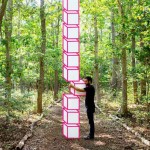
Street artist Aakash Nihalani takes his perspective-skewing, geometric tape art installations to East Hampton for a residency at the Willem de Kooning estate.
Click Here to Read More »»

Urban travelers love taking pictures, but ideal angles are not always obvious to visitors – many ultimately either stand in same hard-to-find spot or …
Click Here to Read More »»


[ By WebUrbanist in Art & Street Art & Graffiti. ]
[ WebUrbanist | Archives | Galleries | Privacy | TOS ]
While starting a photography business, people don’t always understand how to turn their hobby into a full-time job properly. Most newbie photographers make the same mistakes when starting out that they wish to go back and change. Knowing about these mistakes in advance could help you to avoid them. As they say, “wise men learn by other men’s mistakes; fools Continue Reading
The post 5 Disastrous Mistakes to Avoid When Starting a Photography Business appeared first on Photodoto.
Petra Mattheis und Sascha Nau, alias die Regentaucher, sind Euch vielleicht noch bekannt von ihrem Gastartikel im vergangenen Monat.
Dass sie nicht nur Portraits können, sondern auch Architektur, zeigen sie mit der Bildserie „Wartende Gebäude“. Im Herbst 2013 begannen sie, Gebäude in Leipzig in Becher-Tradition bei immer gleichen Lichtverhältnissen in Frontalansicht zu fotografieren. Alle diese Häuser befinden sich in einem Zwischenstadium.
Die Serie soll weniger ein Zeitdokument sein, wie sie sagen, sondern die eigentümliche Atmosphäre einfangen, die von diesen meist verlassenen Gebäuden ausgeht.
Leipzig ist nicht mehr die gleiche Stadt, in die wir vor Jahren gezogen sind. Vor allem in den westlichen Stadtvierteln ist eine Dynamik entstanden, durch die Baulücken, Brachen und sanierungsbedürftige Häuser langsam verschwinden. Der Charme der Stadt spiegelt sich in diesen wartenden Gebäuden und in den Freiflächen, die sie oftmals umgeben.


Manche dieser Häuser stehen kurz vor einer Sanierung, andere werden vermutlich in unmittelbarer Zukunft abgerissen werden. Sie dienen als Präsentationsfläche für Sprayer und trotzen der Witterung seit Jahren mehr oder weniger gut.
Es bleibt abzuwarten, ob Zuzug und Verdrängung, Wandel und Erhalt langfristig ein ausgewogenes Verhältnis zueinander finden.
Neugierig geworden? Weitere Arbeiten von Sascha und Petra findet Ihr auf ihrer Webseite sowie auf ihrem Portfolio bei Behance. Und auch auf Google+ könnt Ihr ihnen folgen.
When it was introduced last year, the Sony Cyber-shot DSC-RX10 was peerless. It was the first superzoom to offer a 1″-type sensor, much larger than the 1/2.3″-type chips commonly found in that class. It paired that with an impressive F2.8 constant 24-200mm equivalent zoom. Now the Panasonic Lumix DMC-FZ1000 has joined the RX10 in this newly-minted category, boasting almost certainly the same sensor and a 25-400mm equivalent F2.8-4 lens. They line up nicely for a head-to-head comparison – and that’s exactly what we’ve done. Read more
Photographers looking to try out a Sigma dp2 Quattro compact digital camera before making a purchase (and given its radical design, that’s a really good idea) can now take advantage of the Sigma ‘Try Before You Buy’ loaner program, launched today. Under the new program, photographers are invited to test the new camera before it begins shipping. Learn more
Details were thin from Google I/O last week about Android’s plans for camera updates in its next OS release. Now with a developer preview of the new OS available, more information has emerged about what we can expect from Android’s camera capabilities. Raw image capture is on the way, along with additional manual exposure controls. Read more
I’d forgotten all about my childhood dreams of achieving world domination using my very own robot army until I switched on the TB3 from eMotimo. As soon as I synched up the wireless remote and started panning and tilting this robotic tripod head, I was transformed into a grinning 8 year old boy who believed he could do anything.
I expect that the eMotimo exhibit at trade shows is usually ringed by a troupe of grinning time-lapse photography nerds like myself, who just realized they stumbled upon a truly legendary tool for photographic creativity.
The short time-lapse movie above was made entirely using the TB3 with my Sony A7R Camera mounted on the Rhino Slider Pro 4ft. What started out as a couple of quick test shots turned into a fully fledged trailer when I realized what I could achieve with the TB3. Once I stuck it on a slider, things got awesome real quick.
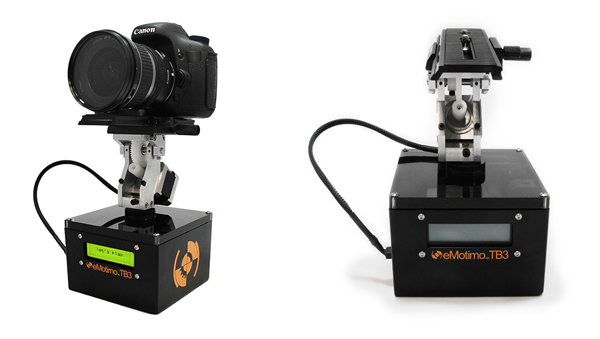
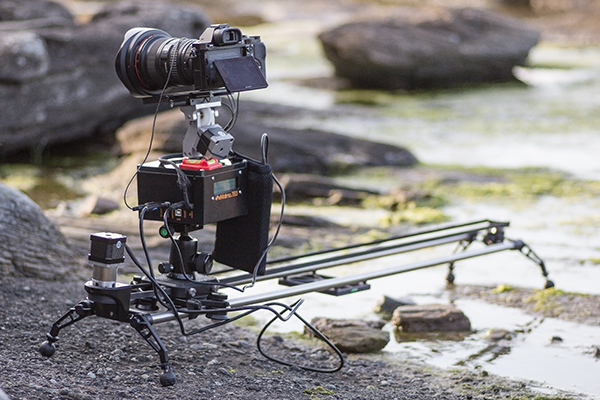
Pictured on the left with a Canon DSLR
For those of you who have no idea what’s so great about a device like this, let me throw the term ‘Motion Control’ at you. If you want to shoot videos or time-lapse movies that offer the viewer a more captivating perspective than just a plain old dolly/slider shot, you’ll be wanting one of these TB3′s.
The TB3 from eMotimo allows you to add high production values to your footage by moving your camera along two axes while shooting. It can pan AND tilt all at the same time. Combine this device with a slider and you’ve got yourself a powerful three axis rig for making fascinating cinematography and time-lapse photography. Your footage will appear to have been shot with a camera that magically floats through the air.
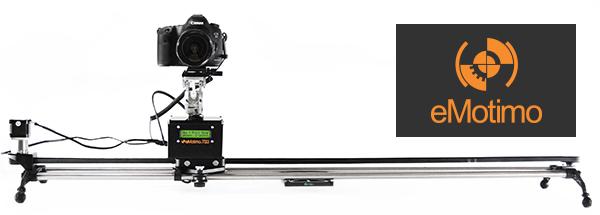
The TB3 shown here with a Canon DSLR and a Rhino Slider Pro 4FT.
It’s not just about time-lapse and video. The TB3 also allows you to take multi-gigapixel images such as panoramas. For landscape shooters who want wall-filling image resolution, this feature is a major bonus. When you add in the awesome time-lapse and video shooting capabilities, you’re getting a lot of functionality for just under a $ 1000 USD.
Programming the movement of the TB3 requires a small learning curve. The interface is a very basic LCD screen with abbreviated titles and you navigate through this by using the included remote control joystick. It takes a while to get used to but if you’ve ever used a video game joystick you’re already half way there.
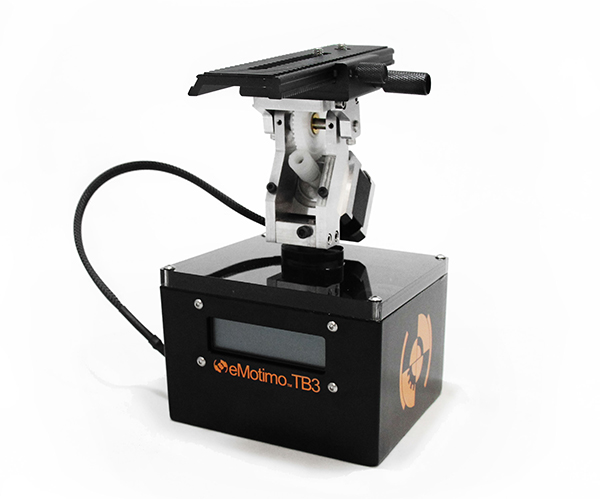
You can decide how many points of location your film sequence will have. If you want a simple A to B movement you select a two-point move. You tell the TB3 where you’d like to start and where you’d like to end, and the TB3 fills in the blanks.
With a three-point move you can get more creative by adding a less obvious direction to your movement. You could even program the TB3 to go into reverse after you’ve reached point two, or point the camera in the opposite direction, whatever you like. This is great for taking your audience on an unpredictable ride through your scene.
‘Reverse’ moves come in really useful when you’re using a slider and need to save valuable battery life by cutting out the ‘return to start’ move that the TB3 has to do once you’ve programmed in your move. You basically work backwards and tell the TB3 to start shooting from your last position. This is essential when doing vertical ‘jib’ shots on a slider which sucks a LOT of battery power.
At the beach shooting a Timelapse sunset with the TB3 from eMotimo on a Rhino Slider.
When I first saw the word ‘Ramp’ in the interface I thought it referred to Bulb ramping or ‘Bramping’ for time-lapse, but it actually refers to the degree of acceleration used when the TB3 moves to its start and end points. This is a really cool feature as it gives your camera motion a very smooth, but dynamic movement, as the TB3 gradually speeds up and then slows down to its end point. Most of the scenes in my video feature a ramp setting of 70.
Another great feature of the TB3 is that you can specify a static ‘no movement’ period to either end of your shooting sequence. This is great if your sequence ends and you then fade up some titles in your video but want to keep the movie playing in the background.
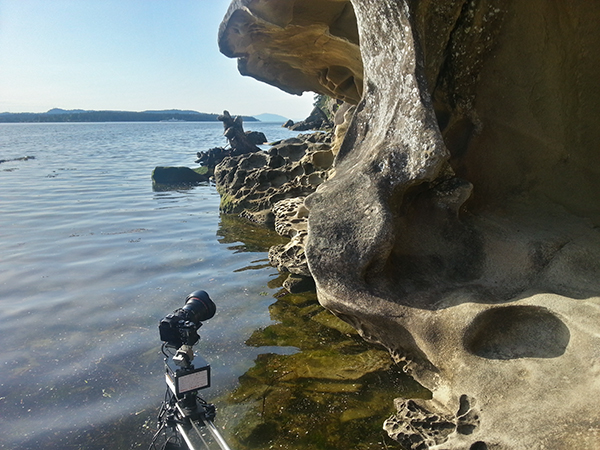
Smartphone shot. The TB3 almost going for a swim while shooting a time-lapse at Jack Point, Nanaimo (Canada).
This is a sturdy unit. It kind of looks like something you’d expect to find under the skin of a young Arnold Schwarzzeneger during his debut as the world’s favourite cybernetic assassin. It’s built for functionality, not looks, and I expect it will appeal to the gadget geek in all of us due to its no nonsense appearance.
As well built as the TB3 is, I wouldn’t want to drop it. There are lots of exposed moving parts so it’s best to handle it with the care and attention it deserves. Encasing it in rubber would perhaps give it more protection but would add more weight. The interface cable that connects the moving parts to the brain of the unit could be more rugged as it’s already started to fray after light use.
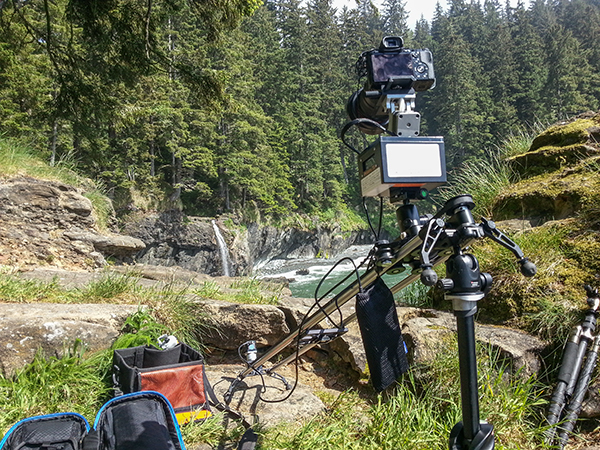
Smartphone shot. Semi-vertical jib style shots like this require more battery power so the TB3′s reverse 2-point move helped save me a little battery life.
Lets face it, if you’re doing serious time-lapse movies or cinematography, you long ago accepted that you’d be lugging heavy gear around. The TB3 isn’t that heavy in itself but it’s yet another bag to carry along with your camera bag, tripod(s) and slider. For what this gadget does, I think they’ve packed a lot of tech into a relatively small device but I can’t wait to see a ‘Sonyfied’ future version that won’t add to my chiropractor bills. Till then, just deal with it.
Yet another essential accessory for the time-lapse and video shooters – the external battery pack. eMotimo were kind enough to lend me the ‘Anker Astro Pro’ battery pack which powers the TB3 and many other devices such as your phone and camera. Although this adds yet more weight to carry, it’s great to know that when my Sony A7R battery inevitably lets me down (which it does daily), the battery pack will allow me to recharge in the field.
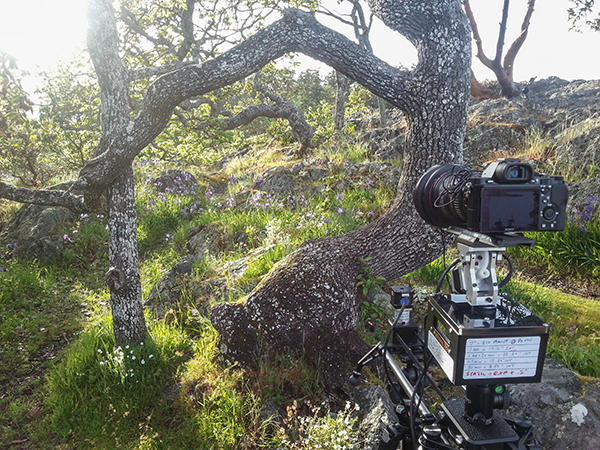
Smartphone shot. You can see I’ve written down all my interval settings for the 7 second sequences featured in my film.
The TB3 is compatible with most major camera systems but as you’d expect, the best compatibility is reserved for the two major giants Canon and Nikon. I’m a Sony shooter so this posed somewhat of a problem for my plans to shoot the time-lapse movie shown above. eMotimo managed to get around this problem by providing a simple IR (infrared) transmitter cable that I taped to the IR receiver port on my Sony A7R. Not as slick as the Canon/Nikon cabled version but it did the job. I’d like to see a wired solution from eMotimo pretty soon though as it looks like Sony is starting to gain traction with their new range of cameras.
For time-lapse shooters that use advanced bulb ramping devices like the ‘Promote Control’, you’ll be glad to know that this can be integrated with the TB3. eMotimo also provides motor accessories for various popular sliders so you have some different options for the 3-axis motion control shown in my example video.
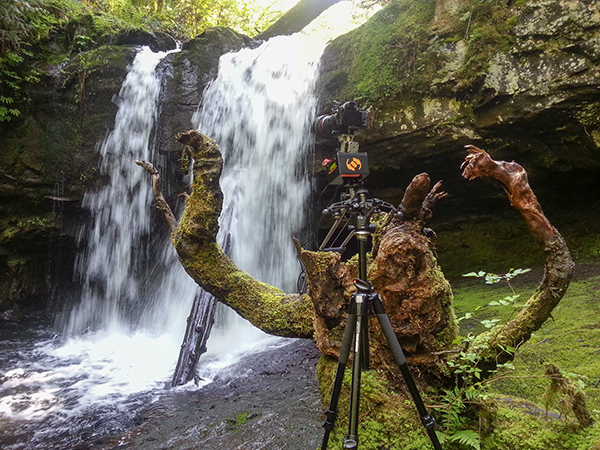
Smartphone shot. My favourite angry tree stump gets the time-lapse treatment with the TB3 carefully balanced on the stump.
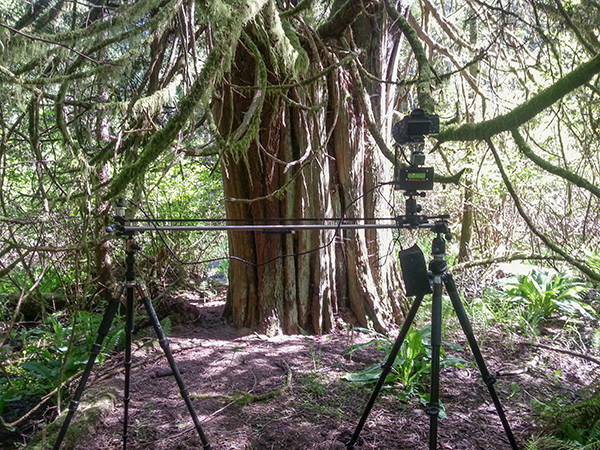
Smartphone shot. I found that hanging the battery pack off the slider caddy gave the best results.
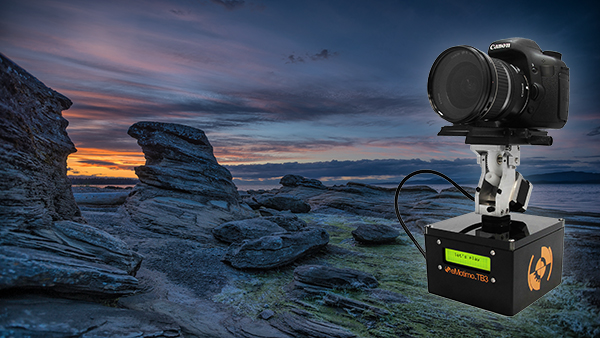
Absolutely. The TB3 has enjoyed something of a cult following among the rockstar time-lapse and DLSR video shooters. It’s not just because eMotimo were there during the early years of the time lapse video phenomenon, it’s because they make a very versatile and rock solid product. When you factor in the sub $ 1,000 price point and the awesome tech support, I really don’t see any other contenders.
Our rating system doesn’t allow for a 4.9 so I’m forced to give the TB3 5 stars. I could have given it 4.5 stars but that just wouldn’t be enough. If eMotimo can fix my two main gripes of having a better carry case and some form of improvement on the Fotomate mounting plate, the TB3 would be perfect and fully deserving of 5 glorious shining gold stars.
Want some time-lapse tips? Try these:
The post eMotimo TB3 Review – Robotic Tripod Head and Time-lapse Movie by Gavin Hardcastle appeared first on Digital Photography School.

The latest so-called Bridge camera from Panasonic is the FZ1000. It features a 20MP 1" sensor, 4K video and a 25-400mm f/2.8-f/4 lens. By choosing to make the Panasonic FZ1000 about the same size as a chunky entry-level DSLR, Panasonic has found a combination that will likely meet the needs of a great many photographers, including some who might not have considered a camera in this category before.
The June winner in our 2015 Antarctica Expedition Contest is David Rosenthal, of Palo Alto, CA. Congratulations David.
David is now a finalist in the contest and also wins a free lifetime subscription to all LuLa videos.
You can also enter the contest. Every purchase at our online store is an entry, and each annual subscription is equal to six entries.
The grand prize is an all-expenses paid Antarctic Expedition worth $ 15,000. This is the last month to make an entry that makes you eligable for this prize. Find out more.