RSS
 

Archive for July, 2014

5,000 Residents Being Evicted from World’s Tallest Vertical Slum

29 Jul

[ By WebUrbanist in Architecture & Cities & Urbanism. ]

tower david shelf wall

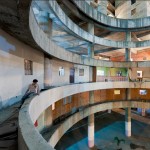
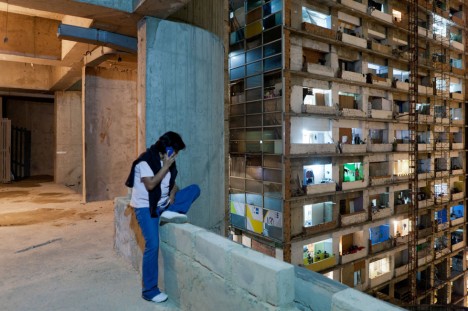
A forced relocation is underway as thousands of squatters are moved by authorities out of their homes and the city of Caracas, some of whom have called the infamous half-finished Tower of David home for as long as seven years.

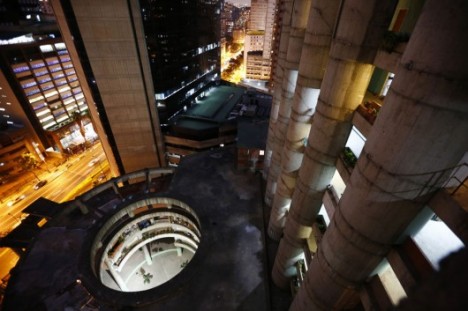
tower of david view above

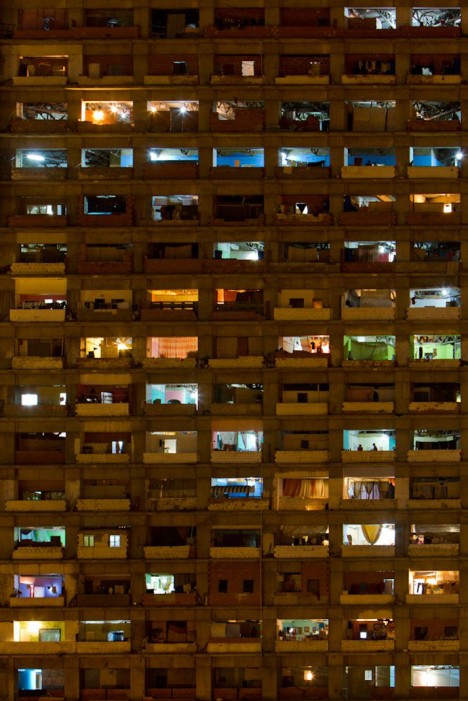
Rumors began a few weeks back as Chinese bankers expressed interest in purchasing the unfinished structure in Venezuela, with the intention of turning it back toward the (official and licensed) commercial and office uses for which it was originally intended. Currently, however, over 1,000 families live and work in the first few dozen floors of this 44-story skyscraper.

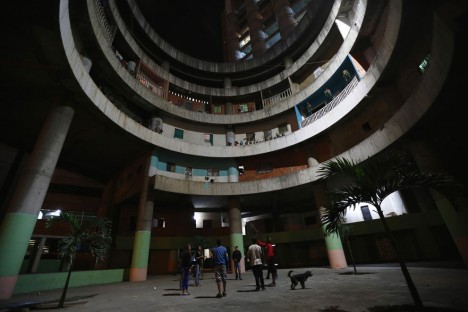
tower of david ground floor

With surprising speed over the past week, the government has already shifted over 100 of these to a settlement outside of town (three floors a time) and is set to displace everyone living in the building, primarily to Valles del Tuy in the state of Miranda.

tower david tall pic

The tower was originally abandoned mid-construction in 1990 and eventually taken over by informal inhabitants who created not just homes but stores, offices, gyms, groceries, tailors, factories, churches tattoo parlors and even internet cafes within its walls.

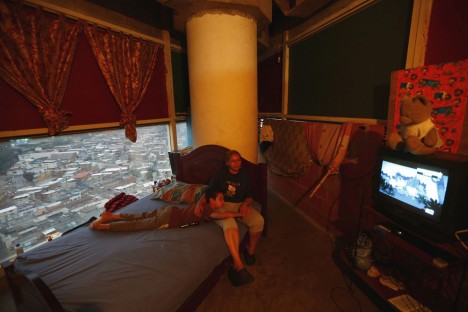
tower of david room tv

Without an elevator (and with missing windows on the top levels), its most prized spaces for occupants have been on the lower floors, with scooter taxis that ferry people up ramps to some levels adjacent to the parking structure. Like Kowloon Walled City, the place has its own rules and informal systems of bringing in and sharing resources, including limited water and power.

tower of david exterior view

The Urban Think Tank, which spent years studying the building (and writing Torre David: Informal Vertical Communities), has weighed in on the significance of the building and its occupants as well as its sudden shift in direction: “What we found was neither a den of criminality nor a romantic utopia. Torre David is a building that has the complexity of a city. It merges formal structure and informal adaptation to provide urgently needed solutions, and shows us how bottom-up resourcefulness has the ability to address prevailing urban scarcities.”

More from UTT: “When dealing with informal settlements, infusions of money for major public works and other approaches that involve large-scale rapid change – such as the razing of slums and relocation of poor populations – have generally failed in the complex setting of the city. The commercial housing market simply does not supply enough homes. There are too few units of social housing, and the majority of these are far beyond the reach of low-income families.”

“The dire asymmetries of capital in the global south do little to help; yet various forms of structural neglect have not always diminished great entrepreneurial vigor. Shunned by governments and the formal private sector, city dwellers, like those in Torre David, have devised and employed tactics to improvise shelter and housing.” Images via The Atlantic and Torre David: Informal Vertical Communities.

Share on Facebook


[ By WebUrbanist in Architecture & Cities & Urbanism. ]

[ WebUrbanist | Archives | Galleries | Privacy | TOS ]


WebUrbanist

 
Comments Off on 5,000 Residents Being Evicted from World’s Tallest Vertical Slum

Posted in Creativity


Capturing Busy Little Ones: Forget the Perfect Pose and Get Photos You Truly Love

29 Jul

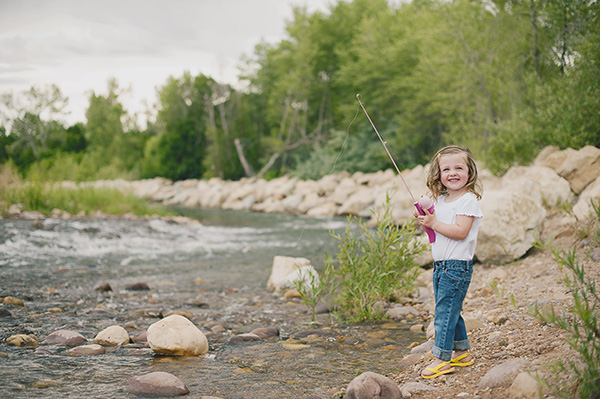
PHOTO 1

If you have ever tried to get a three year old to sit still for longer than a nanosecond you know what a challenge it can be to get that “perfect” photo. Well, I’m going to be real here, who wants that perfect photo anyway? Okay, I know you may, but maybe I can convince you to let that go. My favorite photos are always the true ones; the ones that make you smile when you look at them, or maybe even cry a tear or two. Sure, it’s nice to get that beautiful portrait, but which photo is going to help you truly remember the fiery three year old who gave you model-in-the-making poses one minute, and wiped her muddy hands on her white shirt the next?

The first thing you have to do, if you want this experience to be fun for both you and the little one, is to let go of expectations. If you have a certain Pinterest pose in mind, and are determined not to be happy until you’ve forced your little tot into it, you’re both going to be miserable. Sure, use those ideas as a starting point, but then go with what is happening in the moment. You’ll be surprised where your wee subject might take you, and you might like the results much better than what you had in mind in the first place.

PHOTO 2 PHOTO 3

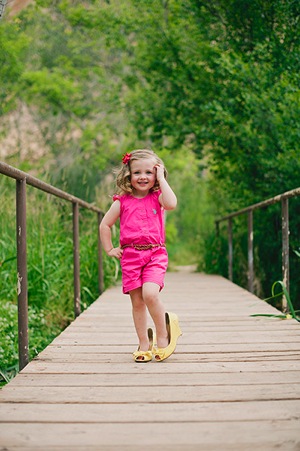
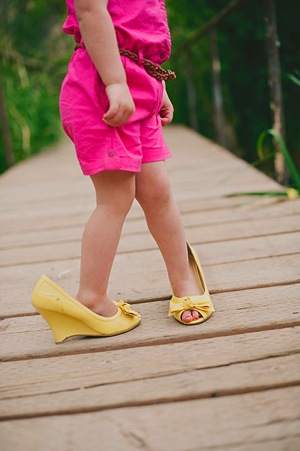
Make sure your cute little one knows that you are on the same team. Most kids have no problem being obstinate, just for fun. If she senses that you really want something from her, she may quickly decide that she wants the exact opposite. I try to take the child by the hand often, even if it’s the first time we’ve met (they usually love this) and let them feel that they are part of where we are going, and what we are doing. If she decides that she wants to put on the pretty dress shoes next, then that’s what we capture next.

PHOTO 4

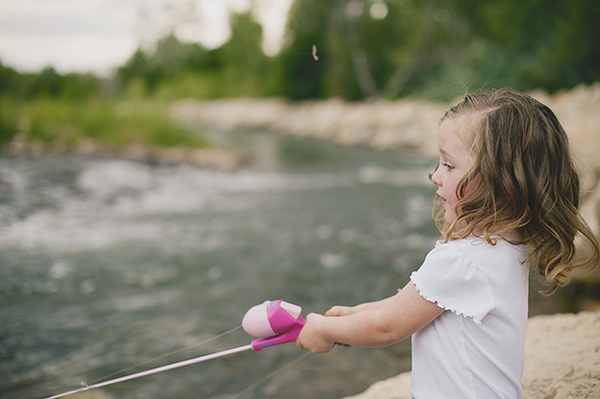
Bring something for her to do. I prefer not to use props generally, but a few well-chosen, meaningful props can work wonders. This keeps her attention, plus you have the added benefit of capturing those hobbies that she is into at the moment. Let her share her passion with you. Instead of trying to pose her just so, and telling her how to hold the fishing pole, and where to look – ask her to show you “how she fishes with daddy”. Let her be the expert, and you just have your camera ready. Favorite dress-up clothes can bring out the model in lots of kids. Chairs or boxes to climb on, sit on, stand on, and peek through, can be great fun.

PHOTO 5

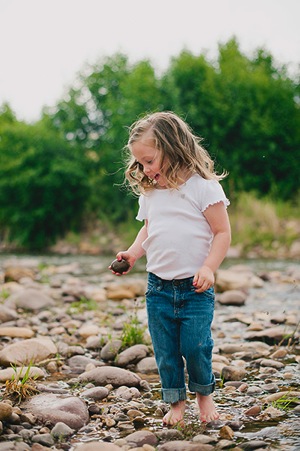
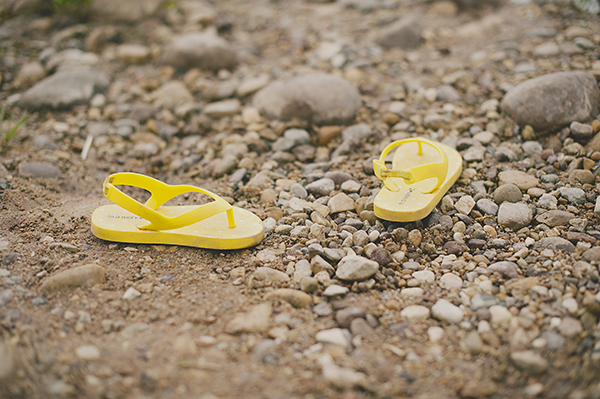
Try not to give too much direction or commands. Kids start to tune you out pretty quickly if all they hear are orders barked at them: “Sit here, look there, smile, smile, smile!!!”. When I can tell that my little subject is about done, I’ll just let her totally do her thing, and have my camera ready for when the moment is right. If she wants to take her shoes off and splash in the water, throwing rocks, I see a perfect opportunity to capture her in her element. This is where you might get the most genuine joy shining through.

PHOTO 6

When your mini-model is done – you are done. Quit before the meltdown, before she decides that this is the worst form of torture an adult ever created. If you didn’t get everything you hoped to get, don’t sweat it. Sometimes when I look through the photos later, I find gems that I didn’t even remember capturing. You may be pleasantly surprised by how many great images you were able to get, even with truly “busy” little tots. You’re not going to get much worth keeping if you try to force more photos. When little ones are done, they are DONE. Try to keep your photo sessions short, even if you have an agreeable little model. I usually spend less than half an hour shooting if they are under five years old.

PHOTO 7

So, next time you are lucky enough to have an adorable, energetic, little one in front of your camera, remember to relax, breathe, and have some fun. You’ll find that those real photos will be your favorites in the end, and you won’t even miss that perfectly posed portrait with every hair in place.

PHOTO 8

For more tips on photographing kids check out these:

  • Photography Hunting: Play the Waiting Game Photographing Kids
  • Cut the Cheese: 5 Tips for Photographing Kids
  • CLICK! How to Take Gorgeous Photos of Your Kids – a dPS ebook
  • How to Photograph Shy Children

The post Capturing Busy Little Ones: Forget the Perfect Pose and Get Photos You Truly Love by Melinda Smith appeared first on Digital Photography School.


Digital Photography School

 
Comments Off on Capturing Busy Little Ones: Forget the Perfect Pose and Get Photos You Truly Love

Posted in Photography


Canon EF-S 10-18mm F4.5-5.6 sample gallery

29 Jul

We’ve been out taking advantage of Seattle’s sunny July days and have just published a gallery of real-world samples from Canon’s new 10-18mm F4.5-5.6 IS STM lens. Smaller, lighter and cheaper than the 10-22mm zoom that precedes it in Canon’s lineup, the 10-18mm gives a 16-29mm equivalent range on the APS-C bodies it’s designed for. See gallery

Articles: Digital Photography Review (dpreview.com)

 
Comments Off on Canon EF-S 10-18mm F4.5-5.6 sample gallery

Posted in Uncategorized


Canon introduces inexpensive PowerShot SX400 IS and SX520 HS superzooms

29 Jul

Canon has introduced a pair of budget-friendly superzooms: the PowerShot SX400 IS and SX520 HS. These cameras have 24-720mm and 24-1008mm equivalent lenses, respectively. The SX400 sports a 16MP CCD and 720p video, while the SX520 uses a CMOS sensor (likely BSI) that can produce Full HD movies. You’ll be able to pick up the SX400 IS in August for $ 249.99, with the SX520 HS following in September for $ 399.99. 

Articles: Digital Photography Review (dpreview.com)

 
Comments Off on Canon introduces inexpensive PowerShot SX400 IS and SX520 HS superzooms

Posted in Uncategorized


Vom Zauber Rhöner Nächte

29 Jul

Ein Beitrag von: Jürgen Hüfner

Der Tag neigt sich dem Ende, die Sonne geht unter. Zeit, nach Hause zu gehen – oder? Doch genau dann, wenn viele die Kamera einpacken und genau das tun, bin ich oft erst losgezogen, um fotografisch tätig zu werden. Dies ist die Geschichte meiner zahlreichen nächtlichen Fotostreifzüge, die ich bisher erleben durfte, in dem „Land der offenen Fernen“, wie man das Mittelgebirge in Deutschlands Mitte am Dreiländereck Bayern, Hessen und Thüringen auch nennt.

Ich blicke mittlerweile auf gut 15 Jahre Nachtfotografie zurück und habe dabei so einiges erlebt. Doch beginnen wir von vorn, denn alles begann mit einem besonderen Bild.

Ein Baum, der vom hinten beleuchtet wurde und rot strahlt.

Es dürfte Ende der 90er Jahre gewesen sein, als ich mit meiner Nikon F 70, bestückt mit Diafilm, erstmals mit einem Freund auf nächtliche Fotopirsch ging. Ich hatte dabei ein bestimmtes Motiv und eine Idee im Kopf. Die tausendjährige Eiche von Reith bei Nacht mit Feuer zu beleuchten, war geplant.

Nach getaner Arbeit und dem Entwickeln des Films hat mich das Ergebnis beinahe umgehauen und führte dazu, dass ich von nun an gezielt die ohnehin bei mir als Motiv beliebten Rhönbäume bei Nacht aufsuchte und entsprechend inszenierte.

Eine Buche bei Nacht und im Schnee, von hinten beleuchtet.

Lichtmalerei

Dort, wo Licht fehlte, brachte ich meine eigene Lichtquellen mit ins Spiel. Fackeln, Taschenlampen, Kerzen un sowas. Das wohl kurioseste Gerät war ein modifizierter, ausgebauter Autoscheinwerfer, der von einer Motorradbatterie im Rucksack mit Strom versorgt wurde und mir die Möglichkeit bot, wahlweise Fern- oder Abblendlicht einzusetzen.

Mit einem solchen Strahler bewaffnet, ließen sich nun auch große Objekte nachts in Szene setzen. Das Monument der Steinwand in der Rhön ist so ein Beispiel.

Eine Wand aus Steinen in der Nacht, beleuchtet.

Nachdem die LED-Technik ihren Einzug hielt und unglaublich leuchtstarke Taschenlampen hervorbrachte, wurde dieses Handwerk glücklicherweise etwas weniger anstrengend. Ganz ausrangieren möchte ich meinen alten Autoscheinwerfer aber noch nicht, dafür gefällt mir die warme Farbtemperatur einfach zu gut gegenüber dem sehr kalten Licht der LEDs.

Polarlichtnacht auf der Wasserkuppe

Ein absolutes Highlight trug sich 2003 zu. Es war ein Jahr mit starker Polarlichtaktivität und so hatte ich am 21. November des Jahres das große Glück, eines der stärksten Polarlichter der letzten Jahrzehnte live mitzuerleben und zu fotografieren.

Und das noch vor der Kulisse des Fliegerdenkmals auf der Wasserkuppe, während das ganze Land unter mir im Hochnebel versunken lag. Ein einzigartiges Erlebnis.

Ein Vogel auf einem Felsen, umgeben von sehr rotem Licht. Nachtaufnahme.

Viele Nächte habe ich mir seitdem um die Ohren geschlagen, mich dabei oft in den warmen Schlafsack gekuschelt, während die Kamera ihre Arbeit tat und die Bahnen der Sterne einfing. Dabei kam es durchaus vor, dass in einer ganzen Nacht nur ein einziges Foto entstand.

Eine Langzeitaufnahme von Sternen über einem nebelverhangenen Gebirge.

Digitale Revolution

Die rasch fortschreitende Kameratechnologie hatte zwischenzeitlich gute Digitalkameras hervorgebracht, so dass ich irgendwann umstieg und so völlig neue Möglichkeiten entdeckte. Die Evolution des Rauschverhaltens bei immer höher kletternder Lichtempfindlichkeit der Sensoren hat der Nachtfotografie dabei sicher noch einen großen Anschub gegeben.

Und so habe ich nach und nach die vielen Gesichter Rhöner Nächte kennengelernt, die mein Leben um so vieles reicher gemacht haben:

Da gab es die Mondnächte, in denen der Hochnebel das Tal flutete und überall dort farbig glühte, wo sich Ortschaften darunter befanden. Eiskalte Winternächte mit bizarren Raureif-Figuren, die im Mondlicht glänzten, umgeben von Schneeverwehungen, die einen bis zur Hüfte verschlingen konnten. Schwülwarme Sommernächte mit blitzreichen Hitzegewittern, die sich krachend entluden, manchmal beinahe im Sekundentakt.

Eine Landschaft, vernebelt, im Vordergrund Bäume und darüber der Mond.

Ein Blitz schlägt in eine Landschaft ein.

Ein Monduntergang im Schwarzen Moor, der sich im Moorauge spiegelt, nachtleuchtende Wolken über den Rhöner Bergen oder Sturmnächte mit schnell ziehenden Wolken – all diese Erlebnisse habe ich fotografisch eingefangen und nun, ganz aktuell, auch in Buchform gebracht und damit auch für andere erlebbar gemacht.

Das Buch „Rhönglühen“ ist im Eigenverlag erschienen und kann über die zugehörige Webseite und in lokalen Rhöner Buchhandlungen erworben werden.


kwerfeldein – Fotografie Magazin | Fotocommunity

 
Comments Off on Vom Zauber Rhöner Nächte

Posted in Equipment


The Only Three Lenses You Need for Travel Photography

29 Jul

The only three lenses you need for travel photography anywhere in the world are a fisheye lens, a 50mm, and a 135mm (or similar telephoto).

You can agree and finish this article right here, or you can read on to see exactly why I would choose only these three lenses to take with me anywhere in the world.
Canon fisheye 15mm 2.8

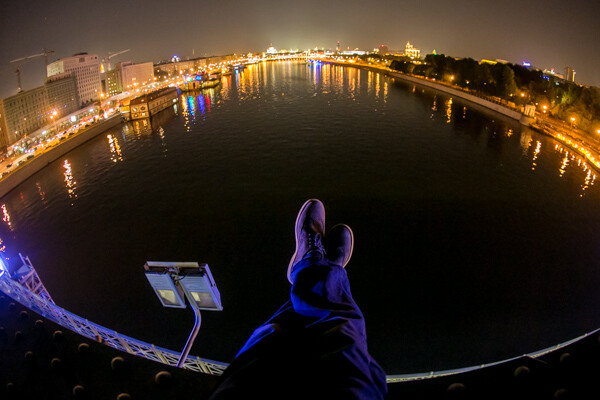
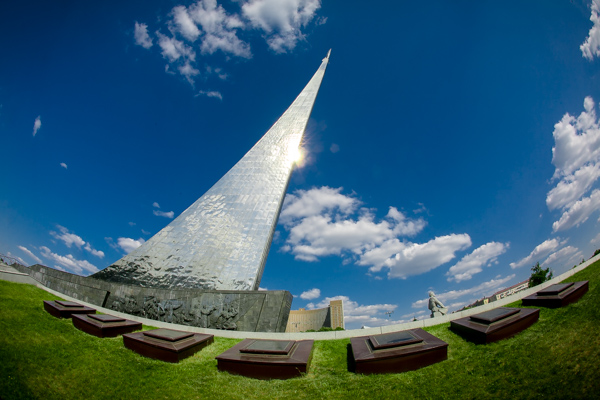
Night shot from atop a bridge in Moscow, using the Canon fisheye 15mm f/2.8

Before I say anything else, the fisheye I have in mind has an aperture of f/2.8, the 50mm has an aperture of f/1.4, and the 135 has an aperture of f/2.0. Popular, cheaper variations on these lenses would be the 24mm f/2.8, 50mm f/1.8, and the 100mm f/2.8 Macro. I’d also like to address what I imagine a popular response to this article might be: “What about the 24-105mm?” This lens is weak for a couple of reasons. The maximum aperture on this lens is f/4, which ends up being very limiting if you are trying to travel light (and going without an off camera flash).  Also, prime lenses are always superior in quality to zoom lenses. There are less moving parts and the image quality is cleaner. If you think having just one lens to cover a greater range is easier, just remember what you gain in convenience (by having one lens) you lose in quality, weight, and ability to “see” in the dark.

Each of these lenses are used for very specific reasons. Just as we wear different shoes for different purposes throughout our week, such as; sneakers for exercise, dress shoes for work, and slippers around the house – we use different lenses to convey different feelings, emotions, and to use as different tools to capture our experiences. Some lenses really are better than others for certain things. For example, portraits are best taken with lenses between 85mm and 135mm. The distortion to the face/ears is minimized and the truest proportions are found in this range.

On the other hand, you wouldn’t normally reach for a lens like this when shooting a landscape scene (there are always exceptions to every rule, and it’s fun to see what happens when you break the general guidelines). Great lenses for landscapes tend to be a bit wider, somewhere between 15mm and 50mm. I recently took only these three lenses with me on the Trans Siberian Railway from Russia through Mongolia into China. Here are MY reasons for bringing the 15mm Fisheye, 50mm f/1.4, and the Canon 135mm f/2.0 with me on this trip of a lifetime.

The Canon Fisheye 15mm f/2.8
canon fisheye 15mm

From Moscow, Russia

The Canon 15mm lens is my antidote to boring building pictures. When traveling abroad (or around your own town/city/village), interesting buildings are inevitably photographed. Oh, that old bridge with locks attached to it? Better take a picture. Oh, look at that old cathedral in the Kremlin, better take a picture. If it’s there, it must be important. Well, you can add your photo to 1.5 million other photographs right there on Flickr or Google images that look exactly like the one you just took.

What will you do to differentiate yourself? How can you take a picture that will make someone pause for more than half a second?  Ad companies are excited when someone spends 4-8 seconds looking at a photo. Can you get someone to look at one photo for that long? What would it take? For me, I decided I would never take boring, straight photos of buildings ever again. I’d either edit them in unusual ways (like creating an HDR image, or process it in very contrasted black and white), at unusual times of day, or I would attempt to photograph it differently than every other tourist before me.

canon fisheye 15mm

The subways in Moscow, Russia

Canon fisheye 15mm 2.8

Selfies are easy with the fisheye lens. That bag on my shoulder could hold my camera, three lenses, my laptop, batteries, some magazines and a book.

Shooting with a fisheye lens can be really fun, actually. Hold your camera up to your eye with a fisheye lens on, move the camera upwards and watch the horizon bend down sharply at the sides, creating a “globe” feel to your image. Tilt the camera down and watch the earth curve up like a big “U”. Buildings become warped and distorted in unusual ways, like a piece of Gaudi’s architecture. Stand in the middle of the street and point the camera straight upwards and watch the buildings on the side loom over you, like in a Dr. Seuss book.

canon fisheye 15mm

My bunkmates on the Trans Siberian Railway

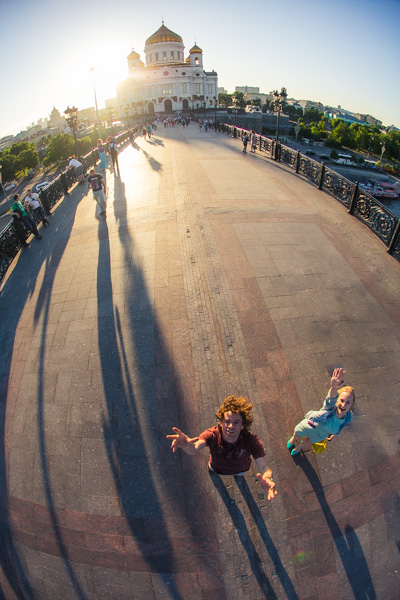
Fisheye lenses can capture an entire room, cabin of a train, or a bathroom easily. They make selfies on your DSLR incredibly easy. You can take incredible photos of the stars at night. And best of all, they are great for doing the Camera Toss. (I suppose I should recommend NOT trying this ever, anywhere). Fisheye lenses add an element of fun and whimsy to travel photos, which I find otherwise a bit boring and predictable. It’s also an incredibly light and compact lens to travel with, which is why I always bring it along on my trips now.
canon fisheye 15mm

My camera toss, where I throw my camera with a fisheye lens high up into the air to capture a scene like this

The 50mm f/1.4

The 50mm lens is a standard, go-to, all-around lens. And while the Fisheye lens brings a lot of whimsy and fun to my travel pictures, some scenes just don’t call for that. I’ve heard it said that the 50mm is the closest representation to what we see naturally with our eyes. This lens is my best choice of the three options for Canon 50mm lenses. For only about $ 300, this lens has fantastic optics and a powerful aperture. It’s made of real glass lenses unlike the cheaper, lower quality 50mm f/1.8. And it focuses fast, unlike the much more expensive 50mm f/1.2, which happens to be twice as heavy.

Canon 50mm 1.4

A garden scene in Moscow, Russia taken with the 50mm f/1.4. Such lovely bokeh!

This is a great, inconspicuous lens on a camera body because it doesn’t stick out too much like a 70-200mm would, and the quality is just superb, as I’ve already said. It is extremely lightweight, and you could honestly walk around the entire day with just this lens. What I associate most with the 50mm f/1.4 lens is street photography. I love to take that lens and get lost down side streets and alleyways. I like to take photos of strangers on the street with this lens. The focal length is just right, so it feels as though the viewer is standing there by him or herself. It captures just enough of a scene to convey what is there.

Canon 50mm 1.4

A retired math teacher from Texas on the Trans Siberian Railway

The 50mm f/1.4 is also a great lens for portraits (though I prefer the 135mm f/2.0). It produces lovely bokeh. It forces you to get up close to your subject, making the portrait more intimate. You can’t hide behind a telephoto like the 135mm or a 70-200mm. You are an arm’s distance away, and being that close sometimes shows up on the subject’s face in interesting ways.

low light with the Canon 50mm 1.4

My Mongolian host preparing milk tea in the yurt.

The last thing that I think the 50mm f/1.4 does best, is capture images in low light situations. Trying to capture dinner in a restaurant at night using candlelight only? Totally possible. That light reflecting across the river at night? 50mm does it best! Sleeping in yurts for four nights in a row? Getting that delicious yurt light from the top of the tent is easy with the 50mm.

Canon 50mm 1.4

Taken in the back alleys of Beijing, China with my 50mm lens, my favorite street photography lens.

Fun fact: of my top 200 images from the trip, 112 of them were taken with the 50mm.

The 135mm f/2.0

The granddaddy of all these lenses, the 135mm f/2.0 has a special POW feel to it. Because it is a telephoto, it pulls the background in for a nice compact feel to the images. It is a great portrait lens as it completely obliterates the background in a sea of dreamy bokeh. And one special fact about the Canon 135mm f/2.0: it has the ability to focus at a distance of 1 meter (3 feet), which makes it almost like a macro lens.
Canon 135mm 2.0

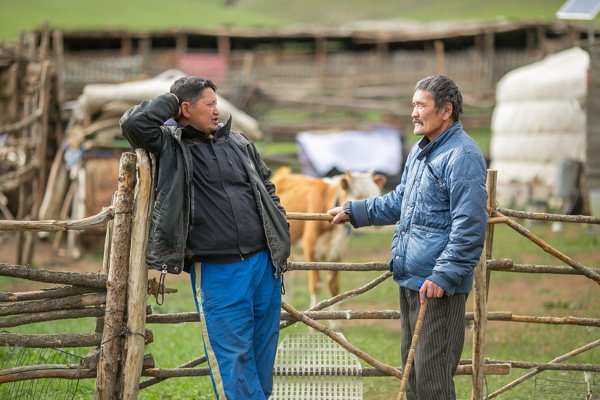
My host on the left, after we road horseback from one village to the next, in Mongolia. Taken with the 135mm f/2.0

This lens is fun for me because it has similar properties to the 70-200mm, but it weighs nearly half as much, which will save your back and shoulders after a long day of walking around. This is a fun lens to spy on people from afar, if you are afraid of the straight-on street style encounters you get with the 50mm. This is actually a really interesting lens to do landscapes with if you have enough room. Look at this side-by-side comparison of basically the two same scenes, and look what the 135mm does to the mountains and landscape in the background. It really pulls them towards you, the viewer and truly implies the scope of the scene.

Fisheye versus 135mm

The same view from the fisheye and the 135mm. Notice the mountain with the bright spot in the background of the fisheye; it’s almost non-existent. With the telephoto the mountain becomes a major player in the photo.

Canon 135mm 2.0

Taken on my way to the oldest and deepest freshwater lake in the world. Lake Baikal, in Siberia, Russia.

canon 135mm 2.0

In the Kremlin, Moscow, Russia. This is one instance where I enjoy breaking the rules and using a telephoto lens to capture an idea of a building, rather than the whole thing with a 50mm or Fisheye lens.

I hope these images and words have inspired you. It’s really fun to limit yourself to prime lenses and feel how they work (and don’t work) in various situations. Being that close to just a few lenses over a month of travel really allows you to get to know the equipment well. So now let’s see some travel photos you’ve taken with prime lenses!

The post The Only Three Lenses You Need for Travel Photography by Phillip VanNostrand appeared first on Digital Photography School.


Digital Photography School
 
Comments Off on The Only Three Lenses You Need for Travel Photography

Posted in Photography


Product Review – Dixie Grip: Rotating, handheld, or mounted hotshoe grip

29 Jul

What is it?

The Dixie Grip

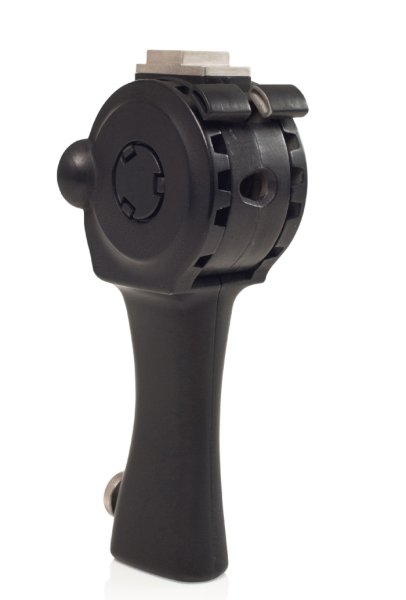
The Dixie Grip is a product that doesn’t exist yet. It’s a Kickstarter campaign product, and it fills a gap in the street portrait world that desperately needs filling – a handheld Speedlite grip.
Don’t believe there is a need for this kind of thing? Case in point: just days after trying the product out and thinking about whether I would have a need for it or not, I was walking with my mentor Payam in New York talking about photography. He was describing to me an engagement session he was shooting in Central Park. He was using a Canon Speedlite with a remote trigger, and his assistant had the flash on a monopod with a softbox mounted onto the unit. The reason for this crazy handheld setup is that having off-camera flash with a softbox is like having a portable studio wherever you go! And having an assistant hold it allows for great flexibility in movement. But there is a problem with this setup. It’s a workaround. The monopod is not an ideal piece of equipment for a Speedlite. It’s awkward, too long, and not ergonomically friendly. That’s where the Dixie Grip comes into play.

What does it do? What’s it good for?

This piece of equipment replaces the light stand with something much more flexible – your hands! Yes, you can mount the grip onto a light stand, but the best part is having the mobility and freedom of using it with your hands. As far as I know, there is no other thing out there that does that, exactly like this. And it holds an umbrella. It’s an ergonomic solution to the mobile problem of traveling light and easy. As my mentor was saying, his assistant was doing the same thing but with a monopod or a tripod, holding the whole awkward kit in their hands. That rig is unwieldy, heavy, and awkward. The Dixie Grip was created for exactly that situation, a light, perfectly sized grip for Speedlites. It’s so simple, it’s amazing it hasn’t been done before.The last part of the product which is pretty slick is that it is adjustable. You can “rotate” the head by simply squeezing these two units together and moving the Speedlite or umbrella up or down. This give you the ability to work with different angles.

How I used it

The Dixie Grip

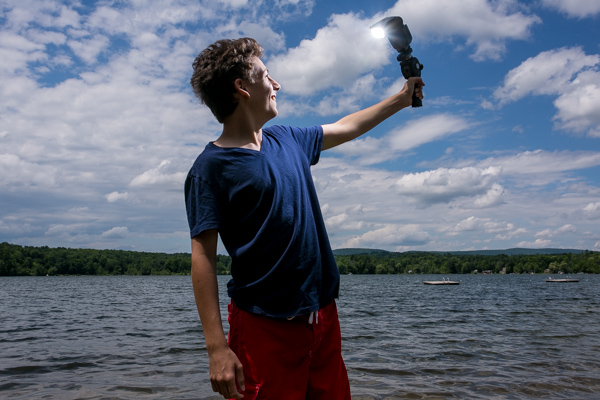
I brought the Dixie Grip with me to the lakeside with my cousin when I didn’t have an umbrella, and we played around with the equipment to get a feel for it. I made him the assistant and the model. The feel of it was easy enough to use, and since we were standing on sand we didn’t have to worry about getting sand on light stands or moving things around on uneven ground. He just got to hold the grip and it worked exactly as expected.

The Dixie Grip

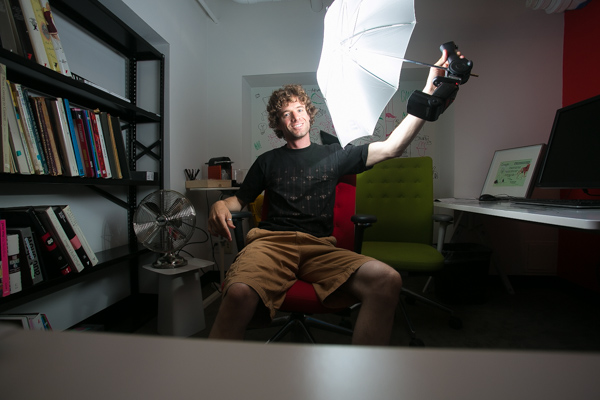
I got back to the city and was able to use the Dixie Grip with an umbrella which is how it is best used. As you can see in the photos, the light looks great, it’s smooth, and best of all, we could shoot in very tight quarters without maneuvering an awkward tripod stand or monopod.

The Dixie Grip

The Dixie Grip

Summary

In conclusion, I would definitely recommend this product if you shoot on location in different conditions. I could see this being a tremendous asset to a wedding photographer who needs to run and gun with their bride and groom for a quick formal session. I could also see this on the streets of NY with a model in the city. There is no reason not to own one of these. It’s intuitive and easy and it works.

The only drawbacks I found were when I tried using my cheap Yongnuo triggers to fit into the hotshoe. They don’t have tightening rings and just sit on whatever they are attached to. The hotshoe mount on the Dixie Grip was a bit too large for the trigger, so the trigger would slide out easy (which isn’t great when the Speedlite is attached to it). But that was an easy fix with a couple of pieces of cardboard. Or just use normal equipment like a Pocket Wizard and you’ll be fine.

Adjusting the head by squeezing those two pieces together, and moving the Speedlite, was slightly awkward. It didn’t always click into place right away. But I was also using a prototype which I know has some kinks to be smoothed out yet. I expect that component to be rock solid when it comes to production. Which is where you come in!

Kick Starter Campaign for The Dixie Grip

This is the link to the product. The campaign ends July 28th, so help put this thing on the market, and be the very first person to own a Dixie Grip.

I give the Dixie Grip product 4.5 stars out of 5.

The Dixie Grip

The post Product Review – Dixie Grip: Rotating, handheld, or mounted hotshoe grip by Phillip VanNostrand appeared first on Digital Photography School.


Digital Photography School
 
Comments Off on Product Review – Dixie Grip: Rotating, handheld, or mounted hotshoe grip

Posted in Photography


Rotating Rooms: Push a Button, Change Your House Layout

29 Jul

[ By Steph in Architecture & Houses & Residential. ]

Rotating Rooms 1

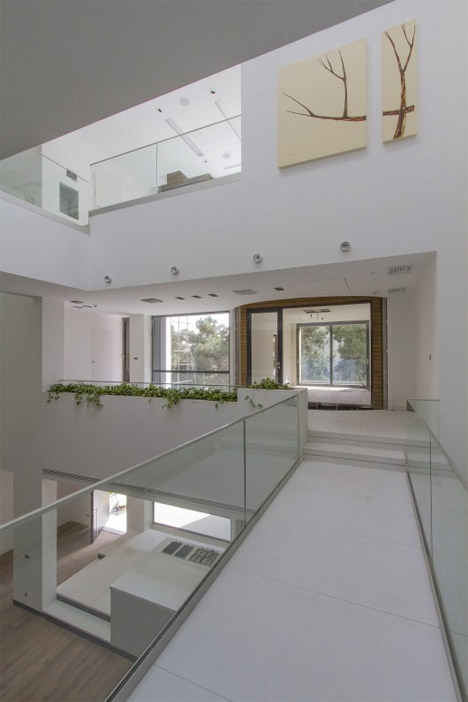
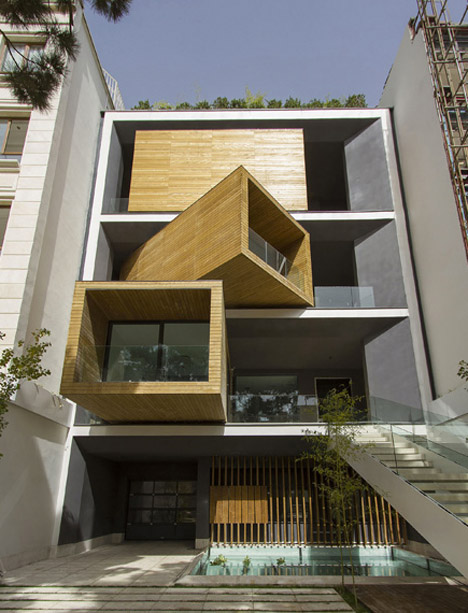
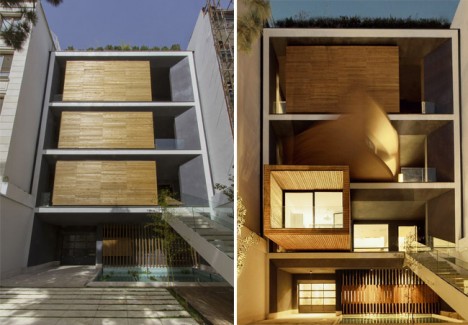
Maybe in the summer, you’d prefer cooler, shadier lodgings, and in the winter, you wish you could extend your living space out into the sun. The lucky people who live in the three-story Sharifi-Ha house in Tehran, by design firm nextoffice, can transform the layout of their house in various cool ways with the simple push of a button.
Rotating Rooms 2

Rotating Rooms 3

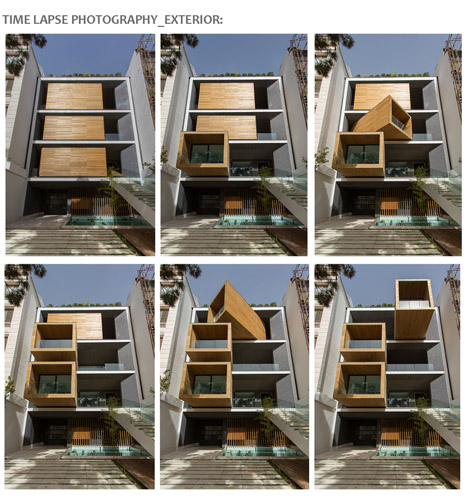
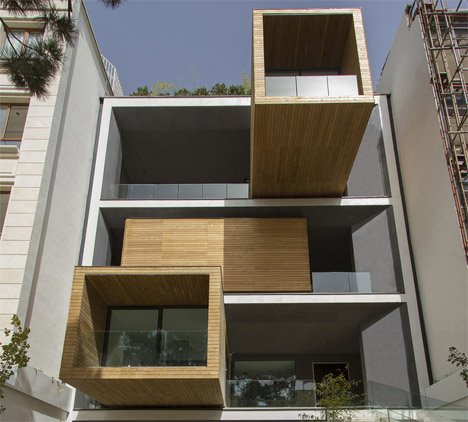
Three mobile wooden volumes containing different living spaces – a guest room, home office and dining room – can be aligned flush against the fixed part of the home, rotated so the glassed-in ends face a variety of angles, and extended in or out telescopically.

Rotating Rooms 4

Rotating Rooms 5

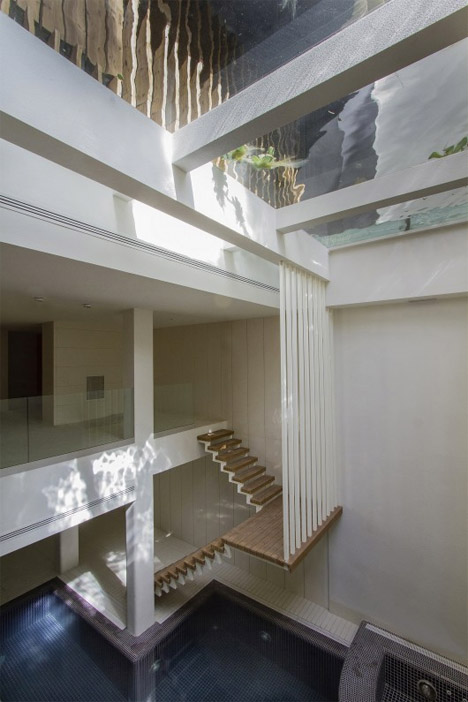
When the movable rooms are facing straight out, they open up terraces on each level, bringing more daylight into the rooms that are deeper within the home.

Rotating Rooms 6

When the occupants want more privacy and a sense of coziness, the home closes up, essentially going into either extroverted or introverted mode along with the humans who live there.

Share on Facebook


[ By Steph in Architecture & Houses & Residential. ]

[ WebUrbanist | Archives | Galleries | Privacy | TOS ]


WebUrbanist

 
Comments Off on Rotating Rooms: Push a Button, Change Your House Layout

Posted in Creativity


Pelican Imaging releases light field photos from its mobile imaging array

29 Jul
Pelican Imaging has released a set of re-focusable pictures taken with its light field camera for smartphones. Instead of placing an array of microlenses between the sensor and the main lens, Pelican uses an array of main lenses – each with a sensor behind it. Pelican’s offering is more suitable for smartphones, and their sample images allow for re-focusing, changing DOF, and shifting perspective. Click through for more details and links to the images.

Articles: Digital Photography Review (dpreview.com)

 
Comments Off on Pelican Imaging releases light field photos from its mobile imaging array

Posted in Uncategorized


You’ll Jump for the 2-in-1 Backup Battery and Power Cord

29 Jul

Extra photos for bloggers: 1, 2, 3

Your daily caffeine break is at 2pm sharp. Your phone seems to need a power boost, every time you want to shoot just a few more pix.

Since phones don’t seem to have a taste for coffee, grab a Jump Cable, a tangle free charge cord and backup battery in one.

The Jump Cable charges your phone from its backup battery, or any USB port. When you use a wall outlet or computer to charge you phone (like you already do daily) it fills up its battery at the same time.

Tuck this tiny, snack size cord pack into your pocket when you’re on the move for an extra zap of battery life when your phone decides it’s time to snooze.

Never mess with your tangly and boring old charge cable again! The Jump Cable is all you need to power through the day and night … other than coffee, of course.

Get a Bite Sized Battery Jump
$ 49 at the Photojojo Shop


© Britta for Photojojo, 2014. |
Permalink |
No comment |
Add to
del.icio.us

Post tags:


Photojojo

 
Comments Off on You’ll Jump for the 2-in-1 Backup Battery and Power Cord

Posted in Equipment