RSS
 

Archive for July, 2014

Video Tutorial How to Manage Your Lightroom Catalog While Travelling

07 Jul

Last week I shared one of Serge’s videos on some of the new features of Photoshop Creative Cloud (CC). Serge is a French photographer in Paris and was recently doing a workshop with our very own dPS writer Valerie Jardin. So I’ve approached Serge and hopefully he’ll be doing some videos just for you on dPS shortly.

Until then he has many helpful videos already, you can search through his YouTube library. I found this one and thought I’d share it as this is something that comes up a lot on my travel tours and workshops about travel photography. How to manage your Lightroom catalog while travelling or on the road. You should get some good tips from this – have a watch.

Need more Lightroom help? Try these:

  • How to Convert Photos to Black and White in Lightroom
  • Mastering Color in Lightroom using the HSL Tab
  • Save Tons of Editing Time with Lightroom Presets
  • The Triangle of Color Adjustments in Lightroom

The post Video Tutorial How to Manage Your Lightroom Catalog While Travelling by Darlene Hildebrandt appeared first on Digital Photography School.


Digital Photography School

 
Comments Off on Video Tutorial How to Manage Your Lightroom Catalog While Travelling

Posted in Photography


What is equivalence and why should I care?

07 Jul

Equivalence, at its most simple, is a way of comparing different formats (sensor sizes) on a common basis. Sounds straightforward enough, but the concept is still somewhat controversial and not always clearly understood. We thought it was about time we explained – and demonstrated – what equivalence means and what it doesn’t. Learn more

related news: Digital Photography Review (dpreview.com)

 
Comments Off on What is equivalence and why should I care?

Posted in Uncategorized


Add Felty Pockets toKeep Your Camera Bag Organized

07 Jul

Extra photos for bloggers: 1, 2, 3

You love all of your photog accessories equally, but some of the big guys like to beat up on the little ones in your camera bag.

Tuck away your phone, extra lenses, batteries and more in a warm and snuggly Photographer’s Pouch for safe keeping.

The Photographer’s Pouch is soft enough to keep your thingies safe, but strong and confident enough to fight off bullies when things get rough.

Plus it’s pretty darn handsome, made of heather gray felt with a velcro back and an elastic band to keep everything secure.

Throw a few Photographer’s Pouches in your camera bag to help keep everyone safe and happy until they can learn to get along.

Get Organized with a Photographer’s Pouch (or Three)
$ 12 at the Photojojo Shop


© Britta for Photojojo, 2014. |
Permalink |
No comment |
Add to
Keep Your Camera Bag Organized”>del.icio.us

Post tags:


Photojojo

 
Comments Off on Add Felty Pockets toKeep Your Camera Bag Organized

Posted in Equipment


Ebook Review – From Basics to Fine Art Black and White Photography

07 Jul

Ebook Review: From Basics to Fine Art

If you’re interested in black and white photography, the names Joel Tjintjelaar and Julia Anna Gospodarou will probably need no introduction. The work of both photographers has helped define, and push the boundaries of long exposure photography, a relatively new genre in the fine art world.

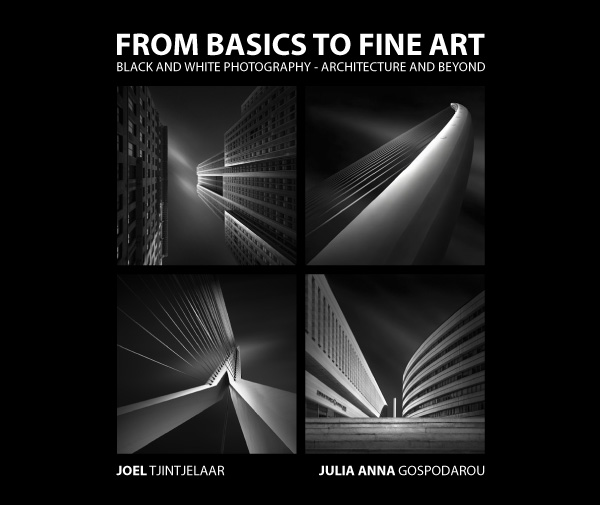
Julia and Joel have joined forces to write a new ebook called From Basics to Fine Art: Black and White Photography – Architecture and Beyond. It is principally aimed at photographers interested in using long exposure techniques to photograph buildings, with some chapters being more general and having a wider appeal.
Ebook Review: From Basics to Fine Art

The contents

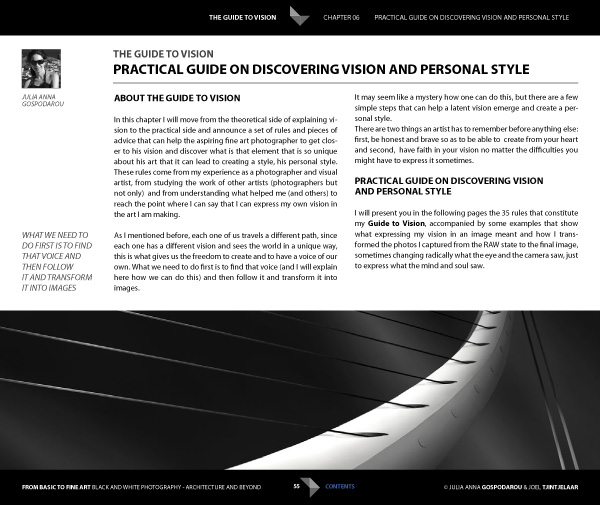
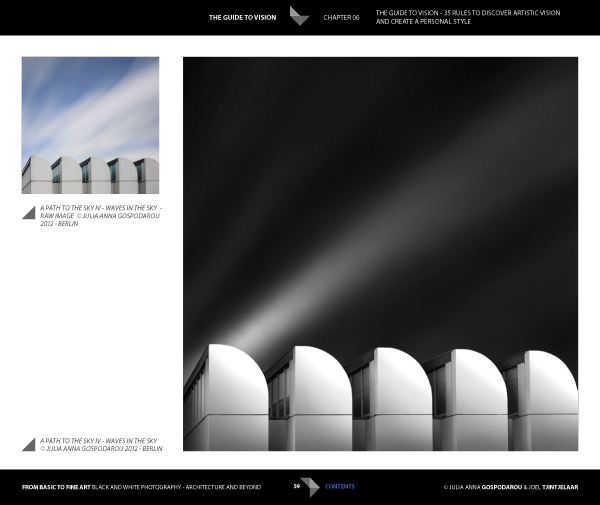
The ebook starts with personal statements from the authors exploring their interpretations of the word vision as it relates to architectural black and white photography. For me, the most interesting concept here is expressed by Joel. He talks about long exposure black and white photography as being several steps removed from reality. It is an interpretation, not a reproduction. The intent is not to capture the scene as it looked to the eye, but to present it in a way that represents the artist’s vision.

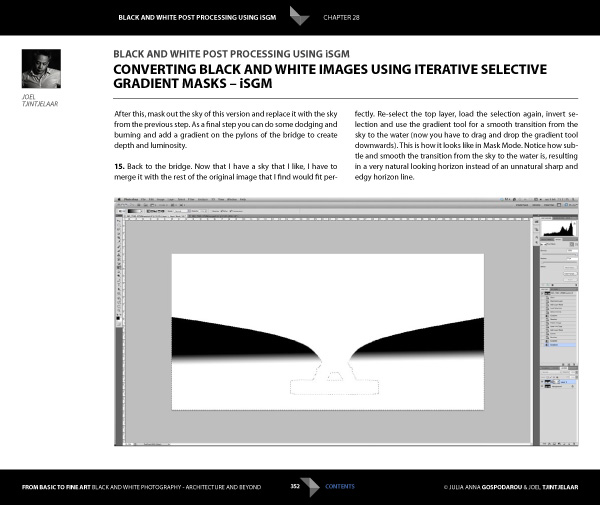
This theme is continued in the later chapters where Joel explains his post-processing techniques. Take a good look at his photos (follow the link to see some) and think about whether you could achieve similar results. The likely answer is no, because Joel has developed his processing techniques beyond the level that most photographers achieve. Be warned – Joel takes a long time to process his photos and this section of the ebook reflects that. If you’re looking for quick fixes or shortcuts you will need to look elsewhere.
Ebook Review: From Basics to Fine Art

But if you’re looking for a detailed explanation of black and white post-processing techniques that you won’t find anywhere else, then you’re in the right place. Joel explains his workflow, demonstrating how he uses Lightroom and Photoshop, along with plug-ins such as Silver Efex Pro. Most importantly, he shows you how to use what he calls Iterative Selective Gradient Masks, a technique he developed himself, to create the unique look of his black and white images.

He also explores fairly complex techniques modelled on what the calls: the 10 monochromatic commandments for good black and white photography. The idea is that you can create presence and depth in photographs by altering contrast, tonal relationships and defining edges in a way that adds volume, depth and luminosity to the subject.

Don’t be surprised if you don’t understand what this means as it’s an intricate topic that represents a fairly new way of looking at black and white photography. Joel is ahead of everybody else in this respect so you won’t find this information anywhere else. However, the examples in the ebook, and the clear presentation, makes it simple. By the way, the 10 monochromatic commandments I just mentioned are essential reading for anybody interested in black and white photography, regardless of genre.

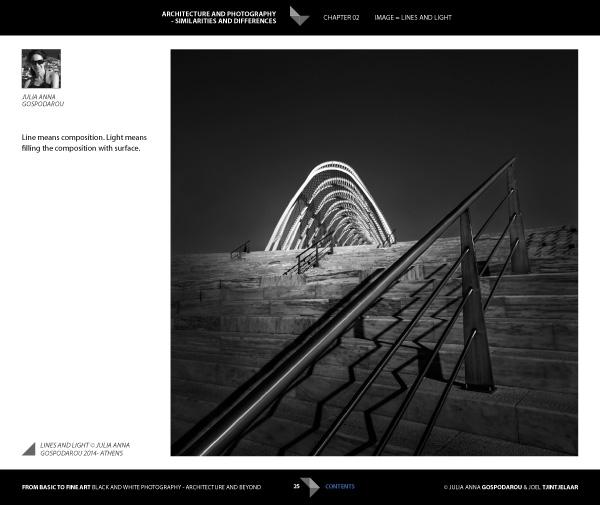
For me, the aspects covered in the previous paragraphs are the most interesting part of the ebook. There’s more, including some interesting thoughts from Julia (a trained architect) on using light to render the form and volume of buildings. She draws on techniques used in drawing and applies them to photography to get you thinking in a new way about rendering three-dimensional objects in photography.
Ebook Review: From Basics to Fine Art

There’s also an extensive chapter from Joel about long exposure photography, and the equipment (including a detailed look at neutral density filters) and techniques required to get results.

Included is more of the usual stuff that you would expect from a book about architectural photography, including composition, the practical aspects of photographing architecture and a chapter on using tilt-shift lenses. There’s also a useful chapter on pricing your work that will be of interest to professionals (or aspiring professionals).

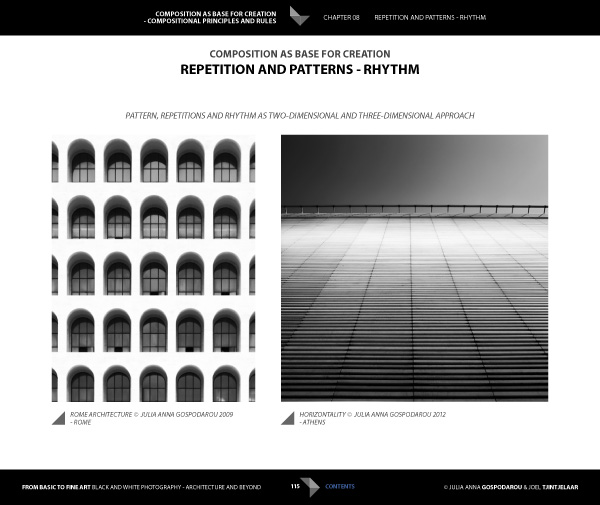
A niggle: the discussions about composition contain a heavy emphasis on rules that continues throughout the ebook. I’m always suspicious of anybody that claims a certain way of things is a rule, and I’m certainly not convinced of the veracity of using (just to give an example) Fibonacci spirals and then stating that there’s a rule attached to it. I’m a strong believer in principles, rather than rules, and I don’t think Fibonacci spirals are going to help readers improve their composition. This minor complaint aside, there is plenty of good and practical information in this ebook.
Ebook Review: From Basics to Fine Art

Conclusion

I came away from reading this ebook with mixed feelings. On one hand, you have two photographers whose work I admire immensely explaining how they create their images, from their general philosophy to the specifics of long exposures and post-processing.

If you’re ever looked at their photos and wondered how they achieved the results they do then this ebook has the answers. It’s a tremendous act of generosity and sharing. No one else seems to be doing this stuff yet, or at least doing it and teaching it, so that makes some of the content unique. If you’re a fan of either of these authors, and want to learn the secrets behind their work, then it’s a must buy.
Ebook Review: From Basics to Fine Art

My main misgiving comes from the price. It’s an expensive ebook and it would be a shame if this information reaches a limited audience because of that. I realize that expense is a relative concept; the ebook is much cheaper than taking a workshop and you will learn things here that you wouldn’t from any other source. It’s a unique resource, and ultimately the buying audience will decide whether it has a fair value.

I have to admit that what I’d really like to see is a print version of this ebook, properly designed to give precedence to the photos of both authors. Their images would be better enjoyed on the printed page, and a book has the potential to become a lasting testament to their body of work and teachings.

From Basics to Fine Art: Black and White Photography – Architecture and Beyond

You can learn more about or buy From Basics to Fine Art: Black and White Photography – Architecture and Beyond by clicking the link. The price is €49 for those of you in the Eurozone, £39 for anybody in the UK and $ US59 for the rest of the world.

The post Ebook Review – From Basics to Fine Art Black and White Photography by Andrew S. Gibson appeared first on Digital Photography School.


Digital Photography School

 
Comments Off on Ebook Review – From Basics to Fine Art Black and White Photography

Posted in Photography


The Importance of Having a Photographic Style

07 Jul

Every art form that we as humans enjoy all have a common thread: They all have differing styles that set each apart and make them unique. Photography is no different. Our art form has countless styles, forms and genres for us to explore. But why is it necessary for us to understand style? The simple answer is having a well–defined style allows Continue Reading

The post The Importance of Having a Photographic Style appeared first on Photodoto.


Photodoto

 
Comments Off on The Importance of Having a Photographic Style

Posted in Photography


Parallelwelten

07 Jul

Ein Beitrag von: Michal Karcz

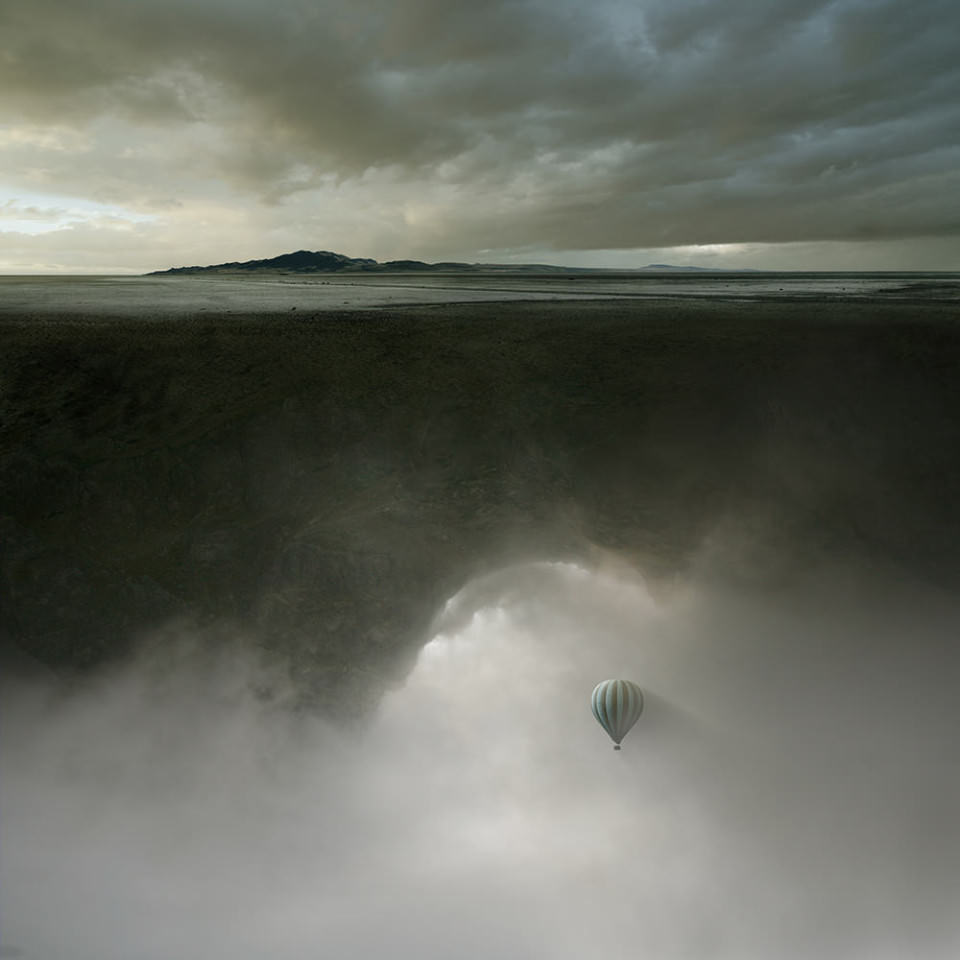
Bis 2004 war meine größte Leidenschaft die Malerei, mit der ich Visionen entwickeln konnte, die mit anderen visuellen Techniken nur schwer zu realisieren waren. Dann öffnete ich „die Tür“ zu meiner eigenen Welt, indem ich einen anderen Schlüssel benutzte: Die Fotografie und Fotomanipulation.

Ich habe immer alles selbst gemacht – was mir meine innere Stimme gesagt hat, Lernen und Fühlen, innere Bedürfnisse. Meine Inspiration für Kompositionen, Sättigung, Ausdruck und Szenen kommt eher von den Meistern der Malerei wie John Martin, Zdzis?aw Beksi?ski und Caspar David Friedrich. Meine frühe Faszination für Malerei und Fotografie wurde durch den Einsatz digitaler Werkzeuge in eine einzige kombiniert.

Digitale Fotografie und Software gaben mir die Gelegenheit, einzigartige Realitäten zu erschaffen, die man unmöglich mit herkömmlichen Dunkelkammertechniken erreichen kann. Die meisten meiner Arbeiten sind wie Reisen an Orte, die nicht existieren. Orte aus meinen Träumen, Wünschen, meiner Vorstellungskraft und meinen Ängsten. Sie sind meine Flucht aus der Realität, die für mich nicht genug ist.

Vor einem Tempel steht ein rot gewandeter Mönch mit einem Fackelstab.

Eine zerstörte Straße führt durch Sand und Felsen unter einer Gebäudekuppel.

Ein sehr spitzer Berggipfel ragt in den Himmel auf.

Eine Person steht allein am Rand einer Felsenlandschaft.

Ein metallisches Gebäude in Form einer großen Flosse, aus der blaues Licht strahlt, ragt aus einer Wüstenlandschaft auf.

Am Ende einer Steppenlandschaft steht ein Plateau, über dem eine Mondsichel am Himmel steht.

Zwei Menschen laufen auf eine Straße zu, die durch eine bis auf einige Betonrelikte leere Landschaft führt.

Eine Gestalt in violettem Umhang sitzt mit einem Stab auf einem Felsen vor einer Berglandschaft.

Ein Heißluftballon schwebt auf eine riesige schwebende Landmasse zu.

Ein Mensch steht auf einem Felsvorsprung in einer Höhle, in die Licht fällt.

Ein Mensch steht im Spalt einer riesigen Wand, hinter ihm ist Meer zu sehen.

Eine Spalte in einer Felshöhle wird von einer Brücke überspannt, über die ein Vogel fliegt.

Meine Inspiration kommt von vielen Künstlern und es macht keinen Unterschied, ob sie durchs Hören oder Sehen zu mir kommt. Ich kann aber sagen, dass Musik den größten Einfluss auf meine Arbeit hat. Sie ist ein von den Bildern in meiner Vorstellung untrennbares Element, so eine Art Musik-Illustration zur visuellen Szene.

Wohin ich auch gehe, ich nehme meine Kamera mit, denn irgendwann und irgendwo könnte dieser eine Moment sein, den ich durch meinen Vorstellungsfilter lassen möchte. Ort, Zeit, Erinnerung. Wenn ich die Realität ansehe, ist es, als würde ich durch eine Linse sehen. Ich sehe Frames, mögliche Bilder, Szenen, Kompositionen. In den meisten Fällen weiß ich schon von Anfang an, wie ich die Realität benutzen möchte.

Es ist, als würde ich die Kreativ-Maschine beim ersten Blick einschalten. Es beginnt mit einem Ausgangsfoto, zu dem ich mit Hilfe von bereits existierenden anderen Fotos eine Stimmung kreiere, dazu nehme ich noch Lichteffekte oder Farben, Gradationskurven oder tiefere Eingriffe mittels Fotomanipulation oder Collage mit anderen Elementen, die nach dem Zusammenbauen zu einem kompletten Werk werden.

Ein Berg mit rundem Fenster ragt aus dem Wasser auf, vor ihm liegt ein kleines Boot am Strand.

Hinter Felsen und von Pflanzen überwucherten Autowracks ragt ein hohes Gebäude auf.

Ein großer, dunkler Kubus mit Fenster schwebt über einem dunklen Strand, am Horizont die Lichter einer Stadt.

Auf einer Böschung aus großen Steinen liegt eine große Schlange, auf der eine Frau sitzt.

Auf einem Felsvorsprung an einem Hang sitzt eine violett gewandete Person, im Hintergrund eine Gebirgslandschaft.

An einem Abhang steht ein Haus, am Fuße des Abhangs liegt ein verrostetes Schiff, halb von Sand bedeckt.

Auf dem Gipfel eines schneebedeckten Gebirges steht eine kleine Hütte.

Auf einem Felsvorsprung in einer Steppenlandschaft hockt eine nackte Frau.

In einer Höhle steht auf einem Hügel ein kleiner Tempel, im Vordergrund fließt ein Fluss.

Über einige zerstörte Gebäude fliegt ein Flugzeug.

Aus einem See ragen hohe Felsen auf, die ein großes rundes Fenster und einen Tunnel haben. Davor fliegt ein Schwarm Vögel.

Ein hoher Felsen ragt steil aus einer Steppenlandschaft auf.

Ich versuche all das so gut wie möglich zu machen, also immer meine bestmöglichen Fähigkeiten in jedes Bild einzubringen, damit es nicht weit von meiner ersten Vision und der ursprünglichen Inspiration entfernt ist. Da jedes Bild tatsächlich existierende Orte verwendet, kann der aufmerksame Betrachter bekannte Teile in der Landschaft entdecken. Ich suche also passende Elemente für die Komposition, Orte und Momente. Sehr oft dauert das sehr lange. Ich habe noch viele Projekte, die bisher nicht fertiggestellt sind, weil einige Teile fehlen.

Wenn ich aus den Einzelteilen meine Bilder erstelle, achte ich besonders darauf, dass sie am Ende echt aussehen. Ich möchte alles so machen, dass man am Ende nicht mehr unterscheiden kann, was echt und was montiert ist. Die Farben, Schatten, das Licht, präzise Übergänge sind also wichtig.

Seit vielen Jahren haben mir viele Menschen dabei geholfen, zu verstehen, dass ich mich für den richtigen Weg der Selbstverwirklichung entschieden habe. Er hat mir die Möglichkeit gegeben, meine Welt zu zeigen und mit anderen zu teilen. Das ist es, was ich tue, was ich liebe und es ist noch lange nicht alles, was ich ausdrücken möchte. Jeden Tag entdecke ich neue Dinge in meiner Welt. Ich lade Dich in meine Welt ein.


kwerfeldein – Fotografie Magazin | Fotocommunity

 
Comments Off on Parallelwelten

Posted in Equipment


No Mirage: Unlock a Secret Pool Hidden in the Mojave Desert

07 Jul

[ By WebUrbanist in Art & Installation & Sound. ]

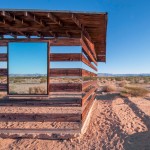
desert pool installation project

An art installation with a side of rugged adventure, the Social Pool is a project open to the public but locked and with a location only revealed via coordinates that lead visitors on a long trek to its discovery.

desert secret hidden pool

Seekers must first travel to the MAK Center for Art and Architecture in West Hollywood and retrieve one of four keys that open the pool, and will be tasked with taking one gallon water to help refill it as well. Los Angeles area travelers do not stumble upon it by accident – it is not on any road, trail or path.

social pool uncovered sand

Keys are to be returned within 24 hours, whether or not you find the secret spot and uncover the cool pool of filtered water, powered by solar panels. You cannot reserve a key in advance – you must show up and see if one is available. Uncertainty is part of the experience, like it or not.

social pool remote desert

Designed by Austrian artist Alfredo Barsugli, LAist describes it as something “meant to reflect on the lengths humans would go to in the pursuit of luxury,” but also as a good excuse to spend some time exploring an amazing desert landscape.

underground beauty resort installation

underground desert spa sand

Barsugli is not new to strange desert installations – a previous piece, the Oderfla Beauty Resort, featured a spa building semi-submerged in desert sand.

social pool art installation

It is also worth stocking up on gas, food and water and watching out for snakes, lizards and hares along the way. Hint: the pool is not close to the MAK. Its position is only given broadly to the public: somewhere in the southern Mojave Desert between Joshua Tree and Apple Valley. Images by Alfredo Barsugli and Juliet Bennett Rylah of LAist.

Share on Facebook


[ By WebUrbanist in Art & Installation & Sound. ]

[ WebUrbanist | Archives | Galleries | Privacy | TOS ]


WebUrbanist

 
Comments Off on No Mirage: Unlock a Secret Pool Hidden in the Mojave Desert

Posted in Creativity


Scattered Marbles: 10 Smashed, Bashed & Trashed Statues

06 Jul

[ By Steve in Culture & History & Travel. ]

smashed statues

As our age’s great and powerful leaders rise and fall, so do the narcissistic, now Ozymandias-like statues they raised to celebrate their fleeting triumph.

Duck, Gaddafi

smashed statue Gaddafi Libya

smashed statue Gaddafi Libya

The 2011 Libyan Revolution was characterized by the release of pent-up hatred against the country’s long-time leader, Muammar Gaddafi. As with most megalomaniacal dictators, Gaddafi diligently promulgated a cult of personality during his four decades at the helm and left the country chock-a-block with self-laudatory statues and monuments.

smashed statue Gaddafi Libya U.S fighter plane sculpture

One of the most famous/infamous was the gargantuan golden Fist Crushing a U.S. Fighter Plane sculpture once located in the elite Bab al-Azizia compound in Tripoli. This sculpture and many others depicting Gaddafi personally were damaged, defaced and destroyed in the wake of Gaddafi’s downfall.

Falling Star

smashed statue China Monroe

smashed statue China Monroe

smashed statue China Monroe

smashed statue China Monroe

Even non-political leaders deemed worthy of statutory immortality find themselves down in the dumps… in this case, a trash dump in the Chinese city of Guigang. Once the tallest Marilyn Monroe statue in the world, the 8.18-meter (26.84-ft) tall painted stainless steel statue had stood proudly within the grounds of a local business center since the end of 2013. Monroe’s reign lasted a mere six months, however, and in June of 2014 the statue was unceremoniously knocked off its footings, chained to a flatbed truck, and hauled to the city dump.

Lenin Towers

smashed statue Lenin Ukraine

smashed statues Lenin Ukraine

smashed Lenin statues Ukraine 2014

Ukraine not weak, nor are the bolts fastening hundreds of statues of Lenin to their plinths so what happened when an irresistible force met these unmovable objects? Hundreds of Lenins leaned, then fell, all across Ukraine’s vast territory in early 2014 as tensions between pro-EU and pro-Russian activists reached a fever pitch. What may have been most surprising was that hundreds of statues of Lenin still stood in Ukraine in early 2014!

Trash Mountain Or Bust

smashed mannequin Trash Mountain New Delhi

New Delhi, India produces 9,200 tons of waste daily and with no effective plan even in the discussion stage, that amount is expected to double by 2024. So, where does it all go? Much ends up in “Trash Mountain”, a 300 – 400m (about 1,150 ft) long and 40m (130 ft) high dynamic dump in the district of Ghazipur. Anything and everything from dinner scraps to the shattered mannequin above ends up on Trash Mountain, there to be picked over by crows, wild dogs, innumerable flies and an army of human “rag pickers”.

Next Page – Click Below to Read More:
Scattered Marbles 10 Smashed Bashed Trashed Statues

Share on Facebook


[ By Steve in Culture & History & Travel. ]

[ WebUrbanist | Archives | Galleries | Privacy | TOS ]


WebUrbanist

 
Comments Off on Scattered Marbles: 10 Smashed, Bashed & Trashed Statues

Posted in Creativity


6. Juli 2014

06 Jul

Ein Beitrag von: Alexander

Sonnenlicht scheint grell durch ein Fenster mit Vorhängen auf einem Spitzboden.


kwerfeldein – Fotografie Magazin | Fotocommunity

 
Comments Off on 6. Juli 2014

Posted in Equipment


Horst’s creative processes revealed in London exhibition

06 Jul

Horst’s contact sheets, sketches and inspiration are set to go on show at an exhibition planned by London’s Victoria and Albert museum for the end of this year. Horst: Photographer of Style is described by the museum as a ‘definitive retrospective’ of the German photographer’s work, and will cover a range of styles and subjects taken between his move to Paris in the 1930s and the end of his life in 1999. Read more

related news: Digital Photography Review (dpreview.com)

 
Comments Off on Horst’s creative processes revealed in London exhibition

Posted in Uncategorized