RSS
 

Archive for June, 2014

How to See in Black and White

25 Jun
Andrew’s book Mastering Lightroom: Book Three – Black & White is on sale now at Snapndeals for 40% off. This is a limited time offer, so grab it while it’s available.
 
How to see in black and white

In my previous article I showed you how to convert colour photos to black and white in Lightroom. However, no matter which technique you use, good monochrome photography starts in your mind. If you can learn to see in black and white, you can create beautiful monochrome images. Here are some tips to get you started.

Understand the appeal of Black and White

Colour photography is very literal. It depicts the world as it really is. Black and white, on the other hand, gives us a new way of seeing. Removing colour takes us a step away from reality and towards creating an artistic interpretation. Shape, form, tone and texture are revealed to the eye, rather than overpowered by colour.

But the appeal of black and white photography goes deeper than that. The monochrome image, at its best, is beautiful. It’s art. It captures the beauty and soul of the subject. It moves people. It’s powerful and it endures.

Learn to see tonal contrast

Tonal contrast happens when there is a clear difference in brightness between your subject and the background. Here are two examples.

How to see in black and white

The photo on the left shows a white sticker pasted on a door. There is tonal contrast between the light and dark tones. In this image you find a light tone (the sticker) surrounded by dark tones (the door), a type of tonal contrast that works very effectively in Black and White.

The photo on the right shows a dark statue against a near white background. This is the opposite type of tonal contrast, where a dark toned subject is shown against a light background.

Tonal contrast is the basis of many successful black and white photos. Images that make good use of tonal contrast convert to monochrome with little effort. Let’s take a look at a couple of practical examples.

How to see in black and white

In this portrait I positioned the model against a dark background to take advantage of the difference in brightness between the light falling on her and the light falling on the trees behind her (which were in shade). If you want to create powerful black and white portraits, this style will serve you well.

How to see in black and white

Here I took advantage of the difference in brightness between the twigs in the home-made broom and the dark stones. You can see the same principle in action as in the portrait, a light toned subject against a dark toned background. I knew this would make a strong black and white image because it contains two things that look good in monochrome: texture and tonal contrast.

You can learn more about tonal contrast in my article Improving Composition with Tonal Contrast.

Simplicity and negative space

All the photos I’ve shown you so far have two more things in common. One is that the composition is very simple. I’ve deliberately moved in close to the subject and framed it in such a way to eliminate distracting elements. An added benefit is that the tonal contrast becomes much stronger when the composition is simplified.

Here’s another example.

How to see in black and white

I moved in close to crop everything but the vendor’s hand and the Chairman Mao pocket watch in this photo taken in an antique market in Shanghai. The simple composition emphasises the texture of the watch and hand as well as the difference in brightness between them and the background.

Negative space is the area surrounding your subject. It is negative space if it doesn’t contain much detail. In black and white, it would be an area of white, black or grey that creates a kind of frame for your subject, giving it room to breathe within the composition.

How to see in black and white

This portrait is a good example of using negative space. The model’s face (a light tone) is surrounded by an area of dark space that contains just enough detail for you to see what it is (his shirt and the wall behind him). In this portrait you can see the principles of tonal contrast, negative space and simplicity of composition working in harmony together.

My article Composition and Negative Space goes into this topic in more detail.

Monochrome previews

How to see in black and white

So far we’ve looked at some of the elements that contribute to strong Black and White images, but that may not be a great help when you’re faced with a colourful subject and the colours are so strong that you can’t visualize how it will turn out in Black and white. Don’t worry if this happens to you – it takes time and practise to learn to see in monochrome.

One thing you can do to help you visualize the subject in Black and White is switch to your camera’s monochrome mode. The key is to select the Raw format, so that the image is recorded in full 12 or 14 bit colour (essential for good Black and White conversions).

But when you play back your images on the camera’s LCD screen, they will be presented in Black and White. If you have a camera with an electronic viewfinder it may even display the scene in black and white as you look through it. This helps you see how the colours in the scene translate to the grey tones that make up a monochrome image. If the image is a little flat, which will happen if you’re not shooting in bright sunlight, increase the contrast to add some pop.

My article Mastering Monochrome Mode goes into this in more detail.

Over to you

Hopefully these tips will help you see in black and white and create better monochrome images. Do you have any tips for seeing in black and white? Please add them in the comments below.


Mastering Lightroom: Book Three – Black & White ebook coverMastering Lightroom: Book Three – Black and White

Andrew’s book Mastering Lightroom: Book Three – Black & White is on sale now at Snapndeals for 40% off. This is a limited time offer, so grab it while it’s available.

The post How to See in Black and White by Andrew S. Gibson appeared first on Digital Photography School.


Digital Photography School

 
Comments Off on How to See in Black and White

Posted in Photography


Sunrise at the Yellowstone by Aleksey Khmyz

25 Jun

My wife and I had the opportunity to visit Yellowstone Park last fall. It was a wonderful experience and I highly recommend visiting if you have the chance. Primarily, I am a wedding and portrait photographer based out of the Buffalo, NY area, but it’s always nice to take a couple images of wildlife and […]

The post Sunrise at the Yellowstone by Aleksey Khmyz appeared first on dslrBlog.

dslrBlog

 
Comments Off on Sunrise at the Yellowstone by Aleksey Khmyz

Posted in Photography


Venedig – Reflexion in Langzeitbelichtungen

25 Jun

Ein Beitrag von: Dennis Wehrmann

Als die Entscheidung der diesjährigen Städtereise im Mai 2014 auf Venedig fiel, wurde mir – für eine bleibende Erinnerung aus fotografischer Perspektive – schnell bewusst, dass ich mir einen anderen Weg als den der „normalen“ Reisefotografie wünsche.

Auf der Suche nach neuen Ideen durchstreifte ich das Internet nach Venedig-Bildern. Aufgrund der Fülle und der immer gleichen Motive war ich der Resignation nahe und mir kam die Idee, Langzeitbelichtungen mit Graufiltern und Nachtaufnahmen zu versuchen.

Gracht mit Haus, Laterne und Booten bei Nacht.

Gerade diese Belichtungstechnik hat es mir seit einiger Zeit für Architektur- und Wasseraufnahmen angetan. Der Akt der Langzeitbelichtung ist während der Aufnahme eher technisch und nur bedingt kreativ. Der kreative Prozess ist der eigentlichen Aufnahme, in Form exakter Planung und eines exakten Entwurfs des Bildes im Kopf, vorgelagert. Während der Aufnahme geht es primär um die Umsetzung dieses inneren Bildes.

Die Umgebung am Aufnahmeort wirkt bei diesen Aufnahmen sehr stark auf mich – Emotionen dieser Momente werden zu Bestandteilen des Bildes. Meine Umgebung und die Stimmung nehme ich infolge langer Belichtungszeiten besonders intensiv war. Jedes kleine Detail der Szenerie und dessen Veränderung rückt in den Vordergrund, fordert Aufmerksamkeit und rückt sich als eventueller Bestandteil des endgültigen Bildes in den Aufnahmeausschnitt.

Meine Erinnerungen an bestimmte Orte und Bilder werden durch diese Art der Fotografie besonders intensiv, regelrechte Geschichten, ganze Spaziergänge, Begegnungen mit Menschen und eben auch Städte wie Venedig manifestieren sich so in meinem Gehirn. Es ist meine Art, anhand eines Bildes ein Video der Erinnerung nur für mich zu drehen.

Blick unter einer Brücke hindurch.

ISO 100, 44 mm, f/8, 97 Sek., schwarzweiß, Nachtaufnahme ohne Filter.

Mit der Entscheidung der Langzeitbelichtung rückte ein neues Problem in den Vordergrund: Es wird ein voluminöses Equipment benötigt – und diese Reise war schließlich als Kurzurlaub und nicht als reine Fotoreise geplant.

Bei näherer Betrachtung erwies sich die Beschränkung auf das minimalistisch Notwendige konsequent – so konnte ich mich ganz auf die Aufnahme konzentrieren und mir drohte kein Zusammenbruch aufgrund von Schwergepäck in den Gassen Venedigs. Ich entschied mich für einen Body (Nikon D610)* und die Linsen Nikon 14 – 24 mm Weitwinkel* – sowie das Sigma 24 – 70 mm*, zwei Schraubgraufilter 10 stop* und ND stop und ein kleines Reisestativ nebst Kabelfernauslöser.

Natürlich ist ein solides Equipment Voraussetzung für qualitativ gute Langzeitbelichtungen, viel mehr aber noch die Idee und deren konsequente Umsetzung.

Farbaufnahme einer Gracht mit Häusern und Gondeln.

Als Tourist in einer fremden Stadt ist es für mich eine bewährte Strategie, die Umgebung zumindest am ersten Tag ohne Kamera auf mich wirken zu lassen und mich ein wenig treiben zu lassen. Dieses beherzigend zogen wir nach der Ankunft in unserem Hotel los, um das einzigartige Venedig zu entdecken. Natürlich ist es vermessen zu glauben, diese Schönheit für sich allein gepachtet zu haben – doch die Realität überrumpelte uns gelinde gesagt heftig.

Das touristische Zentrum Venedigs mit den bekannten Sehenswürdigkeiten Rialto-Brücke oder Markusplatz laden eher zum Schieben und „Geschoben-werden“ als zum Flanieren ein, kein Gedanke an ein Foto, geschweige denn eine Langzeitbelichtung. Dieser Zustand hält vom Morgen mit dem Eintreffen der ersten Tagestouristen, bis zum Abend (mindestens 20 Uhr) stetig an, eine entspannte Atmosphäre tritt erst danach ein. Damit waren Aufnahmen zur blauen Stunde von meinem Plan gestrichen.

Auch das Licht und die Wetterbedingungen waren anders als erhofft. Der Himmel war bedeckt von sich sehr langsam bewegenden dicken Wolken, die durchaus auch heftigen Regen über Venedig ergossen.

Gracht mit Haus, Laterne und Booten bei Nacht.

Als sich der Ankunftstag zum ersten typisch venezianischen Abend-Weißwein neigte, hatte ich vier Lokations im Kopf – Rialto-Brücke, Markusplatz, Accademia-Brücke sowie experimentell Fondamenta Zattere Ai Gesuati.

Am kommenden Tag hoffte ich auf gutes Wetter und Licht zum Sonnenaufgang, denn so früh sollten keine Menschenmassen auf den Beinen sein. Die geplante Location war die Rialto-Brücke. Der Wecker klingelte um 5:20 Uhr, ein kurzer Blick aus unserem Fensterschacht gen Himmel war vielversprechend und so machte ich mich im Halbdunkel auf den halbstündigen Weg durch die engen, verlassenen Gassen Venedigs, die ihrem Ruf in nichts nachstehen und einen morbiden Charme versprühen. Langsam begann ich, mich wohlzufühlen und das morgendlich friedliche Venedig in mich aufzunehmen, die Vorstellung des Bildes von der Rialto-Brücke kam dabei ganz von allein.

Ein Kanal mit kleinen Booten an den Seiten.

Rialto-Brücke Canal Grande, ISO 100, f/13, 98 Sek., 14 mm, Graufilter 10 stop

An der menschenleeren Location angekommen, begann ich, den mir vorschwebenden Bildausschnitt anhand von Testbildern zu erarbeiten, erst dann stellte ich mein Stativ auf. Auch, wenn mich etwa anderthalb Stunden gutes Licht während des Sonnenaufgangs erwarteten – diese Zeit ist bei Langzeitbelichtungen schnell verflogen.

Das frühe Morgenlicht zeigte deutliche Schatten und Reflexionen im Wasser und der Canal Grande ist auch zu dieser Stunde (6.15 Uhr) schon befahren, die Boote führten immer wieder zu unerwünschten Streifen im Bild. Außerdem gab es einen regen Bootslieferverkehr im unteren linken Bildrand. Im Endeffekt gelang mir innerhalb von einer Stunde genau ein Foto meiner Vorstellung ohne störende Einflussfaktoren mit 14 mm. Erst dann wagte ich eine zweite Aufnahme mit 24 mm Brennweite.

Ein Kanal mit kleinen Booten an den Seiten.

Rialto-Brücke Canal Grande, ISO 100, 24 mm, f/8, 51 Sek., Graufilter 10 stop

24 mm ist im Laufe der Zeit zu meiner Lieblingsperspektive geworden – nicht zuletzt wegen des Objektives mit 24 – 70 mm – irgendwie nehme ich meine Umwelt in 24 mm wahr. Auch für dieses Bild forderten mich die Schiffe auf dem Kanal, dennoch reichte es für eine Aufnahme, auf der ein Vaporetto weitestgehend unbeweglich am Anleger verblieb.

Grundsätzlich bevorzuge ich für meine Langzeitaufnahmen schwarzweiß und dennoch versuchte ich, die Aufnahme auch als Farbversion bestmöglich aufzunehmen, denn nur ein gutes Farbfoto ist die Ausgangsbasis für ein gutes Schwarzweißbild. Manchmal fällt mir die Entscheidung zwischen dem Farb- und dem Schwarzweißbild schwer, wie hier bei der Rialto-Brücke.

Ein Kanal mit kleinen Booten an den Seiten in Farbe.

Nach anderthalb Stunden Fotografieren machte ich mich mit zwei Bildern im Gepäck beseelt auf den Rückweg. Beim Betrachten dieser Bilder erinnere ich mich immer wieder gern an die leeren Gassen auf meinem morgendlichen Spaziergang, die Ruhe und Schönheit an der Rialto-Brücke und nicht zuletzt an die Begegnungen und Gespräche mit den wenigen anderen Fotografen, die ich bei diesen Aufnahmen kennengelernt habe.

Dank des überaus guten Wetters an diesem Tag versuchte ich mich am Nachmittag an einer Aufnahme an der Fondamenta Zattere Ai Gesuati. Ich wählte eine Belichtung von 5 Minuten, nach 275 Sekunden treten immer wieder undefinierbare Lichtreflexionen auf, wobei eine längere Belichtung bei wolkenlosem Himmel keine signifikante Verbesserung des Bildes bringt.

Holzstege im Wasser.

Fondamenta Zattere Ai Gesuati, ISO 100, 24 mm, f/8, 275 Sek., Graufilter 16 stop

Als Ausgangsbasis wähle ich, wenn möglich, die von Joel Tjintjelaar vorgestellte Regel f/8 und 5 Minuten; zum einen infolge der maximalen Abbildungsleistung der meisten Objektive bei f/8 und zum anderen der wundervollen Wolkenverläufe und Weichzeichnung des Wassers bei einer Belichtung von 5 Minuten.

Wie jede Regel sollte diese immer nur als Anhaltspunkt dienen. Beinhaltet das Motiv keine Wolken oder Wasser, so führt eine längere Belichtung nicht zwingend zu einem besseren Ergebnis. Ist zwar Wasser vorhanden, dafür aber keine Wolken, liegt der Fokus – wie hier – auf der Gestaltung des Wassers.

Während der Aufnahme konzentriere ich mich überwiegend auf die drei Farbkanal-Histogramme (rot, grün und blau) und versuche, diese möglichst über den gesamten Bereich auszubalancieren. Je nach gegebenen Lichtverhältnissen ist dies nicht immer möglich.

Zu vermeiden ist das Ausbrennen der hellen Bereiche, ersichtlich durch ein Ausbrechen der Histogramme am rechten Rand. Brechen die dunklen Bereiche etwas über den linken Histogrammbereich aus, ist dies in der Regel unproblematisch, lassen sie sich doch in der Nachbearbeitung leicht wiederherstellen.

Sicher kann dem Bild noch eine Bearbeitung anhand von Masken in Photoshop zuträglich sein. Wie bereits erwähnt, bin ich zur Zeit eher minimalistisch aufgestellt, dies bezieht sich auch auf die Nachbearbeitung. Diese ist, wenn möglich, begrenzt auf Lightroom und Nik Filter, speziell Silver Efex Pro. Die Grundlagen der Bildbearbeitung hat Martin Schmidt bereits in seinem Artikel „Architekturfotografie in schwarzweiß“ beschrieben.

Eine Hausfassade in der Nacht, die sich im Wasser spiegelt.

ISO 100, 70 mm, f/8, 30 Sek., Nachtaufnahme ohne Filter

Der folgende Tag war von intensiven und ausgiebigen Regenschauern geprägt. Als ich am späten Abend das Fotografieren für diesen Tag bereits innerlich abgeschrieben hatte, klarte es plötzlich auf. Diese Gelegenheit nutzte ich, um mich ein wenig an den Häuserspiegelungen im Kanal vor unserem Hotel zu versuchen. Die Spiegelungen waren dank der noch nassen Hausfassaden und des von den Straßenlaternen dominierten Lichts besonders intensiv.

Dank der bereits fortgeschrittenen Stunde und einer dichten Wolkendecke war es sehr dunkel, so dass die Lichtverhältnisse längere Belichtungszeiten ohne Graufilter zuließen. Allerdings begrenzten die Straßenlaternen als Lichtquelle die Belichtungszeit.

Gracht in der Nacht mit Laternenschein und Spiegelung im Wasser.

ISO 100, 44 mm, f/8, 94 Sek., Nachtaufnahme ohne Filter

Nachdem wir uns in Venedig bereits bestens zurechtfinden konnten und uns in das ortsübliche Leben der Venezianer abseits der touristischen Hochgebiete integriert hatten – gutes, erschwingliches italienisches Essen, Spritz oder Weißwein mit dazugehörigen Chips in einem kleinen Café auf einem belebten Marktplatz, die Umgebung und das Treiben beobachtend – nahte auch schon der letzte Tag in dieser uns bereits sehr ans Herz gewachsenen, außergewöhnlichen Stadt.

So hoffte ich am kommenden Morgen erneut auf gutes Wetter, um die noch geplanten Locations (Markusplatz und Accademia-Brücke) bei Sonnenaufgang fotografieren zu können.

Ein großer Platz links und rechts von Häusern umrahmt.

Piazza San Marco, ISO 100, 14 mm, f/7.1, 155 Sek., Graufilter 10 stop

Ich hatte Glück und machte mich erneut um 5:30 Uhr auf den Weg. Kaum zu glauben, aber auch um kurz nach sechs am Morgen waren bereits die ersten vereinzelten Touristen auf dem Markusplatz. Also konzentrierte ich mich darauf, die Belichtung in einem menschenleeren Moment vorzunehmen. Leider war ich beim Weitwinkelobjektiv auf einen 10 stop Filter und somit eine kürzere Belichtungszeit beschränkt, obwohl ich die Belichtung gern auf 5 Minuten verlängert hätte. Allerdings ist mir der Bildausschnitt bei 24mm zu beschränkt und so entschied ich mich für die kürzere Belichtungszeit.

Ein großer Platz umrahmt von Häusern.

Piazza San Marco, ISO 100, 14 mm, f/8, 132 Sek., Graufilter 10 stop

Wie bereits erwartet, benötigte ich für die beiden Aufnahmen am Markusplatz mehr Zeit und so eilte ich danach im Dauerlauf zu meiner letzten Wunsch-Location, der Accademia-Brücke, um die Szenerie noch bei grandiosem Sonnenaufgangslicht aufnehmen zu können.

Auf der Holzbrücke angekommen, baute ich mein für diese Zwecke etwas wackeliges Stativ auf, das ich wegen des Brückengeländers ganz ausziehen musste. Hin und wieder lief ein Jogger über die Brücke und versetzte das Holz in leichte Schwingungen. Zum Glück waren meine Befürchtungen der Verwacklung aufgrund der langen Belichtungzeit unbegründet und mit der ersten Schätzung von Belichtung und Aufnahmezeit entstand dieses Bild.

Gracht unter dramatischem Himmel.

Accademia-Brücke, Canal Grande, Santa Maria Della Salute, ISO 100, 35 mm, f/8, 309 Sek., schwarzweiß, Graufilter 16 stop

Alle nachfolgenden Aufnahmen sind infolge der sich stetig verändernden Lichtbedingungen und der den Kanal kreuzenden Boote wesentlich schlechter. Gerade bei Langzeitbelichtungen kommt es auf das richtige Timing und auch Glück an. An dieser Location traf ich einen amerikanischen Fotografen, der sich ausschließlich auf Langzeitbelichtungen spezialisiert hat und schmunzelnd mein Equipment belächelte.

Dennoch gab er mir den genialen Tipp, dass auch mit begrenztem Budget jeder Effekt darstellbar ist. So kann man zum Beispiel bei zu geringer Filterstärke die Belichtungszeit durch mehrmaliges kurzes Vorhalten einer Mütze vor das Objektiv verlängern, so wie es beim Lightpainting gang und gäbe ist. Auch das „Dodge and Burn“ der Nachbearbeitung lässt sich bei der Aufnahme bereits sehr effektiv einsetzen: Zu diesem Zweck fährt man mit der flachen Hand vor dem Objektiv mehrfach kurz über die auszubrennen drohenden Bildelemente, um diese zu verdunkeln.

Bei diesem Bild wäre der obere linke Bereich, in dem die Sonne durchscheint, dafür geeignet – leider erfahre ich von dieser Technik erst nach der Aufnahme.

Gracht unter dramatischem Himmel in Farbe.

Während ich mich mit meinem Equipment bereits von der Brücke zum Hotel aufmachen wollte, entdeckte ich aus dem Augenwinkel am Fuße der Brücke diese Szenerie und konnte nicht anders, als das Stativ erneut aufzustellen, um in dieser letzten Aufnahme die intensiven Spiegelungen auf dem Canal Grande als Abschluss einer tollen Städtereise festzuhalten.

Gracht, in der sich die Häuser und der Himmel spiegeln.

Accademia-Brücke, Canal Grande, ISO 100, 24 mm, f/8, 109 Sek., Graufilter 10 stop

Auf dem Rückweg ins Hotel – die bevorstehende Abreise im Blick – stellte ich mit gewisser Wehmut fest: Venedig ist mehr als eine Reise wert. Insbesondere, um das italienische Flair, das Alltagsleben und auch die Architektur abseits der bekannten Touristenhighlights zu erleben und fotografisch festzuhalten. Ich kann nur jedem eine Reise in diese wunderbare Stadt außerhalb der Saison ans Herz legen – es gibt so viel Wunderbares zu entdecken.

* Das ist ein Affiliate-Link zu Amazon. Wenn Ihr darüber etwas bestellt, erhält kwerfeldein eine kleine Provision, Ihr bezahlt aber keinen Cent mehr.


kwerfeldein – Fotografie Magazin | Fotocommunity

 
Comments Off on Venedig – Reflexion in Langzeitbelichtungen

Posted in Equipment


Den Alltag lebendig machen

25 Jun

Ein Beitrag von: supajug@yahoo.fr

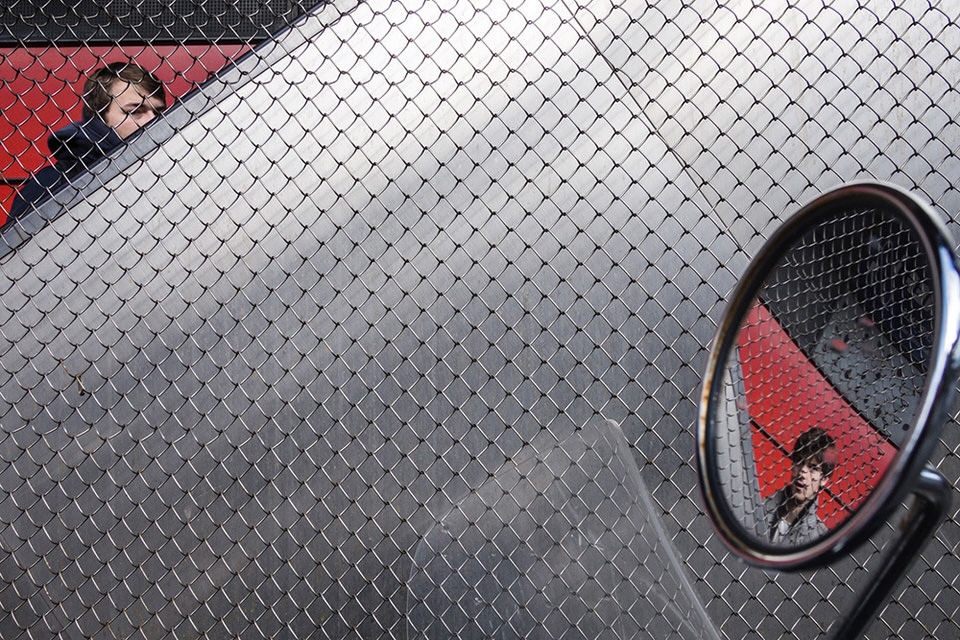
Julien Legrand ist Straßenfotograf und Teil des renommierten Kollektives Street Photographers. Erste Bilder im Netz finden sich auf Flickr aus dem Jahre 2009 und schon da lässt sich sein Können erahnen, das sich heute in voller Farbenpracht bestaunen lässt.

Es klingt wie ein Klischee, wenn ich vom Staunen spreche, doch ich meine das wirklich. Zig mal habe ich mir die Bilder des Franzosen angesehen und bin jedes Mal wieder baff, was der Junge fotografisch auf die Beine stellt.

Legrand wagt den Sprung ins Komplexe, jedoch ohne sich in vewirrend abgedrehten Bildarchitekturen zu verlieren. Und, das ist wohl entscheidend bei Legrand, ohne jemals einseitig zu werden. Nein, er greift auf alles zu, was der Moment erfordert: Farbparallelen, spannende Stukturüberlagerungen, Juxtapositionen und das entscheidende Quäntchen Humor, der nur ab und an hervorblitzt.

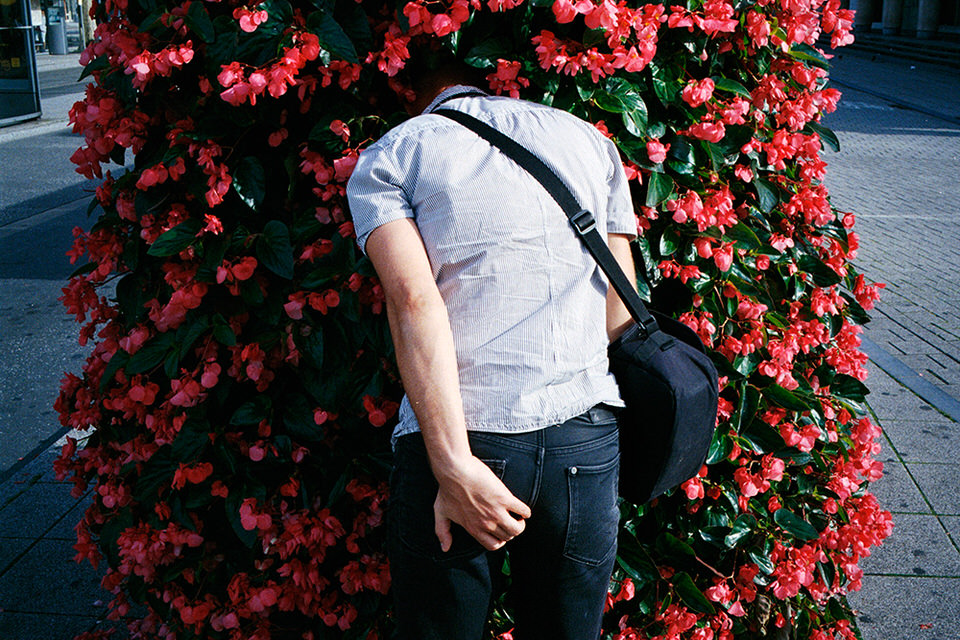
Ein Mann guckt in einen Strauch hinein.

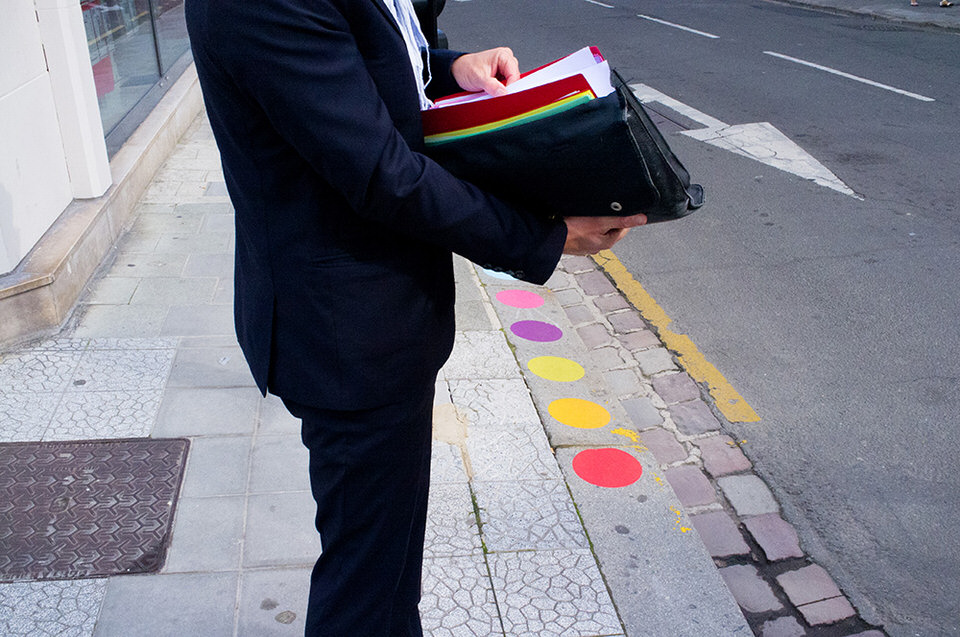
Ein Mann schaut in seine bunten Akten, am Boden mehrere bunte Kreise.

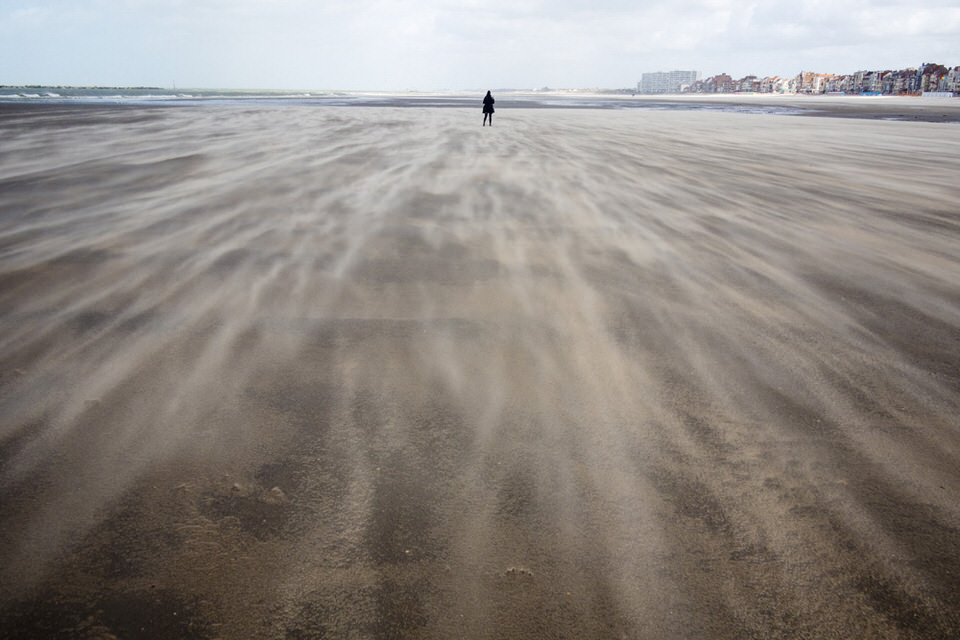
Blick auf eine in der Ferne stehende Person am Meer.

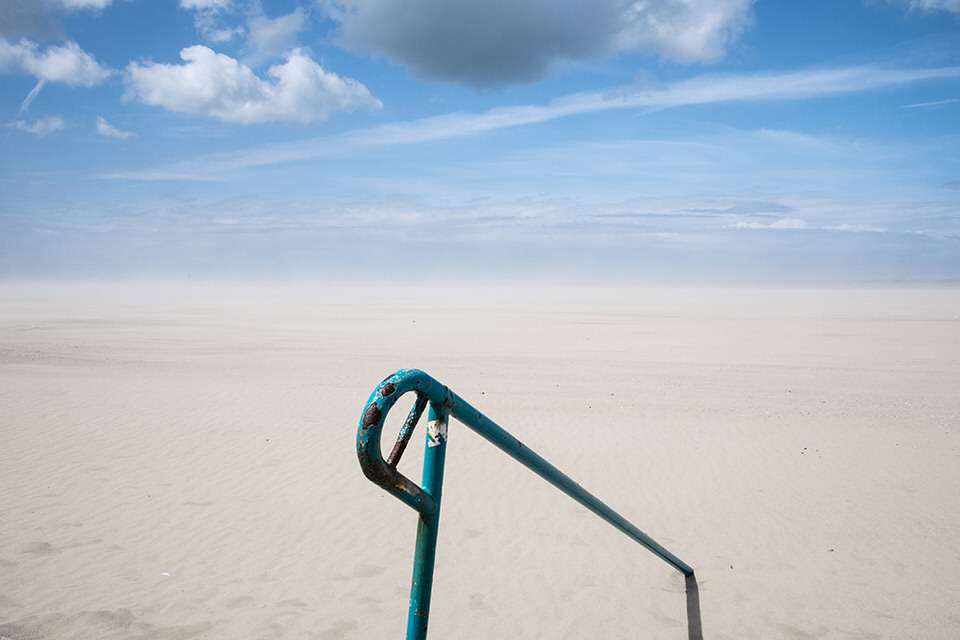
Blick aufs Meer, im Vordergrund ein Geländer.

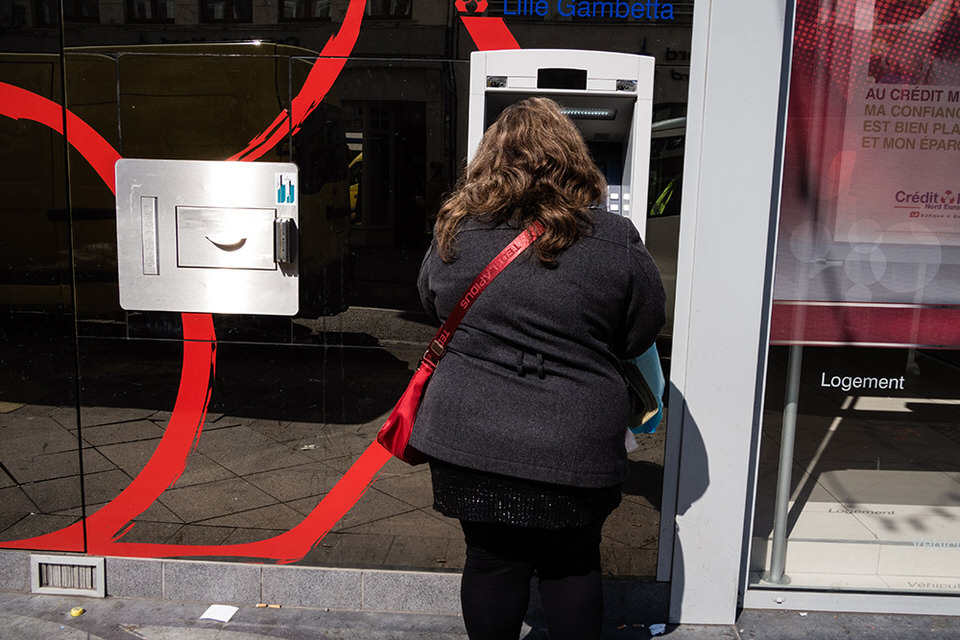
Eine Frau mit roter Tasche steht an einem Geldautomat.

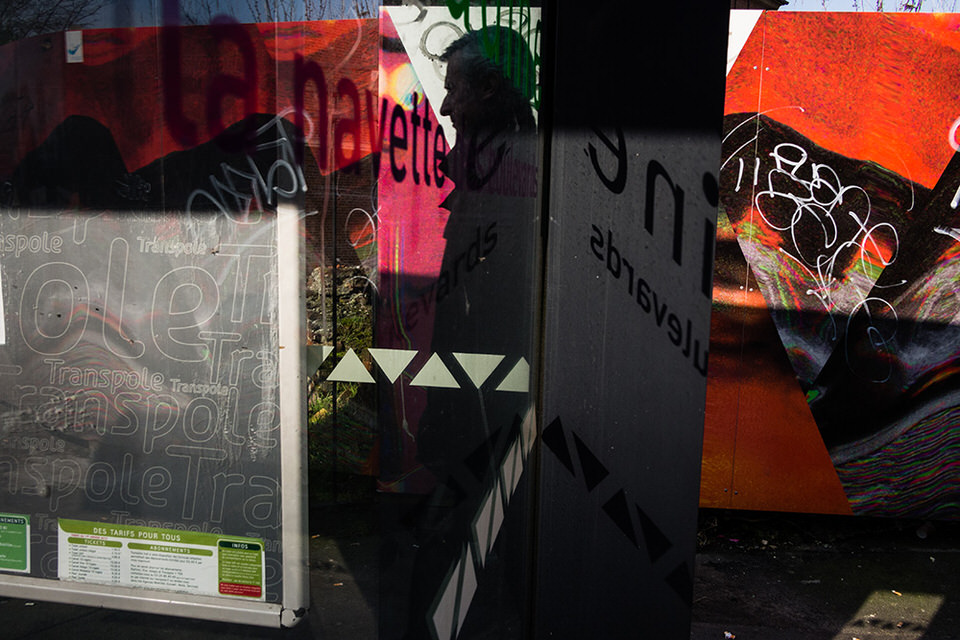
Blick auf einen komplexen Vordergrund, weiter hinten die Silhouette eines Mannes.

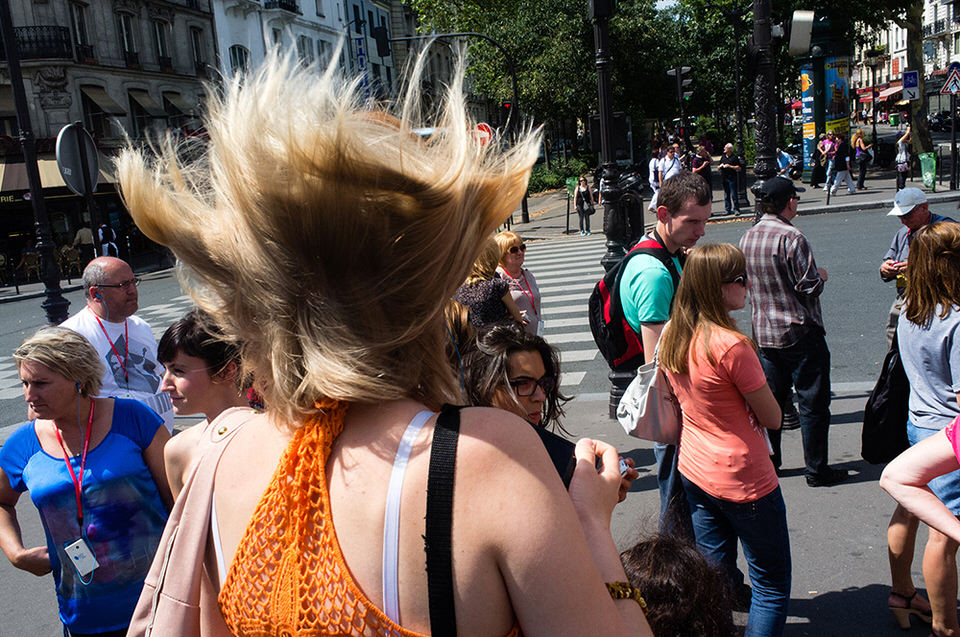
Die Haare einer Frau werden vom Wind nach oben geblasen.

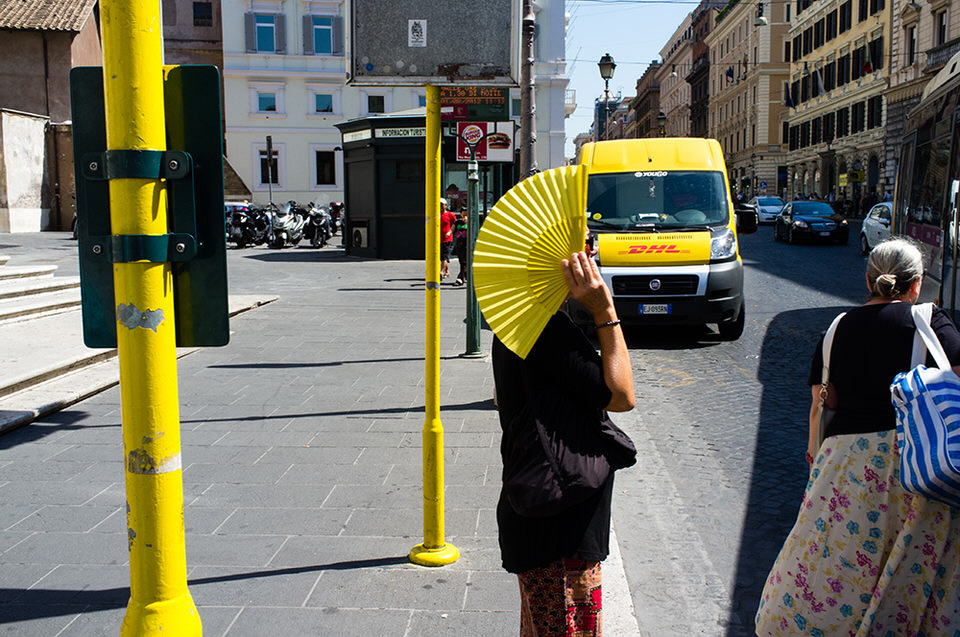
Eine Frau mit gelbem Fächer steht an der Straße und hält sich den Fächer vor das Gesicht.

Abstrahierte Aufnahme, in der zwei Menschen teilweise zu sehen sind.

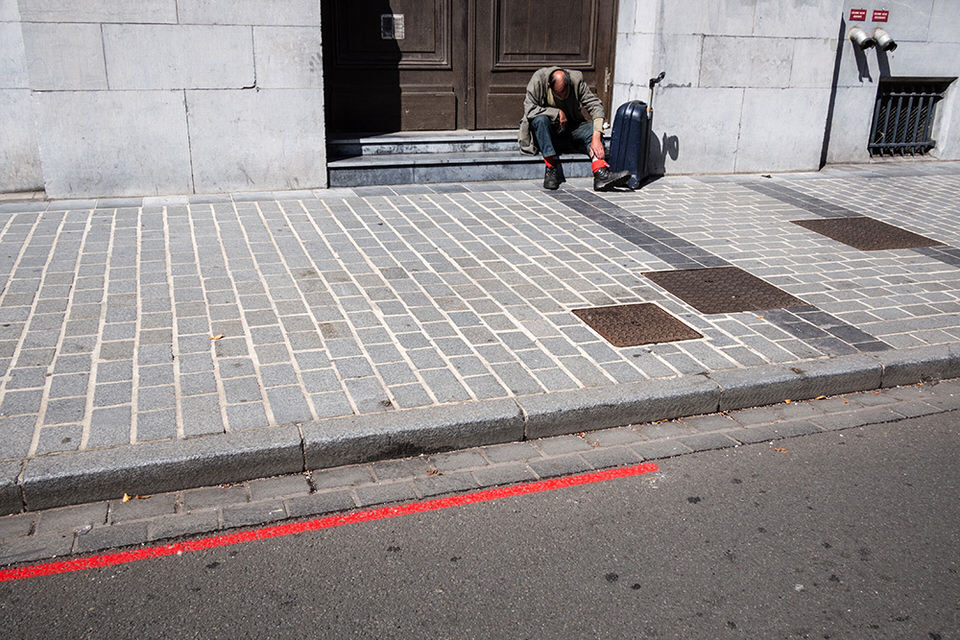
Roter Strich auf dem Boden und ein Mann, der seine Schuhe ausgezogen hat und auch rote Socken trägt.

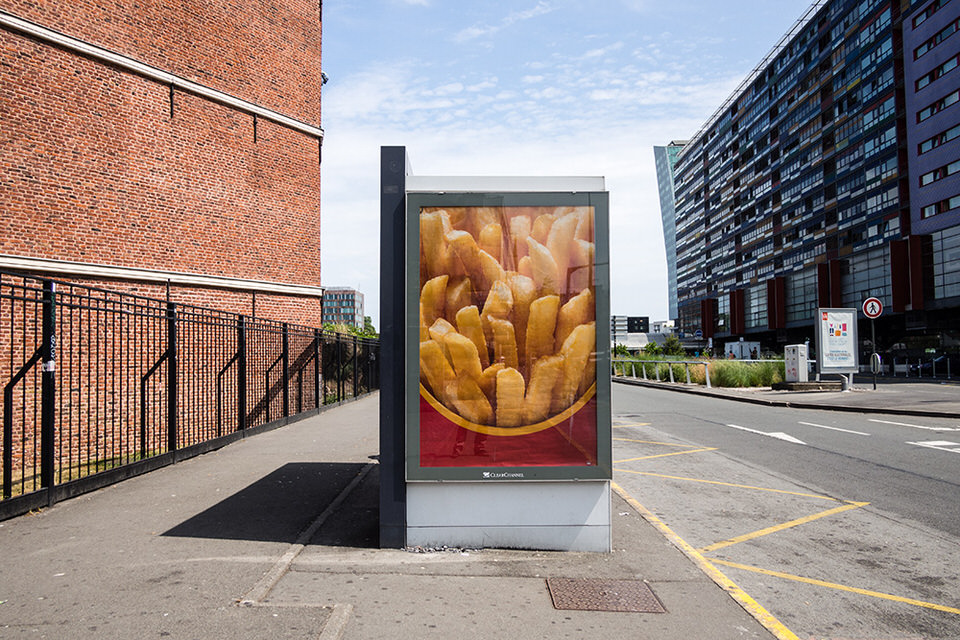
Blick auf eine leere Straße, die von einem großen Plakat mit Pommes Frites geschmückt ist.

Legrand setzt sich durch eine gleichmäßige Bildgestaltung vom aktuell gefeierten Trend des wild-abgedrehten souverän ab, ohne dabei fotografische Lebendigkeit einzubüßen. Und doch durchzieht bei aller Diversität die Fotografien eine stille Stringenz, die seinem Portfolio einen stilistischen Rahmen gibt. Die in sich ruhigen und klar komponierten Aufnahmen enthalten meist keinen Pixel zu viel oder zu wenig.

Julien Legrand kommt mit wenig aus. Ein Mann mit buntem Aktenornder am Straßenrand reicht ihm, um ein spannendes Bild zu machen. Dass dabei am Boden ebenfalls bunte Farbkreise zu sehen sind, ist der alles entscheidende Zufall; der will aber auch gesehen werden.

Für mich persönlich gehört Legrand zu denjenigen Fotografen, deren weiteren Werdegang ich auf keinen Fall verpassen möchte. Deshalb folge ich ihm überall wo möglich: Auf Flickr, Facebook und wenn es sein muss, auch auf Google+.


kwerfeldein – Fotografie Magazin | Fotocommunity

 
Comments Off on Den Alltag lebendig machen

Posted in Equipment


24. Juni 2014

24 Jun

Ein Beitrag von: Thomas8047

Mann mit Regenschirm auf einer Straße


kwerfeldein – Fotografie Magazin | Fotocommunity

 
Comments Off on 24. Juni 2014

Posted in Equipment


Budget M43: Kodak Pixpro S-1 First Impressions Review

24 Jun

casual2.jpg

Kodak is arguably the most famous name of all in photography, but it ultimately failed to manage the transition from film to digital, and ended up exiting the consumer imaging business altogether in 2013. But now JK Imaging, which licenses the Kodak name, has created an interchangeable lens camera. The Pixpro S-1 is an entry-level model that’s designed to attract budding photographers who are buying their first system camera. Click through to read our first impressions.

News: Digital Photography Review (dpreview.com)

 
Comments Off on Budget M43: Kodak Pixpro S-1 First Impressions Review

Posted in Uncategorized


Handmade Car Explores the Abandoned Railroads of Mexico

24 Jun

[ By Steph in Technology & Vehicles & Mods. ]

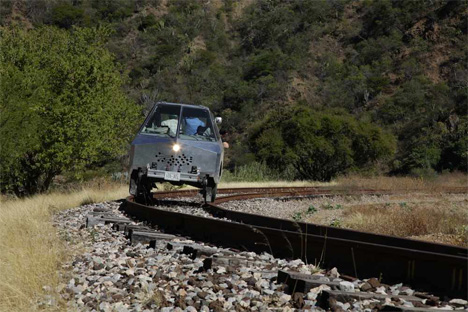
Custom Railroad Exploration Car 1

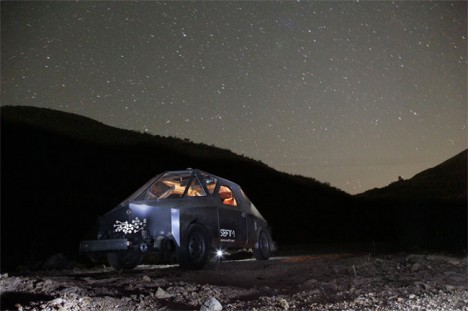
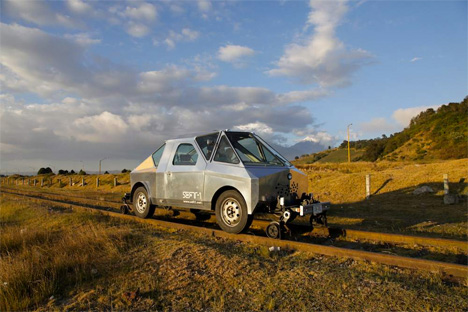
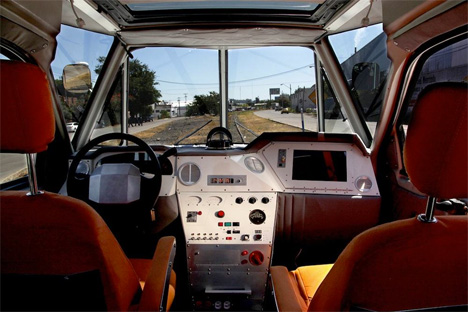
Over 5500 miles of abandoned railways stretching from one end of Mexico to the other enticed two brothers to build an incredible retro-futuristic exploratory car. The SEFT-1 is modeled after a midcentury vision of a spaceship with an all-metal exterior and faceted windshield, and it’s equipped with modern sensors and navigation tools as well as wheels that can ride on rails.

Custom Railroad Exploration Car 2

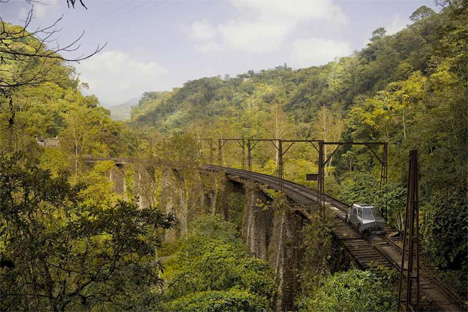
The railroads of Mexico were abandoned in 1995 due to flagging profits, and have been left to decay ever since. Ivan Puig and Andrés Padilla Domene, both artists, wanted a novel way to experience these nearly-forgotten transportation corridors.

Custom Railroad Exploration Car 3

Custom Railroad Exploration Car 4

The SEFT-1 can drive on roads like an ordinary car, or use its extra set of front wheels to guide it along the rails. SEFT-1 stands for Sonda de Exploracion Ferroviaria Tripulada, which translates as Manned Railway Exploration Probe.

Custom Railroad Exploration Car 5

From 2010 to 2012, the brothers took the SEFT-1 on a journey that took them all the way to Ecuador, gathering data, videos, photos, objects and stories that tell the tale of what has happened to all those miles of tracks after their official use came to an end. Those findings are currently on display at London’s Furtherfield Gallery.

Share on Facebook


[ By Steph in Technology & Vehicles & Mods. ]

[ WebUrbanist | Archives | Galleries | Privacy | TOS ]


WebUrbanist

 
Comments Off on Handmade Car Explores the Abandoned Railroads of Mexico

Posted in Creativity


5 Tips for Creating a Photo Essay with a Purpose

24 Jun

As a photographer, you are a storyteller. The nouns are your subject matter; the verbs are the color and contrast that keep the story moving. A cast of characters all working together to get your point across. Instead of proper grammar, you ensure proper exposure. Instead of spelling errors, you watch for tack-sharp focus. For those times when the story is especially important and meaningful, or for when one image doesn’t say it all, there is the photographic essay. With blogging and social media, photo essays are more popular than ever: humorous or emotionally relevant, sparking debate or encouraging compassion, each with a story to tell.

melanie1

I’ve mentioned before that taking on a photo project is one of my favorite ways to reignite my love for photography, but beyond that, it’s a great way to get your message across and have your work seen by a larger group. A photo essay is intriguing; it’s something to talk about after people hear that you’re a photographer and want to know about the glitz and glamour of it all. It’s the perfect thing to tell them after you’re done going on and on about all of the red carpets, the celebrities, the fame, and the fortune. It also can be extremely satisfying and kick-start your creative wonderment.

By definition, a photographic essay is a set or series of photographs intended to tell a story or evoke emotions. It can be only images, images with captions, or images with full text. In short, it can be almost anything you want it to be. Which is where I struggle most–when the options are limitless. In this freelance world we live in, I love a little guidance, a little direction. Ideally, someone to tell me exactly what they want and promise to be thrilled with whatever I produce, for my fragile artist ego can’t take any less. While I continue my quest for that, I offer you these 5 tips for creating your own, completely without bounds, photographic essay:

1) Let it evolve on its own

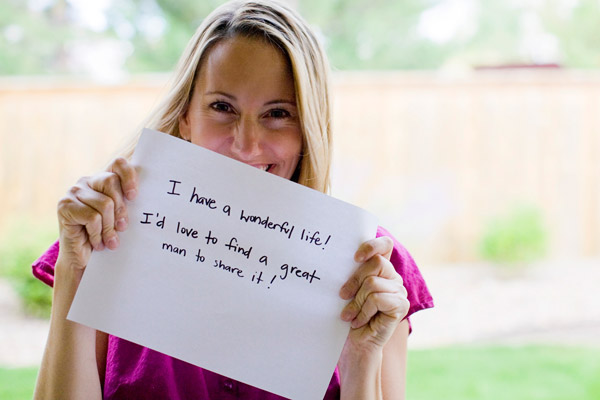
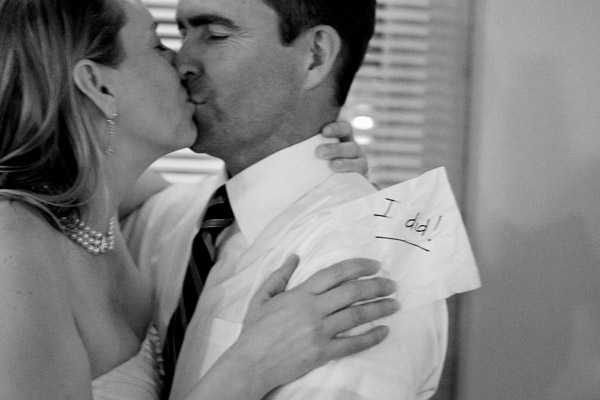
Each time I’ve had a very specific concept in mind before I started shooting, it’s never been the end result. An example: for a hot minute, I offered a “day in the life” session to my clients. I was photographing so many of the same clients year after year that I wanted to be able to offer them a different spin on the portrait sessions I was doing for them. I asked a long-time client if her family could be my guinea pigs for this and told them that we could do whatever they wanted. We went out for ice cream, had a mini dance party in their living room, and I photographed a tooth that had been lost that very morning. Then, very last, I photographed the two young daughters with notes they had written, which to be honest, I’m not even sure how they had come about. I rushed home after the session and edited those last note pictures first just because they were so different from what I usually shoot, and posted them on my personal Facebook page the heading Notes Girls Write.

sarah

gracie

Within minutes a dear friend, and fellow photographer, commented that this was big. Bigger than just the two pictures. She and I would spend the next year working on a photo essay that became a blog, that in turn became a book entitled Notes Girls Write. We photographed hundreds of women of all ages with their notes, each one later expressing having their portrait taken with their own words was an extremely powerful moment for them. Beyond my beautiful children, the fact that I can make a bed with hospital corners like no one’s business, and the award I won in the 4th grade for “Most Patient”, Notes Girls Write is one of my proudest accomplishments. It evolved on its own, starting from a few similar photographs that struck a cord in viewers and becoming a large and powerful project, one of the biggest markers in my career so far.

lindsay1

IMG_6287b

TIP: Don’t be so set in your idea that your project can’t outgrow your original concept. Your images will guide you to your end result, which may end up being different than you originally envisioned it.

2) If you think there’s something there, there’s likely something there

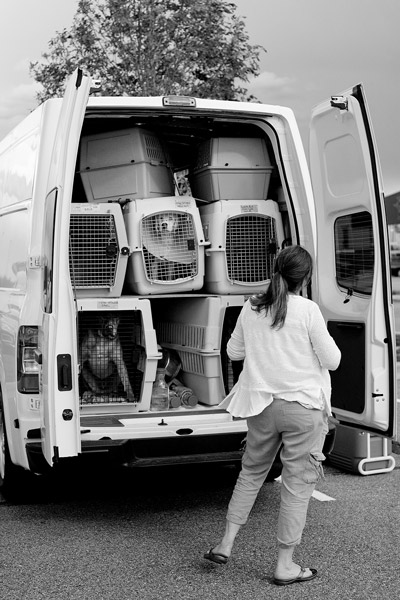
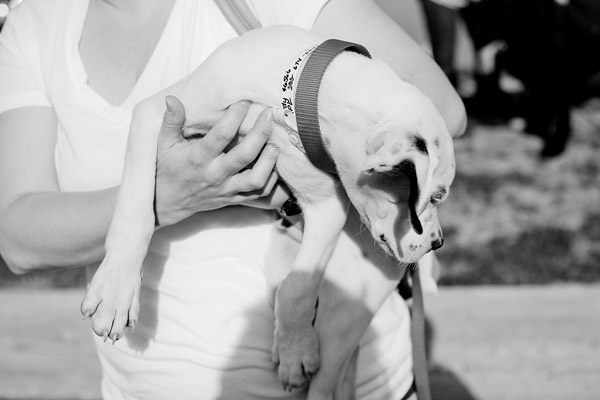
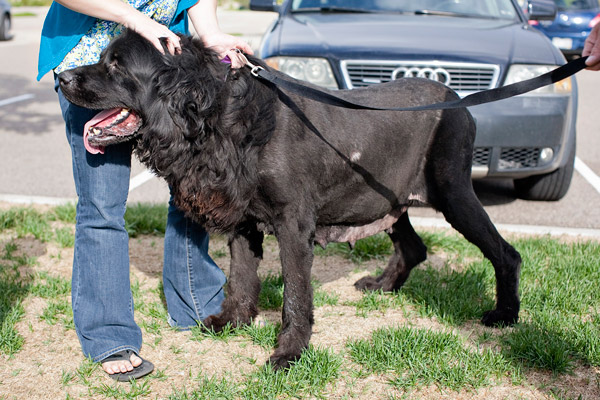
For the last year I have been a “foster mom” with a dog rescue group. Volunteers transport dogs that would otherwise be put down from overpopulated shelters, or seized from terrible situations, to my area, where dog adoption rates are much higher. These dogs live in foster homes while they receive medical care and basic training so that they can be adopted out to loving homes. It’s incredibly rewarding. Especially when I had hardwood floors.

I knew from the first time I met the transport van I wanted to document what it looked like: a van full of dogs that just narrowly escaped death arriving to temporary homes where they will experience a level of love and care which they’ve likely never known. I tear-up every time I see it. I am also put to work every time I am there, so taking photos while holding onto a 100 pound German Shepard is tough. It’s going to take me several trips to have enough images to do anything with, but that’s fine. I have no idea what I will be doing with these photos. I know they will find a home somewhere: maybe with the rescue group to raise awareness, or to help bring in volunteers, or maybe they will do nothing more than document my own story with volunteering, or perhaps something more. I’m not sure yet, but the point is that I have the images, ready for their time, whenever that is.

dog1

dog2

dog3

TIP: If you think there is something to it, there likely is. Even if it’s just a personal passion project. Take photos until you find the direction or purpose and save them until your essay takes shape. You may not end up using all, or any of the images, but in continuing to take photographs, your project will be defined.

3) Shoot every single thing

I’m the “World’s Worst Over-Shooter”. Need one image? Let me take a hundred so we know we have it. Luckily for my bad habit, the photographic essay needs over shooting. Whether you know what your plan is, or have no idea want your end result will look like, the more coverage you have, the better. This is one of the few times I push my luck and ask my subjects to work for me until they never want to see me again (I only photograph people though, so if you are photographing mountains or something, you have the added advantage of not pushing people until they cry or yell). Don’t be shy. Shoot everything you know you don’t need, just in case you need it. Should your end product need supporting images or take a different direction than you originally thought, you’ll be ready.

Take advantage of digital (if that’s how you shoot) and fill a memory card. You may end up trashing everything, or you may not. I had no idea that my Notes Girls Write project would span for as long as it did, but because I didn’t turn down anyone who was interested in the very beginning I ended up with some shots that told complete stories and expanded on the original concept.

sarah2

sarah3

TIP:  Think big. If you are shooting an essay where mountains are your subject matter, see the mountain in pieces and photograph the surrounding trees, rocks, and whatever else. This will save you having to return to the beginning of the project for supporting shots, or having to reshoot if your essay takes a different turn than you planned.

4) Ask for help with image selection

I struggle with this one–I let my personal feelings get involved. Throughout our Notes Girls Write project I was constantly picking images based on my personal feelings–the subjects that I had connected with more, and the girls that I knew were most interested in the project. This is where it is so helpful to have someone else help. Someone who has no personal feelings towards the images and will help you pick based only on the strength of the image and not your own feelings. Even if people were not involved as subjects, you tend to have personal feelings toward images that the general public may not see the power behind.

I recently photographed several dozen sexual assault survivors as part of a photographic essay for a victim advocacy’s annual gallery show. This event is meant to put faces on the survivors and raise awareness, and has been a large local event for years. I was thrilled to be selected to be the exclusive photographer, though this was one of the hardest projects I’ve ever taken on. The photo sessions themselves, whether five minutes or 30, were extremely emotional for the survivors and in the time I spent with them, I often learned a lot about their journey and experience. This made it difficult for me to pick which final images would be used for the show, based only on the power of the image and not my personal feelings. In the end several select friends helped me narrow each survivor’s images down, and the subjects themselves selected which would be the final image used, as ultimately this is their story.

SAVA1

SAVA2

SAVA3

TIP: All creative work is personal, and looking at photographs we take ourselves is incredibly hard to do with clear eyes. We see the mistakes, the personal feelings, the shot that could have been better. It’s impossible to always set these aside so when working on a project that is incredibly important to you, or large in scale. Have others help you decide what images to use for your final pieces. Bring in people who are interested in photography and people that aren’t. People that know about your subject matter and people that don’t understand it at all. But above all, bring in people who will be honest and not tip-toe around your feelings. Lastly, also bring a thick skin.

5) Tell your story, in fact shout it from the rooftops if you can

Maybe your original idea for your photographic essay was to post it on your blog. Awesome, nothing wrong with that, but are you sure it can’t be more? Shop it around, who can it help? Does this benefit a group, an organization, or a person? Could it inspire people? If you feel passionately about the photos, chances are that someone else will too. Your photographic eye doesn’t stop when your shooting is done. If you felt compelled to take the time to create a photographic essay, there are likely “readers” for your story.

img_6359b

TIP: This isn’t the time to be humble. Taking on a photo essay is a large endeavour. While there’s nothing wrong with having it be something you only did for your own personal growth, showing it around can be helpful both in experience and longterm benefit. Post it on social media, find appropriate places your essay could be displayed, and think about how it helped you. Every single photo essay I have done has led to an outstanding connection, or more work, and there is nothing wrong with getting those things along with the personal gain of accomplishing something you’re proud of.

The ideas are truly for a photographic essay are limitless. Truly.

Want a few more ideas for projects, try these?

  • Using a Photography Project to Spark your Creativity
  • Photography projects that make you feel alive
  • Jumpstart Your Photography – Start a 365 Project
  • 8 Photo Projects in Your Own Backyard

Have you ever done a photographic essay? What is your experience? Share with in the comments if you have, or have considered it. If you haven’t, what are you waiting for?

The post 5 Tips for Creating a Photo Essay with a Purpose by Lynsey Mattingly appeared first on Digital Photography School.


Digital Photography School

 
Comments Off on 5 Tips for Creating a Photo Essay with a Purpose

Posted in Photography


Third time’s a charm: Sony Cyber-shot DSC-RX100 III Review

24 Jun

RX100-III_Right-1200.png

We’ve just posted our full review of the Sony Cyber-shot DSC-RX100 III. In this third generation compact, Sony offers a 20.1 megapixel BSI CMOS sensor and a couple of important new features – a faster 24-70mm equiv F1.8-2.8 lens and a pop-up EVF with 1.44M dots. With these additions to what was already an impressive camera, does the RX100 III earn our highest recommendation? See for yourself. Read review

News: Digital Photography Review (dpreview.com)

 
Comments Off on Third time’s a charm: Sony Cyber-shot DSC-RX100 III Review

Posted in Uncategorized


The Photodoto Library: Your One-Stop Shop for Pure Photography Awesomeness

24 Jun

Are you sick and tired of photography sites claiming that they can provide you with a wealth of photography resources that’ll make you a much better photographer…only to be lied to and disappointed each and every time? We hear you and feel your pain, too! That’s why we at Photodoto have come up with something that’s bound to turn your Continue Reading

The post The Photodoto Library: Your One-Stop Shop for Pure Photography Awesomeness appeared first on Photodoto.


Photodoto

 
Comments Off on The Photodoto Library: Your One-Stop Shop for Pure Photography Awesomeness

Posted in Photography