RSS
 

Archive for May, 2014

Nokia releases update to its Camera Beta app

15 May

395c7c4d-9019-4274-9e44-1bb980151986.jpg

Nokia’s Camera Beta for Windows Phone is arguably one of the best camera apps for enthusiast users. It combines comprehensive manual control with an excellent user interface. Now Nokia has released an update that makes the app even better. It now supports continuous autofocus and surround sound capture. Learn more

News: Digital Photography Review (dpreview.com)

 
Comments Off on Nokia releases update to its Camera Beta app

Posted in Uncategorized


Does the new Olympus PEN E-P5 firmware reduce image shake?

15 May

ep5.jpg

A year on from the camera’s announcement, Olympus has issued a significant firmware update for its PEN E-P5. The update not only adds a trigger-only ‘cable release’ mode to its Wi-Fi functions, it also provides a feature to combat the biggest problem with the camera. The new ‘0 sec Anti-Shock’ option provides a work-around for the image shake that held the E-P5 back in our original review. Is the new firmware enough to elevate the E-P5 to the select company of Gold award winners? Find out

News: Digital Photography Review (dpreview.com)

 
Comments Off on Does the new Olympus PEN E-P5 firmware reduce image shake?

Posted in Uncategorized


Von Liebe und Zweifeln

15 May

Ein Beitrag von: Ines Rehberger

Ich wollte seit Langem Fotografin werden. Richtig professionell zusammen mit Modellen arbeiten und etwas Großes erschaffen, so wie es einige meiner Vorbilder machten. Also beschloss ich, nach der Realschule auf mein Abitur zu verzichten und mir meinen damaligen Traum zu erfüllen: Fotografin werden.

Ich entschied mich dafür, ein Jahr lang auf eine freie Fotografie-Schule zu gehen. Die Zeit dort war wunderschön und ich fühlte mich so wohl, dass ich beschloss, das Ganze auf den nächsten Level zu heben. Mit Anfang 17 packte ich meine Sachen, verließ die Wohnung und das Dorf, in dem ich groß geworden war und zog in ein weiteres Dorf neben der Stadt, in der ich meine Ausbildung absolvieren würde.

© Ines Rehberger

Es war ein kleines Pass- und Bewerbungsstudio mit viel Fotografie-Zubehör zum Kaufen. Klar, es war nicht das, was ich mir erhofft hatte, aber damals dachte ich, es würde mich eines Tages dorthin bringen. Ich hatte dieses eine Ziel vor Augen und so nahm ich es hin, dass die Ausbildung sich immer mehr zur Fehlentscheidung entwickelte.

Technische Dinge lernte ich im Blockunterricht, für den ich alle paar Monate in einem Internat leben musste, im Geschäft lernte ich wie man mit Kunden umgeht und wie man jeden Tag mit ein und derselben Kameraeinstellung Pass- und Bewerbungsfotos macht, mit denen die Kunden am Ende sowieso nicht zufrieden waren.

© Ines Rehberger

Der Alltagstrott kam schnell und dass ich den halben Samstag arbeiten musste, während ich unglaubliches Heimweh hatte und die Bahnfahrt nach Hause mich einiges an Geld und Zeit kostete, machte es nicht einfacher. Zudem schien ich mit meiner blassen Haut und meinem Hang zur Farbe Schwarz einfach nicht dazu passen zu wollen. Mein Chef und ich waren – untertrieben gesagt – auch nicht gerade auf einer Wellenlänge. Hier war Fotografie ein Handwerk und keine Kunst.

Die Lust am Fotografieren verschwand schnell, aber ich zwang mich, privat zu fotografieren, um mein liebstes Hobby weiterhin an mich zu binden.

© Ines Rehberger

Ich zähle den Tag, an dem ich meine Ausbildung beendet habe, zu einem der schönsten Ereignisse, die ich je erleben durfte. Dass Fotografie nicht das war, was ich beruflich mein Leben lang machen wollte, war mir bereits nach einem Jahr bewusst geworden. Aber ich hatte für diese Ausbildung alles stehen und liegen gelassen und so zog ich es bis zum Ende durch.

Letztendlich war ich froh, einen fertigen Abschluss zu haben, auch wenn ich den Titel „professionelle Fotografin“ nicht besonders mochte. Denn ich wusste nun, dass es eben nur ein Status war und nichts, was etwas über die Person an sich oder ihre Kunst aussagt.

© Ines Rehberger

Seitdem sage ich von mir, dass ich Hobby-Fotografin bin und es auch bleiben werde. Fotografie bedeutet mir sehr viel und ich stecke in meine Bilder all mein Herzblut, viele Gedanken und Gefühle. Und in diesem einen ganz besonderen Hobby möchte ich frei sein. Ich will von niemandem in eine Schublade gesteckt werden oder mich unter Druck setzen lassen. Das mag bei anderen Menschen, die eine solche Ausbildung machen, ganz anders sein.

Diese Zeit war jedoch in einer Hinsicht sehr wertvoll: Ich hatte nun viele neue Emotionen, die ich in meinen Bildern verarbeiten konnte. Bis heute versuche ich, eben diese Gefühle wie Einsamkeit, Heimweh, Fernweh, Sehnsucht, Melancholie und so weiter mit Hilfe von Modellen und meinen Anweisungen in bildlicher Form auszudrücken. Fotografie ist mittlerweile kein Hobby mehr, sondern ein fester, sehr wichtiger und starker Teil von mir.

© Ines Rehberger

Es ist mir wichtig, dass ein fertiges Bild am Ende so ist, dass ich selbst davor verweilen möchte und mir Gedanken dazu mache. Umso glücklicher macht es mich, wenn andere Menschen genauso über meine Fotografie denken und die Emotionen bei ihnen ankommen. Einfacher wäre es wohl, mich selbst zu fotografieren, da ich die Person bin, deren Gefühle ich ausdrücken möchte.

Jedoch liebe ich es, neue Menschen kennen zu lernen und meine Emotionen durch ihre eigenen zu verstärken. Zudem ist es immer wieder eine kleine Herausforderung eine andere Person in meine Gefühlswelt einzuschließen. Da die meisten meine Geschichte nicht kennen, versuche ich, den Betrachtern meiner Bilder Interpretationsfreiheit zu geben und trotzdem dafür zu sorgen, dass eine Serie im Grunde Sinn ergibt. Daher bestücke ich jede mit einem Titel, der alle Bilder miteinander vereint.

© Ines Rehberger

Ich fotografiere mittlerweile ausschließlich bei natürlichem Licht und am liebsten draußen in der Natur. Dort gibt es einfach nichts, was großartig vom Modell ablenken könnte und ich bewege mich gern frei. Während des Fotografierens achte ich sehr darauf, den Bildausschnitt schon so zu legen, dass ich in der Nachbearbeitung nichts daran machen muss.

Wie ich ein fertiges Bild bearbeite, hängt vom Thema des Shootings ab. Farben mag ich in meinen Bildern im Allgemeinen eher gedeckt und meist entweder in bläulichen oder rötlichen Tönen. Mit den Farben versuche ich, die Geschichte der Serie zu intensivieren.

Anfangs machte ich Bilder für mich selbst, um mich auszudrücken und schwierige oder auch besonders schöne Zeiten in Bilderform ablegen und archivieren zu können. Mittlerweile, da ich weiß, dass ich Menschen mit meiner Fotografie emotional erreiche, fotografiere ich auch für sie. Es ist ein unbeschreibliches Gefühl, dass ich nicht mehr missen möchte. Je mehr Menschen es werden, desto mehr scheint der Druck zu steigen.

© Ines Rehberger

Aber ich versuche, stets mir klar zu machen, woher ich komme und wieso ich fotografiere. Und dann weiß ich wieder, dass ich gar nicht mehr brauche als mich, meine Kamera, meine eigene Zufriedenheit, eine Menge Spaß und ein paar Menschen, die mich unterstützen. Und zwar in dieser einen Sache, die ich an meinem Leben und Dasein am meisten liebe: Der Fotografie.


kwerfeldein – Fotografie Magazin | Fotocommunity

 
Comments Off on Von Liebe und Zweifeln

Posted in Equipment


Aviator’s Villa: Ultramodern House Made of Airplane Parts

15 May

[ By Steph in Architecture & Houses & Residential. ]

Aviator House 1

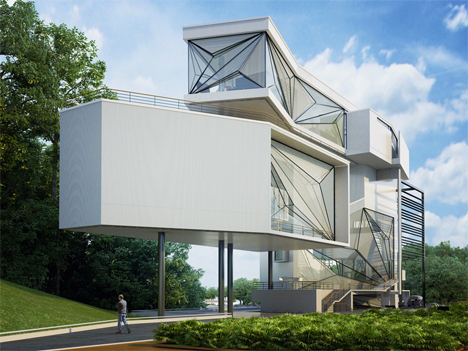
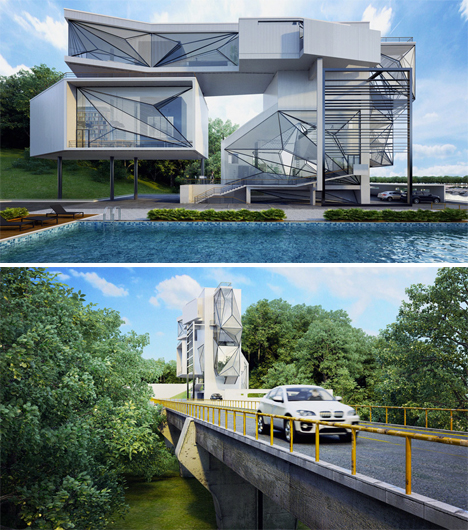
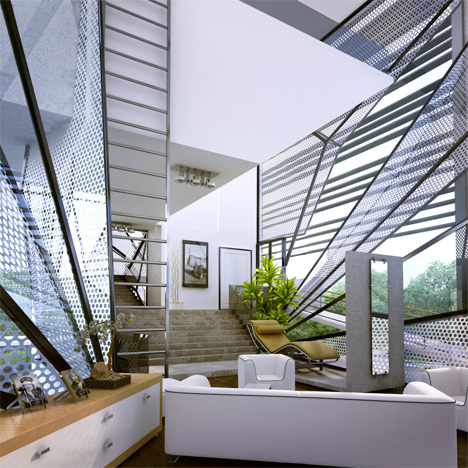
A long, narrow ultramodern residence envisioned as a composition of disassembled aviation components offers an evocative home for a retired pilot. ‘Aviator’s Villa’ by Urban Office Architecture is elevated on a hill between a lake and a swimming pool, and exposed on three sides so it feels like it’s floating on air.

Aviator House 2

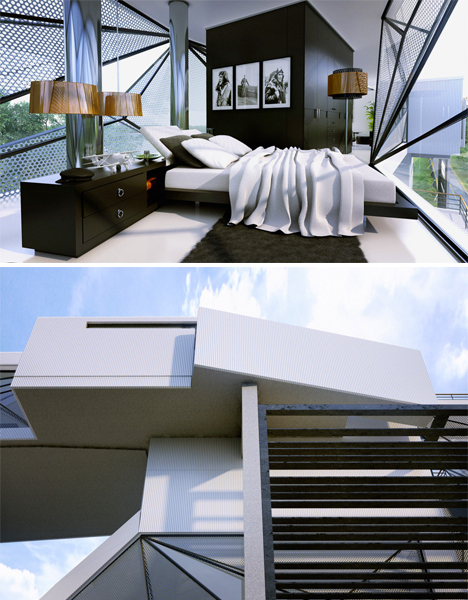
The cantilevered master bedroom juts out from the main volume of the home like the nose of an airplane, hovering over other ‘floating’ volumes conceived as abstracted clouds. You might expect a smoother silhouette from a plane-inspired structure, but the architects deliberately gave it a “twist and torque” to simulate the way a plane steers through air currents.

Aviator House 3

Aviation House

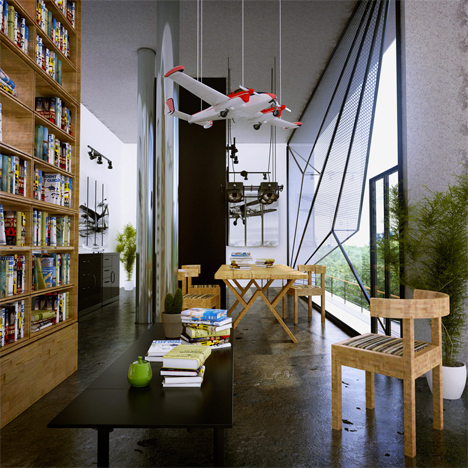
The house consists of three primary spaces including a thirty-foot-tall living area and kitchen, the 40-foot bedroom, and the library. Between the two separate structures are a series of hidden spaces revealed during the ascent up a circular staircase.

Aviator House 4

Throughout the villa, little details echo those found within a plane, like the riveted metal frames around the windows, and perforated metal screens  that filter harsh direct sunlight the way clouds do in the sky. The sharp, geometric panes of glass that make up the windows are meant to recall the angles found within a cockpit.

Share on Facebook


[ By Steph in Architecture & Houses & Residential. ]

[ WebUrbanist | Archives | Galleries | Privacy | TOS ]


WebUrbanist

 
Comments Off on Aviator’s Villa: Ultramodern House Made of Airplane Parts

Posted in Creativity


Schwerkraft: Sandskulpturen

15 May

Die Serie „Gravity – Sand sculptures“ der niederländischen Fotografin Claire Droppert aus Rotterdam hat in mir einen Punkt getroffen. Sie ist ein gutes Beispiel dafür, wie man aus einer einfachen Idee durch konsequente Umsetzung und klaren Stil etwas Eigenständiges erschaffen kann, das mehr ist als die Summe seiner Teile.

Claire arbeitet gern an der dünnen Trennlinie von Schlichtheit und Minimalismus und setzt die heutzutage zur Verfügung stehenden Bearbeitungstechniken ein, um diese Linie zu verwischen. Sie hat eine eindeutige Vorliebe für Landschaften sowie trostlose und offene Räume.

Sand wird lebendig und Kreaturen werden in gefrorenen Momenten der Schwerelosigkeit geboren.

Neben „Sand sculptures“ soll es noch weitere Serien unter dem großen Projektnamen „Gravity“ geben. Die Arbeiten mit in der Luft eingefangenen Sandklumpen, die mal explosiv und mal pulverig aussehen, ist erst der Anfang. Es werden weitere Elemente folgen, die ebenfalls in ihrer natürlichen Umgebung in Schwerelosigkeit ein Eigenleben entwickeln.

Hare © Claire Droppert

Skunk © Claire Droppert

Goat © Claire Droppert

Swarm © Claire Droppert

Bull © Claire Droppert

Caterpillar © Claire Droppert

Fish © Claire Droppert

Übrigens hat Claire in jedem Bild der Serie etwas Bestimmtes – meistens Tiere – wiederentdeckt. Könnt Ihr sie auch sehen?

Weitere Arbeiten von Claire Droppert findet Ihr auf ihrer Website und auf Instagram. Drucke bietet sie ebenfalls an.


kwerfeldein – Fotografie Magazin | Fotocommunity

 
Comments Off on Schwerkraft: Sandskulpturen

Posted in Equipment


Fairytale Hotels: 15 of the World’s Most Magical Lodgings

15 May

[ By Steph in Boutique & Art Hotels & Travel. ]

Magical Hotels Main
Waterfalls stream down the sides of mountain-shaped, moss-covered structures, while white horses gallivant in front of castles that look like they were ripped right out of a book of fairytales. These 15 hotels are among the most magical places to stay anywhere in the world, from ancient palaces in India to gleaming ice hotels in Quebec. While some are a peek at how the 1% live, others are surprisingly affordable.

Magic Mountain Hotel, Chile

Magical Hotels Magic Mountain 2
Magical Hotels Magic Mountain Lodge Chile

If elves took up residence in Hobbiton, this is what their homes would look like. The mountain-shaped structure is dotted with arched windows and obscured with lush greenery. Waterfalls stream down the sides to drench the moss, ferns and flowers. Located within the remote Huilo-Huilo Biological Reserve, the hotel requires an adventurous spirit to even access, but it’s well worth the effort. Nearly everything is constructed from locally, sustainably sourced wood.

Neemrana Fort Palace, India

Magical Hotels Neemrana

A 15th-century palace built into the hillside in India is now a five-star, 55-bedroom hotel with kingly views over the nearby village. Neemrana Fort Palace is full of authentic decor from periods throughout India’s history and contains displays that educate guests about the palace’s fascinating past. Though rooms here start at just £50 per night, guests are given the royal treatment, with options including poolside spa treatments and hot balloon rides over the valley.

Fairytale Hotel in Belgium

Magical Hotels Balade Gnomes 1
Magical Hotels Balade Gnomes 2

Sleep in a surreal medieval-style chamber within a massive wooden Trojan Horse at Belgium’s La Balade des Gnomes Hotel. This bizarre retreat boasts ten unique rooms sculpted with the natural earthen building material known as cob to create all sorts of curved custom surfaces. The horse is just one of the hotel’s suites – others include a troll’s lair and a Macquarie Island room with a boat-shaped bed.

Crazy House Hotel, Dalat, Vietnam

Weirdest Hotels Crazy House 1
Weirdest Hotels Crazy House 2

The aptly named Crazy House Hotel in Vietnam began as the private residence of architect Hang Viet Nga, who clearly let her imagination run wild in creating an organically shaped structure reminiscent of the Barcelona ouvre of Antoni Gaudi. Made from the base of a dead tree, the house is full of ladders leading into hidden nooks and through tight tunnels. Rooms cost as little as $ 22 USD per night.

Thorngrove Manor Hotel, Adelaide, Australia

Magical Hotels Thorngrove

The Thorngrove Manor Hotel could easily double as a princess castle at Disneyland, it’s so picturesque. Located in Adelaide, Australia, the castle-like structure looks centuries-old but was actually built in 1994 as part of a vineyard. Though all the rooms are together in one building, there are no common spaces, and couples staying there never need to see other guests.

Next Page – Click Below to Read More:
Fairytale Inn 15 Of The Worlds Most Magical Hotels

Share on Facebook


[ By Steph in Boutique & Art Hotels & Travel. ]

[ WebUrbanist | Archives | Galleries | Privacy | TOS ]


WebUrbanist

 
Comments Off on Fairytale Hotels: 15 of the World’s Most Magical Lodgings

Posted in Creativity


Paddling the Skeleton Coast

15 May

This little photo story was originally posted in my old paddling blog on April 14, 2007.

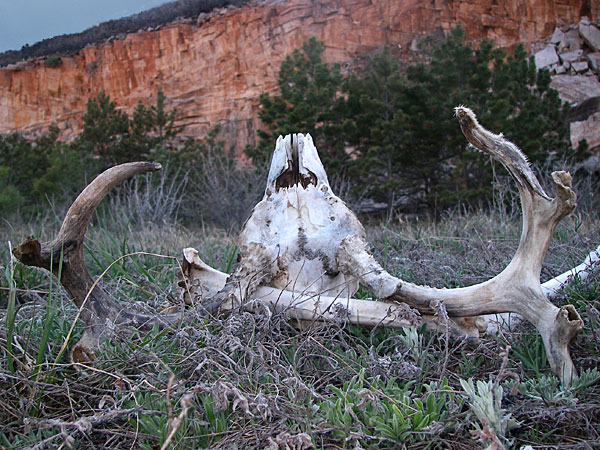
deer skull

A deer skull on the shore of Horsetooth Reservoir

I had an unusual photo stop when paddling my Thunderbolt kayak on the Horsetooth Reservoir this afternoon. Somewhere on the west shore near Quarry Cove I found a deer skeleton. I spent more than half an hour photographing it. Now, I understand better Goergia O’Keeffe’s fascination with animal skulls which she used to collect and paint when living in New Mexico.

All pictures were shot as usual with Pentax Optio W10, but I would really love to have there my DSLR camera with a tripod.

deer skull - Horsetooth Reservoir


deer skeleton- Horsetooth Reservoir


Horsetooth Reservoir

Related posts:
– Winter Paddling with Sea Wind Canoe on Horsetooth Reservoir
– Winter Paddling with JKK Supernova Kayak on Horsetooth Reservoir
– Fisheye Lens Perspective for Paddling?


paddling with a camera

 
Comments Off on Paddling the Skeleton Coast

Posted in Photography


5 Tips to Seriously Improve Your Food Photography Techniques

15 May

11 Tip05 Neutral BG

Food photography is arguably one of the most challenging types of photography out there. Like painting, you start with a blank canvas and build. Layer upon layer, you construct the photo until you reach the perfect balance of reality and art.

Everything in the photo is a decision. Every piece is perfectly placed by the photographer.

Starting out is frustrating, I know. You’re the chef, stylist, and the photographer. Once you reach technical proficiency with the camera, what’s next? I have been, and in a lot of ways still am, in that position. So, how do you improve your food photography beyond the basics? You work on the story.

Whether it is an after-party from the perfect cocktail, or the homemade roasted chicken recipe on the farm, like all photography, you’re telling stories.

Some shoots are more complicated stories than others, and it may sound like a lot of work, but it’s really not. Here are five quick tips you can use to seriously improve your food photography and tell better stories.

#1 – CHOOSE YOUR ANGLE

There are really only a few camera angles in food photography that you see again and again, but you need to make the one you choose, a conscious decision. Where you place the camera will affect the type of story you’re trying to tell.

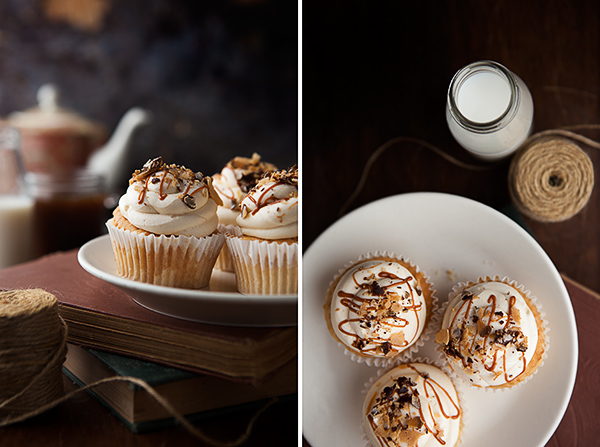
Think of the food beforehand. Its size, shape, height and what is unique about it. Then place the camera where you think best highlights these qualities. Some dishes look great when you shoot from right in front of the food, and others are best suited when the you are looking down from directly above the table. Take a look at the cupcakes below; their spiralled and delicate toppings really stand out when shot from in front, yet the viewer doesn’t even see the size or shape when photographed from above.
01 Tip01 45 vs 90 Cupcakes

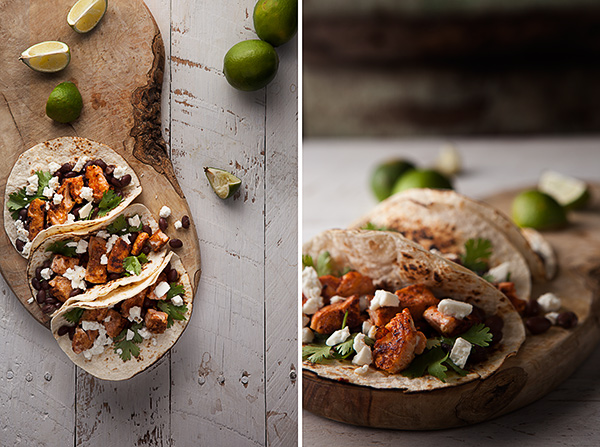
On the other hand, it’s difficult to see all the ingredients and beautiful shape of these salmon tacos when shot from the front, so the shot from above was definitely the way to tell this story.
02 Tip01 45 vs 90 Tacos

#2 – SURROUND YOUR HERO

When shooting from the front of the food try to keep a great foreground and background to play with. Use these empty spaces to tell more of a story. Surround your main dish with ingredients and props that relate to the food. Ingredients, sauces, oils, and cooking utensils could indicate how the dish was made.

Tins, jars, herbs, glasses, fabrics and linens could speak about the origin of the dish or the season in which it is served. Placing a few of these in the foreground and background will definitely elevate your story and give it depth.

03 Tip02 Props

The props in this image of baklava bring more to the story. The viewer has a sense of place that describes the Arabic origins of this delicious sweet.

#3 – NATURAL IS BEST MODIFIED

Light is king, and acquiring a few tools to help you control it will bring your food photography up to the next level. Poor use of light will ruin your story and immediately turn off your audience. So making sure light doesn’t distract will help out your food photos big time.
04 Tip03 Natural vs Diffused

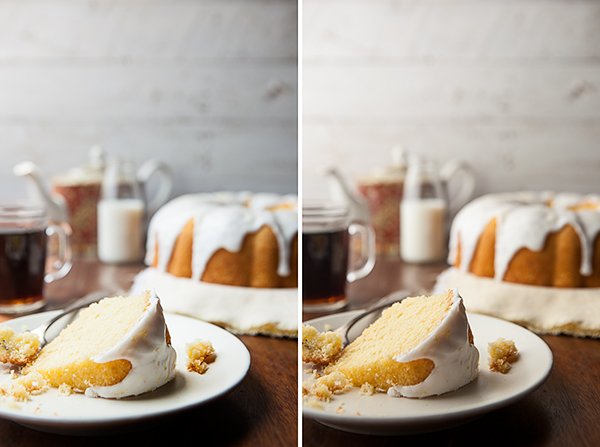
Direct natural light can give really hard and defined shadows like beneath the lemon cake on the left. Where those shadows are softened in the image to the right, with a little help from a cheap diffusor.

Placing a diffusor between the window and your table is first on the list. When working with direct sunlight, a diffusor (or even a thin white bed sheet) will greatly improve the quality of light. Softening those hard, dark shadows and bright highlights caused by direct sun light.
05 Tip03 White vs BlackCard

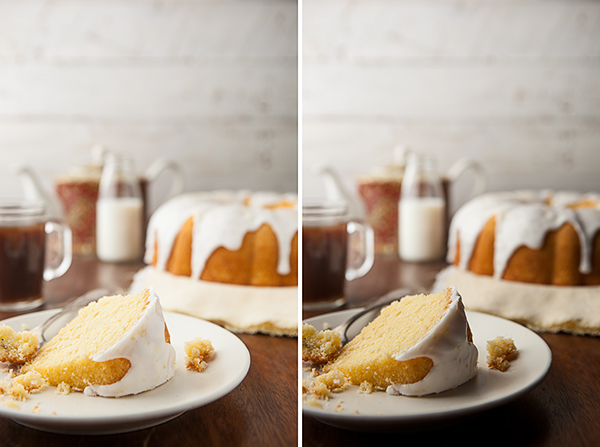
Using white and black cards really gives you control over the shadow areas. A white card was used to brighten up that lemon frosting on the left, but if you prefer more contrast than grab a black card and you’ll get an image like the one on the right.

Next up are white and black cards. You can make these yourself using foam core boards, bought at any craft store. Size them to fit your needs, using white cards to bounce light into shadow areas, revealing important details, or black cards to make shadows stronger for more contrast.
06 Tip03 BG Blocked vs Unblocked

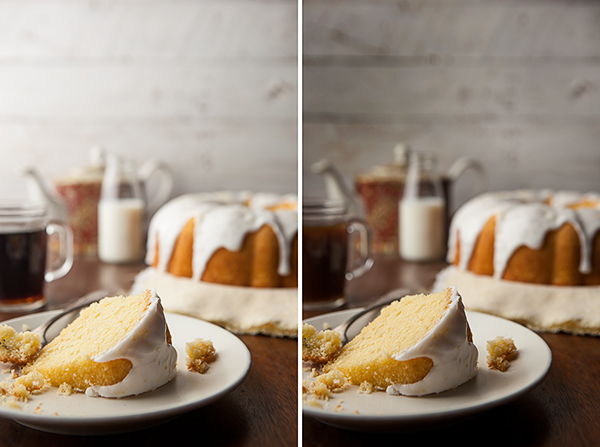
Nothing really changes between these two images except for a black card that was used to stop light from hitting the background, making sure the cake was the brightest area of the photograph.

Here is a little secret, when working with natural light. I call it, blocking (sometimes also called “gobos”). Sometimes that pesky natural light will fall on your background or props, causing them to be as bright or even brighter than your subject.

Since the viewer will always look at the brightest spot in your photo first, if it’s not your subject, it can harm your story. You can use your black cards to block light from hitting areas that will compete with your subject. This is also a very important technique for creating darker, low-key styled images.
07 Tip03 Final Image

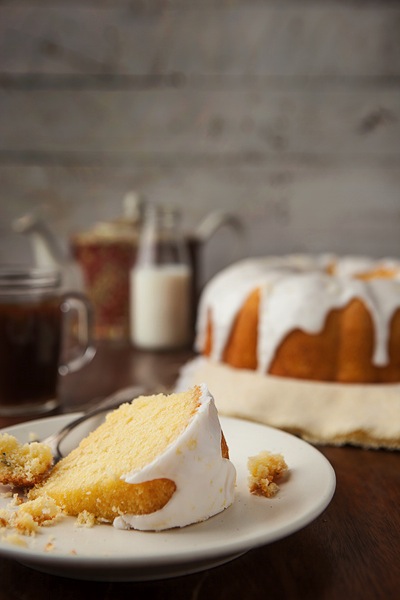
Here is the final image, with a diffusor softening the window light, a white card to fill in the shadow on the lemon frosting and a black card to block the light on the background.

#4 – OUR OLD FRIENDS LINES AND LAYERS

With all these props and ingredients in the frame, how will we ever get the audience to look at our subject? Well, bring on the trusty techniques of composing with lines and layers. You can use props or ingredients to create lines and layered effects in your images. This is a compositional technique used by photographers to lead their audience’s eyes to the main subject.

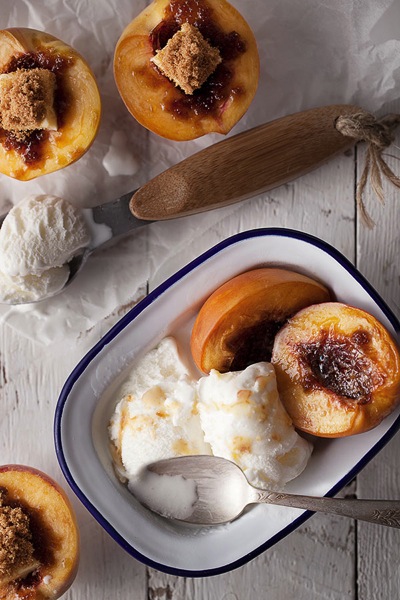
You can use various props to create lines. Like this spoon, which forms a nice line, directing the viewer straight to the bowl of baked peaches and ice cream.
08 Tip04 Lines

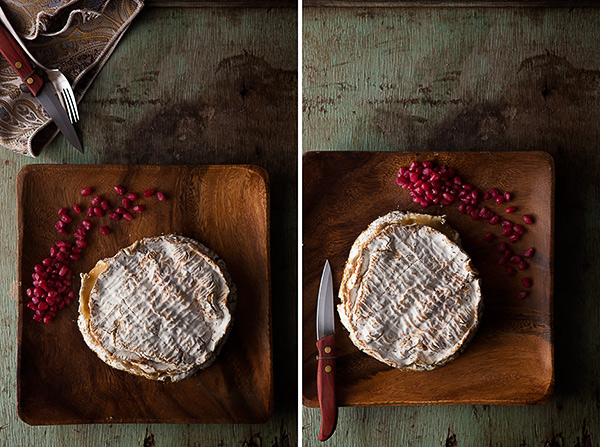
Since shooting from above always gets you more graphic images, there are plenty of chances to create some great lines here as well. Some could be quite literal like this cutlery leading to the round of Brie – or more abstract, like how the knife and pomegranate seeds create lines, framing our subject.
09 Tip04 LeadingLines vs FramingLines

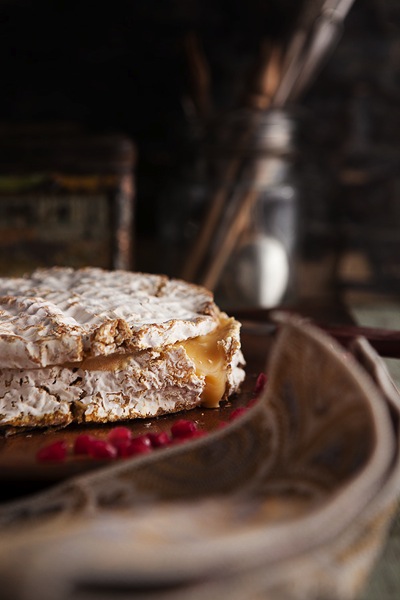
Composing images with layers is always a winner. This Brie, shot from the front, is set in the middle of various props and two large out of focus areas. This creates a layered effect, sending your eyes straight to the star.
10 Tip04 Layers

#5 – HOLD THE COLOR

11 Tip05 Neutral BG

This is my personal favorite. I love hunting for props, backgrounds and tableware to put in my images. This little tip was also the first big mistake I was making when I was starting out. It’s great to have props that are colorful, but if you’re not careful that colorful prop can easily upstage your food, and grab all the attention.

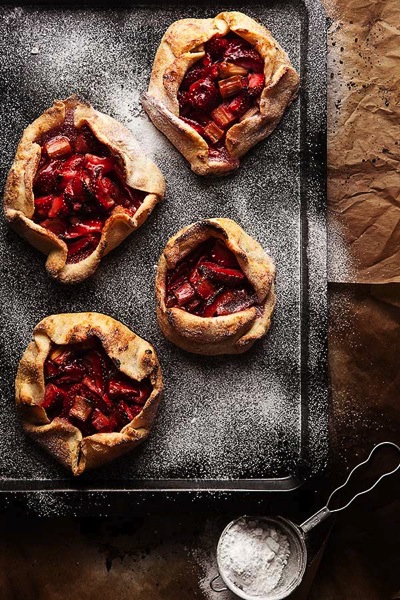
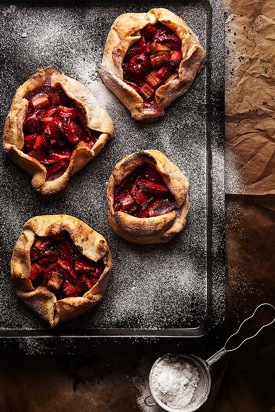
When placing items into your food images, try selecting neutral tones, something that makes the food really pop against it. Selecting a neutral background like this black metal tray and baking paper, amplifies the bright red strawberries and rhubarb inside these Crostatas, making them really steal the show.

Do you photograph food? Do you have any additional tips to share with us? Please add your comments below.

For more food photography tips, try these articles:

  • 8 Steps to Create Mouth Watering Food Photography
  • 11 Quick Food Photography Tips to Make Mouth Watering Images
  • The Ultimate Guide to Food Photography
  • SnapnGuide on Food Photography

The post 5 Tips to Seriously Improve Your Food Photography Techniques by Skyler Burt appeared first on Digital Photography School.


Digital Photography School

 
Comments Off on 5 Tips to Seriously Improve Your Food Photography Techniques

Posted in Photography


Nikon announces J4 US pricing and waterproof accessory availability

15 May

nikon_j4_03.png

Nikon has announced US pricing and availability of its J4 1-System mirrorless camera. Originally launched last month, the J4 features an 18MP CX-format sensor with an improved Hybrid AF system. The company has also announced a new WP-N3 waterproof case and SB-N10 waterproof Speedlight. The underwater housing allows the Nikon 1 J4 and S2 cameras to be taken to depths of of 45m (148 ft). The new Speedlight is waterproof up to 100m (328 ft). Learn more

News: Digital Photography Review (dpreview.com)

 
Comments Off on Nikon announces J4 US pricing and waterproof accessory availability

Posted in Uncategorized


DPReview is hiring for an Editorial Writer (digital cameras & photography)

14 May

DPRlogo.png

DPReview is hiring! We’re looking for an editorial writer to join our growing editorial team based in Seattle, WA. Responsibilities will include testing and producing reviews of digital system cameras, compact cameras, smart phone cameras, lenses and other photographic equipment. Successful applicants will have have a store of solid practical knowledge about the theory and practice of photography, and a strong understanding of dpreview, our principles and our community. Click through for more details.

News: Digital Photography Review (dpreview.com)

 
Comments Off on DPReview is hiring for an Editorial Writer (digital cameras & photography)

Posted in Uncategorized