Ein Beitrag von: Christian Richter

kwerfeldein – Fotografie Magazin | Fotocommunity

The breathtaking ‘City of Samba’ video chronicles the festival of Carnival in Rio de Janeiro through a creative mashup of stop-motion and tilt-shift photography. The world of Carnival is even more impressive when it feels like an immersive model, a cartoon come to life. Captured from a vantage point above the fray, the ‘City of Samba’ shows the hectic celebration as a crazy animated dance. See video
News: Digital Photography Review (dpreview.com)
Am Freitag sah es bei uns zugegebenermaßen sehr leer aus. Aber keine Sorge, das kleine Loch hat uns stark motiviert und die kommende Woche ist schon wieder schön gefüllt mit vielen neuen und vielfältigen Artikeln sowie tollen Bildern. Ihr könnt uns natürlich dennoch weiter Links, Gastartikel und Ideen schicken. Wir freuen uns sehr über Feedback und neue Entdeckungen!
Fotospecial: Igel
Flickr


500px


Deutschsprachig
• Die Zeit interviewt Platon Antoniou, dessen Portrait von Wladimir Putin das wohl bekannteste Lichtbild des russischen Präsidenten ist.
• Eine spannende Entwicklung für alle Fotobuch-Fans: Der Meister des Formats, Markus Schaden, plant ein Fotobuch-Museum in vier Schritten. Klingt verrückt? Ja. Aber gut? Ja!
• Omas sind die Besten. Das zeigt uns Monsieur Mueller auf eindrucks- und liebevolle Weise in seinem Blog mit einer Hommage auf seine Großmutter Frau Zug.
• Blickfang interviewte den Deutschen Automobilfotografen Thomas von Salomon.
• Den „Jungbauern“ des August Sander ist Reinhard Papst in der FAZ auf der Spur.
• Designstraps zeigt berühmte Wahrzeichen im Kontext ihrer Umgebung.
• Kennt Ihr schon Plastiktütenlandschaften? Klingt verrückt, wirkt aber großartig und überzeugend.
International
• Anlässlich des 20. Jahrestages des Genozids in Ruanda zeigt The New York Times Magazine die (im positiven Sinne!) aufwühlende Serie „Portraits of Reconciliation“ von Pieter Hugo, in der ausgesöhnte Täter und Opfer miteinander posieren.
• Michael Somoroff demontiert August Sander. Lensculture zeigt, wie sich die historischen Aufnahmen verändern, wenn dank Bildbearbeitungssoftware das Hauptsujet entfernt wird.
• Martin Parr and Gerry Badger wurden zur Erscheinung des dritten Bandes von „The Photobook, A History“* interviewt. Spannend zu lesen, wie die beiden die Thematik beurteilen.
• Varun Thota spielt gern mit Flugzeugen und fotografiert. Beides vereint er in einer lustigen und schönen Serie.
• Kennt Ihr die Disney-Serie von Anni Leibovitz? In ihr inszeniert sie berühmte Personen als Disneyfiguren.
• Eine beinahe magische Welt zeigen diese Insektenmakros.
• Auch 500px hat etwas zum Thema Makro: Ein kurzes Interview mit Miki Asais Bildern und auch ein paar Tipps.
• LIFE zeigt einen spannenden Blick in die Entstehungsgeschichte der Fotos, auf denen Picasso mit Licht malt.
• Blick über den Tellerrand: Dank Spezialisten, die die Daten von ein paar alten Amiga-Disketten gerettet haben, ist die Welt nun um etwa 30 digitale Arbeiten von Andy Warhol reicher.
Neuerscheinungen und Tipps vom Foto-Büchermarkt

• Seit vier Jahren dokumentiert die Fotografin Mila Teshajeva, wie der durch Erdöl- und Gasvorkommen bedingte wirtschaftliche Aufschwung die ehemaligen Sowjetrepubliken rund um das kaspische Meer verändert. Ihr Buch „Promising Waters“* ist im Kehrer Verlag erscheinen.
• „Es muss im Leben mehr als alles geben“* ist ein Pappbilderbuch, wie Ihr es von Kleinkindern kennt. Die Bilder darin sind jedoch für Erwachsene. Elias Wessel inszenierte dafür den transsexuellen Superstar Amanda Leopore und zeigt eine Geschichte über Selbst- und Neufindung.
Zitat der Woche
Make visible what, without you, might perhaps never have been seen.
Robert Bresson –
Mehr Zitate
Videos
Leica präsentiert stolz: Das langweiligste Werbevideo aller Zeiten. Und wahrscheinlich auch das längste. Eine erstaunlich gut funktionierende Mischung aus ernstgemeinter Faszination für das eigene Produkt sowie dessen Herstellungsprozess und einer gehörigen Portion Selbstironie.
Steffen „Stilpirat“ Böttcher hat noch einmal Paul Ripke interviewt. Naja, eigentlich interviewen sie sich gegenseitig. Das unterhaltsame Gespräch ist in drei Teile aufgeteilt. Teil Nummer 1 gibts hier:
Wie wunderbar sich Dronen abseits der Diskussion über ihre Legitimierung in der modernen Kriegsführung auch zivil nutzen lassen, zeigt uns Randy Scott Slavin mit seinen Luftaufnahmen von New York City.
* Das ist ein Affiliate-Link zu Amazon. Wenn Ihr darüber etwas bestellt, erhält kwerfeldein eine kleine Provision, Ihr bezahlt aber keinen Cent mehr.
kwerfeldein – Fotografie Magazin | Fotocommunity
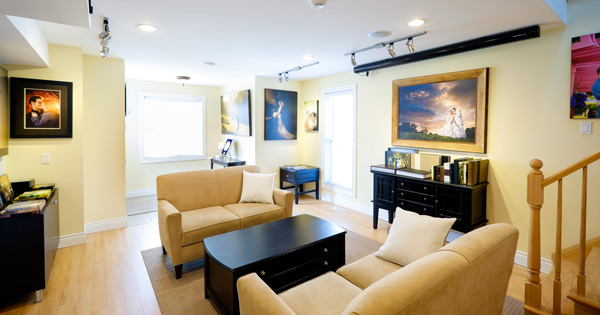
Digital has done wonders for our industry – it allows us to learn faster, it gives us technological opportunities that we could have only wished for in the “film” days and it has made completely new styles of photography possible. There’s no doubt that the digital shift has been a positive one.
While we embrace all of this change that digital has brought and explore the new depths of technology, I think it’s important to keep one foot in the “analog” world, at least one area – the physical print. The print versus digital discussion is a very controversial topic among professional photographers, and certainly everyone will have their own opinion. Regardless of where you fall in this matter, I’d like to share some thoughts and explain why I feel prints matter for us as photographers and for our clients as consumers of photography.
There are three topics of discussion that I will explore:
Forget about the fact that you’re a photographer and take your attachment to professional quality imagery out of the equation. Printing as a medium is one of the most meaningful ways that you can enjoy photography. Here are a few reasons why the printed image is so important to you as a consumer of photography.
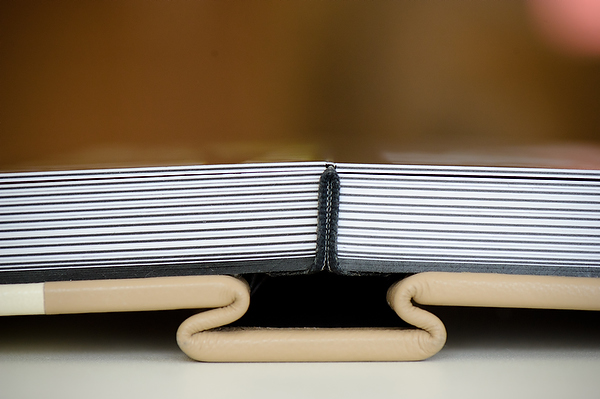
Digital media go out-of-date and out-of-style, and the files that you have stored in these digital formats will also go out-of-style and become unaccessible. Imagine having your vacation photos from 1995 on a 3.5″ Floppy Disk – how might you access those “digital files” today? Of course this is hard to imagine because digital photography wasn’t around in 1995. More recently then, consider the fact that for years you have used DVDs and CDs to store digital files and now that Apple has decided not to install optical drives into their computers anymore, that medium is slowly starting to disappear. You’ll soon have a generation of images that were stored on discs that may not even be (easily) accessible. On the other hand, if you made prints as well, then these changes in technology wouldn’t have a negative impact on you being able to continue to enjoy your images.
Being “in the moment” and away from technology is not a luxury that you get to enjoy all that often in today’s digital world. There is something nostalgic and romantic about being able to curl up on the couch with your children and look back at a wedding album, or old family photos, without having to flip open a laptop and press the “next” button dozens of times. When you look at a picture that is printed, you are free of distraction. There is no e-mail bouncing up in the bottom of your screen and no Facebook “dings” going off in another window. You can enjoy the picture and the story it tells in a quiet, distraction-free moment.
Physical prints give you heirlooms to pass down as you move on in your life. Often you are not recording (capturing a moment) and printing (preserving the moment) for today, but instead for tomorrow, for your children and your children’s children. Passing down a box of hard drives doesn’t exactly have the same appeal, does it?
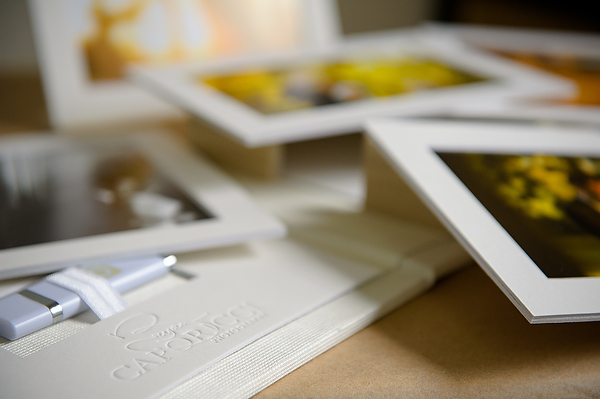
As a professional photographer or aspiring professional, it’s important to consider offering printed products to your clients. Besides the nostalgia, the emotional and logical reasons for enjoying the printed image as described above, there are also many business benefits to being a full-service photographer. Here are a few:
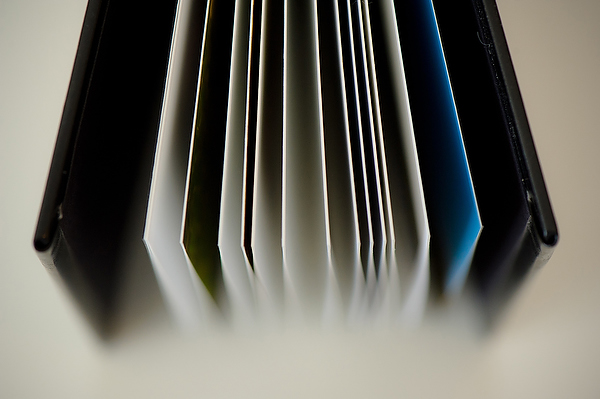
We’ve explored why printing is important for you as a consumer of photography and how you must consider offering printed products to ensure long-term success as a professional photographer. But, now I’d like to take another side of the argument: how printing your work can actually be the best learning tool to help you grow as a photographer and artist.
A print will always be the most realistic representation of an image as it is the only medium that is truly tangible and actual. This will ultimately be the best way to judge your work as an image isn’t truly finished until it’s in printed form.
It’s easier to judge an image when it’s printed – you can examine it closer, look at it longer, and see it in different contexts. I have been taught that a great way to judge and find improvement in an image is to print it, display it somewhere that you pass by frequently, and look at it often. Try changing its orientation and displaying it upside-down for a while. You will often see things that you wouldn’t otherwise notice if you didn’t analyze it to that extent. This is a much more effective exercise than staring at a computer screen for hours on end.
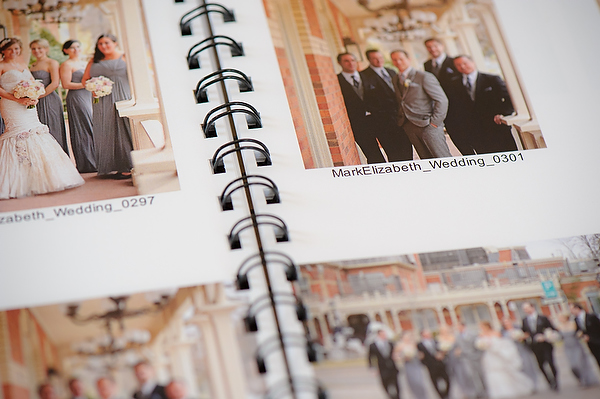
Consider that the process itself of creating a print will help you grow as a photographer because it gives you a greater appreciation for the bigger picture. At the same time, the exercise of getting in close, fine-tuning and perfecting an image for print will show you a lot about your work that you may otherwise have missed if you were just putting together a quick online gallery or contact sheet.
Lastly, a print is easier to pass around and get objective feedback from others. There is no limitation or interpretation that makes digital photography subjective – variations in monitor size, calibration, room lighting and so on. You ultimately can’t argue with print quality – it is either a good print or not – so the discussion and feedback ends up being more about the image than about the presentation.
When you offer a printed product to your clients as a photographer, you make yourself about more than just pictures. You are now about the preservation of moments and in ensuring that your work, and your clients’ memories, will be guaranteed to last a lifetime.
My next article and discussion in this series will be geared towards the mechanics of exactly how to actually sell prints and make your photography business a full-service studio as opposed to being a shoot-and-burn photographer. Check back soon!
The post Why Prints Matter to You as a Photographer by Bryan Caporicci appeared first on Digital Photography School.
[ By WebUrbanist in Architecture & Houses & Residential. ]

Steel shutters and sliding doors turn this award-winning lofted cabin into an ultra-secure shelter on demand, while stilts raise it up and help protect it from periodic floods.


At the heart of the design is a giant steel panel that slides into place to close off the building then slides aside, suspended along a dramatic cantilevered steel beam.


As an outstanding response both to site conditions and client wishes, the Sol Duc Cabin by Olson Kundig Architects (photographs by Benjamin Benschneider), received one this year’s American Institute of Architects Housing Awards.

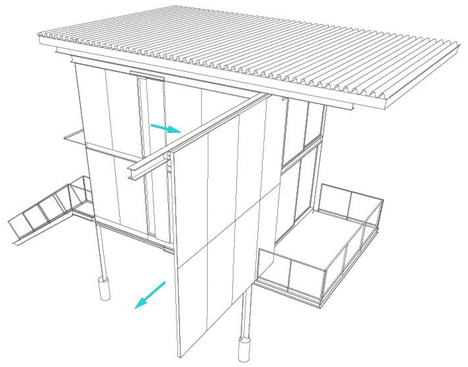

A steampunk-worthy system of cranks, levers, gears and wheels allows the occupants to slide the main and subsidiary window-covering panels open and closed manually, engaging with the architecture.


“The cabin’s rugged patina and raw materiality respond to the surrounding wilderness while its verticality provides a safe haven during occasional floods from the nearby river.” Rusticated metal siding blends with the surrounding environment while clean wood surfaces provide for visual contrast and a modern interior.
The architecture firm Fantastic Norway designs a very remote mountain getaway cabin that’s sloped to allow winter sports on top, like skiing and sledding.
Click Here to Read More »»
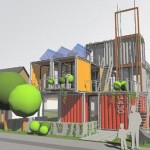
Shipping container homes are the perfect blend of modern architecture and sensible green building. Buy your own used cargo container on sale and start building …
Click Here to Read More »»

The typical rectangular cabin plopped in the middle of the woods is no longer the standard. Homeowners are becoming increasingly creative with rustic design.
Click Here to Read More »»


[ By WebUrbanist in Architecture & Houses & Residential. ]
[ WebUrbanist | Archives | Galleries | Privacy | TOS ]


Photography: Paola Colleoni
On a trip to Paris with her best friend two years ago, Nicole Smith did what everyone does on vacation. As she and her friend stood at tourist sites, she would take out her phone, hold it at arm’s length and snap a few selfies. Sometimes the pair would buttonhole a passing stranger, hand over a camera and ask the passer-by to shoot a picture of them together. Not surprisingly, the results were, she says, always “meh.” Things changed though, when a friend in the city offered to photograph them in the style of a photojournalist as they wandered through the streets. The result wasn’t just a set of images that captured the spirit of her afternoon in a way that she could never have done alone, she says, but the beginning of a whole new business idea.
Two years later Flytographer now has professional photographers available to capture shots of vacationers as they tour the sites and sip cappuccinos in romantic cafes in 70 cities around the world.

Photography: Cadence Feeley
Customers can choose from three different kinds of shoots: thirty minutes in one location produces fifteen photos and costs $ 250; an hour in one or two locations generates 30 photos and costs $ 350; and two hours in multiple locations produce 60 photos for $ 600. The commission earned by the photographer varies with the package but on average photographers can expect to receive 60 percent of the purchase price.
“It’s a fun, fast shoot.”
The photographers, though, only have to do the shooting. Flytographer will arrange the date, time and route of the booking, discuss the customer’s objectives and prepare a brief with all the details.
“It’s a fun, fast shoot and we usually capture the couple/family as they stroll around in a more candid, editorial-style,” says Nicole. “The photographer connects with the customer like a local friend.”
The question is how much demand there is for the attention of a professional photographer at a time when professional quality DSLRs are affordable to anyone who takes foreign travel, and when everyone is packing a camera in their pocket, complete with filters to turn even the worst of snaps into atmospheric mementos.
According to Nicole, Flytographer delivers a couple of important benefits that vacationers and travelers can’t produce alone.
The first is that everyone can be in the picture together, looking relaxed and at their best, (rather than at the end of an arm or having just rushed back into the frame.) The images are also more varied. Ask a local to shoot a picture and at best you’ll get a standard direct shot of you and you a friend standing in front of a building. At worst, you’ll get to watch a stranger running off with your iPhone or your Nikon. Flytographer’s photographers are expected to use different angles and vantage points to produce images that only a dedicated photographer can create. They’ll also be using their own equipment.
And those pictures will be high quality. They won’t be quick snaps but valued treasures that record a memorable experience.

Photography: Lauren Colchamiro
“People like ‘experiences’ vs more stuff and we are often told by our customers that their Flytographer photos were the ‘Best souvenir they’ve ever purchased,” says Nicole. “Too many people spend thousands of dollars planning a special trip only to return home in none of the photos, or if they are, someone else important is missing, or they are blurry etc. They also like that they can focus on soaking up the moment and being really present vs distracted trying to capture the moment through a camera.”
Photograph Honeymooners And Reunions
Customers tend to be couples and families but are often people making special, once-in-a-lifetime trips such as honeymooners or newly engaged couples, all-guy or all-girl vacations and multigenerational reunions. For the photographer, the shoot may sometimes have the same feel, and demand some of the same skills, as shooting a small event.
Altogether, in the year or so since the company’s launch, Flytographer has completed around 200 shoots across five continents. And the company is looking to expand, particularly in Hawaii, Orlando, Sandestin, Palm Desert, Scottsdale, Tremblant, Hong Kong and in the Caribbean, although it accepts applications from anywhere. Photographers in places with large numbers of tourists and small numbers of rival shooters will be in with a good shout of landing some useful extra work, and even photographers who travel a lot can find themselves shooting in different locations.
But you will need to impress. All of the company’s photographers are professionals with backgrounds that range from newspapers and magazines to corporate and fashion photography. Some are wedding and family photographers. Flytographer has also managed to land some adventure ski photographers who can capture shots of snowboarding clients as they fly down the slopes.
Nicole speaks with each of the photographers themselves, checks their background and makes sure that they have both solid technical skills and the ability to tell a compelling story through their shots. She also looks for people who have run their own business and understand the importance of delivering impeccable service. Applicants can apply at www.flytographer.com/join.
That Flytographer appears so far to have had little trouble either recruiting photographers or finding clients is pretty revealing. That there is plenty of demand among photographers to shoot quick, documentary-style images for fees that may work out, after travel and processing, to around $ 100 an hour, is hardly surprising. But the fact that so many people recognize that there’s a limit to what they can do with their iPhones and even their DSLRs is highly encouraging. People may think that they’re photographers but they are recognizing that quick snaps taken on phones tend to stay forever unseen on the hard drives while professionally taken images are viewed and treasured.
It’s also revealing, though, that while Nicole Smith has used professional photographers, she’s not a trained photographer herself. This was a business idea that came from a client of professional photographers. If clients can spot opportunities for photographers, why aren’t more photographers doing the same for themselves?
Photopreneur – Make Money Selling Your Photos

There are so many options for processing photos in Lightroom that it’s no surprise that some photographers get confused. If you’re finding it difficult to decide what to do with your images (in the post-processing sense) you’re not alone.
The key is to think about what you want to achieve with your processing. That’s not always easy, but you may find it useful to start by thinking about the following aspects. Your answers will help determine the approach you take.
Do you want a bright, colourful image or a desaturated one? Perhaps you’d even like to work in black and white. If you are working in colour do you want the colour to be accurate, or your photo to be predominantly warm or cool toned? The decisions you make about colour will have a big impact on the direction you take once you get to the Develop module in Lightroom.
Do you want a light image, or a dark one? High contrast or low contrast? Some of this will be determined when you take the photo. For instance, if you decide you want to create a portrait with a dark background, then ideally you would make sure that the background is dark in the first place. But, there are ways of making backgrounds darker that mean you can change the look of a photo quite dramatically in Lightroom if you wish. There’s an example of that later, keep reading.
Do you want your photo to be conservative or edgy? Modern or maybe nostalgic, vintage or retro? These concepts may feel a little hard to pin down, but again they will help determine the path you take in Lightroom. If you want to create an image with a nostalgic feel, then how does that affect your approach to colour? Or to contrast? How would it be different if you decided to go for a modern look instead?
With photos of people, do you want them to look stylized or natural? Are you interesting in capturing character or beauty? Or maybe even both? Do you want your subjects to be sexy or sensual, or asexual? Do you want them to be casual or fashionable? Again, some of these concepts are somewhat airy, but thinking about them will help you work out what approach to take in Lightroom.
Please note that you don’t have to think about all of these aspects. For most most photos, you will probably only have to consider two or three . Here are some examples:
The inspiration for this approach came from looking at the work of photographers like Tom Hoops, who use dark backgrounds to great effect in their portraits.
The first example is a portrait I took of a girl standing in the doorway of a concrete bunker. The light is coming from her left.
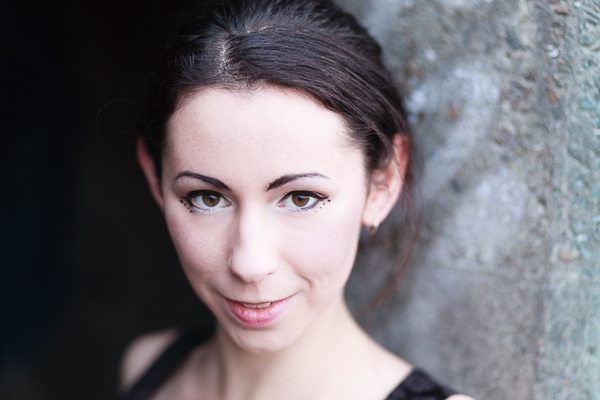
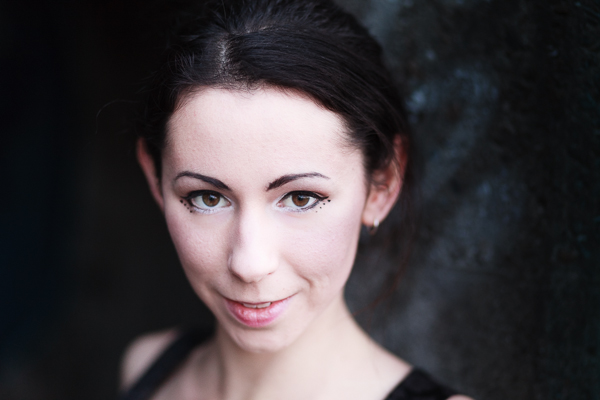
One side of the photo is already dark, so I decided to reduce the brightness of the other side to match. I used a Graduated Filter to darken the concrete wall, and an Adjustment Brush to make the model’s hair darker. Here’s the result.
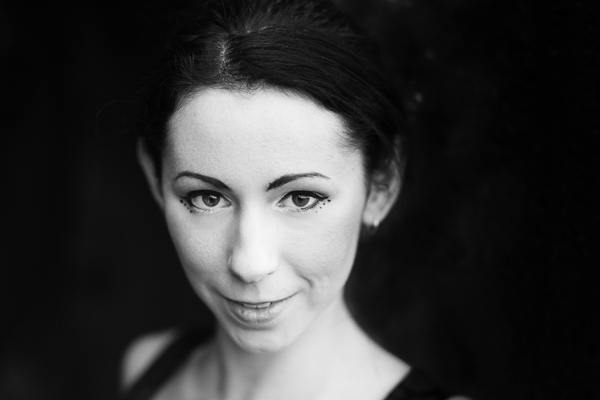
The logical extension of this thought process is to convert the image to black and white and make the background even darker. I also increased Contrast in the Basic panel and applied Clarity to the model’s eyes with an Adjustment Brush to make them stand out more.
I took this close-up photo in a market in Shanghai, China.
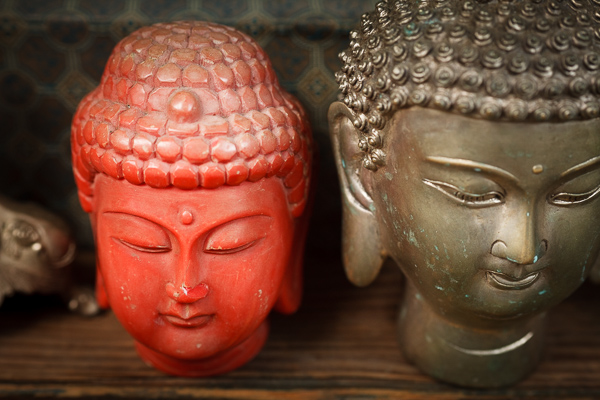
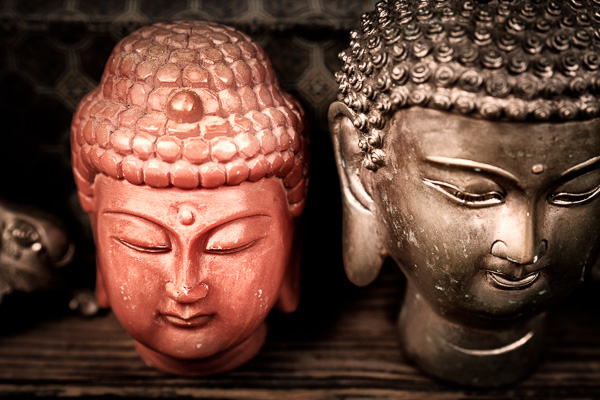
There are two thoughts that occur to me here. First, that the two Buddha heads have beautiful textures that I’d like to emphasize. Second, that I’d like to give the image a nostalgic feel.
To achieve the nostalgic look, I used the Temp slider to make the photo warmer, and reduced the saturation of the colours with the Vibrance and Saturation sliders. I increased Clarity and Contrast to bring out the texture, and added a vignette using the Radial Filter. The dark shadows this creates add a sense of mystery.
How about seeing how far I can push the idea of bringing out the texture and reducing colour saturation? Nik Software’s Viveza2 has some excellent tools for this. See the resulting image below.
Finally, here’s a landscape that I took one evening using a shutter speed of 30 seconds. The light is flat and dull, and there is a strong blue colour cast.
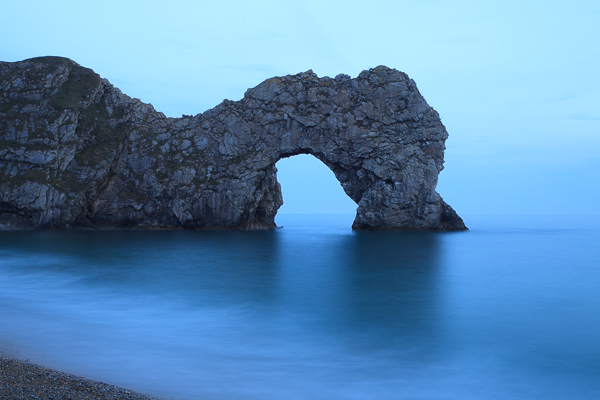
One option here is to emphasize the late hour and natural blue colour of the light. But I decided to take a different approach and that I wanted to create an image with warm tones. I did this by pushing the Temp slider to the right. Then I increased Contrast to compensate for the flat light and reduced Highlights to bring back some of the subtle detail in the sky. I added Clarity to the rock arch with the Adjustment Brush to emphasize it as the focal point.
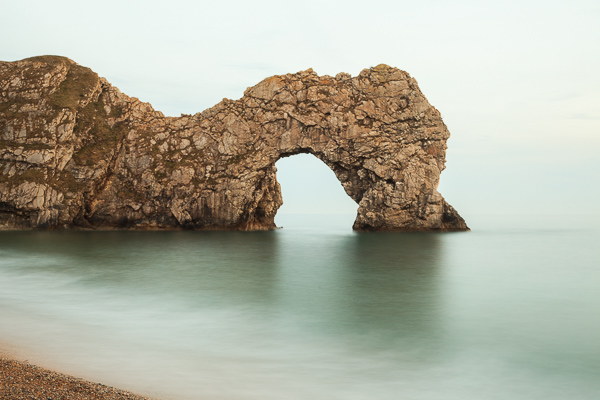
A darker, monochrome version with a blue tone to evoke the atmosphere of the blue hour when the photo was taken. I applied more Clarity to the rock arch, beach and water to enhance the texture and contrast in these areas, then added a vignette with the Radial Filter.
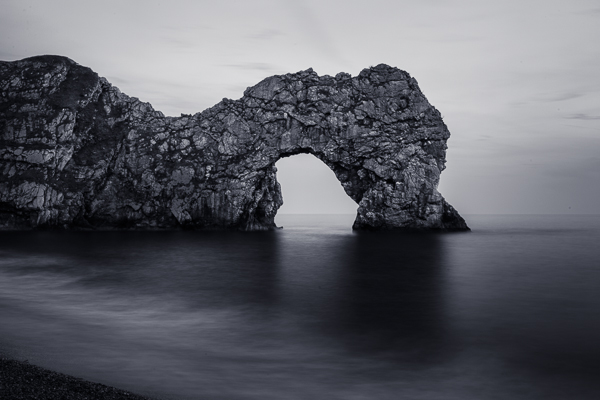
So as you can see there are many approaches to processing your images in Lightroom. Try different techniques and styles on the same image and you’ll start to learn which ones appeal to you most and are more your “style”. You can also create as many “Virtual Copies” of your image as you want and apply a different style to each for easy comparison. You can even save them as a Lightroom Preset if it’s a look you think you may want to use often.
What is your approach to processing images in Lightroom? If you have any tips for our readers then please leave them in the comments.
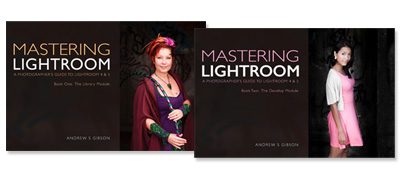
Mastering Lightroom: Book One and Two
My Mastering Lightroom ebooks are a complete guide to using Lightroom’s Library and Develop modules. Written for Lightroom 4 & 5 they take you through every panel in both modules and show you how to import and organise your images, use Collections and creatively edit your photos.
The post Finding and Achieving Your Style in Lightroom by Andrew S. Gibson appeared first on Digital Photography School.

Smithsonian.com has announced 60 finalists for its 11th annual photo contest. More than 50,000 photographs were submitted by photographers from 132 different countries. Ten images were selected from each of six categories: The Natural World, Travel, People, Americana, Altered Images and Mobile. See gallery
News: Digital Photography Review (dpreview.com)

Before the launch of Lytro’s new Illum camera, we spoke with Lytro CEO Jason Rosenthal and Founder and Executive Chairman Ren Ng about the the new product, to find out what’s been added and improved over the original Light Field Camera. Learn more
News: Digital Photography Review (dpreview.com)
[ By Steph in Gadgets & Geekery & Technology. ]

In ordinary circumstances, it would be fair to say that your paranoia levels are off the charts if you really think a nearby lamp is spying on you. But that might not be an accurate assessment anymore now that surveillance devices can be placed virtually anywhere – especially with the arrival of the Conversnitch. This cheap device looks like an ordinary light bulb, but it records the conversations of oblivious strangers and posts them on Twitter.

Artists Kyle McDonald and Brian House built the device for a mere $ 100 using Raspberry Pi and a microphone to record audio. It works anywhere with access to wifi. The text translation isn’t instantaneous, however; rather than using a talk-to-text translator, the artists pay to have the audio transcribed through Amazon’s Mechanical Turk crowdsourcing platform. McDonalds, libraries, public parks, cafes – no place is safe.

Most of the overheard conversations are predictably banal. Snippets from the Conversnitch Twitter account include things like “I had the best dream this morning! It was about Eddie Vedder and we were swimming in a pool and in love.” “Did you eat any of my tater tots while I was gone? It sure looks like you did ’cause I couldn’t have eaten that many.”

The creators acknowledge that a device like this could be used for illegal purposes, and infringe upon privacy rights and expectations. They aim to stimulate conversation about how surveillance devices can disrupt what we believe should be private moments. But given that they provide full instructions to build your own cheap surveillance lamp, they’re making it disturbingly easy to disseminate devices that do just that.
What would it look like if you could actually see all of the tweets and Instagram photos from a Beyonce concert in New York City hovering above the skyline in …
Click Here to Read More »»

This creative lamp is not only a functional lighting piece for the home – it also serves as a handy place to pin reminders that can’t be ignored.
Click Here to Read More »»
Lamps are usually used to illuminate other, more interesting objects – but these 15 designs deserve their own spotlight.
Click Here to Read More »»
[ By Steph in Gadgets & Geekery & Technology. ]
[ WebUrbanist | Archives | Galleries | Privacy | TOS ]
You must be logged in to post a comment.