RSS
 

Archive for April, 2014

Von der Idee zum Bild mit Laura Zalenga

29 Apr

Viele kennen sicher das 52-Wochen-Projekt. Dieses Jahr habe ich mich einer Gruppe angeschlossen, die für jede Woche ein gemeinsames Thema hat. In Woche 16 stand „Emotion“ auf dem Plan und ich ein bisschen auf dem Schlauch.

Sonntag Mittag. Noch acht Stunden bis zum Ende der Woche und noch kein Foto für „Emotionen“ in Sicht. Ich hatte einige Ideen durchgedacht, mehrere Emotionen in einem Foto zu kombinieren, aber das wäre ein einziges Gefühlschaos geworden. Mir war klar, dass es kein fröhlich lachendes Bild werden würde. Wer meine Bilder kennt, weiß, dass ich eher den melancholischen Geschichten verfallen bin.

Aber Tränenbilder gibt es schon so viele. Ich hatte zwar Ideen, aber fand diese nach spätestens drei Minuten schon mehrfach auf diversen Plattformen umgesetzt. Ja ja, man könnte unzählige Artikel zum Thema „eine einmalige Idee gibt es nicht“ schreiben.

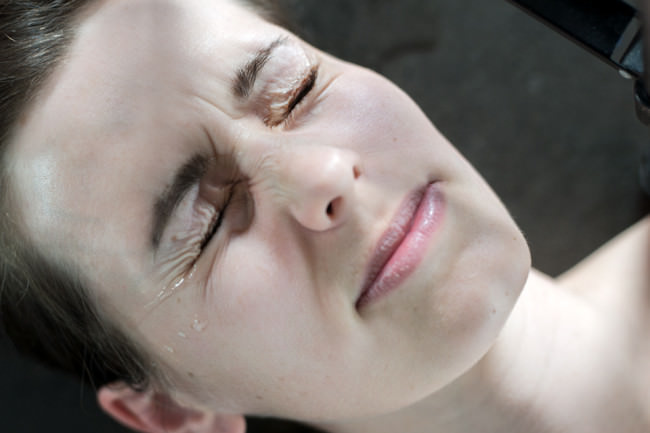
Was mich schließlich zu meiner Idee führte, war eine einfach 90°-Drehung. Auf all den Bildern, die ich fand, liefen die Tränen das Gesicht hinunter. Also beschloss ich mich, dem liegenden Weinen zu widmen und sich meine Tränen in einem kleinen See um das Auge sammeln zu lassen.

pond © Laura Zalenga

Einfacher gedacht als getan. Man legt sich ja nicht einfach mal mit dem Fernauslöser in der Hand unter sein Stativ und fängt auf Knopfdruck an zu weinen. Zumal gleich einen ganzen See. Daher ist dies eines der wenigen Bilder, für die ich mir einen Assistenten suchen musste.

„Ähm, hast Du kurz Zeit, mir Wasser ins Auge zu schütten?“
„Wie bitte?“

Was soll ich sagen, ich kann sehr gut wie ein kleiner Dackel schauen.

Ich hätte nie gedacht, dass es so schwer sein würde, einen kleinen Wasserteich auf einem Auge zu positionieren. An irgendeiner Seite läuft es immer über und zerstört die Spannung der geschlossenen Form.

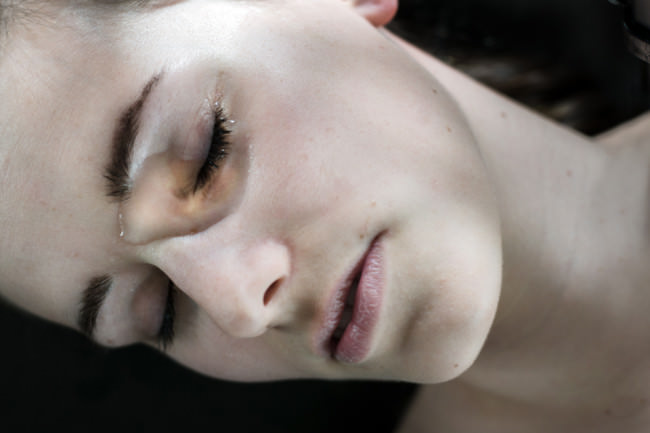
pond © Laura Zalenga

Außerdem hätte es sich vielleicht doch gelohnt, das sprudelnde Mineralwasser in der Flasche durch Leitungswasser zu ersetzen. Na ja, wer faul sein will, muss leiden.

Mit schmerzendem Auge bin ich dann auch ein wenig ungeduldig geworden und habe meinen Assistenten leicht verärgert gefragt, ob er sich auch wirklich Mühe gibt, einfach nur einen kleinen See in meinem Auge zu zaubern, statt einer großen Pfütze unter meinem Kopf.

Wir haben am Ende noch die Rollen getauscht und ich bin sehr, sehr kleinlaut geworden, als ich bemerkt habe, dass es fast unmöglich ist. Nächstes Mal dann also mit Plan und Pipette.

pond © Laura Zalenga

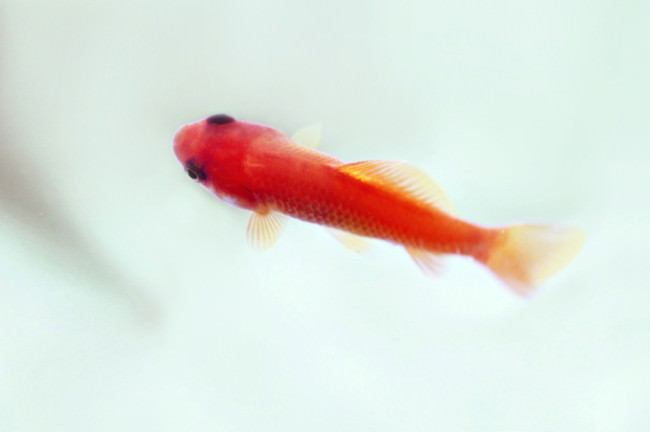
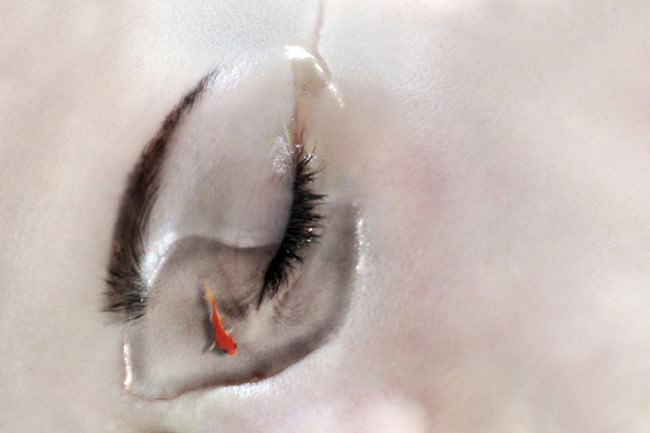
goldfisch © Laura Zalenga

In der Bearbeitung ging es mir darum, den kleinen, etwas zu unscheinbaren Teich stärker herauszuarbeiten. Ich versuchte, den Hautton so gleichmäßig wie möglich zu gestalten, entfernte das ablenkende Stückchen Ohr und die Haare am Boden und wählte einen etwas näheren Ausschnitt.

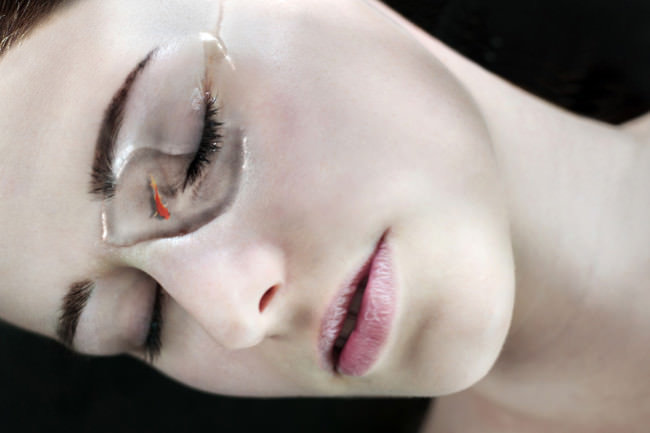
Die Idee mit dem kleinen Goldfisch kam mir irgendwann während des Bearbeitens. Ich musste an „Cry me a river“ denken und wie bei mir aus dem Fluss ein kleiner Teich geworden war. Diese Idee vom „Teich“ im Gesicht, wollte ich verstärken und meine erste Assoziation war ein Goldfisch.

pond © Laura Zalenga

Mir gefällt es, wenn ich den Betrachter ein wenig zum Schmunzeln oder Nachdenken bringen kann. Wenn er oder sie sich überlegen kann, ob es das Gesicht eines Riesen ist oder doch ein winziger Goldfisch.

Wenige Dinge machen mir so viel Spaß wie das Kreieren von Bildern, die ohne die Möglichkeiten der Bildbearbeitung nur in meinem Kopf möglich wären.


kwerfeldein – Fotografie Magazin | Fotocommunity

 
Comments Off on Von der Idee zum Bild mit Laura Zalenga

Posted in Equipment


Happy New Year 2014 – Year Of The Horse

29 Apr

Happy New Year

I wish everyone had a safe and festive holiday season! I was able to catch up on a lot of work crossing off a lot of things on my “to do” list now that I am getting into the habit of sticking to one.  It can be quite daunting to plan everything you want to achieve in a year before the year has even started, but if there’s one this that I learnt is that it’s better to have guidelines because you never know what life throws at you. I’ve also been reassessing where I am, where I want to be in terms of my career.

So what does this coming year look like for FashionPhotographyBlog.com? Well for starters, I’d like to thank this site for giving me the opportunity to share my experiences. I look forward to contributing to the pool of knowledge shared by Melissa and David. There has been a lot of planning for the year ahead and without revealing too much all at once, we would like to strive to provide a website that is the #1 resource for the fashion photography industry. All will be revealed over timed so I encourage you all to stay tuned.

Are there any resolutions for FashionPhotographyBlog.com? Well, more awesome posts showcasing great content that’s for sure. It’s time to get the engine roaring! What better time to start than in this transition phase between stepping into the New Year and embarking on the start of the new Lunar Year, The Year of the Horse. Traditionally, the new year symbolizes new beginnings whereas the new lunar year represents luck and prosperity, so it is befitting that we kick off the first entry of the year right now in this most auspicious time.

From what I heard from my friends it seemed that 2013 was quite a bumpy year for most people. I was no exception, but I had done my best to cheer them up to look forward to the new year because I say to them that “2014 is where the magic happens”.

I wish you all a hugely successful 2014, full of love, happiness and prosperity!! Stay tuned because we have exciting things to come!


Fashion Photography Blog

 
Comments Off on Happy New Year 2014 – Year Of The Horse

Posted in Uncategorized


Composite Crime Scenes: NYC Past Patched onto Present

29 Apr

[ By Steph in Art & Photography & Video. ]

NYC Crime Scene Collage 1

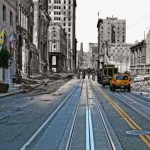
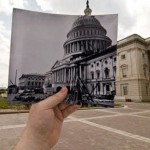
Murdered gangsters, car crashes and four-alarm fires are nearly forgotten in the peaceful present day, but this photo series reminds us that the past is not so far away. Photographer Marc A. Hermann, a historian with the New York Press Photographers Association, lays old New York City crime scene photos on top of their present-day locations for dramatic juxtapositions of time period and mood.

NYC Crime Scene Collage 2

Warning: these are real crime scene photos, and aren’t for the faint of heart. The very recently deceased are seen cradled in the arms of their loved ones, or sprawled out on the floor. The top photo depicts a distraught woman who climbed onto the ledge of her building; the second shows the Church of the Sacred Hearts of Jesus and Mary aflame.

NYC Crime Scenes 6

NYC Crime Scene Collage 4

The demise of gangsters Salvatore ‘Sammy’ Santoro and Frankie Yale can be seen after a shooting and a car crash, respectively. A woman hides her face in mourning of her sister in front of the ruins of a car. Firefighters battle a blaze at the Elkins Paper & Twine Co. that claimed the lives of six people.

NYC Crime Scene Collage 5

NYC Crime Scene Collage 3

In each photograph, the black-and-white historical image contrasts sharply with the modernized full-color setting. Tourists stroll past the scenes of some of the city’s most tragic disasters, completely unaware. The message seems to be that life goes on, but the ghostly imprints of those incidents remain. See the full series at New York Daily News.

Share on Facebook


[ By Steph in Art & Photography & Video. ]

[ WebUrbanist | Archives | Galleries | Privacy | TOS ]


WebUrbanist

 
Comments Off on Composite Crime Scenes: NYC Past Patched onto Present

Posted in Creativity


Windows 8 – Bring Back the Mouse Pointer Drop Shadow

29 Apr

Make the Windows 8.1 mouse pointer stand out by adding a drop shadow.

As Windows 8.1 has adopted a flatter interface, gradients and drop shadows have been removed from a variety of places including the mouse pointer. If you feel that the mouse pointer drop shadow helps make it easier to spot on the Desktop, do the following:

1. Access the “Mouse” Control Panel. One way to do this is by pressing Windows + R, entering main.cpl and pressing Enter….

Read more at MalekTips.
New Computer and Technology Help and Tips – MalekTips.Com

 
Comments Off on Windows 8 – Bring Back the Mouse Pointer Drop Shadow

Posted in Technology


Surreale Momentaufnahmen

29 Apr

Ein Beitrag von: Chris Hieronimus

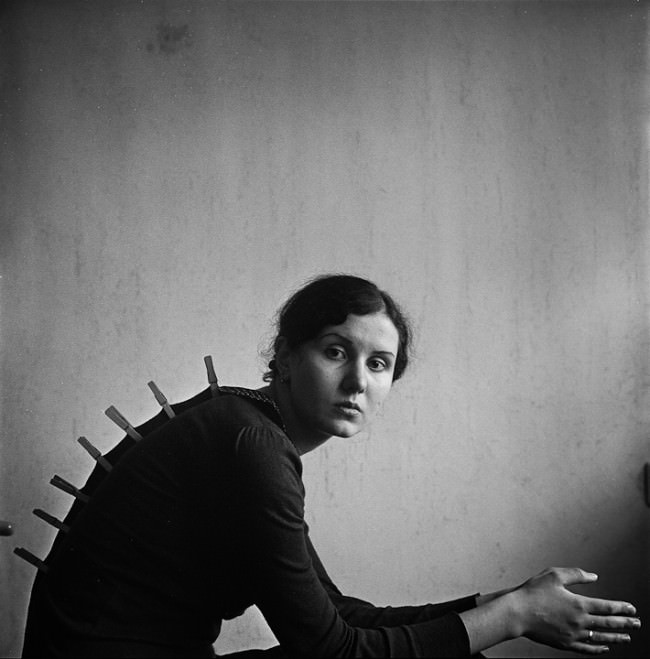
Auf Flickr bin ich auf den Fotostream von Nanne Springer gestoßen, die dort unter dem Namen Øndun veröffentlicht. Ich war überrascht, welche Faszination ihre Arbeiten auf mich ausüben. Beim Betrachten wollte ich mehr darüber erfahren, warum mich diese Bilder so in ihren Bann ziehen. Das Format, das Schärfespiel, Spiegelungen, zumeist in dramatischen Schwarzweißtönen.

Unter einem der Bilder fand ich dann einen Hinweis darauf, womit sie die fesselnde, träumerisch emotionale Stimmung ihrer Bilder erschafft: Pentacon six tl. Unter dem besagten Bild ist von einem Carl Zeiss Jena Biometar 80mm f/2.8 die Rede. Aus der Kombination von analogem Mittelformat, Bildkomposition und tiefen Emotionen entstehen einzigartige, surreale Momentaufnahmen, in denen man sich verlieren und wiederfinden kann.

© Nanne Springer

© Nanne Springer

© Nanne Springer

© Nanne Springer

© Nanne Springer

© Nanne Springer

© Nanne Springer

© Nanne Springer

© Nanne Springer

© Nanne Springer

© Nanne Springer

© Nanne Springer

© Nanne Springer

„Her eye is drawn to the surreal and fleeting moment of life, with the greatest appreciation for strong emotional imagery.“ So beschreibt ein anderer Fotograf die Arbeiten der deutschen Künstlerin, die momentan in Kanada lebt.

Nannes Bilder könnt Ihr auch auf Facebook oder auf ihrer Webseite verfolgen.


kwerfeldein – Fotografie Magazin | Fotocommunity

 
Comments Off on Surreale Momentaufnahmen

Posted in Equipment


The Love Of Modelling

29 Apr

Edrenalin's Early Days

Firstly, I want to share the love and wish everyone a great Valentine’s Day. Whether you are spending it with your significant other, or if that significant other is yourself I wish you all a special day. This website was built from love so it is befitting that love is the theme for this post, that is, the love of creating art and modelling, as well as sharing a little about me.

Having always highly valued creativity throughout my childhood, I started my love affair with the fashion modeling world in 2002. There are people who enter modelling for pretty out there for a variety of reasons such as for money, travel, meeting new people, being involved in the creative process, or simply for ego. My reason came from a different place that not many people actually know about because I haven’t shared the story before, only to close friends, but I am sharing it with you.

It came from, ironically, since when we are talking about Valentine’s Day, from a relationship breakup – my first and only partner to date actually. I won’t go into the sappiness of all the details but at the end of that relationship I felt lost, like I was out of touch with who I was as a person and what I wanted for my future because previously my mind was set on spending my future with this person. It was pretty naïve of me when I reflect back on that experience but, I’m extremely grateful that I went through that experience because it directed me on a path to where I am today.

After the breakup, I was on a journey of finding myself again. I had volunteered my time to numerous charity and not-for-profit organizations, ranging from youth advocacy to creative projects and events, to meet new people, learn new skills and to feel like I was making an impact to this world, as many as I could manage to keep myself so busy to drown the feeling of heartbreak.

From these organizations, it was a matter of being in the right place and the right time when they asked for models to be featured on community campaign posters, I put my hand up, I wanted to help out. I had such great experiences modeling for these shoots that I wanted to do, and once again I was in the right place, when a photography studio set up a pop-up booth at my local shopping mall, offering a promotional photo package. Which I thought why not? That too was a great experience and it became part of my first professional modeling portfolio. I posted these pictures online, such as Myspace, when it was popular, and other photographers saw them and contacted me to shoot with them.

I’d post the photos from these shoots online and then other photographers noticed them and then they asked me to shoot with them. It was like a domino effect and shoot after shoot, my portfolio got stronger but what I also discovered was that with every photo I learned something new about myself. Each photographer brought out and captured a different perspective of me and so I was able to see different sides of my personality in different photos that I didn’t realize I possessed before and so the more shoots I did the more pieces of the puzzle formed for self-discovery.

No longer was I held back by what people said or thought about me, I was discovering for myself who I really was inside and what I was capable of, my potential, for the first time in my life.

And that’s the story of how I got started my journey into modelling and my own self-discovery. Hope that wasn’t too deep and personal for everyone, but my focus in my life is to live an inspired life and to inspire others and I’ve realized I’m not able to do so without sharing my story. Stay tuned for my next post, sticking to the Valentine’s theme, which details my love for photography.


Fashion Photography Blog

 
Comments Off on The Love Of Modelling

Posted in Uncategorized


Aperitif: Diese Woche auf kwerfeldein

29 Apr

Diese Woche erfahrt Ihr, warum unsere Redakteurin Laura einen Fisch im Gesicht hat, wie jemand stille, gefühlvolle Fotos mit Fremden macht und warum Redakteurin Marit gerne einmal Menschen versteckt. Hinter Büchern oder Bilderrahmen zum Beispiel. Nun aber mal ganz langsam und von vorn.

Beim Verstecken von Menschen geht es eigentlich darum, wie wichtig Gesichter sind. Und es stellt sich die Frage, ob Portraits auch ohne sie auskommen. Vergleichen kann man dann zum Beispiel mit den ausdrucksstarken Portraits (mit vielen Gesichtern) von Claudia Wycisk.

Neben diesen Artikeln rund um das Thema Portrait halten wir noch Beiträge zu weiteren Genres für Euch bereit. So gibt es zum Beispiel einen spannenden Blick auf die Straßen Italiens in den 80er Jahren. Und ungewöhnliche Landschaftsaufnahmen aus einer Gegend voller weißer Sanddünen.

© Alex Veledzimovich

© Marit Beer

Katja wirft außerdem einen Blick zurück auf einen weiteren Monat in ihrem 365-Tage-Projekt. In diesem hat sie sich unter anderem mit dem Kolorieren von Schwarzweiß-Fotos beschäftigt. Ihre bisherigen Erfahrungen mit dieser Technik stellt sie Euch auch gesondert vor.

Unser persönliches Highlight in dieser Woche – wenn wir einmal so parteinehmend sein dürfen und obwohl wir natürlich alles toll finden, was wir Euch vorstellen – ist die unglaublich kreative Foodfoto-Serie, die Vögel auf Teller zaubert. Aber wir wollen auch nicht zu viel verraten.

In die nächste Woche starten wir am kommenden Montag mit einer neuen Buchrezension. Martin hat sich einen konzeptuellen Streetfotoband vorgenommen, in dem nur Bilder von Menschen sind, die in ihren Haaren zwirbeln oder rennen. Klingt schräg? Ist es auch. Aber gut? Oh ja!


kwerfeldein – Fotografie Magazin | Fotocommunity

 
Comments Off on Aperitif: Diese Woche auf kwerfeldein

Posted in Equipment


Samyang announces ‘AE’ 35mm F1.4 for Canon, and 300mm F6.3 for DSLRs

29 Apr

35mm-ae-l3-news.png

Samyang has announced five new manual focus lenses, including a revised ‘AE’ version of its Canon-mount 35mm F1.4 which allows electronic aperture setting from the camera body. Meanwhile the Reflex 300mm F6.3 UMC CS is a mirror lens designed for APS-C SLRs, which will be available in Canon, Nikon, Sony Alpha and Four Thirds mounts. Finally there are three cinema versions of existing photo lenses – a 10mm T3.1  for APS-C SLRs, a 12mm T2.2 for mirrorless cameras, and a 7.5mm T3.8 fisheye for Micro Four Thirds.  

News: Digital Photography Review (dpreview.com)

 
Comments Off on Samyang announces ‘AE’ 35mm F1.4 for Canon, and 300mm F6.3 for DSLRs

Posted in Uncategorized


Off Camera Flash for Your Travel Photography

29 Apr

The creative use of artificial light in travel photography is a powerful tool that can take your images to the next level. While there’s a myriad of information available on getting started with off camera flash, the tutorial here is tailored for you. It will give you a start using these techniques with relatively cheap and portable equipment while on the road. The tutorial will cover the basics of gear you will need, along with real world examples of different techniques you can use to make your images pop.
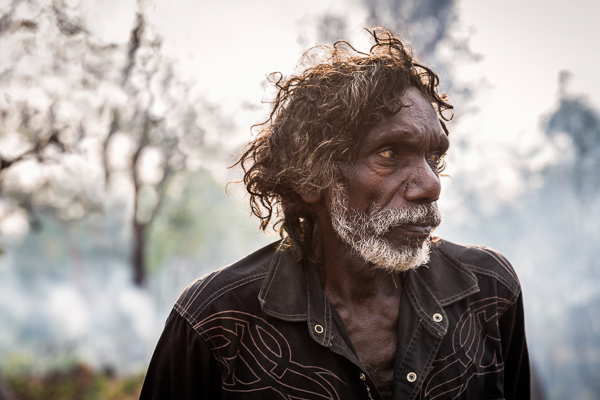
Image 4 Tom Arnhem Land

It is assumed here that you have a full understanding of how to use your camera in manual mode, and some experience with the basics of flash photography. The techniques covered here are not overly difficult, and with some practice at home you will be able to approach your next trip with a new set of options to inspire your photography.

You may know, that images shot with on camera flash do not usually produce flattering results for your subjects. Moving your flash off camera often means an investment in more gear, though it doesn’t have to be super expensive or add too much bulk to your travel kit. The resulting images you get from this investment will be well worthwhile.

For this tutorial I’ll be covering some different options for putting together a basic one light setup that can be fired off camera remotely and modified through a small softbox or umbrella. This sort of setup is a practical way to travel, especially if you are on the road for an extended period, and don’t have help lugging around more elaborate studio style setups.

There are potentially many elements to your setup, each with wide ranging options in price, bulk and results. These bits of gear can be added to virtually any DSLR with manual functions and used with any lens that suits the type of images you want to produce.

Gear for Off Camera Flash Travel Photography

1. Flash gun or speedlight

There has never been a wider amount of choice when it comes to speedlites, or flash guns on the market. From the top of the range Canon and Nikon speedlights that cost upwards of $ 500.00, to excellent third party options, it can be a difficult choice to make.

Using off camera flash is best practiced via manual control of both the flash and camera, so higher end options like TTL (Through the Lens) flash metering are not essential, though this is increasingly an option with even cheaper third party flashes.

For a long time I’ve used a Canon 430 EX II, the mid-range option in the Canon Flash line-up, and a relatively affordable bit of gear. When starting out almost any flash will do, as even the cheapest can be fired off camera, and be modified to give you great quality light.

2. Flash Triggers

Once you have decided on which flash or speedlight fits your budget, then comes the maddeningly wide array of choices available to fire your flash remotely.

Radio triggers, which can be set to fire the flash from a small unit that slides into your camera’s hot shoe, and another attached to the flash itself, are amongst the easiest and cheapest way to get started.

You might hear many professionals touting the ownership of expensive ‘Pocket Wizards’ as something of an exclusive way into the mysterious world of off camera flash. They are great products but the market has changed. Cheaper options from Yongnuo or Photix cost a fraction of the price, and will work just as well.

I’m currently using a set of Yongnuo YN-622C Triggers, which have worked perfectly through some very tough travel. These also have the option on my Canon 5D3 of adjusting the flash power through the camera menu, which is really useful, though not essential.

3. Modifier

While bare flash can produce interesting results, this ‘hard light’ is not always desirable for the type of portraits most people will be looking to produce in their travel photography.

A ‘soft light’, produced by using a flash modifier, is the more common way to shoot, as it produces more flattering results for your subjects. Again, there is an endless array of options here. A small softbox or umbrella are the easiest and most versatile ways to get shooting.

A plain white shoot through umbrella is a cheap and compact option, and throws a fairly wide soft light that can be used for a range of portrait shots. The limitation with these umbrellas is that, as a travel photographer, you will more often than not be shooting outdoors. Any kind of wind while shooting with these might have you uttering expletives at the sight of your gear tipping over or the umbrella folding itself inside out.

A more easily managed item is a small softbox. While not as compact to transport or as simple to set up, these stay sturdy and produce a great, soft light that is useful in most portrait situations. I currently use the small Photoflex Light Dome XS, which has lasted a few years now without any damage. There are many similar options, and even DIY projects that you can find online.

4. Light Stand

This is an optional piece of gear that has the potential to be a lifesaver, or just a heavy metal rod in your bag. In most situations you will be able to get somebody to hold the flash or softbox, and roping in friends and family of your subjects to help can be a great way to help people relax.

If you do decide to bring a stand with you, it’s worth spending more over the cheap generic Ebay numbers, which from experience don’t last much past being taken out of the box. The Avenger range of stands are compact and sturdy.

5. Flash Gels

CTO (Colour Temperature Orange) gels are simply bits of plastic that you can place over your flash to vary the color temperature of light that reaches your subject. Use of these, or not, is according to personal taste. Strips of this plastic are cheap and easy to purchase online, with the sample packs offered by many companies a great way to experiment. Attaching a bit of velcro to the sides of the plastic and the flash to keep the gel in place is one way to keep things simple.

6. ND filter

Another optional piece of gear. The use of ND (Neutral Density) filters with off camera flash adds another tool to your creative arsenal. Using ND filters makes it possible to add more drama to your images with underexposed backgrounds and/or shallower depths of field during the day.

I use a range of ND filters, with the Lee 3 stop Solid ND filter, mounted with the Cokin Z Pro Holder the most common choice. Again, this is not an essential part of a flash setup, and something that can be added once you are more comfortable with the basics.

Shooting Off Camera Flash Travel Photography

Once you have your setup sorted it’s worthwhile practicing to get it all working in the quickest time possible. Without treating it like a frantic pit stop, it’s really handy to be able to get everything in order as fast as you can. On the road you don’t want to monopolize somebody’s precious time more than necessary. Being confident with your gear and shooting style, helps put your subjects at ease as well.

The following examples from recent shoots are broken into two rough styles of shooting with off camera flash. The first is the technique of balancing flash with ambient (available light), producing images where the light from your flash is subtle, and blends with the background of your subject. The second is the technique of underexposing the ambient or background light, and using shallow depth of field to add more drama to your images.

The golden rule to remember with flash photography is that your aperture setting, combined with your flash power, controls the amount of artificial or flash in your photos. Your shutter speed will control the ambient, or background, light.

Technique #1 – balancing flash with ambient

Image 1 Natarajan India

Natarajan, Little Andaman Island, India

I had met this elderly gentleman a few days prior to the shot taken here. At the time of our meeting he was the oldest living man in a remote part of the Andaman Islands Chain which was devastated by the 2004 Tsunami. I wanted to take his picture for a magazine feature I was putting together. By the time I got to his place to take a few shots one evening, it was right on dark, with only dim ambient light left to work with. This was a great time to break out the flash for a simple portrait.

After setting up a small softbox and attaching the radio flash triggers to fire the flash, I first exposed for the ambient light, setting my shutter speed and ISO to ensure a sharp image. I then chose an aperture of f/4, which combined with a telephoto lens, helped throw the background out of focus.

At these settings, without the use of flash, Natarajan’s features were dark and flat. Adding in the flash, fired remotely, allowed for a better portrait by emphasizing his strong features and throwing pleasing catch lights into his eyes (the reflection of the flash in your subjects pupils).

Image 1 Natarajan

I asked my friend Stephan to hold the flash at a downwards 45 degree angle camera left, just out of frame, aimed at the left side of Natarajan’s face (see lighting diagram above). I usually start with the flash in manual mode, set to 1/16 power and work from there. If the flash is too strong you can power down or vice versa.

In this simple portrait, the flash light lends some shape to the subjects face without its use being so obvious.

Image 2 Laura Dance Festival

Laura Dance Festival, Cape York, Queensland, Australia

The picture above was taken of a young boy from the Injanoo tribal group from the far north coast of Queensland, Australia. At the bi-annual Laura Dance Festival, tribal groups gather to dance and celebrate their ancient culture with outsiders.

After shooting the dance action for a few hours I wandered off to find some kids practicing their routines, with light from the setting sun filtering through the eucalyptus trees around the camp lighting up their moves.

With a small army of enthusiastic helpers I broke out the softbox and triggers, working quickly to keep the setting sun as an element to the shot. For this image a fairly heavy CTO gel was used over the flash to give the light the look of the setting sun. It’s not exact but lends a nice warmth to the light that would have otherwise looked more out of place at this time of evening.

I asked the boy to stand with the setting sun positioned behind his head, and then exposed for the background, ambient light. I chose to shoot from a low angle, as this usually works to emphasize strength in your subjects.

The flash was again set to manual and 1/16 power, which was close to the right flash exposure for the subject. This time the flash was held by another young dancer, just over my shoulder camera right (see lighting diagram below).

Image 2 Laura

In the final image the highlights needed some recovery in post, and a slight vignette was added.

Backlighting your subjects this way (with the sun behind the subject) adds some dramatic effect, with the flash exposing a subject that would otherwise have been in near darkness without it.

Technique 2 – Underexposing with ND Filters for Dramatic Effect

Image 3 Adrian Marrinyama Mob

Adrian, The Marrinyama Mob

The image above is from a shoot in a remote part of Queensland, Australia. For part of the year the guys live a traditional lifestyle, hunting, dancing and performing tough initiations on younger boys. It was the height of summer, and I was working alone with searing desert temperatures and strong winds whipping up dust from the red earth around the camps which the group called home.

In these situations being comfortable with your gear, and confident with what you are trying to achieve is really important. A flimsy umbrella or larger modifier for the flash shots would have been difficult to manage on my own. I chose to use my ever reliable little softbox setup, mounted on a decent light stand, and worked towards creating images that I had envisaged before the shoot.

For this shot of Adrian, a slightly more advanced setup was used. I wanted a shallow depth of field and for the portrait to look dramatic. This was achieved with the help of a 3 Stop ND filter to underexpose the background while keeping a shallow depth of field a f/2.8.

Image 3 Adrian

The flash was set to full power camera left, set just out of the frame (see diagram above). The result is that the flash is more noticeable than usual, with the background underexposed and blurred nicely for effect.

The video below is from a recent shoot in remote Arnhem Land, Northern Australia. The softbox – flash – trigger setup mentioned throughout the article is shown towards the end of the footage. Again, the flash setup was used to help out during less than ideal lighting situations on this trip.

The sun filtering through the smoke of a slow burning bush fire behind Tom helped to add some drama to the image, with the flash providing the correct exposure for his face. The flash was held close to Tom, camera right, and fired at 1/16 power.

Hopefully this tutorial has given you a starting point to work from with off camera flash for your travel photography. There’s many tutorials available for every aspect of what has been mentioned here. Happy shooting.

Image 4 Tom Arnhem Land

The post Off Camera Flash for Your Travel Photography by Brook Mitchell appeared first on Digital Photography School.


Digital Photography School
 
Comments Off on Off Camera Flash for Your Travel Photography

Posted in Photography


Sony patent hints at RX compact with even greater pocket power

29 Apr

2014_66945_fig11.jpg

Sony has patented the design of a series of bright zoom lenses, including a roughly F1.8-2.8 lens that would give 28-100mm equivalent coverage on a 1″-type sensor. The designs suggest the company intends to further develop its RX range of compacts. Such a lens would allow for a camera that made better use of its comparatively large sensor, even at the long end of the zoom. Learn more

News: Digital Photography Review (dpreview.com)

 
Comments Off on Sony patent hints at RX compact with even greater pocket power

Posted in Uncategorized