RSS
 

Archive for April, 2014

Windows XP is dead. Long live Windows XP ‘Bliss’

16 Apr

Screen_Shot_2014-04-14_at_10.49.05_AM.png

In 2001 Microsoft released the Windows XP operating system and with it an iconic desktop photograph. Referred to as ‘Bliss’, the lush landscape of rolling grass hills and a crystal-blue sky has, to Microsoft’s estimation, been seen by at least a billion people. To celebrate the retiring of the XP operating system, Microsoft tracked down the original photographer and talked to him about the shot. Learn more

News: Digital Photography Review (dpreview.com)

 
Comments Off on Windows XP is dead. Long live Windows XP ‘Bliss’

Posted in Uncategorized


Mountain-Shaped Residences with Walkable Green Rooftops

15 Apr

[ By WebUrbanist in Architecture & Cities & Urbanism. ]

green space residential complex

Beyond any inherent beauty or formal references to surrounding mountains, there is a more profound proposition in this series of structures about the way we walk into, through and above spaces.

green space ridge tops

green space aerial view

green space flowering plants

green space outdoor paths

Bjarke Ingels Group (BIG) was commissioned by a Taipei developer to create a mixed-use complex of housing, restaurants, cafes and more, all woven together with pedestrian walkways, jogging paths, gardens and plazas.

green residential complex diagram

green space sloped sides

Their solution introduces a degree of vertical accessibility we are not used to seeing beyond the first few floors of a building, tying together indoor and outdoor circulation, connecting public and commercial spaces beyond ordinary horizontal surfaces.

green space lobby area

green space entry seating

green space interior home

The Haulien Residences are intended to be a resort destination and their shape was inspired in part by mountains and the ocean, but many of its signature green ribbons are sloped to accommodate paths and stairs.

green complex elevation image

green hill structures

In turn, the green roofs provided by this approach offer shelter and shade in a tropical region for the dwellings themselves while preserving views and providing gardens, decks and porches at various heights throughout.

Share on Facebook


[ By WebUrbanist in Architecture & Cities & Urbanism. ]

[ WebUrbanist | Archives | Galleries | Privacy | TOS ]


WebUrbanist

 
Comments Off on Mountain-Shaped Residences with Walkable Green Rooftops

Posted in Creativity


A Guide to Landscape Photography Workflow and Post-Processing

15 Apr

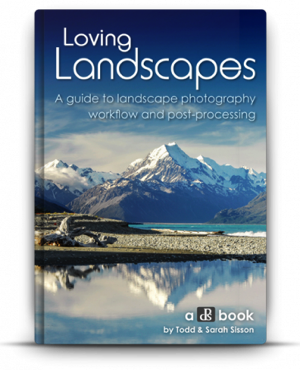
NewImageToday is an exciting day at dPS HQ because we’re releasing an eBook that has been asked for many times by readers – LOVING Landscapes, a Guide to Landscape Photography Workflow and Post-Processing by Todd and Sarah Sisson.

Early in 2013 we looked at our growing library of photography eBooks and realised that we had a big hole to fill – we were yet to publish a Landscape Photography eBook.

We began the hunt for a photographer to create a guide.

After much searching we came across the photography of husband and wife team Todd and Sarah Sisson and fell in love with their images. We began to talk to Todd about creating an eBook with us and mid last year released a guide to Landscape photography called LIVING Landscapes.

The eBook was a huge success and became one of our fastest selling eBooks ever.

That first eBook from Todd and Sarah received some amazing reviews and we still get positive feedback about it almost a year later. But alongside the praise was a request – a request for a guide to post processing landscape photos.

While the first eBook touches on some post production techniques it was not the place for comprehensive teaching on the topic – so… we began to talk with Todd and Sarah about a followup eBook that explored the topics of Workflow and Post Processing.

What they produced in LOVING Landscapes is pretty amazing. Inside you’ll find over 200 pages of practical information that leads you through 12 chapters of advice to help you bring the images that you take to life with a little post processing love.

Here’s the table of contents which will give you a feel for what’s covered.

NewImage

What I LOVE about this eBook is that it is packed with heaps of actionable information that you can apply immediately to the photos you’ve already taken.

Alongside that information are inspirational examples of the techniques in practice.

You’ll come away not only inspired but informed and ready to apply what you’ve learned.

NewImage

An Ideal Companion Bundle or a Great Standalone Guide

With the launch of Loving Landscapes we now feel like we’ve got a great complete guide to both ‘taking’ and ‘processing’ beautiful landscapes.

These eBooks are designed to be useful separately if you’re just interested in one of those topics – but together they also make an incredibly comprehensive guide through the whole topic of creating beautiful landscape images.

Grab Your Copy Today and Save 33%

Our Loving Landscapes eBook will retail for $ 29.99 but as a limited time Early Bird Special you can pick up a copy today for just $ 19.99 USD (33% off).

If you want to pick up both Living Landscapes and Loving Landscapes eBooks together you can bundle them together today for the special price of just $ 39.99 (normally $ 59.99 so today it’s also 33% off).

Want more information about this eBook? Get the full lowdown here.

The post A Guide to Landscape Photography Workflow and Post-Processing by Darren Rowse appeared first on Digital Photography School.


Digital Photography School

 
Comments Off on A Guide to Landscape Photography Workflow and Post-Processing

Posted in Photography


15. April 2014

15 Apr

Ein Beitrag von: Heinz

© Heinz


kwerfeldein – Fotografie Magazin | Fotocommunity

 
Comments Off on 15. April 2014

Posted in Equipment


Compact smartphone shootout: Sony vs HTC vs Samsung

15 Apr

CompactShootout.jpg

Most manufacturers of Android devices have designed smaller versions of their flagship smartphones to cater to those user who prefer more pocketable devices. In this shootout we pit three of those models against each other: the Sony Xperia Z1 Compact, HTC One Mini and Samsung Galaxy S4 Mini. Learn more

News: Digital Photography Review (dpreview.com)

 
Comments Off on Compact smartphone shootout: Sony vs HTC vs Samsung

Posted in Uncategorized


5 Reasons for Doing Natural Light Portraits

15 Apr

Natural light portrait

With all the attention given to the art and craft of shooting portraits using flash, you could be forgiven for thinking that this is the only way to take a portrait. The truth is that while fashionable Speedlites get all the attention, there are photographers working almost entirely in natural light and creating beautiful portraits without a softbox or light stand in sight.

One of the most prolific is Eduardo Izq, a photographer based in the United States who has built an impressive portfolio of natural light portraits taken using local models and dancers. Eduardo takes natural light portraiture to an extreme, often photographing his models without make-up. He may not be creating beauty portraits in the conventional sense, but by concentrating on character he is capturing portraits that are beautiful in a deeper, more fundamental way.

Please take some time to look at Eduardo’s website, you will learn a lot from it. For another insight into his work you can also read my interview with Eduardo about his ballerina portraits.

Intrigued? Here are five more reasons why you should take some natural light portraits:

1. It teaches you about light

To get the best out of natural light you need to become an observer of light. How does the quality, and quantity, of light change where you live from hour to hour, and season to season? How is the light affected by weather and the location? To take good natural light portraits you need to work in the most flattering light, and that usually means finding the shade or going out and taking portraits at the end of the day during the golden hour and twilight (my article The Magic of Natural Light: Twilight will help). Doing so will help you appreciate the quality of light in your area. This knowledge will also help you in other areas of photography.

2. Light is linked to location

As you become more aware of light you will come to see that the quality of light is linked to location and season. When you take a portrait of somebody outside, the light provides a link between the subject and the place they are in, tying the two together. Light, location and subject are entwined: it was only possible to take a photo of that person in that place with that type of light at one particular time. It’s almost impossible to reproduce the effect afterwards – the uniqueness of the light becomes part of the image. That is something different (not necessarily better, just different) from the effect of using flash, which is easily reproduced.

Natural light portrait

The soft light of the setting sun links the portrait of the woman with her horse to the location. Both are lit by the same light, a type of light that occurs naturally in this location in certain conditions at the right time of year.

3. Natural light is simple

Natural light portrait

Natural light is also ideal for black and white portraits. Here the light is shaped by the archways on the right.

Flash is not complicated for everybody, but it takes time to master and that can get in the way when you are starting out. One of my friends told me a story about a portrait shoot that went wrong. She modelled for a photographer who was working outdoors, and he spent so long setting his lights up and measuring the light that the shoot never really got going. She wasn’t happy with the results and I guess neither was the photographer.

Natural light is different because it is simple. In fact, I often go on a portrait shoot with just one camera and a single lens. This simple approach to equipment lets you concentrate on composition, lighting, and building rapport with your subject. Another benefit is that it is quick and easy to move from one place to another if you don’t have much gear. It is much more difficult if you have flash because you also need to move the extra equipment.

4. Your relationship with the model is critical

The number one thing that determines the success of your portraits is your relation with your subjects. Building rapport is essential, especially if you’ve never worked with your model before. Simplifying your approach means that you have more time to concentrate on building the relationship. This is essential. Your model’s pose and expression are the prime factors that determine the success of the portrait.

A portrait shoot is a collaboration, two people working together to create a beautiful image. If you ignore your model at the expense of setting up lights, the results will suffer. It takes real skill to be able to set up your lights quickly and effectively, while building a relationship with your subject. That can come later. If you start off with natural light, it gives you time to learn how to build rapport, and you can introduce flash at a later stage. Master one skill at a time.

5. Natural light is beautiful

Natural light portrait

The subject of this portrait is lit by the extremely soft red light that appears briefly after the sun has set.

It’s hard to beat the beauty of natural light at its best. The photo to the right is a good example. We were taking portraits at the beach at the end of the day and the light became more and more magical as the sun disappeared over the horizon. For a few short minutes we experienced the beautiful red afterglow of the sunset, and I used it to take the last few portraits of the session. Moments like this don’t come often, but the results are worth it. Shooting in light that is beautiful, yet fleeting and difficult to find, elevates your portraits to another level.

Your turn

What is your experience of shooting portraits in natural light? Do you prefer to take the simple approach to equipment and lighting? Can you recommend any portrait photographers who work in natural light? Let us know in the comments.
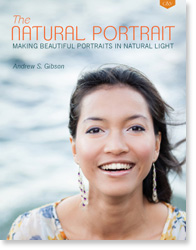

The Natural Portrait ebookThe Natural Portrait

My ebook The Natural Portrait teaches you how to take beautiful portraits in natural light. This 240 page ebook, published by Craft & Vision, takes you through the entire process of natural light portrait photography through from finding a model, deciding where to shoot, working with natural light and post-processing your images. Click the link to learn more or buy.

The post 5 Reasons for Doing Natural Light Portraits by Andrew S. Gibson appeared first on Digital Photography School.


Digital Photography School

 
Comments Off on 5 Reasons for Doing Natural Light Portraits

Posted in Photography


Ricoh announces medium-format Pentax 645Z

15 Apr

645Z_front2_copie.png

Ricoh has launched the Pentax 645Z, a medium-format camera with a 51.4 megapixel CMOS sensor. Boasting an articulated 3.2-inch LCD, top ISO of 204,800, 3 fps continuous shooting, and 1080/60i video, the 645Z is cold-resistant, dustproof and weather-resistant with 76 weather-seals. It’s also compatible with the Pentax FluCard, offering wireless remote control and image sharing from the camera to a smartphone, tablet or computer.

News: Digital Photography Review (dpreview.com)

 
Comments Off on Ricoh announces medium-format Pentax 645Z

Posted in Uncategorized


Bez Uma und die Anmut des Trivialen

15 Apr

Um ehrlich zu sein, bezeichne ich mich selbst nicht als Fotograf. Ich sehe einfach durch den Sucher und wenn ich mag, was dort vor sich geht, drücke ich auf den Auslöser. Mehr nicht. Die meisten Bilder habe ich in Sankt Petersburg, Russland, aufgenommen.

Manche Menschen werfen nicht mit Etiketten um sich. Sie machen einfach Bilder mit ihrer Kamera. Ohne Pathos, Drama oder Geltungsdrang beschreiben sie ihren Alltag mit dem Fotoapparat.

So jemand ist der gebürtige Russe Ilya Ilyukhin, der im Netz als Bez Uma auftaucht. Seine Aufnahmen sprechen eine einfache, aber nicht im Geringsten primitive Sprache des Alltags und der Lebensfreude. Der Achtsamkeit, des Unscheinbaren.

Blick von oben in zwei Hände, die Beeren halten.

Blick auf den nackten Nacken einer Frau.

Eine Frau hält nach vorn gebeugt einen Zweig hinter sich.

Fokus auf ein bisschen Staub in der Luft

Eine Frau liegt mit ihrer Katze im Bett

Ein frisch angezündetes Streichholz in der linken Hand

Blick in die Augen einer Frau, deren Haare quer über ihr Gesicht geweht sind.

Frauenhände halten einen Schmetterling ins Licht

Ein Mädchen spielt Geige

Mann mit Bart und Mütze

Ein Junge sieht aus dem Fenster.

Und so antwortet Bez Uma auf meine Frage, warum er fotografiert mit dem oben zitierten Text. Ohne Geschwafel zeigt er seine Fotos und verzichtet auf gefühlstriefend-umständliche Umschreibungen.

Auch deshalb belasse ich diesen Artikel mit weniger Text als üblich. Ganz im Sinne des Sprichwortes „ein Bild sagt mehr als tausend Worte“.


kwerfeldein – Fotografie Magazin | Fotocommunity

 
Comments Off on Bez Uma und die Anmut des Trivialen

Posted in Equipment


Pulitzer Prize 2014 winners announced for photography

15 Apr

02haner2014.jpg

Two New York Times photographers are honored with Pulitzer Prizes in photojournalism this year. Tyler Hicks takes the award for Breaking News Photography for his work documenting a terrorist attack at a mall in Kenya, and Josh Haner’s photos of a Boston Marathon bombing survivor take the top award in Feature Photography. Five finalists also receive recognition for their contributions to photojournalism in 2014. Read more

News: Digital Photography Review (dpreview.com)

 
Comments Off on Pulitzer Prize 2014 winners announced for photography

Posted in Uncategorized


How to Get Super Sharp Landscape Photography Images

15 Apr

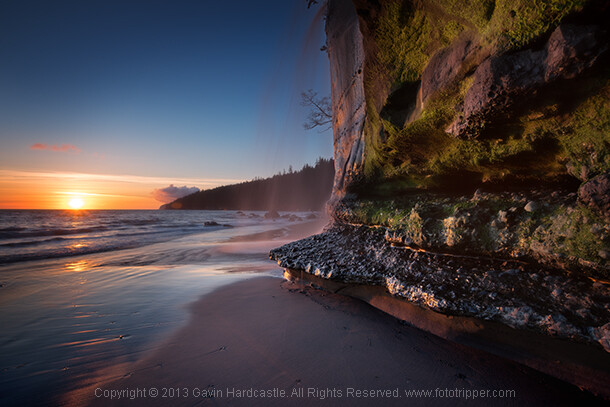
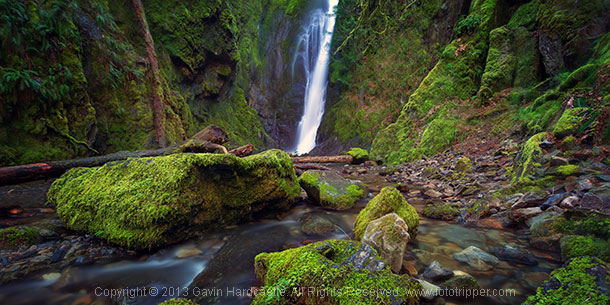
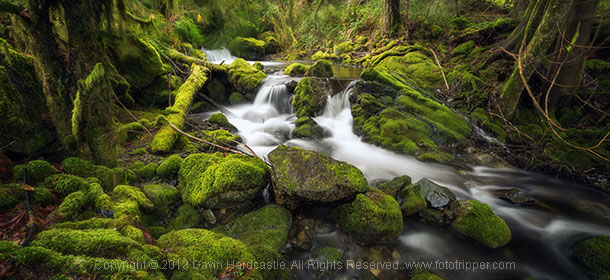
The most common question I get asked by my workshop students is ‘how do you get such sharp images?’. It’s actually really simple. Basically, avoid movement of any kind while the shutter is open, focus well and choose the right aperture for your creative vision. Mostly it’s just plain old common sense with a couple of technical elements thrown in, so if you want to learn how to get super sharp landscape photography images, here’s my list of top tips.

Top tips for sharper landscape photography

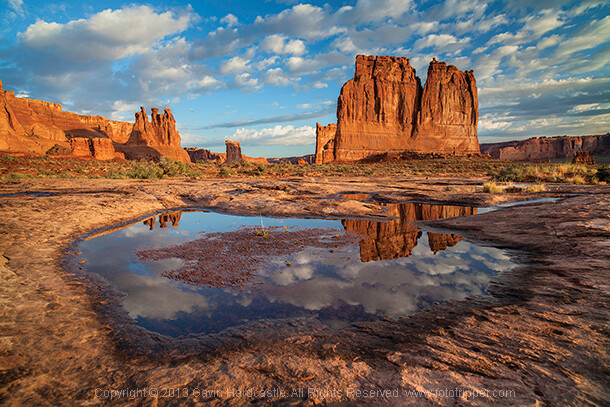
How to take sharp landscape images - Gavin Hardcastle

1 – Use a good tripod with a sturdy ball head and make sure everything is TIGHT

Seems obvious, but time and time again I see students using decent tripods and they often don’t have everything clamped down tightly. For example, the attachment that is screwed to the underside of your camera should be as tight as you can get it, eventually it’ll work its way loose. Make sure that ball head is completely locked down once you’ve composed your shot.

2 – While taking the shot, don’t place your hands on your tripod

The vibrations of your hands will blur the shot. When that shutter opens, your hands should be nowhere near the camera.

How to get ultra sharp landscape shots - Gavin Hardcastle

3 – Use the 2 second timer or a remote shutter release

This insures that the shutter won’t open until you are completely hands free.

4 – Cheap lenses will defocus while you rotate your circular polarizer

This is another one that seems obvious but I’ve seen it happen a lot. Let’s say you’ve achieved perfect focus on your landscape composition and now you’d like to rotate the polarizer which is attached to your perfectly focused lens. Guess what, as you rotate that filter, the lens is now losing its focus because of the movement and pressure you’re exerting on the filter. This rarely happens with high end lenses but I’ve seen it happen a lot with cheaper kit lenses that are poorly engineered. When this happens simply remember to refocus before hitting the shutter.

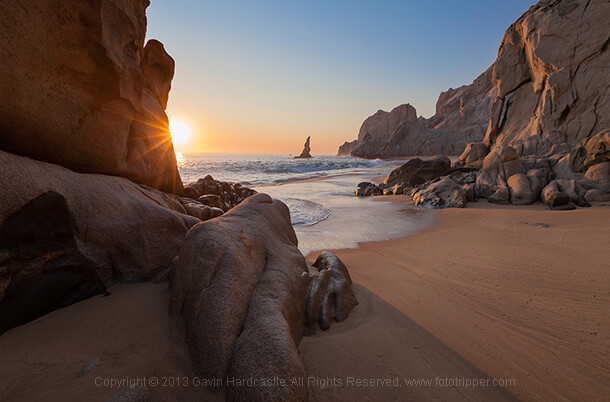
How to get tack sharp landscape images Gavin Hardcastle

5 – Enable the mirror lock-up if you have a DLSR

Using mirror lock-up ensures that the mechanical shock induced by the cameras mirror mechanism has dissipated by the time the shutter opens.

6 – Remove your camera strap

In windy situations it will act like a sail and induce vibration.

7 – Add some weight to your tripod’s central column

If the conditions are windy, it will also help reduce vibration.

8 – Place a small but heavy bean bag on your camera and lens

Do this just before taking the shot to further eliminate movement from shutter shock.

How to get very sharp landscape photos - Gavin Hardcastle

9 – Choose a Mid-range to Narrow Aperture

This one should be an article in itself but for now it’s important to understand that if you want corner to corner focus in your landscape images you’ll need to select an aperture that gives you a wide depth of field. Using f/2.8 is pointless, so pick an aperture like f/11 or f/16 depending on how close you are to your foreground subjects. Be aware however that the narrower the aperture (larger number like f/22) the less sharp your image will be due to light diffraction so experiment with your lenses to discover their sweet spot for wide depth of field.

Side Note: Shallow depth of field in landscapes can be beautiful when done well, in which case you’ll need a wide aperture like f/2.8 and ideally a lens that delivers beautiful bokeh – most super wide angle lenses don’t do bokeh well.

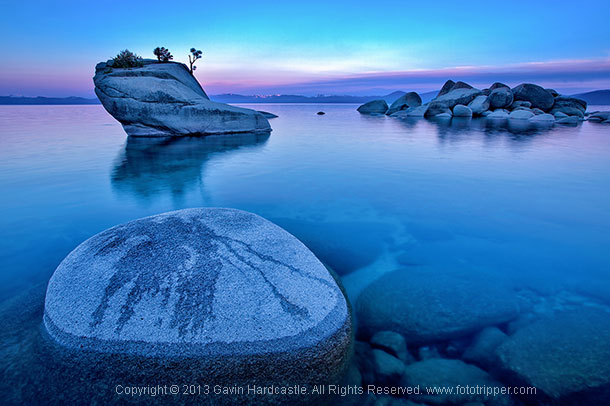
How to get really sharp landscape photographs

10 – Focus In the Distance

Don’t focus on the object closest to you. Pick an object in the middle distance that has a clear contrasting line and focus on that. You could focus to infinity but beware that most of the wide angle lenses I’ve used actually focus beyond infinity so I often have to focus to infinity and then carefully rotate the focus wheel back so that it’s just slightly before the ‘infinity’ mark.

11 – Put Your Glasses On

If you need glasses in order to see clearly and focus on things, it should go without saying that you might need to put on your stylish and expensive bifocals in order to achieve clear focus in your photography. Besides, everyone knows that glasses make you look cool and more intelligent, so why not put them on?

12 – Use Live View or EVF magnification

If you have a DLSR with an optical viewfinder I highly recommend that you use your cameras ‘Live View’ mode and then magnify it to your point of interest and use your manual focus ring to achieve sharp focus  If your camera has an EVF (Electronic View Finder)  you can do the same thing while looking in the EVF. I actually prefer this because you don’t get distracted by glare on the LCD or external light sources. Either way, remember to disable auto focus if you decide to focus manually with Live View.

How to get super sharp landscape images

I use every single one of these techniques in my Vancouver Island photo workshops and I teach them to all of my students. If you follow these tips every time you shoot landscapes, you’ll be sure to get much sharper images. If you’ve got some of your own tricks and tips for getting super sharp landscape images please leave a comment below and share your knowledge.

The post How to Get Super Sharp Landscape Photography Images by Gavin Hardcastle appeared first on Digital Photography School.


Digital Photography School

 
Comments Off on How to Get Super Sharp Landscape Photography Images

Posted in Photography