RSS
 

Archive for March, 2014

Nikon to offer D600 replacements if ‘spots’ continue

28 Mar

nikon_d600.png

Nikon has announced on its website today that it will replace defective D600 cameras with a new D600 or equivalent model. This follows up earlier news of the Chinese government ordering Nikon to stop selling D600 cameras and Nikon’s previous service announcement to offer D600 users free inspection, cleaning and replacement of the shutter assembly, even if the warranty has expired. Learn more

News: Digital Photography Review (dpreview.com)

 
Comments Off on Nikon to offer D600 replacements if ‘spots’ continue

Posted in Uncategorized


Blickfang: Rev. Thomas Barker and May

28 Mar

Wie im Artikel „Unsere liebsten Bildbände“ bereits geschrieben, ist einer meiner Schätze ein großer, schwerer Klotz namens „Lewis Carroll, Photographer“* von Roger Taylor und Edward Wakeling, der auf den Fotografen Charles Lutwidge Dodgson eingeht, der nebenher noch Mathematiker, Diakon und einer der berühmtesten Kinderbuchautoren der Welt war.

Er war ein Naturwissenschaftler und Oxford Man, aber auch ein spielerisch denkender Geist und Bewunderer von Schönheit in vielen Formen. Er löste hochkomplexe mathematische Rätsel und scheiterte gleichzeitig daran, einen Index mit durchgehender Nummerierung seiner eigenen Fotografien anzulegen. Ein widerstreitender Geist.

Wer das Hobby Fotografie in den 1850er Jahren aufnahm, demonstrierte einerseits sein naturwissenschaftliches Können mittels dem Umgang mit den Apparaten, Linsen und Chemikalien und gab andererseits seinen künstlerischen Tendenzen Ausdruck – auch die Mischung, die Lewis Carroll ausmachte.

Dazu das Spielerische und Verdrehte: Beim Blick durch den Sucher steht das Bild auf dem Kopf und ist spiegelverkehrt. Beim Abziehen der Negative wird aus Schwarz Weiß und aus Weiß Schwarz. Auf scheinbar leerem Papier erscheint wie durch Zauberhand ein Bild. Nicht ist so, wie es scheint.

Als Lewis Carroll 1856 begann, sich der Fotografie zu verschreiben, entschied er sich für das damals neue Kollodium-Nassplatten-Verfahren, das just die Vorzüge der – damals in Konkurrenz zueinander stehenden Verfahren – Daguerrotypie und Kalotypie miteinander verbunden hatte.

Er suchte höchstmögliche Präzision und Qualität und fand sie auch, nach einiger Zeit der Übung, um die schwierigen und genau einzuhaltenden Abläufe zu verinnerlichen. Da er ein Mann der Ordnung und Selbstdisziplin war, spornten ihn die anfänglichen Fehler an, im Gegensatz zu vielen anderen jungen Männern, die die Fotografie – damals schwer en vogue – schnell wieder aufgaben.

Rev. Thomas Barker and May © Charles Lutwidge Dodgson, „Lewis Carroll Photographer. The Princeton University Library Albums“ von Roger Taylor, Edward Wakeling

Nachdem er die ersten sieben Jahre lang unter freiem Himmel (zum Teil mit Laken als Hintergründen) und bei Freunden oder Auftraggebern zuhause fotografiert hatte, stand ihm ab 1863 ein kleines Studio zur Verfügung. Aber anstatt dass dieser Raum ihn beflügelte, schränkte ihn die neu gewonnene Freiheit wohl kreativ ein. Die meisten dort entstandenen Aufnahmen sind nicht erwähnenswert.

Aus diesen sonst glanzlosen Ergebnissen sticht aber eines der Portraits von Rev. Thomas Barker und seiner Tochter May hervor. Anstatt sie steif aufgesetzt vor einer eintönig weißen Wand zu präsentieren, sitzt der Vater an die Wand unter einem Fenster gelehnt auf einem Stuhl, während seine Tochter hinter ihm auf dem Polster steht, eine Hand an der Wand und die andere auf der Schulter des Vaters abgelegt.

Roger Taylor führt die Spannung und den gegenseitigen Bezug der beiden Protagonisten auf das Vater-Tochter-Verhältnis zurück. Der Vater trage das Gewicht der Tochter wörtlich und metaphorisch auf dem Rücken, sie steht schützend hinter ihm, um die von ihm zu tragende Verantwortung wissend.

Ich muss gestehen, dass mir ganz andere Gedanken beim Anblick der blicklosen Interaktion der beiden durch den Kopf gehen. Mir scheint eher etwas Teuflisches aus ihrem Blick zu sprechen und wie sie stark hinter ihm steht, während er an der Wand zusammensackt – entzieht sie ihm seine Lebenskraft?

Auch diese – zugegeben von modernen B-Movies inspirierte – Interpretation kann man auf ein Vater-Tochter-Verhältnis übertragen, denn Erziehen kostet Kraft. Natürlich stand dieser Aspekt bei der Entstehung der Aufnahme nicht im Vordergrund.

Viel mehr war jeder Tag im Leben eines Kindes tatsächlich ein Geschenk Gottes, in einer Zeit, in der ständig Kinder vorzeitig an verschiedenen Krankheiten starben.


Informationen zum Buch

„Lewis Carroll, Photographer“* The Princeton University Library Albums
Autoren: Roger Taylor, Edward Wakeling
Verlag: Princeton University Press, 2002
Einband: Hardcover, gebunden
Seiten: 304
Größe: 28,1 x 25,9 x 3,4 cm
Sprache: Englisch
Preis: neu ca. 44 €, gebraucht ab z. Zt. 12 €

* Das ist ein Affiliate-Link zu Amazon. Wenn Ihr darüber etwas kauft, erhält kwerfeldein eine kleine Provision, Ihr zahlt aber keinen Cent mehr.


kwerfeldein – Fotografie Magazin | Fotocommunity

 
Comments Off on Blickfang: Rev. Thomas Barker and May

Posted in Equipment


Ricoh to give away cameras for ‘photojournalism’ competition

28 Mar

THETA-diagonalv2.jpg

Ricoh Imaging Company has announced an advertorial feature on cnn.com called ‘Spherical Report 360’, where 360 people will be selected to receive a free Ricoh Theta spherical camera to shoot local news and events. Images taken with the Theta will then be judged for a Pentax K-3 grand prize. To be considered for a free Theta camera visit the Spherical Report 360 website for application guidelines. Applications will be accepted between March 27, 2014 through April 10, 2014. Learn more

News: Digital Photography Review (dpreview.com)

 
Comments Off on Ricoh to give away cameras for ‘photojournalism’ competition

Posted in Uncategorized


Get up high: Orion DVC210 DLSR crane review

28 Mar

DVC210-1.jpg

As more and more video production companies and independent videographers rely on DSLRs to shoot a majority of their work, finding more compact equipment is becoming easier. A decent fully-loaded DSLR jib setup can cost anywhere between $ 500 and $ 3,000, and the ProAm Orion DVC210 resides at the lower end of the spectrum. Can the Orion DVC210 take your DSLR video to the next level? Find out in our review

News: Digital Photography Review (dpreview.com)

 
Comments Off on Get up high: Orion DVC210 DLSR crane review

Posted in Uncategorized


Practical Tips To Build Your Street Photography Confidence

28 Mar

MWTL1001921

The noble pursuit of street photography requires a good measure of cunning and bravado. Of course, there is the ever present hurdle of luck and opportunity. Beyond knowing your streets, their patterns and ad hoc events, getting that wonderful shot is a guessing game.

When you are in the right place and you see the converging paths that will result in a great decisive moment, you need to be able to capture the scene. This can be learned and practised. Here are some practical tips to help you build your street photography confidence.

I feel like I’m wearing a sign that says, “Look everyone, a street photographer!”

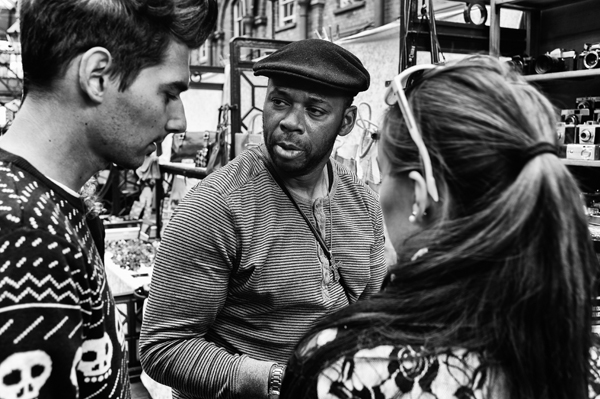
I know what you mean. When I first started out, doing street photography, I was so focused on seizing photo opportunities I could see people staring back at me. On numerous occasions people I spotted as a potential photo saw me and moved away. Market vendors are deeply suspicious and, even now, I still get glared at.

I quickly realized I was missing shots because I was looking conspicuous and acting a bit weird. That slow purposeful walking and excessive bobble headed looking, then stopping and staring for longer than normal people stop and stare. Very conspicuous.
MWTL1004072

What changed?

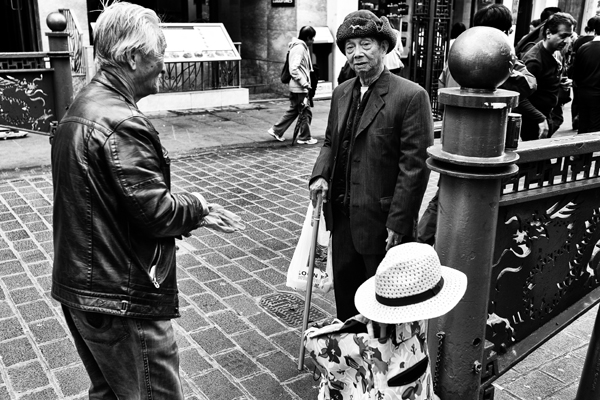
Tourists. London is a tourism mecca and even on week days, the capital is buzzing with visitors from all corners of the globe. I take quite a lot of photos of tourists but, when I don’t want them in my shot, they can be quite annoying. In fact, tourists annoy everyone as they parade through other peoples’ photos with no remorse. Here’s the real value though. While people are irritated with tourists being in their way, they are also tolerated. Others, particularly locals, don’t shy away from their business. They jostle through the visitor throng, or continue their conversations. Tourists are, for the most part, ignored!

This was a great revelation for me and, as a street photographer, I decided to be just like a tourist.

Don’t look conspicuous
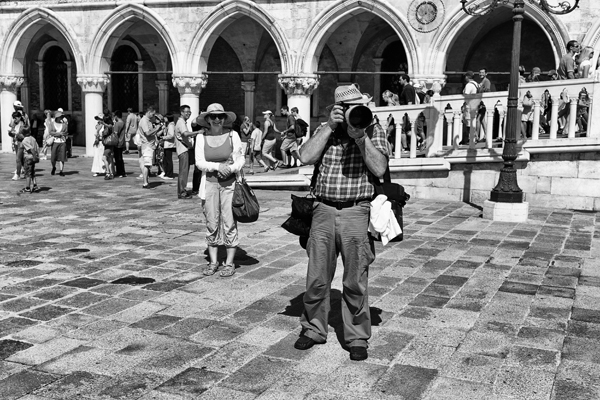
MWTL1002538

Dress casually and for walking

Check the weather and wear layers for the best and worst of the predicted forecast. I would steer clear of photographer jackets and other ‘practical’ photographer clothing. Think tourist: jeans, sweaters, hoodies, etc. I’ve tried a street photo walk in a three piece suit after a morning meeting. Don’t wear a suit either!

Personally, I recommend a small camera

Before you all jump to berate me, this is my recommendation for being inconspicuous as a street photographer. I used to walk the streets with a 1D Mark IIn and a 50mm f/1.2L lens. An extraordinarily capable camera with a decent fast lens. More often than not, the people I paused to photograph would see this camera and curtly move aside because the professional wants to take a photo and we’re in the way. And the shutter! On a train, I would stealthily raise this camera and fire off a shot. The looks I would get from people being loudly ‘papped’!

Use the neck strap on your camera

Raising a camera from your side to your face could be enough to be seen. With your camera around your neck, raising it to your eye is much less apparent. Of course, you can point your body and shoot ‘from the hip’ without moving the camera.

Carry a small bag or backpack

I take a spare battery, SD card, lens cleaner pen, business cards and a waterproof bag. That’s all, for the entire day’s shooting.

You don’t need a tripod.

Now step forth and be bold
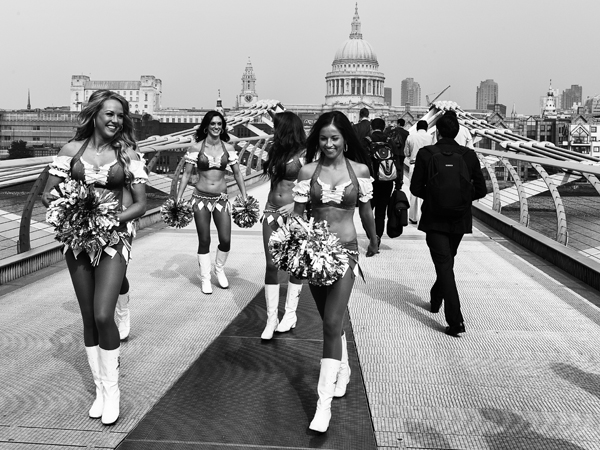
MWTL1003373

So now you look pretty much like a stereotypical tourist with a camera, how do you act like one?!

Tourists look around a lot and walk slowly, but casually, taking in the scenery. As an exercise, try putting your camera in its bag and just walk around taking in the location. Can you still carry off that casual saunter with your camera in your hand or around your neck?

The second tip, and equally as important as the first, is to look through people rather than at them. Tourists look at the scenery and other people are simply obscuring their view. People will quickly realise they are not the focus of your attention if you are looking past them to what is behind them. It will take a while, but you’ll become practised with seeing a potential photo whilst still looking nonchalant.

Personally, I shoot with a rangefinder. Most of my shots are from around 15 feet away, so I leave my lens focused at that distance for quick response captures, like when someone walks toward you.

Otherwise I will focus for distance and then frame the shot. The trick here is to focus on another object which is the same distance as your subject. Then turn to your subject and shoot. You have minimized the time you are gazing at them by focusing elsewhere.

Street Portraits
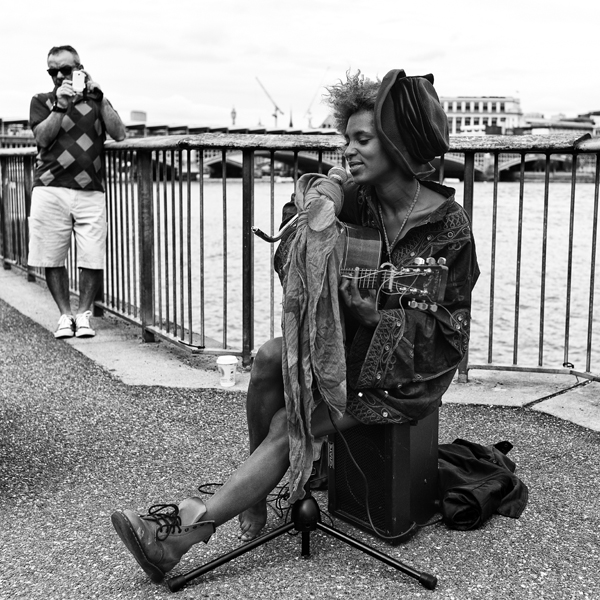
MWTL1001783

Occasionally I will see someone who would make a great street portrait. I carry business cards around and this supports my brand as a street photographer. It’s this that gives me that needed boost to actually approach someone.

Be bold and polite and, this is imperative, know how you want them to pose. You have one chance to get them in position, after all, they’re doing you a favour.

As I approach the person I might say, “Hi, I really like your outfit/tattoo/hair/etc and I wondered if I can take your portrait?”

Take one shot. Check composition on your LCD. Take one more if necessary.

This is where I thank them and hand over a business card. I explain I’m a street photographer and point out my web site so they can go find their picture. This post photo exchange makes me feel less of an intruder and, hopefully, they are not fazed by the two minute distraction either.

Final thoughts

Hopefully these small tips will help you take street pictures while getting over the nervousness of simply trying to take photos. Through practice and experience, you will learn how people react and what you can get away with.

I don’t like to invade the intimate privacy of people or chase them down or ask them to walk back along the route I liked, so I do have a line I won’t cross, but I don’t miss a shot through lack of confidence.

Good luck!

The post Practical Tips To Build Your Street Photography Confidence by Michael Walker-Toye appeared first on Digital Photography School.


Digital Photography School

 
Comments Off on Practical Tips To Build Your Street Photography Confidence

Posted in Photography


How To Make A Cinemagraph for Photoshop Newbies

28 Mar

A cinemagraph is “more than a photo, but not quite a video.” Or at least that’s how Supermodel Coco Rocha summed them up. Technically, a cinemagraph is just a GIF or a Graphics Interchange Format. Basically, a short, animated file that is everywhere online these days. You’ve probably seen them on Tumblr, Reddit or 4Chan. Maybe you even remember them Continue Reading

The post How To Make A Cinemagraph for Photoshop Newbies appeared first on Photodoto.


Photodoto

 
Comments Off on How To Make A Cinemagraph for Photoshop Newbies

Posted in Photography


Nepal gelebt

28 Mar

Ein Beitrag von: Jonas Jung

Nepal, warum Nepal? So weit weg? Diese Fragen hörte ich vor mittlerweile mehr als eineinhalb Jahren häufiger. (Wenn das Land nicht gerade mit der Stadt Neapel verwechselt wurde.)

Nepals Klischee ist der schneebedeckte Himalaya, auf dessen Dach, dem Mount Everest, sich Reinhold Messner mit Tausenden Sherpas tummelt und den Yeti jagt. Man weiß, dass es nicht so ist, aber besser weiß man es nicht.

Die Thronenden © Jonas Jung

Ich wollte einen großen Kontrast zu Deutschland. Eine Kultur und zwei Religionen, so weit wie nur möglich entfernt von dem, was ich kannte. Bewusst vermied ich es weitestgehend, mir ein Bild von diesem Land zu machen, in dem ich ein Jahr verbringen würde.

Dies hatte eventuell ein wenig mit Selbstschutz zu tun, denn eine nicht vorhandene Vorstellung kann nicht enttäuscht werden. Im Nachhinein war es eine gute Entscheidung. So entstand in mir ein persönliches, eigenes Bild mit nur wenigen Klischees.

Die Betende © Jonas Jung

Das Ritual © Jonas Jung

Ich lebe nun schon einige Monate in Nepal, es ist Alltag entstanden, den ich gern lebe. Es liegen Tausende schöner Landschafts- und Sehenswürdigkeitsfotos auf meiner Festplatte. Nepal ist wunderbar.

In dieser Oberflächlichkeit hätte ich weiterleben können. Doch hätte ich das gewollt, wäre ich nicht nach Nepal gegangen. Es war also Zeit für ein neues Abenteuer: Das „hässliche“ Nepal wollte kennengelernt werden. Es ging nach Birgunj, einer Grenzstadt zu Indien. Sie wurde als eine Stadt beschreiben, in der man nicht bleiben möchte – perfekt.

Die Sortierte © Jonas JungDer Verkäufer © Jonas Jung

Ich kam nachts dort an und bekam nur mit Schwierigkeiten ein Zimmer, aus dem ich noch vor den ersten Sonnenstrahlen floh. Die Straßen waren voller Müll, in dem Kühe und Hunde nach etwas Essbarem stöberten. Gleichzeitig bauten Straßenhändler ihre Stände auf und es mischte sich der süsslich-würzige Geruch von Milchtee in den Gestank von Müll und Ausscheidungen. Das Ganze in einem wunderbaren Morgendunst.

Ich begann, einige Straßenszenen abzulichten, ohne viel darüber nachzudenken. Es war das erste Mal, dass Menschen bewusst zu meinem Motiv wurden. Nach und nach wurden die Straßen gereinigt und es verzog sich der Dunst. Damit kamen aber auch Lärm, Sonne und Hitze – außerdem fiel ich auf.

Die Interagierenden © Jonas Jung

Ich beschloss, die Kamera aus zu machen und nach einem Ersatz für meinen verloren gegangenen Objektivdeckel zu suchen. Ein Schild, auf dem eine DSLR abgebildet war, schien mir erfolgversprechend. Stattdessen landete ich bei ein paar jungen Nepalis, die ihr Geld mit Hochzeitsvideos verdienten.

Wir tauschten Musik, uns über unsere Kameras aus und tranken Milchtee. Wir verbrachten den ganzen Vormittag gemeinsam. Danach fuhr ich – zwar ohne Objektivdeckel, aber mit neuen Freunden – zurück in meinen Alltag. Ein Alltag, der jetzt um eine Idee reicher war. Die Idee, das Leben in Nepal festzuhalten.

Der Gelangweilte © Jonas Jung

Das Gelesene © Jonas Jung

Meine Erfahrungen in Sachen Menschen fotografieren beschränkte sich auf Portraits für Wahlplakate und einige Familienfotos. Insofern begab ich mich in eine für mich ganz neue Materie der Fotografie. Ich sichtete meine Bilder auf der Suche nach Ideen und einem Konzept, um meine Idee umzusetzen.

Ich fand schließlich ein Foto von einem Süßigkeitenladen, das ich sehr frontal aufgenommen hatte. Ich konvertierte es in schwarzweiß und probierte damit herum. Mir gefiel das Konzept, dennoch startete ich nicht sofort, sondern ließ die Ideen noch ein bisschen reifen.

Die Szene © Jonas Jung

Der Träumer © Jonas Jung

Eines Nachmittags in Kathmandu ging ich mit meiner Kamera durch eine Straße, durch die ich schon etliche Male gelaufen war. Ich fing spontan an, meine Idee umzusetzen. Das Licht war nicht gerade gut, doch ich fing an, damit zu spielen und es zu nutzen. Am nächsten Morgen begutachtete und bearbeitete ich die ersten Fotos, war schon relativ zufrieden mit meinen Ergebnissen und nahm mir vor, dieses Projekt fortzusetzen.

Es entstanden viele Aufnahmen in Kathmandu und Umgebung und in der Nachbarstadt meines Wohnortes. Nur an Orten, die ich sehr gut kannte. Ich wurde mit den Aufnahmen immer routinierter und es machte mir immer mehr Spaß, durch die Gassen zu ziehen und nach Motiven zu suchen. Meine Intention, Nepal zu zeigen wie ich es wahrnehme, gelang mir immer besser und ich bin sehr zufrieden mit dem Ergebnis.

Die Genießenden © Jonas JungDie Bewacher © Jonas Jung

Patan Durbar Square,
aus Tempeln ein Meer,
von Menschen noch mehr.
Händler rufen laut,
schmatzend Paan gekaut,
irgendwo wird gebaut.
Ich bleibe stehen
um mich umzusehen.
Sein eigenes Wort ist nicht zu verstehen.
Hier wird nicht geeilt,
Tikkas werden verteilt,
um alles wird gefeilt.
Patan Durbar Square,
alles ein wenig quer,
doch einiges was ich hier erlehr.

Die Beobachter © Jonas Jung

Viele meiner Fotos entstanden in den letzten zehn Tagen meines Aufenthalts. Diese Tage verbrachte ich in Kathmandu und hatte schon einen Abschied hinter mir: Den Abschied aus dem Dorf, in dem ich das letzte Jahr verbracht hatte.

Mir fiel dieser Abschied schwerer als der aus Deutschland, weil es keinen Ausblick auf ein zeitnahes Wiedersehen gab. Viele meiner dortigen Freunde sind ausgewandert in Länder wie Dänemark, Dubai, Tansania, Australien. Ich bin froh, noch mit ihnen in Kontakt zu stehen.

Der Schiebende © Jonas Jung

Meine letzten Tage also. Ich wollte mich verabschieden und runterkommen, dies funktionierte wunderbar durch meine Fotospaziergänge durch die Straßen. Natürlich freute ich mich auf Deutschland, doch die Gedanken daran waren sehr surreal. Real wurde es gar nicht komisch, sondern wie immer. Nepal ist nun ebenfalls ein Zuhause und wird es auch bleiben.

Seit meiner Rückkunft habe ich meine Kamera weniger in die Hand genommen. In meinem Kopf schwirren einige Ideen herum, auch die Fortsetzung dieser Serie sozusagen als Kontrast. Aber ich habe gelernt, Ideen Zeit zu lassen.

Derzeit beschäftige ich mich mit Film, was meine berufliche Zukunftsperspektive angeht, wird die Fotografie auch da immer mit dabei sein. Die Fotografie an sich steht deswegen aber nicht still, das Gegenteil ist der Fall.


kwerfeldein – Fotografie Magazin | Fotocommunity

 
Comments Off on Nepal gelebt

Posted in Equipment


Futurbanist: 10 Award-Worthy 2014 eVolo Skyscraper Designs

28 Mar

[ By WebUrbanist in Conceptual & Futuristic & Technology. ]

skyscraper award winning designs

From 3D-printed towers of sand to garbage-powered architecture of the seas, these eVolo Skyscraper Competition entries push the envelope in every possible direction, and a few impossible ones too. A common theme this year: harvesting energy and building materials from local environments, and turning pollution into part of a futuristic solution. The award winners are certainly impressive, but a number of other entrants are well worth their honorable mentions as well. Set everywhere from the urban jungles of Los Angeles and suburbs of Detroit to the world’s rain forests, deserts, oceans, here are ten designs, selected from hundreds, all deserving of a closer look (leading up to and including the three award winners).

evolo sandscraper desert tower

evolo sandscraper base footprint

evolo desert 3d printed tower

Sand Babel is one such runner up, an incredible skyscraper crafted from the very sands on which it sits, its 3D-printed construction powered by solar energy (abundantly available). Inspired by desert tornadoes, its above-ground portion is anchored by an underground system of root-like spaces. Temperature differentials help the structure generate water via condensation along its expansive top viewing platform.

evolo pollution harvesting tower

project blue close up

Project Blue, another honorable mention recipient, is fueled by its environment as well, but takes things up a notch by turning particulate pollution in the sky and converting it into “green energy by creating an enormous upside down cooling tower with a multi-tubular cyclic desulfurization system that produces nitrogen and sulfur. When both elements are combined with the atmospheres surplus of carbon monoxide the result is water coal that would later be transformed methane and used as green energy through a low-pressure reaction called low pressure efficient mathanation – a physical-chemical process to generate methane from a mixture of various gases out of biomass fermentation or thermo-chemical gasification.”

evolo vertical transit hub

The Hyper-Speed Vertical Train Hub provides a fantastic vertical spin on a conventionally horizontal phenomena, turning transportation on its side and making it more visible in the city, all while saving precious ground space. “The proposal will ‘flip’ the traditional form and function of the current train station design vertically, and re-form it into a cylindrical mass to increase the towers train capacity. This tall cylindrical form aims to eliminate the current impact that traditional stations have currently on land use, therefore returning the remaining site mass back to the densely packed urban Mega City.”

los angeles freeway skyscraper

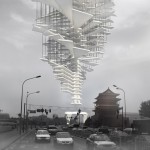
The Skyvillage draws its inspiration from the challenging condition created by freeway interstates, which are at the heart of the car-centric city of Los Angeles where the conceptual project is set. The “Los Angeles freeway system segregates the city’s fabric restricting urban activities to single locations. Similarly, skyscrapers exacerbate this condition of segregation instead of encouraging urban integration. The envisioned vertical city would bridge over freeway interruptions and connect the four quadrants around 101 and 110 freeways as a single architectural organism while boosting cultural exchange, urban activities, and social interaction.”

Next Page – Click Below to Read More:
Futurbanist 10 Award Worthy 2014 Evolo Skyscraper Designs

Share on Facebook


[ By WebUrbanist in Conceptual & Futuristic & Technology. ]

[ WebUrbanist | Archives | Galleries | Privacy | TOS ]


WebUrbanist

 
Comments Off on Futurbanist: 10 Award-Worthy 2014 eVolo Skyscraper Designs

Posted in Creativity


27. März 2014

28 Mar

Ein Beitrag von: Frederik

Snowboard, Abflug, Winter, Schnee, Sport


kwerfeldein – Fotografie Magazin | Fotocommunity

 
Comments Off on 27. März 2014

Posted in Equipment


Liters of Light: DIY Solar from Used Bottles, Bleach & Water

28 Mar

[ By WebUrbanist in Design & Products & Packaging. ]

liters of light roofs

Now setting its sights on a million homes, the organization behind this remarkably cheap approach to solar home lighting has already transformed the lives of thousands who were previously living in the dark.

liter of light roof

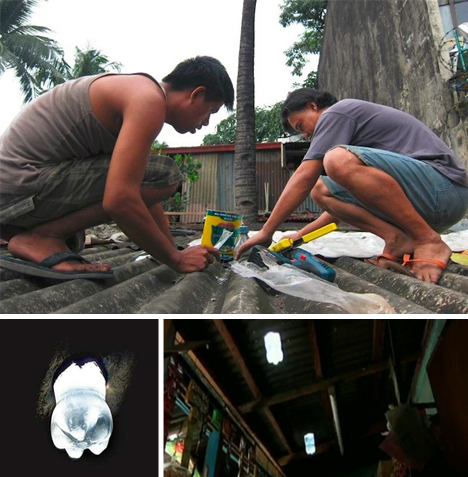
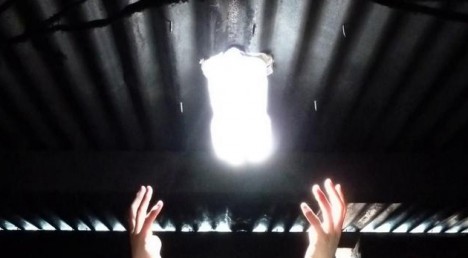
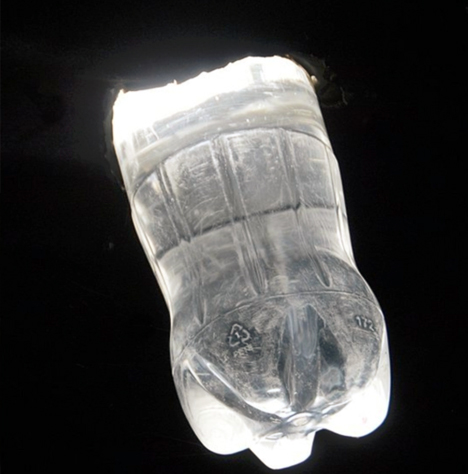
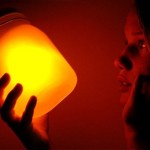
Installed in the metal roofs of windowless shacks, bottles of water help spread incoming light while the bleach keeps each bottle clean and clear, resulting in an output equivalent to that of a 60-watt bulb.

liter light project roof

These light bottles reduce the fire danger posed by poor electrical connections, cuts down on the cost of electric lighting and encourages recycling at the same time.

liter of light bottle

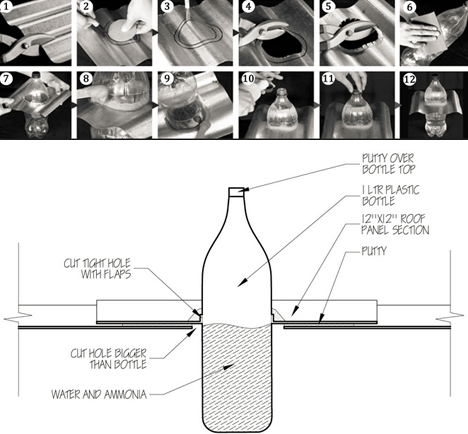
But a big part of the brilliance of the endeavor, pardon the pun, is in the simplicity of installation: effectively anyone can scavenge the major materials involved and teach others how to put them in place.

liter light construction steps

liters of light project installation

A Liter of Light grew out of an idea by Alfredo Moser from Brazil, enhanced by MIT students and aimed at addressing a problem facing millions in the Philippines: the absolute absence of natural light in their often-informal dwellings. Their latest goal is to raise funds to install these light bottles in homes across Manila.

Share on Facebook


[ By WebUrbanist in Design & Products & Packaging. ]

[ WebUrbanist | Archives | Galleries | Privacy | TOS ]


WebUrbanist

 
Comments Off on Liters of Light: DIY Solar from Used Bottles, Bleach & Water

Posted in Creativity