RSS
 

Archive for March, 2014

Revamped camera and lens feature search now live!

12 Mar

shared:DPRlogo.png

We’ve revamped two of our most popular site tools – our camera and lens feature search pages. We didn’t want to completely reinvent the wheel, and changes mostly relate to design and user experience. The tools now look friendlier (we think), search options should be a little more logical and the process of narrowing down searches should be less confusing. We’ve also added a few new fields here and there while removing some outdated ones. Click through for links.

News: Digital Photography Review (dpreview.com)

 
Comments Off on Revamped camera and lens feature search now live!

Posted in Uncategorized


Mastering Self-Portraiture: What You Need to Get Started

12 Mar

With the rapid increase in the immediate smartphone-picture “selfie,” it’s hard not to start taking your own. Self-portraits are, after all, the new trend . They are almost always the default profile picture, and super convenient when you have nothing else to do . For photographers, this poses another question: Should I take a professional self-portrait? Have you ever thought Continue Reading

The post Mastering Self-Portraiture: What You Need to Get Started appeared first on Photodoto.


Photodoto

 
Comments Off on Mastering Self-Portraiture: What You Need to Get Started

Posted in Photography


HTC One 2014 leaks, comes with ‘Duo Camera’

12 Mar

htcone.png

HTC was expected to launch the successor to last year’s flagship HTC One smartphone at the Mobile World Congress in Barcelona but it never appeared. Now it seems that the new model will finally see the light of day at an event on the 25th of March, and rumors point to a ‘Duo Camera’ that will allow users to ‘choose where to focus, highlight what you love, soften backgrounds and add 3D effects’. Click through for more information on connect.dpreview.com.

News: Digital Photography Review (dpreview.com)

 
Comments Off on HTC One 2014 leaks, comes with ‘Duo Camera’

Posted in Uncategorized


Kreativität

12 Mar

Mein Psychologielehrer machte mit uns zu Beginn der Lehreinheit „Kreativität“ ein Experiment: Wir hatten eine Minute Zeit, alle weißen Lebensmittel aufzuschreiben, die uns in den Sinn kamen. Alle schrieben eifrig und die Blätter füllten sich schnell.

Bei der Auswertung ging es jedoch nicht darum, möglichst viele Lebensmittel gefunden zu haben, sondern besonders einzigartige. Mehl und Eier standen wahrscheinlich auf jedem Zettel, während Mäusespeck und Zuckerwatte kaum einer aufgeschrieben hatte.

Gezeigt werden sollte uns damit, dass kreative Ideen durch originelles, einzigartiges Denken entstehen. Künstler können gut assoziativ denken, ihre Leistung liegt meist darin, gängige Denkstrukturen zu durchbrechen, wodurch ihre Arbeiten häufig nicht nur als etwas Besonderes bewertet werden, sondern auch schnell als verrückt.

Warum einige Menschen kreativer sind als andere, ist wahrscheinlich sogar genetisch verankert. Einer Studie der Semmelweis-Universität in Budapest zufolge gibt es einen Zusammenhang zwischen dem Neuregulin-Gen und der Kreativität eines Menschen. Gleichzeitig besteht jedoch auch ein Zusammenhang des Gens mit Schizophrenie.

Das Gen kommt in einer C- und einer T-Variante vor. Probanten, die von ihren Eltern jeweils die T-Variante vererbt bekamen, gaben originellere Antworten, neigten jedoch auch häufiger zu Schizophrenie. Probanten mit der CC-Variante wurden als am wenigsten kreativ bewertet, während Träger der CT-Variante mittelmäßig abschnitten.

Nun nahmen an dieser Studie nur 200 Probanten teil, die zum Großteil aus künstlerischen und akademischen Berufen kamen. Um die Ergebnisse zu untermauern, wäre eine größere, repräsentativere Studie nötig. Aber das Ergebnis zeigt schon in die Richtung einer gängigen Meinung: Genie und Wahnsinn liegen dicht beieinander.

Schon Aristoteles meinte, es gäbe kein großes Genie ohne einen Schuß Verrücktheit. Und viele berühmte Künstler scheinen es zu bestätigen: Robert Schumann, Vincent van Gogh oder Sylvia Plath, um nur einige wenige zu nennen.

Nun heißt das nicht, dass jeder, der kreativ ist, auch droht, wahnsinnig zu werden oder gar selbstmordgefährdet ist. Kreativität ist etwas, zu dem jeder Mensch fähig ist und zeigt sich bei jedem Menschen anders: Fotografieren, Malen, Schreiben, Musizieren, Witze machen oder ganz anders.

Um die eigene Kreativität zu fördern, gibt es viele Möglichkeiten. Wie bereits geschrieben, geht es darum, neue Denkstrukturen zu entwickeln. Anbei ein paar Tipps, die aus meiner persönlichen Erfahrung schöpfen:

1. Sich selbst nicht zu ernst nehmen.
Habe ich Angst, etwas falsch zu machen oder albern zu wirken, dann blockiere ich mich. Dabei ist es doch völlig egal, denn wenn das Resultat wirklich albern ist, hatte ich zumindest viel Spaß. Zudem verpflichte ich mich ja nicht, es auch zu veröffentlichen.

2. Kreativität kann man nicht erzwingen.
Kreativität kommt oft zu Besuch, wenn sie möchte, man muss es ihr nur gemütlich machen. Zum Beispiel durch einen schönen Spaziergang, einen lustigen Abend mit Freunden, Tanzen, Lachen. Unter Druck bleibt sie jedoch gern weg.

3. Inspirieren lassen.
Arbeiten und Werke anderer Künstler können stark inspirieren. Diese müssen nicht einmal auch Fotografien sein. Auf mich selbst wirkt Musik sehr stark, aber auch Gedichte und Malerei formen oft Bilder in meinem Kopf, die ich anschließend umsetzen kann.

4. Ideen auf Vorrat sammeln.
Manchmal gibt es einfach Zeiten, in denen ich so viele Ideen habe, dass ich sie gar nicht alle umsetzen kann. Dann schnappe ich mir einen Stift und mein Notizbuch und zeichne sie oder schreibe sie auf. Kommt dann wieder eine Zeit, in der mir nichts einfallen will, ist mein Notizbuch Gold wert. Oft bringen mich meine früheren Einfälle zum Staunen und ohne Buch wären sie wohl verloren gewesen.

5. Inspiration aus Fehlschlägen.
Es gibt hin und wieder fertige Bilder, die mich trotz toller Grundidee einfach nicht überzeugen. Ich hebe sie dennoch auf und sehe sei mir nach einiger Zeit noch einmal an. Mit etwas Abstand finde ich leichter die Fehler, die ich gemacht habe und kann es noch einmal versuchen. Meine Möglichkeiten und Fähigkeiten verändern sich und wachsen und das schlechte Bild vom letzten Jahr wird so vielleicht zu einem zeigenswerten Foto.

Was hilft Euch dabei, kreativ zu werden? Ergänzt meine Punkte gern in den Kommentaren und erzählt, wann die Kreativität bei Euch zu Besuch kommt oder auch, wann sie sich versteckt hält.

Titelbild von Laura Zalenga.


kwerfeldein – Fotografie Magazin | Fotocommunity

 
Comments Off on Kreativität

Posted in Equipment


Submarine Suite: Private Luxury in Submersible Yacht Hotel

12 Mar

[ By WebUrbanist in Boutique & Art Hotels & Global. ]

luxury underwater hotel

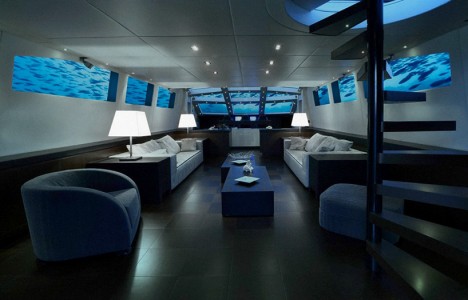
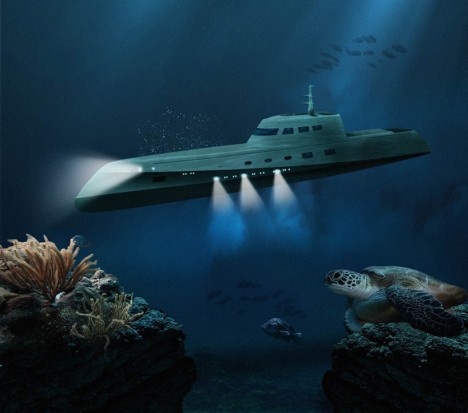
Nemo and his companions on the Nautilus would find themselves quite at home in this self-contained underwater retreat, complete with wraparound views and dupped Lovers Deep.

luxury above the water

A project of Oliver’s Travels, the vessel can help the rich and famous sneak away from prying eyes, submerging itself then depositing its passengers on a remote romantic island, or simply treating its hidden guests to secret seafood dinners under the sea.

luxury submarine retreat underwater

luxury hotel deep ocean

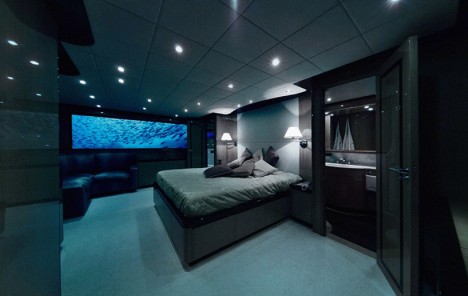
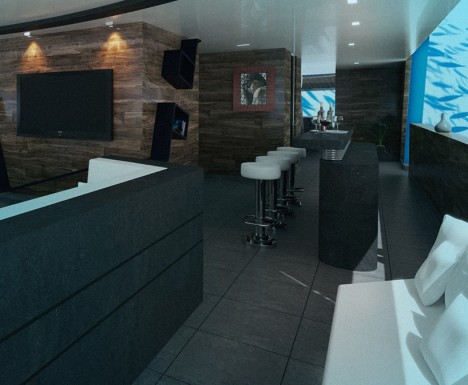
The interior features a full kitchen, bar and living spaces with long horizontal windows to take in the scenery and wildlife. Chefs and concierges, located on the upper level but available on demand, can be provided as well to help customize the experience.

luxury submersible living room

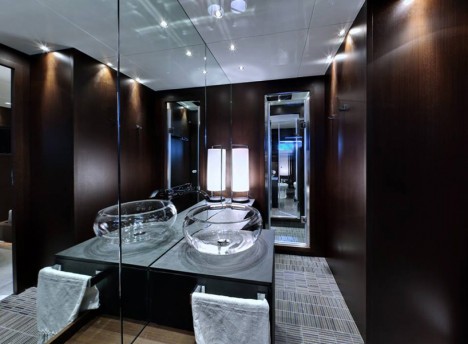
luxury suite bathroom hall

However, unless you, like the eccentric protagonist of 20,000 Leagues Under the Sea, can offset the cost of your voyage via hidden stashes of wealth, you may have a hard time paying the $ 100,000+ per-night price tag this vessel demands.

Share on Facebook


[ By WebUrbanist in Boutique & Art Hotels & Global. ]

[ WebUrbanist | Archives | Galleries | Privacy | TOS ]


WebUrbanist

 
Comments Off on Submarine Suite: Private Luxury in Submersible Yacht Hotel

Posted in Creativity


Sigma to pay Nikon $14.5 million for VR patent infringement

12 Mar

Sigma_1.png

The Tokyo District Court has ruled in favor of Nikon in a patent infringement case brought against Sigma. The lawsuit, filed in 2011 and settled last month alleged that six of Sigma’s interchangeable lenses infringed on certain Nikon patents relating to VR (vibration reduction) technology. Click through for more details. 

News: Digital Photography Review (dpreview.com)

 
Comments Off on Sigma to pay Nikon $14.5 million for VR patent infringement

Posted in Uncategorized


Rooms on Wheels: Mobile Kitchen, Bedroom & Office Spaces

12 Mar

[ By WebUrbanist in Design & Furniture & Decor. ]

compact modular rooms spaces

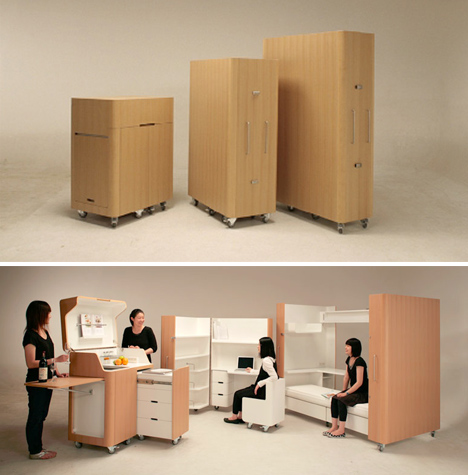
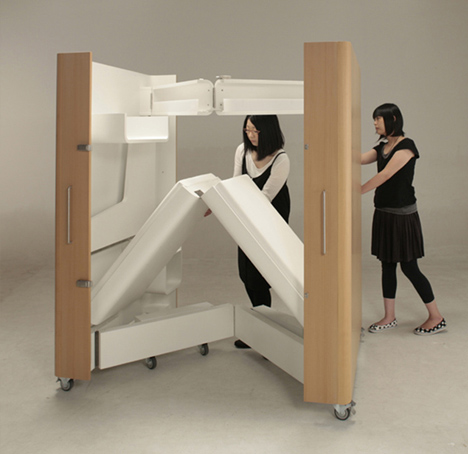
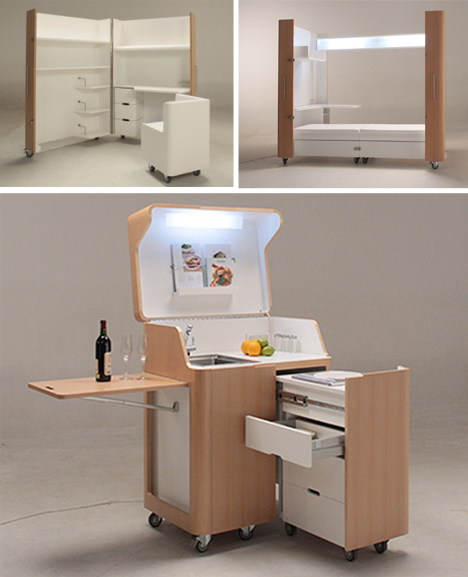
A step beyond flip-down beds and foldaway furniture, this series of modular rooms packs whole kitchens, bedrooms and offices into a highly portable form, so much so that they be bought online at stores like Amazon Japan and shipped right to your door.

compact kitchen in box

Consider the possibilities, too, for on-demand residential conversions: with these you can make anything, from a cargo container to an old warehouse, into an instant apartment.

compact office close up

Set on wheels and made narrow when closed, each room-in-a-box can be rolled easily through opening and navigate narrow corridors to arrive at its destination.

compact fold out bedroom

compact modular bedroom

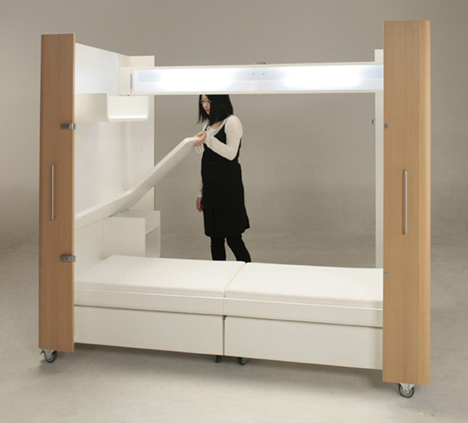
The bedroom unit is the largest – it uses central breakpoints to allow overhead lighting as well as the bed and its supports below to collapse in half then fold up or down into empty spaces in the shell.

compact fold out office

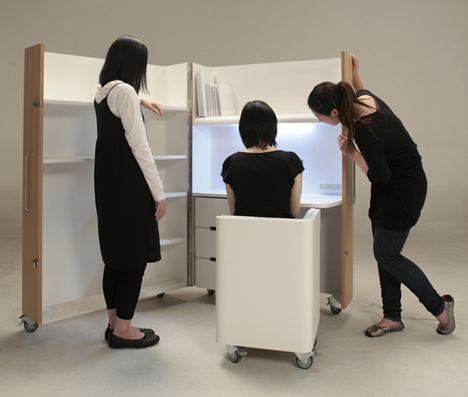
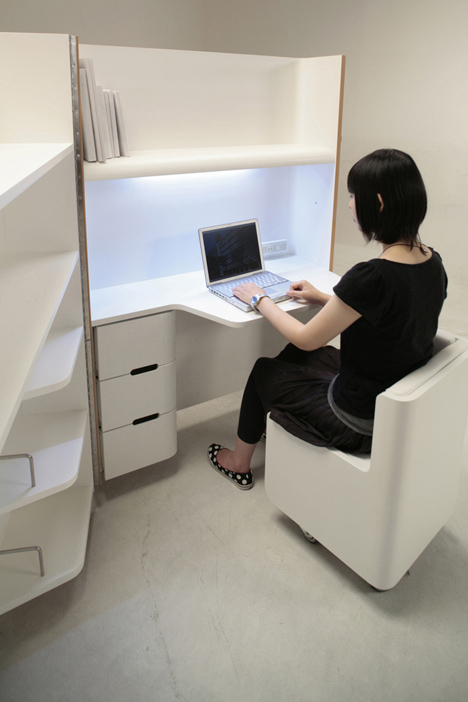
The mid-sized office features interlocking solids and voids to maximize shelving and storage when open. Meanwhile, the wheeled chair below detaches from the primary structure on demand.

compact fold out kitchen

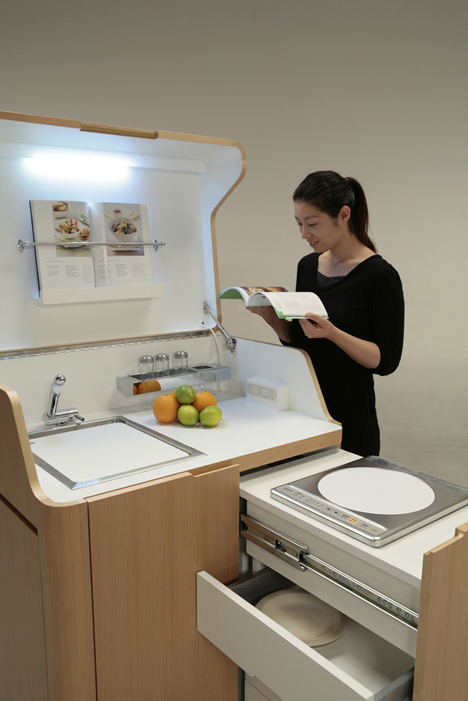
The small kitchen flips up and out to reveal a sink, work surface and hot plate at hip height with space for storage and refrigeration below.

modular moveable rooms boxes

Square footage is a serious commodity in cities like Tokyo and Kyoto, making the four-figure price tag for these units from Atelier OPA (dubbed Kenchikukagu) also a lot more palatable in the right urban context.

Share on Facebook


[ By WebUrbanist in Design & Furniture & Decor. ]

[ WebUrbanist | Archives | Galleries | Privacy | TOS ]


WebUrbanist

 
Comments Off on Rooms on Wheels: Mobile Kitchen, Bedroom & Office Spaces

Posted in Creativity


How Your Pricing Structure Could be Losing you Money

12 Mar

Jackie is the creator of the Portrait Photography Pricing Workbook – on sale now, for a limited time at SnapnDeals.

Are you 100% confident you are making a profit with each and every client?

As artists, photographers may not be as business-minded as they should be. This can get many of us into trouble, both legally and financially. In order to call your photography business successful, it should first and foremost be profitable. If you are not making money from your photography business, you need to call it what it is: a hobby.

How do you make sure you are not losing money, but rather making money and running a profitable photography business? Despite what you may think, it has little to do with the number of clients your business is attracting, or how high or low your prices are. It has everything to do with your pricing structure.

Paper and pen

Here are some questions you need to ask yourself if you think your photography business is losing your money:

What expenses does my business have? Whether it is a reoccurring expense or a variable one, a business expense is a vital factor to consider when pricing your business. An expense for your photography business can include any or all of the following:

  • Studio rental
  • Insurance (liability, equipment, health, and/or disability)
  • Accountant fees
  • Retirement accounts
  • Advertising
  • Loan Payments
  • Equipment purchases
  • Office Supplies
  • Workshops
  • Intern or Assistant
  • Props

These are just some examples of expenses for a photography business. Obviously there are many others that may be specific to yours. Once you total your fixed expenses (expenses that don’t change from month to month or on a yearly basis) and your variable expenses, you can have an idea of how much money you should be making per year in order to at least cover those expenses.

What is my cost of goods sold?

Cost of goods sold is separate from expenses, even though it acts like an expense. The definition of “cost of goods sold” is the cost of materials used to create the product. Basically, it is how much a product costs your business before you turn around and sell it to your client.

In the photography industry, the cost of goods sold can include any of the following:

  • Printing costs
  • Cost to ship the product to you
  • DVDs
  • USB drives
  • Print packaging

Before you set the price of any of your products, you must determine the cost of goods sold of each product. Otherwise, you risk losing money on each sale. Once you figure the cost of goods sold, you can set a break-even price for each product and mark the product up from there.
Calculator

How big are my package discounts?

Along the same lines, you need to make certain your packages are not priced too low. While there should be a discount to the client, you obviously do not want to discount the package to the point where your business is losing money with each sale.

Do I accept credit cards and what is the processing fee?

Even though the credit card processing fee is probably small, it can add up over time or with larger transactions. Think about what percentage of your clients pay with a credit card and integrate that into your pricing structure.

What taxes do I have to pay and what are the rates?

There are several different kinds of taxes you will have to pay as a business owner.  The 4 most common ones for your photography business would be:

  • Federal Income Tax
  • State Income Tax
  • Sales Tax
  • Use Tax

Check out the IRS Small Business and Self-Employed Tax Center to find more tax information (if you are US based). Since each state’s (or your country’s) income, sales, and use tax laws vary, you will have to check with your state’s Secretary of State’s office to get all of the applicable tax information for your photography business.

Finally, I’ll explain a little more about use tax, because it is very commonly overlooked. Use Tax is a tax you are responsible for paying to the state for items your business purchased, but did not pay sales tax on at the time of purchase. Some examples would be a portfolio album for your studio or a lens purchased online. It is typically paid at the same time as your sales tax.

How much time do you want to spend on your business?

This question is crucial. With the rise of digital cameras taking over film, the perception is that running a photography business does not cost much money. While you might be saving money on film and developing, it still is costing you the same amount of time, if not more of your time! However, since the perception is there is no monetary cost with each shoot, it seems easy to charge less for your services and product.

Don’t make this mistake, or you and your business will be headed down a dangerous path. If you are working too much, for too little money, you risk burning out. So, how do you calculate your time into your prices? Everyone’s personal situation is different, so it is difficult to put an exact number on your “time”. What it comes down to is:

  • How many sessions and/or weddings do you want to shoot each year?
  • How much money does your business need to bring in each year?

If you want a low workload, your prices should be higher, if you need to bring in more money. If you can handle a high workload, your prices could be set lower. But, don’t forget to include the factors above, so you aren’t under-pricing yourself and losing money.

Running a photography business encompasses so much more than just the photo shoot! You need to consider all of your time spent on your business, not just the time spent shooting. For instance, managing emails, editing photos, packaging and sending orders, meeting with clients, and holding in-person ordering sessions are all examples of tasks to run your photography business. Make sure you are compensating yourself appropriately for all that time!
Pricing workbook

These hold true for ALL businesses! I assure you that if you ask yourself these questions and calculate it all out, your photography business will be profitable and not lose you money.

Here are some summary points for you to remember:

  • Total up all your expenses
  • Figure in all taxes and credit card fees
  • Consider the total cost of goods sold
  • Factor in your time, workload, and financial situation!

What if you don’t want to do these calculations manually?

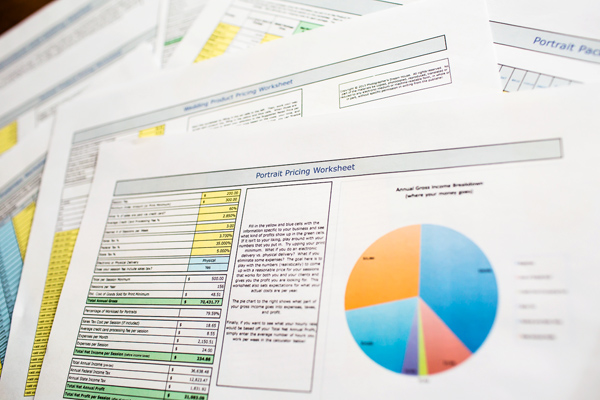
You might want to check out my Portrait Photography Pricing Workbook! You just plug in the numbers and watch the magic happen before your eyes. It will automatically calculate suggested retail prices and what you should be charging based on the points above. On sale now for a limited time only on SnapnDeals.com.

The post How Your Pricing Structure Could be Losing you Money by Jackie Boldt appeared first on Digital Photography School.


Digital Photography School

 
Comments Off on How Your Pricing Structure Could be Losing you Money

Posted in Photography


Nikon launches new series of instructional videos

12 Mar

shared:NikonLogo.png

Nikon has announced a new series of instructional videos featuring a lineup of pro photographers. Joe McNally, Corey Rich and Tamara Lackey offer pointers on lighting, action shooting and portraits among other topics throughout the series. In the first segment, launched today on Nikon’s Google+ page, Joe McNally explains some of the fundamentals of using available light and on-camera flash to shoot a portrait. There are more videos in the pipeline, set to launch at regular intervals throughout this spring and summer. Take a look at the full schedule

News: Digital Photography Review (dpreview.com)

 
Comments Off on Nikon launches new series of instructional videos

Posted in Uncategorized


5 Tips for Better Environmental Portraits

11 Mar

Environmental portraits typically show the subject in their natural environment. They are different from traditional portraits in that they tend to show more of the character of the subject, rather than just the subject in front of a neutral background. Most people, unless they are professional models or natural hams, tend to stiffen up in front of the camera. Because your subject is in his or her natural environment, they tend to be more relaxed, resulting in better facial expressions and body language.

Environmental portraits are my favorite way to photograph people. I love it when I get a shot that makes the subject’s friends and family say ‘Oh yeah, he’s got you down!” In this article I’ll discuss five things I always keep in mind when taking environmental portraits.

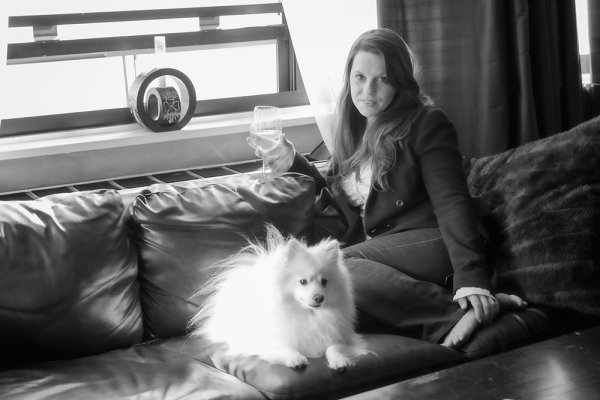
For this portrait, my client was very specific that she wanted to be captured in her apartment, just being who she is. It became quickly apparent that her dog was a very important part of that, so it was decided early that we would include him. EOS 5D Mark III with EF 24-70 f/2.8L IS II. 1/125 @ f/4, ISO 640.

For this portrait, my client was very specific that she wanted to be captured in her apartment, just being who she is. It became quickly apparent that her dog was a very important part of that, so it was decided early that we would include him. EOS 5D Mark III with EF 24-70 f/2.8L IS II. 1/125th at f/4, ISO 640

1. Do your homework

To properly photograph someone in their environment, you need to know your subject. You don’t have to be close friends, but generally speaking, when someone asks for an environmental portrait, you want to make sure you capture who they are. Ask what they have in mind. Ask what their hobbies are. If they want a portrait in their home, what’s their favorite spot in the house? What do they do in that spot? If it’s outside the home, where do they want to be photographed? Why? You need to become a bit of a reporter and sniff out the story. Then you need to illustrate it.

2. Get them talking

Now that you know a little about your subject, what they like to do, and where they like to do it, it’s time to point a camera at them.  This can be the “make-or-break” point of the shoot. If your subject is uncomfortable in front of the camera, this will come across in the images, unless you find a way to get them to relax. One of the easiest ways to get them to relax is to start a conversation. Make them forget that you are taking their photo by asking them about themselves. Have them talk about the spot they’ve chosen for the portrait, their hobbies, their families, their job – anything to get their mind off of the camera in front of them.

In the portrait below, my subject lives in the shadow of this bridge, and is most definitely a New Yorker. This was an impromptu session after a private tutoring session and she was reluctant to let me point the camera at her. She wanted to learn photography herself, so I wrapped a lesson into the banter and pretty soon she was just talking photography and forgetting I was snapping images.

My subject lives in the shadow of this bridge, and is most definitely a New Yorker.  This was an impromptu session after a private tutoring session and she was reluctant to let me point the camera at her. She wanted to learn photography herself, so I wrapped a lesson into the banter and pretty soon she was just talking photography and forgetting I was snapping images.  EOS 5D Mark II with EF 70-200 f/2.8L IS II. 1/200 @ f/4; ISO 100.

EOS 5D Mark II with EF 70-200 f/2.8L IS II – 1/200th at f/4,  ISO 100

3. Use Live View (if your camera has it)

This plays right along with item number two above.  Most people tense up when you raise the camera to your eye, waiting for the image to be taken. Some may even inadvertently shut their eyes, expecting a flash. If you can use Live View on your camera, you can get it away from your face. Your subject will be looking at you, and not at the camera, and will not necessarily anticipate you pressing the shutter button. This works especially well with cameras that feature articulating screens. It can be helpful to mount the camera on tripod as well, using a remote release to trigger the camera.

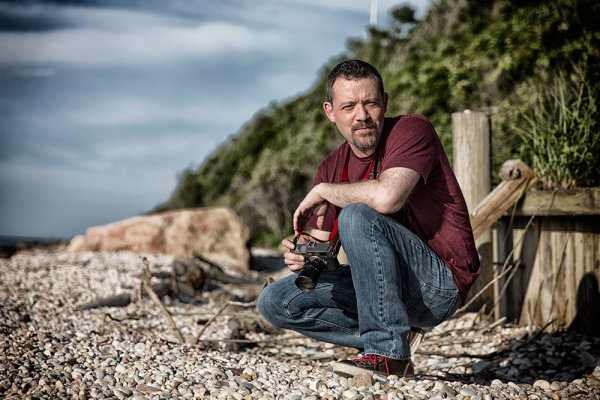
This is an image of my friend Chris (below), taken while he was supposed to be shooting me and my kids. We were discussing what shots we wanted next when I clicked this, using Live View to frame the shot and focus.

This is an image of my friend Chris, taken while he was supposed to be shooting me and my kids.  We were discussing what shots we wanted next when I clicked this, using Live View to frame the shot and focus. EOS-1D X with EF 24-70 f/2.8L II. 1/2500 @ f/2.8; ISO 100.

EOS-1D X with EF 24-70 f/2.8L II – 1/2500th at f/2.8, ISO 100

4. Modify the light

I try to go as minimal as possible with gear for environmental portraits, using the natural light at the location. However, there are always times where the light is less than optimal and you need to modify it in some way. This can be as simple as adding a reflector in a strategic location, or setting up a flash in a soft box or umbrella. It will all depend on what the available light is like and the look you are going for. One thing I always try to do is keep the light looking as natural as possible.

This was a business portrait, but my client wanted more than a simple headshot. It was taken late in the day, meaning I had to create my own light. She wanted her team in the background working, to show when you worked with her, she had a whole team backing her up. I used a Canon 430 EX II to light the background, aiming it off a white wall and the ceiling, out of the frame. I then used a Canon 580 EX II off camera in a Westcott Apollo 28″ soft box to light my client. I adjusted the intensity of the lighting so that the background light was at a 2:1 ratio with my main light.

This was a business portrait, but my client wanted more than a simple headshot.  It was taken late in the day meaning I had to create my own light. She wanted her team in the background working, to show when you worked with her, she had a whole team backing her up. I used a Canon 430 EX II to light the background, aiming it off a white wall and the ceiling, out of the frame. I then used a Canon 580 EX II off camera in a Westcott Apollo 28" soft box to light my client.  I ratio'd the lighting so that the background light was at a 2:1 ratio with my main light. EOS 5D Mark II with EF 24-105 f/4L IS. 1/100 @ f/4, ISO 400.

EOS 5D Mark II with EF 24-105 f/4L IS –  1/100th at f/4, ISO 400

5. Don’t be afraid to shoot tight

While it’s true than an environmental portrait normally means showing some of the area around your subject – the environment – you can get close and still show your subject’s character.  Take an element of your subject’s hobby, and show them participating in the hobby. If they’re a model builder, you could do a tight shot of them applying glue or assembling the pieces.  This is your chance to be creative, trying different angles, focusing on different aspects of  their personality and character.  Emphasize features that stand out, in a flattering way, if that’s the goal. Find out what makes the person in front of your camera special, and capture it!

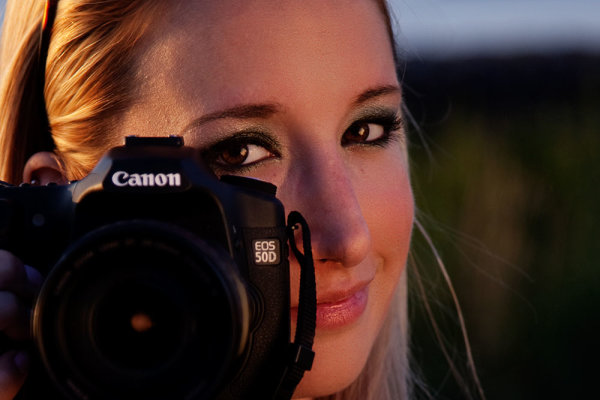
Here's my subject from the shot in front of the bridge. She's a photographer as well now, but back then she was just a hobbyist who wanted to know more about her camera. I used the beautiful sunset light I was getting, and set up a reflector to camera right to bounce the light back into her face.  I wanted her peeking out from behind her camera, illustrating that she's into photography. EOS 5D Mark II with EF 24-105 f/4L IS. 1/250 @ f/4, ISO 100.

EOS 5D Mark II with EF 24-105 f/4L IS – 1/250th at f/4, ISO 100

This is the same girl as the shot in front of the bridge. She’s a photographer as well now, but back then she was just a hobbyist who wanted to know more about her camera. I used the beautiful sunset light I was getting, and set up a reflector to camera right to bounce the light back into her face. I wanted her peeking out from behind her camera, illustrating that she’s into photography.

Do you have any additional tips you’d add to this list? Please share in the comments below.

For more portrait photography tips check out these articles:

  • How to Create Great Environmental Portraits
  • 10 Techniques for Amazing Portraits
  • How to Choose the Perfect Portrait Lens
  • Portraits: Striking The Pose – a dPS ebook
  • Portraits Lighting The Shot – another dPS ebook

The post 5 Tips for Better Environmental Portraits by Rick Berk appeared first on Digital Photography School.


Digital Photography School

 
Comments Off on 5 Tips for Better Environmental Portraits

Posted in Photography