Ein Beitrag von: Thorsten Muehlbacher

[ By WebUrbanist in Architecture & Public & Institutional. ]

An amazing hybrid of preservation and transformation, this project involves carving a series stunning spaces inside a huge series of concrete silos set alongside the waterfront of Cape Town. Once the tallest structure in the city, but abandoned since 1990, this converted complex will provide a home for 80 art galleries and create a hub for cultural activity.

The spatial solution proposed by Thomas Heatherwick Studio involves scooping out huge voids within the existing industrial heritage site. This approach in turn exposes visitors to the tubular interiors of the silos via a newly-formed atrium while conserving much of the original building exterior. Meanwhile, below the surface, a series of re-purposed underground tunnels and storage spaces will provide additional access to the architectural history of the complex.

The non-profit endeavor will exhibit contemporary African art via indoor galleries as well as a rooftop sculpture garden, bookstore, restaurant, bar and more. THS will be working on the Zeitz MoCAA (founded with the collection of entrepreneur Jochen Zeitz) with a series of local partners including Ven Der Merwe Miszewski (VDMMA), Rick Brown Associates (RBA) and Jacobs Parker.


In an interview with DesignBoom, he architect sough to ask and answer the critical quesiton: “How do you turn forty-two vertical concrete tubes into a place to experience contemporary culture? Our thoughts wrestled with the extraordinary physical facts of the building. There is no large open space within the densely packed tubes and it is not possible to experience these volumes from inside. Rather than strip out the evidence of the building’s industrial heritage, we wanted to find a way to enjoy and celebrate it. We could either fight a building made of concrete tubes or enjoy its tube-iness.”


Of the project, David Green (CEO of the V&A Waterfront) said: “thomas heatherwick understood how to interpret the industrial narrative of the building, and this was the major breakthrough. His design respects the heritage of the building while bringing iconic design and purpose to the building.”


Regarding the search for a perfect site, Jochen Zeitz explains that “for five years we investigated suitable sites across Africa. The V&A waterfront provided an iconic heritage building, situated in one of the most visited and iconic sites in [the country].” Meanwhile, all of the existing silos will be capped with glass to let in light and show off their shape from above.

Take your pick between a pair of once-abandoned silos: one lets you explore nearly 100 vertical feet of underwater space with hidden caverns, while the other …
Click Here to Read More »»

An abandoned factory complex in Spain has been transformed into a massive office for an architecture firm, leaving much of the old machinery intact.
Click Here to Read More »»
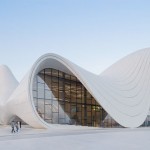
Architect Zaha Hadid’s designs are graceful and sinuous, imbued with dance-like movement, and the new Heydar Aliyev Center in Azerbaijan is no exception. …
Click Here to Read More »»


[ By WebUrbanist in Architecture & Public & Institutional. ]
[ WebUrbanist | Archives | Galleries | Privacy | TOS ]
 Extra photos for bloggers: 1, 2, 3, 4 Extra photos for bloggers: 1, 2, 3, 4 |
|||
We know your camera is your favorite toy so why put in in a lame generic bag?
Show your camera (or phone) a little love and make it a totally rad wrap bag to keep it protected and looking great while off duty.
Get that glassy look off your face! We promise this requires only the teensiest bit of sewing.
PLUS as pay-off you get to customize it with any fabric/strap combo you choose.
Cats? Sequins? DO IT!
Learn How to Make Your Own Camera Wrap Bag
(…)
Read the rest of DIY Camera Wrap Bag (479 words)
© Erika for Photojojo, 2014. |
Permalink |
No comment |
Add to
del.icio.us
Post tags:

Nikon has announced two lenses for its 1 system mirrorless cameras, in the shape of a 70-300mm ultra-telephoto zoom and a compact 10-30mm powerzoom. The 1 Nikkor VR 70-300mm f/4.5-5.6 is designed for sports and wildlife shooting, and features optical image stabilisation to counteract camera shake; its SRP is $ 999.95 / £879.99. Meanwhile the 1 Nikkor VR 10-30mm f/3.5-5.6 PD-Zoom is a compact lens with electronic zoom control that will come in a kit with the 1 V3 camera, or be sold separately with an SRP of $ 299.95 / £249.99.
 There are countless Photography books and classes that explain exposure, yet after reading or attending them, your photos may not have improved because…well, let’s be honest… some of us Right-Brainers aren’t super technical!
I recently taught a small photography class to newbies. I thought hard about how I could explain exposure in the simplest way possible. I found that a parallel example of something relatable was the best way to convey the different aspects that impact exposure.
I tested this theory by explaining exposure to my 8-year old daughter and then quizzed her. She proved the theory was a success by grasping the concepts within 10 minutes. So I’d like to share my lesson with you so you can understand exposure in under 10 minutes!
Your DSLR camera is like your head with the LENS being your vision and the camera BODY is your brain. Your vision sees things and your brain records the details.
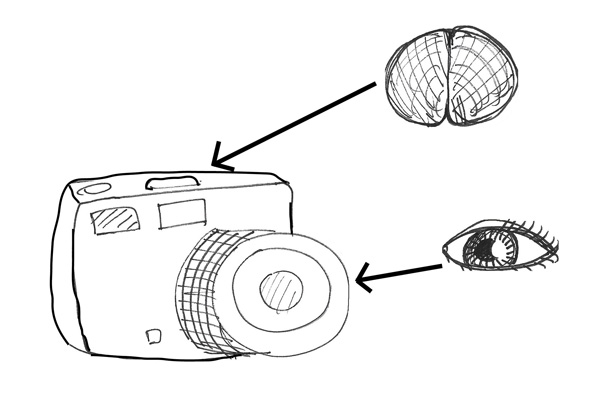
Just like when you look at something – let’s say, a flower – your eyes see it and send information to your brain that the flower has long petals and that it is yellow. If you looked at it too quickly or it was too dark, for example, the information your brain records is compromised.
The “exposure triangle” is about how 3 things — aperture, shutter speed and ISO — work together to provide enough light for your brain (the camera) to record what you see. You need the right combination of these 3 components to have perfect exposure.

Good exposure
For example, if you don’t let in enough light, you won’t see things very well because it’ll be too dark (underexposure).

Too dark, or underexposed
If you let in too much light, then it’ll be too bright and you can’t see a lot of the details (overexposure).

Too bright, or underexposed
A small aperture (a large f-stop or f-number, like f/22) is like squinting. A large aperture (a small f-stop or f-number, like f/1.4) is like having “bug eyes”.
Quiz: If you are shooting in low light, how wide do you open your eyes? Will you see well at night if you are squinting (small aperture)?
Quiz: What happens on a super bright day if your eyes are wide open and they’re open for a long time (slow shutter and large aperture)? Can you see well then?

Aperture is how big you open your eyes – bug eyes, or squinting
A fast shutter, like 1/1000th of a second, is blinking super fast. A slow shutter speed, like 2 seconds, is keeping your eyes open and then blinking. The thing to remember is: your brain is recording everything when your eyes are open. So if you or something you’re looking at is moving, and your eyes are open a long time (slow shutter), then your brain will record a blurry image.
Quiz: If you want a crisp shot of someone jumping, how long do you need your eyes open? What will freeze the shot: a quick blink (fast shutter) or a slow one (slow shutter)?
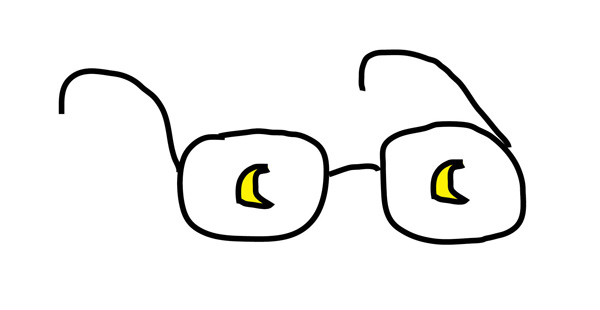
ISO special glasses
ISO is like the opposite of sunglasses. Let’s call them MOONglasses! 
The higher the ISO, the thicker your moonglasses, so the more you are able to see in low light. You need thick moonglasses (high ISO) when shooting indoors or at dusk. You need very thin moonglasses (low ISO) when it’s a sunny day.
Quiz: do I need thick, thin or medium moonglasses if I’m shooting at the beach on my lunch break?
Here is an example: You are photographing your sleeping cat who is snuggled on the couch. There is not much light coming through the windows or additional ambient light. To see well, you have medium-to-thick moonglasses on (such as ISO 600). You need to have your eyes open pretty wide (large aperture, such as f/1.4). However, you don’t have great vision (you have a kit lens that only goes up to f/4.5), so you need more light to see. Thus, you leave your eyes open longer (slow shutter speed, such as 1/30th sec).
Once you get the basic concept of exposure and how the three components of the exposure triangle (aperture, shutter speed and ISO) work together, turn your DSLR camera to “manual” and practice the specific settings based on different circumstances.
The post Understand Exposure in Under 10 Minutes by Annie Tao appeared first on Digital Photography School.

Nikon has announced the Nikon 1 V3, the latest addition to the company’s mirrorless lineup. The V3 sports a new 18.4MP 1″-type CMOS sensor that lacks an AA filter, but has on-chip phase detection that covers nearly 100% of the frame. The V3 can now shoot at 20 fps with continuous AF, and 60 fps with single AF. Other features include twin dial control, a tilting 3-inch touchscreen LCD, manual exposure control, 1080/60p video, and built-in Wi-Fi. Something that’s disappeared since the V2 is an electronic viewfinder, which is now an optional extra (depending on region). Read more about the V3.
Ein Beitrag von: Normen Gadiel
Normalerweise fotografiere ich überwiegend inszenierte Portraits. Vermutlich liegt das daran, dass ich die Unterschiedlichkeit der Menschen sehr interessant finde. In den letzten Monaten hat sich aber immer mehr gezeigt, dass ich unterwegs auch gern Menschen fotografieren möchte – nur eben nicht mehr inszeniert, sondern in Form der Straßenfotogafie.
So richtig begonnen hat es für mich im Jahr 2012 auf dem Melt-Festival. Es ging mir damals nicht darum, die Bands zu fotografieren oder die Meute vor der Bühne. Mein Fokus lag auf Personen, die umherliefen, standen oder tanzten und sich dadurch von der Masse etwas isolierten. Wenn mir dann die Personen aufgrund ihres Aussehens, ihrer Bewegung oder Ähnlichem aufgefallen sind, wollte ich diesen Moment festhalten.

Bei der späteren Bearbeitung fand ich diese Bilder sehr ehrlich, da die Personen mich als Fotografen nicht wahrgenommen und somit ihre Haltung und Mimik nicht geändert haben. Durch diese Erfahrung bin ich auf die Idee gekommen, diesen dokumentarischen Stil öfters einzusetzen.
Also habe ich auch im nächsten Jahr meine Kamera wieder eingepackt und bin aufs Melt gefahren. Glücklicherweise habe ich dieses Mal vom Veranstalter einen Fotopass bekommen, was mir die Arbeit dort erleichtert hat.
Keine Kontrolleure, die einen schief angucken, wenn die Kamera etwas größer ist – ach, war das schön. Großen Männern in schwarz, ausgestattet mit einer Neonweste, den Unterschied zwischen Festbrennweite und Zoom-Objektiv zu erklären, konnte ich mir somit ersparen.


Aufgefallen ist mir auch, dass es mich bei der Straßenfotografie kaum interessiert, was andere Fotografen machen. Was nicht bedeuten soll, dass ich mich nicht gern durch Portfolios klicke. Viel mehr ist es so gemeint, dass ich nicht das Gefühl bekomme, Fotograf XY macht richtig gute Fotos und das würde ich so auch gern können.
Die Fotos sind etwas Persönliches, dokumentieren sie doch auch irgendwie mein Leben, den Raum, in dem ich mich bewege und meine Interessen. Alles, was in meine Bilder einfließt, sind die Inspirationen, denen man sich nicht entziehen kann, wenn man Bilder konsumiert. Ein Potpourri aus allem, was ich bisher gesehen habe.


Ich weiß, dass ich erst am Anfang stehe und meinen Blick noch üben muss. Allerdings habe ich jetzt schon einige Schätzchen, auf die ich stolz bin. Immer, wenn ich diese Fotos betrachte, merke ich, wie viel Freude sie mir bringen. Die Fotografie ist ein Medium, das es uns ermöglicht, auch nach Jahren die Erinnerungen zurückzuholen – ich finde das wunderbar.
Letztes Jahr ging es dann für mich nach Italien. Es war mein erster Urlaub, in dem ich wirklich bewusst nach Motiven gesucht habe. Ich habe mir bisher darüber nie Gedanken gemacht, aber warum sollte ich Dinge fotografieren, die schon Abertausende Male von anderen Menschen fotografiert wurden?
Während ich nach einem guten Motiv suche, passiert es oft, dass ich das Auge nicht vom Sucherfenster nehme, um den Augenblick nicht zu verpassen. Ich gebe zu, das mag bescheuert aussehen, aber ein Moment ist manchmal einfach zu kurz, um ihn durch das Ausrichten der Kamera vergehen zu lassen.


Bei diesem Foto bin ich froh, dass ich den Kuss fotografieren konnte, allerdings stören mich die anderen Menschen und der Roller. Der Blickwinkel hätte auch besser sein können. Aber das ist genau die Schwierigkeit bei der Straßenfotografie. Ich denke, dass man eine Art Gespür für Situationen entwickeln muss, um schon vor dem eigentlichen Foto am richtigen Fleck zu stehen.
Da in meinen Fotos der zufällige Moment eine große Rolle spielt und ich nicht bewusst versuche, Missstände aufzuzeigen, habe ich auch kein Problem damit, Menschen ungefragt zu fotografieren. Die entstandenen Fotos sind am Ende nur Abbildungen des mich umgebenden öffentlichen Raumes und der darin enthalten Gesellschaft. Ich finde es wichtig, dass diese Art der Fotografie immer einen Platz haben wird. Scripted reality brauchen wir in der Fotografie nicht.


Auch, wenn viele andere Fotografen ganz bewusst eine kleine, leise und somit unauffällige Kamera für die Straßenfotografie nutzen, macht es mir nichts aus, mit der doch eher klobigen 5D Mark II zu fotografieren. Wobei ich natürlich nichts gegen eine kleine und leise Leica hätte.
Ich werde einfach abwarten, wie sich meine Fotografien entwickeln. Sollte ich irgendwann zu dem Entschluss kommen, dass mich die Kamera aufgrund ihrer Größe daran hindert, Situationen so einzufangen, wie ich es mir vorstelle, dann werde ich mich nach Alternativen umschauen.
Das schöne an Fotos, die einen dokumentarischen Hintergrund besitzen, ist, dass sie sich wie ein Wein verhalten können. Die Fotos werden zwar nicht besser, jedoch steigt ihre Bedeutung im Sinne eines Zeitzeugen und die Fotos werden wertvoller – auch ohne monetären Hintergrund und zumindest für einen persönlich.

I believe that the world is a miraculous place filled with beautiful people, inspiring ideas and overflowing with love. I also see a myriad of symptoms in this world […]
Jake Garn Photography

Nikon’s 1-System cameras have tended to slip under the radar of most enthusiasts. The company’s new V3 mirrorless camera is Nikon’s attempt to change that, with its impressive AF and burst shooting specs and more customizable controls. We were able to spend some time with the Nikon 1 V3 and have put together a quick overview of the camera for your reading pleasure.