RSS
 

Archive for March, 2014

Muskuläre Elektrophysiologie

24 Mar

Die wohl seltsamsten Bilder, die ich bisher bei meiner Recherche zur Geschichte der Fotografie gesehen habe, sind ohne Zweifel diese Aufnahmen des französischen Physiologen Duchenne de Boulogne. Auf ihnen ist ein alter Mann zu sehen, an dem experimentiert wird. Mit zwei Drähten werden Muskeln des Probanden mit Strom stimuliert, um Mimiken nachzustellen.

Wirklich absurd machen die Bilder aber nicht nur die geschockten Gesichtsausdrücke des scheinbar wehrlosen Mannes, sondern vor allem die Experimentierenden um ihn herum. Die Bilder wirken teilweise wie aus einem Frankensteinfilm und man kann nur schwer glauben, dass es sich bei ihnen um ein wissenschaftliches Experiment handelt.

 © Guillaume Duchenne de Boulogne

Aus heutiger Sicht ist das auch mehr als fraglich, denn der Mann ist ein alter Schuster, den Duchenne selbst als „alt und hässlich“ bezeichnete und der laut ihm auch etwas zurückgeblieben sei. Seine Hagerkeit und die vielen durch sein Alter bedingten Falten hielt Duchenne für besonders geeignet für sein Experiment. Neben dem Schuster gab es noch vier weitere Versuchspersonen, unter ihnen auch zwei Frauen. Insgesamt entstanden bei diesen Experimenten etwa 100 Aufnahmen.

Für die Geschichte der Fotografie sind die Bilder interessant, da sie einige der ersten sind, bei denen die Fotografie für medizinische Studien genutzt wurde. Gängig waren bis dahin vor allem Illustrationen bei der Dokumentation der Ergebnisse.

 © Guillaume Duchenne de Boulogne

Die Bilder entstanden in den 1850er Jahren und wurden zusammen mit Duchennes Forschungsergebnissen im Buch „Mécanisme de la physionomie humaine“ 1862 veröffentlicht. Im Buch selbst werden nur die als Oval ausgeschnittenen Gesichtszüge der Probanden gezeigt, wodurch die Bilder vielleich weniger verstörend wirken. Große Beachtung erhielt Duchenne für diese Forschung jedoch nicht.

 © Guillaume Duchenne de Boulogne

Duchenne lernte die Fotografie von Adrien Tournachon, dem Bruder von Nadar. Bei den Bildern handelt es sich um Aufnahmen, die mit Hilfe des Kollodium-Nassplatten-Verfahrens entstanden sind.

Quellen:
• Koetzle, Hans-Michael: 50 Photo Icons. Die Geschichte hinter den Bildern. Köln.
• Stiegler, Bernd / Thürlemann, Felix: Meisterwerke der Fotografie. Stuttgart 2011.


kwerfeldein – Fotografie Magazin | Fotocommunity

 
Comments Off on Muskuläre Elektrophysiologie

Posted in Equipment


Behind the shot: ‘Louisville in Motion’

24 Mar

Screen_Shot_2014-03-20_at_12.39.50_PM.png

Making a time-lapse video isn’t trivial, but the end result is compelling. Photographer Eric Stemen explains how he made his tribute to Louisville, Kentucky. He talks about his shooting technique – everything from getting good exposures to using sliders. There’s also a look at all the gear he used and some post-processing tips. Learn more

News: Digital Photography Review (dpreview.com)

 
Comments Off on Behind the shot: ‘Louisville in Motion’

Posted in Uncategorized


Samsung NX30 real-world samples gallery

24 Mar

Screen_Shot_2014-03-23_at_9.00.41_PM.jpg

The Samsung NX30 is a midrange mirrorless camera that features a 20.3MP CMOS sensor and the company’s latest DRIMeIV processor. The NX30 has a Hybrid AF system that combines on-chip phase detection with more traditional contrast detection and photos can be composed on a fully articulating 3-inch AMOLED display or a unique pull-out, tilting electronic viewfinder. We’ve spent some time with a production sample to see how it performs out in the real world.

News: Digital Photography Review (dpreview.com)

 
Comments Off on Samsung NX30 real-world samples gallery

Posted in Uncategorized


Cool Million: Famous 420 Square Foot SoHo Condo for Sale

24 Mar

[ By WebUrbanist in Architecture & Houses & Residential. ]

small space mobile partition

A multifunctional masterpiece built with crowd-sourced design ideas and a small-space vision by the founder of TreeHugger, this New York City apartment is now for sale for $ 995,000.

small space murphy bed

small space divided apartment

small space dinner party

The star of Graham Hill’s LifeEdited, the unit boasts transforming furniture, sliding walls, secret panels and hidden resources from an array of manufacturers and custom installers.

Per the Gizmodo video above, the space unfolds to accommodate everything from dozen-plus dinner parties to overnight guests when you pull out the magically-long dining table or push an entire wall to one side.

small space kitchen drawers

small space storage closets

From the living room (which splits into bedrooms) to the bathroom and kitchen, lots of little tricks make it all work, including a microwave that doubles as an oven and modular burners that can be deployed on demand.

small space bathroom windwo

small space curtains divider

Everyone knows a million dollars does not go quite so far in Manhattan, but some might still wonder if the place is worth the asking price. Cool factor and high-tech tweaks aside, though, it is worth noting that other units in the building have Zillow estimates of 1.5 million dollars in some cases, so at the very least this high-sounding price may not be wildly off base.

Share on Facebook


[ By WebUrbanist in Architecture & Houses & Residential. ]

[ WebUrbanist | Archives | Galleries | Privacy | TOS ]


WebUrbanist

 
Comments Off on Cool Million: Famous 420 Square Foot SoHo Condo for Sale

Posted in Creativity


The Way We Wore: 12 Clothesed & Abandoned Dry Cleaners

24 Mar

[ By Steve in Abandoned Places & Architecture. ]

abandoned dry cleaners
Martinize THIS! Factors such as cost, convenience and the creeping casualness of modern life have condemned countless dry cleaners to in-solvent-cy.

Triple A to ZZZzzz….

abandoned Triple A Cleaners Baton Rouge(image via: Abandoned Baton Rouge)

How do you know a dry cleaning business has been around a LONG time? Well, one clue is when its name begins with “AAA” to get it listed on the front page of the Yellow Pages directory. Another is the presence of funky fab fifties (AAA opened back in ’57) flying buttress architecture fronting the facility.

abandoned Triple A Cleaners Baton Rouge(images via: Abandoned Baton Rouge)

According to the folks behind Abandoned Baton Rouge, “AAA Cleaners is another place with that Night of the Comet feel… as if people just vaporized, leaving their everyday items.” Vaporized or Martinized, interior shots of Triple A Cleaners hint at something not quite right at the longstanding Louisiana landmark though there are no clues at press time. We said “press” time, heh.

Unwell In Wellington

55 'MIN' dry cleaners Cuba St New Zealand(image via: Eye Of The Fish)

Got no time for One Hour Martinizing? Then get your act to Wellington, New Zealand where the 55′MIN’ dry cleaners will have your formal duds delightfully decontaminated in under an hour. What’s that you say? The store on Wellington’s historic Cuba Street was officially declared to be an Earthquake Prone Building in 2011 and as such was forced to close? Consider it a Tacastrophe! Kudos to Eye Of The Fish for the brilliantly bilious image above.

Cleaned & Died

abandoned Slater-White dry cleaners San Antonio(images via: Geography of Empty Spaces)

Before the advent of non-toxic Martinizing in 1949, dangerously flammable solvents were used in the dry cleaning process. Due to the nature of the chemicals used, cleaning was usually done off-site and typical turnaround times were measured in days. Usually, but not always: the former Slater-White Cleaners in San Antonio, Texas houses a host of stained and rusting tanks on the premises that may or may not still contain toxic solvents.

abandoned dry cleaners San Antonio Texas(image via: Geography of Empty Spaces)

Full props to Geography of Empty Spaces for documenting the current (as of October 2010) status of Slater-White Cleaners, which happens to be abandoned and deteriorating. This is bad news for Obama, er, the elementary school located just across the street.

You Got It, Pontiac

abandoned dry cleaner Pontiac Detroit Michigan(images via: SeeClickFix)

And by “it”, we mean a dry cleaning shop abandoned so long the street numbers have fallen off the outside walls along with most of the paint. Several concerned citizens (yes, there are still a few) have posted photos of the decrepit and now doorless cleaners to SeeClickFix in the hope that Pontiac authorities will see and subsequently fix it. Judging by the shop’s obvious state of advanced decay, however, this is one dry cleaners that’s been taken to the cleaners… and won’t be coming back.

Next Page – Click Below to Read More:
The Way We Wore 12 Clothesed Abandoned Dry Cleaners

Share on Facebook


[ By Steve in Abandoned Places & Architecture. ]

[ WebUrbanist | Archives | Galleries | Privacy | TOS ]


WebUrbanist

 
Comments Off on The Way We Wore: 12 Clothesed & Abandoned Dry Cleaners

Posted in Creativity


Die Reisefotografie des Randy Martin

24 Mar

Ein Beitrag von: Randy Martin

Zu Beginn war die Fotografie für mich ein Werkzeug, um meine Reisenotizen anzureichern, wenn ich unterwegs war. Ich schreibe sehr viel auf meinen Reisen. Ganz oft handelt es sich dabei um nichts Weltbewegendes, sondern reine Dokumentation meiner Tageserlebnisse. Teilweise dokumentiere ich alles im Minutenabstand.

Ein altes Tagebuch aufzumachen und mittels der Bilder in die bereits Jahre zurückliegende Vergangenheit zu sehen, ist eine meiner Lieblingsbeschäftigungen. Dann kommen Tausende Momente, die ich komplett vergessen hatte, mit einem Mal zurück.

Es ist großartig, nachzulesen, wie der Staub vom Motorrad aufgewirbelt wurde, als ich über die Ausläufer des Himalaya sauste. Oder ein Bild anzusehen, auf dem meine Freundin ihr Lieblingskleid trägt, das mittlerweile irgendwo im Laos-Dschungel verschollen ist.

All diese Kleinigkeiten sind für mich sehr entscheidende Gründe dafür, warum ich fotografiere.

© Randy Martin

© Randy Martin

© Randy Martin

© Randy Martin

© Randy Martin

© Randy Martin

© Randy Martin

© Randy Martin

© Randy Martin

© Randy Martin

© Randy Martin

© Randy Martin

© Randy Martin

© Randy Martin

Ich kann nicht behaupten, dass ich jemals große Höhen und Tiefen erlebt, hingegen jedoch viele Lern-Erfahrungen gemacht habe. Vor fünf Jahren hat mich das Analog-Fieber gepackt, als ich eine riesengroße Tasche mit über 100 35mm-Kameras und 50 Objektiven auf Craigslist kaufte.

Ich habe ganze zwei Jahre zugebracht, jede Kamera auszuprobieren. Um herausfinden, was ich daran mag und was nicht. Als ich 2010 schlussendlich mit einem One-Way-Ticket nach Indien zog, verkaufte ich alle Kameras, bis auf zwei: Meine vertraute Yashica T5 und eine hellgelbe wasserdichte Kodak aus den 80ern, eine Aqua Snappy.

Ich habe lange gebraucht, um festzustellen, was für mich ein gutes Foto ist und was keines ist. Stil und Herangehensweise haben sich in eine sehr spezifische Ästhetik entwickelt und ich habe noch nicht entschieden, ob ich das nun gut oder schlecht finde – aber aktuell genieße ich sehr, was ich tue.

Dieser Artikel wurde von Martin Gommel für Euch aus dem Englischen ins Deutsche übersetzt.


kwerfeldein – Fotografie Magazin | Fotocommunity

 
Comments Off on Die Reisefotografie des Randy Martin

Posted in Equipment


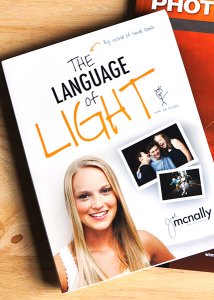
“The Language of Light with Joe McNally” – a Review

24 Mar

language-of-light-digital-photography-schoolOn the one hand, I could make this article one of the shortest I’ve ever written– a rousing recommendation of only three words: “It’s Joe McNally!”

Thank you. Good night. Drive safely.

Okay…I get it. Some of you may not be convinced. I respect that. That’s why we’re going to take a closer look.

For those who may not know, Joe McNally is one of the very best in the business. In a career spanning 30 years and 50 countries, his work has appeared in National Geographic, LIFE Magazine, Sports Illustrated, TIME, Newsweek, Entertainment Weekly, and a host of other magazines you’ve probably read. Even if you’ve never heard his name (where have you been hiding?), I’m pretty sure you’ve seen his work. If you are ever able to attend one of his workshops, I highly recommend it.

Joe is a master (a word I don’t use lightly) of at least two things–lighting and teaching. As a photographer, light defines or plays a part of everything you do. Regardless of whether you are talking about speedlights, studio lights, street lights, or sunlight, it’s a given that every light source has three attributes–color, quality, and direction. Since every photograph requires light, it stands to reason that having a firm understanding of how to control, manipulate, and manage light would be an important step towards raising the bar on your photography. As he puts it himself in the intro,

“Light is how we speak as photographers.” – Joe McNally

A typical Joe McNally seminar or workshop tends to be filled with sentences that begin with things like, “The photo editor at National Geographic once told me…” or “My editor at LIFE Magazine used to say…”  These are your cues to start feverishly writing down every word that follows.  The Language of Light lets you put the pen down and take it all in–a three-hour guided tour through the how and why of Joe’s “big world of small flash.”

There are a few things that really stand out, separating this DVD lighting class apart from the rest. For starters, it’s conversational. To the extent that this language of ours has words and concepts that need explaining, who better to do it than the man who’s written some of the best books on the subject? The other huge advantage to The Language of Light is the ability to watch as Joe starts each shoot with a basic premise, then explains and demonstrates each step in the process–walking you through from concept to finished image.

Remember that old line? “Those who can, do. Those who cant’ teach?” Well, here’s a guy who does both and doesn’t hold anything back. If he knows it, he wants you to know it. It’s not just about the “how.”  It’s also about the “why.” And that, my friends, is worth the price of admission.

Here is a basic breakdown of the set.

Disc 1 – the Language of Light

They say the best place to start is at the beginning, and The Language of Light takes that to heart. Disc 1 gets you going, explaining light and why it does what it does in simple terms. Prepare to be blown away by what he can do with a single speedlight. Topics include:

  • Turning one small flash into one big light
  • Controlling harsh natural light
  • Dramatic one light portraiture
  • Tour of small flash light modifiers
  • Light placement

Check out the Disc 1 preview in the video below:

Disc 2 – the Language of Light

Disc 2 moves out of the studio and goes on several location shoots, with lighting setups ranging from the basic to the complex. Topics include:

  • Location assessment
  • Basic strategies for one and two lights, as well as three or more
  • Getting the most out of a location
  • Environmental portraits
  • Conquering the sun with high speed sync
  • Mixing color temperatures
  • Athletic portraits
  • Lighting in small places
  • Group portraits
  • Engaging your subject

Take a look at the Disc 2 preview:

The three hours of photographic education contained in this set is some of the best I’ve ever seen. Knowledge, talent, energy, and passion come together in what I can only describe as a moment of enlightenment (no pun intended), where all the pieces seamlessly come together– and it all makes sense. It’s perfect for beginners just learning how to get the flash off the camera, as well as seasoned veterans looking for a refresher.

The Language of Light is available on Amazon.  Still hungry for more? Check out our very own e-book, “Portraits- Lighting the Shot” in the Digital Photography School Bookstore.

The post “The Language of Light with Joe McNally” – a Review by Jeff Guyer appeared first on Digital Photography School.


Digital Photography School

 
Comments Off on “The Language of Light with Joe McNally” – a Review

Posted in Photography


23. März 2014

23 Mar

Ein Beitrag von: Hadar Ariel Magar

Undertaker © Hadar Ariel Magar


kwerfeldein – Fotografie Magazin | Fotocommunity

 
Comments Off on 23. März 2014

Posted in Equipment


How to Apply the Look of Hand Coloring in Lightroom

23 Mar
Give a photo the look of a hand tinted image in Lightroom

Give a photo the look of a hand coloring in Lightroom

Before there were color photos there were black and white photos, colored by hand using paints or dyes. Today, courtesy of any good photo-editing program, you can apply your own hand coloring effect to your photos.

Here’s how to apply the look of hand coloring in Lightroom.

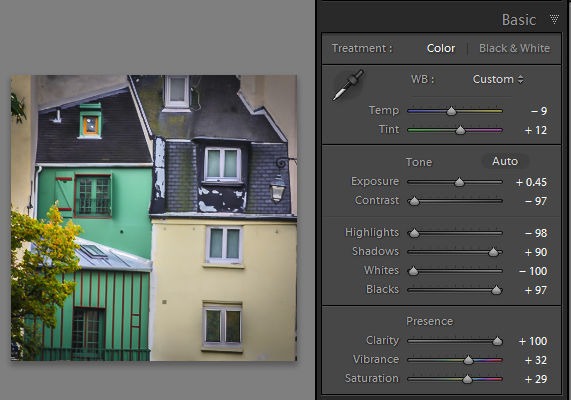
To get started, open the image in the Lightroom Develop module. You will want to make the usual basic edits to the image so it shows a good tonal range and contrast.

Before colorizing the image, make sure to adjust the tonal range and contrast.

Before colorizing the image, make sure to adjust the tonal range and contrast

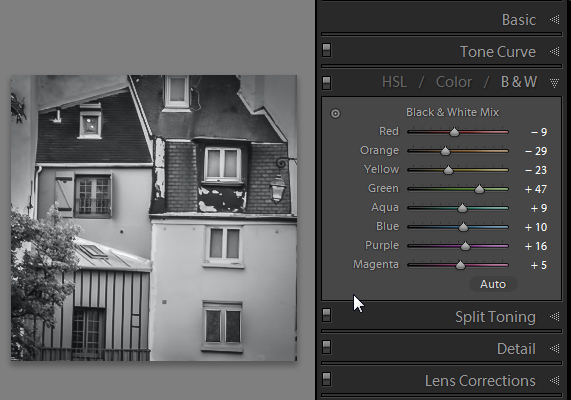
Then convert the image to a black and white by clicking B&W panel and adjust how the underlying colors in the image are converted to black and white using the sliders. Lighter areas will show the color better and darker areas will show a more subtle tint.

Use B&W to create a black and white image.

Use the B&W panel to create a grayscale or monochromatic image

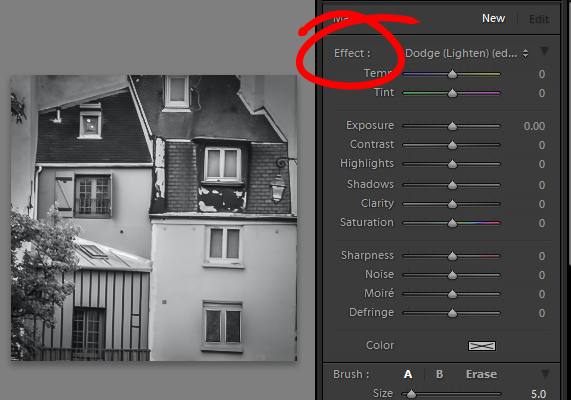
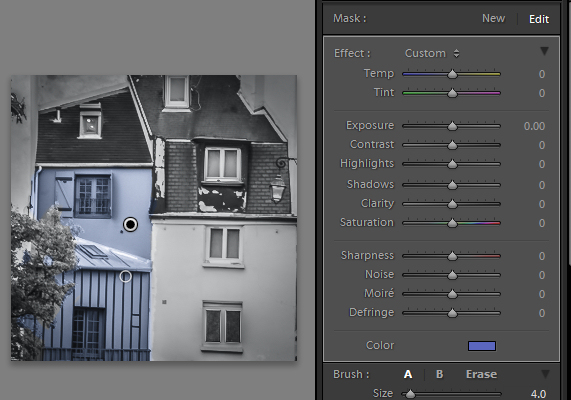
When you’re ready to add color to the image, click the Adjustment Brush and return all the sliders to zero by double clicking on the word Effect at the top of the panel (circle in red below).

Double click Effect to reset all the Adjustment Brush sliders.

Double click Effect to reset all the Adjustment Brush sliders

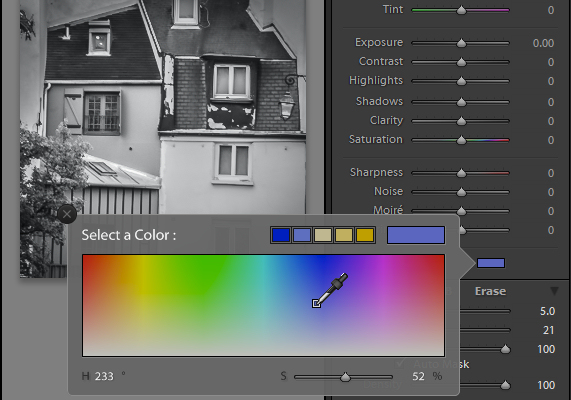
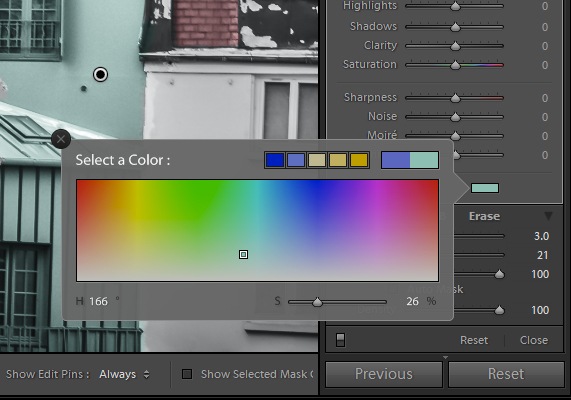
Click on the color sampler and choose a color to use.

Select a color to tint the image with from the Color selector

Select a color to tint the image with from the Color selector as shown here

Now click on the area that you want to recolor to set an Edit Point. Paint over the area to apply the color to it. As you paint with the Adjustment Brush a layer of partially opaque color is applied to the image.

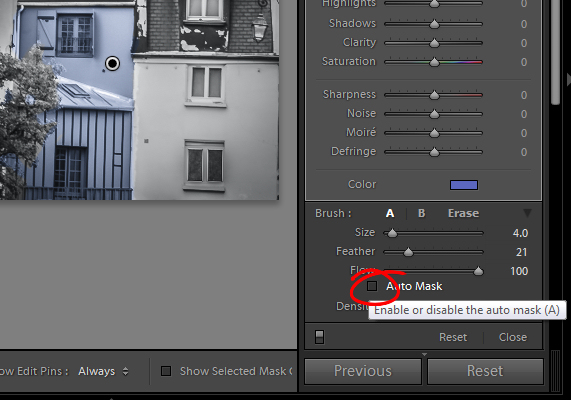
Select the Auto Mask checkbox if you are working on an area of the image that has distinct edges. Doing this makes it easier to limit the painting to only the desired area. The roof tops and buildings here are good examples of areas with distinct edges.

Selecting Auto Mask helps paint in areas with defined edges.

Selecting Auto Mask helps paint in areas with defined edges (stay within the “lines”)

When painting an area that is less defined, disable the Auto Mask checkbox. The tree in this image has less defined edges so you should disable Auto Mask when coloring this area.

The buildings have defined edges so use Auto Mask when painting them. The tree does not, so disable Auto Mask when painting it.

The buildings have defined edges so use Auto Mask when painting them. The tree does not, so disable Auto Mask when painting it.

If you mistakenly paint over an area and want to undo the painting click the Erase brush link or hold Alt to select Erase and paint to remove the mistake.

To zoom into the image press Z on the keyboard and click on the image to zoom in or out. To move the image hold the spacebar so the mouse pointer turns into a hand and drag on the image.

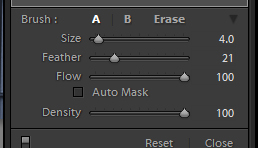
Size the brush using the Size slider

Size the brush using the Size slider

To resize the brush either use the [ and ] keys on the keyboard or adjust the size using the Size slider.

When you have finished working with the first color, click New to set a new Edit Point. Select a different Color and paint that onto the image.

Continue creating a new Edit Point for each color until the coloring is complete.

If desired, you can alter a color or adjust a painted area by selecting the Adjustment Brush and then click the Edit Pin for that adjustment. You can then change the color using the color picker.

Give a photo the look of a hand tinted image in Lightroom

Give a photo the look of a hand tinted image in Lightroom

Do you have some other tips:

If you have some other ways of doing this technique in Lightroom please share. Or share your images if you give it a try!

For more Lightroom tips and tutorials try these:

  • Processing an Image in Lightroom 5 – a Video Tutorial
  • 6 of Lightroom’s Hidden Treasures
  • Why Lazy Photographers Should Use Lightroom Smart Collections
  • 3 Uses for the Radial Filter Tool in Lightroom 5
  • Lightroom 5 Tips – Hidden Gems

The post How to Apply the Look of Hand Coloring in Lightroom by Helen Bradley appeared first on Digital Photography School.


Digital Photography School

 
Comments Off on How to Apply the Look of Hand Coloring in Lightroom

Posted in Photography


browserFruits März, Ausgabe 4

23 Mar

Vielleicht habt Ihr es schon gemerkt: Montagabends geben wir seit kurzer Zeit einen kleinen Ausblick auf die kommende Woche auf kwerfeldein. Wir nennen das Ganze „Aperitif“ und hoffen, wir können Euch damit ordentlich Hunger auf die kommenden Artikel machen. Im Teaserbild seht Ihr dort auch schon kleine Vorschaubilder aus den Hauptartikeln. Aber jetzt erst einmal viel Spaß mit den browserFruits.
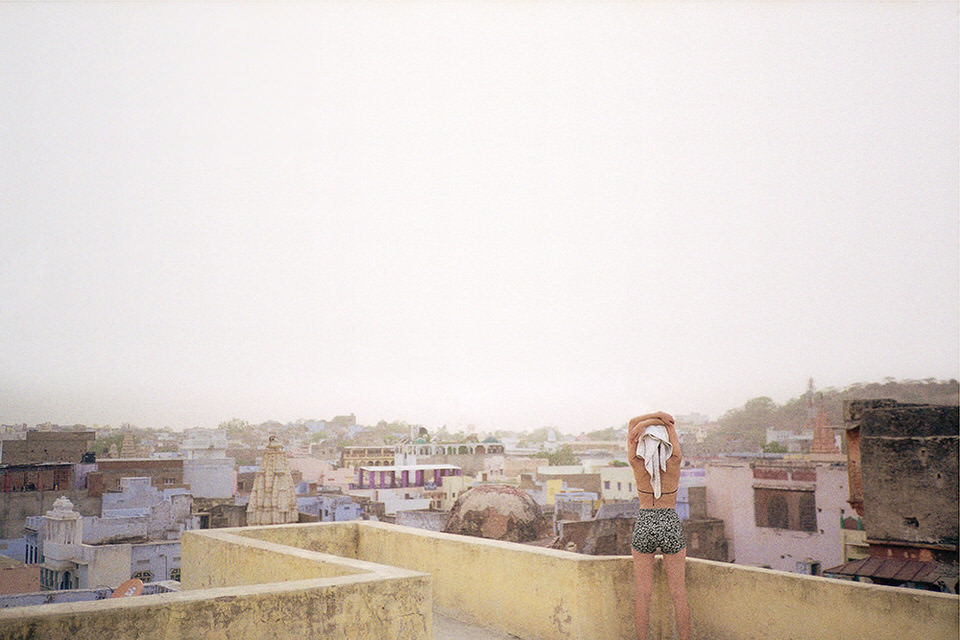
 

Fotospecial: Regenbögen

Flickr

500px


Deutschsprachig

• Habt Ihr schon einmal von Blindenfußball gehört? Die Fotografin Rebecca Sampson hat zwischen 2011 und 2013 verschiedene Fußballspiele fotografiert und die Mannschaften begleitet.

• Spiegel Online empfiehlt die Ausstellung „Kinderwelten – Kinderbildnisse aus aller Welt von namhaften Fotografinnen und Fotografen“ der Galerie Argus Fotokunst in Berlin und zeigt dazu fünf tolle Bilder, die neugierig auf mehr machen.

• Karneval ist schon lange vorbei, aber diese Bilder wollen wir Euch nicht vorenthalten. Schön anders.


International

• Ein Mädchen und ein Hund – Bilder einer Freundschaft.

• Zwei Fotografen hatten eine merkwürdige Idee: Warum nicht mal einen 35mm-Film schlucken und gucken, was dabei „herauskommt“?

• Der Fotograf Ryan Muirhead spricht im Interview über Depressionen, Kreativität und was es bedeutet, Mensch zu sein.

• Sehr schöne Doppelbelichtungen mit Portraits der Fotografin Aneta Ivanova haben wir hier entdeckt.

• Unglaublich: Diese Levitationsbilder des Italieners Simone Bramante entstanden mit dem iPhone.

• Laut dieser Seite sind die 10 berühmtesten Fotografen diese.

• Diese märchenhafte Portraitserie von Kirsten Booth zeigt, dass sich eine gute Vorbereitung und selbst einfache Requisiten für ein Shooting lohnen.

• Aktaufnahmen hinter Glas von Walter Fantauzzi.

• 40 Gewinnerbilder des Sony World Photography Awards 2014 zeigt ufunk.

• Alejandro Guijarro besuchte über drei Jahre hinweg verschiedene Institute für Quantenmechanik um deren Tafeln großformatig aufzunehmen. Dabei herausgekommen sind diese Bilder.

• Wandering Minds hat ein Interview mit der tschechichen konzeptuellen Fotografin Bara Vavora.


Neuerscheinungen und Tipps vom Foto-Büchermarkt

buchtipp

• „OBSCURA – 121 Blicke – 121 Ansichten“* zeigt von einer Jury ausgewählte Fotos verschiedener Lochkamera-Fotografen aus aller Welt. Das Buch zeigt, wie vielseitig diese doch einfache Kamera ist. Es kostet 39 Euro. Unsere Redakteurin Aileen hat ein Bild daraus bereits in unserer Kategorie Blickfang vorgestellt.

• „The Black Book“ von Robert Mapplethorpe*, 1986 erstmals erschienen, wurde neu aufgelegt. Auch zwanzig Jahre nach seinem Tod ist Robert Mapplethorpes Hommage an den schwarzen männlichen Körper einer der wichtigsten visuellen Beiträge zur Diskussion über Schönheit, Sinnlichkeit und Sexualität in der Fotografie. Neu kostet es 39,80 €, gebraucht bekommt man es bereits deutlich günstiger.


Zitat der Woche

When you are younger, the camera is like a friend and you can go places and feel like you’re with someone, like you have a companion.

Annie Leibovitz –

Mehr Zitate


Videos

Kennt Ihr das beeindruckende 365-Grad-Panorama von New-York-City? Welcher Aufwand dahinter steckt, erfahrt Ihr in diesem Making-Of.


* Das ist ein Affiliate-Link zu Amazon. Wenn Ihr darüber etwas bestellt, erhalten wir eine kleine Provision, Ihr bezahlt aber keinen Cent mehr.


kwerfeldein – Fotografie Magazin | Fotocommunity

 
Comments Off on browserFruits März, Ausgabe 4

Posted in Equipment