RSS
 

Archive for February, 2014

Create Powerful Silhouettes by Telling a Story

06 Feb

Create Powerful Silhouettes by Telling a Story

Telling the Story

Silhouettes remove all the distractions and clutter in the scene and distill the image down to its most basic, this is why the story is so important. Just using shapes you must make a photo that is recognizable, and that the viewer can relate to. While this sounds easy in practice, it can be difficult to achieve. You must have the right elements. The light needs to be in the right location, the subject needs to be facing the right way, and they need to be in a pose that makes their action recognizable.
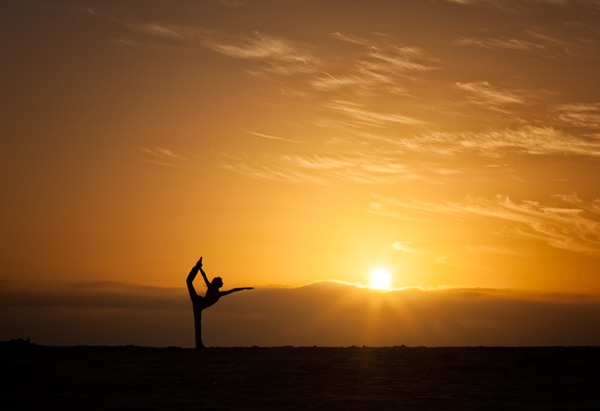
Silhouette 1

Movement by the subject helps tell a strong story in your silhouettes

Tips for creating good silhouettes that tell a story

Clean outlines

If you have multiple objects that are back-lit you want to make sure there is separation between the objects so that each one is distinct and recognizable.

Profiles or straight on shots work well

For people, profiles or straight on shots work best. For profiles you should be able to clearly make out the shape of the nose and chin on their face. For straight on shots the subject’s arms should be away from their body, and their legs parted so you can see both legs and not just a single blob. Recognizable shapes – this is important for every silhouette.

Capturing action

Movement in your subject can create strong lines and positions that are instantly recognized by the viewer and help convey the story of what the subject is doing.

Props
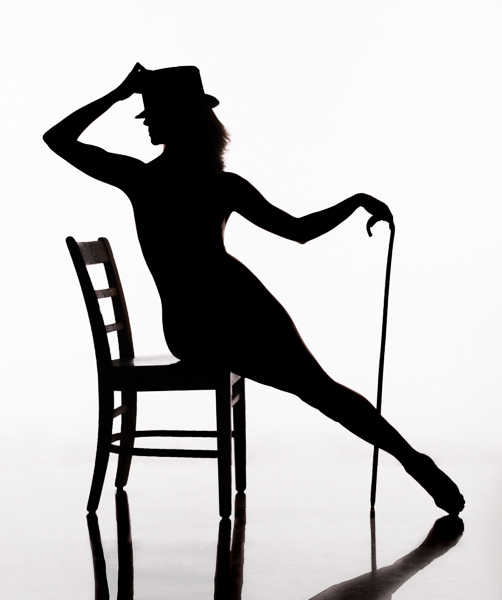
Silhouette 2

The added hat and cane help enhance the story in this image

Props can help tell the story, an outline of a flower, a tip of a hat can add meaning to the image.

Interaction between subjects

Having multiple subjects can be challenging because you want to minimize overlap of their shapes so they each maintain their own identity. There is a balance between telling the story and having the subjects interact in a minimal way. For example holding hands or kissing often work well, but a hug results in silhouette that is just a big black blob.
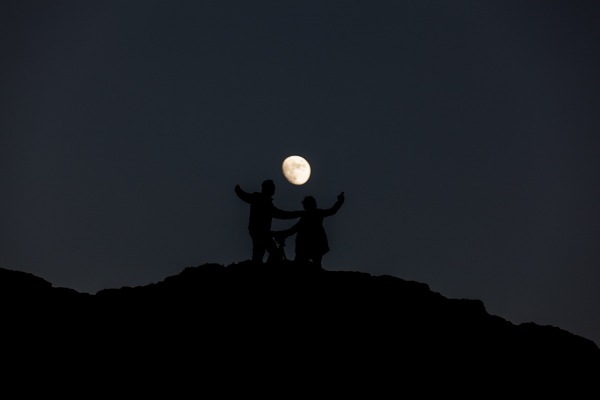
Silhouette 3

Separation between subjects is important. This image would be stronger if the man’s leg did not merge with the camera and tripod

Lighting for Silhouettes

To light a silhouette you need to light the subject from behind. The type of light is not important; it can be natural or artificial and can be direct or indirect. The important thing is that the lighting is behind the subject, and the subject is not lit. Technically silhouetting occurs when you have a lighting ratio of 16:1 or greater (4 stops), however I will describe how you can create a silhouette in post-production using lower lighting ratios.

Natural Silhouette Lighting

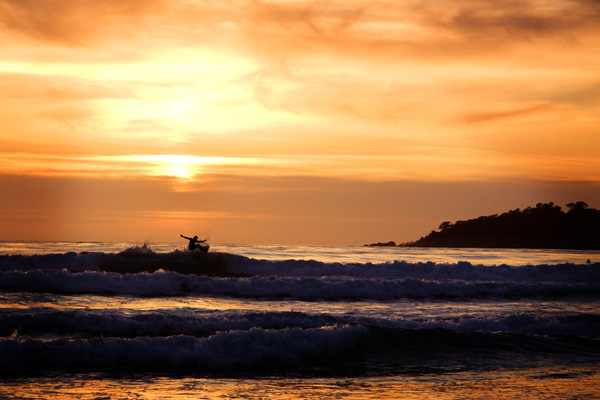
One of the most common types of silhouettes using natural lighting is to place the subject between the camera and the setting sun or moon. Your camera exposure should be set for the background lighting, either the sunset or moon, and this will cause the subject to appear black against the light background. Another common technique is to use the light reflected off of a wall or the side of a building.

Silhouette 4

This lighted wall in Las Vegas provides great back-lighting for silhouettes

Studio Silhouette Lighting

There are two common techniques for creating silhouettes using studio strobes. The first is to use a white background and bounce the strobes off the background. The second is to point the strobes towards the camera and place the subject between the strobes and the camera. This second technique can also produce a light flare in the image which can give an interesting effect.

Post-processing techniques
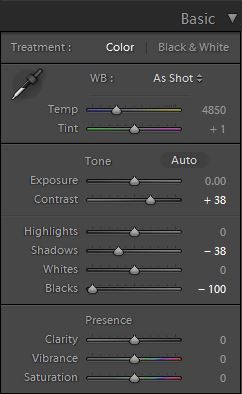
Silhouette 5

If you have a backlit subject, but can still see some detail in the subject you can often make it a pure silhouette in Lightroom, or Camera RAW. Use the develop module in Lightroom and adjust the Contrast, Highlights, Shadows, and Blacks sliders. Use different combinations to darken the subject. Typically you will need to increase Contrast and decrease one, or all of the other three sliders. Either the Shadow or Blacks slider should be set to -100, try both to see which produces the desired effect. Decreasing Highlights is typically only necessary if the edges of the subject are lit and you wish to make them darker.

Conclusion

Silhouettes are a fun and easy to do and by concentrating on the story being told you can create an image that has impact.

Want more silhouettes?

  • 5 tips for photography silhouettes (non-human subjects)
  • How to photograph silhouettes in 8 easy steps
  • 12 stunning silhouettes
  • Great B/W silhouette images

The post Create Powerful Silhouettes by Telling a Story by Craig Colvin appeared first on Digital Photography School.


Digital Photography School

 
Comments Off on Create Powerful Silhouettes by Telling a Story

Posted in Photography


5. Februar 2014

05 Feb

Ein Beitrag von: Michael Vogel

Ready For Take Off © Michael Vogel


kwerfeldein – Fotografie Magazin

 
Comments Off on 5. Februar 2014

Posted in Equipment


The Definitive Guide to Destination Wedding Photography

05 Feb

Destination wedding photography is hard work but certainly has its rewards. If you can adapt quickly, can thrive on the new and different challenges, and are naturally resourceful this niche may be for you. There are some additional considerations if you are thinking about becoming a destination wedding photographer. It typically requires more planning and expertise. Because the location is Continue Reading

The post The Definitive Guide to Destination Wedding Photography appeared first on Photodoto.


Photodoto

 
Comments Off on The Definitive Guide to Destination Wedding Photography

Posted in Photography


5 February, 2014 – Michael’s Antarctica

05 Feb

Initial thoughts and images from Michael’s LuLa workshop and expedition to Antarctica in January / February 2014. This will be followed up by a more complete article by Kevin within the next week or so.


The Luminous Landscape – What’s New

 
Comments Off on 5 February, 2014 – Michael’s Antarctica

Posted in News


Sterbende Schönheiten

05 Feb

Ein Beitrag von: Jorge Schramm

Zur „Blümchenknipserei“ bin ich – wie die meisten anderen Fotografen wohl auch – gekommen, indem ich Motive in meiner unmittelbaren Umgebung gesucht habe. Als frischgebackener Familienvater hatte ich nicht immer die Möglichkeit, meine Fotosachen zu packen, um „mal kurz“ fotografieren zu gehen, sondern musste oft die Pausen nutzen, in denen die Kinder geschlafen haben.

Da meine Frau unser Zuhause gern mit Blumen schmückt, waren die Motive schnell gefunden. Also kaufte ich mir sehr bald ein Makro-Objektiv und merkte, dass durch die Nähe zum Objekt eine für mich bis dahin unbekannte Intimität zu den Motiven entstand. Ich stieß auf Details, die mich die Pflanzen haben anders sehen lassen. Ich begann, „Eigenschaften“ einzelner Blüten zu entdecken – keine glich der anderen.

© Jorge Schramm© Jorge Schramm

Also fing ich an, ihre Unterschiede zu studieren und erkannte sehr bald, dass es vor allem die „Fehler“ waren, die die Blüten einzigartig machten. Das waren Bruchstellen, Blütenstaubkrümel, Insektenspuren, aber auch verwelkte Stellen. Jeder dieser „Fehler“ ließ die Blüte zum Individuum werden, jede Pflanze hatte ihre ganz eigene „persönliche“ Seite und ich begann, sie zunehmend als Persönlichkeiten zu betrachten.

Sehr schnell fand ich darüber hinaus, dass der Verwelkungsprozess jeder Blume ganz unterschiedlich verläuft. Deshalb fing ich an, mich besonders für die verblühten Pflanzen zu interessieren. Auf ihnen bildeten sich bemerkenswerte Strukturen und ihre Straffheit und ihr Stehvermögen veränderten sich, die Haltung der Pflanze und damit ihre gesamte Wirkung wandelten sich massiv.

© Jorge Schramm

Ich konnte beobachten, wie nach der „Blütezeit“ der Jugend eine neue Ästhetik die frische Schönheit immer mehr ablöste. Andere, neue Merkmale traten zutage: Stolz, Eleganz, Lebensfreude, Frohsinn – aber ebenso Demut, Trauer, Bescheidenheit, Melancholie, Verletzlichkeit. So hatte ich die metaphorische Kraft der Serie bald erkannt und versuche seitdem, menschliche Züge in den Pflanzen zu erkennen und wiederzugeben.

Mich interessieren vor allem die Parallelen zum Menschen, wenn nach dem Verblassen der jugendlichen Schönheit das Neue sichtbar wird. Jeder Einzelne geht mit den Veränderungen an seinem Körper anders um. Einige versuchen, diese Veränderung möglichst lange hinauszuzögern, während andere den Verlust der körperlichen Jugend rasch akzeptieren. Und wenn die frühere Schönheit auch noch das Kapital für Anerkennung und Erfolg war, so ist ihr Verlust umso schmerzvoller und schwieriger.

© Jorge Schramm

So hat sich letztendlich das eigentliche Thema der Serie entwickelt. Die Fragen, die sich in der Serie stellen sind: Welche persönlichen Umgangsformen gibt es mit der Vergänglichkeit? Wie nehmen wir Menschen die körperliche Endlichkeit und den Tod wahr und wie nehmen wir beides an? Halten wir an Vergangenem fest? Entdecken wir in uns Neues? Oder beides? Welchen inneren Kampf führen wir? Haben wir Ängste, wenn wir „nicht mehr schön“ sind? Haben wir Angst vor der „Entsorgung“?

Die Antworten auf diese Fragen sind vielfältig, individuell und sehr persönlich. Eine gibt uns beispielsweise die Amaryllis (links), die mit ihren kraftstrotzenden Fruchtknoten noch ihre Vitalität demonstriert, während die Tulpe in „Exhausted“ (rechts) mit dem Abfinden des nahenden Endes uns eine konträre Antwort gibt. Und das tun wir Menschen auch.

© Jorge Schramm© Jorge Schramm

Ich wähle die Blumen erst dann aus, wenn sie bereits verblüht sind. Dann weiß ich, wie sie sich entwickelt haben. Es lässt sich nicht erahnen, an welcher Stelle die Blumen wie stark verwelken. Ich beobachte die Pflanzen ab dem Augenblick, in dem sie ins Haus kommen und erfreue mich oft ein zweites Mal an ihnen, wenn sie anfangen, sich zu verändern.

Aber manchmal entdecke ich sie auch beim Spazierengehen oder mir fällt ein verwelkter Geburtstagsblumenstrauß auf dem Tisch eines Arbeitskollegen auf. Bisher habe ich nur ein einziges Mal eine Callas mit der Absicht gekauft, sie am Ende auch zu fotografieren. Aus Respekt vor den Lebewesen würde ich niemals eine Pflanze absichtlich verwelken lassen. Das passiert mir leider oft genug ungewollt.

© Jorge Schramm

Mich haben Robert Mapplethorpes Blumenbilder schon früh beeinflusst. Seine Lichtsetzung und seine Linienführung waren für mich immer so verblüffend einfach und dabei so wirkungsvoll. Also versuche ich, ähnlich wie Mapplethorpe, die Dynamik des Bildes über die Linienführung zu gestalten und die Stimmung über das Licht zu beeinflussen.

Ein zweiter Fotograf, der mich ebenfalls geprägt hat, war Karl Blossfeldt. Die Klarheit seiner Pflanzenbilder, die er durch seine strenge und formale Bildsprache erzielte, finde ich heute noch phänomenal. Durch eine deutliche Reduktion und das Lösen der Pflanze aus ihrer natürlichen oder gewohnten Umgebung kann auch ich die Essenz besser erkennen und eine klare Aussage machen.

© Jorge Schramm

Die drei Faktoren Licht, Linien und Einfachheit bestimmen die Technik, die ich einsetze. Meist beginne ich mit der Wahl des Lichtes: Brauche ich Tages- oder Kunstlicht? Brauche ich weiches oder hartes Licht? Obwohl ich Tageslicht bevorzuge, bleiben mir als vollzeit-arbeitender Familienvater oft nur die Abend- und Nachtstunden, um zu fotografieren. Dann verwende ich eigentlich alles, was Licht erzeugt, wie zum Beispiel eine Schreibtischlampe, meist aber meine kleine Studioblitzanlage.

Im digitalen Zeitalter lässt sich ein Weißabgleich sehr einfach durchführen, sofern man darauf achtet, dass man kein Mischlicht verwendet. Außerdem achte ich darauf, dass die Lichtquelle nicht heiß wird, damit die Blumen nicht zu schnell erschlaffen. Für den Hintergrund verwende ich häufig einen neutralgrauen Hintergrund, den ich unterschiedlich ausleuchte. Manchmal verwende ich auch einfach ein schwarzes T-Shirt, eine Styroporplatte, ein Stück Stoff oder eine Decke.

In der Regel habe ich eine grobe Vorstellung vom finalen Bild und weiß deshalb schon früh, welche Art von Hintergrund, Licht und Accessoires ich benötige. Ich überlege mir im Vorfeld ein Setup und eine Handvoll von Szenen, die ich dann konsequent fotografiere. Dabei entstehen immer neue Ideen, die ich im Anschluss ausprobiere und die dabei wieder neue Ideen entstehen lassen. Nicht selten ist das letzte Bild des Shootings das Bild, das ich für die Serie verwende. Aber ebenso oft ist es auch das erste Bild.

© Jorge Schramm© Jorge Schramm

Die Nachbearbeitung hat für mich einen ebenso hohen Stellenwert wie die Vorbereitung. Gewöhnlich weiß ich vor dem Fotografieren schon recht genau, welche Richtung das Ergebnis haben soll. Daher achte ich in der Vorbereitung darauf, dass ich eine gute Grundlage für das Endprodukt schaffe.

Fehler, die in der Vorbereitung gemacht werden, lassen sich in der Nachbearbeitung nur noch schwer korrigieren. Deshalb mache ich beispielsweise viele Bilder mit unterschiedlichen Blendeneinstellungen, da ich auf dem Display meiner Kamera den Schärfeverlauf zwar gut erahnen, aber eben nicht genau erkennen kann. Trotzdem verbringe ich viel Zeit mit der Nachbearbeitung, da mir jedes Detail wichtig ist.

© Jorge Schramm

Die Grundbearbeitung, wie Tonwertkorrektur, Ausrichten, Ausschnitt und Retusche mache ich mit Aperture und Photoshop CS3. Die Feinarbeit erfolgt danach im Schwarzweiß-Tool Silver Efex Pro 2, das ich inzwischen sehr schätze, da man die Bearbeitung dort sehr gezielt lokal durchführen kann.

Ich arbeite die Strukturen heraus und verändere die Kontraste, wedle ab oder belichte bestimmte Stellen nach. Schwarzweiß-Bilder erhalten am Ende eine leichte Tonung in den Tiefen und Mitten. Selbst Farbbilder bearbeite ich mit diesem Tool. Das Schwarzweiß-Ergebnis lege ich in Photoshop in eine Ebene, die ich dann mit der Fülloption „Luminanz“ in das darunterliegende Farbbild einrechne.

© Jorge Schramm

Ich arbeite ständig an der Serie, doch immer wieder mit Pausen, vor allem dann, wenn ich merke, dass ich mich wiederhole. Anfänglich habe ich in der Serie „nur“ die sogenannte „innere“ Schönheit der Blumen wiedergeben wollen.

Dann begann ich auch den Umgang mit dem eigenen, menschlichen Altern zu behandeln. Da dieses Thema unerschöpflich ist, bin ich überzeugt, dass ich wieder neue Aspekte finden und die Serie deshalb noch lange fortführen werde.


kwerfeldein – Fotografie Magazin

 
Comments Off on Sterbende Schönheiten

Posted in Equipment


Virtual LEGO Blocks: Build with Chrome, Set on Google Maps

05 Feb

[ By WebUrbanist in Gaming & Computing & Technology. ]

build with chrome page

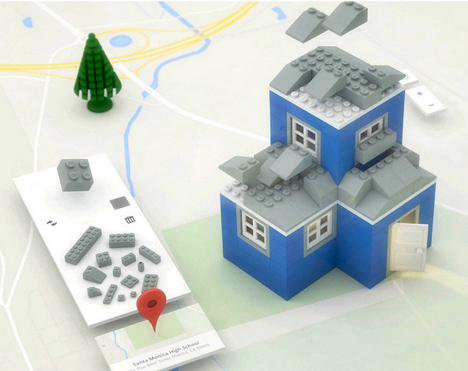
Build with Chrome is the new, fast and simple model-maker in town, and this one lets you create structures faster than digital SketchUp or physical LEGOs ever could.

build lego google maps

Of course, this Chrome Experiment project would not be complete without Google Maps integration, allowing you to deploy your creations around the world and interact with others.

build lego online browser

Architecture seems the most obvious, but infrastructure, ships and other complex shapes are all ultimately possibilities as well.

build lego pirate ships

Like SketchUp (previously owned by Google), the tool set is relatively simple, except in this case the learning curve is even faster, making it possible for anyone to participate with ease.

build lego house architecture

Users can select blocks, change colors, rotate with a key click, drop them into place then keep on stacking, then save or reset at any time. From private estates to pirate ships, anything is possible.

Share on Facebook


[ By WebUrbanist in Gaming & Computing & Technology. ]

[ WebUrbanist | Archives | Galleries | Privacy | TOS ]


WebUrbanist

 
Comments Off on Virtual LEGO Blocks: Build with Chrome, Set on Google Maps

Posted in Creativity


Top 5 Shortcuts for Better Photos

05 Feb

Having taught photography for several years I’ve noticed most students find the following 5 tips provide the biggest ‘aha!’ moments. These are the quickest and easiest techniques for improving your photography.

Top five shortcuts for better photos

1. Switch to aperture priority

Aperture priority

The main dial on top of your camera will have an option called ‘Av’ or ‘A’, depending on the make of your camera. It’s known as ‘aperture priority’. This mode gives you the perfect combination of a decent exposure (in most situations) and creative control. The only time this setting doesn’t give the right exposure is when a scene is particularly bright (like a snow scene), or dark (like a black Labrador).

Exposure compensation

If you’re not happy with the exposure you can use your camera’s exposure compensation setting to make it brighter or darker. This is usually controlled using a +/- button or a large rotary wheel, but check your manual for instructions on how to do this for your make and model of camera. Cameras tend to make very bright scenes too dark and dark scenes too bright.

A large part of the creativity in photography is adjusting the aperture to ensure more or less of the photo is in focus. The beauty of aperture priority is that you can select the aperture you want, and the camera will select the appropriate shutter speed to get the right exposure. Even if the light changes while you’re composing the photo the aperture won’t change, only the shutter speed will. This means your creative vision won’t change either.

All you need to remember is the lower the aperture number (f/4 for example), the less of the image that will be in focus. Cameras can be overwhelming and even have different ways of doing the same thing. When you’re starting out in photography it’s important to keep things simple. This means understanding what you don’t need to worry about yet. Sticking with aperture priority means you have one less knob to worry about, which always comes as a huge relief to my students.

2. How to avoid blurred photos

One of the most common problems suffered by new photographers is blurry photos caused by having a slow shutter speed. There’s a simple rule to help.

Your shutter speed needs to be faster than the focal length of your lens. So, if you’re using a 17-70mm lens and you set your lens to 70mm, then you need a shutter speed of at least 1/70th second. If you zoom out to 17mm then you’d need a shutter speed of 1/17th second. Note that this is the absolute slowest shutter speed you could use and the rule assumes that you and your subject are both still.

Blurred photos

Obviously your shutter speed can be as long as you like if you use a tripod, unless your subject is moving. You can create lovely effects by using a tripod for landscape photos where part of the landscape is moving. For example: flowing water, trees in the wind, car headlights, clouds etc.

If your shutter speed is too slow then you can make the aperture larger to let more light into the camera. Select a smaller ‘f number’ (f/4 instead of f/8 for example). If you’re already on the smallest f number you can get, or you don’t want to lower it because less of your photo will be in focus, then you have another option. Choose a higher ISO number and keep the same aperture as before. Again, aperture priority will ensure the exposure remains correct unless the scene is overall very dark or very bright.

3. Get closer and remove clutter

Almost every photographer starts out photographing things from too far away. They’ll create portraits where the person has a big area of nothingness around them. Maybe this is because most people are uncomfortable being photographed, and most new photographers are nervous about standing near them to take their picture. A longer lens can really help. 100mm or more allows you to stand outside someone’s personal space and still get a tightly composed image.

Just before you press the shutter button remember to check for unwanted items and consider whether your main subject is nice and bold in the frame. Our brain often deceives us because when it’s excited by something, it makes it seem bigger than it really is. Look at the background and consider whether it could be less cluttered. If you’re unable to move yourself or your subject to create a cleaner background then use a lower F stop (f/5 or lower, for example) to blur it out.

Uncluttered

4. Look for geometric shapes

If you look at your favourite photos you’ll notice the composition is often made up of quite defined shapes. Triangles, diamonds, circles, squares, parallelograms and trapezoids all slot together to create a pleasing jigsaw. Our brains like things to be ordered. Think about the calming effect of a nicely appointed hotel room. It’s made up of uncluttered geometric shapes, from the neatly stacked towels to the folded triangle of toilet paper and the round mint on the fold of your bed sheet.

Geometric shapes 2

5. Get in touch with your feelings

Whenever you have the urge to create a photo, think about why you’re picking your camera up in the first place. What was it that inspired you to grab your camera in this instant? If you’re photographing a person, then what are their physical and personality traits that you’d like your photo to convey?

Feelings

Imagine looking over a rocky coastal bay as the sun sets to your right. There’s a lighthouse straight ahead on the far side of the cove and storm clouds are rolling in behind it. Frothy waves are pummelling the rocks below. Most people would get out their wide angle lens and try and capture the whole scene in one go. The trouble is, the sunset would be distant, and the waves, rocks and lighthouse would be almost imperceptible.

Feelings 2

In this situation I’d recommend you create more than one photo. First you could walk to the rocky shore and get down low so the spray of the waves would be majestically backlit against the sunset. Then you could create a stark, bold silhouette of the lighthouse against the inky storm clouds. By creating two photos your message is much clearer.

So, before you press that shutter button consider if you’ve composed your photo in a way that makes your message clear.

Do you disagree with any of these tips, or have some better ones? Leave a comment below so we can see who has the best ninja photography techniques.

The post Top 5 Shortcuts for Better Photos by Dan Waters appeared first on Digital Photography School.


Digital Photography School

 
Comments Off on Top 5 Shortcuts for Better Photos

Posted in Photography


Nikon Capture NX 2.4.6 adds D3300 support, improved white balance

05 Feb

shared:NikonLogo.png

Nikon has released Capture NX version 2.4.6. The latest update adds Raw image support for the recently announced entry-level D3300 and the improved white balance adjustment options can now match the ‘Auto 1’ setting found in newer DSLR and Coolpix cameras. Version 2.4.6 also expands Fine Adjustment range from 4132–7042k to 2500–7042k when using the Direct Sunlight option for Daylight. Get the update

News: Digital Photography Review (dpreview.com)

 
Comments Off on Nikon Capture NX 2.4.6 adds D3300 support, improved white balance

Posted in Uncategorized


Buy our New Posing eBook and Go in the Draw to Win $2000 worth of Lenses

05 Feb

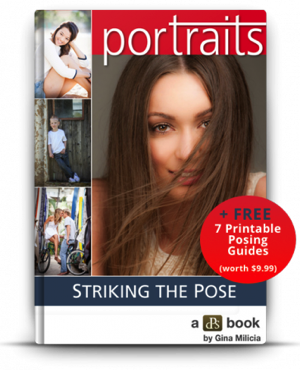
NewImageLast week we launched a brand new dPS eBook – Portraits: Striking the Pose – an eBook to help you take natural looking portraits that bring out the true character in your subjects.

When we launched this eBook we suspected it would do well as it’s a popular topic and written by one of our much loved authors – Gina Milicia – who really knows her stuff.

However we had no idea just how popular it would be. In the first two days of it’s launch we saw more people grab a copy than we usually do in the first two weeks of a launch.

And the response has been so positive from those who got a copy.

Check out this comment from one of our readers – Brad Granger – who bought a copy last week:

I picked up a copy of this eBook last week and have read it through 3 times already.

I can see that what I’m learning is already improving my portraits but what excites me most is that I took a photo of my wife that she’s proud to show her friends! She normally doesn’t like photos of herself but today she uploaded it to Facebook – something I’ve never known her to do before.

Thanks DPS and Gina!

Win $ 2000 USD to Put Towards Camera Gear

win camera gear with our eBookWe launched Striking the Pose with a bonus set of 7 posing printables with 67 poses that you can put in your camera bag to help you on your next launch. This is an early bird offer only but before we end that discount we thought we’d add one more sweetener for those who pick up the eBook before our launch ends.

Everyone who buys a copy of Portraits: Striking the Pose before midnight on Friday 28 February US eastern time (including those who already have bought one) will go into the draw to win $ 2000 to go toward camera gear.

The Prize

The winner (chosen randomly) can choose a combination of gear to suit their needs. So Canon owners can choose Canon gear. Nikon owners can choose Nikon accessories or a new body. Micro 4/3 camera owners can choose lenses to suit their cameras.

The winner can choose to spend their $ 2000 USD on one single camera or lens or might choose to buy a bundle of things (as long as they total up to $ 2000).

FAQ

Based upon previous competitions I know we’ll get a number of questions on this so here’s some FAQs:

  • what if I already purchased Portraits: Striking the Pose? – you’re in the draw and don’t need to do anything else. This is also the case if you bought it as part of a bundle of Gina’s other eBooks.
  • is this open to all international readers – yes, everyone. We’ll ship the lenses to you anywhere at our cost. Our preference is to use B&H Photo and Video but if you live outside of their delivery area we’ll work with a local supplier to you to get you your lenses.
  • can I enter more than once? – no, there is one entry per person. Multiple purchases of the eBook only get you one entry
  • are there any conditions of entry? – yes, just one. The only condition of entry is that you allow us to publish your name on the blog when you’re drawn as a winner (we’ll keep any other details private). This way everyone will know who has won (we’ve previously had winners ask not to be named which has been difficult to be transparent about winner announcements).

Here’s the deal in a Nutshell

Buy Portraits: Striking the pose before midnight on Friday 28 February (US eastern time) and you get:

  • 7 Bonus Posing Printable Guides (worth $ 9.95)
  • an entry into the $ 2000 gear giveaway
  • Plus (and most importantly) you’ll come away from reading the eBook with some inspiration and knowledge to go away and take beautiful portrait images – this eBook has the potential to transform your photography!

To enter simply buy Portraits: Striking the Pose before midnight on Friday 28 February (Eastern US time). We’ll draw the winner that evening and notify them of their win and then publish their name here on the dPS blog in the coming days. If the winner doesn’t respond within 7 days we’ll draw another winner and publish their name on the blog.

As this post goes up you have just a few weeks to take advantage of this offer – so don’t hesitate and pick up your copy of Portraits: Striking the Pose here today!

The post Buy our New Posing eBook and Go in the Draw to Win $ 2000 worth of Lenses by Darren Rowse appeared first on Digital Photography School.


Digital Photography School

 
Comments Off on Buy our New Posing eBook and Go in the Draw to Win $2000 worth of Lenses

Posted in Photography


Windowless House of Glass: Solid Walls Hide Invisible Floors

05 Feb

[ By WebUrbanist in Architecture & Houses & Residential. ]

glass house modernist china

In a surreal reversal of modern architectural convention, this Vertical Glass House trades a tradition of solid horizontals and clear verticals for an opaque shell and see-through walking surfaces.

glass house exterior view

glass house vertical view

The design by Atelier FCJZ draws on Modernism’s celebration of materials like concrete, glass and steel, but subverts them at the same time via a 90-degree twist. The result is a surprising inverse of celebrated Modernist residences, textbook-making works like Mies van der Rohe’s Farnsworth House or Phillip Johnson’s Glass House.

glass house stairs door

glass house seated meditation

Despite its strategic departures, the unique home is still intended in a Modernist spirit – its simplicity is just turned inward, meant to engender and focus internal reflection. Set as it is in Shanghai, and designed by a Chinese firm, one could also argue it is an Eastern interpretation of a primarily Western movement.

glass house on river

glass house bedroom bath

The building was originally designed for a competition just over two decades ago, but recently realized as an actual structure thanks to the West Bund Biennale of Architecture and Contemporary Art, which has made it a permanent pavilion and opened it to guest artists and architects in residence.

glass concrete home original drawings

glass house bathroom living

From the designers: “Vertical Glass House is a urban housing prototype and discusses the notion of transparency in verticality while serving as a critic of Modernist transparency in horizontality or a glass house that always opens to landscape and provides no privacy.”

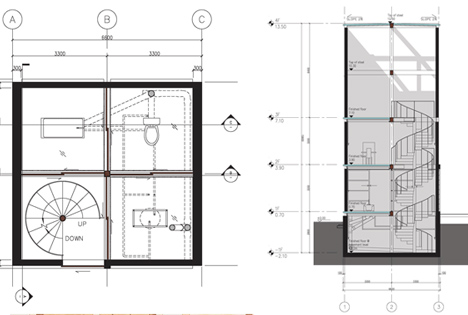
glass house plan section

glass house living kitchen

“With enclosed walls and transparent floors as well as roof, the house opens to the sky and the earth, positions the inhabitant right in the middle, and creates a place for meditation. Vertical transparency [also] visually connects all the utilities, ductworks, furniture pieces on different levels, as well as the staircase, into a [comprehensible] system of domesticity.”

Share on Facebook


[ By WebUrbanist in Architecture & Houses & Residential. ]

[ WebUrbanist | Archives | Galleries | Privacy | TOS ]


WebUrbanist

 
Comments Off on Windowless House of Glass: Solid Walls Hide Invisible Floors

Posted in Creativity