RSS
 

Archive for January, 2014

Why You MUST Have a Polarizer

14 Jan

Gavin hardcastle polarizer featured

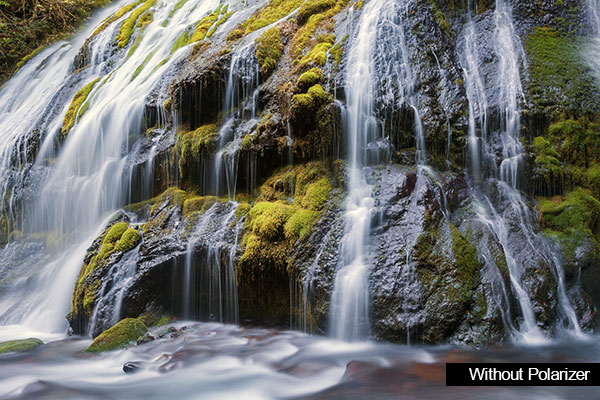
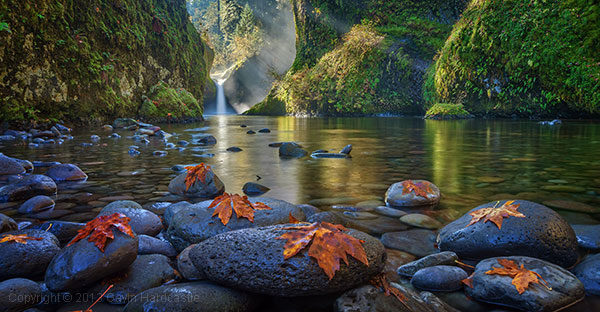
Ever wondered how professional photographers achieve such lush, vibrant colours and that magical “atmosphere” in their images? BAM – they use a polarizing filter or “polarizer”! I could never have achieved the shot above without a polarizer.
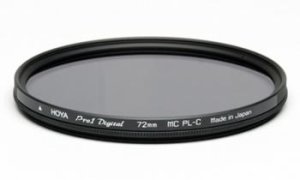
hoya-polarizer.jpgWho would have thought that just one slice of wafer thin glass slapped on the front of your lens could transform your photographs from “meh” to “woah” with just a quick turn of the hand?

You MUST Have a Polarizer!

As a landscape photographer I won’t go anywhere without at least a couple of polarizers in my bag of goodies. My wife loves them too because she never has to ask me what I want for Christmas, the answer is always “a polarizer please”.

Can you spot the difference between the two shots below?
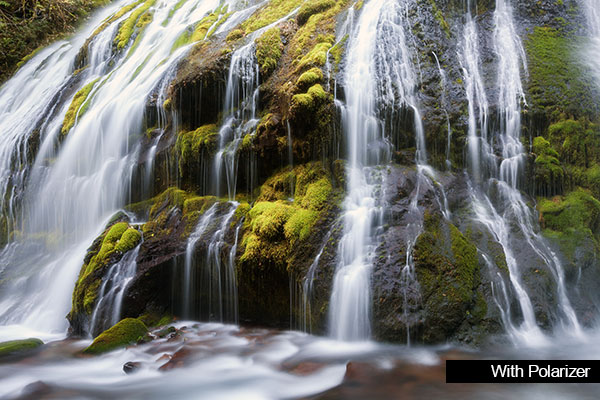
Gavin hardcastle with polarizer

Gavin hardcastle without polarizer

The effect is pretty dramatic in terms of how the polarizer removes all of the white glare from the wet rocks. It also allowed for a longer exposure so that I could capture more movement in the water.

So what does a polarizer do?

In a nutshell, your polarizer allows you to control the reflected light that you didn’t even realize is messing up your shot. It’s like putting a pair of shades on your camera (or monacle I guess). Here are just a few reasons you’ll love a polarizer:

  1. Allows you to see through shallow water by excluding light reflecting from the surface.
  2. Gives you deeply saturated colours by excluding reflected light, for example, wet rocks or leaves.
  3. Allows you to control which light reflections you want to keep. Lets say you’re shooting a shiny surface like a wet car, a polarizer will allow you to change the angles of the reflected light on the curves of the bodywork. See video below.
  4. Brings back definition to blown out clouds that may appear too bright without your polarizer.
  5. Allows you to use slower shutter speeds for milky water shots. You’ll never shoot another waterfall without one.
  6. Allows you to shoot through glass that would otherwise show obscuring reflections.
  7. It protects your lens from impact and the elements. It’s easier to replace a $ 100 filter than a $ 2000 lens.

Video of a polarizer in action to manipulate the reflections on paintwork.

Here’s another example of the way a polarizer allows us to see right through shallow water.
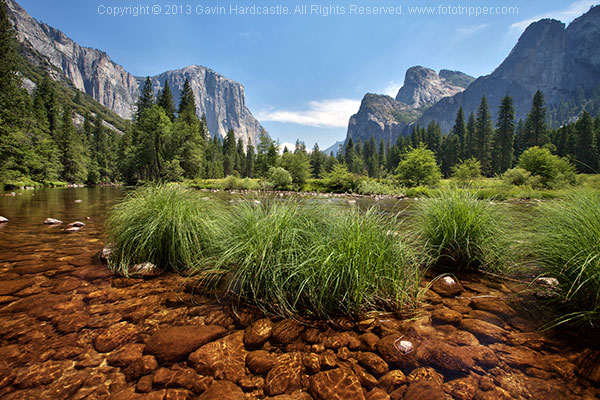
Gavin hardcastle polarizer yosemite

When NOT to use a polarizer

A polarizer reduces the amount of light that enters your lens. If you need to shoot fast, like in a dark canyon or a night time rock concert, ditch the polarizer. Low light situations won’t benefit from a polarizer because you’ll need all the light you can get for fast shooting.

If you want reflections, like in a lake scene, use a circular polarizer so that you can take a shot WITH the polarizer engaged and another shot WITHOUT the polarizer engaged. That way you can decide which you like best during editing and maybe blend the two for the ideal look.

Like to shoot rainbows? Ditch the polarizer or the rainbow will be invisible, it’s reflected light remember.

Which brand to choose

In all honesty I’ve used them all and I can’t recommend one brand over the other. Your challenge is to find one that fits the diameter of your lens. Try finding an 82mm at short notice and you’ll know my pain. Shop online for the best deals.

Invest in the most effective camera accessory money can buy, treat yourself to a polarizer then go create some awesome images.

What’s your recommendation for an absolute “MUST HAVE” in the camera bag?


Here are a few filters to check out:

  • B+W 77mm Kaesemann Circular Polarizer with Multi-Resistant Coating
  • Hoya PRO1 Digital CIRCULAR PL – Filter – circular polarizer – 67 mm
  • Hoya 58mm HRT Circular PL Polarizer Multi-Coated Glass Filter
  • Tiffen 72mm Circular Polarizer

Further reading on using filters:

  • Polarizing and Neutral Density Filters: Essentials for Landscape Photography
  • Getting It Right In Camera: Using Filters To Accurately Capture the Scene
  • ND Filters: Everything You Need to Know
  • Neutral Density Filters
  • Introduction to Filters for DSLRs

The post Why You MUST Have a Polarizer by Gavin Hardcastle appeared first on Digital Photography School.


Digital Photography School

 
Comments Off on Why You MUST Have a Polarizer

Posted in Photography


20-Hour House: How to 3D-Print 2,500 Square Feet in 1 Day

14 Jan

[ By WebUrbanist in Conceptual & Futuristic & Technology. ]

3d printing building day

Combining ancient earthen-architecture approaches and cutting-edge robotic technologies, this contour crafting process promises a revolution in how we address one of our most basic and universal human needs: shelter.

Inventor and teacher Dr. Behrokh Khoshevis of University of Southern California points out that residential construction is labor-intensive, inefficient and hazardous. In short: it is overdue for a paradigm shift, one that not only automates and speeds up processes but also allows for mass customization and individualization.

3d printed architecture model

His Counter Crafting system “is a fabrication process by which large-scale parts can be fabricated quickly in a layer-by-layer fashion. The chief advantages of the Contour Crafting process over existing technologies are the superior surface finish that is realized and the greatly enhanced speed of fabrication” in part through the use of additives for faster hardening times.

3d building prototype printer

Steel reinforcement, plumbing and electrical can all be installed by robotic attachments as the concrete walls are poured. In turn, conventional shape and style limitations need not apply – curves are as simple to program as right angles. Part of the beauty of this system is that it cuts out the middle man – designs can go straight from the digital drawing board (CAD software) to the on-board computer.

3d printing on moon

Nor is this simply one man’s fantasy: “Contour Crafting has been under development under support from the National Science Foundation and the Office of Naval Research. Also, the application of CC in building adobe structures using inexpensive materials is being pursued in conjunction with the CalEarth organization.” Contour Crafting is also working with NASA to explore possibilities for 3D-printing structures in space.

Share on Facebook


[ By WebUrbanist in Conceptual & Futuristic & Technology. ]

[ WebUrbanist | Archives | Galleries | Privacy | TOS ]


WebUrbanist

 
Comments Off on 20-Hour House: How to 3D-Print 2,500 Square Feet in 1 Day

Posted in Creativity


Im Gespräch mit Victor Habchy

14 Jan

Ein Beitrag von: Victor Habchy

Victor Habchy ist Fotograf aus Paris, der sich in allen Bereichen der Fotografie schon einmal versucht hat. Mit konzeptueller Stärke entführt er uns mit atemberaubenden Landschaftsaufnahmen und kraftvollen Portraits in eine eigene Welt.

Auch, wenn er selbst stets unzufrieden mit der eigenen Arbeit bleibt, so spürt man doch die vielen verschiedenen Geschichten, die er eingefangen hat, wenn man sich die immense Menge seiner Bilder ansieht.

Erzählst Du uns etwas über Deinen Hintergrund? Woher kommst Du und wie bist Du zur Fotografie gekommen?

Es gibt ehrlich gesagt nicht sonderlich viel über meine Vergangenheit zu erzählen. Ich wurde in einer kleinen Stadt in Frankreich geboren und meine Jugend verlief ziemlich normal, um nicht zu sagen langweilig.

Die Fotografie habe ich zufällig entdeckt, als ich versuchte, ein paar Bilder meiner Freunde beim Skateboarden zu machen. Seitdem ist Fotografieren das, was ich ausnahmslos am allerliebsten tue.

© Victor Habchy

Deine Arbeiten sind so vielfältig. Erst hast Du Sport fotografiert, dann Mode, danach Fine Art und so weiter. Findest Du es schwierig, Deine Arbeit genau zu umgrenzen?

Ich stimme Dir da absolut zu! Wenn jemand mich fragt, was für Bilder ich mache, finde ich es schwierig, darauf eine Antwort zu finden. Ich denke, mir gefällt es einfach, Fotos zu machen. Ich habe keinen bestimmten Stil und ich probiere gern neue Sachen aus.

Das einzige gemeinsame Ziel all meiner Bilder ist die Suche nach einer ästhetischen Stimmung. Ich suche immer die Schönheit als solche, nicht nur in der Person, sondern auch in ihrer Bewegung, in Strukturen und so weiter.

© Victor Habchy

Weil Du Bewegung erwähnt hast: Was für einen Stellenwert hat für Dich das Reisen in Deinem Leben als Fotograf?

Reisen ist für mich sehr wichtig, sowohl als Mensch, als auch als Fotograf. Es ist wirklich interessant, in die Fremde zu ziehen und Dinge zu erleben, die man nie zuvor getan hat.

Einmal durch Asien zu reisen ist für mich eine unglaubliche Erfahrung gewesen. Ich mochte meine Augen gar nicht schließen. Im kommenden März fahre ich nach Indien – ich freue mich und bin schon ziemlich aufgeregt.

Ich persönlich halte Deine Arbeit für atemberaubend. Gibt es für Dich ein bestimmtes Bild, auf das Du ganz besonders stolz bist?

Nein, kein einziges. Ich bin von meinen eigenen Bildern normalerweise ziemlich schnell gelangweilt. Auch wenn ich sie manchmal für den Augenblick gut finde, halte ich sie auf längere Sicht dann doch eher für schwach. Ich bin durchweg unzufrieden und strebe immer nach Verbesserung. Ich fühle mich wahrlich nicht als vollkommen, weder als Künstler noch als Fotograf.

© Victor Habchy

Eine Sache, die mir in Deinen Fotos sehr stark auffällt, sind Deine Konzepte und einige wirklich einzigartige Ideen, die ich an anderer Stelle noch nicht so oft gesehen habe. Wie kommst Du auf Deine Ideen?

Es mag ein wenig dämlich klingen, aber die Ideen tauchen halt einfach in meinem Kopf auf. Ich suche nicht zwanghaft nach Kreativität (Kann man denn überhaupt noch kreativer werden?), ich habe manchmal einfach Ideen, die plötzlich aus dem Nichts kommen. Das passiert mir häufig nachts, besonders, wenn ich müde werde. Das ist etwas lästig, denn ich muss dann immer aus dem Bett, um schnell noch ein paar Ideen aufzuschreiben.

© Victor Habchy

Woher bekommst Du Deine Inspiration? Gibt es jemanden, auf den Du Dich in Deiner künstlerischen Entwicklung besonders beziehst?

Ich schaue mir häufig die Werke auf den Webseiten anderer Fotografen an. Danach bin ich süchtig. (Schau Dir meine Pinterest-Seite an; diese Plattform ist wirklich klasse). Außerdem interessiere ich mich sehr für Gemälde, besonders für jene aus der Zeit der Renaissance.

Ich möchte auch all meinen Fotofreunden danken, die mich auf dieser wunderbaren Reise begleitet haben. Und nicht zuletzt auch meinen Eltern dafür, dass sie intolerant gewesen sind und mich nicht unterstützt haben. Ich bin so viel gereist, wie es ging und bin dadurch unabhängig genug geworden, um zu erfahren, was Freiheit und Freude sind. Das war es absolut wert.

© Victor Habchy

Hast Du noch eine Botschaft an angehende Künstler, was sie beachten sollten?

Willkommen im Internet! Vergesst nie, dass auch die härteste Kritik nicht zwangsläufig eine miese Bewertung Eurer Abeit ist.

Ein Gespräch zwischen Victor und Hanae, Mitarbeiterin bei „The Portfolio“. Das Interview erschien bereits in Englisch auf „The Portfolio Conversations“. Unser Redakteur Robert Herrmann hat es für kwerfeldein ins Deutsche übersetzt.


kwerfeldein – Fotografie Magazin

 
Comments Off on Im Gespräch mit Victor Habchy

Posted in Equipment


Fast and portable: Using the MacBook Air in a pro workflow

14 Jan

carseat.jpg

Photographers often need to find the most powerful solutions possible and cram them into the smallest places. While the MacBook Air once satisfied only the size part of the equation, the newest member of the family makes it a compelling choice for photographers. The MacBook Air provides a professional level of power in a diminutive package without sacrificing functionality. Learn more

News: Digital Photography Review (dpreview.com)

 
Comments Off on Fast and portable: Using the MacBook Air in a pro workflow

Posted in Uncategorized


Hose To Home: 10 Reverently Restored Firehouses

14 Jan

[ By Steve in Architecture & Houses & Residential. ]

firehouse homes
America’s urban firehouses combine form with function in solidly-built structures, making them ideal candidates for respectful residential restoration.

Anderson’s Coop

Anderson Cooper restored home firehouse New York(image via: Daytonian In Manhattan/Alice Lum)

Architect Franklin Baylis, designer of the 1906-vintage Fire Patrol House #2 in New York City’s Greenwich Village, would no doubt be pleased to see his original work revealed after so many years. Bland and unappealing painting, re-painting and over-painting had obscured the firehouse facade’s intricate detailing but all that would change when media celeb Anderson Cooper bought the building for $ 4.3 million and embarked on an extensive (and doubtless expensive) restoration.

Anderson Cooper firehouse home NYC Greenwich Village(images via: Curbed)

The term “restoration” shouldn’t be taken literally – Cooper was looking to LIVE in the building, not fight fires from it. Even so, the new owner of the 8,240-square-foot former firehall at 84 West 3rd Street intends to restore the old fireman’s gymnasium for his personal use and although the front garage door is now black, the station’s iconic bust of Mercury is looking pretty good for a dude going on 108!

Newport Renews

Hose 8 firehouse restoration Newport RI(images via: H + A)

The town of Newport, Rhode Island was founded in 1639, which makes the historic Hose 8 firehouse one of the burg’s newer structures. When structural issues appeared to consign the late nineteenth century building to the wrecker’s ball, Boston-based Hacin + Associates architecture and design firm stepped in with an intriguing plan: completely dismantle the three-story firehouse and rebuild it, brick by brick, with a flexible modern interior suitable for homeowners. Upon completion of the three-year-long project, The Newport Restoration Foundation awarded H + A the Doris Duke Preservation Award honoring the firm’s “heroic efforts to save a building that would have otherwise been lost”.

Ravenswood; You Would Too

Ravenswood Chicago home firehouse(image via: Your Windy City Guide)

Chicago Fire anyone? The Windy City found itself chock-a-block with redundant firehouses in the late 1950s when the many competing private fire protection companies were absorbed by the municipal government. Some, like the restored Ravenswood beauty above, found themselves in revitalized residential neighborhoods where their form took precedence over their former function.

Chicago restored firehouse Ravenswood(images via: Hall Of Flame, StrawStickStone/Cragin Spring and Chicago Scanner)

In its previous life, the structure was Patrol #8 of the Chicago Fire Insurance Patrol. Listed for $ 1,275,000 in 2006 (just before the national financial crisis clobbered the housing market), the cozy firehall features two bedrooms, two baths, a wine cellar and an expansive first floor formerly reserved for parking fire engines. The building looked almost naked without its current covering of ivy, though the “before” photo above from StrawStickStone does reveal some of its architectural highlights.

San Francisco Treat

117 Broad St. fire station 33 SFFD home (images via: Zillow)

Give my regards to Broad Street… San Francisco that is! Operating from 1896 to 1974, Firehouse 33 enjoyed an eventful life that included the Great San Francisco Earthquake when it was just a decade old. These days, the station does double duty as a two bedroom/2 bathroom home and a working business: the San Francisco Fire Engine Tours & Adventures company – it even has a 1955 red Mack Truck fire engine parked in the garage. Kiss those traffic jams goodbye!

Next Page – Click Below to Read More:
Hose To Home 10 Reverently Restored Firehouses

Share on Facebook


[ By Steve in Architecture & Houses & Residential. ]

[ WebUrbanist | Archives | Galleries | Privacy | TOS ]


WebUrbanist

 
Comments Off on Hose To Home: 10 Reverently Restored Firehouses

Posted in Creativity


Space in Miniature: Tilt-Shift Effect Shrinks Galaxies

14 Jan

[ By Steph in Art & Photography & Video. ]

Tilt Shift Space Photos 1

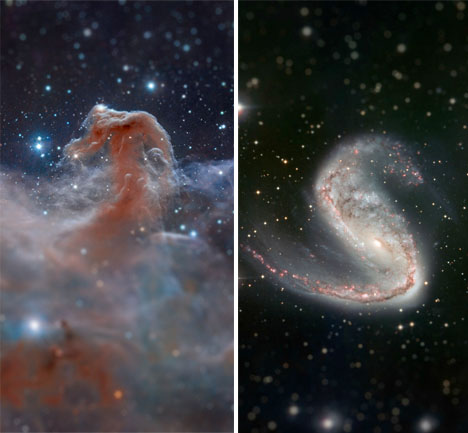
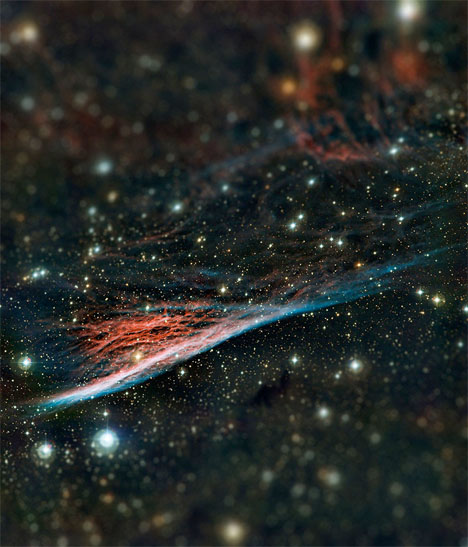
The scope of all that exists beyond our own planet is so large, it’s mind-boggling to contemplate. Yet a simple Photoshop trick can seemingly reduce shots of outer space, including those taken by powerful Hubble telescopes, to miniature scenes.

Tilt Shift Space Photos 5

Reddit user TheScienceLlama took a bunch of space imagery from NASA and ESA and transformed it with the Tilt-Shift filter in Photoshop, including the Horsehead Nebula, Crab Nebula, Meathook Galaxy, Thor’s Helmet Nebula and Andromeda Galaxy.

Tilt Shift Space Photos 3

Tilt Shift Space Photos 2

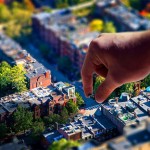
The tilt-shift effect blurs the top and bottom of an image to mimic a shallow depth of field, making it seem as if life-sized scenes are actually miniatures.

Tilt Shift Space Photos 6

The effect is especially effective on urban scenes, making planes, city buses, cruise ships and people look  like toys.

Share on Facebook


[ By Steph in Art & Photography & Video. ]

[ WebUrbanist | Archives | Galleries | Privacy | TOS ]


WebUrbanist

 
Comments Off on Space in Miniature: Tilt-Shift Effect Shrinks Galaxies

Posted in Creativity


5 Tips to Take Better Images in a Zoo

14 Jan

5 Tips to Take Better Images in a Zoo

Many photographers think that taking a great animal photo requires extreme patience, sitting and waiting for hours in the wild. Yes, this is how a great wildlife shot is captured. However, if you just want to get some practise, you can still capture great animal photos in a zoo. Taking pictures of animals in a zoo is easier than shooting in the wild. Yet, it is not too easy.
Many people think that taking a picture in a zoo is not challenging, but I don’t agree. It is not as simple as you think to take a good picture in the zoo. Here are some tips that will help you to capture a better photo next time.

#1 Be Aware of Both Foreground and Background

At the zoo, animals usually live in cages. If you are able to shoot inside the cage, beware you do not capture the cage as a background. On the other hand, for those animals you can observe through a thick glass wall, what you can do is to shoot as close to the glass as possible and open up the aperture as wide as you can so as to minimize flare and dirt on the glass.

Crocodile

For example, I shot this crocodile outside a glass wall. I used a 200mm lens at f/2.8 because I wanted to blur out all the dirt on the glass. When I was shooting, I removed the hood and stuck the lens to the glass so that no flare would affect my image. You can also use this same technique to blur out the cage if you can only shoot outside a cage.

#2 Learn About the Animal’s Behaviour

Although you do not need to wait for your target animal to appear when you photograph in a zoo, you still need to understand their behaviour so as to capture a good image. Most animals feel hot and find shelter at noon. They tend not to move around and just sit still or sleep instead.

Firefox

You may not able to get a good pose because they are not going to keep the same pose for hours. One of the solutions is to find out when the feeding times are. When the zoo keeper takes the food into the cage, or glass house, you are going to have the best chance to get the best angle.

Stilt

#3 Use a Wider Aperture and Higher ISO

Do not be afraid of noise. Noise is so much better than a blurry image. When you shoot with a 300mm lens hand held, you have to get at least 1/300 shutter speed in order to achieve a sharp image. Boost up your ISO. I normally use automatic ISO selection so I can focus on composition and catching the target’s movement. You can set a minimum shutter speed and a maximum ISO with most camera models. You will need this because when the target is moving, it will move between both brighter and more shaded areas. You are not going to have enough time to change the ISO if you shoot with Aperture priority or Manual mode.

Parrot

On the other hand, open up to the widest aperture unless you are shooting in good sunshine. A larger aperture can give you a faster shutter speed which can reduce the chances of handshake. It can also help to blur out the foreground and background.

#4 Try a Different Angle

Unlike shooting in the wild, shooting in a zoo is limited by many restrictions. You cannot step into the cage, or even get as close as you want. Therefore, you need to look for the best angle. You can shoot behind a rock with a telephoto lens.

Monkey

This will provide you with a blurry rock as foreground and the photo will have more depth. You may also get a nice perspective by shooting from an extremely low angle.

Practice, Practice and More Practice

A zoo is the best place for practicing animal shoots in my experience. You can take more time to think about your images.

Panda

You are extremely safe when shooting. Hence, you can get more practice with both your camera and lens. Get the feel for how fast your 300mm focuses. Practice and develop better hand held skills so you may use 1/40 sec for a 300mm lens. (I still cannot do this. Learn how to press the shutter just as an egret is beginning to hunt. When you have enough practice, you can try going ‘wild’.

The post 5 Tips to Take Better Images in a Zoo by Kevin Choi appeared first on Digital Photography School.


Digital Photography School

 
Comments Off on 5 Tips to Take Better Images in a Zoo

Posted in Photography


Sakar shows QX-style, Vivitar-branded modular smart camera

14 Jan

CES2014_0110_201_L.jpg

One of the stands we didn’t get a chance to visit at CES 2014 was that of Sakar International. Its Vivicam IU680 (as seen by digitalcamera.jp) at first looks like a competitor to Sony’s QX models and JK Imaging’s Kodak Smart Lenses. However, a closer look reveals that the lens module is interchangeable. We say lens module, rather than lens because it appears to be the same 10-30mm lens/sensor combination shown by Sakar at last year’s CES under the Polaroid brand.

News: Digital Photography Review (dpreview.com)

 
Comments Off on Sakar shows QX-style, Vivitar-branded modular smart camera

Posted in Uncategorized


Car-Free City: Hamburg Announces Audacious 20-Year Plan

14 Jan

[ By WebUrbanist in Architecture & Cities & Urbanism. ]

car free green city

Germany may be known for its green political party and sustainable energy focus, but this daring plan to eliminate the need for automobiles entirely across the country’s second-largest metropolis is fresh and bold by any standard.

car free signs colors

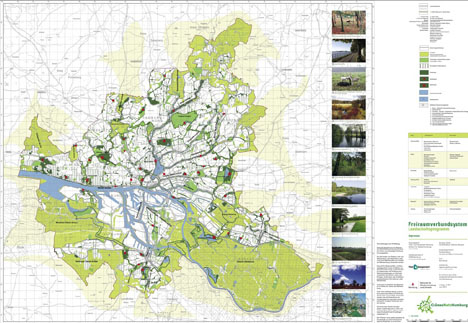
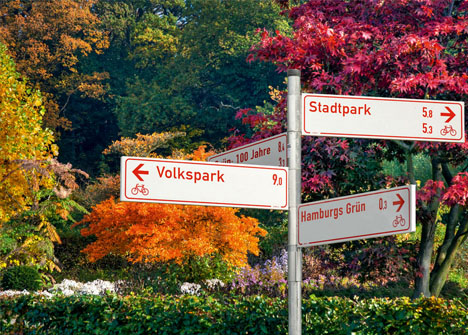
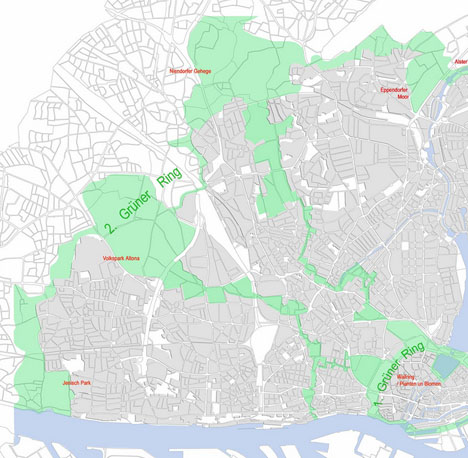
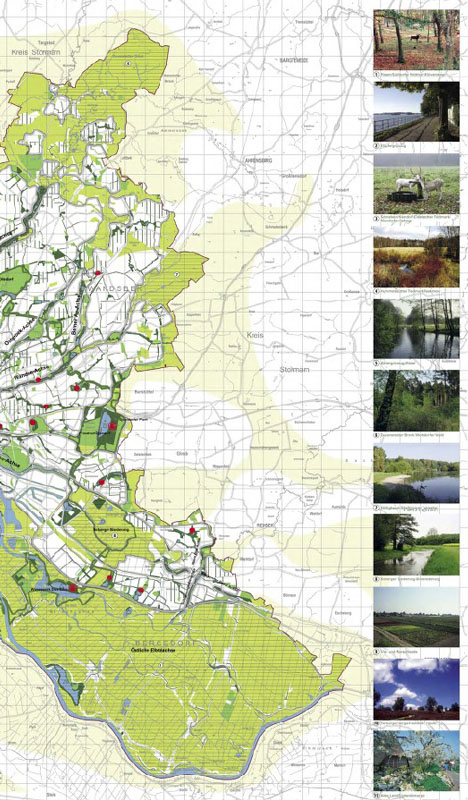
Hamburg’s Green Network Plan (Gruenes Netz) is a two-decade strategy to connect the whole urban center and its outskirts via bicycles and pedestrian routes, rendering vehicles redundant and bringing green space effectively right to the doorstep of every city dweller.

car free urban layout

Major parks, playgrounds, gardens already make up 40% of the city and many form contiguous axes accessible without motorized transit, so this direction is in many ways an extension of their existing approach. At the same time, this proposal goes beyond green rings or environmental zones toward a new type of environment-first urban planning.

car city context paths

Hamburg is well aware of the dangers of climate change, having experienced a nearly 10-degree Celsius rise in temperatures in just over half a century, as well as water levels that have gone up by close to 20 centimeters (expected to increase another 30 by 2100).

car free connections images

Beyond climate change-combating benefits, however, its architects note “It will offer people opportunities to hike, swim, do water sports, enjoy picnics and restaurants, experience calm and watch nature and wildlife right in the city, [reducing] the need to take the car for weekend outings outside the city.” Effectively, the vision is of a city that serves all needs and makes traveling to escape its cramped urban confines a problem of the past.

Share on Facebook


[ By WebUrbanist in Architecture & Cities & Urbanism. ]

[ WebUrbanist | Archives | Galleries | Privacy | TOS ]


WebUrbanist

 
Comments Off on Car-Free City: Hamburg Announces Audacious 20-Year Plan

Posted in Creativity


By a Thread: 31 Excellent Works of Embroidered Art

14 Jan

[ By Steph in Art & Drawing & Digital. ]

Embroidered Art Main

This ain’t your grandmother’s cross-stitched bible verses. Contemporary artists exploit, subvert and otherwise manipulate the traditional craft of embroidery with hyperealistic portraits, surreal seemingly LSD-induced additions to old photos or pretty flowers added to actual x-rays. Some even use bread – or their own skin – as the canvas for their threaded creations.

Family Portraits Sewn into the Palm of an Artist’s Hand

Embroidery Art Palm Portraits 2

Embroidery Art Palm Portraits 1

Combining visual and performance art, David Cata sews portraits of his family members into the palm of his own hand, poking the thread through the topmost layer of skin. The series symbolizes people who have ‘left their mark’ on the artist’s life, just as the portraits leave their mark on his skin. “Their lives have been interwoven with mine to build my history, every moment lived stays in the memory to finally be forgotten. Somehow, this fact is painful, since there are only material things and traces that people leave behind.”

Traditional Temari Spheres by 88-Year-Old Grandmother

Embroidered Art Temari Spheres 2

Embroidered Art Tamari Spheres 1

Flickr user NanaAkua shares photos of the 500-odd, incredibly intricate temari spheres embroidered by her 88-year-old grandmother. Temari balls are a form of Japanese folk art (of Chinese origin), often made from the thread of old kimonos and given as gifts to children on New Year’s Day.

Bear Sculptures Embroidered with Anatomy

Embroidered Art Bears 1

Embroidered Art Bears 2

Embroidered Art Bears 3

Bears are seemingly turned inside-out with embroidery of their anatomy in stunning lifelike sculpture by Deborah Simon. Measuring about two feet square, the sculptures reveal internal organs, musculature, skeletons and nerves. The series highlights how human desire for their pelts puts these majestic creatures in danger. “Bears are the ultimate stuffed animals; both the iconic plush toy and the prized taxidermy specimen for hunters,” says Simon. “Most of the sculptures deal with vulnerability; the vulnerability that the animals face from environmental degradation, conflicts with people, suburban sprawl and poaching. I particularly find the dichotomy between the defanged, declawed childhood toy and the fierce reality of a top predator fascinating.”

Embroidered Flesh by Eliza Bennet

Embroidered Art Flesh Bennet 1

Embroidered Art Flesh Bennet 2

David Cata isn’t the only artist using the thick, relatively bloodless skin of his palms as a surface for embroidery. Eliza Bennet uses a similar method, but her work invokes more of a visceral reaction of disgust for its visual mimicry of wounds. The idea is to highlight the idea of embroidery being women’s work, and women’s work being ‘easy.’ Bennet notes that many low-paid jobs typically aligned with women, like cleaning, caring and catering, can be difficult and labor-intensive. “Through a personally charged perception, I explore a range of issues relating to the formlessness of both individual and social reality,” she says.

Embroidered X-Rays by Matthew Cox

Embroidered Art X-Rays 1

Embroidered Art X-Rays 2

Traditional embroidery is juxtaposed with plastic x-ray film in this series by Matthew Cox, superimposing images of vivid life on top of the stark white-bones-on-black. Fleshy hands hold flowers, or reach up toward the sky.

Next Page – Click Below to Read More:
By A Thread 31 Excellent Works Of Embroidered Art

Share on Facebook


[ By Steph in Art & Drawing & Digital. ]

[ WebUrbanist | Archives | Galleries | Privacy | TOS ]


WebUrbanist

 
Comments Off on By a Thread: 31 Excellent Works of Embroidered Art

Posted in Creativity