RSS
 

Archive for January, 2014

Rumored Sony Xperia ‘Sirius’ reported to shoot 4K video

22 Jan

TS520x0~cms_posts-9705313773-im01.jpg

Information has leaked about the Android 4.4.2. KitKat OS to be included in Sony’s next flagship Xperia handset that points to 4K video capability. Codenamed ‘Sirius,’ the high-end device will reportedly carry many of the same camera features that the current flagship Sony Z1 offers like manual exposure control, and along with 4K video is expected to add some new features like ‘timeshift video,’ a high frame rate movie mode with the option to apply slow motion effects. Read more on our sister site connect.dpreview.com.

News: Digital Photography Review (dpreview.com)

 
Comments Off on Rumored Sony Xperia ‘Sirius’ reported to shoot 4K video

Posted in Uncategorized


4 Not-so-Secret Tricks to Speed up Your Lightroom Workflow

22 Jan

Lightroom_iconDo you want to speed up your Lightroom workflow? You’re not alone – I get countless requests from people to help them optimize their photo processing workflow. However, because it is so commonly asked, it is also frequently answered and this makes it difficult to add a fresh spin on a topic that hasn’t changed much over the years.

One of the great things about dPS is the diverse nature of its writers and how we each have our own point of view, own skill set, and own way of explaining a topic. This post won’t be a groundbreaking reveal of some hidden secrets that I just uncovered in Lightroom yesterday, but rather an explanation of some commonly overlooked and ignored features of Lightroom that you’ll want to learn in order to speed up your workflow.

Speed up your Lightroom workflow

#1 – Auto Advance rating option

This is something that I would have preferred Adobe set to “ON” as default and then give you the option to turn it off if you choose. How many of you rate your photos by selecting a rating, and then pressing the arrow right key to advance to the next photo?

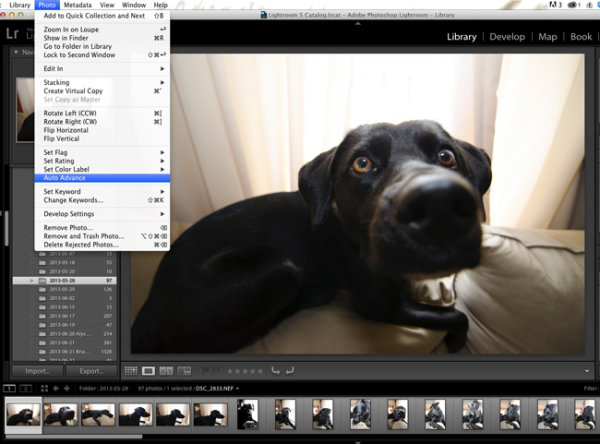
Do that no longer! Simply turn on Auto Advance either by selecting it from the drop down menu under ‘Photo’ or simple turn on CAPS LOCK. Once activated Lightroom will advance you to the next photo in the queue after every successful rating. It’s amazing how fast you can get through a fresh import with this option turned on.

Lightroom workflow use auto advance

#2 – Start with a YES or NO rating system

I like to think of this as keeping it simple. There are so many different rating options (from flags, to stars, to colors) and while each one serves a purpose, I think it’s best to keep it simple the first time you import a new set of photos. Remember tip #1 above and active Auto Advance, and then use the keys ‘P’ or ‘X’ to rate your photos. ‘P’ tells Lightroom that you want to keep that photo and it is flagged as a “Pick”. ‘X’ tells Lightroom that you want to reject that photo, and it is marked as such. Once you’ve made it all the way through your import, press Command + Delete (control on PC). This will remove all of your rejected photos, never to be seen again. (choose “delete from disk” to not only remove from your LR catalog but delete from your hard drive)

I find that this will help to keep your Library cleaner, and easier to manage. It will also allow you to remove a lot of the ‘maybe-I’ll-use-this-photo-sometime’ photos which in most cases just end up wasting your time.

Lightroom-workflow-keep-it-simple

#3 – Learn and use the magic keyboard shortcuts

I’ve already mentioned a couple of the keyboard shortcuts above, but the master list is only a shortcut away. Press Command / (Control / on PC)  in any panel of Lightroom and the index of everything possible within that window is displayed. It’s one thing to learn the keys, and it’s another to work them into your workflow (I’m still slowly learning to do this myself), but once you get it down you will be flying through the panels without even thinking about it.

Lightroom-workflow-learn-keyboard-shortcuts

Press: Cmd / (Control / on PC) to get this to pop up

#4 – Use Solo Mode on the side panels

Another Lightroom setting that I personally feel should have been set as a default option is the Solo Mode option for the various tool panels of Lightroom. This option allows you to automatically minimize a panel when you open another one. For example, if you’re working in the Basic Tab of the Develop Module and want to switch to work on sharpening your photo, clicking on the Detail Tab, Lightroom will automatically close the Basic Tab for you. I find that this keeps the interface a lot cleaner and easier to navigate, especially for someone who’s just starting to get their feet wet with the program (or using a small screen or laptop)

To turn it on simply right click on any of the sidebar panel names (not the triangle) and select ‘Solo Mode’ from the menu that appears. Once activated you’ll probably never go back.

Speed-up-lightroom-workflow-solo-mode

How do you speed up your Lightroom workflow?

These four tips will certainly help you become faster at working through your photos, but there are countless other ways to speed up the way you work. If you are well experienced with Lightroom, what else can you think of to add to this list?

For more Lightroom reading check out these articles:

  • How to Upload Photos to Flickr and 500px using Lightroom 5
  • Lightroom Tips for the Develop Module – the Magic Alt Key
  • Creative Ways to use Keywords in Lightroom 5
  • Use Lightroom Collections to Improve your Workflow

The post 4 Not-so-Secret Tricks to Speed up Your Lightroom Workflow by John Davenport appeared first on Digital Photography School.


Digital Photography School

 
Comments Off on 4 Not-so-Secret Tricks to Speed up Your Lightroom Workflow

Posted in Photography


Using third-party lenses on the Sony a7 / a7R

22 Jan

oldlenses.jpg

In theory, if you’ve got a collection of old or obscure lenses for long-defunct 35mm film cameras, the full-frame Sony a7 / a7R may allow you to breathe new life into them. Lenses for a great many systems can be attached to the a7 / a7R without huge cost via a range of third-party mount adapters. We’re planning on publishing our full review of the a7 within the next 24 hours, but until then, click through to read about editor Barnaby Britton’s experience of shooting with older third-party lenses on the a7 and a7R.

News: Digital Photography Review (dpreview.com)

 
Comments Off on Using third-party lenses on the Sony a7 / a7R

Posted in Uncategorized


21. Januar 2014

22 Jan

Ein Beitrag von: Melina Cenicero

Bokeh, Locken, Hintergrund, dunkel


kwerfeldein – Fotografie Magazin

 
Comments Off on 21. Januar 2014

Posted in Equipment


Throw a Bouquet: Guerrilla Seed Bombs & Flower Grenades

21 Jan

[ By WebUrbanist in Art & Street Art & Graffiti. ]

seed bomb guerrilla gardening

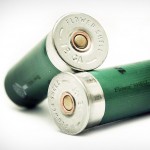
Filling shotgun shells with flower seeds is just the latest (and loudest) in a long line of designs for guerrilla gardeners. If you are looking for a little less bang for your buck than seed-swapped buckshot, you may wan to try a seed ball, bomb or grenade instead, all a bit more stealthy despite their loud-sounding names.

seed bomb flower grenade

One throw-and-grow option for the concrete jungle is this compostable-shelled Flower Grenade packed with ryegrass, buttercups and poppies. This hardy custom-tailored mix is designed to flower in sequence for a multi-week, time-delay effect well beyond the ten seconds or so of their traditional wartime relatives.

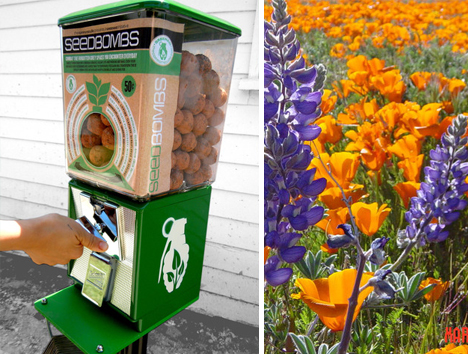
seed bomb machine dispenser

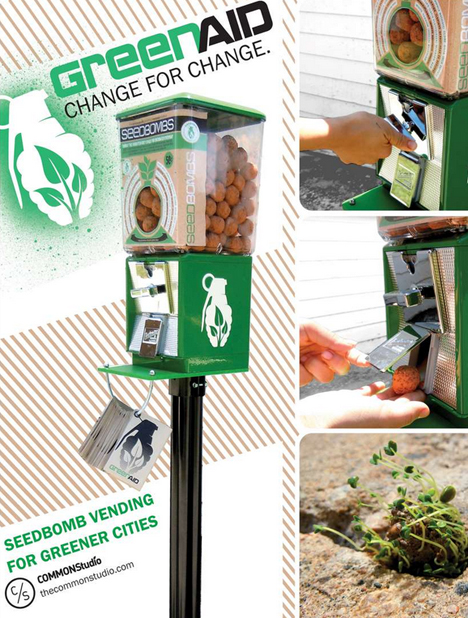
Another cleverly-titled approach comes from Greenaid, a group intent on seeding the urban landscape with converted gumball machines rejigged to dispense seed bombs instead of sweets. Put in a quarter and receive a ball made of clay, compost and seeds to help you compact dull gray vacant lots and faded green parking medians.

These Greenaid creations are uniquely tailored to provide local wildflowers native to the areas in which they are deployed – in LA, for instance, they contain White Yarrow, California Poppy, Lupine and Blue Flax.

seed bombs region specific

There are lots of other options, too, from region-oriented seed balls for sale on sites like Etsy to do-it-yourself instructions or kits to help you build your own. When it comes to guerrilla gardening, the real trick is understanding your environment and purpose, then strategically finding a solution for that particular context.

Share on Facebook


[ By WebUrbanist in Art & Street Art & Graffiti. ]

[ WebUrbanist | Archives | Galleries | Privacy | TOS ]


WebUrbanist

 
Comments Off on Throw a Bouquet: Guerrilla Seed Bombs & Flower Grenades

Posted in Creativity


Tips for Indoor Sports Photography – Part 2

21 Jan

As the title of the article says, this is Part 2. I strongly encourage you to read Part 1 first, where I covered some of the indoor sports photography basics like gear, auto focus, camera settings, and looking for creative angles. While Part 1 centered primarily on basketball, here in Part 2 we’ll take a quick look at some of the other indoor sports you might find yourself shooting.

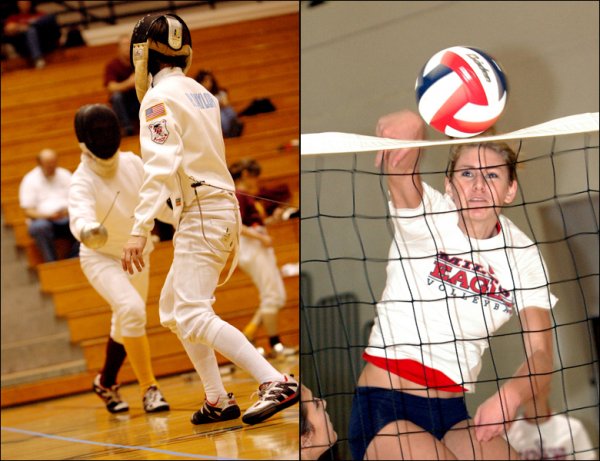
Fencing

Whereas flash might be allowed for basketball, it will NEVER be okay for fencing. You’ve got two combatants trying to stab each other with swords. Anything you do that can possibly affect the vision of either fencer–even if just for a moment–can also affect the outcome of the match, and possibly result in injury. Open up your aperture, dial down your shutter speed a bit, crank up your ISO. Rapid-fire mode may not be such a bad idea here, because a certain number of blurry photos are to be expected.

Fencing and volleyball-- two very fast, unpredictable sports.

Fencing and volleyball– two very fast, unpredictable sports. FENCING: 100mm, 1/160, f/2.8, ISO 1600.  VOLLEYBALL: 80mm, 1/200, f/4, ISO 1250, TTL Flash.

Volleyball

I love the game of volleyball, but I absolutely hate shooting it. The unpredictability of bump, set, and spike can be maddening. Anticipating where the ball is going is perhaps more difficult in volleyball than any other sport. Again, flash may or may not be your friend when photographing this sport. Make sure to talk with the referee before the match begins. In volleyball, there is one referee at the net. Most will allow you to use flash, as long as you are not shooting towards them. That means shooting from the same side as the ref. You’ll most likely have spectators behind you, so try to stay low and be respectful.

Gymnastics & Competitive Cheerleading

Just like fencing, flash will never be allowed when photographing gymnastics or competitive cheerleading. Both are a photographic challenge, requiring you to capture very fast action in very low light. Most professionals like to shoot these events at 1/1000 with very high ISO. Being able to anticipate the action is possibly more important in gymnastics than almost any other sport.  Gymnastics moves so fast that if you see it in the viewfinder, chances are you’ve already missed the shot. Watch them warm up. Getting familiar with a routine during practice will help you know what to look for when it’s real.

No flash allowed when balance is the difference between winning and losing.

No flash allowed when safety and balance can be the difference between winning and losing, or injury.
1/250, f/4, 80mm, ISO 3200.

Swimming

For swimming, flash is generally allowed, but never on the start. When officials need to signal a false start, swimmers see a flashing light at the end of the pool. Hitting them with flash before they even hit the water can confuse them into thinking a false start has been signaled when it hasn’t. There is no do-over if they mistakenly think it’s a false-start and stop swimming. They are out of the race and it’s your fault.  Also, get there early. At least one hour. This is absolutely crucial for swimming events. Your camera is going to have to adapt to the humid conditions. Getting there in enough time for your gear to acclimate will keep your lenses from fogging up.

Other than no flash until they're in the water, swimming doesn't place too many restrictions on photography.

Other than no flash until they’re in the water, swimming doesn’t place too many restrictions on photography.  1/180, f/3.2, 200mm, ISO 800.

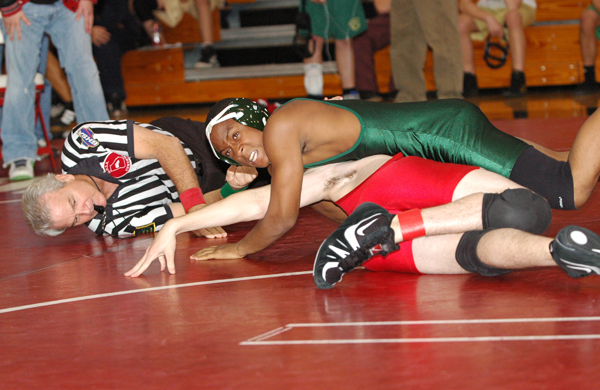
Wrestling

I love shooting wrestling. Love it. For starters, I’m off my feet, getting my best shots either sitting or lying down on the mat. Many wrestling meets involve a dozen or more teams, with several matches going on simultaneously. If you’re lucky, you can find a spot on the mats with four matches going on around you at the same time. When one bout slows down or ends, simply rotate around to another. The key here is speed and efficiency. Bouts can go for several minutes, or they can be over in the blink of an eye. Flash is generally allowed at the high school level, but a newer model camera with high ISO, combined with some fast lenses, can mean great captures without the use of flash. Experiment and see what works best for you.

Don't blink. You might miss it.

Don’t blink. You might miss it.  1/250, f/3.2, 85mm, ISO 640.

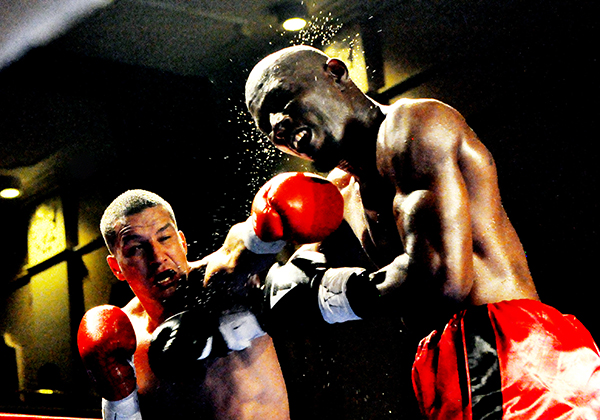
Boxing

Similar concerns to fencing, but this time it’s much more up close and personal. Flash is definitely not allowed, but the good news is that the lighting at these events is usually really good. Pay attention to where the light falls on the ring and play to those angles for dramatic results. You are going to be fairly restricted in terms of where you can stand, because fighters take up two corners and judges are situated on all four sides of the ring. You’re shooting up, between ropes, at in-your-face action. Stick to a standard zoom like the 24-70mm or a wide-angle 16-35mm.  This is one of those rare sporting events where the 70-200mm is not your friend.

Ring-side. 1/500, f/4.5, ISO 6400, 48mm. Leave the 70-200mm at home, but bring a towel.

Ring-side. 1/500, f/4.5, ISO 6400, 48mm. Leave the 70-200mm at home, but bring a towel.

Shooting indoor sports is tough. If it was up to me, all sports would be played outside under optimal, natural lighting conditions. Hey, a guy can dream, right? Don’t let the challenges or stumbling blocks get you down. With practice, preparation, and the right gear, you’ll see the quality of of your images improve dramatically.

Do you have a good tip for shooting indoor sports? Share it with us in the comments.

For additional reading, one of the best books ever written on the subject of sports photography is “Peter Read Miller On Sports Photography.”  Miller has been photographing the NFL, the Olympics, and portraits for “Sports Illustrated” for almost 40 years. He has over 100 S.I. covers to his credit, as well as 35 Super Bowls, 9 Olympic Games, and countless other sporting events around the world. You can check out my review of the book, as well as my conversation with Peter, by clicking here. The book is available on Amazon.com.

The post Tips for Indoor Sports Photography – Part 2 by Jeff Guyer appeared first on Digital Photography School.


Digital Photography School

 
Comments Off on Tips for Indoor Sports Photography – Part 2

Posted in Photography


Win One of Five – Three Month Subscriptions from Skillfeed By Shutterstock!

21 Jan

Over the last few years here at dPS, we’ve run some very popular competitions, and this month will be no different! This month we are working with one of our newest partners – Skillfeed, By Shutterstock – to give away to lucky dPS readers, full access to their creative and technical Video Tutorials!

For this competition, Skillfeed is giving away FIVE prizes!

These five prizes are designed to be helpful for all levels of photography and post-production. Each will be won by a different dPS reader. Here’s what you could win:

Three month subscription to Skillfeed’s library of Creative and Technical Video Tutorials! A $ 57 Value!

There are loads of tutorials that you’ll get access to including:

201401211703.jpg

How to make a Pop Art portrait from a Photo in Photoshop Easy

201401211704.jpg

DSLR Digital Photography Course

How to Win

To win this competition you’ll need to:

  • Visit the above library of courses information pages and explore the multiple Video Tutorial offerings.
  • Leave a comment below and tell us which tutorials are of most interest to you WHY you’d like to learn these new skills. Please note: there is a limit of 1 entry per person.
  • Do this in the next 16 days and on Thursday, February 6, the team at Skillfeed will choose the best 5 answers and we will announce the winners in the following days.

The deadline for entries is Wednesday, February 5, 2014, Midnight PST. Entries placed after deadline will not be considered.

By ‘best’ – we’re looking for people who have an understanding of the Video Tutorials and how they will best suit their needs. So you’ll need to check out the tutorial pages to put yourself in the best position to win.

There’s no need to write essay length comments to win – but we’re looking to hear what you like about the video tutorials and how it would help your development as a photographer.

This competition is open to everyone around the world no matter where you live – but there is only one entry per person.

To enter – simply leave your comment below.

Disclaimer: Skillfeed is a paid partner of dPS.

The post Win One of Five – Three Month Subscriptions from Skillfeed By Shutterstock! by Darren Rowse appeared first on Digital Photography School.


Digital Photography School

 
Comments Off on Win One of Five – Three Month Subscriptions from Skillfeed By Shutterstock!

Posted in Photography


Perspective in Photography – Don’t just stand there move your feet!

21 Jan

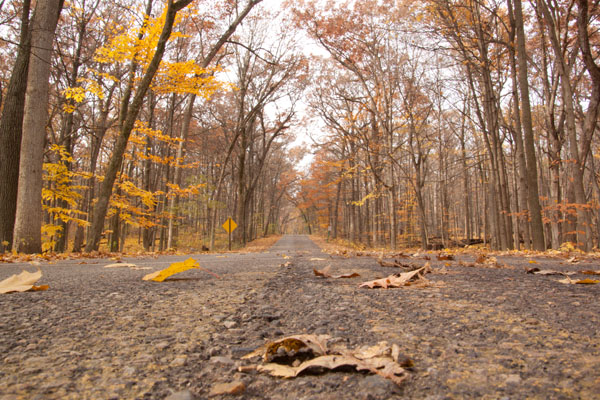
Photographers often fall into the bad habit of shooting everything we see from eye-level. We are walking around, something catches our eye, and we take a picture right from where we are standing. If you want to make an immediate impact in your photography, you need to get out of your eye-level (or tripod-level) rut. You need a change in perspective.

McEnaney road

Sure, you can change your composition by zooming in or out with your lens, but if you want to change your perspective, you are going to need to move. Don’t let your feet, or your tripod, root you to the spot: get ready for some bending, turning, walking, and climbing. Start working with perspective in photography, your images will thank you for it.

Get Low

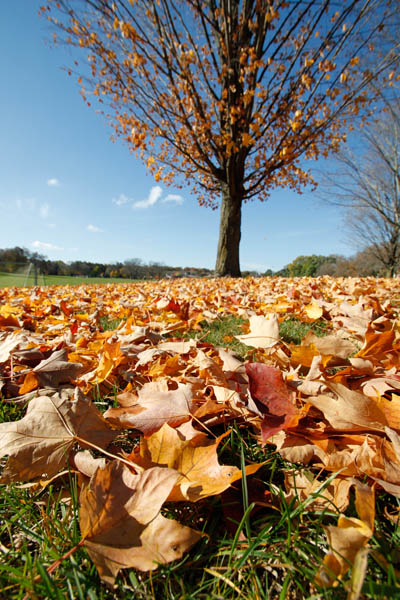
Get your camera down towards ground level, and see how it impacts your perspective. Getting down low allows you to feature the foreground of your composition, and gives your viewer context for the rest of the photograph. Use a wide angle lens to feature the foreground, while pulling the viewer into the image, as below.

McEnaney wide angle leaves

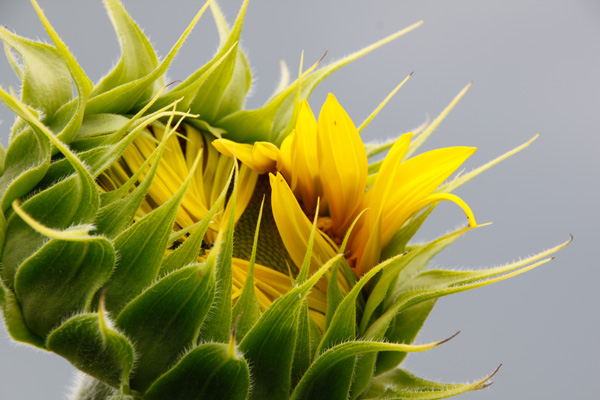
Getting down low can change the way your viewer feels or reacts to your subject. Getting low can make your subject appear taller or more imposing. Subjects viewed from below can look commanding and powerful. Even a simple sunflower can be seen to tower above its surroundings.

McEnaney sunflower

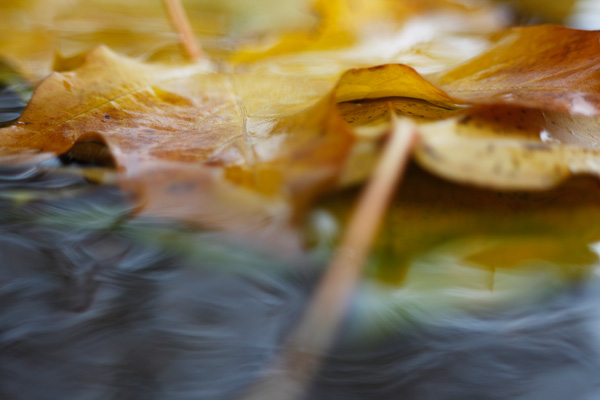
Getting low can also completely disorient your viewer. This near water-level view becomes a study in colour and texture, as the water and the fallen autumn leaves interact with each other. From eye level, this would simply have been a photograph looking down into a storm gutter. Getting low simplifies the composition and puts the viewer into a different, and unique perspective than their everyday viewpoint.

McEnaney gutter

Get Up High or Look Up High

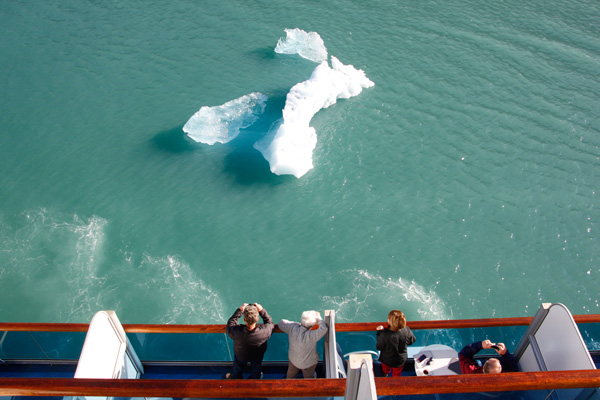
You can get low and look at subjects from their level, but you can also get up high and take in your subject from above. Getting well above your normal line-of-sight will certainly give you a new perspective. In the photograph below, the other tourists on the decks below give context to the passing iceberg, as seen from the cruise ship. This higher-up view also provides a sense of scale for the large size of the ice berg and hints at the size of the ship.

McEnaney iceberg

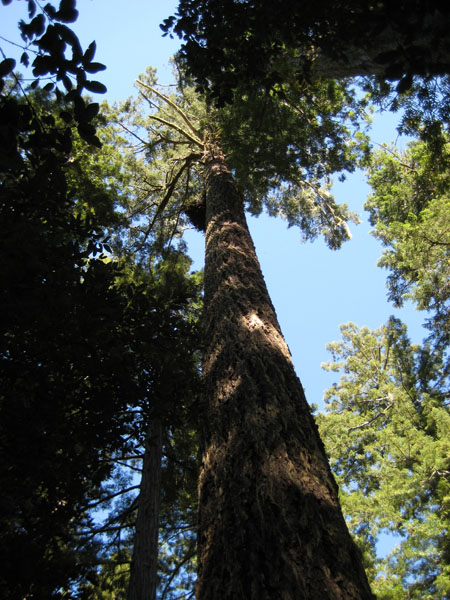
If you do not want to physically get up high, standing and shooting does not mean you only have to shoot straight ahead. Spend some time looking up, and you will find plenty to improve your compositions and your perspective. With very tall subjects, looking up from below will accentuate their height and size. The power and immensity of these redwood trees are best emphasized by looking up, from directly below.

McEnaney redwood

Go for the Lateral

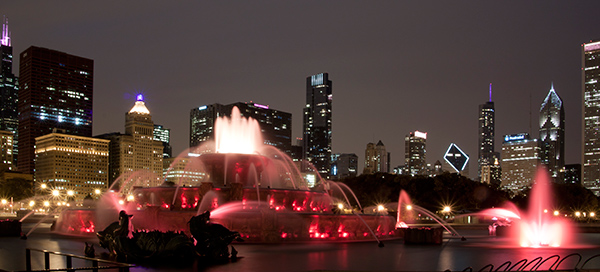
Finally, do not forget to think laterally. Beyond just changing your stance or your direction of shooting, you also need to remember to move yourself. Talk the time to walk around your subject, to consider the background and foreground. Think about how all the pieces of your final composition fit together. Your first view and your first angle are often not the best available, but you cannot be sure until you have taken the time to investigate others. Walking all the way around Buckingham Fountain allowed me to choose this final composition and perspective featuring the downtown Chicago skyline. I also made the choice to position the spray from the fountain directly in front of a building to make it more visible.

McEnaney fountain 600

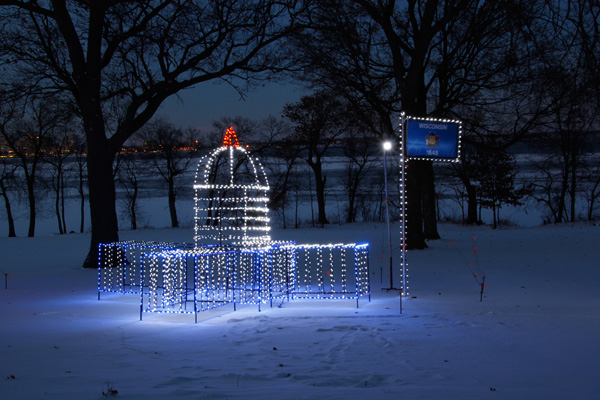
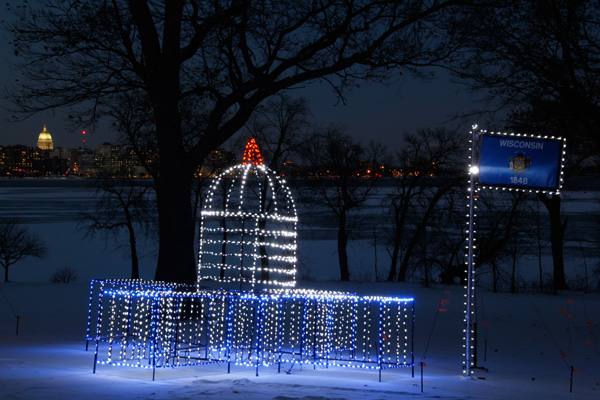
Moving your feet can change the way that different objects in your photograph interact with each other. While the top photograph of the Wisconsin Capitol in lights was an adequate shot, moving just a few feet to the right and squatting down allowed me to feature the lit outline in the foreground with the actual Capitol building in the background. This juxtaposition of elements improves the story-telling ability of the photograph.

McEnaney lit capitol

McEnaney double capitol

Summary

Do not fall into the trap of shooting everything you see at eye-level, just as you see it. Take the time to explore your subject, and considering changing your perspective. Get low and see what changes, get up high and explore a new view, or move laterally and watch different interactions occur and disappear between objects.

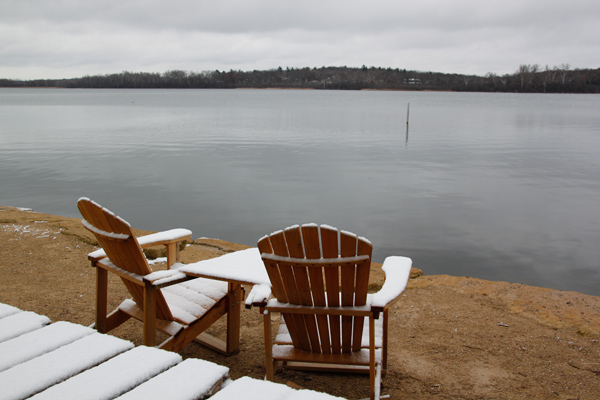
McEnaney chairs from above

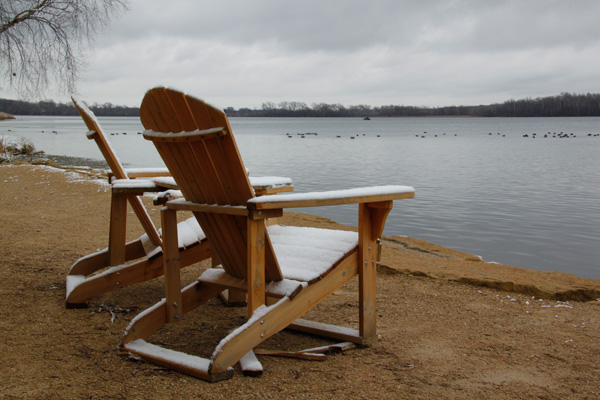
McEnaney chairs get low

You may have a hard time choosing a favourite view: from above to emphasize the view of the foreground lake, or get low to show the expanded context and the threatening winter sky? Share your thoughts or your own perspective images in the comments below!

The post Perspective in Photography – Don’t just stand there move your feet! by Katie McEnaney appeared first on Digital Photography School.


Digital Photography School

 
Comments Off on Perspective in Photography – Don’t just stand there move your feet!

Posted in Photography


Auf einmal war alles anders

21 Jan

Ein Beitrag von: Marius Vieth

Was war das denn bitteschön? Da fotografiert man 285 Tage lang die Straßen von Düsseldorf, packt voller Stolz seinen mühevoll entwickelten eigenen Street-Photography-Stil ein, fliegt hocherkältet 9000 Kilometer nach Süd-Korea, nur um voller Euphorie festzustellen: Der funktioniert hier gar nicht.

Ich habe den Großteil meines 365-Tage-Projektes in Düsseldorf verbracht. Es ist zwar eine Großstadt, aber trotz der üblichen Lamborghini-Burnouts und Champagnerduschen geht es hier sehr gemächlich zu.

Übersichtliche Szenerien, wenige Menschen und Lichter bilden die typischen Bühnen für meine Helden des Alltags. Daraus ist ein sehr sanfter, aufgeräumter und intensiver Stil entstanden.

© Marius Vieth

Vor Seoul war ich bereits in Städten wie New York, Bangkok und Shanghai, allerdings nie mit der Absicht, ernsthaft zu fotografieren. Als ich in den ersten Tagen die Straßen von Seoul fotografieren wollte, fiel es mir schwerer denn je zuvor. Alles war so unaufgeräumt, pulsierend und unruhig.

Ich war völlig in Trance. Das liegt bestimmt an meiner Erkältung, dachte ich mir. Lag es aber nicht, das war wirklich so. Ich versuchte anfangs, Seoul erst einmal auf mich wirken zu lassen. Ganz ohne Hintergedanken. Also ab in die nächste Seitengasse, einen Sochu trinken und etwas auf der Straße essen.

© Marius Vieth

Selbst um 5 Uhr morgens an einem Montag war in der 27-Millionen-Metropole noch so viel los, dass man kaum einer einzelnen Person eine große Bühne wie in Düsseldorf geben konnte. Also versuchte ich nach zahlreichen Versuchen, meinem Stil ein Update zu verpassen: Bühnen kleiner machen, all die störenden Elemente als Ganzes reduzieren und trotzdem einem Menschen unwissend sein Rampenlicht geben.

© Marius Vieth

Irgendwo schwirrte in meinem Kopf immer der Gedanke herum, im Sinne einer Reisedokumentation typische Szenen aus Seoul fotografieren zu müssen. Ich hab’s versucht mit den Sehenswürdigkeiten und Postkartenmotiven, aber es ging und wollte einfach nicht.

Dafür liebe ich diese unscheinbaren, intimen Momente in all der Großstadthektik einfach zu sehr. Im Laufe der Reise begriff ich, dass meine Fotos nicht Seoul sind, sondern ich in Seoul. Und das ist okay so.

© Marius Vieth

Auch, wenn ich die meiste Zeit nachts fotografiert habe, weil die Seele Seouls für mich erst nachts so richtig zum Vorschein kommt, wollte ich trotzdem versuchen, auch tagsüber etwas zu entwickeln. Bei meinem Rundgang durch das entzückende „Bugchon Hanok“-Dorf entdeckte ich eine tolle Bühne mit natürlichem Rampenlicht.

Während der nächsten 40 Minuten wartete ich nervös auf meinen persönlichen Star des Moments und musste permanent an diesen einen Satz denken, den man immer von Regisseuren hört: „Leute, wir verlieren Licht!“ Kurz bevor der Vorhang sich zuzog, erschien dann doch noch meine Traumbesetzung. Puh!

© Marius Vieth

Nachdem ich bereits Thailand und China gesehen hatte, war Korea nun mein drittes asiatisches Land. Eine komplett neue Erfahrung, die ich jedem nur empfehlen kann. Unglaublich leckeres gegrilltes Essen, abgedrehtes Karaoke, wunderschöne Parkanlagen, bezaubernde Natur und wirklich liebenswerte, höfliche Menschen haben diese Reise zu einer der schönsten meines Lebens gemacht.

Na gut, wenn ich schon Werbung für dieses tolle kleine Land hier mache, dann aber auch richtig – mit Postkartenmotiv. Aber pssst.

© Marius Vieth

Rennen, Blau, Weitwinkel, Dunkel, Nacht, Marius Vieth

Seoul war für mich eine riesige Herausforderung. Selten hatte ich das Gefühl gehabt, so viel geschafft zu haben und doch erst ganz am Anfang zu stehen. Ich habe gelernt, dass es kein Ziel gibt. Es gibt nur einen Weg, der mal steinig, mal traumhaft schön ist und in der Regel keine Wegbeschreibung hat. Obwohl das manchmal etwas beängstigend ist, weiß ich eines ganz sicher:

Diesen Weg will ich jeden Tag mit einem Lächeln bestreiten, wo auch immer er mich hinführen wird.


kwerfeldein – Fotografie Magazin

 
Comments Off on Auf einmal war alles anders

Posted in Equipment


In the Dark: 10 Tips for Street Night Photography

21 Jan
1/80th at F2.8, ISO 1600.

1/80th at f/2.8, ISO 1600

Much is spoken about photographing during the twilight hour, but what about after that?

Night is my favorite time for street photography. Cityscapes are lit with a myriad of interesting and colorful light sources, such as lampposts, neon signs, store windows, car lights, and bare bulbs. People dress in their favorite outfits to go out. Bland scenes by day can suddenly turn ominous and fascinating at night.

Here are 10 tips for night photography to get you thinking about starting your next street photography session at twilight, rather than ending it.

1. Ideal camera settings for sharpness at night

To freeze motion during the day, I prefer to use a shutter speed of 1/320th, with 1/160th as my lower threshold.

At night, this changes. In the brightest areas, you will be able to photograph at 1/250th, but most of the time it will be best to use a shutter speed somewhere between 1/160th and 1/60th. You need to have: steady hands; a wide-angle focal length; and to stop your own motion completely to be able to photograph handheld at speeds around 1/60th, but with some practice it can be done.
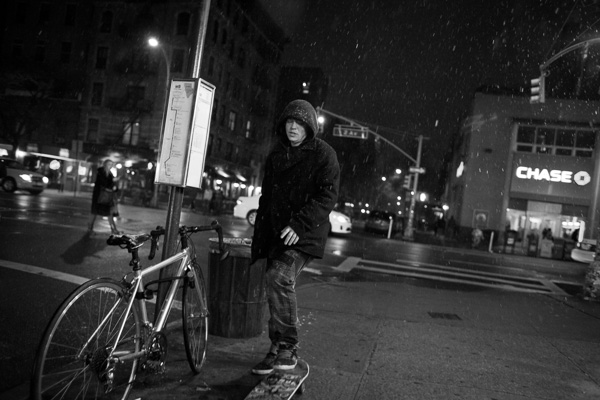
1/125th at F2.5, ISO 6400.

1/125th at f/2.5, ISO 6400

A wide-angle lens is necessary for this type of photography because the longer the focal length, the faster the shutter speed needed to keep an image sharp. With a 28mm or 35mm lens (up to 50mm) it becomes much easier to handhold the camera at slower shutter speeds.

It will also help to use a fast, prime lens, such as a 35mm f/2. It is possible to shoot at f/4 in brighter areas, but being able to shoot at f/2.8, f/2, or even 1.8 will greatly expand your opportunities.

Finally, you will need to raise your ISO significantly. With modern digital cameras you can photograph anywhere from ISO 1600 to 6400 with decent or good quality. It’s just not possible to photograph handheld at night otherwise. I prefer to shoot at ISO 3200 and sometimes at ISO 6400 if needed.

To learn more about photographing with a high ISO, you can read about it here: Reasons to Shoot High ISO Images.

2. Seek out the light sources first
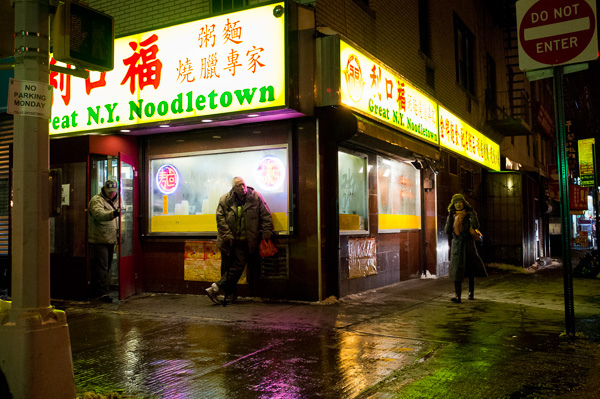
1/60th at F2.8, ISO 3200.

You should always pay attention to the main light sources in a scene, no matter where or when you are photographing, but at night this becomes even more important. Start by finding a beautiful light source, or an area with good lighting, and wait around for something to happen.

Focus on how these light sources hit your subjects. If you are leaning against a shop with a lit sign behind you, like the man in the photograph above, then as subjects pass you they will be lit with a strong light that has a gorgeous color to it. If your lens aperture doesn’t go wider than f/4, this is a fantastic way to get around that limitation.

On the other hand, if you stand in the street and aim the camera at the light source, as I did in the above photo, then the light will be less pronounced on the subjects, however, you will get the beautiful sign in the scene.  Notice the difference between the light on the left and right side of the man’s face in the photo.

3. Photograph nightlife
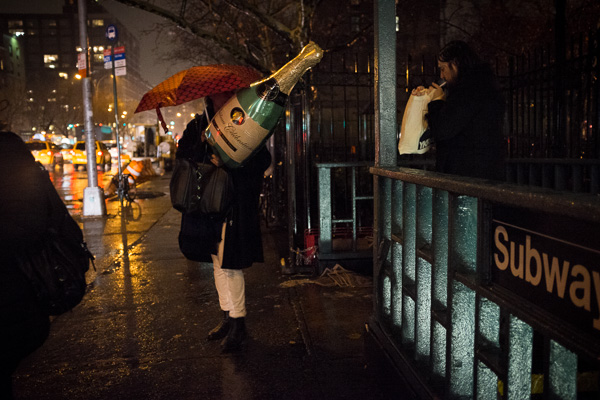
1/125th at F2, ISO 6400.

1/125th at f/2, ISO 6400

Some of the most interesting night street photographs occur where the most people are, and that is often where the nightlife is. A fantastic project to look at for inspiration is Maciej Dakowicz’s Cardiff After Dark.

4. Alternate between getting close and stepping back

I’m a proponent of the Robert Capa advice that, “if your photos aren’t good enough, you’re not close enough.” However, at night I often alter this strategy.

I try to get close to many of my subjects, but I will also try to create scenes where the subjects are small aspects of the overall scene. At night, backgrounds can be much more beautiful than during the day, so it often works to have people become the secondary element to the scene, rather than the primary focus.

The technical advantage to this is that you do not need to use as fast a shutter speed to capture the motion of subjects when you are further away. You can freeze a moving subject at 1/60th of a second from further away, whereas you will need to use at least 1/125th when close.

5. Tripod and crowd blur
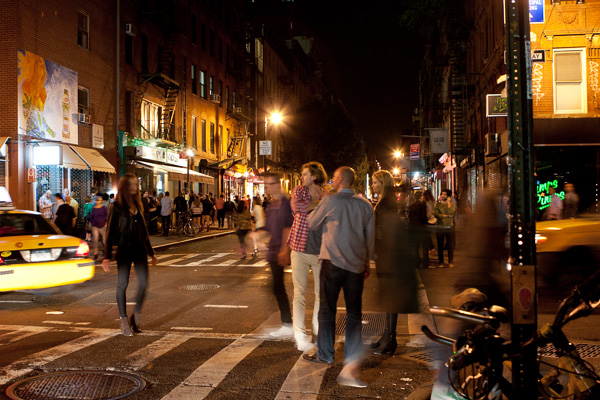
1/8th at F4, ISO 800 (Tripod).

1/8th at f/4, ISO 800 (with tripod)

For street photography, it’s usually best to go handheld since you never know what interesting thing is going to happen, and where it’s going to happen. However, one of the times to use a tripod is when you want to capture a busy scene, with lots of people and motion.

Experiment with slower shutter speeds, such as 1/8th of a second and take a lot of images.  It took me a long time to capture the image above because I wanted the people spread out evenly throughout the entire scene and I also wanted something interesting within the foreground, which is the pose of the woman in the street and the man looking at her. It took some time, and a lot of captures for this to happen.

6. Use a flash

Whether you want to try flash on the street is up to you, but keep in mind that it can easily lead to some confrontations.  I prefer to work with the constraints of the natural light on the street and I also get uncomfortable flashing strangers in the face in dark settings, but many prefer to photograph this way. It creates a fantastic look when done well.

Using a flash means that you are freed from a lot of the constraints of photographing at night. You can use a faster shutter speed and include more depth of field in the photo and less grain (noise).

You can either have the flash do all of the work lighting the scene, where the foreground area within reach of the flash is lit and everything else is dark, or you can set the camera to expose for the scene, similar to what you would do without the flash, and then use the flash to add some fill light to your main subjects in the foreground.

7. Noise and the dreaded underexposed image
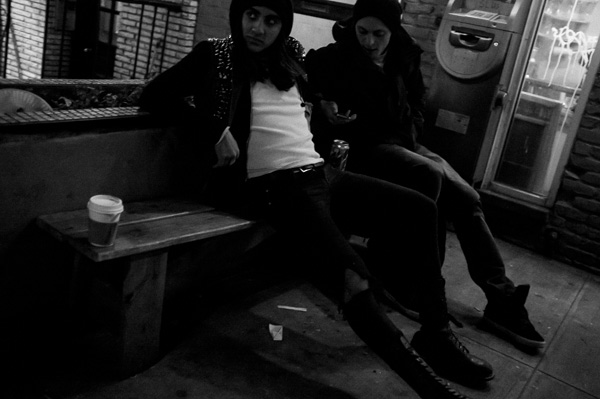
1/250th at F2, ISO 3200.

1/250th at f/2, ISO 3200

Always expose correctly when photographing with a high ISO.

That being said, even with the best settings, some of your images will be taken in areas that are too dark to be exposed correctly. It’s impossible to photograph this way and expose every image perfectly within the camera. For the occasional shots with excellent content that you want to save, you will have no choice but to raise the exposure when editing.

For these photos, I will first ignore the noise and get the exposure and look correct in Lightroom. After I do this, if I’ve had to raise the exposure setting a significant amount, the grain will look terrible. Luckily, there are some keys to saving an image like this as long as you are photographing in RAW.

What I do is to first remove the grain and then I add it back. I want the image to look grainy, but I want the grain to look pleasing.  There are many noise reduction programs, such as PhotoNinja, Topaz DeNoise, and DxO. I like Lightroom’s built in Noise Reduction. If the noise is still bad after noise reduction I will sometimes bring it into Photoshop and add a very slight Gaussian blur.

Then I will use Lightroom’s grain settings to add grain back into the photo. This grain looks much more pleasing to the eye than brightened, extreme digital noise and it can further hide some of the technical deficiencies in underexposed images. The result will not be a perfectly sharp image, but it will still be pleasing and beautiful.

8. Blur and imperfection

On this note, aim to get your photos as sharp as possible when you want sharpness, but know that a photo can still look fantastic even if it’s not tack sharp.

You don’t need to freeze motion perfectly when photographing at night for the image to still look great. I hold my day images to a higher standard than my night images when it comes to sharpness.  They need to be interesting and look good and that’s what counts.

Also, at shutter speeds around 1/60th to 1/30th, you can experiment handheld with slight blur, where your subjects are somewhat sharp but have a little motion to them. It’s a great way to add an energetic feeling of movement into an image.

9. Night images should be dark
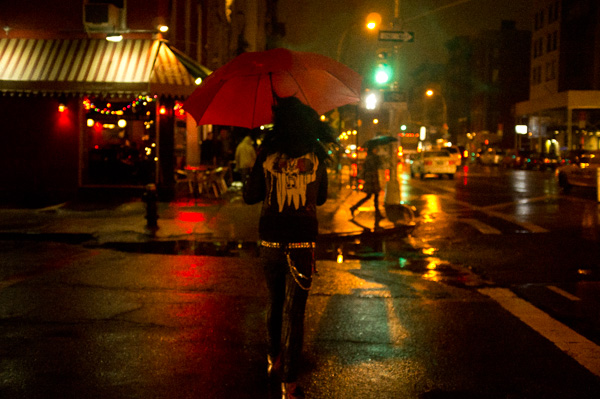
1/250th at F2, ISO 3200.

1/250th at f/2, ISO 3200

This is an overly general statement, so feel free to disagree, but I want to make a point here.

I believe that night shots should look like they were taken at night.  They should be dark, with deep shadows and areas that are hard to see and make out.  When you look at the histogram of a night image it should be further towards the dark end (left) than a day image.

When you expose a night shot, especially on automatic settings, the camera will often misread the scene and overexpose the image.  It will be bright and you will be able to see everything as you would during the day, but it will not feel like a realistic night scene.  In these cases, you will want to lower the exposure compensation on your camera slightly (-).

There are many situations where bright night images are a good thing, but don’t be afraid to make your night images dark and realistic.

10. Be careful

Depending on where you live, going out at night with a camera is not always the safest idea. Travel light with equipment and be careful about where you go. Use your best judgment on who to photograph and think about bringing a friend along. You don’t want to suddenly find yourself in a bad situation.

Do you have any addition tips you’d like to add? Please do so in the comments below.

For more reading on night photography in general check out these:

  • Tips for Photographing Star Trails
  • Nightscapes: Photographing the City at Night
  • How it was Done – Zooming the Exposure
  • Painting with Light in the Landscape
  • 5 Tips for Creating fun Campfire Photos

The post In the Dark: 10 Tips for Street Night Photography by James Maher appeared first on Digital Photography School.


Digital Photography School

 
Comments Off on In the Dark: 10 Tips for Street Night Photography

Posted in Photography