RSS
 

Archive for January, 2014

Sony Alpha 7 review: Full-frame mirrorless is here

23 Jan

beautyshot-001.jpg

By putting a 24 megapixel full-frame sensor into a body nearly the same size as the Olympus E-M1, the Alpha 7 is arguably the most ambitious camera Sony has ever made. Never before has there been a full-frame camera this small – and one that supports nearly every 35mm lens format ever made, as well as Sony’s own E-mount lenses. Does Sony get enough things right with the Alpha 7 to compete with more conventional full-frame cameras such as the Canon 6D and Nikon D610? Read our full review to find out

News: Digital Photography Review (dpreview.com)

 
Comments Off on Sony Alpha 7 review: Full-frame mirrorless is here

Posted in Uncategorized


How the Shot was Done: SNK Police Cosplay

23 Jan

Cosplay-shoot-first-shot

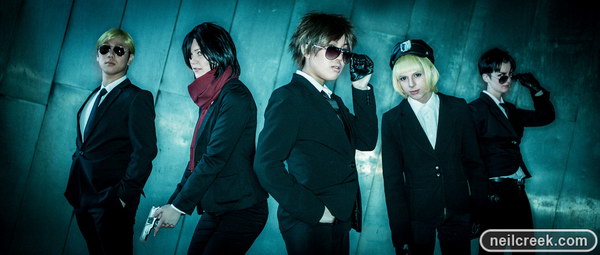
I do a lot of cosplay (short for costume play) photography with friends, and I was asked by some to do a cosplay crossover photo shot (Shingeki no Kyojin / Psycho Pass) with them. They sent me some reference shots from which I decided to create a slightly futuristic, detective movie kind of look. I also thought I’d experiment with shooting to fit a wide movie crop to suit the look of the shoot. In this article I’ll show you how I set up, shot and processed two photos from the shoot, including the one above. If you’d like to see more photos from the shoot, you can do so here.

So on to how the shot was done . . .

The right location

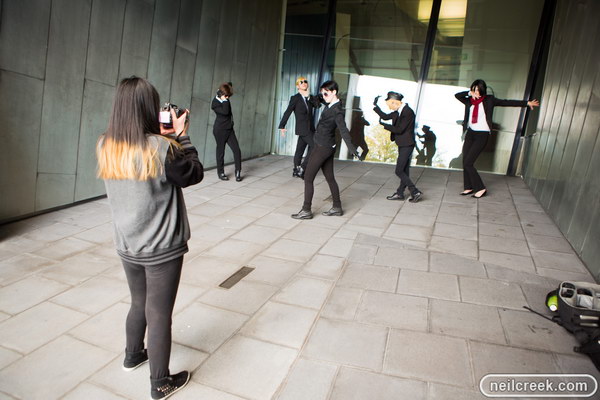
Our location for the shoot was the rear of Federation Square in Melbourne, Australia. It’s a futuristic looking building with lots of metal, glass and interesting angles in its construction. For the shot above I wanted to take advantage of these textures to accentuate the futuristic look, so we first went to the alcove depicted below in this behind the scenes photo.

Cosplay-shoot-first-shot-BTS

Lighting the shot

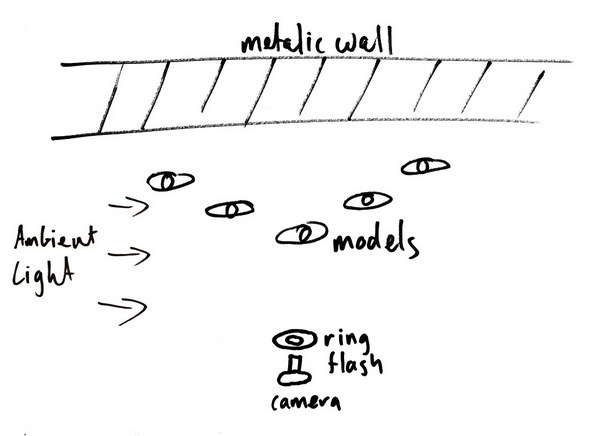
It was dusk so there was little light getting into the alcove from what became camera left. I wanted to keep that light in the shot as a fill, but my key light was going to be a ring flash – my Orbis ring flash. This kind of light gives a dramatic look with almost no shadow. It’s stark and flat but works well with this kind of scene. In my first test shot I noticed a fantastic unexpected effect of the brushed metal backdrop: anistropic reflection. This created a bright diagonal streak across the back of the shot.

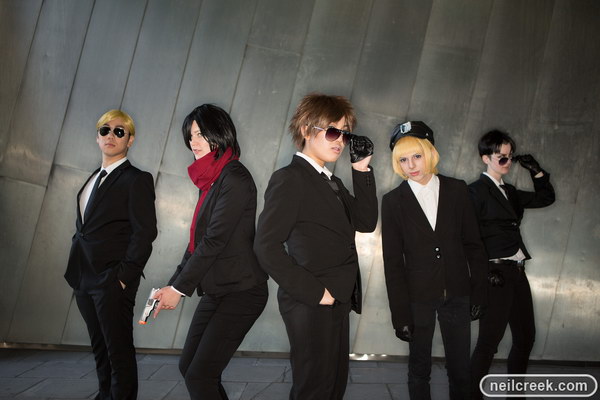
To get the right balance of fill to key, I set the camera to 1/125sec f/2.8 ISO160 and adjusted the power on the flash to get the right brightness for the shot. This ended up being towards the bottom end of the flash power. Following is a lighting diagram and the photo as it came out of camera:

Cosplay-shoot-first-shot-diagram

Cosplay-shoot-first-shot-raw

Processing the image

In post processing the major changes I made were to increase the contrast and clarity, as well as a significant temperature move towards blue, and tint shift to green. With a movie aspect ratio crop and heavy vignette, plus a few small tweaks to the exposure settings, I ended up with this final photo (below).

Cosplay-shoot-first-shot

The second location shoot

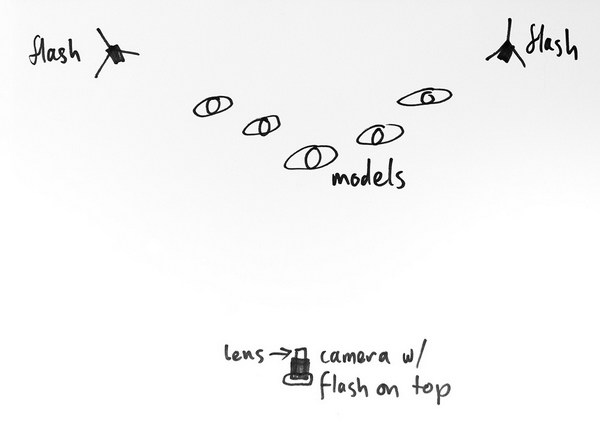
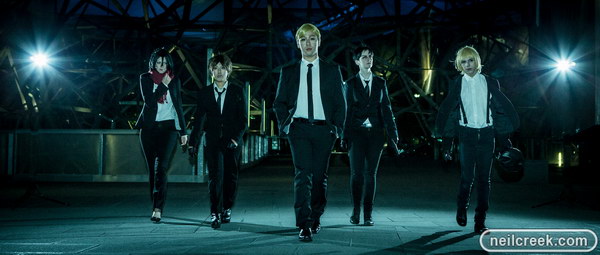
I love the self-conscious, melodramatic, slow motion walking scenes in movies, and these guys’ outfits were perfect for a shot like that. I wanted to keep a consistent look with the first shot, but give this one its own twist. To do this I took the group out into an area with more space and a cool geometric glass patterned wall as the backdrop. I added a pair of flashes behind the group for some rim lighting, but I deliberately chose to keep them in view for some dramatic lens flares. I replaced the ring flash with an on-camera flash and balanced that to be under the exposure from the rim lighting. This gave me a low key dramatic look (drama was the theme of the night!). Again I set the camera exposure to just give a hint of the background – 1/40sec f/4.5 ISO500 – and dialed the power of the flash to get the balance I was after.

Rather than try and pose the shot, which would look too forced, I got them into a staggered starting position and simply asked them all to walk toward the camera. To get them in an appropriate mood and make them feel badass, I played this tune (which I consider to be the best slow walking music ever) on my phone and it totally did the trick.

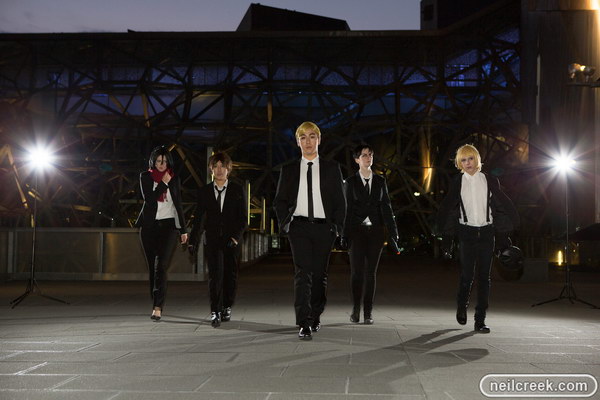
Following is a lighting diagram and the photo straight out of the camera.

Cosplay-shoot-second-shot-diagram

Cosplay-shoot-second-shot-raw

I processed this photo in essentially the same way as the previous shot, to get a consistent look and feel between it and the rest of the photos in the shoot. Please visit this gallery to see all the images at a decent size.

Cosplay-shoot-second-shot

I really love cosplay photography because I get to go crazy and pull out all the creative stops, to make over the top photos, that suit the over the top characters and plot from anime. I’m fortunate to have fun, creative and energetic friends to work with to create these shots. If you’d like to see more of my cosplay and other photo shoots, you should like my Facebook page where I post photos regularly, and occasionally discuss how they were made.

Which of the two shots is your favourite, and why?

Models featured in these photos:

  • Ettelle
  • Jase Lube-Sama
  • KnRai
  • Kobito Cosplay
  • Mei at Play

The post How the Shot was Done: SNK Police Cosplay by Neil Creek appeared first on Digital Photography School.


Digital Photography School

 
Comments Off on How the Shot was Done: SNK Police Cosplay

Posted in Photography


Nikon issues firmware updates for Df, D5200 and D3200

23 Jan

shared:download-button.png

Nikon has posted firmware updates for the Df, D5200 and D3200. As well as a number of minor bugs and performance issues, support has been added to the D3200 and D5200 for the new collapsible AF-S DX 18-55mm F3.5–5.6G VR II, allowing them to display an error message if the camera is turned on with the lens in its collapsed state. Read more and get the updates

News: Digital Photography Review (dpreview.com)

 
Comments Off on Nikon issues firmware updates for Df, D5200 and D3200

Posted in Uncategorized


22. Januar 2014

22 Jan

Ein Beitrag von: Lara & Andreas

Mond, Baum, Blätter, Montage


kwerfeldein – Fotografie Magazin

 
Comments Off on 22. Januar 2014

Posted in Equipment


Low Light Photography: How to Shoot Without a Tripod

22 Jan

A tripod is my most valuable photo accessory. In fact, I view it as an essential item, and not an accessory. But sometimes using one is just not practical. Sometimes you get caught without it unexpectedly, and sometimes they even break. It’s good to know what to do in these situations so you don’t miss any photo opportunities.

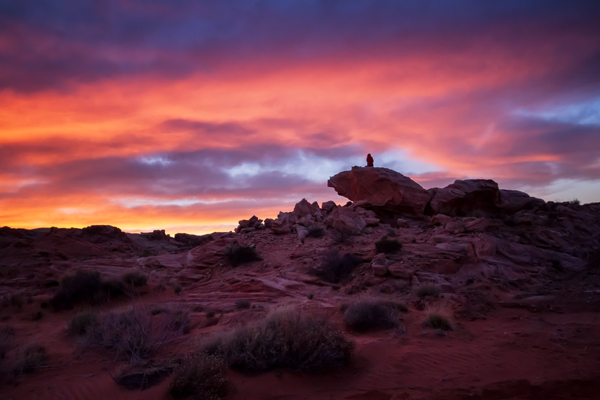
Sunset in The Valley of Fire, Nevada by Anne McKinnell

While shooting in the Valley of Fire, Nevada, I broke my tripod. Of course, there was a spectacular sunset that night. I was able to make this photo by increasing my ISO to 2000 and using a wide aperture of f/5.0 (the widest aperture for the lens I was using) when normally I would have used a much small aperture for this scene.

If you don’t have your tripod with you, or you’re trying to make do without one, you still have some options for low-light photography.

1. Use a wide aperture

If you want to handhold your camera in low light, you’ll have to work with a wide aperture, a high ISO, or both. Often landscape photographers want to use a small aperture such as f/18 to get maximum depth of field, but that isn’t practical for low light situations. Instead, use your camera’s widest aperture (the smallest f number) and focus on the most important feature in the frame.

Most standard kit lenses don’t perform very well in the dark, so if you do a lot of this type of photography, consider picking up a simple 50mm f/1.8 lens; nearly every brand has a cheap one and they’re well worth it for their sharpness and low-light capability. The maximum aperture of f/1.8 is a full 3.5 stops (lets in 12x more light!) wider than a standard 18-55mm kit lens at the same focal length.

2. Use Image Stabilization

The rule of thumb for shutter speed is that if you want a sharp image, the shutter speed should be no slower than the same fraction as your focal length – that is, if you’re using a 50mm lens, set your shutter speed to 1/50 second. However, if your lens has image stabilization, the shutter value can be two or three stops slower than this. This leeway makes a big difference in low light situations.

3. Use proper camera holding techniques

In low light photography, learning the proper stance and camera holding technique can give you even more leeway when it comes to preventing camera shake. It’s all about stability – plant your feet firmly, about shoulder width apart. With your right hand on the shutter button, hold the lens with your left hand, to steady it. Tuck your elbows tightly into your chest and control your breathing, shooting after you exhale whenever possible. All these things will contribute to your own stillness, minimizing handshake blur.

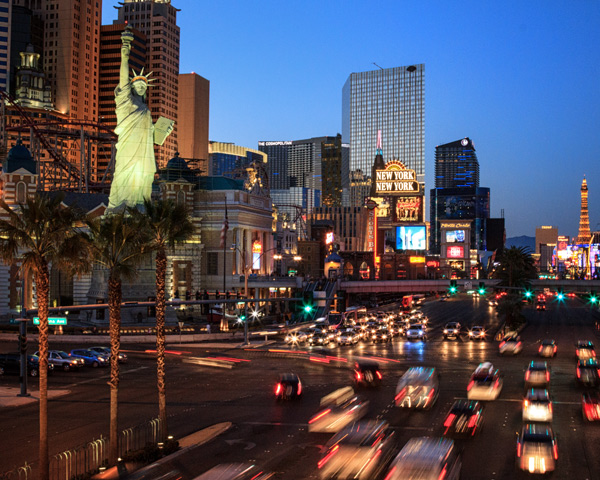
New York New York, Las Vegas by Anne McKinnell

In Las Vegas, I wanted to make an image with a fairly long shutter speed to blur the motion of the cars. However, I was standing on a bridge that had a chain link fence, and it was also a narrow pedestrian bridge with lots of pedestrians. Using a tripod was not practical. Instead using ISO 1250 and proper camera holding techniques allowed me to hold it steady for half a second.

3. Use a high ISO setting

ISO refers to the level of light sensitivity of your camera. The higher the ISO the more sensitive the sensor is to light, therefore the less light is needed to make a good exposure. The downside is that the higher the ISO, the more “noise” you will find in your image. Noise is a grainy look as opposed to a smooth look. Some noise is okay and it can often be removed in post processing.

When photographing in low light, turn your ISO up as high as you can before the image quality gets too noisy. This setting is different on every camera and an acceptable amount of noise is different for every photographer.

I recommend that you do an exercise so you know the maximum ISO for your camera, that results in a noise level you think is acceptable. Take the same shot at a number of different ISO settings and when you view the photos on your computer later (view at 100% size or 1:1), you will see at what point image quality begins to deteriorate. With today’s cameras this point is probably higher than you might think. Often with ISO 800 or 1600 you will see some noise, but not so much that you can’t fix it in post processing. It’s a good idea to try this exercise both in good light, and low light situations.

Canada Geese at Sunset by Anne McKinnell

Photographing Canada Geese flying overhead at twilight meant that I needed a relatively fast shutter speed to stop the motion. Therefore, I had to use a high ISO and a wide aperture to enable the faster shutter speed. This image was made at ISO 1600, f/4.5 1/200 second.

Noise is not necessarily a bad thing and can be used for creative purposes. If you are using a very high ISO, try shooting in black and white – it removes the colour from the noise and instead gives your photos an old-school grainy look.

Some of the most beautiful landscape photographs are made in low light, so learning these techniques will help you take advantage of low light opportunities and get that great shot even when you don’t have a tripod.

Further reading on low-light photography:

  • A guide to outdoor low-light photography
  • Better low-light photos without a flash
  • 15 tips for low light landscape photography

The post Low Light Photography: How to Shoot Without a Tripod by Anne McKinnell appeared first on Digital Photography School.


Digital Photography School

 
Comments Off on Low Light Photography: How to Shoot Without a Tripod

Posted in Photography


Black-and-White Photography Tips for Beginners

22 Jan

There are some photographers who like to click images and convert them into black-and-white photos in the post-production phase. There’s nothing wrong with this procedure; it’s just that it is time consuming. So, instead of converting the photos into black and white later, wouldn’t it be better to shoot photos in black and white in the first place? In today’s Continue Reading

The post Black-and-White Photography Tips for Beginners appeared first on Photodoto.


Photodoto

 
Comments Off on Black-and-White Photography Tips for Beginners

Posted in Photography


Die Farben der Musik

22 Jan

Ein Beitrag von: Christopher Wesser

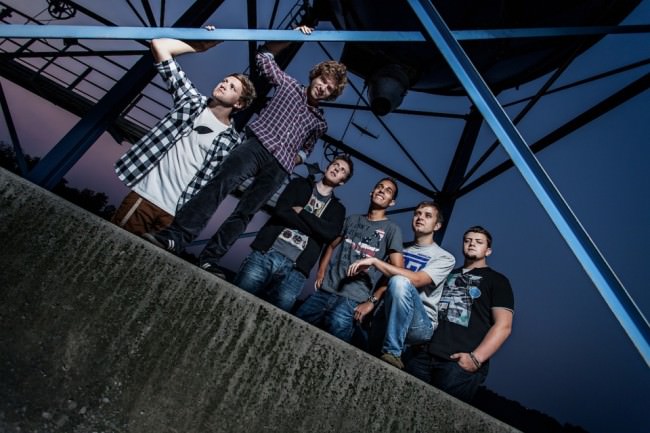
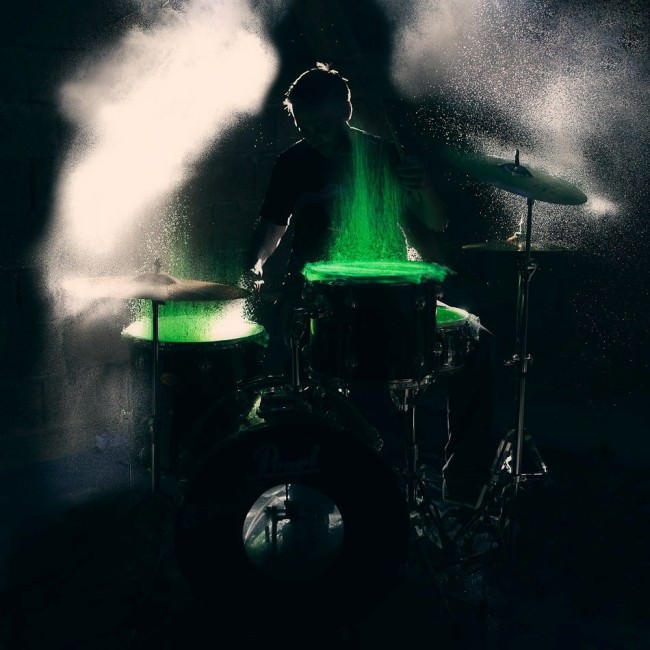
Hi, mein Name ist Chris und ich bin Musiker… Nein. Halt. Nochmal. Hi, mein Name ist Chris und ich bin Fotograf. Ach, eigentlich trifft beides zu, was wohl auch der Grund dafür ist, warum ich mich am wohlsten fühle, wenn ich Musiker vor meiner Kamera habe.

Anders kann ich’s mir jedenfalls nicht erklären, dass mein bisheriger fotografischer Werdegang mich von Natur über Lifestyle bis hin zur People-Fotografie und nun zurück zu meinen kreativen Wurzeln geführt hat: Zur Musik.
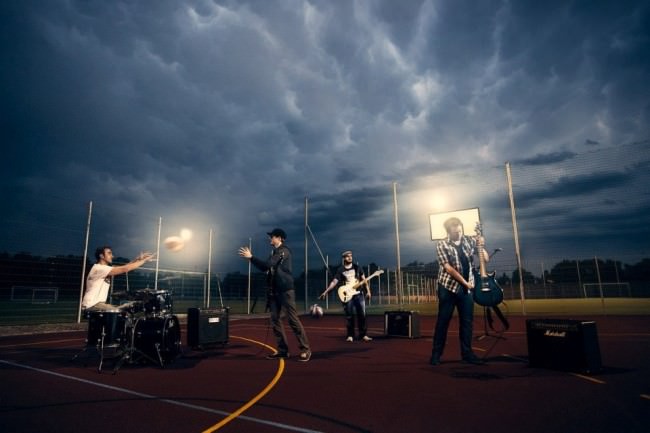
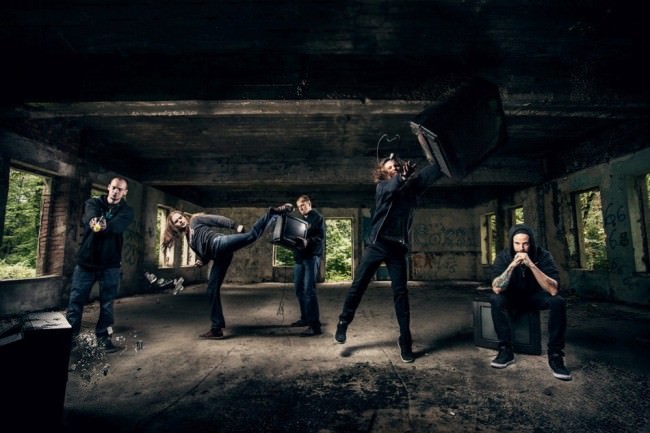
© Christopher Wesser

© Christopher Wesser

Aber warum eigentlich genau dieses Feld der Fotografie? Irgendwie hat die Musik schon immer eine wichtige Rolle in meinem Leben gespielt. Schon mein Vater ist ein sehr begnadeter Akkordeon-Spieler, was er eigentlich an mich weitergeben wollte. Ich bin dann aber doch bei der Gitarre gelandet und habe mich jahrelang durch unzählige Bands gespielt und entsprechend viele Musiker kennen gelernt.

Habe mir ihre Marotten angeeignet und mich nächtelang in Proberäumen einem gesundheitsgefährdend extremen Gemisch aus Schlagzeug, Gitarre, Rauch und Alkohol ausgesetzt. Ich spielte unter freiem Himmel vor Hunderten von jubelnden Leuten und in winzigen Clubs vor nicht einmal zehn Menschen, die mir gelangweilt zusahen, während ich auf der Bühne an meinen sechs Saiten zupfte.

Mein Instrument fiel in den ungünstigsten Momenten während eines Auftritts aus und einmal habe ich sogar einen Begeisterungskuss geerntet, als ich von der Bühne gekommen bin. Zusammengefasst: Ich konnte in den letzten zwölf Jahren einige sehr extreme Hochs und Tiefs zusammen mit meinen Mitmusikern erleben und sowas schweißt zusammen.
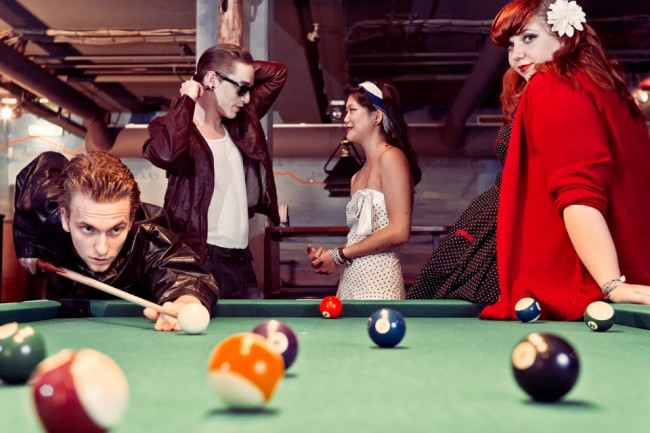
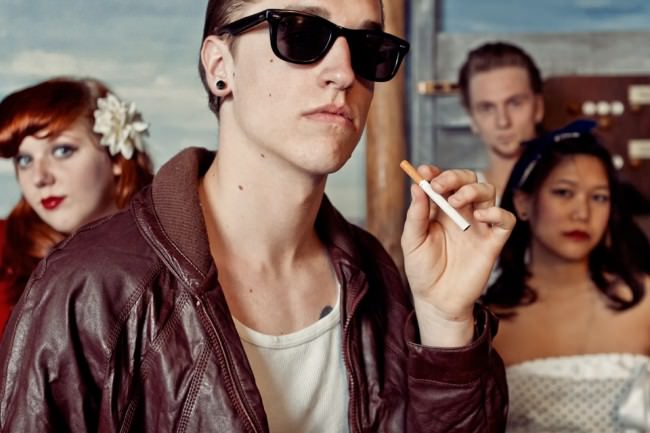
© Christopher Wesser

© Christopher Wesser

Zu einem immer wiederkehrenden Tief gehört definitiv das Thema Bandfotos. Vor einigen Jahren war ich selbst noch der, der mit seinem Instrument in der Hand unbeholfen vor der Kamera stand und nicht so genau wusste, wie man sich als Band eigentlich präsentieren will oder soll. Und irgendwie kommt diese Erinnerung als Flashback doch jedes Mal wieder, wenn ich meine Kamera in Richtung eines Musikers halte.

Vor allem, wenn man die Bands und Künstler fragt, was sie sich eigentlich so für Fotos vorgestellt haben und dann nur ein Schulterzucken bekommt. In günstigen Fällen erhält man noch vage Umschreibungen wie „soll nicht so aufgesetzt wirken“ oder „auf jeden Fall irgendwo draußen“. Da wird man als Fotograf schnell zum Creative Director, was für mich persönlich heißt, dass ich mich weiter mit der Musik der Gruppe auseinandersetzen muss, um Stimmungen und Themenfelder herauszuhören, die man in Fotoshootings umsetzen kann.
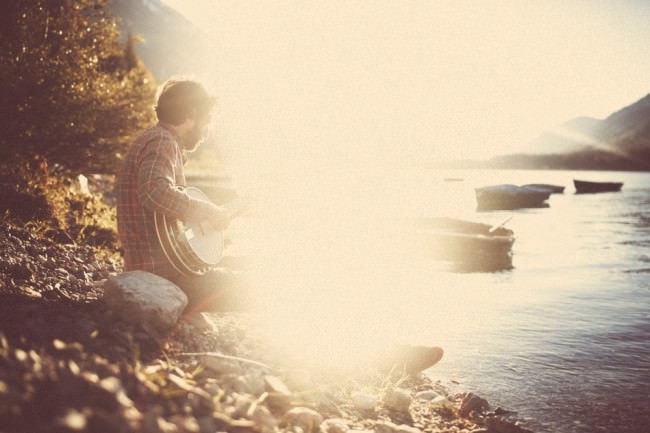
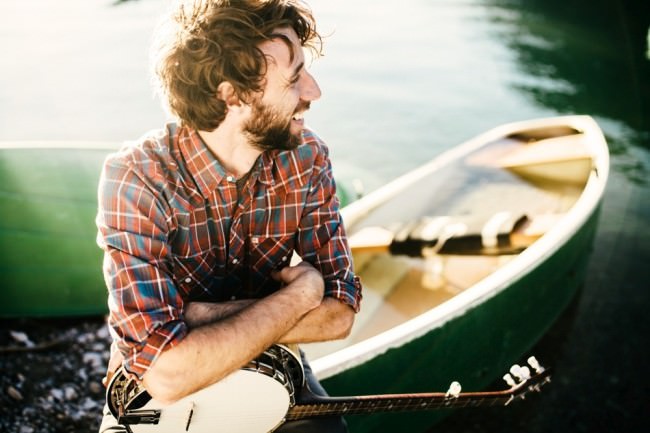
© Christopher Wesser

© Christopher Wesser

Das wirklich Positive dabei: Für Musiker gibt es kein „das ist mir jetzt doch irgendwie zu künstlerisch“. Je abgefahrener die Ideen des Fotografen sind, desto besser. Irgendwie muss man sich ja abheben. Immerhin sind die Fotos meistens das Erste, was man von so einer Band sieht. Sogar noch bevor man überhaupt die Musik gehört hat.

Da muss man schon mit einer gewissen Feinfühligkeit an die Sache rangehen, damit sich der Betrachter der Bilder in etwa vorstellen kann, was musikalisch auf ihn zukommt. Man versucht sozusagen, aus Musik und Bildern ein einheitliches audiovisuelles Ganzes zu erschaffen, das bestenfalls in allen Adjektiven übereinstimmt.

Wenn ich mir die Musik der Bands anhöre, dann schreibe ich einfach die Stichworte mit, die mir in dabei in den Sinn kommen: „freundlich, minimalistisch, akustisch, natürlich“ und schon ist mein Moodboard für das Shooting fertig. Meistens reicht der Band dann auch nur ein kleiner Funke oder eine ungefähre Idee. So eine Gruppe aus Musikern entwickelt sehr schnell eine starke Eigendynamik, das ist bei einem Fotoshooting dann durchaus vergleichbar mit einer Bandprobe.
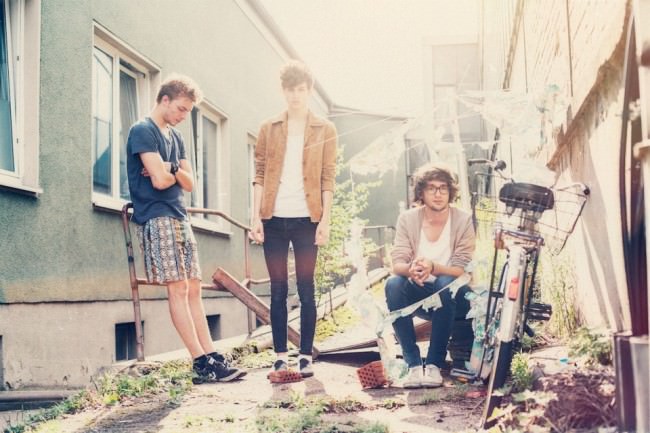

© Christopher Wesser

© Christopher Wesser

Der eine wirft einen Begriff in die Runde, der andere findet einen kaputten Schirm am Straßenrand und schon formiert sich die ganze Band, um darunter zu posieren, so wie sie sich auch im Proberaum musikalisch nur einzelne Bruchstücke zuwerfen, um daraus ein großes Ganzes zu machen. Diese Art des kreativen Flusses ist für People-Fotografen erstrebenswert, aber rar.

Vor allem die Arbeit mit fremden Modellen ist mit einer gewissen Distanz behaftet, die es nur sehr beschränkt zulässt, außergewöhnliche und neue Ideen anzugehen. Arbeitet man mit Musikern, die sich ständig in der Situation des gemeinsamen kreativen Schaffens befinden, kann man sich als Fotograf ab einem gewissen Punkt einfach zurücklehnen und die Show genießen.
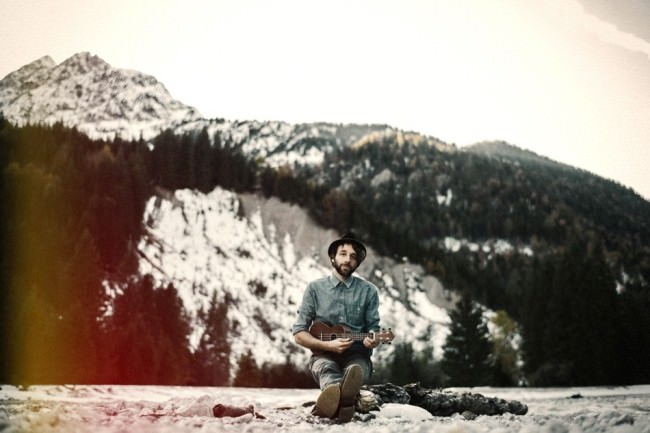

© Christopher Wesser

© Christopher Wesser

Der Einblick in diese beiden kreativen Felder hat mir außerdem so einige Überraschungen beschert. Im Endeffekt kann man sagen, dass sich Musiker von Fotografen nur in ganz kleinen Nuancen unterscheiden. Eigentlich ist nur das Werkzeug und das Endprodukt unterschiedlich, aber sämtliche Elemente und Vorgehensweisen dazwischen liegen gespenstisch nah beieinander.

Als ich das erste Mal ernsthaft mit einem Modell zusammen gearbeitet habe, mit der Absicht, eine repräsentative People-Strecke zu produzieren, konnte ich irgendwie wieder diese Nervosität spüren, die ich hatte, als ich das erste Mal mit meiner Gitarre auf einer Bühne stand. Nicht umsonst hört man viele englischsprachige Fotografen auch sagen „I had a gig“, wenn sie von einem Shooting reden.

Faktisch tun beide Künstlergruppen auch das Gleiche: Es werden Stative aufgebaut und dabei beschwert man sich schon über zu wenig Platz oder darüber, dass die Kälte einem die Finger einfriert. Wenn ganz viel Budget dahinter steckt, hat man sogar noch die Möglichkeit, bevor es losgeht einen ordentlich Licht- bzw. Soundcheck zu machen und wenn’s dann ernst wird, wundert man sich, warum plötzlich alles anders ist als beim Testen.
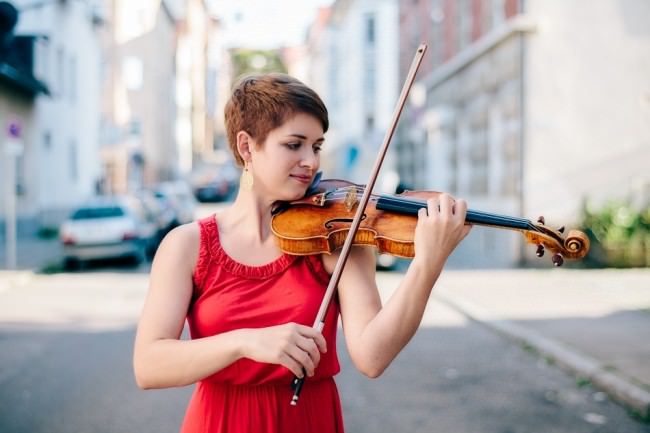
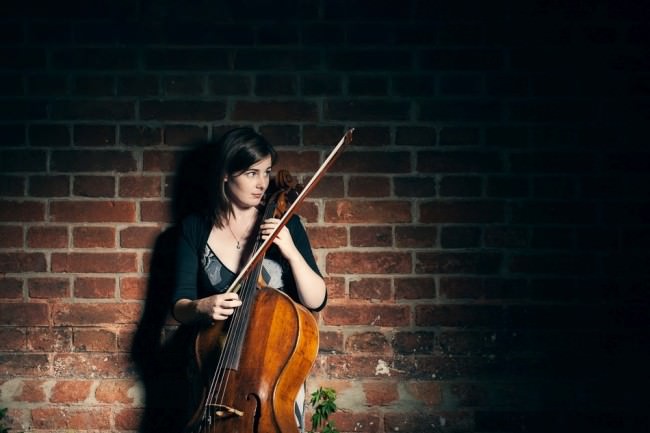
© Christopher Wesser

© Christopher Wesser

Lauter Leute schauen einen gespannt an und hoffen, dass man etwas Außergewöhnliches zeigt. Man hofft auf guten Sound (oder Licht) und dass die Technik nicht streikt. Und wenn dann doch die Technik streikt, gibt man dem unfähigen Assistenten die Schuld, der irgendeine Verkabelung verbockt hat.

Außerdem gibt’s da immer – also wirklich immer – diesen alten, grauhaarigen Mann mit der braunen Anzughose und dem Bierbauch, der eigentlich nur zum Zuschauen gekommen ist, aber das, was man da als Künstler tut, schon ungefähr 128 Jahre länger und vor allem besser macht und der befürchtet, dass man ohne seine Tipps und sein Reinreden so gar nichts Vorzeigbares zustande bringen wird. Wo kommt der eigentlich immer her? Hat der kein Zuhause?

Wenigstens kann man den Veranstaltern bzw. Kunden nicht vorwerfen, sie würde sich nicht um uns kümmern. Ich habe bisher weder als Livemusiker noch als gebuchter Fotograf für mein Essen oder Getränke zahlen müssen.
© Christopher Wesser

© Christopher Wesser

Die Entdeckung dieser Parallelen hat mir in der Fotografie so manche Türen geöffnet und vieles einfacher gemacht. Sowohl als Künstler als auch als Musiker kommt man einfach unausweichlich immer wieder an einen Punkt, an dem man das eigene Schaffen hinterfragt. Sowohl bezüglich Sinn als auch Qualität. Diese Phase kann einen ganz schön aus der Bahn werfen oder sogar zum Aufgeben bringen.

Meine Erfahrung als Musiker hat mir dabei geholfen, diese Hürden in der Fotografie immer wieder zu überwinden. Ich hatte bereits oftmals erfahren, dass kreative Tiefs kein Dauerzustand sind und man sich einfach durchkämpfen muss. Ich wusste immer, dass es, wenn es bergab geht, auch irgendwann wieder bergauf geht. Vielleicht sogar noch viel steiler, als man es erwartet hätte.

Es hat sich bisher sowohl fotografisch als auch musikalisch immer gelohnt, am Ball zu bleiben, zu üben, die Zähne zusammen zu beißen, sich nicht zu viel reinreden zu lassen und vor allem offen zu sein. Offen für alles. Für jede Inspiration, jeden neuen Denkansatz und für jede neue Lektion. Denn auch nach 13 intensiven Jahren habe ich an der Gitarre noch lange nicht ausgelernt und genau so wird auch beim Fotografieren sein.


kwerfeldein – Fotografie Magazin

 
Comments Off on Die Farben der Musik

Posted in Equipment


Richard Franiec creates custom grip for Panasonic GM1

22 Jan

lumix_dmc-gm1.jpg

Accessory grip maker Richard Franiec has created a custom grip for the Panasonic Lumix DMC-GM1. The grip is made from anodized aluminium alloy and should improve handling when using the GM1 with larger Micro Four Thirds lens. It weighs about 20g and leaves the battery/card door and tripod socket unobstructed. It should be available later this month and cost $ 34.95 plus shipping. Learn more

News: Digital Photography Review (dpreview.com)

 
Comments Off on Richard Franiec creates custom grip for Panasonic GM1

Posted in Uncategorized


Drop-Leaf Desk: Small Side Table Converts into Work Surface

22 Jan

[ By WebUrbanist in Design & Furniture & Decor. ]

small space modular desk

Designed as carefully as it is hand-crafted, this Tablet Desk has a deceptively streamlined look that hides a series of modular features and space-saving strategies, all made with technology in mind.

small desk close up

small desk in context

If setting aside a whole room for a home office is simply not an option, this dual-purpose wooden desk and end table lets you put work aside with relative ease, then flip out extra surface area supported with magnetized wooden legs.

small desk magnet legs

small digital work surface

Both the original two-toned and the newer 2.0 version from UK design studio Bee9 combine efficient storage and work space with minimal materials. Each also has a small-as-possible physical footprint, all oriented toward digital-first and future-proof use cases.

small desk hidden cords

small desk tablet area

Modular panels and other moving components acknowledge that users will have wants and needs that cannot be universally anticipated, including ways to route cords (and places to keep them out of the way) and vertical surfaces against which to lean tablets or other devices.

The making-of video above shows the initial Tablet Design being carefully constructed – watching it reveals some of the subtle detailing and much of the behind-the-scenes effort required to integrate all of the necessary functionality.

small desk modular panels

small desk open design

From the designers: “Deceptively simple and endlessly adaptable, the Bee9 tablet desk is designed to redefine where you can put a desk. Frugal in its use of material and space, the desk [plus] side table makes optimum use of limited space.”

Share on Facebook


[ By WebUrbanist in Design & Furniture & Decor. ]

[ WebUrbanist | Archives | Galleries | Privacy | TOS ]


WebUrbanist

 
Comments Off on Drop-Leaf Desk: Small Side Table Converts into Work Surface

Posted in Creativity


Hasselblad replaces CEO, announces 50MP CMOS medium-format camera

22 Jan

Hasselblad-medium-format-camera-with-CMOS-sensor.png

Hasselblad has announced a new camera, the H5D-50c which incorporates a 50MP CMOS sensor. This is a step away from the CCD sensors that have been standard in digital medium-format imaging up to now. The H5D-50c comes weeks after Hasselblad was reported to have quietly replaced its CEO, Dr Larry Hansen. He was the man responsible for the tie-up with Sony that created the Hasselblad Lunar and has been replaced by former chief operating office Ian Rawcliffe. Learn more

News: Digital Photography Review (dpreview.com)

 
Comments Off on Hasselblad replaces CEO, announces 50MP CMOS medium-format camera

Posted in Uncategorized