RSS
 

Archive for December, 2013

2013 Roundup: The best in smartphone photography

23 Dec

best0f2013.png

It’s been an exciting year for mobile photography with innovations in sensors, new software features, and an even greater focus on the imaging capabilities of mobile devices. As we reflect back on the past year and look forward to further advances in 2014, we’re sharing our thoughts on the most important trends in mobile imaging from 2013. Learn more on connect.dpreview.com.

News: Digital Photography Review (dpreview.com)

 
Comments Off on 2013 Roundup: The best in smartphone photography

Posted in Uncategorized


Hopscotch Intersection: 4 Artists Hack 16 Public Crosswalks

23 Dec

[ By WebUrbanist in Art & Street Art & Graffiti. ]

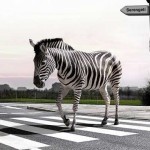
zebra crossing zipper art

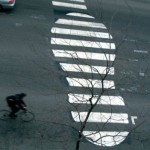
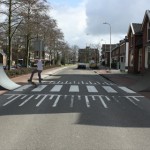
Sixteen crosswalks at four intersections in Baltimore are the subject of a street-spanning public art project that re-imagines white-on-black zebra striping, each with a unique twist.

zebra hopscotch aerial view

Sponsored by the  Baltimore Office of Promotion and the Arts, the first two of the series are already complete with two more yet to come.

zebra baltimore pedestrian interactions

Artist Paul Bertholet is behind the giant zip-up crosswalk while Graham Coreil-Allen designed the hopscotch-styled variant (additional images below by Graham Coreil-Allen).

zebra intersection crosswalk construction

One goal of this set of projects is to add a creative touch around the city’s Westside Arts and Entertainment District, attracting visitors and interaction while helping define the neighborhood.

Share on Facebook


[ By WebUrbanist in Art & Street Art & Graffiti. ]

[ WebUrbanist | Archives | Galleries | Privacy | TOS ]


WebUrbanist

 
Comments Off on Hopscotch Intersection: 4 Artists Hack 16 Public Crosswalks

Posted in Creativity


Poll update – what post production software do you use the most?

23 Dec

We ran this poll last in February of 2009, so I thought it was time for an update to see if there have been any changes since last time. I’m especially curious about any Adobe offerings since the Creative Cloud too affect. Has that swayed your software choice?

Tell us what post production software you use the most. If you use more than one, indicate the one you use most often, for most of your editing needs. For example I use Lightroom and Photoshop CC, but LR5 is my primary tool as I use it for 90% of my editing.

By filling this in you will also be giving us direction in what types of articles and tutorials we post in the future. So please share and add a comment below if you want to give us additional information.

>I’ve included the eight most popular tools mentioned last time we asked this question to readers (I’ve combined all Photoshop versions into one for simplicity). I know others of you use Noise Ninja, Bibble Pro, ACDSee and others – feel free to tick the ‘others’ option and tell us in comments below what ‘other’ one you’ve chosen.

If you use more than one feel free to tell us about that too.

Note: There is a poll embedded within this post, please visit the site to participate in this post’s poll.

The post Poll update – what post production software do you use the most? by Darlene Hildebrandt appeared first on Digital Photography School.


Digital Photography School

 
Comments Off on Poll update – what post production software do you use the most?

Posted in Photography


Have your say: Best gear of 2013

23 Dec

Screen_Shot_2013-12-22_at_3.40.54_PM.jpg

A great many new products were released this year, and we’ve published in-depth content on plenty of them, full reviews of many and we’ve got plenty of opinions on all of them. This is your chance to have your day – which was the best gear of 2013? Click through to see our five readers’ polls, and cast your vote!

News: Digital Photography Review (dpreview.com)

 
Comments Off on Have your say: Best gear of 2013

Posted in Uncategorized


Cinematic Structures: Illustrating Famous Film Architecture

23 Dec

[ By WebUrbanist in Art & Drawing & Digital. ]

classic poster set

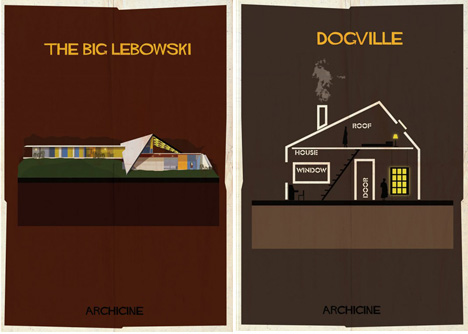
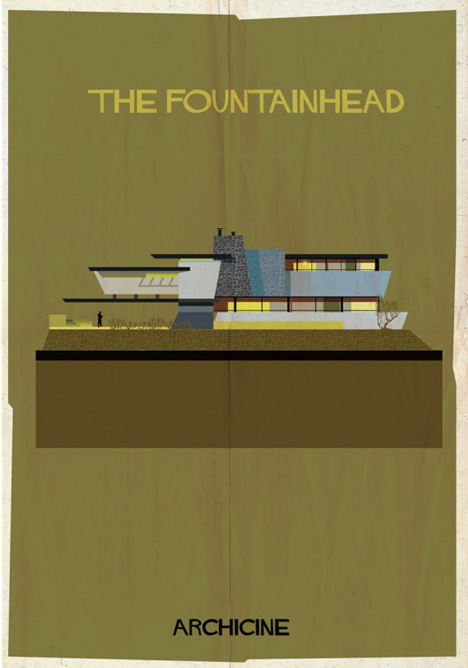
Some cinematic experiences are defined by their built environments, be it the minimalist architectural plan outlines of Dogville or the lavish Mid-Century Modern estate from the Big Lebowski.

classic the fountainhead home

classic vintage poster remake

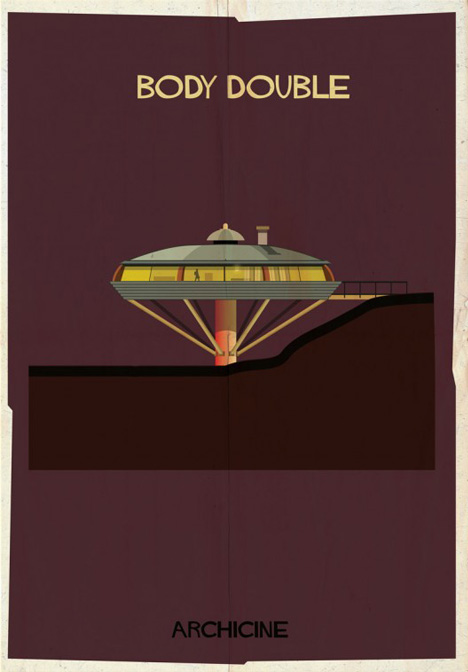
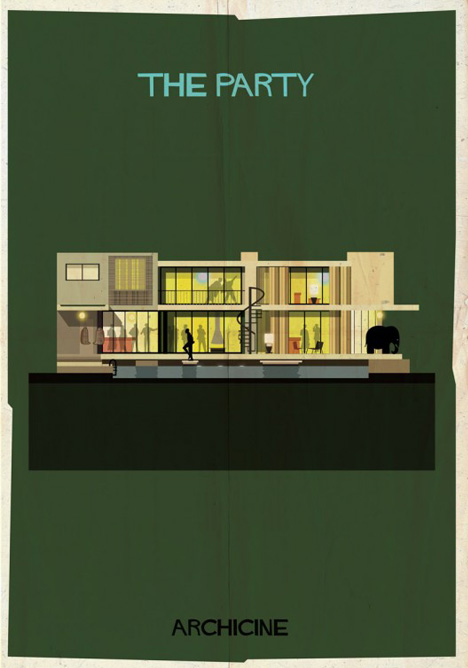
Illustrator Federico Babina has taken iconic structures from major motion pictures and rendered them in a way that both shows off the unique character of these charismatic buildings and ties them together aesthetically.

classic the party rendering

classic movie poster designs

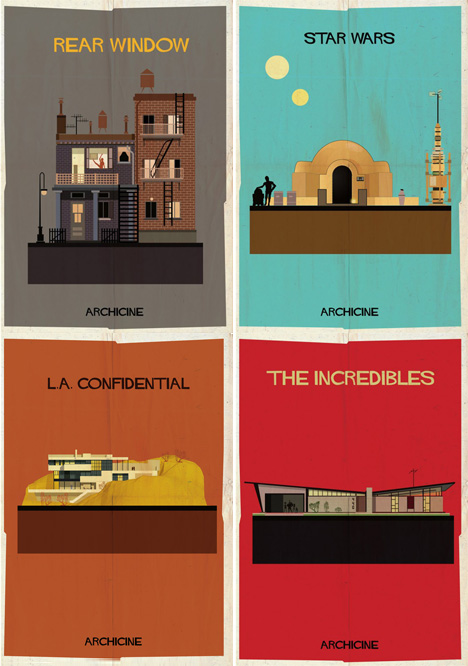
This set of poster-worthy ARCHICINE prints features classics like Rear Window and Star Wars as well as contemporary sets including L.A. Confidential and The Incredibles.

Next Page – Click Below to Read More:
Cinematic Structures Illustrating Famous Film Architecture

Share on Facebook


[ By WebUrbanist in Art & Drawing & Digital. ]

[ WebUrbanist | Archives | Galleries | Privacy | TOS ]


WebUrbanist

 
Comments Off on Cinematic Structures: Illustrating Famous Film Architecture

Posted in Creativity


Deal 10: Grab Andrew Gibsons ‘Mastering Photography’ eBook for $7

22 Dec

Another day, another great $ 7 deal!

This one is by Andrew Gibson for his eBook Mastering Photography.

NewImage

Yours today here for just $ 7

Some of you will know Andrew from his writing on dPS and his eBooks follow the same exceptional standard.

Mastering Photography will introduce you to elements such as:

  • The creative triangle, white balance and the luminance histogram
  • The only model dial sections you really need to know
  • How to prevent shake and use Picture Controls
  • Why Raw format is easier to use than JPEG
  • The creative roles of aperture, shutter speed and ISO in producing beautiful photos.

And much more…

You can own this wonderful eBook in day 10 of our 12 days of christmas for just $ 7!

Get it here.

Bundle it Up with 2 More eBooks for just $ 15

Andrew has written a range of other eBooks and today is offering Mastering Photography in a bundle with two of his other best offerings.

NewImage

For just $ 15 you can get Mastering Photography PLUS:

Mastering Lightroom: Book One
Andrew teaches you all about the Library module in Lightroom so you can lay a solid foundation to your workflow – from importing, organizing and storing.

Square: The Digital Photographers Guide to the Square Format
An in-depth exploration of the square formatted image. Beautifully illustrated by Andrew’s own square-formatted photos, this eBook gives you a thorough look at square format elements such as framing, cropping and vertorama. Film photographers Matt Toynbee and Flavia Schaller share their perspectives on the square format in two in-depth case studies.

So whether you just pick up 1 eBook or all 3 – today you’re going to get some great teaching.

But don’t wait too long – this deal ends in under 24 hours.

The post Deal 10: Grab Andrew Gibsons ‘Mastering Photography’ eBook for $ 7 by Darren Rowse appeared first on Digital Photography School.


Digital Photography School

 
Comments Off on Deal 10: Grab Andrew Gibsons ‘Mastering Photography’ eBook for $7

Posted in Photography


22. Türchen: Carmen und Ingo

22 Dec

22. Türchen

Verlängert! Da kwerfeldein zwischen 15:00 und 17:30 Uhr nicht erreichbar war, verlängern wir den Teilnahmezeitraum für dieses Türchen bis morgen, den 23. Dezember um 12 Uhr mittags.

Gute Workshops in deutscher Sprache sind rar, noch dazu, wenn es um Hochzeitsfotografie geht. Carmen und Ingo haben das mit ihrem Video-Workshop geändert. Und die beiden sind so gut in dem, was sie tun, dass auch aus dem Ausland gefragt wird, wann es den Workshop denn nun endlich auf Englisch geben wird.

Der Titel des Workshops „Learn how we do it“ sagt schon, worauf es Carmen und Ingo ankommt. Es geht nicht darum, starre Regeln zu vermitteln, sondern darum, Erfahrungen weiterzugeben und zu inspirieren. Und diese Erfahrungen sind Gold wert.

Von ihrem Weg zur Selbständigkeit, über ihre Ausrüstung, dem Marketing bis hin zur Bildbearbeitung decken sie jeden Bereich der Hochzeitsfotografie in ihrem mehr als acht Stunden langen Video-Workshop ab. Natürlich kann man ihnen auch bei einem Shooting über die Schulter schauen. Einen guten Einblick in das, was Euch erwartet, bietet dieser kleine Trailer:

Der Workshop eignet sich für engagierte Hobbyisten, Einsteiger in die Hochzeitsfotografie, aber auch für schon länger im Business arbeitende Fotografen. Grundkenntnisse der Fotografie sind von Vorteil, da ganz grundsätzliche Begrifflichkeiten nicht mehr explizit erklärt werden.

Der Videoworkshop kann für 499 € online heruntergeladen oder für 549 € in einem schicken Päckchen auf einem 16GB-USB-Stick gekauft werden. In unser Kalendertürchen haben Carmen und Ingo den Workshop auf UBS-Stick gelegt.

Um den Workshop zu gewinnen, schreibe einen Kommentar unter bürgerlichem Namen und gültiger E-Mail-Adresse bis heute um 24 Uhr morgen um 12 Uhr mittags. Danach verlosen wir ihn per Zufallsgenerator unter allen Kommentatoren. Die genauen Gewinnspielregeln findest Du hier. Viel Glück!


kwerfeldein – Fotografie Magazin

 
Comments Off on 22. Türchen: Carmen und Ingo

Posted in Equipment


Carnivorous plant image wins Olympus BioScapes competition

22 Dec

2013-1-large-olympus-bisocapes-photos-670x440.jpg

The open ‘mouth’ of a floating humped bladderwort plant (Utricularia gibba) took first prize in Olympus’ microscope image competition. Igor Siwanowicz, a researcher from the Howard Hughes Medical Institute’s Janelia Farm Research Campus in Ashburn, Virginia, took the winning image of the carnivorous plant, beating more than 2,000 entries from 71 countries. See gallery

News: Digital Photography Review (dpreview.com)

 
Comments Off on Carnivorous plant image wins Olympus BioScapes competition

Posted in Uncategorized


Get Your Creative Juices Flowing with Different Focal Lengths
22 Dec

Get Your Creative Juices Flowing with Different Focal Lengths

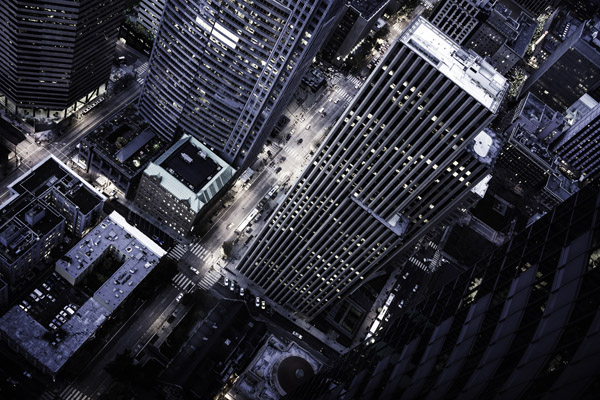
Eckert Creative Juices Focal Length 01

14mm lens

I’ve gone through periods of low creativity in my photographic journey. Times when I don’t have compelling ideas or nothing seems new. When the excuses why not to go takes pictures (“It’s too cold, it’s too hot, the light isn’t right, it’s too cloudy, it’s not cloud enough”) manage to outweigh my need to photograph, and I go into an unproductive slump. It can be hard to break out of these slumps, but there are lots of ways to get the spark back including everything from: getting on dPS to read articles; to looking at galleries of other photographers’ images online for inspiration; to choosing a slightly different route or time to work, in order to see the world in a different way.

In this article I’m going to touch on just one of those “creativity sparks”, specifically, getting creative with focal length, even the point of breaking the “rules.”

Before I get to the meat of the article, please note I’m not saying you have to go spend thousands of dollars on new lenses. If you can afford to, want to, and need to, then by all means do so – new gear is one more method of lighting the creativity fire in your soul again. Instead, however, I’m suggesting you work on finding new ways to shoot with the gear – the lenses – you already have.
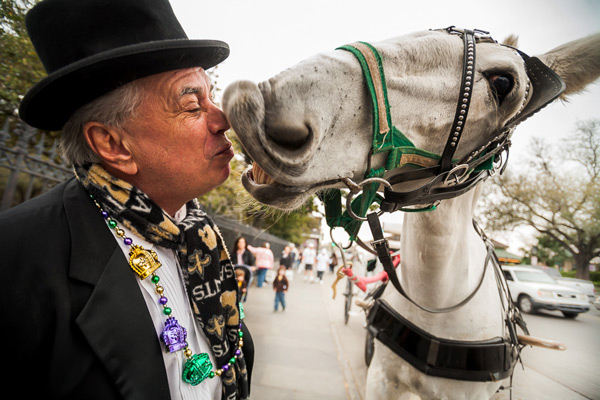
Eckert Creative Juices Focal Length 02

100mm lens

The “Rules”

When it comes to lenses, most new photographers learn the typical applications of different focal lengths pretty quickly. Here are a few examples of what I learned, when I was first teaching myself this complicated art, about how different focal lengths *should* be used (Note: all focal lengths list here refer to 35mm full-frame format):

  • 10-14mm: distorted fisheye, not really for ‘serious’ photography
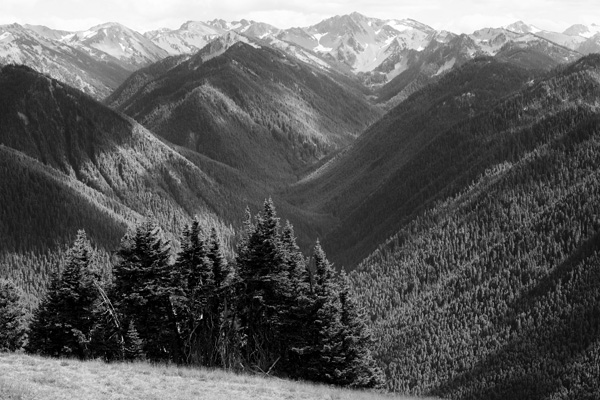
  • 14-24mm: landscapes, seascapes, waterfalls, starlight and astrophotography
  • 24-35mm: street and architecture photography
  • 35mm-58mm: “normal” and most closely approximates our natural view of the world, useful for portraits and still life photography, etc.
  • 85mm: the classic, flattering portrait length lens
  • 90-105mm: the province of macro lenses (close ups)
  • 135mm: the other classic portrait length
  • 200mm: the other, other classic portrait length also getting useful for nature and sports telephoto shots
  • 200-500mm: sports, wildlife and birds
  • 500-800mm: for wealthy and/or partially crazy Antarctic nature photographers who want close-ups of polar bears

Are there problems with the above gross simplifications? Sure, tons! Even novice photographers will understand the above list is just a shorthand, a way of reducing a radically complicated subject into more easily digestible chunks. More experienced photographers will be able to name a dozen exceptions to the list above. But, that’s also where the fun – the creativity spark – can begin: in the exceptions, in shattering of rules.

Eckert Creative Juices Focal Length 03

14mm lens

Breaking the “Rules”

I’m going to re-write the list from above, presenting just a few alternative ideas. This is also hardly a comprehensive list; instead, I’m trying to get your creative juices flowing with regard to what you can do with those different focal lengths, how you can go about breaking the rules and producing something new, unusual and outside the expectations.

  • 10-14mm: still life, product shots, cityscapes, purposefully distorted architecture, sports, hiking
  • 14-24mm: pet portraits, street shots, extreme close-ups (thanks to the design of many ultra-wide angle lenses you can actually get really close to the subject, and, thanks to the wide angle, still show a lot of the surroundings), flowing architecture, cloudscapes
  • 24-35mm: babies, landscapes, cityscapes, portraits
  • 35-58mm: anything anti-“normal” with these “normal” lenses – get close, get far, turn the camera, close down to f/16 even with your expensive 50mm f/1.4 because it’s different, because it makes you think
  • 85mm: landscapes (start to pick out specific areas to focus the viewer’s attention), cityscapes (ditto), architecture (same again), still life, street scenes
  • 90-105mm: more of what I offered for the 85mm; just because you have a macro doesn’t mean it won’t happen to make a great landscape lens (e.g. the Zeiss 100mm f/2 Makro Planar) or a great portrait lens (e.g. Nikon 105mm f/2.8 VR)
  • 135mm: street scenes where you really separate a subject or object from the crowd; detail shots of antique or expensive cars; clouds (picking out the special parts to focus on), light trails, long-exposure shots of the sea (at 135mm? Crazy talk! But that’s the idea!)
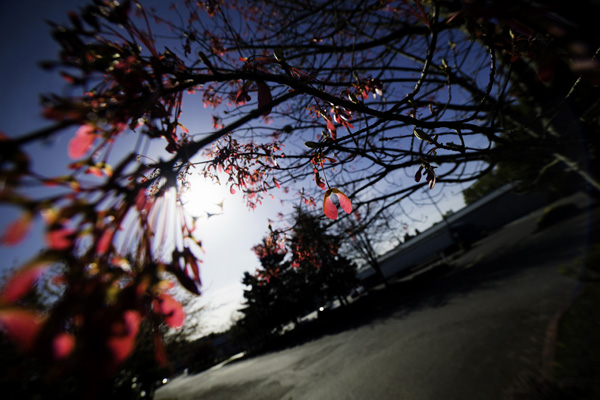
  • 200mm: waterfalls, mountains, sunsets and sunrises, fog in the trees, autumn leaves on the long roadway, the shadows cast by that old oak tree on the fence in the neighbour’s yard
  • 200-500mm: rolling plains and wide open vistas; sections of the Grand Canyon at sunset; night life in the city, your pets
  • 500-800mm: polar bears

Just kidding on that last one. I think you get the general idea, though: take the stereotypical, “classic” uses of any given focal length, and turn those ideas on their head. Have a go at something you’d never thought would work for that lens. You might be shocked by what you come up with, and if nothing else it will get your conscious and subconscious mind churning and that creative flame burning.
Eckert Creative Juices Focal Length 04

35mm lens

The “You Should Never” Rules

These are one step beyond the regular rules. You’ll find these on Flickr sometimes, as well as other online photo communities, where someone will passionately argue that a given photo (or set of photos) is utter garbage because the photographers in question “misused” their lenses and “you should never do” whatever it is that they did.

For example: “You should never take a portrait with a fisheye lens.”

This might even seem reasonable at first glance – after all, fisheye lenses are defined by their hefty distortion that is not generally considered a good look by most models. But here’s the thing: as long as you are using your lens on your camera to take a photo, you aren’t “misusing” it. Especially if you are experimenting and learning new ways of seeing the world, and stoking that creative fire a bit.

You can take a portrait with a fisheye lens. I guarantee it. And a good portrait, no less. It might be harder, more challenging than firing away with that 85mm, but that’s the point: it’s new, it’s different, it’s outside the norm and it’s outside of the rut in which you can sometimes find yourself.
lenses-wide-angle-portrait

17mm lens – Image by Darlene Hildebrandt

So, if you are in that creative rut, search out the “You should never rules” online, and then do whatever it is “they” say you should never do. Within the bounds of the law, of course!

One Last Idea

I’ll end here with one last idea to make creative sparks out of focal length – check out some popular or famous photographs, consider what focal length the photographer used and why, and then think about – and experiment with – how that photograph would have turned out differently with another focal length.

I’m sure there are many other ideas to spark creativity, please post your thoughts in the comments below, and help us all spark our creative fires.
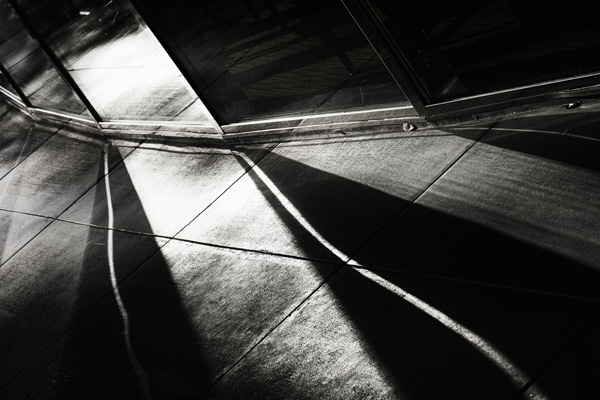
Eckert Creative Juices Focal Length 05

105mm lens

500px can be a great site for inspiration. Check out the “Popular” or “Editor’s Choice” streams for the latest and greatest to find some photographs you love, and then investigate. Often the focal length is included in the photo’s information so you don’t even have to guess what they used. Think: why did the photographer pick that focal length? Ask yourself; “What if I used the extreme opposite in that exact situation?”.

Then, of course, go out and take some pictures!

Remember, it’s the experimentation and thought process behind it that is worth the effort, even if none of your photos that break the focal-length “rules” end up working out. It will get the creative juices flowing and that’s the goal.
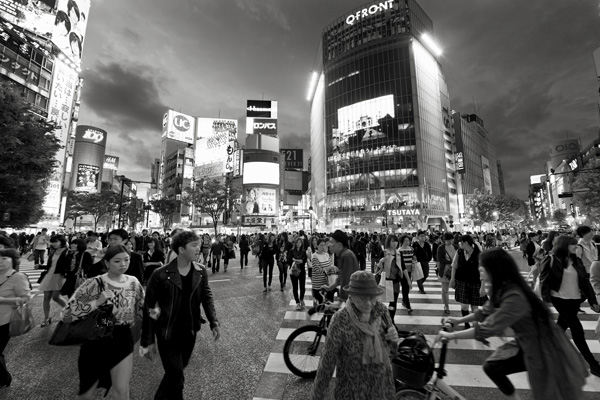
Eckert Creative Juices Focal Length 06

14mm lens

The post Get Your Creative Juices Flowing with Different Focal Lengths by Joseph Eckert appeared first on Digital Photography School.


Digital Photography School

 
Comments Off on Get Your Creative Juices Flowing with Different Focal Lengths

Posted in Photography


Parasite Tent Pods: Vertical Urban Wall Homes for Homeless

22 Dec

[ By Delana in Architecture & Cities & Urbanism. ]

parasitic homeless tent community

In cities around the world, people are feeling the effects of a weak global economy and homeless populations continue to rise. Taking shelter in cardboard boxes or in isolated tents can be dangerous – not only due to inclement weather, but also for the fear of robbery or violence.

hanging tents for homeless population

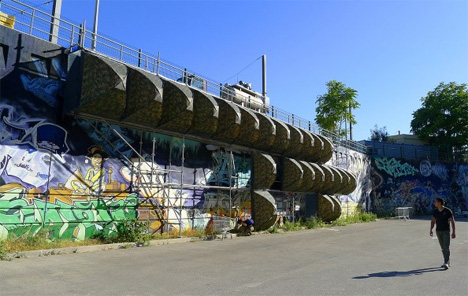
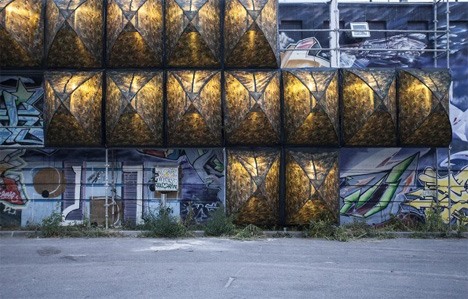
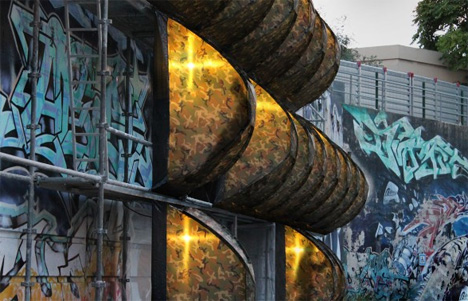
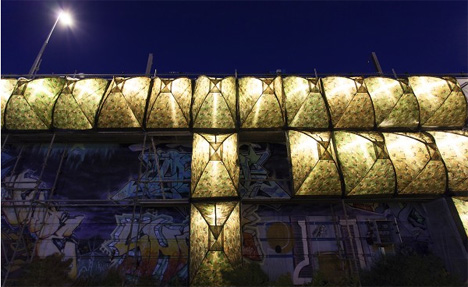
The A-Kamp47 project from Malka Architecture gives the homeless a safe place to sleep. Using a blank vertical expanse of wall, they installed 23 small tent pods. The pods are “parasitic” structures, meaning that they rely on another structure to provide them a place to sit.

suspended camp for homeless people

Each tent provides a private space for the city’s homeless. The grouping of tents embodies the old adage “safety in numbers.” Residents can enter their tents via the scaffolding between the wall and the tend pods.

a-kamp 47 homeless tent colony

The project is not without controversy; the wall used by the architects exists in a grey area between private and public space. They hope, however, that their efforts will lead to increased awareness of the homeless problem and encourage people to get involved in the cause.

Share on Facebook


[ By Delana in Architecture & Cities & Urbanism. ]

[ WebUrbanist | Archives | Galleries | Privacy | TOS ]


WebUrbanist

 
Comments Off on Parasite Tent Pods: Vertical Urban Wall Homes for Homeless

Posted in Creativity