RSS
 

Archive for November, 2013

Frame-Busting Art: 2D Graffiti Figures Break Free from Walls

28 Nov

[ By WebUrbanist in Art & Street Art & Graffiti. ]

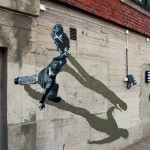
figure frame breaking

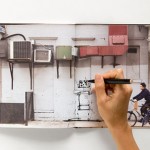
Treating abandoned buildings and urban surfaces more like pages in a book than bricks to tag, this street artist brings an illustrator’s touch and storyteller’s approach to his unique graffiti.

figure suicidal jumper man

figure jumper up close

Though based in the Netherlands, Daan Botlek frequently ranges far from Rotterdam to cities including Berlin and Bangkok, where he draws surreal scenes with imaginary characters.

figure art subway door

Some of these creations seem to be contemplating dangerous acts, while others fight through their artificial environments or even with one another.

figure art wall scene

figure art frame play

figure art frame two

These much-humanized, frame-breaking figures are only one facet of his portfolio, but they uniquely bridge the gap between the artist’s experience with illustration on the one hand and street art on the other.

figure 3d cube art

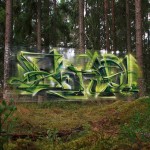
figure abandoned building graffiti

Aside from on-paper drawings and character creation, his other public art series include a set of white cubes, again reprising this three-dimensional approach to bring objects, in this case, off the page (or wall, as it were).

Share on Facebook


[ By WebUrbanist in Art & Street Art & Graffiti. ]

[ WebUrbanist | Archives | Galleries | Privacy | TOS ]


WebUrbanist

 
Comments Off on Frame-Busting Art: 2D Graffiti Figures Break Free from Walls

Posted in Creativity


Using Street Photography to See Beyond the Ordinary

28 Nov
A Tree Grows, Chase Bank, Street Photography, Seeing Beyond The Ordinary

A Tree Grows, Chase Bank

There is an important idea within street photography to ‘go beyond the ordinary,’ or to capture images that are different from the normal.

But what is the process of photographing this way? And why?  What is the point?

The idea behind seeing beyond the ordinary is to develop your own way of doing it, and although there are no clear-cut answers or rules to photographing this way, here are some ideas that can help you think about capturing images in a unique way.

Find beauty in the story

Beauty is not only a visual characteristic.  Try to create images that will cause your mind to invent a story.

It is important to note that these stories don’t have to have a resolution.  Some of the most powerful images will cause you to think about them differently over time or depending on how you feel that viewing, in that moment.

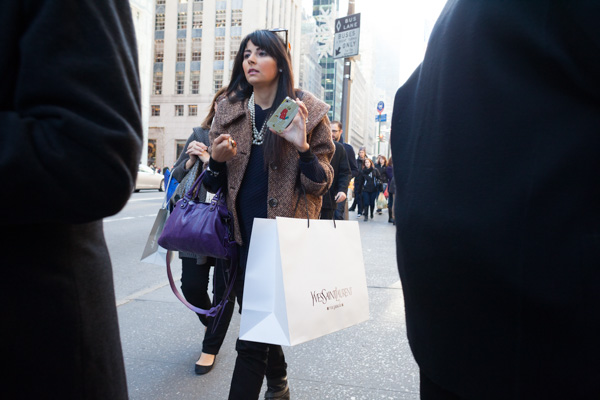
Lady in Red, 5th Avenue, Street Photography, Seeing Beyond The Ordinary

Lady in Red, 5th Avenue

Take a look at the image above.  For me, there is a story here somewhere within the disconnect between the image of the free flowing girl in red on the iPhone case and the rigid stance of the woman dressed in jewelry and muted tones.

Slow down

It’s so hard to pay attention to what’s going on around you if you are running around, overstimulated, and trying to immediately capture everything around you.

Take a deep breath, put the camera down to your side, and just wait and look around a bit.  Unique photographs are hidden all around us, but you need to pay attention to be able to seek them out.

An image that is different might not stand out at first

The Cigarette Break, Street Photography, Seeing Beyond The Ordinary

The Cigarette Break

Have you ever listened to a song and disliked it the first time, but then the second or third time you hear it you start to appreciate it. Then you can’t get enough of it?  (and then it’s played so much that you can’t stand it again, but that’s another story)

Some of the best, most extraordinary images will not always hit you at first.

The same idea happens within imagery. Some of the best, most extraordinary images will not always hit you at first.  With photography, and especially with the amount of imagery that passes our eyes daily, an image only has a millisecond to grab our attention and then a couple seconds of our attention if we do decide to click on it.  This trend can affect how we photograp,h and how we see the world.  I think this is a reason why coloured filter effects are so prevalent these days, because they catch our attention so well, but just as quickly as they enter our lives, they fade off into the sea of similar photographs that we forget about.

The best images are the ones that grow with you over time – that you can put next to your desk and look at over and over again without losing interest.

These images don’t care about the first two seconds.

If everyone’s looking one way, look the other

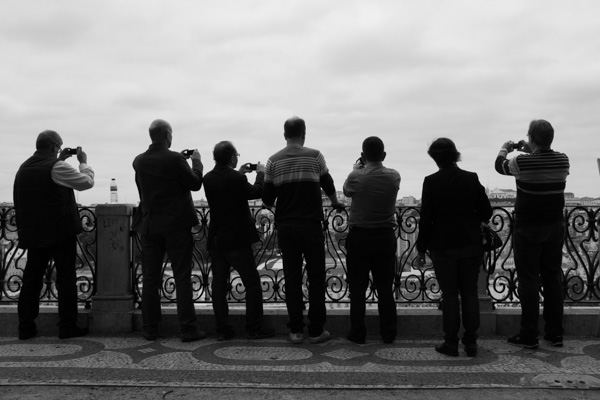
Designated Photo Spot, Lisbon, Street Photography, Seeing Beyond The Ordinary

Designated Photo Spot

This idea works for so many things; investing, real estate, but also for photography.  If everyone is fixated on one thing, or one way of doing something, then it’s often best to head in a different direction.

What direction that is, who knows.  But it will be easier to figure that out if you are able to rule out the wrong directions.

Find beauty in the mundane

This idea doesn’t mean to photograph things that are boring.  It means to search for interest in areas that would normally be thought of as mundane.  Don’t rule out areas or objects to photograph and don’t be afraid to capture something as ‘mundane’ as an empty wall.

You don’t need to know why you are capturing something, you don’t have to know the meaning of what you are capturing, and it doesn’t have to be beautiful in the traditional sense.  The most important gauge is that it makes you feel something when you look at the image.

Don’t fixate on getting attention

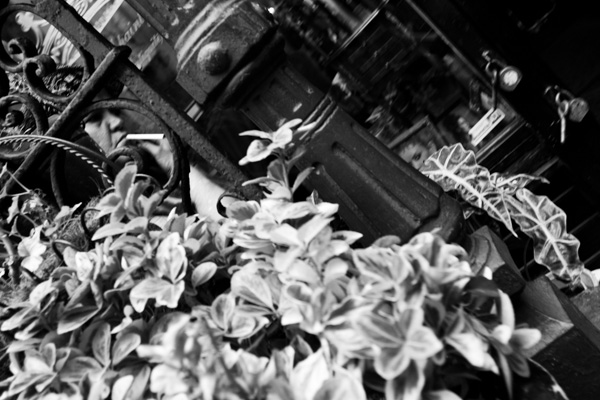
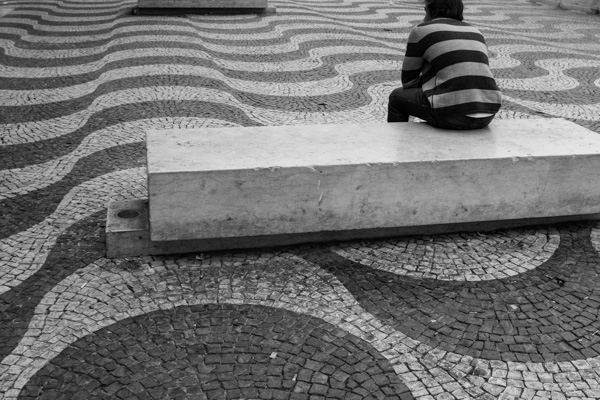
Lost in Lisbon, Street Photography, Seeing Beyond the Ordinary

Lost in Lisbon

Photographing this way might mean that people are going to pass by these types of images the first, second, or fifth time they see them.

Not everyone is guaranteed to like it, to be used to it, or to understand it.  Even more likely, most people might not even stop and notice it at first.  So don’t be discouraged if this happens.  With this type of photography you are interested in influencing one person significantly, not catching the eye of most people right away.

It is a good idea to find one photograph,y or art-loving friend, to talk about these images instead of worrying about how everyone feels about them.  If you stick with one or a few people to show your work consistently, they can grow to understand it better and can give you advice and feedback.

Anyway, the real success of an image is if you like it.

Post originally from: Digital Photography Tips.

Check out our more Photography Tips at Photography Tips for Beginners, Portrait Photography Tips and Wedding Photography Tips.

Using Street Photography to See Beyond the Ordinary

The post Using Street Photography to See Beyond the Ordinary by James Maher appeared first on Digital Photography School.


Digital Photography School

 
Comments Off on Using Street Photography to See Beyond the Ordinary

Posted in Photography


Olympus updates firmware for OM-D E-M1, XZ-2, and 12-50mm lens

28 Nov

shared:download-button.png

Olympus has released firmware updates for its OM-D E-M1 mirrorless camera, XZ-2 enthusiast compact, and 12-50mm F3.5-6.3 lens. Version 1.1 for the E-M1 promises improved autofocus and image stabilisation operation, and better image quality in Live Bulb mode. Meanwhile version 1.3 for the XZ-2 should improve autofocus in low light. Click through for full details. 

News: Digital Photography Review (dpreview.com)

 
Comments Off on Olympus updates firmware for OM-D E-M1, XZ-2, and 12-50mm lens

Posted in Uncategorized


Gedanken zu kombinierten Bildern

28 Nov

Ein Beitrag von: Anne Henning

Manchmal werde ich von großen Ideen erdrückt. Im Kopf gibt es einen Gedankenstrang, der raus will, raus muss, ein Knäuel aus Ideen, das ausgedrückt werden möchte, aber immer wieder habe ich das Gefühl, je komplexer mein Gedankengang ist, desto unmöglicher ist es, den einzelnen roten Faden in einem einzigen Foto auszudrücken. Dann kombiniere ich Bilder.

Nachdem ich mich intensiv mit der Wirkung von Fotografie und Schrift auseinandergesetzt habe, denke ich nun seit längerer Zeit darüber nach, wie Fotos denn eigentlich untereinander wirken. Beeinflussen sie sich gegenseiteig, wenn sie nebeneinander gestellt sind? Gibt es diesen roten Faden, der sich durch beide Bilder windet und vom Betrachter zusammengeknotet werden muss?

a) © Peggy Lo
a) Peggy Lo: Baby (inhaltlicher Zusammenhang)

Erst einmal ist auffällig, dass sich durch Diptycha meine Aussagkraft verdichtet, denn „aus den zusammengefügten Bildteilen ergibt sich oft irgendein schwer enträtselbarer Sinn, der trotzdem aufrührerisch wirken kann“.1

Frei nach dem Motto „das Ganze ist mehr als die Summe seiner Teile“ ergeben sich durch das Zusammenfügen verschiedener Bildelemente neue Sinnzusammenhänge.

Durch die bewusste oder zufällige Kombination von Fotos können Geschichten in zwei Kapiteln erzählt werden, Abfolgen dargestellt sein, es kann auf Gegensätzlichkeiten oder Gemeinsamkeiten hingewiesen werden.

b) © Faber Franco
b) Faber Franco: Kranz (inhaltlicher Zusammenhang)

Formal ist alles denkbar: Hoch-, Quer-, Mittelformat, gedrehte oder richtig ausgerichtete Bilder, unterschiedliche Schärfen, gleiche oder verschiedene Größenverhältnisse. Es müssen nicht einmal zwei Fotos sein, manchmal funktioniert es auch, wenn man Fotos mit Zeichnungen oder Texten kombiniert.

In jedem Fall begründet sich „die Wirkung der Fotoplastik – wie die ersten Montagen und Collagen von den Dadaisten genannt wurden – auf die Durchdringung und Verschmelzung der im Leben nicht immer sichtbaren Zusammenhänge, auf eine bildhafte Erfassung von Simultanität der Ereignisse“.2

c) © Herr Benini
c) Herr Benini: Jesus (inhaltlicher Zusammenhang)

Es ist demnach nicht immer auf den ersten Blick erkennbar, wohin der Fotograf in seinen Fotos möchte, und manchmal auch nicht auf den zweiten. Ab und an habe ich das Gefühl, auch beim zehnten Betrachten des Bildes nicht dahinter zu kommen und dennoch gebe ich die Hoffnung nicht auf, dass eine Erklärung darin versteckt liegt.

Die Kunstwissenschaftler Ganz und Thürlemann schreiben dazu:

Das Zusammensehen von Bildern fordert vom Rezipienten zusätzlich eine Abstraktionsleistung, ein auf Gemeinsamkeiten und Differenzen zwischen den Bildern hin ausgerichtetes vergleichendes Sehen.3

Es ist also nicht nur Arbeit, Diptycha zu erstellen; sie zu betrachten und zu verstehen, ist auch eine Herausforderung.

d) © Snjezana Josipovic
d) Snjezana Josipovic: Baumstruktur (formale Gemeinsamkeiten)

Ich beschäftige mich sehr gern theoretisch mit bildnerischen Phänomenen, für mich ist die Kunstwissenschaft eine wichtge Grundlage zum Verständnis meiner Seh- und Denkprozesse und auch für meine eigene künstlerische Arbeit unerlässlich.

Da ich eigentlich Bildhauerei studiere und die Fotografie nur aus Leidenschaft daneben betreibe, gehe ich vielleicht auch einfach strategischer und durch mein langes Studium geprägt wissenschaftlich an Kunst heran.

e) © Snjezana Josipovic
d) Snjezana Josipovic: Horizont (formale Gemeinsamkeiten)

Da ich mich hier mit diesem Themenkomplex aber nicht nur historisch-theoretisch befassen möchte, versuche ich, Euch drei unterschiedliche Möglichkeiten für Diptycha vorzustellen.

Dafür zeige ich beispielhaft nur ein Bild aus meinen eigenen Händen, aber einige großartige Beispiele von anderen Fotografen und Fotografinnen, die ich für sehr gelungen halte, die mich bei ihrer Entdeckung in Foren und Communities berührt haben und mich intensiver über die Thematik nachdenken ließen.

f) ©  zweifellos mondbetont
f) zweifellos mondbetont: Graskamera (formale Gemeinsamkeiten)

Das für mich naheliegendste Diptychon ist eines, das sich durch innere Zusammenhänge erschließt. Es gilt also, inhaltliche Gemeinsamkeiten zu finden und diese narrativ zu verarbeiten. Die kombinierten Bilder sollen eine einheitliche, aber neue Geschichte erzählen, die durch ein einzelnes Foto so nicht darstellbar wäre.

Es geht also um gedankliche Zusammenhänge. Ob dadurch Gleichheit oder Andersartigkeit, Gegenüberstellungen, zeitliche Abfolgen oder Widersprüche gezeigt werden, ist natürlich offen und dem Fotografen oder der Fotografin und seiner oder ihrer Botschaft selbst überlassen. Auch, ob diese Botschaft leicht zu entschlüsseln ist oder wie ein Rästel, das es zu lösen gilt, irgendwo im Kopf versteckt, ist bei jedem Diptychon anders.

a) Peggy Lo – Baby
b) Faber Franco – Kranz
c) Herr Benini – Jesus

Eine weitere Möglichkeit ist das Zusammenfügen aufgrund formaler Gemeinsamkeiten. Bei solchen Diptycha „enstehen aus der Zusammenfügung der fotografischen Elemente mit Linien und anderen Ergänzungen unerwartete Spannungen, die über die Bedeutung der einzelnen Teile weit hinausgehen“.4

g) ©  profan u. morphium
g) profan u. morphium: Band (formale Gemeinsamkeiten)

Es werden also bildnerische Elemente in einem Bild gefunden und im nächsten fortgesetzt. Daraus können sich natürlich auch inhaltliche Ideen entwickeln. Die Grenzen zu den Diptycha mit innerem Zusammenhang sind also fließend, doch die Wahl der Fotos erfolgt hier in erster Linie aufgrund formaler Kriterien.

Ob das eine fortgeführte Struktur oder Linie, ein Horizont, Körperteile oder Farben sind, die dadurch im Diptychon zu einer neuen Einheit verschmelzen, hängt natürlich von den jeweiligen Fotos ab.

d) Snjezana Josipovic – Baumstruktur
e) Snjezana Josipovic – Horizont
f) zweifellos mondbetont – Graskamera
g) profan u. morphium – Band

h) © Julia Kratz
h) Julia Kratz: Gestrüpp (Überlappung)

Eine dritte Möglichkeit, die ich vor allem für meine eigene Arbeit als die spannendste empfinde, sind zufällige Diptycha. Hiermit meine ich, dass bei der analogen Fotografie durch fehlerhaften Filmtransport zwei Negative auf dem Filmstreifen zu einem neuen Bild verschmelzen.

Durch Überlappung verwachsen sie zu einer Einheit. Zosia Krasnowolska5 hat diese in einem früheren Interview als „natürliche Diptycha“ bezeichnet und ich fand diesen Begriff sehr schön und passend, sodass ich ihn hier weiterverwende.

i) © Julia Kratz
i) Julia Kratz: Weg (Überlappung)

Ob beim Fotografieren geplant oder nicht, gerade die „einfachen bis komplizierten Überlagerung formen sich zu einer merkwürdigen Einheit“6, die manchmal ganz erstaunliche Teil-Doppelbelichtungen ergeben. Die doppeltbelichteten Bereiche sind dabei besonders experimentell und ergeben die merkwürdigsten Mischformen.

Der Zufall als wegweisende Komponente ist hierbei besonders wichtig, was ich wunderbar finde, denn manchmal enstehen so spannende Kombinationen, die man bewusst sicher nie so geplant hätte.

j) © Anne Henning
j) Anne Henning: Giacometti (Überlappung)

Diese natürlichen Diptycha erzählen ganz eigene Geschichten, sie verbinden zwei Fotos miteinander, die manchmal nicht mehr gemein haben als ihrr zeitliches Hintereinander auf einem Film und doch entfalten sich dadurch ganz eigene Sinnpotenziale.

h) Julia Kratz – Gestrüpp
i) Julia Kratz – Weg
j) Anne Henning – Giacometti
k) Markus Stöber – Bäume

k) © Markus Stöber
k) Markus Stöber: Bäume (Überlappung)

Ich hoffe, durch meinen Artikel ein paar Denkanstöße zum Thema geliefert und durch einige inspirierende Beispiele vielleicht Lust auf eigenes Kombinieren geschaffen zu haben. Und ob einfach oder hochkomplex, ob verstrickt oder zugänglich, ob zufällig oder bewusst kombiniert: Diptycha sind eine wunderbare Methode, um Geschichten zu erzählen. Kleine Geschichten in zwei Fotos. Oder wie Snjezana Josipovic in einem Interview sagte:

Oh yes, and about my diptychs, I never really feel constrained with single frame images. At the point when I was making more diptychs it just seemed as if those photos made much more sense together, like putting totally different segments into one story finished them.7

~

Quellen und Literatur

1 Andreas Haus: Moholy-Nagy, Fotos und Fotogramme; Schirmer/Mosel-Verlag München, 1978, S. 77

2 Andreas Haus: Moholy-Nagy, Fotos und Fotogramme; Schirmer/Mosel-Verlag München, 1978, S. 77

3 David Ganz / Felix Thürlemann: Das Bild im Plural, aus der Einführung, Dietrich Reimer Verlag GmbH Berlin, 2010, S.18

4 Andreas Haus: Moholy-Nagy, Fotos und Fotogramme; Schirmer/Mosel-Verlag München, 1978, S. 77

5 Interview: Als die Kunst nach Abertillery kam

6 Andreas Haus: Moholy-Nagy, Fotos und Fotogramme; Schirmer/Mosel-Verlag München, 1978, S. 77

7 Interview mit Snjezana Josipovic


kwerfeldein – Fotografie Magazin

 
Comments Off on Gedanken zu kombinierten Bildern

Posted in Equipment
 

DPReview Top Picks: Stand-out third party lenses

28 Nov

lensintropic.jpg

When you buy into a camera system, it can be tempting to only consider lenses of the same make as your camera. But companies such as Sigma, Tamron and Tokina offer some excellent options too. In this article, we’re highlighting our pick of stand-out third party lenses. We’ve chosen them based on their ability to offer something different to the camera manufacturers’ own, in terms of either focal length range, maximum aperture, image quality or value. Click through to read all about them.
News: Digital Photography Review (dpreview.com)

 
Comments Off on DPReview Top Picks: Stand-out third party lenses

Posted in Uncategorized


Photo app promotes creativity with crowd-sourced assignments

28 Nov

app.png

A new app for iOS aims to motivate and inspire photographers by merging assignment-based photography with an optional social media element, all in the palm of your hand. OKDOTHIS offers a wide array of categories, including those created by users, with photo assignments that anyone can participate in. Learn more on connect.dpreview.com.

News: Digital Photography Review (dpreview.com)

 
Comments Off on Photo app promotes creativity with crowd-sourced assignments

Posted in Uncategorized


Fujifilm to update firmware for X-Pro1, X-E2, X-E1 and X100S (again)

28 Nov

shared:download-button.png

Fujifilm has announced forthcoming firmware updates for its X-Pro1, X-E2 and X-E1 mirrorless interchangeable lens cameras, and for the X100S fixed-lens large sensor compact. Features promised include customizable Auto ISO, exposure preview in manual exposure mode, improved workflow for in-camera Raw conversion, and the ability to edit filenames in-camera. The update for the X-Pro1 will be available on 5th December; those for the X-E1, X-E2 and X100S on 19th December. Click through for full details.

News: Digital Photography Review (dpreview.com)

 
Comments Off on Fujifilm to update firmware for X-Pro1, X-E2, X-E1 and X100S (again)

Posted in Uncategorized


Futuristic Shenzen Airport Shaped Like a Manta Ray

28 Nov

[ By Steph in Architecture & Public & Institutional. ]

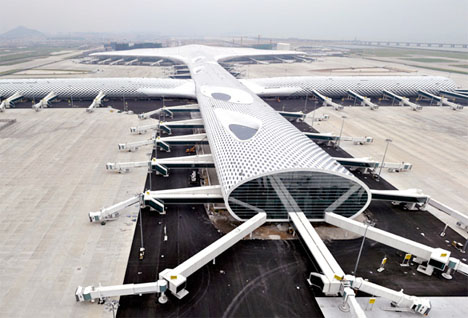
Shenzen Airport Manta Ray 1

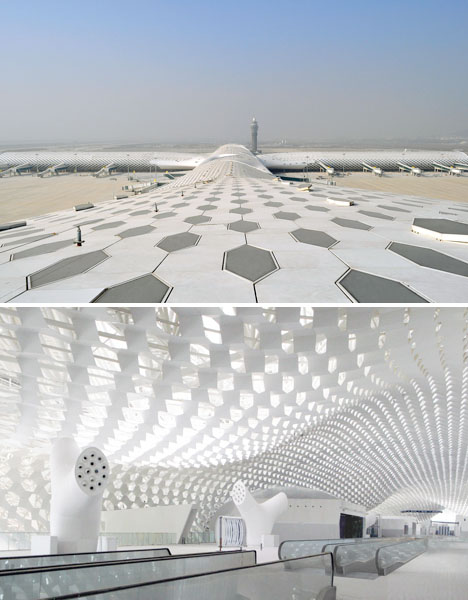
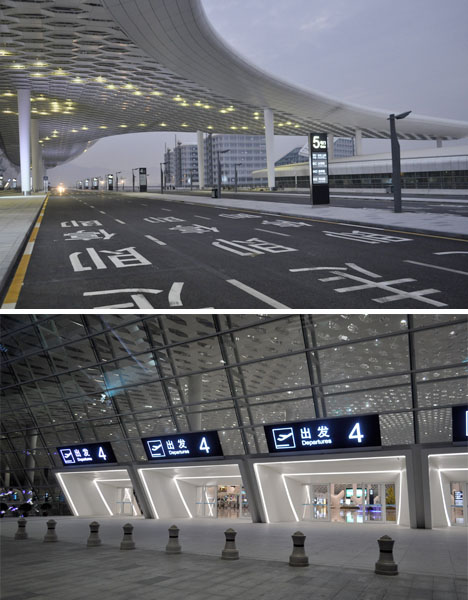
Designed to mimic the natural shape of a manta ray (but also clearly reminiscent of an airplane), the new expansion of the Shenzen Bao’an International Airport in China  is covered in thousands of hexagonal skylights. Terminal 3 by Italian firm Studio Fuksas doubles the capacity of the existing airport and will accommodate 45 million passengers per year.

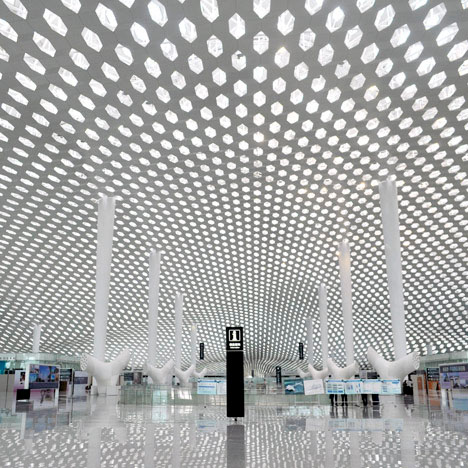
Shenzen Airport Manta Ray 2

Shenzen Airport Manta Ray 3

The firm studied a variety of life forms to come up with its highly distinctive, curving, all-white design. “The concept of the plan for Terminal 3 of Shenzen Bao’an international airport evokes the image of a manta ray, a fish that breathes and changes its own shape, undergoes variations, [and] turns into a bird to celebrate the emotion and fantasy of a flight,” they explain.

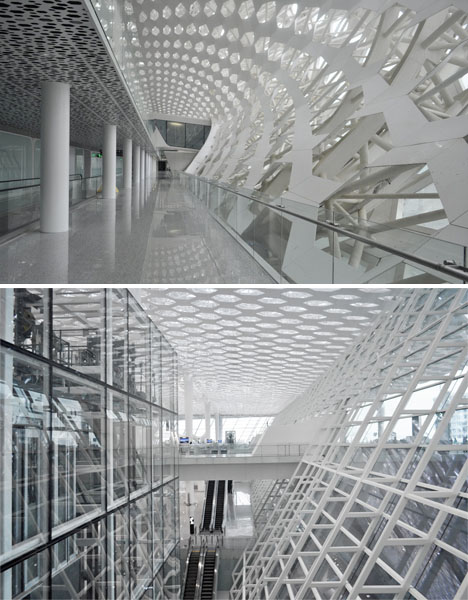
Shenzen Airport Manta Ray 4

The steel and glass canopy spans 262 feet (80 meters) across, and the honeycomb pattern of the windows reflects onto the glossy white floor and various stainless steel surfaces for a dazzling geometric effect. Voids in the floors of the three airport levels create double- to triple-height spaces.

Shenzen Airport Manta Ray 5

Those strange branch-like structures located throughout the interior are air conditioning vents inspired by abstracted trees. The entire structure measures over 5.3 million square feet. It opens to the public on November 28th, 2013. “The spatial concept is one of fluidity and combines two different ideas: the idea of movement and the idea of pause. Carefully considering the human experience of such environments, Studio Fuksas focused on processing times, walking distances, ease of orientation, crowding, and availability of desired amenities.”

Share on Facebook


[ By Steph in Architecture & Public & Institutional. ]

[ WebUrbanist | Archives | Galleries | Privacy | TOS ]


WebUrbanist

 
Comments Off on Futuristic Shenzen Airport Shaped Like a Manta Ray

Posted in Creativity


Nikon Df test scene samples added to first impressions review

28 Nov

ImOnMyWay.jpg

Having spent a little more time with a full production unit, we’ve updated our Nikon Df coverage with images from our studio test scene and some more handling impressions. Nikon’s thoroughly retro full-frame Df uses the same 16MP chip first seen in the D4, and provides an unprecedented level of support for legacy lenses. The new scene shows its performance in both daylight and low light, with downloadable image files. As always, you can compare the Df to the increasing number of cameras in our test scene.

News: Digital Photography Review (dpreview.com)

 
Comments Off on Nikon Df test scene samples added to first impressions review

Posted in Uncategorized


The Intimate Landscape – 5 Tips for Better Landscape Photography

28 Nov

Landscape photograph

A few weeks ago I spent seven days travelling across the northern tip of New Zealand’s South Island. Anybody who has been here knows that it is a beautiful place. I often come across remarks by photographers referencing New Zealand as a destination on their list of dream places to go to. Who can blame them? It’s a spectacular country, with beautiful landscapes.

However, the road trip brought home something of interest to all landscape photographers – landscape photography is hard. Really hard.

Not only do you need a beautiful location, but you are also relying on the weather and light to be conducive to the type of photo you want to take. If it isn’t, there may not be time on a short trip to wait for the ideal conditions.

It’s also a challenge to find an original way to photograph the landscape. Many other landscape photographers have been there before you. It’s difficult to create something new in a short space of time. Here are a few tips to help you do better landscape photography.

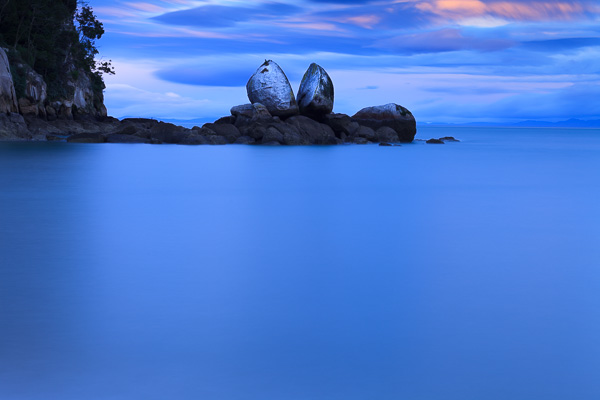
Split Apple rock, near Abel Tasman national park. I like this photo, but is it original? Not really – it’s a popular landmark and has been photographed by hundreds of photographers. It’s very difficult to create something new here.

Split Apple rock, near Abel Tasman national park. I like this photo, but is it original? Not really – it’s a popular landmark and has been photographed by hundreds of photographers. It’s very difficult to create something new here.

#1 Local knowledge

While there are ways to help ensure that you get the most out of a trip away (watch for those tips in an upcoming future article) today I want to make the point that one of the biggest advantages any landscape photographer has is intimacy with the landscape.

Intimacy comes from a deep knowledge of ,and a connection with the landscape. It’s an appreciation of the people that live there and the history of the location, plus an understanding of how the landscape changes through the seasons. People who have an intimate relationship with a region usually live there, or visit often. They are not passing through (like I was on the South Island). They know the best places to take photos, and when the light, seasons and weather are most likely to align to create the best results.

If you are struggling to find ways to photograph your local landscape, maybe it’s time to come at it from a different perspective. How can you turn your familiarity with your local landscape into an advantage?

Let me give you some practical examples. I live in Wellington, a city at the southern end of New Zealand’s North Island. I’ve never thought of it as a great location for landscape photography. Relatively speaking, it doesn’t have the spectacular landscapes of the South Island, nor the sub-tropical bush or white sand beaches of the northern half of the North Island. However, I’ve found other ways to incorporate the landscape in my photos.

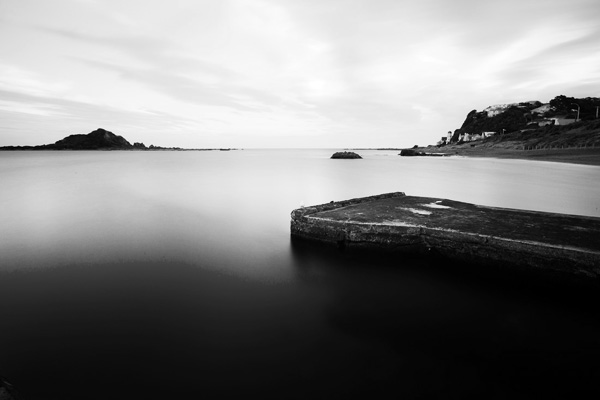
Landscape photograph

#2 Long exposure and night photography

I know some good locations for these, including places that I would never have found on a short visit. The coastline south of the city has some beautiful, rugged locations. Walking along the sea front during all four seasons has given me an appreciation of how beautiful and changeable it is. The light and landscape change with the seasons and the weather, and I’d never understand that if I didn’t live here. Best of all, once I’ve found a location, I can wait out periods of inclement weather and return when the light is best to take advantage of it.

The benefit of these techniques is that they help you create photos with a very different look to what many photographers will take.

Example from another photographer

I recently came across the work of Mark Gee, another Wellington resident. He’s rather good at night photography. Most of his photos are taken in the local area and show an intimacy with the landscape that only comes with local knowledge and time.

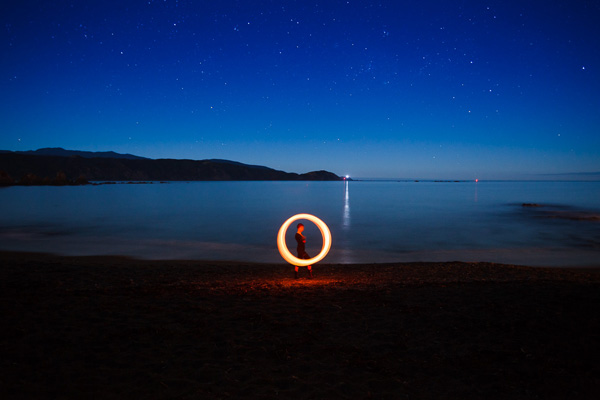
Landscape photograph

#3 Try some special techniques

Painting with light and steel wool spinning are two that come to mind. The lack of spectacular landscapes has pushed me off into different directions as I look for more ways to make the most of the scenery we do have here. Mark Gee’s work has inspired me to try some night photography, and that ties in neatly with these techniques. Again, the freedom to return to the locations I want to use when the sky is clear and there is no wind is priceless.

If you are looking for original ways to photograph your local landscape, perhaps either of these techniques will help!

Portrait in the landscape

#4 Portraits

I take most of my portraits outside, using my favourite locations as backdrops. Sometimes a certain location may not be great for landscape photography, but it is ideal for taking portraits. The local landscape has become a part of my portrait work, and my style. If I lived somewhere else, my portraits would have a different feel to them.

How can you incorporate your local landscape in portraits?

Are there any other ways to utilize the local landscape?

#5 Use storytelling

There’s one way I can think of – tell a story. Perhaps there is the potential for a documentary project in your area. Stories are inevitably about people, so think about how local people interact with, or depend on the local landscape. For instance, activities such as running, sea kayaking, cycling, surfing and wind-surfing are all popular here in Wellington. Any one of those could make an interesting documentary project.

Or something more simple, such as Nathan Wirth’s seascapes with a Buddha.

What options do you have in your local area?

Ultimately, all these ideas are about the same thing: going deep and exploring your relationship with your local landscape in a way that isn’t possible on a brief visit. It’s the same reason that National Geographic photographers go away on assignment for months at a time. Intimacy with your subject and time produce a depth of coverage that you can’t get any other way.

Mastering Photography – additional learning

il-06

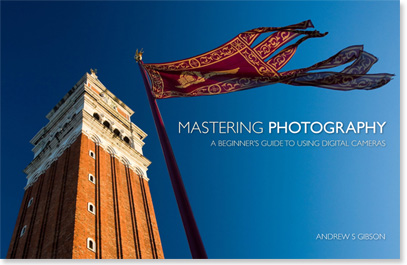
My ebook Mastering Photography: A Beginner’s Guide to Using Digital Cameras introduces you to photography and helps you make the most out of your digital cameras. It covers concepts such as lighting and composition as well as the camera settings you need to take landscape photos like the ones in this article.

Post originally from: Digital Photography Tips.

Check out our more Photography Tips at Photography Tips for Beginners, Portrait Photography Tips and Wedding Photography Tips.

The Intimate Landscape – 5 Tips for Better Landscape Photography

The post The Intimate Landscape – 5 Tips for Better Landscape Photography by Andrew Gibson appeared first on Digital Photography School.


Digital Photography School

 
Comments Off on The Intimate Landscape – 5 Tips for Better Landscape Photography

Posted in Photography