RSS
 

Archive for October, 2013

Nokia’s 808 and 1020 compared in our studio test scene

27 Oct

Lumia1020_808comparison2.jpg

Nokia’s ‘Pureview’ technology is still making headlines along with the announcement of the manufacturer’s first ‘phablet’, the Lumia 1520. We felt the timing was perfect for taking a closer look at Pureview by testing the original Nokia 808 in our newly revamped studio test scene, and putting it up against this year’s version of the tech found in the 41MP Nokia Lumia 1020. See how the two compare on connect.dpreview.com.

News: Digital Photography Review (dpreview.com)

 
Comments Off on Nokia’s 808 and 1020 compared in our studio test scene

Posted in Uncategorized


How to Create Great Environmental Portraits

27 Oct

Interested in learning how to take better Environmental Portraits? If so, do yourself a favour and watch this video of a training session by photographer David Handschuh and what he has learned about the topic from the last 20 years of his doing environmental portraits.

Thanks to the team at BHPhoto for putting this video out there.

Further Reading on Environmental Portraits:

  • How to Create Portraits that Captivate and Intrigue
  • An Introduction to Environmental Portraits

Post originally from: Digital Photography Tips.

Check out our more Photography Tips at Photography Tips for Beginners, Portrait Photography Tips and Wedding Photography Tips.

How to Create Great Environmental Portraits

The post How to Create Great Environmental Portraits by Darren Rowse appeared first on Digital Photography School.


Digital Photography School

 
Comments Off on How to Create Great Environmental Portraits

Posted in Photography


Amador Rabal, Totengräber

27 Oct

Amador Rabal ist Totengräber. Jeden Tag bestattet er auf seinem Friedhof zwei bis drei Tote. Jesús Pastor ist Fotograf und fasste eines Tages den Entschluss, Amador bei seiner Arbeit zu dokumentieren. Entstanden sind dabei eindringliche und sehr emotionale Bilder.

Ich war schon immer fasziniert von Geschichten, die am Rande des Normalen, Alltäglichen liegen. Auf dem Friedhof wandert ein Mann entlang der Kruzifixe und Grabsteine??, reinigt die goldenen Buchstaben und pflegt bunte Blumen. Ich beobachte ihn, während er in der Erde gräbt. Nach täglichen Gesprächen mit ihm verspürte ich den Drang, seine Geschichte in Bildern zu erzählen.

Amador Rabal © Jesús Pastor

Amador Rabal © Jesús Pastor

Und diese Bilder zeigen den Alltag auf dem Friedhof, die Raucherpause dazwischen, aber auch ganz private Momente zu Hause, nach der Arbeit. Sie sind voller Würde. Etwas, das Jesús auch an der Art, mit der Amador seiner Arbeit nachgeht, bewundert.

Seine Arbeit wirkt auf einige beängstigend, aber er trägt es mit der Würde eines Gärtners, der seine Pflanzen mit Liebe und Hingabe pflegt und sorgfältig wässert.

Amador Rabal © Jesús Pastor

Amador Rabal © Jesús Pastor

Selbst das Foto der täglichen Rasur bekommt bei Jesús beinahe etwas Mystisches und wirkt alles andere als banal. Die Geschichte vom Leben des Totengräbers erzählt er anrührend und ich empfinde Sympathie für ihn und tiefen Respekt für seine Arbeit an einem Ort, an dem ich mich nicht behaglich fühle.

Fotograf Jesús hingegen ist nahezu besessen von Tod, Mysterium und Seele. Für ihn ist das Fotografieren eine Selbsfindung. Und das Foto eine Zusamenfassung gelebter Erfahrungen.

Die Bilder denken, glauben, handeln. Für mich ist Fotografie ein Weg, näher an die Transzendenz zu gelangen.


kwerfeldein – Fotografie Magazin

 
Comments Off on Amador Rabal, Totengräber

Posted in Equipment


Measuring the camera capabilities of Samsung’s new Galaxy Note 3

26 Oct

Note3.jpg

Samsung’s Galaxy Note 3 makes good on the promise of the ‘phablet’ thanks to its huge, high-resolution screen and its muscular processing. But how does it fare as a camera? We put the super-sized smartphone through its photographic paces on connect.dpreview.com.

News: Digital Photography Review (dpreview.com)

 
Comments Off on Measuring the camera capabilities of Samsung’s new Galaxy Note 3

Posted in Uncategorized


Learn How To Connect With Your Subject

26 Oct

I was reading through the comments left on a recent post that I wrote here on DPS and one of them really spoke to me and ultimately inspired me to write this post for you today. For reference I’ve quoted the comment below by Justin Donie.
p165722407-4

All the tips given here are relevant and true. And I won’t minimize the value of any of these tips. They will all help you have a better experience and create something closer to what you want than if you don’t follow them. I thank the author of this post for sharing these practical tips … they are all good and useful. But let’s also remember that we need to spend time … and not just a little time … on our inner preparations as well.

All the technology, technique and work-flow management in the world can’t make up for what will be missing from our images if we never learn how or take the time to infuse the power of our personal inner experience of life into uniquely expressed, emotionally moving visions. I believe, as photographers, we must begin focusing more of our time and energy and even money on these aspects of our art.

Preparing for a successful shoot … a REALLY successful shoot … must include a powerful immersion in our personal relationship with the subject, a passionate exploration of different ways of visualizing and of sharing our individual inner experience, and a careful nurturing of the emotional connection we’re creating with our intended viewers.

Over the last 40 years of my creative experience it has gradually become clear to me that we photographers face a challenge in our art that most other artists do not. We can far too easily let “the gear” and “the work flow” and our fascination with them get in the way of the core and essence of all art … “the experiences of life we’re exploring … what we have to express … and how we choose to expressing it.”

All art utilizes some form of media, directly or indirectly. But in other arts, the act of creating may actually put the artist more closely in touch with the thoughts or feelings they are trying to explore and express. In photography, the very tools of creativity are so numerous and so complex that they can distance us from the raw experience of self-exploration and self-expression, ESPECIALLY because vast majority of photographic instruction tends to focus on technology and technique and not self awareness, other-awareness, emotional honesty and ever-more creative modes of revealing our inner selves to the outer world. I believe it’s time for that to change.

Justin Donie

What really stuck out to me was the way Justin closed his comment – “…photographic instruction tends to focus on technology and technique…” he’s got a point. Just look around DPS or any other blog related to photography training and you’ll find post after post teaching you how to use your camera, how to compose your scenes better, how to use Lightroom or Photoshop or some other software to enhance the images you have captured – the list goes on. However, when you look for information on how to actually dig deep into the emotional side of capturing a piece of art and translating that emotion to a still image – it gets a bit more difficult to find.

This is not a bad thing so don’t get me wrong it’s just something we have to be aware of. As Justin mentioned at the start of his comment these techniques and skills are important and will help you make better photographs in the end, but like Justin, I think the point here is that to truly capture powerful images we have to learn how to translate our emotions from the scene we’re photographing through the camera and into a still image.

p471780900-4-1
I’ve thought about how I was going to write this article for quite some time. I knew it wasn’t going to be an easy piece to write, but I wanted to bring attention to the concept that Justin brought up and try my best to get us, at least started down the road to, an answer for it.

My hope is that through the community here at DPS we can come up with a massive list of ideas for connecting with our subjects – Whether you photograph the stars that fill our skies, shoot macros of the smallest insects or anything in between – How do you connect with your subject?

Here are a few ideas that I’ve come up with – I hope you’ll continue to add to the list in the comments below.

A Four Step Process On How To Connect With Your Subject and Better Your Photography

1.) Put Down the Camera

The first step in this process is to put down the camera and step back from the scene. The camera in some instances is very much like a security blanket it’s a buffer between us and our subject, by putting it down, you remove that buffer and you start to see the scene differently. The idea here is simply to free yourself from the camera for a minute and remove yourself from the need to adjust your settings.

2.) Define Your Subject

Next on the list is to truly define the subject of your photograph. If you can’t tell me what the photograph your taking is about then you probably shouldn’t be taking a photograph of the scene after all.  If you’re photographing a model it can be quite easy to do this, but when you’re in a vast and open landscape, sometimes the subject is so big it’s hard to find a way of defining it within the limits of the camera’s frame.

Spend some trying to describe what it is you’re trying to capture to yourself or to a friend. The more you do this the better you’ll be at being able to pick out the little things that really will start to help you tell a story with an image.

3.) Meditation

This is something I haven’t done yet, but I’m actually going to attempt to give it a try on my next shoot. My idea here is going to be to show up extra early to the location I want to photograph. Set up my camera and determine my subject. After that I’m going to sit down, close my eyes, and drift away for a few minutes to clear my head. Once this meditation is over I’m going to once again return to step two and see if anything has changed or if I’ve noticed any finer details of the scene.

I do this before  I write long articles or when I find myself struggling for ideas to write about. So the thinking here is that if it can help clear my head for writing, maybe, just maybe, it can help clear my head on a shoot.

4.) Talk it Through

This tip tends to shadow the idea of number two, but here rather than specifically talking about the subject you’re capturing, talk about everything on a whole. What kind of photograph are you looking to make? Is it black and white? Is it an HDR? What do you want your viewer to feel – what are you currently feeling?

Whether you’re with another photographer, a model or alone in the wilderness it’s amazing to simply put words to the emotions that you’re feeling. Describing the scene out loud might seem strange at first, but it will help you see it better in your mind.
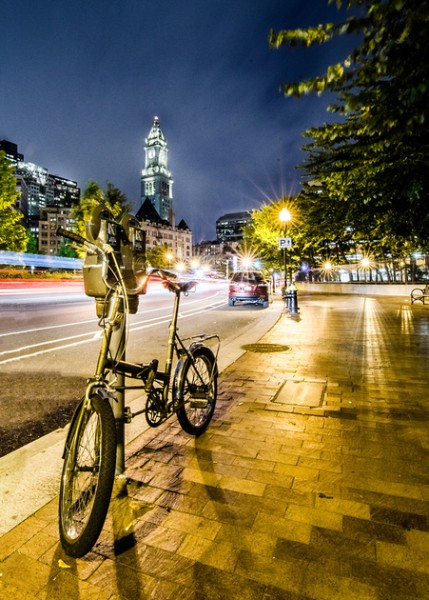
Connect with your subject
It’s so important to never forget that gear, software and knowledge of what we should do in the scene can only take us so far. To truly capture the world around us we have to connect with the scene that we are capturing and transfer the emotions that we feel into the still image. Without this connection – we might end up with technically sound photographs that lack power or purpose and ultimately that is what gets people to stop and look at the photographs that you’ve created.

Now – I’d love for you to take a moment, or a day, and come up with a few of your own techniques for connecting with subjects and leave the answers you find in the comment below so others might be able to learn how to connect with their subject and ultimately take better photographs.

Post originally from: Digital Photography Tips.

Check out our more Photography Tips at Photography Tips for Beginners, Portrait Photography Tips and Wedding Photography Tips.

Learn How To Connect With Your Subject

The post Learn How To Connect With Your Subject by John Davenport appeared first on Digital Photography School.


Digital Photography School

 
Comments Off on Learn How To Connect With Your Subject

Posted in Photography


Talking Windows: Trains Deliver Ads Directly into Your Head

26 Oct

[ By Delana in Conceptual & Futuristic & Technology. ]

marketing through bone conduction ads

Television, radio, the internet, billboards, newspapers, magazines, malls, supermarkets…wherever you are and whatever you’re doing, it’s highly likely that at least a few  companies are trying to market their products to you every moment. A quiet train ride and a nice nap used to be a welcome escape from the cacophony of consumerism, but soon even your commute-time nap may be filled with the sounds of advertisements.

bone conduction train ads

The German branch of ad company BBDO has tested a form of bone conduction technology on a train between Munich and North Rhine-Westphalia. When a commuters rest their heads against a window, hoping to catch a few winks before getting to their destination, ads which were previously inaudible suddenly begin playing inside their heads.

The technology works by using high-frequency transmitters to send sounds through the train’s windows. If you aren’t touching the window you can’t hear the ads at all. But lean your head against the window and the sounds are loud and clear, having been transmitted through your skull and directly to your inner ear. It’s the same concept that makes bone-conduction headphones and hearing aids work.

talking train window advertisements

Although BBDO has no current plans to actually put the technology into use, the fact that it was tried out successfully may mean that this type of marketing will soon be used on a wider scale. We have a feeling commuters would object to the practice of advertisements invading their sleep, but if trains played relaxing music or important travel information in this manner it would be much easier to get behind the idea.

Share on Facebook


[ By Delana in Conceptual & Futuristic & Technology. ]

[ WebUrbanist | Archives | Galleries | Privacy | TOS ]


WebUrbanist

 
Comments Off on Talking Windows: Trains Deliver Ads Directly into Your Head

Posted in Creativity


26. Oktober 2013

26 Oct

Ein Beitrag von: Thomas

Basel x2 © Thomas


kwerfeldein – Fotografie Magazin

 
Comments Off on 26. Oktober 2013

Posted in Equipment


Niki Feijen’s haunting images of abandoned houses

26 Oct

article-2316987-198AAE66000005DC-624_964x634.jpg

Dutch photographer and urban exploration specialist Niki Feijen goes behind “do not enter” signs on dilapidated houses to document furniture, clothes, and other ornaments left behind by their former owners. His eerie HDR images reveal remnants of life in rooms across western Europe that are now left to decay. Frozen in time, it’s hard not to imagine the people that once occupied the spaces. See gallery

News: Digital Photography Review (dpreview.com)

 
Comments Off on Niki Feijen’s haunting images of abandoned houses

Posted in Uncategorized


Fotogenes Deutschland – Tiger & Turtle

26 Oct

Ein Beitrag von: Florian Leist

Fotografie ist für mich ein willkommener Ausgleich zur Arbeit und hilft mir, den Kopf frei zu bekommen. Deshalb besuchte ich, da ich im vergangenen Jahr viel im westlichen Ruhrgebiet unterwegs war, nach der Arbeit oft den Tiger & Turtle Magic Mountain in Duisburg.

Tiger & Turtle Magic Mountain wurde im Rahmen der Kulturhauptstadt Ruhr.2010 im Jahr 2011 fertiggestellt. Es handelt sich dabei um eine begehbare Treppe, die in der Konstruktion einer Achterbahn mit Looping ähnelt. Insgesamt ist die Treppe 220 Meter lang: 140 Meter in die eine und 60 Meter in die andere Richtung. Die letzten 20 Meter sind logischerweise nicht begehbar, denn sie befinden sich im Looping selbst. Interessanterweise werde ich immer wieder von Bekannten, die meine Bilder sehen, gefragt, ob man durch den Looping laufen kann. Mit einem breiten Grinsen verneine ich das dann. Bei schlechtem Wetter ist die Treppe leider komplett geschlossen.

Errichtet wurde Tiger & Turtle Magic Mountain auf der Heinrich-Hildebrand-Höhe, einer Halde, die unter anderem aus einer Schlackedeponie einer ehemaligen Zinkhütte besteht. Von der Halde aus hat man einen 360°-Panoramablick über Duisburg. In Richtung Süden kann man Düsseldorf mit Flughafen und Rheinturm erblicken, während man gen Westen an einem guten Tag den Sonnenuntergang hinter den Hüttenwerken von Krupp Mannesmann und den Kühltürmen eines RWE-Kraftwerkes beobachten kann.

Gerade zu Sonnenuntergang erlebt man hier ein wenig Industrieromantik, wenn die großen Kühltürme eine Silhouette vor dem rot-orange gefärbten Himmel bilden. Tagsüber ist Tiger & Turtle aus meiner Sicht weniger attraktiv. Vor allem bei Regen und grauem Himmel ist die Aussicht doch eher trist und erdrückend. Besonders, wenn man in Richtung Hüttenwerke schaut. Doch abends zeigt sich gerade bei bedecktem Himmel ein kleines Spektakel: Immer, wenn frisch erhitztes, flüssiges Metall in den Hüttenwerken gegossen wird, färbt sich der Himmel über den Hüttenwerken in ein stark leuchtendes Orange.

Aber nicht nur die Aussicht von der Heinrich-Hildebrand-Höhe, sondern auch die sonderbare Treppenkonstruktion selbst ist ein interessantes Motiv. Wer keine Höhenangst hat, sollte es sich nicht nehmen lassen, die Treppe mindestens einmal in beide Richtungen abzulaufen. Mit dem Fotografieren von der Treppe aus wird es abends jedoch etwas komplizierter, da die Konstruktion gelegentlich wackelt oder man anderen Leuten den Durchgang versperrt. Trotzdem lassen sich gerade von dort aus tolle Fotos machen und man hat großen kreativen Spielraum: Die Architektur der Achterbahntreppe, Landschaft, Stadtlandschaften, Industrie, Menschen. Vieles davon kann man auf irgendeine Weise verbinden.

6 © Florian Leist

3 © Florian Leist

4 © Florian Leist

2 © Florian Leist

1  © Florian Leist

Neben dem Fotografieren kann man sich auch mal getrost auf eine der oben angelegten Bänke setzen und einfach nur die Leute beobachten. Hier kann man auch auf seine Kosten kommen. Jogger, Radfahrer, Eltern mit Kindern, Spaziergänger mit Hunden, Familien oder auch andere Fotografen sind hier am Kommen und Gehen. Und ein paar interessante Leute sind immer dabei.


kwerfeldein – Fotografie Magazin

 
Comments Off on Fotogenes Deutschland – Tiger & Turtle

Posted in Equipment


PPE 2013: Hands-on with Sony’s new A7 / A7R and RX-series cameras

26 Oct

sony_a7front.jpg

Of all the major camera manufacturers, Sony has the most new products on show at the Photo Plus Expo in New York, after the flurry of new Alpha and RX-series cameras released in the past couple of months. We had a fascinating (and fun) interview this morning with Kimio Maki, the brains behind the A7 and RX lines which we’ll be writing up soon, but in the meantime, click through for a quick tour of the new cameras. 

News: Digital Photography Review (dpreview.com)

 
Comments Off on PPE 2013: Hands-on with Sony’s new A7 / A7R and RX-series cameras

Posted in Uncategorized