RSS
 

Archive for October, 2013

28 October, 2013 – The Master Never Stops Being The Student

28 Oct

Following Michael’s bemoaning the banality of this year’s PhotoPlus Expo in New York City, Nick Devlin writes that he attended the show, and can’t disagree that this was a slow year for new bling. But in a corridor of meeting rooms below the gear-porn, the art of photography was alive and well. 


  WIN AN ANTARCTIC EXPEDITION
WORTH USD $ 15,000 


The Luminous Landscape – What’s New

 
Comments Off on 28 October, 2013 – The Master Never Stops Being The Student

Posted in News


Instagram Stock Sites Struggle, Art Sells

28 Oct

Backed by Facebook, Instagram is now the main platform for shooting and sharing. With more than 130 million members, 45 million images uploaded each day and a billion daily likes spreading those photos across accounts, Instagram is the most important tool for casual snappers and photography enthusiasts who want to capture interesting scenes and show them to their friends.

But what about professionals — or at least people who want to earn like them? Is it possible for Instagram users to shoot, share and cash in on their images? It’s not easy and the numbers so far aren’t huge but there are ways to turn a photo-sharing following into a profit stream, with more on the way. We assess five of them:

1.     Sell Access to Your Followers

The Mobile Media Lab has been described by AdWeek as “a marketing agency for Instagram.” Created in April 2012 by three popular Instagramers, the company is used by brands that want to push images of their events to social media audiences. Those clients have included fashion firm Michael Kors, sports company Puma and even Delta Airlines which hired the company to shoot a New York Rangers playoff game as part of its team sponsorship.

After receiving an enquiry, Mobile Media Lab matches the brand to one of its photographers whose network might enjoy the images. In practice, the photographer might post just a handful of photos during the course of an event but in return they may receive access to a sports meeting, travel and a payment. A sign-up form on the website lets other popular Instagramers sell their networks.

2.     Instastox

The Mobile Media Lab model is fun and lucrative — and proven to work. But it depends as much on a large audience as high quality images. The three Instagramers who founded the company are effectively charging companies to advertise to their followers. A better option would be to offer companies the chance to license images posted on Instagram.

Until Instagram provides an easy way for firms to buy licenses off-the-shelf, the same way that they can buy microstock images, a number of companies are trying to fill the gap.

Instastox is currently preparing to launch. It’s not saying too much yet but prices appear to be microstock level and it’s accepting requests for invitations from photographers. Others, though, include…

3.     InstaStock… and InstaStock Images

According to an April press release, InstaStock Images was due to open in August 2013. So far, it’s still talking lorem ipsem and it’s going to need to move fast to live up to its tagline of “the first royalty-free stock photography marketplace just for Instagram photos”; the similarly named Instastock is at roughly the same level of development.

Both firms have issued press releases, launched sites and are taking enquiries from contributors although neither are open for business just yet. The bidding war looks interesting though: Instastock has promised a 50/50 split with photographers; Instastock Images are offering 60 percent and predicting that contributors will make three times the 25 cents they earn on “some competitor stock photography sites.”

Don’t expect those Instagram stock shots to make you rich.

4.     DotSpin

While photo entrepreneurs race to push out Instastox, Instastock and Instastock Images, one company is already up and running. It’s just not paying. DotSpin sticks closely to the way Instagram is currently being used. The service provides a way for Instagramers to apply Creative Commons licenses to their images. The pictures are rated by the community and those that win the most votes are given “dotcredits” that they can redeem for rewards. At the moment, DotSpin has some agreements with Amazon but when we contacted him earlier this year, founder  Gaston Paladini was confident he would be able to bring in brands looking to push their products to Instagram users willing to share their images.

It’s not a service that’s going to bring in bucks but if you don’t mind people taking your photos and doing whatever they want with them — and if Gaston Paladini can persuade firms to donate — you might find it’s a fun way to pick up some goodies from your Instagram use.

5.     Instaprints

Instaprints might well have been the first Instagram service to actually make money from Instagram and to allow photographers to do so too. While digital stock sites are struggling to get  off the ground, Instaprints, which comes from Fine Art America, does things the old fashioned way: it lets art-lovers buy prints of the images they love on Instagram. And those sales do appear to be coming in.

The success of Instaprints at actually generating sales can be put down to three vital factors. First, the site has the backing of an established company with an audience used to searching and buying art.

Second, sellers at Fine Art America are used to marketing their works. While stock contributors tend to upload, forget and wait for the checks to roll in, art sellers know they need to build their own fan bases and do their own marketing. On Fine Art America they were already doing it. The company’s Instaprints just gave them another way to bring images they were shooting and sharing anyway to those markets.

And perhaps most importantly, the service sells the kinds of images that Instagram’s users are creating naturally on the social media service. Even if one of the Instagram-based stock companies does take off, the photos it sells might be good for one or two uses but they’re unlikely to be flexible enough for the kinds of multiple sales necessary to earn significant income. Those stock companies might well find that the photos they offer are better sold on a rights managed basis rather than copying the microstock model.

It would be great to say that Instagram’s massive userbase and giant number of uploaded images represent a huge opportunity for people hoping to make money from their images. It is worth keeping an eye on the stock sites that are currently being built but in practice the best bets appear to be turning your account into a marketing agency or selling prints of your mobile pictures as art.


Photopreneur – Make Money Selling Your Photos

 
Comments Off on Instagram Stock Sites Struggle, Art Sells

Posted in Equipment


Off-Brand LED Studio Monoblocs: Wouldya? (I Did.)

28 Oct

So you're used to using flashes without modeling lights. How about modeling lights without flashes? Yes? No? Maybe?

My project for 2014 is video-based (no spoilers, please) so I found myself shopping for video lights in the form of LED monoblocs. If you've ever considered taking the plunge, read on…

Read more »
Strobist

 
Comments Off on Off-Brand LED Studio Monoblocs: Wouldya? (I Did.)

Posted in Photography


Von Ängsten des menschlichen Wesens

28 Oct

Ein Beitrag von: Antonis Damolis

Über das Internet habe ich viele Meister der zeitgenössischen Fotografie kennengelernt und diese haben mich und meine Fotos beeinflusst. Dazu gehören Weegee, Martin Parr, Trent Parke und viele andere. Über das Netz habe ich auch die vielen talentierten jungen griechischen Fotografen kennengelernt und mit ihnen Freundschaft geschlossen. Dazu gehören unter anderem Charalampos Kydonakis, Ania Vouloudi und Christos Kapatos.

Ich versuche, Fotos von meinem Leiden zu machen. Beziehungen, die Wunder der Natur, profundere Ängste bezüglich Leben und Tod, Familienprobleme und natürlich die Situation in meinem Land sind Themen, die mich interessieren und jedermann betreffen.

Die hier gezeigten Fotos sind von einem Projekt, das „Till Life“ heißt – eine Umschreibung des Begriffes „Still Life“, um ein existenzielleres Gefühl zu erzeugen. Darin beschäftige ich mich mit tiefen Ängsten und Qualen eines menschlichen Wesens. Ich benutze Landschaften, Straßenaufnahmen und Fotos von Freunden, um eine ganz bestimmte Atmosphäre zu erschaffen.

Till Life © Antonis Damolis

Till Life © Antonis Damolis

Till Life © Antonis Damolis

Till Life © Antonis Damolis

Till Life © Antonis Damolis

Till Life © Antonis Damolis

Till Life © Antonis Damolis

Till Life © Antonis Damolis

Es fällt mir nicht schwer, eine ganz bestimmte Ästhetik in meinem Bildern aufzubauen. Beim Aufbereiten meiner Bilder behalte ich die Fotos, die mich überzeugen – ohne darüber nachzudenken, ob sie in ein Schema passen oder gar zu meiner „persönlichen Identität“. Ich glaube eher, dass sich eine Persönlichkeit in der Atmosphäre der Bilder widerspiegelt (auch in zwei total verschiedenen) und nicht durch Tricks in der Nachbearbeitung.

Wenn man diese Atmosphäre hat, dann wird die Nachbearbeitung das nur unterstreichen. Und wenn keine Atmosphäre da ist, kann man daran nichts ändern.

Dieser Artikel wurde von Martin Gommel aus dem Englischen übersetzt.


kwerfeldein – Fotografie Magazin

 
Comments Off on Von Ängsten des menschlichen Wesens

Posted in Equipment


Details & Diagrams: $1,000 IKEA Flat-Pack Refugee Shelter

28 Oct

[ By WebUrbanist in Architecture & Houses & Residential. ]

ikea shelter diagrams

Emergency shelters are designed to be short-term solutions, and many cannot withstand rain, wind and sun for more than six months. Yet the average stay in refugee camp is over twenty times that duration.

flat pack emergency shelter

The IKEA Foundation, in cooperation with the  United Nations High Commissioner for Refugees, has developed a longer-term solution to this problem, turning their experience with flat-pack furniture and language-free instruction manuals toward disaster relief efforts in and around war-torn places like Syria (they are already testing in Lebanon and Iraq). Sticklers for detail should scroll carefully below for a step-by-step deconstruction of what goes into this remarkable dwelling.

flat pack shelter diagram

The problem, in part, is building the most universal unit possible in a world where emergencies happen globally, spanning regions both hot and cold and with vastly different cultural norms. Their solution is much like an ordinary IKEA product: flexible, adaptable, modular and packed into cardboard boxes of components. Naturally, they require no tools that are not included.

flat pack ikea shelter

While the structures themselves are still only expected to last a few years, they are made to be modified, enhanced and expanded in various ways. For instance, earthen walls and corrugated metal roofs can be pushed up against, fastened to and ultimately help reinforce the core buildings, or even eventually replace the need for underlying framework entirely, rendering it redundant.

ikea shelter finished

The shelters are constructed primarily from polymer panels that clip into a wire frame. On top sits an aluminum-mesh roofing sheet that is designed to reflect sunlight by day and retain heat by night. Solar energy charges a USB outlet for electrical needs. The target price range for mass production is under $ 1000, making it affordable in bulk to international organizations. Images and diagram via The Telegraph, IKEA Foundation and Graphic News.

Share on Facebook


[ By WebUrbanist in Architecture & Houses & Residential. ]

[ WebUrbanist | Archives | Galleries | Privacy | TOS ]


WebUrbanist

 
Comments Off on Details & Diagrams: $1,000 IKEA Flat-Pack Refugee Shelter

Posted in Creativity


Got Sensor Dust? Here’s How to Check.

28 Oct

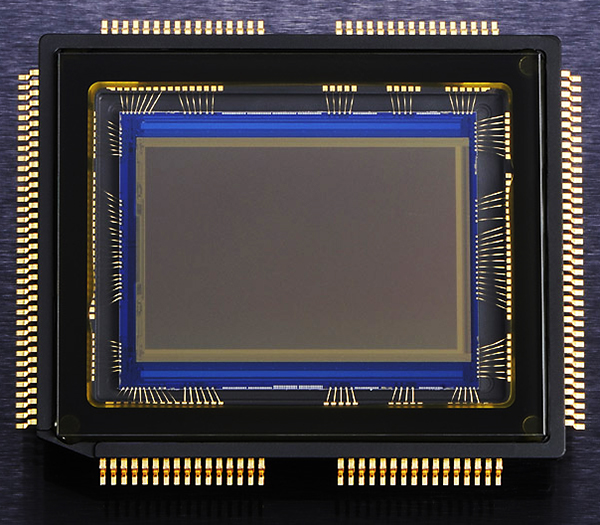
We all know that dust on a DSLR sensor can range anywhere from the mildly annoying to downright problematic. You can try avoiding it, but the simple, unfortunate truth about sensor dust is that regardless of how careful you are, onto every sensor some dust will fall at some time. The closest you might come to avoiding it would be if you were to put a prime lens on your camera when it’s brand new and never change it or take it off. Ever. We all know that’s not about to happen, so dealing with dust becomes a critical part of regular camera maintenance. Part of eradicating any enemy, however, first requires some knowledge of where he’s hiding and how he got there.

guyer-photo-sensor-dust

The fact is that our cameras spend a great deal of time in dusty environments. Regardless of how clean your studio is or how lint-free your camera bags are, those microscopic makers of mayhem are going to settle on your camera at some point. And that’s before we even think about taking our cameras outside or changing lenses. When using lower-end or budget zoom lenses, the simple act of repeatedly zooming the lens in and out can “inhale” dust particles into the lens, which can then over time work their way into your camera. Once inside, they can settle on the mirror or sensor. Once you start changing lenses, the likelihood of dust finding its way to your sensor skyrockets. There are steps you can take to minimize the dust (holding the camera with lens mount facing down while changing, not changing lenses outside, etc.), but sooner or later it’s going to find you.

Mirror or Sensor?

The first important difference between the dust that settles on your sensor and that which settles on the mirror is that only one of them will appear in your photos. While the mirror is essential to viewing the scene and taking the photo, mirror dust will have absolutely no impact at all on your images. It also differs from sensor dust in that you can often actually see mirror dust with the naked eye when you look through the viewfinder. It can be annoying, but it is also usually a pretty easy fix with an air blower. Sensor dust, on the other hand, won’t show itself until it’s left dark spots of varying sizes on your photos. If you see it in the viewfinder, it’s not on the sensor.

Spotting the Spots

For starters, you’ll be able to recognize a dust spot on your photos if it appears in the same place in multiple images, particularly in images taken at small apertures like f/8 or smaller. If you are generally a “wide open” photographer, you need to know that most dust particles will not show up at very wide apertures like f/1.8 against bright backgrounds. Dust may also be less noticeable in images with a lot of detail, but that doesn’t mean it’s gone. If a dust spot is visible with just a quick glance at the image, chances are that you’re looking at a pretty bad spot on your sensor– one that’s not going to leave just because you squeeze a little bit of air at it. You may need a thorough sensor cleaning to get rid of your worst offenders. But regardless of whether you pay to have your sensor professionally cleaned or you are comfortable enough doing it yourself, it is possible to overdo it. Sensors have a delicate coating that can be damaged by over-cleaning, not to mention the fact that you increase the odds of damaging your sensor the more often you clean it. So, how do you do a quick and easy evaluation to see if your sensor really does need a cleaning?

Test Shot

You can run this test against a clear sky, a white sheet of paper, or even your computer screen. Start by switching your camera into Aperture Priority mode, as well as matrix/evaluative metering, and the lowest possible ISO. Then turn off auto-focus and dial in the smallest aperture possible (remember– higher number = smaller aperture). Fill the frame with your blank target area, manually dial the lens completely out of focus, and click off a frame. When you open the image on your computer, look for dark spots– those are your culprits.

Making Sure

No system is perfect, and this one is no different. There is, however, a neat little trick you can run in Photoshop as an added layer of detection. By holding down Command + I (CTRL in Windows), you will invert the image, basically creating a negative.  The dark spots (if any) will now appear white against a dark background, making them easier to see. In the example below, certain spots were plainly visible in the original photo. It wasn’t until I inverted the image, however, that I was able to see several additional trouble spots on my sensor.

In the original image, some dust spots are obvious on the right side of the sky.

In the original image, some dust spots are obvious on the right side of the sky.

By inverting the photo and creating a negative, several additional problem areas are revealed.

By inverting the photo and creating a negative, several additional problem areas are revealed.

Saving Time in Post

Obviously, this is one of those things that can be fixed in Lightroom or Photoshop without too much of a hassle, but why spend extra time in front of the computer when you don’t have to? If you are a photographer who strives to get things right in the camera (and you should be), this is absolutely one of those things to keep on a semi-regular checklist. There are a lot of do-it-yourself sensor-cleaning options available. If you are comfortable doing this task on your own, great. If not– and I don’t blame you– local camera shops provide sensor-cleaning services for a nominal fee. Either way, by knowing how to quickly identify the problem, you’re in a much better position to do something about it and get back to taking clean, crisp, dust-free photos.

Post originally from: Digital Photography Tips.

Check out our more Photography Tips at Photography Tips for Beginners, Portrait Photography Tips and Wedding Photography Tips.

Got Sensor Dust? Here’s How to Check.

The post Got Sensor Dust? Here’s How to Check. by Jeff Guyer appeared first on Digital Photography School.


Digital Photography School

 
Comments Off on Got Sensor Dust? Here’s How to Check.

Posted in Photography


27. Oktober 2013

28 Oct

Ein Beitrag von: bluegreenredyellow

Hitze © bluegreenredyellow


kwerfeldein – Fotografie Magazin

 
Comments Off on 27. Oktober 2013

Posted in Equipment


Retro Rockets: 9 Outrageous Roadgoing Spaceships

27 Oct

[ By Steve in Technology & Vehicles & Mods. ]

road-going rockets
As the Space Age rocked, rolled and rocketed into pop culture, fantastic one-off wheeled wonders embarked upon a more prosaic mission: launching new products.

Silvercup Rocket

Silvercup Rocket(images via: MST3K Temple and Solar Guard Academy)

The Silvercup Rocket not only set the bar for future traveling promotional rockets, it was built better than most of them as well. Custom crafted in the truck workshops of Detroit-based Gordon Baking Company, the tubular trailer was packed with electronics to impress visitors – an estimated 100,000 of whom checked out the rocket at the 1954 Michigan State Fair and were given miniature loaves of Silvercup Bread (“The Official Bread of All Spacemen”) as souvenirs.

Silvercup Rocket(images via: Alphadrome, DVD Verdict and Amazon.com)

Besides advertising bread, the Silvercup Rocket acted as a finned billboard for the 1954-56 television sci-fi series Rocky Jones, Space Ranger. While the show soon faded from the TV scene, one of its actors (John Banner, above left) found fame a decade later as bumbling Sgt. Schultz on the POW-camp comedy Hogan’s Heroes.

Silvercup Rocket(images via: Jeff Duntemann and MST3K Temple)

As for the Silvercup Rocket, after spending nearly 20 years decaying outdoors in northern Michigan as the partially repainted Space Ship Mars, it was purchased by Greg Ward, senior curator of Air Zoo in Kalamazoo, MI where it’s undergoing a full restoration.

Citroen T55 TeleAvia Promotional Bus

Citroen T55 Telavia bus(images via: Dark Roasted Blend and Voiture-Miniature-Shop)

Built for a subsidiary of the French SUD Aviation company using Citroen’s versatile U55 truck/bus chassis (more on that later), the custom-bodied T55 bus was designed by Philippe Charbonneaux to showcase the FRIGEAVIA/TELEAVIA home appliances brand. Four special T55 buses displaying fin-tastic coachwork by Leffondré were built and driven to places like the Tour de France where they might receive maximum exposure.

The Luer Meat Rocket

Luer Meat Rocket(image via: That Hartford Guy)

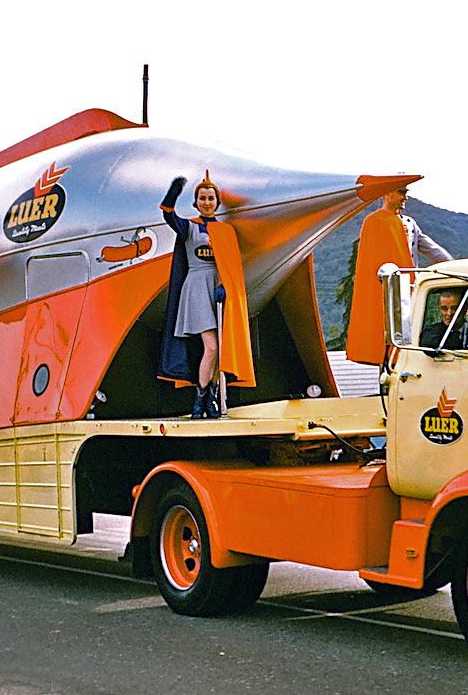
The Luer Quality Meat Rocket was built in 1955 and was to Luer Quality Meats of Los Angeles what the Weinermobile was to Oscar Meyer. Luer spared no small expense to have Standard Carriage Works modify the trailer to resemble the Terra IV spaceship from the 1950-55 TV series Space Patrol. The rocket was designed to be suitably spacey inside and out, featuring nifty options such as a large movie screen up front, seats for 24, a vibrating floor to simulate launches, air conditioning, and a bubble machine that provided “exhaust” during appearances at grocery stores and in parades.

Luer Meat Rocket(images via: Roadside Resort and The Prescott Daily Courier)

The Luer Meat Rocket (quiet there, Beavis and Butthead) changed hands a number of times following a long and successful promotion career, and its survival to the present day is largely due to years of outdoor storage in the arid California desert and in Prescott Valley, Arizona. Owned for nearly 20 years by Steve LaVigne (above) who paid a whole $ 100 for it, the rocket was sold in 2007 to memorabilia collectors John and Peter Kleeman of Litchfield, Connecticut. That’s where the Luer Meat Rocket resides these days, undergoing a full restoration at the Space Age Museum.

Next Page:
Retro Rockets 9 Outrageous Roadgoing Spaceships

Share on Facebook


[ By Steve in Technology & Vehicles & Mods. ]

[ WebUrbanist | Archives | Galleries | Privacy | TOS ]


WebUrbanist

 
Comments Off on Retro Rockets: 9 Outrageous Roadgoing Spaceships

Posted in Creativity


Choosing the Right Color Reflector for Your Photography

27 Oct

Of all the portrait lighting tools at our disposal, none are quite as versatile as the the five-in-one reflector. The concept itself is extremely basic. In the hands of a photographer comfortable with common lighting principles, the reflector helps us bounce light into or onto those areas that aren’t getting enough light, regardless of whether we are using natural, ambient, or studio/strobe lighting.  A reflector placed directly opposite a main light can act as a hair light, creating separation between the subject and background. Placed in front of a back-lit subject, we can negate the silhouette effect, using available, natural light to balance the exposure between our subject and background. Held at a ninety-degree angle to a subject’s chest, we can toss some light up on the subject’s face and neck, eliminating troublesome shadows caused by foreheads and chins when using overhead or mid-day lighting.

The possibilities really are nearly endless, and– just as importantly– affordable. While there are many options available, at about $ 40.00, The Westcott 40″ 5-in-1 Reflector meets (and often exceeds) my needs, in terms of price, size, durability, and versatility. But dropping $ 40 on a reflector and adding it to your bag of tricks is only half the battle. Like the name says, you’ve got five-in-one. While technically not all five are actually reflectors, knowing which of the five to use and under what circumstances is essential to successful photographs.

gold-reflector-guyer-photography

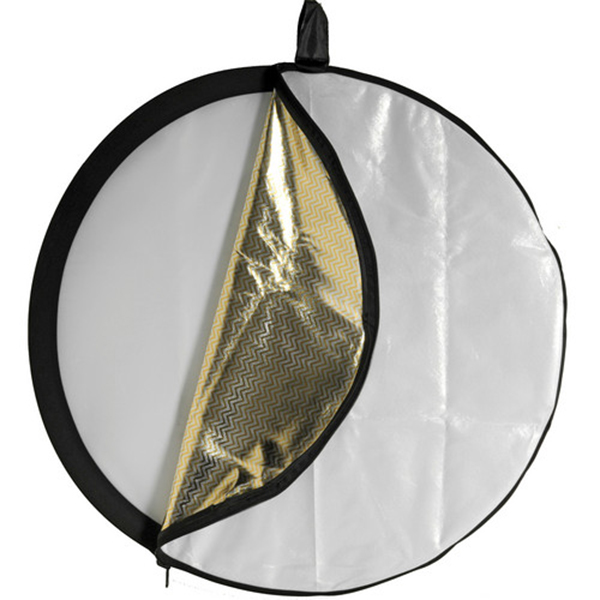
5-in-1 Reflector surfaces are attached to or removed from the outer ring with zippers.

Silver

The silver panel is one of the most useful, and is best for beginners first getting their bearings with reflectors. Since the silver reflects the most amount of light of the five, it is a great choice for low-light situations or those scenarios where you need a strong fill light. Since it  doesn’t change the color of white-balanced flash or studio lights, it is perfect for both indoor and outdoor portraits. Another reason it works so well for beginners is that most first-timers make the mistake of not placing the reflector close enough to their subject. The silver reflector’s ability to shine more light than the gold, for instance, allows it to be placed further away from the subject than we typically want, without sacrificing results. One word of caution, though– the fact that the silver is the strongest of the five is an advantage, but it can also be too strong in already bright light unless it’s feathered. Take some time to experiment with proper and effective placement.

Gold

The gold reflector is great for outdoor portraits because it matches the warm color tones of sunlight. The gold reflector is actually at its best when it is reflecting sunlight, casting a warm glow on the subject. It’s easy to turn normal skin tones overly yellow, however, if you aren’t careful. This is also why the gold reflector is also not recommended for studio or flash work. It not only changes the color of the white light that hits it, but can cast uneven color tones on the subject.

White

Under most circumstances, this one is my favorite. The white panel may not reflect quite as much light as the silver or gold, but when used properly it can still bounce just enough light onto the subject to overcome shadows and add subtle dimension opposite larger light sources. Since it is soft, clean light, it works well both in the studio and outside when there is ample light. While effective, the white reflector won’t do you much good at all in low-light situations.  It is also important to remember, though, that for the white reflector to do its job, you’re doing to have to get it very close to your subject. Wedding photographers love the white reflector because it doesn’t change the color of the light– or the dress.

reflector-examples-guyer-photography

In the outdoor portrait on the left, a white reflector adds just enough light to open up the shadows, while a silver reflector casts some dramatic light across the boxer on the right.

Black

This one is pretty much the “anti-reflector.” Black, as we know, absorbs light, which helps to cut down on the reflections from shiny, reflective surfaces– one of the reasons it is used so often in jewelry photography. When placed properly, the black panel also creates shadows when light falls too evenly across the subject. The benefit of this “negative fill” is that it allows you to create shadows rather than overcome them.

split-light-guyer-photography

Using the black “reflector” in a small space helped me achieve split lighting, which I usually create with a silver reflector in a larger area.

Translucent

When all of the other reflection panels have been removed, the translucent is left. While technically not a reflector, this panel works great as a shoot-through diffuser for flash or location lighting, or as a diffusion panel between the sun and your subject. Since larger light sources provide softer light, using the translucent panel as a large diffuser gives you a very large, easily portable light source. While a large enough translucent reflector can also be used as an impromptu background for a head shot, the translucent panel will almost always be between your subject and the light source.

translucent-guyer-photography

Using the translucent panel above the subject’s head, we spread the light and softened it.

Conclusion

The 5-in-1 Reflector can one of the most versatile lighting tools in your entire workflow. Taking full advantage of its capabilities, though, won’t be possible until you know what color reflector to use for which lighting scenario. Remember, though, that photography rules were made to be broken once you’ve learned them, so be sure to experiment with color and placement.

Post originally from: Digital Photography Tips.

Check out our more Photography Tips at Photography Tips for Beginners, Portrait Photography Tips and Wedding Photography Tips.

Choosing the Right Color Reflector for Your Photography

The post Choosing the Right Color Reflector for Your Photography by Jeff Guyer appeared first on Digital Photography School.


Digital Photography School

 
Comments Off on Choosing the Right Color Reflector for Your Photography

Posted in Photography


browserFruits Oktober #4

27 Oct

Und während Ihr dies an einem hoffentlich schönen Sonntagmorgen lest, sitzen wir beim letzten gemeinsamen Frühstück irgendwo in der Mitte Deutschlands zusammen. Wir haben uns die letzten vier Tage getroffen, um auch einmal außerhalb des Internets neue Ideen und alte Kamellen zu besprechen. Denn die kwerfeldein-Redaktion kommt, wie Ihr vielleicht wisst, aus allen Ecken Deutschlands. Seid also gespannt, was dabei heraus kam. Wir verabschieden uns jetzt etwas wehmütig von unserer kleinen Waldhütte, packen die Kameras ein und fahren zurück nach Hause.


Fotospecial: Baustellen

Flickr

500px


Deutschsprachig

• „She who tells the story“ zeigt Bilder muslimischer Frauen von muslimischen Frauen und setzt sich so mit einem sehr aktuellem Thema auseinander. Auf Stern.de gibt es Bilder und Infos.

• Auch für Fotografen spannend: Antje Schrupp fragt auf ihrem Blog, ob wir den Journalismus – und somit auch Fotojournalisten – überhaupt noch brauchen. Und räumt mit ein paar Irrtümern auf, beispielsweise damit, dass sich sowieso alles ergoogeln lässt.

• „Wie würde eine Kreuzung zwischen Elefant und Gorilla aussehen?“, fragt der Stern. So.

• Nochmal der Stern: „Waiting“ heißt die Serie der russischen Fotografin Jana Romanova, die ihre schwangeren Freunde im Schlaf fotografierte.

• W&V berichtet über gleich zwei interessante Kampagnen: TBWA gegen Sexting, also das Verschicken intimer Fotos per Handy, die sich unter Umständen unkontrolliert verbreiten und Ogilvy entlarvt Sexismus, der sich in beliebten Suchanfragen bei Google widerspiegelt.


International

• 40 unglaubliche, historische Fotos, die verschiedenste Emotionen auslösen. Unbedingt ansehen!

• Der kanadische Fotograf Greg Girard hat einzigartige Einblicke in Kowloon City eingefangen: Eine chinesische Stadt, die 50.000 Einwohner hatte und nur aus Seite an Seite stehenden Hochhäusern bestand, bevor sie abgerissen wurde.

• Und kennt Ihr schon Tianducheng? Diese chinesische Stadt ist Paris nachempfunden. Natürlich standesgemäß mit eigenem Eiffelturm.

• Ihr mögt Polaroids? Dann bitte hier entlang, zu den Bildern von Stefanie Schneider.

• Moderne Pin-Up-Bilder mit Kleidern aus Milch.

• Der Wildlife-Fotograf des Jahres 2013 wurde gewählt. Hier geht es zu den Bildern.

• Nicht erschrecken, wenn Ihr diesem Link folgt. Die New York Public Library zeigt mehr als 38.700 (!) Stereogramme, die fast alle über 100 Jahre alt sind. Damit man den 3D-Effekt sehen kann, den man sich schon damals zu Nutze gemacht hat, sind sie wackelnd animiert.

• Dieses Pärchen rockt das Internet mit gruseligen Freitag,-der-13.-Verlobungsfotos.

• Wie zeigt man Fotos von vermienten Landschaften? Brett Van Ort fotografierte in Bosnien und mischte Bilder von Mienen und Protesen unter die romantischen Naturfotos. FeatureShoot hat ihn interviewt.


Neuerscheinungen und Tipps vom Foto-Büchermarkt

buchtipp

• „Quer durch wüstes Land“* heißt der neue Bildband von Nick Brandt. Er zeigt in Schwarzweiß-Bildern die Schönheit, aber auch die Verletzlichkeit der Wildnis. Mit 68 € ist es eines der teureren Fotobücher und vielleicht ein schöner Tipp für die Weihnachtswunschliste.

• Noch nicht erschienen und auf 570 Exemplare limitiert ist der Bildband „Beautiful“* von Loredana Nemes. Die Fotografin geht darin auf die Suche nach der verlorenen Heimat Sibiu (Hermannstadt) in Rumänien. Der Band wird 57 € kosten und signiert sein.


Wettbewerbe

• Kein Fotowettbewerb an sich, aber zu gewinnen gibt es doch etwas. Sigma sucht für die „Our-World-Tour“-Website in den Kategorien Reise, Sport und Emotion Blogger, die Lust haben, ihre Erlebnisse und Bilder einzustellen. Die besten Blogbeiträge erhalten Preise.


Videos

Tanzgeschwader: Ein Schwarm Vögel fliegt in der Dämmerung unglaublich poetische Figuren am Himmel.


In 7 Tagen wurden 350+ Gesichter fotografiert und aus 4000+ Fotos dieses supertolle Musikvideo gemacht.


Ausstellungen

Nick Brandt
Zeit: 19. Oktober – 30. November 2013
Ort: CWC GALLERY, Auguststraße 11–13 , 10117 Berlin
Link

Guillermo Srodek-Hart
Zeit: 19. Oktober – 21. Dezember 2013
Ort: Kuckei + Kuckei, Linienstr. 158, 10115 Berlin
Link

To those whose Faith has been broken
Zeit: 24. Oktober bis 16. November 2013
Ort: Ausstellungsraum Bautzner69, Bautzner Straße 69, 01099 Dresden-Neustadt
Link

Mehr aktuelle Ausstellungen


* Das ist ein Affiliate-Link zu Amazon. Wenn Ihr darüber etwas bestellt, erhalten wir eine kleine Provision, Ihr bezahlt aber keinen Cent mehr.


kwerfeldein – Fotografie Magazin

 
Comments Off on browserFruits Oktober #4

Posted in Equipment