RSS
 

Archive for September, 2013

Wo immer ich bin

09 Sep

Ein Beitrag von: Charalampos Kydonakis

Ich bin ein Architekt aus Rytymnon, Kreta. Ich fotografiere seit meiner Studienzeit an der Universität, jedoch intensiver seit 2008.

Bei der Frage, warum ich fotografiere, habe ich bisher noch keine sichere Antwort gefunden. Ich bin nicht gut darin, Worte zu verwenden und vielleicht ist die Fotografie ein leichterer Weg für mich, das Konfuse aus meinem Kopf herausfließen zu lassen.

Dirty Harry Charalampos Kydonakis Street Straßenfotografie

Dirty Harry Charalampos Kydonakis Street Straßenfotografie

Eigentlich bin ich von allen Dingen, die mich umgeben, beeindruckt und inspiriert: Wenn ich mit Freunden unterwegs bin, bin ich durch sie inspiriert. Wenn ich allein herumlaufe, bin ich inspiriert von Fremden, Tieren, der Landschaft und jedem unwichtigen Ding, das mich an an irgendetwas denken lässt.

Ich bin kein Fotograf, ich habe nur, wo immer ich bin, eine Kamera dabei und ich versuche, so viel zu reisen wie möglich. Ich mag es auch, nach der Arbeit anderer zu suchen – das Internet ist eine große visuelle Enzyklopädie, frei zugänglich für jedermanns hungrige Augen.

© Charalampos Kydonakis

Dirty Harry Charalampos Kydonakis Street Straßenfotografie

Das Netz ist voller Müll, doch in diesem enormen fotografischen Müll sind überall Juwelen versteckt und jeden Tag versuche ich, sie zu entdecken.

Die letzten zwei Jahre habe ich unter anderem Unterwasserfotos gemacht. Jedoch wurde meine Kamera nass und muss jetzt aus dem Wasser bleiben. Oder ich muss eine neue Kamera kaufen und solange fotografieren, bis sie nass wird. Wir werden sehen.

Dirty Harry Charalampos Kydonakis Street Straßenfotografie

Dirty Harry Charalampos Kydonakis Street Straßenfotografie

🙂

Dieser Artikel wurde von Martin Gommel für Euch vom Englischen ins Deutsche übersetzt.


kwerfeldein – Fotografie Magazin

 
Comments Off on Wo immer ich bin

Posted in Equipment


4-Dimensional Photography: Artistic Time-Lapse Collages

09 Sep

[ By WebUrbanist in Art & Photography & Video. ]

time lapse day night

Motion pictures aside, the nature of photographic representation implies freezing space in time – a moment captured and preserved, independent of what comes before or after.

time lapse photo rays

time lapse vertical sky

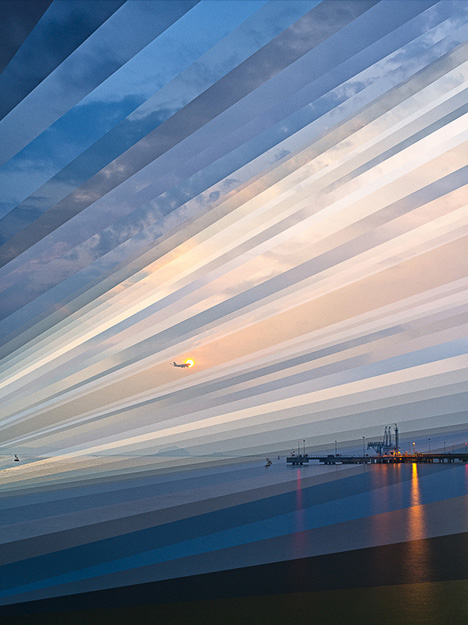
Yet, as photographer Fong Qi Wei points out, “we do know that time is also a dimension, like length, breadth and width. In fact, physicists have a model called space-time: suggesting that time is part of a continuum with the 3 dimensions that we are familiar with. But the print is still an instance. Most paintings and photographs are an instance of time. That’s not the way the world works. We experience a sequence of time.”

time elapsed photo seeries

time lapse rays light

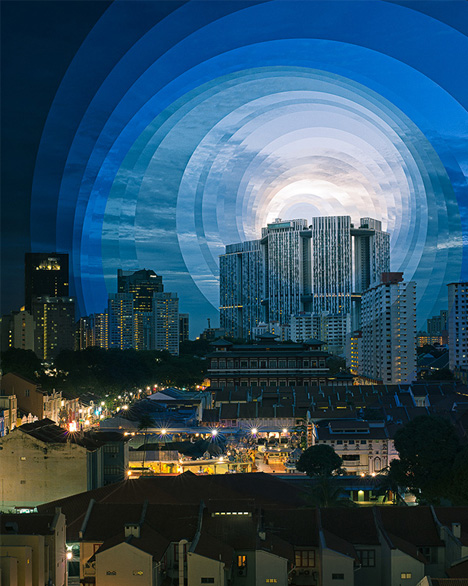
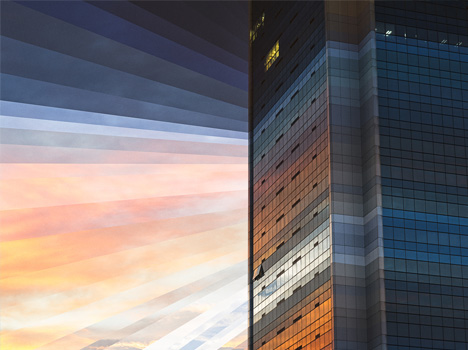
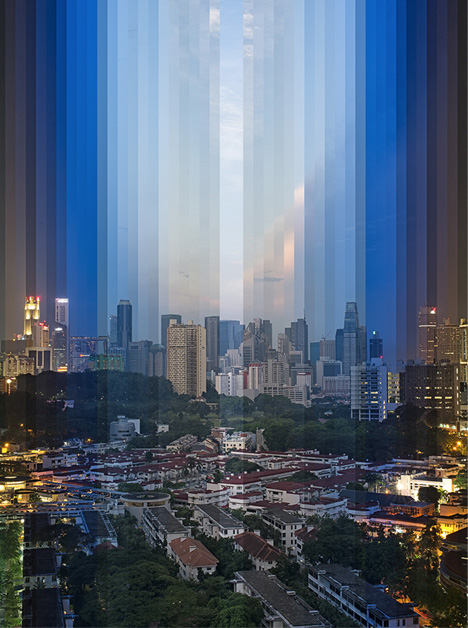
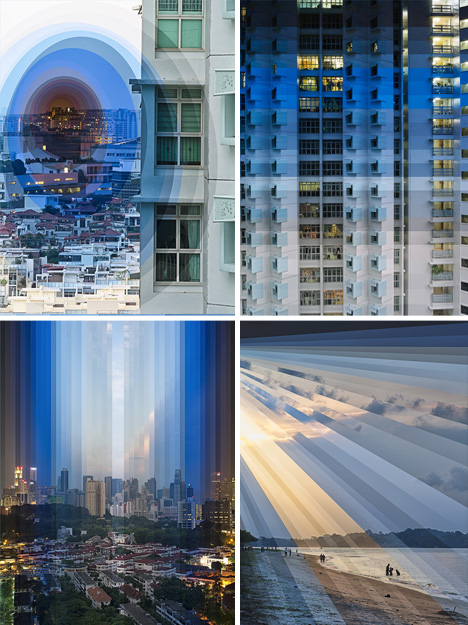
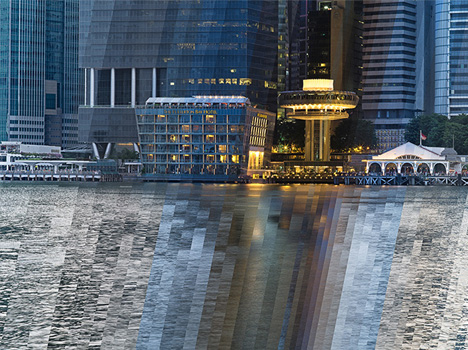
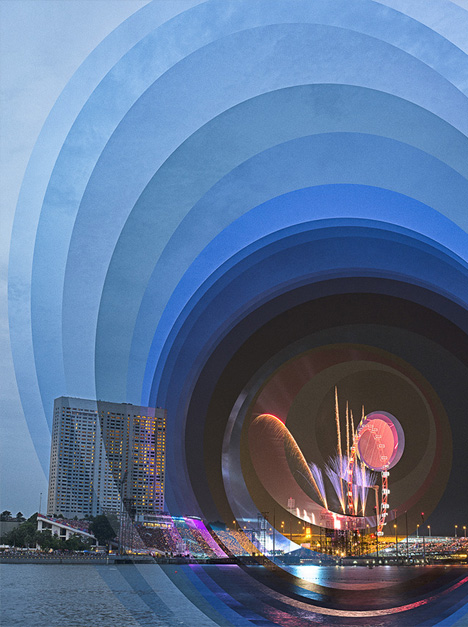
His solution is this photo series, Time is a Dimension, in composed mostly of “landscapes, seascapes and cityscapes,” which “are a single composite made from sequences that span 2-4 hours, mostly of sunrises and sunsets. The basic structure of a landscape is present in every piece[, but] each panel or concentric layer shows a different slice of time, which is related to the adjacent panel/layer. The transition from daytime to night is gradual and noticeable in every piece, but would not be something you expect to see in a still image.”

time lapse waterfront attraction

time lapse urban landscape

There is a playful and experimental quality to the variety of approaches found within this set of images. Sometimes a series of casually-drawn circles spread out from a focal point. In other cases, rays like a child’s drawing of sunshine span from some implied but out-of-frame source. Each has at least one surprise upon inspection, like the changing reflections in glass over the course of a day, or the differences in artificial illumination going into the night. Overall, the results are rich in colors and shades but also do tell a story of time elapsing, quite by design.

Share on Facebook


[ By WebUrbanist in Art & Photography & Video. ]

[ WebUrbanist | Archives | Galleries | Privacy | TOS ]


WebUrbanist

 
Comments Off on 4-Dimensional Photography: Artistic Time-Lapse Collages

Posted in Creativity


3 Reasons To Keep Your Old Photoshop Version

09 Sep

By Helen Bradley

3 reasons not to delete old versions of photoshop opener

If you’re moving from Photoshop CS5 or CS6 to Photoshop CC you may be tempted to clean up your computer and remove the older Photoshop version from it. After all there’s no point leaving it there if you’re not using it is there? Well I, for one, won’t be removing Photoshop CS5 anytime soon and I suggest you think twice about removing your older version too. Here are my reasons:

1. Adobe Axed Picture Package

Adobe axed Picture Package quite a long time ago but it could be easily made to work with Photoshop CS5. For a time there I also had it running with Photoshop CS6 until an update to CS6 permanently knocked it out. So, because I like to use Picture Package for assembling images and because it works just fine with Photoshop CS5, I’ll be keeping that version. Anytime I need to assemble multiple images into a layout I only need choose File > Automate > Picture Package and I’m off and running.

If you want to know how to add Picture Package back into Photoshop CS4 there’s a DPS blog post that I wrote explaining all about it here in Multiple Image Printing in Photoshop CS4.

For Photoshop CS4 and CS5 I also created some training for Mediabistro.com which you will find here.

And for Photoshop CS6, I wrote a post on my blog about how to add it to Photoshop CS6. While many readers are finding it still works, sadly while I can tell you how to do it the actual solution no longer works for me.

3 reasons not to delete old versions of photoshop 1

2. Adobe Axed Pixel Bender

Yep, in Photoshop CS6 Adobe took the Oil Paint Filter from Pixel Bender, built it into Photoshop and promptly dumped everything else. I found that disappointing – I kind of like Pixel Bender – in particular some of the fractal effects that you can create with it. I also have a Droste filter for it that is awesome and that I use from time to time.

Since I plan to keep Photoshop CS5 I’ll still have access to Pixel Bender – thank you very much Adobe!

Just in case you’re interested – the Pixel Bender extension won’t work with versions of Photoshop later than Photoshop CS5. Again, I wrote a DPS blog post on Pixel Bender, how to install it and what you’ll find when you get it here.

And a post on Tom Beddard’s awesome Droste Filter here.

And I have a YouTube video that shows you how to use the Droste Effect filter here:

3 reasons not to delete old versions of photoshop 2

3. I Don’t Trust the Licensing Model

If you’re reliant on Photoshop for your day to day work – if you’re a Photoshop teacher, for example, then problems with the new licensing model might cause you unexpected grief. In this scenario you will start your computer one day and Photoshop will lock you out citing some issue with your license. Of course you have a paid up license, but the software won’t recognize this and it will go into lock down mode.

Until you can call Adobe Support and get them to fix the issue you won’t be able to get into your software – one more reason why I suggest you keep an earlier version of Photoshop on your computer just in case.

Now I haven’t had problems with Photoshop CC but I have had issues with a subscription license for Adobe Captive – on two separate occasions both within the last 12 months and both without warning. If I had been teaching a class, it would have meant that I simply couldn’t do what I was being paid to do. The problem with the subscription licensing is that it’s not full proof and if it fails you may be locked out of your software until you can get support to fix the issue and that’s going to take time.

In Summary

While I wholeheartedly encourage you to enjoy the new features of Photoshop CC I do recommend that you keep an earlier version of Photoshop on your computer. Then, you’ll have access to Picture Package and the Pixel Bender feature (once you install them) and a fallback position if you get locked out of your software unexpectedly.

So now it’s over to you – if you’ve installed Photoshop CC do you still have an older version of Photoshop installed? If so, what is your reason for not removing the earlier version?

Post originally from: Digital Photography Tips.

Check out our more Photography Tips at Photography Tips for Beginners, Portrait Photography Tips and Wedding Photography Tips.

3 Reasons To Keep Your Old Photoshop Version


Digital Photography School

 
Comments Off on 3 Reasons To Keep Your Old Photoshop Version

Posted in Photography


How To Take Ridiculously Unique Photos

08 Sep

Take ridiculously unique photos 1

by Steven McConnell

How do you make your photography more meaningful, moving and unique?

Lately, I’ve been fascinated with the idea that our motivations significantly influence the quality of photography we create.

This sentiment is expressed particularly well in The Foutainhead by Ayn Rand. The character is an architect, rather than a photographer, though his lessons apply to any artist who wants to create great work:

“Nothing can be reasonable or beautiful unless it’s made by one central idea, and the idea sets every detail. A building is alive, like a man. Its integrity is to follow its own truth, its one single theme, and to serve its own single purpose.”

Pleasing Everyone Doesn’t Work

In the novel, the hero makes a strong point that, when artists attempt to fulfil on competing needs they tend to create uninspiring, soul-less compromises.

In the context of architecture it might look like this:

  • A building gets an impressive facade, because the owners want to impress the neighbours.
  • It adheres to rules of traditional architecture, because that’s what the architect’s boss wants.
  • It features a striking look, because the architect knows its a good way to attract some publicity to himself.
  • Its materials are dictated by the budget, rather than their suitability for the task.

And so on.

The hero’s point is that the most beautiful building is one which follows a single, unyielding purpose: to create most liveable space for the people who will inhabit it.

Take ridiculously unique photos 2

Why Do We Take Photos?

I think as photographers, we often fell into the same trap. We are either unconscious to our motives, or we consciously lose focus because we try to satisfy too many ends.

In doing so, we cease creating art and start creating generic commodities.

What Drives Us?

I’ve been paying a lot of attention lately to what drives me and how it affects the photography I create.

For me personally, I notice that photography serves as a means to these ends:

  • A way to escape from something.
  • A way to get approval.
  • A way to challenge myself.
  • A way to make a difference.

Neither one of them are right or wrong, better or worse. But some are more conducive to a more powerful focus. Which, in turn, brings about stronger results.

Photography Assignment

Let’s say I have a day off and I decide to spend it taking photos. Where do I go? What do I photograph? Who do I show the photos to?

If I approach the day from a space of needing approval, for example, then my focus will be extremely broad. Anyone or anything which gives me recognition will satisfy that need.

I am free go take snaps of everything from the Opera House to my neighbour’s cat, and show off what I did to my friends, family, other photographers on online forums and so on.

Take ridiculously unique photos 3

Narrowing Focus

However, if I consciously decide to make this day about making a difference to someone, then my focus narrows significantly.

I can still go take a photo of the Opera House, for example. But a pretty picture, which has also been taken by millions of people, won’t do now.

If I’m going to hold myself to account and really make this day about making a difference to someone through my photography, I’ll need to dig much deeper.

Creating Art

I’ll probably look at the issues surrounding it today (art vs politics, need for funding and redevelopment, modern society vs art, budget cuts, people who make it all work) and attempt to take photos which tell those stories in a powerful way.

My audience would also be much more narrow – I’ll have to connect with people who have a need for such photos and offer it to them as a gift.

In the end, 99.999% people in the world would never see, or appreciate those photos. But those who do, because they really have an interest in the story I’ve told, will be touched forever.

Default Isn’t Good Enough

If left to our own devices, our brain will pick a purpose for us, depending on the wiring from our past.

Because we’re human, most of the time we default to the “escape” and “get approval” kind of space. Unfortunately, that headspace gives rise to generic kind of results.

Escape is a powerful motivator, but it’s vague. You can escape anywhere, doing just about anything you’re trying to escape from.

Desire for approval is even more powerful, but it comes hand in hand with a fear of disapproval, which makes it difficult to say something original.

I find that I produce best photography when I consciously come from “challenge myself” or “make a difference” type of mindsets.

Take ridiculously unique photos 4

Purpose Is Changeable

We are in control of our motives – not the other way around. Which means we’re entirely in control of the level of photography we produce.

The first step is awareness. Moment by moment, we can ask ourselves – what’s driving me now? What end am I serving?

The second step is change. If we discover that we’re serving too many masters, we can change our purpose to one which gives us a more powerful focus.

So, what’s your photography assignment for today? And, more importantly, why?

Steven McConnell is a family photographer at Family Photography Sydney. You can connect with him on Google+. and Twitter.

Post originally from: Digital Photography Tips.

Check out our more Photography Tips at Photography Tips for Beginners, Portrait Photography Tips and Wedding Photography Tips.

How To Take Ridiculously Unique Photos


Digital Photography School

 
Comments Off on How To Take Ridiculously Unique Photos

Posted in Photography


Enfojer project turns your smartphone into an enlarger for B&W prints

08 Sep

enfojer-1.jpg

Billed as a way to bring back the romance of the darkroom in the smartphone era, Enfojer is an indiegogo project which promises to make your smartphone into an enlarger to create real prints. Part app and part hardware, Enfojer enlarges the image displayed on a smartphone’s LCD, projecting it onto real photo paper to create genuine darkroom chemical prints. Click through to connect.dpreview.com for more on Enfojer’s efforts to bring smartphone photography into the darkroom.

News: Digital Photography Review (dpreview.com)

 
Comments Off on Enfojer project turns your smartphone into an enlarger for B&W prints

Posted in Uncategorized


Transits Of Venus: 8 Women-Only Subway & Train Cars

08 Sep

[ By Steve in Global & Travel & Places. ]

women-only subway train cars
Subway sandwich: good if you’re hungry, bad if you’re a female commuter. These 8 women-only transit cars offer groups of gals a grope-free rail road trip.

Japanese Rail & Subways

Tokyo Metro women-only subway train car(image via: Wikipedia)

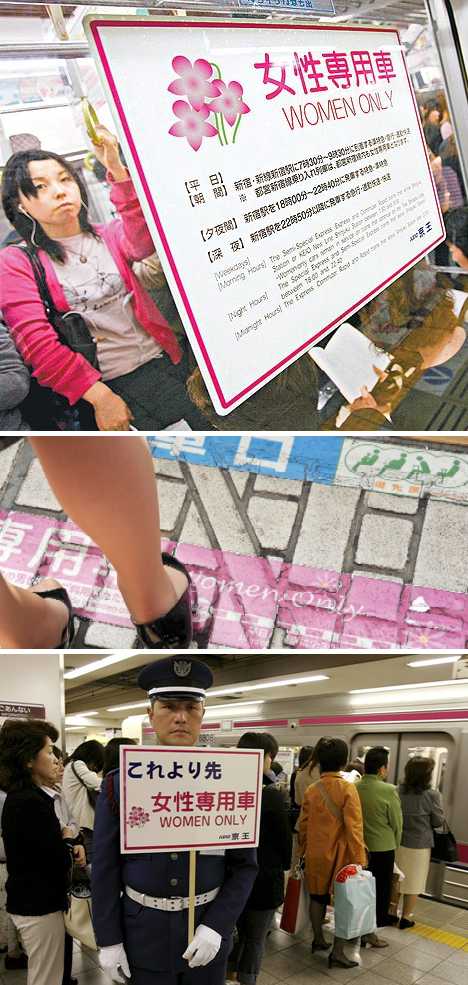
Japan first introduced women-only subway cars in 1912, though their usage was sporadic and isolated. Modern usage of train and subways carriages specifically restricted to women dates from the year 2000 with the Tokyo Metro succumbing to popular demand for such cars in 2005.

Japan subway women-only cars(images via: Apple Daily, The Japan Times and The Grid)

They may have been late to the dance but the Tokyo Metro now serves as a model for other city’s and nation’s transit systems on how to do women-only transit right. Designated cars are consistently color-coded (pink, naturally) to avoid confusion by the visually-impaired, signage on the trains in in the stations is profuse, and transit police are on hand to enforce the rules.

Rio de Janeiro Metro, Brazil

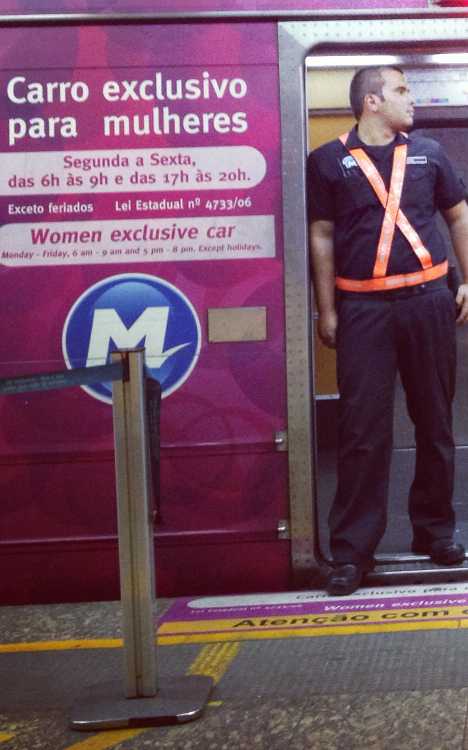
women-only car Rio de Janeiro Metro Brazil subway(image via: RAYRAY IN RIO!)

Brazil’s first gender-specific subway cars first appeared on São Paulo Metro in October 1995, but the scheme was discontinued in September 1997 after the Companhia Paulista de Trens Metropolitanos (CPTM) received complaints from married couples. There was also the possibility that Article 5 of the Brazilian Constitution, which guarantees equality among citizens, might be inadvertently flouted giving rise to an expensive legal challenge. Curiously, the Rio de Janeiro Metro was untroubled by these sticking points and introduced women-only subway passenger carriages in April of 2006.

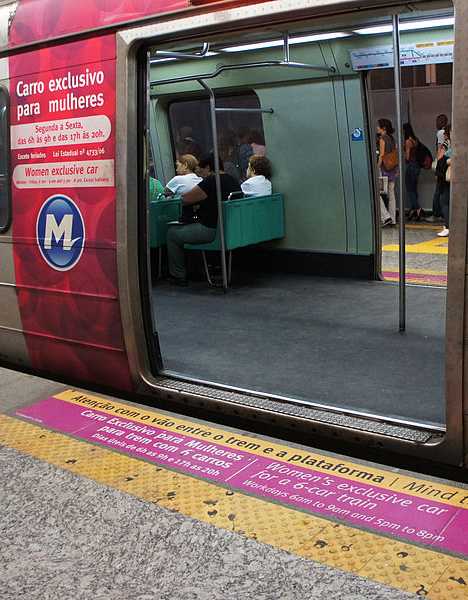
women-only cars Rio de janeiro Metro Brazil subway(images via: NBC News and Andén 2)

The official policy regarding women-only carriages dictates that for trains with six passenger cars, one car must exhibit predominantly pink colors and signage denoted the car to be for the exclusive use of women. It should be noted that pinkness notwithstanding, the women-only restriction only applies on weekdays during the morning and afternoon rush hours (3 hours each). Metro police enforcement is provided to ensure non-women (also known as men) stay out of the cars and station platforms have signs in pink, white and yellow on their floors indicating where women should assemble for boarding.

women-only car Rio de Janeiro Metro Brazil subway(image via: Wikipedia/Mario Roberto Durán Ortiz)

The recent introduction of Rio de Janeiro’s “Women’s Exclusive Cars” has allowed the system to borrow from other successful subway networks around the world: note the “Mind The Gap” warning on the platform, lifted from the London Underground circa 1969.

“Kereta Khusus Wanita”, Indonesia

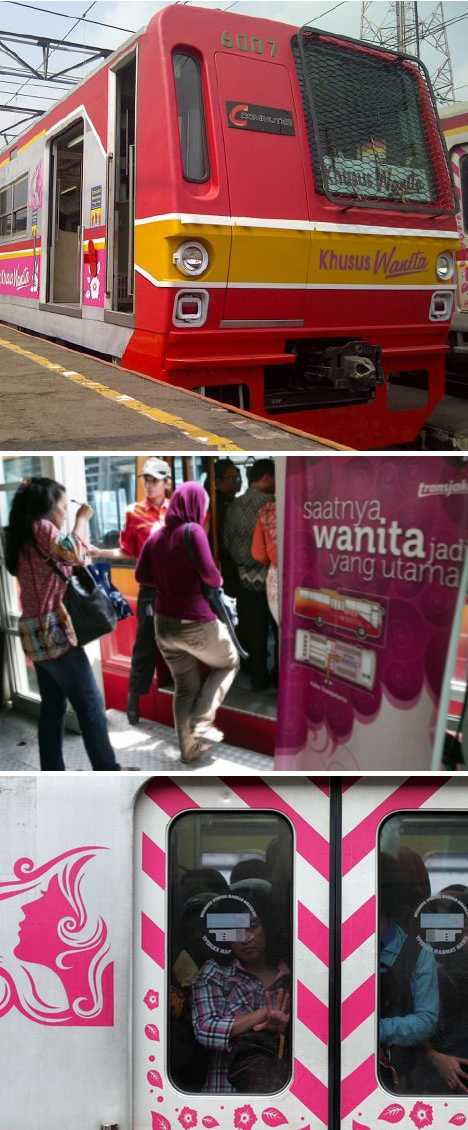
Kereta Khusus Wanita Indonesia women-only commuter trains(images via: CharlesKKB, The Jakarta Post and Tempo.co)

If the Indonesian commuter train you’re about to board is trimmed in pink & purple and bears the legend “Kereta Khusus Wanita”, back off Jack… unless you’re a Jill.

Kereta Khusus Wanita Indonesia women-only train(image via: Korean Lecture Heeya)

Indonesian women have taken to the women-only services provided by the nation’s commuter train lines, and if such service is withdrawn they don’t take the loss lying down. Such was the case in May of 2013 when PT KAI Jabodetabek Commuter decided to discontinue the exclusive cars on its women-only Electric Railway Train (KRL) line running the Bogor to Jakarta route. “”

Next Page:
Transits Of Venus 8 Women Only Subway Train Cars

Share on Facebook


[ By Steve in Global & Travel & Places. ]

[ WebUrbanist | Archives | Galleries | Privacy | TOS ]


WebUrbanist

 
Comments Off on Transits Of Venus: 8 Women-Only Subway & Train Cars

Posted in Creativity


browserFruits September #2

08 Sep

Oft sind es die einfachen Dinge, die Inspiration bieten. Unser heutiges Fotospecial zeigt, wie unterschiedlich allein eine Badewanne für verschiedene kreative Ideen genutzt werden kann. Also, wenn Ihr mal wieder Fotos machen wollt und nicht genau wisst, was und wie: Werft doch mal einen Blick ins Badezimmer.


Fotospecial: Badewanne

Flickr

500px


Deutschsprachig

• Wien.at berichtet über die Entwicklung der Straßenfotografie in Österreich und Europa.

• Auf Stern.de gibts Fotos aus der Schweiz von Martin Parr.

• Die taz hat einen Nachruf auf den Fotografen Allan Sekula, der im Alter von nur 62 Jahren kürzlich verstarb.

• Der Fotograf Éric Valli fotografierte Verweigerer der modernen Leistungsgesellschaft in den USA.

• Auf der IFA gibt es neue Kameramodelle mit neuen Funktionen. Der Focus berichtet.

• Der Fotograf F. C. Gundlach erzählt Der Welt von seiner fotografischen Sammlung.


International

• Lochkamera aus Beton? Kann man machen. Und zwar selbst. Mit dieser Anleitung.

• Alan Taylor von The Atlantic hat 20 Essays mit 900 Fotos über den zweiten Weltkrieg gesammelt.

• Simon Garnier denkt laut darüber nach, ob Mut zur Nähe automatisch bessere Straßenfotos garantiert.

• Fallen Princesses – Dina Goldstein machte eine aufwändige Serie zu Prinzessinnen aus Märchen.

• Brautpaare, die gegen Zombies kämpfen oder vor Außerirdischen wegrennen. Ein neuer Trend in der Hochzeitsfotografie?

• Schon etwas surreal wirken diese Badestrände von oben.

• Einer der innovativsten Fotografen, Trent Parke, wird hier kurz vorgestellt. Alle Fotografen, die dem Dokumentarischen zugewandt sind, sollten sein Portfolio nicht verpassen.

• Alte Kinderbilder nachstellen ist ein langanhaltender Trend, der uns immer noch zum Lachen bringt.

• Die Welt unter einem schmelzenden Gletscher. Unglaublich beeindruckende Fotos.


Neuerscheinungen und Tipps vom Foto-Büchermarkt

Buchtipps

• „Nacht- und Restlichtfotografie: Stimmungsvolle Fotos von der Dämmerung bis zum Morgengrauen“* heißt ein neues Sachbuch aus dem dpunkt.verlag. Die Autorin Meike Fischer erklärt darin vor allem technische Aspekte von der erforderlichen Ausrüstung über die geeigneten Aufnahmetechniken bis hin zur Bildbearbeitung.

• Magnum-Fotograf Christopher Anderson zeigt in seinem Buch „Son“* keine Kriegsfotografien, sondern ganz persönliche Bilder aus seinem Leben und vor allem von seinem Sohn. Berührend schöne Bilder, die man zum Teil auch auf seiner Homepage einsehen kann.


Wettbewerbe

• Habt Ihr schon einmal mit Licht gemalt? Dieser Wettbewerb wäre auf jeden Fall ein Anlass, damit anzufangen. Für den internationalen Light Painting Award könnt Ihr noch bis zum 15. Oktober bis zu zwei Light-Painting-Fotografien einreichen.

• Das Magazin „Der Greif“ sucht noch bis zum 11. September Fotografien für seine 7. Ausgabe. Zudem besteht die Möglichkeit, dass Euer Bild auf das Cover kommt.


Videos

Einer der wichtigsten zeitgenössischen Straßenfotografen, Matt Stuart, gibt hier ein kurzes Interview und spricht über Ethik, Auftragsarbeit und die Zukunft der Straßenfotografie.


„Six Photographs“. René Burri holt aus und erzählt, wie er zu seinen bekanntesten Fotos kam.


Ausstellungen

Plural Projekt
Zeit: 7. – 28. September 2013
Ort: Atelierhof Kreuzberg, Schleiermacherstrasse 31-37, Berlin
Link

Cross Over – Fotografie der Wissenschaft & Wissenschaft der Fotografie
Zeit: 7. September – 17. November 2013
Ort: Fotomuseum Winterthur, Grüzenstrasse 44 + 45, Winterthur
Link

Santiago Sierra – Skulptur, Fotografie, Film
Zeit: 7. September 2013 – 12. Januar 2014
Ort: Sammlung Falckenberg, Wilstorfer Straße 71, Hamburg Harburg
Link

Mehr aktuelle Ausstellungen


* Das ist ein Affiliate-Link zu Amazon. Wenn Ihr darüber etwas bestellt, erhalten wir eine kleine Provision, Ihr bezahlt aber keinen Cent mehr.


kwerfeldein – Fotografie Magazin

 
Comments Off on browserFruits September #2

Posted in Equipment


8. September 2013

08 Sep

Ein Beitrag von: Thomas

untitled


kwerfeldein – Fotografie Magazin

 
Comments Off on 8. September 2013

Posted in Equipment


American Society of Media Photographers warns about new Facebook T&Cs

08 Sep

fb_icon_325x325.png

Another day, another controversial change to Facebook’s terms of service. The American Association of Media Photographers has warned its members to ‘beware’ Facebook’s proposed new terms of service, which – the A.S.M.P claims – would allow the social media giant to ‘exploit your name, likeness, content, images, private information, and personal brand by using it in advertising and in commercial and sponsored content – without any compensation to you’. Click through for more details. 

News: Digital Photography Review (dpreview.com)

 
Comments Off on American Society of Media Photographers warns about new Facebook T&Cs

Posted in Uncategorized


Playing with food: Stephanie Gonot’s colorful culinary photography

08 Sep

food_5.jpg

Photographer Stéphanie Godot’s food photos aren’t the stylized, sexy kind you’d see on the cover of magazines like Bon Appetit. Images in her ‘Fad Diets’ series are frightening visual documents of some of the weirder diets out there, while also being striking experiments in color and texture. Gonot’s work may not make your mouth water, but it’s a lot of fun, and might just make you reconsider that crash diet…

News: Digital Photography Review (dpreview.com)

 
Comments Off on Playing with food: Stephanie Gonot’s colorful culinary photography

Posted in Uncategorized