RSS
 

Archive for September, 2013

Red Bull Illume – Die Gewinner

10 Sep

Wenn ich an Red Bull denke, dann denke ich gleichzeitig an Action und Sport. Eine kluge und funktionierende Werbestrategie hat sich die Firma da ausgedacht. Und weil die Fotowettbewerbsbilder des Red Bull Illume es wirklich in sich haben, zeigen wir sie Euch hier. Lehnt Euch zurück und genießt beeindruckende Actionsportfotografie.

Ende August wurden die Sieger des Wettbewerbs bekanntgegeben. Als Gesammtsieger konnte sich der deutsche Fotograf Lorenz Holder mit seinem Bild von einem Snowboarder auf einer riesigen Satellitenschüssel durchsetzen.

Red Bull Illume © Lorenz Holder

Ich fand diesen einzigartigen Ort im Sommer und wollte dort unbedingt einen Snowboarder fotografieren. Ich erzählte Xaver Hoffmann von dem Ort und auch er war fasziniert. Meine Idee, das Ganze unter schwerem Schneefall zu fotografieren, war nicht leicht, denn in der letzten Saison schneite es nur einmal an dieser Stelle. So gab es nur diese eine einmalige Chance, das Bild zu bekommen.

Ich habe zwei große Elinchrom-Blitze im Hintergrund benutzt, um die Schneeflocken zu beleuchten und so eine „weiße Wand“ zu erzeugen, durch die ich Xavers Silhouette erfassen konnte, als er sprang. Um genug Licht auf die Schüssel zu bekommen, entschied ich mich für eine Belichtungszeit von 4 Sekunden, um auch noch etwas Licht vom Mond einzufangen.

~

In der Katgeorie „Illumination“ konnte sich der Kanadier Scott Serfas ebenfalls mit einem Snowboardfoto behaupten. Das Licht ist in der Tat großartig.

Red Bull Illume © Scott Serfas

Dieses Foto wurde auf der zweiten Reise zum Making-Of des Snowboard-Films „Art of FLIGHT“ geschossen. Wir waren bereits seit einem Monat in Alaska und ich wusste, dass der Trip bald enden würde. Ich wollte unbedingt noch ein Foto aus dem Helikopter heraus machen, direkt über Travis Rice, aber das war sehr schwierig, denn ein anderer Helikopter war bereits mit einer Cineflex-Kamera in der Luft.

Als Travis sich mental darauf vorbereitete, seine Route zu fahren, stieg ich auf etwa 30 Meter über ihn und wartete. Der andere Hubschrauber flog seine Runde um uns herum, so dass sie auch ihre Bilder bekommen konnten, ohne mit uns zu kollidieren. Die Sonne ging schnell unter. Als Travis seine zweite Runde den Berg hinunter fuhr, gelang mir diese Aufnahme.

~

Der deutsche Fotograf Lorenz Holder gewann mit seinem einzigartigen Schwarzweißbild ebenfalls in der Kategorie „Experimental“.

Red Bull Illume © Lorenz Holder

In den letzten paar Jahren habe ich etwa 90% meiner Action-Aufnahmen mit einem Stativ geschossen. Ich mache das, weil ich viele Bilder von Hand einfach vermassel. Nach einem Shooting habe ich so am Ende immer das gleiche Bild mit nur geringfügigen Änderungen.

Ich merkte, dass ich verschiedene Bilder in Photoshop so auch einfach drehen und wieder zusammensetzen kann, um eine ganz andere, neue Welt, die im realen Leben nicht existiert, zu erstellen. Alle Bilder haben eine perfekte Symmetrie, das mag ich sehr.

In diesem Foto spiegelte ich Teile des Gebäudes, um ein wirklich, wirklich großes Gebäude zu erhalten. Jordan vorn ist das einzige Element, das nicht symmetrisch ist.

~

Ebenfalls experimentell, aber in der Kategorie „New Creativitiy“ ausgezeichnet, ist das Bild des Tschechen Daniel Vojtech. Ein Actionfoto aus dem Studio.

Red Bull Illume © Daniel VojtÄ?ch

Für dieses neue Projekt wählte ich den Mountainbike 4 Cross-Athleten Tomas Slavik aus. Er schafft völlig neue und unmöglichen Tricks auf dem MTB und wenn etwas heute unmöglich scheint, wird es in ein paar Jahren die Norm sein.

Das Shooting fand in einem Studio statt, weil wir die Lichter hier sehr leicht kontrollieren konnten und ich ein Backstage-Gefühl erzeugen wollte. Zudem war es sehr einfach, das Fahrrad an der Decke aufzuhängen. Wir hatten ein spezielles Seil für Tomas und zwei kleinere für das Fahrrad.

~

Dieses Foto der Australierin Krystle Wright ist eines der Finalisten in der Kategorie „Wings“ und auch, wenn es nicht zu den Top 10 gehört, ist es eines meiner Lieblingsbilder aus dem Wettbewerb.

Red Bull illume © Krystle Wright

Als die Base-Jumper den Castleton Tower hochstiegen, starteten wir den Motor und schwirrten um den Turm herum. Ich konnte keinen klaren Funkkontakt mit den Jumpern bekommen und es war ein wenig chaotisch, als wir zu kommunizieren versuchten. Am Ende sprangen die Athleten, als sie bereit waren und es war pures Glück für mich, in Position zu sein, als Michael Tomchek seinen 120-Meter-Sprung nahm.

~

Wenn Ihr jetzt neugierig geworden seid, dann schaut Euch doch auch die anderen Gewinnerbilder und Finalisten auf der offiziellen Webseite Red Bull Illume an. Welches Bild ist Euer Favorit?


kwerfeldein – Fotografie Magazin

 
Comments Off on Red Bull Illume – Die Gewinner

Posted in Equipment


Ignore The Naysayers. Go Create Stunning Images

10 Sep

There has been a spat of posts and articles recently extolling the storyline that “Photography Is Dead!” or “Creativity Is Dead!” or both. And then some. The articles I have read rightly point out that more people have cameras and are sharing images on the likes of Instagram, Twitter and Facebook. And that most of those images are not some form of art (the food you ate, a self-portrait (or ‘selfie’ as they are colloquially know) or yet another sunset, etc…).

They also point to this deluge of images as something that is dragging down photography as a whole and beating the creativity out of the art form. They point to the overall averageness that this mass use of the medium has created.

But I think they are missing a point.

While there are exponentially more people taking photos these days thanks to phone cameras and cheaper, instant digital cameras in general, this is in no way killing creativity. If you’re reading this on DPS then you are someone who wants to learn and improve your photography skills. And that’s my point;

Even though the masses might be churning out average images that don’t inspire, and far more of them today than just 20 years ago, this in no way stops someone who sees photography as an art form from creating beautiful, inspiring art.

What this mass use of the medium has done is only highlight what was already there; That the masses, on average, are average at any given art form.

This is nothing new, but it is made far more obvious because of the ability to share any image with the online world as a whole at any point in time. For instance, most of us are average, or below average in my case, drawers or sketch artists. It’s only because drawings are not as easy to be shared over the internet as a photograph that this fact is not brought to our attention. If every pencil had built-in wifi and out sketches were posted online in real-time, we’d have sketch artists complaining about the “deluge of average” instead of photographers.

To use an analogy, it would be like saying that because cars are mass-produced and, to a certain degree, look the same, that there are no more extraordinary cars. No more creativity in the automobile industry. But that is blatantly false when a look is given to manufacturers like Ferrari, Bugotti, Tesla, Lambroghini and others. Not only that, right now, some place on this planet, there is a man or woman in their home garage who is crafting a custom car unlike any you have seen.

Or better yet, look at motorcycles. Not only can I not really tell one street rocket from another, or one Harley Davidson from another, there are major production TV shows dedicated to the art of building beautiful, creative street machines.

I see a lot of cars and motorcycles while driving the highways around LA. A lot. And I can’t tell you how many Toyota Camrys or Chevy Cruzes I have seen. But any time a custom motorcycle goes by or any time I spot a barely-legal, wedge shaped ‘super car’…those moments turn my head and drop my jaw.

And for you, the learning photographer (a group that will always include me as well), that is your lofty goal. Not to be mired in the hoopla that prices paid for images are dropping through the floor and creativity is therefor dead (the business side of photography in the digital age is another discussion altogether). Your goal is to create head turning art.

If you want to rise above the sheer volume of average photos and get your photography noticed (either for profit or vanity or just to show the world how beautiful or scary it is) you need to be creative and create something worth noticing.

In the end, realize those people telling you creativity is dead and that photography is dead are spending time, like me right now, at a keyboard NOT creating beautiful images that inspire and rise above the din of mediocrity. They are only extolling their opinion about their single-person viewpoint of a huge art form and that things aren’t the way they use to be or how the author wants them to be.

You need no one’s permission to be creative or to produce stunning art. Ignore opinions that tell you creativity in any art form is dead. They are just opinions.

Need some inspiration? Click here and here and here and here and here and here.

Grab your camera, any camera, and go create.

Post originally from: Digital Photography Tips.

Check out our more Photography Tips at Photography Tips for Beginners, Portrait Photography Tips and Wedding Photography Tips.

Ignore The Naysayers. Go Create Stunning Images


Digital Photography School

 
Comments Off on Ignore The Naysayers. Go Create Stunning Images

Posted in Photography


Olympus introduces 12-40mm F2.8 ‘Pro’ zoom for Micro Four Thirds

10 Sep

12-40-news.png

Olympus has unveiled a high-end standard zoom to match the E-M1: the M.Zuiko Digital ED 12-40mm F2.8 PRO. It offers a 24-80mm equivalent range and is dust, splash and, freezeproof, and uses a manual focus clutch design similar to the 12mm F2 and 17mm F2.8 primes. Olympus has also announced the development of a matching 40-150mm F2.8 telezoom, which is scheduled for release next year. Click through for more details. 

News: Digital Photography Review (dpreview.com)

 
Comments Off on Olympus introduces 12-40mm F2.8 ‘Pro’ zoom for Micro Four Thirds

Posted in Uncategorized


Olympus blends E-M5 and E-5 to create OM-D E-M1 flagship ILC

10 Sep

front_M1250_BLK.png

Olympus has announced the OM-D E-M1, now the flagship of its Micro Four Thirds lineup. Rather than calling it the follow-up to the E-M5, Olympus says that the E-M1 is actually the ‘successor’ to the E-5, the Four Thirds camera introduced back in 2010. The E-M1’s standout feature is its new 16.3MP Live MOS sensor with on-chip phase-detection autofocus, designed to work with legacy Four Thirds lenses. 

News: Digital Photography Review (dpreview.com)

 
Comments Off on Olympus blends E-M5 and E-5 to create OM-D E-M1 flagship ILC

Posted in Uncategorized


Olympus O-MD E-M1: First Impressions Review

10 Sep

lifestyle2.jpg

The O-MD E-M1 has just been announced and takes its place as both Olympus’ flagship Micro Four Thirds camera and the successor to the E-5 DSLR. We’ve been spending some time with a production unit, taking the new 16.3 megapixel Live MOS sensor for a spin in a variety of conditions. Follow the link to learn more about this high-end mirrorless interchangeable lens camera.

News: Digital Photography Review (dpreview.com)

 
Comments Off on Olympus O-MD E-M1: First Impressions Review

Posted in Uncategorized


Tall Temple: Bizarre Rooftop Palace on Chinese Skyscraper

10 Sep

[ By Steph in Architecture & Cities & Urbanism. ]

Illegal Rooftop Temple China 1

The man who built his very own luxury mountain palace atop a condo tower in China – illegally – is hardly alone in his endeavors. A Chinese microblogger spotted what looks like another unsanctioned resort on the roof of a 21-story luxury apartment complex in Shenzhen, complete with lush landscaping and a temple.

Illegal Rooftop Temple China 2

While it’s clear that the stone penthouse was built without permission, this particular rooftop paradise is shrouded in mystery. It has been situated on top of the apartment building for at least three years, but nobody knows who it belongs to, or why it appears to be under such tight security, including cameras, guard dogs and a fingerprint scanner.

A video taken from a helicopter gives us a glimpse at the complex, which appears to include gardens and a pond as well as the gold-tiled temple itself. Tenants fear the suspected illegal construction could jeopardize the structural integrity of the entire building. Neighbors report that golden sheets of joss paper, which is burned to honor ancestors, occasionally floats down from the temple’s perch, leading them to believe it’s used for traditional Chinese religious practices.

Illegal Rooftop Temple China 3

According to the South China Morning Post, a local property owner told reporters that the person responsible for the temple might be the director of Nanshan district’s Residential Property Management Office, a man named Xiong. “We once had a meeting [regarding the temple] and required it to be demolished. We put up notifications. But [Xiong] installed a security door and refused to let demolition people near [the structure.] The [problem] has still yet to be resolved.”

Share on Facebook


[ By Steph in Architecture & Cities & Urbanism. ]

[ WebUrbanist | Archives | Galleries | Privacy | TOS ]


WebUrbanist

 
Comments Off on Tall Temple: Bizarre Rooftop Palace on Chinese Skyscraper

Posted in Creativity


How to Photograph a Portrait of a Stranger with the WOW Factor

10 Sep

By Oded Wagenstein

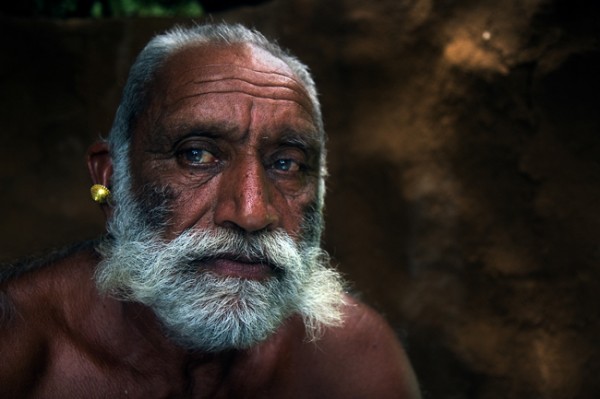
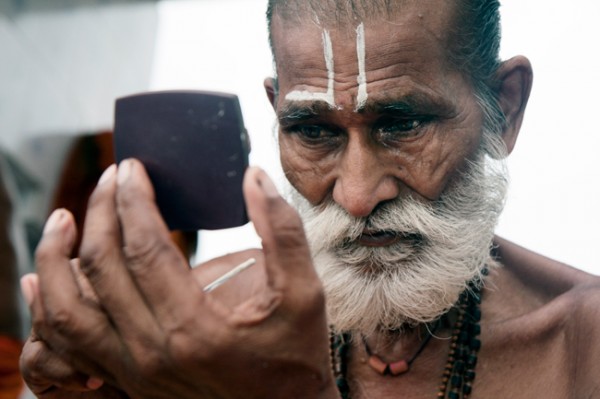
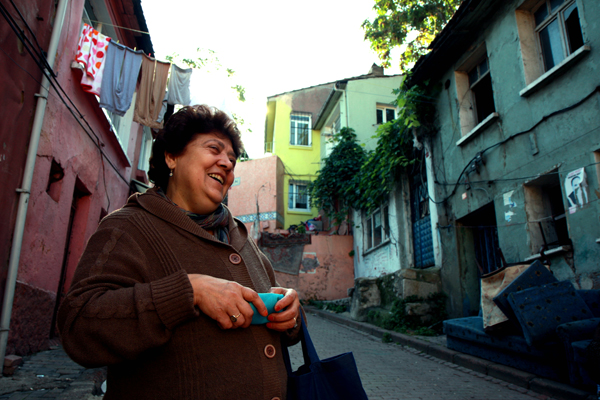
Have you ever met a person, while travelling abroad or at home, who has such an interesting face that you would really like to photograph?  But, just before you press the shutter, you suddenly think, “How am I going to shoot this”?

Because there are so many questions to answer: How do I approach a strange person? Should I photograph from a distance, with a Tele-photo lens, or should I get closer? What if the person will get offended or angry?

It depends on the situation but, in 99% of my portraits, I use what I like to call the “being involved” technique.  This technique requires the photographer to get closer to the subject, by using a wide focal length lens and there is no doubt, that the subject will be aware of the photographer and the camera.

Fstop of 4.5, shutter speed@10 and ISO 320

Fstop of 4.5, shutter speed@10 and ISO 320

There are so many advantages to using this method, for instance the ability to control the composition, the angle, the background, not to mention asking your subject for “one more take” and of course, the possibility of  making a new friend. Creating a close-up portrait, with the technique of “being involved” creates intimacy and gives warmness to the image that you wouldn’t get with a Tele-photo lens in most cases. But, with this method as my students are well aware, there is one big disadvantage, when a person becomes aware of the camera, his behavior and the authenticity and spontaneity of the moment disappears.

Once, on a very cold night, while shooting in Japan, I asked my good friend and great photographer Dave Doisneau – “What kind of super power he would like to have?” (Cold nights in Japan will make you ask stupid and philosophical questions) Dave answered “I would like to be invisible. To be able to photograph a person, inches away from their face without them being aware that I was even there”. This for me sums up my whole philosophy on portrait photography. Losing the spontaneity, or the fear of losing authenticity, are just weak excuses. As a photographer, your job is to bring all these qualities back to your image. How can you do that? (Here’s a little hint for you) Photoshop or expensive equipment won’t help you.

Fstop of 2.8, shutter speed@10 and ISO 100?

Fstop of 2.8, shutter speed@10 and ISO 100

As one of the great photographers, Ansel Adams once said: “You don’t take a photograph, you make it”. The difference between an amateur and a professional is in the preparation.Knowledge is power and the more you know about a person and their culture, the easier it will be for you to become invisible. While I was in the Wakhan valley, between the Afghan and Tajikistan border, I learned, in advance that the people who live there have many cultural dos and don’ts. From the way they greet a stranger (Right hand on the chest and a slight bow) to the proper way to react when invited to a local house (just say yes and prepare yourself for tea, and lots of it!).

Fstop of 4.5, shutter speed@1 and ISO 125

Fstop of 4.5, shutter speed@1 and ISO 125

So before I travel anywhere, I familiarize myself, in advance, with any photography related taboos.  From how will people respond to the camera, to things that you should not shoot. For example, did you know that the people of the Akha tribe in south East Asia, believe that photographing one of their tribe member will actually steal his soul?

You can learn all these things and more by consulting with a photographer who has already visited the place.  The internet is a great place to find him or her. You can consult travel forums, books, or even call the embassy of the country of your destination.

Fstop of 4.5, shutter speed@10 and ISO 200

Fstop of 4.5, shutter speed@10 and ISO 200

Many photographers will advise you to take your camera with you all the times. For me, the camera is just a tool, and as a tool it must not interfere. Have you ever felt uncomfortable because someone is aiming a camera at you? Have you ever thought how YOU look when you stand behind the camera? (A bit like holding a weapon right?).

Nobody likes it when you aim something at them without any explanation or permission. That’s why, when I encounter a new and interesting person, I would like to photograph, I first introduce myself as Oded the person before as Oded the photographer. by the time I take out my camera, the person has lost interest in me, and gone back on his work, I then become invisible and Voilà I can take my shot and I’ve make a new friend into the bargain.

In the past year, I have photographed hostile tribes in South East Asia, gypsy communities in Central Asia and even in the former Soviet Union. If there is one thing that I’ve learned from visiting those places, is that most people would actually like their picture taken, if we do it right. So please give yourself a confidence boast and try it. Anywhere you are on the globe, if you act with respect, be polite, and even have a little bit of sense of humor, most of the time people will act the same way towards you.

Yes, we’ve all got a horror story, of the one person who shouted at us while we took his photo. Think about it for a second; did it happen when you tried to shoot the person without his permission? If you approach a person with dignity, make a connection, and then you take out the camera, what the worst thing that can happen? They will say no, but at least you would have tried right?

Fstop of 5.6, shutter speed@15 and ISO 100

Fstop of 5.6, shutter speed@15 and ISO 100

When you found a person with a unique face, invest the time to break the ice with them, then when you finally have his approval for the shoot, if he’s very polite, you will probably have around 30 seconds to take the shoot before they moves on, that’s some pressure.

This may be the most important section of this article, that many photographers forget, just relax. Being stressed never helps especially when dealing with people or while creating art. It’s true you may not have much time to decide on the focal length, the background, the shooting angle, the shutter or the aperture.

Also, try not to let your technical level stand in your way. How? Before starting to shoot people, try your craft on still life. Flowers would be perfect to start with. Also it would be really wise to invest in some photography course (much more important than buying new equipment). Last but by no means least, don’t forget to RTFM- read the camera’s fu*** manual!

That’s right, creating interesting and strong portraits is not easy. Take your time to work on your craft. Shoot flowers, then your friends and family members. Learn, learn and learn everything you can about your camera and about your subject. Come with respect and most important – relax.

Fstop of 3.2, shutter speed@10 and ISO 200

Fstop of 3.2, shutter speed@10 and ISO 200

Oded Wagenstein is a Travel photographer and writer. He is a regular contributor to the National Geographic Traveler magazine (Israeli Edition) and he is known for his intimate portraits from around the world. You can join his Portrait & Travel Photography Facebook page  and continue to discuss on travel and people photography and get more amazing tips!

Post originally from: Digital Photography Tips.

Check out our more Photography Tips at Photography Tips for Beginners, Portrait Photography Tips and Wedding Photography Tips.

How to Photograph a Portrait of a Stranger with the WOW Factor


Digital Photography School

 
Comments Off on How to Photograph a Portrait of a Stranger with the WOW Factor

Posted in Photography


Blickfang – Snow, 1960

10 Sep

Ich bin der Meinung, dass man von guten Fotos nie genug bekommen kann. Und deshalb stelle ich Euch heute ein Bild vor, das an anderer Stelle schon einmal gezeigt wurde. Denn es schließt den ersten Teil der Reihe Fantastische Bildbände zur Straßenfotografie ab, nämlich mit dem Bildband „Saul Leiter“ aus der Photofile-Reihe.

Jedoch ist die Abbildung dieses Blickfanges nicht dem kleinen Bändchen entnommen, sondern dem zweisprachigen Band „Saul Leiter: Retrospektive – Haus der Photographie / Deichtorhallen Hamburg“*. Dieser ist mächtige 300 Seiten dick und mit den Maßen 23 x 28 x 2,8 cm auch kein Band, den man so leicht aus den Augen verliert.

Doch nun zu unserem Bild, das mittlerweile als Ikone der Fotografie gepriesen wird und ein Markenzeichen Saul Leiters ist. Hierzu möchte ich Brigitte Woischnik zitieren, die in einem Artikel auf Seite 236 Leiters Art, zu fotografieren so beschreibt:

Doch Saul Leiter ist nicht nur ein nimmermüder Flaneur, er ist auch ein stiller, geduldiger Beobachter. Die Ambivalenz zwischen dem direkten Sehen und dem Verborgenen zeigt sich in seinem gesamten Werk. Er fotografiert nicht nur die Tür und das Fenster eines Cafés oder Ladens, sondern bevorzugt durch dieselben hindurch. Das verborgene, nicht wirklich „sichtbare Innere“, das ist es, was er ergründen, was er sichtbar machen möchte.

Und als Paradebeispiel dient die Aufnahme „Snow“ aus dem Jahre 1960, zu finden auf Seite 42 des Bandes.

Saul Leiter, Leiter, Saul, NYC, New York, New York City, Snow 1960, 1960, Color, Colour, Farbe, Farbfotografie, Frühe Farbfotografie, Schnee

Leiter fotografierte durch eine von Tauwasser beschlagene und stellenweise abgewischte Scheibe, die den Hintergrund unscharf abstrahiert. Hinter – oder vor – der Scheibe steht ein Mann im Schnee und schaut sich irgendetwas an. Er hat eine Mütze auf und trägt grüne (Arbeits-)Kleidung. Im Hintergrund ziert die Aufnahme ein gelber Laster, der dem Bild einen feinen, dezenten Farbkontrast verleiht. Ein zweiter Mensch ist angeschnitten, mit dem der Protagonist jedoch nicht kommuniziert.

Dieses Bild habe ich in den letzten Monaten immer und immer wieder studiert. Und jedes Mal ertappte ich mich dabei, zu denken, dass dieser Herr auf sein Smartphone sieht oder gar ein Postbote ist, der mit seinem PDA die Lieferung überprüft. „Ach nein, stimmt ja gar nicht“, erinnere ich mich. „Herr Gommel, wir schreiben das Jahr 1960 und nicht 2013.“

So hat die Aufnahme etwas Magisches, Ungewohntes. Und obwohl ich eine große Liebe zu den Aufnahmen Martin Parrs hege, der direkt und offensichtlich fotografiert, schätze ich diese abstrakte, nicht direkte und nicht offensichtliche Bildsprache von Saul Leiter mindestens genauso. Sie spricht eine tiefere emotionale Ebene an, fasziniert und begeistert.

Lustigerweise habe ich (sehr wahrscheinlich) einen Fehler im Buch gefunden. Denn auf Seite 239 schreibt Woischnik zur fotografischen Variante, die am selben Ort aufgenommen wurde, folgenden Satz:

Auf die rechte Seite der Scheibe, die Regenstreifen unterbrechend, haben flinke Finger eine Nachricht geschrieben, …

Jedoch können wir, wenn wir uns „Snow“ genauer ansehen, erkennen, dass an der Scheibe braune Überbleibsel eines „L“ sind. Was darauf schließen lässt, dass es sich nicht um eine handgeschriebene Botschaft handelt, sondern viel mehr um eine aufgeklebte Schrift, die bis auf das L abgezogen wurde und deren klebrige Überreste die Feuchtigkeit nicht angenommen haben.

Den Bildband möchte ich dennoch sehr empfehlen. Denn er zeigt das umfassende Werk Leiters und bildet neben den Fotos seine besonderen Zeichnungen ab, die nicht minder signifikant sind, da Saul Leiter sich als Maler verstand.

* Das ist ein Affiliate-Link zu Amazon. Wenn Ihr darüber etwas bestellt, erhalten wir eine kleine Provision, Ihr zahlt aber keinen Cent mehr.


kwerfeldein – Fotografie Magazin

 
Comments Off on Blickfang – Snow, 1960

Posted in Equipment


Sample gallery: Sony’s 20.7-megapixel Xperia Z1 smartphone

09 Sep

DSC00116.jpg

We’ve spent the weekend shooting with Sony’s new flagship smartphone, the Xperia Z1. Eager to see what the device’s camera and 1/2.3 20.7MP CMOS sensor can do, we’ve put together a gallery of images and two video samples that demonstrate the Xperia Z1 in action, including its 8x digital zoom. See how we got on with the device at connect.dpreview.com.

News: Digital Photography Review (dpreview.com)

 
Comments Off on Sample gallery: Sony’s 20.7-megapixel Xperia Z1 smartphone

Posted in Uncategorized


Religious Conversions: 15 Houses of Worship Turned Secular

09 Sep

[ By Steph in Architecture & Public & Institutional. ]

Converted Churches Secular Main

Transforming these fifteen churches, monasteries and synagogues into homes, libraries and nightclubs hasn’t put a damper on their sense of reverence and grandeur. Former houses of worship all over the world retain all of their awe-inspiring original architectural elements like vaulted ceilings, arches, altars and stained glass windows while adjusting to needs that are more mundane.

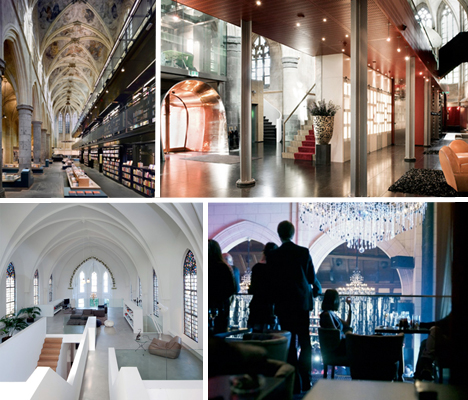
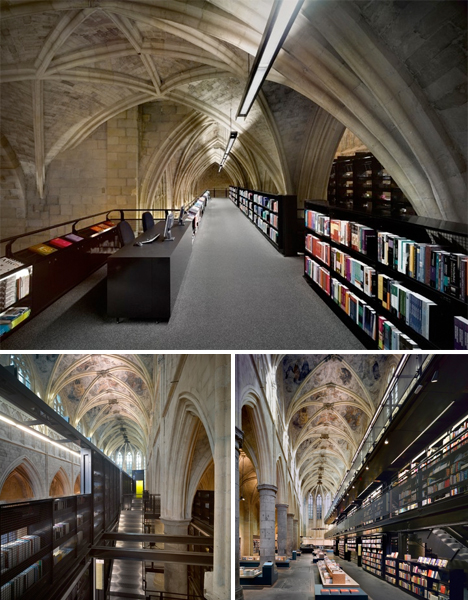
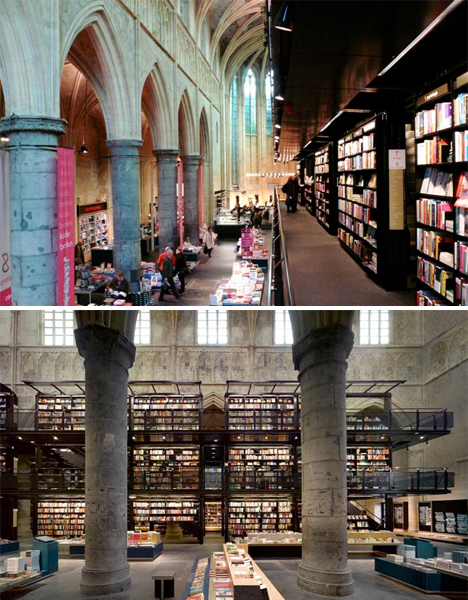
13th Century Church to Modern Library, Maastricht, Holland

Church Converted Library 1

Converted Church Library 2

A thirteenth-century Dominican church in Maastricht, Holland has been transformed into Selexyz Dominicanen, a massive bookstore. The 1,200-square-meter church will all of its elegant arches and vaults has been filled with a modern three-story volume containing row after row of books, to take advantage of the full height of the structure.

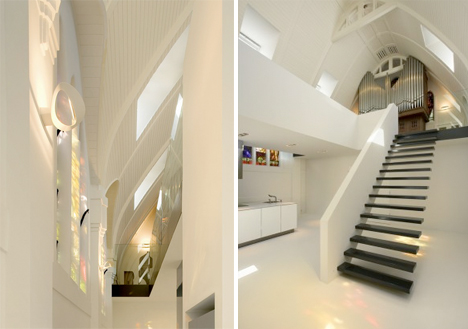
St. Jakobus Church to Home by Zecc Architects, The Netherlands

Converted Church Home Living Zecc 1

Converted Church Home Living Zecc 2

A modest, narrow chapel in The Netherlands that had fallen into disuse is now a private home. Like many other churches in the area, St. Jakobus was no longer needed for its intended purpose, so it was used as an antique store and even a meeting place for small concerts over the years. Then Zecc Architects came in, removed part of the mezzanine floor, painted nearly every surface stark white and inserted modular volume that provides enclosed rooms and a loft without compromising the grand feel of the space.

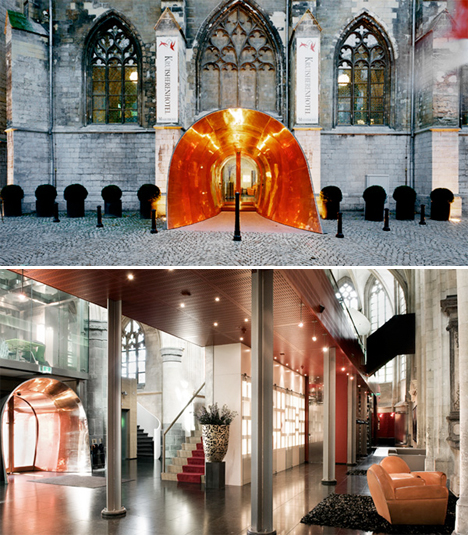
Gothic Monastery to Hotel, Maastricht, Holland

Converted Church Hotel

Travelers can take a different sort of comfort in a 15th century monastery in Maastricht than that for which it was originally built. The Crutched Friars is now the 60-room Kruisheren Hotel. The monastery houses the guest rooms, while the Gothic church contains the reception area, conference rooms, a library, a boutique and a coffee bar.

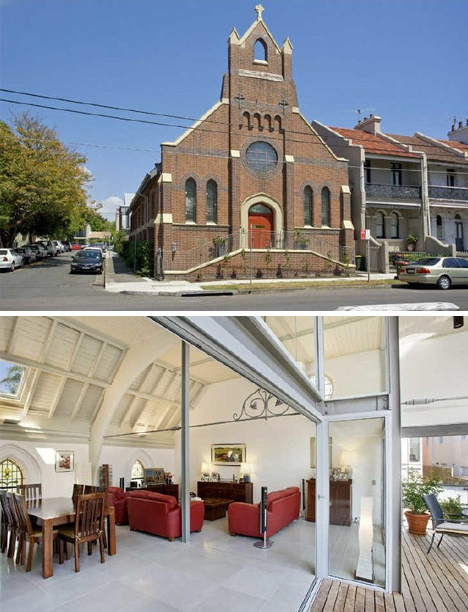
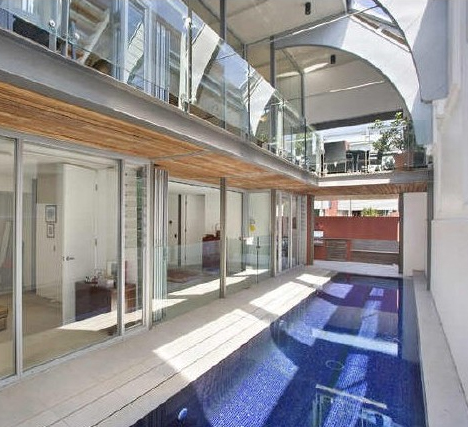
Ordinary Church Concealing Modern Home, Sydney, Australia

Converted Church Concealing Modern Home 1

Converted Church Concealing Modern Home 2

What appears to be an ordinary church in Sydney, Australia is actually a modern home. You wouldn’t guess from the outside that just within those walls is a light-filled living space with an indoor swimming pool, glazed walls and a marble commercial kitchen.

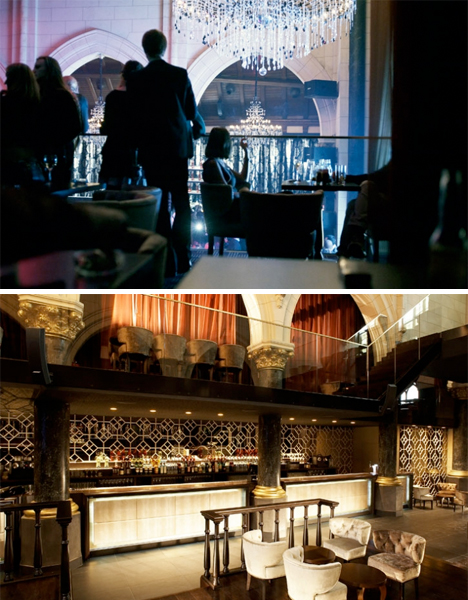
Anglican Church to Spirito Martini Bar, Brussels, Belgium

Converted CHurch Spirito Martini Bar

The Spirito-Martini is a luxurious hotspot in Brussels with three bars, five different lounges and a private room, all set within a former Anglican church. All of the major architectural elements of the church have been retained, including extravagant chandeliers. The designers outfitted the club in Victorian-style furniture, damask and dark wood.

Next Page:
Religious Conversions 15 Houses Of Worship Turned Secular

Share on Facebook


[ By Steph in Architecture & Public & Institutional. ]

[ WebUrbanist | Archives | Galleries | Privacy | TOS ]


WebUrbanist

 
Comments Off on Religious Conversions: 15 Houses of Worship Turned Secular

Posted in Creativity