RSS
 

Archive for September, 2013

Your smartphone camera: How many megapixels do you need?

20 Sep

megapixels.png

Megapixels. How did such a simple concept become so wrapped up in hyperbole, controversy and confusion? The current generation of premium smartphones includes a 4MP model from HTC, 8MP from both Apple and Google, 13MP from Samsung and LG, 20.7MP Sony and 41MP from Nokia. Surely they can’t all be right? We examine how many megapixels you really need on your phone, over on connect.dpreview.com.

News: Digital Photography Review (dpreview.com)

 
Comments Off on Your smartphone camera: How many megapixels do you need?

Posted in Uncategorized


Behind the Shot: Lost in Space

20 Sep

lost_01_final_image.jpg

In this article, nature photographer Erez Marom takes us through the complicated process he used to achieve his image ‘Lost in Space’. As well as equipment choice and location, Erez also explains in detail exactly how he went about adjusting and manipulating multiple images in software to create the final result. Click through for the full article. 

News: Digital Photography Review (dpreview.com)

 
Comments Off on Behind the Shot: Lost in Space

Posted in Uncategorized


Sigma updates firmware for 35mm F1.4 and 17-70mm F2.8-4 lenses

20 Sep

sigma-35-1p4.png

Sigma has announced firmware updates for two of its most recent lenses, the 35mm F1.4 DG HSM A012 (Canon mount) and 17-70mm F2.8-4 DC Macro OS HSM C013 (Canon, Nikon and Sigma mounts). The lenses must be updated using Sigma’s USB Dock, and owners should download the latest Version 1.1 of Sigma Optimization Pro software first. At the moment it’s unclear what benefits the lens firmware updates bring. Click through for more details and the download link. 

News: Digital Photography Review (dpreview.com)

 
Comments Off on Sigma updates firmware for 35mm F1.4 and 17-70mm F2.8-4 lenses

Posted in Uncategorized


Sigma updates firmware for 35mm F1.4 and 17-70mm F2.8-4 lenses

20 Sep

sigma-35-1p4.png

Sigma has announced firmware updates for two of its most recent lenses, the 35mm F1.4 DG HSM A012 (Canon mount) and 17-70mm F2.8-4 DC Macro OS HSM C013 (Canon, Nikon and Sigma mounts). The lenses must be updated using Sigma’s USB Dock, and owners should download the latest Version 1.1 of Sigma Optimization Pro software first. At the moment it’s unclear what benefits the lens firmware updates bring. Click through for more details and the download link. 

News: Digital Photography Review (dpreview.com)

 
Comments Off on Sigma updates firmware for 35mm F1.4 and 17-70mm F2.8-4 lenses

Posted in Uncategorized


Mit der Straßenfotografie Geschichten erzählen

20 Sep

Ein Beitrag von: Justin Vogel

Vor fünf, sechs Jahren habe ich damit begonnen, auf der Straße zu fotografieren. Ich denke, dass mein Interesse daran von meiner Begeisterung fürs Geschichtenerzählen herrührt. Ich habe es immer sehr genossen, beim Erzählen Fakten bis ins Extreme zu ziehen, Unfälle einzubauen und sie in den größeren Lebensbegriff zu setzen.

Dinge, die ich gesehen hatte, so unterhaltsam wie möglich zu beschreiben, beizeiten ins Erfundene abzudriften. Und irgendwie bietet mir die Fotografie den besten Weg, das zu tun.

Jesus Died © Justin Vogel

Grundsätzlich arbeite ich immer daran, bessere Straßenfotos zu machen. Ich betrachte die Straßenfotografie als eine Übung im Problemlösen.

Ich liebe Puzzle. Und die Straßenfotografie stellt mich immer wieder vor neue zu lösende Probleme – und die Lösung für sie zu finden, ist unglaublich herausfordernd. Jeder Fotoausflug liefert mir daher die Möglichkeit, ein Problem zu adressieren, das mir zuvor entging.

Outlier © Justin Vogel

Mein Interesse an dieser Form von Fotos wurde geweckt, als ich über die Flickr-Gruppe HCSP (Hardcore Street Photography) stolperte und das hat in der Tat mein Leben verändert.

Von Bryan Formhals, Jared Lorio, John Goldsmith und James Dodd zu lernen, die schon eine ganze Weile länger unterwegs waren, war für mich eine massive Schatztruhe voller Wissen und Erfahrung und für meine Straßenfotografie-Bildung unverzichtbar.

In dieser Gruppe zu partizipieren, verlieh mir eine Disziplin, die ich wahrscheinlich ohne die Gruppe nicht erzielt hätte. Eine Sache, die ich lernte, war, die Variablen so stark wie möglich zu reduzieren, um die Resultate beim Fotografieren zu kontrollieren. Ich benutze meistens nur zwei Kameras.

Snake Lady © Justin Vogel

Eine Leica M2 und eine Olympus XA4. Beide mit einer 28mm-Linse und beide nur mit Farbnegativen. Gewöhnlich fotografiere ich mit natürlichem Licht und bevorzuge die langen Schatten am Spätnachmittag.

Nachdem ich mich bei HCSP ein paar Jahre lang eingebracht hatte, wurde ich schließlich zum Administrator der Gruppe ernannt. Seither fühle ich mich dazu verpflichtet, dort mein Wissen und meine Erfahrung mit den jüngeren, weniger erfahrenen Straßenfotografen zu teilen. Auch das ist sehr lohnenswert.

Weiter hatte ich das Glück, anderen Fotografen-Kollektiven beizutreten: Strang.rs und Burn My Eye. Mit solch vielfältigen Gruppen von Fotografen zu arbeiten, hat mir geholfen, bezogen auf das, was ich sehen will und das, was ich kreieren möchte, meinen Blick zu schärfen.

100 yards from september ground zero © Justin Vogel

Ich kann es daher jedem nur empfehlen, gleichgesinnte Fotografen zu suchen, um Ideen zu entwickeln und Achtsamkeit zu sensibilisieren.

Ganz zu Beginn, als ich anfing, mit diesen Fotografen zu arbeiten, war ich wirklich sehr konservativ bezüglich den „Regeln“ der Straßenfotografie. Doch einem so weiten Spektrum von Ansätzen und Techniken ausgesetzt zu sein, hat mein Empfindungsvermögen enorm erweitert.

Ich habe keine rigiden Überzeugungen mehr, insbesondere dazu, was erlaubt ist oder was zu weit geht. Für mich ist die Idee der Straßenfotografie durch die Intentionen des Fotografen definiert. Ich hänge nicht mehr daran, ein Purist zu sein. Weder auf Inhalte bezogen, noch bezüglich des Arbeitsansatzes.

Lingering Doubts © Justin Vogel

Mein Ansatz ist konsistent, egal, was oder wen ich fotografiere. Ich überlasse es anderen, zu kategorisieren. Viel mehr bin ich bemüht, die Geschichten, das Leben, den Humor und die Traurigkeit des Alltags so effektiv wie möglich zu vermitteln.

* Dieser Artikel wurde aus dem Englischen von Martin Gommel übersetzt.


kwerfeldein – Fotografie Magazin

 
Comments Off on Mit der Straßenfotografie Geschichten erzählen

Posted in Equipment


iPhone 5s teardown: iFixit digs into Apple’s newest phone

20 Sep

2VGKpWTuiSVrUmSN.jpeg

While iPhone fanatics worldwide are lining up for Apple’s new iPhone 5s, the folks at iFixit are already taking the smartphone apart. The team has already torn into the latest flagship iPhone to take a closer look at a revamped iSight camera, that new A7 chip and more. Dig in with us at connect.dpreview.com.

News: Digital Photography Review (dpreview.com)

 
Comments Off on iPhone 5s teardown: iFixit digs into Apple’s newest phone

Posted in Uncategorized


Über das Leben und meinen Platz darin

20 Sep

Ein Beitrag von: Jeffrey Ladd

In den späten 1980er Jahren studierte ich Fotografie an der „School of Visual Arts“ in New York City und einer meiner wichtigsten Lehrer dort war ein Mann namens Thomas Roma.

Tom ist ein sehr angesehener Fotograf und hat einen immensen fotografischen Output: Er ist der Autor von 15 Fotobüchern, wurde mit der Guggenheim Fellowship geehrt und hatte 1996 eine Einzelausstellung am Museum of Modern Art in New York.

Daneben stellte er in seiner Freizeit Kameras unter dem Namen Siciliano Camera Works in Brooklyn her. Seine Mittelformatkameras wurden von Lee Friedlander, Tod Papageorge, Henry Wessel, Len Jenshal und vielen andern Fotografen seit den 70ern benutzt.

Eines seiner Kamera-Designs, das mein Interesse weckte, war eine 35mm-Panorama-Kamera, die eine Mittelformat-Mamiya-Linse mit einer Nikon-F-Kamera durch einen Aluminium-Adapter, den er selbst hergestellt hatte, verband.

Es war eine sehr schöne Kamera mit einem klaren, hellen Sucher, die ein 3×1″-Format auf Kleinbild-Film belichtete. Er nannte sie „Pannaroma 1X3“ nach seiner Frau Ann und stellte insgesamt 60 Exemplare davon her.

07-1668-41 © Jeffrey Ladd

1991 hatte ich das Glück, eine Kamera aus zweiter Hand etwas günstiger kaufen zu können und arbeitete zehn Jahre daran, mit ihr zu fotografieren. Obwohl es eine einfach zu bedienende Kamera war – alles war manuell einzustellen, Belichtungszeit und Blende, fokussiert wurde über die Schärfentiefe-Skala auf dem Objektiv – war das Erstellen eines schnellen Bildes mit einer einfachen Juxtaposition zweier Objekte extrem schwierig. Ich habe eine kleine Handvoll Bilder gemacht, die ich als gelungen bewerte.

Bevor ich diese Kamera hatte, fotografierte ich hauptsächlich mit einer Messsucherkamera von Leica in U-Bahnen, Nachtclubs und auf den Straßen. Mit diesem neuen Werkzeug erweiterte sich mein Interesse jedoch und schloss Landschaften, Nachbarschaften, intime Portraits meiner Beziehungen, Freunde und Familie mit ein.

10-4138-12 © Jeffrey Ladd

Diese Arbeit mit der Pannaroma 1X3, die hier vorgestellt wird, stellte ich später unter dem Projekt-Titel „Lay of the Land“ zusammen.

In meiner Praxis hat Fotografie weniger damit zu tun, „gute Fotos“ zu machen. Ich fotografiere stattdessen, um über das Leben und meinen Platz darin zu lernen.

Kameras sind treue Begleiter geworden und manchmal fühlen sie sich an wie eine Erweiterung meines Schreibarmes und die guten Fotos, die selten in meinen Kontaktbögen auftauchen, sind erfreuliche Nebenprodukte meiner Neugier und Ausdauer.

Während ich auf den Straßen von Manhattan fotografierte, war ich mehr an kleinen, unscheinbaren Gesten des Lebens interessiert als an den offensichtlichen Dingen wie einem dramatischen Streit auf der Straße.

14-2040-15a © Jeffrey Ladd

Ich bin während meiner „Karriere“ an viele unterschiedliche Themen herangegangen, jedoch stoßen immer noch die Dinge, die ich in meinem Hinterhof fotografiere, auf Resonanz.

Die Sprache, derer sich meine Fotografie bedient – schwarzweiß und im Dokumentarstil – wird sicher vielen bekannt vorkommen, die mit der Geschichte der Fotografie vertraut sind.

Ich möchte nicht das Rad neu erfinden, eher etwas über meinen Instinkt und meine Neugier herausfinden, indem ich dieselbe Sprache der Künstler benutze, zu denen ich immer wieder aufgeschaut habe, um mich zu inspirieren.

13-2008-13 © Jeffrey Ladd

Fotografie in dieser digitalen Epoche scheint so einfach: Du machst die Kamera an, richtest sie auf irgendetwas, wählst den Ausschnitt und einen Moment. Diese Aktion kann fast jeder durchführen und etwas machen, das wie ein „tolles Bild“ aussieht.

Doch die wesentlich schwierigere Aufgabe ist es, etwas zu machen, das ein Betrachter über Jahrzehnte oder ein ganzes Leben lang ansieht und das für ihn jedes Mal eine neue Entdeckung ist.

Das ist es, was mich an der Fotografie begeistert. Wie kann ich über 25 Jahre lang ein Foto von Robert Frank ansehen und es packt mich immer noch?

08-2089-05 © Jeffrey Ladd

Ich kann nicht denselben Witz hören, das gleiche Buch lesen oder den gleichen Film hunderte Male ansehen, ohne dass es langweilig wird. Aber manche Fotografien können mich nach Hunderten (oder vielleicht Tausenden?) Betrachtungen immer noch mitreißen und mein Verständnis von ihnen – gar vom Leben selbst – aufrütteln.

Darüber bin ich verwundert. Wie kann ich das in mit meinen eigenen Bildern erreichen, ohne auf große Theatralik oder künstlerisches, intensives „Lifting“ angewiesen zu sein?

Nach 25 Jahren bin ich aus New York weggezogen und habe eine deutsche Frau geheiratet, die meine Sehnsucht, in Europa zu leben, teilte. So zogen wir nach Köln. Mein neues Projekt dreht sich um das Erfassen der Feinheiten dessen, was es bedeutet, „zu Hause zu sein“, da ich nun mein Leben woanders führe und versuche, eine neue Sprache zu lernen.

05-1757-20 © Jeffrey Ladd

Ebenfalls entwickle ich gerade eine neue visuelle Sprache mit einer alten Mittelformat-Mamiya, mit der ich meine Wohngegend in Köln fotografiere. Und ich verstehe, dass viele Betrachter ganz anders denken werden über das, was ich an meinen Fotos als wichtig erachte. Ich respektiere das.

Meine Beziehung zur Fotografie ist von außen betrachtet vollständig undramatisch, jedoch ist sie der stärkste Leitfaden in meinem täglichen Leben und der Neugier. Ich wüsste nicht, was ich sonst tun sollte und werde dies mein Leben lang weiter verfolgen.

Martin Gommel hat diesen Artikel für Euch aus dem Englischen ins Deutsche übersetzt.


kwerfeldein – Fotografie Magazin

 
Comments Off on Über das Leben und meinen Platz darin

Posted in Equipment


NeverWet Graffiti: Invisible-Ink Street Art Shows Up in Rain

20 Sep

[ By WebUrbanist in Art & Street Art & Graffiti. ]

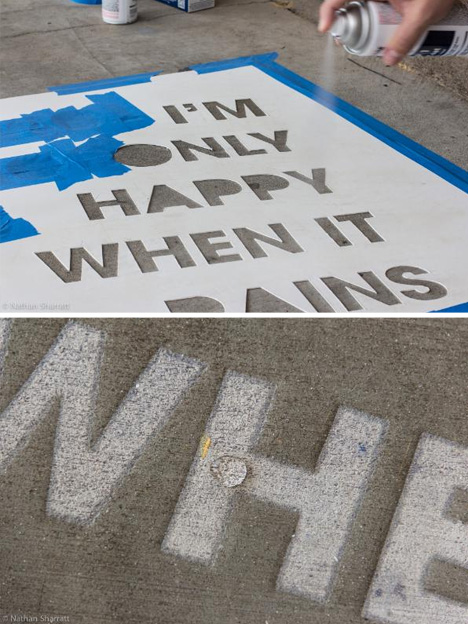
wet only graffiti

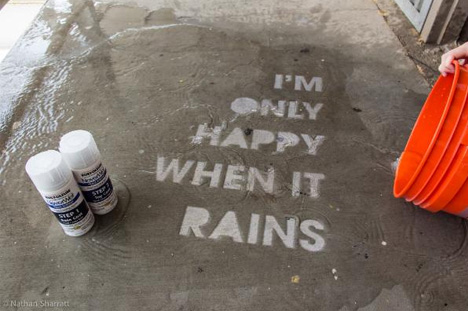
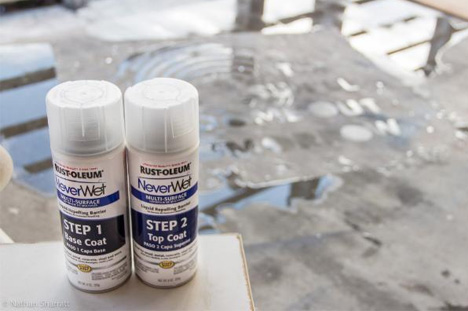
NeverWet has been making headlines as the silicon-based spray that repels liquids from clothes and electronics, but this off-book use shows another fascinating application that may be even longer-lasting: urban art invisible until poured upon.

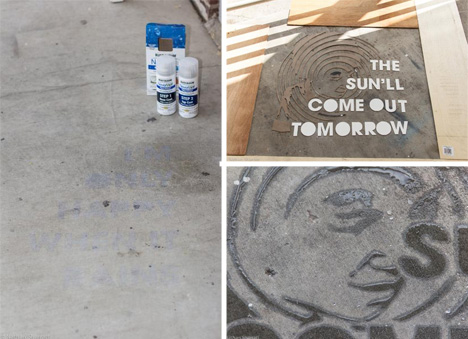
neverwet graffiti stencil pavement

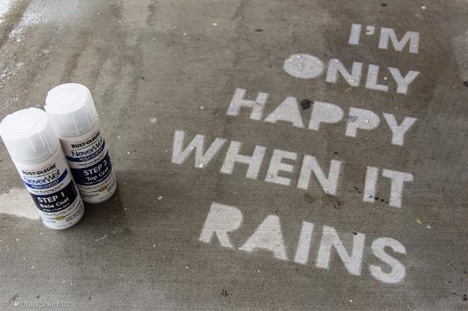
As part of a Home Depot competition, Nathan Sharratt decided to create stencils and spray NeverWet onto streets and sidewalks, resulting in areas of deflected moisture surrounded by soaked concrete. Like invisible ink, the sprayed areas remain hidden until another liquid is applied.

rain visible street spray

Given criticism of NeverWet when applied to shoes (apparently it can discolor or leave residue) and phones (touchscreen and durability issues have been reported), this may prove to be a more persistent, if unintended, long-term application of the product.

wet spray paint idea

And for any interested subversive artists, it could prove a unusual boon when bothered by police: how will the authorities justify arresting someone for spraying an invisible coating on a public surface? Meanwhile, best of luck to Nathan in the contest – a win here is surely deserved!

wet spray finished project

Short-form instructions for those looking to (officially: don’t!) try this at home or in the neighborhood: “Step 1: You need a stencil. You can do something simple or use an image that includes a fair amount of detail. I created my own stencils from cardboard, but there’s no reason you can’t use a ready-made or store-bought stencil. Just know that NeverWet will get sprayed on that, too. Step 2: Place stencil on concrete. I recommend that you only try this on light-colored concrete for best results. Step 3: Spray the NeverWet into the cut-out areas of your stencil according to the manufacturer’s instructions found on the label. I did two base coats and two top coats.”

Share on Facebook


[ By WebUrbanist in Art & Street Art & Graffiti. ]

[ WebUrbanist | Archives | Galleries | Privacy | TOS ]


WebUrbanist

 
Comments Off on NeverWet Graffiti: Invisible-Ink Street Art Shows Up in Rain

Posted in Creativity


19. September 2013

20 Sep

Ein Beitrag von: Daniel Ernst

Obersee © Daniel Ernst


kwerfeldein – Fotografie Magazin

 
Comments Off on 19. September 2013

Posted in Equipment


How I Shot It: Deanne Fitzmaurice Shares the Story Behind the Shot

20 Sep

A post by Pulitzer Prize winning documentary photographer Deanne Fitzmaurice. Presenter in this week’s CreativeLIVE Photo Week

Kibera Tracks

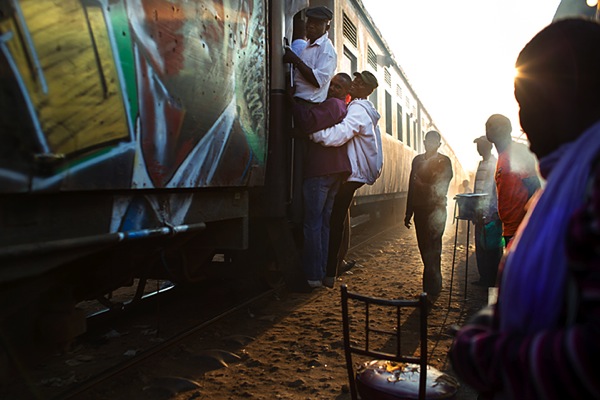
So there I was, waiting in the quiet darkness that precedes Kibera’s beautiful sunrises, for the 12 disciples — our security team from a local tribal gang. They were the type of guys you want by your side and the definition of the guys you didn’t want to cross. Despite the high crime and desperation in Kibera, when any of those 12 guys were by my side, I felt safe and free to photograph as much as I wanted without having to look over my shoulder.

At the time of my visit, Kibera wasn’t just the largest slum in Kenya, it was, and as far as I know, still is, the largest slum in Africa. With two and a half weeks in the slum for our shoot, the crew and I had some time — which is really valuable in documentary photography work – time to research, time to talk to locals, time to scout locations, and time to return to promising locations. During our time observing the community, we discovered there was an exodus early in the morning, as many residents of Kibera left to go to work in local factories to earn meager wages.

Always thinking about strong storytelling visuals, we thought it was a good opportunity to get some footage and images of this mass daily evacuation. The early-rising Kiberans used the railroad tracks as a main thoroughfare, and there were little shops alongside the tracks and vendors serving food. We wanted to shoot at sunrise with the hope of catching that beautiful, golden light.

On this early morning, I was shooting both stills and motion, trying to capture the mood and the feel of this unique place. I knew that shortly after the sun came up at 6:45am, the local train was scheduled to come through. I always try to position myself and my camera where there are the best odds of making a good image.

D3 8634

I started building the photograph in my head, working on the things I could control, and let everything else go to chance. I saw some vendors cooking some ugali, a cornmeal bread, causing smoke to rise from the cooking. I thought if I shot backlit, the smoke would help capture the mood of what I was seeing. I was also keenly aware that shooting into the sun can work either for you or against you.

D3 8877

I moved in closer to where the smoke was rising so I had two contrasting elements, the sunrise and the smoke. I heard the train approaching and the masses of people started to rush to get off the tracks and onto the train.

My third element was the train. The only subject left to chance at this point was the people. I didn’t know where they would be or what they would be doing, but I knew I had all three other elements of the composition locked in. This is the fun part for me, in all of my work; when I build the composition and wait to see if I am going to get lucky.

My favourite was this image where three guys jumped up onto the train at the last minute as a starburst began to peek through. The smoke lends nice depth and layers to the photograph and the train was splattered with graffiti, adding a burst of color.

D3 8947

What Gear Did I Use?

I shot these photos with manual settings on a Canon 5D MKIII with a 35mm f1.4 shot at 1/500th at f2.8, ISO 200. I was carrying my equipment in a Think Tank Change Up convertible belt pack/shoulder/ bag and a Think Tank Shape shifter backpack. For the video I was using a Zacuto z-finder, a Zacuto Target rig and a 3 Legged Thing tripod.

To find out more about Deanne and her photography tips, catch her free course during creativeLIVE’s Photo Week

Deanne Fitzmaurice is a Pulitzer Prize winning documentary photographer and multimedia storyteller based in San Francisco, California. She is a regular contributor to Sports Illustrated and ESPN the Magazine, and has also been published in TIME, Newsweek, The Economist, Stern, and GEO. Deanne has also partnered with foundations and non-profits including NPR, The Bill and Melinda Gates Foundation, and the James Irvine Foundation.

Post originally from: Digital Photography Tips.

Check out our more Photography Tips at Photography Tips for Beginners, Portrait Photography Tips and Wedding Photography Tips.

How I Shot It: Deanne Fitzmaurice Shares the Story Behind the Shot


Digital Photography School

 
Comments Off on How I Shot It: Deanne Fitzmaurice Shares the Story Behind the Shot

Posted in Photography