RSS
 

Archive for August, 2013

3 Reasons to Shoot Vertical Aspect Landscapes and 6 Tips on How to Shoot Them

08 Aug

A Guest Contribution by Todd Sisson – author of our brand new Landscape Photography eBook (currently 33% off for 7 more days only).

The majority of landscape images are photographed in the horizontal aspect. I guess this because the horizontal format approximates the way in which we perceive ‘reality.’ However landscapes look stunning in the vertical format and often the unique characteristics of the upright format suit a scene better than a horizontal* composition. I am guilty of undershooting verticals these days, primarily for commercial reasons, but in any given shooting situation I try to remind myself to seek both a vertical and a horizontal composition from a scene.

Here’s why I think you should photograph vertically and some quick tips for successful upright image making.

Reason One: Verticals are Easy to Learn

Vertical composition using a wide angle or ultra-wide lens is the fast track to making interesting landscape images. My first successful landscapes were all vertical compositions where I found a moderately photogenic foreground object and used this to lead into the greater scene. To this day I find it easier to frame up an interesting sunset in the vertical format. I use rocks, grasses, flowers – just about anything with form to introduce the viewer’s eye to the scene.
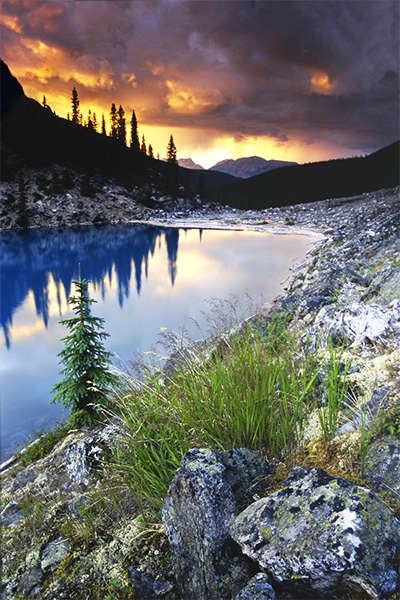
Moraine Lake, Alberta Canada (1997).  Nikon F601, Nikkor 24mm, f/16, (shutter speed unknown), Fuji Velvia and most importantly, Lee 3 stop GND filter.  This was the first image that I ever made that actually turned out how I thought it would!  Note that foreground elements don't have to be spectacular to work, they just have to be well arranged in the frame and complement the rest of the scene.  When I was learning, I found it easier to eliminate foreground distractions and make a 'tight' composition in the vertical format. As a result, I shot far too many verticals in my early days and very few good horizontal images...

Moraine Lake, Alberta Canada (1997). Nikon F601, Nikkor 24mm, f/16, (shutter speed unknown), Fuji Velvia and most importantly, Lee 3 stop GND filter. This was the first image that I ever made that actually turned out how I thought it would! Note that foreground elements don’t have to be spectacular to work, they just have to be well arranged in the frame and complement the rest of the scene. When I was learning, I found it easier to eliminate foreground distractions and make a ‘tight’ composition in the vertical format. As a result, I shot far too many verticals in my early days and very few good horizontal images…

Reason Two: Vertical Compositions can be more Dynamic

In this dPS blog post, I explained the principles of ‘dynamic landscape compositions’. What I didn’t reveal in that article (for some inexplicable reason) was that vertical compositions can often accentuate the dynamic qualities of an image – particularly when using an ultra-wide lens.
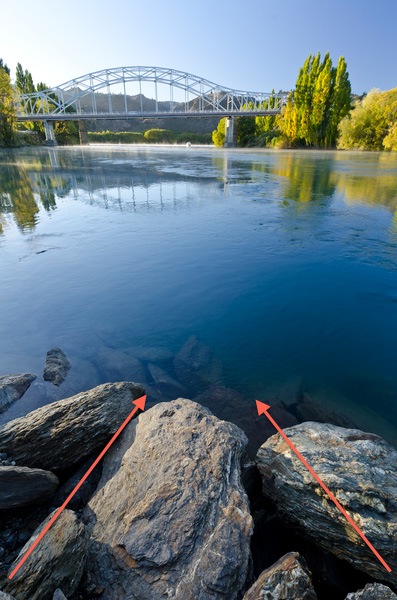
The Clutha River at Alexandra (it's not wonky, the bridge slopes downhill...).  Nikon D7000, Nikkor 12-24mm f/4 DX, Marumi Polarizer. 12 mm, f/11, 1/13th, ISO100.  The vertical format accentuated the leading lines present in the foreground rocks.  Getting low and tilting down on an ultra-wide lens distorts and extends the perceived length of leading lines in the foreground.
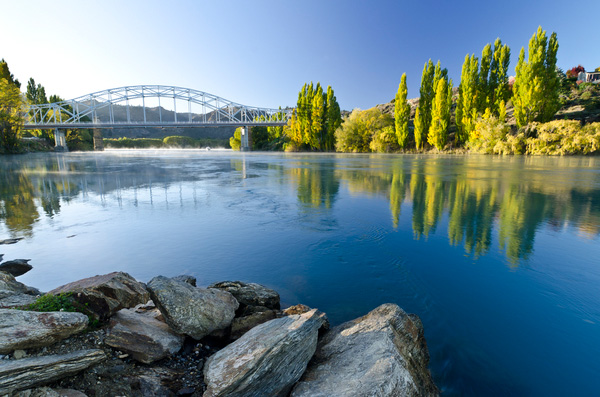
The Clutha River at Alexandra (it’s not wonky, the bridge slopes downhill…). Nikon D7000, Nikkor 12-24mm f/4 DX, Marumi Polarizer. 12 mm, f/11, 1/13th, ISO100. The vertical format accentuated the leading lines present in the foreground rocks. Getting low and tilting down on an ultra-wide lens distorts and extends the perceived length of leading lines in the foreground.

The Clutha River at Alexandra (the bridge still slopes downhill – I promise!).  Nikon D7000, Nikkor 12-24mm f/4 DX, Marumi Polarizer. 12 mm, f/11, 1/13th, ISO100.  When shooting horizontally, the bridge and trees would not be in frame if we used the same camera angles and proximity that were applied in the vertical format. In this case I had to step back and recompose to include everything, which reduced the dynamic impact of the rocks.

The Clutha River at Alexandra (the bridge still slopes downhill – I promise!). Nikon D7000, Nikkor 12-24mm f/4 DX, Marumi Polarizer. 12 mm, f/11, 1/13th, ISO100. When shooting horizontally, the bridge and trees would not be in frame if we used the same camera angles and proximity that were applied in the vertical format. In this case I had to step back and recompose to include everything, which reduced the dynamic impact of the rocks.

Reason Three: Verticals Sell Well

In the introduction I polluted the artistic sanctity of the article by mentioning ‘commercial reasons’. Five years ago we made most of our living from selling postcards of our images – horizontal postcards vastly outsell vertical postcards, and they fit better on a display stand, so I found myself inadvertently locked into a horizontal mindset (as I mentioned last week, deep thought and self-awareness are not my strong point). This sales trend is definitely mirrored in our website where the bulk of our print sales are horizontal.

However, In the past year we have ramped up our stock photography activity and this is one area where vertical images sell extremely well – especially for editorial usage and magazine covers where the format works beautifully with the vertical layout of printed media. Consequently, we are shooting a lot more vertical images. You may not be a full-time photographer but there are myriad ways to earn money from your photographic hobby these days, don’t leave money on the table – shoot verticals along with your horizontal compositions.

Vertical Shooting Tip 1: Get Low and Close

As I noted in the previous image, getting low and close accentuates the visual power of leading lines and dramatically increases the visual weight of foreground features. To go low you will need to use a tripod that has no centre column in order to get super close to the ground, I have detailed our tripod advice here which may be of interest if you are perplexed by the ins and outs of the tripod purchasing process.
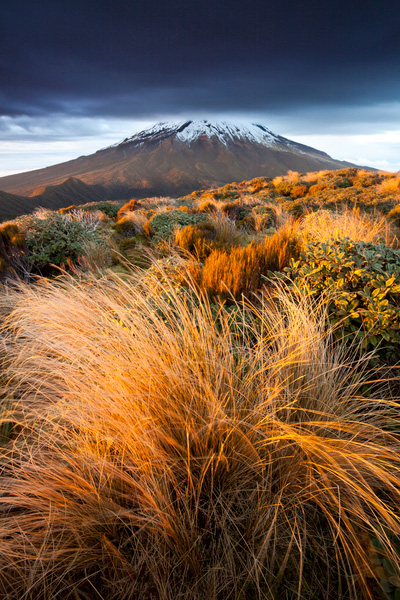
Mount Egmont New Zealand. Canon 5d mkii, Canon 17-40mm f/4 ultra-wide, Marumi polarizer. 17 mm, f/16, 1 sec, ISO100. By getting implausibly close to the foreground grass in this scene I have eliminated other distracting elements, increased the visual weight of the grasses and accentuated the leading lines in the bottom right of shot. As well as being close, I was also very low to the ground while making this image.

Mount Egmont New Zealand. Canon 5d mkii, Canon 17-40mm f/4 ultra-wide, Marumi polarizer. 17 mm, f/16, 1 sec, ISO100. By getting implausibly close to the foreground grass in this scene I have eliminated other distracting elements, increased the visual weight of the grasses and accentuated the leading lines in the bottom right of shot. As well as being close, I was also very low to the ground while making this image.

Vertical Shooting Tip 2: Get High and Close

When using an ultra-wide lens it is possible to include the full sweep of a scene and accentuate the visual dynamics of the image by getting above the foreground elements and composing vertically. To achieve this you will need a tripod that extends well above the height of your subject matter and then angle the camera downwards.
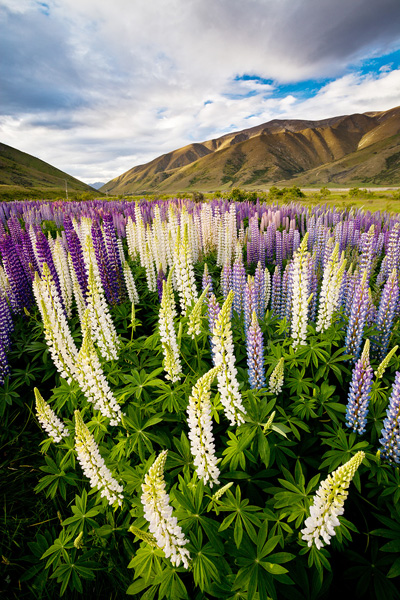
Lupine flowers, Mackenzie basin New Zealand (by Sarah Sisson). Canon 5d mkii, Canon 17-40mm f/4 ultra-wide, Marumi polarizer. 17 mm, f/16, 1/8th sec, ISO100. Sarah had to fully extend her tripod and stand on a box in order to get the camera above these chest high lupin flowers.  The high perspective meant that all of the meadow is visible  and accentuated the space between flowers in the foreground.

Lupine flowers, Mackenzie basin New Zealand (by Sarah Sisson). Canon 5d mkii, Canon 17-40mm f/4 ultra-wide, Marumi polarizer. 17 mm, f/16, 1/8th sec, ISO100. Sarah had to fully extend her tripod and stand on a box in order to get the camera above these chest high lupin flowers. The high perspective meant that all of the meadow is visible and accentuated the space between flowers in the foreground.

Vertical Shooting Tip 3: Break down the Composition

When composing strong verticals I tend to ‘break down’ the scene into foreground, midground and background (the same thinking helps with horizontal images of course). A good composition will contain interest in all three of these visual zones – which roughly approximates the rule of thirds compositional guidelines.
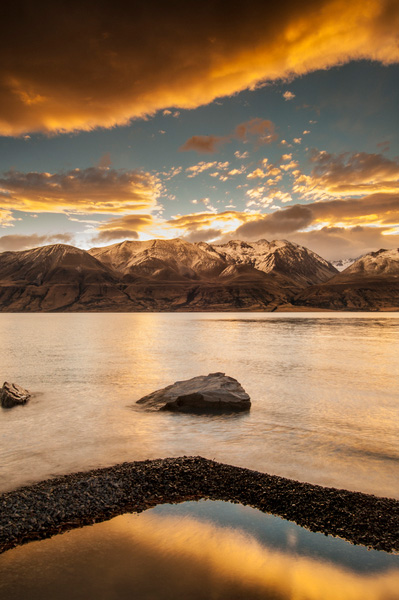
Lake Pukaki New Zealand.  Nikon D800e, Nikkor 17-35mm f/2.8 ultra-wide lens, Marumi Polarizer and Singh Ray 3 stop GND filter. This image has layers of visual interest in the foreground (gravel bar and rocks) mid-ground (reflected color & mountains) and the background (the sky). Note that the terms foreground, mid-ground and background align loosely with the principles of the rule of third – I find that I shoot more in sync with the rule of thirds for verticals than horizontals.

Lake Pukaki New Zealand. Nikon D800e, Nikkor 17-35mm f/2.8 ultra-wide lens, Marumi Polarizer and Singh Ray 3 stop GND filter. This image has layers of visual interest in the foreground (gravel bar and rocks) mid-ground (reflected color & mountains) and the background (the sky). Note that the terms foreground, mid-ground and background align loosely with the principles of the rule of third – I find that I shoot more in sync with the rule of thirds for verticals than horizontals.

Vertical Shooting Tip 4: – Leave some Space

Having just referred to the dreaded rule of thirds, I feel it my duty to throw a spanner into the works. Try messing with your vertical compositions by leaving ‘too much’ empty space. Dead space can look cool and graphic designers love it for dropping text into (sales tip).
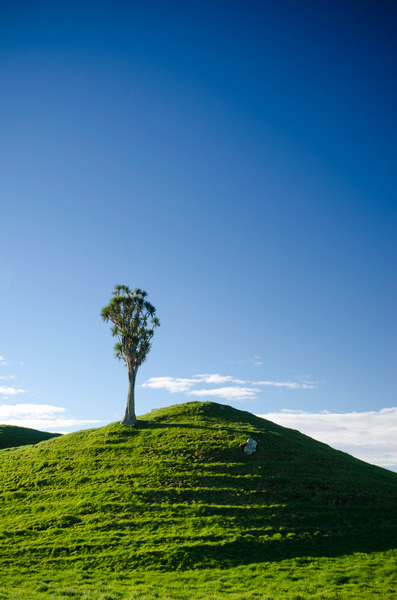
Lone cabbage tree, Taranaki New Zealand.  Nikon D7000, Nikkor 16-85mm DX, Marumi Polarizer. 35 mm, f/11, 1/20h, ISO100.  I think that vertical images often look great with plenty of empty real estate (I am a gleeful recidivist breaker of the rule of thirds). This image has sold several times as an interior page with text dropped over the sky portion.

Lone cabbage tree, Taranaki New Zealand. Nikon D7000, Nikkor 16-85mm DX, Marumi Polarizer. 35 mm, f/11, 1/20h, ISO100. I think that vertical images often look great with plenty of empty real estate (I am a gleeful recidivist breaker of the rule of thirds). This image has sold several times as an interior page with text dropped over the sky portion.

Vertical Shooting Tip 5: Try Telephoto Verticals

Telephoto verticals are a particularly attractive compositional option, particularly around mountains. Because the long edge is oriented top to bottom you can exploit telephoto compression more effectively (by allowing more foreground into the frame at longer focal lengths and emphasizing the height differential across the scene).
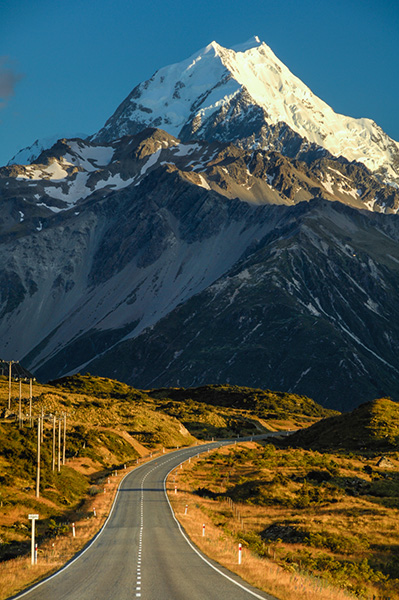
The road to Mount Cook New Zealand.  Nikon D7000, Nikkor 70-200mm f/2.8 Vrii, Marumi Polarizer. 135 mm (202mm 35mm equivalent), f/11, 1/15h, ISO100. The vertical aspect exaggerates the effects of telephoto compression in scenes like this.

The road to Mount Cook New Zealand. Nikon D7000, Nikkor 70-200mm f/2.8 Vrii, Marumi Polarizer. 135 mm (202mm 35mm equivalent), f/11, 1/15h, ISO100. The vertical aspect exaggerates the effects of telephoto compression in scenes like this.

Vertical Shooting Tip 6: Invest in an L-Bracket

An L-bracket or ‘L-plate’ is an L­-shaped (surprise, surprise!) tripod mounting plate that wraps around your camera body. This allows you to effortlessly mount your camera in the vertical orientation without having to flop the ballhead’s mounting point over on it’s side. Never again will you have to fight gravity and adjust tripod legs in order to get the camera leveled when shooting vertically – genius!

You will find a bit more information on the benefits of L-plates here on our website.

*I use the terms vertical or horizontal because the commonly used ‘portrait’ and ‘landscape’ terminology makes me abnormally irascible and grumpy. These terms are a nonsensical hangover derived from a Windows 95 printer options dialog box (maybe this riles my inner Mac Veteran). After all, a portrait can be photographed vertically or horizontally and likewise a landscape…..

Todd & Sarah Sisson are full-time landscape photographers based in Central Otago New Zealand. They are the authors of our new eBook Living Landscapes: A Guide to Stunning Landscape Photography.

Their work can be found as fine art prints & canvas prints at www.sisson.co.nz  They can be found on Facebook, Google Plus and Twitter.

Post originally from: Digital Photography Tips.

Check out our more Photography Tips at Photography Tips for Beginners, Portrait Photography Tips and Wedding Photography Tips.

3 Reasons to Shoot Vertical Aspect Landscapes and 6 Tips on How to Shoot Them

Digital Photography School

 
Comments Off on 3 Reasons to Shoot Vertical Aspect Landscapes and 6 Tips on How to Shoot Them
Posted in Photography


Peak Design Capture Camera Clip v2 review

08 Aug

You may have read the article we wrote on Peak Design’s Leash & Cuff a little while back? The crazy bunch at Peak Design are at it again, this time with a version 2 release of their primary product, Capture

GET CAPTURE v2.0 ON KICKSTARTER

As of right now, 4,875 people have backed their current Kickstarter for over half a MILLION dollars!… Amazing crowd supported project! Well, being a Peak Design Pro, I’m very lucky to already be using Capture v2.0 and wanted to pen an article about it and how it has changed from version to version and how it could help you.

Peak_Design_V2_Simon_Pollock

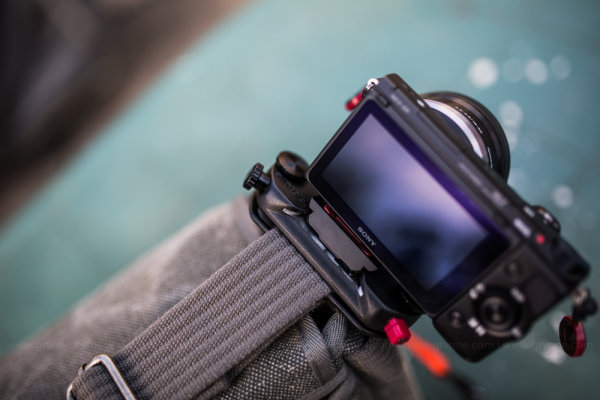
A brief catch up – what is “Capture” …well, in very basic terms, Capture is a device that you can attach to pretty much any belt / bag strap / backpack shoulder strap etc, that allows you to quickly and securely mount your camera on that device via the included baseplate. So if you want to go hands free while you’re out shooting, you simply slot your camera into Capture and you’re good to go, then when you see a photograph you want to make, on press of a button and you’re firing. You can see the image above, I have my little Sony NEX 5r mounted on the shoulder strap of my thinkTankPhoto Retro 7 camera bag, it makes it so easy when I’m down the park with my 3.5 year old – I can run, kick, jump, swing and hide with my hands free, then, when he’s doing something awesome like climbing a massive tree, I can whip the camera out of its little metal home and SNAP, I’ve capture my moment.

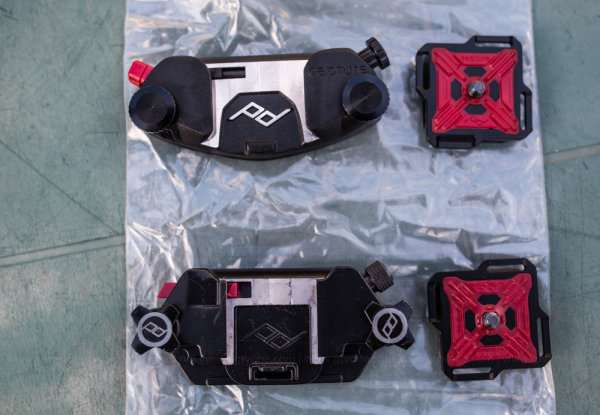
In the photograph below, you can see some of the changes from version one (bottom) to version two (top) including the following (based on my two weeks solid use and not the specs on the website)

  • Easier ‘mouth’ where you slide your camera in – makes slotting your camera away easier (in my opinion) 
  • No more sharp edges / less round edges – while I love and still use v1.0, the v2.0 feels…grown up..
  • The red button you use to release your camera now has a little simple twist lock to stop accidental ejection..
  • The screw (top right of units) now secures the camera plate solid, so you can actually use Capture on top of a monopod / tripod..
  • Capture now has the ability to mount little cameras such as GoPro so you can use capture to shoot yourself falling off your bike – etc!

Capture_Peak_Design_V1_vs_v2_Simon_Pollock

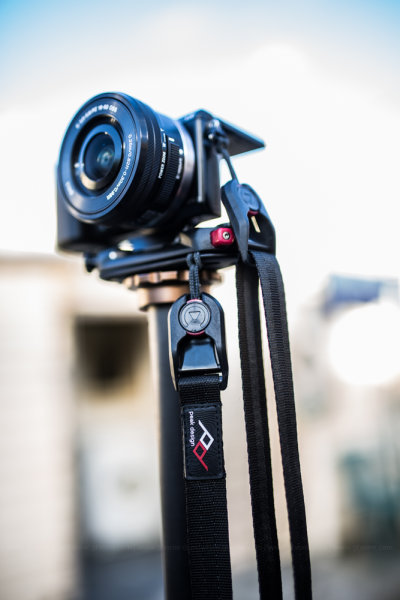
Here’s a couple of photographs that show you how you can use Capture for the top of a tripod or monopod and in the second photo you can see the Sony is tethered with Peak Design’s “Leash”

Peak_Design_Simon_Pollock

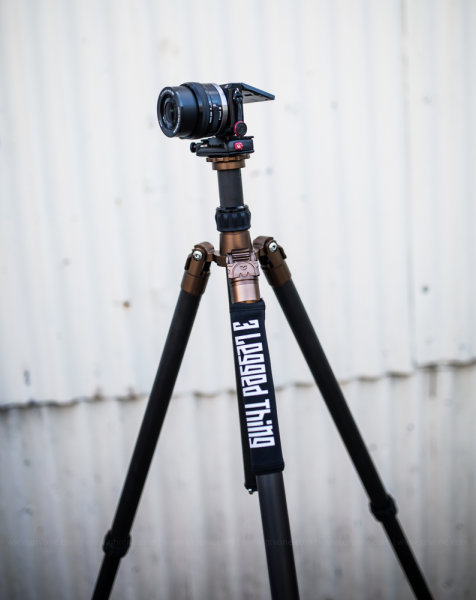
Capture being used to mount the Sony directly onto the 3LeggedThing tripod furniture

Peak_Design_Simon_Pollock

Capture being used to mount the Sony directly onto the ‘Bob’ 3LeggedThing Monopod furniture

I’m use Capture v2.0 and v1.0 with Peak Design’s Leash and Cuff system (for those among you that are saying…ohhh, I might drop my camera… you can’t!)

Take a look at the version two Capture camera clip system video on KickStarter and see for yourself… If you have any questions about how the clip works, what I shoot with it / my workflow / how I use Capture, please don’t hesitate to ask in the comments below.

–Sime


Post originally from: Digital Photography Tips.

Check out our more Photography Tips at Photography Tips for Beginners, Portrait Photography Tips and Wedding Photography Tips.

Peak Design Capture Camera Clip v2 review


Digital Photography School

 
Comments Off on Peak Design Capture Camera Clip v2 review

Posted in Photography


Walking Shelter: Sneakers Expand Into Human-Frame Tent

08 Aug

[ By Steph in Design & Products & Packaging. ]

Walking Shelter Sneakers Tent 1

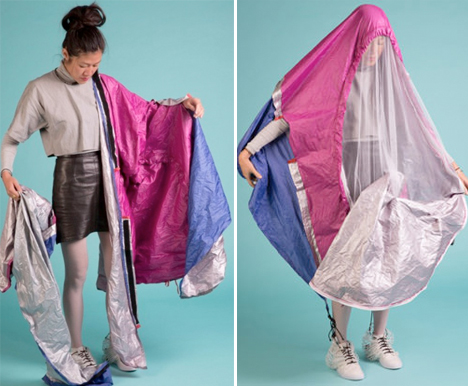
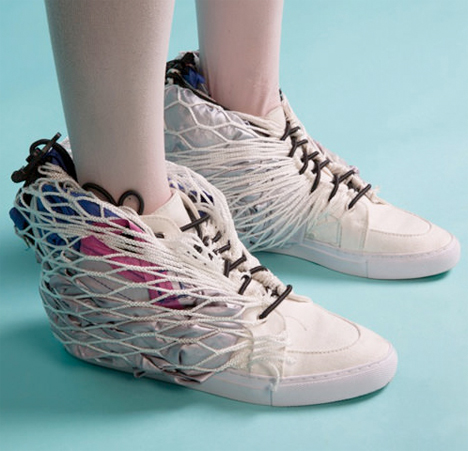
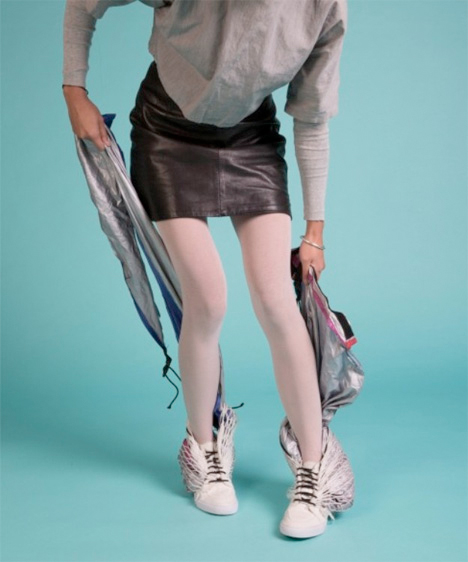
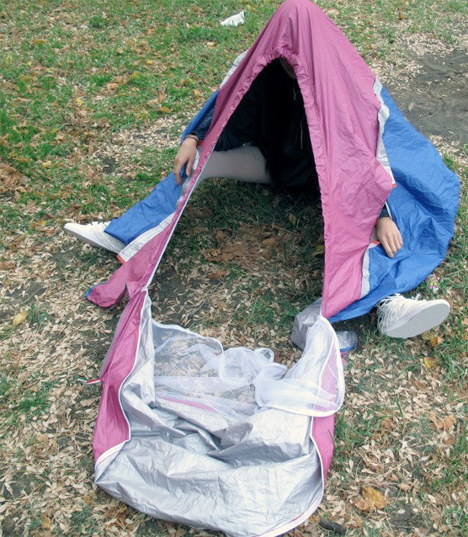
The next time you need a portable shelter, you could just pull it out of your sneakers and expand it into a tent using your own body as a frame. The Walking Shelter packs a lightweight nylon tent into two net pockets integrated into a pair of shoes. Pull it over yourself and you’ve got a rain-proof structure that will keep you dry and comfortable, as long as you don’t mind sitting up for extended periods.

Walking Shelter Sneakers Tent 2

Walking Shelter Sneakers Tent 4

Designed by SIBLING, a collective based in Melbourne, Sydney and Amsterdam, Walking Shelter can be customized by the user to adapt to a variety of contexts and environments. While it may not be the most practical tent for real-life use, it makes an interesting statement on the nature of human shelter in the modern urban world.

Walking Shelter Sneakers Tent 5

Walking Shelter Sneakers Tent 7

The design calls to mind other shelters, made for both practical applications and as statement-making thought pieces, that could make life more comfortable for the homeless. Could such a simple design help address a chronic global problem, in a small way?

Share on Facebook


[ By Steph in Design & Products & Packaging. ]

[ WebUrbanist | Archives | Galleries | Privacy | TOS ]


WebUrbanist

 
Comments Off on Walking Shelter: Sneakers Expand Into Human-Frame Tent

Posted in Creativity


Steady on! Casio Exilim EX-ZR800 18x zoom gains five-axis stabilization

08 Aug

zr800_main.png

Casio Europe has announced the Exilim EX-ZR800 – a Raw-shooting compact with five-axis image stabilization. The 16MP BSI-CMOS camera shares many features with the existing EX-ZR700, including the 18x, 25-400mm equivalent lens and ability to capture DNG files. The ZR800 gains the ability to shoot time-lapse sequences, along with a stabilization system that can be used for both stills and movies, on top of the usual multi-shot and high speed modes that Casio has developed over recent years.

News: Digital Photography Review (dpreview.com)

 
Comments Off on Steady on! Casio Exilim EX-ZR800 18x zoom gains five-axis stabilization

Posted in Uncategorized


Blickfang: Sunday 07/03/2010 – 03:22

08 Aug

Sunday 07/03/2010 - 03:22 © Maciej Dakowicz

Dieses Bild stammt aus dem Bildband „Cardiff after dark“* von Maciej Dakowicz. Dieser machte sich nach Dämmerung auf und fotografierte Menschen beim Party machen – und zwar in der gutbevölkerten Hauptstadt von Wales. Im Rahmen vieler Aufnahmen, die übrigens auf Flickr als ganzes Set zu betrachten sind, fand ich dieses Bild, das laut Bildunterschrift nachts um 3:22 Uhr aufgenommen wurde.

Ich sehe einen Mann, der sich gerade so etwas wie Pommes bestellt hatte und – vielleicht, weil er wie viele andere Protagonisten im Band – etwas alkoholisiert war, die Hälfte davon auf den Boden verschüttet hatte. Den Rest der Speise versuchte er mit seiner Plastikgabel zu retten. Den EXIFs des Bildes entnehme ich, dass das Foto mit einer 5D Mark II aufgenommen wurde.

Das Foto sagt mir deshalb so zu, weil das Bild es mir leicht macht, mich in die Person hineinzuversetzen. Ich kann mir gut vorstellen, nach einer durchzechten Nacht mit verzehrendem Bährenhunger an einem Kiosk aufzuschlagen und mein letztes Geld für eine Portion Pommes auszugeben. Endlich habe ich diese in der Hand, spüre schon die Hitze des Essens, jedoch bin ich noch so betrunken, dass im Moment des Hitzeschmerzes der Pappteller außer Kontrolle gerät und ich die Hälfte davon verschütte.

Ich schaue mir kurz den Boden an, der – durch meine getrübten Augen – eigentlich ganz anständig aussieht und denke „Ach, scheiß drauf“ und kratze den Rest der Pommes zusammen. Doch weil ich mich bücken muss, fällt auch der letzte Rest herunter und der Abend ist somit vollständig gelaufen. Den letzten Satz habe ich hinzugedichtet, doch ein Bild, dass es mir leicht macht, eine eigene Interpretation zu finden, ist für mich ein gutes Bild.

~

Die Fotografie an sich betrachte ich als sehr gelungen. Denn das Bild ist in zwei Teile geteilt – links sehe ich den gebeugten Mann und rechts erkenne ich, dass noch viele Menschen in Partystimmung auf der Straße sind. Weil der Kiosk beleuchtet ist, wandern meine Augen unweigerlich dorthin und der gebeugte Mann wird so zum Eyecatcher.

Das Foto wurde – meines Erachtens nach – nicht sonderlich nachbearbeitet und sieht relativ nach „out of cam“ aus. Nichts wird übertrieben oder verstärkt, denn der Moment an sich wirkt. Und das reicht. Ich mag es, wenn ich einem Bild abnehmen kann, dass die Situation so war, wie ich es sehe.

Cardiff after dark. Ein Bild, das den Titel des Fotobandes sehr gut symbolisiert.

* Das ist ein Affiliate-Link zu Amazon. Wenn Ihr darüber etwas bestellt, bekommen wir eine kleine Provision, Ihr bezahlt aber keinen Cent mehr.


kwerfeldein – Fotografie Magazin

 
Comments Off on Blickfang: Sunday 07/03/2010 – 03:22

Posted in Equipment


Is ‘Leonardo’ a Photoshop alternative for mobile?

08 Aug

TS250x0~cms_posts-2880506722-histogram_photo.PNG

The recently-launched Leonardo is a full-featured image-editing app for iOS that offers tools you won’t find on too many other comparable apps. Containing options familiar from high-end PC applications like Photoshop, Leonardo allows you to make selections using lasso and ‘magic wand’ tools, and create layer masks, gradients and much more. For more details head over to our sister site connect.dpreview.com. 

News: Digital Photography Review (dpreview.com)

 
Comments Off on Is ‘Leonardo’ a Photoshop alternative for mobile?

Posted in Uncategorized


Photo collages record passage of time in ‘slices’

07 Aug

slices1.jpg

In his series ‘Time is a Dimension,’ photographer Fong Qi Wei stretches the boundaries of still photography to produce images that convey the passage of time. Rather than using time-lapse, he has created a series of photo collages, each composed of many ‘slices’ taken in a 2 to 4 hour timespan. The resulting images capture the changing colors of sunrise and sunset in a way a single still or video clip can’t match. Click through and take a look at some of his work.

News: Digital Photography Review (dpreview.com)

 
Comments Off on Photo collages record passage of time in ‘slices’

Posted in Uncategorized


Add-On Gadgets: 15 Cool Devices For Your Smart Phone

07 Aug

[ By Steph in Gadgets & Geekery & Technology. ]

Smartphone Gadgets Main

As smart phones become even more integral to our everyday lives, extra gadgets that increase their functionality just get cooler and cooler. These 15 add-ons for iPhone and Android handsets include arcade housings for gaming, home security devices, photo lenses, sound amplifiers and even wind meters.

Canary Home Security Device

Smartphone Gadgets Canary Security

A device the size of a soda can pairs up with your smart phone to keep your home more secure. Canary contains an HD camera with night vision, motion sensors, a microphone, an accelerometer and sensors for heat, humidity and carbon monoxide. In other words, if there’s anything weird going on at your house, you’ll be notified immediately, from intruders to electrical fires. As soon as the device senses that something is amiss, it’ll send you a message, with options like “make a call” or “trigger siren.” Set to retail for $ 199, the device soared past its Indiegogo funding goal and should begin production shortly.

iCade Jr. Turns Phone into a Mini Arcade

Smartphone Gadgets iCade Arcade

The iCade jr. brings the feel of a (teeny tiny) arcade game to your iPhone. Featuring a joystick and four front buttons, plus four rear trigger buttons, the little cabinet is as functional as it is a conversation piece.

iPhone Photo Lens Dial

Smartphone Gadgets iPhone Photo Lens Dial

An old-fashioned looking dial on a rugged case spins to offer three different camera lenses to iPhone photographers, including wide angle, fisheye and telephoto (plus a bonus macro lens on the iPhone 5 version.)

Fling Game Controller for Smart Phones

Smartphone Gadgets Game Controller

A pair of mini joysticks for iPhone, Android or the iPod touch makes gaming more fun and interactive. The Fling Mini gives games an analog feel, with clear components that won’t block visuals on the screen.

Vavuud Wind Meter

Smartphone Gadgets Wind Meter

Cyclists, surfers, boaters and people who rely on wind power should take an interest in Vavuud, a wind meter you plug into your smart phone to measure wind speed and wind direction. Made of weather-resistant plastic, it’s been tested and calibrated in a professional wind tunnel and has a range of 1 m/s to 25 m/s. It retails for $ 44.99.

Next Page:
Add On Gadgets 15 Cool Devices For Your Smart Phone

Share on Facebook


[ By Steph in Gadgets & Geekery & Technology. ]

[ WebUrbanist | Archives | Galleries | Privacy | TOS ]


WebUrbanist

 
Comments Off on Add-On Gadgets: 15 Cool Devices For Your Smart Phone

Posted in Creativity


7. August 2013

07 Aug

Ein Beitrag von: Martin Waury

IMG_2786.jpg © Martin Waury


kwerfeldein – Fotografie Magazin

 
Comments Off on 7. August 2013

Posted in Equipment


Nirgendwo

07 Aug

Leon Kirchlechner hat sich auf die Suche nach dem Nirgendwo gemacht. Nirgendwo, das ist die Abwesenheit eines Ortes, zumindest in dem Sinne, dass er als solcher nicht erkennbar, vielleicht wiedererkennbar ist. Als Betrachter gegenständlicher Fotografie erwarte ich, Motive oder Szenen im Rahmen eines Ortes präsentiert zu bekommen und genau das wird mir verweigert.

Doch was passiert, wenn nicht nur Motive und Szenen ausbleiben, sondern auch der Rahmen dafür, der wenigstens erwartete Ort, den es sich abzubilden lohnen könnte? Beim Wort „Ort“ denke ich an Straßen, Häuser, Architektur. Oder Natur, üppiges Grün, Vegetation, vielleicht interessante Fels- oder Wasserlandschaften. Was bleibt noch übrig, wenn man all seine Erwartungen an Orte abzieht?

Nowhere © Leon Kirchlechner

Der Rest ist die Welt in Form feinen Pulvers, aufgelöst in ihre kleinsten Bestandteile, zerbröselt, einfach hingeworfen. In dieser Einöde sucht mein Betrachterblick immer noch voller Erwartungen nach den gewöhnlichen Eigenschaften eines Motivs: Linien, klare Farben. Begrenzungen, Muster, Regelmäßigkeiten. Größen- und Formunterschiede, die dem Ganzen Struktur geben und dem Auge Anhaltspunkte zum Erkennen und Verordnen.

Erst nach und nach lässt sich dieser suchende Blick auf die veränderten Gegebenheiten ein. So wird die Aufmerksamkeit auf natürliche, zufällige Farben und ihre Abstufungen gelenkt, auf feine Muster oder auch wieder die Abwesenheit jeglicher Regelmäßigkeit. Langsam gewöhne ich mich beim Betrachten an die Abwesenheit von Personen und Gegenständen, die vorhandene Räume füllen oder in ihnen Positionen einnehmen und so Spannung durch Abstände oder Verhältnisse erzeugen.

Nowhere © Leon Kirchlechner

Immer noch suchend wandert das Auge über Details: Stöckchen, Steine, Bereiche des Bodens mit von der Umgebung abweichender Farbe. Welche Schlüsse lassen diese abgebildeten Spuren von einmal Passiertem zu? Was ist an diesen Orten, die sich bisher als Nicht-Orte präsentiert haben, geschehen? Werden sie zu Orten, in dem Moment, in dem Spuren auf ihre Vergangenheit schließen lassen?

Und: Was hat den Fotografen Leon Kirchlechner bewogen, gerade diesen Nicht-Ort auszuwählen und zum Motiv zu machen? Denn mir scheint, auch am anderen Ende der Skala, auch mit dem Vorsatz, ein Nirgendwo zu zeigen, braucht es Auswahlkriterien. Oft finden sich zentrierte Kompositionen, ich vermute einen Anhaltspunkt, doch was genau ist zentriert, auf was soll meine Aufmerksamkeit gelenkt werden? Löcher, Durchgänge, gähnendes Nichts.

Nowhere © Leon Kirchlechner

Auf den ersten Seiten mischen sich verschiedene Sandfarben, es liegen ein paar Steine herum. Einmal: Ein Stein in der Mitte, ringsherum schwarze Erde. Überreste eines Brandes? Die Frage bleibt im weiten Raum hängen, es fehlen genauere Indizien. Hier und da Spuren von Zivilisation, doch eine universelle Abwesenheit von fast allem füllt den reichlich vorhandenen Raum aus.

Von Menschen gestaltete und geformte Strukturen aus Beton kämpfen mit ebenso Flächen füllendem Zufall, erzeugt von ewigen Naturgewalten, überwältigt von Wind und Wasser, um die Vorherrschaft im Bild. Sind es Überreste, nun sinnentleerte Teile eines ehemals Ganzen oder handelt es sich um den nie vollendeten Anfang von etwas, das überhaupt nie zu einem Ganzen wurde?

Nowhere © Leon Kirchlechner

Unterschiedliche Grade der Verschmelzung von natürlichem und von Menschen geformtem Material präsentieren sich, halten sich gegenseitig im Zaum. Bei genauem Hinsehen wird klar, dass sich auch in jene geradlinigen, glatten Betonwände Muster des Verfalls und des Zufalls gemischt haben. Das Material lässt sich nicht vollständig beherrschen, strebt gegen menschliches Einwirken zurück in seinen Ursprungszustand.

Gleichmäßig verteilt oder zu Gruppen zusammengedräng,t finden sich Ansammlungen von Kleinstteilen inzwischen undefinierbaren Ursprungs und unbekannten Zwecks. Stofffetzen, Beton und Stein tragen die Narben der Verwitterung, Abtragung – der Vergänglichkeit.

Nowhere © Leon Kirchlechner

Irgendwann vermengt sich alles, was wir den naturgegebenen Ressourcen abgerungen und umgeformt haben, wieder miteinander. Es ist ein unaufhaltsamer Kreislauf, der immer wieder an seinen unförmigen, ungestalteten, unstrukturierten Ursprung zurückführt – wie massiv die Betonwände auch sein möge, die wir zwischenzeitlich errichten.

Ganze Räume aus Beton werden präsentiert, die zwar martialisch wirken, deren Zweck aber nicht ersichtlich ist. Auch sie sind verschlissen, doch von welchen Kräften? Es ist keine Einfallsrichtung für äußere Einwirkung erkennbar.

Nowhere © Leon Kirchlechner

Die Serie steigert sich bis hin zu Bildern, auf denen tatsächlich fast nichts mehr zu sehen ist: Sie sind gänzlich abstrakt oder fast komplett schwarz. Man muss die Augen zusammenkneifen, um noch etwas zu erkennen.

Und dazwischen, hier und da: Eine Wolke, die unwirklich mitten im Bild, im abgeschlossenen Raum schwebt, fast durchsichtig, dennoch eindeutig da, anwesend, Raum beanspruchend. Zwischen all dem Zufall und Beton hat sie einen überraschend und verwirrend wesenhaftes Auftreten. Ein Stellvertreter für das abwesende Leben.

Nowhere © Leon Kirchlechner

In all die ruhige Abwesenheit jeglichen Motivs bricht der Lärm und die Aggressivität eines zerrissenen Vorblattes: Der Riss ist beim Ansehen nahezu hörbar, ebenso wie die Bilder ist er Überrest und Spur von etwas, was vorher dort passiert ist. Aus Nirgendwo wird „jetzt hier“. Nowhere – now here.

Nowhere
Leon Kirchlechner

Hardcover, Leineneinband
Offset-Druck, Fadenheftung
30 x 22 cm, 64 Seiten
Auflage: 800, nummeriert
ISBN 978-3-00-041744-3
29,80 €

Erschienen bei und vertrieben durch dienacht Publishing und Der Greif.


kwerfeldein – Fotografie Magazin

 
Comments Off on Nirgendwo

Posted in Equipment