Ein Beitrag von: Resa Rot

kwerfeldein – Fotografie Magazin
[ By Steve in Abandoned Places & Architecture. ]
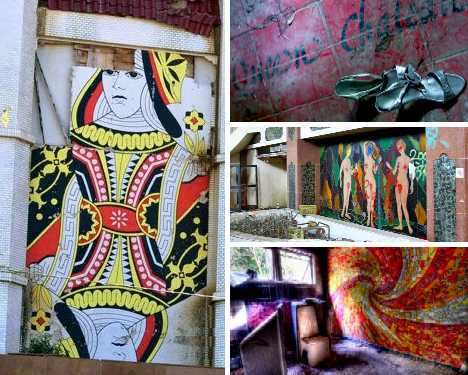
Fleeting moments of pleasure, a lifetime of neglect: that pretty much sums up the Queen Chateau soapland, a now-abandoned “brothel with baths” in Mito, Japan.
 (image via: Michael John Grist)
The abandoned Queen Chateau in Mito, two-hours northeast of Tokyo, epitomizes the often gauche and over-the-top architecture commonly displayed by Japan’s legions of Love Hotels and Soaplands. The latter, for those unfamiliar with the term, are thinly-disguised brothels where male clients are “bathed” and ahem, catered to by female attendants. Feeling hung out to dry in Japan? You must be at a soapland!
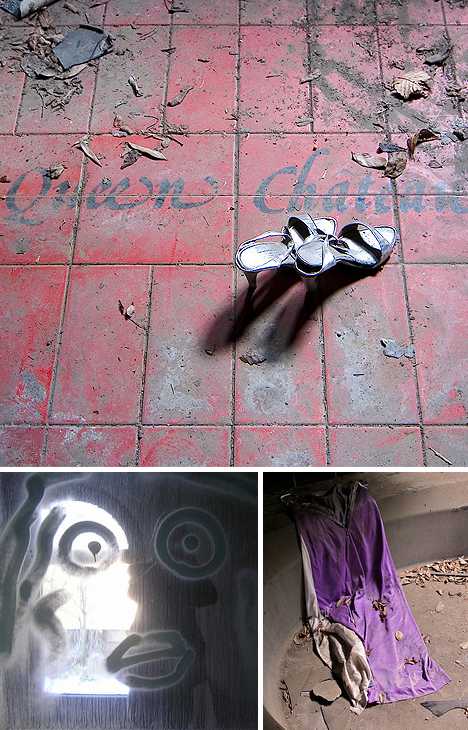 (images via: Mike’s Blender, Seb and Redjunction)
Formerly known as toruko-buro (literally “Turkish Bath”), the popular descriptor for these establishments was changed to the more innocuous “Soapland” in 1984 following a successful campaign by offended Turkish scholar Nusret Sancakli. It was decided that a nationwide contest would be held to determine what new term should be used for such establishments and Soapland was the winner. Only in Japan, amiright? In any case, the semantic switch occurred right around the time of the Queen Chateau’s grand opening in April of 1984.
 (images via: Michael John Grist and Totoro Times)
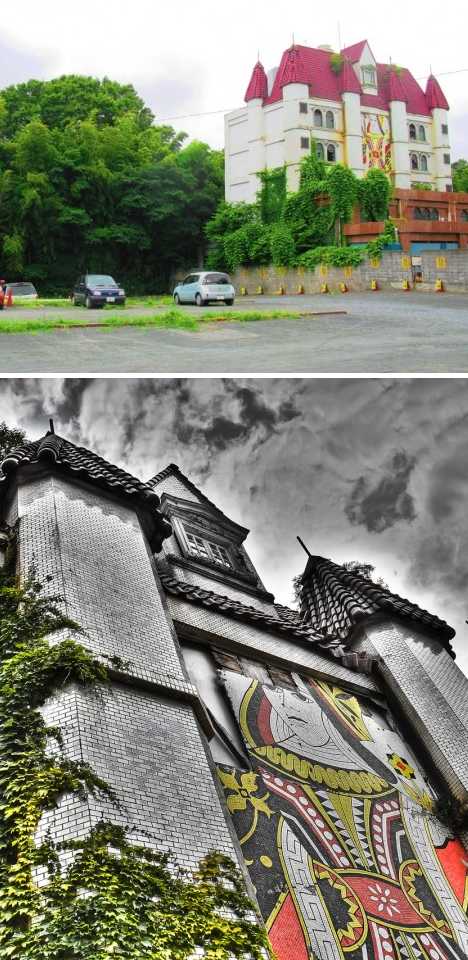
The Queen Chateau soapland is situated on a hill in Mito’s otherwise-thriving red light district, a location that accentuates its multistory castle-inspired layout. If “Dracula” was remade by Vivid Video, this would be the Count’s bachelor pad. A tile mosaic of a playing card Queen – probably the Queen of Hearts though no suit is indicated – extends three-quarters of the way up the front facade. Impressive from afar, up close the many missing tiles reveal the extent of the building’s decay since it was abandoned.
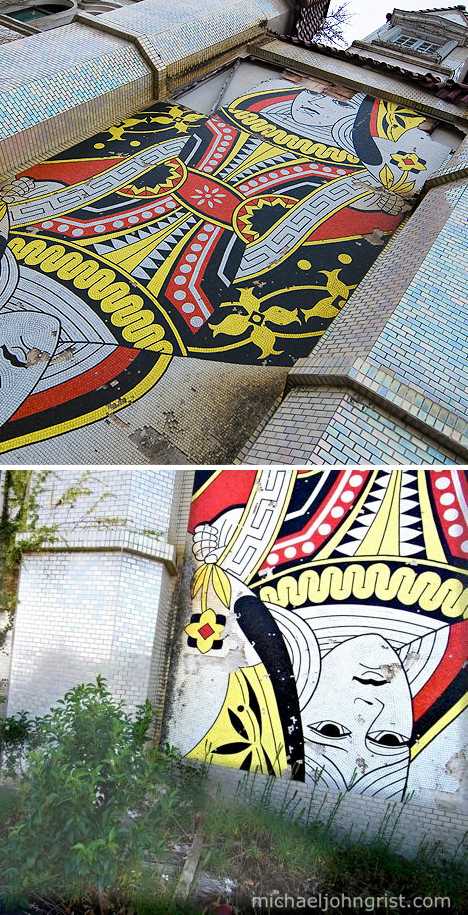 (images via: Mike’s Blender and Michael John Grist)
A ground-level view from intrepid Haikyo (modern ruins) explorer Michael John Grist is a surreal scene that simply screams “neglect”. Rampant weed overgrowth and an accumulation of detritus & debris shroud the blocked main entrance, forcing any curious urban explorers and/or local homeless types (one of whom is rumored to have died inside) to gain egress via the back entrance formerly used by the hired help.
 (images via: Totoro Times)
As is SOP with most semi-shady erotic operations of this nature, the actual service providers received few considerations from the shadowy operators. In the case of the Queen Chateau soapland, the “staff” of 10 had only a windowless, communal basement room to retreat to when not on duty. The room’s furniture consisted of 6 bunk-beds and just outside are the ruins of a small dining room and a tiny bathroom.
 (image via: Totoro Times)
A narrow concrete corridor leads from the staff area to the first floor lobby, where the main focal point is a disturbingly defaced mural of three charming bath companions. Can you say “sleazy”? I knew you could! A semicircular front desk did double duty as the building’s communications hub while off to one side, a sweeping stairway with an ornate wrought iron bannister beckoned clients to the nirvana awaiting them on the upper floors.
 (images via: Michael John Grist and Seb)
Nowadays a different sort of reward is promised to those contemplating higher pursuits: the Japanese graffiti at the foot of the stairs reads “If you go upstairs you will die.” Since philosophically speaking (and to paraphrase a quote from the film Heavy Metal) “I die, you die, we all die” eventually, ignoring the warning and making the fateful climb won’t really change things in the long run. Luckily for you and I, brave urban explorers Michael John Grist, Jordy Meow and the jolly gang from 28 Days Later among others have photo-documented their experiences on our behalf.
 (image via: Totoro Times)
The road to Hell might be paved with good intentions but this stairway to heaven – sorry, Page & Plant – is carpeted with vermilion and gold shag… that last word is in no way coincidental.


[ WebUrbanist | Archives | Galleries | Privacy | TOS ]

     |
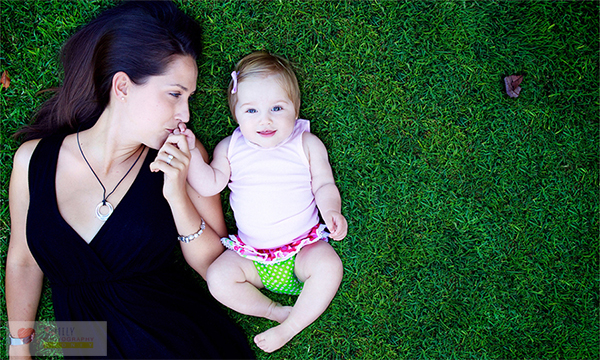
by Steven McConnell
Do you remember the time you were learning to drive a car?
If you’re like most people, it began as a purely technical, logical activity. You had to think about your every move. You were reacting to your environment, rather than anticipating it.
Over time, that settled into a form of unconscious competence. You began to drive by feeling the car, rather than thinking about it.
Learning to shoot portraiture is similar. Beyond the mechanical, logical world of preoccupation with gear, ISO, f-stops and focal lengths is a realm of feeling your way around your environment, connecting with your subjects, witnessing their stories and sharing them with the world through your photographs.
It’s easy to say, I hear you say. But how do I start moving in that direction?
For me personally this has been a focus of my attention for the past few years and I feel like I’m just starting to scratch the surface. Every time I discover something new I see how much more there is left to uncover.
It’s my aim here to share some of my main discoveries with you. I hope that lessons I’ve learned on my journey to becoming a portrait photographer help you along in yours.

I see so many photographers take a few photos and then bend over to check what they got on the back of their camera.
Meanwhile, their subject is just standing there. Their mood is collapsing. All kinds of weird thoughts are starting to run through their head.
Checking the histograms every now and then is important, but your main job as a portraits photographer is to be aware of, and manage, your subject’s headspace.
You can’t do it effectively if you’re spending more time with your camera than you are with your subject. You need to be completely present with the person you’re photographing.
It means you need to photograph a lot and often, until know with a reasonable degree of confidence when you’ve nailed the shot – without having to check it on the LCD.
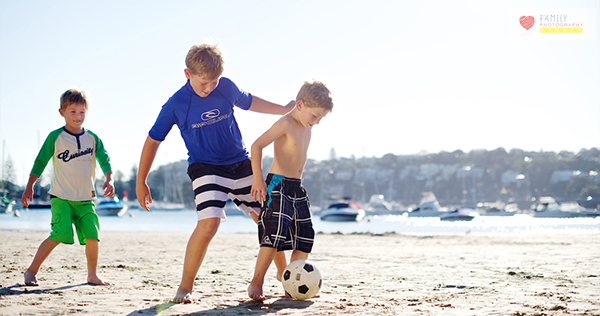
There’s a sentiment in the photographer community that you must always shoot in your camera’s manual mode because “that’s what serious photographers do”.
Manual gives you great creative options in certain situations – for example, when you’re combining ambient light with strobes.
But be aware that you don’t always need it – and sometimes it will shoot you in the foot.
If you’re using only natural light, for example, and it’s likely to be changing while your subject is moving, the last thing you want is to miss moments while you’re chasing exposure.
Try shooting in aperture-priority mode (Av), using aperture to control depth of field as a creative element while dialling the exposure compensation in or out to fine-tune exposure.
I shoot with prime lens because I like to have as few physical barriers between me and my subjects as I can.
If I can’t look them directly in the eye as I’m photographing them, then I want to look at them through as little metal, plastic and glass as possible.
Also, I think there’s a lot to be said about removing everything you can which will intimidate your subjects.
As photographers we tend to view gear as something to get excited about. But in doing so we forget that something like a 70-200 f/2.8 (even a 24-70 f/2.8!) on front of a DSLR can be unnerving to most people.
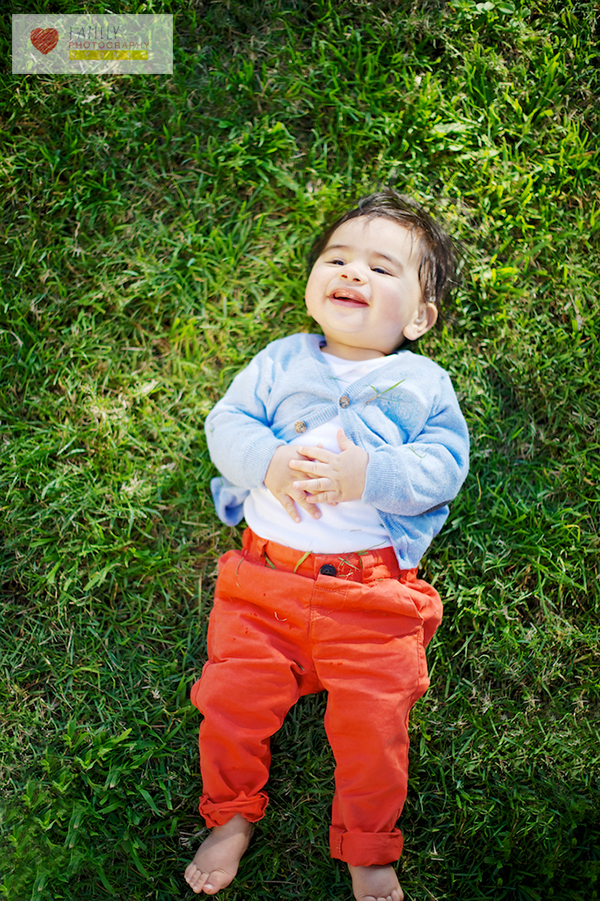
When I started photography, I did enough research about cameras to be able to quote the pros and cons of just about any DSLR body out there.
But if you asked me what the person I was photographing wanted to be when they grow up, I’d have no idea.
How can a photographer tell a story about a subject through the photos if they don’t know anything about them?
What are your subject’s dreams? Obsessions? Fears? Ice-cream preferences? Why do they get out of bed in the morning? What kind of personality they have – quirky, calm, strong, bubbly or intellectual?
Answers to those questions are a great departure point for your creative choices as a photographer.
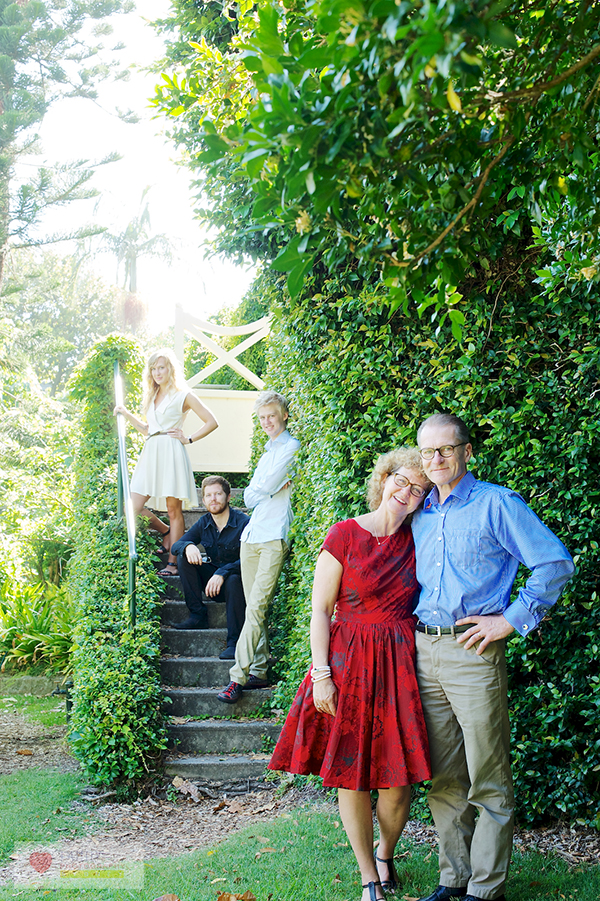
I picked this idea up when I was watching this video of Annie Leibovitz photographing Keith Richards:
Notice how at 1:55 she puts the camera down to give him direction. It’s not accidental – by doing so, she injects a healthy dose of warmth and intimacy into their interaction. She reminds Keith that there’s a real human taking his photo.
How you come across to your subjects is heavily influenced by your purpose in any moment. And that will determine how they act around you.
My default purpose is “Here I am, the photographer, about to photograph you – the subject”. Needless to say, it’s not very conducive to creating a connection of facilitating a particularly warm dynamic.
Before a shoot I literally have to shift the context through which I view the session to one which helps me set a warmer tone.
If I’m photographing kids, I’m likely to change to a space of “Let’s play – and I’m bringing my camera along”. If I’m with adults, I’ll probably take things in the direction of “Hey, let’s get to know each other – and I’ll take some shots along the way”.
Connection takes first place, photography second.
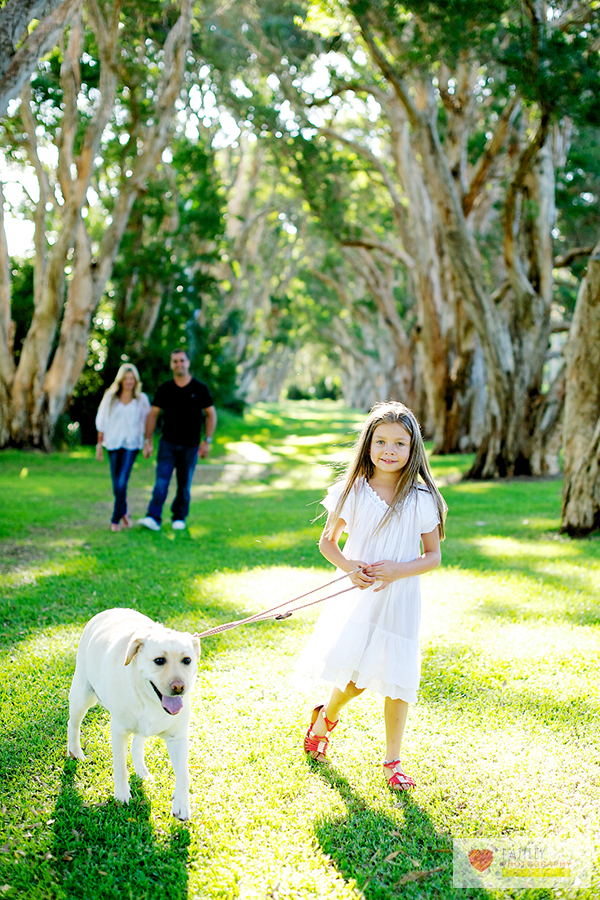
This looks odd as a piece of advice on a photography blog. But here’s why I think it’s useful.
As photographers, we tend to be quite analytical – we go through the world thinking about it, rather than feeling our way around it. We spend a lot of time preoccupied with our thoughts, which can give our emotional tone a somewhat distant edge.
Meditating 10-15 minutes a day will helps you settle down and feel more centred. You will come across as a warmer, more approachable and confident photographer. You will also be more present with your subjects’ needs and be able to respond to them (rather than react to them).
It’s important because your subjects will largely mirror your emotional tone. The easiest way to help them settle down and connect with you is for you to be calm yourself.
Steven McConnell is a family photographer at Family Photography Sydney. You can connect with him on Google+. and Twitter.
Post originally from: Digital Photography Tips.
Check out our more Photography Tips at Photography Tips for Beginners, Portrait Photography Tips and Wedding Photography Tips.
7 Ways To Create Authentic & Powerful Portraits

Nokia’s new Lumia 1020 smartphone packs some impressive features, most notably a 41MP imaging sensor capable of high-resolution stills and video. A new Nokia advert goes deep (literally) into this aspect of the phone’s hardware with a virtual look inside the imaging pipeline of the 1020, showing the entire process of image capture from the shutter opening and light coming through the lens to the creation of a digital image. The result is pretty stunning. Click through to see for yourself.
News: Digital Photography Review (dpreview.com)

Walker Evans’ iconic images of American life in the early 20th century helped elevate photography to the status of fine art. His 1938 book ‘Walker Evans: American Photographs’ celebrates its 75th anniversary this year and the Museum of Modern Art is commemorating this milestone by bringing it back into print with an accompanying exhibition of his work. Click through and take a look at some of Walker’s captivating images of American society in last century.
News: Digital Photography Review (dpreview.com)
A contribution from Lori Peterson
 A few years ago I shot a beautiful, heartfelt wedding. The bride’s grandmother had just gotten out of the hospital after a terrible fall. Her grandfather was not doing well, but he was managing the care of her grandmother in addition to taking care of himself. They made it a huge family occasion and created a beautiful, family oriented evening.
Celebrations continued to the later hours in the evening and then the bride and groom left to spend their first few days as man and wife. It was a beautiful, perfect day. The images I shot in camera looked just amazing and seemed to really capture the essence of the day.
I went home and loaded all the images onto my computer and then backed them up to my external. I edited a few images so that the bride and groom could have some sneak peeks of their wedding photographs to share with their friends and family.
A few days later my husband noticed that my computer was not displaying the photograph slideshow that I have my computer set to play. We sat down and looked at my computer together. While we were sitting there all of the images started disappearing off my computer. I thought “Well, at least they are on my external!” I apparently got too hopeful way too fast. My external and my hard drive crashed at the same time. While we sat there trying to figure out what was going on my computer’s hard drive and the external hard drive were dying….and wiping away all of the images they had.
We have a friend who works for a computer repair store. We called him. We immediately took over the external and left it waiting and hoping for a phone call and for him to say that they recovered the images. I couldn’t even think straight, it was the only thing on my mind.
Our phone finally rang, but he was not able to give us good news. Our external hard drive had crashed and wiped out all of the data on it. Nothing was able to be recovered. Not one image. I was frantic. I now had to call the bride and tell her that all of the images from that day were gone. All of them, except for their sneak peeks. Those little fragments were all that remained of their day.
That was one of the hardest phone calls I have ever had to make. I wanted to tell them in person, but I honestly felt that setting up a meeting to tell them this would make it worse for them. I picked up the phone and dialed the number. I explained what happened. I apologized profusely. She was disappointed and heartbroken, that much you could tell. She was also understanding and forgiving as well. As it turns out, just a few weeks before their wedding, their own computer had abruptly died. They wanted to get it repaired, but according to their computer technician, there was absolutely nothing they could do to save the computer, the photos, and the documents on the computer. When the computer died, it took all of its information with it, just like mine had done.
At this point refunding her money and offering her the world was on my agenda because I felt awful about the entire situation. I was surprised by how well they took the news. They knew that the situation was not one I created or that they created. It was just a by-product of our relying on our technology to keep everything safe. Sometimes it fails and lets us down.
On that day I vowed that would never, ever happen again. That was not a situation I was going to put myself into ever again. This is when I started researching cloud storage. I wanted something that immediately backed up my computer. I wanted a safety net. The external was just not a big enough safety net for me anymore.
You can get overwhelmed when you are looking for cloud storage by the number of providers available. You should factor in what you are looking to backup. Is it just your computer? What about an external? Photos or documents? Or all of it.
One of the easiest and cheapest options for backing up everything is BackBlaze. For $ 5 a month it will back up one computer and any external plugged into that computer. It will back up everything except your Operating Systems and applications. All your files, photos, and documents will be securely backed up and you can retrieve them in the event of any emergency.

Carbonite is another option. For one computer to be backed up their pricing begins at $ 59.99 per year. If you have an external hard drive that you also want backed up they have plans that begin at $ 99.99 per year.
Dropbox, Copy, and Google Drive all have free plans for anywhere from 15-18 GB of storage. Depending on your needs they have other plans that begin at $ 4.99 per month for 100GB and they go up from there. Dropbox does have an add on for $ 3.99 a month that lets you have unlimited undo history for those moments when you accidentally delete something and realize that you really should have kept it.
Whatever your situation, having a backup plan is always a good idea. If you are a photographer, it’s even more important to have that peace of mind not only for you but for your client as well. There are pricing structures and plans to fit every budget and every need, because sometimes technology fails. Don’t have to make that phone call like I did. Back your photos and documents up and then back them up to cloud storage. It’s inexpensive and well worth it to invest in some sort of extra storage.
Lori Peterson is an award winning photographer based out of the St. Louis Metro Area. Her dynamic work ranges from creative portraits to very unique fine art photography. Lori’s work can be seen at www.loripetersonphotography.com and also on her blog at www.loripetersonphotographyblog.com. You can follow her on Facebook at https://www.facebook.com/LoriPetersonPhotography.
Post originally from: Digital Photography Tips.
Check out our more Photography Tips at Photography Tips for Beginners, Portrait Photography Tips and Wedding Photography Tips.
Cloud Storage: Why an External Hard Drive is Not Enough

What’s the safest way to get close up photos of lions on the Serengeti? Send in a robot. And an aerial drone. That’s what photographer Michael Nichols and his team did, producing incredible images for a National Geographic feature. From a nearby car, Nichols and crew directed a small remote-controlled robot outfitted with a Canon camera toward lion prides as they hunted, slept and well, do everything lions do. And we do mean everything.
News: Digital Photography Review (dpreview.com)
[ By Delana in Art & Photography & Video. ]

Would you ever allow a stranger to come into your home, open every cabinet and cupboard in your kitchen, and photograph whatever he finds? Artist Erik Klein Wolterink does just that, photographing the room that is often thought of as the heart of the home. He doesn’t romanticize the space, however – he wants to catch the everyday chaos that exists in most kitchens.


As he steps foot into each kitchen, he opens everything up – fridges, cupboards, drawers, pantries, ovens and dishwashers – and meticulously photographs everything. The camera misses nothing – not the full dishwashers or the foreign food items or the many jars of Nutella.
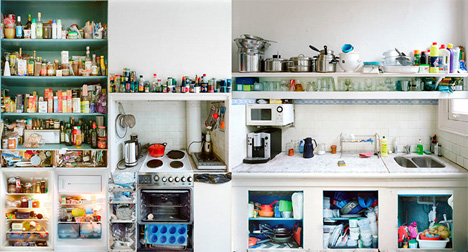
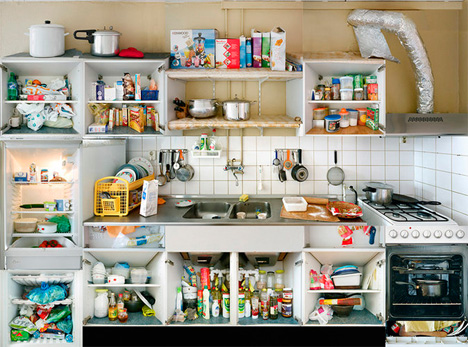
After photographing every possible angle of the kitchens, Klein Wolterink assembles the photos into pieced-together portraits. They are patchwork quilts made up of different angles of different parts of the same kitchen. They aren’t simply straight-on pictures of rooms; they are surreal portraits, real-life tableaux in which we can see every single part of the room all at once.
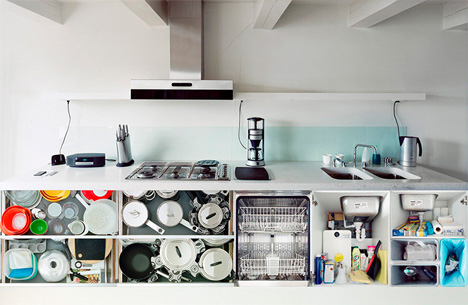

The photographs all come from kitchens in and around Amsterdam, a city rich with multicultural life. This multiculturalism is displayed in the objects residents keep in their kitchens: foreign foods, exotic ingredients, alien-looking tools. But there is something here that unites all of us, a type of universal humanism that pervades the way we buy, store, prepare, and eat our food.
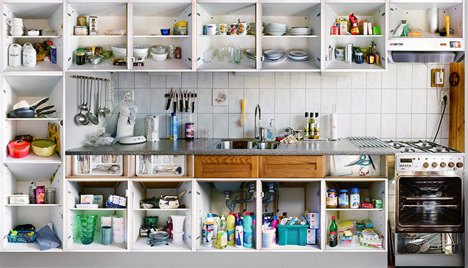
Interestingly, Klein Wolterink doesn’t consider himself a photographer as such. He thinks of himself as a modern cartographer. Maps, he says, are not realistic representations but they make you understand reality. His photos are, in a way, maps to the human condition and our varying but connected lives.
[ WebUrbanist | Archives | Galleries | Privacy | TOS ]

| |
A Guest Post by Jeff Guyer.

We love photography. We love our kids. So, it would stand to reason that if we can find a way to combine photography and spending time with our kids it’s a big win, right? Of course it is. If your kids are anything like mine, however, they’ve either already reached a point where they vanish into thin air the moment they even sense a camera coming out of a bag, or will reach that point soon enough. So, how do we enjoy our cherished hobby without abandoning our kids for hours or days at a time? If they’ve grown weary of their time in front of your camera, maybe it’s time to help transition them from test subjects and guinea pigs to budding photographers themselves.
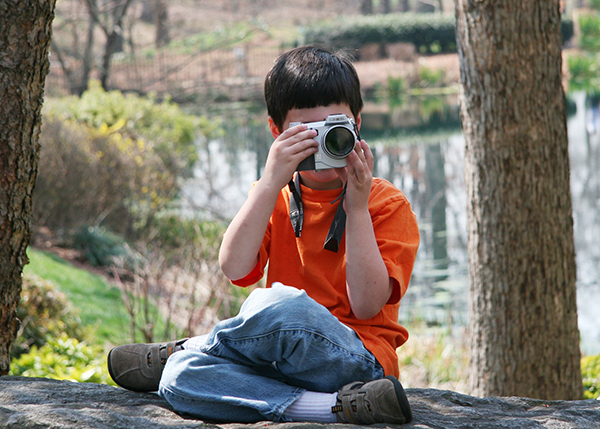
I know– the mere mention of Auto Mode makes you cringe. Ordinarily I’d agree, but it’s time to get over it (at least for a little while). I’ve been teaching a kids photography class for three years, and I can state with absolute certainty that if I tried teaching my own son the way I teach my students, he would most likely never pick up a camera again. In the classroom, I start each semester with a demonstration. We talk about the exposure triangle (aperture, shutter speed, ISO).
To illustrate, I pull out an old, 1972 Pentax Spotmatic and do something that would be impossible with any of today’s DSLR’s– I open it up. I take off the lens. I open up the back. I show them how the shutter stays open longer at slower shutter speeds. I demonstrate how the aperture ring works on older lenses. Let them see what’s going on from front to back. I show them how these concepts work on a practical, visual level. From exposure, we work our way to composition, to lighting, etc. It’s a logical progression and it works. An effective classroom approach, however, won’t often be the same recipe for success when we try it on our own kids. Why?
Because our kids just want to spend time with us and take nice pictures. They spend enough time in school learning nuts and bolts. If you are going to get (and keep) them interested in photography, you’re going to have to teach them without teaching them.
Huh?
You’ve taught your kids all kinds of things without sitting them down and making a formal lesson out of it. This is no different. But whereas in the classroom I start with the technical, with my son I start with composition and let the technical fall into place later.
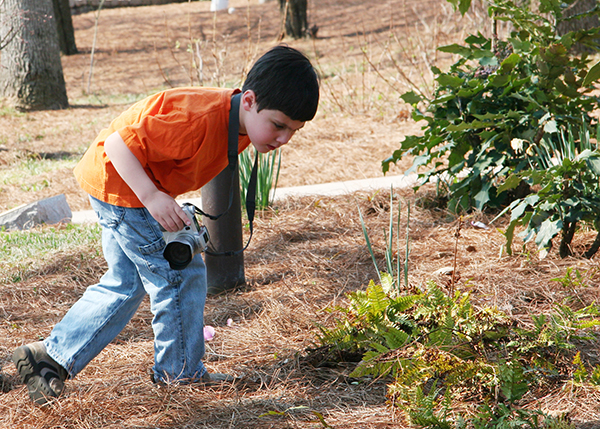
We all know that composition consists of the placement of our subject and other elements within the boundaries of the frame. What you have to remember, though, is that your child views the world from a much lower vantage point than you do. So, start by getting down on their level and see things as they do. It may also help at first to leave the big guns at home and use a point & shoot or even an iPhone. The iPhone is an amazing compositional tool. A live view that you can share with your kids will be a huge help in guiding them towards alternate angles and helping them get what they see with their eyes within the confines of the frame.
This is where they will start expressing themselves creatively. It also gives you a chance to get inside their heads and maybe even let them teach you a thing or two about creativity. In some ways, pressing the shutter button is almost secondary at this point.
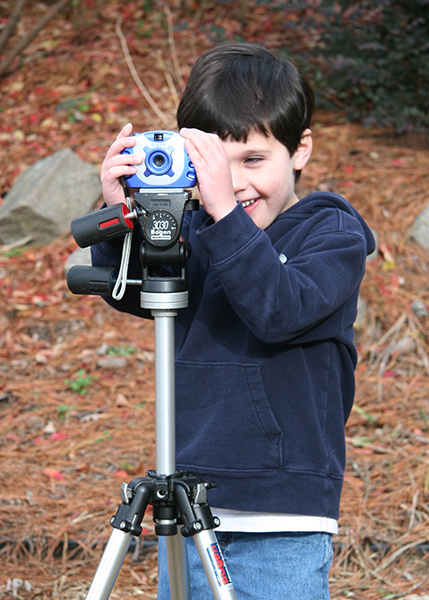
Start by thinking about what frustrates you most about basic photography and make sure to remove as many of these stumbling blocks as possible. The more you do to create a successful environment for them, the better your chances for successfully instilling a love for photography. Stationary subjects like landscapes are a great place to start, as are pets, toys, or even cracks in the sidewalk for that matter.
As long as you are helping them select relatively stress-free subjects on their visual level, you increase their chances of success. Remember also, that creativity does not usually fall too far from the tree. Free from our adult notions of creativity, your kids might very well have some pretty awesome creative visions of their own. Be open to those visions and be sure to give them a chance to guide the journey as well.
Once they get more comfortable with capturing their vision in a box, you can start introducing games, challenges, and scavenger hunts. You’ve got their interest and attention. Now hold onto it by making it fun and exciting. Shooting themes (e.g., “Lines,” “Red,” “Doors,” “Reflections,” etc.) is a great way to both engage their imaginations and expand how they see the world around them.
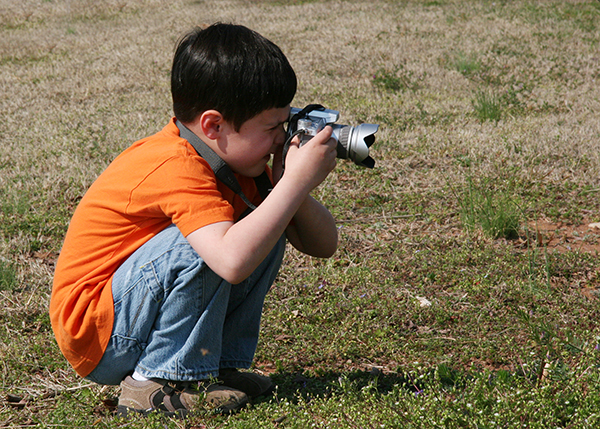
As children become more and more comfortable with the ideas of composition and choosing their subjects, they will be in a better position to not only start asking questions about why their photos are too light or too dark, but to understand the answers as well. By now you are hopefully comfortable with your own grasp of exposure, as well as the interplay and symbiotic relationship between the three elements. Once again, it’s all well and good, but your 8-year-old is going to get a glassed-over look in her eyes and expel the biggest yawn you’ve ever seen the moment she starts hearing things like “depth of field,” “stopping down,” and shooting “wide open.” So what do we do? We teach it visually by example.
Imagine a room with a large single window covered with a curtain. Congratulations– you’ve just stepped inside a camera. The window and curtain combine to act as your shutter and aperture. If your kids can get their heads around the concept simply by way of discussion, great. If not, pick a room of your house and demonstrate. If I open the curtain just a little, I have a smaller aperture. If I open it wider, I have a larger aperture. If I open and close the curtain very quickly, I have a faster shutter speed, and if I open and close it more slowly I have a longer, slower shutter speed. Demonstrate this with various combinations, showing them how their choices affect how much light enters the room and for how long.
Once they have a handle on aperture and shutter speed, you can add ISO to your demonstration with the use of sunglasses. Technically, ISO is a measure not of the light entering your camera, but of your camera’s sensitivity to that light. For purposes of this discussion, starting with sunglasses on and taking them off will be comparable to raising the ISO. The light entering the room has not changed, but it obviously becomes brighter with the removal of the sunglasses.
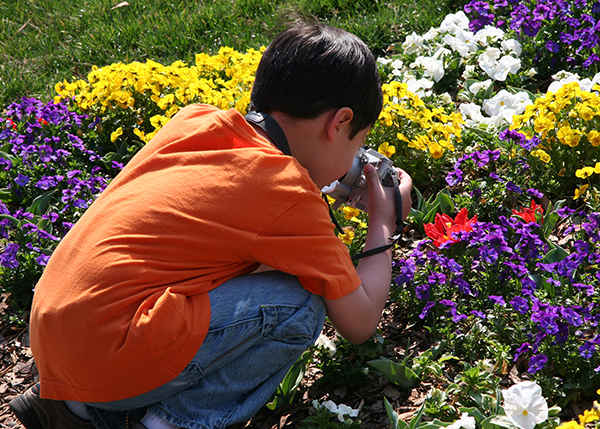
I suppose my most important piece of advice is to make sure you keep all of this in perspective. We love our kids first and photography second. “You’re doing it wrong,” or any variation of it is strictly off-limits. Allow for mistakes and imperfections. Celebrate and embrace them. Just remember, though, that your kid can read you like a book. The second they realize you’re getting pushy or not having fun, it’s over. You didn’t just wake up one morning an accomplished photographer. You worked at it. If you guide them right your kids will work at it, too.
And one day they might even take a killer, life-altering photo and thank you for it.
Jeff Guyer is a photographer based in Atlanta, GA. In addition to shooting portraits, architecture, sports, weddings, and just about anything else that pauses in front of his lens, he also teaches a Digital Photo Challenges class for kids. Follow him on Facebook at http://www.facebook.com/guyerphotography or on Twitter @guyerphoto
Post originally from: Digital Photography Tips.
Check out our more Photography Tips at Photography Tips for Beginners, Portrait Photography Tips and Wedding Photography Tips.
What to Teach Your Kids about Photography

You must be logged in to post a comment.