RSS
 

Archive for July, 2013

Setting The Mood With Low Key Lighting

29 Jul
This image was made using a flash on camera, bounced into an uncoated muslin reflector.  The uncoated muslin warms the light up about 400 degrees Kelvin.  The reflector was positioned above and to the left of the camera, with the flash aimed into it.  EOS-1D Mark IV, EF 100mm f/2.8L Macro. ISO 100, 1/250, f/4.

This image was made using a flash on camera, bounced into an uncoated muslin reflector. The uncoated muslin warms the light up about 400 degrees Kelvin. The reflector was positioned above and to the left of the camera, with the flash aimed into it. EOS-1D Mark IV, EF 100mm f/2.8L Macro. ISO 100, 1/250, f/4.
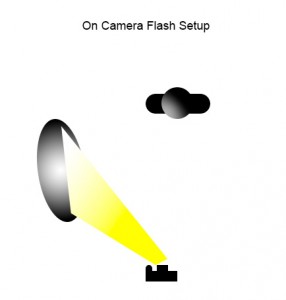
This diagram shows the lighting for the image above.  The uncoated muslin reflector is positioned above and to the left of the camera, with the flash bounced into it. Play with the angle of the reflector to get the lighting just right.

This diagram shows the lighting for the image above. The uncoated muslin reflector is positioned above and to the left of the camera, with the flash bounced into it. Play with the angle of the reflector to get the lighting just right.

Last week I wrote about high key portrait lighting and how it creates a very upbeat feel in images lit that way.  The opposite end of the spectrum is low key lighting, which creates a more moody feeling in images.  Low key lighting tends to be lit with one light on the subject, using reflectors or fill light if necessary to fill in shadows. Because only one light is required, it can be a bit easier to light a subject in the low key style, and certainly less costly indoors.

Light reveals your subject, and shadows define your subject.  The shadows you create are equally as important as the light you use to expose your subject.  Low key lighting will have a high lighting ration from main to fill, typically as high as 8:1.  High key, by comparison, will approach 1:1.

Indoors, the simplest way to achieve low key lighting is to use a speedlite on camera, bounced off a wall, or into a reflector angled to catch your subject in the face. Adjusting the flash output will help you get the softness in light, as well as using a larger reflector. Another reflector on the opposite side of your subject can be used to throw reflected light back where it came from for fill if desired.  Using a silver or gold reflector will create a harsher light, while using uncoated muslin or soft white will create a softer light.

If you’re able, and want to get the flash off camera, using a wireless trigger on your speedlite, while placing it in a softbox gives you another option to light your subject.  A softbox gives you soft, directional light, without spilling the light into the background.  Softboxes work by enlarging your light source.  The larger the light source, the softer the light will be.   I use several softboxes depending on what I need.  The first is a Westcott Bruce Dorn 18×42 assymetrical strip box.  This is great for

lighting a full length figure, with a natural falloff at the feet.  The rest I use are Westcott Apollo softboxes. I have the 16″,  28″ and 50″ softboxes, depending on what the situation calls for.  The 50″ creates light very similar to window light, with a nice soft wraparound effect.  The 28″ is a bit harsher, and the 16″ harsher still.

For this image, I used a Westcott 28" Apollo softbox, with a speedlite off camera. I turned down the flash output slightly to give a more moody feel. EOS 5D Mark II, EF 24-70 f/2.8L. ISO 100, 1/200, f/8.
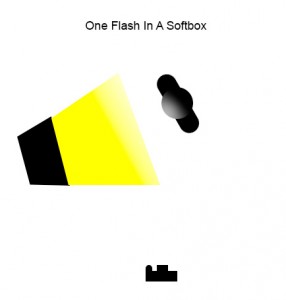
For this image, I used a Westcott 28″ Apollo softbox, with a speedlite off camera. I turned down the flash output slightly to give a more moody feel. EOS 5D Mark II, EF 24-70 f/2.8L. ISO 100, 1/200, f/8.

The softbox is positioned to the left of the camera and aimed at the subject as the subject is turned toward the light. The camera shoots from the shadow side of the subject, allowing the light to just kiss the contour of the subject from the side.

The softbox is positioned to the left of the camera and aimed at the subject as the subject is turned toward the light. The camera shoots from the shadow side of the subject, allowing the light to just kiss the contour of the subject from the side.

Outdoors, to get a low key lighting effect, you’ll need to catch the sun when it’s low in the sky, just as it’s setting, or in the morning as the sun rises. Alternatively, standing at the edge of deep shade can help create a low key effect as well.  If needed, a scrim can help soften the light hitting your subject, but generally a sun low in the sky creates a soft warm lighting on your subject.

Low key lighting is great for setting a mood. Add it as another option in your lighting toolbox and see what happens.  Share your favorite low key images in the comments too!



This shot was taken using only late afternoon sun, just before sunset. When the sun sets it becomes directional, and all I had to do was instruct my model to face the light, watching the soft shadows it created. EOS-1D X with EF 85mm f/1.2L II. 1/320, f/4, ISO 320.

This shot was taken using only late afternoon sun, just before sunset. When the sun sets it becomes directional, and all I had to do was instruct my model to face the light, watching the soft shadows it created. EOS-1D X with EF 85mm f/1.2L II. 1/320, f/4, ISO 320.

Post originally from: Digital Photography Tips.

Check out our more Photography Tips at Photography Tips for Beginners, Portrait Photography Tips and Wedding Photography Tips.

Setting The Mood With Low Key Lighting

Digital Photography School

 
Comments Off on Setting The Mood With Low Key Lighting
Posted in Photography


End Of The Story: 12 Abandoned & Forgotten Bookmobiles

28 Jul

[ By Steve in Drawing & Digital. ]

abandoned bookmobiles
Remember bookmobiles? Bookmobiles were bus-like rolling libraries that brought the joy of reading to folks who didn’t have easy access to books. Remember books?

To The Bookmobile!

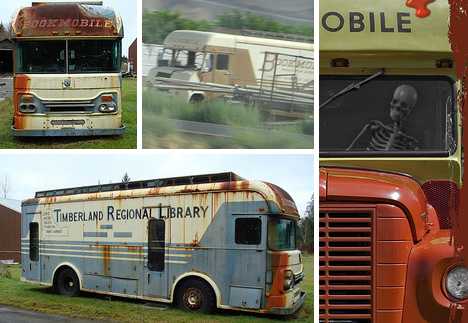
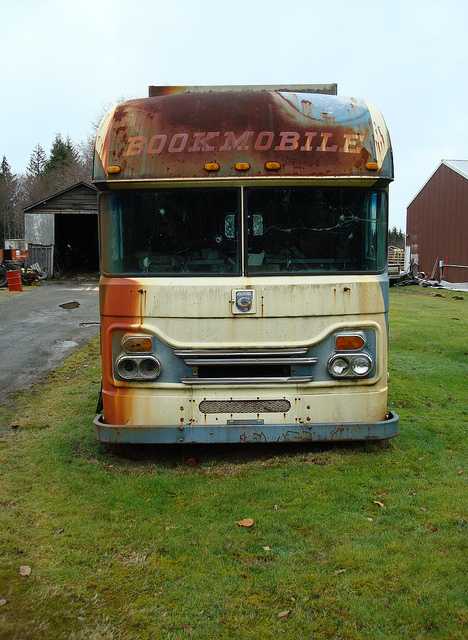
Washington State Library abandoned bookmobile (image via: Washington State Library)

The first bookmobiles were horse-drawn “perambulating libraries” that plied the rough & rudimentary rural roads of 1850′s England. By the early years of the 20th century traveling book-wagons began to visit isolated farming towns in the United States. The People’s Free Library of Chester County, South Carolina operated one of the first American bookmobiles, essentially a mule-drawn wagon modified to carry wooden-shelved boxes of books.

The automotive age provided a huge boon for bookmobiles, adding greatly to their size, speed and the distances they could travel. The abandoned mid-century bookmobile above, quietly rusting in peace just south of Amanda Park, Washington, epitomizes the apex of bookmobile design from a bright future whose time seems to have passed.

Checked Out, Won’t Be Returned

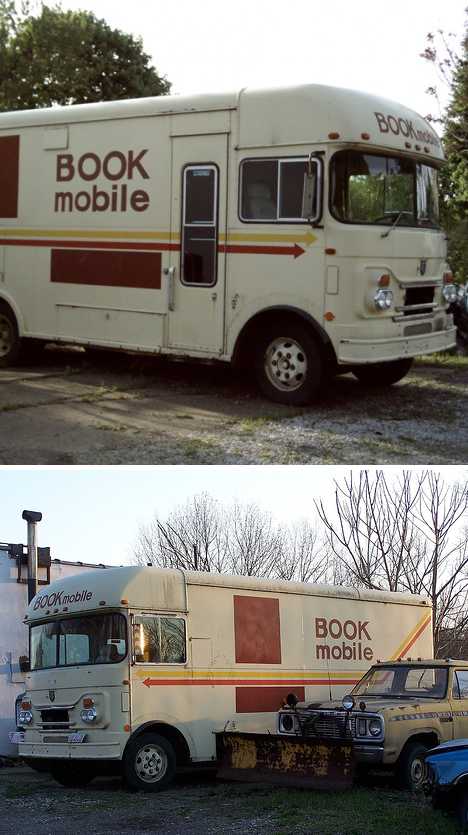
abandoned bookmobile Kent Ohio(images via: Wired and Roger Cross)

Displaying a strong Seventies earthtone vibe, this mid-sized bookmobile from Kent, Ohio looks to have made its final run and now awaits an uncertain future. Though still a useful tool for school districts and public libraries, the rise of the internet has negatively affected demand for bookmobiles these days. Older, less fuel-efficient bookmobiles that have been around the block more than a few times find themselves especially on the outs.

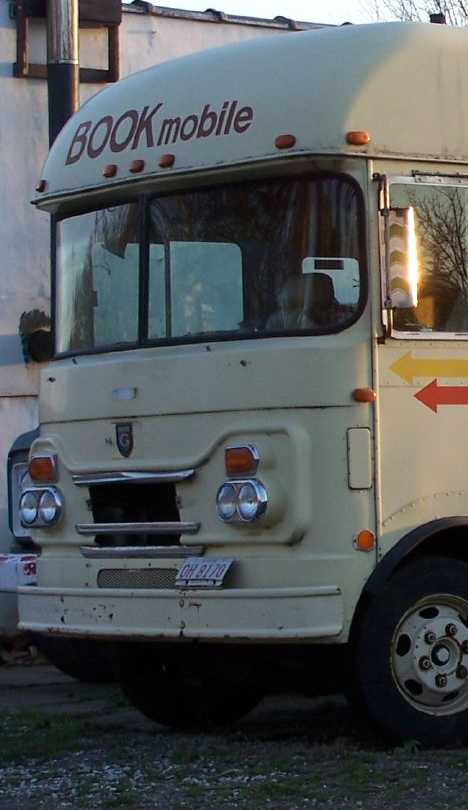
abandoned bookmobile Kent Ohio(image via: Roger Cross)

Kudos to Flickr user Roger Cross for capturing this somewhat sad bookmobile whiling away its sunset years, coincidentally at sunset. It’s a good thing he had his camera with him at the time, too, for as Cross relates: “As of this last weekend, 3 May 09, this bookmobile is no longer at this location in Kent OH.”

My Bookmobile, My Home

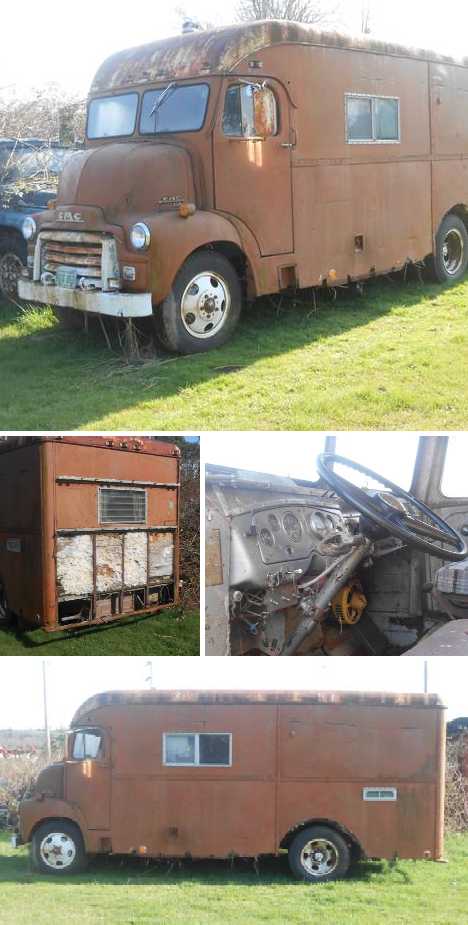
1953 abandoned bookmobile RV conversion (images via: Big Barkoz Speed Shop)

Now here’s a real fixer-upper: a 1953 GMC cab-over bookmobile that was converted to a motor home over 30 years ago. In its free & easy bookmobile days, the Kitsap County Public Library operated it in the Crystal Mountain area twice monthly while organizing longer distance expeditions around Washington State during the summer. Factory equipped with a straight 6 engine and a 4-speed manual transmission, this beast must have been a handful on frosty mornings high in the Cascades!

Next Page:
End Of The Story 12 Abandoned Forgotten Bookmobiles

Share on Facebook


[ By Steve in Drawing & Digital. ]

[ WebUrbanist | Archives | Galleries | Privacy | TOS ]


WebUrbanist

 
Comments Off on End Of The Story: 12 Abandoned & Forgotten Bookmobiles

Posted in Creativity


browserFruits Juli #4

28 Jul

Angeregt durch die Frage von Olivia in den letzten browserFruits, haben wir nun auch eine kleine Ecke für Foto-Wettbewerbe in den browserFruits eingerichtet. Hier informieren wir Euch über ausgewählte Wettbewerbe. Falls Ihr noch weitere findet, könnt Ihr sie uns gern zuschicken und wir stellen sie in unserer nächsten Linksammlung vor.


Fotospecial: Würfel

Flickr

500px


Deutschsprachig

• Aerialscapes – Jakob Wagner hat mittlerweile einige supergeile Luftaufnahmen am Start.

• Der estländische Fotograf Andrew Bodrov hat aus Aufnahmen des „Curiosity“-Rovers ein Panoramabild vom Mars gebastelt. Ganze vier Milliarden Pixel hat es.

• Die deutsche Vogue hat ein Interview mit dem Mode-Fotografen Miles Aldridge über seine Ausstellung in London.

• „Dieser ganze digitale Scheiß verunsichert.“ Juergen Teller im Interview mit der Welt, die etwas rumpoltert, Teller rückt das aber wieder gerade und gibt entspannt ehrliche Antworten auf mittelmäßige Fragen.

• Einfach auf einen Zug springen und weg. Mark Brodie hat’s gemacht, fünf Jahre lang als Vagabund quer durch die USA gereist. Und hat atemberaubend schöne und ebenso verstörende Bilder mitgebracht.

• Flare interviewte Fabian Stürtz, den Finalisten des Photobattle. Er berichtet zunächst, wie er die Ideen für den Wettbewerb entwickelt. Später geht es auch um Fabians Arbeiten ganz allgemein.

• „Kamera aus oder ich schieß’“, durfte sich ein Kameramann gegenüber der US-Botschaft in Frankfurt am Main anhören. Ein erschreckendes Interview über die praktischen Grenzen der Pressefreiheit in Deutschland.

• Das Fotomuseum Wintherthur macht vor, was wir uns von viel mehr Museen wünschen würden: Die ganze Sammlung ist online verfügbar, eine Auswahl ist frei einsehbar, das komplette Angebot lässt sich mittels einer Registrierung abrufen.

• Heise berichtet in einem kleinen Artikel über die Situation der Analogfotografie heute: Irgendwo zwischen Krise und Trend.


International

• Bei viooz könnt Ihr den Film „McCullin“ von 2012, der den gleichnamigen Kriegsfotografen Don McCullin portraitiert, in voller Länge ansehen.

• Jörg Colberg reflektiert das Thema „Fotoprojekte vs. einzelne Fotos“ und zieht daraus weitreichende Schlüsse.

• Daily Mail hat mal wieder rare Farbfotos ausgegraben. Dieses Mal von Arbeitern in Amerika in der Zeit zwischen 1935 und 1944.

• Der LIFE Fotograf Gjon Mili besuchte ’49 Pablo Picasso und beide ließen sich auf ein erleuchtendes Experiment ein.

• 2009 widmete die Denver Post dem Fotojournalisten Emilio Morenatti ein Feature mit dessen unglaublichen (und schmerzlichen) Aufnahmen, die er in zwei Jahren in Afghanistan, Pakistan und anderen Ländern gemacht hatte.

• The Color Project ist eine wunderschöne Bildergeschichte über ein Mädchen in einer Traumwelt.

• Mark Nixon fotografiert geliebte Teddys. Und wie sie geliebt wurden, sieht man ihnen auf jeden Fall an.

• An der Saarland Universität wird gerade der nächste Riesensprung in Sachen technischer Fortschritt in der Fotografie gemacht: KaleidoCam.

• Wer zu viel Geld auf dem Konto hat und nicht weiß, wohin damit: Hasselblad hat die „Stellar“ angekündigt, für die man viel Geld hinlegen werden muss, weil Hasselblad draufsteht und ein Holzgriff dran ist.

• Lomographys neuester Streich ist die Wiederauflage der legendären Petzval-Linsen, ursprünglich aus dem Jahr 1840, die mit einem besonderen Schärfe- und Bokeh-Spiel auffallen. Nach nur sechs Stunden war die dafür gestartete Kickstarter-Kampagne bereits finanziert – Ihr habt trotzdem noch gute drei Wochen Zeit, Euch ebenfalls eine Linse vorzubestellen.


Wettbewerbe

• Liebe Vogelfreunde, die Deutsche Wildtier-Stiftung sucht in einem Wettbewerb Fotos von Schreiadlern oder einem typischen Lebensraum des „Pommernadlers“. Zu gewinnen gibt es einen dreitägigen Aufenthalt mit Halbpension im Wildtierland Gut Klepelshagen und die Teilnahme mit den Gewinnerbildern an einer Ausstellung.


Neuerscheinungen und Tipps vom Foto-Büchermarkt

Buchtipps

• Man Ray* ist Euch doch sicher ein Begriff, oder? Taschen hat eine schöne Monografie, in der seine weniger bekannten Fotografien versammelt sind. Und diese ist als Hardcover-Ausgabe für nur 9,99 Euro erhältlich.

• Das klingt interessant: „Straßenfotografie – 50 Tipps für den schnellen Einstieg“*. In diesem Buch gibt Eric Kim Einblick in die Straßenfotografie. Wir konnten noch nicht reinschauen, da es erst Ende Juli erscheint, aber der dpunkt.verlag macht erfahungsgemäß gute Bücher.


Videos

Ein Timelapse bei dem alles gespiegelt ist, klingt erst einmal komisch, sieht aber klasse aus.


„Power of Photojournalism“: Ein Film über die fotografische Berichterstattung in zwei Teilen.


Ausstellungen

Robert Capa “Israel”
Zeit: 6. Juli – 6. Oktober 2013
Ort: Internationales Zeitungsmuseum, Pontstr. 13, 52062 Aachen
Link

Frank Machalowski, Thomas Graichen. laut & leise – zwei Sichten auf Berlin.
Zeit: 9. August – 1. September 2013
Ort: aff Galerie, Kochhannstraße 14, 10249 Berlin
Link

Helmut Newton – Some like it nude
Zeit: 23. Juni – 11. August 2013
Ort: Ludwig Museum Koblenz
Link

Traumfrauen / Traummänner. 50 Starfotografen zeigen ihre Vision vom Ideal.
Zeit: 14. Juli – 1. September 2013
Ort: Kunsthalle Rostock
Link

Visions of Time – André Wagner
Zeit: 27. September – 17. November 2013
Ort: vhs-photogalerie, Rotebühlplatz 28, 70173 Stuttgart
Link

Der stete Tropfen. Fotografien von Julia Baier.
Zeit: 17. Juli – 29. September 2013
Ort: Römerthermen Zülpich – Museum der Badekultur
Link

Mehr aktuelle Ausstellungen


* Das ist ein Affiliate-Link zu Amazon. Wenn Ihr darüber etwas bestellt, erhalten wir eine kleine Provision, Ihr bezahlt aber keinen Cent mehr.


kwerfeldein – Fotografie Magazin

 
Comments Off on browserFruits Juli #4

Posted in Equipment


Disney’s Invisible Flashes

28 Jul

While visiting Disneyland Paris, long-time reader Paul Mason of Hartlepool, UK watched a Disney staff photographer work a room doing shots of kids with the characters.

He noticed a remote on the photographer's camera, but saw no flashes anywhere — until they went off.

Read more »
Strobist

 
Comments Off on Disney’s Invisible Flashes

Posted in Photography


Then and now: Photographing the Bay Bridge

28 Jul

628x471-2.jpg

Peter Stackpole was just 21 when he brought his Leica A to the top of the still-under-construction San Francisco-Oakland Bay Bridge. It was 1934, and Stackpole had no official authorization to capture images that would eventually land in Vanity Fair. Decades later, photographer Joseph Blum captured yet another bridge project in the bay area. Despite considerably tighter safety restrictions, he made soaring images of the modern construction site. Click through to see samples, then and now.

News: Digital Photography Review (dpreview.com)

 
Comments Off on Then and now: Photographing the Bay Bridge

Posted in Uncategorized


Tschüß, Schlafzimmerwand

28 Jul

Wenn man umzieht, dann gibt es Dinge, die man vermissen wird. Man weiß es schon ganz genau, noch bevor man die ersten Kisten packt. Es kann die große Süd-Terrasse sein oder der Blick auf den alten Tannenbaum, der so viele Vögel und Fledermäuse beherbergt. In meinem Fall ist es die schön beleuchtete Schlafzimmerwand.

Für einen Nicht-Fotografen klingt das sicher verrückt. Aber meine Schlafzimmerwand kann was. Das Licht fällt so perfekt durch die große Terrassentür auf diese leichte Raufasertapete, dass kein Studiolicht mithalten kann. Durch dieses Licht, das so perfekt ausleuchtet, habe ich in dieser Wohnung meine Liebe für ganz einfache Portraits gefunden.

Leyla © Katja KemnitzLena © Katja Kemnitz

Vor vier Jahren, kurz nach dem Einzug, entdeckte ich das Potenzial meiner Wand zum ersten Mal. Ich suchte einen einfachen, neutralen Hintergrund für Passbildaufnahmen. Und da war sie und auf meine Passbilder folgten noch am selben Tag einige Selbstportraits.

Seitdem nutze ich mein Schlafzimmer als Ministudio mit natürlichem Licht. Ich weiß nicht, wieviele Modelle schon auf der Bettkante saßen oder mit dem Blick in meine Kamera vor der Terrassentür standen.

Sara © Katja Kemnitz

Dabei ist der Bildausschnitt immer sehr knapp durch die etwa zwei Meter freie Fläche zwischen Wandende und Tür. Die Portraits sind daher immer sehr nah, aber langweilig wird es nie, denn jedes Modell bringt einen anderen Ausdruck, einen anderen Blick mit ins Foto. Manchmal nutze ich auch kleine Accessoires und die meisten meiner Modelle haben ein Händchen für schöne Frisuren.

Für meine Schlafzimmerbilder nutze ich meist mein 50 mm und spiele mit Schärfe und Unschärfe. Mit Blenden von f/1.8 bis hin zu sehr geschlossenen Werten habe ich hier schon experimentiert. Ich mag bei diesen Bildern vor allem die Reduktion auf das Gesicht.

Durch den neutralen Hintergrund lenkt nichts vom Modell ab. Wenn ich am Ende eines Shootings die Bilder am Computer aussortiere, merke ich, wie viel auch nur die kleinsten Variationen der Mimik die Wirkung des Bildes verändern.

Eva © Katja KemnitzKathi © Katja Kemnitz

Auch muss ich diese Fotos kaum nachbearbeiten. Je nach Tages- und Jahreszeit verändern sich die Farben, die das Licht in den Hintergrund zaubert. Ein klein wenig helfe ich dann oft doch nach, aber lasse mich von diesen zufälligen Gegebenheiten inspirieren.

Innerhalb der letzten vier Jahre sind in meinem Schlafzimmer viele meiner Lieblingsbilder entstanden und ein klein wenig Wehmut ist beim Gedanken, sie nun bald nicht mehr zur Verfügung zu haben, dabei. In der neuen Wohnung wird es keine so schöne helle Wand geben. Aber vielleicht erwartet mich ja etwas Neues, vielleicht fordert es mich, öfter rauszugehen oder doch mit Studiolicht zu experimentieren. Ich bin gespannt.

Mach’s gut, Schlafzimmerwand. Schön war’s mit dir.


kwerfeldein – Fotografie Magazin

 
Comments Off on Tschüß, Schlafzimmerwand

Posted in Equipment


Yongnuo YN622C TTL Flash Trigger Review

28 Jul

Phil Steele from Steele Training has put together this good review of the Yongnuo YN622C TTL Flash Trigger.

Get more from Phil Steele in his great course – How to Shoot Professional looking head shots on a budget with Small Flashes.

Post originally from: Digital Photography Tips.

Check out our more Photography Tips at Photography Tips for Beginners, Portrait Photography Tips and Wedding Photography Tips.

Yongnuo YN622C TTL Flash Trigger Review


Digital Photography School

 
Comments Off on Yongnuo YN622C TTL Flash Trigger Review

Posted in Photography


27. Juli 2013

28 Jul

Ein Beitrag von: flow.we

He captures the souls who are lost on Earth © flo.we


kwerfeldein – Fotografie Magazin

 
Comments Off on 27. Juli 2013

Posted in Equipment


5 Tips for Creating fun Campfire Photos

28 Jul

night-campfire-photography-featured

A couple of weeks ago I had the pleasure of meeting the Digital Photography School headmaster, Darren Rowse, in person at a conference we both attended called the World Domination Summit in Portland, OR. The message of the conference (yes, the name invokes much curiosity) is simple: community, adventure, and service. It’s a large group of people that enjoy life, live adventures constantly and give back in service of others. That’s one of the reasons why I love writing on this site so much, I get to share my experience and knowledge and help you!

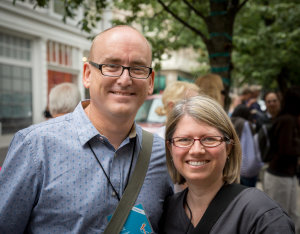
Me and Darren Rowse

Me and Darren Rowse

Darren was one of the keynote speakers and he most of the attendees (3000+) inspired to move forward and live our dreams. He even fulfilled one of his childhood dreams on stage, but I’ll leave that for Darren to share with you!

One thing I’ve always wanted to do is visit the Sea Lion Caves in Oregon. So after the conference my husband and I headed to the coast for a few days. We camped in one of the state parks, in the middle of the woods and sand dunes, it was awesome being in nature. But, being a photographer I couldn’t just sit around the campfire and do nothing, so out came the camera!

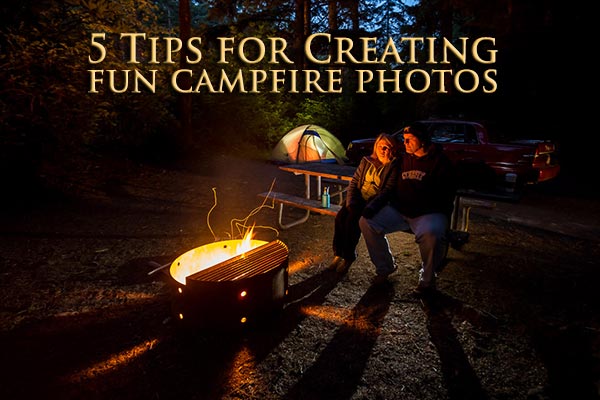
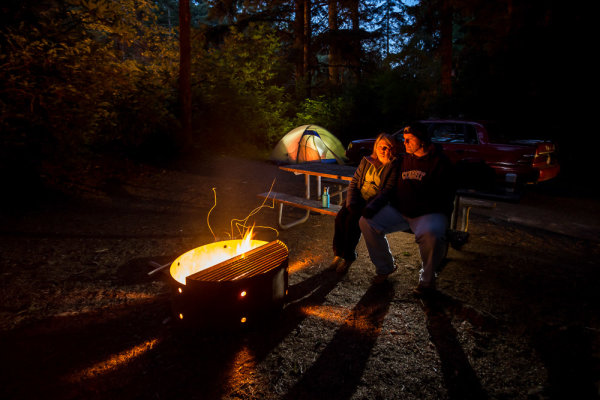
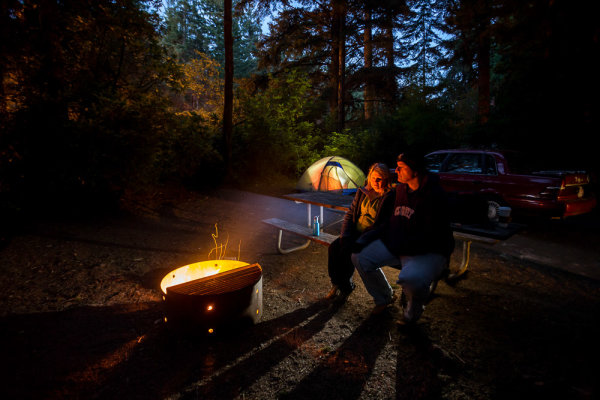
It’s really not that hard to create some really cool images that will impress your friends. I’m going to walk you through my process for creating the image above and how I adjusted as I went to get the desired result. Remember photography is a journey, not a destination, don’t expect to get it perfect on the first shot – I never do!

Here are my 5 tips for you on creating some fun campfire images.

#1 USE A TRIPOD & SELF TIMER OR REMOTE TRIGGER

A tripod is essential for doing this type of photography as you’ll be dealing with some really long exposures, mine ranged from two to ten full seconds. Make sure you have a sturdy tripod and if you want to get in some of the photos you can either use the self timer, as I did and run into the scene, or get yourself a handy wireless remote you can put in your pocket and fire the camera from your spot in the image.

#2 WAIT UNTIL IT’S DARK ENOUGH OUTSIDE

night-campfire-photography-002

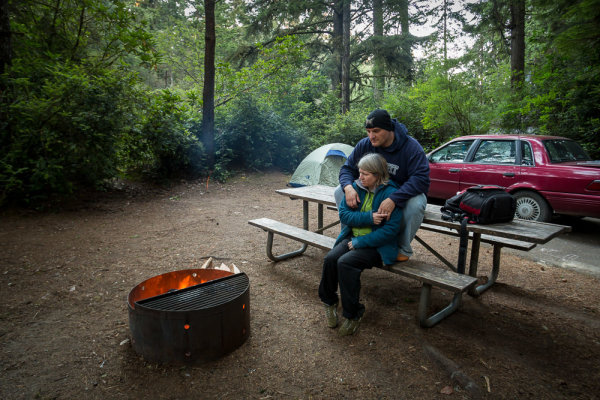
ISO 400, f/4, 1/8th of a second

The image above is the first one I made and I wasn’t happy with it. It didn’t have the mood I wanted and the sky was too light. So I had a snack and waited about an hour then made the following image. I’ve given the exposure data for each shot so you can see how I adjusted it as the sun went down and the amount of light diminished.

#3 EXPOSE FOR THE BACKGROUND, KEEP IT DARK

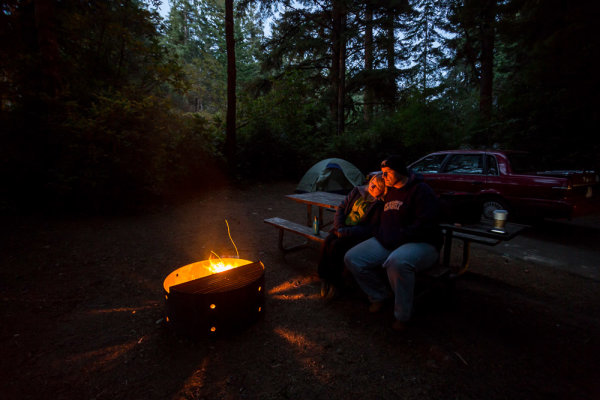
night-campfire-photography-003

ISO 1600, f/4, 2 seconds

Okay, so that’s way better but I felt it was still missing something. I really liked how the light was streaming out of the holes in the rim of the fire pit. The exposure is just right on the background but it seemed a bit boring.

Notice also that I increased the ISO to 1600. If I hadn’t my exposure at ISO 400 would have been 8 seconds. It’s pretty hard to keep perfectly still for 8 seconds so I sacrificed gaining a little bit of noise to get what I felt was a more reasonable 2 second exposure time.

#4 ADD SOME ADDITIONAL LIGHT INTO THE SCENE

Going from the last image, I knew wanted to add a bit of a light to to the tent, to make it look like it was glowing. So I took my headlamp (get one at a camping supply store or use a flashlight) and turned it on inside the tent. I aimed it at the back wall facing away from the camera so I didn’t get a hot spot, and it lit up the whole tent quite evenly. If you have a larger tent you may need more than one light inside.

**NOTE:  do NOT put fire or a gas lantern inside your tent! Please practice good fire safety habits at all times.**

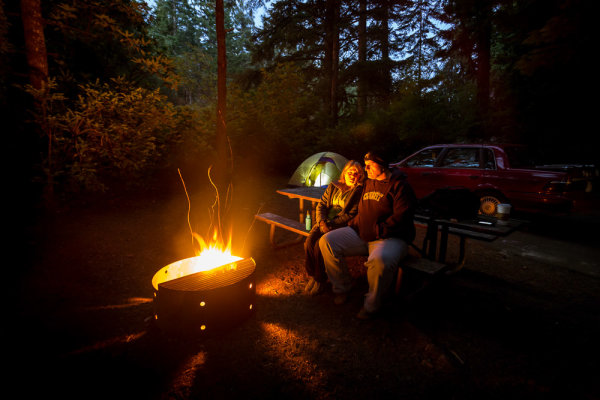
night-campfire-photography-005

ISO 1600, f/4, 2 seconds

Okay almost perfect, except for a couple of little things. As we had just put a log on the fire it was pretty intense and bright. That brings me to the last tip.

#5 SHOOT WHEN THE FIRE BURNS DOWN IF IT’S TOO BRIGHT

There’s no way to control the intensity of the fire except by darkening the whole image, but if I do that then my background will basically disappear into a black abyss. So we waited a while before doing the next image. I also added a second head lamp, this time on the picnic table seat behind us. It is pointed back towards us and I placed it careful so we’d be in front of it and the light itself wasn’t hitting the lens directly.

Here’s a couple of the final shots, with which I was quite pleased. I changed my camera angle a bit and re-cropped but otherwise they are very similar. Notice these last exposures were a bit longer. The light in the sky was almost completely gone so in order to get any detail in the background I had to increase the overall exposure, taking care to not overexpose the fire.

night-campfire-photography-010

ISO 1600, f/4, 5 seconds

night-campfire-photography-009

ISO 1600, f/4, 5 seconds

#6 BONUS TIP – MAKE SURE TO FOCUS THEN TURN IT OFF

Focusing at night is very tricky because your camera can’t see in the dark, neither can you! The best way to focus is to have your friend hold a light where you’re going to sit (or put it on a chair). Aim the light directly at the lens, which will allow the camera to “see” it and lock focus on that spot. Once it’s locked, just switch to manual focus, taking care not to bump the camera or accidentally turn the focusing ring. If you move the camera or recompose the scene, just do the same procedure over again.

ADDITIONAL READING

If you want to read more about other night photography techniques I’ve done a couple of article on Light Painting and some special effects. Links to them below:

  • Light Painting Part one – the photography
  • Light Painting Part two – photoshop
  • Three Special Effects for Night Photography

ACTION PLAN

Since we still have a little bit of summer left in the Northern Hemisphere, if you plan on doing a little camping take the camera gear along and give this a try! You may find your travel companions get into it and have a little fun with it as well. Also gives you a great way to do some fun group photos. You can also use flash if you’re so inclined and skilled. Please do share your images with us and any other tips you want to add that I may have missed.

Cheers, Darlene

Post originally from: Digital Photography Tips.

Check out our more Photography Tips at Photography Tips for Beginners, Portrait Photography Tips and Wedding Photography Tips.

5 Tips for Creating fun Campfire Photos


Digital Photography School

 
Comments Off on 5 Tips for Creating fun Campfire Photos

Posted in Photography


Escher + Inception: Tour a Digital World that Defies Physics

27 Jul

[ By WebUrbanist in Conceptual & Futuristic & Technology. ]

surreal human interface cube

This video thrives on convention – specifically: breaking with it. In the same vein as M.C. Escher, The Matrix or, more recently, Inception (or even the building flips and slides in Transformers), this surreal experience calls into question everyday architectures that surround us.

Imagine a world where urban fabric was what the latter implies: a delicate, woven-together series of structures and infrastructure forever flipped and rearranged at the whim of … whom? Perhaps you, perhaps another consciousness, or perhaps something created by a blind watchmaker, as it were, rotating city blocks like rows on a Rubik’s Cube.

surreal cube water bridge

Be sure to view the above realistic animated video in full size for the complete effect. Our brain recognizes patterns, then expects those things within such patterns (like trains on rails, or a waterfall) to conform to known laws of physics and thermodynamics – strip away that certainty and you start to learn something about human cognition and our relationship to world.

surreal room glowing light

From the project creator, Chris Kelly, who created this as a graduate project: “Our understanding of space is not always a direct function of the sensory input but a perceptual undertaking in the brain where we are constantly making subconscious judgements that accept or reject possibilities supplied to us from our sensory receptors,” he says. “This process can lead to illusions or manipulations of space that the brain perceives to be reality.”

surreal bionic eye reality

The thesis that goes with these videos and images:  Time and Relative Dimensions in Space: The Possibilities of Utilising Virtual[ly Impossible] Environments in Architecture. “The redirection techniques and the use of overlapping architecture allow the same physical space to hold a much larger virtual space”, giving it all kinds of applications in collaborative gaming and interactive art as well as architectural and urban design.

surrealist virtual reality cube

More on the project: “The aim of the rubix project was to develop an animation that described a conceptual tool for deploying these malleable virtual environments that could be used by their creators to shift space around us. The rubix concept stemmed from the need for an algorithmic formula for controlling the use of redirection techniques; it allows for many different spatial combinations whilst a level of control is constantly maintained. In the animation the initial Escher-esque space is a representation of our perceptual system where huge amounts of information arrive in the brain from multiple streams. The process of perception involves the brain selecting and rejecting contradicting pieces of information leading to a perception of reality that only gives us glimpses into the world we are in.”

Share on Facebook


[ By WebUrbanist in Conceptual & Futuristic & Technology. ]

[ WebUrbanist | Archives | Galleries | Privacy | TOS ]


WebUrbanist

 
Comments Off on Escher + Inception: Tour a Digital World that Defies Physics

Posted in Creativity