How I dissasembled a Nikon D2X and got a broken shutter and the whole camera back to life
Video Rating: 4 / 5
How I dissasembled a Nikon D2X and got a broken shutter and the whole camera back to life
Video Rating: 4 / 5
Facebook: facebook.com Our new YouTube channel: youtube.com D-Movie shot at the Occupy Frankfurt demonstration on January 15, 2012. Shot with the Nikon D4 and Nikon 14-24mm f/2.8G ED AF-S Nikkor + AF-S 24-120/4.0 G ED VR lens. Filmed in 1920×1080 at 30 frames per second. External Microphone (for sound recording): BEYERDYNAMIC MCE 86 S II CAM Software: Adobe Premiere Pro Twitter: twitter.com More Nikon DSLR videos on our channel: www.youtube.com Official website: www.fenchel-janisch.com
Video Rating: 4 / 5
Energy Take Classic 5.1 Home Theater System is an awesome budget home theater system for 400 dollars and the sound is amazing. You wont find anything better under 00. I highly recommend these speakers to anyone looking for a sweet home theater system that wont break the bank. Look forward to my full review soon. You can buy these on Amazon for 9 here www.amazon.com Social Networks & Websites Blog & Portfolio: nickerwin.com Twitter twitter.com Google Plus: gplus.to Facebook: facebook.com Flickr: flickr.com Last.fm: last.fm
Video Rating: 4 / 5
A Guest Post by Ben Evans
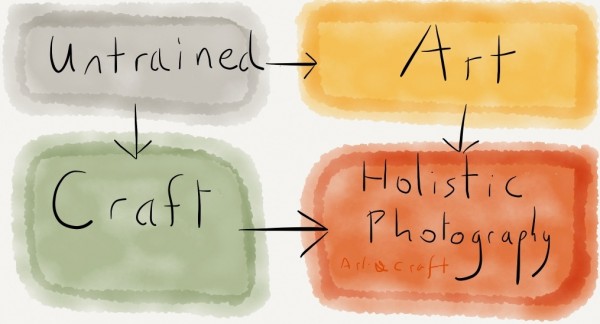
Have you discovered what type of photographer you are? Doing so will make a big difference to your photography, allowing you to improve faster. If you don’t know right now, read on and I’ll help you find out.

?Okay so the first thing to understand is that Holistic Photography is both a Craft and an Art. The earliest photographers were often skilled in both painting and chemistry; an unlikely combination today.??We will see that you develop competency in craft and art separately. This understanding gives us the four Types of photographer which we’ll cover in this article.??Times have changed. Digital cameras do almost everything for you now. To take a photo on the iPad you simply press on your subject, then take the picture!??For a photographer who grew up developing film and making prints, this is amazing. Sepia-toning a photo to make it brown took ages; now there’s an Instagram filter which does it, well, instantly.??So realise that for most people, learning the craft of photography isn’t necessary to get started. Sometimes some very famous photographers know next to nothing about cameras or lighting; they just have a good ‘eye’ – and great assistants!??What is this artistic ‘eye’? Simply put, it’s the ability to ‘see’ a picture that others might miss. Cartier-Bresson had it; so did Avedon.
A photographer with a good eye can make better photographs with a phone than an untrained person could with the best camera in the world.??There’s a hint in the last paragraph; I used the word ’untrained’. Yes, it’s possible to get this elusive ‘eye’ for yourself. How? Well the best place to start is with the principles of Aesthetics.??Of course Art also requires an oblique approach to learning, covering psychology, philosophy and heightened self-awareness; but this is beyond the scope of this article.
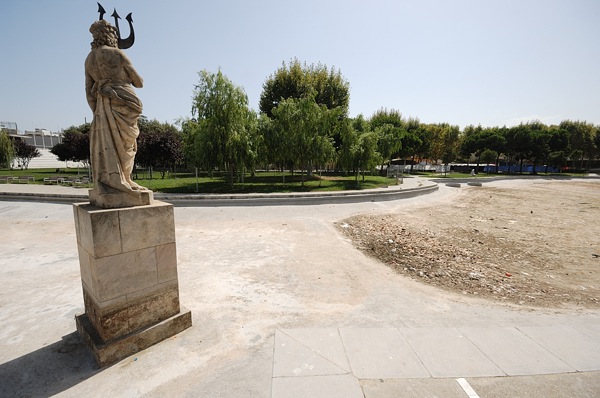 ??Unless they’ve developed themselves in different fields, most people begin at square one. This is our first type of photographer.??
?The untrained photographer is someone who takes pictures. That’s all. They don’t really know what they’re doing or what they’re looking for. Of the billions of images of Facebook, most were taken by the untrained.
Of course there is no shame in this. Photography need not be part of anyone’s life. A camera can just be a useful tool to save and communicate life’s little attractions. And just by the law of averages, if they’re out and about and take enough pictures, maybe one or two will be great.?So how do we move on from this average state? We develop our technical skill, which we’ll deal with later, or we work on our Artistic ‘eye’.??Designers, painters and the fashion-conscious have a head start. I have a friend who finds no interest in sunsets or people’s faces. Don’t take your fascination for the world for granted; a lot of people don’t have it.??A large part of having a good ‘eye’ is colour consciousness. You can study which colours work well together. A combination of blue and yellow or red and green works well, for example.

?It’s also very important to be aware of the world around you. The artist really looks at the world. They want to see what’s there, not what they think is there. Practice this.??As with most creative endeavours, experiencing what’s been done before is a catalyst for improvement. It therefore pays dividends to visit art galleries and study great artworks.??You may be doing all of these things already. Perhaps your childhood encouraged an artistic temperament. If you have a good eye already, well that’s half the battle won.??
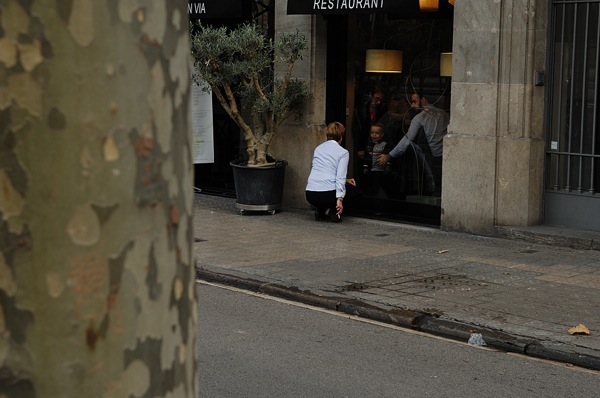
??The artist doesn’t really know anything about photography, cameras, lenses or proper technique; but they do have a good eye. This takes them quite far, especially now with Instagram, Photoshop and the ever-improving ‘auto’ modes on digital cameras. They know what they’re looking for, but not how to get there.
It may be worth buying their finished work if the quality is good, but they’re unlikely to have enough consistency for you to consider commissioning them. They focus on the world too much and overlook the camera. Serendipity and clever dSLRs can only take you so far.
??Photography can be technically complicated, especially if you want the best image quality and need to use artificial lighting and post-processing. To develop a high degree of skill takes time and effort; so camera operators can be in demand.
Specialised equipment can also be prohibitively expensive, further limiting the supply of reliable image-makers. They’re a safe bet, but you can’t expect too much soul or originality.
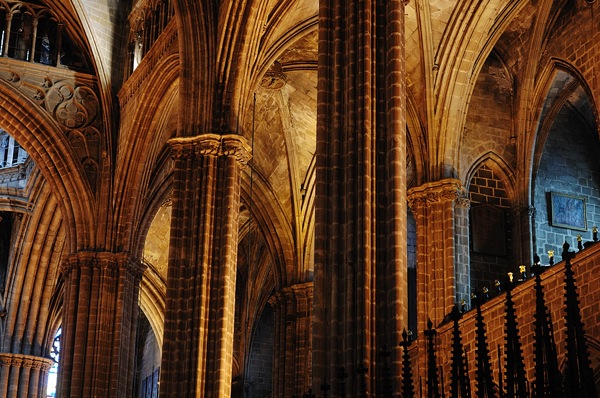
Don’t assume because the subject is interesting that there’s much going on behind the camera. It’s perfectly possible to take uninspiring pictures of beautiful people or sublime landscapes if the focus is on niche techniques and maximising sharpness.??
??As in most things, a balance produces the best results. I’m talking about the balance between the Artistic ‘eye’ and technical mastery of photography. The Holistic Photographer knows what they want to create, and they understand how to control the camera to achieve it.

While very aware of the principles of aesthetics, they also have enough trust in themselves to break the rules when necessary. The camera becomes an extension of the mind’s eye, and the focus is on preserving moments or expressing ideas and feelings.
??So where are you at on the journey? If you’re reading this, chances are that you’re already more advanced than most people, who are untrained. But are you focussing on developing your Art, or your Craft??
You can see that you will supercharge your own progress by balancing both. What do you need to concentrate on? Are more visits to exhibitions in order? Or would you benefit from a month spent shooting in Manual mode so you can master exposure? Why not have a look through your photographs with a friend and find out???And the takeaway? You’ll get the best results by learning both the art and craft. Holistic Photography involves learning to See and communicating what you’ve seen effectively. It is having something to express, and understanding how to work with the realities of photography to create something tangible. Skilled artistic creation is worth striving for; you will find that it is its own reward.?
Love photography? Get your copy of Ben’s best-selling book, ‘Photography: The Few Things You Need To Know’ for 99p now at www.GreatBigBear.com.
Ben Evans is an English Photographer who teaches photography classes in Barcelona with Barcelona Photography Courses.
Post originally from: Digital Photography Tips.
Check out our more Photography Tips at Photography Tips for Beginners, Portrait Photography Tips and Wedding Photography Tips.
What Type of Photographer Are You?
[ By WebUrbanist in Architecture & Cities & Urbanism. ]

Phantom settlements and trap streets are faked or falsified, intentionally introduced (or materially altered) by map makers to catch those who would copy them. And the practice is not limited to towns or roads – there are trap ponds, trap parks, trap buildings and trap sidewalks, too.

Now imagine the same thing applied to indoor spaces being mapped by new mobile device apps: trap rooms, halls, closets and stairwells – entirely fake spaces that could at worst confuse, but at best might become targets of offbeat geo-locational games.

BldgBlog (image above by Laura Pedrick for The New York Times) speculates about introducing false information to interior maps of places like shopping malls:
“Nothing sinister—you don’t want people fleeing toward an emergency stairway that doesn’t exist in the event of a real-life fire—but why not an innocent janitorial closet somewhere or a freight elevator that no one could ever access in the first place? Why not a mysterious door to nowhere, or a small room that somehow appears to be within the very room you’re standing in?”

Unlike some paper streets (example shown above), which are planned but never become a reality, trap streets and phantom settlements (like Argleton, a faux town depicted below) are fictitious creations from the start, designed to mislead copyists into revealing their own copyright infringement. Normally innocuous (like: renaming or bending a road), you think of them as equivalent to programmer’s Easter Egg or a hidden watermark on a photograph – a buried surprise in everyday maps.

But what are the implications of doing this on a smaller scale of pedestrian circulation, deceiving people not by square mile, but by cubic feet? Could you frustrate the janitorial staff at a school, scare someone into imagining a secret room in their apartment complex? Would it trick urban explorers into actually physically trapping themselves? We will set these open questions aside and leave you with a little fun fact: while designed to catch copiers, trap streets cannot themselves be copyright.

You can judge for yourself which one is the actual winner of this dubious award after taking a look at this incredible collection of the tiniest hotels in the world!
Click Here to Read More »»

A collection of some of the slickest as well as the silliest bedroom furnitures, furniture sets and furniture designs you can find – just don’t fall victim to the mouse-trap bed!
Click Here to Read More »»


[ By WebUrbanist in Architecture & Cities & Urbanism. ]
[ WebUrbanist | Archives | Galleries | Privacy | TOS ]

This week is the first episode in a two-part series about post production workflow. In this episode, Mark will explain how to get images from the camera to the computer. Then he will show you how to keyword, group and organize the photos in Adobe Photoshop Lightroom.
Video Rating: 4 / 5

Flash photography is a skill not many try to master. Its like people just don’t want to learn it and just muddle through with their camera and flash on auto. I’m here to tell you: its super easy!!! The basics of flash exposure: Shutter speed affects ambient light only ISO and aperture affect ambient light AND flash Flash distance, power, and modifiers all change its output. When you understand that concept its easy. If you want to adjust the flash change ISO, aperture, flash power or flash distance. If you only want to change the ambient light in the scene then adjust your shutter speed. I have all my students start out in manual exposure mode with the flash on manual too. That way you are controlling the flash and learning how it works, not just getting by.
Video Rating: 4 / 5
Facebook: facebook.com Our new YouTube channel: youtube.com Fenchel & Janisch DSLR Tutorial Series: Choosing the best / right lens for you! A lot of people are asking us, which lens is the best? A tough question and the answer isn’t so easy. First off, let’s talk about which lens you need for which purpose. You have to define what you want to shoot or what kind of story you want to tell: Are you shooting a fictional short film or are you running through the city taking snapshots of people and random events? Voice Over: Moritz Janisch Copyright 2011 by Fenchel & Janisch Filmproduktion GbR Twitter: twitter.com More DSLR videos on our channel: www.youtube.com Official website: www.fenchel-janisch.com
Video Rating: 4 / 5
Lives there a photographer who doesn’t want to see a book of their work in print? Likely not. But publishers are reticent, book markets are contracting, and the costs of self-publishing are high. So how to finance such a venture?
Find out in Peter Cox‘s new essay Self-Publishing a Landscape Photography Book.

Find Out More
…
The Luminous Landscape – What’s New
Some cool visual art images:
VSP Visual Street Performance 2007 @ Fabrica Braco de Prata, Lisbon, Portugal

Image by Graffiti Land
VSP Visual Street Performance 2007 @ Fabrica Braco de Prata, Lisbon, Portugal

Image by Graffiti Land
VSP Visual Street Performance 2007 @ Fabrica Braco de Prata, Lisbon, Portugal

Image by Graffiti Land

Just a short video on how to do painting with light photography
Video Rating: 5 / 5
During the Euro 2012 championship in football, the biggest, private TV network in Sweden, TV4, launched a new TV show called Late Night EM. A magazine that discussed the matches that been played in Poland and Ukraine during the day. A unique show, as it to our knowledge, is the first live broadcasted show ever, to done with the help of D-SLR cameras, namely 4 pcs of the Nikon D800. Due to the clean HDMI signal, both the Nikon D800 and the Nikon D4 can be used for broadcast and to record the signal into any chosen format externally.
Video Rating: 4 / 5

Sigma 28-300mm Macro Lens (For Nikon)
Video Rating: 4 / 5
You must be logged in to post a comment.