RSS
 

Archive for February, 2013

How To: Easily Fine Tune Your Flash Right From the Camera

18 Feb

Strobist reader (and relative lighting newb) Ron Ibarra of New York City asks, via Twitter:

"I can't control the flash through the PC cord. Am I doing something wrong?"

Nope, Ron, you are not. A PC cord is what we call a "dumb sync," meaning it only triggers the flash but does not otherwise control it. And if you are a smart photographer, all you really need is a dumb sync.

That's because you can control everything right from the camera itself. And today's follow-the-bouncing-ball post will show you the super-easy way to do just that.

Read more »
Strobist

 
Comments Off on How To: Easily Fine Tune Your Flash Right From the Camera

Posted in Photography


Cool Visual Art images

18 Feb

Some cool visual art images:

Findings by KRVIA Design Cell – Jan 12, 2013
visual art
Image by BMW Guggenheim Lab
Mapping Privacy in Public Spaces Project: Findings by KRVIA Design Cell
BMW Guggenheim Lab
January 12, 2013
Dr. Bhau Daji Lad Museum
Mumbai, India

Where do Mumbaikars find privacy in their city? The KRVIA Design Cell talked about their findings from the Mapping Privacy in Public Space research project, conducted through the Lab’s run. They discussed their methodology and their experience in data collection across the Lab’s six sites, and shared the visual imagery and maps they created from their research from over 200 participants.

Photos: UnCommonSense © 2013 Solomon R. Guggenheim Foundation, New York

 
Comments Off on Cool Visual Art images

Posted in Photographs


Sleek Internet Logos Echo Metal-Etched Japanese Cameras

18 Feb

[ By WebUrbanist in Design & Graphics & Branding. ]

camera style logos

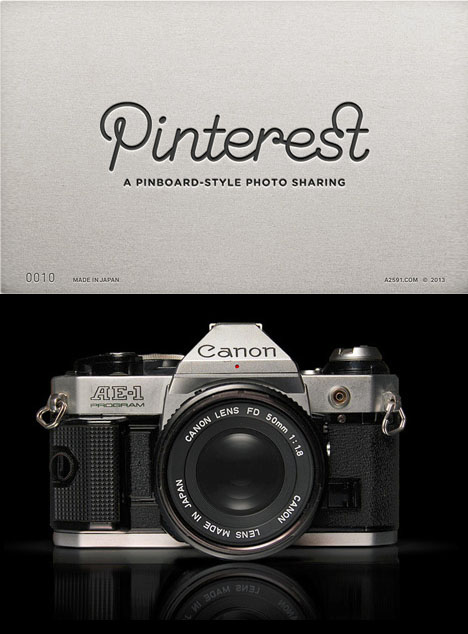
There is something simply elegant about type-embossed metal – in part the association with classic high-end manual cameras. This logo series takes that typology and applies it to a series of contemporary companies.

camera japanese vintage metal

Antrepo was inspired by brands like Canon, Nikon, Pentax and Minolta, greatly impressed by how simple (effectively logo-free) lettering made a bold and compelling statement in each case.

camera inspired internet logos

From the firm: “Canon AE-1, Nikon FTn, Ashai Pentax ESII, Minolta XG-1 – these cameras are some of the Japanese 35mm SLR cameras from the vintage ’70s and ’80s, the “Made in Japan” era, when Japan set the global standard of producing quality.”

camera metallic etched logos

In these remakes (featuring Facebook, Twitter, Instagram, Pinterest, Google, YouTube and more) some of the typographic styles and logo figures are still present, but in every case there is something breath-taking about the simplification to a monochrome, black-on-steel look. Not to mention: this also follows the existing apparent trend toward re-simplifying logos throughout online industries.

Share on Facebook


[ By WebUrbanist in Design & Graphics & Branding. ]

[ WebUrbanist | Archives | Galleries | Privacy | TOS ]


WebUrbanist

 
Comments Off on Sleek Internet Logos Echo Metal-Etched Japanese Cameras

Posted in Creativity


17. Februar 2013

18 Feb

Ein Beitrag von: Matthias Leberle

Matthias Leberle


kwerfeldein – Fotografie Magazin

 
Comments Off on 17. Februar 2013

Posted in Equipment


Coming Soon: Inexpensive Cactus Laser Triggers?

18 Feb

Well this is interesting. Georgia-based photographer Brian Hursey has been testing an advance set of laser “trip-triggers” to be released by Cactus.

These are the types of triggers designed not for syncing but for motion-stopping photography. I.e., when something passes through the laser it trips the flash. They have a variable delay mechanism, and being from Cactus should be reasonably cheap.

For more info, see Brian’s tests, or the Strobist Flickr Group discussion.

-30-


Strobist

 
Comments Off on Coming Soon: Inexpensive Cactus Laser Triggers?

Posted in Photography


Going Postal: 12 Stamped Out & Abandoned Post Offices

17 Feb

[ By Steve in Abandoned Places & Architecture. ]

abandoned post offices
Since the only thing rapid about “snail mail” is the speed it’s fading into disuse, no one should be surprised at the growing number of abandoned post offices. These once-proud centers of commerce and communication are, one by one, following video rental stores and record shops into irrelevance and extinction.

United States Post Office – Gary, Indiana, USA

abandoned Gary Indiana post office(images via: American Urbex and RickDrew)

Like the 800-pound gorilla in the room, we need to get the enormous abandoned Gary Post Office out of the way… something the (remaining) residents of Gary would love to do in actuality. Opened in 1936 as a milestone of FDR’s New Deal construction program, this rambling wreck closed in the 1970s and is now a millstone around the long-suffering city’s neck.

abandoned Gary Indiana post office(image via: RickDrew)

Located at 601 Massachusetts St. at Sixth, this awesome Art Deco colossus was designed by architect Howard Lovewell Cheney. The building boasts a marble base marred by graffiti and the partial loss of its roof has allowed decay to rapidly accelerate inside. At least the trees have more light now.

Post Office – Glenrio, Texas/New Mexico, USA

abandoned post office Glenrio Texas(images via: JuneNY)

The unincorporated community of Glenrio sits astride the Texas – New Mexico state line with the now-closed post office on the New Mexico side. Built in 1935 when bustling Route 66 was funneling Dust Bowl refugees westward, the post office’s fortunes faded fast after September 1973 when I-40 bypassed the community to the north. Thanks go out to Flickr user JuneNY for documenting Glenrio’s long-shuttered post office as well as other features of the National Register of Historic Places-listed historic district.

Post Office – Kelso, California, USA

Kelso California abandoned post office(images via: l_c_m_tt_ and Drycyclist.com)

The Mojave Desert ghost town of Kelso regained some life in 2005 when the circa-1923 restored Kelso Railroad Depot re-opened as the Mojave National Reserve’s visitor center. This explains why the street separating the Depot and the Kelso Post Office is in a reasonable state of repair sporting freshly painted lines.

Kelso California abandoned post office(image via: Wikipedia)

A popular subject for photographers both amateur and professional, the Kelso Post Office closed in 1962 and looks as weatherbeaten as a half-century in the high desert would lead one to expect. This image, courtesy of Pierre Camateros, shows the warts-and-all rugged beauty of the structure, which still proudly displays Kelso’s original 90920 zip code.

Next Page:
Going Postal 12 Stamped Out Abandoned Post Offices

Share on Facebook


[ By Steve in Abandoned Places & Architecture. ]

[ WebUrbanist | Archives | Galleries | Privacy | TOS ]


WebUrbanist

 
Comments Off on Going Postal: 12 Stamped Out & Abandoned Post Offices

Posted in Creativity


browserFruits Februar #3

17 Feb

Nach den geselligen Tagen wie Karneval und Valentinstag sehnen wir uns im Fotospecial nach Einsamkeit. Die Links sind hingegen wieder prall gefüllt und facettenreich. Dort findet Ihr neben Selbstportraitserien auch schlafende Paare, vollgepackte Fahrräder und vieles mehr. Viel Spaß damit!

Fotospecial: Einsamkeit

Flickr

500px

Deutschsprachig

• Sebastian Gerhard hat aus seiner Erfahrung einige Tipps für Modelle zusammengestellt, wie sie ihre Chancen auf ein (TfP-)Shooting erhöhen können.

• Humorvoll beobachtet: Klaus Pichler zeigt mit „Skeletons in the Closet“, wie drollig deplatzierte Ausstellungsstücke wirken, wenn im Naturkundemuseum umgeräumt wird.

• Irans Super-Kampfjet fliegt dank Photoshop.

• Robert Capas Foto des „letzten“ erschossenen US-Soldaten ging um die Welt. Hier findet Ihr einen Bericht zur Rettung des Hauses, in dem das Bild aufgenommen wurde.

~

International

• Sehr schöne Idee und Ergebnisse: Langzeitbelichtungen von schlafenden Paaren.

• Diese Form des Selbstportraits ist selten und irritierend zugleich.

• Wer dem Genre „Surreal“ zugewandt ist, sollte Nicholas Scarpinatos Portraits nicht verpassen.

• Ideen muss man haben: Davide Luciano verwendet Pfützen als Grundlage irrwitziger Portraits.

• Schon krass, was alles so auf ein Fahrrad passt.

• DPS kührt die zehn besten iPhone-Fotografen. Die besten sind es sicher nicht, aber sehr gute auf jeden Fall.

• Jim Golden arrangiert seine 190-teilige Kamerausrüstung und fotografiert sie von oben. Zehn Stunden Arbeit, die sich gelohnt haben.

• Jen Davis Selbstportraits werfen Fragen über Schönheit, Identität und das eigene Körperbild auf.

• Traci Griffin fotografiert Bäume und spiegelt sie in der Mitte. Das Ergebnis? Bäume, die schweben.

• Wusstet Ihr, dass seit 40 Jahren auf dem Mond ein Familienfoto herumliegt? Erst kürzlich wurde es von Jason Major entdeckt.

• Eine ergreifende Fotodokumentation über kirgisische Nomaden in Afghanistan gibt es bei National Geographic.

• Krieg & Fashion: Ein zurecht umstrittener Vergleich von Fotografien auf CNN – ein Blick in die Kommentare ist aber sehr interessant und spannend.

~

Neuerscheinungen und Tipps vom Foto-Büchermarkt

• Gregor Sailer: Closed Cities* – Ein Bildband über geschlossene Stadtformen. Es sind Orte der Rohstoffförderung, Militäranlagen, Flüchtlingslager oder aber „Gated Communities“ für Wohlhabende, die der österreichische Fotograf dafür besuchte.

~

Videos

Das wundervollste Straßenfotografie-Märchen wird verfilmt! Der Trailer zum kommenden Film über Vivian Maier.


Ein großartiges Video über den Straßenfotografen Travis Jensen.


Schaut zu und staunt, was Steve McCurry mit der letzten produzierten Rolle Kodachrome anstellt.


Unser Gastautor Frank Machalowski (Der Teutoburger und Mulitexpo) stellt sich und seine Arbeit in einem Video vor.

~

Ausstellungen

Walter Schels: Nature Morte
Zeit: 14. November 2012 – 28. Februar 2013 (verlängert!)
Ort: Galerie Hilaneh von Kories, Stresemannstr. 384a, 22761 Hamburg
Link

Antonia Zennaro – Reeperbahn
Zeit: 21. Feruar – 17. März 2013
Vernissage am Mittwoch, den 20. Februar 2013, um 19:30 Uhr
Ort: vhs-photogalerie, Rotebühlplatz 3, Stuttgart
Link

„Auf den 2. Blick“ – Fotografien von Corinna Noack
Zeit: 15. Februar – 20. März 2013
Ort: Luxad, Mommsenstraße 42, Berlin
Link

Roger Ballen – Retrospektive
Zeit: 22. Februar – 28. April 2013
Ort: WestLicht, Westbahnstraße 40, 1070 Wien
Link

Sonja Braas – So Far
Zeit: 7. März – 11. Mai 2013
Ort: FO.KU.S Foto Kunst Stadtforum, Stadtforum 1, 6020 Innsbruck
Link

CONCRETE – Architektur und Fotografie
Zeit: 2. März – 20. Mai 2013
Ort: Fotomuseum Winterthur, Grüzenstrasse 44 + 45, 8400 Winterthur
Link

Carsten Witte – Nudes and Faces in Square
Zeit: 19. Februar – 28. Mai 2013
Ort: Photography Monika Mohr Galerie, Mittelweg 45, 20149 Hamburg
Link

Alexandra Vogt
Zeit: 17. Februar – 23. Juni 2013
Ort: Stadthaus Ulm, Münsterplatz 50, 89073 Ulm
Link

Gillian Wearing
Zeit: 21. März – 7. Juli 2013
Ort: Museum Brandhorst, Theresienstraße 35a, 80333 München
Link

Mehr aktuelle Ausstellungen

* Das ist ein Affiliate-Link zu Amazon. Wenn Ihr darüber etwas bestellt, bekommen wir eine kleine Provision, Ihr bezahlt aber keinen Cent mehr.


kwerfeldein – Fotografie Magazin

 
Comments Off on browserFruits Februar #3

Posted in Equipment


Photolive | Set up a live slideshow with Photolive & Nikon D3 + WT-4

17 Feb

Get a live slide show going. It’s easy with the Photolive Apps and Nikon D3 + WT-4 – this tutorial shows you how. www.partytools.net

 
Comments Off on Photolive | Set up a live slideshow with Photolive & Nikon D3 + WT-4

Posted in Nikon Videos


What’s On My iPhone 5 [2012] – *80 apps*

17 Feb

Retweet this video: clicktotweet.com How To Get FREE iTunes, GooglePlay, Amazon, Hulu, & Fandango Gift Cards on iOS/Android: goo.gl Follow me: Instagram.com FOLLOW ME FOR UPDATES HERE: Twitter: www.twitter.com Facebook: www.facebook.com Subscribe to my vlog channel: www.youtube.com Blog: www.SenseiPhone.com About SenseiPhone SenseiPhone covers the latest iPhone jailbreaks, tweaks, apps, firmware, latest iOS news, and more! We are mastering iPhone from all aspects. We bring everything about iPhone to our readers (you) in an easy and interesting way. Our goal is to make you a master of iPhone, like us. Intro visual done by: YouTube.com Intro Music done by: YouTube.com Music provided by: YouTube.com Equipment Used to Produce this Video: Camera: Nikon D5100 Lens: Nikon DX AF-S NIKKOR 18-55mm Mic: Blue Snowball Editing Software: Final Cut Pro X Lighting: Cowboy Studio Lighting Kit


Dragging The Shutter: Balancing Fill Flash With Ambient Light

17 Feb
Wedding receptions are notoriously dimly lit places that make use of a flash a must. In this shot, I wanted to balance the ambient light from the stage with my flash to create more depth to the image. EOS-1D X, EF 24-70 f/2.8L II. 600EX-RT Speedlite. 1/60, f/2.8, ISO 800.

Wedding receptions are notoriously dimly lit places that make use of a flash a must. In this shot, I wanted to balance the ambient light from the stage with my flash to create more depth to the image. EOS-1D X, EF 24-70 f/2.8L II. 600EX-RT Speedlite. 1/60, f/2.8, ISO 800. Photo by Rick Berk/kNot Photography

Shooting indoors with a flash can challenge the best of photographers. Many times, the goal is simply to create enough light to illuminate your subject, and background be damned.  The results, however, tend to be less than pleasing when we allow the flash to be the only light source.  Assuming there is some ambient light in the room, adjusting the settings in your camera can help allow that ambient light into your exposure and create more depth in your image.

Most cameras typically sync with a flash at around 1/200 or 1/250 of a second.  While this speed is fine for the flash alone, it is generally too fast a shutter speed to allow ambient light to factor into the exposure. This creates images with a brightly lit subject and a very dark background.  To allow more ambient light in, you’ll want to slow your shutter down.  Putting the camera into Manual mode will allow you to adjust your shutter speed to do this.  You can then also open your aperture as wide as it can go to allow as much light as possible into the scene.  This technique is typically known as “dragging the shutter”.

The problem with dragging the shutter is that if the shutter speed is too slow, any movement can cause a ghost image, ruining the shot.  So you’ll need to keep the shutter speed fast enough to avoid that.  This may not allow enough ambient light in, so you have one last option to allow more light in.  Adjusting the ISO.  By raising the ISO speed, you make the camera’s imaging sensor more sensitive to light, allowing that ambient light to show in the image.

For the image above, the stage lighting for the band created a nice background light, but my flash was too powerful and my shutter speed too fast at the maximum sync speed of 1/250. By slowing down the shutter speed to 1/60, I gained two stops of light sensitivity.  I also raised the ISO to 800 to allow the sensor to be even more sensitive.  This allowed the flash to illuminate the bride and groom, and the stage lighting to show brightly in the background.

Another way to do this is to change the shooting mode on your camera. For most cameras, shooting in Program or Automatic means the camera will treat the flash as the only light source, and disregard the ambient light for exposure. However, if you change the mode on your camera to Aperture Priority, the camera then sets the exposure based on the ambient lighting, and flash is simply treated as fill.  The one caveat with this is that the camera could choose a shutter speed that is too slow to safely hand-hold, creating ghosting or blur in your image.  You’ll want to keep an eye on the shutter speed, and if necessary, raise the ISO to give you a faster shutter speed.  Many cameras also have a setting, allowing you set a minimum shutter speed when using flash in Aperture Priority mode to help avoid ghosting.

Post originally from: Digital Photography Tips.

Check out our more Photography Tips at Photography Tips for Beginners, Portrait Photography Tips and Wedding Photography Tips.

Dragging The Shutter: Balancing Fill Flash With Ambient Light


Digital Photography School

 
Comments Off on Dragging The Shutter: Balancing Fill Flash With Ambient Light

Posted in Photography