RSS
 

Archive for February, 2013

Engineering Marvel: The Mysterious Ruins of Nan Madol

19 Feb

[ By Steph in Global & Travel & Places. ]
Mysterious Ruins of Nan Madol 1

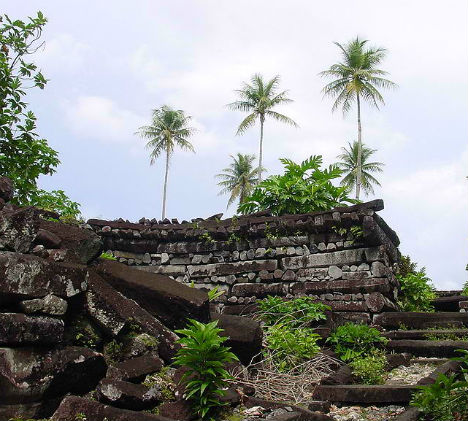
The only ancient city ever built upon a coral reef, Nan Madol is a marvel of ancient engineering so complex, no one can figure out how it was conceived and built starting in the 8th or 9th century CE. Nan Madol is located off the island of Pohnpei in the present-day Federated States of Micronesia in the western Pacific Ocean, and consists of nearly 100 small artificial islands bordered by tidal canals.
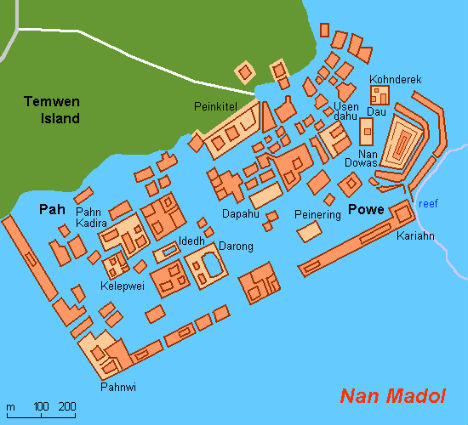
Mysterious Ruins of Nan Madol 2

The people who built it – the Saudeleur – ruled these islands for more than a millennium, yet there is nothing left of them but legend and the crumbling black basalt ruins. No art, no carvings, no writing. They were known to be deeply religious, tyrannical and cruel, and the remains of their civilization are often viewed with fear and superstition by modern-day Pohnpeians.

Mysterious Ruins of Nan Madol 3

The Nahnmwarki people, who overthrew the last Saudeleur leader and killed the islands’ inhabitants, found themselves unable to withstand the difficult lifestyle of living at Nan Madol, which required food and fresh water to be brought over from the main island.
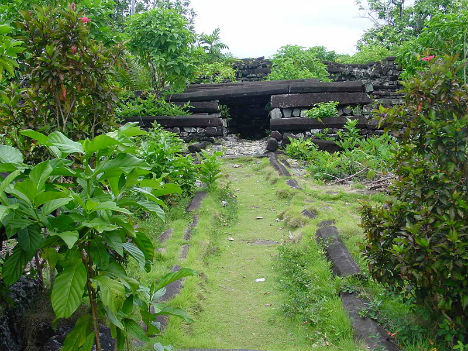
Mysterious Ruins of Nan Madol 4

The ruins have been abandoned for hundreds of years. Often called the Venice of the Pacific, Nan Madol’s canals and islands were constructed starting in the 8th century, but its most iconic megalithic architecture came later, in the 12th and 13th centuries. Historians and archaeologists don’t know how the giant stones were transported and lifted into place; most Pohnpeians still believe the lore that credits magical flying abilities for the city’s construction. Another folktale tells of giants large and strong enough to move the rocks.

Mysterious Ruins of Nan Madol 5

The total weight of the black rocks that make up the city’s construction is estimated at 750,000 metric tons, an average of 1,850 tons a year over four centuries. The basalt ‘logs’ that make up the high walls can weight as much as 50 tons each. What’s even more mysterious is the Saudeleurs didn’t have pulleys, levers or metal to aid in the process.

Mysterious Ruins of Nan Madol 6

Unlike the similar ruins of Easter Island, Nan Madol is not a significant tourist draw, mostly due to the face that it has not yet been named a UNESCO World Heritage Site. Through this designation, Nan Madol would receive the funding necessary to rehabilitate the ruins and support a new tourism industry.

Images via wikimedia commons + CT Snow

Share on Facebook


[ By Steph in Global & Travel & Places. ]

[ WebUrbanist | Archives | Galleries | Privacy | TOS ]


WebUrbanist

 
Comments Off on Engineering Marvel: The Mysterious Ruins of Nan Madol

Posted in Creativity


Church Bells To Doorbells: 8 Churches Turned Into Homes

19 Feb

[ By Marc in Architecture & Houses & Residential. ]

Church-House-Renovations-Montage

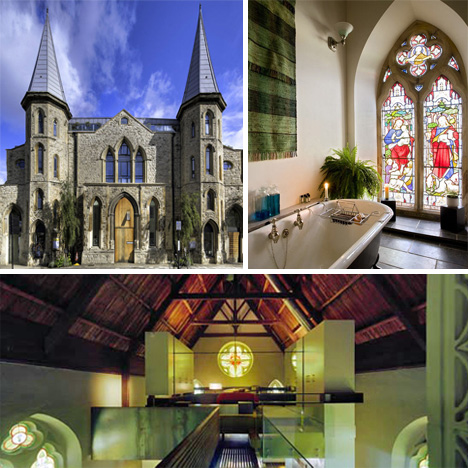
Churches are some of society’s most stylistically beautiful buildings. A large amount of building design comes down to functionality and affordability, so churches, built for a spiritual purpose rather than a materialistic one, tend to include elements that highlight beauty and detail. When these churches grow old, or are purchased, they can then be renovated into amazing houses that uniquely introduce religious elements into a pedestrian environment.

The Church of Living

Church-House-Zecc-Netherlands

The Church of Living is a transformed structure, from church to residence, carefully designed by Zecc architecture in the Netherlands. This firm is no stranger to church conversions, and their design chops are shown to full affect in this example from Utrecht. White walls and modern appliances and motifs maintained the atmosphere of the church, while making it a home worth living in. The small old church touches that remain are what keep this building anchored. For example, the chandelier in the ultra modern bathroom is the perfect example of an old touch balancing out a very modern renovation.

WG Architects, Brisbane

Church-House-Bonney-Ave-Willis-Greenhalgh-Architects

Willis Greenhalgh Architects, known better as WG Architects, transformed this Brisbane church into a gorgeous home full of light. Built in 1867, this is a heritage site, and thus required a very delicate renovation. The unique elements of an old style church were maintained, while contemporary elements were introduced to bring the church house “up to speed.”

Westbourne Grove Church

Church-House-Dos-Architects-Westbourne-Grove

This imposing building, Westbourne Grove Church, was transformed into a modern home with a 2 floor renovation by London-based DOS Architects; the steps taken to complete the process are presented visually on their site here. Design site Abduzeedo provides additional background information about the history of the church, which despite seeming ancient, was built with a Victorian style in 1953. The design team decided to go highly modern in the interior, which contrasts nicely with the old-style stone outside.

Glenlyon Church

Church-House-Glenlyon-Multiplicity

Multiplicity is the two person team of designer Sioux Clark and architect Tim O’Sullivan. Bedecked with awards (for good reason) they hold tightly to their commitment of “creating spaces that are intrinsically beautiful, highly useable, readily enjoyable and environmentally friendly.” Their 2004 conversion of the Glenlyon church into a livable residence pulls out all of the design stops, as it required that they literally create a 2nd story out of thin air. Utilizing glass and the many gorgeous windows, they were able to highly increase the usable space, while keeping the structure in the middle from making it seem too crowded.

Share on Facebook


[ By Marc in Architecture & Houses & Residential. ]

[ WebUrbanist | Archives | Galleries | Privacy | TOS ]


WebUrbanist

 
Comments Off on Church Bells To Doorbells: 8 Churches Turned Into Homes

Posted in Creativity


Hybrid Library: QR Codes Access eBooks in Subway Station

19 Feb

[ By WebUrbanist in Design & Guerilla Ads & Marketing. ]

subway station qr library

Forgot to grab something to read on the train? If you happen to be in Bucharest, you can snag a volume from their floor-to-ceiling, wall-to-wall collection of ebook samples with the click of a button (in epub, pdf or even audiobook format).

subway stop guerrilla marketing

The hybrid digital/physical library/bookstore project is a collaboration between Humanitas and Vodaphone – a guerrilla marketing campaign highlighting both the power of mobile technology and the offerings of the bookseller.

subway ebook ad campaign

Browsing, of course, works just like an ordinary book shop: you can scan the full-color posters and pick something to get started while you wait for your ride. And if you enjoy the sample, another button-click brings you to a page where you can buy the full book (one free book is thrown in, for those who do not wish to pay).

Share on Facebook


[ By WebUrbanist in Design & Guerilla Ads & Marketing. ]

[ WebUrbanist | Archives | Galleries | Privacy | TOS ]


WebUrbanist

 
Comments Off on Hybrid Library: QR Codes Access eBooks in Subway Station

Posted in Creativity


Gone Fission: 11 Unfinished Nuclear Power Plants

19 Feb

[ By Steve in Abandoned Places & Architecture. ]

unfinished nuclear power plants
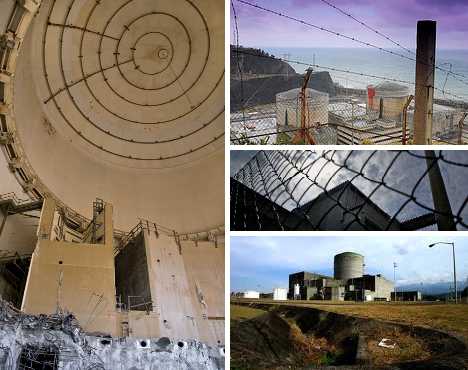
These 11 unfinished, abandoned, canceled, mothballed and/or suspended nuclear power plants will, for better or worse, never know the warmth of split atoms.

Lemoniz Nuclear Power Plant, Spain

Lemoniz nuclear power plant Spain(images via: Jasonmcconnie, JosebaZ and Wikipedia)

Construction of the Lemóniz Nuclear Power Plant, located on the Bay of Biscay on Spain’s northern coast, began in the mid-1970s but was dogged from its inception by violent opposition from ETA, the terrorist organization dedicated to the independence of Spain’s Basque country. The group managed to smuggle bombs into the facility on several occasions in 1978 and 1979 resulting in a number of fatalities and delaying the plant’s construction.

Lemonix nuclear power plant Spain(image via: Txarama)

In early 1981, ETA members kidnapped and later killed José María Ryan, the plant’s chief engineer. This proved to be too much for Iberduero, the plant’s builder and operator, who temporarily halted construction pending action from civil authorities… it never came. In 1983 the election of Spain’s first left-leaning government since the Spanish Civil War resulted in the project’s official cancellation. Watched over by automatic CCTV cameras and protected by spirals of razor wire, the Lemóniz Nuclear Power Plant sits silently as vegetation takes root in accumulating dirt and debris.

Marble Hill Nuclear Power Station, Indiana, USA

Marble Hill Nuclear Power Station(images via: Craig Moyer and Ulule)

From 1977 to 1984, Public Service Company of Indiana (PSI) spent approximately $ 2.5 billion to build the Marble Hill Nuclear Power Station near Hanover, Indiana, and by the time the financial tap ran dry it was only half-finished! The political and environmental landscape had changed quite a bit over those 7 years with the biggest speed bump being the Three Mile Island crisis in 1979. With costs spiraling out of control and the state government reluctant to provide funding, PSI abandoned the project and auctioned off most of the salvageable material for a mere pittance.

Marble Hill Nuclear Power Station(image via: The Vanishing Point)

Equipment and parts from the Marble Hill Nuclear Power Station continued to be sold off in the early to mid-1990s but by the year 2000 everything of value had been sold. Since 2008, slow and steady demolition under the auspices of MCM Management Corp. has seen first the fuel-handling building and then the twin reactor containment buildings gradually reduced to mounds of scrap. The bright side, if any, is that none of the demolished material is radioactive.

Bataan Nuclear Power Plant, Philippines

Bataan Nuclear Power Plant(images via: Philippine Defense Forum, The Pinoy Explorer and Discover)

Back to Bataan? Let’s hope not: conceived in 1976 as the Philippines’ first nuclear power plant, construction was halted on the BNPP in 1979 just after the Three Mile Island nuclear accident. An official safety inquiry revealed the existence of over 4,000 defects, plus the fact that the plant was being built atop active earthquake fault lines and uncomfortably close to then-dormant Mount Pinatubo. The latter’s surprise awakening on June 15th of 1991 turned out to be the second-largest volcanic eruption of the 20th century.

Bataan Nuclear Power Plant(images via: C.Wolf21)

Repairs prompted by the safety inquiry’s findings ended up adding time and cost to the project, the latter of which had ballooned to $ 2.3 billion US by 1984. Nothing could stop dictator Ferdinand Marcos’ pet project, however, until Marcos himself was toppled and exiled in 1986. One of the first acts of the new “People Power” government was to respect the will of the people and mothball the power plant – the costs weren’t paid off in full until mid-2007. In 2011, the plant was re-opened as a tourist attraction with a significant number of visitors coming from Japan.

Belene Nuclear Power Plant, Bulgaria

Belene Nuclear Power Plant(images via: Expats, Sophia Echo and Cryptome))

Located in northern Bulgaria near the Danube river and the border with Romania, the Belene Nuclear Power Plant was intended to replace four older reactors at the Kozloduy Nuclear Power Plant shut down as a prerequisite of Bulgaria’s joining the EU. Construction began in 1987 but in 1990, after Bulgaria’s transition from a communist to a capitalist state, the project was put on hold.

Belene Nuclear Power Plant(image via: Maxwell Woods)

Existing infrastructure was preserved pending a possible restart of construction and this actually came to be in the fall of 2008. However, fierce wrangling over construction costs and the Bulgarian government’s insistence on the inclusion of an American or a European contractor once again derailed the project. Even though the plant was more than half complete, the decision was made in March of 2012 to revise the Belene Nuclear Power Plant as a gas-fired conventional power station.

Share on Facebook


[ By Steve in Abandoned Places & Architecture. ]

[ WebUrbanist | Archives | Galleries | Privacy | TOS ]


WebUrbanist

 
Comments Off on Gone Fission: 11 Unfinished Nuclear Power Plants

Posted in Creativity


Trap Streets & Rooms: Cartographic Errors Catch Copycats

19 Feb

[ By WebUrbanist in Architecture & Cities & Urbanism. ]

trap street map fake

Phantom settlements and trap streets are faked or falsified, intentionally introduced (or materially altered) by map makers to catch those who would copy them. And the practice is not limited to towns or roads – there are trap ponds, trap parks, trap buildings and trap sidewalks, too.

trap street real example

Now imagine the same thing applied to indoor spaces being mapped by new mobile device apps: trap rooms, halls, closets and stairwells – entirely fake spaces that could at worst confuse, but at best might become targets of offbeat geo-locational games.

trap room interior navigation

BldgBlog (image above by Laura Pedrick for The New York Times) speculates about introducing false information to interior maps of places like shopping malls:

“Nothing sinister—you don’t want people fleeing toward an emergency stairway that doesn’t exist in the event of a real-life fire—but why not an innocent janitorial closet somewhere or a freight elevator that no one could ever access in the first place? Why not a mysterious door to nowhere, or a small room that somehow appears to be within the very room you’re standing in?”

trap paper street

Unlike some paper streets (example shown above), which are planned but never become a reality, trap streets and phantom settlements (like Argleton, a faux town depicted below) are fictitious creations from the start, designed to mislead copyists into revealing their own copyright infringement. Normally innocuous (like: renaming or bending a road), you think of them as equivalent to programmer’s Easter Egg or a hidden watermark  on a photograph – a buried surprise in everyday maps.

trap phantom settlement

But what are the implications of doing this on a smaller scale of pedestrian circulation, deceiving people not by square mile, but by cubic feet? Could you frustrate the janitorial staff at a school, scare someone into imagining a secret room in their apartment complex? Would it trick urban explorers into actually physically trapping themselves? We will set these open questions aside and leave you with a little fun fact: while designed to catch copiers, trap streets cannot themselves be copyright.

Share on Facebook


[ By WebUrbanist in Architecture & Cities & Urbanism. ]

[ WebUrbanist | Archives | Galleries | Privacy | TOS ]


WebUrbanist

 
Comments Off on Trap Streets & Rooms: Cartographic Errors Catch Copycats

Posted in Creativity


Maldives & More: 12 Envy-Worthy Resorts of the Rich

19 Feb

[ By Steph in Global & Travel & Places. ]

Resorts for the Rich Main

Not all of us can afford to rent out an entire private island in the Caribbean, or even an ocean villa in the Maldives, but it’s fun to dream. With the most picturesque tropical views of crystal-clear blue-green waters and white sand beaches imaginable, these 12 luxurious island resorts don’t come cheap, but their oversized tubs, infinity pools and hammocks suspended over the sea are capable of making you feel more relaxed with photos alone.

Musha Cay, The Bahamas

Resorts for the Rich Musha Cay

Among the priciest resorts in the world, David Copperfield’s Musha Cay in The Bahamas is only accessible to those with millions in the bank. It’s $ 37,000 per night, with a four-night minimum, for up to 12 people. But at that price, the island is all yours – so if you’ve got the cash, it’s worth it. There are five plantation-style villas and The Landings, the main building holding the restaurant and clubhouse. Beach barbecues, jet skis, banana boats, tennis courts and a pool table that once belonged to Harry Houdini are just a few of the activities offered.

Maafushivaru Hotel, Maldives

Resorts for the Rich Four Seasons Maldives 2

Resorts for the Rich Maldives Paradise

Choose from a spacious pool villa or a cozier ocean villa at the stunning Maafushivaru Hotel in the Maldives. Each little getaway is perched above crystal-clear waters, with a serene white sand beach within easy walking distance. Rooms start at $ 2,600 per night – per person.

Laucala Island, Fiji

Resorts for the Rich Laucala

The all-inclusive Laucala Island resort is located on the largest private island in the Southern hemisphere, just off the coast of the Fijian island of Taveuni; it was once the private island of Malcolm Forbes and is now owned by the head of Red Bull. It features 25 bungalows, each with its own private pool and oversized outdoor stone or wooden bathtub. Coming with a group? Rent the Hilltop Residence, which has six bedrooms, three baths and a 360-degree view of paradise.

Coco Palm Bodu Hithi Resort, Maldives

Resorts for the Rich Coco Palm 1

Resorts for the Rich Coco Palm 2

Locate on a private island in the Maldives, the Coco Palm Bodu Hithi Hotel boasts eight restaurants, a spa with yoga and tai chi classes, and 100 guest units. Elevated wooden walkways lead from one section of the resort to another, and infinity pools jut out over the deeper blue of the sea water.

Hayman Hotel, Australia

Resorts for the Rich Hayman Hotel 1

Resorts for the Rich Hayman hotel 2

The incredible Hayman Hotel has its own artificial barrier island creating a private cove-like pool area. Nearly all the guest rooms overlook this massive aquatic playground and the sea beyond it, which is just a stone’s throw from the legendary Great Barrier Reef.

Share on Facebook


[ By Steph in Global & Travel & Places. ]

[ WebUrbanist | Archives | Galleries | Privacy | TOS ]


WebUrbanist

 
Comments Off on Maldives & More: 12 Envy-Worthy Resorts of the Rich

Posted in Creativity


Car-Free City: China Builds Dense Metropolis from Scratch

19 Feb

[ By Steph in Architecture & Cities & Urbanism. ]

China Carless City 1

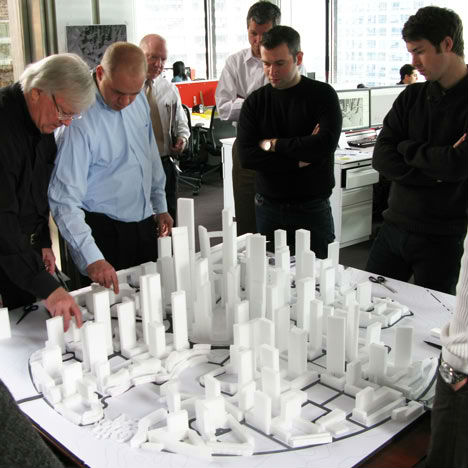
Altering most of today’s cities to eliminate cars altogether would be a daunting, if not impossible, proposition – which is why China is starting from scratch. Great City will be built around a high-rise core housing 80,000 people, entirely walkable, and surrounded by green space.

China Carless City 2

Planned for a rural area outside Chengdu, the high-density Great City will give residents access to a ‘buffer area’ of gardens and greenery making up 60% of the total area of the city. Walking from the center of the city to the green spaces takes just ten minutes, and other nearby urban centers will be accessible by a mass transit system.

China Carless City 3

Chicago architecture firm Adrian Smith + Gordon Gill Architecture say the city will use 48% less energy and 58% less water than a more conventional city of the same size; it will also produce 89% less landfill waste and generate 60% less carbon dioxide.

China Carless City 4

The development addresses the problem of overpopulation, pollution and urban sprawl by compacting a lot of residents into vertical housing, growing food nearby. “The design is attempting to address some of the most pressing urban issues of our time, including the need for sustainable, dense urban living at a cost people can afford,” says Gill.

Carless City China 5

“Accordingly, we’ve designed this project as a dense vertical city that acknowledges and in fact embraces the surrounding landscape—a city whose residents will live in harmony with nature rather than in opposition to it. Great City will demonstrate that high-density living doesn’t have to be polluted and alienated from nature. Everything within the built environment of Great City is considered to enhance the quality of life of its residents. Quite simply, it offers a great place to live, work and raise a family.”

Share on Facebook


[ By Steph in Architecture & Cities & Urbanism. ]

[ WebUrbanist | Archives | Galleries | Privacy | TOS ]


WebUrbanist

 
Comments Off on Car-Free City: China Builds Dense Metropolis from Scratch

Posted in Creativity


Faux Facades: Fake Buildings Hide Trains, Power & More

19 Feb

[ By WebUrbanist in Architecture & Public & Institutional. ]

fake urban architecture

When is a building not a building? When it is only a facade, (aka) dummy! You might have passed right by train tunnels, communications towers or even entirely empty buildings and never realized you were being duped – until now.

Underground Train Passage & Ventilation in Rowhouse

fake architecture underground venting

Consider units 23 & 24, Leinster Gardens in Paddington, London. When underground rail was routed through the neighborhood in the 1860s, the residences at those addresses were razed … and replaced with a very convincing facade. Behind it: an empty void for the old engines to vent along their route, and metal bracing to help hold up adjacent structures. Hoaxes played on this place include everything from the pizza-delivery redirect to a prankster selling tickets to a charity ball at the address.

Subway Emergency Exit & Energy Converter in Townhouse

fake building over subway

One more urban ventilator before we move on: 58 Joralemon Street in Brooklyn, New York follows a similar pattern to its British brethren – blacked-out windows are the only up-close giveaway to an otherwise-complete illusion of occupation, while the railway runs below. This faux building has had multiple subway-related purposes beyond ventilation, though, including electrical conversion and emergency egress.

Power Substations in Houses, Offices, Factories & Castles

fake building power substations

Toronto has a century-long history of hiding its urban energy substations as all kinds of architecture, from small single-family homes to huge block-sized factory buildings, at addresses including 29 Nelson Street, 2833 Yonge Street & 640 Millwood Road. Some have caught fire in freak accidents – not something the neighbors like to worry about. Others have been decommissioned and converted to residential or commercial use, in a strange instance of life imitating the art of imitation.

Share on Facebook


[ By WebUrbanist in Architecture & Public & Institutional. ]

[ WebUrbanist | Archives | Galleries | Privacy | TOS ]


WebUrbanist

 
Comments Off on Faux Facades: Fake Buildings Hide Trains, Power & More

Posted in Creativity


Subterranean Quarry Hotel to Extend 328 Feet Underground

19 Feb

[ By Steph in Boutique & Art Hotels & Global. ]

Songjiang Quarry Hotel Construction 1

Construction has begun on an incredible 19-story, 5-star hotel that will be located deep within a 100-meter (328-foot) abandoned quarry near the base of Tianmashan Mountain in the Songjiang District of Shanghai. The 380-room Shimao Intercontinental Hotel seemed almost too wild to be true, and though its initial estimated opening date of May 2009 has long past, photos show progress at the quarry.

Songjiang Quarry Hotel Construction 2
Designed by British engineering firm Atkins Global, the Shimao Hotel mimics a waterfall with a glass atrium that extends from the ground-level roof all the way down into the quarry. Three of the floors will be above-ground, with the rest extending into the pit. Instead of pumping the water out of the flooded quarry, the designers aim to turn it into a man-made lake.

Songjiang Quarry Hotel Construction 3

Activities will take advantage of the unique landscape, including rock climbing, bungee jumping and water-based sports, and the hotel will also have its own cafes, restaurants, swimming pools, shopping and sporting facilities. Several of the public areas will be underwater, with others facing a 10-meter-deep aquarium.

Songjiang Quarry Hotel Construction 4

Songjiang Intercontinental Hotel will be powered with geothermal energy, and above-ground structures will have green roofs for insulation and to help them blend in with the surrounding scenery. Rooms are expected to start at $ 320 per night, and the hotel is scheduled to open in late 2014 to early 2015.

Share on Facebook


[ By Steph in Boutique & Art Hotels & Global. ]

[ WebUrbanist | Archives | Galleries | Privacy | TOS ]


WebUrbanist

 
Comments Off on Subterranean Quarry Hotel to Extend 328 Feet Underground

Posted in Creativity


Printing Prospects: 10 Hi-Tech Printer Prototypes & Concepts

19 Feb

[ By Delana in Conceptual & Futuristic & Technology. ]

futuristic printers

Printers have become much more complex than simply machines that spit out pieces of paper with ink on them. Designers are envisioning all kinds of futuristic printers that will give us information on demand, 3D printed objects, food and even body parts. These 10 concepts and actual products are on the very cutting edge of printer technology.

The Filabot

filabot

The Filabot, an invention from Vermont Technical College student Tyler McNaney, is reinventing the way 3D printing works. It is, in essence, a printer of the materials used for 3D printing. Confused yet? The Filabot takes waste plastics, grinds and melts them down, then extrudes the plastic into filament. The filament is the “ink” for 3D printers which is laid down layer by layer until the desired object is created.

 The Oksu

oksu

The Oksu, from designer Alex Zhulin, was created to share digital links in a physical format. When you find something you love – a YouTube video, for example – the Oksu prints out a speech bubble-shaped piece of paper with an image and description of the digital content. The paper also contains a near-field communication (NFC) chip which allows it to communicate with mobile gadgets, calling up the link on the screen. It’s kind of like sending a link via email, only there is a physical layer to the act. After the link has been visited, the little paper can still be used as a reminder of the interaction – which is much more fun than just saving an email.

The PrintBrush

printbrush

Having a printer available is so commonplace that most of us rarely think about the functionality of these machines. Swedish engineer Alex Breton thought about it, and he didn’t see any reason we have to be tethered to traditional printers with their very limited paper sizes. He invented the PrintBrush, a hand-held printer that can go anywhere and print onto anything. You simply hold the device and pass it over the surface you want to print on – the PrintBrush detects its position and the rate at which you’re moving it, ensuring that each pixel is perfectly placed.

Skin Cell-Printing Inkjet

skin cell printer

When skin is damaged beyond repair by burns or other wounds, a skin graft is usually the go-to treatment. But there are many complications inherent in skin grafts, including scarring and the possibility of rejection or infection. This device, created at Wake Forest University in South Carolina, would greatly reduce any risks by doing away with skin grafts entirely. Instead, the device “prints” – or, maybe more accurately, sprays – healthy skin cells directly onto a wound, where they can grow into a normal part of the patient’s skin. With this new method, there is no scarring, no risk of the body rejecting the new skin, and the repaired areas even grow their own hair. Perhaps best of all, the bio-printer drastically reduces wound healing time.

Toilet Roll Twitter Printer

toilet-side twitter printer

There’s no delicate way to put this: people like to read while on the toilet. Some of us choose to take a book or magazine in, but this very unusual printer was designed to take their place. Brought to life by German inventor Mario Lukas for a hardware competition, the device prints your Twitter feed directly onto a roll of toilet paper for reading and subsequent wiping. Using toilet paper printed with Twitter updates might be the ultimate way to show your feelings for the microblogging site and the folks you follow there.

Share on Facebook


[ By Delana in Conceptual & Futuristic & Technology. ]

[ WebUrbanist | Archives | Galleries | Privacy | TOS ]


WebUrbanist

 
Comments Off on Printing Prospects: 10 Hi-Tech Printer Prototypes & Concepts

Posted in Creativity