RSS
 

Archive for September, 2011

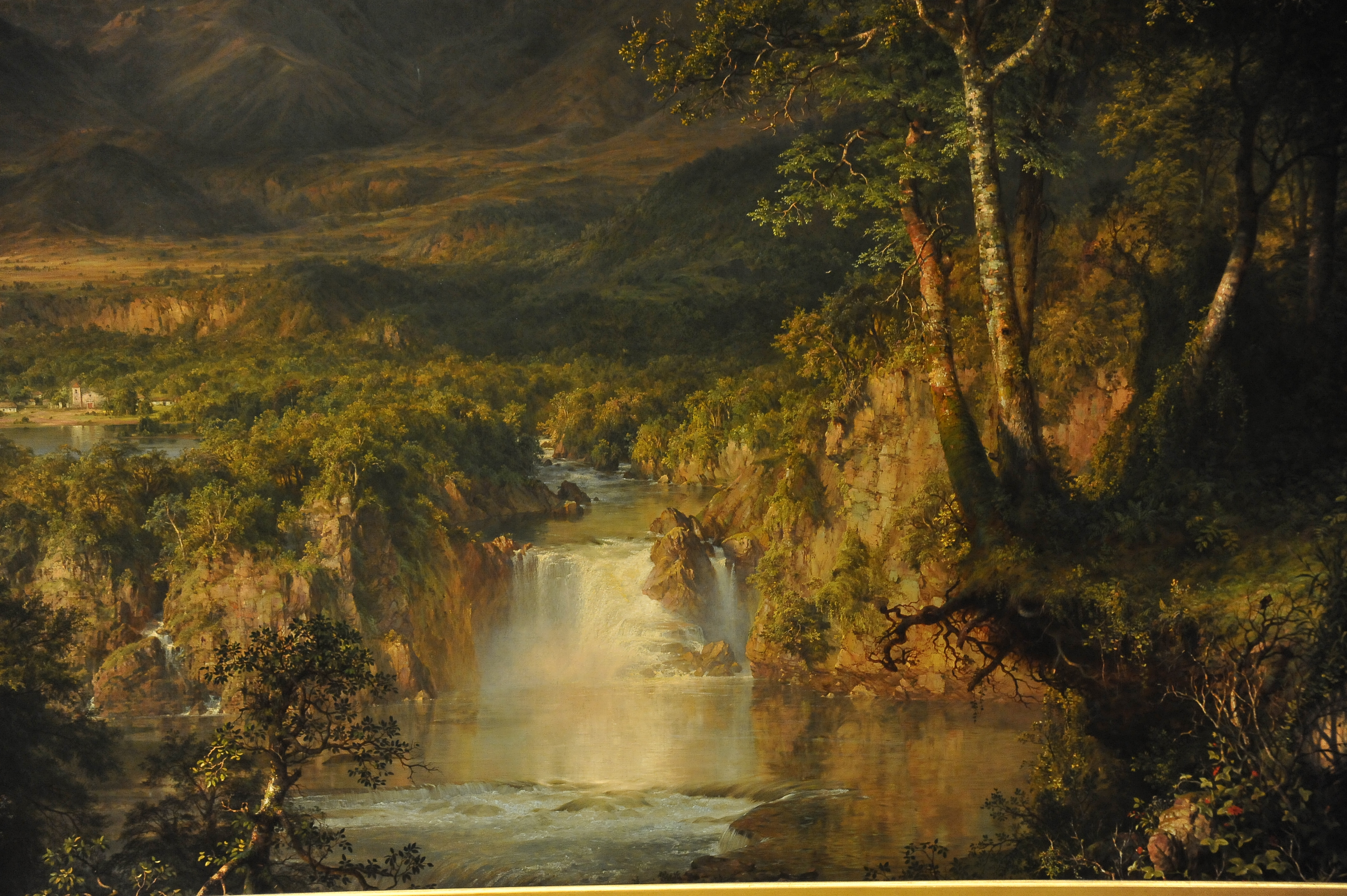
PAINTINGS FROM THE MET’s ART COLLECTION 2011 – Metropolitan Museum of Art, Manhattan NYC

02 Sep

Check out these visual art images:

PAINTINGS FROM THE MET’s ART COLLECTION 2011 – Metropolitan Museum of Art, Manhattan NYC
visual art
Image by asterix611
PAINTINGS FROM THE MET’s ART COLLECTION 2011 – Metropolitan Museum of Art, Manhattan NYC

PAINTINGS FROM THE MET’s ART COLLECTION 2011 – Metropolitan Museum of Art, Manhattan NYC
visual art
Image by asterix611
PAINTINGS FROM THE MET’s ART COLLECTION 2011 – Metropolitan Museum of Art, Manhattan NYC

 
Comments Off on PAINTINGS FROM THE MET’s ART COLLECTION 2011 – Metropolitan Museum of Art, Manhattan NYC

Posted in Photographs


Red vs. Blue: Sarge and Church’s Guide to Gaming Online

02 Sep

Sarge and Church give you the lowdown on proper gaming etiquette.
Video Rating: 4 / 5


Classroom (3D camera flythrough) * 3D Glasses Version *

02 Sep

We have decided to give you a closer look of the Classroom scene. This is a flythrough animation which will give you a chance too see the classroom in greater details. Please notice, this is the stereoscopic 3D glasses version (red/cyan).
Video Rating: 5 / 5

Get your red/blue 3D glasses ready and watch this in FULL SCREEN! Its possibly the best stereoscopic 3D music video ever created… Download the track here: greattiger.bandcamp.com Check us out on Facebook for updates and free tracks: www.facebook.com Directed by Tessa Greenberg DP: Kevin Hayden Post Production and Art Direction by Grier Dill Thanks to Stephen Minasvand, Tayisha Busay, Brooklyn Fire Proof, Oliver Ogden, Eugene Mulligan, Sydney Buchan, Joe Colmenero, David Lopez, Anyelo Luna, Emily Doubilet and everyone else who helped make the video possible! Filmed on two Canon 7Ds
Video Rating: 4 / 5

 
Comments Off on Classroom (3D camera flythrough) * 3D Glasses Version *

Posted in 3D Videos


Nikon 24mm f/1.4 Hands-on Review

02 Sep

The Nikkor 28mm f/1.4 was a legendary lens with stunning performance but was disappointingly discontinued. This new 24mm f/1.4 is somewhat taking its place as a fast wide-angle, but the question is – is it as good? We take the Nikon lens out to the Chinese University of Hong Kong to take some shots and find out what it’s like.

 
Comments Off on Nikon 24mm f/1.4 Hands-on Review

Posted in Nikon Videos


The Problem With The Focus-Recompose Method

02 Sep

This post was written as a follow up to my last article on using Single Point AF. In the comment section of that article there was a bit of debate over which focus point to use and when. One camp was stating that there was really no point in using anything other than the center focus point. A lot of people thought it was silly to use anything else because the other focus points aren’t as accurate. Some examples of comments for this argument include…

  • Just use the center focus point and recompose. After all, how often do you shoot action shots anyways?
  • Focus-Recompose is so much easier than messing around with changing focus point. Why risk missing the shot?
  • Nice tip but it’s much easier to just use the center focus point, keep your finger down, then recompose the scene before shooting
  • Center focus point only. Recompose. Always.

So, is there any truth or accuracy in these statement? Well for one, any time your subject is moving that could be considered an action shot. So I shoot action all the time. As far as the focus-recompose debate goes, I strongly disagree with the focus-recompose method and in this article I’m going to present my case against it. This debate may not start a flame war or anything like that (well, maybe), but I do think it’s a good idea to dive deeper into this topic and find out which technique is better. Center point focus and recompose….or full access to all your camera’s focus points? Let’s go.

Why The Focus-Recompose Method Often Fails

I think you’ll agree that I’m pretty awesome at drawing stick figures with my Wacom Tablet, so I thought it might be easier to explain why focus-recompose often fails by creating a little diagram and then explaining this diagram in steps. So here we go…

In the diagram above, ‘A‘ represents pointing the camera up towards the subjects face and placing the center AF point over the subjects eye to achieve focus. Most photographers using the focus-recompose method know that nobody wants to see an eye or face right smack dab in the middle of the frame, so they then recompose the scene by moving the camera down to get the entire body in the frame or to simply move the subjects face off center. This new camera angle is represented by ‘B‘ in the diagram.

I’m certainly not a mathematician but one of the few things I remember from geometry is the Pythagorean Theorem and the common sense that the length of A is longer than the length of B, and that if you were to lay the A line down on top of the B line, you would see the difference in length between the two.

If you stand 4 feet from your subject and point the camera up at the subjects face, then you are no longer 4 feet away from what you’re focusing on. If the length from your camera to your subjects chest is 4 feet and the length from your subjects chest to their eye is 2 feet, then the length from your subjects eye to your camera is 4.5 feet. Are you getting this!? That means that if you focus on your subjects eye, move the camera down to their chest to recompose, then your focal plane is now half a foot behind your subject!  The difference between the two lengths is show in figure ‘E‘ in the diagram, with ‘C‘ being the actual focal length when recomposed and ‘D‘ being actual distance to the subject.

So What’s The Big Deal With Half A Foot?

Some readers out there might just be wondering what the big deal is about 6 inches. So here’s a screenshot from an app I’ve got on my iPhone called Depth of Field Calculator. This app will calculate your depth of field based on the settings and information you provide. If you can’t quite see the screenshot just click on it to see a bigger version.

The app lets us know that if we are 4 feet from our subject with a 50mm prime wide open at f/1.4, then our depth of field is only 0.16 inches. In other words, our focal plane will begin at 3.92 feet away from the subject and focal will end at 4.06 feet. Now if you remember from the diagram above, if we focus on the eye and recompose to where the center of the camera is pointed at the subjects chest with their head in the top third, then our 0.16 ft plane of focus is actually 4.5 feet behind our subject. Therefore, we have an out of focus image. Want proof? I thought you’d never ask!

The Proof

The demonstrate my point, I slapped a 50mm prime onto my 5DMII and went over to the dart board in my office. With my camera on a tripod I placed the center focus point over the ’20′ on the dartboard, achieved perfect focus and then took one picture. Without changing anything I recomposed the scene by moving the camera down until the center focus point was over the center of the dartboard and took one more shot.

Camera info: Canon 5DMII with Canon 50mm lens, f/1.4, Shutter Speed 1/125th, ISO 250

Here are the resulting images…

And here are both images zoomed in to 100% to see if they are sharp….

Conclusion

Focus-Recompose is easy, intuitive, quick and self-defeating. While this method will work in some situations, there’s no way to know how well it will work without calculating your depth of field before each shot to see if you have any wiggle room with your depth of field. So don’t be afraid to use your other focus points to avoid focusing and recomposing. I won’t disagree that the center point is the most accurate but the other focus points are hands down a better option than recomposing without refocusing.

Agree or Disagree? Let me know in the comments, but do your best to keep it civil. There are people trying to learn here and we don’t need another article turning into a Canon/Nikon debate!

Are You On Google+?

I know this is off topic, but man have I fallen for Google+. If you’re still in need of an invite code, use this link to get in. If I run out of invites from that link I may still be able to get you in by email. Once you’re in be sure to add my profile to one of your circles and drop me a line. Maybe we can get some people together for a G+ hangout/discussion over this topic. Cheers!

Post from: Digital Photography School’s Photography Tips. Check out our resources on Portrait Photography Tips, Travel Photography Tips and Understanding Digital Cameras.

NYIP_DPschool468x60.jpeg

The Problem With The Focus-Recompose Method


Digital Photography School

 
Comments Off on The Problem With The Focus-Recompose Method

Posted in Uncategorized


The Young Professionals (TYP) – DISCO – Official Video

02 Sep

www.typband.com http Music By: Ivri Lider & Yonatan Goldstein TYP’s (The Young Professionals) first single DISCO was created on summer 2011, and contains a sample of Ottawan’s 80’s anthem DISCO . the song will also be released in the Warner Brothers 2011 summer dance compilation. DISCO is also available on a limited edition 12″ Vinyl. Autographed by the artists, the vinyl contains also the song POP, as a special bonus Credits: Director : Guy Sagy Photography : Ofir Kedmi Production- Tifferet – www.tifferet.com Line producer : Anna Ben Zur Styling: Reuven Cohen Make up : Eran Pal, Ido Raphael. Hair: Sagi Dahari Art director: Joseph Zerroya Choreography: Ariel Makover Offline : Amichai Bikovski Online: www.broadcast.co.il Dancer: Uriel Yakutiel Website: www.typband.com Facebook www.facebook.com Twitter: twitter.com


Will Google+ Become Another Flickr-stlye Feeding Ground For Photo Theft?

02 Sep

Two month-old Google+ has already broken a number of records in adoption (and likely desertion) for a social networking site and is growing like no other. One of the groups most prolific on the new site are photographers. As you may have read here on DPS and other sites, photographers have found great results in regard to interaction and connection through the site.

And with good reason. Unlike individual blogs, where you connect with one photographer at a time, Google+ lumps your favorites into one place. Not only that, the size and presentation of photographs has made it a haven for those wishing to browse quality images. In the Photos tab/module/dohicky on the site, there is an endless stream of new images coming in from your circles.

For those who have spent time browsing the Photos section on Google+, you will know what a time sink it can be. Depending on who you are following and the quality of their images, it’s not uncommon to notice a half hour has flown by as you constantly scroll your mouse wheel lower and lower, heading backward in time to see more great (and some not so great) photos. For those not familiar, the service runs much like Google’s current image search on google.com, but only shows images people in your chosen circles have shared with you directly or publicly. It’s a narrower focus (pun intended) and you can fine tune it by circling or uncircling folks.

As with Flickr, the ability exists for unscrupulous people to download photos without the owner’s permission. As Google+ does not, as of yet, offer Creative Commons license abilities as Flickr does, unless a photographer specifically states the images are free to be used, all rights to copy the image, outside of use on Google+ (which is covered by the terms and conditions, as outlined in this post by Jim Goldstein) are reserved by the photographer. While it is true any image displayed on a screen can be copied via a screen capture, having the ability to simply right click and save an image makes theft easier for the casual, often ignorant, photo thief. (note: you may need to turn off the ‘normal’ ability for Picasa web album viewers to download your photos as well.)

Will Google+ become a haven for stealing photos as Flickr has become? And will that stop you from posting photos on the site (assuming you are there now)? I’d love to hear your input in the comments section below.

Find the DPS writers currently using Google+:

Darren Rowse
James Brandon
Jim Goldstein
Matt Dutile
Peter West Carey
Neil Creek
Simon Pollock
Helen Bradley
Christina Dickson
Anna Gay

Special Google+ photo note: By default Picasa Albums (which is what Google+’s albums run off of) turn on the ability to sell your photos when you create a Google+ account. If you do not want people to purchase your images, you need to turn off this ability with these instructions.

Post from: Digital Photography School’s Photography Tips. Check out our resources on Portrait Photography Tips, Travel Photography Tips and Understanding Digital Cameras.

NYIP_DPschool468x60.jpeg

Will Google+ Become Another Flickr-stlye Feeding Ground For Photo Theft?


Digital Photography School

 
Comments Off on Will Google+ Become Another Flickr-stlye Feeding Ground For Photo Theft?

Posted in Uncategorized


Back to Reality

02 Sep

We didn’t want to leave, so we spent the whole day shooting, laughing and dreaming of a world that always felt like this…

Model is Jillian | with Samantha Law (first Image)


Jake Garn Photography

 
Comments Off on Back to Reality

Posted in Uncategorized


Sommerregen über Karlsruhe

02 Sep

Ich steckte das Ladegerät in den Rucksack und war eigentlich fertig. An diesem Freitagabend hatte ich alle Sachen gepackt und bereitete mich mental auf den Samstag vor, an dem ich wieder eine Hochzeit fotografieren sollte. Ich stellte mich ans Fenster und sah den gewaltigen Wolkenvorhang, der sich bedrückend über Karlsruhe legte.

Mir fiel ein, dass ich nochmal einkaufen gehen sollte und hatte spontan eine Idee. Und während ich so in mich hineingrübelte, klopften die ersten Tropfen an die Scheibe. Also gut, dann aber schnell.

Kamera ausgekramt, Fünfzig Millimeter aufgesteckt, beides in den Rucksack und dann fix zum Auto. Die Meter bis zu Letzterem sorgten dafür, dass ich platschnass einstieg und über lautstark das Wetter fluchte.

Ich bog in die Kriegstraße ein und war schnell im Zentrum, obwohl schnell leicht übertrieben ist. Der Regen peitschte dermaßen auf die Frontscheibe, dass ich streckenweise mit 30km/h auf der Hauptstraße gondelte, da ich fast nichts mehr sah. Eigentlich – so dachte ich – optimale Bedingungen für mein Vorhaben.

Irgendwann, irgendwo bremste ich ab und parkte. Den Apparat herausgeholt, Einstellungen festgelegt und losfotografiert. Ich hatte dieses Experiment schon einmal letzten Winter gewagt und jetzt die besten Vorraussetzungen, Leute auf der Flucht vor dem Regen und das sommerliche Karlsuhe im Wasserkleid zu dokumentieren. Selbstverständlich blieb ich im Auto sitzen, schließlich wollte ich die Tropfen auf der Fensterscheibe ins Bild integrieren.

So blieb ich hier und da stehen, wartete, bis die Menschen sich aus ihren Verstecken trauten und zur nächsten Bahn rannten oder fotografierte einfach so das regenversunkene Karlsruhe. Beim Fotografieren musste ich ein wenig schmunzeln. Schließlich konnte ich in aller Ruhe aus dem trockenen Auto nach draußen fotografieren und Leuten dabei zusehen, wie sie herumeilten und in eine Art Aufbruchstimmung verfielen.

Aber auch so mochte ich die “verwischte” Stadtlandschaft, sie so ganz anders wirkt, wenn herunterplatschende Regenschauer das trockene Pflaster überschwemmen.

Zu Beginn dieser Woche habe ich die Bilder in einer freien Minute selektiert und finalisiert. Ich kam mit ein paar Justierungen und Konstrastanpassungen in Lightroom aus und addierte final eine Sepiatonung, um das Zeitlose der Szenerien zu unterstreichen.

Regen ist wie ein Zauber, der binnen Sekunden eine ganze Stadt in Bewegung bringen kann. Dieses Geschehen auf den Sensor zu bannen, macht mir persönlich großen Spaß, denn auf einmal ist alles anders als vorher. Für mich ein Grund, öfters rauszugehen, wenn alle anderen reingehen. Und das nächste Mal setze ich mich vielleicht in eine S-Bahn, das ist nämlich etwas umweltfreundlicher. 😉


KWERFELDEIN | Fotografie Magazin

 
Comments Off on Sommerregen über Karlsruhe

Posted in Equipment


[MODIFIED] Safari for Windows – Change Font Smoothing

02 Sep

Change the amount of smoothing Safari performs on text to increase legibility.

Similar to some other web browsers, Safari for Windows includes technology to smooth the display of on-screen fonts to help increase text legibility.

However, Safari takes font smoothing a step further and lets you adjust the amount of smoothing you wish to perform instead of using Windows default settings. Depending on your monitor type and preferences, experimenting with these settings may create pleasing results:…

Read more at MalekTips.
New Computer and Technology Help and Tips – MalekTips.Com

 
Comments Off on [MODIFIED] Safari for Windows – Change Font Smoothing

Posted in Technology