 Das ist ein Gastartikel von Benjamin Regali. Tagsüber arbeitet er als Screen Designer in München und in seinen freien Minuten fotografiert er so oft er kann, meist urbane Architektur oder Street. Seine Bilder findet man auf Flickr und seinem Fotoblog 10mmgalore. Wer mag kann ihm auf Twitter folgen.

Spontan oder Geplant?
Es gibt unterschiedliche Möglichkeiten wie ich zu einem Bild finde: Entweder ich gehe gezielt los, bin dementsprechend ausgerüstet und konzentriere mich auf ein beziehungsweise mehrere Motive oder ich habe einfach meine Kamera ohne viel Schnickschnack dabei und versuche spontan etwas zu finden was ich in Szene setzen könnte. Letzteres geht natürlich öfters schief, manchmal findet man rein gar nichts. Aber hin und wieder kommen ein paar ganze gute Fotos dabei rum und genau so eins möchte ich hier vorstellen.
Die Entstehung
Ich war gerade fertig mit der Arbeit und auf dem Weg nach Hause. Eigentlich wollte ich nach getaner Arbeit unbedingt noch Fotos machen, aber das Wetter war ziemlich nass und trist, nicht unbedingt das was einen so direkt zum fotografieren einlädt. Also ab in die Strassenbahn Richtung Heimat. Die war menschenleer, ich setzte mich auf den hintersten Platz und schaute durch die riesige Scheibe auf die nassen Schienen hinter der Bahn.
Da dachte ich mir, so während der Fahrt nach hinten raus zu fotografieren, mit Bewegungsunschärfe, das könnte doch vielleicht ganz spannend werden. Passenderweise hatte ich ein Weitwinkel drauf, also zückte ich meine Kamera, stellte die kleinste Blende ein, ISO runter soweit es ging, damit ich möglichst lange belichten konnte. Die Kamera hinten auf die Ablage gelegt und alles halbwegs vernünftig ausgerichtet, Fertig!
Endlich fuhr die Strassenbahn los und ich hatte den Finger am Auslöser: Sobald irgendetwas interessantes auf und neben der Strasse zu sehen war, drückte ich drauf. Einige Autos fuhren hinter der Strassenbahn her und überholten sie, darunter auch ein Smart, der streckenweise wie auf Schienen im gleichen Tempo die Bahn verfolgte. Ich machte noch ein paar Bilder, packte die Kamera wieder ein und verließ wenig später zufrieden die Strassenbahn.

Die Bearbeitung
Zu Hause angekommen, wurden die Bilder zunächst einmal auf dem Rechner gesichtet. Eins von denen, auf dem der Smart verhältnismäßig scharf zu sehen war, stach mir dabei besonders ins Auge: Die Dynamik, die durch die Bewegungsunschärfe und durch das Weitwinkel entstanden war, gefiel mir dabei besonders gut. Nur war die ganze Szenerie irgendwie noch viel zu trist, der Himmel zu flau und die Farben irgendwie langweilig. Also ran an die Bearbeitung.
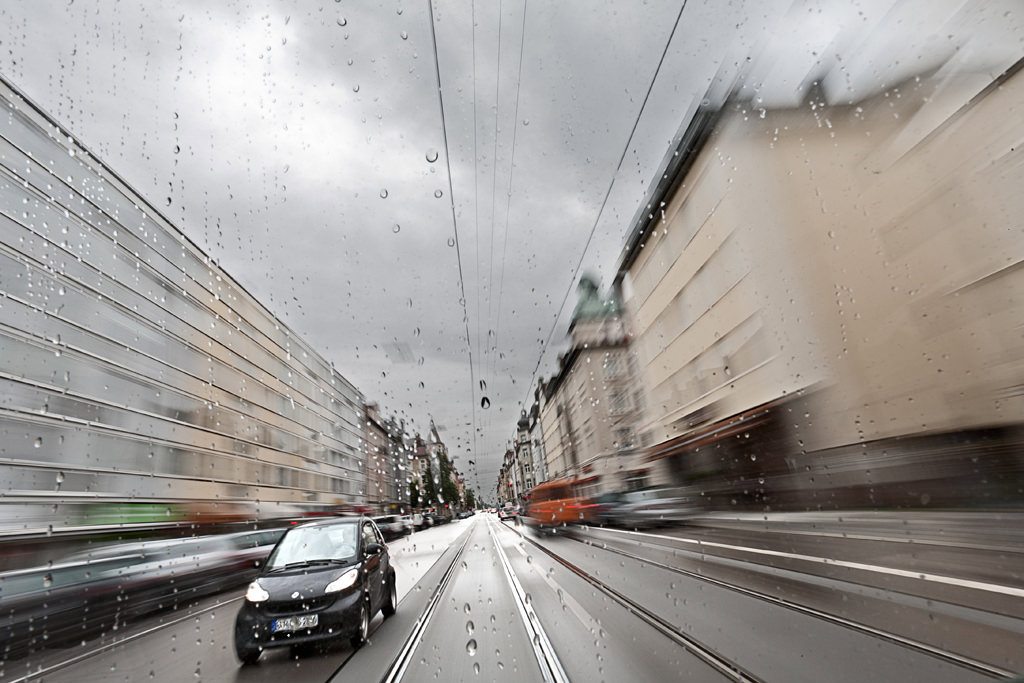
Als erstes habe ich in Camera Raw die Verzerrung des Objektives korrigiert und die Belichtung leicht angehoben. Die unterschiedlichen Bereiche wie Himmel, Häuserfronten links und rechts sowie die Strasse maskierte ich grob und erhöhte jeweils die Kontraste der einzelnen Bereiche mit Gradationskurven. Dann wurden noch die Farben etwas entsättigt, so langsam nahm Bearbeitung Form an.
Der Gesamteindruck war jetzt deutlich dramatischer, aber noch nicht wirklich homogen. Also sollte das Ganze ein passendes Toning bekommen, um es stimmiger wirken zu lassen. Auch hier kamen wieder die Gradationskurven zum Einsatz: Die einzelnen Farbkanäle angewählt, um den Tiefen einen bläulich-grünen Look und den Mitten einen leichten Gelbstich zu verpassen. Das passte nun besser zur Stimmung des Bildes, insbesondere zum düsteren Himmel. Zum Abschluss noch eine Vignettierung eingebaut und etwas nachgeschärft.
Das Ergebnis
Mit dem finalen Look war ich dann eigentlich ganz zufrieden. Es sah schon so aus, wie ich es mir vor meinem inneren Auge vorgestellt hatte. Natürlich ist es weit entfernt von Perfektion, der Smart könnte deutlich mehr Luft nach unten vertragen oder die Häuserschluchten noch imposanter sein, aber immerhin bin ich am Ende des Tages doch noch zu meinem Foto gekommen. Ab und zu lohnt es sich seine Kamera fast überall dabeizuhaben und sei es nur, um eine langweilige Strassenbahnfahrt zu überbrücken.
***
Werbepause: Buchtipp – Vom Alltäglichen zum Besonderen!

KWERFELDEIN | Digitale Fotografie


 As photographers we’re responsible for telling the story of a moment or series of events in a single image. It allows the viewer to take a mental trip through our photographs. No matter what your focus is in photography, being able to convey a story will help add impact to your images. One of the ways to do that is through creating multi-dimensional or multi-layered images.
 It’s possible to do that by creating layers in a photo. For example, a resort photo might show a woman getting a stone massage under a tropical leaf hut and in the background windsurfers are cruising the waves on the clear blue ocean. That image creates a feeling of relaxation and adventure all in one, and a greater appeal to viewers who might value different activities in a vacation. It can be subtle things like in the photo to the left where the model is holding a new iPhone and in the background is an old rotary phone, conveying the classic feel of your old phone in this new wonder of technology.




You must be logged in to post a comment.