Category: Uncategorized

  • Nikon SB-700 Speedlight Misses it By This Much

    Nikon just announced a new speedlight designed to complement the flagship SB-900. The Nikon SB-700 Speedlight will cost 9.95, and includes some mouth-watering features.

    But they have excluded a key feature that will make you wanna pull your hair out. Any guesses?

    Deets, the PR and a new camera, too. After the jump.
    __________

    In Sync

    • 2.5 sec recycle w/NiMH (3 w/alkaline)
    • SB-900 control interface (knobs and switches)
    • FX/DX chip size recognition for on-camera beam spread
    • Can be a Master and Remote flash for CLS users (but only controls two groups)
    • Beam shaping, like the SB-900
    • Quick Wireless Mode lets you dial in A:B ratios. Kinda Canon-ish, IMO.

    Out of Sync

    • No PC jack that I can see anywhere.

    (Sound of crickets chirping over the deafening silence.)

    I am at a loss for words. Historically speaking, the PC jack (or lack of one) is how Nikon separates the pro flashes from the ones at the kid’s table. But for over three hundred bucks, I would have loved to see one.

    Jury is out on the SU-4 mode, but one has to assume it is there if the CLS functionality is taking a cue from the SB-900. But given the lack of a PC jack, I am not making any assumptions.

    The PC thing was my biggest knock on the SB-600. And for double the price, still nada. Argh. Looks like I won’t be turning off my RSS’d SB-800 searches on Craigslist any time soon.
    __________

    Oh, Yeah: A Camera, Too.

    The D7000 was also announced: Small chip. Great high ISO. 1080p x 24 FPS video, priced at about a grand. Chase has had one for a few months and uncorked a Full Vincent on it.

    If you are interested in Nikon DSLR video or wanna see sample stills, head on over.
    __________

    And now, your utterly PC-less Nikon SB-700 Speedlight PR release:

    NEW NIKON SB-700 SPEEDLIGHT FEATURES ADVANCED MULTIFUNCTIONAL FLASH TECHNOLOGY IN A COMPACT AND EASY-TO-USE FORM-FACTOR
     

    Nikon’s Newest Speedlight is a Powerful Addition to the Versatile Nikon Creative Lighting System (CLS)
     
    MELVILLE, N.Y. (September 15, 2010)
    – Today, Nikon Inc. introduced the versatile new SB-700 Speedlight, the latest addition to Nikon’s powerful and renowned Creative Lighting System for a wide range of photographers and applications. The SB-700 is a high-performance flash that brings simplicity to on-camera, remote and multiple flash photography. Building on the success of the popular SB-600 Speedlight and the advanced functionality of the SB-900 Speedlight, the SB-700 also incorporates a wide zoom range covering the most popular focal lengths and FX/DX-format identification that optimizes zoom settings based on the user’s camera body. The SB-700 also provides a more efficient use of batteries and flash coverage in addition to three light distribution patterns for flash-to-scene customization. Whether used as an on-camera flash or as a wireless commander or remote, the Nikon SB-700 Speedlight offers dependable and consistent flash exposure even under the most challenging lighting conditions.
     
    Designed for a variety of photographers ranging from amateurs in the field to professionals in the studio, the SB-700 integrates a host of new features designed to make flash photography simple, accurate and creative. The SB-700 is for photographers looking for an on-camera Speedlight offering more power for greater depth-of-field control than the built-in flash, or an additional Speedlight for wireless multiple flash set-ups. This Speedlight will also satisfy the needs of photographers looking for a compact Speedlight that can be set up as a Commander or a Remote as well as those who want to upgrade from their existing or older Nikon Speedlight.
     
    “When designing the new Nikon SB-700, we were sure to incorporate the features that made the SB-600 Speedlight such a popular and well respected flash unit as well as the advanced technology that users of the SB-900 Speedlight have come to know,” said Lisa Osorio, general manager of marketing at Nikon Inc.  “The Nikon SB-700 is a multifunctional Speedlight that combines high-quality with a simple yet sophisticated design.”
     
    The Nikon SB-700 has many new and redesigned features and that make it easy-to-use, yet powerful enough to assist in tough and challenging lighting conditions and settings. The SB-700’s LCD design and layout enables easy-to-remember and intuitive operation, while the multi-step power zoom covers wide 24-120mm angle of view with FX-format cameras. The improved user interface of the SB-700 utilizes a large easy-to-read dot-matrix LCD panel making navigation and usage even easier.
     
    As part of Nikon’s popular Creative Lighting System, the SB-700 includes support for Nikon’s advanced wireless TTL operation and can function as a wireless Commander with control over two separate groups of Speedlights, or as a Remote Speedlight when controlled by the SB-900 Speedlight or the built-in Speedlight set to Commander Mode in most Nikon D-SLR’s. The SB-700 also incorporates a high-speed recycling time of approximately 2.5 seconds for full power with NiMH batteries, and approximately 3.0 seconds with AA Alkaline batteries. The Nikon SB-700 also features a new Quick Wireless Mode with A:B (light ratios) for quick setting of multiple flash units. This makes it easy and quick to control two remote flash units in i-TTL mode.
     
    Additionally, the SB-700 also features enhanced Thermal Cut-Out detection that automatically detects heat build-up due to rapid flash firing. By increasing the recycling time if the temperature of the flash head rises above a certain threshold, the SB-700 protects the flash from damage due to overheating.
     
    For improved durability, heat-resistance and ease-of-use, the SB-700 uses new hard plastic-type color filters for fluorescent or incandescent color temperature balancing. When using the supplied filters, the flash automatically recognizes which filter is being used and adjusts white balance accordingly on select Nikon D-SLR cameras. Additionally, the SB-700’s AF-assist illuminator is compatible with the complete line of AF systems used in Nikon D-SLR cameras*.
     
    Similar to the Nikon SB-900 Speedlight, three illumination patterns (standard, center-weighted and even) can be selected in SB-700 to match each shooting situation. When “even” is selected, the light from the flash will cover a subject from center to edges without light falloff. This pattern is suitable for shooting group photographs indoors. The “standard” pattern will cover all conventional, standard flash coverage. The center-weighted pattern provides larger guide numbers than other light distribution types at the same focal lengths. This illumination pattern is suitable for subjects such as portraits, in which the light falloff at the image edges can be ignored.
     
    Like the Nikon SB-900, when the SB-700 is mounted on a camera compatible with user firmware updates, the SB-700 firmware can be updated using the same procedure as with a Nikon D-SLR camera.
     

    Available accessories

    The SB-700 uses four AA type Alkaline, Lithium or rechargeable NiMH batteries. To enhance the weatherproof ability of Nikon D-SLRs, optional water guards will be available for select cameras to protect the connection between the flash and camera, allowing users to utilize the flash when weather conditions are less than ideal. The SJ-4 Color Filter set provides a Warming, Red, Yellow or Blue filter for adding color to the background, foreground or just to accent the scene.
     

    Price and availability

    The new Nikon SB-700 Speedlight is scheduled to be available in mid-November 2010, and will have an MSRP** of 9.95. The SB-700 will come bundled with the Speedlight Stand, Bounce Adapter, Color Filter Holder, Intelligent Color Filter Kit, Diffuser Dome and soft case.
     

    About Nikon

    ?Nikon, At the Heart of the Image™. Nikon Inc. is the world leader in digital imaging, precision optics and photo imaging technology and is globally recognized for setting new standards in product design and performance for its award-winning consumer and professional photographic equipment. Nikon Inc. distributes consumer and professional digital SLR cameras, NIKKOR optics, Speedlights and system accessories; Nikon COOLPIX® compact digital cameras; COOLSCAN® digital film scanners; 35mm film SLR cameras; Nikon software products and Nikon sports and recreational optics. For more information, dial (800) NIKON-UX or visit http://www.nikonusa.com, which links all levels of photographers to the Web’s most comprehensive photo learning and sharing communities.


    Strobist

  • Photodoto closing down

    I started Photodoto in 2006. In four years, we’ve published nearly 600 articles on a diverse range of topics for beginners to advanced photographers. I’m proud of the work. For myself, and on behalf of all of Photodoto’s contributing writers: thank you for reading and contributing.

    When I started Photodoto, my mission was to try to make photography more accessible to everyone. I believe strongly that anyone can be a good photographer and that photography is not as mysterious or difficult as many people think. I hope that I’ve achieved that goal, at least for some of you.

    Unfortunately, over the past year, I haven’t had the time to dedicate to Photodoto that I think it or you deserves. I’ve got a lot on my plate. I’ve been forced to prioritize and Photodoto just didn’t make the cut.

    Photodoto will not just disappear. There will be no new blog posts. But the content will live on in some form. I intend to reorganize and republish the most popular articles. And all existing links to content here will continue to work.

    There are many great photography blogs out there. Here are three in particular that I think have a similar aim as Photodoto and that I think you will enjoy:

    See you around. 🙂

    -John
    john@photodoto.com


    Photodoto

  • LookBetween for Emerging Photographers (by Look3 Festival of the Photograph)

    We just wanted to announce that the LookBetween is taking place this coming weekend. This is a spin-off of Look3: Festival of the Photograph that takes place in Charlottesville VA each year in June. This is an “off” year, so the sponsors are doing a smaller event for emerging photographers. It’s an invitation-only even for 90 emerging photographers and others in the industry. Both Look3 and LookBetween were initiated by National Geographic photographer Nick Nichols. We’ll be attending and it sounds like it should be an amazing time filled with some of the best imagery in the world from up-and-coming photographers.

    Here’s some information from the inviation:

    PURPOSE: To assemble developing artists, editors, publishers, teachers, and professional photographers in order to celebrate and explore the future direction of photography.

    WHAT TO EXPECT: LOOK3 is hosting an experimental two night event to present the work of 90 innovative photographers on a farm 30 minutes west of Charlottesville.  The 90 artists showing work were asked to participate by experts in this field such as PDN, Burn Magazine, Humble Arts, Getty Images, VII, and others.  This initiative, which we are calling LOOKbetween, is designed to showcase early-career talent and engage the presenting artists with media professionals on practices and trends influencing the direction of photography today.  We want to turn the traditional mentorship model on its head and let the established professionals hear what the next generation of photographers has to say.  Thank you to BD and National Geographic for supporting LOOKbetween. Each night will feature outdoor projections of work by the invited emerging photographers in attendance. Showcasing the work of these talented photographers is a main focus of the weekend. However, LOOKbetween is also designed to create networking opportunities and be a forum for the exchange of ideas between professionals and those early in their career. Saturday daytime will be devoted to discussion about important issues in photography.

    In addition to all the great imagery, Burn Magazine, Photocrati, and Luceo Images will all be announcing the winners of their grant competitions for emerging photographers. We’ll write a post about the event and the grant winners next week.

    DSLRBLOG – Photography Business Blog

  • Available Dark


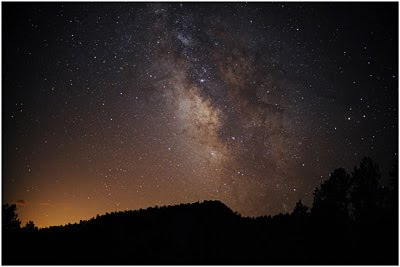
    I just got back from perhaps the darkest place I have ever been. We were twenty miles form the nearest city of any size, at over 8,000 feet of elevation with no humidity on a moonless night. That’s a straight shot of the night sky, above.

    I was on a family trip to a dude, er, guest ranch after teaching in Denver two weeks ago. So I had a better-than-average collection of gear with me for being on vacation. But only one problem — no tripod.
    __________

    Duuuuude!

    Those of you who know me also that a dude ranch is about the last place you would ever expect to find me. As in, I don’t ride horses. We had ’em when I was growing up. I always found them to have a distinct lack of hard controls, most notably any type of reliable braking mechanism whatsoever.

    In fact, my last significant interaction with a horse was actually more of the gastronomic variety. This was thanks to my friend Fons at CERN. So my daughter Emily and I do share a love for horses, even if not the same kind of love.

    The Long Con


    Speaking of Em, that’s her above, riding on the open range near Red Feather Lakes in Colorado. Her mom let her go without a helmet just this once so I could grab a panned shot of her on her horse-for-a-week, Oreo. (The name, of course, only strengthens the gourmet equine connotations in my mind.)

    She’s entering 7th grade this year, but was in 4th grade when she hatched the scheme that would end up in our spending a week at the Sundance Trail Guest Ranch in northern Colorado.

    Her assignment, courtesy teacher Kim Eubanks, was to research and report on what would be her dream vacation — anywhere in the world. With no limits, all of the other kids chose foreign and/or exotic locations. But Em researched and fell in love with a small, family-oriented guest ranch about two hours north of Denver.

    It was a very sweet thought, but these types of places are not our normal modest-price hotel fare. Still, Susan and I both admitted that it might be possible with a little frugality and a lot of saving.

    So later when we announced to Em that we would, in fact, be heading to Sundance Trail, she told us that had been her secret plan all along. In other words, we had just been expertly played by an 8-year-old for a four-digit payoff.

    Oh, and as a bonus the place was just crawling with kittens. For Em it was pretty much like that lab experiment where they give the rats all of the crack they want, just to see what happens.

    My wife Susan is a rider, too. So there was no question she was gonna have fun. But Ben and I are not horse people, so we spent the week doing lots of other stuff. Between the white-water rafting, climbing, tomahawk throwing, campfires, hiking and (especially) shooting, we had a great time.

    Oh, and don’t even ask me about the food. Suffice to say that Nate took good care of us in the kitchen, even if Trigger was not on the menu. And Susan and I both lost a pound each. Go figure.

    In Need of Support

    By the second night I was totally infatuated with the dark skies, which featured layers upon layers of stars. There were so many that I could not easily find the major constellations, and the bands of the Milky Way were gorgeous. This is not something we often see in the east, so I was like a kid in a candy store.

    But I had left my tripod at home, and none of the other guests had one I could mooch. So I started to experiment with various DIY substitutions to keep the camera still for the ten seconds of so I could use before the star trails would start to be obvious from the earth’s rotation. I pined for my tripod and John Moran’s brilliant DIY astronomical camera mount. Next time, I’ll bring both.

    In the end, the porch rail and a rubberized iPhone (used as an elevation shim) served the purpose pretty well — even if it did limit my shooting direction. Using the self timer to allow the camera to settle down, I was able to get a pretty sharp 10-second exposure at f/1.8 at ISO 3200. The 35/1.8 lens (fastest I had with me) was designed for small chips, thus the vignetting. But I kinda like it, to tell the truth.

    Flashes and Stars

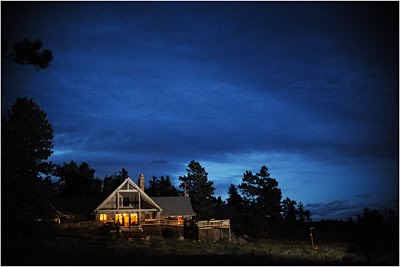
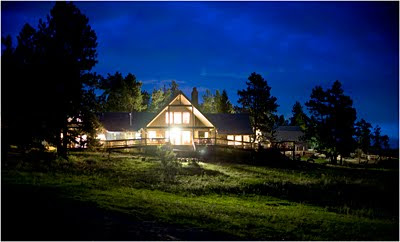
    Shortly after, I started thinking about a shot of the lodge lit against a backdrop of that stunning night sky. And it didn’t help that I had half a dozen SB-800s with me, along with stands, PWs, etc.

    I know — I’m on vacation. But still, I really love playing around like this. And on vacation you should get to do anything you want, right?

    So I chose a fence post for a camera support and set off to light the lodge to f/1.8 at ISO 3200 with speedlights. I could easily light something a couple of football fields away at that level with speedlights, after all.

    I set up my key light about 200 feet away (for even lighting) from the lodge at dusk. Then I set a fill light right in front of the front porch, hidden by an old wagon in the front yard. A little guide number guestimation showed me that I would not even have to crank up the flashes to full power to light the house from this distance.


    As the ambient light dropped down, I did test shots of the lodge against the sky. Visions of a gorgeous shot of the lodge and the night sky danced in my head. Maybe I would even get lucky with a Perseid meteor or two in the frame.

    But then something unexpected started to happen. Long before the stars started to appear, the lodge itself started to go nuclear bright. I had not considered what a normal, interior light (60th @f/2.8 @ISO 400) might look like at f/1.8 at 10 seconds at ISO 3200. Little hint — they are very bright at that exposure.

    As in about 13 1/2 stops over.

    (Apparently, my brain takes vacations, too…)


    Even by shooting RAW files and combining single images imported at multiple exposure levels, I quickly knew I was not going to be able to marry the two exposures — small flashes or not. Well, okay, I could. But that would mean turning off all of the interior lights and triggering tiny flash pops in each room — for each exposure.

    Nope, this was where I would cut my losses and bail in favor of the campfire and songs that had been my backdrop for the shoot until now. After all, I was on vacation.

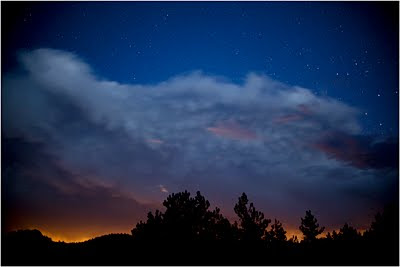
    The fickle weather in the Colorado highlands teased with other short-lived opportunities to do a lodge-and-stars shot. But instead I decided to go with the flow, shooting the transitions that included both moving clouds and star fields. I had never seen anything like it before, and might never again.


    The firey colors on the horizon are from the city lights that the locals lament are ruining their rural night views (they’re looking at you, Ft. Collins…) But I thought they made a neat separation light for the mountain trees on the horizon. So you are fine for now, Ft. Collins. But no more development, please.

    For those interested in a week in the saddle, I cannot recommend Sundance Trail enough. Definitely check it out.

    Even as a non-rider I had one of the best weeks of my life. And the horse people in the bunch wore big smiles (along with sore butts) all week long, continually exploring some of the most beautiful backcountry you could ever want to see.

    If you visit Sundance please give Dan, Ellen and the gang our best. And be sure to check out the family brand we charred into into the dining room wall before leaving your own.

    Oh, and bring a tripod. Unlike me, you might have the patience to get all of the lights turned off for a flashed, lodge-and-stars photo. If you nail it, please post a link in the comments below this post. I’d love to see it.

    Until then, happy trails…


    Strobist

  • 5 Cheap and Easy Ways to Re-inspire Your Photographic Creativity

    A Guest Post by Claire Woollam the Digital Iris.

    Every few months I feel a lack of motivation creeping in and I realise that my daily photographs in particular (I’m doing a 365 project this year) are starting to become a bit dull and lacking in inspiration. Happily I’ve managed so far to climb back out of that hole and get creative again – here are my top tips.??

    1. Get Surfing

    ?A few minutes spent on Google Images, Flickr and sites such as DPS never fails to help me get my photo-mojo back. I find pictures rather than words stimulate the creative juices best. If you blog, you may be able to find a tool which lets you view the pages of other bloggers’ who have similar interests to yours (I use Blogger where you can link to other people’s sites through your Profile page).

    2. Exhibitions

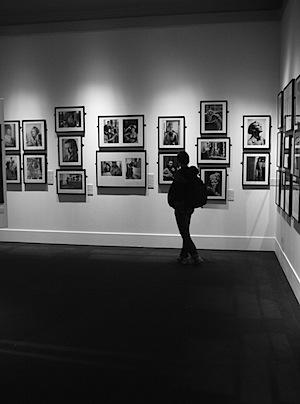
    photographic-inspiration.jpgI’m lucky – living in London means there is always a fantastic range of galleries showing pictures from all manner of photographers, many of which are free. An hour or so spent looking at someone else’s shots in ‘real life’ rather than on a computer screen always manages to inspire me. I particularly enjoy seeing less well-known works, which tend to be displayed in more intimate and interesting spaces, often a source of inspiration in themselves. But no matter where you live, you can usually find something going on near you, be it at a local library, community centre or even a shop window on the local high street.

    Get online and check out your area’s listings to make sure you don’t miss any up and coming exhibits. I like to do a bit of quick research before I head along to a gallery – having some background knowledge on the photographer and their style means you can better appreciate the pictures in front of you and you don’t waste time when you’re there reading reams of gallery pamphlets or stuff on the walls.

    I particularly like that many photography exhibitions are quite small scale, meaning that you don’t end up with the ‘museum fatigue’ experienced when trudging around a large, expensive art gallery, feeling obliged to see everything at all costs because you’ve paid for it and you’re damn well going to see it all! (or is that just me?!)

    3. Library Books

    ?
    photographic-inspiration-2.jpg

    We visit our local library most weekends. Admittedly some of the photography books are looking rather old and might be considered to be a bit technically out of date. However, big anthologies of pictures are always a pleasure to flick through and can help bring fresh creative blood to your brain.

    The bonus of libraries is that there’s no bookshelf space dilemma at home and they’re free! You can always make like me and fill in a suggestion card for new titles – a few months after asking for ‘more photography books, please!’ low and behold a nice fresh little stock appeared on the shelves: if you don’t ask, you don’t get!

    4. Change your Daily Routine

    ?Always walk the same way to work? Take the same bus or train? Comfortable in the same Saturday morning routine? Make up your mind to introduce a change next hour, next day, next week. Find a new area or some different streets to roam during your lunch break. Get up an hour earlier and walk in the opposite direction than you usually do from your house. See where your feet take you and what your lens comes across.

    5. Submit Photographs, Enter Competitions

    ?It’s always helpful to get feedback on your shots via sites like Flickr, but nothing beats the buzz of seeing a picture you took in the local paper or short-listed for a competition. When you know you’ve done good, you can’t fail but want to do more and better!

    Local papers often look for pictures from your area and most nationals run regular competitions, both in paper and online. A quick search of the Internet may bring up some interesting and inspiring opportunities. Why not give it a whirl – you may be pleasantly surprised!??So these are the kind of things I get up to when I feel the need for a digital energy injection. It would be interesting to hear what other people do to revive flagging photo motivation.

    Get more from Claire Woollam at her site – the Digital Iris.

    Post from: Digital Photography School – Photography Tips.

    dpsbook.png

    5 Cheap and Easy Ways to Re-inspire Your Photographic Creativity


    Digital Photography School

  • Fisheye Lens Perspective for Paddling?

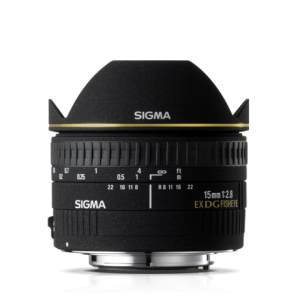
    Sigma 15mm F2.8 EX DG Diagonal Fisheye

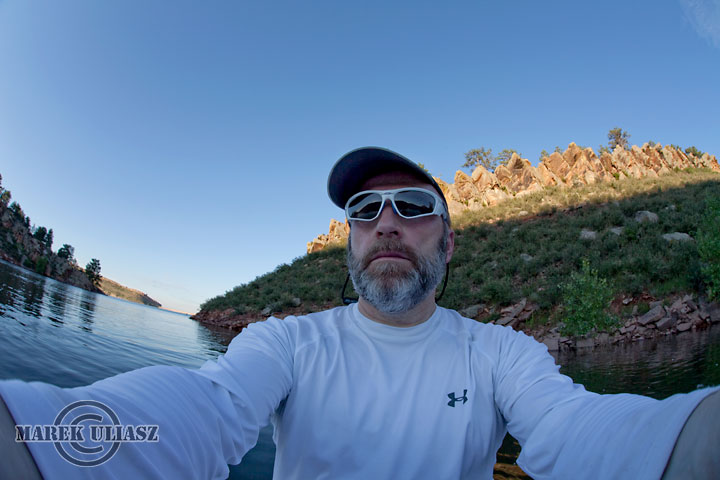
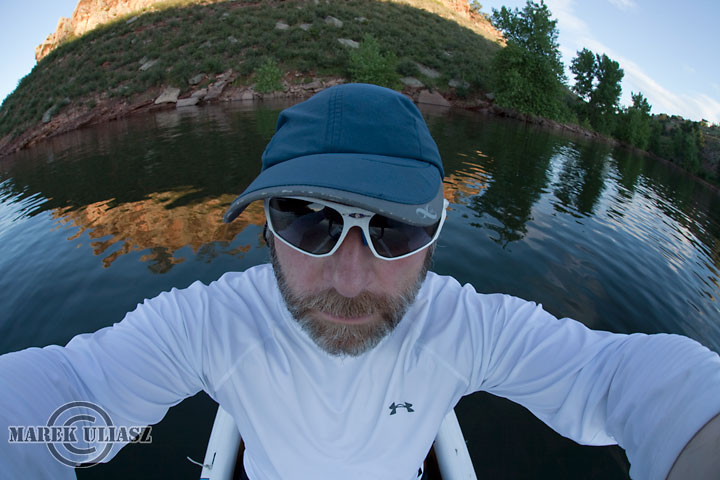
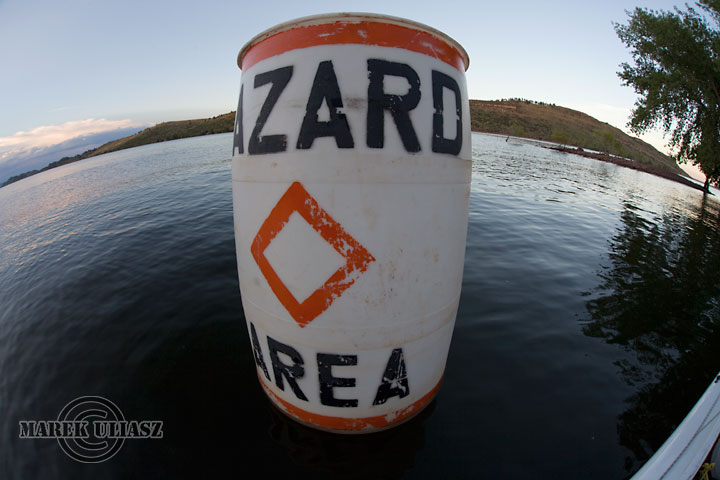
    I just got a fisheye lens for my Canon 5D/II: Sigma 15mm F2.8 EX DG Diagonal Fisheye. It is designed for a full frame DSLR camera and offers a 180 degree field of view. It was difficult choice between this lens and Canon 15 mm fisheye, but the Sigma lens had better reviews.

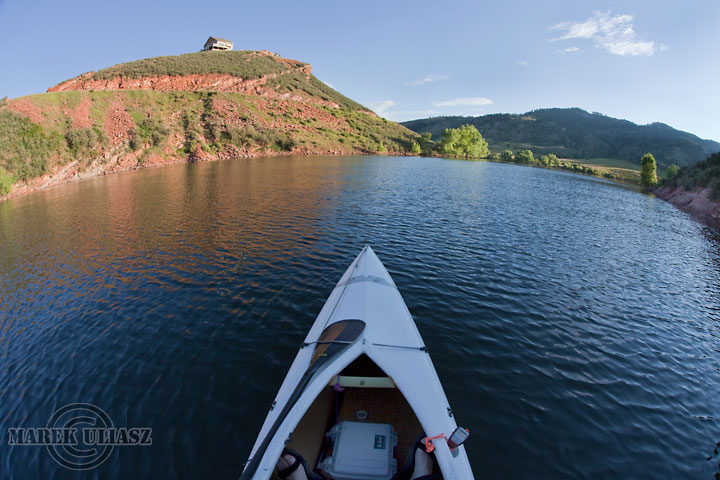
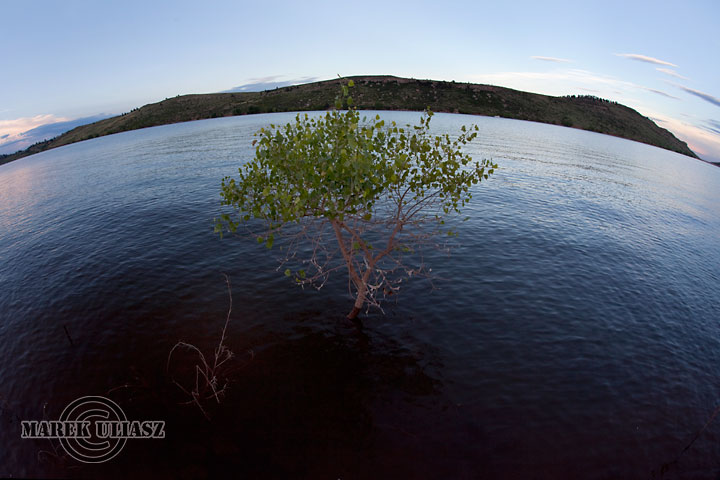
    My primary reason for this lens was to shoot caricature portraits (including self portraits) inspired by the work of Sharon Dominick. Of course, I am also going to have some fun with that lens outdoors with landscape and paddling. So, here is my first series of pictures with the Sigma fisheye shot during recent paddling with Sea Wind canoe on the Horsetooth Reservoir near Fort Collins – just trying different angles and distortions. The last picture was shot after sunset with a tripod.

    I am sure more fisheye pictures will appear here in the future. I am going to mount a camera with this lens on kayak front deck and, also, shoot more from a kayak cockpit to add something to my old post A View from a Kayak Cockpit – 3 Paddlers, 3 Cameras, 3 Boats.

    What do you think about the fisheye perspective for paddling photography?

    You can find a lot of good fisheye pictures including shots from sea kayaking in Flickr photostream of Mark Payton. He is shooting with the Canon lens.


    horsetooth-072110-1

    horsetooth-072110-2

    horsetooth-072110-3

    horsetooth-072110-4

    horsetooth-072110-5


    Related posts:

    Canon PowerShot G11 First Paddling Pictures
    Canon EOS 40D Camera on the Bow of a Racing Kayak
    Paddling with Canon PowerShot G11 Camera on a Monopod Mast


    paddling with a camera

  • what I’ve been working on

    It’s been a crazy couple of weeks. Tons of shooting, Punta Cana for vacation, more shooting, lighting workshop, working on a painting commission… whew…

    Had a fantastic time at Don Giannatti’s workshop in Baltimore, we had some great brainstorming on a portfolio revamp. So that’s my next project! (more on the workshop in a separate post)

    Now it’s just a matter of wrapping everything up, finishing up some processing and getting ready to start all over again! Oh, and round 2 of my 1×120 project will be starting up as well!

    Without further ado, here are a few images from the past couple of weeks (in no particular order)

    Tweet This Post Stumble This Post


    ed | zawadzki

  • new portfolios

    been doing a lot of personal work lately, a good amount of new portfolio shooting.   Felt it was about time for a portfolio overhaul… check the galleries for new work…

    Tweet This Post Stumble This Post


    ed | zawadzki