Category: Uncategorized
-
How To Get Someone To Take Your Photo

And don't forget to smile!
This post isn’t for everyone. I’ll admit there are a fair number of outgoing, gregarious extroverts out there who have no problem walking up to anyone in any country and asking for help. For those of you who fit that mold, you might want to consider skipping this post and forwarding it to a more shy friend. I know this may seem painfully obvious to some readers, but I have been asked this very question enough times to let me know others out there will benefit from a quick read.
For everyone else, this post will outline some simple tips to help you overcome the hesitation to hand your camera to someone to take your picture. Arm-length self portraits are fine up until a point. Even when traveling with someone else (otherwise known as your personal paparazzi) there comes a time when you both may want to be in a photo together. If there is nothing around to set your camera on for a self portrait, it’s time to ask for help.
Set Your Camera On Auto
Step one: make things easy for the photographer. All cameras have some type of auto feature, usually highlighted by a big green rectangle. This mode will be the easiest on an unsuspecting photographer because there is nothing they have to set. Further, if your camera has some type of face detection feature, turn it on as well to help insure your smiling face is not over or under exposed.
Scan The Crowd
Next, look around for your likely target. Some good candidates include:
- Families (that aren’t over burdened)
- Anyone not in a hurry
- Someone who has just taken a photo themselves
Personally I get asked to take many photographs because I am lugging around professional gear. I look like I know how to take a photo and that is who you ideally want. The mere act of holding a camera in your hand and scanning a crowd will help point you to someone willing to help.
Make Eye Contact And Smile
Do you know how much easier life in general is when you follow this rule? Be open and friendly and make eye contact, good eye contact. The type of eye contact where you actually remember the person’s eye color. Why is this important? It helps weed out those who really don’t care to engage you or want to avoid you. It also makes you more likable.
Ask
All there is left to do is ask. “Excuse me. Would you mind taking my photo, please?” I know, horribly easy. If you don’t speak the language, consider learning the phrase (and others) before you leave. Google Translate is a good place to start although I can’t vouch for how accurate it is for each language listed. Or, if you really don’t know the language, sign language is your best bet. Raised eyebrows with a point to your camera is all it usually takes. Oh yeah, keep smiling. If your camera has a plethora of buttons, be sure to point out the shutter release when you get a taker.
Trust Your Instincts
Some people fear everyone while traveling. They hear the horror stories and that is their impression of any given location, even though they take the time to visit. While I’m not a fan of paranoia, it is important to trust your instincts while selecting a photographer. Not every stereotype out there is true, so I can’t even begin to list who to avoid. If you have even the least bit of hair standing up on the back of your neck, move on to someone else. Trust yourself.
Always Say Thank You
Sure there are a number of societies out there where thanking someone is not custom, but for the most part, a kind “Thank You” is always appreciated. Again, learn the phrase before you go. Here’s a fabulous list with 465 listed ways to thank someone.
For you introverts out there who despise asking for anything or disturbing others, I hope this post gives you a little push to get yourself in the photo the next time you travel. It really is this easy, just go do it!
Post from: Digital Photography School – Photography Tips. Check out our resources on Portrait Photography Tips, Travel Photography Tips and Understanding Digital Cameras.

How To Get Someone To Take Your Photo
-
Nikon D3100 Review
This review got off to a bad start: the DX format camera arrived just before a long holiday break… without a battery and fitted with a less than ideal (for review purposes) f4.5/55-300mm lens (equivalent to 82.5-450mm on an SLR). So it just sat on the review bench for nearly two weeks, uncared for and bereft of admirers.

But once the power cell was fitted and the Nikon D3100’s neurons started surging through its circuitry, the little beast rapidly assumed a compelling appeal.
First up, the price: I figure it would tickle the tendrils of newcomers to the DSLR level of photography, those who have tired of compact digicams and their limitations but who don’t want to be bamboozled by the hard edged technicalities of upper level reflex models.

So what you get is a responsive camera that can fire its first shot barely a second after startup. And heh! It’s small! Whilst only a few mill smaller than its earlier sibling the D3000, its stocky body sits well within an average male hand. Weight? With battery and card it tips the scales at a measly 500 grams.

Nikon D3100 Features
The 14.2 megapixel CMOS sensor captures a maximum image size of 4608×3072 pixels. That means a print of 39×26cm can be made at 300 dpi.

In the movie department it can shoot at levels up there with the best: 1920×1080 at 24p in MPEG4 with mono sound; maximum shooting time is 10 minutes. Movie mode is well served in that you can select continuous auto focus while you shoot; in this I was a bit hampered by the 55-300mm review lens, with its narrow depth of field band and the challenge of using it handheld, but patience eventually triumphed.
The D3100 also offers in-camera movie editing that lets you save a single frame as a still image or delete unwanted slices from either end of movie clips. Note: when shooting movies you do get a fair bit of handling noise if you move the zoom in the middle of a recording.


If you want an alternative to the reflex finder, you’ll enjoy Nikon’s Live View mode, accessed by single-touch lever. In still capture mode it is live for only 30 seconds.
What sets the D3100 apart from most other DSLRs is its opening LCD screen which displays a guide that, in some ways, resembles an instruction manual built into the camera. For example: select Program AE for your exposure mode, then revolve the command dial, a graphic display shows how the lens aperture diminishes as the shutter speed increases… and vice versa. The really neat thing about this guide is that, when you revolve the camera, so the display pivots 90 degrees!
On the mode dial is the usual selection of Program, shutter and aperture priority plus manual and auto exposure options. Scene modes include portraits, landscapes, macro etc.
A novel Guide setting opens the door to suggestions as to how to shoot subjects in a more adventurous manner: challenges such as softening backgrounds, freezing motion are explained on screen… IMHO an encouraging way to advance your photographic skills.
The flash variations include auto, red eye reduction, flash forced off as well as the choice of front or rear curtain sync.
If you’re into mass portraits, hang onto this: the camera’s face detection system can pick up 35 faces!
You can shoot a burst of stills at a rate of three per second, the setting easily accessed via a four position lever that also silences the shutter sound for single frame shooting.And here’s one I haven’t seen before! If you’ve shot an image and want to match the white balance in a subsequent shot, you simply select the stored shot and capture a new one that matches.
Sat nav-ready: an optional GPS unit can be attached which records the camera’s current position.


Nikon D3100 ISO Tests
A pretty good performance up to ISO1600, with sharp image and low noise. At ISO3200 noise is slightly up. At ISO6400 even more so but not objectionable. AT ISO12,800 noise is up even more and definition is well down: ideal for night shooting.

A good idea of the camera’s low light performance is this shot taken at ISO12,800. Aperture: f4.5 at 1/4000 second.
Comment
Prowling through the 200 plus page manual, I found a number of other features that I consider are photographer friendly helpers that would be of prime use to the enthusiastic, novice photographer. And not just for the sake of clever technology.
And that just about sums up the camera itself: it’s photographer-friendly! I have rarely come across a DSLR that was easier to use, immediately after opening the box. Go! Enjoy!
Why you would buy it: you hanker for an entry level DSLR; you’re keen but a bit lacking in skills; you crave Full HD video capture.
Why you wouldn’t: you’d like a tilting/swivelling LCD screen.

Nikon D3100 Specifications
Image Sensor: 14.2 million effective pixels.
Metering: Matrix, centre-weighted metering and spot.
Effective Sensor Size: 23.1×15.4mm CMOS.
A/D processing: 12-bit.
35 SLR Lens Factor: 1:5x.
Compatible lenses: Nikon F mount (with AF contacts).
Exposure Modes: Auto, Program AE, shutter and aperture priority, manual.
Shutter Speed: Bulb, 30 to 1/4000 second, Bulb. Flash sync: 1/200 sec.
Memory: SD/SDHC/SDXC cards.
Image Sizes (pixels): 4608×3072 to 2304×1536. Movies: 1920×1080 to 640×480 at 24/25/30fps.
Viewfinders: Eye level pentaprism, 7.5cm LCD (230,000 pixels).
File Formats: NEF (RAW), NEF (RAW)+JPEG, JPEG, MPEG4.
Colour Space: Adobe RGB, sRGB.
ISO Sensitivity: Auto, 100 to 12,800.
Interface: USB 2.0, AV, HDMI mini, DC input, remote.
Power: Rechargeable lithium ion battery, AC adaptor.
Dimensions: 124×96×74.5 WHDmm.
Weight: Approx. 500 g (with memory card and battery).
Price: Get a price on the Nikon D3100 with 18-55mm f/3.5-5.6 AF-S DX VR Nikkor Zoom Lens at Amazon.Post from: Digital Photography School – Photography Tips. Check out our resources on Portrait Photography Tips, Travel Photography Tips and Understanding Digital Cameras.
Nikon D3100 Review
-
London Photo Walk This Week!
We’re almost there! Feb 19th in London is the date for the next dPS photo walk! And with over 250 people signed up, it’s going to be huge! We have three awesome sponsors in Think Tank Photo, Black Rapidv and 3 Legged Thing who have kindly donated some prizes for our walkers, and we’ll all stop for a chat and a drink after the walk too, where everyone will have the chance to ask questions, rest their feet and take photos of each other in silly hats no doubt!

We have three camera bags from Think Tank Photo to give away on the day, we will have the entire range of camera straps from BlackRapid and this news just in! we’re going to have one lucky walker snag the awesome ‘Brian‘ carbon fibre tripod from the amazingly good looking people at 3LeggedThing
It all starts at 3PM (sharp) at Liverpool Street Tube station, and will amble about in the City and surrounding area for about 2 to 3 hours before coming to rest back at Liverpool Street station for a chat at a local, traditional pub (Though, we have our own room / area) –> Further details can be found here.
As I mentioned, there are prizes, one of them will be drawn this evening to all of you who are signed up via MailChimp (but you need to be there on Saturday to collect!) There will be a random set of criteria for the drawing of prizes that you will learn about on the day! With the grand prize, Brian the Tripod, being awarded to the ‘best photo of the day’ as drawn by a panel of hand plucked judges. Entry details will be available on the day for those that are in attendance!

There are many people coming on Saturday and that means that there will be someone for almost every type of photographic background that you can think of, I know of pro sports photographers, fashion photographers, architecture specialists and a music photographer or six! …and a whole lot of people that are learning (don’t be put off by pros, use them! ask questions! we’re all there to have fun and they really don’t bite) It’s going to be a great walk if the weather holds out!

What to bring?
Well, camera kit is your choice, but remember that we will be walking and if you plan on bringing a whole lot of kit, we won’t have anyone on hand to rub your shoulders! The roads are flat and there isn’t much uphill / downhill to speak of. We won’t be moving fast and we won’t leave people behind.
If you have any questions, feel free to post below in the comments section and I will do my best to answer them.
See you all on Saturday!
Sime
Post from: Digital Photography School – Photography Tips. Check out our resources on Portrait Photography Tips, Travel Photography Tips and Understanding Digital Cameras.
London Photo Walk This Week!
-
Come with Me to Tanzania Next Week?
 If I had to nominate my biggest passions, photography and blogging would be right up there in the top few. I’ve been doing both for years, and have benefited a great deal from doing so—on many levels.
But I’ve always wondered how I cold use these passions to make the world a better place.
I know they do now, on some levels—every day, dPS helps photographers to become better at what they do—but as dPS has grown to reach over 3 million people a month, I’ve wondered if perhaps we could do something more with the site to help those in need in a bigger way?
So late last year I decided to give it a go, and see what can be achieved.
The Tanzanian Experiment
Next Friday I’m going to experiment with doing just that—and I’d love you to join me.
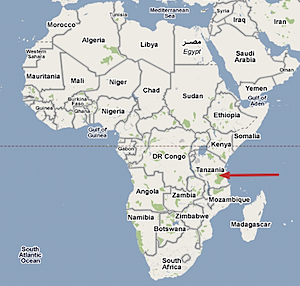
On 25 February, I’m jumping on a plane (well, a series of them) for Dar es Salaam in Tanzania, East Africa.
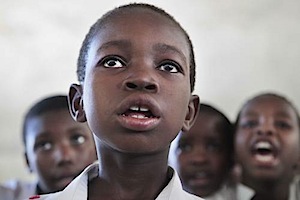
I’ll be in the country for one week, to spend time observing—and reporting back to readers and to my social networks on—an amazing project called Comprehensive Community Based Rehabilitation in Tanzania (CCBRT), a project of CBM, an international disability and development organization.
The trip is being organized by CBM Australia (you can read more about it here) with the goal of raising awareness of the issues that are faced every day by people with disabilities in developing countries.
The work they do is amazing.
Last year alone, they performed over 10,530 surgeries and helped improve the lives of around 120,000 people with disabilities and their carers.
Their work focuses upon many areas including working with sight-related disabilities, club foot, cleft lip/palate, and maternal health (among others).
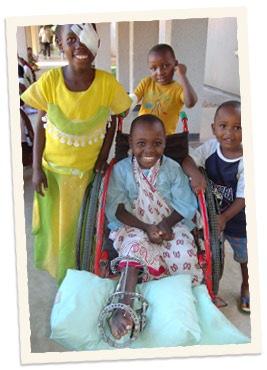 Having spent time visiting a number of other projects in developing countries over the years, I know that this trip will be confronting, but I’m excited by the opportunity to both be personally impacted by what I see and to share the journey with you.
Throughout the week in Tanzania, I’ll be sharing what I see via blog posts, images, videos, and tweets. We’ll be focusing mainly upon some of the work with maternal health issues (mainly Fistula), and tracking some of the stories of the people that we meet.
This trip is not a money grab. The intent isn’t to be creating daily calls for you to donate. I’m sure CBM wouldn’t say no to donations (in fact, they’d go a long way to change lives), but my intent with this trip is to share stories, highlight needs, and show what an amazing organization and its people are doing to meet the needs around them.
My hope is that we’ll all come away from the experience with a better awareness of the issues, and the motivation to do something to make the world a better place (whether that be by supporting the work of CBM, or supporting another need you know of).
I also hope that it’s a great trip for my photography. I’ll be taking my Canon EOS 5D Mk II and a couple of lenses, and I look forward to the challenge of photographing the people I meet while on the ground in Tanzania.
How Can You Join this Trip?
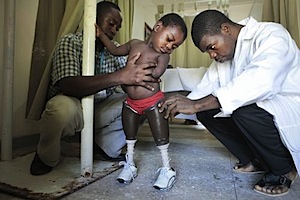 The bulk of the blogging that I’ll be doing while I’m away will be on CBM’s blog (there isn’t much there yet, but we’ll be adding to it and redoing to the template significantly in the coming week). I’ll be adding posts, videos, and images during the week that I’m on the ground, and in the weeks that follow.
I’ll probably do an update or two here on dPS next week, but I’m aware that this blog is about photography and not Tanzania or the issues facing developing countries, so we’ll keep it largely on CBM’s site.
If you’d like to get those updates, please subscribe to their blog here.
You can also follow the journey on Twitter by following CBM’s Twitter account. I’ll be making updates there, and also from time to time on the @ProBlogger and @DigitalPS Twitter accounts.
Lastly – you can support this project by sharing news of it and the content we produce while in Tanzania. Please consider passing on the links to stories we share and helping word spread further about what we’re up to. Thanks!
Post from: Digital Photography School – Photography Tips. Check out our resources on Portrait Photography Tips, Travel Photography Tips and Understanding Digital Cameras.
Come with Me to Tanzania Next Week?
-
Beauty: Weekly Photography Challenge

Image by FleeCircus
This week your challenge is to take and share a photograph with that fits into the theme of ‘Beauty’ (inspired by Monica Marinez on our Facebook page).
It’s a very broad theme and is one that is open to a lot of interpretation and creativity. Show us something that is beautiful to you, critique a ‘beautiful’ social norm, capture a beautiful landscape – the possibilities are endless – after all…. beauty is in the eye of the beholder (or beerholder as we used to say).
Once you’ve taken your ‘Beauty’ photos – choose your best 1-2, upload them to your favourite photo sharing site either share a link to them even better – embed them in the comments using the our new tool to do so.
If you tag your photos on Flickr, Twitter or other sites with Tagging tag them as #DPSBEAUTY to help others find them. Linking back to this page might also help others know what you’re doing so that they can share in the fun.
Also – don’t forget to check out some of the great shots posted in last weeks Windows challenge – there were some great shots submitted.
Post from: Digital Photography School