RSS
 

Archive for the ‘Photographs’ Category

FLOATING CITY SCULPTURE by Claire Halpin and Madeleine Hellier

15 Dec

Check out these visual art images:

FLOATING CITY SCULPTURE by Claire Halpin and Madeleine Hellier
visual art
Image by infomatique
Sculpture In Context 2012 at the National Botanic Gardens, Glasnevin, Dublin 9.
6th September to 19th October 2012

Sculpture in Context continues to build on 26 years of experience in organising successful exhibitions. It has, over the years staged highly acclaimed visual arts events at venues such as Fernhill Gardens, the Conrad Hotel, Kilmainham Gaol, the Irish Management Institute, Dublin Castle, Farmleigh House and the National Botanic Gardens.

The gardens are not only a botanical haven, and a quiet oasis on the outskirts of a modern European City, they also offer a challenging venue which gives the artist the rare opportunity of realising large scale work. It also gives the visitor an opportunity to ramble and explore, sometimes finding sculptures in the most unusual places. The sculptures are displayed throughout the gardens, ponds, Great Palm House, and Curvilinear Range, with the smaller works exhibited in the gallery above the visitors’ centre.

The Bathers by Helen Walsh: Sculpture In Context 2012 at the National Botanic Gardens
visual art
Image by infomatique
Sculpture In Context 2012 at the National Botanic Gardens, Glasnevin, Dublin 9.
6th September to 19th October 2012

Sculpture in Context continues to build on 26 years of experience in organising successful exhibitions. It has, over the years staged highly acclaimed visual arts events at venues such as Fernhill Gardens, the Conrad Hotel, Kilmainham Gaol, the Irish Management Institute, Dublin Castle, Farmleigh House and the National Botanic Gardens.

The gardens are not only a botanical haven, and a quiet oasis on the outskirts of a modern European City, they also offer a challenging venue which gives the artist the rare opportunity of realising large scale work. It also gives the visitor an opportunity to ramble and explore, sometimes finding sculptures in the most unusual places. The sculptures are displayed throughout the gardens, ponds, Great Palm House, and Curvilinear Range, with the smaller works exhibited in the gallery above the visitors’ centre.

 
Comments Off on FLOATING CITY SCULPTURE by Claire Halpin and Madeleine Hellier

Posted in Photographs


Nice Visual Art photos

15 Dec

A few nice visual art images I found:

Elizabeth Tashjiaan, American painter, 1912-2007
visual art
Image by Smithsonian Institution
Description: Elizabeth Tashjian, aka The Nut Lady, championed the nut by not only creating her own inventive portraits of a variety of nut and nutcrackers, but by opening her own nut museum in Old Lyme Connecticut. She was the daughter of aristocratic Armenian immigrants and studied at the New York school of Applied Design for Women as well as the National Academy of Design. Later in life, she appeared on the shows of Johnny Carson, David Letterman, Jay Leno, Howard Stern and Chevy Chase, to promote nuts and the Nut Museum.

Creator/Photographer: Peter A. Juley & Son

Medium: Black and white photographic print

Dimensions: 8 in x 10 in

Culture: American

Persistent URL: http://photography.si.edu/SearchImage.aspx?id=5822

Repository: Smithsonian American Art Museum, Photograph Archives

Collection: Peter A. Juley & Son Collection – The Peter A. Juley & Son Collection is comprised of 127,000 black-and-white photographic negatives documenting the works of more than 11,000 American artists. Throughout its long history, from 1896 to 1975, the Juley firm served as the largest and most respected fine arts photography firm in New York. The Juley Collection, acquired by the Smithsonian American Art Museum in 1975, constitutes a unique visual record of American art sometimes providing the only photographic documentation of altered, damaged, or lost works. Included in the collection are over 4,700 photographic portraits of artists.

Accession number: J0056756

Trash Chaos Vessal –“What Lies Within” 04
visual art
Image by Urban Woodswalker

This series of art is a commentary about society: our over stimulating culture, bombardment of visual "noise" and attention deficits, as well as being graphic, eye catching conversation pieces made from trash usually thrown out in the garbage.
"What Lies Within" measures 4.5" wide by 3 " wide, and 2.75" deep.

Trash Chaos Vessal– “What Lies Within” 02
visual art
Image by Urban Woodswalker

This series of art is a commentary about society: our over stimulating culture, bombardment of visual "noise" and attention deficits, as well as being graphic, eye catching conversation pieces made from trash usually thrown out in the garbage.
"What Lies Within" measures 4.5" wide by 3 " wide, and 2.75" deep.

 
Comments Off on Nice Visual Art photos

Posted in Photographs


Scarecrow Fox by David Wilcoxson: Sculpture In Context 2012 at the National Botanic Gardens

15 Dec

Some cool visual art images:

Scarecrow Fox by David Wilcoxson: Sculpture In Context 2012 at the National Botanic Gardens
visual art
Image by infomatique
Sculpture In Context 2012 at the National Botanic Gardens, Glasnevin, Dublin 9.
6th September to 19th October 2012

Sculpture in Context continues to build on 26 years of experience in organising successful exhibitions. It has, over the years staged highly acclaimed visual arts events at venues such as Fernhill Gardens, the Conrad Hotel, Kilmainham Gaol, the Irish Management Institute, Dublin Castle, Farmleigh House and the National Botanic Gardens.

The gardens are not only a botanical haven, and a quiet oasis on the outskirts of a modern European City, they also offer a challenging venue which gives the artist the rare opportunity of realising large scale work. It also gives the visitor an opportunity to ramble and explore, sometimes finding sculptures in the most unusual places. The sculptures are displayed throughout the gardens, ponds, Great Palm House, and Curvilinear Range, with the smaller works exhibited in the gallery above the visitors’ centre.

Velcome by Beatrice Stewart: Sculpture In Context 2012 at the National Botanic Gardens
visual art
Image by infomatique
Sculpture In Context 2012 at the National Botanic Gardens, Glasnevin, Dublin 9.
6th September to 19th October 2012

Sculpture in Context continues to build on 26 years of experience in organising successful exhibitions. It has, over the years staged highly acclaimed visual arts events at venues such as Fernhill Gardens, the Conrad Hotel, Kilmainham Gaol, the Irish Management Institute, Dublin Castle, Farmleigh House and the National Botanic Gardens.

The gardens are not only a botanical haven, and a quiet oasis on the outskirts of a modern European City, they also offer a challenging venue which gives the artist the rare opportunity of realising large scale work. It also gives the visitor an opportunity to ramble and explore, sometimes finding sculptures in the most unusual places. The sculptures are displayed throughout the gardens, ponds, Great Palm House, and Curvilinear Range, with the smaller works exhibited in the gallery above the visitors’ centre.

 
Comments Off on Scarecrow Fox by David Wilcoxson: Sculpture In Context 2012 at the National Botanic Gardens

Posted in Photographs


Helene Sardeau, American sculptor, 1899-1969, at work in her studio

14 Dec

Some cool visual art images:

Helene Sardeau, American sculptor, 1899-1969, at work in her studio
visual art
Image by Smithsonian Institution
Description: Helene Sardeau often conveyed contemplation, serenity and humanism in her work. Her first major commission, Slave (1933) was executed for a sculpture garden in Fairmount Park, Philadelphia. She sculpted under the pseudonym "Sardeau" even after she married fellow painter George Biddle.

Creator/Photographer: Peter A. Juley & Son

Medium: Black and white photographic print

Dimensions: 8 in x 10 in

Culture: American

Persistent URL: http://photography.si.edu/SearchImage.aspx?id=5825

Repository: Smithsonian American Art Museum, Photograph Archives

Collection: Peter A. Juley & Son Collection – The Peter A. Juley & Son Collection is comprised of 127,000 black-and-white photographic negatives documenting the works of more than 11,000 American artists. Throughout its long history, from 1896 to 1975, the Juley firm served as the largest and most respected fine arts photography firm in New York. The Juley Collection, acquired by the Smithsonian American Art Museum in 1975, constitutes a unique visual record of American art sometimes providing the only photographic documentation of altered, damaged, or lost works. Included in the collection are over 4,700 photographic portraits of artists.

Accession number: J0066480

InfamexSantograve.com promo
visual art
Image by ? ? ? ? ? ? ? ?
Visual art for santograve.com and infame.

santograve.com

Ebb and Flow – Ink Drawing
visual art
Image by ArtProMotivate
Original abstract ink drawing by Newfoundland Visual Artist Graham Matthews. This artwork is based on themes of love, and togetherness.

Please visit Graham at:
ArtProMotivate – Sell Art and Promote Art Online
Graham Matthews Abstract Art

 
Comments Off on Helene Sardeau, American sculptor, 1899-1969, at work in her studio

Posted in Photographs


Las Mininas (versión 2010)

14 Dec

A few nice visual art images I found:

Las Mininas (versión 2010)
visual art
Image by Cea.
Copy of an art work from the project called "Parodias de Pinturas Famosas", a stream of re-works of the world famous using a similar visual style.

See the original at www.flickr.com/photos/parodiasdepinturasfamosas/4916650422

Gee’s Bend: The Architecture of the Quilt
visual art
Image by Walters Art Museum
Gee’s Bend: The Architecture of the Quilt, which was on view at the Walters Art Museum from June 15, 2007 – August 26, 2007, featured four generations of quilters and demonstrated how the influences of architecture and the environment appear in the quilters’ visual vocabulary. The rich aesthetic traditions that have evolved in Gee’s Bend, a town of about 750 people on a remote peninsula created by a bend in the Alabama River, and its neighboring community, Rehoboth, can be counted among the most vibrant quilting legacies in America. Continually renewing their designs with a combination of tried-and-true techniques and bold innovation, the artists of Gee’s Bend have improvised upon well-known quilting patterns found elsewhere, such as housetop, bricklayer, medallions, and strip quilting. Here you will see a selection of 16 of the over 40 quilts that will be on view at the Walters venue. For more information, please visit thewalters.org/eventscalendar/eventdetails.aspx?e=374.

art journal 09 {cover}
visual art
Image by jmk photos
for visual adventures workshop w/elise blaha

process: i decided to use bracket books from my supply stash for the majority of the pages. combination of grungeboard and clear acrylic pages. luckily the premade holes match up pretty well. the shape and materials are really stretching my imagination.

cover:
grungeboard
layers of paint + ink + circle stamp
printed chipboard shapes + numbers
foam arrow sticker
letter stickers
label
cut piece from anthropologie catalog

 
Comments Off on Las Mininas (versión 2010)

Posted in Photographs


NYC: Brooklyn Museum – Auguste Rodin’s Burghers of Calais – Pierre de Wissant

14 Dec

Some cool visual art images:

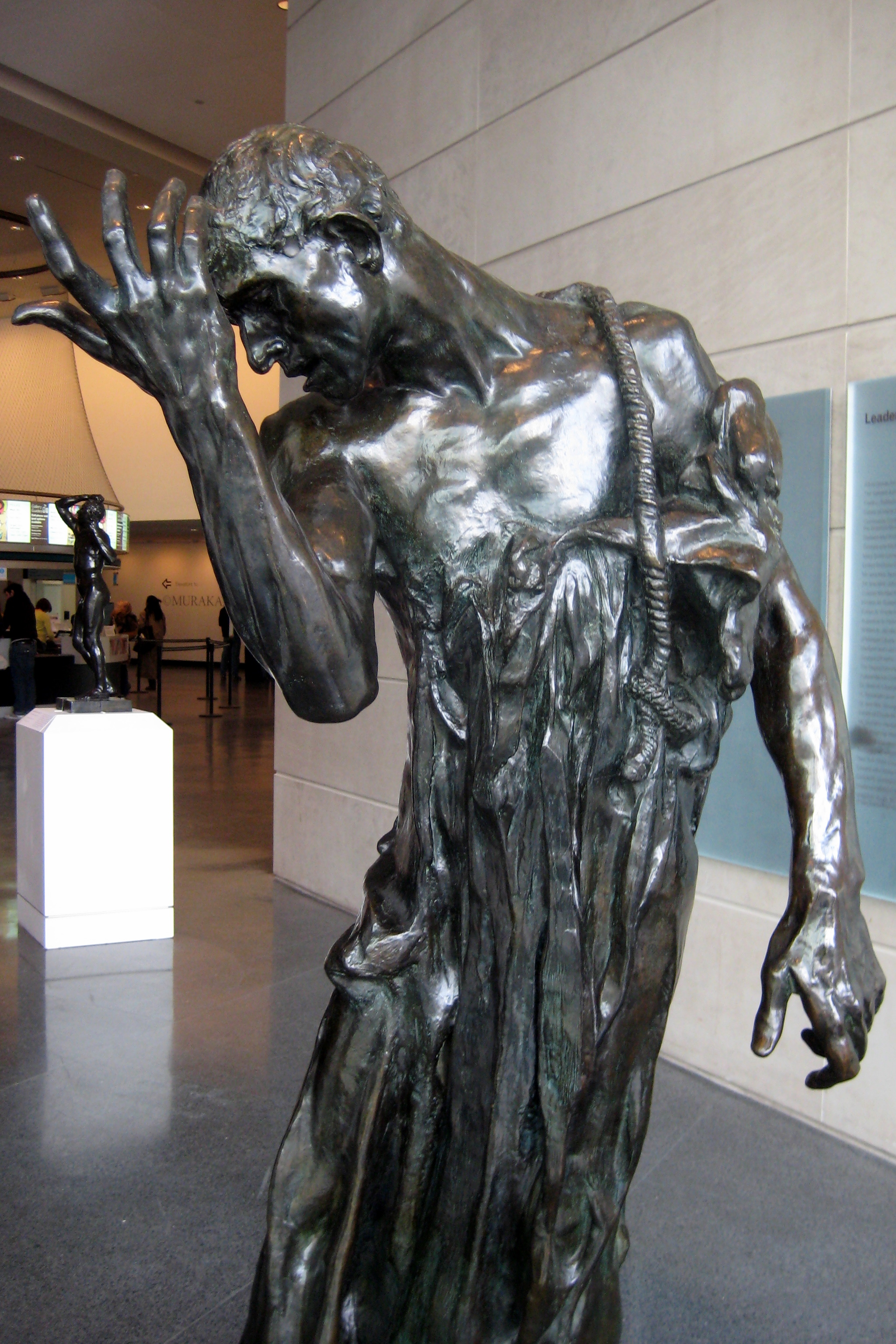
NYC: Brooklyn Museum – Auguste Rodin’s Burghers of Calais – Pierre de Wissant
visual art
Image by wallyg
Les Bourgeois de Calais (The Burghers of Calais) is one of the most famous sculptures by Auguste Rodin. It serves as a monument to the heroism of six burghers in Calais during a seige by the England in the Hundred Years’ War in 1347.

After a victory in the Battle of Crécy, England’s King Edward III besieged Calais, an important French port on the English channel, and Philip VI of France ordered the city to hold out at all costs. Which it did for a over a year. Philip failed to lift the siege and starvation eventually forced the city to parlay for surrender. Edward offered to spare the people of the Calais if any six of its top leaders would surrender themselves. Edward demanded that they walk out almost naked, wearing nooses around their necks and carrying the keys to the city and castle. One of the wealthiest of the town leaders, Eustache de Saint Pierre, volunteered first and five other burghers–Jean d’Aire, Jacques and Pierre de Wissant, Jean de Fiennes, Andrieu d’Andres–soon followed suit. Though the burghers expected to be executed, their lives were spared by the intervention of England’s Queen, Philippa of Hainault, who persuaded her husband by saying it would be a bad omen for her unborn child. Rodin depicts a larger than life Saint Pierre leading the envoy of emaciated volunteers to the city gates, prepared to meet their imminent mortality.

The monument was initially proposed by Omer Dewavrin, mayor of Calais, for the town’s square in 1884. Unusual in that monuments were usually reserved for victories, the town of Calais had long desired to recognize the sacrifices made by these altruistic men. Rodin’s controversial design echoed this intent–the burghers are not presented in a heroic manner, but sullen and worn. His innovative design initially presented the burghers at the same level as the viewers, ratherthan on a traditional pedestal, although until 1924 the city, against Rodin’s wishes, displayed it on an elevated base.

Other casts stand around the world–the garden of Musée Rodin, the Victoria Tower Gardens, in the shadow of the Houses of Parliament in London; the Israel Museum in Jerusalem, the Rodin Museum in Philadelphia, the Metropolitan Museum of Art in New York City, the Brooklyn Museum in New York City, the sculpture garden of the Smithsonian Hirshorn Museum in Washington D.C., the National Museum of Western Art in Tokyo, the Rodin Gallery in Seoul, and Glyptoteket in Copenhagen, to name a few. Some installations have the figures tightly grouped with contiguous bases, while others, like this one, have the figures separated. Some installations are elevated on pedestals, others are placed at ground level. At Stanford University’s Iris & B. Gerald Cantor Center for Visual Arts, null, concealing the bottom few inches of the bases, and spaced such that viewers can walk between the figures. The museum claims this is how Rodin wished them to be displayed.

The Burghers display at the Brooklyn Museum includes a draped Pierre de Wissant, Saint Pierre, Andriue d’Andres, and a nude Pierre de Wissant.

*

Due to installations in the Iris and B. Gerald Cantor Gallery, twelve bronze sculptures by Auguste Rodin have been installed in the Rubin Entrance Pavilion. This newly excerpted presentation of the Museum’s large holdings by Rodin includes The Age of Bronze, a signature conception from the early years of the sculptor’s career, as well as other works from his most significant commissions, including The Burghers of Calais, The Gates of Hell, and the Monument to Balzac. These casts came to the Brooklyn Museum through the generosity of Iris and B. Gerald Cantor.

The Brooklyn Museum, sitting at the border of Prospect Heights and Crown Heights near Prospect Park, is the second largest art museum in New York City. Opened in 1897 under the leadership of Brooklyn Institute of Arts and Sciences president John B. Woodward, the 560,000-square foot, Beaux-Arts building houses a permanent collection including more than one-and-a-half million objects, from ancient Egyptian masterpieces to contemporary art.

The Brooklyn Museum was designated a landmark by the New York Landmarks Preservation Commission in 1966.

National Historic Register #77000944

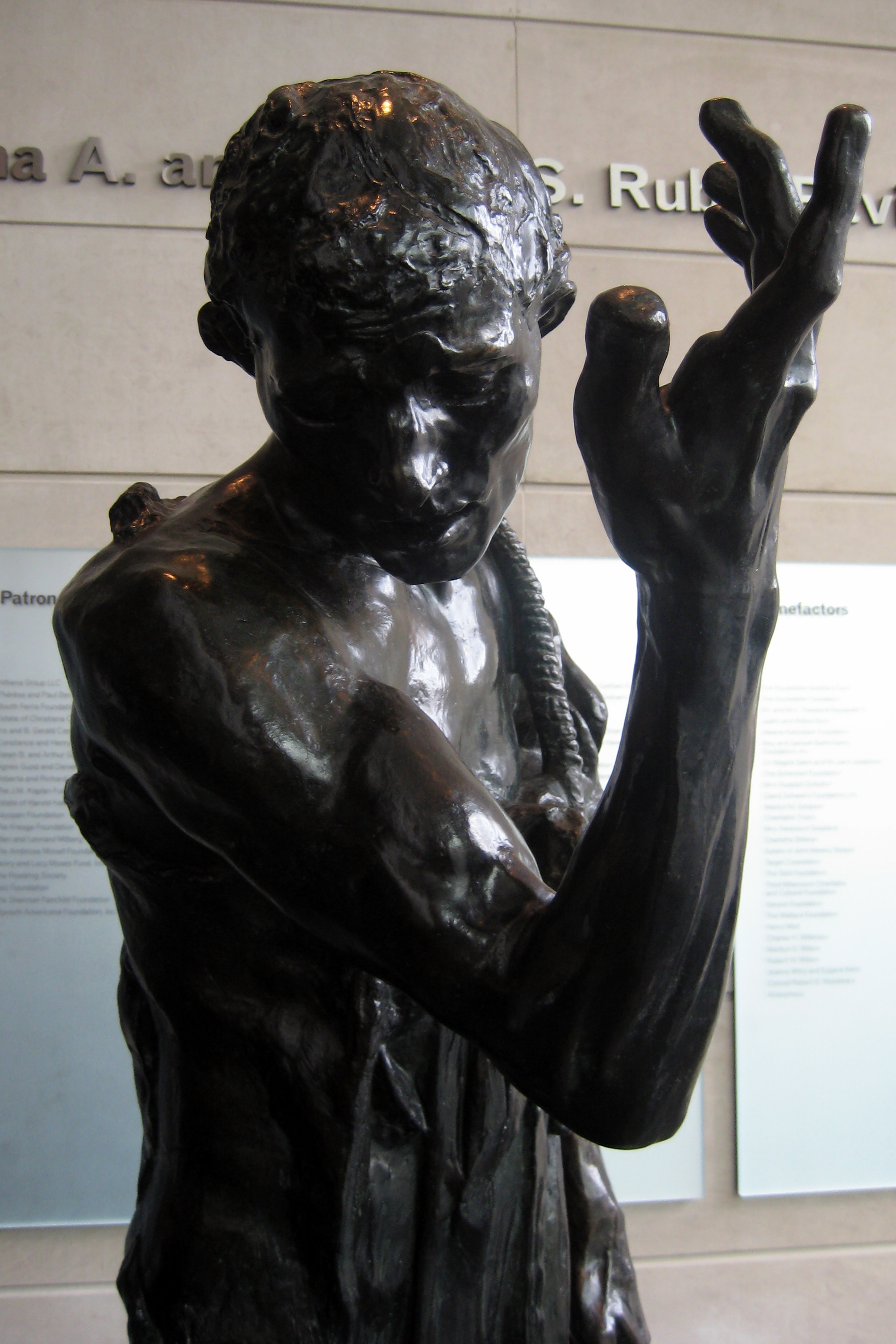
NYC: Brooklyn Museum – Auguste Rodin’s Burghers of Calais – Pierre de Wissant
visual art
Image by wallyg
Les Bourgeois de Calais (The Burghers of Calais) is one of the most famous sculptures by Auguste Rodin. It serves as a monument to the heroism of six burghers in Calais during a seige by the England in the Hundred Years’ War in 1347.

After a victory in the Battle of Crécy, England’s King Edward III besieged Calais, an important French port on the English channel, and Philip VI of France ordered the city to hold out at all costs. Which it did for a over a year. Philip failed to lift the siege and starvation eventually forced the city to parlay for surrender. Edward offered to spare the people of the Calais if any six of its top leaders would surrender themselves. Edward demanded that they walk out almost naked, wearing nooses around their necks and carrying the keys to the city and castle. One of the wealthiest of the town leaders, Eustache de Saint Pierre, volunteered first and five other burghers–Jean d’Aire, Jacques and Pierre de Wissant, Jean de Fiennes, Andrieu d’Andres–soon followed suit. Though the burghers expected to be executed, their lives were spared by the intervention of England’s Queen, Philippa of Hainault, who persuaded her husband by saying it would be a bad omen for her unborn child. Rodin depicts a larger than life Saint Pierre leading the envoy of emaciated volunteers to the city gates, prepared to meet their imminent mortality.

The monument was initially proposed by Omer Dewavrin, mayor of Calais, for the town’s square in 1884. Unusual in that monuments were usually reserved for victories, the town of Calais had long desired to recognize the sacrifices made by these altruistic men. Rodin’s controversial design echoed this intent–the burghers are not presented in a heroic manner, but sullen and worn. His innovative design initially presented the burghers at the same level as the viewers, ratherthan on a traditional pedestal, although until 1924 the city, against Rodin’s wishes, displayed it on an elevated base.

Other casts stand around the world–the garden of Musée Rodin, the Victoria Tower Gardens, in the shadow of the Houses of Parliament in London; the Israel Museum in Jerusalem, the Rodin Museum in Philadelphia, the Metropolitan Museum of Art in New York City, the Brooklyn Museum in New York City, the sculpture garden of the Smithsonian Hirshorn Museum in Washington D.C., the National Museum of Western Art in Tokyo, the Rodin Gallery in Seoul, and Glyptoteket in Copenhagen, to name a few. Some installations have the figures tightly grouped with contiguous bases, while others, like this one, have the figures separated. Some installations are elevated on pedestals, others are placed at ground level. At Stanford University’s Iris & B. Gerald Cantor Center for Visual Arts, null, concealing the bottom few inches of the bases, and spaced such that viewers can walk between the figures. The museum claims this is how Rodin wished them to be displayed.

The Burghers display at the Brooklyn Museum includes a draped Pierre de Wissant, Saint Pierre, Andriue d’Andres, and a nude Pierre de Wissant.

*

Due to installations in the Iris and B. Gerald Cantor Gallery, twelve bronze sculptures by Auguste Rodin have been installed in the Rubin Entrance Pavilion. This newly excerpted presentation of the Museum’s large holdings by Rodin includes The Age of Bronze, a signature conception from the early years of the sculptor’s career, as well as other works from his most significant commissions, including The Burghers of Calais, The Gates of Hell, and the Monument to Balzac. These casts came to the Brooklyn Museum through the generosity of Iris and B. Gerald Cantor.

The Brooklyn Museum, sitting at the border of Prospect Heights and Crown Heights near Prospect Park, is the second largest art museum in New York City. Opened in 1897 under the leadership of Brooklyn Institute of Arts and Sciences president John B. Woodward, the 560,000-square foot, Beaux-Arts building houses a permanent collection including more than one-and-a-half million objects, from ancient Egyptian masterpieces to contemporary art.

The Brooklyn Museum was designated a landmark by the New York Landmarks Preservation Commission in 1966.

National Historic Register #77000944

 
Comments Off on NYC: Brooklyn Museum – Auguste Rodin’s Burghers of Calais – Pierre de Wissant

Posted in Photographs


NYC – Brooklyn Museum – Auguste Rodin’s Burghers of Calais – Andrieu d’Andres

14 Dec

Some cool visual art images:

NYC – Brooklyn Museum – Auguste Rodin’s Burghers of Calais – Andrieu d’Andres
visual art
Image by wallyg
Les Bourgeois de Calais (The Burghers of Calais) is one of the most famous sculptures by Auguste Rodin. It serves as a monument to the heroism of six burghers in Calais during a seige by the England in the Hundred Years’ War in 1347.

After a victory in the Battle of Crécy, England’s King Edward III besieged Calais, an important French port on the English channel, and Philip VI of France ordered the city to hold out at all costs. Which it did for a over a year. Philip failed to lift the siege and starvation eventually forced the city to parlay for surrender. Edward offered to spare the people of the Calais if any six of its top leaders would surrender themselves. Edward demanded that they walk out almost naked, wearing nooses around their necks and carrying the keys to the city and castle. One of the wealthiest of the town leaders, Eustache de Saint Pierre, volunteered first and five other burghers–Jean d’Aire, Jacques and Pierre de Wissant, Jean de Fiennes, Andrieu d’Andres–soon followed suit. Though the burghers expected to be executed, their lives were spared by the intervention of England’s Queen, Philippa of Hainault, who persuaded her husband by saying it would be a bad omen for her unborn child. Rodin depicts a larger than life Saint Pierre leading the envoy of emaciated volunteers to the city gates, prepared to meet their imminent mortality.

The monument was initially proposed by Omer Dewavrin, mayor of Calais, for the town’s square in 1884. Unusual in that monuments were usually reserved for victories, the town of Calais had long desired to recognize the sacrifices made by these altruistic men. Rodin’s controversial design echoed this intent–the burghers are not presented in a heroic manner, but sullen and worn. His innovative design initially presented the burghers at the same level as the viewers, ratherthan on a traditional pedestal, although until 1924 the city, against Rodin’s wishes, displayed it on an elevated base.

Other casts stand around the world–the garden of Musée Rodin, the Victoria Tower Gardens, in the shadow of the Houses of Parliament in London; the Israel Museum in Jerusalem, the Rodin Museum in Philadelphia, the Metropolitan Museum of Art in New York City, the Brooklyn Museum in New York City, the sculpture garden of the Smithsonian Hirshorn Museum in Washington D.C., the National Museum of Western Art in Tokyo, the Rodin Gallery in Seoul, and Glyptoteket in Copenhagen, to name a few. Some installations have the figures tightly grouped with contiguous bases, while others, like this one, have the figures separated. Some installations are elevated on pedestals, others are placed at ground level. At Stanford University’s Iris & B. Gerald Cantor Center for Visual Arts, null, concealing the bottom few inches of the bases, and spaced such that viewers can walk between the figures. The museum claims this is how Rodin wished them to be displayed.

The Burghers display at the Brooklyn Museum includes a draped Pierre de Wissant, Saint Pierre, Andriue d’Andres, and a nude Pierre de Wissant.

*

Due to installations in the Iris and B. Gerald Cantor Gallery, twelve bronze sculptures by Auguste Rodin have been installed in the Rubin Entrance Pavilion. This newly excerpted presentation of the Museum’s large holdings by Rodin includes The Age of Bronze, a signature conception from the early years of the sculptor’s career, as well as other works from his most significant commissions, including The Burghers of Calais, The Gates of Hell, and the Monument to Balzac. These casts came to the Brooklyn Museum through the generosity of Iris and B. Gerald Cantor.

The Brooklyn Museum, sitting at the border of Prospect Heights and Crown Heights near Prospect Park, is the second largest art museum in New York City. Opened in 1897 under the leadership of Brooklyn Institute of Arts and Sciences president John B. Woodward, the 560,000-square foot, Beaux-Arts building houses a permanent collection including more than one-and-a-half million objects, from ancient Egyptian masterpieces to contemporary art.

The Brooklyn Museum was designated a landmark by the New York Landmarks Preservation Commission in 1966.

National Historic Register #77000944

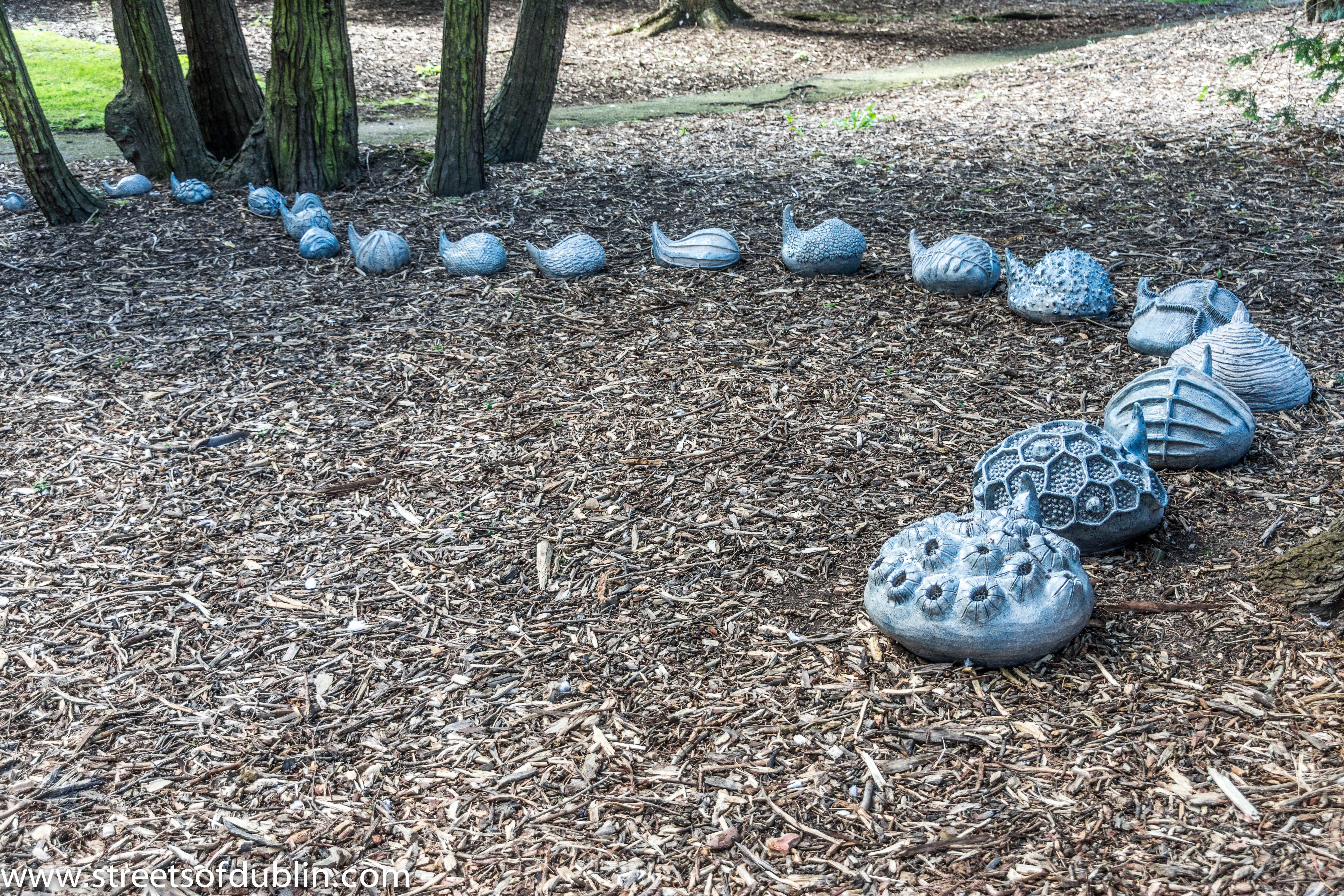
Migration by Petrina Shortt: Sculpture In Context 2012 at the National Botanic Gardens
visual art
Image by infomatique
Sculpture In Context 2012 at the National Botanic Gardens, Glasnevin, Dublin 9.
6th September to 19th October 2012

Sculpture in Context continues to build on 26 years of experience in organising successful exhibitions. It has, over the years staged highly acclaimed visual arts events at venues such as Fernhill Gardens, the Conrad Hotel, Kilmainham Gaol, the Irish Management Institute, Dublin Castle, Farmleigh House and the National Botanic Gardens.

The gardens are not only a botanical haven, and a quiet oasis on the outskirts of a modern European City, they also offer a challenging venue which gives the artist the rare opportunity of realising large scale work. It also gives the visitor an opportunity to ramble and explore, sometimes finding sculptures in the most unusual places. The sculptures are displayed throughout the gardens, ponds, Great Palm House, and Curvilinear Range, with the smaller works exhibited in the gallery above the visitors’ centre.

 
Comments Off on NYC – Brooklyn Museum – Auguste Rodin’s Burghers of Calais – Andrieu d’Andres

Posted in Photographs


Howard Smith’s exhibition Party 45

13 Dec

A few nice visual art images I found:

Howard Smith’s exhibition Party 45
visual art
Image by SIRHENRYB.is ****the dreamer****
please look at my howard smith set and fotoschow
thanks
hb
www.flickr.com/photos/sirhenryb/sets/72157607978769018/
Howard Smith’s exhibition Party 45 will be opened in Copper Smithy (01 Oct 2008)
The extensive oeuvre of the artist Howard Smith will be presented to the public in an exhibition opening at the Copper Smithy at Fiskars on the 5th of October. Howard Smith is especially known in the fields of design and applied art. Familiar items designed by him include ceramics for the Arabia factory and printed fabrics for the Vallila Interiors company. Howard Smith was awarded the State Design Prize in 2001 in recognition of his wide-ranging achievements in this sector. Smith also operates with ease in the various genres of the visual arts. The exhibition at the Copper Smithy at Fiskars presents the amazingly wide scope of Howard Smith’s art from over the past 45 years, with focus on his most recent works. His sculptures can be seen around in the village during the fall.

Howard Smith has lived in Finland since 1962 and in Fiskars since 1996 and he is an honorary member of the Artisans, Designers and Artists Cooperative of Fiskars. The opening will include the launch of Howard Smith, a richly illustrated biographical work on Howard Smith issued by LIKE publishers. Edited by the architect Jussi Suomala, the book contains texts by the editor and by Tim Steffa MA, the architect and professor Juhani Pallasmaa and industrial designer Barbro Kulvik.

The Copper Smithy, Fiskars 5 October – 23 November 2008, opening on Saturday 4 October at 2 p.m. Open Tue. – Sun. Noon – 5 p.m., admission fee 2€

365 Things to Do in Memphis #5: See a movie at the Brooks
visual art
Image by ilovememphis
The Brooks Museum of Art is a great place to spend an afternoon seeing special visual art exhibits and having lunch. It’s also a great place to catch a movie.

ilovememphisblog.com/2012/01/365-things-to-do-in-memphis-…

 
Comments Off on Howard Smith’s exhibition Party 45

Posted in Photographs


Street Art – Hand Painted Ceramic Tiles By Katie Holten

13 Dec

A few nice visual art images I found:

Street Art – Hand Painted Ceramic Tiles By Katie Holten
visual art
Image by infomatique
A NEW VISUAL arts exhibition has opened in Dublin which features over 90 artists from five continents.

Dublin Contemporary 2011 includes a range of talks, tours and special events in conjunction with a wide range of exhibits.

Four main galleries are participating in the event – the Douglas Hyde Gallery, the Hugh Lane, the National Gallery of Ireland and the Royal Hibernian Academy – and a major exhibition called The Office of Non-Compliance is housed in Earlsfort Terrace (I have obtained a press pass and hope to visit next week).

The Iveagh Gardens are being transformed into a sculpture garden throughout the six-week event.

Meanwhile, out on the city’s streets, artist Katie Holten has been leaving a series of hand-painted ceramic tiles bearing lines from On The Nature of Things by Lucretius.

Street Art – Hand Painted Ceramic Tiles By Katie Holten
visual art
Image by infomatique
A NEW VISUAL arts exhibition has opened in Dublin which features over 90 artists from five continents.

Dublin Contemporary 2011 includes a range of talks, tours and special events in conjunction with a wide range of exhibits.

Four main galleries are participating in the event – the Douglas Hyde Gallery, the Hugh Lane, the National Gallery of Ireland and the Royal Hibernian Academy – and a major exhibition called The Office of Non-Compliance is housed in Earlsfort Terrace (I have obtained a press pass and hope to visit next week).

The Iveagh Gardens are being transformed into a sculpture garden throughout the six-week event.

Meanwhile, out on the city’s streets, artist Katie Holten has been leaving a series of hand-painted ceramic tiles bearing lines from On The Nature of Things by Lucretius.

 
Comments Off on Street Art – Hand Painted Ceramic Tiles By Katie Holten

Posted in Photographs


050927_generatorx_day2_10

13 Dec

Check out these visual art images:

050927_generatorx_day2_10
visual art
Image by watz
Sebastian Oschatz from Meso talking about VVVV, visual coding and media design.

Geotagged: See where this picture was taken

Visual Haiku- Montreal 87
visual art
Image by Mikey G Ottawa
This is the front view of a sparse and sparing design- this drawing spray painted by Zilon from my hometown, Montreal, Quebec . It’s a great Piece!

Video: Broken Rainbow Cloudy Night
visual art
Image by Lance Shields
View the video here: blip.tv/file/918712/

Here’s an eyeball busting piece that reminds me of Frank Stella sort of after the fact. It’s as if Stella’s piece "Sunset Beach, Sketch" got thrown into a blender, sprayed with glow-in-the-dark paint and was placed in the sky in suspended kinetic animation. It’s hard to know the sources that inspire our work. Certainly the rainbow squares were Stella’s. I’m tempted to call this 100m cube glorified eyecandy along the line of a rave show visuals or a music video. But that would be flattering myself, something people who know me well know I do a lot.

———————————-

Location is Second Life: slurl.com/secondlife/Popcha/72/140/27

Getting here: tp to Brooklyn is Watching and fly up to 200m using FlightFeather.

Best viewing: Must be viewed in midnight with clouds set to full (1.00). Turn up sound volume but no streaming sound.

 
Comments Off on 050927_generatorx_day2_10

Posted in Photographs