RSS
 

Archive for the ‘Equipment’ Category

Into the Void – Capitol Reef National Park, Utah

01 Oct

Often while traveling with a camera we arrive just as the sun slips over the horizon of a moment, too late to expose film, only time enough to expose our hearts.
– Minor White

Into the Void - Capitol Reef National Park, UtahClick to Enlarge

Into the Void – Capitol Reef National Park, Utah

Photo Details:
Canon 1Ds Mark III, 16-35mm II f/2.8, 18mm, f/11, 156 sec.

Technorati Tags: photography, Utah, landscape, photo, stock photo, fine art, Capitol Reef, national park

Copyright Jim M. Goldstein, All Rights Reserved

Into the Void – Capitol Reef National Park, Utah


JMG-Galleries – Jim M. Goldstein Photography

 
Comments Off on Into the Void – Capitol Reef National Park, Utah

Posted in Equipment


Thoughts on the iPad: Where Will Your Audience Be Next Year?

26 Sep

In my previous post All Eyes Are On The iPad. Are Yours? I noted how the iPad was setting the stage for a publishing revolution with its transformational user experience. How have I come to this bold prediction? Three key signs have led me to the belief we’re on the cusp of a publishing revolution in short order.

  1. Tablet computers are currently the next must have device.
  2. Touchscreen interaction / navigation will be spreading to traditional computers
  3. Touchscreen interaction / navigation is defining an entire new branch of user interaction & user experience

Must Have Device
If you haven’t noticed already there are iPad giveaways around every corner. Apple’s iPad has captured the imagination of millions of people by changing how they interact with content on the web. This same fervor hit consumers in the 80’s with the mouse and here in the 2010’s touchscreen technology is making online viewing less abstract and physically more interactive. Apple’s ability to hit it big with the iPad, as with their other successful product launches, inevitably results in competitors releasing cheaper takeoffs. Odds are if you know someone who wants a gadget for Christmas they’ll be asking for an iPad. If an iPad isn’t in the budget you can bet that your local retailer like BestBuy will be selling a variety of competitors to fill the void.

Expect Touchscreen Interaction on Your Computer
Mobile devices are an intuitive place to utilize touchscreen technology. Mobile devices with their small footprint must be compact for portability while walking a fine line to provide an easy to view screen with easy navigation capabilities. Ask a child to view something on a computer and their first reaction invariably will be to point to the screen. This exemplifies the simplest navigation tool available… our fingers. As mobile devices become ubiquitous amongst younger generations such navigation is not only going to become intuitive, but expected.

The difference between a 3.5 inch (9 cm) and a 9.75 inch (24.5 cm) diagonal touchscreen of an iPhone & iPad may seem less than notable, but the increase in real estate to present text, images and video is huge. Everything (navigation cues, graphics, buttons, etc.) becomes easier to identify, touch, and move. Larger screen sizes also create greater opportunity for new and innovative navigation and presentation layers.  This type of content interaction is not likely to be lost on traditional computers with even larger screens, as recently surfaced Apple patent filings of a touchscreen iMac confirm we’ll be seeing more of this style of interaction on future computers.

Evolution of Web Use & Design Standards
In a recent edition of Wired magazine it was prognosticated that the web is dead.

Over the past few years, one of the most important shifts in the digital world has been the move from the wide-open Web to semiclosed platforms that use the Internet for transport but not the browser for display. It’s driven primarily by the rise of the iPhone model of mobile computing, and it’s a world Google can’t crawl, one where HTML doesn’t rule. And it’s the world that consumers are increasingly choosing, not because they’re rejecting the idea of the Web but because these dedicated platforms often just work better or fit better into their lives (the screen comes to them, they don’t have to go to the screen). The fact that it’s easier for companies to make money on these platforms only cements the trend. – The Web Is Dead. Long Live the Internet

How the data is parsed to come to this conclusion is questionable in my book (video is not considered the web? really!? What about YouTube?), but this Wired article in general raises an interesting premise and should make you think twice about how you’re experiencing the web today and how you & your audience might be experiencing it in the future.

The iPad, being the first out of the gate, will have a disproportionate amount of influence on design standards and user experience trends for the touchscreen oriented content. Knowing these standards and understanding how users are interacting with online content is critical whether  that content resides in a web page, app, peer-to-peer site, etc.  The question then raised is how does your web site translate to a touchscreen device like an iPad? In case you were unaware iPadPeek is a great way to see (just be sure you disable Flash on your browser first).  The even bigger question is how will your audience be viewing the content you produce and publish online?

Will traditional web sites hold up? Will apps be the dominant channel of online publishing? Will mobile viewing overtake traditional computer viewing? I have a notion of how things will play out in the future and it centers on a maturing model of revenue generation, but details to this thought will have to wait for the next post in this series Thoughts on the iPad: Cracking the Code to Web Revenue? Stay tuned…

Technorati Tags: photography, Apple, iPad, publishing

Copyright Jim M. Goldstein, All Rights Reserved

Thoughts on the iPad: Where Will Your Audience Be Next Year?


JMG-Galleries – Jim M. Goldstein Photography

 
Comments Off on Thoughts on the iPad: Where Will Your Audience Be Next Year?

Posted in Equipment


Petrified Textures – White Sands National Monument

22 Sep

Truer words have never been spoken and such was my time in White Sands National Monument, New Mexico …

When words become unclear, I shall focus with photographs.
When images become inadequate, I shall be content with silence.
– Ansel Adams

Petrified Textures, White Sands National Monument

Petrified Textures, White Sands National Monument

Technorati Tags: Photography, White Sands, National Monument, desert, nature, fine art

Copyright Jim M. Goldstein, All Rights Reserved

Petrified Textures – White Sands National Monument


JMG-Galleries – Jim M. Goldstein Photography

 
Comments Off on Petrified Textures – White Sands National Monument

Posted in Equipment


Smell the Lavender

22 Sep

Smell the Lavender, originally uploaded by AF-Photography.

Catchy Colors Photoblog

 
Comments Off on Smell the Lavender

Posted in Equipment


First Light on Mount Whitney

17 Sep

Taking in early morning light in the Owens Valley is a magical experience. Drab grey rocks come to life in a variety of colorful hues as the sun’s first rays of light are filtered through the atmosphere. The success of capturing my now favorite photo of Mobius Arch, taken back in 2006 and the subject of one of my first podcast episodes, hooked me on repeatedly visiting the Alabama Hills in the wee hours of the morning. Unfortunately such great light and scenery does not go unnoticed these days…

First Light on Mount Whitney Seen Through Mobius Arch
Click to Enlarge

First Light on Mount Whitney Seen Through Mobius Arch

Photo Details:
Canon 1DS Mark III, Canon 16-35mm f/2.8L II USM, f/13, 115 seconds, ISO 200

Venturing out to Mobius Arch is seldom a solo event. The tight space that one can capture this photo is often filled with numerous photographers clamoring to get the perfect angle shutting out other photographers. On this morning it was the most crowded I’ve seen with at least 5 photographers in the area.

Photographers stake their ground to photograph Mobius Arch in the Alabama Hills

Photographers stake their ground to photograph Mobius Arch in the Alabama Hills

In this day and age its nearly impossible to keep a good photo location under wraps. Given the popularity of this arch I wonder when the BLM will take action to preserve the area or regulate access. During this visit it would seem the BLM was more interested in making it as easy as possible for folks to find the arch with a freshly marked trail being in place. Given these circumstances its no wonder the likes of David Muench keeps his Unknown Arch location quiet. As the popularity of this area grows I do hope that photographers take care of this special location and stay civil to each other.

Mobius Arch Crowd of Photographers

Mobius Arch Crowd of Photographers

Technorati Tags: photography, California, arch, Mobius Arch, nature, landscape, stock photo, Alabama Hills

Copyright Jim M. Goldstein, All Rights Reserved

First Light on Mount Whitney


JMG-Galleries – Jim M. Goldstein Photography

 
Comments Off on First Light on Mount Whitney

Posted in Equipment


Kuckuck!

16 Sep

Schönen guten Tag. Wenn man so lange weg war und keinen Piep gemacht hat und dann langsam sein Gefieder ausbreitet und loszuschnattern will, überlegt man sich drei mal, was, wie und wo man den Schnabel öffnet, um einen uneleganten Segelflug zu vermeiden.

Ich habe mich dazu entschieden, hier einen kurzen Artikel zu schreiben, um wieder “Hi!”, “Tach!” oder einfach “Hallo, bin wieder da” zu sagen. Und dabei kann man sich diese Worte in freundlicher Euphorie vorstellen, denn ich bin superfroh, wieder am Start zu sein.

Doch wo fing das alles nochmal an? Genau. Vor ein paar Wochen, als meine freundlichen Teamkollegen die Krankheitsvertretung angekündigt haben. Und dabei – für mich perfekt – nichts über den Grund der Sache haben verlauten lassen.

Der da war: Burnout.

Sturzflug. Peng.

Da bekommt man nicht mal mehr den Schnabel auf, um in der obigen Metapher zu bleiben. Burnout ist hässlich, und diejenigen, die sowas schonmal erlebt haben, wissen, von was ich rede.

So habe ich mich kurzer Hand entschieden, radikal aus dem System kwerfeldein.de auszusteigen, runterzukommen und mich ordentlich auszukurieren. Damit das auch funktioniert, wurde um alles, das nur annähernd mit dem Social Web zu tun hat, ein großer Bogen gemacht.

Es war dringend an der Zeit, Vergangenes zu reflektieren und einfach mal nicht zu arbeiten. 5 Wochen lang die Federn anlegen und stillhalten. Ausruhen. Das hat mir gut getan, und so konnte ich langsam aber sicher wieder auf die Beine kommen.

In der Zwischenzeit sind wir Gommels umgezogen und ich habe mein externes Büro in Karlsruhe bezogen, das mir hilft, die Arbeit vom Privatleben zu trennen und in einen neuen Rhythmus zu kommen. Denn eins ist sicher: So wie bisher kann ich nicht weitermachen und ich bin gerade in diversen Planungsphasen, die Zukunft, meine Arbeitsweise (und damit auch kwerfeldein.de) neu zu gestalten.

Fürs erste übernehme ich den vom Team eingeschlagenen 2-Tagesrythmus, um langsam und nicht überstürzt wieder einzusteigen. Gastartikel sind natürlich auch in Zukunft sehr willkommen und falls jemand eine Idee hat – einfach melden.

Zum Schluss ein mir sehr wichtiger Punkt:

Als ich am Montag nach Wochen zum ersten mal wieder kwerfeldein.de aufgerufen habe, da staunte ich nicht schlecht. Obwohl, nein, das ist untertrieben. Ich bin fast vom Hocker gefallen, denn das, was Holger, Hannes & Steffen währen meine Abwesenheit hier an den Start gebracht haben ist wirklich “der Burner”. Und das in einer Selbstverständlichkeit, wie ich sie nie und nimmer erwartet hätte.

Dazu die Gastartikel, ohne deren Autoren das hier ebenfalls nicht funktioniert hätte. Da bleibt einem glatt der Schnabel offen und DANKE, DANKE, DANKE ist noch das Mindeste, was ich dazu sagen kann. Ihr seid der Hammer.

Weiter die vielen supernetten Grüße und Besserungswünsche in den Kommentaren (und anderswo). Stellt Euch einen Martin vor, der lächelt, grinst und knallrot anläuft. Echt jetzt.

Mir geht es derzeit besser denn je. Jetzt es gibt viel zu tun. Packen wir’s an, aber gaaaaanz easy…

***
Werbepause: Buchtipp – Vom Alltäglichen zum Besonderen!


KWERFELDEIN | Digitale Fotografie

 
Comments Off on Kuckuck!

Posted in Equipment


Fallen Oak Leafs, Yosemite

16 Sep

Hard to believe that Fall is just around the corner. This photo was taken in Yosemite valley just before the landscape was turned from an autumn to winter wonderland overnight. Of all the places I’ve traveled nothing says Fall to me more than brown Oak leafs. While I also love to photograph Aspen I’m forever biased for the iconic Oak leaf. Its unique shape is of constant fascination.

Fallen Oak Leafs, Yosemite National Park

Fallen Oak Leafs, Yosemite National Park

Technorati Tags: photography, stock photo, intimate portrait, nature, fall color, Yosemite, National Park

Copyright Jim M. Goldstein, All Rights Reserved

Fallen Oak Leafs, Yosemite


JMG-Galleries – Jim M. Goldstein Photography

 
Comments Off on Fallen Oak Leafs, Yosemite

Posted in Equipment


Photowalking als Social Event

15 Sep
Stefan und Chris sind seit mehreren Jahren leidenschaftliche Fotografen aus München, die sich hauptberuflich im IT Umfeld bewegen. Zusammen haben sie vor 2 Jahren das Projekt Photowalkingmunich ins Leben gerufen. Der folgende Artikel soll das Thema Photowalking als Social Event näher beleuchten.

Gerade mit dem letzten, von Scott Kelby im Juli 2010 ausgerufenen WorldWide Photowalk, ist das Thema Photowalking wieder einen Schritt weiter ins Rampenlicht gerückt. Stellt sich jedoch die Frage: Was hat es eigentlich damit auf sich? Photowalking?

Fangen wir mit der gängigen Übersetzung von Photowalking an: so wirklich gibt es dafür natürlich keine. Die Umschreibung „Spazieren bzw. Wandern mit einer Kamera“ trifft es jedoch ziemlich genau und da eine Kamera üblicherweise zum Fotografieren genutzt wird, wird neben dem Spazieren oder Wandern mit der Kamera auch das eine oder andere Motiv fotografiert oder, landläufig formuliert, ein Bild geschossen.

Kommen wir damit zum Verständnis von Photowalking der Gruppe Photowalkingmunich: Klar, dass die Fotografie irgendwie den Mittelpunkt eines Photowalks ausmacht.

Aber Photowalking ist mehr als das alleinige und einfache Fotografieren und so wird die Fotografie gewöhnlicherweise verstanden: eine Tätigkeit, die man alleine ausübt – beispielweise im Urlaub, auf einer Städtetour, in der Natur, wo man natürlich oft zu zweit unterwegs ist, jedoch nur einer die Kamera in der Hand hält.

Genau hier setzt Photowalking als Event mit sozialem Charakter an: Es stellt ein gesellschaftliches Ereignis dar, bei dem Fotobegeisterte aller Art (jeder mit eigener Kamera) gleichgesinnte Menschen aller Altersklassen treffen. Im Vordergrund steht also der gemeinschaftliche und soziale Aspekt – etwas zusammen zu erleben. Das Reizvolle beim Photowalking ist, Menschen zu treffen, die man sonst kaum kennenlernen würde – die aber, und das ist das Besondere, eine gemeinsame Leidenschaft verbindet: die Fotografie an sich!

Wie aber sieht nun so ein Photowalk aus?

Die Rahmenbedingungen eines jeden Walks werden von dem jeweiligen kreativen Organisator der Photowalking-Gruppe festgelegt: Dieser sucht eine geeignete Lokation in Form einer Stadt, eines Stadtteils oder auch einer Veranstaltung, wie Jahrmarkt, Ausstellung etc. aus. Am Beispiel Photowalkingmunich funktioniert das über einen Artikel mit allen wichtigen Infos zum kommenden Walk. Teilnehmer haben die Möglichkeit, sich online anzumelden und finden sich zu der verabredeten Zeit am verabredeten Ort ein. Es darf dabei jeder mitmachen, egal ob analog oder digital, ob mit Kompakt- oder Profikamera unterwegs. Hauptsache es wird Spass am gemeinsamen Fotografieren mitgebracht.

Weiterhin wird ein sehr grober Ablaufplan vorgegeben (diese Vorgehensweise leben zumindest wir Münchner Photowalker so, was im Übrigen sehr gut ankommt). Vorteil unserer eher groben (Zeit-) Planung ist, dass beispielsweise keine Hektik entsteht, von einem fototypischen Ort zum nächsten zu kommen. Jeder Photowalker hat somit genug Zeit und Muße, sein Fotothema zu finden – und nebenbei die anderen „Mitwalker“ kennenzulernen bevor es gemeinsam, in mal mehr, mal weniger großen Gruppen, weitergeht.

Der Austausch von Fotoideen, Hilfestellungen, Verbesserungs-vorschlägen für den einen oder anderen Anfänger und ganz einfach der gemeinsame Spaß an der Ausübung des schönen Hobbys kommt somit ganz automatisch.

Pause oder Abschluss eines jeden Photowalks stellt häufig ein zwangloses Get Together, in Form eines gemeinsamen Café-, Restaurant oder Barbesuches dar. Selbstverständlich wird im Zeitalter der digitalen Fotographie bereits hier das eine oder andere Bild begutachtet. Und auch hier steht der soziale Aspekt des sich Kennenlernens in zwangloser Form im Vordergrund.

Der soziale Charakter findet weder vor noch während oder nach dem Walk sein Ende – im Gegenteil: Nach dem Walk ist vor dem Walk – so die These eines jeden einzelnen Photowalkers. Insbesondere in heutigen Zeiten des Internets ist der weitere Kontakterhalt problemlos möglich.

So laden Teilnehmer im Nachgang des Photowalks ihre Werke auf Flickr hoch und bleiben beispielsweise in einer Gruppe bei Flickr oder generell bei Facebook sowie anderen gängigen Online-Foren und Communities in Kontakt.

Hier wird sich über die erzielten Ergebnisse ausgetauscht, oft gelobt, fast nie getadelt und natürlich viel gefachsimpelt. Manche Teilnehmer nutzen eine weitere Form des Internet und twittern vor, während und nach einem Walk ihren Status bzw. Bilder. Wiederum alles ohne Zwang und Vorgabe – so wie es jedem einzelnen beliebt.

So wie es jedem einzelnen beliebt ist auch die Teilnahme am nächsten Photowalk zu verstehen: freiwillig natürlich, ohne Muss und Zwang – dafür aber mit jeder Menge Spaß und gleichgesinnten Menschen. Zu finden auf Photowalkingmunich.de.


***
Werbepause: Buchtipp – Vom Alltäglichen zum Besonderen!


KWERFELDEIN | Digitale Fotografie

 
Comments Off on Photowalking als Social Event

Posted in Equipment


Dimensionalisierung von Fotos in Adobe After Effects

14 Sep

Dieser Artikel hat eine kleine Vorgeschichte, die ich (Hannes) Euch nicht vorenthalten will. Als ich beim BrowserFruits Picknick am letzten Sonntag das von Florian gezeigte Video gesehen habe, musste ich sofort an die Arbeiten von Wilfried Kaiser denken, in dessen Portfolio ich eine ähnliche Arbeit mit einem Zirkusfoto gesehen hatte. Natürlich habe ich ihn sofort gefragt, ob er Lust hätte einen Gastartikel zu schreiben. Und die hatte er. 😉

Wilfried KaiserDas ist ein Gastartikel von Wilfried Kaiser. Wilfried ist in den Bereichen Grafik Design, Branding, Marketing und VFX tätig und studiert derzeit bei Hyper Island in Stockholm “Motion Designer and Developer”. Seine Website und Portfolio ist unter WilfriedKaiser.de zu erreichen.

Verfügt man bereits über Kenntnisse in Adobe Photoshop, kann man mit seinen Fotos in dem ebenenbasierten Motion-Design, VFX und Compositing Programm After Effects sehr schnell erstaunliche Animationen erstellen. Eine dieser leicht erlernbaren Möglichkeiten ist die Dimensionalisierung eines Fotos.

Das zugrunde liegende Prinzip ist, dass man die auf dem Foto abgebildeten Motive in die verschiedenen, räumlich voneinander getrennten Elemente zerlegt, diese Ebenen auf sogenannte “Sprites” projiziert, um dann im letzten Schritt eine Kamerafahrt zu erstellen. Im Grunde teilt man also After Effects mit, wie weit und in welche Richtung die Motive auf dem Foto voneinander entfernt waren, um mit diesen Tiefeninformationen das Bild “verräumlichen” zu können.

Benutzt man ein Foto, auf dem alles gestochen scharf und ohne Bewegungsunschärfe abgebildet ist, kann man mit After Effects leicht die korrekte Menge an Schärfentiefe oder Bewegungsunschärfe hinzufügen- also die “Artefakte”, die auch bei einem wirklich in Bewegung gefilmten Motiv auftreten würden und der Animation ihre realitätsnahe Dimensionalität verleihen.

Sobald man ein Foto mit einem komplexeren Hintergrund wie zum Beispiel ein Publikum nutzt, muss man natürlich beachten, dass durch die Bewegung der Kamera in der Animation nun Bildbereiche aufgedeckt werden, die auf dem Foto nicht existieren und diese deshalb mit dem digitalen Pinsel ersetzt oder aufgefüllt werden müssen.

New York - Ausgangsbild

In unserem Beispiel wollen wir dieses Foto animieren, welches ich vor ein paar Jahren in New York aufgenommen habe. Diese Szene habe ich gewählt, weil sie dank der Klon- und Kopierwerkzeuge in Photoshop sehr schnelle und daher sehr eindrucksvolle Ergebnisse verspricht.

New York - Ebenen

Ich habe das Foto in die verschiedenen Entfernungsebenen aufgeteilt und die verdeckten Bereiche um einige Pixel erweitert, um später “Löcher” in der Animation zu vermeiden. Tip: Falls ich mir nicht sicher bin welchen Weg die Kamera in der Animation später zurücklegen wird solltet ich das Ersetzen dieser Bereiche einfach verschieben. Ich kann dann einfach mit Steuerung e die jeweils in After Effects markierte Ebene automatisch in Photoshop öffnen und dann sehr Zielgenau nur die Bereiche ersetzen die ich tatsächlich benötige.

Leidet das Foto unter Bildrauschen oder unter stärkerer Linsenverzerrung, sollte man beides am besten noch in Photoshop entfernen.

New York - After Effects Import

Nun importiere ich diese Photoshop Datei als “Komposition” in After Effects und behalte somit die Originalgröße in Relation zu der Komposition bei. Das ist wichtig um uns später beim skalieren der Ebene das Leben zu erleichtern.

New York - Ebenen Kamera

Ich aktiviere den 3D Modus bei den einzelnen Ebenen und erstelle eine neue Kamera mit der 35mm Voreinstellung im Menüpunkt Ebene, Neu.

New York - Raum

Jetzt verschiebe Verschiebe mit dem Auswahl Werkzeug v die Ebenen in der 3D Ansicht auf der Z Achse – der Blaue Pfeil – entsprechend ihrer wirklichen Entfernungen.

In die Hauptansicht zurückgekehrt, muss ich nun die Ebenen mit s wieder so skalieren, dass sie ihre ursprünglichen Abmessungen in Relation zur Kamera erreichen.

In meinem Fall sind das 235% für den Himmel, 174% für das Empire State Building, 143% für den hinteren Mittelgrund und 118% für den vorderen Mittelgrund. Die Ebene mit der Laterne habe ich nicht verschoben und muss deshalb die Skalierung nicht verändern.

Mit p kann ich nun die Position der Kamera auswählen, Schlüsselbilder setzen und so die Kamera animieren.

Zum Schluss füge ich der Animation noch etwas Bildrauschen, Schärfentiefe und eine Vignettierung hinzu. Fertig ist meine Kamerakranfahrt durch New York!

Die kompletten Arbeitsdateien könnt ihr übrigens herunterladen und genauer unter die Lupe nehmen. Es stehen zwei Downloads zur Verfügung; nur die Arbeitsdateien (24 MB) oder die gleichen Arbeitsdateien inklusive des gerenderten Resultats (134 MB). Für Fragen steh ich natürlich gerne in den Kommentaren zur Verfügung.

***
Werbepause: Buchtipp – Vom Alltäglichen zum Besonderen!


KWERFELDEIN | Digitale Fotografie

 
Comments Off on Dimensionalisierung von Fotos in Adobe After Effects

Posted in Equipment


Thoughts on the iPad: Cracking the Code to Web Revenue?

14 Sep

In my previous post Thoughts on the iPad: Where Will Your Audience Be Next Year? I noted that current tablet computer trends are painting a picture of a transformed landscape where one’s audience might be interacting with online content in a radically different manner and frequency. Not only does mobile access through a device like the iPad impact navigation & content structure, it has the ability to shift expectation in how web viewers pay for content. There are some very clear signs pointing to this shifting trend and it begs the question, “Has the code to web revenue been cracked?”

Advent of the App Store
One thing is certain Apple’s iTunes App store has changed the landscape before us since its release in mid-2008. With the release of the iPhone 2.0 OS software came the App Store, supplementing the iTunes music store, and soon others were quickly trying to duplicate the wild success of this newly created platform.  Now Apps downloads are on course to  surpass music downloads from the Apple iTunes store by the end of 2010. In roughly 2 years time that is an amazing accomplishment considering the current rate of music sales on iTunes has taken 7 years to reach its current level.  The larger phenomenon of the app craze has even spawned an App convention that is taking place here in San Francisco this week.

While Apple wasn’t the first to create an App platform (Facebooks App platform was released in 2007), they’re the first to tie it to a wildly popular consumer device, the iPad. As previously noted in my first post to this series All Eyes Are On The iPad. Are Yours?, it has been predicted that Apple will ship 12.9 million units this year, with shipments rising to 36.5 million next year and 50.4 million in 2012 and by any means that should be an eye opener. An eye opener because the combination of device sales and App download forecasts might just be indicators of a perfect storm on the horizon that shifts how many people interact with content on the web.

Revenue: Has the Web Found It?
Will the web as we know it be replaced by Apps? I doubt it, but where the web failed to convert user activity into revenue Apps just might be the long sought after holy grail many web entrepreneurs have been waiting for. While Apps have proven to be a potentially lucrative revenue creator not all App stores are created equally. In February 2010 Distimo reported that 75% of Apple Apps and 43% of Android Apps were paid apps and later in August 2010 Pingdom reported similar findings that 70% of Apple Apps and 36% of Android Apps were paid apps.

Interesting findings from the May 2010 AdMob Mobile Metrics report is that on average users of the iOS (Apple) and Android platforms spend at least 79 minutes a day using apps (note: Apple iOS users spend 89 minutes a day) and download 9 apps per month. The user activity is definitely a positive as most web sites are lucky to break the double digits in user activity sessions. The phenomenon of app dowloading has spawned an interesting trend as well… a mild addiction to downloading apps. In passing I’ve talked to several iPad/iPhone users that enjoy downloading apps almost as much as using the apps themselves. Nielsen reports that iPhone users for example download on average 40 apps versus Android users at 25 apps, both of which are an increase over 2009 findings.

Pricing
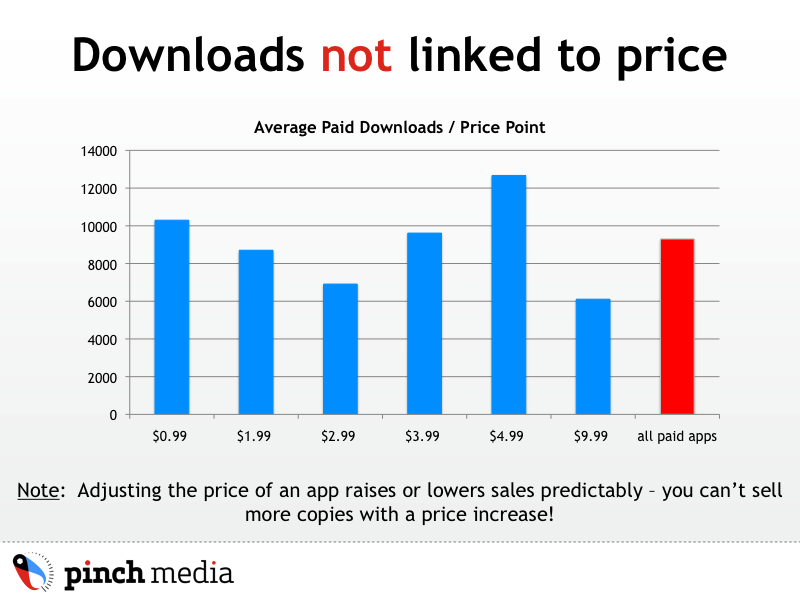
App pricing best practices seems to be the big mystery at the moment and is something I’m still researching. One interesting piece of data I surfaced concludes that downloads are not linked to price. This was in relation to game apps which might very well carry a different customer expectation to the photography market. While I can’t say much in definitive terms about app pricing I can say that higher prices will only be supported by app content/services that are of high value to users. There have been no shortage of apps commanding upward of .99 or more that have found themselves in the iTunes top-revenue/grossing list. Ultimately pricing will have to be tailored to the nature of the app. A photographer may very well want to release a free portfolio app in an effort to draw as many eyes as possible to their work versus charging for an eBook.

Looking into the Crystal Ball?
The web certainly will not be shrinking into oblivion, but content or services being produced to generate revenue may very well be predisposed to the app world.  What apps have going for them, unlike standard web content, is that they come bundled with the expectation they cost money to acquire and use. For the truly creative who frame content of value in an app there is certainly money to be made. On the flip-side of that sentiment with hundreds of thousands of apps in the current marketplace not all apps cost money. Free is not just an attempt to standout, for the savvy developer, it’s part of a calculated strategy. It’s important to note that vast majority of apps are not likely to be profitable, falling into the category of loss-leaders (see my series starting with Assumptions of Free and Taylor Davidson’s great article Free isn’t a problem, it’s an opportunity), but they do offer a unique opportunity to engage & introduce your work and services to others.

In my eye the iPad holds great promise for photographers with the right application. As to how photographers can get the most out of the iPad and take advantage of these trends you’ll want to read my next post on the subject. Stay tuned…

Technorati Tags: photography, photo, Apple, iPad, app

Copyright Jim M. Goldstein, All Rights Reserved

Thoughts on the iPad: Cracking the Code to Web Revenue?


JMG-Galleries – Jim M. Goldstein Photography

 
Comments Off on Thoughts on the iPad: Cracking the Code to Web Revenue?

Posted in Equipment