RSS
 

Archive for the ‘Equipment’ Category

Starbucks London Oxford Street 55-59

14 Sep

Starbucks London Oxford Street 55-59, originally uploaded by hitkaiser.

I don’t usually post Starbucks pictures anymore… but I put this one up because I liked the whole composition leading up to centre point (the tall building).

Taken in London (UK).


MadridPixel

 
Comments Off on Starbucks London Oxford Street 55-59

Posted in Equipment


Review: JPEGmini – Reducing Photo File Size, Not Quality

12 Sep

JPEGmini is a company that has a unique approach to optimizing your JPEG format images in an effort to help you save storage space. I took a quick look at their offering and shared my thoughts on it with Sarah Perez in a recent TechCrunch article New Startup JPEGmini Reduces Photos’ Size, Not Their Quality. I thought I would share a little more about my take on the service in the event it’s something you feel is worthy of trying or using.


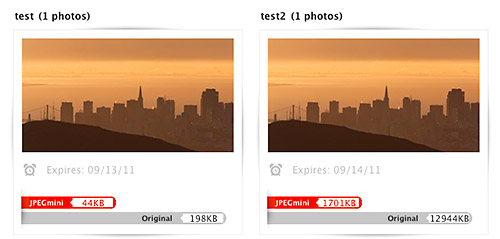
Test1 – Web sized image (800 px x 500 px)
Test2 – Full size image (5616 px x 3744 px)

What is JPEGmini?

  • JPEGmini is NOT a new file format.
  • JPEGmini is a re-compression engine with a twist:

    JPEGmini works by analyzing the input image using a unique quality detector which imitates the human visual system, and based on this analysis applying the maximum amount of compression which will not cause visible artifacts. For further details, see the technology section

  • JPEGmini is an online service… for now

Does It Work?
The quick answer is yes and no. JPEGmini excels at compressing larger images versus smaller images. Compression gains are also made most significantly on “first-generation photos created by digital cameras”. In other words if you’ve edited a photo already in photo editing software you may not see huge file size reduction namely because the file has already undergone some level of compression.

I was a skeptic when I learned about this site. I ran a quick test to compare the following:

I tested two images of different types.

  • An image with not a lot of detail and similar tones. Such images have a lot of similar data that is easily compressed resulting in higher compression savings.
  • An image with a lot of detail and varied tones. Such images do not have a lot of similar data to compress resulting in less compression savings.

I also tested two different files sizes for each image:

  • Web sized image (800 px x 500 px)
  • Full size image (5616 px x 3744 px)

The results were notable with file size saving from 67% to 87%. But I also ran each image through Photoshop’s “Save for Web & Devices” at 60% quality to attain savings from 71% to 85%. Bottom line Photoshop reduces file size for web sized images better in this simplified test by 4-7%. On the other hand larger images attained greater file size reduction with JPEGmini over Photoshop by  4-7%.
Note: Photoshop is not optimized for compressing very large images with their “Save for Web & Devices” function and JPEGmini states they perform better with larger images.

Full Test Details

Pros, Cons & Thoughts
The pros clearly are that you can reduce the size of your large image files with the JPEGmini. In scale this could help you save money by reducing your demand for new hard drives. You can compress images without buying expensive software like Photoshop. All metadata is preserved.  Image quality suffered very little when comparing the original image and the JPEGmini version of the image at 100%. In fact most people would not notice a difference. That being said I did not run print comparisons of each file before and after JPEGmini compression.

On the other hand the service is only available online requiring you to upload images, wait for the compression engine to process your files (can range from minutes to hours) and then spend the time to download them. It’s also important to note that the service only works with JPEGs. The significance of this is that you’re compressing your image files multiple times and each compression ultimately results in loss of data. Compress an image repeatedly and you can impact image quality. For more on this refer to my previous article (pre-blog) guest written by Oskar Breuning JPEG Compression: Data Loss & Image Impact. Lastly the biggest concern I have surrounds the JPEGmini Terms of Service (TOS) namely the following User Submission section:

You hereby grant ICVT and our designees a worldwide, non-exclusive, sublicenseable (through multiple tiers), assignable, royalty-free, fully paid-up, perpetual, irrevocable right to use, host, store, index, reproduce, distribute, create derivative works of, and display and perform your Content on the web and on mobile devices, solely in connection with our provision of the Service

Uploading an image places the image on their server. While files are only kept for roughly 1 week, images can be used by JPEGmini’s parent company to market their service. Personally the broad nature of this section makes me too uncomfortable to use the service beyond testing. Of specific concern is the right claimed to sublicense images that they deem irrevocable. Not very photographer friendly in my eyes. Note: Dror Gill the CTO of the company has stated that photos are not used for promotion without confirmation from the owner in a comment on the TechCrunch article.

My hope is two fold for JPEGmini…

  1. Clarify Modify the ToS to be more photographer friendly and less JPEGmini-centric
  2. License their technology so it can be utilized in established programs and mobile applications or launch their own desktop & mobile applications.

Technorati Tags: photography, technology, JPEGmini, Photoshop, compression, JPEG

Copyright Jim M. Goldstein, All Rights Reserved

Review: JPEGmini – Reducing Photo File Size, Not Quality

flattr this!


JMG-Galleries – Jim M. Goldstein Photography

 
Comments Off on Review: JPEGmini – Reducing Photo File Size, Not Quality

Posted in Equipment


Snow Covered Merced River – Yosemite National Park

09 Sep

Tough to believe that Summer has almost passed here in California. I’ve heard many photographers as of late mentioning they’re eagerly awaiting Fall to see the leaves turn color. I myself am quite content with Summer for now. For those suffering from extreme summer temperatures I hope this cool view of a snow covered Merced river in Yosemite National Park  acts as mental air conditioning. Make the most of the weekend as it’s one of the few remaining this Summer.

Snow Covered Trees Along the Merced River - Yosemite National Park, California

Snow Covered Trees Along the Merced River – Yosemite National Park, California

View more Yosemite National Park Photos

Technorati Tags: photography, Yosemite, National Park, California, winter, season, stock photo

Copyright Jim M. Goldstein, All Rights Reserved

Snow Covered Merced River – Yosemite National Park

flattr this!


JMG-Galleries – Jim M. Goldstein Photography

 
Comments Off on Snow Covered Merced River – Yosemite National Park

Posted in Equipment


London Zoo – Dragon

05 Sep

London Zoo – Dragon, originally uploaded by hitkaiser.

Went to London Zoo yesterday and I have to say it was quite enjoyable from a photography point of view.

Today’s photo was taken there and is that of a “Dragon”, apparently its a mean piece of work as it can devore animals much larger than itself (apologies for the deceiving photo, it may appear lizard like but in face it is HUGE – like a crocodile)


MadridPixel

 
Comments Off on London Zoo – Dragon

Posted in Equipment


Dynamische Bilder: kreativ Blitzen

02 Sep

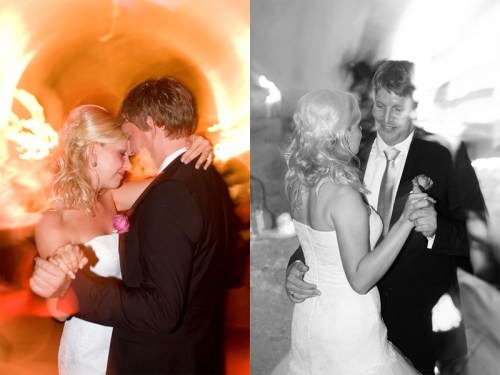
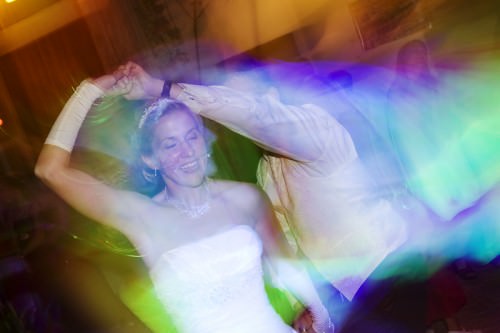
Ein dunkler Raum, in dem nur schwaches Umgebungslicht vorhanden ist, tanzende Leute. Und ein kleiner Aufsteckblitz soll das alles so beleuchten, dass es dynamisch wirkt und nicht einfach nur angeblitzt? Es gibt eine Methode, in solch einer Situation zu blitzen, die Spaß macht, aber genau so wie die Technik des Mitziehens auch viel Ausschuss mit sich bringt.

Selbst neue, leistungsfähige Digitalkameras stoßen bei solch extremen Lichtverhältnissen manchmal an ihre Grenzen. Stellt man in einer Situation wie oben beschrieben einen hohen Iso-Wert ein, macht die Blende möglichst weit auf und blitzt mit einem Aufsteckblitz, erhält man mit Glück noch scharfe Bilder. Nämlich dann, wenn der Aufsteckblitz genug Licht liefert, um mit einer entsprechend kurzen Verschlusszeit die Bewegungen der tanzenden Personen ‘einzufrieren’.

Allerdings bleibt dann keine Zeit, auch das Umgebungslicht, das in dunkler Umgebung viel schwächer ist als der Blitz, mit einzufangen. Das Ergebnis ist ein Foto, auf dem der Vordergrund durch den Blitz stark aufgehellt und oft sogar überbelichtet ist, der Hintergrund jedoch sehr dunkel und im Extremfall sogar schwarz ist. Wir kennen das wohl alle zum Beispiel von Partyfotos, die mit einer kleinen Kompaktkamera gemacht sind.

Für stimmungvolle Fotos ist das Einfangen der Tanzbewegungen sowie das Einbeziehen des Umgebungslichtes jedoch notwendig. Hier kommt eine Technik zur Anwendung, die, genau wie das Mitziehen, ein wenig Übung erfordert, aber auch tolle und überraschende Ergebnisse liefern kann.

Ziel ist es, die tanzenden Personen mit Hilfe des Blitzes einmal ‘einzufrieren’, um nicht nur verwischte Bewegungen auf dem Foto zu erhalten. Nach dem ‘Einfrieren’ der Bewegungen soll dann der Verschluss noch offen bleiben, um dem schwachen Umgebungslicht die Möglichkeit zu geben, auf dem Sensor sichtbar zu werden.

Der Iso-Wert wird für diese Technik je nach vorhandenem Umgebungslicht auf etwa 800 – 1600 eingestellt. Als Verschlusszeit eignet sich etwa 1/3 Sekunde. Am Blitz wird keine besondere Einstellung vorgenommen. Er soll einfach am Anfang der Belichtung auslösen.

Schwierig ist bei nur schwach vorhandenem Umgebungslicht das Fokussieren. Hier kann schon durch fehlfokussierte Bilder ein gewisser Ausschuss entstehen.

Nun wählt man seine Position so, dass aus Richtung der Kamera (fast) nur der eigene Blitz als Lichtquelle dient. Hinter sich darf man also keine helle Lichtquelle haben. Man fokussiert, im Fall der tanzenden Leute am besten im Modus, der die Schärfe permanent nachzieht, und drückt ab. Jetzt löst der Blitz aus und erhellt die Personen, die somit auf dem Sensor abgebildet werden. Nach dem Blitz geht jedoch der Verschluss noch nicht zu.

Jetzt kommt das Umgebungslicht ins Spiel. Da die tanzenden Personen aus Richtung der Kamera nicht mehr angeleuchtet werden, können sie sich weiter bewegen, ohne auf dem Sensor Spuren zu hinterlassen. Bewegt man jetzt die Kamera (mit einer Festbrennweite) oder zoomt (mit einem Zoomobjektiv), solange der Verschluss noch offen ist, fängt man das Umgebungslicht als verwischte Streifen auf dem Sensor ein, die am Ende die Dynamik im Bild ausmachen. Werden die Personen durch eine schwache Lichtquelle aus Richtung der Kamera nach Auslösen des Blitzes noch leicht angestrahlt, entstehen dynamische Bewegungsspuren wie im Bild oben gezeigt.

Der Ausschuss bei dieser Technik ist deswegen nicht zu unterschätzen, da durch das Bewegen der Kamera oder das Zoomen oft helle Streifen zum Beispiel durch das Gesicht verlaufen. Es ist also auch dem Zufall überlassen, ob ein Foto gelingt oder nicht.

Wir freuen uns auf Eure Ideen und Bilder von kreativem Blitzeinsatz!


KWERFELDEIN | Fotografie Magazin

 
Comments Off on Dynamische Bilder: kreativ Blitzen

Posted in Equipment


On Location: Fighting One’s Inner Voice

02 Sep

One thing I’ve come to terms with over the years is that when in the field no matter how psyched or enthused I am, I end up having a comical internal conversation with myself to wake up for a sunrise photo. Mind you this isn’t all the time, but the frequency is greater when I’ve been putting in long hours the day before. Case and point was my recent trip to Montana and Wyoming where I was frequently putting in 20-22 hour days that included driving, research, hiking, setup, shoots, file transfers and file backups.

Logically I know the time, place and gear to use for sunrise photo shoots, but that doesn’t make getting up any easier. For your entertainment here is a window into one mental conversation I had with myself for the following subject/goal:

Subject
Wild Goose Island, Glacier National Park

Goal
Photograph sunrise for single still images and time-lapse. If circumstances permit shoot short video sequences.

Gear
(2) tripods with tripod heads, (2) Canon 5D Mark II cameras, (2) cable release/intervelometers, Zeiss f/2.8 21mm lens & Canon f/2.8 24mm tilt- shift lenses via Borrowlenses.com, Singh-Ray polarizer and my camera bag with a few other spare lenses just in case.

How the Inner Conversation Unfolded
Alarm clock goes off at 4:30 and I quickly turn it off.
(Note: I set my alarm at 3 different times 15 min apart just in case. I do this to make sure I get up if I’m tired from consecutive long days.)
My eyes open and I instantly get a view of the pitch black sky to see what the weather conditions are so as to evaluate whether the days photo shoot is a wash or not. This always prefaces my inner morning conversations.

Good Jim: Hmm weather looks good.  It’s clear to the west for morning light to pour into the valley, but there is wind. Looks good albeit not perfect for the shot I envisioned.

Bad Jim: Oh man! It is way too early, dark, cold and I’m exhausted. That wind is going to blow any chance for a glass reflection this morning. Let’s do this tomorrow.

Good Jim: Dude! Weather conditions are going to be dramatic with the weather front coming in, especially seeing that it’s clear to the west. Looks likely clouds are going to be hugging mountain peaks that will glow during the blue and later golden hour. No sunrise is ever exactly the same. Let’s go.

Bad Jim: Let’s see how things look in another 15 minutes.

Good Jim: Dude we have no time to waste.
I run a quick mental calculation run to figure out travel and setup time.
I can’t leave any later than 5am if I’m going to get 1st choice in location and properly setup.

Bad Jim: Seriously I can get this in tomorrow. Just a bit more sleep…

Good Jim: I did not come all this way flying 1000 miles and driving 9 hours yesterday to miss an opportunity to photograph this sunrise or the next at Glacier National Park. Get the lead out. There will be no missed opportunities on this trip!

At this point I snap into gear and quickly get my pre-prepped equipment together, run a double check on gear and clothes and drive out to the lookout point. As it turns out there is one car already at the lookout with a photographer resting inside.

Good Jim: Dude! I could have been here first if I wasn’t wasting time debating with myself first thing this morning.

I quickly collect my gear, locate a spot for the best view, set up, take test shots to fine tune focus and exposure, and wait for the light.
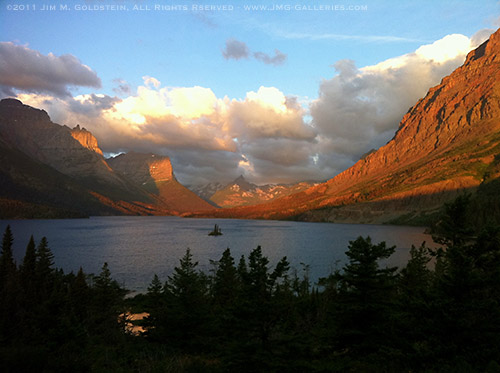
Sunrise at Wild Goose Island, Glacier National Park - via my iPhone

Sunrise at Wild Goose Island, Glacier National Park – via my iPhone
dSLR photos coming soon

As I knew conditions were perfect and sunrise was unbelievably beautiful. Everything went perfectly. I got great stills, a time-lapse and short video sequences.  Thinking back that I’d have opted for sleep rather than being there to photograph this amazing sunrise is beyond me and a reminder that I can be my own worst enemy. The key is not to let that happen with a great deal of discipline.

Sadly I’d like to say this is a one off situation, but it’s not. This type of inner conversation happens more times than I’d like to admit. Fortunately from experience I know that great things happen when you push yourself, get out of your comfort zone and remain disciplined.

Looking back at many of my images I don’t just see the photographed subject, I see the experience and remember back to similar early morning thoughts that I could capture this another day. Nature never shows reruns, every show is one of a kind. I remind myself of that often particularly on cold dark mornings when I’m dead tired and a new sunrise awaits being photographed.

Technorati Tags: photography, philosophy, real-life, inner voice

Copyright Jim M. Goldstein, All Rights Reserved

On Location: Fighting One’s Inner Voice

flattr this!


JMG-Galleries – Jim M. Goldstein Photography

 
Comments Off on On Location: Fighting One’s Inner Voice

Posted in Equipment


Clements Mountain with Wildflowers, Glacier National Park

02 Sep

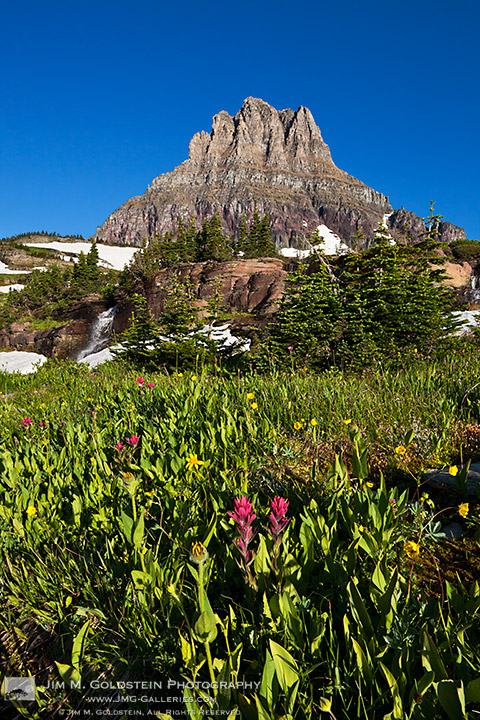
Logan Pass in Glacier National Park is a truly special place and a gem of the U.S. National Park system. It is for this reason it is one of the most popular locations to visit in Glacier National Park. Adding to the allure is a very short season that the pass is open. At an altitude of 6646 feet (2026 m) it is often one of the last portions of the park to open. In fact this year the Road to the Sun, the road leading to Logan Pass, opened on July 13th… the latest the road has ever opened to date. As you’d imagine it was well worth the wait. Photographed just last week (see below) is Clements Mountain, a small waterfall and colorful wildflowers.

I’ve been back 3 days and I already can’t wait to return to Logan Pass at the soonest opportunity.

Wildflowers and waterfalls in front of Clements Mountain in Glacier National Park, Montana

Wildflowers and waterfalls in front of Clements Mountain in Glacier National Park, Montana

Photo Details:
Canon 5D Mark II, Canon TS-E24mm f/3.5L III (via BorrowLenses, 1/320 sec, f/16 at ISO 320

Technorati Tags: photography, nature, landscape, Glacier National Park, Logan Pass, waterfall, national park, Montana, Clements Mountain, wildflowers, stock photo, stock picture

Copyright Jim M. Goldstein, All Rights Reserved

Clements Mountain with Wildflowers, Glacier National Park

flattr this!


JMG-Galleries – Jim M. Goldstein Photography

 
Comments Off on Clements Mountain with Wildflowers, Glacier National Park

Posted in Equipment


In the Field: Mobile Device Photography – iPad 2?!

02 Sep

The more I travel the more I see people taking photos with mobile devices (cell phones, tablet computers, etc.) Case in point while in Glacier National Park I spied a tourist photographing Logan Pass from a turnout on the Road to the Sun with an iPad 2. It’s very common to see people taking photos with their mobile phones, but the difference in this case is that the iPad 2 has a very weak camera by modern standards. The iPad 2 rear camera has a resolution of 1280 x 720 pixels, which adds up to 0.92 megapixel. By comparison most mobile phones now have resolutions on the order of 3-5 megapixels. I’m not sure this photographer will be very happy with his images when he realizes this. Bummer too as he was from Europe and I’m sure it will be a while before he’s back in Glacier National Park.

Are you seeing an increase in this trend on your trips?

Tourist Photographs Mount Clements with an iPad 2 - Glacier National Park, Montana

Tourist Photographs Mount Clements with an iPad 2 – Glacier National Park, Montana

Technorati Tags: photography, iPad 2, stock photo, Glacier National Park, Montana, tablet

Copyright Jim M. Goldstein, All Rights Reserved

In the Field: Mobile Device Photography – iPad 2?!

flattr this!


JMG-Galleries – Jim M. Goldstein Photography
 
Comments Off on In the Field: Mobile Device Photography – iPad 2?!

Posted in Equipment


London Zoo – Dragon

02 Sep

London Zoo – Dragon, originally uploaded by hitkaiser.

Went to London Zoo yesterday and I have to say it was quite enjoyable from a photography point of view.

Today’s photo was taken there and is that of a “Dragon”, apparently its a mean piece of work as it can devore animals much larger than itself (apologies for the deceiving photo, it may appear lizard like but in face it is HUGE – like a crocodile)


MadridPixel

 
Comments Off on London Zoo – Dragon

Posted in Equipment


Sommerregen über Karlsruhe

02 Sep

Ich steckte das Ladegerät in den Rucksack und war eigentlich fertig. An diesem Freitagabend hatte ich alle Sachen gepackt und bereitete mich mental auf den Samstag vor, an dem ich wieder eine Hochzeit fotografieren sollte. Ich stellte mich ans Fenster und sah den gewaltigen Wolkenvorhang, der sich bedrückend über Karlsruhe legte.

Mir fiel ein, dass ich nochmal einkaufen gehen sollte und hatte spontan eine Idee. Und während ich so in mich hineingrübelte, klopften die ersten Tropfen an die Scheibe. Also gut, dann aber schnell.

Kamera ausgekramt, Fünfzig Millimeter aufgesteckt, beides in den Rucksack und dann fix zum Auto. Die Meter bis zu Letzterem sorgten dafür, dass ich platschnass einstieg und über lautstark das Wetter fluchte.

Ich bog in die Kriegstraße ein und war schnell im Zentrum, obwohl schnell leicht übertrieben ist. Der Regen peitschte dermaßen auf die Frontscheibe, dass ich streckenweise mit 30km/h auf der Hauptstraße gondelte, da ich fast nichts mehr sah. Eigentlich – so dachte ich – optimale Bedingungen für mein Vorhaben.

Irgendwann, irgendwo bremste ich ab und parkte. Den Apparat herausgeholt, Einstellungen festgelegt und losfotografiert. Ich hatte dieses Experiment schon einmal letzten Winter gewagt und jetzt die besten Vorraussetzungen, Leute auf der Flucht vor dem Regen und das sommerliche Karlsuhe im Wasserkleid zu dokumentieren. Selbstverständlich blieb ich im Auto sitzen, schließlich wollte ich die Tropfen auf der Fensterscheibe ins Bild integrieren.

So blieb ich hier und da stehen, wartete, bis die Menschen sich aus ihren Verstecken trauten und zur nächsten Bahn rannten oder fotografierte einfach so das regenversunkene Karlsruhe. Beim Fotografieren musste ich ein wenig schmunzeln. Schließlich konnte ich in aller Ruhe aus dem trockenen Auto nach draußen fotografieren und Leuten dabei zusehen, wie sie herumeilten und in eine Art Aufbruchstimmung verfielen.

Aber auch so mochte ich die “verwischte” Stadtlandschaft, sie so ganz anders wirkt, wenn herunterplatschende Regenschauer das trockene Pflaster überschwemmen.

Zu Beginn dieser Woche habe ich die Bilder in einer freien Minute selektiert und finalisiert. Ich kam mit ein paar Justierungen und Konstrastanpassungen in Lightroom aus und addierte final eine Sepiatonung, um das Zeitlose der Szenerien zu unterstreichen.

Regen ist wie ein Zauber, der binnen Sekunden eine ganze Stadt in Bewegung bringen kann. Dieses Geschehen auf den Sensor zu bannen, macht mir persönlich großen Spaß, denn auf einmal ist alles anders als vorher. Für mich ein Grund, öfters rauszugehen, wenn alle anderen reingehen. Und das nächste Mal setze ich mich vielleicht in eine S-Bahn, das ist nämlich etwas umweltfreundlicher. 😉


KWERFELDEIN | Fotografie Magazin

 
Comments Off on Sommerregen über Karlsruhe

Posted in Equipment