RSS
 

Archive for the ‘Equipment’ Category

Digital Is Not Forever

16 Oct

I’ve often toiled over the archivability of digital imagery and even wrote about a close call I had in losing a drive that archived some of my work, A Happy Ending to My Drive Crash. With some regularity I have thoughts revisiting the prospect that it’s just a matter of time before I have to endure this again and deal with the loss of a drive and even worse an irrecoverable loss of a drive. While there are certain precautions you can take to minimize such loss I can’t help but think that digital will always lack permanence.

Proponents of photographic prints are always keen to highlight that paper has been an archivable medium for thousands of years where as digital is a relatively new phenomenon of the last half century. Less electricity digital imagery is locked away on hard drives that then become perfect paper weights. The more I see others immerse themselves in digital photography the more I see society risking the loss of a significant portion of our visual history. Can we really trust digital to always be there? Enter a video short I saw the other day titled “Lost Memories”. It’s worthy of a watch…

LOST MEMORIES (French, English Subtitles) from Francois Ferracci on Vimeo.

So now that you’ve seen the video I ask you…. how permanent do you expect your digital imagery to be and what are you doing about it?

Copyright Jim M. Goldstein, All Rights Reserved

Digital Is Not Forever

flattr this!


JMG-Galleries – Jim M. Goldstein Photography

 
Comments Off on Digital Is Not Forever

Posted in Equipment


Cloud City – San Francisco, California

16 Oct

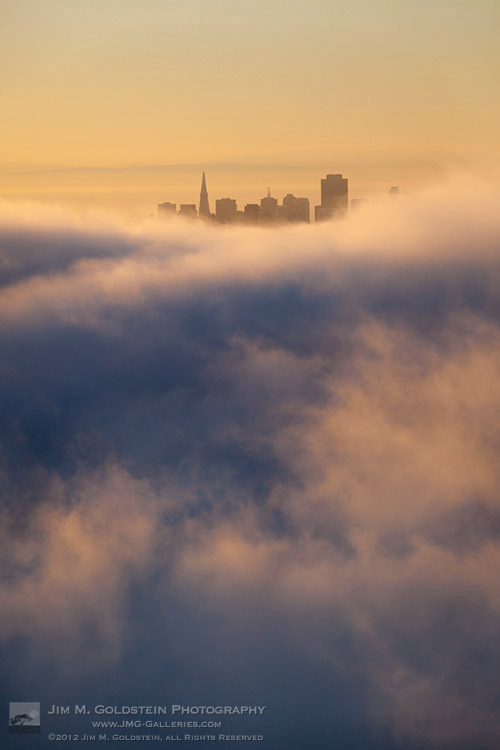
One aspect of San Francisco that has forever fascinated and inspired me is the fog. I suppose having lived most of my life in areas that lacked such dense fog adds to my appreciation of it. While many associate rain as being a cleansing phenomenon, I can’t help but think of fog in the same way. It shrouds what many may consider commonplace views and magically re-reveals them in dramatic fashion. If you’re lucky enough to be in the right place at the right time you can see the fog wash over some of San Francisco’s most impressive and well engineered structures making them look like toys. Fog illuminated by magic hour light at sunrise or sunset is an easy sight to have engrained in ones mind via an iconic photo, but for me the one aspect of the fog locked into my memory that can never be shared in a photo is its smell. The clean marine smell that comes with it is rejuvenating tactilely and visually. When I return home to the coast from the mountains and desert it is the fog that greets me stimulating every sense and lets me know I am home.

Cloud City – San Francisco, California

Photo Details:
Canon 5D Mark II, Canon 70-200mm f/2.8 II, ISO 400, 1/1250 sec, f/7.1

Copyright Jim M. Goldstein, All Rights Reserved

Cloud City – San Francisco, California

flattr this!


JMG-Galleries – Jim M. Goldstein Photography

 
Comments Off on Cloud City – San Francisco, California

Posted in Equipment


In Pursuit of the Ideal Time-lapse Camera Bag: Gura Gear Bataflae 32L

16 Oct

What is the best camera bag for time-lapse photographers?
Welcome to my quest.

I’ve been shooting time-lapse photography for several years and in that time some great gear innovations have come about. Back when I started exploring time-lapse photography a tripod, camera and intervalometer were all you needed so a standard camera bag was enough. Now that motion control dollies, robotic tripod heads, large batteries and computers are involved a simple camera bag often isn’t enough. Until recently I’ve been using my old camera bag and slowly adding smaller camera bags to the mix. It hasn’t been the most efficient way to travel and eventually I settled on traveling light with only my time-lapse gear in a smaller ThinkTank Sling-o-matic 10 bag that easily fits my eMotimo TB3, a battery, remote, a level and 1-2 lenses or a body & lens. Still I’ve been yearning for more… a bag that I can put everything in, work easily out of it and still travel with (car or plane).

Gura Gear Bataflae 32L

The folks over at Gura Gear were kind enough to let me try out their latest camera bag the Bataflae 32L. In case you’re unfamiliar with the meaning of Bataflae it is Bislama (Vanuatu) for ‘butterfly’, which makes perfect sense when you begin to work with the bag. Rather than have one large flap that opens and closes to access the main storage area of the bag, you can access half the main storage area like a toolbox or open the bag like your standard bag. Personally I’ve fallen in love with the ability to access my gear with greater flexibility. The butterfly design alone makes the bag awesome. Every time I’ve gone back to using a standard camera bag I’ve tried accessing half the main storage area only to be bummed that I can’t. It’s such a simple innovation that after you use it you can’t believe someone hadn’t thought of this before.

Gura Gear Bataflae 32L

Other features that I found to be rather slick include the ability to store the backpack straps for snag free travel, an extra handle on the side of the bag enabling you to lift the bag more easily and extra large side pockets to carry a tripod or in my case components of my time-lapse dolly. The bag comes in two models the Bataflae 32L and Bataflae 26L. The Bataflae 32L has external dimensions of  14 x 21 x 9 inches (36 x 53 x 23 cm) and internal dimensions of 13 x 20 x 7 inches (33 x 51 x 18 cm). The smaller Bataflae 26L has external dimensions of 14 x 18 x 9 inches (36 x 46 x 23 cm) and internal dimensions of 13 x 17 x 7 inches (33 x 43 x 18 cm). The cost for the 32L is $ 449 and 26L is $ 399. Yes a bit pricey, but the material, construction and flexibility make this a great choice. One of the things that attracted me to the 32L was the prospect that I might fit Dynamic Perception Stage One modular dolly rail sections in the bag. These modular rails measure 21″ long and they’re just a bit too long to fit inside without altering the bag. Where there is a will, there is a way I suppose. I’m sure they could be squeezed inside, but I found it workable to store these modular sections in the external side pockets designed for tripods and keep the interior of the bag looking like new.

Gura Gear Bataflae 32L

One question I’ve received after releasing my eMotimo TB3 review was, “How do I carry everything?” Clearly having an assistant would be ideal to help cart around cameras, lenses, dollies, tripods, etc. In the past I’ve saddled up like a mule carrying my ThinkTank Sling-o-matic 10 bag and two tripods (in two bags clipped together with one shoulder strap) over my back with my free hands then carrying my Dynamic Perception Stage One dolly. Clearly having an assistant would be easier on the back. The Bataflae 32L looks to be a more comfortable and flexible solution if you’re aiming to be a bit more mobile in the field.

See more photos after the jump

Gura Gear Bataflae 32L half open with my time-lapse gear (Stage one dolly sled, 8 modular rail extensions, eMotimo TB3, battery, remote and tools)

Gura Gear Bataflae 32L half open with my camera gear (5D Mark III, 5D Mark II, Canon 16-35mm f/2.8 II and Stage 1 dolly ends/tripod plates)

Gura Gear Bataflae 32L open in the standard manner with all my gear

Gura Gear Bataflae 32L containing all my time-lapse gear plus two Indura tripods

Gura Gear Bataflae 32L containing all my time-lapse gear plus two Indura tripods in their cases ready for travel

Copyright Jim M. Goldstein, All Rights Reserved

In Pursuit of the Ideal Time-lapse Camera Bag: Gura Gear Bataflae 32L

flattr this!


JMG-Galleries – Jim M. Goldstein Photography

 
Comments Off on In Pursuit of the Ideal Time-lapse Camera Bag: Gura Gear Bataflae 32L

Posted in Equipment


Vom Bahnhof geprägt

16 Oct

Der Straßenfotograf Thomas Leuthard wuchs vor 41 Jahren neben dem Bahnhof in der Stadt Zug in der Schweiz auf. Die ersten zwölf Jahre seines Lebens verbrachte er zwischen den beiden Hauptverkehrsachsen Zürich-Luzern und Zürich-Mailand. Leuthard interessierte sich nach eigenen Aussagen nie für die Technik oder die Bahn selbst.

Als Leuthard im April diesen Jahres einen Blogartikel zum Thema „Der Beste Ort für Streetfotografie“ schrieb, fiel im auf, dass dieser beste Ort die Bahnhöfe dieser Welt sein müssen. „Schließlich sind mehr als die Hälfte meiner besten Fotos in und um Bahnhöfe entstanden.“

Aber was macht einen Bahnhof so interessant? Auch hierzu hat Leuthard eine Theorie: „Das Interessanteste an einem Bahnhof ist die Menge und die Diversität der Menschen, auf die man dort trifft. Es ist fast immer etwas los, es sind immer wieder neue Menschen da und es ist ein Kommen und Gehen.“

Der Straßenfotograf trifft dort auf jede Schicht Menschen, von Bettlern und Obdachlosen am Rande der Gesellschaft bis hin zum Businessreisenden, der eine Plastiktüte mit Pralinen mit sich trägt, die den Tageslohn eines Bettlers um ein Vielfaches übersteigt.

„Die einen Menschen sind schnell, die anderen langsam unterwegs. Manche bleiben stehen, verweilen, laufen zielgerichtet oder planlos durch die Gänge. Die Reisenden sind oftmals beschäftigt und nehmen mich als Fotografen gar nicht wirklich wahr. Es gibt Treppen, Gleise, Torbögen und andere architektonische Formen, die man sehr gut ins Bild integrieren kann“, so Thomas Leuthard.

Er selbst kann nicht erklären, warum es ihn immer wieder in Bahnhöfe zieht, aber er glaubt ganz fest daran, dass man sehr gut nur in Bahnhöfen Street fotografieren und nirgendwo sonst hingehen müsste. Ein Bahnhof sei so vielseitig wie die Streetfotografie selbst. Wenn man dann noch die verschiedenen Stilmittel der Fotografie einsetze, brauche man sich keine Sorge um sein Portfolio mehr zu machen.

„Wenn ich alle meine Bahnhofsbilder an eine Wand hängen würde, gäbe es ein ganz ausgewogenes Portfolio, das ich überall zeigen könnte“, berichtet Leuthard.

Er wird auf seinen nächsten Reisen in Mumbai nahe der Victoria Station und in New York nahe der Grand Central Station wohnen, da der renommierte Straßenfotograf jetzt schon weiß, dass er einen Großteil seines Aufenthalts dort verbringen wird. Weiter führt er aus:

„Leider gibt es auch Städte, die keine Bahnhöfe haben. In Beirut zum Beispiel gibt es seit dem Bürgerkrieg nur noch Taxen und Busse, aber dort gibt es dann andere Viertel – wie Burj Hammoud -, die auch interessant zum Fotografieren sind.“

Thomas Leuthard hat in den letzten Jahren festgestellt, dass es ihm die Bahnhöfe dieser Welt angetan haben. Dies wird „immer eine Faszination in meiner Fotografie bleiben und dadurch auch ein immerwährendes Projekt und eine dauernde Herausforderung darstellen.“


kwerfeldein – Fotografie Magazin

 
Comments Off on Vom Bahnhof geprägt

Posted in Equipment


eMotimo TB3 Review

20 Sep

I’ve been having a lot of fun with time-lapse photography for several years now. It’s an incredibly fun and visually stunning form of photography. Back in June while photographing Yosemite as part of the One Day in Yosemite group project I was introduced to the eMotimo TB3 and was instantly wow’ed by it. In short it’s Pan and Tilt motion control head that enables photographers the ability to take 2 and 3-axis time-lapses, with or without a slider. In short it makes taking complex looking time-lapses a whole lot easier no matter what your skill level.

If you’re short on time, I recommend taking a look at the two videos I’ve embedded in this post. Seeing what the TB3 can do will be the easiest way to experience the same wow factor I did when I first saw it. What you’ll notice right away is that the head is controlled by a wireless Wii like controller. This one device allows you to control each axis of your shot. What is also incredibly cool is that the TB3 computer takes care of complex calculations and effortlessly charts a path for your camera to move across a scene, all based on a start and end point that you set.

eMotimo TB3 Intro & Overview

Where the eMotimo TB3 shines is in its simplified user interface and its ability to make complex time-lapse moves simple. On top of that it’s compact. It weights weighs 3lbs 9 oz, stands 7 inches tall and has a 5″x5″ base. This makes it easy to transport and store in a small or large camera bag. I personally have been carrying it in a ThinkTank Sling-o-matic 10 bag with a batter, the remote, a level and 1-2 lenses or a body & lens.

eMotimo TB3 Example Footage

For the technically minded the TB3 is built to grow. It’s run on an Arduino UNO microcontroller with open source firmware. The folks at eMotimo are often refining the programming and releasing firmware updates with new features. Out of the box it can be tethered to a computer and used with Dragonframe software to run even more complex moves. It’s 3rd axis control can be used with a motorized slider (ex. DynamicPerception Stage 1 or 0), a follow-focus solution or whatever you have the inclination to hack and plug into the device. It supports HDR time-lapse photography and also sequence ramping for natural looking starts and stops. In its current configuration it supports up to 8 pounds of gear.

I have to admit time-lapse photography is a different animal. Not only do you have to see and anticipate your subject differently you have to modify your in-the-field workflow, especially if you’re coming at this as a dedicated still photographer. While the TB3 makes things simple it can’t do its job if you leave a cord or battery behind. It’s for this reason that I’ve found a dedicated camera bag to be helpful. One other factor that you’ll have to consider is setup time. While the screens guiding you through the setup of the TB3 are straight forward it does take some time to get your shot set up and to test it. For this reason I’d recommend allotting extra time to get to your shoot and set up, but this is true of any time-lapse shoot whether using a motion control solution or not. One particularly nice feature is that once you’ve setup your shot the settings are saved and the exact same sequence can be run as many times as needed. This feature is a lifesaver particularly if you’re out to capture sequences in changing light.

The TB3 is one of a select few pieces of gear I’ve used that is game changing. It’s nothing short of amazing and given the level of functionality its a bargain for the price. For more information check out the eMotimo TB3 page. If you order one be sure to make note that you learned of it from Jim over at JMG-Galleries in your order notes.

Copyright Jim M. Goldstein, All Rights Reserved

eMotimo TB3 Review

flattr this!


JMG-Galleries – Jim M. Goldstein Photography

 
Comments Off on eMotimo TB3 Review

Posted in Equipment


Ein Meer aus Wolken

12 Sep

Heute präsentieren wir eine Serie von Jacob Wagner, den wir an anderer Stelle bereits interviewten. Die folgenden Aufnahmen, die er mit dem Namen „Sea Of Clouds“ zusammengefasst hat, enstanden 2010 auf einem Rückflug von Kapstadt nach Düsseldorf. Sie zeigen das Mittelmeer.


kwerfeldein – Fotografie Magazin

 
Comments Off on Ein Meer aus Wolken

Posted in Equipment


Glacier Point Summer Storm, Yosemite

30 Aug

I recently had the opportunity to revisit the amazing lookout from Glacier Point in Yosemite National Park. Summer storm clouds made for an interesting sunset shoot. As is characteristic of Yosemite the beautiful and ever transforming light made for quite a light show. With light like this it is no wonder photographers flock to Yosemite. As you’ll see from the photo details below I wasn’t up to my normal landscape photo outing. I’ve been experimenting with some new gear that I’m looking forward to talking about in the near future. More on that later.

Glacier Point Summer Storm

Photo Details:
Canon 5D Mark III, Canon 24mm f/1.4 II, ISO 1600, 1/1600 sec, f/8

Copyright Jim M. Goldstein, All Rights Reserved

Glacier Point Summer Storm, Yosemite

flattr this!


JMG-Galleries – Jim M. Goldstein Photography

 
Comments Off on Glacier Point Summer Storm, Yosemite

Posted in Equipment


Essay: Alles darf, nichts muss

25 Aug

Als ich anfing, zu fotografieren, verbrachte ich oft die Zeit damit, mich in Zeitschriften oder Foren über Fotografie zu informieren. Um es gleich vorwegzunehmen: Heute weiß ich, dass ich bessere Zeitschriften hätte lesen sollen und dass es in Foren ungewöhnlich viele Experten gibt. Wortsammlungen wie „knackige Schärfe“, „super Autofokus“ oder „tolle Haptik“ schienen damals so etwas wie eine Art Elfmeter für gute Fotos zu sein.

Dem ist natürlich mitnichten so. Irgendwann ist mir klar geworden, dass ein guter Autofokus und eine hervorragende Schärfenabbildung für viele Fotos meines Geschmackes eher unbedeutend sind.
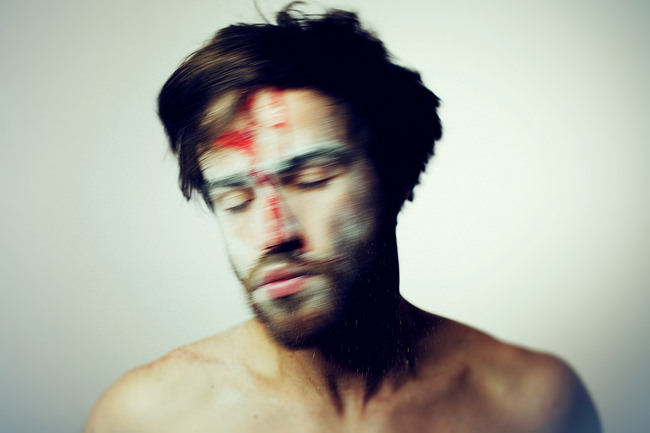
Hätte ich dieses Foto mit einer kürzeren Belichtungszeit aufgenommen, so dass alles scharf gewesen wäre, hätte das gleiche Objekt möglicherweise eine ganz andere Wirkung auf den Betrachter gehabt. Achtung, nun folgen Mutmaßungen: Vermutlich hätte es Leute gegeben, die darauf geachtet hätten, ob der Bart vernünftig geschnitten ist, die Augenbrauen gezupft wurden, wie die Haare liegen oder welche Form mein Kopf hat.

Da der Betrachter durch die Unschärfe jedoch weniger Informationen zur Verfügung hat, lässt er das Bild anders auf sich wirken. Man könnte auch sagen: Unschärfe betrachtet man im Ganzen, Schärfe im Detail.

Zweifellos braucht es auch Fotos, bei denen Schärfe zwingend notwendig ist, so kann man mit einem unscharfen Fliegen-Makro nur wenige Leute begeistern. Jedoch möchte ich hiermit so manchen Leser auch zum Nachdenken anregen. Muss immer alles perfekt sein? Ist es nicht manchmal viel wichtiger für ein Foto, was es transportieren kann?

Nur, weil die Werbung für eine Kamera oder ein Objektiv meint, dass es von höchster Güte sei und ganz besonders tolle Abbildungsleistungen aufbieten kann, müssen wir noch lange nicht solche scheinbar perfekten Fotos machen. Alles andere als perfekt ist das folgendes Foto. Licht fällt in den Rücken, Gesicht dunkel, die Heizung mag auch stören.

Es gefällt mir trotzdem. Geschmacksache? Ja, bestimmt! Aber was ist nun wieder Geschmack, kann jemand ohne Geschmack behaupten, dass es nicht sein Geschmack ist? Geschmack hin oder her, wichtig ist, was man selbst mag, ob mit oder ohne ich schreib das Wort jetzt nicht noch einmal ist dann am Ende egal.

Sicherlich ist es sinnvoll und auch wichtig, über Fotos zu sprechen, aber warum muss zusätzlich immer soviel über die Technik diskutiert werden? Die Frage nach der Ausrüstung ist an sich noch nicht zu verteufeln, die Gewichtung darauf jedoch schon. Bemerkenswert finde ich, wie oft Objektive empfohlen werden, obwohl man selbst noch kein anderes Objektiv der gleichen Brennweite in der Hand hatte. Getreu dem Motto: „Das habe ich auch und kann es daher nur empfehlen.“

Stattdessen sollten wir uns mehr über Bildaufbau, Perspektive und Lichteinsatz unterhalten. Das hilft gerade Anfängern oftmals viel mehr, als ihnen mit Tech-Talks Kopfschmerzen zu bereiten, weil sie nicht wissen, ob sie sich jetzt das Nikon 50mm 1.4. L Planar oder doch lieber die Canon D700 von ihrem Ersparten kaufen sollen.

Was ist richtig, was ist falsch?

Auf diese Frage kann es keine Antwort geben. Es wird Betrachter geben, die es stört, dass die Person auf dem Foto nicht scharf abgebildet ist und andere werden sagen, dass es dadurch erst interessant wird. Ein Dogma, das aussagt, dass ein unscharfes Foto in Tonne gehört, wird es bei mir jedenfalls nicht geben.


kwerfeldein – Fotografie Magazin

 
Comments Off on Essay: Alles darf, nichts muss

Posted in Equipment


What’s in Photojojo’s Camera Bag

25 Aug

Extra photos for bloggers: 1, 2, 3

We have to admit, here at Photojojo, we love our job.

Our favorite part of our job? Sharing all the cool stuff we find with YOU!

That’s why we’re spilling our secrets and letting you in on the inside scoop.

Check out this article to meet the Photojojo team and find out what our favorite gadgets are.

Take a Look Inside Photojojo’s Camera Bag

p.s. Our mates at 4by6.com have a special dealio for you guys! Pick up a free pack of cards from your Instagram snaps and enter to win $ 500 in Photojojo and 4by6 dollaroos!

p.p.s. Now hiring: World’s Best Web Designer. Learn more.
(…)
Read the rest of What’s in Photojojo’s Camera Bag (1,232 words)


© Margo for Photojojo, 2012. |
Permalink |
No comment |
Add to
del.icio.us

Post tags:


Photojojo

 
Comments Off on What’s in Photojojo’s Camera Bag

Posted in Equipment


23. August 2012

25 Aug

Ein Beitrag von: Steven Böhm

Ein Gesicht unter Wasser


kwerfeldein – Fotografie Magazin

 
Comments Off on 23. August 2012

Posted in Equipment