RSS
 

Archive for the ‘Creativity’ Category

Peruse Your Illusions: 21 Mind-Bending Urban Works of Art

30 Jun

[ By SA Rogers in Art & Street Art & Graffiti. ]
illusions main

Optical illusion art brings a bit of magic to the streets, using paint, paste-ups or photographic tiles to transform urban surfaces into massive sinkholes, bizarre portals and mysterious doors offering entrance to places unknown. Three-dimensional objects seem to float in midair, people walk across vertical surfaces and entire buildings seem to be melting beneath the sun in these fun works of large-scale urban art.

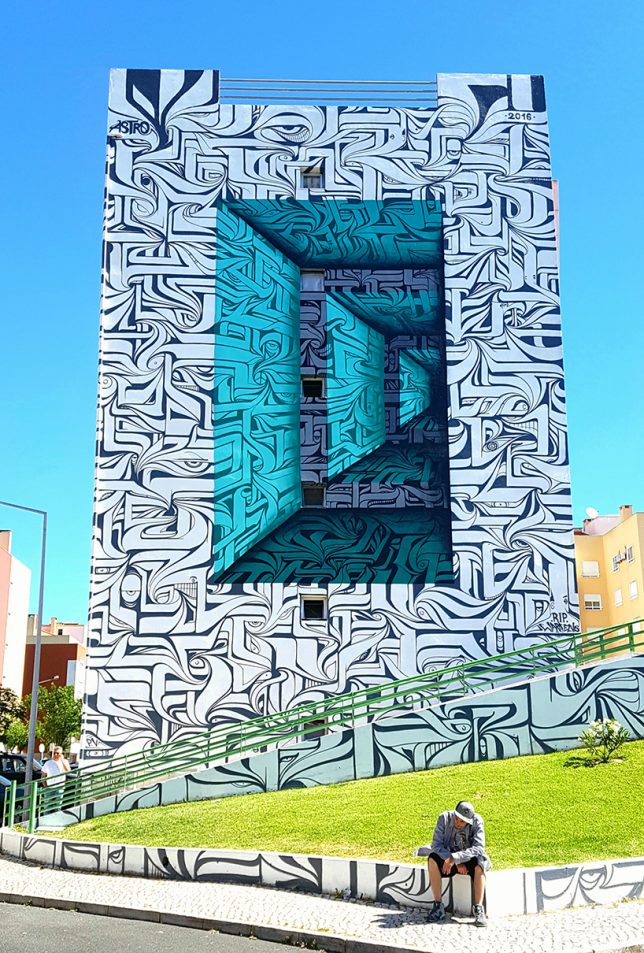
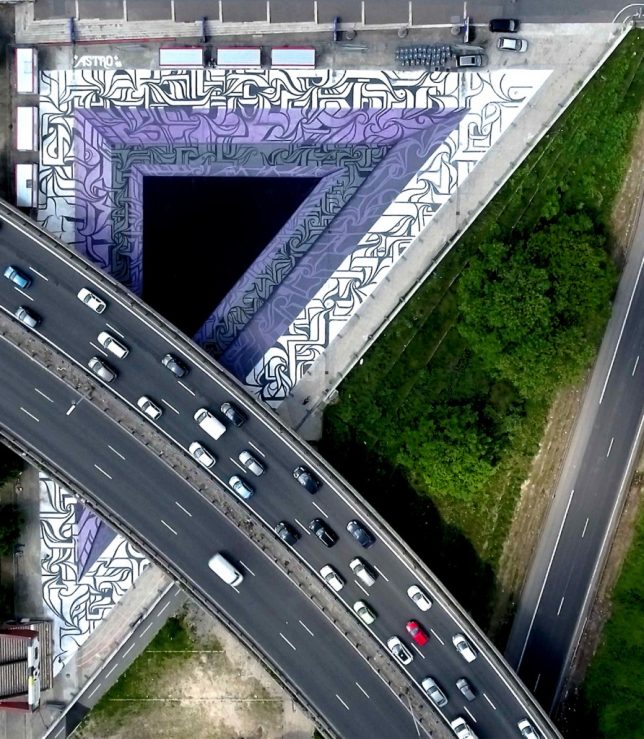
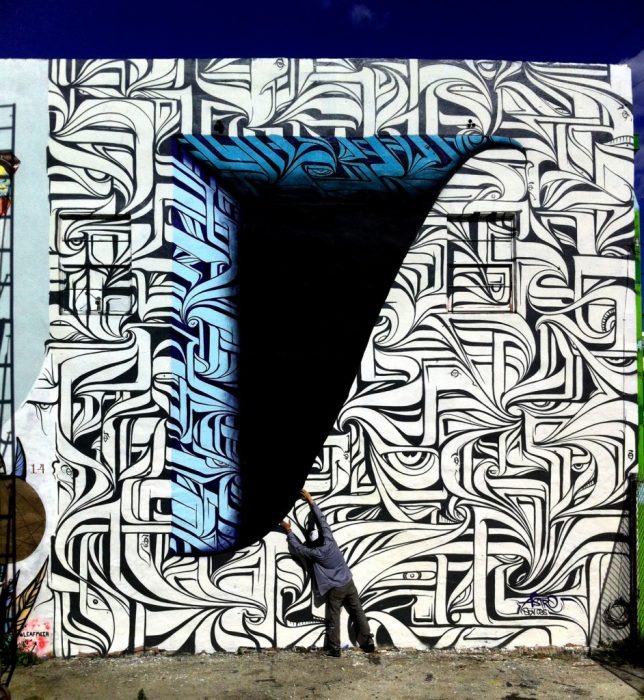
Graphic Wormhole Mural by Astro
mural astro 1

mural astro 2

astro 2

astro 3

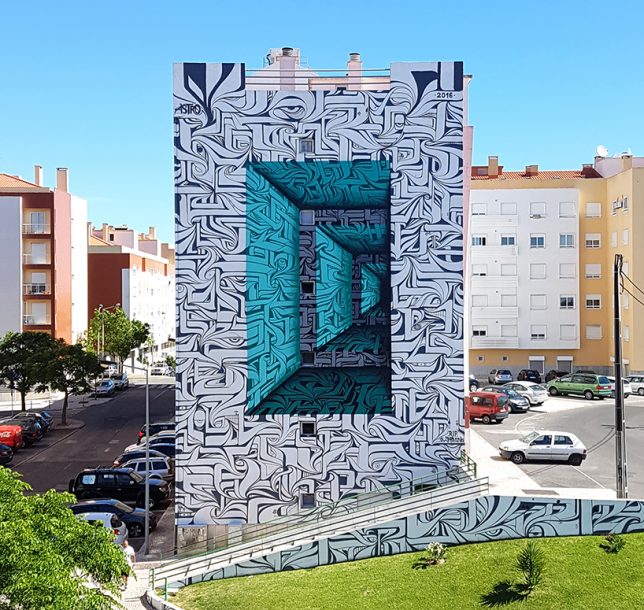
A huge, boring side wall of an apartment building in Loures, Portugal just got a lot more fun to look at with the addition of a massive optical illusion mural by the street artist ‘Astro,’ who made it seem like a blue abyss. The artist has completed similar illusions in other spots, like a patch of concrete beneath an overpass.

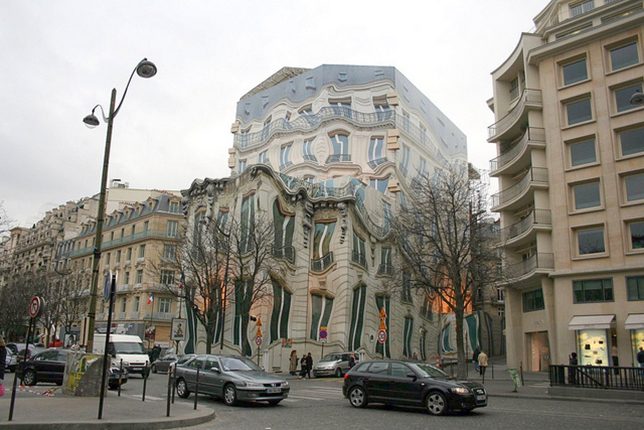
Melting Facade in Paris
mural illusion facade

mural illusion facade 2

mural illusion facade 3

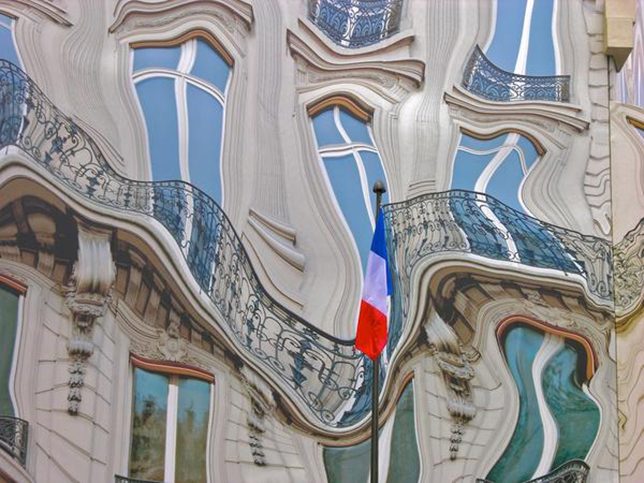
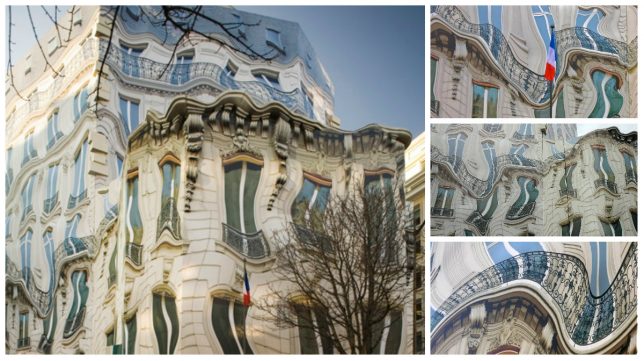
A mural added to the entire exterior of a building in France makes it look as if the structure is melting like a Dali clock. Imagine walking down an alley while under the influence and then looking up to see this. It’s disconcerting enough as it is.

Mind Your Step by Erik Johansson
mural mind your step 1

mural mind your step 2

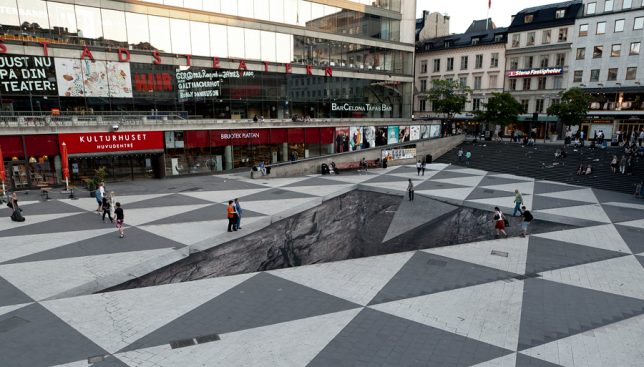
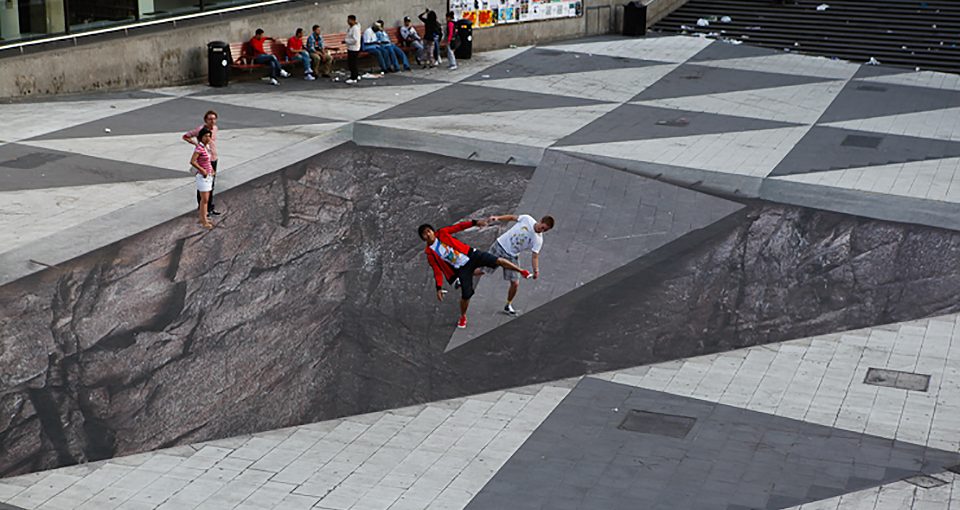
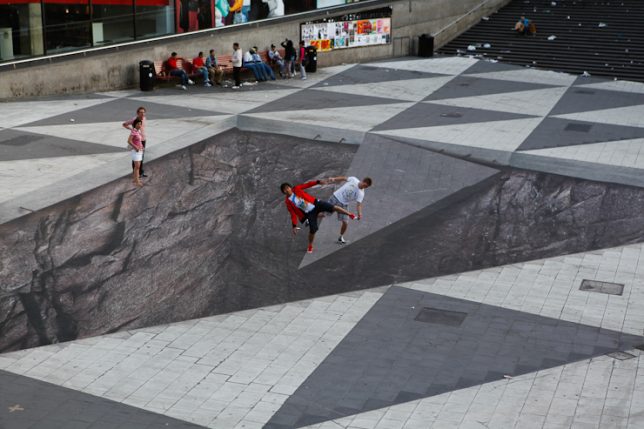
Pedestrians crossing Stockholm’s Sergels torg square either dangle dangerously close to a giant sinkhole or appear to miraculously walk right over it while interacting with an amazing street art illusion by artist Erik Johansson. ‘Mind Your Step’ was created off-site and assembled using large printed sheets, with a yellow platform indicating where passersby should stand to make the illusion come together.

Skrapan Illusion by Erik Johansson
mural skrapan

mural skrapan 2

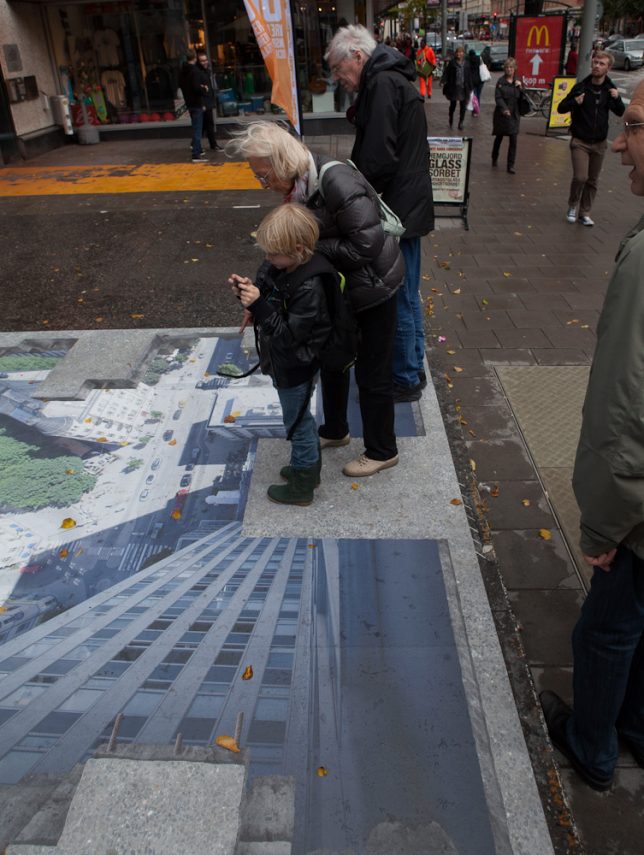
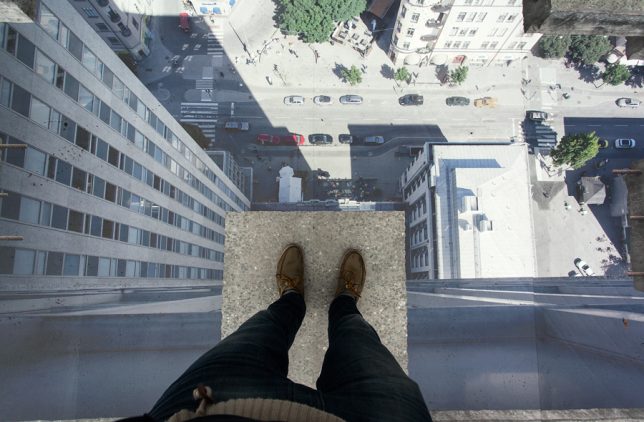
Equally fun is Johansson’s ‘Skrapan Illusion,’ commissioned in the summer of 2012 for a Stockholm shopping center. The artist’s rendering of a city as seen from a perilously high vantage point is so realistic, you could get a bit of vertigo standing on the ‘edge.’

3D Portals by 1010
murals 1010 1

murals 1010 2

murals 1010 3

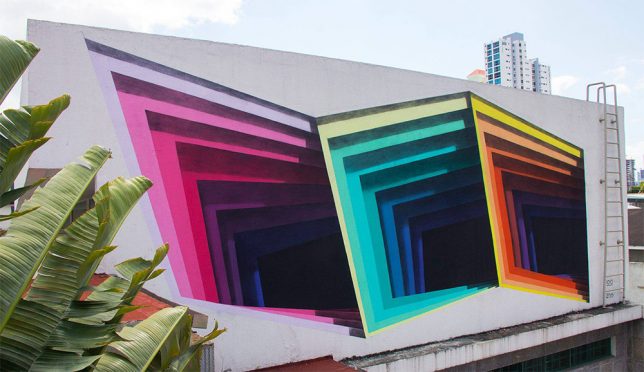
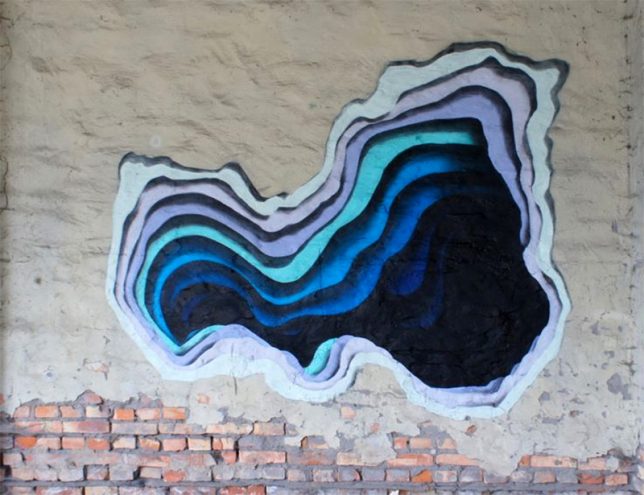
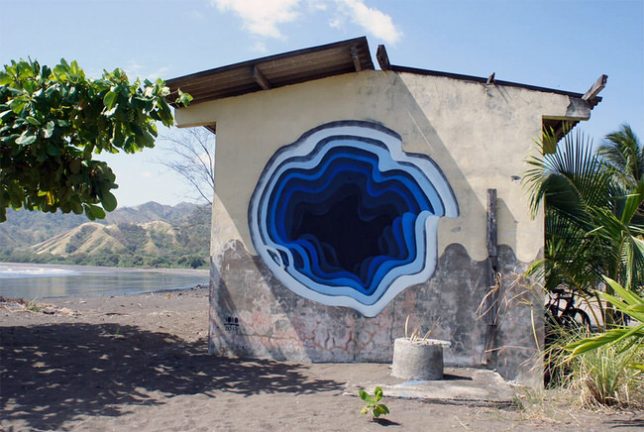
Surprisingly colorful inner layers of exterior walls seem to have been peeled away to reveal the pitch blackness inside, making it seem as if each building contains some kind of intriguing mystery. Germany-based street artist 1010 started with small framed paper cuts and then realized he could achieve the same effect with paint on a large scale. “I call them holes, abyss, passage or portals, names that leave enough space for interpretation and projection for the viewer.”

Next Page – Click Below to Read More:
Peruse Your Illusions 21 Mind Bending Urban Works Of Art

Share on Facebook


[ By SA Rogers in Art & Street Art & Graffiti. ]

[ WebUrbanist | Archives | Galleries | Privacy | TOS ]

WebUrbanist

 
Comments Off on Peruse Your Illusions: 21 Mind-Bending Urban Works of Art

Posted in Creativity


Nolli App of Rome: Use a Classic Map as a Modern Travel Guide

29 Jun

[ By WebUrbanist in Destinations & Sights & Travel. ]

nolli map complete panels

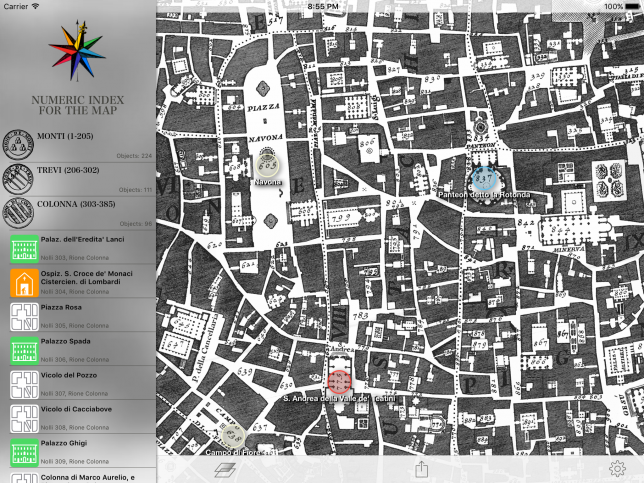
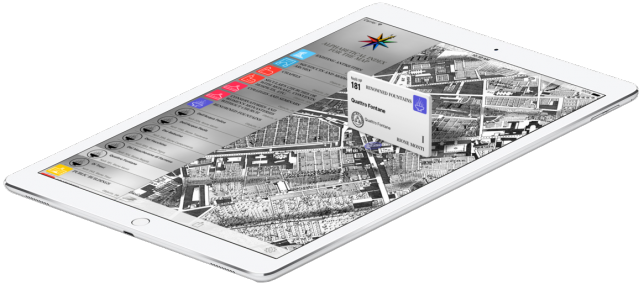
The Nolli Map of Rome is one of history’s most famous works of cartography, and now a new iPhone and iPad app lets you use it to navigate in realtime, helping you both lose and find yourself in one of Europe’s most marvelous ancient cities.

nolli app of rome

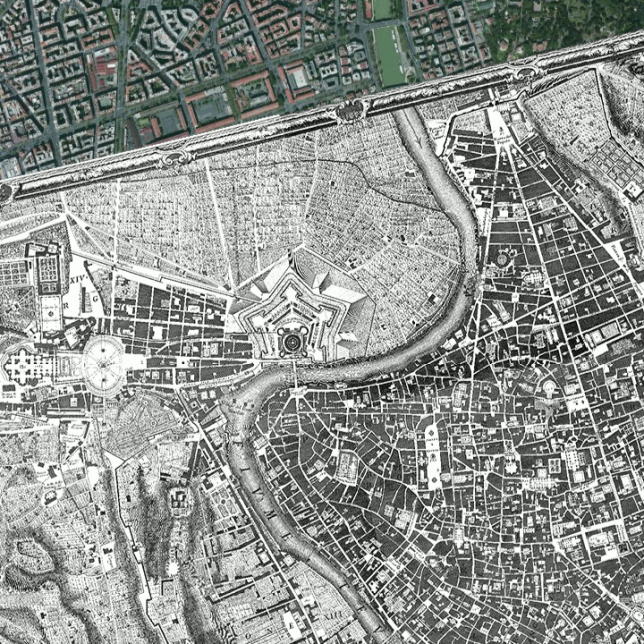
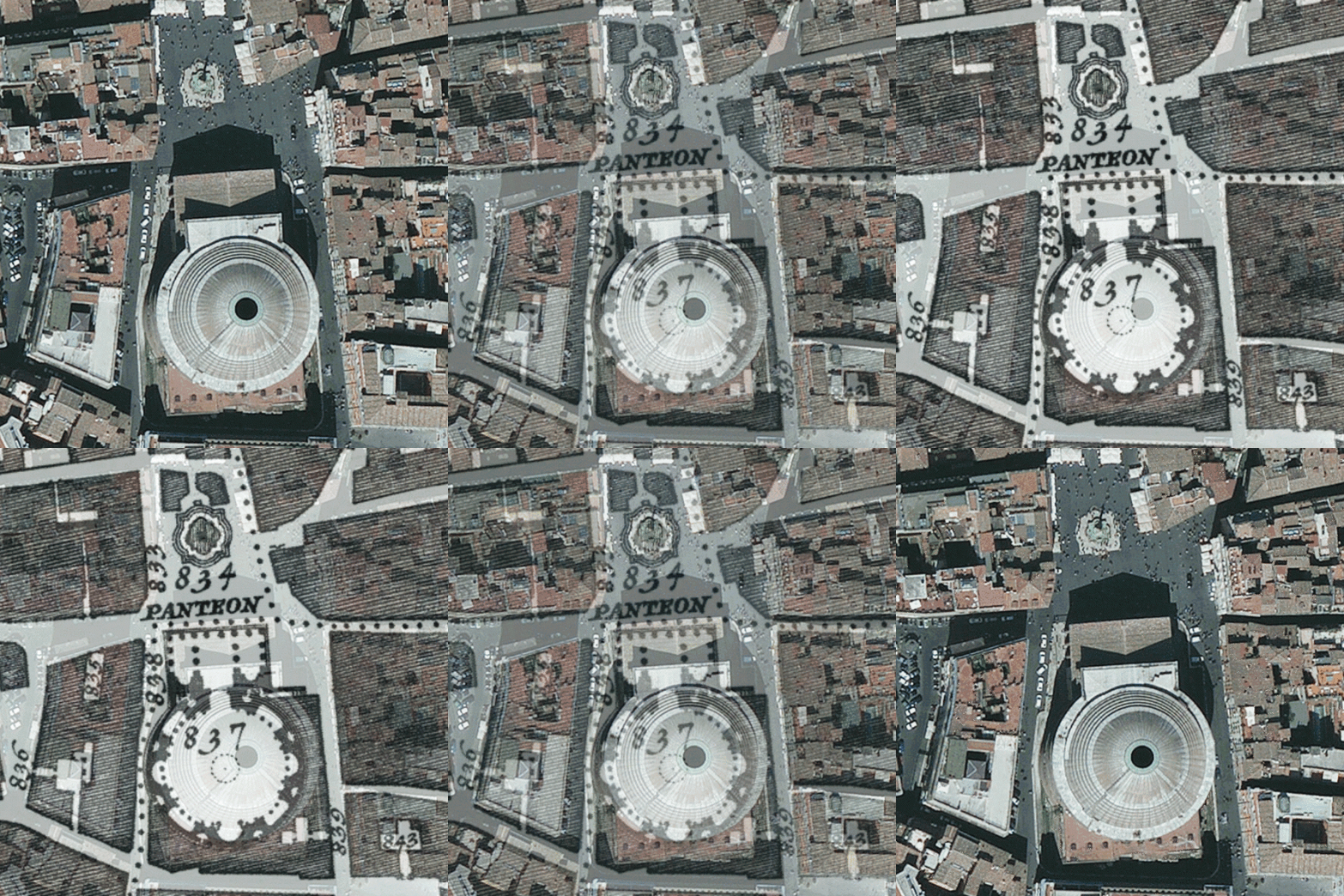
Finished in 1748 after 12 years of research  by Italian architect and surveyor Giambattista Nolli, this innovative map represented a novel approach to figure-ground representation. Streets and open public spaces were, for instance, predictably depicted as voids against a backdrop of solid hashes, but so to were enclosed civic spaces like the Pantheon.

nollithennow

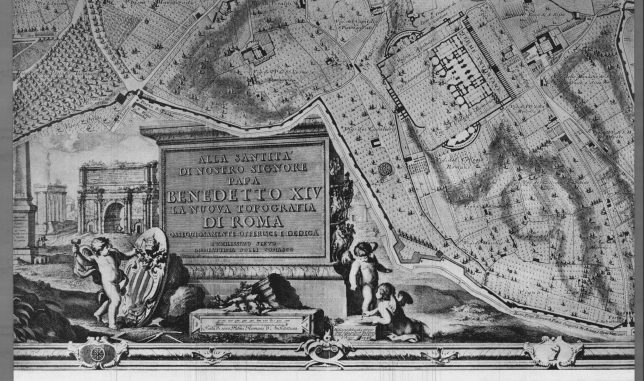
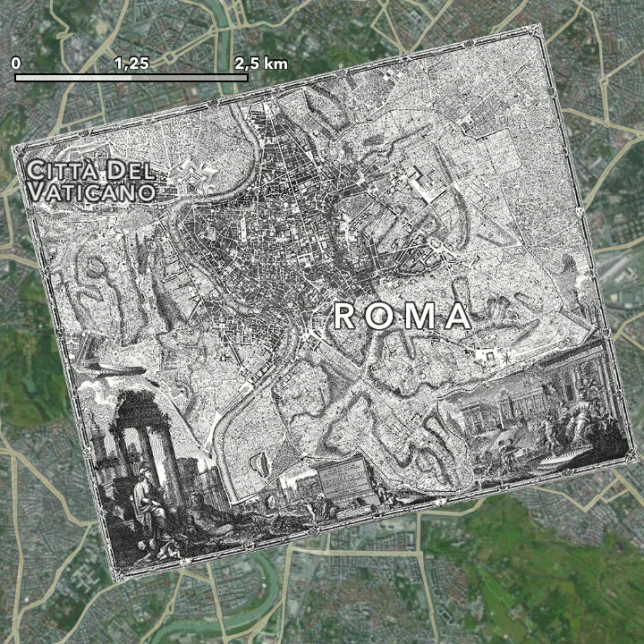
The original engraved city map consisted of 12 copper plates spanning 40 square feet, and, at the time, was the most accurate representation of the city to date. Honoring that tradition, this digital experience replicates many original features and details from the vintage original.

nolli versus modern rome

So why would you want to tour modern Rome with a centuries-old map? Its creator, Martin Koppenhöfer, explains that “despite its age, this map is still very valid for most parts of the Roman center.” He also notes that “it is quite entertaining to find your way with this app. Pedestrian navigation is very different … you don’t have to know every street or turn, just go into the right direction.”

index of rome

Think of it as part walking tour, part adventure and part historical education. Using an old map to navigate a city lets you find things that might have otherwise escaped your attention. It also allows you to distinguish between more permanent fixtures of the historic built environment and more contemporary changes and additions. If you lack a compatible device for the app, you can also check out an online interactive (but less mobile) version of this iconic map.

nolli zoomed overlay

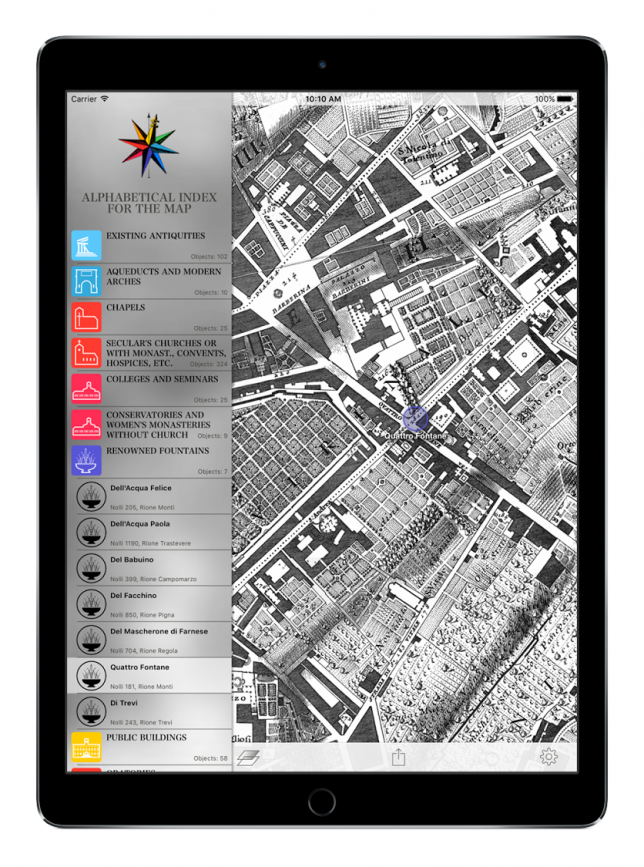
“In designing the present edition,” Koppenhöfer elaborated in and interview with WebUrbanist, “we have spent great care with the aim to be as close to the original as possible regarding the labeling and the structure of the directories. Therefore the app reproduces in the indices on the left side of the map exactly those types in the exact order and (to the contemporary reader occasionally appearing outmoded) notation as provided by Giambattista Nolli in his indices. By selecting an entry you will be led to the corresponding location on the map. You can also browse by tapping on one of the numbers on the map to see what it is about.”

nolli map historical view

nolli indexed mpa closeup

The original version is meticulously adhered to, providing an updated digital experience while maintaining original notes and styles. “The explanations of the signatures and line styles,” says Koppenhöfer, and “hatches and selected abbreviations are reproduced in their original form (see “Legend”). You can access Nolli’s original spelling of the indices, legend, and other signs at the bottom of the English version in Italian language.”

Share on Facebook


[ By WebUrbanist in Destinations & Sights & Travel. ]

[ WebUrbanist | Archives | Galleries | Privacy | TOS ]


WebUrbanist

 
Comments Off on Nolli App of Rome: Use a Classic Map as a Modern Travel Guide

Posted in Creativity


Zig-Zagging Cantilevered Shipping Containers Create a Dynamic Pavilion

28 Jun

[ By SA Rogers in Architecture & Cities & Urbanism. ]

cantilevered shipping crates 1

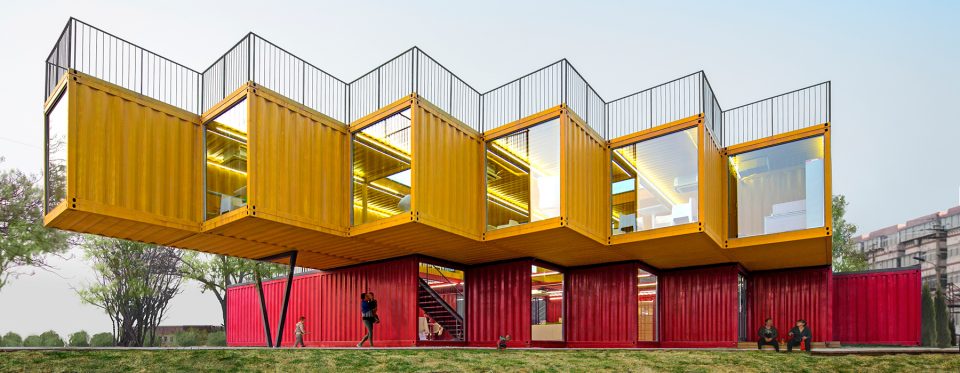
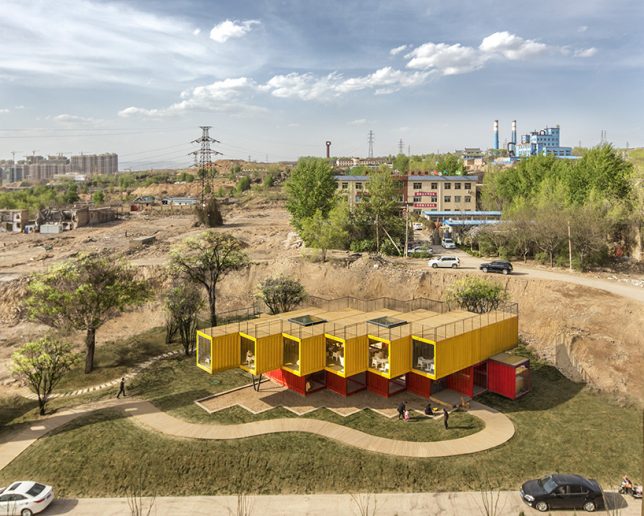
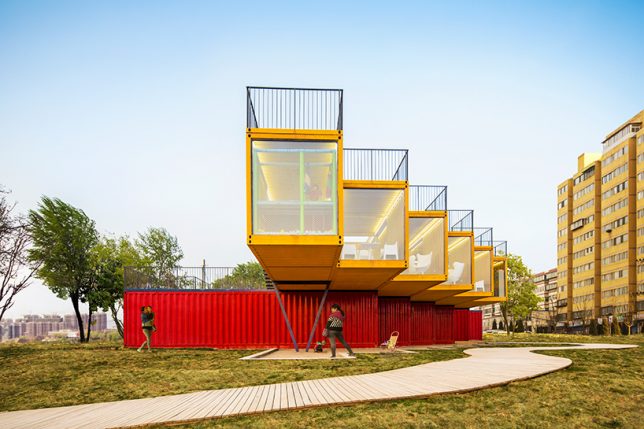
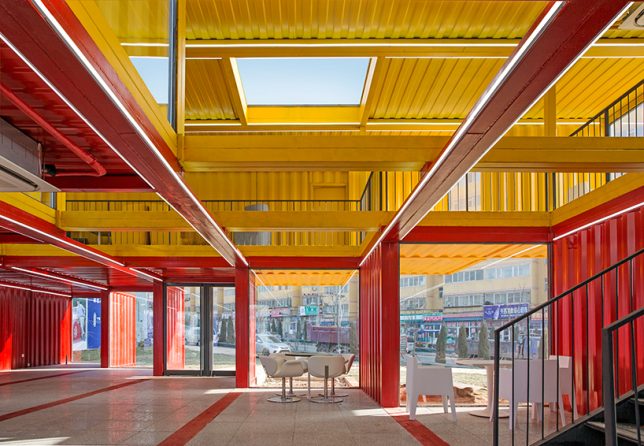
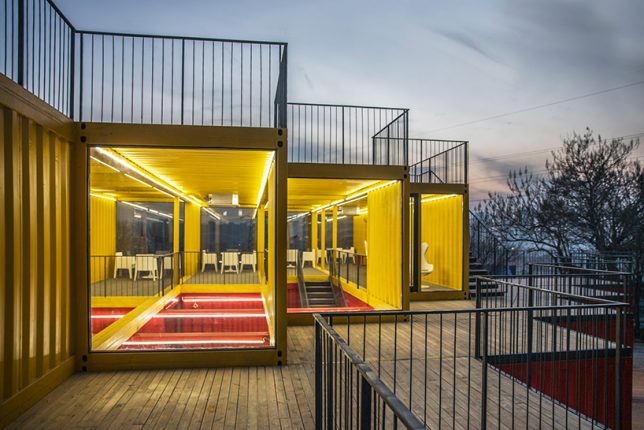
Recognizable in their original form, twelve shipping containers form a two-story recreational pavilion for the Chinese city of Shanxi, stacked and set at an angle with the top units cantilevered over the bottom ones. People’s Architecture Office (PAO) capped the ends of each container in glass and removed sections of the walls, floors and ceilings to create a surprisingly bright and open interior that carries natural daylight into every corner.

shipping crate architecture

shipping container building

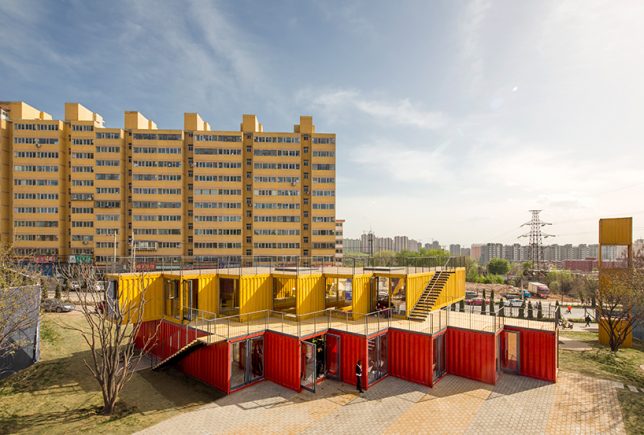
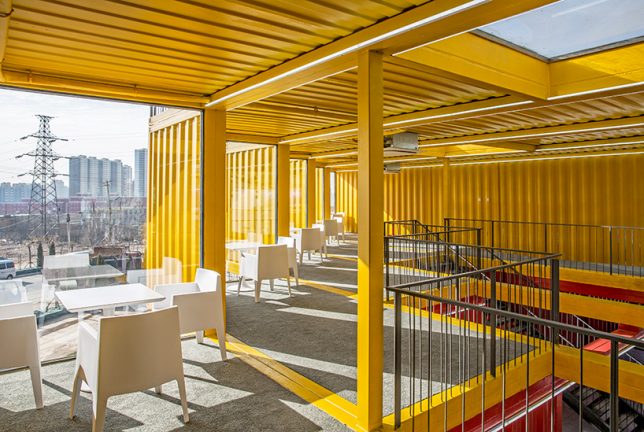
The containers are staggered, which not only creates a terrace on the open ceilings of the lower red crates, but also produces a dynamic floor plan with lots of nooks and crannies for seating overlooking the surrounding city. This clever arrangement effectively multiplies the space without having to add additional containers, and each container acts like a viewfinder stretching out toward the skyline.

shipping container building 2

shipping container building 3

shipping container building 4

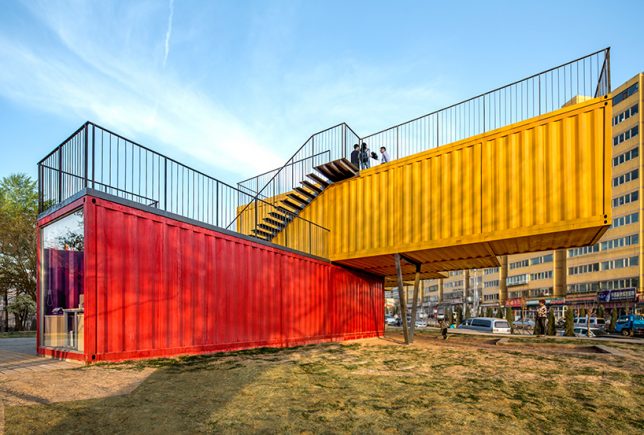
Exterior stairs offer easy access to both rooftop terrace levels, providing residents with even more views. Perpendicularly set on top of the red containers, the yellow cantilevered units cast shadows on the ground to create sheltered spaces outside. Inside, there’s plenty of room to congregate, making it a convenient meeting space for people who live in the adjacent housing developments.

shipping container building 5

shipping container building 6

shipping container building 7

Since the containers have barely been modified, it would also be a breeze to pack the whole thing up and transport it to a new location when necessary, or replace individual containers if they get damaged. While other architectural projects reclaiming used shipping containers often take pains to disguise them (and at least insulate the interiors, which seems like a budget-friendly but potentially uncomfortable oversight in this case), this one stands as a highly visible example of affordable alternative architecture making use of widely available portable materials.

Share on Facebook


[ By SA Rogers in Architecture & Cities & Urbanism. ]

[ WebUrbanist | Archives | Galleries | Privacy | TOS ]


WebUrbanist

 
Comments Off on Zig-Zagging Cantilevered Shipping Containers Create a Dynamic Pavilion

Posted in Creativity


Reflecting on a Master Architect: 10 Water-Centric Works by Tadao Ando

28 Jun

[ By SA Rogers in Architecture & Public & Institutional. ]

tadao ando fort worth

Tadao Ando’s work consists of more than just the tangible architectural materials making up each structure, masterfully utilizing reflection, simple palettes and negative space to incorporate wind, water and light into the carefully designed compositions. The self-taught yet Pritzker Prize-winning Japanese architect infuses these elements – most notably in the form of reflecting pools and ponds – into almost all of his creations, yet it always seems fresh, each structure standing firm in its own identity.

Water Temple, Awaji, Japan, 1991

tadao ando water temple 1

tadao ando water temple 2

tadao ando water temple 3

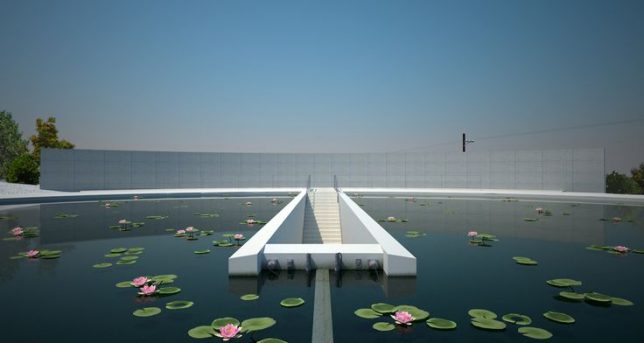
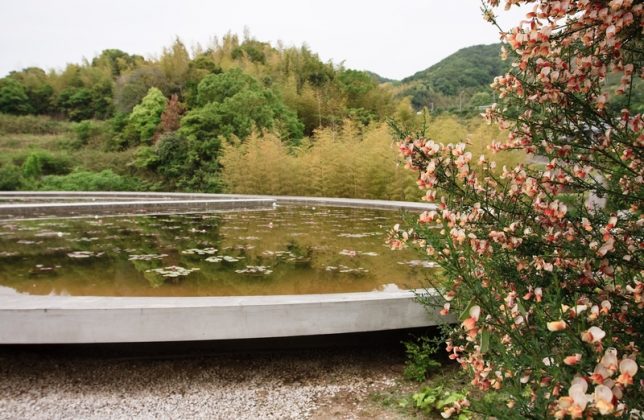
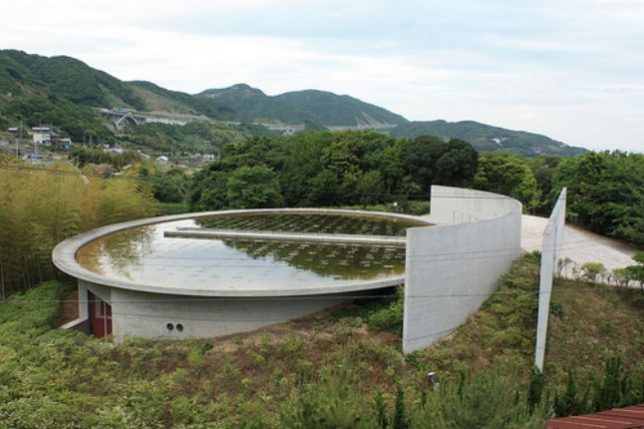
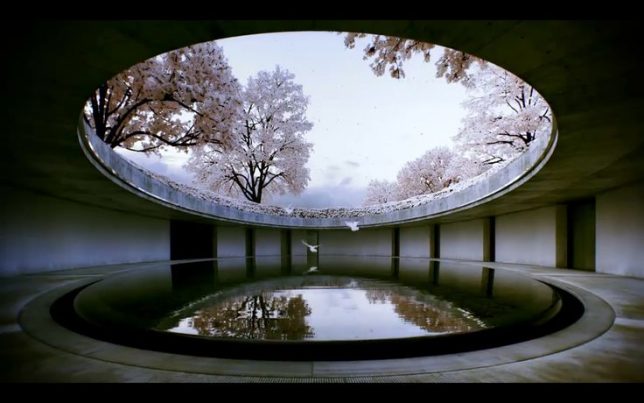
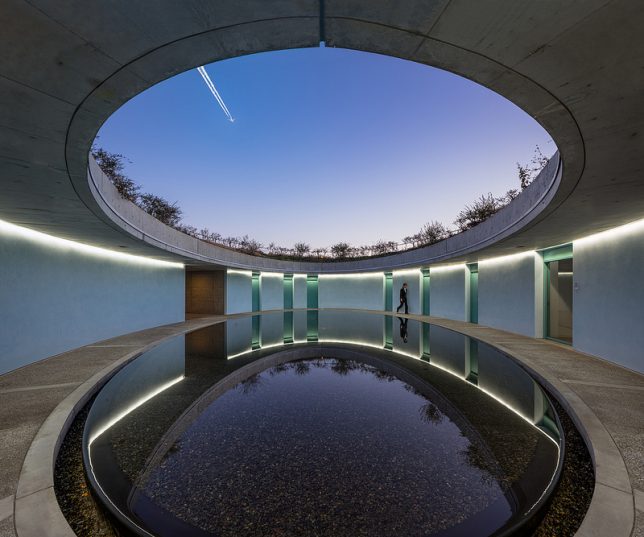
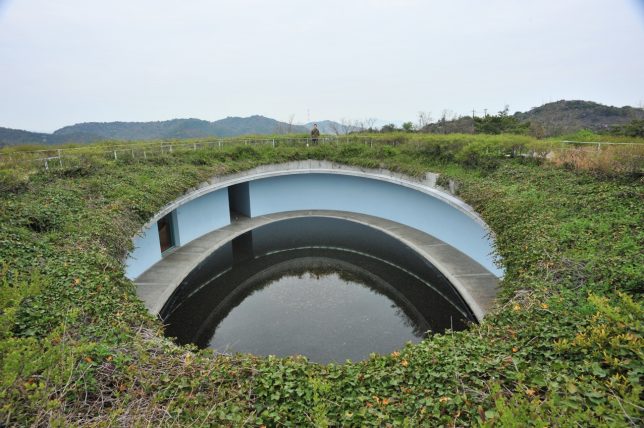
Serving as the residence for the oldest sect of Tantric Buddhism in Japan, the Water Temple is considered one of Tadao Ando’s most striking achievements. An oval of concrete encloses a lake of lotus flowers, which are symbols of heaven, with a set of stairs leading to its reflective surface. The journey from the gravel path outside up to this pinnacle symbolizes successive places of initiation.

The Oval at Benesse Art Museum Naoshima, Japan, 2004

tadao ando oval 1

tadao ando oval 2

tadao ando oval 3

Says the architect of this space serving as a museum for the town of Naoshima and his own work, “In the ANDO MUSEUM, I nestled a concrete box within the old mink house. The box has a gently curved ceiling. One of its walls aligns with the main axis of the house and is tilted towards the ridge-beam to generate a feeling of openness that extends dynamically into the space above. Sunlight descends down through the deep space from a skylight opening at the top of the wooden roof. My aim was to create a space that conjures a rich sense of depth despite its small size, where oppositional elements such as the past and present, wood and concrete, and light and shadow clash intensely as they are superimposed against each other.”

Casa Monterrey, Mexico, 2011

tadao ando monterrey 1

tadao ando monterrey 2

tadao ando monterrey 3

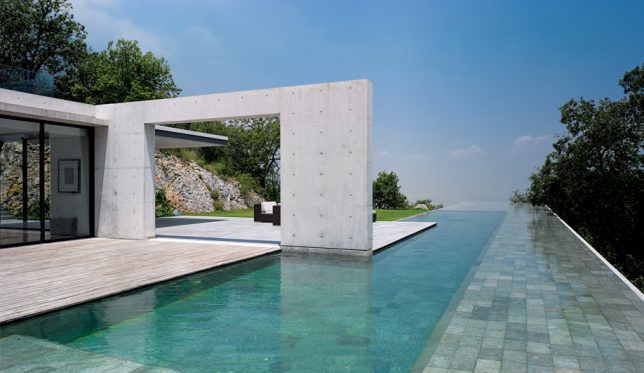
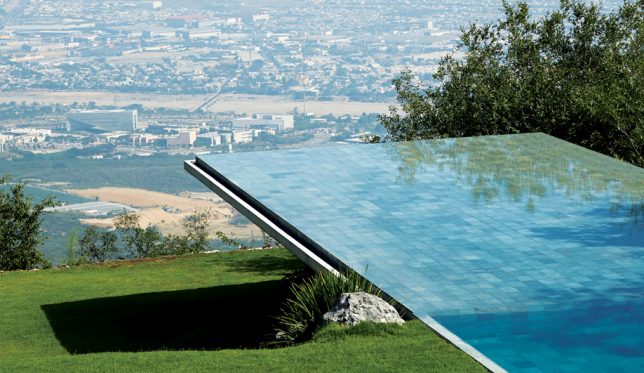
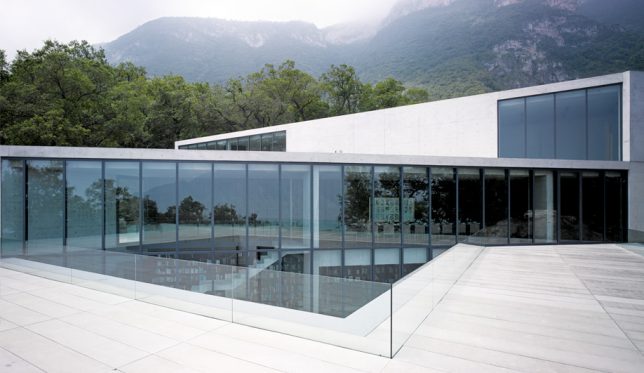
Nestled into a hillside in Mexico, Casa Monterrey’s defining feature is the swimming pool that cantilevers out over the slope, punctuated with concrete walls that strategically frame views of the rocky Cumbres de Monterrey National Park. Designed to accommodate a family, the three-story house is built around a double-height library. A rooftop terrace provides gorgeous views of the landscape as well as that pool, which seems to extend the sky right into the yard.

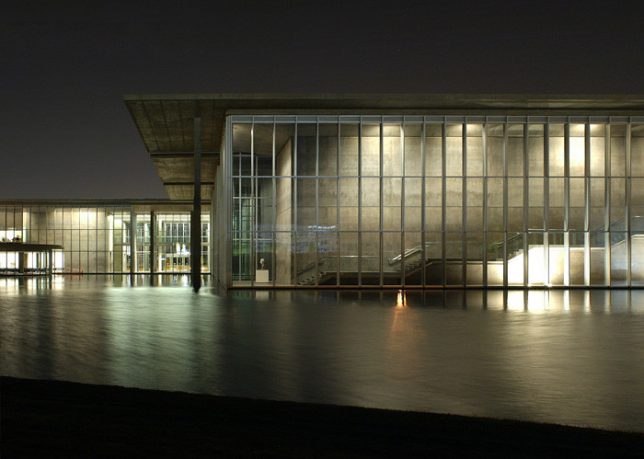
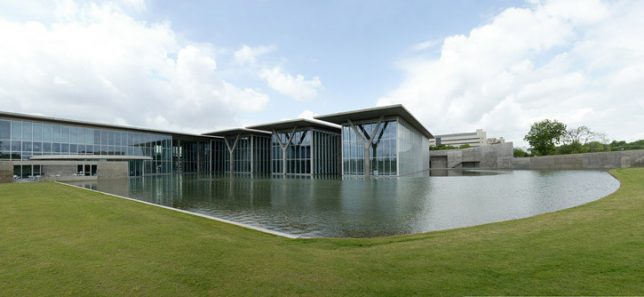
Modern Art Museum of Fort Worth, Texas, 2002

tadao ando fort worth

tadao ando fort worth 2

tadao ando forth worth 3

tadao ando fort worth 4

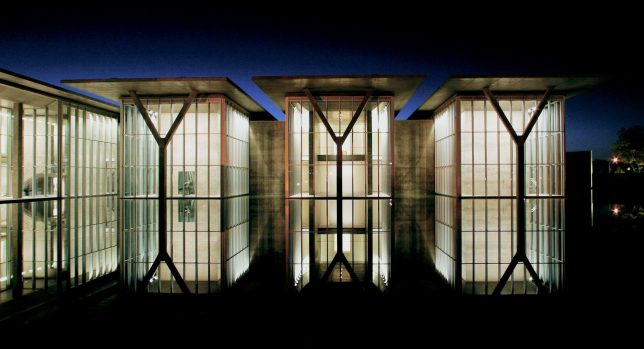
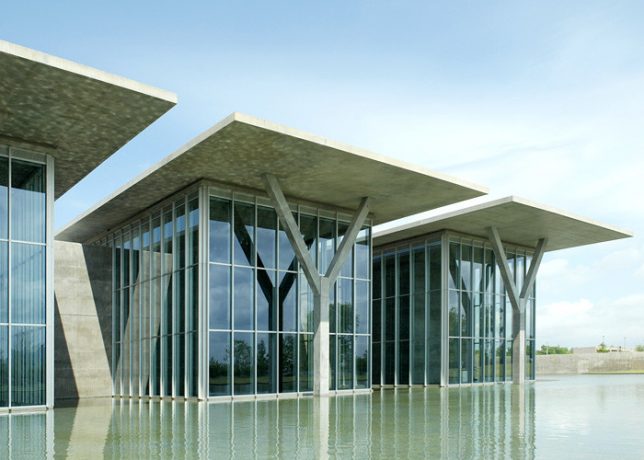
One of Ando’s most iconic structures, the Modern Art Museum of Fort Worth incorporates Y-shaped concrete supports that are doubled by the 1.5-acre reflecting pool that comes right up to the building’s exterior walls. Five flat-roofed pavilions seem to rise up out of the water, constructed in a limited palette of simple materials that make the landscape and the art inside the main focus but still come together into an elegant whole. “By using glass as a wall, physically there is a barrier, protection from the outside, but visually there is no boundary between outside and inside,” says Ando. “There is also the light that comes off the water through the glass that indicates a lack of boundary an can make its presence felt on the wall.”

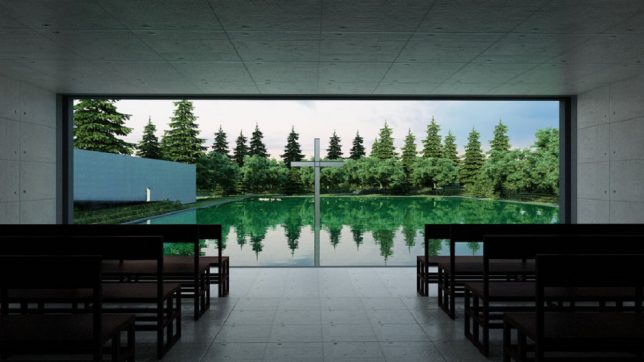
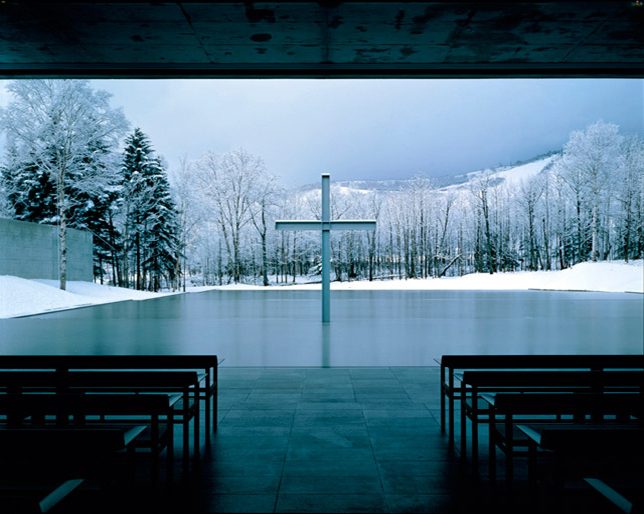
Church on the Water, Hokkaido, 1988

tadao ando church on the water 3

tadao ando church on the water 1

tadao ando church on the water 2

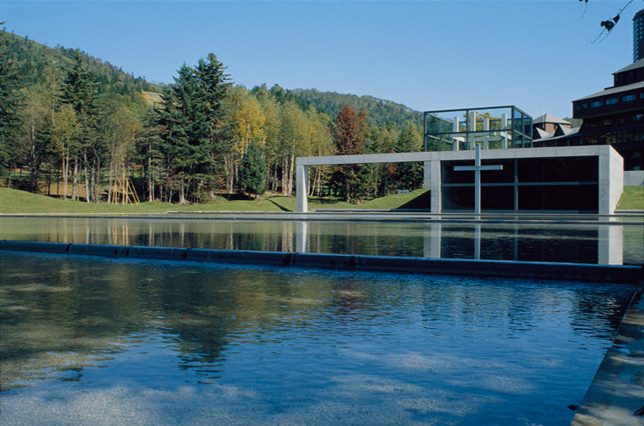
This classic Tadao Ando work faces seated congregants inside a minimalist church building so they’re gazing out at a cross in the middle of a pond. The church consists of two overlapping cubes, a steel-and-glass entrance structure and the main volume serving as the chapel. The glass wall overlooking the pond can be opened or closed depending on the weather. Unsurprisingly, Church on the Water is one of Japan’s most popular wedding destinations.

Next Page – Click Below to Read More:
Reflecting On A Master Architect 10 Water Centric Works By Tadao Ando

Share on Facebook


[ By SA Rogers in Architecture & Public & Institutional. ]

[ WebUrbanist | Archives | Galleries | Privacy | TOS ]


WebUrbanist

 
Comments Off on Reflecting on a Master Architect: 10 Water-Centric Works by Tadao Ando

Posted in Creativity


Pencil + Sharpener: Redesign Solves 3 Classic Drawing Tool Problems

27 Jun

[ By WebUrbanist in Design & Products & Packaging. ]

pencil plus sharpener

Pencils require sharpening, run out of eraser and turn into unusable stubs as they near the end of their lifespan, but this clever gadget aims to change all of that, solving all three issues at once.

demo

Even in today’s digital world, artists, designers, writers and musicians still fall back on this traditional tool. The Pencil+ helps on multiple fronts, but functions first as a pencil holder, enabling the user to tuck various lengths of pencil into a central void.

eraserhead

What keeps the pencil from slipping too far in? An adjustable eraser serves as a backstop, letting you move the pencil portion backward to fit and forward as the pencil gets shorter. Meanwhile, the back of the holder (normally where one would find an eraser) doubles as a sharpener, keeping it always on hand for reworking broken or worn tips.

remove and sharpen

“Worry no more because with pencil+,” say its creators, “you can now have a sharpener, extender, eraser holder and transporter for your favorite tool” which is available in Teak, Ebony, Wild Olive, African Padauk and Indonesian Redwood”

pencil sharpener combo

A few potential critiques come to mind: first, someone employing this device will have to deal with an additional step to access an eraser. Second, the holder is necessarily wider than a pencil, so it will require some getting used to in terms of grip and function. Third, the eraser length is a function of pencil length, so storing a lot of extra eraser could be an issue (though easily longer than a normal one). Still, one can be sure, at least, never to lose track of one’s sharpener, and also that a single pencil will last a lot longer.

Share on Facebook


[ By WebUrbanist in Design & Products & Packaging. ]

[ WebUrbanist | Archives | Galleries | Privacy | TOS ]


WebUrbanist

 
Comments Off on Pencil + Sharpener: Redesign Solves 3 Classic Drawing Tool Problems

Posted in Creativity


Silence Of The Lamps: 10 Abandoned Light Bulb Factories

26 Jun

[ By Steve in Abandoned Places & Architecture. ]

abandoned_lightbulb_factory_1a
Things may look dim for these abandoned light bulb factories but hopefully the last worker out the door remembered to flip the switch on their way out.

abandoned_lightbulb_factory_1b

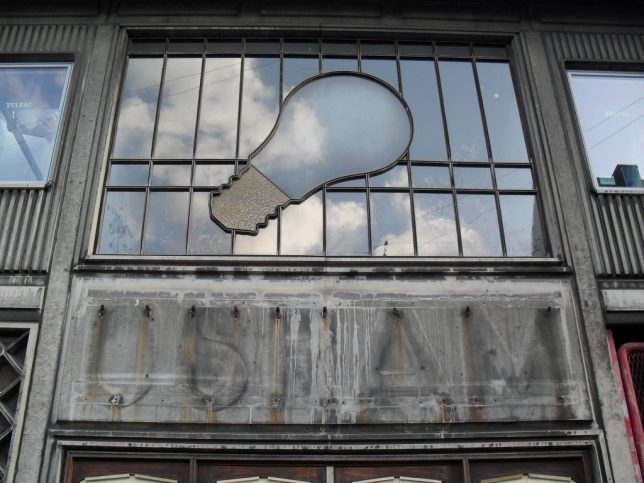
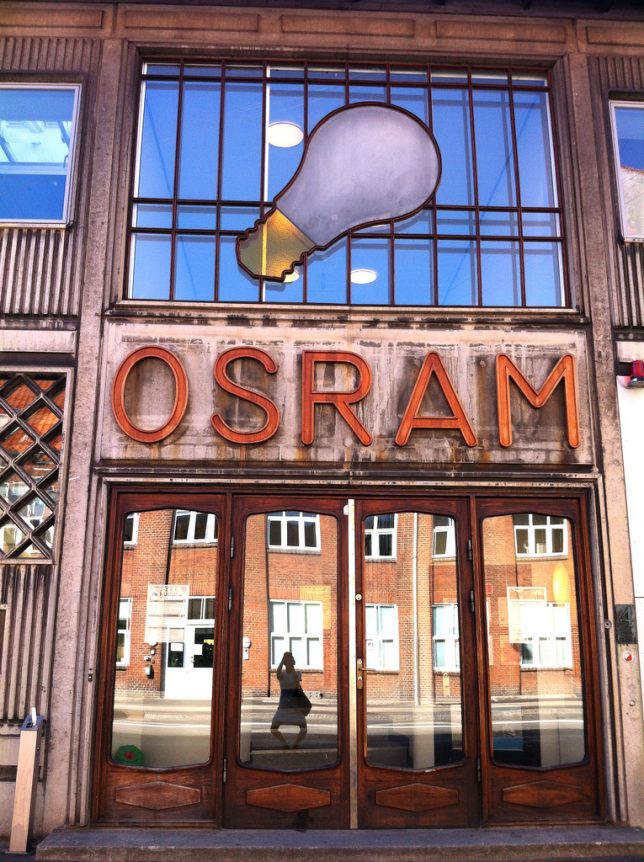
What’s the deal with the above OSRAM light bulb factory facade in Copenhagen, Denmark? Flickr user Stine Linnemann (stine_maskine) snapped the first photo on August 30th of 2009 while Flickr user maya weeks (mayaweeks) snapped the same – yet magically de-aged – facade almost three years later.

Back In The GDR

abandoned_lightbulb_factory_2b

abandoned_lightbulb_factory_2c

abandoned_lightbulb_factory_2d

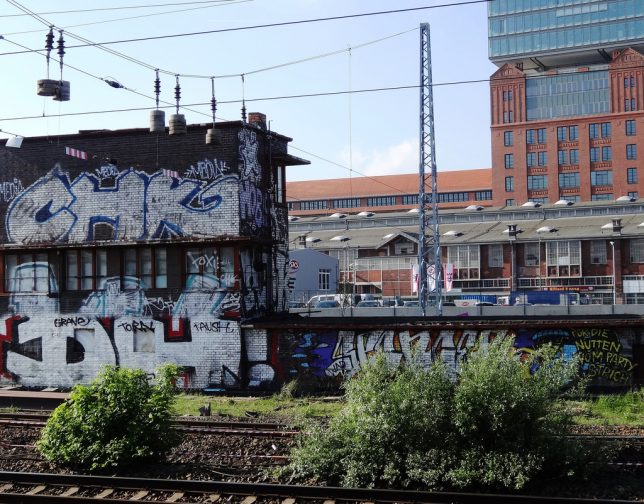
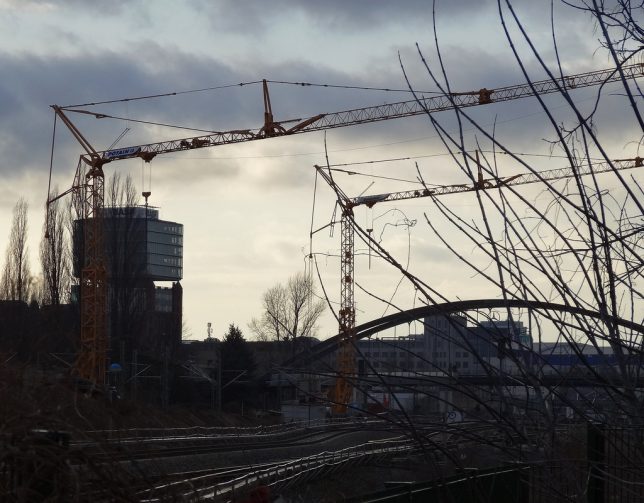
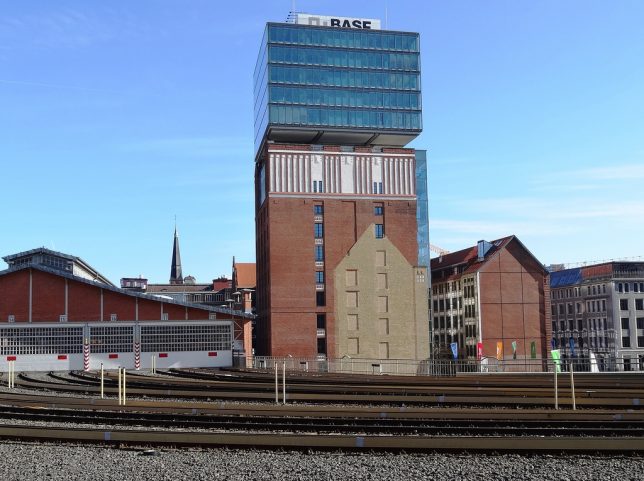
Twenty-five years after the Berlin Wall tumbled, grungy relics of the GDR (German Democratic Republic, aka “East Germany”) linger on like a bad case of heartburn after too much currywurst. Take the distinctive building above, centerpiece of the former VEB Kombinat Narva Berliner Glühlampenwerk which was the main manufacturer of incandescent light bulbs in the GDR. Flickr user Mondrian Graf Lüttichau (Mondrian-Berlin) captured the semi-restored and partially re-purposed main building in 2014 and 2015.

Alien: Resurgence

abandoned_lightbulb_factory_3a

abandoned_lightbulb_factory_3c

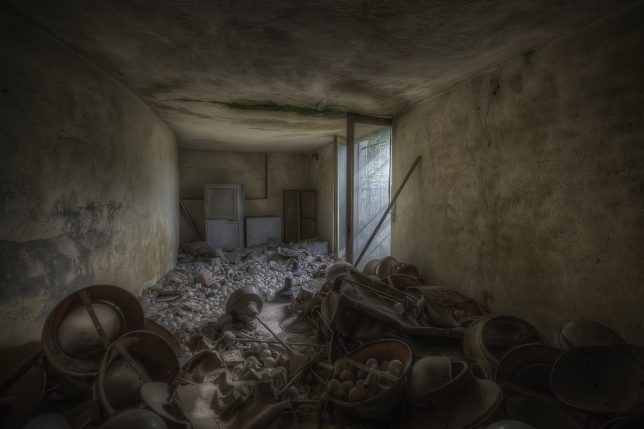
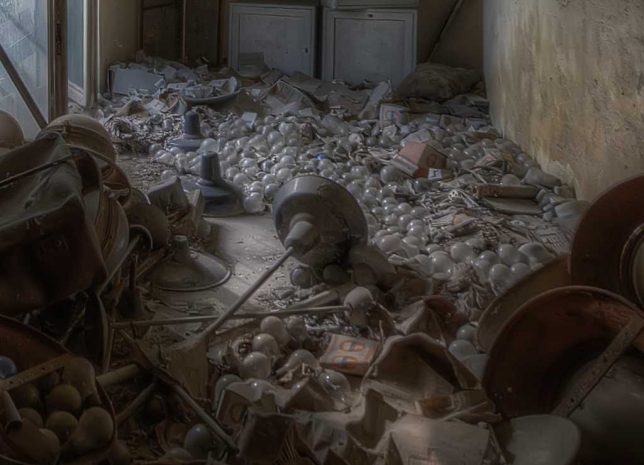
Stay outta there, Ripley!! This unnamed abandoned light bulb factory would make an ideal location shoot for some future Alien movie sequel, would it not? Kudos to Flickr user Andrea Pesce (Opissse) for not disclosing the site’s details – vandals would stomp those scattered light bulbs like so much bubble wrap.

Next Page – Click Below to Read More:
Silence Of The Lamps 10 Abandoned Light Bulb Factories

Share on Facebook


[ By Steve in Abandoned Places & Architecture. ]

[ WebUrbanist | Archives | Galleries | Privacy | TOS ]


WebUrbanist

 
Comments Off on Silence Of The Lamps: 10 Abandoned Light Bulb Factories

Posted in Creativity


Diagonal Crosswalk: Walk Any Way in LA’s Safe Scramble Intersection

26 Jun

[ By WebUrbanist in Architecture & Cities & Urbanism. ]

scramble intersection

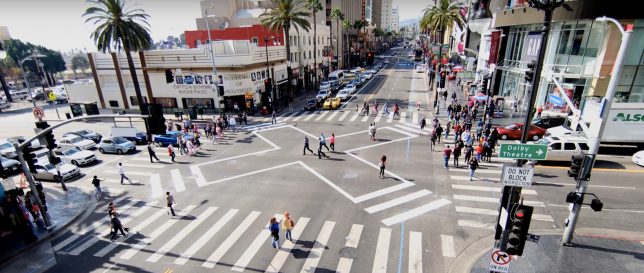
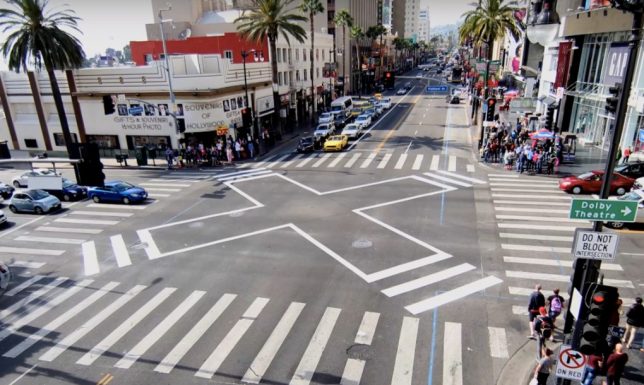
When visitors approach the intersection in front of Seattle’s famous Pike Place Market in the heart of downtown, the surprise is palpable when they realize that a ‘go’ for pedestrians lets people walk any way they want. Los Angeles recently followed suit, introducing its own omnidirectional ‘scramble intersection’ at a notoriously dangerous crossroads, making it much safer.

At Hollywood and Highland, designers have taken things a step further, adding an X-shaped layer of walking indicators (zebra stripes and white-framed boxes) to make it clear how people are permitted (and encouraged) to cross the streets diagonally through the center.

scramble diagnoal crosswalks

Popularized in the 1950s by Henry Barnes, the concept is quite simple: when pedestrians get their green light, anyone can cross anywhere during the limited window, then the lanes are given back over to cars and the process repeats. In the months since this latest scrambler was introduced, there has been only a single accident.

Scramble intersections can be found around the world, but are still limited in quantity, focused in areas where the safety gains are greatest. In dense cities like Tokyo, Japan, they can be marvelously busy at times (as shown above). In Seattle, meanwhile, the success of the Pike Street and First Avenue scrambler has led to others being introduced around the city; perhaps LA will continue to follow its lead.

Share on Facebook


[ By WebUrbanist in Architecture & Cities & Urbanism. ]

[ WebUrbanist | Archives | Galleries | Privacy | TOS ]


WebUrbanist

 
Comments Off on Diagonal Crosswalk: Walk Any Way in LA’s Safe Scramble Intersection

Posted in Creativity


Shadow Graffiti: Typographic Sundial Transforms Building Facade

25 Jun

[ By SA Rogers in Art & Street Art & Graffiti. ]

typographic sundial 1

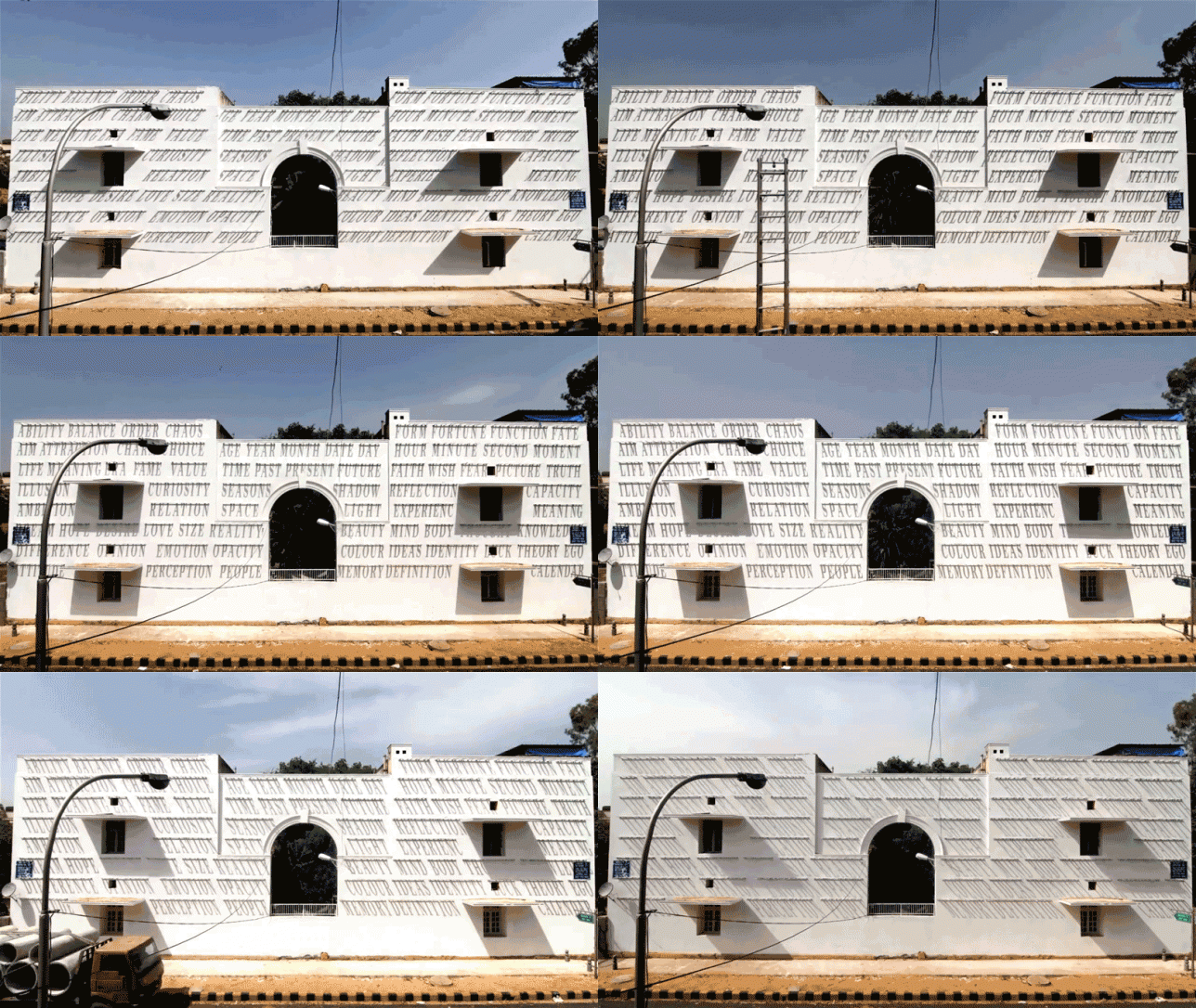
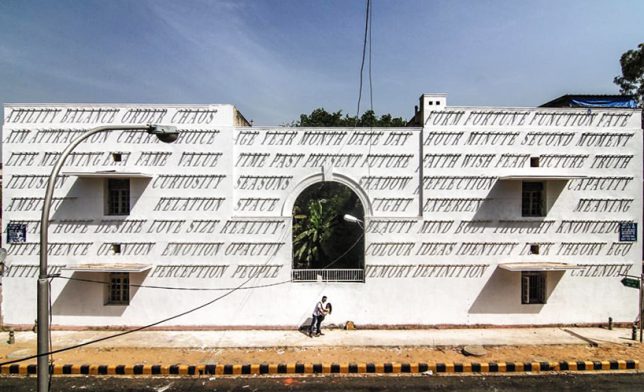
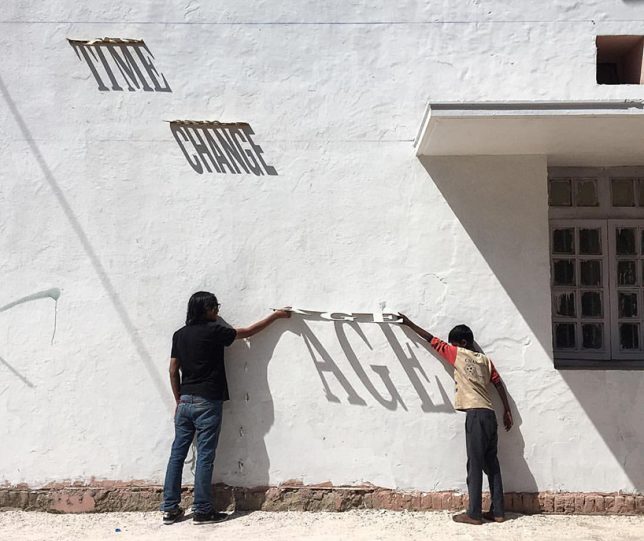
Integrating the shadows cast by everything from stop signs to public benches into street art often requires the luck of seeing the piece in action at just the right time of day, when the shadow is in just the right spot for everything to line up as intended. Catching it in action feels like serendipity and adds a little bit of magic to ordinary urban settings. But in the case of this particular work of shadow art, you could literally stand in front of it all day and just watch it transform before your eyes. The lettering attached to the facade of a building in India’s Lodhi District changes its angle as the sun moves across the sky, acting like a sundial.

typographic sundial 3

typographic sundial 2

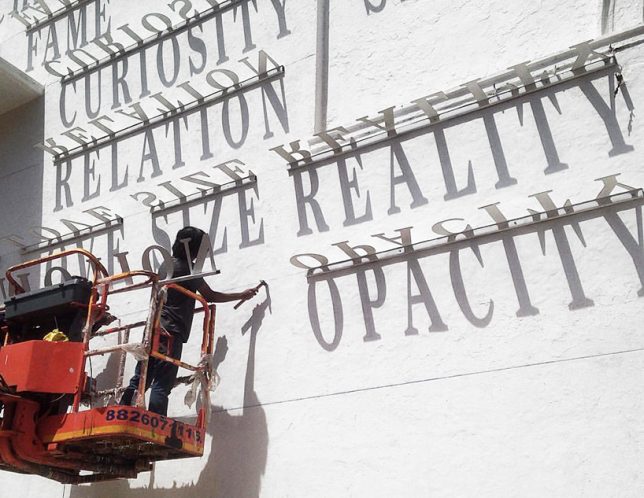
‘Time Changes Everything’ by Indian street artist Daku requires the sun’s harsh light in this location and the stark white facade of the building to even be visible to passersby, virtually disappearing on a cloudy day or at night. Get close to the wall and look up, however, and you’ll get a new perspective on the piece, viewing the words upside-down. The theme relates to the passage of time, with words including ‘age,’ ‘illusion,’ ‘season,’ aim’ and ‘memory.’ They start out in italics and then shift into prime legibility at noon before leaning in the other direction.

typographic sundial 4

The installation is part of the first dedicated public art district in India, turning the neighborhood into a gallery that’s available to everyone. ST+ART India invited 25 local and international street artists to contribute to the project, which aims to make art accessible for wider audiences “while having a positive impact on society.” Check out more of Daku’s work on Instagram.

Share on Facebook


[ By SA Rogers in Art & Street Art & Graffiti. ]

[ WebUrbanist | Archives | Galleries | Privacy | TOS ]

WebUrbanist

 
Comments Off on Shadow Graffiti: Typographic Sundial Transforms Building Facade

Posted in Creativity


Bottomless Anti-Chair: Crafty Bentwood Form Frames Other Seats

24 Jun

[ By WebUrbanist in Design & Furniture & Decor. ]

chairless chair

As it stands, you can do just about anything with this Arm Chair except actually sit in it, at least until you add your own chair, stool or other form of seating to the mix.

bent chair stool casters

bent chair with office

Part artist statement, part conceptual and part physical framework, this absurdist anti-chair by Clark Bardsley is also a cunning and well-crafted exercise in traditional wood bending and shaping techniques.

no seat back chairs

bent chair in public

The steam bent, brush back sanded and oiled American Oak object represents an impressive execution of a notoriously difficult process made all the more complex within a seat and back to tie the piece together.

bent chair jig making

bent brushed sanded wood

The Auckland-based designer focused on materials and methods in this work, but while he may have failed to include that essential ingredient, which most would associate with chair-ness, the void he left also lets users fill empty space with other sorts of seats.

Office chairs on casters, plastic bucket chairs, metal stools … pretty much anything can be slotted into place as desired. At the same time, the wood frame gives the piece a recognizable outline and sense of comfortable familiarity.

bent chair front view

bent chair back view

As the artist puts it, “we structured our research around creating a beautifully finished object that pays heed to a classic bentwood chair, without posing it as a commercial product. Why shouldn’t research have a sense of humor?”

bent chair backward bucket

bent chair in nature

In a world where it seems like every type of chair possible has been designed (if not built), perhaps it is indeed time to make one simply with the goal of getting a good laugh.

Share on Facebook


[ By WebUrbanist in Design & Furniture & Decor. ]

[ WebUrbanist | Archives | Galleries | Privacy | TOS ]

WebUrbanist

 
Comments Off on Bottomless Anti-Chair: Crafty Bentwood Form Frames Other Seats

Posted in Creativity


Brain Food: Vending Machines Offer Books Instead of Snacks

23 Jun

[ By SA Rogers in Design & Products & Packaging. ]

book vending machine 1

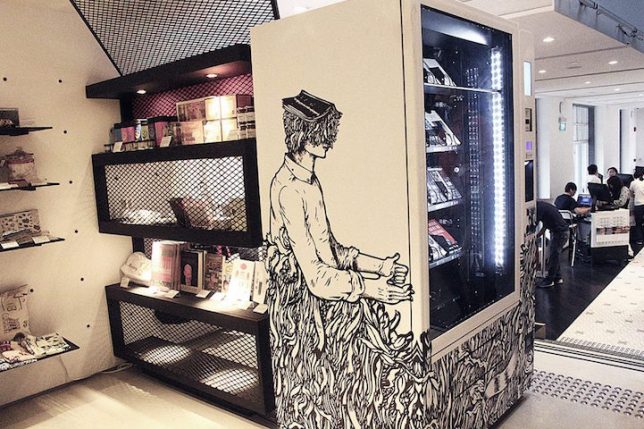
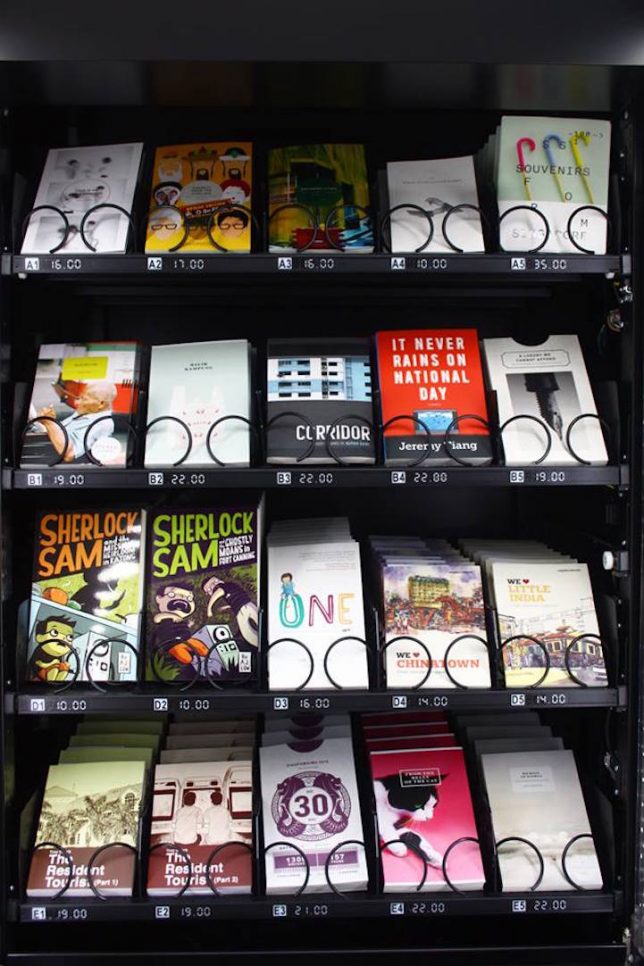
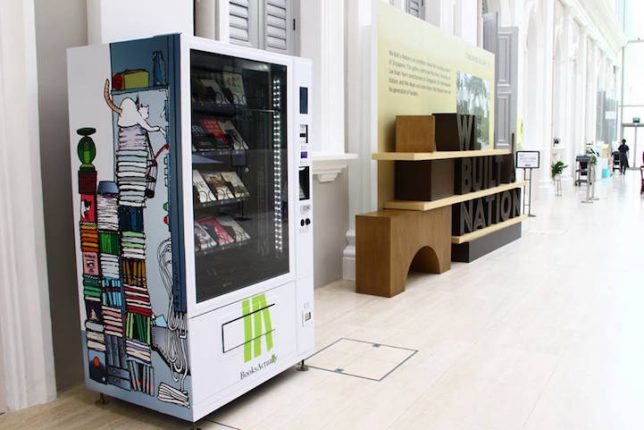
You can buy all kinds of weird things from vending machines these days – from live crabs to blue jeans to gold bars – but this new iteration is more entertaining than most, and it’ll certainly keep you busy longer than a bag of Skittles. Peruse the covers of a curated selection of books through the glass of these BooksActually vending machines in Singapore for a new distraction on demand. If only this idea caught on everywhere, maybe we’d spend a bit less time standing around staring at our phones.

book vending machine 6

Two of the machines are now ready for reading enthusiasts in high-traffic areas, including the National Museum of Singapore and the Singapore Visitor Center. Fittingly for these locations, the selections appear to be Singapore-centric, including books by local authors as well as helpful guides for tourists. Each machine contains about 150 books with up to 22 titles, and the outsides of the machines are painted by local artists to indicate what’s inside.

book vending machine 3

“The whole idea is about accessibility and eyeballs,” says Kenny Leck, owner of BooksActually. “There are not enough bookstores in Singapore… these vending machines could be a visual touchpoint. You may not buy [a book] but we’ll let you know these exist. And from there, there could be more possibilities. We start with visual awareness: books where you see a local author’s name. The ultimate place we want to put them are at train stations.”

book vending machine 5

Of course, book vending machines aren’t entirely new, though they’re far more popular in Asia than they are stateside. The first book-dispensing machine, called the Penguincubator, was installed in London way back in 1937. An Irish company called ‘A Novel Idea’ installed a machine at London’s Heathrow airport, but went out of business. It’s kind of hard to pick out a book when you can’t even read the back cover, but the concept could work with highly recognizable beach-read-type titles that are about the equivalent of junk food for your brain, anyway.


Share on Facebook


[ By SA Rogers in Design & Products & Packaging. ]

[ WebUrbanist | Archives | Galleries | Privacy | TOS ]

WebUrbanist

 
Comments Off on Brain Food: Vending Machines Offer Books Instead of Snacks

Posted in Creativity