RSS
 

Archive for the ‘Creativity’ Category

Subterranean Singapore: Short Sci-Fi Film Envisions Dystopian Future

07 Jul

[ By SA Rogers in Art & Drawing & Digital. ]
subterranean singapore 2

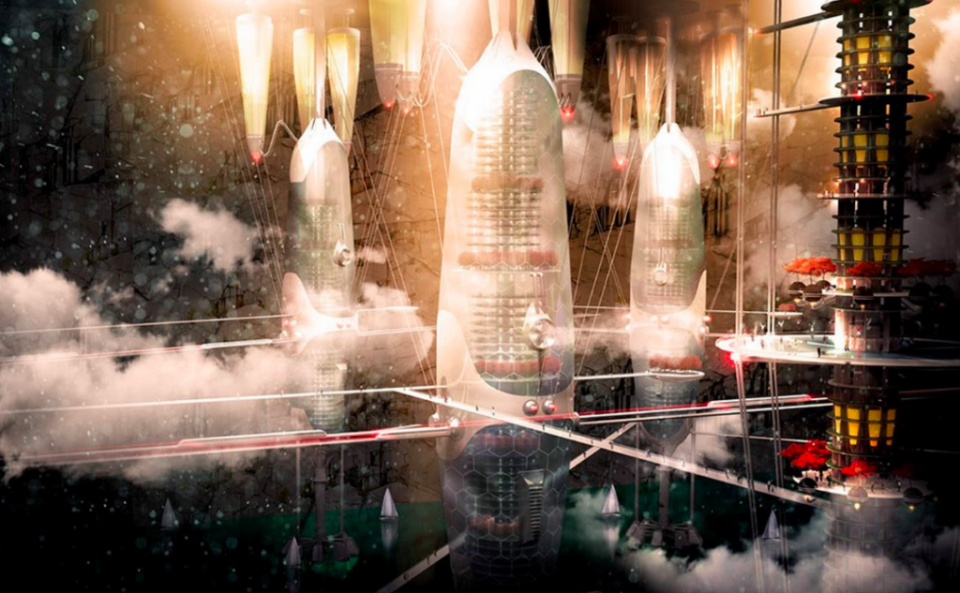
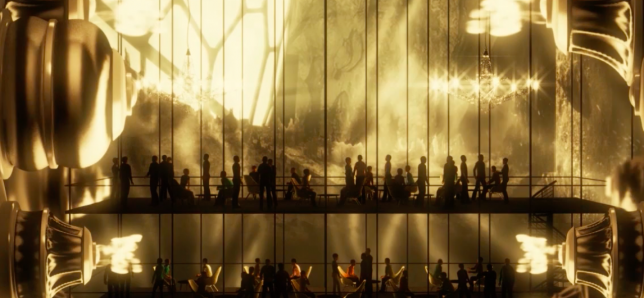
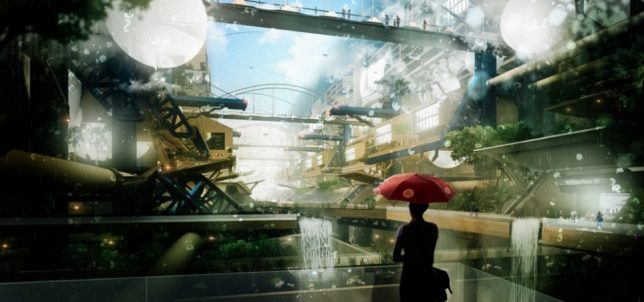
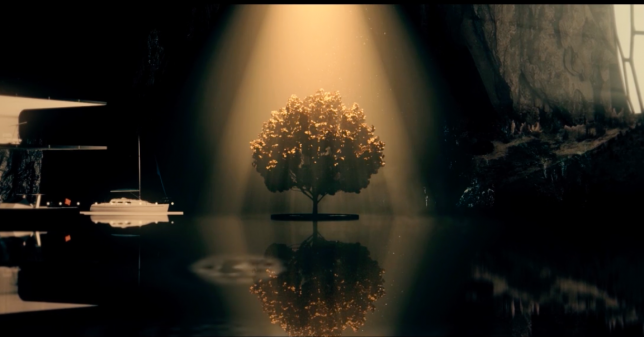
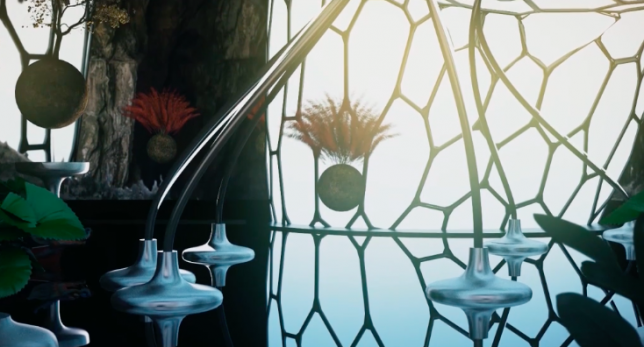
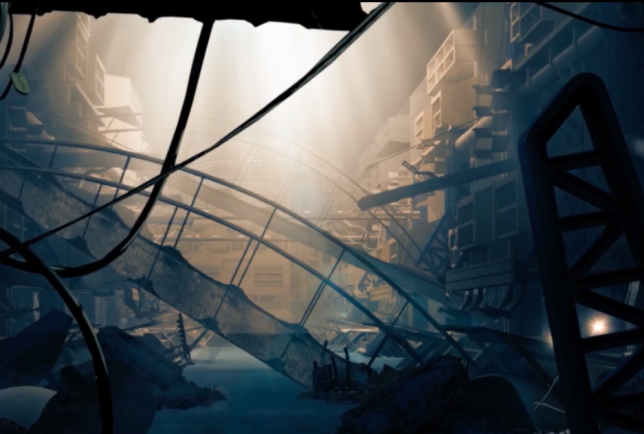
Instead of stretching upward toward increasingly polluted skies, could the solution to land scarcity issues in places like Singapore be found in subterranean development? Like something out of a dystopian film, this proposal by a student at Bartlett School of Architecture envisions a sort of mole city with inverted skyscrapers digging deep below street level, an extreme excavation of massive caverns and “a complex and continuously self expanding network of green canyons, tunnels, reservoirs and exploratory excavations into the granite rock below.”
Screen Shot 2016-07-06 at 5.47.16 PM

Screen Shot 2016-07-06 at 5.47.52 PM

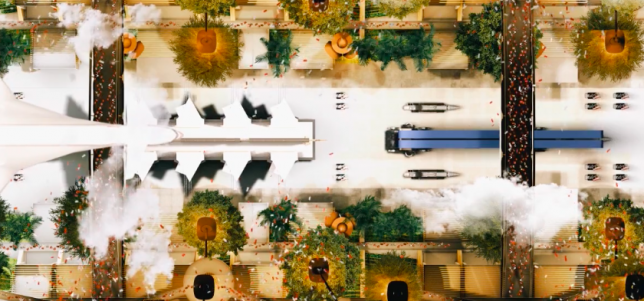
If you look at the sci-fi we humans have been producing for the past half-century, many of us have already accepted a future in which living on the surface of the Earth is no longer viable, whether that means we will have to build vertical cities, float on the oceans or leave the planet altogether. It’s not too far-fetched to imagine that a combination of climate change, pollution, overdevelopment and overpopulation would push us into building underground wherever possible, as well. This proposal by Finbarr Fallon envisions Singapore starting to plan the project by the year 2020, celebrating the idea before ultimately tearing it down and highlighting its many flaws.
subterranean singapore

Screen Shot 2016-07-06 at 5.48.55 PM

Fallon presents Singapore 2065 as a darkly cinematic short film, with an engineer from the Subterranean Development Institute explaining how and why the development came about. The film takes us on a tour of the ‘World’s Greatest Engineering Feat’ and its luxurious architecture, which is clearly targeted at the well-to-do. The presentation seems fairly straightforward, but watch it all the way to the end for an unexpected plot twist.
Screen Shot 2016-07-06 at 5.48.42 PM

Screen Shot 2016-07-06 at 5.47.25 PM

“The film follows a documentary created by the state led, Subterranean Development Institute which looks behind the scenes of the world’s largest construction project, from a highly corporate and nationalistic point of view,” says Fallon. “This concludes with spectacular scenes of celebration where the National Day Parade is reconfigured from traditional military use, to a choreographed march of robotic construction technology through the underground city.”
Screen Shot 2016-07-06 at 5.49.26 PM

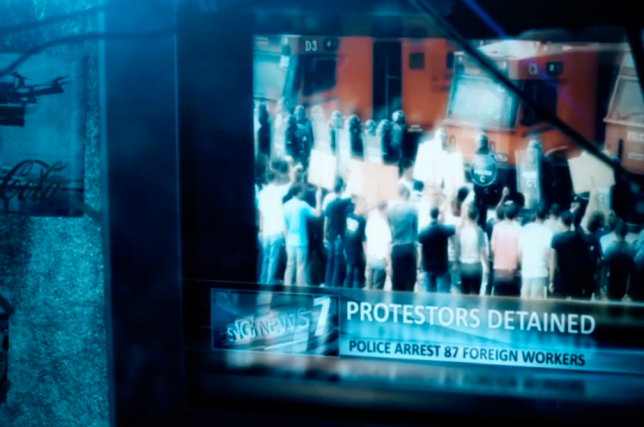
“The documentary however, is interrupted by a subversive protagonist (the author), who gains access to secretive parts of the network by discovering hidden cave networks. This acts as a counter point critique to the corporate led masterplan, forming a social commentary on the ethics of large scale infrastructural projects and the resulting consequences, such as the exploitation of foreign workers.”

Share on Facebook


[ By SA Rogers in Art & Drawing & Digital. ]

[ WebUrbanist | Archives | Galleries | Privacy | TOS ]

WebUrbanist

 
Comments Off on Subterranean Singapore: Short Sci-Fi Film Envisions Dystopian Future

Posted in Creativity


That’s a Wrap! 15 Building Facades Veiled in Plastic & Cloth

06 Jul

[ By SA Rogers in Architecture & Cities & Urbanism. ]

Stretched or hung around the skeletons of buildings, these membranes made of plastic, fabric and metal mesh act like architectural clothing, diffusing light and obscuring the original forms. From Christo and Jeanne Claude’s iconic Wrapped Reichstag to homes enveloped in translucent ETFE, these veiled structures have an air of mystery, their second skin often made of unexpected materials like plastic bottles or camouflage-printed textiles.

Lucas Cultural Arts Museum by OMA

wrap facade OMA 1

wrap facade oma 2

wrap facade oma 3

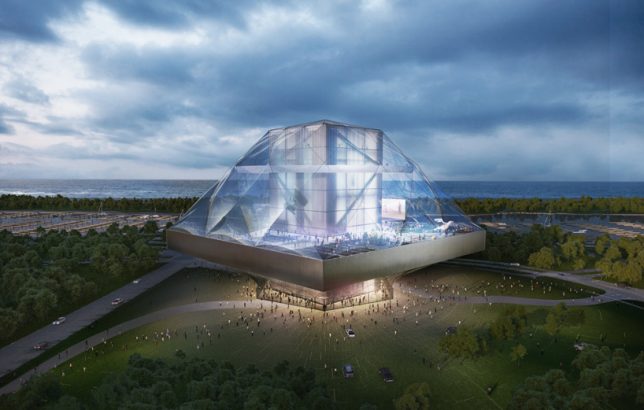
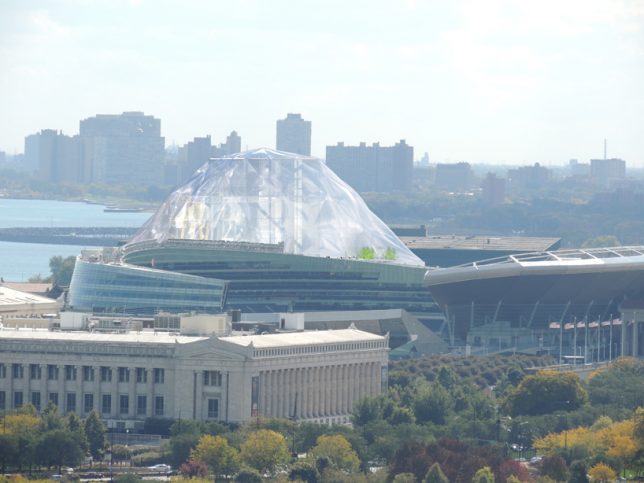
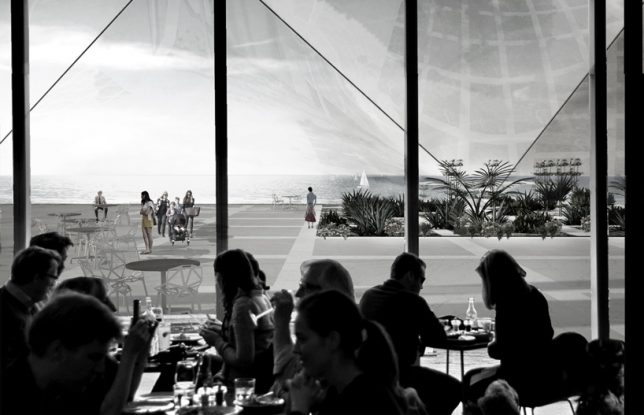
Once it’s finally built, after a long delay that saw its planned building site changing from Chicago to California, the Lucas Cultural Arts Museum (LCAM) could be veiled in a dome-like transparent membrane made of ETFE plastic. Designed by OMA, this second layer creates a sheltered, freely accessible sky park, and can also function as a giant movie screen.

Wrapped Reichstag by Christo + Jeanne Claude

wrap facade reichstag 3

wrap facade reichstag 4

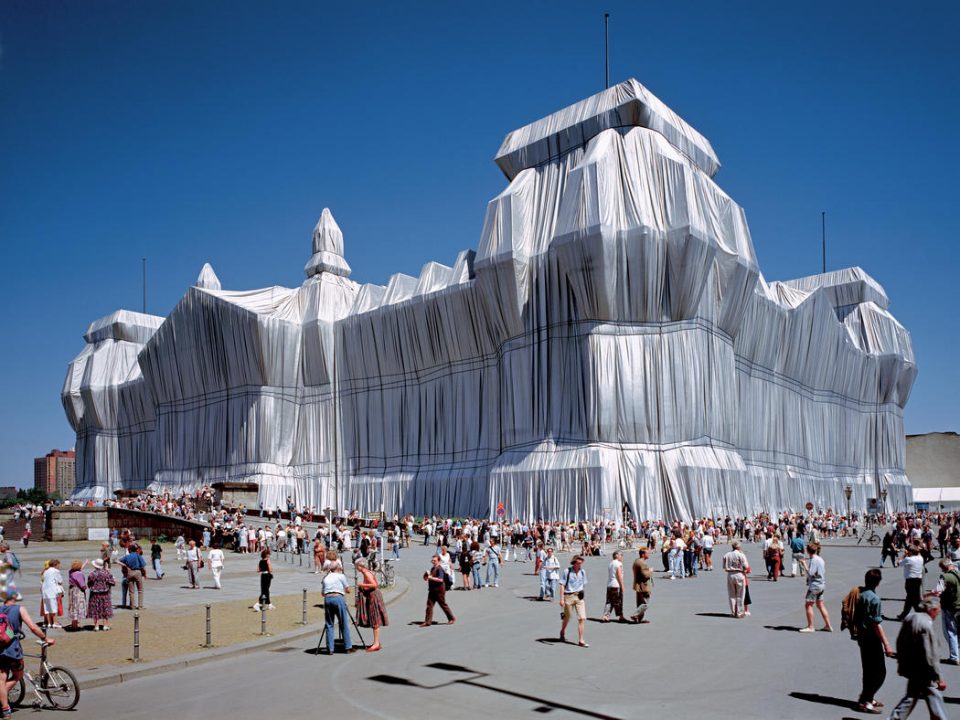
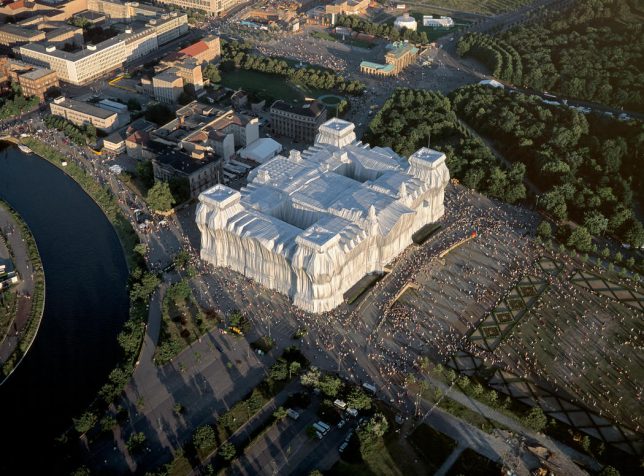
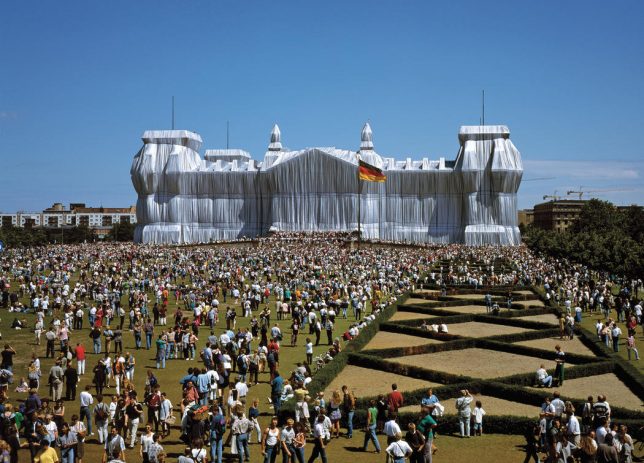
Virtually any structure with a membrane of some sort wrapped around it evokes the iconic work of artistic duo Christo and Jeanne Claude, particularly ‘Wrapped Reichstag.’ In 1995, the artists completely covered the entire Kunstmuseum Bonn with more than a million square feet of aluminum-colored fabric as a symbol for the new Germany after the fall of the Berlin Wall. The project cost $ 15 million USD and remained in place for two weeks.

Shrink-Wrapped Storefront by SO-IL

wrap facade storefront

wrap facade storefront 2

wrap facade storefront 3

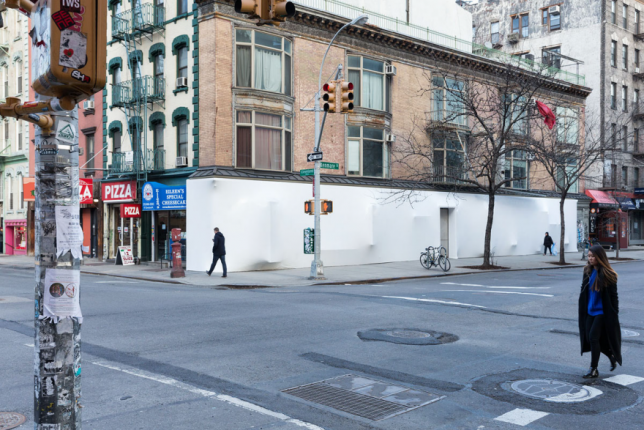
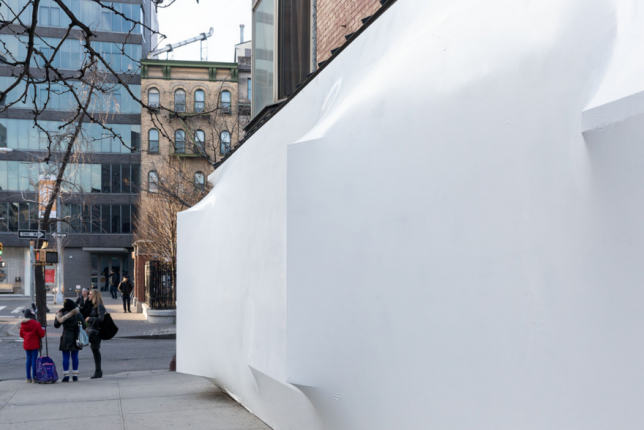
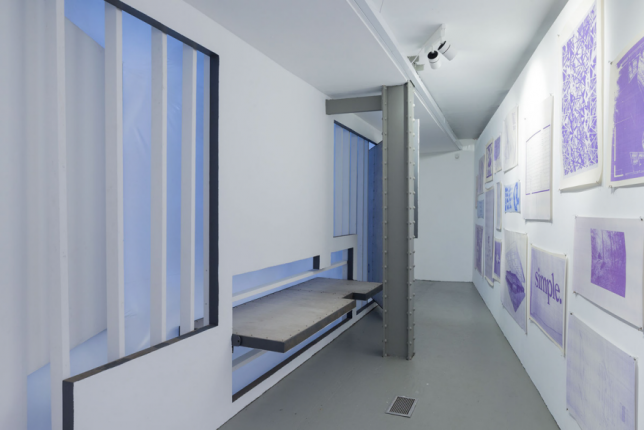
Brooklyn-based studio SO-IL literally shrink-wrapped the famous Storefront for Art and Architecture’s facade in white plastic, creating a mysterious series of bulges and a single entryway. Taking inspiration from the seasonal storage of boats, SO-IL plays with the concept of artistic preservation. It’s actually not unusual for entire buildings to be shrink-wrapped for various purposes, like sensitive renovations, but the company that helped carry out the project noted that artistic usage of the wrapping method is rare. The new facade gave the storefront a snow-white and pristine look that lasted just days as it proved a tempting surface for vandals.

Glowing Home in Japan by Suppose Design Office

wrap facade glowing house 1

wrap facade glowing house 2

wrap facade glowing house 3

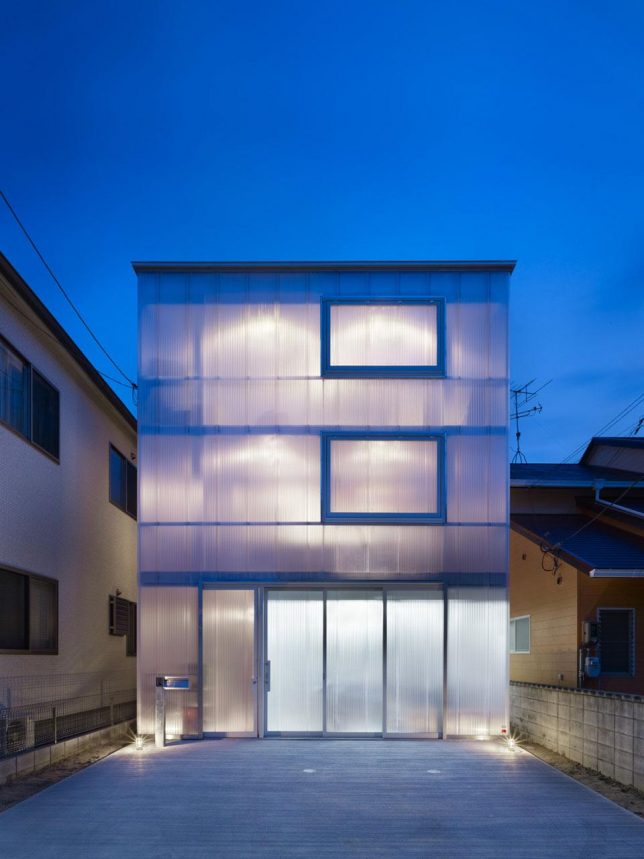
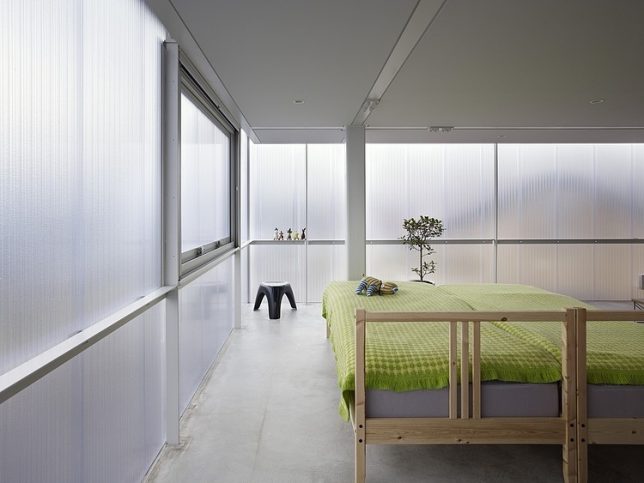
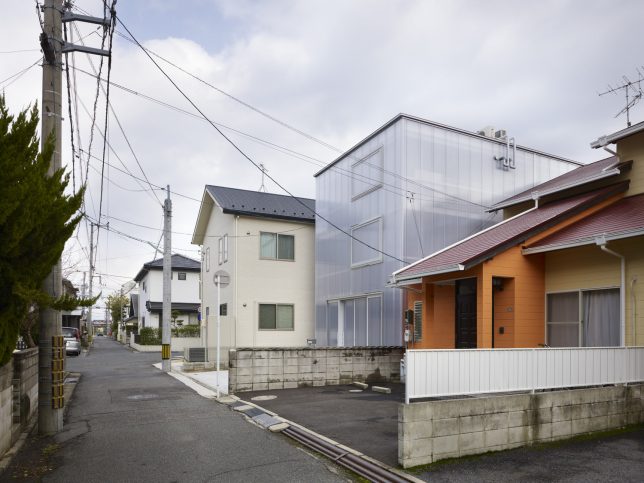
Plastic sheets wrapped around the exterior of a three-story steel home in Hiroshima filter light and create a lantern-like effect at night when illuminated from within. This translucent envelope enables a light-filled home on the inside, which was no small task for architecture firm Suppose Design Office as the narrow property is boxed in on three sides. Reed shades are hung in the upper stories during the summer to keep them from overheating.

Exterior Curtains on an Australian Home

wrap facade curtains

wrap facade curtains 2

wrap facade curtain house 3

wrap facade curtain house 4

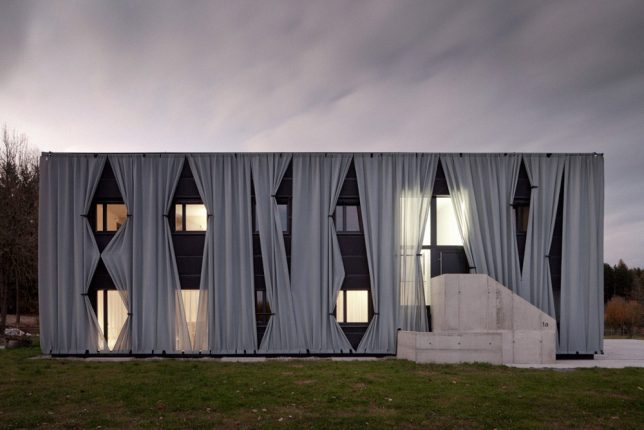
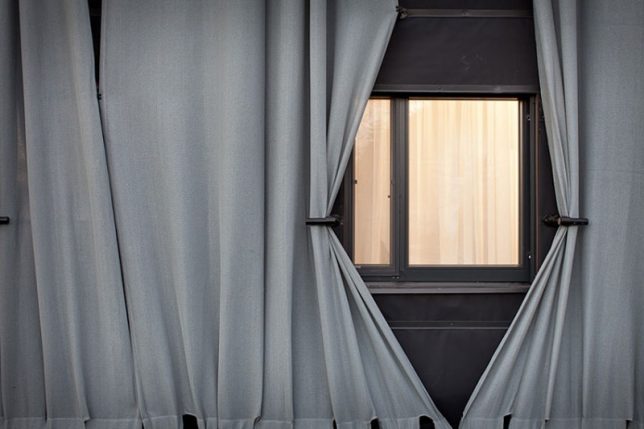
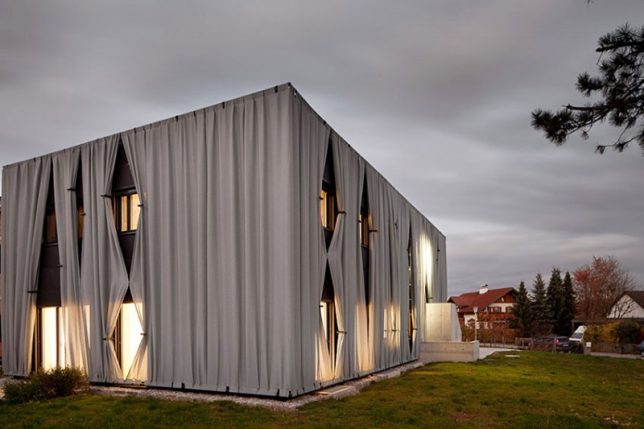
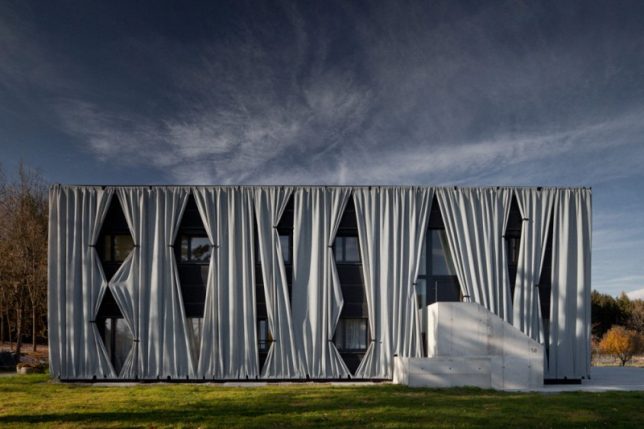
In a reversal of the usual curtained windows, Herzl Arkitekten of Austria covered an entire two-story building in oversized outdoor draperies, veiling the outside of the duplex from view. Pegs hold the curtains open around windows and doors.

Next Page – Click Below to Read More:
Thats A Wrap 15 Building Facades Veiled In Plastic Cloth

Share on Facebook


[ By SA Rogers in Architecture & Cities & Urbanism. ]

[ WebUrbanist | Archives | Galleries | Privacy | TOS ]

WebUrbanist

 
Comments Off on That’s a Wrap! 15 Building Facades Veiled in Plastic & Cloth

Posted in Creativity


Cities of Bone: Organic Future Skyscrapers Free of Concrete & Steel

06 Jul

[ By WebUrbanist in Architecture & Cities & Urbanism. ]

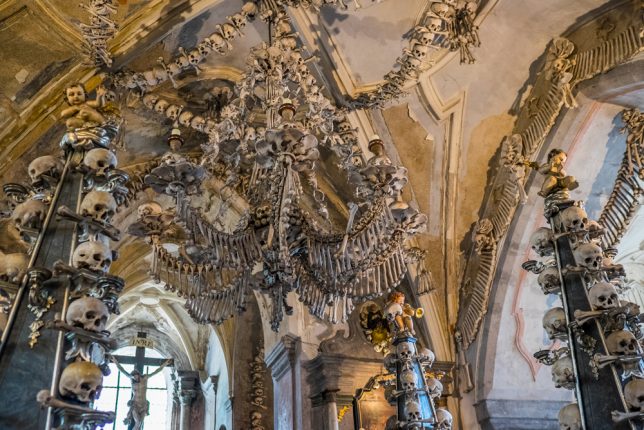
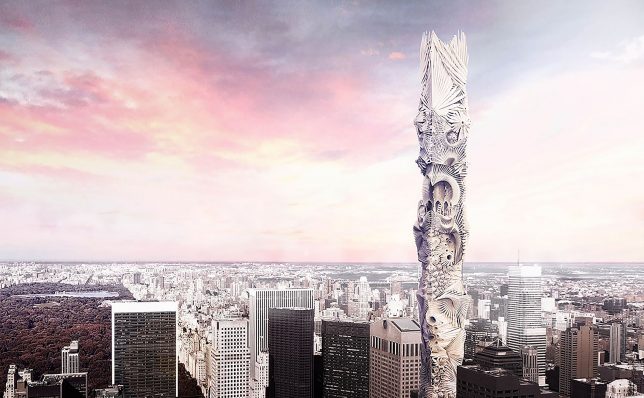
building of bone

Our cities have grown up thanks to concrete and steel, but these materials are far from sustainable, leading architects and researchers to explore new (and old) materials, from wood to eggshell and even bone.

Steel and concrete account for 10% of global carbon emissions, polluting close to as much as the entire transportation industry. Bioengineer Doctor Michelle Oyen of Cambridge’s Department of Engineering builds structures in her lab from artificial bone and eggshell. These can be used for medical implants, but could also scaled up to create low-carbon building materials.

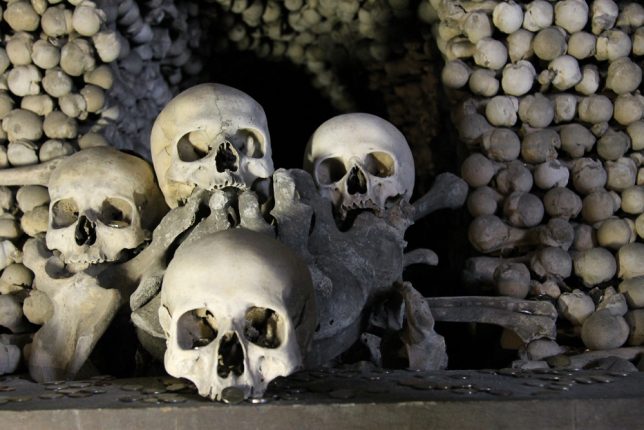
ossuary

Funded in part by the US Army Corps of Engineers, Oyen’s creations are composites of proteins and minerals, the former providing toughness and fracture resistance and the latter lending stiffness and hardness to the mix. These currently come from natural (animal) sources, but she is investigating whether a “non-animal-derived or even synthetic protein or polymer could be used instead of natural collagen.”

0758-11

In theory, her biomimetic creations could even become self-healing, in the same vein as concrete designed to repair itself. For the construction industry to adopt such radical new technologies at scale remains one of the biggest challenges for future organic and semi-organic materials – for decades, building codes have been framed around the use of concrete and steel.

Cities and skyscrapers of today already represent a good first step to long-term sustainability, packing lots of people into dense areas and vertical structures requiring less land. Still, a shift to renewable, organic and reusable materials would make them more future-proof and environmentally friendly.

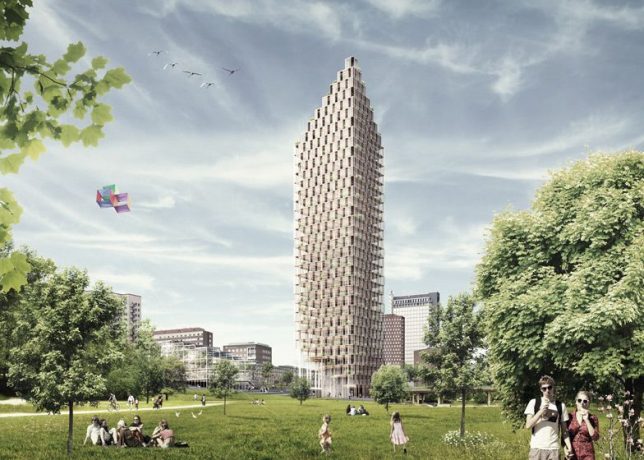
wood skyscrapers

Wood is another natural building material gaining increased attention from the built environment community, a renewable resource that is strong, durable and recyclable. “Future cities may not look a whole lot different – you may not know immediately if you are in a timber, steel or concrete building,” says Doctor Michael Ramage from the Cambridge Department of Architecture.

wood skyscraper design

And “cities might be a whole lot quieter, as most timber buildings are built off site, and then just assembled on site, and use roughly a fifth as much truck traffic as equivalent concrete buildings. In other words, what needs to be delivered in five trucks for a concrete building can be delivered in one truck for a timber building. That’s an incredible advantage, for cost, for environment, for traffic and for cyclists” (Bone Church image by Davis Staedtler and Ossuary by jockrutherford).

Share on Facebook


[ By WebUrbanist in Architecture & Cities & Urbanism. ]

[ WebUrbanist | Archives | Galleries | Privacy | TOS ]

WebUrbanist

 
Comments Off on Cities of Bone: Organic Future Skyscrapers Free of Concrete & Steel

Posted in Creativity


Paradise Found: Spend a Night Floating Above the Great Barrier Reef

05 Jul

[ By SA Rogers in Destinations & Sights & Travel. ]

Screen Shot 2016-06-30 at 6.55.49 PM

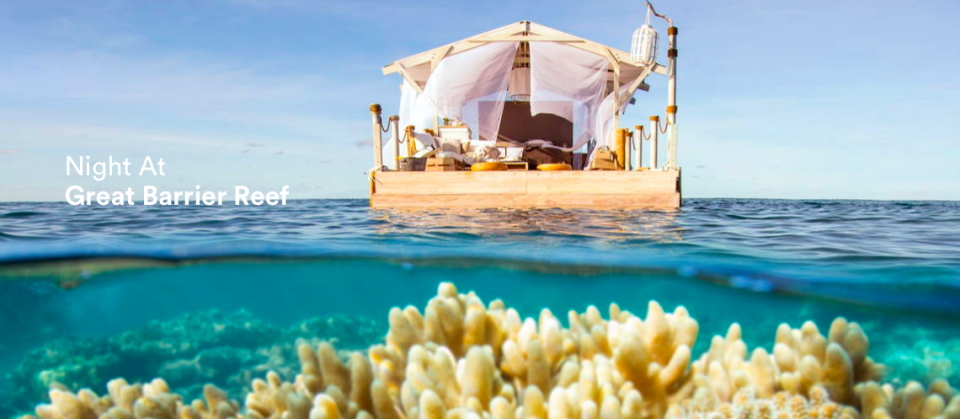
Better hope your kids remain firmly tucked into their Finding Dory-themed beds all night long lest they get a little too enthusiastic about leaning over the edge of this wall-free AirBNB floating over Australia’s Great Barrier Reef. The vacation rental company is offering one lucky family of four two free nights aboard their 2-bedroom, 1-bath open platform, with a beautiful white-curtained master suite on one end and the kids’ room tucked behind it.

Screen Shot 2016-06-30 at 6.56.07 PM

Screen Shot 2016-06-30 at 6.56.31 PM

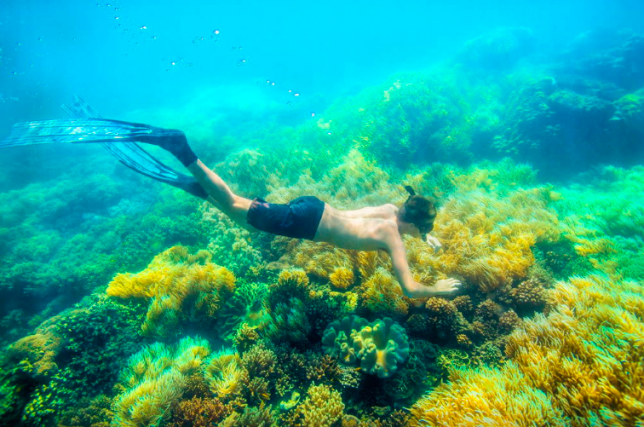
The platform itself is pretty cool, taking advantage of the beautiful weather and pleasant temperatures of the area, not to mention the world-class snorkeling and scuba diving. If you want to win, you’ll have to submit an essay on why your family deserves to stay at the temporary rental, and your answer better “surprise and delight” the folks at AirBNB. The winner will be selected on July 4th.

Screen Shot 2016-06-30 at 6.56.39 PM


Screen Shot 2016-06-30 at 6.56.46 PM

“Imagine living atop a coral garden beside a sand cay in a billowing reef home on the Great Barrier Reef,” says AirBNB on the promo page for the contest. “You feel the pull of the unknown when you peek over the edge of the coral shelf and take in your neighborhood – home to 600 types of soft and hard corals, 100 species of jellyfish, 3,000 varieties of molluscs, 500 species of worms, 1,625 types of fish, 133 varieties of sharks and rays, and more than 30 species of whales and dolphins. And somewhere, beneath you, is the most famous Blue Tang in the world.” [The latter refers to the type of fish featured in ‘Finding Dory.]

Screen Shot 2016-06-30 at 6.56.13 PM

Screen Shot 2016-06-30 at 6.56.23 PM

Unsurprisingly, the contest is a collaboration between AirBNB and Disney Pixar’s Finding Dory, the animated film that’s likely set to wipe out the species of fish it highlights just as it did with clownfish back in 2003. In the years since ‘Finding Nemo’ came out, more than 10 million clownfish were removed from reefs for home aquariums, causing them to go locally extinct in places like Thailand. At least viewing tropical fish in their natural habitat at the Great Barrier Reef leaves them where they belong. Just don’t go throwing any trash overboard, please, kids.

Share on Facebook


[ By SA Rogers in Destinations & Sights & Travel. ]

[ WebUrbanist | Archives | Galleries | Privacy | TOS ]

WebUrbanist

 
Comments Off on Paradise Found: Spend a Night Floating Above the Great Barrier Reef

Posted in Creativity


Disappearing Architecture: 15 Mirrored Buildings Distort Perception

04 Jul

[ By SA Rogers in Architecture & Houses & Residential. ]

mirror zaha hadid 2

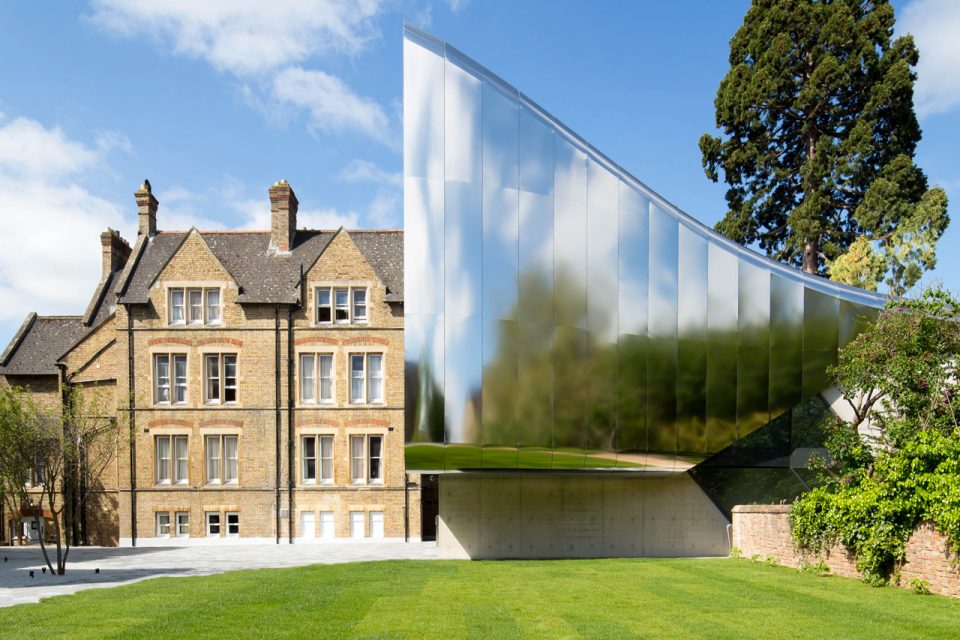
Dazzling in the most literal sense, architecture clad in mirrored glass or stainless steel almost seem to become part of the sky and landscapes that surround it so you can’t quite tell where the man-made objects end and nature begins. That’s often the point, with architects creating structures that virtually disappear into their surroundings (to the chagrin of more than a few birds.)

Reflection Field by Phillip K Smith III, Indio, California

mirror architecture coachella

mirror architecture coachella 2

mirror architecture coachella 3

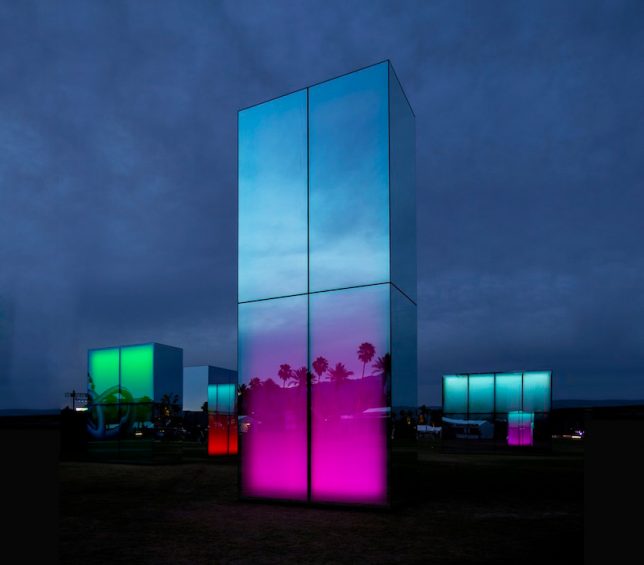
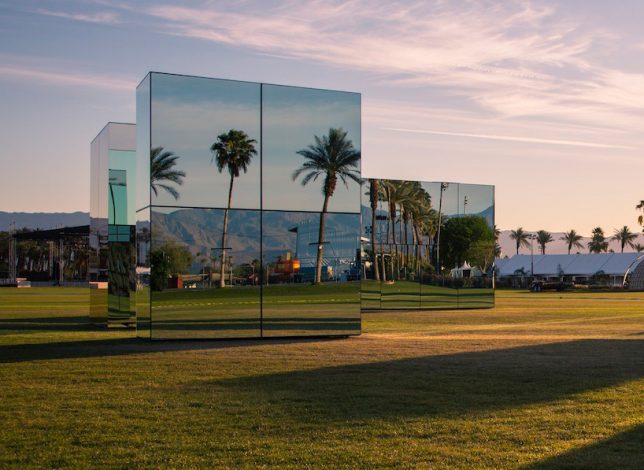
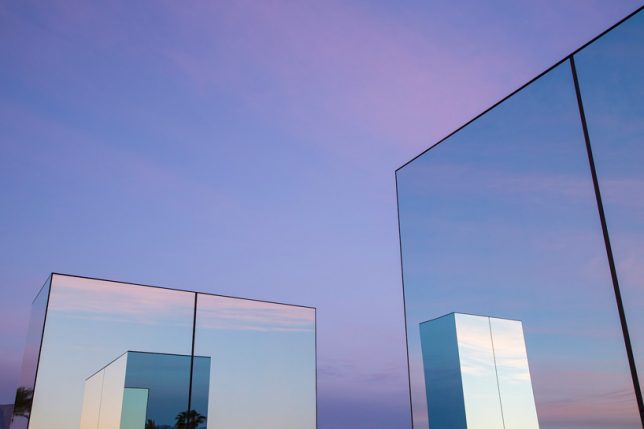
Reflecting the vast open sky and signature palm trees of Indio, California, where Coachella is held each year, the installation ‘Reflection Field’ by Phillip K. Smith III consists of five monolithic volumes that transform all day along with the environment. At night, colored light is projected from within.

Refinished French Country House

mirror architecture french country

mirror architecture french country 2

mirror architecture french country 3

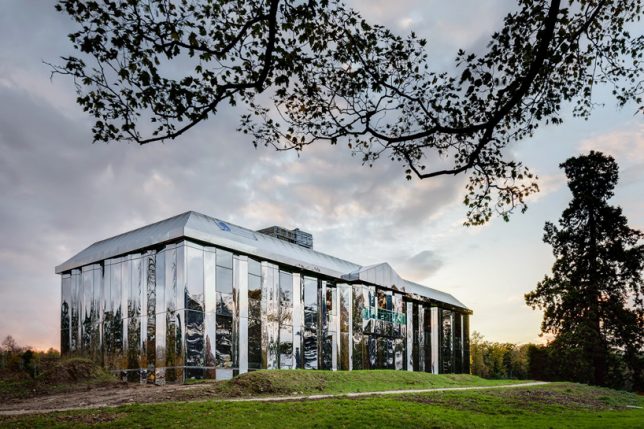
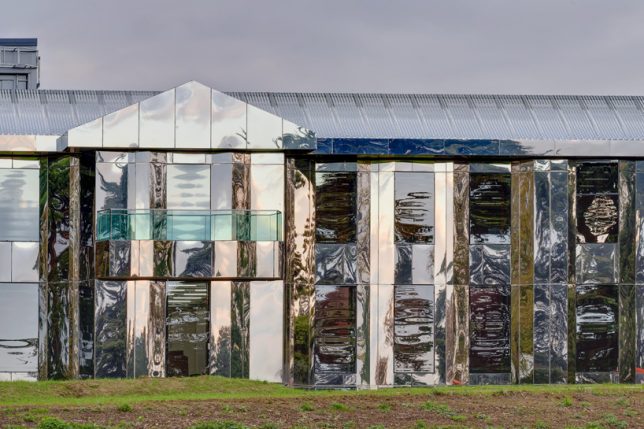
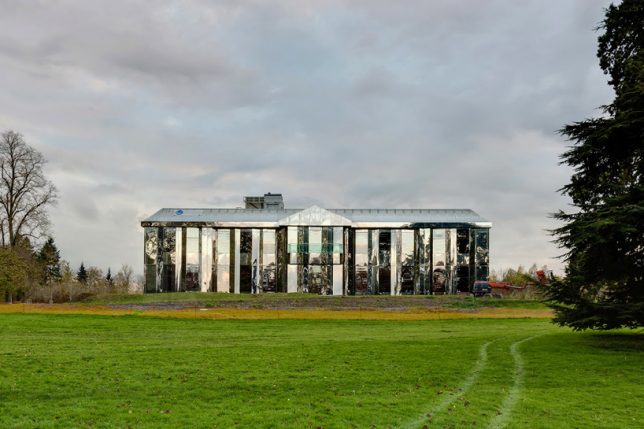
It’s safe to say there’s no French country estate quite as dazzling as this one, now that its facade has been entirely replaced with mirrors. Architecture studio Bona-Lemercier worked with artist Xavier Veilhan and set designer Alexis Bertrand to transform a 1960s home into ‘Le Château de Rentilly,’ a contemporary art gallery.

Guest Houses by Peter Pichler, South Tyrol, Austria

mirror pichler 1

mirror pichler 2

mirror pichler 3

mirror pichler 4

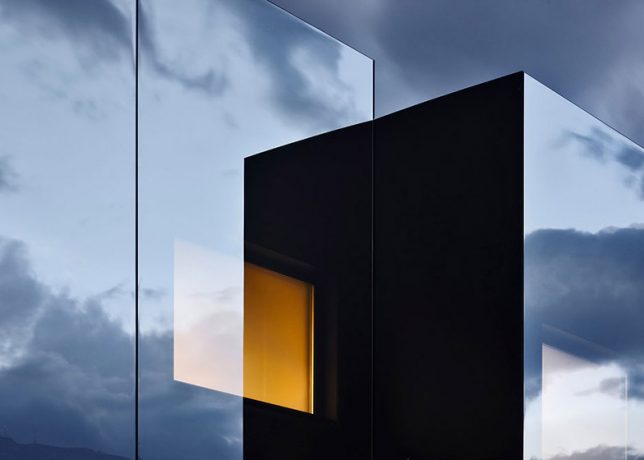
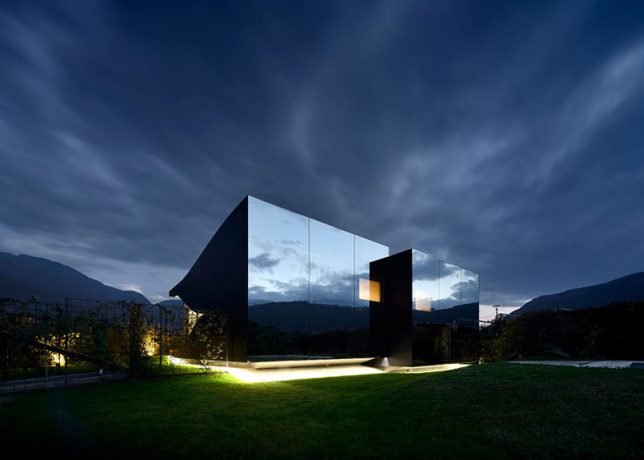
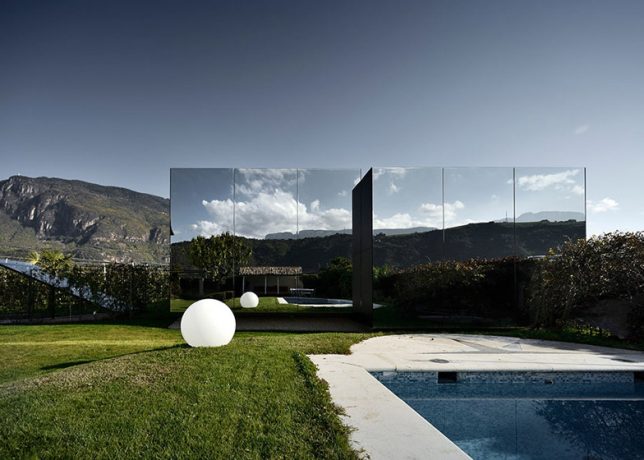
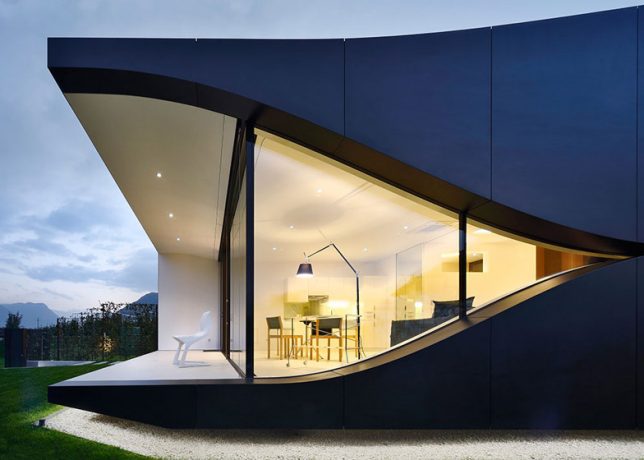
A pair of vacation homes in the South Tyrolean Dolomites by Peter Pichler offer up space for guests without interrupting the property owners’ view of the stunning mountains. Reflective, but coated in a glare-reducing film to prevent bird collisions, the two ‘Mirror Houses’ blend into the property so they don’t compete with the client’s garden and existing 1960s farmhouse.

Mirrored Ziggurat by Shirin Abedinirad

mirror ziggurat

mirror ziggurat 2

mirror ziggurat 3

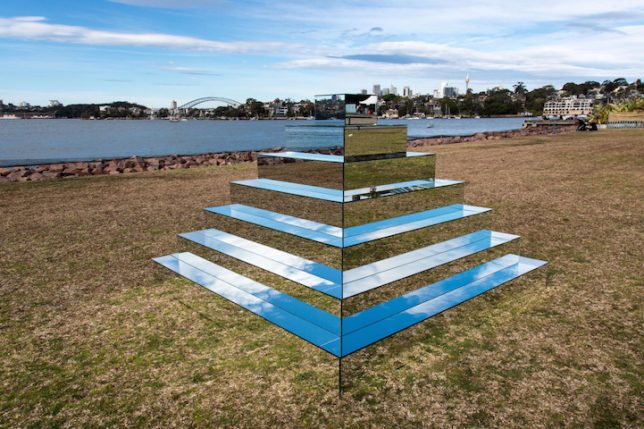
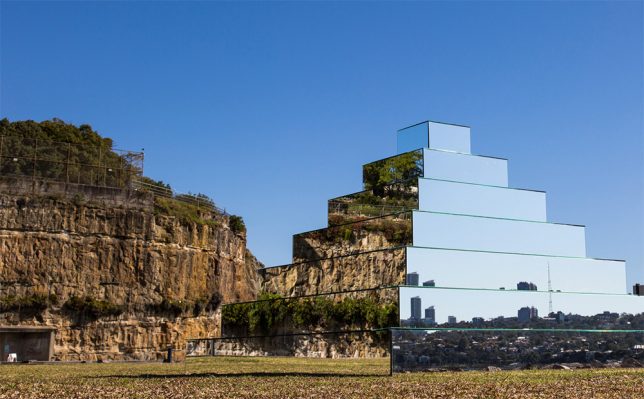
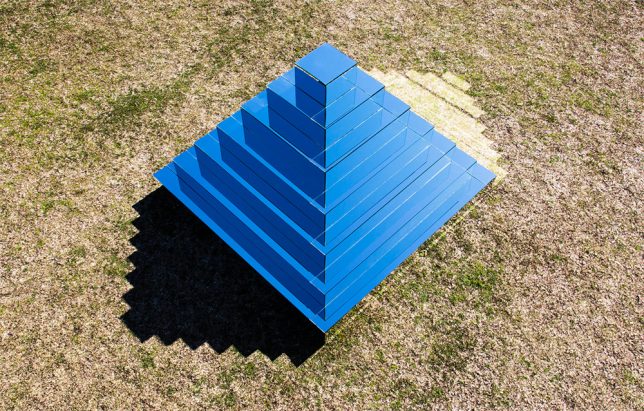
“In this installation I have been inspired by the pyramidal structure of ziggurat, a common form of temple in ancient Mesopotamia, attempting to connect earth and sky, so humans could be nearer to God,” says artist Shirin Abedinirad. “The Mirrored Ziggurat acts as a staircase, which seeks to connect nature with human beings and to create union of ancient history and today’s world. The installation offers a transformative view of the self. The Mirrored Ziggurat has seven levels that represent seven heavens. For me, mirrors amplify this paradise, giving light; an important mystical concept in Persian culture, and a medium creating an optical illusion.”

Mirrored Auditorium by MVRDV, Tianjin, China

mirror architecture MVRDV

mirror architecture MDRDV 2

mirror architecture MVRDV 3

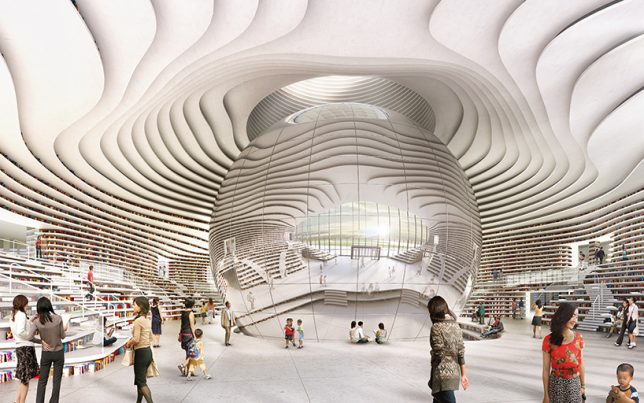
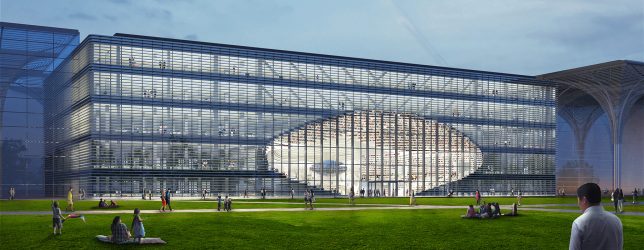
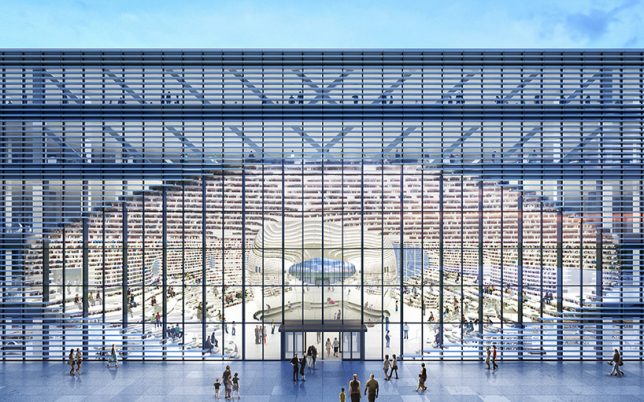
It’s hard to tell what’s real and what’s reflection when gazing inside the transparent facade of MVRDV’s beautiful new library at the Binhai Cultural Centre in the Chinese city of Tianjin. A mirrored spherical auditorium inside the main atrium reflects both the interior space around it (including all those books!) and the park outside.

Next Page – Click Below to Read More:
Disappearing Architecture 15 Mirrored Buildings Distort Perception

Share on Facebook


[ By SA Rogers in Architecture & Houses & Residential. ]

[ WebUrbanist | Archives | Galleries | Privacy | TOS ]


WebUrbanist

 
Comments Off on Disappearing Architecture: 15 Mirrored Buildings Distort Perception

Posted in Creativity


Nordic by Nature: Fanciful Models of Scandinavian Summer Homes

04 Jul

[ By WebUrbanist in Architecture & Houses & Residential. ]

nordic retreat treehouse

A series of sleek but whimsical models blend photorealism with fantastic concepts for treehouses, hilltop homes and even dwellings mounted on the sides of cliffs.

nordic cliff side dwelling

Santi Zoraidez is an art director and designer from Buenos Aires who does visual, graphic and architectural work, sometimes real and sometimes conceptual.

nordic modernism hillside home

In this set of summer homes, he bends, twists, warps and cantilevers wood in amazing (if sometimes implausible) ways, putting houses on spindly stilts or hanging them from steep rocky surfaces.

nordic modernist

The results are at once daring and provocative while retaining a sense of minimalism, that core feature common to Modernist Scandinavian designs.

nordic angled house modle

By maintaining a simple palette of colors and textures, the artist manages to accomplish a natural aesthetic that makes sense for countryside dwellings while letting the details of designs – long horizontals and asymmetrical shapes – define each work.

Share on Facebook


[ By WebUrbanist in Architecture & Houses & Residential. ]

[ WebUrbanist | Archives | Galleries | Privacy | TOS ]

WebUrbanist

 
Comments Off on Nordic by Nature: Fanciful Models of Scandinavian Summer Homes

Posted in Creativity


Blood Red: 30 Vintage Soviet Accident Prevention Posters

03 Jul

[ By Steve in Design & Graphics & Branding. ]

soviet-accident-prevention-poster-0
In Soviet Russia, accident prevent you! That’s the message rendered in classic commie-propaganda style via these thirty soviet accident prevention posters.

soviet-accident-prevention-poster-1

soviet-accident-prevention-poster-3

Graphic workplace accident prevention posters are nothing new, neither are they the purview of any one nation. That said, this selection of vintage Soviet accident prevention posters reflects a period in Russian history that was drenched in blood, sorrow, violence and loss – and not only on the factory floor.

soviet-accident-prevention-poster-2

soviet-accident-prevention-poster-4

soviet-accident-prevention-poster-5

Oleg Atbashian, a former citizen of the Soviet Union who moved to the United States in 1994, doesn’t recall ever seeing these horrifying-to-the-point-of-being-comical posters. Atbashian worked as a metal worker apprentice at a large Ukrainian factory when he was a teenager and later, as a visual agitprop (agitation and propaganda) artist specializing in posters directed at construction workers. Atbashian was in the right place; just at the wrong time.

soviet-accident-prevention-poster-6

soviet-accident-prevention-poster-7

soviet-accident-prevention-poster-8

Indeed, Atbashian’s USSR of the 1970s was quite a different place from the fledgling “communist paradise” of Lenin and Stalin. “They (the posters) reflect the zeitgeist of a completely different, less sensitive generation of Soviet citizens,” explains Atbashian, “who were so used to being disciplined, humiliated, and terrorized by the authorities that the least of their concerns would be to question some silly presumptive posters that described them as a herd of bumbling idiots being gored by machinery.” Geez Oleg, tell us what you really think!

soviet-accident-prevention-poster-30

soviet-accident-prevention-poster-13

Just as the communist system of government represented a clean break from the Czarist regimes which preceded it, graphic art in the nascent Soviet Union aspired to blaze a new trail in lockstep with the policies and philosophies of the Red Revolution.

Next Page – Click Below to Read More:
Blood Red 30 Vintage Soviet Accident Prevention Posters

Share on Facebook


[ By Steve in Design & Graphics & Branding. ]

[ WebUrbanist | Archives | Galleries | Privacy | TOS ]

WebUrbanist

 
Comments Off on Blood Red: 30 Vintage Soviet Accident Prevention Posters

Posted in Creativity


Living Light: Human Figures Dance Inside 3D-Printed Zoetrope

02 Jul

[ By SA Rogers in Drawing & Digital. ]

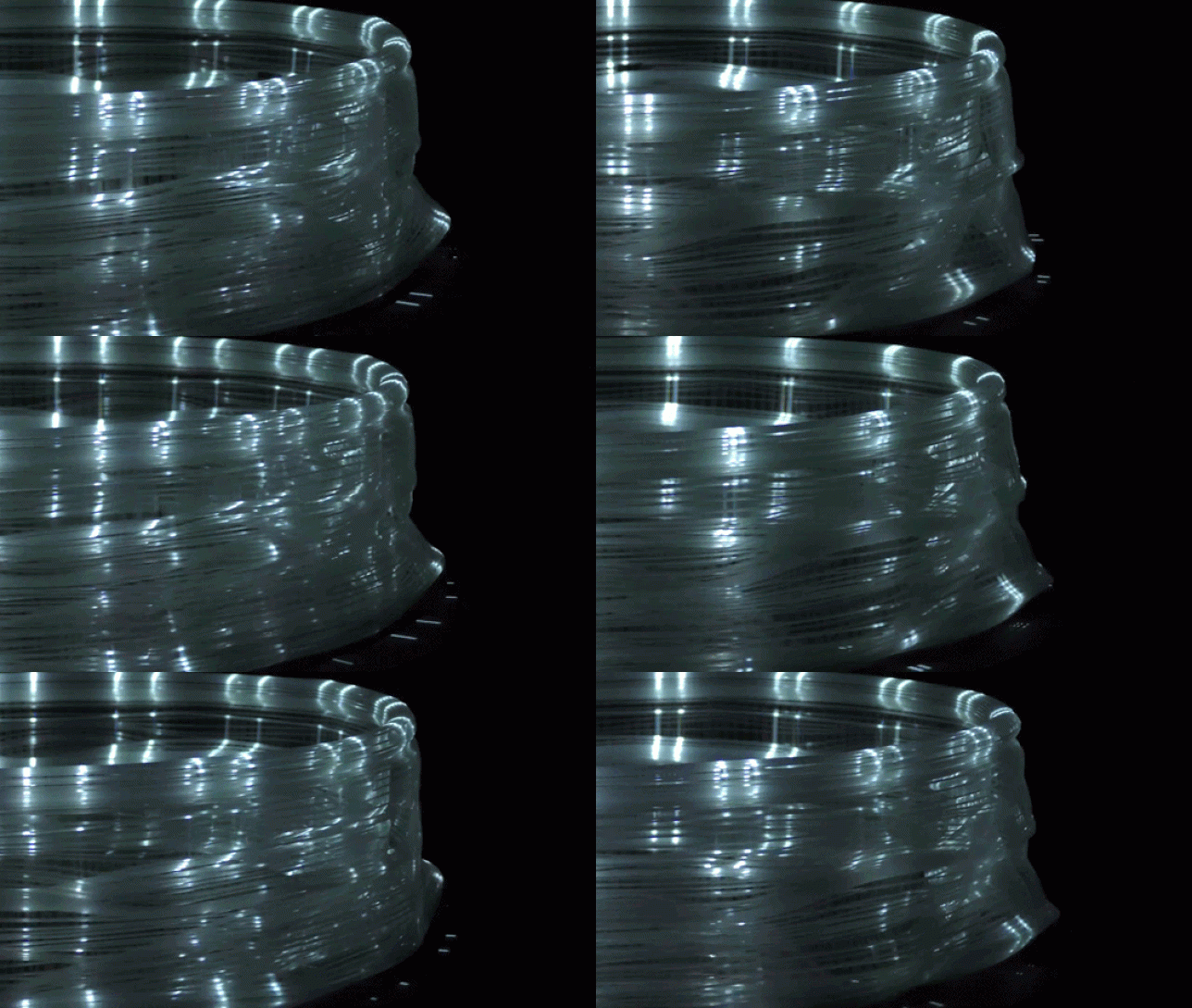
zoetrope gif main

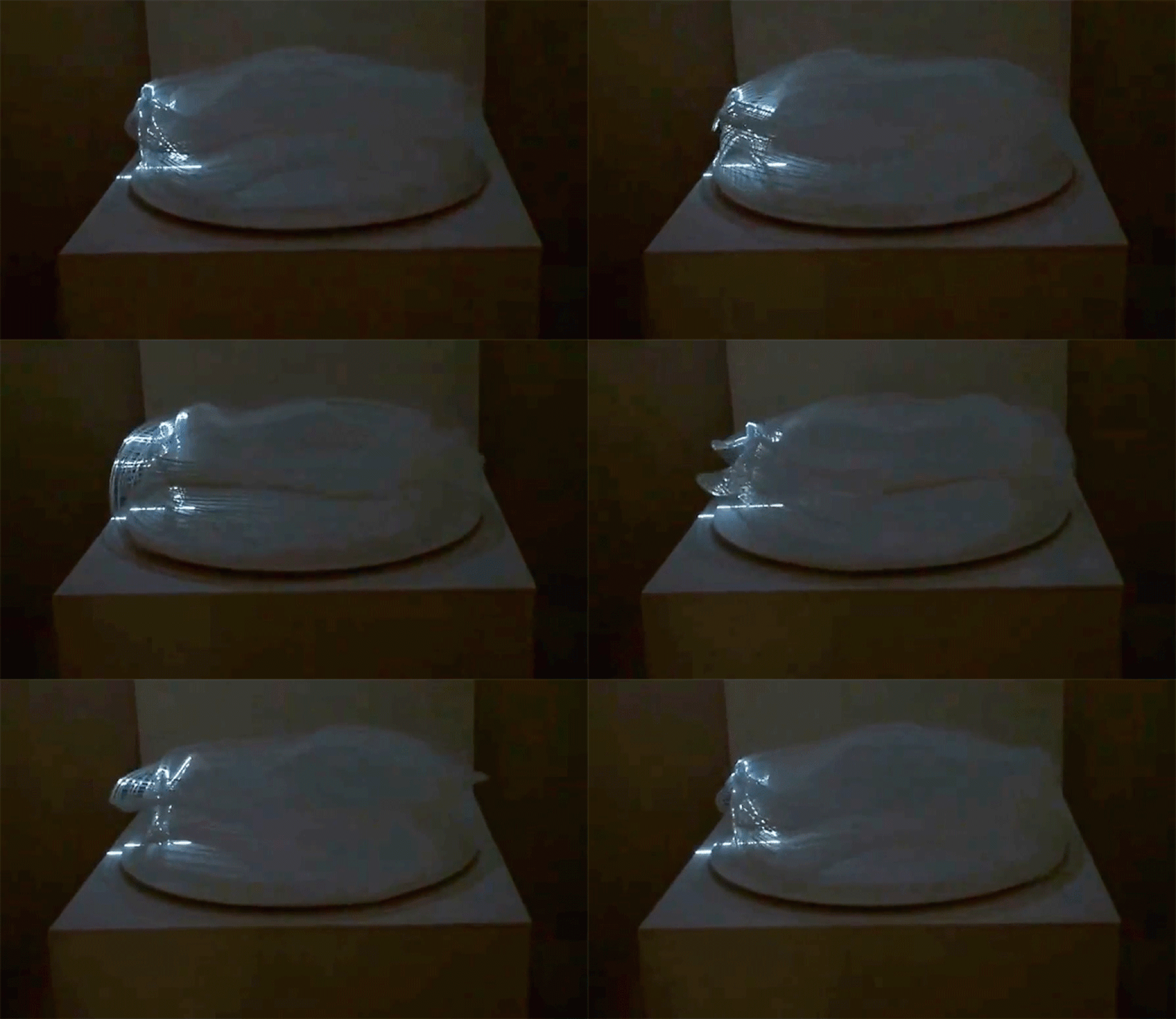
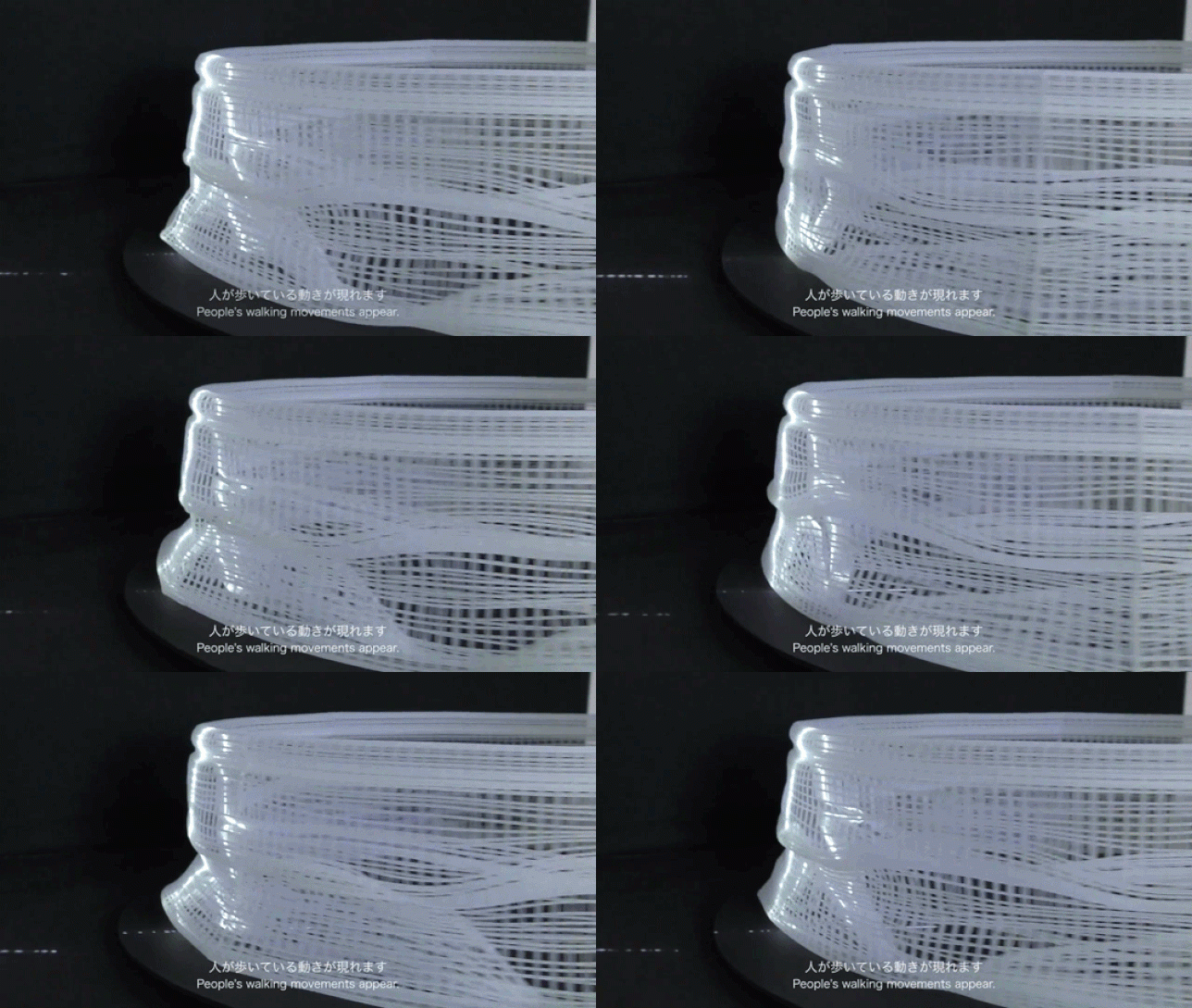
All it takes are a few highly focused beams of light and a spinning zoetrope to make a human figure spring to life, walking or even dancing in a barely-visible translucent circle. ‘Process and WALK’ explores the relationship between time and movement, taking a two-dimensional image of a person and applying it to a three-dimensional object. In effect, the person’s movements are stretched out to take up the entire circle, each fraction of an inch containing its own particular shifts of the arms and legs.

zoetrope gif 2

zoetrope light 2

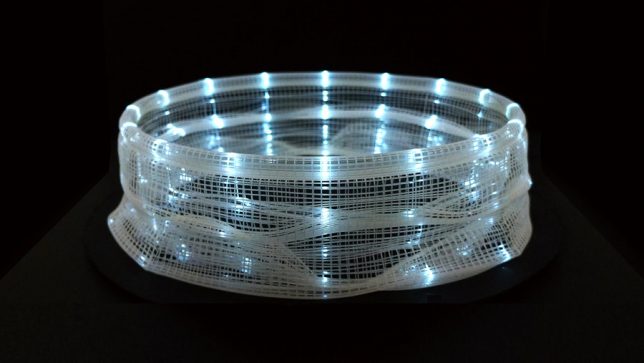
Artist Akinori Goto lays out the whole process in the video above, showing how he transforms a animation of a person walking into a 3D axis that can then be translated into data for a 3D printer. The result looks like no more than a warped piece of plastic mesh, with no discernible shapes embedded within it. Place it on a turntable and it still won’t look like much – until beams of light highlight just one segment of the edge.

zoetrop gif 1

Once that happens, the walking figure appears. Every few seconds, the illuminated figure seems to multiply, sending additional figures to other points along the zoetrope. It’s simple and complex at the same time, pairing a pre-film animation device that’s been in use for centuries with cutting-edge small-scale manufacturing technology

Share on Facebook


[ By SA Rogers in Drawing & Digital. ]

[ WebUrbanist | Archives | Galleries | Privacy | TOS ]

WebUrbanist

 
Comments Off on Living Light: Human Figures Dance Inside 3D-Printed Zoetrope

Posted in Creativity


Calligraffiti: Fresh Artistic Perspective on Cairo’s ‘Garbage City’

01 Jul

[ By WebUrbanist in Art & Street Art & Graffiti. ]

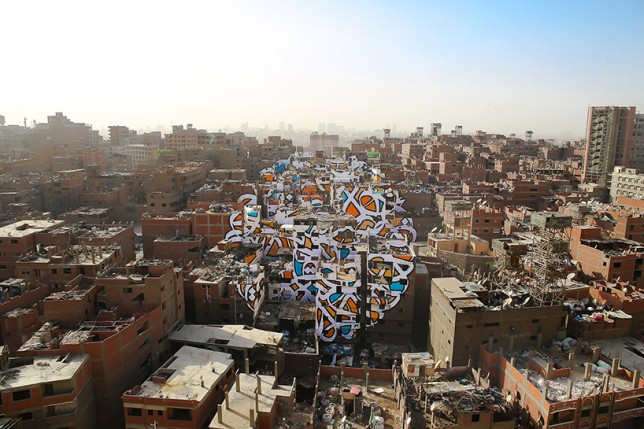
giant mural cairo

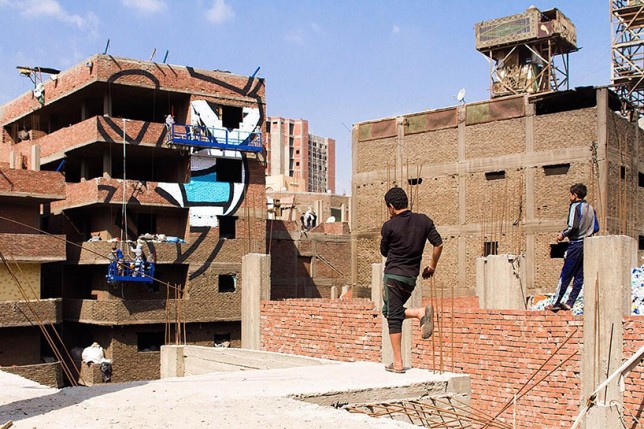
On the outskirts of Cairo, Egypt, lies the community of Manshiyat Naser, famous for providing informal trash and recycling services for the city, but also notorious for the mess and smell that go with that role.

garbage city mural

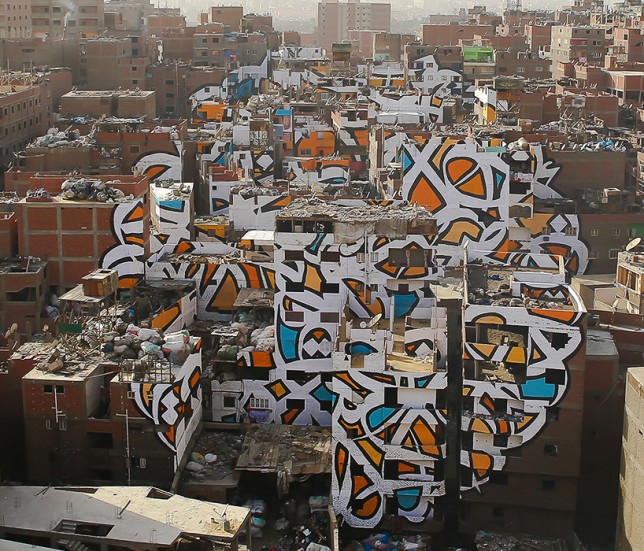
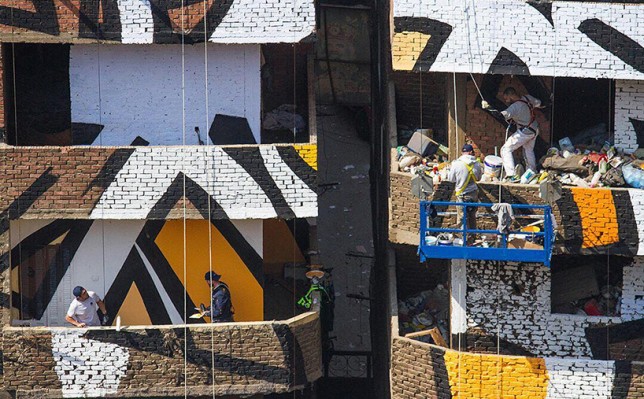
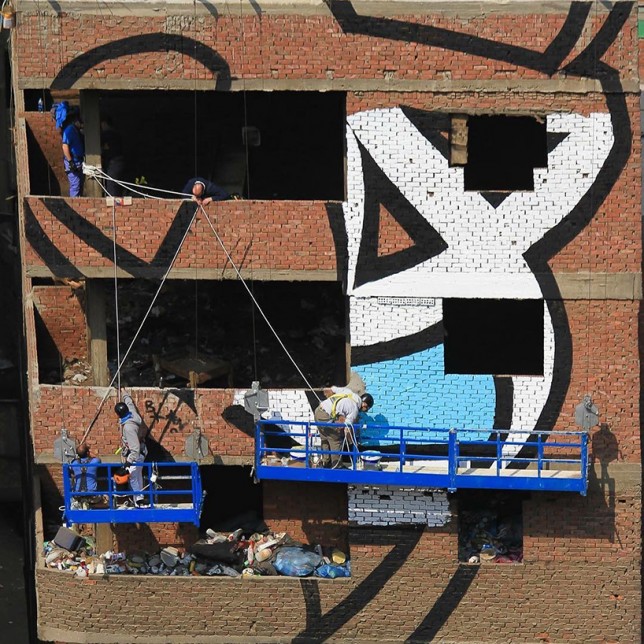
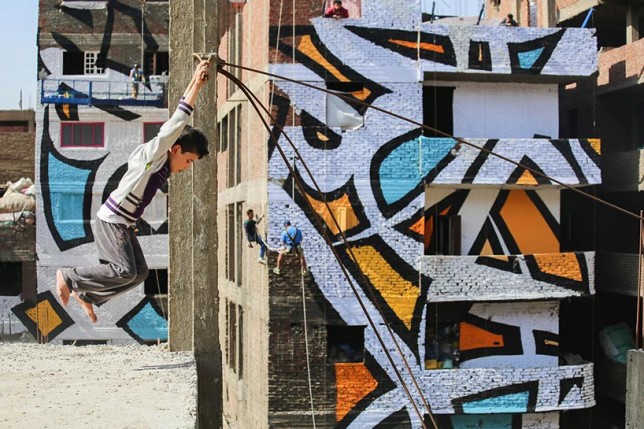
‘Calligraffiti’ artist el Seed worked with the ward to develop an incredible mural spanning 50 buildings, aiming to change perceptions and raise awareness about the community.

garbage city calligraffiti

Marginalized and belittled, the residents are incredibly industrious, sorting out garbage from recyclables by district within the community, literally turning Cairo’s trash into lucrative treasure.

graffiti on walls

hanging to paint

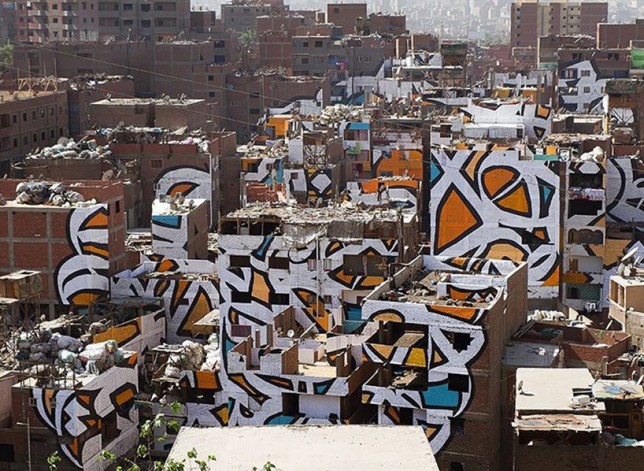
The mural blends aspects of Arabic calligraphy with contemporary graffiti, all while highlighting the architecture of the area. The entire work is only visible from the nearby Mokattam Mountain.

graffiti progress

The piece spells out the words of Saint Athanasius of Alexandria, a Coptic bishop from the 3rd Century, who said: “anyone who wants to see the sunlight clearly needs to wipe his eye first.”

graffit art close up

“The zaraeeb community welcomed my team and I as if we were family,” said the artist. “It was one of the most amazing human experiences I have ever had. they are generous, honest and strong people. They have been given the name of Zabaleen (the Garbage People), but this is not how they call themselves. They don’t live in the garbage but from the garbage; and not their garbage, but the garbage of the whole city. they are the ones who clean the city of Cairo.”

Share on Facebook


[ By WebUrbanist in Art & Street Art & Graffiti. ]

[ WebUrbanist | Archives | Galleries | Privacy | TOS ]

WebUrbanist

 
Comments Off on Calligraffiti: Fresh Artistic Perspective on Cairo’s ‘Garbage City’

Posted in Creativity


Beast of a Bicycle! Mechanical Modification With a Spider-Like Walk

30 Jun

[ By SA Rogers in Art & Sculpture & Craft. ]

strandbeest bike 1

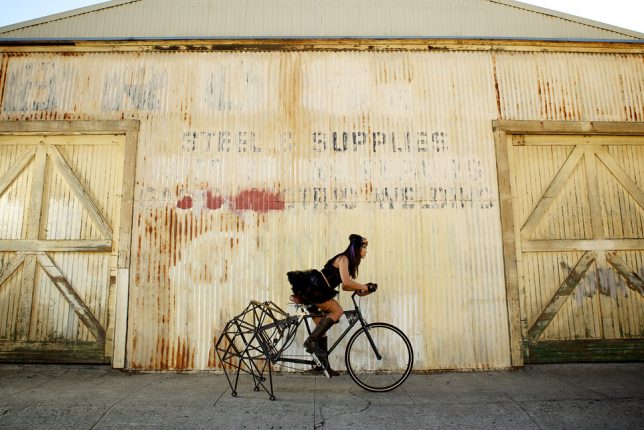
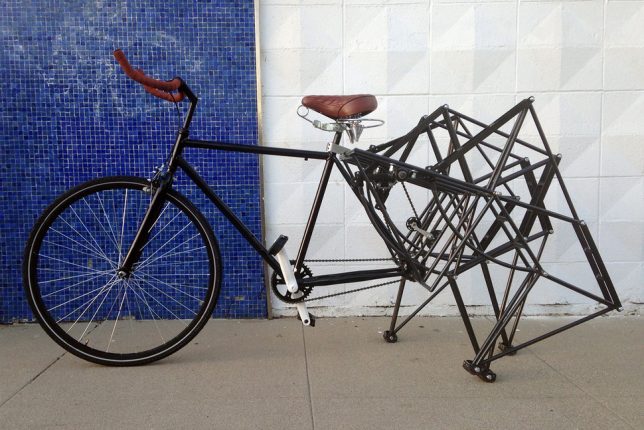
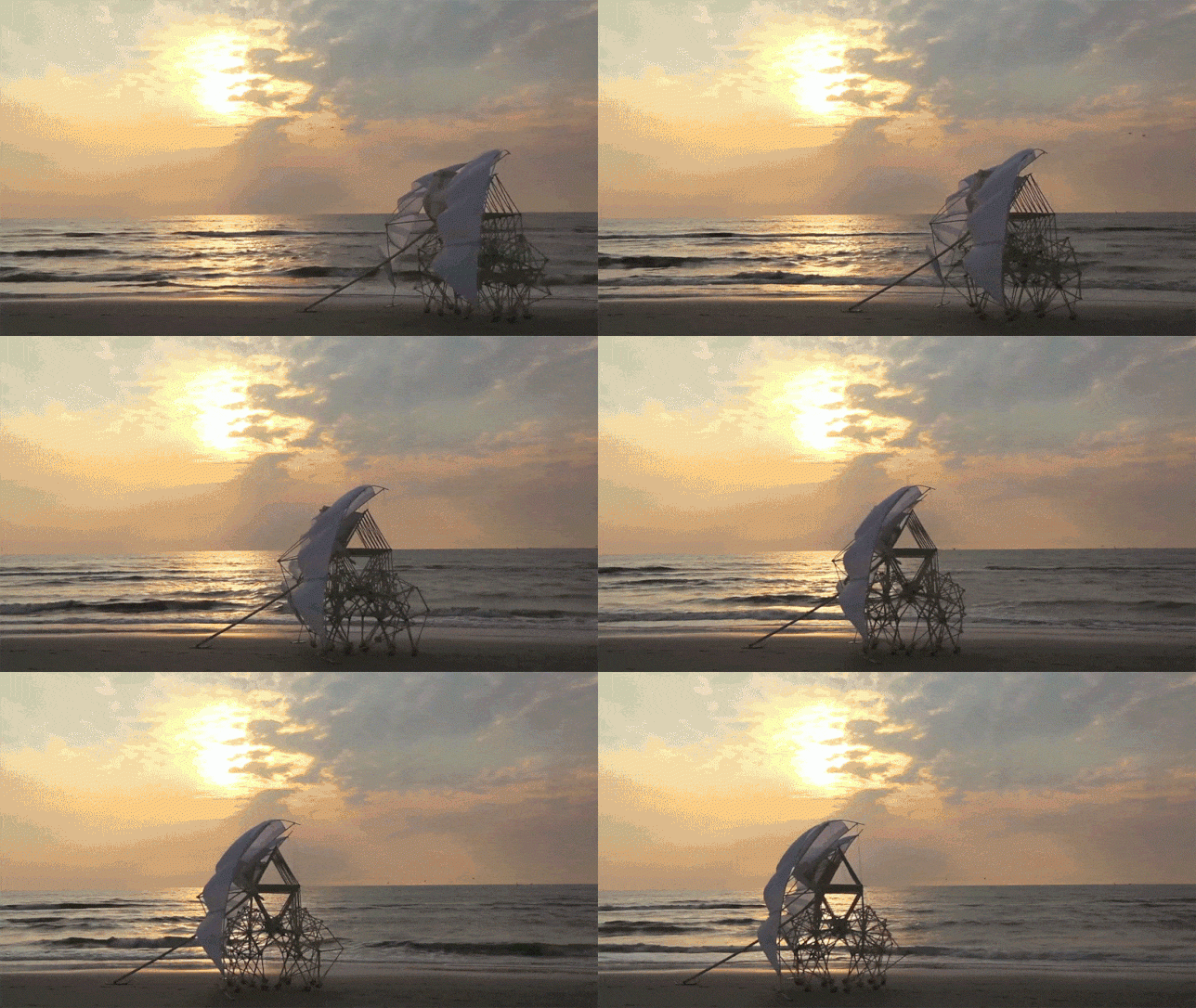
This bizarre new take on the Strandbeest bicycle isn’t going to get you from point A to point B much faster than a casual stroll, but it’s fun to watch, with the rear mechanical mechanism ‘walking’ in spider-like motions. Borrowing from the wind-powered kinetic sculptures pioneered by Dutch artist and engineer Theo Jansen, this new creation by Californian collective Carv is half bike, half beast with a front wheel, three functional legs and over 450 handmade components. The designers started with a simple blueprint of Theo Jansen’s rod-linking technique, which he describes as “skeletons which are able to walk on the wind.”

strandbeest bike 2

strandbeest bike 4

It took Carv a whole seven months to develop and build the bike, with the assembly of the rods alone taking three days. Whereas Jansen’s walking sculptures use sails and wind to generate movement, the bike uses pedal power. The designers used a single-speed bike from Walmart as the base and added the rear linkage. Get the technical details here.

An earlier version of the ‘walking bicycle’ by Hanno Smits also uses pedal power, but takes out both wheels, opting for a full walking mechanism that seems to navigate a little more smoothly. The Panterragaffe, a third version, is a two-person pedal-powered walking machine conceived as a public performance piece.

strandbeest opt

It’s hard to deny that Jansen’s original sculptures are just plain cooler and more interesting, though, no matter how many hybrid knock-offs people try to make. Still tempted to try it, or just want to know more about how they work? Jansen sells a few books as well as DVDs and miniature ‘beasts’ on the Strandbeest website.

Share on Facebook


[ By SA Rogers in Art & Sculpture & Craft. ]

[ WebUrbanist | Archives | Galleries | Privacy | TOS ]

WebUrbanist

 
Comments Off on Beast of a Bicycle! Mechanical Modification With a Spider-Like Walk

Posted in Creativity